



3,941 products added recently
Page 18 - ELA Centers
Bring excitement to your elementary English Language Arts curriculum with these ELA centers. Featuring a variety of activities that focus on reading comprehension, writing, vocabulary, and grammar, these centers support literacy development in a fun, interactive way. Use these resources to differentiate instruction and keep your students engaged in their learning journey.

 Show filters


5th Grade Morning Work | 180 Days Review | Math & ELA | 2nd Quarter
ELA, Math, Grade 5, Centers, Activities, Lesson Plans, Teacher Tools, Worksheets & Printables
Grade 5 Morning Work | 2nd Quarter Student Pages + Full-Year Teacher Resources Keep your fifth grade mornings purposeful and easy to manage with 45 days of Grade 5 morning work for Quarter 2 . This resource includes ALL teacher resources for the complete 180-day program , while the student practice pages in this pack are specifically for 2nd Quarter: Days 46–90 . What’s Included ⭐ FULL-YEAR TEACHER RESOURCES You receive the complete teacher toolkit for planning, organizing, differentiating, and assessing the entire 180-day Grade 5 morning work program : Teacher Guide Full 36-week Pacing Guide Skills Checklist for tracking student progress Fully Editable Morning Work Schedule Weekly planning support Year-at-a-Glance Planner Differentiation strategies Complete Answer Key for Days 1–180 Printing and classroom organization guidance 📚 STUDENT PAGES INCLUDED: 2ND QUARTER The student portion of this product includes Days 46–90 , providing 45 days of ready-to-use Grade 5 morning work . Each day includes 24 consistent sections across Language Arts and Math & Think. 📖 LANGUAGE ARTS Students practice: Grammar Vocabulary Reading comprehension Reading skills Writing Vocabulary Word of the Day Writing prompts Reading challenges SEL check-ins Jokes Brain teasers Growth mindset Would You Rather questions 🔢 MATH & THINK Students practice: Number sense Mental math and fact fluency Multi-digit multiplication Long division Order of operations Fractions Decimals Measurement Geometry Data and graphs Multi-step word problems Math challenges Daily enrichment Fun facts Important: The student practice pages included in this product are Days 46–90 only . The teacher resources and complete Answer Key cover all 180 days . How It Works in the Classroom Use this Grade 5 morning work as a daily bell ringer, morning routine, independent practice, homework, or spiral review. Each two-page daily set takes approximately 10–15 minutes . Students work through Language Arts and Math & Think while you circulate, confer, pull small groups, or prepare for the day. The daily spotlight keeps the routine focused: Monday: Grammar, place value, multiplication, and editing Tuesday: Reading passage, theme, fractions, and vocabulary Wednesday: Grammar, long division, and decimals Thursday: Reading, inference, and geometry Friday: Spiral review, multi-step problems, and writing response The enrichment rotation adds variety: 🧠 Monday — Brain Teaser 🧩 Tuesday — Logic Puzzle 🔬 Wednesday — STEM Challenge 📚 Thursday — Vocabulary Challenge 🌎 Friday — Trivia Use the pages for: Morning work Bell ringers Homework Early finishers Sub plans Small-group warm-ups Intervention practice Spiral review Test preparation Independent practice Print the pages two-sided, flipping on the long edge , for one sheet per student per day. Standards & Learning Goals This Grade 5 morning work resource provides daily spiral review across essential fifth grade ELA and math skills. Quarter 2 increases the difficulty from Quarter 1, moving students into 3-digit × 2-digit multiplication, division with remainders, thousandths, decimal ordering, cause and effect, and author's purpose . 📖 ELA Skills Students practice: Grammar and language conventions Context clues Academic vocabulary Prefixes and suffixes Greek and Latin roots Figurative language Reading comprehension Cause and effect Author's purpose Main idea Summarizing Inference Text structure Writing and revising Opinion writing Narrative writing Constructed responses Quarter 2 gives students regular practice identifying cause-and-effect relationships and author's purpose , while continuing to build vocabulary, comprehension, and writing skills. Students encounter both reading passages and targeted reading-skill activities. Examples include identifying an author's purpose, summarizing information, analyzing text structure, and explaining cause and effect. 🔢 Math Skills Students practice: Place value through the thousandths Ordering decimals Mental math Multi-digit multiplication Long division Division with remainders Order of operations Fractions Decimal operations Measurement Geometry Data interpretation Multi-step word problems Mathematical reasoning Quarter 2 moves students into 3-digit × 2-digit multiplication and division with remainders . Number sense expands into thousandths and decimal ordering . Students also work with fractions, decimal multiplication and division, measurement conversions, area and volume, geometry, graphs, and multi-step real-world problems. Why Teachers Love It ✨ You get ALL the teacher resources for the entire year. The teacher materials support the complete 180-day program , not just Quarter 2. ✨ Students get exactly what they need for Quarter 2. Days 46–90 provide a complete 45-day student set. ✨ Save valuable planning time. The daily routine is already organized across ELA, math, enrichment, and engaging thinking activities. ✨ Build student independence. The same 24 sections appear every day, helping fifth graders quickly learn the routine. ✨ True spiral review. Skills return throughout the 180-day program while the difficulty increases. No content repeats across the 180 days. ✨ A built-in difficulty ramp. Quarter 2 moves students into larger multiplication, division with remainders, thousandths, and more advanced reading skills. ✨ Strengthen higher-level thinking. Students solve multi-step problems, analyze reading passages, revise writing, interpret data, and tackle daily enrichment challenges. ✨ Differentiate with ease. Assign fewer sections for students needing additional support. Read passages aloud or provide tools such as multiplication charts when appropriate. ✨ Support small groups. Use Page B as a ready-made warm-up for math intervention groups. ✨ Keep mornings engaging. Logic puzzles, STEM challenges, trivia, brain teasers, jokes, growth mindset prompts, and Would You Rather questions add variety. ✨ Use it beyond morning work. The pages work well for homework, early finishers, intervention practice, sub plans, and spiral review. ✨ Have answers for the entire year. The Answer Key supports the complete Days 1–180 program, so your teacher resources remain useful across every quarter. Looking for Grade 5 morning work for Quarter 2 that saves planning time and keeps students practicing essential skills every day? This pack includes 45 days of student practice (Days 46–90) PLUS ALL teacher resources for the full 180-day program . Give your fifth graders a purposeful, engaging morning routine that strengthens ELA and math skills while building independence throughout the school year! Print it, prep it, and make your fifth grade mornings easier! 💛
Author Bright Classroom Ideas Marketplace
Rating
Tags Math, Ela, Morning Work, Back To School

Subtraction Crosswords (PDF)
ELA, Language Development, Resources for Teachers, Vocabulary, Spelling, ESL, Subtraction, Addition and Subtraction, Math, Grade 2, 3, 4, 5, Worksheets & Printables, Worksheets, Teacher Tools, Crosswords Puzzles, Centers, Activities
Crossword Series This crossword series is designed for students in grades 2–5. Each set of crosswords is built around a clear vocabulary theme, allowing students to strengthen their word recognition, build subject-based knowledge, and reinforce early literacy and thinking skills. Each topic includes six crossword sets , and each set features the following consistent structure: 1. 8 vocabulary clues 2. Crossword puzzle 3. Answer key 4. 1 Did You Know fact related to the set These crosswords are designed to be student-friendly, classroom-ready, and easily integrated into thematic units, seasonal learning, morning work, or independent literacy stations. Subtraction Crosswords Word List 1. Basic Subtraction One, Two, Three, Four, Five, Six, Seven, Eight 2. Subtracting from 10-20 Nine, Ten, Eleven, Twelve, Thirteen, Fourteen, Fifteen, Sixteen 3. Subtracting from 20-40 Seventeen, Eighteen, Nineteen, Twenty, Twenty-One, Twenty-Two, Twenty-Five, Twenty-Eight 4. Larger Subtraction Problems Thirty, Thirty-Two, Thirty-Five, Forty, Forty-Two, Forty-Five, Fifty, Fifty-Five 5. Up to 100 Sixty, Sixty-Five, Seventy, Seventy-Five, Eighty, Eighty-Five, Ninety, Ninety-Five 6. Larger Subtraction Numbers One Hundred, One Hundred Ten, One Hundred Twenty, One Hundred Fifty, One Hundred Seventy, Two Hundred, Two Hundred Fifty, Three Hundred PDF Version Other versions will appear here when available. Follow the store for the lastest on new products. How to Use This Crossword These crosswords are ideal for whole-class work, small groups, literacy centers, or take-home activities. Use one set per day, or spread them across a week or month depending on your curriculum needs. Each clue has been crafted to align with the reading level of grades 2–5, with support for both decoding and meaning. The Did You Know? facts offer additional extension opportunities for writing, drawing, or display work. Whether you're reinforcing vocabulary, exploring a seasonal topic, or adding variety to your literacy block, these crosswords provide a fun, flexible, and focused way to boost early literacy in an engaging format. More Subtraction Themed Products Nothing yet, but follow for the latest on new products. FULL CATALOG OF DOWNLOAD LINKS HERE Addition PDF Animals PDF Around the Home PDF Birthday PDF Candy PDF Christmas PDF Cinco de Mayo PDF Clothes PDF Colors PDF Days and Months PDF Division PDF Earth Day PDF Easter PDF Easy Crosswords PDF Fall PDF Father's Day PDF Food PDF Geography (Set 1) PDF Geography (Set 2) PDF Geography (Set 3) PDF Graduation PDF Health PDF History (Set 1) PDF History (Set 2) PDF History (Set 3) PDF Human Body PDF Kindness PDF Life Skills PDF Mother's Day PDF Multiplication PDF Science Crosswords (Set 1) PDF Science Crosswords (Set 2) PDF Science Crosswords (Set 3) PDF Shapes PDF Social Skills PDF Spring PDF Sports PDF St. Patrick's Day PDF Subtraction PDF Summer PDF Thanksgiving PDF Transport PDF Valentine's Day PDF Winter PDF Crosswords in Depth Structure Each crossword clue is written in simplified language to suit early readers, and follows a strict number-and-clue format (e.g., 1.A shape with four sides ). Students complete each puzzle using the themed vocabulary provided, helping to build both content knowledge and spelling confidence. Each completed set includes: A questions section with clearly formatted clues An answers section to support teacher checking or independent correction A Did You Know? fact tied to the topic (one per set) to add curiosity and cross-curricular value Themes Included The crosswords cover a wide variety of engaging, age-appropriate themes such as: Seasons & Holidays (e.g., Winter, Easter, Valentine’s Day) Math Concepts (e.g., Addition, Subtraction, Multiplication, Division) Everyday Topics (e.g., School, Colors, Animals, Weather) Special Units (e.g., Health, Earth Day, Sports, Graduation, Kindness) Each theme is carefully selected to reflect the experiences and interests of young learners, while reinforcing vocabulary and comprehension. For similar downloads and other frees, do check out Cored Group on TeachSimple.
Author Cored Education
Rating
Tags Vocabulary, Spelling, Crosswords, Math, Math Crosswords, Subtraction, Subtraction Crosswords, Basic Subtraction, Crossword, Crossword Puzzles

5th Grade Morning Work | 180 Days Review | Math & ELA | 1st Quarter
ELA, Math, Grade 5, Centers, Activities, Lesson Plans, Teacher Tools, Worksheets & Printables
Grade 5 Morning Work | 1st Quarter Student Pages + Full-Year Teacher Resources Make fifth grade mornings easier with 45 days of Grade 5 morning work for Quarter 1 . This resource includes ALL teacher resources for the complete 180-day program , while the student practice pages in this pack are specifically for 1st Quarter: Days 1–45 . What’s Included ⭐ FULL-YEAR TEACHER RESOURCES You receive the complete teacher toolkit for planning, organizing, differentiating, and assessing the entire 180-day Grade 5 morning work program : Teacher Guide Full 36-week Pacing Guide Skills Checklist for tracking student progress Fully Editable Morning Work Schedule Weekly planning support Year-at-a-Glance planning Differentiation strategies Complete Answer Key for Days 1–180 Printing and classroom organization guidance 📚 STUDENT PAGES INCLUDED: 1ST QUARTER The student portion of this product includes Days 1–45 , providing 45 days of ready-to-use Grade 5 morning work . Each day includes 24 consistent sections across Language Arts and Math & Think. 📖 LANGUAGE ARTS Students practice: Grammar Vocabulary Reading skills Reading comprehension Writing Vocabulary Word of the Day Writing prompts Reading challenges SEL check-ins Jokes Brain teasers Growth mindset Would You Rather questions 🔢 MATH & THINK Students practice: Number sense Mental math and fact fluency Multi-digit multiplication Long division Order of operations Fractions Decimals Measurement Geometry Data and graphs Multi-step word problems Math challenges Daily enrichment Fun facts Important: The student practice pages included in this product are Days 1–45 only . The teacher resources and complete Answer Key cover all 180 days . How It Works in the Classroom Use this Grade 5 morning work as a daily bell ringer, morning routine, independent practice, homework, or spiral review. Each two-page daily set takes approximately 10–15 minutes . Students work through Language Arts and Math & Think while you circulate, confer, pull small groups, or prepare for the day. The resource also has a helpful daily spotlight : Monday: Grammar, place value, multiplication, and editing Tuesday: Reading passage, theme, fractions, and vocabulary Wednesday: Grammar, long division, and decimals Thursday: Reading, inference, and geometry Friday: Spiral review, multi-step problems, and writing response The enrichment rotation keeps the routine fresh: 🧠 Monday — Brain Teaser 🧩 Tuesday — Logic Puzzle 🔬 Wednesday — STEM Challenge 📚 Thursday — Vocabulary Challenge 🌎 Friday — Trivia Use the pages for: Morning work Bell ringers Homework Early finishers Sub plans Small-group warm-ups Intervention practice Spiral review Test preparation Independent practice Print the pages two-sided, flipping on the long edge , for one sheet per student per day. Standards & Learning Goals This Grade 5 morning work resource provides daily spiral review across essential fifth grade ELA and math skills. 📖 ELA Skills Students practice: Grammar and language conventions Context clues Academic vocabulary Greek and Latin roots Prefixes and suffixes Figurative language Reading comprehension Main idea Theme Inference Author's purpose Text structure Writing and editing Opinion writing Informative writing Narrative writing Constructed responses Quarter 1 builds a strong foundation with increasingly sophisticated reading, vocabulary, grammar, and writing tasks. Students encounter authentic passages and questions requiring them to identify main ideas, themes, author's purpose, and supporting evidence. The writing tasks include editing, revising, opinion writing, narrative writing, and informative responses. 🔢 Math Skills Students practice: Place value Number sense Mental math Multi-digit multiplication Long division Order of operations Fractions Decimals Measurement Geometry Data interpretation Multi-step word problems Mathematical reasoning Quarter 1 gives students consistent practice with grade-level computation and problem solving while building fluency and accuracy. The pages include visual math models, real data displays, geometry figures, measurement tasks, and multi-step challenges. Why Teachers Love It ✨ You get ALL the teacher resources for the entire year. The teacher materials support the complete 180-day program , not just Quarter 1. ✨ Students get exactly what they need for Quarter 1. Days 1–45 provide a complete 45-day student set. ✨ Save valuable planning time. The daily routine is already organized across ELA, math, enrichment, and engaging thinking activities. ✨ Build student independence. The same 24 sections appear every day, helping fifth graders quickly learn the routine. ✨ True spiral review. Skills return throughout the 180-day program while the difficulty increases. No content repeats across the 180 days. ✨ A built-in daily focus. Each weekday has its own academic spotlight, helping students practice specific skills while still receiving broad spiral review. ✨ Challenge fifth graders appropriately. The work includes multi-step problems, higher-level reading questions, academic vocabulary, order of operations, long division, and increasingly complex writing. ✨ Differentiate with ease. The teacher resources allow you to adjust the workload, provide additional support, or extend learning for students ready for more. ✨ Keep mornings engaging. Logic puzzles, STEM challenges, trivia, brain teasers, jokes, growth mindset prompts, and Would You Rather questions make the routine more than another worksheet. ✨ Use it beyond morning work. These pages are flexible enough for homework, early finishers, intervention warm-ups, sub plans, and spiral review. ✨ Have answers for the entire year. The Answer Key provides answers for all 180 days , including reading, vocabulary, writing, math, data, and enrichment sections. Looking for Grade 5 morning work for Quarter 1 that saves planning time and keeps students practicing essential skills every day? This pack includes 45 days of student practice (Days 1–45) PLUS ALL teacher resources for the full 180-day program . Give your fifth graders a purposeful morning routine that strengthens ELA and math skills while preparing them for the demands of upper elementary learning! Print it, prep it, and make your fifth grade mornings easier! 💛
Author Bright Classroom Ideas Marketplace
Rating
Tags Math, Ela, Morning Work, Back To School
Fossils Reading Comprehension Passage - Cored Ed Encyclopedia
ELA, Reading Comprehension, Reading, Science, Technology, Earth and Environmental Sciences, Life Sciences, Pre-Reading, Language Development, Vocabulary, Grade 2, 3, 4, 5, Worksheets & Printables, Worksheets, Teacher Tools, Centers, Activities, Writing Prompts, Assessments, Quizzes and Tests, Quizzes, Lesson Plans
This fossils reading comprehension with lesson plan includes: Visualization (on the front cover) Start your lesson by taking a minute to think and share something about the topic. Read the script aloud (slowly), perhaps prepare some music or sound effects. Student close their eyes and let their imaginations wander. Students open their eyes, read the question aloud and give them a few minutes to complete. Ask a few students to share or keep answers until the end to compare with what they learn in the passage. Quick pause—thousands of Cored Education products are included with your TeachSimple membership. Download links and encyclopedia index available here. Pre-Reading Trivia Students will write down one thing they already know about the subject and then read five more facts and discuss. These facts are fun, and the students will enjoy learning about the subject before reading more. Give 1 minute for students to write what they already know (no pressure—best guess is fine). Read the five facts together. After each fact, do ask a student for their opinion, was it surprising? Set a purpose by asking students to highlight/underline one fact they want to learn more about during the reading. Reading Passage The text is a high-interest reading passage with set paragraphs, roughly three to four paragraphs long. It contains a variety of themes about the topic, anywhere from history to technology. The passage is between 250 and 350 words in length. First, ask students to look at the headings and see what they’ll learn about today. What do they know about the topic/heading? First read options: Teacher read-aloud (best for support). Partner reading (paragraph by paragraph). While reading, students underline important details, and vocabulary words they think may come up in the questions section. Mixed Questions The first question page contains four multiple-choice questions, each with a choice of four answers, and three written response questions that require a sentence or two from the student. Students complete the mcqs first independently, then review quickly as a class. For the 3 written responses, try to get students giving the answer with some form of evidence: “I think ___ because the text says ___.” If students get stuck, send them back to check the passage. Vocabulary Questions Practice seven key words from the text in this section across two activities. First section is scrambled words where students will unscramble three words given a clue for each. The second section is a word to meaning matching activity. Before starting, have some students read out words they underlined in the passage. Ask students to say the word and read aloud the sentence(s) around each word. Ask students to do scrambled words and the matching exercise in pairs then go through answers as a class. For the scrambled spelling task, get four pairs to come up to the board and write the words for extra practice with the other student reading out the clue. For the matching task, prompt students to give full sentences: “I matched ___ with ___ because ___.” Creative Writing In this question, the student will be required to write a five to eight sentence paragraph on a question related to the topic. Before starting, ask students write down 3 key ideas they are going to include in their piece. Ask students for ideas to share around the class to help those struggling. Pro writing expectations: 5–8 sentences At least 2 facts or details from the passage At least 2 vocabulary words from the previous page Students read their paragraphs while classmates listen for facts and vocabulary words. Extension Activities This page is optional for fast finishers or to take home. There are several activities, each one requiring a different skill. Do some, do none, do all, completely optional - but you will feel reassured knowing every possibility is planned for. Includes summary writting question and additional facts. Answer Key There are answers for the multiple-choice questions, written response questions have sample answers, vocabulary answers and if there is a summary question then a sample summary will be provided as well. Lesson Plan Included Customized lesson plan for this lesson is included. Lesson Snapshot Title: Fossils Genre: Nonfiction (Informational Text) Subject: Science (Earth Science/Life Science) / Reading (Informational Text) Primary Topic: Fossils, how they form, and what they reveal Estimated Guided Reading Level (A–Z): Q What This Lesson Teaches Best Defines a fossil and explains that fossils can be body parts (tooth, bone) or traces (footprint, burrow, fossilized poop) that become clues in the “fossil record.” Explains how fossils form when remains are quickly covered by sediment , and minerals in water replace material or fill empty spaces until remains harden like stone. Teaches mold and cast formation: a body can disappear, leaving a hollow mold that later fills to make a cast. Introduces paleontology and shows how scientists “read” patterns in sedimentary rock layers to learn how life has changed over time. Shows how fossils can guide new discoveries , including using rock layers to search for missing kinds of creatures (Tiktaalik example). Learning Goals Students will identify two kinds of fossils named in the text and give an example of each. Students will explain how sediment and minerals help remains become hard “as stone.” Students will describe how a mold and a cast can form, using the text’s explanation. Students will explain how scientists use patterns in sedimentary rock layers to learn which fossils are older. Students will describe why the fossil record is “not complete,” based on the passage. Students will describe how fossils can help scientists decide where to search for new discoveries. Key Vocabulary From the Text sediment — dirt and tiny bits of rock. minerals — materials in water that can harden remains. mold — a hollow shape left after a body is gone. cast — a filled-in copy of a hollow shape. paleontology — the study of ancient life using fossils. FULL CATALOG OF DOWNLOAD LINKS AND ENCYCLOPEDIA INDEX HERE
Author Cored Education
Rating
Tags Vocabulary, Reading Comprehension, Reading Passages, Lesson Plans, Ela Lesson Plans, Reading Comprehension Lesson Plans, Pre-reading, Science Lesson Plans, Earth Science, Life Science
Chalk Reading Comprehension Passage - Cored Ed Encyclopedia
ELA, Language Development, Reading Comprehension, Reading, Pre-Reading, Life Sciences, Science, Social Studies, Earth and Environmental Sciences, Geography, Grade 2, 3, 4, 5, Worksheets & Printables, Worksheets, Teacher Tools, Centers, Activities, Writing Prompts, Assessments, Quizzes and Tests, Quizzes, Lesson Plans
This chalk reading comprehension with lesson plan includes: Visualization (on the front cover) Start your lesson by taking a minute to think and share something about the topic. Read the script aloud (slowly), perhaps prepare some music or sound effects. Student close their eyes and let their imaginations wander. Students open their eyes, read the question aloud and give them a few minutes to complete. Ask a few students to share or keep answers until the end to compare with what they learn in the passage. Quick pause—thousands of Cored Education products are included with your TeachSimple membership. Download links and encyclopedia index available here. Pre-Reading Trivia Students will write down one thing they already know about the subject and then read five more facts and discuss. These facts are fun, and the students will enjoy learning about the subject before reading more. Give 1 minute for students to write what they already know (no pressure—best guess is fine). Read the five facts together. After each fact, do ask a student for their opinion, was it surprising? Set a purpose by asking students to highlight/underline one fact they want to learn more about during the reading. Reading Passage The text is a high-interest reading passage with set paragraphs, roughly three to four paragraphs long. It contains a variety of themes about the topic, anywhere from history to technology. The passage is between 250 and 350 words in length. First, ask students to look at the headings and see what they’ll learn about today. What do they know about the topic/heading? First read options: Teacher read-aloud (best for support). Partner reading (paragraph by paragraph). While reading, students underline important details, and vocabulary words they think may come up in the questions section. Mixed Questions The first question page contains four multiple-choice questions, each with a choice of four answers, and three written response questions that require a sentence or two from the student. Students complete the mcqs first independently, then review quickly as a class. For the 3 written responses, try to get students giving the answer with some form of evidence: “I think ___ because the text says ___.” If students get stuck, send them back to check the passage. Vocabulary Questions Practice seven key words from the text in this section across two activities. First section is scrambled words where students will unscramble three words given a clue for each. The second section is a word to meaning matching activity. Before starting, have some students read out words they underlined in the passage. Ask students to say the word and read aloud the sentence(s) around each word. Ask students to do scrambled words and the matching exercise in pairs then go through answers as a class. For the scrambled spelling task, get four pairs to come up to the board and write the words for extra practice with the other student reading out the clue. For the matching task, prompt students to give full sentences: “I matched ___ with ___ because ___.” Creative Writing In this question, the student will be required to write a five to eight sentence paragraph on a question related to the topic. Before starting, ask students write down 3 key ideas they are going to include in their piece. Ask students for ideas to share around the class to help those struggling. Pro writing expectations: 5–8 sentences At least 2 facts or details from the passage At least 2 vocabulary words from the previous page Students read their paragraphs while classmates listen for facts and vocabulary words. Extension Activities This page is optional for fast finishers or to take home. There are several activities, each one requiring a different skill. Do some, do none, do all, completely optional - but you will feel reassured knowing every possibility is planned for. Includes summary writting question and additional facts. Answer Key There are answers for the multiple-choice questions, written response questions have sample answers, vocabulary answers and if there is a summary question then a sample summary will be provided as well. Lesson Plan Included Customized lesson plan for this lesson is included. Lesson Snapshot Title: Chalk Genre: Nonfiction (informational text with headings) Subject: Life Science / Earth Science / Reading (Informational Text) Primary Topic: How chalk forms and how people use it Estimated Guided Reading Level (A–Z): O What This Lesson Teaches Best Explains chalk’s origin: microscopic ocean life made calcium carbonate shells that piled up, hardened, and became chalk. Uses cause-and-effect to show how pressure, time, and weather change materials (shells → rock; waves/wind reveal cliffs). Connects a natural material to human uses (building materials, improving sour soil, writing and drawing). Builds understanding of properties of materials (chalk is soft, rubs into powder, leaves visible marks on dark boards). Highlights how tools and surfaces change over time (dark boards, colored chalk experiments, sidewalk chalk, whiteboards). Learning Goals Students will explain how chalk forms over a long time using details from the text. Students will identify what chalk is made from in the beginning of its story (shells of microscopic living things). Students will describe at least two practical uses of chalk named in the text. Students will explain why chalk worked well on dark boards, using evidence from the passage. Students will compare chalk rock and gypsum “chalk” as described in the passage. Key Vocabulary From the Text microscopic — too tiny to see without help. carbonate — part of a mineral in many shells. crumbly — easy to break into small pieces. gypsum — a mineral used to make some board “chalk.” pavement — the hard surface of a sidewalk or road. FULL CATALOG OF DOWNLOAD LINKS AND ENCYCLOPEDIA INDEX HERE
Author Cored Education
Rating
Tags Vocabulary, Reading Comprehension, Reading Passages, Lesson Plans, Ela Lesson Plans, Reading Comprehension Lesson Plans, Pre-reading, Science Lesson Plans, Earth Science, Geography

Addition Word List Posters (PDF)
ELA, Language Development, Resources for Teachers, Vocabulary, Spelling, Addition and Subtraction, Math, Addition, Early Math, Numbers, Grade 2, 3, 4, 5, Worksheets & Printables, Worksheets, Teacher Tools, Centers, Activities, Posters, Classroom Decor
Word List Poster Series This word list poster series is designed for students in grades 2–5. Each printable focuses on a clear, kid-friendly theme and features 8 target vocabulary words with short, student-friendly meanings or fun facts. The clean layout works as both an anchor chart and a write-in sheet, giving students a quick, visual reference they can revisit during centers and independent work. These posters are student-friendly, classroom-ready, and perfect for warmups, vocabulary walls, sub plans, or take-home reference. Display a single poster to support the day’s lesson, or group several to build a themed wall across your unit. Note: Each poster is a companion piece to its matching themed product in the series—pair it with the corresponding maze, wordsearch, or activity pack for a consistent set of 8 focus words. Addition Word List 1. Basic Addition Seven, Eight, Nine, Ten, Thirteen, Fourteen, Sixteen, Fifteen 2. Slightly Harder Addition Five, Eleven, Twelve, Seventeen, Nineteen, Twenty, Twenty-Two, Twenty-Five 3. Intermediate Addition Eighteen, Twenty-One, Twenty-Six, Twenty-Seven, Thirty, Thirty-Three, Thirty-Four, Thirty-Five 4. Larger Numbers Forty, Forty-Two, Forty-Five, Forty-Seven, Fifty, Fifty-Four, Fifty-Eight, Sixty 5. Up to Seventy-Five Sixty-Five, Sixty-Nine, Seventy, Seventy-Two, Seventy-Five, Seventy-Nine, Eighty, Eighty-Five 6. Up to One Hundred Eighty-Nine, Ninety, Ninety-Five, Ninety-Seven, Ninety-Nine, One Hundred, One Hundred Five, One Hundred Ten PDF Version Other versions will appear here when available. Follow the store for the lastest on new products. How to Use These Word List Posters Perfect for: Morning work or early-finisher bins Vocabulary centers or anchor walls Holiday/seasonal review lessons Independent stations, sub plans, or take-home reference More Addition Themed Products CROSSWORDS WORD SEARCHES MAZES FULL CATALOG OF DOWNLOAD LINKS HERE Themed Word List Posters Links Addition PDF Animals PDF Around the Home PDF Birthday PDF Candy PDF Christmas PDF Cinco de Mayo PDF Clothes PDF Colors PDF Days and Months PDF Division PDF Earth Day PDF Easter PDF Easy Word List Posters PDF Fall PDF Father's Day PDF Food PDF Geography (Set 1) PDF Geography (Set 2) PDF Geography (Set 3) PDF Graduation PDF Health PDF History (Set 1) PDF History (Set 2) PDF History (Set 3) PDF Human Body PDF Kindness PDF Life Skills PDF Mother's Day PDF Multiplication PDF Science (Set 1) PDF Science (Set 2) PDF Science (Set 3) PDF Shapes PDF Social Skills PDF Spring PDF Sports PDF St. Patrick's Day PDF Subtraction PDF Summer PDF Thanksgiving PDF Transport PDF Valentine's Day PDF Winter PDF Word List Posters in Depth Structure Each poster is built around a focused sub-theme and presents 8 target words with short, student-friendly meanings or fun facts. The clean A4 portrait layout works as an anchor chart on your board or as a student reference at desks. These posters are designed as companion pieces to the matching themed products (mazes, wordsearches, activity packs), so the same vocabulary stays visible across your unit. Each poster set includes: A themed word list poster with 8 words + brief meanings/facts A clean, high-contrast layout for easy printing and display Space that can double as write-in/draw-to-show-meaning during centers Themes Included Seasons & Holidays (e.g., Halloween, Easter, Valentine’s Day) Everyday Topics (e.g., Animals, Weather, School) Math & Science Connections (e.g., Number Words, Simple Machines) Special Units (e.g., Health, Earth Day, Sports, Kindness) Each topic reflects real-life experiences and interests while strengthening vocabulary recognition and content understanding in a clear, visual way. Easy extensions (optional) Sketch it: students draw a quick icon for each word Sort it: group words by category (e.g., actions, objects) Star it: highlight “I already know” vs. “I’m learning” words Match it: point to examples in a reading, video, or picture set Say it: brief oral definition or example sentence during share-out Differentiation tips Pre-teach 2–3 anchor words; add the rest later in the week Offer picture cues or gestures for emerging readers/ELLs Let students choose 4 of 8 to focus on first, then build up Color-code by part of speech or concept family for quick scanning For similar downloads and other frees, do check out Cored Group on TeachSimple.
Author Cored Education
Rating
Tags Vocabulary, Spelling, Math, Basic Addition, Slightly Harder Addition, Intermediate Addition, Addition Activities, Math Word Lists, Posters, Addition Word Lists
Gliders Reading Comprehension Passage - Cored Ed Encyclopedia
ELA, Reading Comprehension, Reading, Science, Technology, Pre-Reading, Language Development, Physics, History, Social Studies, Grade 2, 3, 4, 5, Worksheets & Printables, Worksheets, Teacher Tools, Centers, Activities, Writing Prompts, Assessments, Quizzes and Tests, Quizzes, Lesson Plans
This gliders reading comprehension with lesson plan includes: Visualization (on the front cover) Start your lesson by taking a minute to think and share something about the topic. Read the script aloud (slowly), perhaps prepare some music or sound effects. Student close their eyes and let their imaginations wander. Students open their eyes, read the question aloud and give them a few minutes to complete. Ask a few students to share or keep answers until the end to compare with what they learn in the passage. Quick pause—thousands of Cored Education products are included with your TeachSimple membership. Download links and encyclopedia index available here. Pre-Reading Trivia Students will write down one thing they already know about the subject and then read five more facts and discuss. These facts are fun, and the students will enjoy learning about the subject before reading more. Give 1 minute for students to write what they already know (no pressure—best guess is fine). Read the five facts together. After each fact, do ask a student for their opinion, was it surprising? Set a purpose by asking students to highlight/underline one fact they want to learn more about during the reading. Reading Passage The text is a high-interest reading passage with set paragraphs, roughly three to four paragraphs long. It contains a variety of themes about the topic, anywhere from history to technology. The passage is between 250 and 350 words in length. First, ask students to look at the headings and see what they’ll learn about today. What do they know about the topic/heading? First read options: Teacher read-aloud (best for support). Partner reading (paragraph by paragraph). While reading, students underline important details, and vocabulary words they think may come up in the questions section. Mixed Questions The first question page contains four multiple-choice questions, each with a choice of four answers, and three written response questions that require a sentence or two from the student. Students complete the mcqs first independently, then review quickly as a class. For the 3 written responses, try to get students giving the answer with some form of evidence: “I think ___ because the text says ___.” If students get stuck, send them back to check the passage. Vocabulary Questions Practice seven key words from the text in this section across two activities. First section is scrambled words where students will unscramble three words given a clue for each. The second section is a word to meaning matching activity. Before starting, have some students read out words they underlined in the passage. Ask students to say the word and read aloud the sentence(s) around each word. Ask students to do scrambled words and the matching exercise in pairs then go through answers as a class. For the scrambled spelling task, get four pairs to come up to the board and write the words for extra practice with the other student reading out the clue. For the matching task, prompt students to give full sentences: “I matched ___ with ___ because ___.” Creative Writing In this question, the student will be required to write a five to eight sentence paragraph on a question related to the topic. Before starting, ask students write down 3 key ideas they are going to include in their piece. Ask students for ideas to share around the class to help those struggling. Pro writing expectations: 5–8 sentences At least 2 facts or details from the passage At least 2 vocabulary words from the previous page Students read their paragraphs while classmates listen for facts and vocabulary words. Extension Activities This page is optional for fast finishers or to take home. There are several activities, each one requiring a different skill. Do some, do none, do all, completely optional - but you will feel reassured knowing every possibility is planned for. Includes summary writting question and additional facts. Answer Key There are answers for the multiple-choice questions, written response questions have sample answers, vocabulary answers and if there is a summary question then a sample summary will be provided as well. Lesson Plan Included Customized lesson plan for this lesson is included. Lesson Snapshot Title: Gliders Genre: Nonfiction (informational text) Subject: Science (flight/engineering) Primary Topic: How gliders fly using lift and launch methods Estimated Guided Reading Level (A–Z): Q What This Lesson Teaches Best Explains what makes a glider different from a small airplane (no motor; quiet flight; “trade height for distance”). Describes how gliders get into the sky (help at the start, including being towed; later mentions aerotows and winches). Teaches how moving air helps a glider climb—especially rising warm air (“thermals”) and wind pushed upward at a ridge or hill. Shows how design features support gliding (long, narrow wings; smooth body; low drag to lose little energy). Connects gliders to early flight experiments through Otto Lilienthal’s repeated testing and “fly hill.” Learning Goals Students will describe how a glider is similar to and different from a small airplane. Students will explain how a glider usually starts flying using details from the text. Students will identify two kinds of lift described in the passage and tell how each helps a glider climb. Students will explain why long, narrow wings and low drag help a glider glide efficiently. Students will describe how gliders and launch methods changed over time, using examples from the text. Students will explain how spoilers or airbrakes help with landing safely. Key Vocabulary From the Text cockpit — where the pilot sits and reads instruments. thermals — rising columns of warm air. drag — air resistance that slows motion. aerotows — launches where an airplane tows the glider. spoilers — panels that help a glider slow down and descend. FULL CATALOG OF DOWNLOAD LINKS AND ENCYCLOPEDIA INDEX HERE
Author Cored Education
Rating
Tags Vocabulary, Reading Comprehension, Reading Passages, Lesson Plans, Ela Lesson Plans, Reading Comprehension Lesson Plans, Pre-reading, Science Lesson Plans, Physics, History

Verbs Practice Questions - Grades 1-2 Grammar (PDF)
ELA, Language Development, ESL, Grammar, Common Core, Resources for Teachers, Grade 1, 2, Worksheets & Printables, Worksheets, Assessments, Teacher Tools, Tests, Quizzes and Tests, Quizzes, Centers, Activities
Verbs Grammar Practice MCQS: 6 lessons, 90 MCQS, 27 pages ELA MCQs Overview: This grammar resource gives students plenty of focused practice with two essential writing skills: capitalisation and punctuation. Across 10 lessons and 150 multiple-choice questions, students work through clear, manageable practice that helps them spot mistakes, improve accuracy, and build real confidence over time. The lessons are designed to feel structured without becoming dry or repetitive. Each one builds naturally on the previous lesson, giving students the chance to review, strengthen, and apply what they have learned. With a mix of direct teaching, group work, and independent practice, the resource works well for whole-class lessons, revision, homework, or extra support. Verbs Overview: Includes: Identifying Verbs Intro to Verb Tenses Past Tense Irregulars Additional Practice PDF Version This is the PDF uneditable version. This download is available in GOOGLE Docs, GOOGLE Forms, GOOGLE Slides. PDF, PPT, WORD, check the links below for more details. FULL CATALOG OF DOWNLOAD LINKS HERE ELA Review Questions Overview Each review test includes three answer choices for every question. The format is clear and easy for students to follow. A small number of pictures are included on each test to make the pages feel more welcoming and less plain. A review sheet is also included to help students go back over many of the main skills covered in the product. Introduction or Example Sheet Each topic includes an introduction or example sheet to use before students begin. This gives students a clear starting point. It also helps refresh key ideas before they move into the practice. Full Answer Keys Full answer keys are included for easy checking. Sample responses are also provided where needed. This helps save time and makes the resource easier to use, even on busy days. In the Supplementary Pack Interactive Ice Breakers: Simple hands-on activities to help students start thinking about the topic. Guided Practice: Teacher-led work that helps students build understanding before working alone. Group and Partner Tasks: Activities that encourage discussion, shared ideas, and teamwork. Independent Worksheets: Extra practice pages for students to complete by themselves. Exit Tasks: Short end-of-lesson activities to check understanding and review learning. For similar downloads and other frees, do check out Cored Group on TeachSimple.
Author Cored Education
Rating
Tags Elementary, Vocabulary, Answers, Ccss, Common Core, Grammar, Ela, Language Arts, Verbs
Balloons Reading Comprehension Passage - Cored Ed Encyclopedia
ELA, Language Development, Resources for Teachers, Reading Comprehension, Reading, Pre-Reading, Strategies, Science, Physics, Common Core, Grade 2, 3, 4, 5, Worksheets & Printables, Worksheets, Teacher Tools, Centers, Activities, Writing Prompts, Assessments, Tests, Quizzes and Tests, Quizzes
This balloons reading comprehension contains the following: Pre-Reading Trivia Students will write down one thing they already know about the subject and then read five more facts and discuss. These facts are fun, and the students will enjoy learning about the subject before reading more. COMPANION VIDEO NOW AVAILABLE (EMBEDDED AFTER PREVIEW PICTURES IN PRODUCT DESCRIPTION) Reading Passage The text is a high-interest reading passage with set paragraphs, roughly three to four paragraphs long. It contains a variety of themes about the topic, anywhere from history to technology. The passage is between 250 and 350 words in length. Mixed Questions The first question page contains four multiple-choice questions, each with a choice of four answers, and three written response questions that require a sentence or two from the student. Creative Writing In this question, the student will be required to write a five to eight sentence paragraph on a question related to the topic. Extension Activities This page is optional for fast finishers. If there are five to ten minutes left at the end of the lesson, the student can choose one of three activities, each one requiring a different skill. Answer Key There are answers for the multiple-choice questions and three written response questions have sample answers. FULL CATALOG OF DOWNLOAD LINKS AND ENCYCLOPEDIA INDEX HERE Cored Ed Encyclopedia Overview The Cored Ed Encyclopedia is a weekly series of lessons that you can pick up and use right away. These short readings fit into whatever time you have available. Each one includes a warm-up, a reading, and a set of questions, but it’s flexible — you can do just the reading, the full lesson, or skip the writing section if you need to. Each lesson focuses on a single topic so students don’t get lost. The writing is clear but never childish, making it perfect for grades two through five. Topics range from animals and science to history, inventions, and everyday things. No matter the level of the student, everyone should take away at least one new idea or fact from each lesson. The materials are easy to print, easy to explain, and require no setup. They work well for whole-class teaching, partner work, or independent study.
Author Cored Education
Rating
Tags Vocabulary, Spelling, Reading Comprehension, Reading Passages, Cored Encyclopedia, Facts, Reading, Balloons, Physics, Science
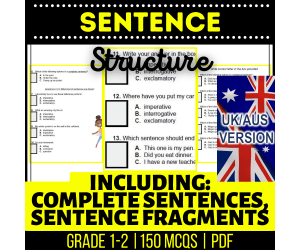
UK/Aus Spelling Sentence Structure Practice Year 2-3 Grammar (PDF)
ELA, Language Development, ESL, Grammar, Common Core, Resources for Teachers, Grade 1, 2, Worksheets & Printables, Worksheets, Assessments, Teacher Tools, Tests, Quizzes and Tests, Centers, Activities
THIS IS THE UK/AUS ENGLISH SPELLING VERSION. CHECK THE CATALOG FOR THE ORIGINAL AMERICAN ENGLISH VERSION. Sentence Structure Grammar Practice MCQS: 10 lessons, 150 MCQS, 43 pages ELA MCQs Overview: This grammar resource gives students plenty of focused practice with two essential writing skills: capitalisation and punctuation. Across 10 lessons and 150 multiple-choice questions, students work through clear, manageable practice that helps them spot mistakes, improve accuracy, and build real confidence over time. The lessons are designed to feel structured without becoming dry or repetitive. Each one builds naturally on the previous lesson, giving students the chance to review, strengthen, and apply what they have learned. With a mix of direct teaching, group work, and independent practice, the resource works well for whole-class lessons, revision, homework, or extra support. This UK/Aus English version is especially useful for schools, teachers, and families working with British-based spelling and language conventions. It is a helpful option for classrooms using UK curriculum expectations, international programmes influenced by British English, or any setting where learners need to practise the correct capitalisation and punctuation forms for that version of English. Sentence Structure Overview: Includes: Complete Sentences Sentence Fragments Subject of a Sentence Types of Sentence End Punctuation PDF Version This is the PDF uneditable version. This download is available in GOOGLE Docs, GOOGLE Forms, GOOGLE Slides. PDF, PPT, WORD, check the links below for more details. FULL CATALOG OF DOWNLOAD LINKS HERE ELA Review Questions Overview Each review test includes three answer choices for every question. The format is clear and easy for students to follow. A small number of pictures are included on each test to make the pages feel more welcoming and less plain. A review sheet is also included to help students go back over many of the main skills covered in the product. Introduction or Example Sheet Each topic includes an introduction or example sheet to use before students begin. This gives students a clear starting point. It also helps refresh key ideas before they move into the practice. Full Answer Keys Full answer keys are included for easy checking. Sample responses are also provided where needed. This helps save time and makes the resource easier to use, even on busy days. In the Supplementary Pack Interactive Ice Breakers: Simple hands-on activities to help students start thinking about the topic. Guided Practice: Teacher-led work that helps students build understanding before working alone. Group and Partner Tasks: Activities that encourage discussion, shared ideas, and teamwork. Independent Worksheets: Extra practice pages for students to complete by themselves. Exit Tasks: Short end-of-lesson activities to check understanding and review learning. For similar downloads and other frees, do check out Cored Group on TeachSimple.
Author Cored Education
Rating
Tags Elementary, Vocabulary, Answers, Ccss, Common Core, Spelling, Writing, Sentence Structure, Grammar, Grammar Worksheets

Droughts Reading Comprehension Passage - Cored Ed Encyclopedia
ELA, Reading Comprehension, Reading, Science, Technology, Social Studies, History, Earth and Environmental Sciences, Life Sciences, Geography, Grade 2, 3, 4, 5, Worksheets & Printables, Worksheets, Teacher Tools, Centers, Activities, Writing Prompts, Assessments, Quizzes and Tests, Quizzes, Lesson Plans
This droughts reading comprehension with lesson plan includes: Visualization (on the front cover) Start your lesson by taking a minute to think and share something about the topic. Read the script aloud (slowly), perhaps prepare some music or sound effects. Student close their eyes and let their imaginations wander. Students open their eyes, read the question aloud and give them a few minutes to complete. Ask a few students to share or keep answers until the end to compare with what they learn in the passage. Quick pause—thousands of Cored Education products are included with your TeachSimple membership. Download links and encyclopedia index available here. Pre-Reading Trivia Students will write down one thing they already know about the subject and then read five more facts and discuss. These facts are fun, and the students will enjoy learning about the subject before reading more. Give 1 minute for students to write what they already know (no pressure—best guess is fine). Read the five facts together. After each fact, do ask a student for their opinion, was it surprising? Set a purpose by asking students to highlight/underline one fact they want to learn more about during the reading. Reading Passage The text is a high-interest reading passage with set paragraphs, roughly three to four paragraphs long. It contains a variety of themes about the topic, anywhere from history to technology. The passage is between 250 and 350 words in length. First, ask students to look at the headings and see what they’ll learn about today. What do they know about the topic/heading? First read options: Teacher read-aloud (best for support). Partner reading (paragraph by paragraph). While reading, students underline important details, and vocabulary words they think may come up in the questions section. Mixed Questions The first question page contains four multiple-choice questions, each with a choice of four answers, and three written response questions that require a sentence or two from the student. Students complete the mcqs first independently, then review quickly as a class. For the 3 written responses, try to get students giving the answer with some form of evidence: “I think ___ because the text says ___.” If students get stuck, send them back to check the passage. Vocabulary Questions Practice seven key words from the text in this section across two activities. First section is scrambled words where students will unscramble three words given a clue for each. The second section is a word to meaning matching activity. Before starting, have some students read out words they underlined in the passage. Ask students to say the word and read aloud the sentence(s) around each word. Ask students to do scrambled words and the matching exercise in pairs then go through answers as a class. For the scrambled spelling task, get four pairs to come up to the board and write the words for extra practice with the other student reading out the clue. For the matching task, prompt students to give full sentences: “I matched ___ with ___ because ___.” Creative Writing In this question, the student will be required to write a five to eight sentence paragraph on a question related to the topic. Before starting, ask students write down 3 key ideas they are going to include in their piece. Ask students for ideas to share around the class to help those struggling. Pro writing expectations: 5–8 sentences At least 2 facts or details from the passage At least 2 vocabulary words from the previous page Students read their paragraphs while classmates listen for facts and vocabulary words. Extension Activities This page is optional for fast finishers or to take home. There are several activities, each one requiring a different skill. Do some, do none, do all, completely optional - but you will feel reassured knowing every possibility is planned for. Includes summary writting question and additional facts. Answer Key There are answers for the multiple-choice questions, written response questions have sample answers, vocabulary answers and if there is a summary question then a sample summary will be provided as well. Lesson Plan Included Customized lesson plan for this lesson is included. Lesson Snapshot Title: Droughts Genre: Nonfiction (informational text with headings) Subject: Earth Science / Life Science / Reading (Informational Text) Primary Topic: What drought is, types, effects, and tracking Estimated Guided Reading Level (A–Z): Q What This Lesson Teaches Best Defines drought as a stretch of time when a region is drier than normal and can last from days to years. Explains types of drought (meteorological vs. hydrological) and describes what changes in streams, reservoirs, and groundwater. Uses concrete signs/evidence of drought (no puddles, dull grass, cracked ground, animals traveling farther, rivers showing more rocks). Connects history to learning: the Dust Bowl in the 1930s and how it led to soil-saving methods and drought indices. Introduces modern monitoring and responses (rain gauges, river sensors, satellites; fixing leaks, reusing water, collecting rain). Learning Goals Students will define drought using the book’s description and time frames. Students will identify signs of drought described in the passage (e.g., puddles, grass, cracked ground, rivers). Students will explain the difference between meteorological drought and hydrological drought using text evidence. Students will describe what happened during the Dust Bowl and why it mattered for tracking dryness. Students will describe ways droughts are monitored today and one way communities can respond. Key Vocabulary From the Text meteorological — related to weather and rainfall or snow. hydrological — related to water in rivers, reservoirs, and underground. groundwater — water stored under the ground. indices — numbers used to compare and track dryness. evapotranspiration — water moving from land and plants into air. FULL CATALOG OF DOWNLOAD LINKS AND ENCYCLOPEDIA INDEX HERE
Author Cored Education
Rating
Tags Vocabulary, Reading Comprehension, Reading Passages, Lesson Plans, Ela Lesson Plans, Reading Comprehension Lesson Plans, Pre-reading, Science Lesson Plans, Geography, Earth Science
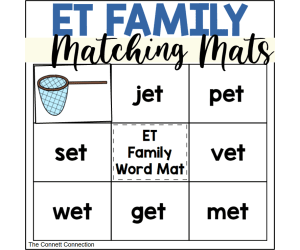
ET Words Matching Mats
ELA, Language Development, Phonics, Reading, Reading Comprehension, Preschool, Grade 1, Activities, Centers
Students can practice reading comprehension skills with these ET word family mats. Students can practice reading ET words in isolation and in the context of sentences. The words in this set follow a CVC or CCVC spelling pattern. Included in this resource: This resource includes one word mat and one sentence mat, both for reading ET words in insolation and in context. There are also picture cards that correspond with each word and sentence. To complete this activity, students will read each EN word or sentence on the mat and then match the corresponding pictures. Students can work independently or with a partner to complete this activity. How to Use these ET word Family Mats: The students can simply lay the images on top of the word or sentence. They can be placed in a file folder utilizing hook and loop fasteners to attach the images. A magnetic activity can be created by using a baking sheet and magnets to affix the images. Students will love the hands-on nature of this activity. The bold and colorful images will capture students' attention, and the easy to recognize pictures are sure to keep students engaged in learning. These literacy activities allow students to practice target words both in the context of sentences and in isolation. Where can these mats be used? Literacy Center - Students can work independently or with a partner to read these words Morning Tub or Basket - The cards can be placed in a morning bin for students to work on as students arrive to class. Small Group Activity - The teacher can choose a small group of students or a specific group of words for students to work on in a small group setting with the teacher. Hands On Assessment - The teacher can use these to test students on reading the target words in context or in isolation. Skills assessed through this activity: Reading ET words in context of a sentence and in isolation Reading comprehension The low-prep nature of this ET words matching mats activity makes it an easy to assign activity. The mats simply need to be printed out, while the matching cards need to be printed and cut. Lamination is optional for increased durability. Once created, this resource can be used repeatedly in literacy centers or small group activities, providing ongoing support for students' learning journey.
Author The Connett Connection
Tags Literacy Center, Phonics Activity, Kindergarten Literacy, Matching Mats, Simple Sentences, Reading Comprehension, CVC Words, ET Words, ET Word Family
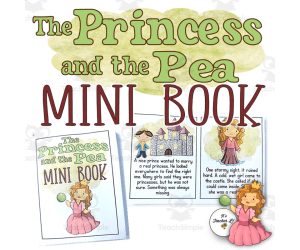
The Princess and the Pea Fairy Tale Foldable Mini Book Grade 1 2 3 ELA
ESL, Language Development, ELA, Children’s Literature, Literature, Reading Comprehension, Reading, Handwriting, Writing, Grade 1, 2, 3, Centers, Activities, Crafts, Projects, Assessments, Teacher Tools, Graphic Organizers
Develop the necessary literacy skills of your young learners through this purposefully made The Princess and the PeaMini Book Pack. Created for Grades 1, 2 and 3 students, homeschoolers, and EFL/ESL learners, this resource is designed for reading classes, reading centers, reading comprehension exercises, writing practice, fine motor skills exercises, fairy tale units, supplemental assessment tool, morning work, early finisher additional activities, and so much more! What’s Included: •The Princess and the PeaStory Mini Book– for story retelling, reading and reading comprehension practice •The Princess and the PeaStory Mini BookTrace & Read Pages– handwriting practice and motor skills exercise •The Princess and the PeaMini BookSequencing Booklet– sequencing and sorting exercise, story retelling and reading practice •The Princess and the PeaMini BookRetell & Reflect Pages– retell practice, creativity and imagination development •The Princess and the PeaMini BookBlank Create-a-Story Templates– story telling, supporting creative and imaginative thinking skills •The Princess and the PeaMini BookTeacher Guide + Sample Lesson Plan
Author It's Teacher L
Rating
Tags The Princess And The Pea, Reading Comprehension, ELA Project, Reading Centers

Fall Number Flashcards – 0–30 Memory and Sequencing Games
Holiday & Seasonal, ELA, Special Resources, Special Education Needs (SEN), Seasons, Fall, Math, Early Math, Numbers, Counting, Preschool, Grade 1, 2, 3, 4, Activities, Games, Worksheets & Printables, Quizzes and Tests, Teacher Tools, Quizzes, Projects, Flashcards, Word Problems, Centers
Fall Numbers Memory Game Bring autumn fun into your math lessons! This set of fall-themed flashcards gives students repeated practice with numbers from 0 to 30 in a playful and flexible format. I first made these for my kindergarten class, when many of my students still needed support with recognizing numbers and putting them in the right order. The cards worked well because they could be used in so many different ways without having to prepare something new each time. There are 228 cards in total, divided into six full sets with different colored borders. The colors make it easy to keep groups organized, since each table can use a separate set without mixing the cards together. Each card shows a single number in a large, clear font, which helps beginning learners and also supports students who struggle with visual distractions. The cards can be used for memory or matching games, where students flip over two at a time and try to find pairs. Another favorite activity in my class has been sequencing: students work together to lay the cards out from 0 to 30. For more active lessons, we sometimes spread the cards on the floor and have students “walk” the numbers in order, which adds movement to the practice. I also use the cards as simple flashcards, holding them up for quick recognition drills, or handing one card to each student and asking the group to line up in numerical order. With partners, students have created their own math problems using the numbers they draw, which adds a layer of challenge for more advanced learners. Differentiation is built in, since you can choose how many numbers to include. With beginners, I usually work with 0–10. As students grow more confident, I extend to 0–20 and eventually the full 0–30. Adding a timer or encouraging students to say each number out loud when they play can make the activity even more engaging. Preparation is straightforward: print the set you want, cut the cards, and laminate if you plan to reuse them. I keep each set in small envelopes or bags so they are ready for math centers, group games, or quick warm-ups. The fall design adds a seasonal touch, but the number practice is useful all year long. Warm regards, Lernfitness Did You Know? I teach with a certified therapy dog, and together we focus on creating a positive and inspiring learning environment.
Author Lernfitness
Rating
Tags Foreign Languages, Game, Educational Card Games, Elementary, Fall, Memory, Numbers, Counting, Autumn, Math
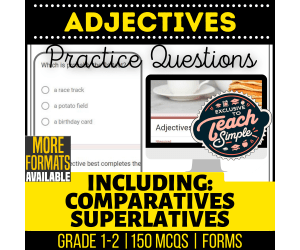
Adjectives Practice Questions - Grades 1-2 Grammar (Forms)
ELA, Language Development, ESL, Grammar, Common Core, Resources for Teachers, Grade 1, 2, Assessments, Teacher Tools, Tests, Quizzes and Tests, Centers, Activities
Adjectives Grammar Practice MCQS: 10 lessons, 150 MCQS, 10 forms ELA MCQS Overview: In this series of lessons, students will embark on an engaging exploration of the grammar skills that bring our language to life. These lessons are designed to help students identify, understand, and effectively use language arts skills in their writing and speech. Used with the free supplementary materials available for all topics, each lesson builds on the last, offering a mix of direct instruction, interactive group activities, and independent practice. Through fun and creative tasks, students will learn how to recognize grammar in sentences, understand their role in sentences and use them to enhance their own writing and speech. Adjectives Overview: Includes: Identifying Adjectives Gap Filling Comparatives Superlatives Additional Practice Forms Version This is the Forms editable and self grading version. This download is available in GOOGLE Docs, GOOGLE Forms, GOOGLE Slides. PDF, PPT, WORD, check the links below for more details. FULL CATALOG OF DOWNLOAD LINKS HERE Grade 1/2 Links: Capitalization and Punctuation Google Docs Google Forms Google Slides PDF PPT Word Free Supplementary Materials Pack Adjectives Google Docs Google Forms Google Slides PDF PPT Word Free Supplementary Materials Pack Nouns Google Docs Google Forms Google Slides PDF PPT Word Free Supplementary Materials Pack Pronouns Google Docs Google Forms Google Slides PDF PPT Word Free Supplementary Materials Pack Verbs Google Docs Google Forms Google Slides PDF PPT Word Free Supplementary Materials Pack Prefixes & Suffixes Google Docs Google Forms Google Slides PDF PPT Word Free Supplementary Materials Pack Sentence Structure Google Docs Google Forms Google Slides PDF PPT Word Free Supplementary Materials Pack Subject-Verb Agreement Google Docs Google Forms Google Slides PDF PPT Word Free Supplementary Materials Pack ELA Review Questions Overview Questions have three answer choices. There are a handful of pictures on each test for aesthetic purposes, as well as a review sheet covering most of the topics covered in the product. Introduction or Example Sheet Each topic will include an introduction or example sheet to go through first with your students. Full Answer Keys Full answer keys and sample responses are provided so no matter how busy you are, you know you're covered! In the Supplementary Pack Interactive Ice Breakers: Fun, hands-on activities that get students thinking about adjectives right from the start. Guided Practice: Teacher-led exercises that reinforce the day’s lesson, ensuring students can confidently identify and use adjectives. Group and Partner Tasks: Collaborative activities that allow students to work together to solve problems, categorize adjectives, and create descriptive sentences. Independent Worksheets: Structured worksheets that provide individual practice and help solidify understanding of key concepts. Exit Tasks: Quick, reflective activities at the end of each lesson that assess understanding and encourage students to apply what they’ve learned. For similar downloads and other frees, do check out Cored Group on TeachSimple.
Author Cored Education
Tags Elementary, Answers, Ccss, Common Core, Grammar, Language Arts, Test, Test Prep, Mcq, Digital Centers
Trains Reading Comprehension Passage - Cored Ed Encyclopedia
ELA, Language Development, Reading Comprehension, Reading, Science, Technology, Engineering, History, Social Studies, Physics, Grade 2, 3, 4, 5, Worksheets & Printables, Worksheets, Teacher Tools, Centers, Activities, Writing Prompts, Assessments, Quizzes and Tests, Quizzes, Lesson Plans
This trains reading comprehension with lesson plan includes: Visualization (on the front cover) Start your lesson by taking a minute to think and share something about the topic. Read the script aloud (slowly), perhaps prepare some music or sound effects. Student close their eyes and let their imaginations wander. Students open their eyes, read the question aloud and give them a few minutes to complete. Ask a few students to share or keep answers until the end to compare with what they learn in the passage. Quick pause—thousands of Cored Education products are included with your TeachSimple membership. Download links and encyclopedia index available here. Pre-Reading Trivia Students will write down one thing they already know about the subject and then read five more facts and discuss. These facts are fun, and the students will enjoy learning about the subject before reading more. Give 1 minute for students to write what they already know (no pressure—best guess is fine). Read the five facts together. After each fact, do ask a student for their opinion, was it surprising? Set a purpose by asking students to highlight/underline one fact they want to learn more about during the reading. Reading Passage The text is a high-interest reading passage with set paragraphs, roughly three to four paragraphs long. It contains a variety of themes about the topic, anywhere from history to technology. The passage is between 250 and 350 words in length. First, ask students to look at the headings and see what they’ll learn about today. What do they know about the topic/heading? First read options: Teacher read-aloud (best for support). Partner reading (paragraph by paragraph). While reading, students underline important details, and vocabulary words they think may come up in the questions section. Mixed Questions The first question page contains four multiple-choice questions, each with a choice of four answers, and three written response questions that require a sentence or two from the student. Students complete the mcqs first independently, then review quickly as a class. For the 3 written responses, try to get students giving the answer with some form of evidence: “I think ___ because the text says ___.” If students get stuck, send them back to check the passage. Vocabulary Questions Practice seven key words from the text in this section across two activities. First section is scrambled words where students will unscramble three words given a clue for each. The second section is a word to meaning matching activity. Before starting, have some students read out words they underlined in the passage. Ask students to say the word and read aloud the sentence(s) around each word. Ask students to do scrambled words and the matching exercise in pairs then go through answers as a class. For the scrambled spelling task, get four pairs to come up to the board and write the words for extra practice with the other student reading out the clue. For the matching task, prompt students to give full sentences: “I matched ___ with ___ because ___.” Creative Writing In this question, the student will be required to write a five to eight sentence paragraph on a question related to the topic. Before starting, ask students write down 3 key ideas they are going to include in their piece. Ask students for ideas to share around the class to help those struggling. Pro writing expectations: 5–8 sentences At least 2 facts or details from the passage At least 2 vocabulary words from the previous page Students read their paragraphs while classmates listen for facts and vocabulary words. Extension Activities This page is optional for fast finishers or to take home. There are several activities, each one requiring a different skill. Do some, do none, do all, completely optional - but you will feel reassured knowing every possibility is planned for. Includes summary writting question. Answer Key There are answers for the multiple-choice questions, written response questions have sample answers, vocabulary answers and if there is a summary question then a sample summary will be provided as well. Lesson Plan Included Customized lesson plan for this lesson is included. Lesson Snapshot Title: Trains Genre: Nonfiction (informational text) Subject: Science (Technology & Engineering) Primary Topic: How rails and train power changed over time Estimated Guided Reading Level (A–Z): R What This Lesson Teaches Best Explains how smooth rails reduce “rubbing,” helping heavy loads move more easily than wagons on muddy roads. Uses a real historical example (the Stockton and Darlington Railway opening in 1825) to show steam trains carrying coal and people. Describes how a steam locomotive works (water becomes steam, steam pushes pistons, pistons help turn wheels). Compares train power types—steam, diesel (engine spins a generator), and electric (overhead wire or third rail). Shows how high-speed rail was designed for speed (special tracks, trains shaped to slice through wind), including Japan’s Tōkaidō Shinkansen (1964) “bullet train.” QA check (support pages vs. passage): The pre-reading trivia uses the word “friction,” but the main passage describes the idea as “rubbing.” Other questions and vocabulary (boiler, pistons, diesel, generator, third rail, high-speed rail) match the passage. Learning Goals Students will explain why smooth rails helped heavy loads move with less rubbing. Students will identify what happened in 1825 with the Stockton and Darlington Railway. Students will describe how steam in a boiler can help power wheel movement using pistons. Students will compare steam, diesel, and electric explanations of how trains get power in the text. Students will describe how train design and tracks can increase speed, using details about high-speed rail. Key Vocabulary From the Text locomotive — the front engine that pulls the train cars. boiler — the part where water is heated to make steam. pistons — parts steam pushes to help turn the wheels. generator — a machine that makes electricity for the train. soot — black dirty particles in the air from smoke. FULL CATALOG OF DOWNLOAD LINKS AND ENCYCLOPEDIA INDEX HERE
Author Cored Education
Rating
Tags Vocabulary, Reading Comprehension, Reading Passages, Lesson Plans, Ela Lesson Plans, Reading Comprehension Lesson Plans, Pre-reading, History, History Lesson Plans, Physics
Reading Comprehension Nonfiction Set 5 Sample: Stingray (Docs)
ELA, Reading, Common Core, Reading Comprehension, ESL, Language Development, Vocabulary, Creative Writing, Writing, Resources for Teachers, Grade 4, 5, Worksheets & Printables, Worksheets, Writing Prompts, Assessments, Teacher Tools, Tests, Quizzes and Tests, Activities, Centers
Reading Comprehension Passages Nonfiction Set 5 Sample Overview No prep reading comprehension lessons, with enjoyable articles and topics. Each lesson has a blend of post-reading activities. Mixed questions to check overall understanding. Vocabulary activities, plus a writing section. Lessons also contain a bonus extension exercise at the end. Some you may like, some you may not, either way they are there if you wish to use them. Full answer keys are provided. Passage Included 1.Stingray: Close relatives to sharks, read more about this fascinating animal in this article. Docs Version This is the Docs editable and fillable version. This download is available in GOOGLE Docs, GOOGLE Forms, GOOGLE Slides. PDF, PPT, WORD. FULL CATALOG OF DOWNLOAD LINKS HERE Grade 4/5 Links Fiction Set 1 - Animals Google Docs Google Forms Google Slides PDF PPT Word Guided Reading Materials Fiction Set 2 - Family Google Docs Google Forms Google Slides PDF PPT Word Guided Reading Materials Fiction Set 3 - Friends Google Docs Google Forms Google Slides PDF PPT Word Guided Reading Materials Fiction Set 4 - School Google Docs Google Forms Google Slides PDF PPT Word Guided Reading Materials Fiction Set 5 - Sports Google Docs Google Forms Google Slides PDF PPT Word Guided Reading Materials Nonfiction Set 1 - Birds Google Docs Google Forms Google Slides PDF PPT Word Guided Reading Materials Nonfiction Set 2 - Insects Google Docs Google Forms Google Slides PDF PPT Word Guided Reading Materials Nonfiction Set 3 - Mammals Google Docs Google Forms Google Slides PDF PPT Word Guided Reading Materials Nonfiction Set 4 - Nature Google Docs Google Forms Google Slides PDF PPT Word Guided Reading Materials Nonfiction Set 5 - Sea Animals Google Docs Google Forms Google Slides PDF PPT Word Guided Reading Materials Reading Passages Overview Each passage is especially written for Grade 4-5 students, including key vocabulary required for this age group. Topics are varied and are accompanied by colorful graphics. Topics are meant to educate, yet entertain the modern student. These passages are perfect for the modern classroom. Whereas textbooks can become outdated in no time, any changes to technology or the world will result in updates to this product. Mixed Questions The mixed questions section of each lesson includes a variation of five comprehension, vocabulary and math questions. In addition, key reading strategies are frequently covered including cause & effect, summarizing, compare & contrast and making conclusions. Two or three of the questions will be MCQs and other questions will require a written response of some kind. Full answers and example responses appear at the end of the lesson. Spelling & Vocab Each reading passage contains a variety of words and phrases designed for Grade 4-5 students. Spelling and vocab activities provide the opportunity to build fluency with these words. As it can become quite mundane doing the same activities over and over, each lesson in a set will contain a different spelling and vocab activity . Activities include: spelling games, sentence match-ups, mixed-up text and decoding words from the lesson. Writing Prompts Writing prompts are designed to continue the theme or lessons learned in the story. Students are persuaded to write in a variety of ways and each prompt includes several cues to help. As with the spelling/vocab section, writing prompts will vary. This includes research pieces, reading responses, poetry and creative writing prompts. Full Answer Keys Full answer keys and sample responses are provided so no matter how busy you are, you know you're covered! Mixed question answers provide evidence from the text, math questions contain the relevant workings. Answers are designed for use by the teacher, but also suitable as a handout to the student. Just for Fun Each lesson will have a bonus extension exercise. This is something fun to extend the lesson with. You can find these at the end of each lesson, titled Just for Fun. Just for Funs are optional. Some you may like, some you may not. Either way, they are there to do with as you wish. For similar downloads and other frees, do check out Cored Group on TeachSimple.
Author Cored Education
Tags Elementary, Reading, Comprehension, Vocabulary, Answers, Ccss, Common Core, Spelling, Writing, Passages
Pianos Reading Comprehension Passage - Cored Ed Encyclopedia
ELA, Language Development, Resources for Teachers, Reading Comprehension, Reading, Pre-Reading, Writing, Strategies, Music, Creative Arts, Grade 2, 3, 4, 5, Worksheets & Printables, Worksheets, Teacher Tools, Centers, Activities, Writing Prompts, Assessments, Tests, Quizzes and Tests, Quizzes
This pianos reading comprehension contains the following: Visualize on the Cover (Teacher Read Aloud Script) Start your lesson by taking a few moments to visualize the topic and share thoughts or feelings about it. Pre-Reading Trivia Students will write down one thing they already know about the subject and then read five more facts and discuss. These facts are fun, and the students will enjoy learning about the subject before reading more. Reading Passage The text is a high-interest reading passage with set paragraphs, roughly three to four paragraphs long. It contains a variety of themes about the topic, anywhere from history to technology. The passage is between 250 and 350 words in length. Mixed Questions The first question page contains four multiple-choice questions, each with a choice of four answers, and three written response questions that require a sentence or two from the student. Vocabulary Questions Practice seven key words from the text in this section across two activities. First section is scrambled words where students will unscramble three words given a clue for each. The second section is a word to meaning matching activity. Creative Writing In this question, the student will be required to write a five to eight sentence paragraph on a question related to the topic. Extension Activities This page is optional for fast finishers or to take home. There are several activities, each one requiring a different skill. Do some, do none, do all, completely optional - but you will feel reassured knowing every possibility is planned for. Includes summary writting question. Answer Key There are answers for the multiple-choice questions, written response questions have sample answers, vocabulary answers and if there is a summary question then a sample summary will be provided as well. FULL CATALOG OF DOWNLOAD LINKS AND ENCYCLOPEDIA INDEX HERE Lesson Snapshot Title: Pianos Genre: Nonfiction (informational text) Subject: Music (Performing Arts) / Reading Informational Text Primary Topic: How the piano was invented and improved Estimated Guided Reading Level (A–Z): S What This Lesson Teaches Best How the piano idea began around 1700 in Florence, Italy , with Bartolomeo Cristofori trying to make music “gentle or bold” depending on touch. How the piano’s key action works: a mechanism sends a leather-covered hammer to strike strings, then pulls back so the string keeps vibrating . How dampers stop strings from ringing—and lifting them lets tones ring longer. How information spread the invention: Scipione Maffei published an article with a diagram , leading builders like Gottfried Silbermann to make pianos based on Cristofori’s design. How the piano grew for bigger spaces: sturdier builds and a wider range from about four octaves to 88 keys , changing where music could be played (homes, schools, apartments, stages). Learning Goals Students will explain why Cristofori began tinkering with a new keyboard instrument around 1700. Students will describe how a key triggers the hammer-and-string action using details from the passage. Students will explain how a player’s touch can make the sound softer or louder according to the text. Students will identify how Maffei helped the piano idea travel and name one builder mentioned who made pianos afterward. Students will describe how the piano’s keyboard range changed over time and state the number of keys many pianos have today. Key Vocabulary From the Text harpsichords — older keyboards that stayed mostly one volume. inventory — a recorded list that showed a piano existed. mechanism — moving parts that make the piano action work. dampers — parts that stop strings from ringing. octaves — groups of notes used to describe keyboard range. Cored Ed Encyclopedia Overview The Cored Ed Encyclopedia is a weekly series of lessons that you can pick up and use right away. These short readings fit into whatever time you have available. Each one includes a warm-up, a reading, and a set of questions, but it’s flexible — you can do just the reading, the full lesson, or skip the writing section if you need to. Each lesson focuses on a single topic so students don’t get lost. The writing is clear but never childish, making it perfect for grades two through five. Topics range from animals and science to history, inventions, and everyday things. No matter the level of the student, everyone should take away at least one new idea or fact from each lesson. The materials are easy to print, easy to explain, and require no setup. They work well for whole-class teaching, partner work, or independent study.
Author Cored Education
Rating
Tags Vocabulary, Spelling, Reading Comprehension, Reading Passages, Reading, Creative Writing, Reading Strategies, Writing Prompts, Music, Pianos

Geography Crosswords - Set 2 (PDF)
ELA, Language Development, Vocabulary, Spelling, ESL, Resources for Teachers, Geography, Social Studies, Grade 2, 3, 4, 5, Worksheets & Printables, Worksheets, Teacher Tools, Crosswords Puzzles, Centers, Activities
Crossword Series This crossword series is designed for students in grades 2–5. Each set of crosswords is built around a clear vocabulary theme, allowing students to strengthen their word recognition, build subject-based knowledge, and reinforce early literacy and thinking skills. Each topic includes six crossword sets , and each set features the following consistent structure: 1. 8 vocabulary clues 2. Crossword puzzle 3. Answer key 4. 1 Did You Know fact related to the set These crosswords are designed to be student-friendly, classroom-ready, and easily integrated into thematic units, seasonal learning, morning work, or independent literacy stations. Geography Crosswords Set 2 Word List 1. More Countries of the World Germany, Italy, Russia, South Africa, Argentina, Saudi Arabia, Thailand, Canada 2. More Famous Cities Los Angeles, Beijing, Moscow, Berlin, Dubai, Madrid, Buenos Aires, Seoul 3. More Famous Landmarks Machu Picchu, Big Ben, Leaning Tower, Christ the Redeemer, Stonehenge, Mount Rushmore, Petra, The Louvre 4. Bodies of Water Amazon River, Nile River, Mississippi River, Lake Superior, Mediterranean Sea, Arctic Ocean, Gulf of Mexico, Dead Sea 5. Climate and Weather Tropical, Desert, Polar, Humidity, Hurricane, Tornado, Drought, Monsoon 6. Geography Tools and Maps Globe, Map, Compass, Latitude, Longitude, Equator, Hemisphere, Legend PDF Version Other versions will appear here when available. Follow the store for the lastest on new products. How to Use This Crossword These crosswords are ideal for whole-class work, small groups, literacy centers, or take-home activities. Use one set per day, or spread them across a week or month depending on your curriculum needs. Each clue has been crafted to align with the reading level of grades 2–5, with support for both decoding and meaning. The Did You Know? facts offer additional extension opportunities for writing, drawing, or display work. Whether you're reinforcing vocabulary, exploring a seasonal topic, or adding variety to your literacy block, these crosswords provide a fun, flexible, and focused way to boost early literacy in an engaging format. More Geography Themed Products Geography Crosswords (Set 1) PDF Geography Crosswords (Set 3) PDF FULL CATALOG OF DOWNLOAD LINKS HERE Themed Crossword Links Addition PDF Animals PDF Around the Home PDF Birthday PDF Candy PDF Christmas PDF Cinco de Mayo PDF Clothes PDF Colors PDF Days and Months PDF Division PDF Earth Day PDF Easter PDF Easy Crosswords PDF Fall PDF Father's Day PDF Food PDF Geography (Set 1) PDF Geography (Set 2) PDF Geography (Set 3) PDF Graduation PDF Health PDF History (Set 1) PDF History (Set 2) PDF History (Set 3) PDF Human Body PDF Kindness PDF Life Skills PDF Mother's Day PDF Multiplication PDF Science Crosswords (Set 1) PDF Science Crosswords (Set 2) PDF Science Crosswords (Set 3) PDF Shapes PDF Social Skills PDF Spring PDF Sports PDF St. Patrick's Day PDF Subtraction PDF Summer PDF Thanksgiving PDF Transport PDF Valentine's Day PDF Winter PDF Crosswords in Depth Structure Each crossword clue is written in simplified language to suit early readers, and follows a strict number-and-clue format (e.g., 1.A shape with four sides ). Students complete each puzzle using the themed vocabulary provided, helping to build both content knowledge and spelling confidence. Each completed set includes: A questions section with clearly formatted clues An answers section to support teacher checking or independent correction A Did You Know? fact tied to the topic (one per set) to add curiosity and cross-curricular value Themes Included The crosswords cover a wide variety of engaging, age-appropriate themes such as: Seasons & Holidays (e.g., Winter, Easter, Valentine’s Day) Math Concepts (e.g., Addition, Subtraction, Multiplication, Division) Everyday Topics (e.g., School, Colors, Animals, Weather) Special Units (e.g., Health, Earth Day, Sports, Graduation, Kindness) Each theme is carefully selected to reflect the experiences and interests of young learners, while reinforcing vocabulary and comprehension. For similar downloads and other frees, do check out Cored Group on TeachSimple.
Author Cored Education
Rating
Tags Vocabulary, Spelling, Crosswords, Geography, Geography Crosswords, Countries Of The World, Famous Cities, Famous Landmarks, Bodies Of Water, Climate And Weather
Spring Word Searches: 1 Page Sample (PDF)
ELA, Language Development, Resources for Teachers, Vocabulary, Spelling, ESL, Spring, Seasons, Holiday & Seasonal, Grade 2, 3, 4, 5, Worksheets & Printables, Worksheets, Teacher Tools, Centers, Activities, Word Searches
THIS IS A ONE PAGE SAMPLE OF A SIX PAGE WORD SEARCH DOWNLOAD FULL SIX PAGE WORD SEARCH DOWNLOAD INFORMATION This wordsearch series is designed for students in grades 2–5. Each set of wordsearches is built around a clear vocabulary theme, helping students develop word recognition, improve spelling, and boost topic-related understanding through engaging visual puzzles. Every wordsearch also includes a fun hidden shape for students to guess—adding an interactive twist to traditional vocabulary practice. These wordsearches are student-friendly, classroom-ready, and perfect for integrating into literacy warmups, seasonal units, fast-finisher tasks, or home learning extensions. Each puzzle reinforces themed vocabulary in a playful, structured format that keeps learners motivated. Spring Word Search Word List 1. Spring Blossoms Tulip, Blossom, Pollen, Cherry, Daffodil, Petal, Orchid, Bloom 2. Rainy Days Drizzle, Puddle, Thunder, Umbrella, Rainbow, Raindrop, Thunderstorm, Overcast 3. Baby Animals Lamb, Duckling, Fawn, Bunny, Calf, Kitten, Puppy, Hatch 4. Spring Holidays & Traditions Easter, Picnic, Parade, Basket, Renewal, Spring, Egg 5. Outdoor Adventures Hiking, Kite, Gardening, Picnic, Biking, Camping, Boating, Fishing 6. New Beginnings Sprout, Bud, Nest, Sunrise, Fresh, Growth, New PDF Version Other versions will appear here when available. Follow the store for the lastest on new products. How to Use These Wordsearches These wordsearches are ideal for: Morning work or early finisher bins Vocabulary centers or anchor activities Holiday or seasonal review lessons Independent literacy stations or take-home enrichment Each puzzle includes a themed word list and a shaped grid for students to complete. Word directions may vary (horizontal, vertical, diagonal), and answer keys are included for easy checking. Optional vocabulary challenges or writing tasks can be added to extend the learning experience. Whether you're reviewing key vocabulary, exploring a seasonal topic, or offering fun literacy practice, these wordsearches provide a flexible and engaging tool to support vocabulary growth in grades 2–5. More Spring Themed Products Spring Mini Unit CROSSWORDS FULL CATALOG OF DOWNLOAD LINKS HERE Themed Word Search Links Addition PDF Animals PDF Around the Home PDF Birthday PDF Candy PDF Christmas PDF Cinco de Mayo PDF Clothes PDF Colors PDF Days and Months PDF Division PDF Earth Day PDF Easter PDF Easy Word Searches PDF Fall PDF Father's Day PDF Food PDF Geography (Set 1) PDF Geography (Set 2) PDF Geography (Set 3) PDF Graduation PDF Health PDF History (Set 1) PDF History (Set 2) PDF History (Set 3) PDF Human Body PDF Kindness PDF Life Skills PDF Mother's Day PDF Multiplication PDF Science Word Searches (Set 1) PDF Science Word Searches (Set 2) PDF Science Word Searches (Set 3) PDF Shapes PDF Social Skills PDF Spring PDF Sports PDF St. Patrick's Day PDF Subtraction PDF Summer PDF Thanksgiving PDF Transport PDF Valentine's Day PDF Winter PDF Wordsearches in Depth Structure Each wordsearch is crafted around a focused sub-theme and includes a visual puzzle shaped like a related object (e.g., balloon, gift, snowman). Students complete each puzzle using the provided themed word list, strengthening both content knowledge and spelling skills in a highly engaging format. Each completed set includes: A shaped wordsearch puzzle with 10 vocabulary words A student instruction guide with search directions (horizontal, vertical, diagonal) An answer key for teacher support or student self-checking A Did You Know? fact connected to the theme for enrichment or discussion Themes Included The wordsearches cover a wide range of fun, age-appropriate themes, including: Seasons & Holidays (e.g., Halloween, Easter, Valentine’s Day) Math Concepts (e.g., Addition, Number Words) Everyday Topics (e.g., Animals, Weather, School) Special Units (e.g., Health, Earth Day, Sports, Kindness) Each topic is selected to reflect students’ real-life experiences and interests while reinforcing literacy skills and content understanding in a playful, visual way. For similar downloads and other frees, do check out Cored Group on TeachSimple.
Author Cored Education
Rating
Tags Vocabulary, Spelling, Spring, Rainy Days, Word Searches, Ela Word Searches, Ela Word Search, Word Search, Spring Word Searches, Spring Word Search

Tea Party Dramatic Play Set for Kindegarten & Grade 1
Language Development, ELA, Kindergarten, Grade 1, Centers, Activities, Games, Worksheets & Printables
🌸 Tea Party Dramatic Play Center for Kindergarten & First Grade Create a calm, engaging dramatic play center that builds language, social skills, and early math through imaginative play. This Tea Party Dramatic Play set is perfect for kindergarten and first grade classrooms that value play-based learning, oral language development, and social-emotional growth. Designed for low-prep setup, this tea party dramatic play center helps students practice real-life skills in a familiar, joyful setting while staying engaged and on-task. 📦 What’s Included Tea party invitations (multiple copies) Menu pages for pretend ordering Dramatic play role ideas (host, guest, server, baker, helper) Visual props for a tea party dramatic play center Teacher notes with activity ideas and learning goals 🏫 How It Works in the Classroom Use this tea party dramatic play center during: Dramatic play or pretend play centers Small group or choice time Social-emotional learning blocks Play-based literacy or math integration Students rotate roles, host pretend tea parties, greet guests, serve items, and engage in polite conversation. The activities encourage staying in character, cooperating with peers, and using respectful language throughout play. 🎯 Standards & Learning Goals This resource naturally supports: Oral language and vocabulary development Listening and speaking skills Social-emotional learning (SEL) Cooperation, empathy, and self-regulation Early math skills (counting, sorting, one-to-one correspondence) Early literacy skills (name writing, letter awareness, print awareness) ⭐ Why Teachers Love It Encourages meaningful, play-based learning Builds social skills in a calm, structured way Supports language development without worksheets Easy to prep and reuse all year Perfect for kindergarten and first grade dramatic play This tea party dramatic play set makes it easy to blend academics with imagination—no extra planning required. 👉 Ready to Bring Play-Based Learning to Your Classroom? Download this Tea Party Dramatic Play Center today and give your students a fun, low-pressure way to practice language, math, and social skills through pretend play.
Author Bright Classroom Ideas Marketplace
Rating
Tags Tea, Party, Center, Dramatic, Play, Pretend, Kindergarten, Grade 1
Onions Reading Comprehension Passage - Cored Ed Encyclopedia
ELA, Language Development, Resources for Teachers, Reading Comprehension, Reading, Pre-Reading, Writing, Life Sciences, Science, Nature & Plants, Grade 2, 3, 4, 5, Worksheets & Printables, Worksheets, Teacher Tools, Centers, Activities, Writing Prompts, Assessments, Tests, Quizzes and Tests, Quizzes
This onions reading comprehension contains the following: Visualize on the Cover (Teacher Read Aloud Script) Start your lesson by taking a few moments to visualize the topic and share thoughts or feelings about it. Pre-Reading Trivia Students will write down one thing they already know about the subject and then read five more facts and discuss. These facts are fun, and the students will enjoy learning about the subject before reading more. Reading Passage The text is a high-interest reading passage with set paragraphs, roughly three to four paragraphs long. It contains a variety of themes about the topic, anywhere from history to technology. The passage is between 250 and 350 words in length. Mixed Questions The first question page contains four multiple-choice questions, each with a choice of four answers, and three written response questions that require a sentence or two from the student. Vocabulary Questions Practice seven key words from the text in this section across two activities. First section is scrambled words where students will unscramble three words given a clue for each. The second section is a word to meaning matching activity. Creative Writing In this question, the student will be required to write a five to eight sentence paragraph on a question related to the topic. Extension Activities This page is optional for fast finishers or to take home. There are several activities, each one requiring a different skill. Do some, do none, do all, completely optional - but you will feel reassured knowing every possibility is planned for. Includes summary writting question. Answer Key There are answers for the multiple-choice questions, written response questions have sample answers, vocabulary answers and if there is a summary question then a sample summary will be provided as well. FULL CATALOG OF DOWNLOAD LINKS AND ENCYCLOPEDIA INDEX HERE Lesson Snapshot Title: Onions Genre: Nonfiction (informational text) Subject: Life Science (plants) / Reading Informational Text Primary Topic: Onion bulbs, history, tears, and growing Estimated Guided Reading Level (A–Z): Q What This Lesson Teaches Best How an onion bulb is made of layers and helps the plant grow. Key plant facts: onions send up hollow leaves , and the bulb swells at the bottom of the stalks. A clear cause-and-effect explanation for why cutting onions can make eyes water (chemicals mix → gas → tears). A brief history of onions, including early recipes on clay tablets in ancient Mesopotamia and later planting in North America. How onions are grown/harvested, including that onions are biennial plants and can be started from sets . Learning Goals Students will identify details that describe what an onion bulb is like and what it does for the plant. Students will explain why cutting an onion can make eyes water using information from the text. Students will describe one way people long ago saved and replanted onions. Students will describe how onions can be grown (from seeds or sets) and when they are often harvested. Students will use section headings to locate key information in the passage. Key Vocabulary From the Text biennial — a plant built for a two-year life cycle. chemicals — substances that can mix and cause changes. Mesopotamia — an ancient place where people wrote on clay tablets. colonists — people who settled in a new place long ago. sets — small starter onion bulbs used for planting. Cored Ed Encyclopedia Overview The Cored Ed Encyclopedia is a weekly series of lessons that you can pick up and use right away. These short readings fit into whatever time you have available. Each one includes a warm-up, a reading, and a set of questions, but it’s flexible — you can do just the reading, the full lesson, or skip the writing section if you need to. Each lesson focuses on a single topic so students don’t get lost. The writing is clear but never childish, making it perfect for grades two through five. Topics range from animals and science to history, inventions, and everyday things. No matter the level of the student, everyone should take away at least one new idea or fact from each lesson. The materials are easy to print, easy to explain, and require no setup. They work well for whole-class teaching, partner work, or independent study.
Author Cored Education
Rating
Tags Vocabulary, Spelling, Reading Comprehension, Reading Passages, Reading, Creative Writing, Reading Strategies, Writing Prompts, Onions, Life Science

Reading Comprehension Passages Fiction Set 2 - Family (PDF)
ELA, Reading, Reading Comprehension, Common Core, Writing, Children’s Literature, Literature, Language Development, Spelling, Vocabulary, Grade 4, 5, Worksheets & Printables, Worksheets, Writing Prompts, Assessments, Teacher Tools, Quizzes and Tests, Tests, Centers, Activities
Reading Comprehension Passages Fiction Set 2 Overview No prep reading comprehension lessons, with enjoyable stories and topics. Each lesson has a blend of post-reading activities. Mixed questions to check overall understanding. Vocabulary activities, plus a writing section. Lessons also contain a bonus extension exercise at the end. Some you may like, some you may not, either way they are there if you wish to use them. Full answer keys are provided. Passages Include 1.Birthday Lessons: Lois wanted a horse for her birthday. What did he get instead? 2.Funny Cousin: Britney's cousin can be a little much. Read about their day. 3.Favorite Aunt: Raquel is helping her aunt get ready for a new arrival. 4.Grandma Can Dance: Tracie learns something new about her grandma. 5.Sisterly Love: Kyle did want a big brother. How does he feel after today though? 6.A Not So Relaxing Hike: Jordan's scared of bugs. Read how he gets over his fear. 7.On the Coaster: Sid talks about his experience on a roller coaster. 8.Grandma's Tulips: Read about Grandma's passion of tulips in this story. 9.Father's Day: Maria learns about Father's Day and other holidays in this passage. 10.Healthier Lifestyle: The twins' doctor teaches them how to live a healthier lifestyle. PDF Version This is the PDF uneditable version. This download is available in GOOGLE Docs, GOOGLE Forms, GOOGLE Slides. PDF, PPT, WORD. Browse the Complete Cored Catalog — 2,000+ Resources Included Reading Passages Each reading passage has been written specifically for students in Grades 4–5, using vocabulary and language that match their age and ability level. The collection covers a wide range of engaging topics, supported by colorful visuals that help bring the content to life. Every lesson is designed to build knowledge while keeping students interested and motivated to read. These resources are also designed with flexibility in mind. Unlike traditional textbooks that can quickly become outdated, lessons can be updated over time to reflect changes in technology, discoveries, and the world around us. Mixed Questions Every lesson includes a variety of questions that help students think more deeply about what they have read. The question section combines reading comprehension, vocabulary, and math skills, while also regularly reinforcing important reading strategies such as cause and effect, summarizing, compare and contrast, and drawing conclusions. Most lessons include a mix of multiple-choice and written-response questions, giving students opportunities to explain their thinking as well as select answers. Complete answer keys and sample responses are provided at the end of each lesson for quick and easy reference. Spelling & Vocabulary Each passage introduces students to useful words and phrases appropriate for Grades 4–5. To help build confidence and word knowledge, every lesson includes a spelling or vocabulary activity. Rather than repeating the same task throughout the collection, activities vary from lesson to lesson to keep practice fresh and engaging. Activities may include spelling challenges, sentence matching, decoding activities, mixed-up text exercises, and other vocabulary-building tasks connected directly to the reading. Writing Prompts Each lesson includes a writing activity that extends the ideas, themes, or topics explored in the passage. Students are encouraged to write in a variety of formats, with prompts providing helpful guidance and ideas to get them started. Writing tasks vary throughout the collection and may include creative writing, research activities, personal responses, poetry, opinion writing, and other engaging assignments. Full Answer Keys Complete answer keys and sample responses are included with every lesson, making planning and marking quicker and easier. Reading comprehension answers include evidence and support from the text, while math-based questions show the relevant working where appropriate. The answer keys are designed primarily for teachers but can also be shared with students when needed. Just for Fun Each lesson finishes with an optional extension activity called Just for Fun . These bonus activities provide an enjoyable way to extend learning beyond the main lesson and often encourage creativity, discussion, or independent thinking. They are completely optional, giving you the flexibility to use the activities that best suit your students and classroom needs. For similar downloads and other frees, do check out Cored Group on TeachSimple.
Author Cored Education
Rating
Tags Elementary, Reading, Comprehension, Vocabulary, Answers, Spelling, Writing, Passages, Reading Centers, Reading Comprehension Assessments
Guided Reading Level N - Shenyang (with Lesson Plan)
ELA, Resources for Teachers, Reading Comprehension, Reading, Social Studies, Geography, History, Earth and Environmental Sciences, Science, Economics, Grade 2, 3, 4, Worksheets & Printables, Worksheets, Teacher Tools, Centers, Activities, Literacy Readers, Quizzes, Quizzes and Tests, Assessments, Lesson Plans
This Guided Reading Book - Shenyang (Level N) with lesson plan includes: Guided Reading Color Label (front cover x1) This is a quick way to match the book’s demands to what students can generally handle.. The overall goal is to use the level/color to pick books for several smaller groups. To qualify for a certain level, a student is expected to read a book from that level with about 90–94% accuracy. If a student is consistently accurate and understands, move up a level. If the student is struggling at that level, drop down and add more support. Each student will improve at completely different rates, but it is generally one of the best ways to check progress across the class. DOWNLOAD THE CATALOG TO VIEW ALL GUIDED READING BOOKS AVAILABLE (SORTED LEVELS A-Z) Pre-Reading Question (x1) Teacher asks the prompt aloud, can be while showing the cover or first page. Students share what they already know, or make educated guesses from the cover. Prompt them to use the target vocabulary. Write some of their responses on the board to look back at during the reading. Vocabulary Words (x5) Introduce the five words, best doing it one at a time. Start by saying it, while students repeat and then see if anyone knows what it means before reading further. Read through the meaning and try to briefly connect each word to a picture or gesture so it’s meaningful. Ask students to flip through the book pages and point to where they see each of the vocabulary words. While reading the book pause upon coming across one of the vocab words or read the sentence twice to make sure students understand the word has appeared. Optional: Ask students to raise hands whenever they see/hear one of the new words. Guided Reading Pages (x10) Check the book snapshot (below) for: primary topic - do you need to prep extra reading or intro materials on this? what is taught best - decide on 1-2 bullets to focus on, use the prompt or words provided here for best results. learning goals - what you are checking for students to be able to do after the session, elicit answers using prompts or words provided. key vocabulary (see section above). questions overview - so you know what is coming up and if you need to prep extra materials to assist understanding. Run the lesson You may have already looked at a few of the pages together, but you can show them some of the pictures again first to set meaning. Depending on how much time you have and how familiar your students are with guided reading class, you may want to read the book aloud first with the group first. Students whisper or partner read, while you listen in. If time, do it as a group, one student reading a page each. Use the guided page’s prompts to coach: “Check the picture / does it make sense?” “Point under the words / try the first sound” “Reread the sentence smoothly”. Try to focus more on one student per session (rotating every time), so you can work out if they are ready to move up or need to move down a level. Comprehension Questions (back cover x3) This is your way to check that students didn’t just say the words, but actually understood the text. First, let students answer by pointing to the page/picture and saying a short sentence. After any answer, follow with: “Show me where you found that in the text.” In bigger groups, have partners answer first (10–20 seconds), then call on 2–3 students to share. Differentiation tips: Emerging speakers/struggling readers: oral + pointing On-level: oral in a full sentence Higher: one written sentence or draw + label Book Snapshot Title: Global Cities: Shenyang Genre: Nonfiction (informational text) Subject: Social Studies (Geography/Culture) Primary Topic: Landmarks, history, and modern life in Shenyang Estimated Guided Reading Level (A–Z): N What This Book Teaches Best Identifies Shenyang’s location and role (largest city in Northeast China; capital of Liaoning province) and connects it to major waterways in the Liaohe River Basin. Highlights historical heritage through major sites like the Shenyang Imperial Palace (built in 1625; early residence for Qing emperors) and Beiling Park/Northern Mausoleum. Explains how Shenyang developed as an industrial powerhouse , including the Tiexi District’s factory history and preserved museum sites. Shows how a city can blend old and new (Middle Street’s long history alongside modern malls; modern landmarks like the TV Tower and lit-up riverfront). Describes how climate shapes culture , including long, snowy winters and yearly ice-sculpture displays in parks. Learning Goals Identify what the text says Shenyang is the capital of. Describe how rivers and basins are connected to Shenyang’s location and development in the text. Explain what the Shenyang Imperial Palace was used for in the past, based on the text. Describe one way Shenyang’s industry shaped the city in the 20th century. Describe how Shenyang’s winters influence activities and traditions mentioned in the book. Identify one modern landmark or development in Shenyang and tell what the text says about it. Key Vocabulary From the Text situated — located in a certain place. heritage — important history and traditions remembered and protected. mausoleum — a large building where someone is buried. powerhouse — a place important for producing something. metropolitan — connected to a big city and nearby areas. Printing Tips 1. Best Printing Method (Recommended) “Booklet” Printing (Best if Available) If your printer or PDF viewer supports Booklet Printing , use this. Settings to use: Print mode: Booklet Paper size: Letter or A4 (either works) Orientation: Landscape Print on both sides: Yes Flip on: Short edge Scaling: Fit to printable area Booklet subset: First test: Front sides only Then: Back sides only This will automatically: Pair pages correctly Put the cover on the outside Align everything for folding After printing, fold in half and staple along the spine . 2. If “Booklet” Printing Is NOT Available You can still print this correctly with manual duplex printing . Step-by-step: Open the PDF. Choose Print . Set: Orientation: Landscape Pages per sheet: 1 Print on both sides: Yes Flip on: Short edge Print all pages . Because each PDF page already contains two facing book pages, the result will still fold cleanly into a book. Thousands of Cored Education products are included with your TeachSimple membership. Download links and encyclopedia index available here.
Author Cored Education
Rating
Tags Reading Comprehension, Reading Passages, Reading, Guided Reading, Guided Reading Lesson Plan, Guided Reading Activity, Pre-reading, Social Studies Lesson Plans, Geography, History