



3,943 products added recently
Page 33 - ELA Centers
Bring excitement to your elementary English Language Arts curriculum with these ELA centers. Featuring a variety of activities that focus on reading comprehension, writing, vocabulary, and grammar, these centers support literacy development in a fun, interactive way. Use these resources to differentiate instruction and keep your students engaged in their learning journey.

 Show filters

Pumpkins Reading Comprehension Passage - Cored Ed Encyclopedia
ELA, Language Development, Resources for Teachers, Reading Comprehension, Reading, Pre-Reading, Writing, Nature & Plants, Life Sciences, Science, Grade 2, 3, 4, 5, Worksheets & Printables, Worksheets, Teacher Tools, Centers, Activities, Writing Prompts, Assessments, Tests, Quizzes and Tests, Quizzes
This pumpkins reading comprehension includes: Visualization (on the front cover) Start your lesson by taking a minute to think and share something about the topic. Read the script aloud (slowly), perhaps prepare some music or sound effects. Student close their eyes and let their imaginations wander. Students open their eyes, read the question aloud and give them a few minutes to complete. Ask a few students to share or keep answers until the end to compare with what they learn in the passage. Quick pause—thousands of Cored Education products are included with your TeachSimple membership. Download links and encyclopedia index available here. Pre-Reading Trivia Students will write down one thing they already know about the subject and then read five more facts and discuss. These facts are fun, and the students will enjoy learning about the subject before reading more. Give 1 minute for students to write what they already know (no pressure—best guess is fine). Read the five facts together. After each fact, do ask a student for their opinion, was it surprising? Set a purpose by asking students to highlight/underline one fact they want to learn more about during the reading. Reading Passage The text is a high-interest reading passage with set paragraphs, roughly three to four paragraphs long. It contains a variety of themes about the topic, anywhere from history to technology. The passage is between 250 and 350 words in length. First, ask students to look at the headings and see what they’ll learn about today. What do they know about the topic/heading? First read options: Teacher read-aloud (best for support). Partner reading (paragraph by paragraph). While reading, students underline important details, and vocabulary words they think may come up in the questions section. Mixed Questions The first question page contains four multiple-choice questions, each with a choice of four answers, and three written response questions that require a sentence or two from the student. Students complete the mcqs first independently, then review quickly as a class. For the 3 written responses, try to get students giving the answer with some form of evidence: “I think ___ because the text says ___.” If students get stuck, send them back to check the passage. Vocabulary Questions Practice seven key words from the text in this section across two activities. First section is scrambled words where students will unscramble three words given a clue for each. The second section is a word to meaning matching activity. Before starting, have some students read out words they underlined in the passage. Ask students to say the word and read aloud the sentence(s) around each word. Ask students to do scrambled words and the matching exercise in pairs then go through answers as a class. For the scrambled spelling task, get four pairs to come up to the board and write the words for extra practice with the other student reading out the clue. For the matching task, prompt students to give full sentences: “I matched ___ with ___ because ___.” Creative Writing In this question, the student will be required to write a five to eight sentence paragraph on a question related to the topic. Before starting, ask students write down 3 key ideas they are going to include in their piece. Ask students for ideas to share around the class to help those struggling. Pro writing expectations: 5–8 sentences At least 2 facts or details from the passage At least 2 vocabulary words from the previous page Students read their paragraphs while classmates listen for facts and vocabulary words. Extension Activities This page is optional for fast finishers or to take home. There are several activities, each one requiring a different skill. Do some, do none, do all, completely optional - but you will feel reassured knowing every possibility is planned for. Includes summary writting question. Answer Key There are answers for the multiple-choice questions, written response questions have sample answers, vocabulary answers and if there is a summary question then a sample summary will be provided as well. This lesson is also great for independent work , assessments , or sub plans as students can complete the it with minimal support. Lesson Snapshot Title: Pumpkins Genre: Nonfiction (informational text) Subject: Life Science (plants) / Social Studies (culture & traditions) / Reading Informational Text Primary Topic: How pumpkins changed, spread, and are used Estimated Guided Reading Level (A–Z): Q What This Lesson Teaches Best How pumpkins became larger and tougher over many seasons when people saved the best seeds . How pumpkin seeds spread to new places as Indigenous farmers carried seeds and later pumpkins traveled across oceans . How pumpkin flowers and bees connect to pumpkin growth (bees move pollen ; then pumpkins can begin to swell). How pumpkins connect to fall traditions and food, including jack-o’-lanterns , pies , roasted seeds , and soups . How headings help organize information (seed change, travel, pollination/growth, and uses). Learning Goals Students will explain how saving the best seeds changed pumpkins over many seasons. Students will describe how pumpkin seeds traveled to new places and who carried them. Students will describe what a pumpkin patch looks like in summer using details from the passage. Students will explain how bees help a pumpkin begin to grow, based on the passage. Students will identify two ways people use pumpkins today that are named in the text. Key Vocabulary From the Text cultivated — grown by people with care, not wild. genus — a science group name for related plants. pollen — powder bees move from flower to flower. immigrants — people who move to a new country to live. rinds — thick outer skins of pumpkins. FULL CATALOG OF DOWNLOAD LINKS AND ENCYCLOPEDIA INDEX HERE
Author Cored Education
Rating
Tags Vocabulary, Spelling, Reading Comprehension, Reading Passages, Reading, Creative Writing, Reading Strategies, Writing Prompts, Pumpkins, Life Science

The Good Samaritan Bible Story Lapbook Project Grade 1 2 3 ELA ELL
ELA, Literature, Reading, Grade 3, 4, 5, Centers, Activities, Worksheets & Printables, Worksheets, Writing Prompts, Projects, Coloring Pages
Give your students a more meaningful learning experience with this classic Bible story The Good Samaritan in this The Good Samaritan Lapbook Project! Created for Grade 4, 5 and 6 students, homeschoolers, and EFL / ESL learners, this special project will definitely be part of your reading classes and or Bible school lessons for many years to come! What’s Included: 3 The Good Samaritan Differentiated Reading Passages (Easy, Average, Hard) 3 The Good Samaritan Lapbook Covers to choose from 2 The Good Samaritan Name Pages (Individual & Group Options) 1 The Good Samaritan Inner Overlap Page 2 The Good SamaritanStory Summary Page Options 1 The Good Samaritan Story Message Page (Lesson & Moral Reflection) 1 The Good Samaritan Story Sequence Pocket 6 The Good Samaritan Story Sequence Photocards 3 The Good Samaritan Story Sequencing Activity Options (Easy / Average / Hard) – 6 sequence cards per level 6 The Good Samaritan Story Retell Cards 1 The Good Samaritan Character Traits Fold 1 The Good Samaritan Story Setting Fold 1 The Good Samaritan Story Rating Page 1 The Good Samaritan Prayer Response Fold (Faith-based reflection) This project encourages reading comprehension and literary analysis through fun hands-on learning activities that help learners stay actively engaged in the lesson. It builds important skills such as sequencing, retelling, and critical thinking while reinforcing Christian values like kindness, mercy, and compassion. The differentiated activities make it perfect for mixed-ability classrooms as well as EFL/ESL learners, making sure that all students can participate meaningfully. It is also a perfect addition to Bible study units, Christian school classrooms, homeschool learning, and integrated ELA lessons.
Author It's Teacher L
Rating
Tags Reading, Mini Book, Sequencing, Writing, Reading Comprehension, ELA, ELL, Bible Stories, Sunday School
Gold Reading Comprehension Passage - Cored Ed Encyclopedia
ELA, Language Development, Resources for Teachers, Reading Comprehension, Reading, Pre-Reading, Writing, Science, Physics, Chemistry, Grade 2, 3, 4, 5, Worksheets & Printables, Worksheets, Teacher Tools, Centers, Activities, Writing Prompts, Assessments, Tests, Quizzes and Tests, Quizzes
This gold reading comprehension contains the following: Pre-Reading Trivia Students will write down one thing they already know about the subject and then read five more facts and discuss. These facts are fun, and the students will enjoy learning about the subject before reading more. Reading Passage The text is a high-interest reading passage with set paragraphs, roughly three to four paragraphs long. It contains a variety of themes about the topic, anywhere from history to technology. The passage is between 250 and 350 words in length. Mixed Questions The first question page contains four multiple-choice questions, each with a choice of four answers, and three written response questions that require a sentence or two from the student. Creative Writing In this question, the student will be required to write a five to eight sentence paragraph on a question related to the topic. Extension Activities This page is optional for fast finishers. If there are five to ten minutes left at the end of the lesson, the student can choose one of three activities, each one requiring a different skill. Answer Key There are answers for the multiple-choice questions and three written response questions have sample answers. FULL CATALOG OF DOWNLOAD LINKS AND ENCYCLOPEDIA INDEX HERE Cored Ed Encyclopedia Overview The Cored Ed Encyclopedia is a weekly series of lessons that you can pick up and use right away. These short readings fit into whatever time you have available. Each one includes a warm-up, a reading, and a set of questions, but it’s flexible — you can do just the reading, the full lesson, or skip the writing section if you need to. Each lesson focuses on a single topic so students don’t get lost. The writing is clear but never childish, making it perfect for grades two through five. Topics range from animals and science to history, inventions, and everyday things. No matter the level of the student, everyone should take away at least one new idea or fact from each lesson. The materials are easy to print, easy to explain, and require no setup. They work well for whole-class teaching, partner work, or independent study.
Author Cored Education
Rating
Tags Vocabulary, Spelling, Reading Comprehension, Reading Passages, Cored Encyclopedia, Facts, Reading, Creative Writing, Gold, Physics
Water Reading Comprehension Passage - Cored Ed Encyclopedia
ELA, Language Development, Reading Comprehension, Reading, Pre-Reading, Science, Technology, Physics, Earth and Environmental Sciences, Earth Sciences, Grade 2, 3, 4, 5, Worksheets & Printables, Worksheets, Teacher Tools, Centers, Activities, Writing Prompts, Assessments, Quizzes and Tests, Quizzes, Lesson Plans
This water reading comprehension with lesson plan includes: Visualization (on the front cover) Start your lesson by taking a minute to think and share something about the topic. Read the script aloud (slowly), perhaps prepare some music or sound effects. Student close their eyes and let their imaginations wander. Students open their eyes, read the question aloud and give them a few minutes to complete. Ask a few students to share or keep answers until the end to compare with what they learn in the passage. Quick pause—thousands of Cored Education products are included with your TeachSimple membership. Download links and encyclopedia index available here. Pre-Reading Trivia Students will write down one thing they already know about the subject and then read five more facts and discuss. These facts are fun, and the students will enjoy learning about the subject before reading more. Give 1 minute for students to write what they already know (no pressure—best guess is fine). Read the five facts together. After each fact, do ask a student for their opinion, was it surprising? Set a purpose by asking students to highlight/underline one fact they want to learn more about during the reading. Reading Passage The text is a high-interest reading passage with set paragraphs, roughly three to four paragraphs long. It contains a variety of themes about the topic, anywhere from history to technology. The passage is between 250 and 350 words in length. First, ask students to look at the headings and see what they’ll learn about today. What do they know about the topic/heading? First read options: Teacher read-aloud (best for support). Partner reading (paragraph by paragraph). While reading, students underline important details, and vocabulary words they think may come up in the questions section. Mixed Questions The first question page contains four multiple-choice questions, each with a choice of four answers, and three written response questions that require a sentence or two from the student. Students complete the mcqs first independently, then review quickly as a class. For the 3 written responses, try to get students giving the answer with some form of evidence: “I think ___ because the text says ___.” If students get stuck, send them back to check the passage. Vocabulary Questions Practice seven key words from the text in this section across two activities. First section is scrambled words where students will unscramble three words given a clue for each. The second section is a word to meaning matching activity. Before starting, have some students read out words they underlined in the passage. Ask students to say the word and read aloud the sentence(s) around each word. Ask students to do scrambled words and the matching exercise in pairs then go through answers as a class. For the scrambled spelling task, get four pairs to come up to the board and write the words for extra practice with the other student reading out the clue. For the matching task, prompt students to give full sentences: “I matched ___ with ___ because ___.” Creative Writing In this question, the student will be required to write a five to eight sentence paragraph on a question related to the topic. Before starting, ask students write down 3 key ideas they are going to include in their piece. Ask students for ideas to share around the class to help those struggling. Pro writing expectations: 5–8 sentences At least 2 facts or details from the passage At least 2 vocabulary words from the previous page Students read their paragraphs while classmates listen for facts and vocabulary words. Extension Activities This page is optional for fast finishers or to take home. There are several activities, each one requiring a different skill. Do some, do none, do all, completely optional - but you will feel reassured knowing every possibility is planned for. Includes summary writting question. Answer Key There are answers for the multiple-choice questions, written response questions have sample answers, vocabulary answers and if there is a summary question then a sample summary will be provided as well. Lesson Plan Included Customized lesson plan for this lesson is included. Lesson Snapshot Title: Water Genre: Nonfiction (informational text) Subject: Science (Earth & Physical Science) / Informational Reading Primary Topic: Water cycle, where water is found, and H₂O Estimated Guided Reading Level (A–Z): R What This Lesson Teaches Best Explains how water changes state and moves around Earth (puddle → vapor → clouds → rain/snow). Builds background knowledge about where Earth’s water is found (oceans, glaciers/ice caps, lakes/rivers, underground aquifers, air as vapor). Introduces key science ideas about what water is made of (hydrogen + oxygen; water as a compound; H₂O; molecule). Highlights an important property of water: when it freezes, it expands and floats , allowing fish to swim below lake ice. Connects science to real life by describing how people move and clean water (pipes, filters, treatment) and why keeping water clean matters. Learning Goals Students will explain what happens to some puddle water when it shrinks in the sun. Students will describe at least three places water is found on Earth or in living things, using details from the text. Students will identify what scientists learned in the late 1700s about what water is made from. Students will explain why ice can float on liquid water, based on the passage. Students will describe one way people make water safer to drink that is stated in the text. Key Vocabulary From the Text vapor — water as an invisible gas in the air. glaciers — large masses of ice that store fresh water. aquifers — underground places where water is stored. compound — something made from two different gases joined together. molecule — a tiny particle that makes up water (H₂O). FULL CATALOG OF DOWNLOAD LINKS AND ENCYCLOPEDIA INDEX HERE
Author Cored Education
Rating
Tags Vocabulary, Reading Comprehension, Reading Passages, Lesson Plans, Ela Lesson Plans, Reading Comprehension Lesson Plans, Pre-reading, Science Lesson Plans, Technology, Earth Science

It's Winter! Kindergarten Math & Literacy Center: Sequencing
ELA, Language Development, Pre-Reading, Kindergarten, Preschool, Grade 1, Centers, Activities
"It's Winter! Kindergarten Math & Literacy Center : Sequencing" The perfect resource for any teacher or homeschooler searching to invigorate their educational setting in winter. This engaging tool encompasses activities in both math and literacy, and aligns with Common Core standards revolving around Christmas themes. It comes as a no-prep teaching product. Versatile Material This material was designed with versatility, making it adaptable to various routines like morning work, group assignments, homework or within learning centers. Although the main focus is kindergarten level learners, modifications can be made to suit preschool kids. Sequencing Approach A unique feature of this resource is its use of sequencing for teaching language arts and reading skills. This creative technique helps boost students’ engagement whilst sharpening their comprehension skills in these subjects. Product Layout & Key Courses The product comes in an easy-to-download PDF format containing four pages ready for immediate use without extra prepping after download. A worksheet supplement embedded within these pages offers further opportunities for students' practice on important literacy topics. Language Arts and Mathematics are weaved into enjoyable activities that can be accessed even during cold weather days indoors. Diverse Contexts In a variety of setups – whether small groups or larger collectives; whether partaking individually at home or collectively in class – this product will certainly act as an indispensable component for educators striving towards comprehensive learning sessions perfectly paired with festive cheer!
Author Knowledge Box Central
Tags Winter, Kindergarten, Math, Literacy Center, Sequencing

Capitalization and Punctuation Sample - Grades 1-2 Grammar (Docs)
ELA, Language Development, ESL, Grammar, Common Core, Resources for Teachers, Grade 1, 2, Worksheets & Printables, Worksheets, Assessments, Teacher Tools, Tests, Quizzes and Tests, Centers, Activities
Capitalization and Punctuation - 1 Lesson Sample ELA MCQS Overview: In this series of lessons, students will embark on an engaging exploration of the grammar skills that bring our language to life. These lessons are designed to help students identify, understand, and effectively use language arts skills in their writing and speech. Used with the free supplementary materials available for all topics, each lesson builds on the last, offering a mix of direct instruction, interactive group activities, and independent practice. Through fun and creative tasks, students will learn how to recognize grammar in sentences, understand their role in sentences and use them to enhance their own writing and speech. Capitalization and Punctuation Overview: Includes: Proper Nouns Opening/Closing Letters Uppercase/Lowercase Dates Punctuation Practice Docs Version This is the Docs editable and fillable version. This download is available in GOOGLE Docs, GOOGLE Forms, GOOGLE Slides. PDF, PPT, WORD, check the links below for more details. FULL CATALOG OF DOWNLOAD LINKS HERE Grade 1/2 Links: Capitalization and Punctuation Google Docs Google Forms Google Slides PDF PPT Word Free Supplementary Materials Pack Adjectives Google Docs Google Forms Google Slides PDF PPT Word Free Supplementary Materials Pack Nouns Google Docs Google Forms Google Slides PDF PPT Word Free Supplementary Materials Pack Pronouns Google Docs Google Forms Google Slides PDF PPT Word Free Supplementary Materials Pack Verbs Google Docs Google Forms Google Slides PDF PPT Word Free Supplementary Materials Pack Prefixes & Suffixes Google Docs Google Forms Google Slides PDF PPT Word Free Supplementary Materials Pack Sentence Structure Google Docs Google Forms Google Slides PDF PPT Word Free Supplementary Materials Pack Subject-Verb Agreement Google Docs Google Forms Google Slides PDF PPT Word Free Supplementary Materials Pack ELA Review Questions Overview Questions have three answer choices. There are a handful of pictures on each test for aesthetic purposes, as well as a review sheet covering most of the topics covered in the product. Introduction or Example Sheet Each topic will include an introduction or example sheet to go through first with your students. Full Answer Keys Full answer keys and sample responses are provided so no matter how busy you are, you know you're covered! In the Supplementary Pack Interactive Ice Breakers: Fun, hands-on activities that get students thinking about adjectives right from the start. Guided Practice: Teacher-led exercises that reinforce the day’s lesson, ensuring students can confidently identify and use adjectives. Group and Partner Tasks: Collaborative activities that allow students to work together to solve problems, categorize adjectives, and create descriptive sentences. Independent Worksheets: Structured worksheets that provide individual practice and help solidify understanding of key concepts. Exit Tasks: Quick, reflective activities at the end of each lesson that assess understanding and encourage students to apply what they’ve learned. For similar downloads and other frees, do check out Cored Group on TeachSimple.
Author Cored Education
Tags Elementary, Answers, Ccss, Common Core, Test, Mcq, Test Prep, Language Arts, Ela, Digital Centers

Cinderella Fairy Tale Foldable Mini Book Set Grade 1 2 3 ELA
ESL, Language Development, ELA, Children’s Literature, Literature, Literary Devices, Reading Comprehension, Reading, Handwriting, Writing, Grade 1, 2, 3, Centers, Activities, Crafts, Projects, Read Alouds, Teacher Tools, Literacy Readers, Worksheets, Worksheets & Printables, Coloring Pages
Take your learners to this amazing journey of fun and imagination through this Cinderella Foldable Mini-Book Set. This resource pack is designed especially for Grades 1, 2 and 3 students, EFL/ESL learners and homeschoolers. Containing 5 sets of mini books, this bundle is a perfect practicing literacy skills of reading and reading comprehension, writing, sequencing, creative writing, and motor skills. What’s included: • Cinderella Foldable Story Colored Flip Book - for reading practice and reading comprehension activities • Cinderella Foldable Trace & Learn Mini Book - for practicing writing and fine motor skills • Cinderella Foldable Sequence & Sort Mini Book - for sequencing and supporting fine motor skills • Cinderella Foldable Retell & Reimagine Mini Book - for retelling skills • Cinderella Foldable Create-Your-Own Mini Book Pages - for creativity and imagination development • Cinderella Foldable Mini Book Sets Sample Teacher Guide & Lesson Plan This Cinderella Printable Mini-Book Set can be used for literacy centers, fairy tale units, morning work, early finisher activities and so much more!
Author It's Teacher L
Rating
Tags Cinderella, Fairy Tales, Mini Books, Sequencing, Story Retelling, ELA Projects

Capitalization and Punctuation Practice Questions Grade 5-6 (Docs)
ELA, Language Development, ESL, Grammar, Common Core, Resources for Teachers, Grade 5, 6, 7, Worksheets & Printables, Worksheets, Quizzes and Tests, Teacher Tools, Tests, Assessments, Centers, Activities
Capitalization and Punctuation Grammar Practice MCQS ELA MCQS Overview: In this series of lessons, students will embark on an engaging journey to master the language arts skills that make communication effective and expressive. These lessons are designed to help students recognize, understand, and apply key grammar, vocabulary, and writing conventions in both their writing and speech. Each lesson builds upon the previous one, providing a structured blend of direct instruction, interactive group activities, and independent practice. With engaging tasks and thought-provoking questions, students will explore sentence structure, word choice, punctuation, and grammar rules to strengthen their understanding of English language conventions. Accompanied by free supplementary materials covering all topics, this series ensures a well-rounded and enjoyable learning experience. Through practice and exploration, students will develop the skills needed to analyze language, construct clear sentences, and express themselves with confidence. Capitalization and Punctuation Overview: Includes: Using Commas Using Quotations Using Possessive Nouns Using Dates Open/Close an Email Docs Version This is the Docs editable and fillable version. This download is available in GOOGLE Docs, GOOGLE Forms, GOOGLE Slides. PDF, PPT, WORD, check the links below for more details. FULL CATALOG OF DOWNLOAD LINKS HERE Grade 5/6 Links: Capitalization & Punctuation Google Docs Google Forms Google Slides PDF PPT Word Free Supplementary Materials Pack Adjectives Google Docs Google Forms Google Slides PDF PPT Word Free Supplementary Materials Pack Nouns Google Docs Google Forms Google Slides PDF PPT Word Free Supplementary Materials Pack Pronouns Google Docs Google Forms Google Slides PDF PPT Word Free Supplementary Materials Pack Verbs Google Docs Google Forms Google Slides PDF PPT Word Free Supplementary Materials Pack Prefixes & Suffixes Google Docs Google Forms Google Slides PDF PPT Word Free Supplementary Materials Pack Sentence Structure Google Docs Google Forms Google Slides PDF PPT Word Free Supplementary Materials Pack Subject Verb Agreement Google Docs Google Forms Google Slides PDF PPT Word Free Supplementary Materials Pack Tenses Google Docs Google Forms Google Slides PDF PPT Word Free Supplementary Materials Pack Context Clues Google Docs Google Forms Google Slides PDF PPT Word Free Supplementary Materials Pack Defining Words Google Docs Google Forms Google Slides PDF PPT Word Free Supplementary Materials Pack Fill in the Blanks Google Docs Google Forms Google Slides PDF PPT Word Free Supplementary Materials Pack Homophones Google Docs Google Forms Google Slides PDF PPT Word Free Supplementary Materials Pack Synonyms Google Docs Google Forms Google Slides PDF PPT Word Free Supplementary Materials Pack ELA Review Questions Overview Questions have three answer choices. There are a handful of pictures on each test for aesthetic purposes, as well as a review sheet covering most of the topics covered in the product. Introduction or Example Sheet Each topic will include an introduction or example sheet to go through first with your students. Full Answer Keys Full answer keys and sample responses are provided so no matter how busy you are, you know you're covered! In the Supplementary Pack Interactive Ice Breakers: Engaging warm-up activities that introduce students to key ELA concepts, such as quick capitalization corrections and punctuation challenges. Guided Practice: Structured teacher-led exercises that reinforce grammar and punctuation rules, helping students identify and apply them correctly in sentences. Group and Partner Tasks: Collaborative activities where students work together to edit sentences, correct capitalization, and improve punctuation through peer discussion and teamwork. Independent Worksheets: Carefully designed worksheets that provide focused practice, allowing students to apply learned concepts and refine their skills independently. Exit Tasks: Quick assessments at the end of each lesson, prompting students to reflect on what they’ve learned and apply their knowledge in writing and editing tasks. For More Like This For similar downloads and other frees, do check out Cored Group on TeachSimple.
Author Cored Education
Tags Elementary, Answers, Ccss, Common Core, Grammar, Tests, Test Prep, Grade 5, Grade 6, Digital Centers
Division Word Search: 1 Page Sample (PDF)
ELA, Language Development, Resources for Teachers, Vocabulary, Spelling, Numbers, Early Math, Math, Division, Multiplication and Division, Grade 2, 3, 4, 5, Worksheets & Printables, Worksheets, Teacher Tools, Centers, Activities, Word Searches
THIS IS A ONE PAGE SAMPLE OF A SIX PAGE WORD SEARCH DOWNLOAD FULL SIX PAGE WORD SEARCH DOWNLOAD INFORMATION This wordsearch series is designed for students in grades 2–5. Each set of wordsearches is built around a clear vocabulary theme, helping students develop word recognition, improve spelling, and boost topic-related understanding through engaging visual puzzles. Every wordsearch also includes a fun hidden shape for students to guess—adding an interactive twist to traditional vocabulary practice. These wordsearches are student-friendly, classroom-ready, and perfect for integrating into literacy warmups, seasonal units, fast-finisher tasks, or home learning extensions. Each puzzle reinforces themed vocabulary in a playful, structured format that keeps learners motivated. Division Word Search Word List 1. Basic Division Two, Three, Four, Five, Six, Seven, Eight, Nine 2. Dividing by 3 and 4 One, Three, Five, Six, Seven, Eight, Nine, Ten 3. Dividing by 5 and 6 Two, Three, Four, Six, Seven, Eight, Nine, Ten 4. Dividing by 7 and 8 One, Two, Four, Five, Six, Seven, Eight, Nine 5. Dividing by 9 and 10 Two, Three, Four, Five, Six, Seven, Eight, Nine 6. Larger Division Numbers Eleven, Twelve, Thirteen, Fourteen, Fifteen, Sixteen, Seventeen, Eighteen PDF Version Other versions will appear here when available. Follow the store for the lastest on new products. How to Use These Wordsearches These wordsearches are ideal for: Morning work or early finisher bins Vocabulary centers or anchor activities Holiday or seasonal review lessons Independent literacy stations or take-home enrichment Each puzzle includes a themed word list and a shaped grid for students to complete. Word directions may vary (horizontal, vertical, diagonal), and answer keys are included for easy checking. Optional vocabulary challenges or writing tasks can be added to extend the learning experience. Whether you're reviewing key vocabulary, exploring a seasonal topic, or offering fun literacy practice, these wordsearches provide a flexible and engaging tool to support vocabulary growth in grades 2–5. More Division Themed Products CROSSWORDS FULL CATALOG OF DOWNLOAD LINKS HERE Themed Word Search Links Addition PDF Animals PDF Around the Home PDF Birthday PDF Candy PDF Christmas PDF Cinco de Mayo PDF Clothes PDF Colors PDF Days and Months PDF Division PDF Earth Day PDF Easter PDF Easy Word Searches PDF Fall PDF Father's Day PDF Food PDF Geography (Set 1) PDF Geography (Set 2) PDF Geography (Set 3) PDF Graduation PDF Health PDF History (Set 1) PDF History (Set 2) PDF History (Set 3) PDF Human Body PDF Kindness PDF Life Skills PDF Mother's Day PDF Multiplication PDF Science Word Searches (Set 1) PDF Science Word Searches (Set 2) PDF Science Word Searches (Set 3) PDF Shapes PDF Social Skills PDF Spring PDF Sports PDF St. Patrick's Day PDF Subtraction PDF Summer PDF Thanksgiving PDF Transport PDF Valentine's Day PDF Winter PDF Wordsearches in Depth Structure Each wordsearch is crafted around a focused sub-theme and includes a visual puzzle shaped like a related object (e.g., balloon, gift, snowman). Students complete each puzzle using the provided themed word list, strengthening both content knowledge and spelling skills in a highly engaging format. Each completed set includes: A shaped wordsearch puzzle with 10 vocabulary words A student instruction guide with search directions (horizontal, vertical, diagonal) An answer key for teacher support or student self-checking A Did You Know? fact connected to the theme for enrichment or discussion Themes Included The wordsearches cover a wide range of fun, age-appropriate themes, including: Seasons & Holidays (e.g., Halloween, Easter, Valentine’s Day) Math Concepts (e.g., Addition, Number Words) Everyday Topics (e.g., Animals, Weather, School) Special Units (e.g., Health, Earth Day, Sports, Kindness) Each topic is selected to reflect students’ real-life experiences and interests while reinforcing literacy skills and content understanding in a playful, visual way. For similar downloads and other frees, do check out Cored Group on TeachSimple.
Author Cored Education
Rating
Tags Vocabulary, Spelling, Division, Math, Division Activities, Word Searches, Division Word Searches, Word Search, Math Word Searches, Math Word Search
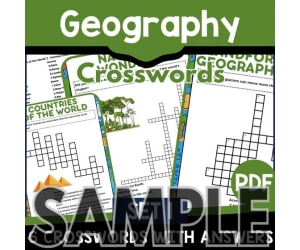
Geography Crossword - Set 1: 1 Page Sample (PDF)
ELA, Language Development, Vocabulary, Spelling, ESL, Resources for Teachers, Geography, Social Studies, Grade 2, 3, 4, 5, Worksheets & Printables, Worksheets, Teacher Tools, Crosswords Puzzles, Centers, Activities
THIS IS A ONE PAGE SAMPLE OF A SIX CROSSWORD DOWNLOAD FULL SIX CROSSWORD DOWNLOAD INFORMATION: Crossword Series (Themed) This crossword series is designed for students in grades 2–5. Each set of crosswords is built around a clear vocabulary theme, allowing students to strengthen their word recognition, build subject-based knowledge, and reinforce early literacy and thinking skills. Each topic includes six crossword sets , and each set features the following consistent structure: 1. 8 vocabulary clues 2. Crossword puzzle 3. Answer key 4. 1 Did You Know fact related to the set These crosswords are designed to be student-friendly, classroom-ready, and easily integrated into thematic units, seasonal learning, morning work, or independent literacy stations. Geography Crosswords Set 1 Word List 1. Countries of the World Canada, Brazil, China, India, Egypt, France, Japan, Mexico 2. Famous Cities New York, Paris, London, Tokyo, Sydney, Cairo, Rome, Rio 3. Famous Landmarks Eiffel Tower, Great Wall, Statue of Liberty, Colosseum, Taj Mahal, Mount Everest, Amazon River, Grand Canyon 4. Continents and Oceans Asia, Africa, Europe, Australia, Antarctica, Pacific, Atlantic, Indian 5. Natural Wonders Niagara Falls, Grand Canyon, Mount Everest, Amazon Rainforest, Sahara Desert, Great Barrier Reef, Victoria Falls, Northern Lights 6. Landforms and Geography Terms Mountain, River, Desert, Island, Peninsula, Volcano, Valley, Glacier PDF Version Other versions will appear here when available. Follow the store for the lastest on new products. How to Use This Crossword These crosswords are ideal for whole-class work, small groups, literacy centers, or take-home activities. Use one set per day, or spread them across a week or month depending on your curriculum needs. Each clue has been crafted to align with the reading level of grades 2–5, with support for both decoding and meaning. The Did You Know? facts offer additional extension opportunities for writing, drawing, or display work. Whether you're reinforcing vocabulary, exploring a seasonal topic, or adding variety to your literacy block, these crosswords provide a fun, flexible, and focused way to boost early literacy in an engaging format. More Geography Themed Products Geography Crosswords (Set 2) PDF Geography Crosswords (Set 3) PDF FULL CATALOG OF DOWNLOAD LINKS HERE Themed Crossword Links Addition PDF Animals PDF Around the Home PDF Birthday PDF Candy PDF Christmas PDF Cinco de Mayo PDF Clothes PDF Colors PDF Days and Months PDF Division PDF Earth Day PDF Easter PDF Easy Crosswords PDF Fall PDF Father's Day PDF Food PDF Geography (Set 1) PDF Geography (Set 2) PDF Geography (Set 3) PDF Graduation PDF Health PDF History (Set 1) PDF History (Set 2) PDF History (Set 3) PDF Human Body PDF Kindness PDF Life Skills PDF Mother's Day PDF Multiplication PDF Science Crosswords (Set 1) PDF Science Crosswords (Set 2) PDF Science Crosswords (Set 3) PDF Shapes PDF Social Skills PDF Spring PDF Sports PDF St. Patrick's Day PDF Subtraction PDF Summer PDF Thanksgiving PDF Transport PDF Valentine's Day PDF Winter PDF Crosswords in Depth Structure Each crossword clue is written in simplified language to suit early readers, and follows a strict number-and-clue format (e.g., 1.A shape with four sides ). Students complete each puzzle using the themed vocabulary provided, helping to build both content knowledge and spelling confidence. Each completed set includes: A questions section with clearly formatted clues An answers section to support teacher checking or independent correction A Did You Know? fact tied to the topic (one per set) to add curiosity and cross-curricular value Themes Included The crosswords cover a wide variety of engaging, age-appropriate themes such as: Seasons & Holidays (e.g., Winter, Easter, Valentine’s Day) Math Concepts (e.g., Addition, Subtraction, Multiplication, Division) Everyday Topics (e.g., School, Colors, Animals, Weather) Special Units (e.g., Health, Earth Day, Sports, Graduation, Kindness) Each theme is carefully selected to reflect the experiences and interests of young learners, while reinforcing vocabulary and comprehension. For similar downloads and other frees, do check out Cored Group on TeachSimple.
Author Cored Education
Rating
Tags Vocabulary, Spelling, Crosswords, Geography, Geography Crosswords, Countries Of The World, Famous Cities, Famous Landmarks, Natural Wonders, Continents And Oceans
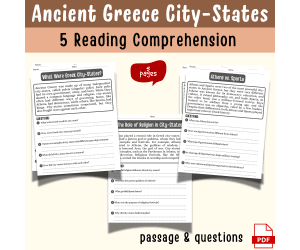
Ancient Greece City-States Reading Passage & Question Worksheet | Soci
History: Ancient, History, Social Studies, Reading, ELA, Grade 4, 5, Assessments, Teacher Tools, Centers, Activities
Engaging and Educational! Enhance your students’ understanding of Ancient Greece with this reading comprehension resource focused on the city of Athens. Designed for upper elementary and middle school learners, this activity helps students build reading comprehension and critical thinking skills while exploring one of the most influential cities in ancient history. Students will learn about the government, culture, education, daily life, and achievements of Athens through five informational reading passages. Each passage includes five comprehension questions that encourage students to analyze information, strengthen vocabulary, and improve historical understanding. This resource features a clear and student-friendly layout that supports independent learning and classroom instruction. It is perfect for social studies lessons, literacy centers, homework, substitute plans, morning work, small-group activities, and homeschool learning. Ideal for Grades 4–8, ESL and ELL learners, intervention groups, and history enrichment activities. The ready-to-print PDF format makes lesson preparation quick and easy for busy teachers. File type: PDF
Author Sadigitalart
Rating
Tags Ancient Greece , Social Studies, Passage & Question, Ancient Greece City-States

Tenses Sample Lesson - Grammar Grade 5-6 (Forms)
ELA, Language Development, ESL, Grammar, Common Core, Resources for Teachers, Grade 5, 6, 7, Worksheets & Printables, Worksheets, Quizzes and Tests, Teacher Tools, Tests, Assessments, Centers, Activities
Tenses Sample Lesson ELA MCQS Overview: In this series of lessons, students will embark on an engaging journey to master the language arts skills that make communication effective and expressive. These lessons are designed to help students recognize, understand, and apply key grammar, vocabulary, and writing conventions in both their writing and speech. Each lesson builds upon the previous one, providing a structured blend of direct instruction, interactive group activities, and independent practice. With engaging tasks and thought-provoking questions, students will explore sentence structure, word choice, punctuation, and grammar rules to strengthen their understanding of English language conventions. Accompanied by free supplementary materials covering all topics, this series ensures a well-rounded and enjoyable learning experience. Through practice and exploration, students will develop the skills needed to analyze language, construct clear sentences, and express themselves with confidence. Tenses Overview: Present Tense Practice Past Tense Practice Future Tense Practice Further Tense Practice Forms Version This is the Forms editable and self grading version. This download is available in GOOGLE Docs, GOOGLE Forms, GOOGLE Slides. PDF, PPT, WORD, check the links below for more details. FULL CATALOG OF DOWNLOAD LINKS HERE Grade 5/6 Links: Capitalization & Punctuation Google Docs Google Forms Google Slides PDF PPT Word Free Supplementary Materials Pack Adjectives Google Docs Google Forms Google Slides PDF PPT Word Free Supplementary Materials Pack Nouns Google Docs Google Forms Google Slides PDF PPT Word Free Supplementary Materials Pack Pronouns Google Docs Google Forms Google Slides PDF PPT Word Free Supplementary Materials Pack Verbs Google Docs Google Forms Google Slides PDF PPT Word Free Supplementary Materials Pack Prefixes & Suffixes Google Docs Google Forms Google Slides PDF PPT Word Free Supplementary Materials Pack Sentence Structure Google Docs Google Forms Google Slides PDF PPT Word Free Supplementary Materials Pack Subject Verb Agreement Google Docs Google Forms Google Slides PDF PPT Word Free Supplementary Materials Pack Tenses Google Docs Google Forms Google Slides PDF PPT Word Free Supplementary Materials Pack Context Clues Google Docs Google Forms Google Slides PDF PPT Word Free Supplementary Materials Pack Defining Words Google Docs Google Forms Google Slides PDF PPT Word Free Supplementary Materials Pack Fill in the Blanks Google Docs Google Forms Google Slides PDF PPT Word Free Supplementary Materials Pack Homophones Google Docs Google Forms Google Slides PDF PPT Word Free Supplementary Materials Pack Synonyms Google Docs Google Forms Google Slides PDF PPT Word Free Supplementary Materials Pack ELA Review Questions Overview Questions have three answer choices. There are a handful of pictures on each test for aesthetic purposes, as well as a review sheet covering most of the topics covered in the product. Introduction or Example Sheet Each topic will include an introduction or example sheet to go through first with your students. Full Answer Keys Full answer keys and sample responses are provided so no matter how busy you are, you know you're covered! In the Supplementary Pack Interactive Ice Breakers: Engaging warm-up activities that introduce students to key ELA concepts, such as quick capitalization corrections and punctuation challenges. Guided Practice: Structured teacher-led exercises that reinforce grammar and punctuation rules, helping students identify and apply them correctly in sentences. Group and Partner Tasks: Collaborative activities where students work together to edit sentences, correct capitalization, and improve punctuation through peer discussion and teamwork. Independent Worksheets: Carefully designed worksheets that provide focused practice, allowing students to apply learned concepts and refine their skills independently. Exit Tasks: Quick assessments at the end of each lesson, prompting students to reflect on what they’ve learned and apply their knowledge in writing and editing tasks. For More Like This For similar downloads and other frees, do check out Cored Group on TeachSimple.
Author Cored Education
Tags Elementary, Answers, Ccss, Common Core, Grammar, Tests, Assessment, Grade 5, Grade 6, Digital Centers

Easy Word Searches (PDF)
ELA, Language Development, Resources for Teachers, Vocabulary, Spelling, Numbers, Early Math, Math, Shapes, ESL, Grade 2, 3, 4, 5, Worksheets & Printables, Worksheets, Teacher Tools, Centers, Activities, Word Searches
Wordsearch Series This wordsearch series is designed for students in grades 2–5. Each set of wordsearches is built around a clear vocabulary theme, helping students develop word recognition, improve spelling, and boost topic-related understanding through engaging visual puzzles. Every wordsearch also includes a fun hidden shape for students to guess—adding an interactive twist to traditional vocabulary practice. These wordsearches are student-friendly, classroom-ready, and perfect for integrating into literacy warmups, seasonal units, fast-finisher tasks, or home learning extensions. Each puzzle reinforces themed vocabulary in a playful, structured format that keeps learners motivated. Easy Word Search Word List 1. Colors Red, Blue, Yellow, Green, Pink, Black, White, Orange 2. Animals Dog, Cat, Cow, Fish, Bird, Frog, Ant, Duck 3. Weather Sun, Rain, Snow, Wind, Cloud, Storm, Cold, Hot 4. Numbers One, Two, Three, Four, Five, Six, Seven, Eight 5. Shapes Circle, Square, Triangle, Heart, Star, Oval, Diamond, Rectangle 6. School Book, Pen, Desk, Bag, Paper, Bell, Glue, Crayon PDF Version Other versions will appear here when available. Follow the store for the lastest on new products. How to Use These Wordsearches These wordsearches are ideal for: Morning work or early finisher bins Vocabulary centers or anchor activities Holiday or seasonal review lessons Independent literacy stations or take-home enrichment Each puzzle includes a themed word list and a shaped grid for students to complete. Word directions may vary (horizontal, vertical, diagonal), and answer keys are included for easy checking. Optional vocabulary challenges or writing tasks can be added to extend the learning experience. Whether you're reviewing key vocabulary, exploring a seasonal topic, or offering fun literacy practice, these wordsearches provide a flexible and engaging tool to support vocabulary growth in grades 2–5. More Easy Themed Products CROSSWORDS FULL CATALOG OF DOWNLOAD LINKS HERE Themed Word Search Links Addition PDF Animals PDF Around the Home PDF Birthday PDF Candy PDF Christmas PDF Cinco de Mayo PDF Clothes PDF Colors PDF Days and Months PDF Division PDF Earth Day PDF Easter PDF Easy Word Searches PDF Fall PDF Father's Day PDF Food PDF Geography (Set 1) PDF Geography (Set 2) PDF Geography (Set 3) PDF Graduation PDF Health PDF History (Set 1) PDF History (Set 2) PDF History (Set 3) PDF Human Body PDF Kindness PDF Life Skills PDF Mother's Day PDF Multiplication PDF Science Word Searches (Set 1) PDF Science Word Searches (Set 2) PDF Science Word Searches (Set 3) PDF Shapes PDF Social Skills PDF Spring PDF Sports PDF St. Patrick's Day PDF Subtraction PDF Summer PDF Thanksgiving PDF Transport PDF Valentine's Day PDF Winter PDF Wordsearches in Depth Structure Each wordsearch is crafted around a focused sub-theme and includes a visual puzzle shaped like a related object (e.g., balloon, gift, snowman). Students complete each puzzle using the provided themed word list, strengthening both content knowledge and spelling skills in a highly engaging format. Each completed set includes: A shaped wordsearch puzzle with 10 vocabulary words A student instruction guide with search directions (horizontal, vertical, diagonal) An answer key for teacher support or student self-checking A Did You Know? fact connected to the theme for enrichment or discussion Themes Included The wordsearches cover a wide range of fun, age-appropriate themes, including: Seasons & Holidays (e.g., Halloween, Easter, Valentine’s Day) Math Concepts (e.g., Addition, Number Words) Everyday Topics (e.g., Animals, Weather, School) Special Units (e.g., Health, Earth Day, Sports, Kindness) Each topic is selected to reflect students’ real-life experiences and interests while reinforcing literacy skills and content understanding in a playful, visual way. For similar downloads and other frees, do check out Cored Group on TeachSimple.
Author Cored Education
Rating
Tags Vocabulary, Spelling, Colors, Animals, Numbers, Weather, Shapes, Easy Activities, Easy Word Searches, Word Searches
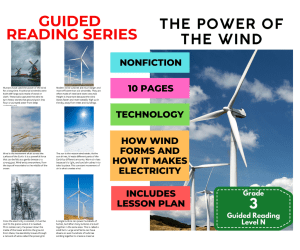
Guided Reading Level N - The Power of the Wind (with Lesson Plan)
ELA, Resources for Teachers, Reading Comprehension, Reading, Social Studies, Geography, Earth and Environmental Sciences, Science, Physics, Technology, Grade 2, 3, 4, Worksheets & Printables, Worksheets, Teacher Tools, Centers, Activities, Literacy Readers, Quizzes, Quizzes and Tests, Assessments, Lesson Plans
This Guided Reading Book - The Power of the Wind (Level N) with lesson plan includes: Guided Reading Color Label (front cover x1) This is a quick way to match the book’s demands to what students can generally handle.. The overall goal is to use the level/color to pick books for several smaller groups. To qualify for a certain level, a student is expected to read a book from that level with about 90–94% accuracy. If a student is consistently accurate and understands, move up a level. If the student is struggling at that level, drop down and add more support. Each student will improve at completely different rates, but it is generally one of the best ways to check progress across the class. DOWNLOAD THE CATALOG TO VIEW ALL GUIDED READING BOOKS AVAILABLE (SORTED LEVELS A-Z) Pre-Reading Question (x1) Teacher asks the prompt aloud, can be while showing the cover or first page. Students share what they already know, or make educated guesses from the cover. Prompt them to use the target vocabulary. Write some of their responses on the board to look back at during the reading. Vocabulary Words (x5) Introduce the five words, best doing it one at a time. Start by saying it, while students repeat and then see if anyone knows what it means before reading further. Read through the meaning and try to briefly connect each word to a picture or gesture so it’s meaningful. Ask students to flip through the book pages and point to where they see each of the vocabulary words. While reading the book pause upon coming across one of the vocab words or read the sentence twice to make sure students understand the word has appeared. Optional: Ask students to raise hands whenever they see/hear one of the new words. Guided Reading Pages (x10) Check the book snapshot (below) for: primary topic - do you need to prep extra reading or intro materials on this? what is taught best - decide on 1-2 bullets to focus on, use the prompt or words provided here for best results. learning goals - what you are checking for students to be able to do after the session, elicit answers using prompts or words provided. key vocabulary (see section above). questions overview - so you know what is coming up and if you need to prep extra materials to assist understanding. Run the lesson You may have already looked at a few of the pages together, but you can show them some of the pictures again first to set meaning. Depending on how much time you have and how familiar your students are with guided reading class, you may want to read the book aloud first with the group first. Students whisper or partner read, while you listen in. If time, do it as a group, one student reading a page each. Use the guided page’s prompts to coach: “Check the picture / does it make sense?” “Point under the words / try the first sound” “Reread the sentence smoothly”. Try to focus more on one student per session (rotating every time), so you can work out if they are ready to move up or need to move down a level. Comprehension Questions (back cover x3) This is your way to check that students didn’t just say the words, but actually understood the text. First, let students answer by pointing to the page/picture and saying a short sentence. After any answer, follow with: “Show me where you found that in the text.” In bigger groups, have partners answer first (10–20 seconds), then call on 2–3 students to share. Differentiation tips: Emerging speakers/struggling readers: oral + pointing On-level: oral in a full sentence Higher: one written sentence or draw + label Book Snapshot Title: The Power of the Wind Genre: Nonfiction (informational science text) Subject: Science (Energy/Earth Science) Primary Topic: How wind forms and how it makes electricity Estimated Guided Reading Level (A–Z): N What This Book Teaches Best Defines wind as the movement of air across Earth’s surface and describes wind as a breeze or a strong gust. Explains the cause of wind : the sun heats Earth unevenly, warm air rises, and cool air moves in to replace it. Shows how people have used wind over time, comparing traditional windmills (grinding grain, pumping water) to modern wind turbines. Describes how a wind turbine works, including blades spinning a shaft connected to a generator that makes electricity. Connects wind energy to sustainability by explaining wind farms , offshore wind farms , and wind energy as a clean, renewable resource. Learning Goals Students will explain what wind is using details from the text. Students will describe how the sun’s heating of Earth helps create wind. Students will describe how traditional windmills used wind to help people. Students will explain how wind turbines change wind’s motion into electricity. Students will describe what a wind farm is and why offshore wind farms can capture strong winds. Students will explain why wind energy is described as renewable and clean in the text. Key Vocabulary From the Text movement — going from one place to another. gust — a short, strong burst of wind. turbines — big machines with blades that spin in wind. generator — a machine that makes electricity. renewable — can be used again and won’t run out. Discussion Prompts Pre-reading question: Where have you seen wind do work, like moving something or making power? Comprehension questions: What does the text say creates wind? Comprehension questions: How did traditional windmills use wind to help people? Comprehension questions: How does a wind turbine turn wind into electricity, according to the text? Printing Tips 1. Best Printing Method (Recommended) “Booklet” Printing (Best if Available) If your printer or PDF viewer supports Booklet Printing , use this. Settings to use: Print mode: Booklet Paper size: Letter or A4 (either works) Orientation: Landscape Print on both sides: Yes Flip on: Short edge Scaling: Fit to printable area Booklet subset: First test: Front sides only Then: Back sides only This will automatically: Pair pages correctly Put the cover on the outside Align everything for folding After printing, fold in half and staple along the spine . 2. If “Booklet” Printing Is NOT Available You can still print this correctly with manual duplex printing . Step-by-step: Open the PDF. Choose Print . Set: Orientation: Landscape Pages per sheet: 1 Print on both sides: Yes Flip on: Short edge Print all pages . Because each PDF page already contains two facing book pages, the result will still fold cleanly into a book. Thousands of Cored Education products are included with your TeachSimple membership. Download links and encyclopedia index available here.
Author Cored Education
Rating
Tags Reading Comprehension, Reading Passages, Reading, Guided Reading, Guided Reading Lesson Plan, Guided Reading Activity, Pre-reading, Geography, Science Lesson Plans, Technology
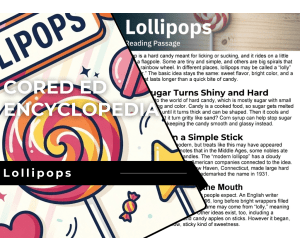
Lollipops Reading Comprehension Passage - Cored Ed Encyclopedia
ELA, Language Development, Resources for Teachers, Reading Comprehension, Reading, Pre-Reading, Writing, Science, Physics, Strategies, Grade 2, 3, 4, 5, Worksheets & Printables, Worksheets, Teacher Tools, Centers, Activities, Writing Prompts, Assessments, Tests, Quizzes and Tests, Quizzes
This lollipops reading comprehension contains the following: Visualize on the Cover (Teacher Read Aloud Script) Start your lesson by taking a few moments to visualize the topic and share thoughts or feelings about it. Pre-Reading Trivia Students will write down one thing they already know about the subject and then read five more facts and discuss. These facts are fun, and the students will enjoy learning about the subject before reading more. Reading Passage The text is a high-interest reading passage with set paragraphs, roughly three to four paragraphs long. It contains a variety of themes about the topic, anywhere from history to technology. The passage is between 250 and 350 words in length. Mixed Questions The first question page contains four multiple-choice questions, each with a choice of four answers, and three written response questions that require a sentence or two from the student. Vocabulary Questions Practice seven key words from the text in this section across two activities. First section is scrambled words where students will unscramble three words given a clue for each. The second section is a word to meaning matching activity. Creative Writing In this question, the student will be required to write a five to eight sentence paragraph on a question related to the topic. Extension Activities This page is optional for fast finishers or to take home. There are several activities, each one requiring a different skill. Do some, do none, do all, completely optional - but you will feel reassured knowing every possibility is planned for. Includes summary writting question. Answer Key There are answers for the multiple-choice questions, written response questions have sample answers, vocabulary answers and if there is a summary question then a sample summary will be provided as well. FULL CATALOG OF DOWNLOAD LINKS AND ENCYCLOPEDIA INDEX HERE Lesson Snapshot Title: Lollipops Genre: Nonfiction (informational text) Subject: Reading (Informational Text) / Science (cooking & materials) / Social Studies (history of foods) Primary Topic: Hard candy on a stick: making, history, name Estimated Guided Reading Level (A–Z): O What This Lesson Teaches Best Defines a lollipop as hard candy for licking or sucking, on a stick, and notes different names in different places (“lolly,” “sucker”). Explains how hard candy is made: sugar is cooked with water until thick, then cooled so it hardens. Describes why corn syrup matters in hard candy: it can help stop sugar crystals from forming so candy stays smooth and “glassy.” Shares historical background: candy on sticks appeared long ago (including the Middle Ages), and the “modern lollipop” has a cloudy history with early 1900s U.S. companies (including a story about George Smith and later trademarking). Explores word history: “lollipop” was recorded in 1796, with possible connections to “lolly” and “pop,” plus other ideas (including Romani words and candy apples on sticks). Learning Goals Students will describe what a lollipop is and how people eat it, using details from the text. Students will explain the steps that turn sugar and water into hard candy (cook, thicken, cool, harden). Students will explain how corn syrup affects hard candy by helping stop sugar crystals from forming. Students will identify key time references about lollipops (Middle Ages, early 1900s, 1796) and tell what the text says about each. Students will summarize what the passage says about where the name “lollipop” may have come from. Key Vocabulary From the Text crystals — tiny hard bits that can make candy feel gritty. gritty — rough, like sand. glassy — smooth and shiny, like glass. trademarked — legally protected a name for a product. spirals — twisty, swirl shapes. Cored Ed Encyclopedia Overview The Cored Ed Encyclopedia is a weekly series of lessons that you can pick up and use right away. These short readings fit into whatever time you have available. Each one includes a warm-up, a reading, and a set of questions, but it’s flexible — you can do just the reading, the full lesson, or skip the writing section if you need to. Each lesson focuses on a single topic so students don’t get lost. The writing is clear but never childish, making it perfect for grades two through five. Topics range from animals and science to history, inventions, and everyday things. No matter the level of the student, everyone should take away at least one new idea or fact from each lesson. The materials are easy to print, easy to explain, and require no setup. They work well for whole-class teaching, partner work, or independent study.
Author Cored Education
Rating
Tags Vocabulary, Spelling, Reading Comprehension, Reading Passages, Reading, Creative Writing, Reading Strategies, Writing Prompts, Lollipops, Physics
African Elephant Reading Comprehension - Cored Ed Encyclopedia
ELA, Language Development, Resources for Teachers, Reading Comprehension, Reading, Pre-Reading, Animals, Life Sciences, Science, Strategies, Grade 2, 3, 4, 5, Worksheets & Printables, Worksheets, Teacher Tools, Centers, Activities, Writing Prompts, Assessments, Tests, Quizzes and Tests, Quizzes
This African Elephant reading comprehension contains the following: Pre-Reading Trivia Students will write down one thing they already know about the subject and then read five more facts and discuss. These facts are fun, and the students will enjoy learning about the subject before reading more. COMPANION VIDEO NOW AVAILABLE (EMBEDDED AFTER PREVIEW PICTURES IN PRODUCT DESCRIPTION) Reading Passage The text is a high-interest reading passage with set paragraphs, roughly three to four paragraphs long. It contains a variety of themes about the topic, anywhere from history to technology. The passage is between 250 and 350 words in length. Mixed Questions The first question page contains four multiple-choice questions, each with a choice of four answers, and three written response questions that require a sentence or two from the student. Creative Writing In this question, the student will be required to write a five to eight sentence paragraph on a question related to the topic. Extension Activities This page is optional for fast finishers. If there are five to ten minutes left at the end of the lesson, the student can choose one of three activities, each one requiring a different skill. Answer Key There are answers for the multiple-choice questions and three written response questions have sample answers. FULL CATALOG OF DOWNLOAD LINKS AND ENCYCLOPEDIA INDEX HERE Cored Ed Encyclopedia Overview The Cored Ed Encyclopedia is a weekly series of lessons that you can pick up and use right away. These short readings fit into whatever time you have available. Each one includes a warm-up, a reading, and a set of questions, but it’s flexible — you can do just the reading, the full lesson, or skip the writing section if you need to. Each lesson focuses on a single topic so students don’t get lost. The writing is clear but never childish, making it perfect for grades two through five. Topics range from animals and science to history, inventions, and everyday things. No matter the level of the student, everyone should take away at least one new idea or fact from each lesson. The materials are easy to print, easy to explain, and require no setup. They work well for whole-class teaching, partner work, or independent study.
Author Cored Education
Rating
Tags Vocabulary, Spelling, Reading Comprehension, Reading Passages, Cored Encyclopedia, Facts, Reading, Elephants, Animals, Life Science

It's Fall! Kindergarten Math & Literacy Center: Syllables
ELA, Language Development, Phonics, Kindergarten, Preschool, Grade 1, Centers, Activities
It's Fall! Kindergarten Math & Literacy Center: Syllables This delightful teaching tool is designed with a seasonal theme to bring fun into your learning environment. It works for both public schools and home education settings, offering a charming way to make math and literacy lessons come alive. Focusing on phonics, this syllable counting worksheet aids students in understanding the structure of words, aiming to enhance their reading skills as they count the syllables in each word and record it. Decorated with captivating illustrations, these worksheets encourage interaction by also allowing students to color pictures after completing tasks. The content aligns with the Common Core Standards for Kindergarten but isn't limited to that grade level only. Even Preschool pupils can interactively engage with it. Although language arts instruction takes center stage here, there's an implicit invitation for practicing math skills by specifying syllable counts. Owing its versatility, you can use these worksheets in different ways: Create an interactive storytelling or discussion session during whole group instruction. Create small groups where children can learn from each other as a team. You can assign it individually as homework so kids can continue developing their literacy skills at home during personal study time. In terms of ease-of-use – this resource comes ready for download (PDF format) containing four pages which include one complete worksheet. Hence preparation is straight-forward without requiring undue time from any busy teacher’s schedule. To conclude: "It's Fall! Kindergarten Math & Literacy Center: Syllables", brings more than just seasonal flavor into your language arts curriculum. It offers you versatile instructional options while ensuring an engaging learning experience for young learners.
Author Knowledge Box Central
Tags Fall, Kindergarten, Math Literacy, Syllables, Syllables Kindergarten, Kindergarten Syllables

It's Winter! Kindergarten Math & Literacy Center: Plural Nouns
ELA, Grammar, Common Core, Kindergarten, Preschool, Grade 1, Centers, Activities
When it’s cold outside, add some fun to your classroom with these engaging math and literacy centers! Designed to meet Common Core standards for Kindergarten, this NO PREP It’s Winter Math and Literacy Center has it all! They included activities can be used for morning work, homework, group work, centers and more! May be used with Preschool students as well. The student will cut out the singular noun words at the bottom of the page and glue them into the proper space, depending on whether making that word plural would require an 's' or an 'es'. This is an ebook download in PDF format. Keywords: kindergarten, noun, nouns, plural, grammar, spelling, center , common core, winter
Author Knowledge Box Central
Tags Plural, Noun, Parts Of Speech, Spelling, Common Core

Kindness Word Searches (PDF)
ELA, Language Development, Resources for Teachers, Vocabulary, Spelling, ESL, Life Skills, Special Resources, Social Skills, Grade 2, 3, 4, 5, Worksheets & Printables, Worksheets, Teacher Tools, Centers, Activities, Word Searches
Wordsearch Series This wordsearch series is designed for students in grades 2–5. Each set of wordsearches is built around a clear vocabulary theme, helping students develop word recognition, improve spelling, and boost topic-related understanding through engaging visual puzzles. Every wordsearch also includes a fun hidden shape for students to guess—adding an interactive twist to traditional vocabulary practice. These wordsearches are student-friendly, classroom-ready, and perfect for integrating into literacy warmups, seasonal units, fast-finisher tasks, or home learning extensions. Each puzzle reinforces themed vocabulary in a playful, structured format that keeps learners motivated. Kindness Word Search Word List 1. Kind Words Please, Thank, Hello, Sorry, Nice, Smile, Help, Share 2. Helping Others Help, Share, Carry, Give, Fix, Ask, Listen, Care 3. Being a Good Friend Friend, Play, Talk, Laugh, Help, Hug, Share, Kind 4. Showing Respect Listen, Quiet, Wait, Polite, Honest, Fair, Safe, Friendly 5. Kindness at School Teacher, Share, Wait, Help, Quiet, Fair, Write, Learn 6. Kindness at Home Parent, Sibling, Grandparent, Care, Share, Talk, Meal, Love PDF Version Other versions will appear here when available. Follow the store for the lastest on new products. How to Use These Wordsearches These wordsearches are ideal for: Morning work or early finisher bins Vocabulary centers or anchor activities Holiday or seasonal review lessons Independent literacy stations or take-home enrichment Each puzzle includes a themed word list and a shaped grid for students to complete. Word directions may vary (horizontal, vertical, diagonal), and answer keys are included for easy checking. Optional vocabulary challenges or writing tasks can be added to extend the learning experience. Whether you're reviewing key vocabulary, exploring a seasonal topic, or offering fun literacy practice, these wordsearches provide a flexible and engaging tool to support vocabulary growth in grades 2–5. More Kindness Themed Products CROSSWORDS FULL CATALOG OF DOWNLOAD LINKS HERE Themed Word Search Links Addition PDF Animals PDF Around the Home PDF Birthday PDF Candy PDF Christmas PDF Cinco de Mayo PDF Clothes PDF Colors PDF Days and Months PDF Division PDF Earth Day PDF Easter PDF Easy Word Searches PDF Fall PDF Father's Day PDF Food PDF Geography (Set 1) PDF Geography (Set 2) PDF Geography (Set 3) PDF Graduation PDF Health PDF History (Set 1) PDF History (Set 2) PDF History (Set 3) PDF Human Body PDF Kindness PDF Life Skills PDF Mother's Day PDF Multiplication PDF Science Word Searches (Set 1) PDF Science Word Searches (Set 2) PDF Science Word Searches (Set 3) PDF Shapes PDF Social Skills PDF Spring PDF Sports PDF St. Patrick's Day PDF Subtraction PDF Summer PDF Thanksgiving PDF Transport PDF Valentine's Day PDF Winter PDF Wordsearches in Depth Structure Each wordsearch is crafted around a focused sub-theme and includes a visual puzzle shaped like a related object (e.g., balloon, gift, snowman). Students complete each puzzle using the provided themed word list, strengthening both content knowledge and spelling skills in a highly engaging format. Each completed set includes: A shaped wordsearch puzzle with 10 vocabulary words A student instruction guide with search directions (horizontal, vertical, diagonal) An answer key for teacher support or student self-checking A Did You Know? fact connected to the theme for enrichment or discussion Themes Included The wordsearches cover a wide range of fun, age-appropriate themes, including: Seasons & Holidays (e.g., Halloween, Easter, Valentine’s Day) Math Concepts (e.g., Addition, Number Words) Everyday Topics (e.g., Animals, Weather, School) Special Units (e.g., Health, Earth Day, Sports, Kindness) Each topic is selected to reflect students’ real-life experiences and interests while reinforcing literacy skills and content understanding in a playful, visual way. For similar downloads and other frees, do check out Cored Group on TeachSimple.
Author Cored Education
Rating
Tags Vocabulary, Spelling, Kindness, Kind Words, Helping Others, Kindness Activities, Ela Word Searches, Word Search, Kindness Word Searches, Word Searches
Guided Reading Level N - Everest (with Lesson Plan)
ELA, Resources for Teachers, Reading Comprehension, Reading, Science, Earth and Environmental Sciences, Social Studies, Geography, Life Sciences, Physics, Grade 2, 3, 4, Worksheets & Printables, Worksheets, Teacher Tools, Centers, Activities, Literacy Readers, Quizzes, Quizzes and Tests, Assessments, Lesson Plans
This Guided Reading Book - Everest (Level N) with lesson plan includes: Guided Reading Color Label (front cover x1) This is a quick way to match the book’s demands to what students can generally handle.. The overall goal is to use the level/color to pick books for several smaller groups. To qualify for a certain level, a student is expected to read a book from that level with about 90–94% accuracy. If a student is consistently accurate and understands, move up a level. If the student is struggling at that level, drop down and add more support. Each student will improve at completely different rates, but it is generally one of the best ways to check progress across the class. DOWNLOAD THE CATALOG TO VIEW ALL GUIDED READING BOOKS AVAILABLE (SORTED LEVELS A-Z) Pre-Reading Question (x1) Teacher asks the prompt aloud, can be while showing the cover or first page. Students share what they already know, or make educated guesses from the cover. Prompt them to use the target vocabulary. Write some of their responses on the board to look back at during the reading. Vocabulary Words (x5) Introduce the five words, best doing it one at a time. Start by saying it, while students repeat and then see if anyone knows what it means before reading further. Read through the meaning and try to briefly connect each word to a picture or gesture so it’s meaningful. Ask students to flip through the book pages and point to where they see each of the vocabulary words. While reading the book pause upon coming across one of the vocab words or read the sentence twice to make sure students understand the word has appeared. Optional: Ask students to raise hands whenever they see/hear one of the new words. Guided Reading Pages (x10) Check the book snapshot (below) for: primary topic - do you need to prep extra reading or intro materials on this? what is taught best - decide on 1-2 bullets to focus on, use the prompt or words provided here for best results. learning goals - what you are checking for students to be able to do after the session, elicit answers using prompts or words provided. key vocabulary (see section above). questions overview - so you know what is coming up and if you need to prep extra materials to assist understanding. Run the lesson You may have already looked at a few of the pages together, but you can show them some of the pictures again first to set meaning. Depending on how much time you have and how familiar your students are with guided reading class, you may want to read the book aloud first with the group first. Students whisper or partner read, while you listen in. If time, do it as a group, one student reading a page each. Use the guided page’s prompts to coach: “Check the picture / does it make sense?” “Point under the words / try the first sound” “Reread the sentence smoothly”. Try to focus more on one student per session (rotating every time), so you can work out if they are ready to move up or need to move down a level. Comprehension Questions (back cover x3) This is your way to check that students didn’t just say the words, but actually understood the text. First, let students answer by pointing to the page/picture and saying a short sentence. After any answer, follow with: “Show me where you found that in the text.” In bigger groups, have partners answer first (10–20 seconds), then call on 2–3 students to share. Differentiation tips: Emerging speakers/struggling readers: oral + pointing On-level: oral in a full sentence Higher: one written sentence or draw + label Book Snapshot Title: Everest Genre: Nonfiction (informational text) Subject: Science (Earth Science/Geography) Primary Topic: Mount Everest’s location, formation, and extreme conditions Estimated Guided Reading Level (A–Z): N What This Book Teaches Best Key facts about Mount Everest’s height and setting in the Himalayas in Asia. How mountain ranges form over long periods of time, including tectonic plate movement. How borders and regions connect to physical geography (Nepal/China border across the summit). How extreme environments change with altitude, including the “Death Zone” and low oxygen. How glaciers, weather, earthquakes, and erosion shape Everest and keep it changing. Learning Goals Describe where Mount Everest is located and what mountain system it is part of. Identify what the text says about the border between Nepal and China on Everest. Explain how Everest was formed using the book’s description of tectonic plates. Describe what the “Death Zone” is and why most living things cannot survive there long. Describe how glaciers create features on the mountain, including crevasses. Explain one way Everest is still changing today, using details from the text. Key Vocabulary From the Text summit — the very top point of a mountain. glacier — a huge, slow-moving river of ice. tectonic — related to Earth’s moving crust plates. crevasses — deep cracks in ice. erosion — wind, water, or ice wearing rock away. Discussion Prompts Pre-reading question: Where does the book say Mount Everest stands? Comprehension questions: What does the text say about where the Nepal–China border is on Everest? Comprehension questions: How does the text explain that Everest was formed long ago? Comprehension questions: What is one way the text says Mount Everest is still changing today? Printing Tips 1. Best Printing Method (Recommended) “Booklet” Printing (Best if Available) If your printer or PDF viewer supports Booklet Printing , use this. Settings to use: Print mode: Booklet Paper size: Letter or A4 (either works) Orientation: Landscape Print on both sides: Yes Flip on: Short edge Scaling: Fit to printable area Booklet subset: First test: Front sides only Then: Back sides only This will automatically: Pair pages correctly Put the cover on the outside Align everything for folding After printing, fold in half and staple along the spine . 2. If “Booklet” Printing Is NOT Available You can still print this correctly with manual duplex printing . Step-by-step: Open the PDF. Choose Print . Set: Orientation: Landscape Pages per sheet: 1 Print on both sides: Yes Flip on: Short edge Print all pages . Because each PDF page already contains two facing book pages, the result will still fold cleanly into a book. Thousands of Cored Education products are included with your TeachSimple membership. Download links and encyclopedia index available here.
Author Cored Education
Rating
Tags Reading Comprehension, Reading Passages, Reading, Guided Reading, Guided Reading Lesson Plan, Guided Reading Activity, Pre-reading, Social Studies Lesson Plans, Science Lesson Plans, Geography
Guided Reading Level I - The Big Blue Ice (with Lesson Plan)
ELA, Resources for Teachers, Reading Comprehension, Reading, Science, Language Development, Earth and Environmental Sciences, Geography, Social Studies, Life Sciences, Grade 1, 2, 3, Worksheets & Printables, Worksheets, Teacher Tools, Centers, Activities, Literacy Readers, Quizzes, Quizzes and Tests, Assessments, Lesson Plans
This Guided Reading Book - The Big Blue Ice (Level I) with lesson plan includes: Guided Reading Color Label (front cover x1) This is a quick way to match the book’s demands to what students can generally handle.. The overall goal is to use the level/color to pick books for several smaller groups. To qualify for a certain level, a student is expected to read a book from that level with about 90–94% accuracy. If a student is consistently accurate and understands, move up a level. If the student is struggling at that level, drop down and add more support. Each student will improve at completely different rates, but it is generally one of the best ways to check progress across the class. DOWNLOAD THE CATALOG TO VIEW ALL GUIDED READING BOOKS AVAILABLE (SORTED LEVELS A-Z) Pre-Reading Question (x1) Teacher asks the prompt aloud, can be while showing the cover or first page. Students share what they already know, or make educated guesses from the cover. Prompt them to use the target vocabulary. Write some of their responses on the board to look back at during the reading. Vocabulary Words (x5) Introduce the five words, best doing it one at a time. Start by saying it, while students repeat and then see if anyone knows what it means before reading further. Read through the meaning and try to briefly connect each word to a picture or gesture so it’s meaningful. Ask students to flip through the book pages and point to where they see each of the vocabulary words. While reading the book pause upon coming across one of the vocab words or read the sentence twice to make sure students understand the word has appeared. Optional: Ask students to raise hands whenever they see/hear one of the new words. Guided Reading Pages (x10) Check the book snapshot (below) for: primary topic - do you need to prep extra reading or intro materials on this? what is taught best - decide on 1-2 bullets to focus on, use the prompt or words provided here for best results. learning goals - what you are checking for students to be able to do after the session, elicit answers using prompts or words provided. key vocabulary (see section above). questions overview - so you know what is coming up and if you need to prep extra materials to assist understanding. Run the lesson You may have already looked at a few of the pages together, but you can show them some of the pictures again first to set meaning. Depending on how much time you have and how familiar your students are with guided reading class, you may want to read the book aloud first with the group first. Students whisper or partner read, while you listen in. If time, do it as a group, one student reading a page each. Use the guided page’s prompts to coach: “Check the picture / does it make sense?” “Point under the words / try the first sound” “Reread the sentence smoothly”. Try to focus more on one student per session (rotating every time), so you can work out if they are ready to move up or need to move down a level. Comprehension Questions (back cover x3) This is your way to check that students didn’t just say the words, but actually understood the text. First, let students answer by pointing to the page/picture and saying a short sentence. After any answer, follow with: “Show me where you found that in the text.” In bigger groups, have partners answer first (10–20 seconds), then call on 2–3 students to share. Differentiation tips: Emerging speakers/struggling readers: oral + pointing On-level: oral in a full sentence Higher: one written sentence or draw + label Book Snapshot Title: The Big Blue Ice Genre: Nonfiction (informational) Subject: Earth Science + Reading (Informational Text) Primary Topic: Glaciers and what happens to ice Estimated Guided Reading Level (A–Z): I What This Book Teaches Best Defines what a glacier is and explains that it stays frozen all year long. Explains how snow can squeeze together and turn into hard ice in very cold places. Describes how glaciers move slowly like “rivers of ice” down mountain slopes. Teaches glacier features and changes, including crevasses, calving, and icebergs. Connects glaciers to living things and Earth systems (animals resting on ice, fresh water, keeping the world cool). Learning Goals Describe what a glacier is using details from the text. Explain how piled-up snow turns into hard ice in very cold places. Tell how glaciers move and where they move (down mountain slopes). Identify crevasses and describe what the text says they show. Explain what calving is and what happens when a glacier reaches the ocean. Describe two ways glaciers are important on Earth (cooling the world, holding fresh water). Key Vocabulary From the Text glacier — a huge mountain of ice. frozen — turned to ice from very cold weather. crevasses — long cracks on the glacier’s surface. calving — when big ice chunks break off into the ocean. icebergs — floating mountains of ice in cold water. Discussion Prompts Pre-reading question: What do you think a glacier is, and where might you find one? Comprehension questions: How does snow turn into hard ice, according to the book? Comprehension questions: Why do some glaciers look bright blue in the text? Comprehension questions: Where do seals rest to take a nap and stay safe from the water? Printing Tips 1. Best Printing Method (Recommended) “Booklet” Printing (Best if Available) If your printer or PDF viewer supports Booklet Printing , use this. Settings to use: Print mode: Booklet Paper size: Letter or A4 (either works) Orientation: Landscape Print on both sides: Yes Flip on: Short edge Scaling: Fit to printable area Booklet subset: First test: Front sides only Then: Back sides only This will automatically: Pair pages correctly Put the cover on the outside Align everything for folding After printing, fold in half and staple along the spine . 2. If “Booklet” Printing Is NOT Available You can still print this correctly with manual duplex printing . Step-by-step: Open the PDF. Choose Print . Set: Orientation: Landscape Pages per sheet: 1 Print on both sides: Yes Flip on: Short edge Print all pages . Because each PDF page already contains two facing book pages, the result will still fold cleanly into a book. Thousands of Cored Education products are included with your TeachSimple membership. Download links and encyclopedia index available here.
Author Cored Education
Rating
Tags Reading Comprehension, Reading Passages, Reading, Guided Reading, Guided Reading Lesson Plan, Guided Reading Activity, Pre-reading, Science Lesson Plans, Earth Science, Geography
Verbs Practice Questions - Grade 3-4 Grammar (Google Docs)
ELA, Language Development, ESL, Grammar, Common Core, Resources for Teachers, Grade 3, 4, Worksheets & Printables, Worksheets, Quizzes and Tests, Teacher Tools, Tests, Assessments, Centers, Activities
Verbs Grammar Practice MCQS ELA MCQS Overview: In this series of lessons, students will embark on an engaging journey to explore the grammar skills that make our language vibrant and expressive. These lessons are crafted to help students identify, comprehend, and effectively apply language arts skills in both writing and speech. Accompanied by free supplementary materials available for all topics, each lesson builds on the previous one, offering a balanced mix of direct instruction, interactive group activities, and independent practice. Through fun and creative tasks, students will learn to recognize grammar within sentences, understand their function, and use them to enrich their own writing and speech. Verbs Overview: Includes: Action Verbs Helping Verbs Linking Verbs Correcting Mistakes Docs Version This is the Docs editable and fillable version. This download is available in GOOGLE Docs, GOOGLE Forms, GOOGLE Slides. PDF, PPT, WORD, check the links below for more details. FULL CATALOG OF DOWNLOAD LINKS HERE Grade 3/4 Links: Adjectives Google Docs Google Forms Google Slides PDF PPT Word Free Supplementary Materials Pack Adverbs Google Docs Google Forms Google Slides PDF PPT Word Free Supplementary Materials Pack Conjunctions Google Docs Google Forms Google Slides PDF PPT Word Free Supplementary Materials Pack Nouns Google Docs Google Forms Google Slides PDF PPT Word Free Supplementary Materials Pack Pronouns Google Docs Google Forms Google Slides PDF PPT Word Free Supplementary Materials Pack Verbs Google Docs Google Forms Google Slides PDF PPT Word Free Supplementary Materials Pack Sentence Structure Google Docs Google Forms Google Slides PDF PPT Word Free Supplementary Materials Pack Present Tense Google Docs Google Forms Google Slides PDF PPT Word Free Supplementary Materials Pack Past Tense Google Docs Google Forms Google Slides PDF PPT Word Free Supplementary Materials Pack Future Tense Google Docs Google Forms Google Slides PDF PPT Word Free Supplementary Materials Pack Context Clues Google Docs Google Forms Google Slides PDF PPT Word Free Supplementary Materials Pack Defining Words Google Docs Google Forms Google Slides PDF PPT Word Free Supplementary Materials Pack Fill the Blanks Google Docs Google Forms Google Slides PDF PPT Word Free Supplementary Materials Pack Homophones Google Docs Google Forms Google Slides PDF PPT Word Free Supplementary Materials Pack Synonyms Google Docs Google Forms Google Slides PDF PPT Word Free Supplementary Materials Pack ELA Review Questions Overview Questions have three answer choices. There are a handful of pictures on each test for aesthetic purposes, as well as a review sheet covering most of the topics covered in the product. Introduction or Example Sheet Each topic will include an introduction or example sheet to go through first with your students. Full Answer Keys Full answer keys and sample responses are provided so no matter how busy you are, you know you're covered! In the Supplementary Pack Interactive Ice Breakers: Fun, hands-on activities that get students thinking about adjectives right from the start. Guided Practice: Teacher-led exercises that reinforce the day’s lesson, ensuring students can confidently identify and use adjectives. Group and Partner Tasks: Collaborative activities that allow students to work together to solve problems, categorize adjectives, and create descriptive sentences. Independent Worksheets: Structured worksheets that provide individual practice and help solidify understanding of key concepts. Exit Tasks: Quick, reflective activities at the end of each lesson that assess understanding and encourage students to apply what they’ve learned. For similar downloads and other frees, do check out Cored Group on TeachSimple.
Author Cored Education
Tags Elementary, Answers, Ccss, Common Core, Grammar, Tests, Test Prep, Grade 3, Grade 4, Digital Centers

Inventions Reading Comprehension Passage - Cored Ed Encyclopedia
ELA, Language Development, Resources for Teachers, Reading Comprehension, Reading, Pre-Reading, Writing, Science, Technology, Strategies, Grade 2, 3, 4, 5, Worksheets & Printables, Worksheets, Teacher Tools, Centers, Activities, Writing Prompts, Assessments, Tests, Quizzes and Tests, Quizzes
This inventions reading comprehension contains the following: Pre-Reading Trivia Students will write down one thing they already know about the subject and then read five more facts and discuss. These facts are fun, and the students will enjoy learning about the subject before reading more. Reading Passage The text is a high-interest reading passage with set paragraphs, roughly three to four paragraphs long. It contains a variety of themes about the topic, anywhere from history to technology. The passage is between 250 and 350 words in length. Mixed Questions The first question page contains four multiple-choice questions, each with a choice of four answers, and three written response questions that require a sentence or two from the student. Vocabulary Questions Practice seven key words from the text in this section across two activities. First section is scrambled words where students will unscramble three words given a clue for each. The second section is a word to meaning matching activity. Creative Writing In this question, the student will be required to write a five to eight sentence paragraph on a question related to the topic. Extension Activities This page is optional for fast finishers or to take home. There are several activities, each one requiring a different skill. Do some, do none, do all, completely optional - but you will feel reassured knowing every possibility is planned for. Answer Key There are answers for the multiple-choice questions, written response questions have sample answers, vocabulary answers and if there is a summary question then a sample summary will be provided as well. FULL CATALOG OF DOWNLOAD LINKS AND ENCYCLOPEDIA INDEX HERE Lesson Snapshot Title: Inventions Genre: Nonfiction (informational text) Subject: Reading (Informational Text) / Science & Technology Primary Topic: Discovery vs. invention, patents, and inventing process Estimated Guided Reading Level (A–Z): Q What This Lesson Teaches Best Clearly explains the difference between a discovery (found in nature) and an invention (made by humans). Defines an invention and gives examples of what it can be (a device, method, or process; a brand new idea or an improvement). Teaches what a patent is and why it involves a “trade” (legal protection for a limited time in exchange for explaining how it works). Emphasizes that inventing is usually repeated testing and revising, not instant success. Builds an inclusive view of inventors: anyone can notice a problem and keep thinking of better ways. Learning Goals Identify the difference between a discovery and an invention using details from the text. Define an invention and describe how inventions can be new ideas or improvements. Explain what a patent is and what it allows an inventor to do for a limited time. Describe the “trade” involved in patents using information from the passage. Describe what inventing looks like (trying, adjusting, and testing again) based on the text. Key Vocabulary From the Text discovery — finding something in nature that was already there. invention — something new that humans put together and make. patent — legal protection for an invention for a limited time. legal — connected to rules and laws. permission — being allowed to do something. Cored Ed Encyclopedia Overview The Cored Ed Encyclopedia is a weekly series of lessons that you can pick up and use right away. These short readings fit into whatever time you have available. Each one includes a warm-up, a reading, and a set of questions, but it’s flexible — you can do just the reading, the full lesson, or skip the writing section if you need to. Each lesson focuses on a single topic so students don’t get lost. The writing is clear but never childish, making it perfect for grades two through five. Topics range from animals and science to history, inventions, and everyday things. No matter the level of the student, everyone should take away at least one new idea or fact from each lesson. The materials are easy to print, easy to explain, and require no setup. They work well for whole-class teaching, partner work, or independent study.
Author Cored Education
Rating
Tags Vocabulary, Spelling, Reading Comprehension, Reading Passages, Reading, Creative Writing, Reading Strategies, Writing Prompts, Technology, Inventions
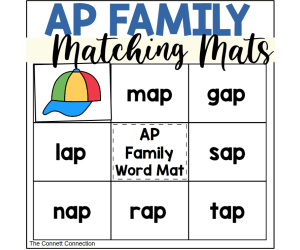
AP Words Matching Mats
ELA, Language Development, Phonics, Reading, Reading Comprehension, Preschool, Grade 1, Activities, Centers
Students can practice reading comprehension skills with these AP word family mats. Students can practice reading AP words in isolation and in the context of sentences. The words in this set follow a CVC or CCVC spelling pattern. Included in this resource: This resource includes one word mat and one sentence mat, both for reading AP words in insolation and in context. There are also picture cards that correspond with each word and sentence. To complete this activity , students will read each AN word or sentence on the mat and then match the corresponding pictures. Students can work independently or with a partner to complete this activity . How to Use these AP word Family Mats: The students can simply lay the images on top of the word or sentence. They can be placed in a file folder utilizing hook and loop fasteners to attach the images. A magnetic activity can be created by using a baking sheet and magnets to affix the images. Students will love the hands-on nature of this activity . The bold and colorful images will capture students' attention, and the easy to recognize pictures are sure to keep students engaged in learning. These literacy activities allow students to practice target words both in the context of sentences and in isolation. Where can these mats be used? Literacy Center - Students can work independently or with a partner to read these words Morning Tub or Basket - The cards can be placed in a morning bin for students to work on as students arrive to class. Small Group Activity - The teacher can choose a small group of students or a specific group of words for students to work on in a small group setting with the teacher. Hands On Assessment - The teacher can use these to test students on reading the target words in context or in isolation. Skills assessed through this activity : Reading AP words in context of a sentence and in isolation Reading comprehension The low-prep nature of this AM words matching mats activity makes it an easy to assign activity . The mats simply need to be printed out, while the matching cards need to be printed and cut. Lamination is optional for increased durability. Once created, this resource can be used repeatedly in literacy centers or small group activities, providing ongoing support for students' learning journey.
Author The Connett Connection
Tags Literacy Center, Phonics Activity, Kindergarten Literacy, Matching Mats, Simple Sentences, Reading Comprehension, CVC Words, AP Words, AP Word Family