



3,988 products added recently
Page 30 - 3rd Grade Assessments
Ensure your third-grade students are mastering essential skills with assessments designed for their level. This collection includes vocabulary quizzes, math concept evaluations, and science understanding checks. By integrating these assessments, you can inform your teaching strategies and support student achievement.

 Show filters

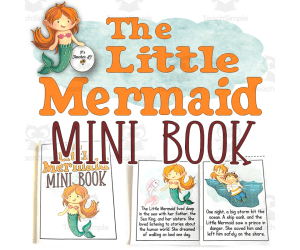
The Little Mermaid Fairy Tale Foldable Mini Book Grade 1 2 3 ELA
ESL, Language Development, ELA, Literary Devices, Literature, Reading Comprehension, Reading, Handwriting, Writing, Grade 1, 2, 3, Activities, Centers, Crafts, Projects, Assessments, Teacher Tools, Literacy Readers
Explore the fun sea of learning through the classic tale of The Little Mermaid through this engaging and meaningful The Little MermaidMini Book Activity Pack made for Grades 1, 2, and 3 students, homeschoolers, and EFL/ESL learners. The mini books included in this set are ideal for reading centers, reading classes, reading comprehension exercises, fairy tale units, writing exercises, story telling and re-telling, supplemental assessment tool, ELA projects, and so much more! What’s Inside: • The Little MermaidStory Mini Book– for story retelling, reading and reading comprehension practice • The Little MermaidStory Mini BookTrace & Read Pages– handwriting practice and motor skills exercise • The Little MermaidMini BookSequencing Booklet– sequencing and sorting exercise, story retelling and reading practice • The Little MermaidMini BookRetell & Reflect Pages– retell practice, creativity and imagination development • The Little MermaidMini BookBlank Create-a-Story Templates– story telling, supporting creative and imaginative thinking skills • The Little MermaidMini BookTeacher Guide + Sample Lesson Plan
Author It's Teacher L
Rating
Tags The Little Mermaid, Fairy Tale Units, ELA Projects, Reading Comprehension, Reading Centers
Farms Reading Comprehension Passage - Cored Ed Encyclopedia
ELA, Language Development, Resources for Teachers, Reading Comprehension, Reading, Pre-Reading, Writing, Nature & Plants, Life Sciences, Science, Grade 2, 3, 4, 5, Worksheets & Printables, Worksheets, Teacher Tools, Centers, Activities, Writing Prompts, Assessments, Tests, Quizzes and Tests, Quizzes
This farms reading comprehension contains the following: Pre-Reading Trivia Students will write down one thing they already know about the subject and then read five more facts and discuss. These facts are fun, and the students will enjoy learning about the subject before reading more. Reading Passage The text is a high-interest reading passage with set paragraphs, roughly three to four paragraphs long. It contains a variety of themes about the topic, anywhere from history to technology. The passage is between 250 and 350 words in length. Mixed Questions The first question page contains four multiple-choice questions, each with a choice of four answers, and three written response questions that require a sentence or two from the student. Creative Writing In this question, the student will be required to write a five to eight sentence paragraph on a question related to the topic. Extension Activities This page is optional for fast finishers. If there are five to ten minutes left at the end of the lesson, the student can choose one of three activities, each one requiring a different skill. Answer Key There are answers for the multiple-choice questions and three written response questions have sample answers. FULL CATALOG OF DOWNLOAD LINKS AND ENCYCLOPEDIA INDEX HERE Cored Ed Encyclopedia Overview The Cored Ed Encyclopedia is a weekly series of lessons that you can pick up and use right away. These short readings fit into whatever time you have available. Each one includes a warm-up, a reading, and a set of questions, but it’s flexible — you can do just the reading, the full lesson, or skip the writing section if you need to. Each lesson focuses on a single topic so students don’t get lost. The writing is clear but never childish, making it perfect for grades two through five. Topics range from animals and science to history, inventions, and everyday things. No matter the level of the student, everyone should take away at least one new idea or fact from each lesson. The materials are easy to print, easy to explain, and require no setup. They work well for whole-class teaching, partner work, or independent study.
Author Cored Education
Rating
Tags Vocabulary, Spelling, Reading Comprehension, Reading Passages, Reading, Creative Writing, Reading Strategies, Writing Prompts, Farms, Life Science

Reading Comprehension Passages Fiction Set 4 - School Presentable PDF
ELA, Reading, Reading Comprehension, Common Core, Language Development, Spelling, Vocabulary, Writing, Children’s Literature, Literature, Grade 2, 3, Worksheets & Printables, Worksheets, Writing Prompts, Assessments, Teacher Tools, Tests, Quizzes and Tests, Centers, Activities
Reading Comprehension Passages Fiction Set 4 Snapshot Title: Title not stated Genre: Fiction (school-themed short stories with comprehension practice pages) Subject: Reading (ELA) Primary Topic: School life, friendships, and growing up Estimated Guided Reading Level (A–Z): P What This Teaches Best Friendship and honesty: Characters learn that keeping secrets can hurt friendships, and that being open with friends matters. Adjusting to new school experiences: Several stories focus on first days, new teachers, and learning to feel comfortable in a new class or school. Rules, fairness, and inclusion: A playground conflict shows how students challenge unfair “rules” and end up playing together. Perseverance and goal-setting: A student works hard—mostly alone—to win a school compost contest despite teasing and setbacks. Strong comprehension routine with support pages: Each story is followed by mixed questions, vocabulary/spelling work, and writing prompts tied to story details (note: one answer-key item lists “confident” where the activity word is “confidently”). Learning Goals Students will recount key events from a selected story in a logical sequence using details from the text. Students will describe a character’s feelings and motivations and explain how they change across the story. Students will identify the story’s message/lesson and support it with evidence from the text. Students will explain cause-and-effect relationships (what happened and why) shown in the stories. Students will determine word meanings using context clues from the surrounding sentences. Students will respond in writing to a prompt connected to a story’s events or theme. Passages Include 1.Don't Tell Anyone: Cherie likes to keep secrets, but her friends don't. 2.Roger's Luck: Roger never wins at anything. Will that change today? 3.Starting Third Grade: Mike feels uneasy at starting a new school year. 4.Bridget's New School: Bridget tries (and fails) to fit in at her new school. 5.Changing the Rules: Jenna changes the rules on her first day. 6.My Love of Art: Read about the author's love of art class in this lesson. PRESENTABLE PDF VERSION Run it like a slide show straight from a PDF, with no PowerPoint or extra software needed, just open, project, and teach. Other versions are available in the links list below or in the full catalog. FULL CATALOG OF DOWNLOAD LINKS HERE For similar downloads and other frees, do check out Cored Group on TeachSimple.
Author Cored Education
Rating
Tags Elementary, Reading, Comprehension, Vocabulary, Common Core, Spelling, Writing, Passages, Reading Centers, Reading Comprehension Assessments

Reading Comprehension Fiction Set 5 Free Best at Being a Friend Forms
ELA, Reading, Language Development, Vocabulary, Common Core, ESL, Reading Comprehension, Creative Writing, Writing, Literature, Grade 2, 3, Centers, Activities, Assessments, Teacher Tools, Tests, Quizzes and Tests
Reading Comprehension Passages Fiction Set 5 Sample Overview Fascinating reading comprehension passages, each with an array of activities included. Stories are written for the modern classroom and topics are designed to promote enthusiasm from each student. Each lesson contains a mixed questions section to check understanding, a vocabulary or spelling activity to help remember key language introduced, and a writing exercise. Full answer keys are provided. For a more detailed overview, check the section under the links at the bottom of this description. Passage Included 5.Best at Being a Friend: Second place again, but there is one thing Tara is best at. Forms Version This is the Forms editable and fillable/self grading version. This download is available in GOOGLE Docs, GOOGLE Forms, GOOGLE Slides. PDF, PPT, WORD. FULL CATALOG OF DOWNLOAD LINKS HERE Grade 2/3 Links Fiction Set 1 - Nature Google Docs Google Forms Google Slides PDF PPT Word Guided Reading Materials Fiction Set 2 - Animals Google Docs Google Forms Google Slides PDF PPT Word Guided Reading Materials Fiction Set 3 - Food Google Docs Google Forms Google Slides PDF PPT Word Guided Reading Materials Fiction Set 4 - School Google Docs Google Forms Google Slides PDF PPT Word Guided Reading Materials Fiction Set 5 - Friends Google Docs Google Forms Google Slides PDF PPT Word Guided Reading Materials Fiction Set 6 - Family Google Docs Google Forms Google Slides PDF PPT Word Guided Reading Materials Fiction Set 7 - Sports Google Docs Google Forms Google Slides PDF PPT Word Guided Reading Materials Nonfiction Set 1 - Technology Google Docs Google Forms Google Slides PDF PPT Word Guided Reading Materials Nonfiction Set 2 - Nutrition Google Docs Google Forms Google Slides PDF PPT Word Guided Reading Materials Nonfiction Set 3 - Animals Google Docs Google Forms Google Slides PDF PPT Word Guided Reading Materials Reading Passages Overview Each passage is especially written for Grade 2-3 students, including key vocabulary required for this age group. Topics are varied and are accompanied by colorful graphics. Topics are meant to educate, yet entertain the modern student. These passages are perfect for the modern classroom. Whereas textbooks can become outdated in no time, any changes to technology or the world will result in updates to this product. Mixed Questions The mixed questions section of each lesson includes a variation of fivecomprehension, vocabulary and math questions. In addition, key reading strategies are frequently covered including cause & effect, summarizing, compare & contrast and making conclusions. Three of the questions will be MCQs and two will require a written response of some kind. Full answers and example responses appear at the end of the lesson. Spelling & Vocab Each reading passage contains a variety of words and phrases designed for Grade 2-3 students. Spelling and vocab activities provide the opportunity to build fluency with these words. As it can become quite mundane doing the same activities over and over, each lesson in a set will contain a different spelling and vocab activity . Writing Prompts Writing prompts are designed to continue the theme or lessons learned in the story. Students are persuaded to write in a variety of ways and each prompt includes several cues to help. As with the spelling/vocab section, writing prompts will vary. This includes research pieces, reading responses, poetry and creative writing prompts. Full Answer Keys Full answer keys and sample responses are provided so no matter how busy you are, you know you're covered! Mixed question answers provide evidence from the text, math questions contain the relevant workings. Answers are designed for use by the teacher, but also suitable as a handout to the student. Additional File One lesson will have an additional file. This is something fun to extend the lesson with. For similar downloads and other frees, do check out Cored Group on TeachSimple.
Author Cored Education
Tags Elementary, Reading, Comprehension, Vocabulary, Answers, Ccss, Common Core, Spelling, Writing, Digital Centers
Number & Operations: Base-Ten & Place Value - Pre-Assessment & Teach the Skill - FLASH-PC
Math, Place Value, Common Core, Grade 3, 4, 5, Assessments, Teacher Tools
Number & Operations: Base-Ten & Place Value - Pre- Assessment & Teach the Skill - FLASH-PC A comprehensive teaching resource for Grades 3 to 5. This versatile tool focuses on enhancing students' understanding of Number and Operations, especially Base-Ten and Place Values. Fit For Versatile Educational Settings: This package includes pre- assessment activities and a lesson plan that align with core curriculum requirements, perfect for both public schools and homeschooling environments. Dual Language Feature: The unique dual language feature offers both English and Spanish voice overs as well as texts. This broadens its appeal, making it suitable for bilingual students or those learning Spanish. Oriented towards Concrete Learning in Math: The FLASH-PC tool is highly specialized towards math, offering creative ways to teach complex concepts like Base-Ten and Place Value to make learning more accessible.. Versatile Usage Options: Integrates seamlessly into regular classroom instruction (whole-group or small-group lessons) A useful tool for homeschooling parents during private tutoring sessions An excellent resource for homework assignments Closely Aligned With Standard Guidelines: This product not only promotes deep numeracy understanding but also prepares students effectively for various standardized exams. It closely follows the Common Core State Standards as well as NCTM guidelines. In conclusion, "The Number & Operations: Base-Ten & Place Value - Pre- Assessment & Teach the Skill - FLASH-PC is an investment towards enriched, interactive, dynamic Math learning environment. A valuable education toolbeneficial across various educational settings."</blockquote
Author Classroom Complete Press
Tags Software (PC)
Reading Comprehension Nonfiction Set 2 Sample: Fats (Docs)
ELA, Reading, Common Core, Reading Comprehension, ESL, Language Development, Creative Writing, Writing, Resources for Teachers, Grade 2, 3, Worksheets & Printables, Worksheets, Writing Prompts, Assessments, Teacher Tools, Tests, Quizzes and Tests, Centers, Activities
Reading Comprehension Passages Nonfiction Set 2 Sample Overview Engaging nonfiction articles, each with a collection of different activities included. Articles are written for the modern classroom and topics are designed to promote enthusiasm from each student. Each lesson contains a mixed questions section to check understanding, a vocabulary or spelling activity to help remember key language introduced, and a writing exercise. Full answer keys are provided. Passage Included 3.Fats: What are trans fats? Learn all about them in this lesson. Docs Version This is the Docs editable and fillable version. This download is available in GOOGLE Docs, GOOGLE Forms, GOOGLE Slides. PDF, PPT, WORD. FULL CATALOG OF DOWNLOAD LINKS HERE Grade 2/3 Links Fiction Set 1 - Nature Google Docs Google Forms Google Slides PDF PPT Word Guided Reading Materials Fiction Set 2 - Animals Google Docs Google Forms Google Slides PDF PPT Word Guided Reading Materials Fiction Set 3 - Food Google Docs Google Forms Google Slides PDF PPT Word Guided Reading Materials Fiction Set 4 - School Google Docs Google Forms Google Slides PDF PPT Word Guided Reading Materials Fiction Set 5 - Friends Google Docs Google Forms Google Slides PDF PPT Word Guided Reading Materials Fiction Set 6 - Family Google Docs Google Forms Google Slides PDF PPT Word Guided Reading Materials Fiction Set 7 - Sports Google Docs Google Forms Google Slides PDF PPT Word Guided Reading Materials Nonfiction Set 1 - Technology Google Docs Google Forms Google Slides PDF PPT Word Guided Reading Materials Nonfiction Set 2 - Nutrition Google Docs Google Forms Google Slides PDF PPT Word Guided Reading Materials Nonfiction Set 3 - Animals Google Docs Google Forms Google Slides PDF PPT Word Guided Reading Materials Reading Passages Overview Each passage is especially written for Grade 2-3 students, including key vocabulary required for this age group. Topics are varied and are accompanied by colorful graphics. Topics are meant to educate, yet entertain the modern student. These passages are perfect for the modern classroom. Whereas textbooks can become outdated in no time, any changes to technology or the world will result in updates to this product. Mixed Questions The mixed questions section of each lesson includes a variation of fivecomprehension, vocabulary and math questions. In addition, key reading strategies are frequently covered including cause & effect, summarizing, compare & contrast and making conclusions. Three of the questions will be MCQs and two will require a written response of some kind. Full answers and example responses appear at the end of the lesson. Spelling & Vocab Each reading passage contains a variety of words and phrases designed for Grade 2-3 students. Spelling and vocab activities provide the opportunity to build fluency with these words. As it can become quite mundane doing the same activities over and over, each lesson in a set will contain a different spelling and vocab activity . Writing Prompts Writing prompts are designed to continue the theme or lessons learned in the story. Students are persuaded to write in a variety of ways and each prompt includes several cues to help. As with the spelling/vocab section, writing prompts will vary. This includes research pieces, reading responses, poetry and creative writing prompts. Full Answer Keys Full answer keys and sample responses are provided so no matter how busy you are, you know you're covered! Mixed question answers provide evidence from the text, math questions contain the relevant workings. Answers are designed for use by the teacher, but also suitable as a handout to the student. Additional File One lesson will have an additional file. This is something fun to extend the lesson with. For similar downloads and other frees, do check out Cored Group on TeachSimple.
Author Cored Education
Tags Elementary, Reading, Comprehension, Vocabulary, Answers, Ccss, Common Core, Spelling, Writing, Digital Centers
UK/Aus Spelling Adjectives Practice Questions - Year 4-5 (PPT)
ELA, Language Development, ESL, Grammar, Common Core, Resources for Teachers, Grade 3, 4, Quizzes and Tests, Teacher Tools, Tests, Assessments, Presentations, Activities
THIS IS THE UK/AUS ENGLISH SPELLING VERSION. CHECK THE CATALOG FOR THE ORIGINAL AMERICAN ENGLISH VERSION. Adjectives Grammar Practice MCQS ELA MCQS Overview: In this series of lessons, students will embark on an engaging journey to explore the grammar skills that make our language vibrant and expressive. These lessons are crafted to help students identify, comprehend, and effectively apply language arts skills in both writing and speech. This UK/Aus English version is especially useful for schools, teachers, and families working with British-based spelling and language conventions. It is a helpful option for classrooms using UK curriculum expectations, international programmes influenced by British English, or any setting where learners need to practise the correct capitalisation and punctuation forms for that version of English. Adjectives Overview: Includes: Identifying Adjectives Gap Filling Comparatives Superlatives Additional Practice PPT Version This is the PPT editable and interactive version. There is a fillable answer sheet at the end. This download is available in GOOGLE Docs, GOOGLE Forms, GOOGLE Slides. PDF, PPT, WORD, check the links below for more details. FULL CATALOG OF DOWNLOAD LINKS HERE ELA Review Questions Overview Each review test includes three answer choices for every question, which helps keep things simple and manageable for students. The layout is clear and easy to follow, so students can focus on the questions instead of figuring out what to do. A few pictures are included on each test to make the pages feel a little more inviting and less overwhelming. A review sheet is also included, giving students a chance to go back over many of the main skills covered in the resource. Introduction or Example Sheet Each topic comes with an introduction or example sheet to look at before students begin. This gives students a clear starting point and helps them feel more prepared. It also lets them see what to expect before moving into the main work. For many students, it is a helpful way to quickly refresh the key ideas before they start practicing on their own. Full Answer Keys Full answer keys are included to make marking and checking work faster and easier. Sample responses are also provided where needed, especially for open-ended tasks. This can be a real time-saver on busy days and makes the resource more practical to use. Everything is there to help make planning, teaching, and checking student work feel a little more straightforward. For similar downloads and other frees, do check out Cored Group on TeachSimple.
Author Cored Education
Rating
Tags Elementary, Answers, Ccss, Common Core, Grammar, Tests, Test Prep, Assessment, Grade 3, Grade 4

Reading Comprehension Fiction Set 7: Ian's Friday Nights (PDF)
ELA, Reading, Reading Comprehension, Common Core, ESL, Language Development, Spelling, Children’s Literature, Literature, Writing, Grade 2, 3, Worksheets & Printables, Worksheets, Writing Prompts, Assessments, Teacher Tools, Tests, Quizzes and Tests
Reading Comprehension Passages Fiction Set 7 Sample Overview Fascinating reading comprehension passages, each with an array of activities included. Stories are written for the modern classroom and topics are designed to promote enthusiasm from each student. Each lesson contains a mixed questions section to check understanding, a vocabulary or spelling activity to help remember key language introduced, and a writing exercise. Full answer keys are provided. For a more detailed overview, check the section under the links at the bottom of this description. Passage Included 3.Ian's Friday Nights: Ian wants to be anywhere but the bleachers on Friday nights. PDF Version This is the PDF uneditable version. This download is available in GOOGLE Docs, GOOGLE Forms, GOOGLE Slides. PDF, PPT, WORD. FULL CATALOG OF DOWNLOAD LINKS HERE Grade 2/3 Links Fiction Set 1 - Nature Google Docs Google Forms Google Slides PDF PPT Word Guided Reading Materials Fiction Set 2 - Animals Google Docs Google Forms Google Slides PDF PPT Word Guided Reading Materials Fiction Set 3 - Food Google Docs Google Forms Google Slides PDF PPT Word Guided Reading Materials Fiction Set 4 - School Google Docs Google Forms Google Slides PDF PPT Word Guided Reading Materials Fiction Set 5 - Friends Google Docs Google Forms Google Slides PDF PPT Word Guided Reading Materials Fiction Set 6 - Family Google Docs Google Forms Google Slides PDF PPT Word Guided Reading Materials Fiction Set 7 - Sports Google Docs Google Forms Google Slides PDF PPT Word Guided Reading Materials Nonfiction Set 1 - Technology Google Docs Google Forms Google Slides PDF PPT Word Guided Reading Materials Nonfiction Set 2 - Nutrition Google Docs Google Forms Google Slides PDF PPT Word Guided Reading Materials Nonfiction Set 3 - Animals Google Docs Google Forms Google Slides PDF PPT Word Guided Reading Materials Reading Passages Overview Each passage is especially written for Grade 2-3 students, including key vocabulary required for this age group. Topics are varied and are accompanied by colorful graphics. Topics are meant to educate, yet entertain the modern student. These passages are perfect for the modern classroom. Whereas textbooks can become outdated in no time, any changes to technology or the world will result in updates to this product. Mixed Questions The mixed questions section of each lesson includes a variation of fivecomprehension, vocabulary and math questions. In addition, key reading strategies are frequently covered including cause & effect, summarizing, compare & contrast and making conclusions. Three of the questions will be MCQs and two will require a written response of some kind. Full answers and example responses appear at the end of the lesson. Spelling & Vocab Each reading passage contains a variety of words and phrases designed for Grade 2-3 students. Spelling and vocab activities provide the opportunity to build fluency with these words. As it can become quite mundane doing the same activities over and over, each lesson in a set will contain a different spelling and vocab activity . Writing Prompts Writing prompts are designed to continue the theme or lessons learned in the story. Students are persuaded to write in a variety of ways and each prompt includes several cues to help. As with the spelling/vocab section, writing prompts will vary. This includes research pieces, reading responses, poetry and creative writing prompts. Full Answer Keys Full answer keys and sample responses are provided so no matter how busy you are, you know you're covered! Mixed question answers provide evidence from the text, math questions contain the relevant workings. Answers are designed for use by the teacher, but also suitable as a handout to the student. Additional File One lesson will have an additional file. This is something fun to extend the lesson with. For similar downloads and other frees, do check out Cored Group on TeachSimple.
Author Cored Education
Tags Elementary, Reading, Comprehension, Vocabulary, Answers, Ccss, Common Core, Spelling, Writing, Passages

2D and 3D Shapes Assessment – Pre/Post Test
Math, Geometry, Grade 2, 3, Teacher Tools, Assessments
This is a 2D and 3D Shapes Assessment that can serve as a pre- test and a post-test for students. 7-page PDF. Students will identify the shapes, their characteristics, and answer other geometry questions. Answer key included. - - - - - - - - - - - - - - - - - - - - - - - - - - - - - - - - - - - - - - - - - - - - - - - - - - - - - - - - - - - I hope you enjoy! Here are links to similar resources in my store: Character Analysis Worksheet Happy Culture Day Poster Darkling Beetle Life Cycle Display First Days of 2nd Grade Flipbook All About My Country Research Project Types of Communities Anchor Chart Check Out More Resources from My Store: A Traveling Maestra - - - - - - - - - - - - - - - - - - - - - - - - - - - - - - - - - - - - - - - - - - - - - - - - - - - - - - - - - - -
Author CraftEdPrints
Rating
Tags Pre-test, Post-test, Geometry, Math Assessment, 2D Shapes, 3D Shapes, Comprehension, Shape Assessment
Volcanoes Reading Comprehension Passage - Cored Ed Encyclopedia
ELA, Language Development, Reading Comprehension, Reading, Pre-Reading, Earth Sciences, Earth and Environmental Sciences, Science, Geography, Social Studies, Grade 2, 3, 4, 5, Worksheets & Printables, Worksheets, Teacher Tools, Centers, Activities, Writing Prompts, Assessments, Quizzes and Tests, Quizzes, Lesson Plans
This volcanoes reading comprehension with lesson plan includes: Visualization (on the front cover) Start your lesson by taking a minute to think and share something about the topic. Read the script aloud (slowly), perhaps prepare some music or sound effects. Student close their eyes and let their imaginations wander. Students open their eyes, read the question aloud and give them a few minutes to complete. Ask a few students to share or keep answers until the end to compare with what they learn in the passage. Quick pause—thousands of Cored Education products are included with your TeachSimple membership. Download links and encyclopedia index available here. Pre-Reading Trivia Students will write down one thing they already know about the subject and then read five more facts and discuss. These facts are fun, and the students will enjoy learning about the subject before reading more. Give 1 minute for students to write what they already know (no pressure—best guess is fine). Read the five facts together. After each fact, do ask a student for their opinion, was it surprising? Set a purpose by asking students to highlight/underline one fact they want to learn more about during the reading. Reading Passage The text is a high-interest reading passage with set paragraphs, roughly three to four paragraphs long. It contains a variety of themes about the topic, anywhere from history to technology. The passage is between 250 and 350 words in length. First, ask students to look at the headings and see what they’ll learn about today. What do they know about the topic/heading? First read options: Teacher read-aloud (best for support). Partner reading (paragraph by paragraph). While reading, students underline important details, and vocabulary words they think may come up in the questions section. Mixed Questions The first question page contains four multiple-choice questions, each with a choice of four answers, and three written response questions that require a sentence or two from the student. Students complete the mcqs first independently, then review quickly as a class. For the 3 written responses, try to get students giving the answer with some form of evidence: “I think ___ because the text says ___.” If students get stuck, send them back to check the passage. Vocabulary Questions Practice seven key words from the text in this section across two activities. First section is scrambled words where students will unscramble three words given a clue for each. The second section is a word to meaning matching activity. Before starting, have some students read out words they underlined in the passage. Ask students to say the word and read aloud the sentence(s) around each word. Ask students to do scrambled words and the matching exercise in pairs then go through answers as a class. For the scrambled spelling task, get four pairs to come up to the board and write the words for extra practice with the other student reading out the clue. For the matching task, prompt students to give full sentences: “I matched ___ with ___ because ___.” Creative Writing In this question, the student will be required to write a five to eight sentence paragraph on a question related to the topic. Before starting, ask students write down 3 key ideas they are going to include in their piece. Ask students for ideas to share around the class to help those struggling. Pro writing expectations: 5–8 sentences At least 2 facts or details from the passage At least 2 vocabulary words from the previous page Students read their paragraphs while classmates listen for facts and vocabulary words. Extension Activities This page is optional for fast finishers or to take home. There are several activities, each one requiring a different skill. Do some, do none, do all, completely optional - but you will feel reassured knowing every possibility is planned for. Includes summary writting question. Answer Key There are answers for the multiple-choice questions, written response questions have sample answers, vocabulary answers and if there is a summary question then a sample summary will be provided as well. Lesson Plan Included Customized lesson plan for this lesson is included. Lesson Snapshot Title: Volcanoes Genre: Nonfiction (Informational text) Subject: Science (Earth Science) Primary Topic: What volcanoes are, how they form, and safety clues Estimated Guided Reading Level (A–Z): P What This Lesson Teaches Best What a volcano is (more than a “mountain”): Explains a volcano as an opening/vent or crack in Earth’s crust where hot melted rock, ash, and gases escape from an underground storage place called a magma chamber. Magma vs. lava: Defines melted rock as magma underground and lava once it reaches open air. How volcanic ash forms and spreads: Describes eruptions that toss bits of magma into the sky, cooling into tiny sharp pieces called volcanic ash that can fall like gritty snow and cover wide areas. Why volcanoes form where they do: Connects volcano locations to Earth’s outer layer being broken into huge moving plates (pulling apart or sliding under another), and also to “hot spots” that can form island chains such as Hawaii. Warning signs and community safety: Notes that rising magma can cause small earthquakes, ground swelling, or changes in gases and heat, and that these clues help communities decide when to close roads or move to safer places. Learning Goals Students will explain what the text says a volcano is and where the material comes from. Students will describe the difference between magma and lava using the passage’s definitions. Students will identify one way volcanic ash forms and describe what it is like when it falls. Students will describe how moving plates and hot spots help explain where volcanoes form. Students will list warning signs in the passage that may happen as magma rises. Students will explain how scientists’ observations can help communities stay safer. Key Vocabulary From the Text crust — Earth’s hard outer layer. magma — melted rock below Earth’s surface. lava — melted rock after it reaches open air. eruptions — times when a volcano sends material out. plates — huge moving pieces of Earth’s outer layer. FULL CATALOG OF DOWNLOAD LINKS AND ENCYCLOPEDIA INDEX HERE
Author Cored Education
Rating
Tags Vocabulary, Reading Comprehension, Reading Passages, Lesson Plans, Ela Lesson Plans, Reading Comprehension Lesson Plans, Pre-reading, Science Lesson Plans, Earth Science, Social Studies Lesson Plans
Atlantis Reading Comprehension Passage - Cored Ed Encyclopedia
ELA, Language Development, Reading Comprehension, Reading, Social Studies, Writing, Vocabulary, Geography, History, History: Ancient, Grade 2, 3, 4, 5, Worksheets & Printables, Worksheets, Teacher Tools, Centers, Activities, Writing Prompts, Assessments, Quizzes and Tests, Quizzes, Lesson Plans
This Atlantis reading comprehension with lesson plan includes: Visualization (on the front cover) Start your lesson by taking a minute to think and share something about the topic. Read the script aloud (slowly), perhaps prepare some music or sound effects. Student close their eyes and let their imaginations wander. Students open their eyes, read the question aloud and give them a few minutes to complete. Ask a few students to share or keep answers until the end to compare with what they learn in the passage. Quick pause—thousands of Cored Education products are included with your TeachSimple membership. Download links and encyclopedia index available here. Pre-Reading Trivia Students will write down one thing they already know about the subject and then read five more facts and discuss. These facts are fun, and the students will enjoy learning about the subject before reading more. Give 1 minute for students to write what they already know (no pressure—best guess is fine). Read the five facts together. After each fact, do ask a student for their opinion, was it surprising? Set a purpose by asking students to highlight/underline one fact they want to learn more about during the reading. Reading Passage The text is a high-interest reading passage with set paragraphs, roughly three to four paragraphs long. It contains a variety of themes about the topic, anywhere from history to technology. The passage is between 250 and 350 words in length. First, ask students to look at the headings and see what they’ll learn about today. What do they know about the topic/heading? First read options: Teacher read-aloud (best for support). Partner reading (paragraph by paragraph). While reading, students underline important details, and vocabulary words they think may come up in the questions section. Mixed Questions The first question page contains four multiple-choice questions, each with a choice of four answers, and three written response questions that require a sentence or two from the student. Students complete the mcqs first independently, then review quickly as a class. For the 3 written responses, try to get students giving the answer with some form of evidence: “I think ___ because the text says ___.” If students get stuck, send them back to check the passage. Vocabulary Questions Practice seven key words from the text in this section across two activities. First section is scrambled words where students will unscramble three words given a clue for each. The second section is a word to meaning matching activity. Before starting, have some students read out words they underlined in the passage. Ask students to say the word and read aloud the sentence(s) around each word. Ask students to do scrambled words and the matching exercise in pairs then go through answers as a class. For the scrambled spelling task, get four pairs to come up to the board and write the words for extra practice with the other student reading out the clue. For the matching task, prompt students to give full sentences: “I matched ___ with ___ because ___.” Creative Writing In this question, the student will be required to write a five to eight sentence paragraph on a question related to the topic. Before starting, ask students write down 3 key ideas they are going to include in their piece. Ask students for ideas to share around the class to help those struggling. Pro writing expectations: 5–8 sentences At least 2 facts or details from the passage At least 2 vocabulary words from the previous page Students read their paragraphs while classmates listen for facts and vocabulary words. Extension Activities This page is optional for fast finishers or to take home. There are several activities, each one requiring a different skill. Do some, do none, do all, completely optional - but you will feel reassured knowing every possibility is planned for. Includes summary writting question and additional facts. Answer Key There are answers for the multiple-choice questions, written response questions have sample answers, vocabulary answers and if there is a summary question then a sample summary will be provided as well. Lesson Plan Included Customized lesson plan for this lesson is included. Lesson Snapshot Title: Atlantis Genre: Nonfiction (informational passage about a myth/story’s origins and meaning) Subject: Reading (Informational Text) / Social Studies (Myths & ancient world references) Primary Topic: Atlantis in writing, details, and “lesson” meaning Estimated Guided Reading Level (A–Z): T What This Lesson Teaches Best Identifying where an idea “first appears in writings” and tracking its source (the passage names Plato and two dialogues). Visualizing and describing setting details from informational text (rings of water, bridges, gates, canals, temples, palace). Cause/effect in a legend: how pride and disrespect lead to destruction (earthquakes, floods, island vanishes; travel becomes hard). Distinguishing story-meaning vs scientific proof: stories can warn; science looks for “rocks, ruins, and dates.” Understanding how a name becomes a symbol for “anything lost and longed for” and why mysteries keep people thinking. Learning Goals Students will identify where the Atlantis story first appears and name the two dialogues the passage lists. Students will describe Atlantis’s “circles of water” using details from the passage (moats, bridges, gates, canals). Students will explain what events cause the island to vanish and how the water changes afterward. Students will summarize why people keep hunting for a real location and what “most scholars” think instead. Students will compare what the passage says stories do versus what science asks for. Students will explain how the passage describes Atlantis as a “shortcut” for things that are lost. Key Vocabulary From the Text dialogues — written conversations between speakers. moats — water ditches around a place. canals — water paths that boats can travel on. clogged — blocked so movement becomes difficult. scholars — people who study a topic deeply. FULL CATALOG OF DOWNLOAD LINKS AND ENCYCLOPEDIA INDEX HERE
Author Cored Education
Rating
Tags Vocabulary, Reading Comprehension, Reading Passages, Lesson Plans, Ela Lesson Plans, Reading Comprehension Lesson Plans, Pre-reading, History, History Lesson Plans, Geography

Animal Research Project: Jaguars
Science, Life Sciences, Biology, Animals, Grade 1, 2, 3, Activities, Assessments, Teacher Tools, Projects, Templates
Get students excited learning about jaguars with this animal research project. Students will use the materials located inside this packet to learn basic facts about jaguars and then they will choose a report type to write a report about jaguars. What is Included: Jaguar informational poster - This poster includes basic facts about the animal that students will need to know to complete their report. What I know, want to know and learned page - This page allows students and teachers to understand what students already know about the animal, what students want to learn about the animal, and after completing the project, students can record what they learned about the animal. Jaguars can, are, have page - This page can be competed as a class or by each individual student. Students come up with basic nouns and adjectives to complete the simple sentences to give students basic sentences to form their report around. Jaguar important fact cards - These cards are miniature forms of the informational poster that students can use as reference for their report. Jaguar informational reading - This is a short reading passage that students can read to learn more about their animal. Comprehension questions for the comprehension passage - These are questions to check for understanding of the informational passage. Special Adaptation Cards - These cards highlight special adaptations and traits that this animal has that help it live and thrive in its environment. Animal Research Recording Page - This is a single page report recording page that students can use to create their animal report. Animal Research Flip Book Template - This flip book is a great place for students to record their research on their animal, or this can be used as the report itself. Research Paper Writing Pages - Students can use these pages to write a paragraph (or 2) about the animal they researched. Research Poster Board Templates - These templates allow students to create a visual report about their animal.
Author The Connett Connection
Rating
Tags Animal Research, Research Project, Animal Research Project, Jaguars
Oxygen Reading Comprehension Passage - Cored Ed Encyclopedia
ELA, Language Development, Resources for Teachers, Reading Comprehension, Reading, Pre-Reading, Writing, Science, Physics, Chemistry, Grade 2, 3, 4, 5, Worksheets & Printables, Worksheets, Teacher Tools, Centers, Activities, Writing Prompts, Assessments, Tests, Quizzes and Tests, Quizzes
This oxygen reading comprehension contains the following: Visualize on the Cover (Teacher Read Aloud Script) Start your lesson by taking a few moments to visualize the topic and share thoughts or feelings about it. Pre-Reading Trivia Students will write down one thing they already know about the subject and then read five more facts and discuss. These facts are fun, and the students will enjoy learning about the subject before reading more. Reading Passage The text is a high-interest reading passage with set paragraphs, roughly three to four paragraphs long. It contains a variety of themes about the topic, anywhere from history to technology. The passage is between 250 and 350 words in length. Mixed Questions The first question page contains four multiple-choice questions, each with a choice of four answers, and three written response questions that require a sentence or two from the student. Vocabulary Questions Practice seven key words from the text in this section across two activities. First section is scrambled words where students will unscramble three words given a clue for each. The second section is a word to meaning matching activity. Creative Writing In this question, the student will be required to write a five to eight sentence paragraph on a question related to the topic. Extension Activities This page is optional for fast finishers or to take home. There are several activities, each one requiring a different skill. Do some, do none, do all, completely optional - but you will feel reassured knowing every possibility is planned for. Includes summary writting question. Answer Key There are answers for the multiple-choice questions, written response questions have sample answers, vocabulary answers and if there is a summary question then a sample summary will be provided as well. FULL CATALOG OF DOWNLOAD LINKS AND ENCYCLOPEDIA INDEX HERE Lesson Snapshot Title: Oxygen Genre: Nonfiction (informational text) Subject: Science (Chemistry / Earth & Life Science) + Reading Informational Text Primary Topic: Discovery, role, and uses of oxygen Estimated Guided Reading Level (A–Z): S What This Lesson Teaches Best How scientists in the 1770s noticed a “new gas” through clues like a candle flaring brighter and a mouse staying active longer than in ordinary air. How Lavoisier’s careful weighing helped show that “air” is made of parts, leading to naming oxygen and explaining burning and rusting as oxidation . How oxygen is invisible yet makes up about 21% of Earth’s atmosphere , and how bodies use it while breathing out carbon dioxide . How photosynthesis helps balance gases: leaves take in carbon dioxide and water, make sugar, and send oxygen back into the air. Where oxygen is found and how people use it (as O and often O₂ , in air and also “locked into” water/sand/rocks, used in hospitals , factories , and rockets ). Learning Goals Students will describe what Joseph Priestley did and what clues suggested the gas was different from ordinary air. Students will explain why Lavoisier weighed jars, metals, and air before and after heating them. Students will explain what the passage says oxidation helps explain. Students will describe the exchange between humans and plants involving oxygen and carbon dioxide. Students will identify at least two places oxygen can be found or used, based on the text. Key Vocabulary From the Text dephlogisticated — Priestley’s name for oxygen under an old fire theory. mercuric — related to mercury; part of “mercuric oxide” in the text. oxidation — a process that explains burning and rusting. atmosphere — the blanket of gases around Earth. photosynthesis — plants make sugar and send oxygen back into the air. Cored Ed Encyclopedia Overview The Cored Ed Encyclopedia is a weekly series of lessons that you can pick up and use right away. These short readings fit into whatever time you have available. Each one includes a warm-up, a reading, and a set of questions, but it’s flexible — you can do just the reading, the full lesson, or skip the writing section if you need to. Each lesson focuses on a single topic so students don’t get lost. The writing is clear but never childish, making it perfect for grades two through five. Topics range from animals and science to history, inventions, and everyday things. No matter the level of the student, everyone should take away at least one new idea or fact from each lesson. The materials are easy to print, easy to explain, and require no setup. They work well for whole-class teaching, partner work, or independent study.
Author Cored Education
Rating
Tags Vocabulary, Spelling, Reading Comprehension, Reading Passages, Reading, Creative Writing, Reading Strategies, Writing Prompts, Oxygen, Physical Science

Iguanas Reading Comprehension Passage - Cored Ed Encyclopedia
ELA, Reading Comprehension, Reading, History, Social Studies, Science, Physics, Earth and Environmental Sciences, Life Sciences, Geography, Grade 2, 3, 4, 5, Worksheets & Printables, Worksheets, Teacher Tools, Centers, Activities, Writing Prompts, Assessments, Quizzes and Tests, Quizzes, Lesson Plans
This Iguanas reading comprehension with lesson plan includes: Visualization (on the front cover) Start your lesson by taking a minute to think and share something about the topic. Read the script aloud (slowly), perhaps prepare some music or sound effects. Student close their eyes and let their imaginations wander. Students open their eyes, read the question aloud and give them a few minutes to complete. Ask a few students to share or keep answers until the end to compare with what they learn in the passage. Quick pause—thousands of Cored Education products are included with your TeachSimple membership. Download links and encyclopedia index available here. Pre-Reading Trivia Students will write down one thing they already know about the subject and then read five more facts and discuss. These facts are fun, and the students will enjoy learning about the subject before reading more. Give 1 minute for students to write what they already know (no pressure—best guess is fine). Read the five facts together. After each fact, do ask a student for their opinion, was it surprising? Set a purpose by asking students to highlight/underline one fact they want to learn more about during the reading. Reading Passage The text is a high-interest reading passage with set paragraphs, roughly three to four paragraphs long. It contains a variety of themes about the topic, anywhere from history to technology. The passage is between 250 and 350 words in length. First, ask students to look at the headings and see what they’ll learn about today. What do they know about the topic/heading? First read options: Teacher read-aloud (best for support). Partner reading (paragraph by paragraph). While reading, students underline important details, and vocabulary words they think may come up in the questions section. Mixed Questions The first question page contains four multiple-choice questions, each with a choice of four answers, and three written response questions that require a sentence or two from the student. Students complete the mcqs first independently, then review quickly as a class. For the 3 written responses, try to get students giving the answer with some form of evidence: “I think ___ because the text says ___.” If students get stuck, send them back to check the passage. Vocabulary Questions Practice seven key words from the text in this section across two activities. First section is scrambled words where students will unscramble three words given a clue for each. The second section is a word to meaning matching activity. Before starting, have some students read out words they underlined in the passage. Ask students to say the word and read aloud the sentence(s) around each word. Ask students to do scrambled words and the matching exercise in pairs then go through answers as a class. For the scrambled spelling task, get four pairs to come up to the board and write the words for extra practice with the other student reading out the clue. For the matching task, prompt students to give full sentences: “I matched ___ with ___ because ___.” Creative Writing In this question, the student will be required to write a five to eight sentence paragraph on a question related to the topic. Before starting, ask students write down 3 key ideas they are going to include in their piece. Ask students for ideas to share around the class to help those struggling. Pro writing expectations: 5–8 sentences At least 2 facts or details from the passage At least 2 vocabulary words from the previous page Students read their paragraphs while classmates listen for facts and vocabulary words. Extension Activities This page is optional for fast finishers or to take home. There are several activities, each one requiring a different skill. Do some, do none, do all, completely optional - but you will feel reassured knowing every possibility is planned for. Includes summary writting question and additional facts. Answer Key There are answers for the multiple-choice questions, written response questions have sample answers, vocabulary answers and if there is a summary question then a sample summary will be provided as well. Lesson Plan Included Customized lesson plan for this lesson is included. Lesson Snapshot Title: Iguanas Genre: Nonfiction (informational text) Subject: Reading (Informational Text) / Life Science Primary Topic: Green vs. marine iguanas: tails, habitat, survival Estimated Guided Reading Level (A–Z): R What This Lesson Teaches Best Describes key iguana features and what they look like (dewlap, a line of spines). Explains where iguanas live and notes that most live in the Americas, with some relatives on islands. Shows how a green iguana’s long tail helps with survival (whip-like defense and strong tail strokes for swimming away). Compares two related iguanas by habitat and behavior (tree-climbing green iguana vs. sea-foraging marine iguana that eats algae and basks on dark rocks). Builds awareness of changing habitats and reasons protection matters (building on land, hunting/capturing, predators, El Niño, oil spills). Learning Goals Identify details that describe what an iguana looks like and where it lives. Explain how a green iguana uses its tail when danger comes near water. Describe how the marine iguana finds food and what it does after a cold swim. Compare the green iguana and marine iguana using evidence from the passage. Describe at least two reasons iguanas might need protection based on changes in their habitats. Key Vocabulary From the Text dewlap — loose throat skin that can hang in a fold. spines — pointed bumps that may rise along its back. forages — searches for food. predators — animals that hunt other animals. habitats — places animals need to live. FULL CATALOG OF DOWNLOAD LINKS AND ENCYCLOPEDIA INDEX HERE
Author Cored Education
Rating
Tags Vocabulary, Reading Comprehension, Reading Passages, Lesson Plans, Ela Lesson Plans, Reading Comprehension Lesson Plans, Pre-reading, History, Science Lesson Plans, Life Science
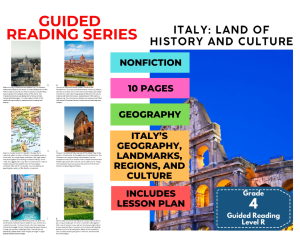
Italy History and Culture: Guided Reading Level R with Lesson Plan
ELA, Resources for Teachers, Reading Comprehension, Reading, Science, Geography, Social Studies, History, Earth and Environmental Sciences, Technology, Grade 3, 4, 5, Worksheets & Printables, Worksheets, Teacher Tools, Centers, Activities, Literacy Readers, Quizzes, Quizzes and Tests, Assessments, Lesson Plans
This Germany: The Heart of Europe (level r) guided reading book with lesson plan includes: Guided Reading Color Label (front cover x1) This is a quick way to match the book’s demands to what students can generally handle.. The overall goal is to use the level/color to pick books for several smaller groups. To qualify for a certain level, a student is expected to read a book from that level with about 90–94% accuracy. If a student is consistently accurate and understands, move up a level. If the student is struggling at that level, drop down and add more support. Each student will improve at completely different rates, but it is generally one of the best ways to check progress across the class. DOWNLOAD THE CATALOG TO VIEW ALL GUIDED READING BOOKS AVAILABLE (SORTED LEVELS A-Z) Pre-Reading Question (x1) Teacher asks the prompt aloud, can be while showing the cover or first page. Students share what they already know, or make educated guesses from the cover. Prompt them to use the target vocabulary. Write some of their responses on the board to look back at during the reading. Vocabulary Words (x5) Introduce the five words, best doing it one at a time. Start by saying it, while students repeat and then see if anyone knows what it means before reading further. Read through the meaning and try to briefly connect each word to a picture or gesture so it’s meaningful. Ask students to flip through the book pages and point to where they see each of the vocabulary words. While reading the book pause upon coming across one of the vocab words or read the sentence twice to make sure students understand the word has appeared. Optional: Ask students to raise hands whenever they see/hear one of the new words. Guided Reading Pages (x10) Check the book snapshot (below) for: primary topic - do you need to prep extra reading or intro materials on this? what is taught best - decide on 1-2 bullets to focus on, use the prompt or words provided here for best results. learning goals - what you are checking for students to be able to do after the session, elicit answers using prompts or words provided. key vocabulary (see section above). questions overview - so you know what is coming up and if you need to prep extra materials to assist understanding. Run the lesson You may have already looked at a few of the pages together, but you can show them some of the pictures again first to set meaning. Depending on how much time you have and how familiar your students are with guided reading class, you may want to read the book aloud first with the group first. Students whisper or partner read, while you listen in. If time, do it as a group, one student reading a page each. Use the guided page’s prompts to coach: “Check the picture / does it make sense?” “Point under the words / try the first sound” “Reread the sentence smoothly”. Try to focus more on one student per session (rotating every time), so you can work out if they are ready to move up or need to move down a level. Comprehension Questions (back cover x3) This is your way to check that students didn’t just say the words, but actually understood the text. First, let students answer by pointing to the page/picture and saying a short sentence. After any answer, follow with: “Show me where you found that in the text.” In bigger groups, have partners answer first (10–20 seconds), then call on 2–3 students to share. Differentiation tips: Emerging speakers/struggling readers: oral + pointing On-level: oral in a full sentence Higher: one written sentence or draw + label Book Snapshot Title: Italy: Land of History and Culture Genre: Nonfiction Subject: Social Studies (Geography/History/Culture) Primary Topic: Italy’s geography, landmarks, regions, and culture Estimated Guided Reading Level (A–Z): R What This Book Teaches Best Describes Italy’s location and physical geography , including its peninsula shape, the Alps, and the Mediterranean Sea. Highlights important historical landmarks and what they represent, such as the Colosseum and the Vatican City/St. Peter’s Basilica. Connects history to art and architecture through Florence and the Renaissance, including the Duomo’s engineering. Explains regional life and land use , including Tuscany’s landscape and agriculture (olive oil, grapes, ingredients for cooking). Shows how Italy blends past and present , from Pompeii and Mount Vesuvius to modern fashion, design, technology, cars, and trains. Learning Goals Students will describe Italy’s location and explain how the text describes its shape. Students will identify key facts about Rome and explain what the text says the Colosseum symbolizes today. Students will describe why Vatican City is important using details from the text. Students will explain why Florence is called the “Cradle of the Renaissance” using text details about arts and learning. Students will describe how Venice’s canals affect transportation in the city. Students will explain one way Italy influences the world today, based on the text’s examples of modern industry and innovation. Key Vocabulary From the Text peninsula — land surrounded by water on three sides. amphitheater — large open building for watching public events. Renaissance — time when art, science, and literature flourished. gondolas — long narrow boats used to travel Venice’s canals. archaeological — about studying the past by examining old remains. Discussion Prompts Pre-reading question: What places or foods do you already connect with Italy? Comprehension questions: What shape does the text say Italy resembles? Comprehension questions: What does the text say the Colosseum could hold in ancient times? Comprehension questions: What does the text say caused the Leaning Tower of Pisa to start tilting? Printing Tips 1. Best Printing Method (Recommended) “Booklet” Printing (Best if Available) If your printer or PDF viewer supports Booklet Printing , use this. Settings to use: Print mode: Booklet Paper size: Letter or A4 (either works) Orientation: Landscape Print on both sides: Yes Flip on: Short edge Scaling: Fit to printable area Booklet subset: First test: Front sides only Then: Back sides only This will automatically: Pair pages correctly Put the cover on the outside Align everything for folding After printing, fold in half and staple along the spine . 2. If “Booklet” Printing Is NOT Available You can still print this correctly with manual duplex printing . Step-by-step: Open the PDF. Choose Print . Set: Orientation: Landscape Pages per sheet: 1 Print on both sides: Yes Flip on: Short edge Print all pages . Because each PDF page already contains two facing book pages, the result will still fold cleanly into a book. Thousands of Cored Education products are included with your TeachSimple membership. Download links and encyclopedia index available here.
Author Cored Education
Rating
Tags Reading Comprehension, Reading Passages, Reading, Guided Reading, Guided Reading Lesson Plan, Guided Reading Activity, Pre-reading, Social Studies, Geography, History

Science Reading Comprehension Changes in the Earth & Sky Google Drive
ELA, Reading, Reading Comprehension, Common Core, Earth Sciences, Earth and Environmental Sciences, Science, Space, Grade 2, 3, 4, Centers, Activities, Diagrams, Teacher Tools, Assessments, Presentations, Tests, Quizzes and Tests, Worksheets, Worksheets & Printables
Science Reading Comprehension - Changes in the Earth and Sky for Earth Science Changes in the Earth and Sky: Reading Passages Earth Science: Elevate your classroom experience with this captivating science reading pack, designed to infuse the joy of science into your lessons. While the pack provides an entertaining approach, it also serves as an effective tool to gauge your students' comprehension of informational texts. Adorned with vibrant colors and themes, and aligned with the Common Core State Standards (CCSS), it covers intriguing topics such as the atmosphere, weather, and air pressure, ensuring both learning and enjoyment go hand in hand. What's inside? Part 2 - Changes in the Earth and Sky Reading Passage 1: Slow Changes to the Earth's Surface Reading Passage 2: Fast Changes to the Earth's Surface Reading Passage 3: The Atmosphere and Weather Reading Passage 4: Measuring Temperature, Air Pressure, and Humidity Reading Passage 5: The Motion of Objects in the Universe Product Info: 29 PAGES (Docs Version: US English with Answers) 5 FORMS (Self-Grading) 148 SLIDES Teaching Duration: 2 Weeks Science Reading Comprehension Outline: Targeted for students in 3rd and 4th grades, these reading passages are enhanced with illustrations and graphs to elucidate critical points. Each lesson aligns with the Common Core State Standards, allowing you to integrate science reading practice effortlessly, knowing that minimal preparation is needed on your part. Each passage comes with a variety of questions in different formats, including multiple-choice formats, data analysis, and fill-in-the-blanks. The topics covered strike a balance between engaging content and core curriculum -based science subjects. Versatile in application, these lessons are suitable for a variety of settings such as whole-class instruction, morning activities, independent desk work, small group discussions, contingency plans for substitute teachers, homework assignments, or even special holiday-themed tasks. FULL CATALOG OF DOWNLOAD LINKS HERE Grade 3/4 Links: Physical Science Part 1 - Properties of Objects and Materials Google Docs/Slides/Forms PDF PPT Word Free Supplementary Pack Accompanying Videos Physical Science Part 2 - Position and Motion of Objects Google Docs/Slides/Forms PDF PPT Word Free Supplementary Pack Accompanying Videos Physical Science Part 3 - Light, Heat, Electricity, Magnetism Google Docs/Slides/Forms PDF PPT Word Free Supplementary Pack Accompanying Videos Life Science Part 1 - Characteristics of Organisms Google Docs/Slides/Forms PDF PPT Word Free Supplementary Pack Accompanying Videos Life Science Part 2 - Life Cycles of Organisms Google Docs/Slides/Forms PDF PPT Word Free Supplementary Pack Accompanying Videos Life Science Part 3 - Organisms and Environments Google Docs/Slides/Forms PDF PPT Word Free Supplementary Pack Accompanying Videos Earth Science Part 1 - Properties of Earth Materials Google Docs/Slides/Forms PDF PPT Word Free Supplementary Pack Accompanying Videos Earth Science Part 2 - Changes in the Earth and Sky Google Docs/Slides/Forms PDF PPT Word Free Supplementary Pack Accompanying Videos Earth Science Part 3 - Objects in the Sky Google Docs/Slides/Forms PDF PPT Word Free Supplementary Pack Accompanying Videos For similar products and other frees, do check out Cored Group on TeachSimple .
Author Cored Education
Rating
Tags Science, Elementary, Reading, Comprehension, Vocabulary, Science Assessments, Reading Comprehension Assessments, Vocabulary Assessments, Earth Science, Self Assessment
Ancient Rome Reading Comprehension Passage - Cored Ed Encyclopedia
ELA, Language Development, Reading Comprehension, Reading, Social Studies, History, History: Ancient, Writing, Pre-Reading, Vocabulary, Grade 2, 3, 4, 5, Worksheets & Printables, Worksheets, Teacher Tools, Centers, Activities, Writing Prompts, Assessments, Quizzes and Tests, Quizzes, Lesson Plans
This ancient Rome reading comprehension with lesson plan includes: Visualization (on the front cover) Start your lesson by taking a minute to think and share something about the topic. Read the script aloud (slowly), perhaps prepare some music or sound effects. Student close their eyes and let their imaginations wander. Students open their eyes, read the question aloud and give them a few minutes to complete. Ask a few students to share or keep answers until the end to compare with what they learn in the passage. Quick pause—thousands of Cored Education products are included with your TeachSimple membership. Download links and encyclopedia index available here. Pre-Reading Trivia Students will write down one thing they already know about the subject and then read five more facts and discuss. These facts are fun, and the students will enjoy learning about the subject before reading more. Give 1 minute for students to write what they already know (no pressure—best guess is fine). Read the five facts together. After each fact, do ask a student for their opinion, was it surprising? Set a purpose by asking students to highlight/underline one fact they want to learn more about during the reading. Reading Passage The text is a high-interest reading passage with set paragraphs, roughly three to four paragraphs long. It contains a variety of themes about the topic, anywhere from history to technology. The passage is between 250 and 350 words in length. First, ask students to look at the headings and see what they’ll learn about today. What do they know about the topic/heading? First read options: Teacher read-aloud (best for support). Partner reading (paragraph by paragraph). While reading, students underline important details, and vocabulary words they think may come up in the questions section. Mixed Questions The first question page contains four multiple-choice questions, each with a choice of four answers, and three written response questions that require a sentence or two from the student. Students complete the mcqs first independently, then review quickly as a class. For the 3 written responses, try to get students giving the answer with some form of evidence: “I think ___ because the text says ___.” If students get stuck, send them back to check the passage. Vocabulary Questions Practice seven key words from the text in this section across two activities. First section is scrambled words where students will unscramble three words given a clue for each. The second section is a word to meaning matching activity. Before starting, have some students read out words they underlined in the passage. Ask students to say the word and read aloud the sentence(s) around each word. Ask students to do scrambled words and the matching exercise in pairs then go through answers as a class. For the scrambled spelling task, get four pairs to come up to the board and write the words for extra practice with the other student reading out the clue. For the matching task, prompt students to give full sentences: “I matched ___ with ___ because ___.” Creative Writing In this question, the student will be required to write a five to eight sentence paragraph on a question related to the topic. Before starting, ask students write down 3 key ideas they are going to include in their piece. Ask students for ideas to share around the class to help those struggling. Pro writing expectations: 5–8 sentences At least 2 facts or details from the passage At least 2 vocabulary words from the previous page Students read their paragraphs while classmates listen for facts and vocabulary words. Extension Activities This page is optional for fast finishers or to take home. There are several activities, each one requiring a different skill. Do some, do none, do all, completely optional - but you will feel reassured knowing every possibility is planned for. Includes summary writting question and additional facts. Answer Key There are answers for the multiple-choice questions, written response questions have sample answers, vocabulary answers and if there is a summary question then a sample summary will be provided as well. Lesson Plan Included Customized lesson plan for this lesson is included. Lesson Snapshot Title: Ancient Rome Genre: Nonfiction (informational reading passage) Subject: Social Studies (Ancient Civilizations) / Reading (Informational Text) Primary Topic: From early settlement to empire and lasting influence Estimated Guided Reading Level (A–Z): S Support pages noted in the PDF: visualization prompt, pre-reading trivia, mixed questions, vocabulary activities, creative writing prompt, extension activities + “final facts,” and an answer key (some “final facts” add details not stated in the passage). What This Lesson Teaches Best How early life near the Tiber River and a busy meeting space (a forum) helped a town form and grow. How Rome changed its government from kings to a republic, including the role of the Roman Senate and citizen voting in assemblies. How roads, alliances, and shared rules/traditions helped Rome spread across Italy and beyond. How Rome became an empire connected around the Mediterranean Sea , including aqueducts for fresh water and public gathering places like the Colosseum . How Rome’s ideas continued even after the western empire fell, with laws and building styles reused and ruins like the Roman Forum reminding people of the past. Learning Goals Students will describe how the passage explains the early growth of Rome from river paths into a forum. Students will identify what happened in 509 BC and name the new form of government described. Students will explain how the passage connects roads, alliances, and shared rules/traditions to Rome’s expansion. Students will describe what changed in 27 BC when Augustus took control, using details from the text. Students will explain, using the passage, what aqueducts carried and why crowds gathered in major public places. Students will describe what happened to the western empire in the 400s AD and how Roman ideas continued afterward. Key Vocabulary From the Text republic — a government citizens vote in. Senate — a group that debates important choices. empire — many lands under one ruler. aqueducts — long channels that carry fresh water. provinces — faraway areas ruled as part of an empire. FULL CATALOG OF DOWNLOAD LINKS AND ENCYCLOPEDIA INDEX HERE
Author Cored Education
Rating
Tags Vocabulary, Reading Comprehension, Reading Passages, Lesson Plans, Ela Lesson Plans, Reading Comprehension Lesson Plans, Pre-reading, History, Ancient History Lesson Plans, History Lesson Plans

Sentence Structure Practice Questions - Grade 3-4 Grammar (PPT)
ELA, Language Development, ESL, Grammar, Common Core, Resources for Teachers, Grade 3, 4, Quizzes and Tests, Teacher Tools, Tests, Assessments, Presentations, Activities
Sentence Structure Grammar Practice MCQS ELA MCQS Overview: In this series of lessons, students will embark on an engaging journey to explore the grammar skills that make our language vibrant and expressive. These lessons are crafted to help students identify, comprehend, and effectively apply language arts skills in both writing and speech. Accompanied by free supplementary materials available for all topics, each lesson builds on the previous one, offering a balanced mix of direct instruction, interactive group activities, and independent practice. Through fun and creative tasks, students will learn to recognize grammar within sentences, understand their function, and use them to enrich their own writing and speech. Sentence Structure Overview: Includes: Declarative Sentences lnterroative Sentences Exclamatory Sentences Imperative Sentences Sentence Fragments End Punctuation PPT Version This is the PPT editable and interactive version. There is a fillable answer sheet at the end. This download is available in GOOGLE Docs, GOOGLE Forms, GOOGLE Slides. PDF, PPT, WORD, check the links below for more details. FULL CATALOG OF DOWNLOAD LINKS HERE Grade 3/4 Links: Adjectives Google Docs Google Forms Google Slides PDF PPT Word Free Supplementary Materials Pack Adverbs Google Docs Google Forms Google Slides PDF PPT Word Free Supplementary Materials Pack Conjunctions Google Docs Google Forms Google Slides PDF PPT Word Free Supplementary Materials Pack Nouns Google Docs Google Forms Google Slides PDF PPT Word Free Supplementary Materials Pack Pronouns Google Docs Google Forms Google Slides PDF PPT Word Free Supplementary Materials Pack Verbs Google Docs Google Forms Google Slides PDF PPT Word Free Supplementary Materials Pack Sentence Structure Google Docs Google Forms Google Slides PDF PPT Word Free Supplementary Materials Pack Present Tense Google Docs Google Forms Google Slides PDF PPT Word Free Supplementary Materials Pack Past Tense Google Docs Google Forms Google Slides PDF PPT Word Free Supplementary Materials Pack Future Tense Google Docs Google Forms Google Slides PDF PPT Word Free Supplementary Materials Pack Context Clues Google Docs Google Forms Google Slides PDF PPT Word Free Supplementary Materials Pack Defining Words Google Docs Google Forms Google Slides PDF PPT Word Free Supplementary Materials Pack Fill the Blanks Google Docs Google Forms Google Slides PDF PPT Word Free Supplementary Materials Pack Homophones Google Docs Google Forms Google Slides PDF PPT Word Free Supplementary Materials Pack Synonyms Google Docs Google Forms Google Slides PDF PPT Word Free Supplementary Materials Pack ELA Review Questions Overview Questions have three answer choices. There are a handful of pictures on each test for aesthetic purposes, as well as a review sheet covering most of the topics covered in the product. Introduction or Example Sheet Each topic will include an introduction or example sheet to go through first with your students. Full Answer Keys Full answer keys and sample responses are provided so no matter how busy you are, you know you're covered! In the Supplementary Pack Interactive Ice Breakers: Fun, hands-on activities that get students thinking about adjectives right from the start. Guided Practice: Teacher-led exercises that reinforce the day’s lesson, ensuring students can confidently identify and use adjectives. Group and Partner Tasks: Collaborative activities that allow students to work together to solve problems, categorize adjectives, and create descriptive sentences. Independent Worksheets: Structured worksheets that provide individual practice and help solidify understanding of key concepts. Exit Tasks: Quick, reflective activities at the end of each lesson that assess understanding and encourage students to apply what they’ve learned. For similar downloads and other frees, do check out Cored Group on TeachSimple.
Author Cored Education
Tags Elementary, Answers, Ccss, Common Core, Grammar, Tests, Test Prep, Assessment, Grade 3, Grade 4

Fill in the Blanks Practice Questions - Vocabulary Grade 3-4 (Docs)
ELA, Language Development, ESL, Common Core, Resources for Teachers, Vocabulary, Grade 3, 4, Worksheets & Printables, Worksheets, Quizzes and Tests, Teacher Tools, Tests, Assessments, Centers, Activities
Fill in the Blanks Vocabulary Practice MCQS ELA MCQS Overview: In this series of lessons, students will embark on an engaging journey to explore the grammar skills that make our language vibrant and expressive. These lessons are crafted to help students identify, comprehend, and effectively apply language arts skills in both writing and speech. Accompanied by free supplementary materials available for all topics, each lesson builds on the previous one, offering a balanced mix of direct instruction, interactive group activities, and independent practice. Through fun and creative tasks, students will learn to recognize grammar within sentences, understand their function, and use them to enrich their own writing and speech. Fill in the Blanks Overview: Includes: Adjectives in Sentences Nouns in Sentences Verbs in Sentences Frequently Mistaken Words Docs Version This is the Docs editable and fillable version. This download is available in GOOGLE Docs, GOOGLE Forms, GOOGLE Slides. PDF, PPT, WORD, check the links below for more details. FULL CATALOG OF DOWNLOAD LINKS HERE Grade 3/4 Links: Adjectives Google Docs Google Forms Google Slides PDF PPT Word Free Supplementary Materials Pack Adverbs Google Docs Google Forms Google Slides PDF PPT Word Free Supplementary Materials Pack Conjunctions Google Docs Google Forms Google Slides PDF PPT Word Free Supplementary Materials Pack Nouns Google Docs Google Forms Google Slides PDF PPT Word Free Supplementary Materials Pack Pronouns Google Docs Google Forms Google Slides PDF PPT Word Free Supplementary Materials Pack Verbs Google Docs Google Forms Google Slides PDF PPT Word Free Supplementary Materials Pack Sentence Structure Google Docs Google Forms Google Slides PDF PPT Word Free Supplementary Materials Pack Present Tense Google Docs Google Forms Google Slides PDF PPT Word Free Supplementary Materials Pack Past Tense Google Docs Google Forms Google Slides PDF PPT Word Free Supplementary Materials Pack Future Tense Google Docs Google Forms Google Slides PDF PPT Word Free Supplementary Materials Pack Context Clues Google Docs Google Forms Google Slides PDF PPT Word Free Supplementary Materials Pack Defining Words Google Docs Google Forms Google Slides PDF PPT Word Free Supplementary Materials Pack Fill the Blanks Google Docs Google Forms Google Slides PDF PPT Word Free Supplementary Materials Pack Homophones Google Docs Google Forms Google Slides PDF PPT Word Free Supplementary Materials Pack Synonyms Google Docs Google Forms Google Slides PDF PPT Word Free Supplementary Materials Pack ELA Review Questions Overview Questions have three answer choices. There are a handful of pictures on each test for aesthetic purposes, as well as a review sheet covering most of the topics covered in the product. Introduction or Example Sheet Each topic will include an introduction or example sheet to go through first with your students. Full Answer Keys Full answer keys and sample responses are provided so no matter how busy you are, you know you're covered! In the Supplementary Pack Interactive Ice Breakers: Fun, hands-on activities that get students thinking about adjectives right from the start. Guided Practice: Teacher-led exercises that reinforce the day’s lesson, ensuring students can confidently identify and use adjectives. Group and Partner Tasks: Collaborative activities that allow students to work together to solve problems, categorize adjectives, and create descriptive sentences. Independent Worksheets: Structured worksheets that provide individual practice and help solidify understanding of key concepts. Exit Tasks: Quick, reflective activities at the end of each lesson that assess understanding and encourage students to apply what they’ve learned. For similar downloads and other frees, do check out Cored Group on TeachSimple.
Author Cored Education
Tags Elementary, Answers, Ccss, Common Core, Tests, Test Prep, Grade 3, Grade 4, Vocabulary, Digital Centers

Guitars Reading Comprehension Passage - Cored Ed Encyclopedia
ELA, Language Development, Resources for Teachers, Reading Comprehension, Reading, Pre-Reading, Writing, Music, Creative Arts, Strategies, Grade 2, 3, 4, 5, Worksheets & Printables, Worksheets, Teacher Tools, Centers, Activities, Writing Prompts, Assessments, Tests, Quizzes and Tests, Quizzes
This guitars reading comprehension contains the following: Pre-Reading Trivia Students will write down one thing they already know about the subject and then read five more facts and discuss. These facts are fun, and the students will enjoy learning about the subject before reading more. Reading Passage The text is a high-interest reading passage with set paragraphs, roughly three to four paragraphs long. It contains a variety of themes about the topic, anywhere from history to technology. The passage is between 250 and 350 words in length. Mixed Questions The first question page contains four multiple-choice questions, each with a choice of four answers, and three written response questions that require a sentence or two from the student. Creative Writing In this question, the student will be required to write a five to eight sentence paragraph on a question related to the topic. Extension Activities This page is optional for fast finishers. If there are five to ten minutes left at the end of the lesson, the student can choose one of three activities, each one requiring a different skill. Answer Key There are answers for the multiple-choice questions and three written response questions have sample answers. FULL CATALOG OF DOWNLOAD LINKS AND ENCYCLOPEDIA INDEX HERE Cored Ed Encyclopedia Overview The Cored Ed Encyclopedia is a weekly series of lessons that you can pick up and use right away. These short readings fit into whatever time you have available. Each one includes a warm-up, a reading, and a set of questions, but it’s flexible — you can do just the reading, the full lesson, or skip the writing section if you need to. Each lesson focuses on a single topic so students don’t get lost. The writing is clear but never childish, making it perfect for grades two through five. Topics range from animals and science to history, inventions, and everyday things. No matter the level of the student, everyone should take away at least one new idea or fact from each lesson. The materials are easy to print, easy to explain, and require no setup. They work well for whole-class teaching, partner work, or independent study.
Author Cored Education
Rating
Tags Vocabulary, Spelling, Reading Comprehension, Reading Passages, Reading, Creative Writing, Reading Strategies, Writing Prompts, Guitars, Music

Gondolas Reading Comprehension Passage - Cored Ed Encyclopedia
ELA, Reading Comprehension, Reading, Science, Technology, Pre-Reading, Language Development, History, Social Studies, Geography, Grade 2, 3, 4, 5, Worksheets & Printables, Worksheets, Teacher Tools, Centers, Activities, Writing Prompts, Assessments, Quizzes and Tests, Quizzes, Lesson Plans
This gondolas reading comprehension with lesson plan includes: Visualization (on the front cover) Start your lesson by taking a minute to think and share something about the topic. Read the script aloud (slowly), perhaps prepare some music or sound effects. Student close their eyes and let their imaginations wander. Students open their eyes, read the question aloud and give them a few minutes to complete. Ask a few students to share or keep answers until the end to compare with what they learn in the passage. Quick pause—thousands of Cored Education products are included with your TeachSimple membership. Download links and encyclopedia index available here. Pre-Reading Trivia Students will write down one thing they already know about the subject and then read five more facts and discuss. These facts are fun, and the students will enjoy learning about the subject before reading more. Give 1 minute for students to write what they already know (no pressure—best guess is fine). Read the five facts together. After each fact, do ask a student for their opinion, was it surprising? Set a purpose by asking students to highlight/underline one fact they want to learn more about during the reading. Reading Passage The text is a high-interest reading passage with set paragraphs, roughly three to four paragraphs long. It contains a variety of themes about the topic, anywhere from history to technology. The passage is between 250 and 350 words in length. First, ask students to look at the headings and see what they’ll learn about today. What do they know about the topic/heading? First read options: Teacher read-aloud (best for support). Partner reading (paragraph by paragraph). While reading, students underline important details, and vocabulary words they think may come up in the questions section. Mixed Questions The first question page contains four multiple-choice questions, each with a choice of four answers, and three written response questions that require a sentence or two from the student. Students complete the mcqs first independently, then review quickly as a class. For the 3 written responses, try to get students giving the answer with some form of evidence: “I think ___ because the text says ___.” If students get stuck, send them back to check the passage. Vocabulary Questions Practice seven key words from the text in this section across two activities. First section is scrambled words where students will unscramble three words given a clue for each. The second section is a word to meaning matching activity. Before starting, have some students read out words they underlined in the passage. Ask students to say the word and read aloud the sentence(s) around each word. Ask students to do scrambled words and the matching exercise in pairs then go through answers as a class. For the scrambled spelling task, get four pairs to come up to the board and write the words for extra practice with the other student reading out the clue. For the matching task, prompt students to give full sentences: “I matched ___ with ___ because ___.” Creative Writing In this question, the student will be required to write a five to eight sentence paragraph on a question related to the topic. Before starting, ask students write down 3 key ideas they are going to include in their piece. Ask students for ideas to share around the class to help those struggling. Pro writing expectations: 5–8 sentences At least 2 facts or details from the passage At least 2 vocabulary words from the previous page Students read their paragraphs while classmates listen for facts and vocabulary words. Extension Activities This page is optional for fast finishers or to take home. There are several activities, each one requiring a different skill. Do some, do none, do all, completely optional - but you will feel reassured knowing every possibility is planned for. Includes summary writting question and additional facts. Answer Key There are answers for the multiple-choice questions, written response questions have sample answers, vocabulary answers and if there is a summary question then a sample summary will be provided as well. Lesson Plan Included Customized lesson plan for this lesson is included. Lesson Snapshot Title: Gondolas Genre: Nonfiction (informational text) Subject: Social Studies (places/culture) Primary Topic: Gondolas in Venice: design, history, and use Estimated Guided Reading Level (A–Z): Q What This Lesson Teaches Best How Venice’s canals and bridges shape daily transportation, making boats important for visiting, carrying food, and crossing town. How a gondolier can steer with one oar using a carved wooden holder called a forcola and a smooth sculling motion. How gondola design supports steering, including being slightly asymmetrical to help one oar work better. How gondolas changed over time (older styles; “banana-shaped” modern gondola in the 1800s; laws affecting appearance). How gondolas are still used today (rides for visitors, traghetti ferries across the Grand Canal, and racing in regattas ). Learning Goals Students will describe why boats are important in Venice using details from the passage. Students will explain how a gondolier steers a gondola with one oar and a forcola. Students will identify one design feature that helps the gondola steer straighter (slight asymmetry). Students will describe how gondolas changed in shape and appearance over time, based on the text. Students will explain what traghetti are and what they do in Venice. Students will describe one way gondola traditions continue today (rides or regattas). Key Vocabulary From the Text forcola — carved wooden holder that supports and guides the oar. sculling — smooth rowing motion used to move and steer. asymmetrical — not the same on both sides. traghetti — small ferries that carry people across the Grand Canal. regattas — boat races where gondoliers race with skill and pride. FULL CATALOG OF DOWNLOAD LINKS AND ENCYCLOPEDIA INDEX HERE
Author Cored Education
Rating
Tags Vocabulary, Reading Comprehension, Reading Passages, Lesson Plans, Ela Lesson Plans, Reading Comprehension Lesson Plans, Pre-reading, Science Lesson Plans, Social Studies Lesson Plans, History
Flutes Reading Comprehension Passage - Cored Ed Encyclopedia
ELA, Reading Comprehension, Reading, Science, Technology, Social Studies, History, Music, Creative Arts, Physics, Grade 2, 3, 4, 5, Worksheets & Printables, Worksheets, Teacher Tools, Centers, Activities, Writing Prompts, Assessments, Quizzes and Tests, Quizzes, Lesson Plans
This flutes reading comprehension with lesson plan includes: Visualization (on the front cover) Start your lesson by taking a minute to think and share something about the topic. Read the script aloud (slowly), perhaps prepare some music or sound effects. Student close their eyes and let their imaginations wander. Students open their eyes, read the question aloud and give them a few minutes to complete. Ask a few students to share or keep answers until the end to compare with what they learn in the passage. Quick pause—thousands of Cored Education products are included with your TeachSimple membership. Download links and encyclopedia index available here. Pre-Reading Trivia Students will write down one thing they already know about the subject and then read five more facts and discuss. These facts are fun, and the students will enjoy learning about the subject before reading more. Give 1 minute for students to write what they already know (no pressure—best guess is fine). Read the five facts together. After each fact, do ask a student for their opinion, was it surprising? Set a purpose by asking students to highlight/underline one fact they want to learn more about during the reading. Reading Passage The text is a high-interest reading passage with set paragraphs, roughly three to four paragraphs long. It contains a variety of themes about the topic, anywhere from history to technology. The passage is between 250 and 350 words in length. First, ask students to look at the headings and see what they’ll learn about today. What do they know about the topic/heading? First read options: Teacher read-aloud (best for support). Partner reading (paragraph by paragraph). While reading, students underline important details, and vocabulary words they think may come up in the questions section. Mixed Questions The first question page contains four multiple-choice questions, each with a choice of four answers, and three written response questions that require a sentence or two from the student. Students complete the mcqs first independently, then review quickly as a class. For the 3 written responses, try to get students giving the answer with some form of evidence: “I think ___ because the text says ___.” If students get stuck, send them back to check the passage. Vocabulary Questions Practice seven key words from the text in this section across two activities. First section is scrambled words where students will unscramble three words given a clue for each. The second section is a word to meaning matching activity. Before starting, have some students read out words they underlined in the passage. Ask students to say the word and read aloud the sentence(s) around each word. Ask students to do scrambled words and the matching exercise in pairs then go through answers as a class. For the scrambled spelling task, get four pairs to come up to the board and write the words for extra practice with the other student reading out the clue. For the matching task, prompt students to give full sentences: “I matched ___ with ___ because ___.” Creative Writing In this question, the student will be required to write a five to eight sentence paragraph on a question related to the topic. Before starting, ask students write down 3 key ideas they are going to include in their piece. Ask students for ideas to share around the class to help those struggling. Pro writing expectations: 5–8 sentences At least 2 facts or details from the passage At least 2 vocabulary words from the previous page Students read their paragraphs while classmates listen for facts and vocabulary words. Extension Activities This page is optional for fast finishers or to take home. There are several activities, each one requiring a different skill. Do some, do none, do all, completely optional - but you will feel reassured knowing every possibility is planned for. Includes summary writting question and additional facts. Answer Key There are answers for the multiple-choice questions, written response questions have sample answers, vocabulary answers and if there is a summary question then a sample summary will be provided as well. Lesson Plan Included Customized lesson plan for this lesson is included. Lesson Snapshot Title: Flutes Genre: Nonfiction (Informational Text) Subject: Music / Science (Sound) / Reading (Informational Text) Primary Topic: How flutes make sound and changed over time Estimated Guided Reading Level (A–Z): Q What This Lesson Teaches Best How very early flutes were made (carved from bird bone and mammoth ivory ) and why these finds matter as early musical instruments. How flutes make a clear note: a thin jet of air across an opening creates a wobbling column of air inside the tube. Cause and effect in instruments: covering or uncovering holes changes the tube’s length, so the pitch goes up or down. How design evolved in Europe, including added holes and keys and Theobald Boehm’s 1800s redesign with tone holes and ring keys . Key features of a modern concert flute (often metal, about 26 inches long, three sections, padded keys, range of a little more than three octaves ). Learning Goals Students will describe what materials some ancient flutes were carved from and how old they were said to be. Students will explain how a flute makes a clear note using the idea of a “column of air” in a tube. Students will explain how covering or uncovering holes changes pitch by changing the tube’s length. Students will summarize how the sideways flute changed over time in Europe, including added holes and keys. Students will identify changes Theobald Boehm made to flute design and how ring keys helped players. Students will describe at least two details of today’s concert flute mentioned in the passage. Key Vocabulary From the Text mammoth — an ancient animal related to today’s elephants. ivory — hard material used for carving. column — a long “tube” shape of air inside. pitch — how high or low a note sounds. octaves — sets of notes higher or lower. FULL CATALOG OF DOWNLOAD LINKS AND ENCYCLOPEDIA INDEX HERE
Author Cored Education
Rating
Tags Vocabulary, Reading Comprehension, Reading Passages, Lesson Plans, Ela Lesson Plans, Reading Comprehension Lesson Plans, Pre-reading, History, Music, Music Lesson Plans

Productive Instruction and Authentic Assessment
, Grade 3, 4, 5, 6, Assessments, Teacher Tools
Productive Instruction and Authentic Assessment : Your Comprehensive Teaching Resource Introducing an encompassing tool for educators of Grades 3-6, valuable to both public school teachers and homeschoolers. Versatile Teaching Guide Productive Instruction and Authentic Assessment goes beyond conventional methods of teaching. It offers a remarkable insight into how you can analyze student's individual performance, comprehend their capabilities in-depth, and improve their engagement & retention rates. This resource is not just another PDF; rather a 130-page bundle of ready-to-print pages, promptly downloadable for use in your lesson planning. Multidisciplinary Approach Ensures Balance Unlike most teaching resources that focus on specific subjects, this guide provides an unbiased outlook which makes it suitable across various curriculum areas - allowing teachers the flexibility to determine the best application. Adaptable Across Learning Scenarios Whether you're conducting full-blown classroom sessions or handling smaller group activities or even individual homework assignments, this highly flexible resource fits snugly into all learning regimens. A Realm Beyond Simple Instructions Apart from mere instructive content,it offers myriad resources such as: Planning guidelines Rubrics Checklists Innovative portfolio ideas - vital tools for structured lesson planning tailored to meet every student’s unique needs. Moreover,the resource also includes: A comprehensive sample integrated unit — perfect for educators aiming to create seamless learning experiences. . An effective sample letter — ideal when reaching out to potential mentorship or collaborations within the educational field. Productive Instruction and Authentic Assessment , in essence, is an enlightening guide towards implementing authentic standards in teaching methods; aptly blending theory with practical results to drive student engagement & retention.
Author Classroom Complete Press
Tags Assessments, Testing, Authentic Assessment, Planning, Organization
Number & Operations: Multiplication & Division - Pre-Assessment & Teach the Skill - FLASH-PC
Math, Multiplication and Division, Division, Common Core, Grade 3, 4, 5, Assessments, Teacher Tools
For understanding Multiplication and Division of Number and Operations for grades 3-5, this chapter mini provides curriculum-based content in the form of pre- assessment activities and teach the skill lesson plan. Also included are math tools. With default English voice over and text, we also include a Spanish voice over and text option. Our content meets the Common Core State Standards, STEM initiatives, and are written to NCTM.
Author Classroom Complete Press
Tags Software (PC)