



3,906 products added recently
Page 148 - Lesson Plan Templates
Simplify your preparation with lesson plan templates designed to help you organize objectives, activities, and assessments. These templates provide a structured framework to ensure comprehensive coverage of material. Incorporate them to save time and enhance the effectiveness of your teaching.

 Show filters

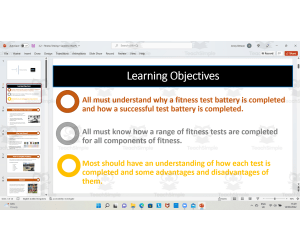
Fitness Testing Methods
Science, Life Sciences, Human Body, Grade 7, 8, 9, 10, 11, Teacher Tools, Lesson Plans
Fitness Testing Methods: An Efficient Resource for Education Fitness Testing Methods is a highly efficient teaching resource developed for educators in public schools and homeschoolers. It is structured to cater to students from grades 7 through 11, focusing on scientific study involving the human body. Learning Delivery Format The learning material is delivered as a comprehensive Microsoft PowerPoint presentation comprising of an expansive 30-slide lesson plan built around various fitness tests, making it both substantial and versatile. Educational Objectives Helping students appreciate why completing a fitness test battery is essential. Showcasing how different types of fitness tests target all components of personal fitness like strength, speed, agility or flexibility etc., are performed . Promoting understanding about benefits and limitations associated with each test - knowledge which fits perfectly with what most learners should ideally comprehend. Versatility and Applicability The teaching resource can be seamlessly deployed across various settings; from whole class instructions to smaller student groups focused on personalized attention. It can also serve efficiently when assigned as homework promoting independent learning among students. In summation: Whether you're an educator seeking to refine your testing techniques during physical education classes or aiming supplement classroom lessons on human physiology; Fitness Testing Methods delivers substance in simplicity—enhancing the educational experience inside or outside typical school environments.
Author The PE Tutor
Tags Fitness Tests, Personal Fitness, Teaching Resource, Physical Education, Human Physiology

AI Tools for Research – Fact-Checking & Bias Detection Worksheets
Science, Technology, Computer Science, Engineering, Special Resources, Social Emotional Learning (SEL), Social Skills, Life Skills, STEM, Research, Grade 6, 7, 8, 9, 10, 11, 12, Worksheets & Printables, Workbooks, Worksheets, Word Searches, Writing Prompts, Teacher Tools, Lesson Plans, Assessments, Diagrams, Presentations
This 41-page PDF is a fully prepared to print middle school Digital Literacy Curriculum called "Advanced Digital Tools for Research: Fact-Checking and Detecting Bias Worksheets" designed for students in grades 6-8 to be able to use the V.E.R.I.F.Y. Framework (Validate, Extract, Read Lateral, Interrogate Bias, Find Primary Evidence, Yield Conclusion) to critically evaluate content generated by AI, identify hallucinatory or fabricated information, detect algorithmic bias, and utilize lateral reading skills. This resource is ideal for the AI era and includes: - Four theoretical chapters with practical real-world examples (e.g., Titanic, Great Wall of China, Space Race, Paleo-Diet). - Ten hands-on student worksheets (e.g., Anatomy of a Digital Claim, Spotting Plausible Falsities, Lateral Reading Protocol, Unmasking Structural Bias, The Phantom Citation Mystery, Chronological Confusion, etc.). - Three full-color visual frameworks/diagrams (Fact-Checking Workflow, Algorithmic Bias Triad, Source Credibility Spectrum). - A complete answer key with rubrics and high proficiency examples. - A complete Teacher Implementation Guide including pacing (4-6 class periods), differentiation for ELLs/developing readers and gifted students, formative assessment examples, and examples of exit tickets. - A ready-to-teach PDF requiring no preparation that increases research skills, media literacy, and critical thinking through an alignment to both the CCSS, ISTE, and Digital Citizenship Standards, making it appropriate for use in English Language Arts, Social Studies, Science, and Technology classes. Why Schools/Parents Find It To Be Effective: Develops Real World Skills that Kids Need to Survive in an AI World. Kids will learn how to identify when they are being deceived by hallucinations, bias, and fake citations before they copy and paste into their papers or projects. No Preparation or Planning Time Required - Teachers get full theory, worksheets, visuals, answers and pacing guide when using this product. Parents appreciate the independent critical thinking experience provided to their children. Fun Way to Increase Student Engagement - Kids enjoy using the detective-style worksheets (Tree Octopus Hoax, Phantom Biologist, Brooklyn Bridge Hoax, etc.) to develop critical thinking skills through the use of skepticism as a game. Differentiated, Inclusive, and Fully Accessible - Students are able to access the materials because of the built in supports provided for ELL/Developing Readers, and extension challenges for Gifted Students. Ensures Academic Integrity Now and in the Future - Aligns well with the local school districts expanding policies regarding the appropriate use of AI, as well as standards for digital citizenship. Intended Audience of Book (As per complete PDF analysis): This resource is specifically created for students in Grades 6 to 8 (Middle School). There are examples throughout the resource, as can be seen in the seven (7) and eight (8) examples referenced. Answer keys and teacher guides both have "Grade 6 to 8 Student Workbook" clearly labeled on them. Best Fit: ELA, Social Studies/History, Research projects in Science, Digital Literacy/Media Literacy, or Technology courses Excellent for Homeschoolers, Gifted Programs, or Educators Teaching AI Ethics and Responsible Research. Copyright & Terms of Use This Book is copyrighted by Syed Hammad Rizvi. This resource is solely for personal and individual classroom use. You may not modify, redistribute or sell any part of this resource (including putting it online for others to back or download). In order to share this resource with your coworkers please buy more licenses from Teachsimple. Thank you for following these terms of use. -------------------------------------------------------------------* This product was created by Syed Hammad Rizvi to be enjoyed!
Author Creative Book Store
Rating
Tags AIFactChecking, BiasDetection, DigitalLiteracy, MiddleSchoolWorksheets, AIFactCheck, VERIFyFramework, CriticalThinking, MediaLiteracy, AIforTeachers, DigitalLiteracyWorksheets

Persian Gulf War (1990-1991): Victory Gr. 5-8
Social Studies, History, History: USA, Grade 5, 6, 7, 8, Teacher Tools, Lesson Plans
Persian Gulf War (1990-1991): Victory Gr. 5-8 is an important chapter extracted from the comprehensive lesson plan "Persian Gulf War (1990-1991)". The teaching resource magnifies the significant chain of events post Iraq's invasion of Kuwait during 1990 to 1991. This educational material caters to students belonging to grades 5 to 8 and can be effectively integrated within Social Studies syllabus, majorly focusing on USA History. It enhances geographical familiarity related to Iraq using engaging map activities and highlights factors such as oil extraction processes which could have possibly triggered Kuwait's invasion. An intricate exploration into Saddam Hussein's life - his early affiliations up until his role as Iraq's leader. A detailed analysis of the steps contributing specifically towards Kuwait’s invasion and the respective international reactions & interventions – including Operation Desert Shield & Storm. A chance for students to freely express their creative side via innovative exercises like designing comic strips, posters or constructing a diorama pertaining to different Persian Gulf War phases. The learning outcomes align brilliantly with Bloom’s Taxonomy ensuring stages like knowledge application, comprehension phase right till evaluation phases are well-covered. Additional tools are included like: Crosswords, word searches supplemented by quizzes/tests designed for skill-based problem-solving while fostering overall understanding on a wider scale. An easy-to-access PDF that holds ready-to-print pages evenly fitted within an assembly of 27 entertaining and diversified pages offering in-depth analysis of Persian Gulf War.
Author Classroom Complete Press
Tags Persian Gulf War, Social Studies, History Assessment, Crossword Puzzle, Reading Passage

Grade 4 Math Volume 1
, Grade 4, Teacher Tools, Lesson Plans
Grade 4 Math Volume 1: A Comprehensive Teaching Resource Grade 4 Math Volume 1 notably enhances the mathematical competence of fourth grade students. This workbook focuses on: Place value Addition Subtraction Multiplication Division /li> The content can be integrated into whole group instructions or small group discussions, and accommodates a variety of teaching styles and classroom sizes. Multifaceted Teaching Tool This impressive 35-page compilation presents a wealth of engaging tasks like "fill in the blank exercises" and "multiple choice quizzes" . Each ready-to-print lesson promotes critical thinking skills among learners and monitors their learning progress. Versatility at Its Best! This resource could be utilized as both a core instructional tool in developing your math curriculum due its exhaustive coverage on key topics, as well as bolstering existing curricula. It helps students gain confidence navigating through even complex mathematical concepts. Add-on for Informal Assessments or Exit Tickets In addition to its use during ordinary scheduled lessons, "Grade 4 Math Volume 1"caters specially designed pages effective for informal assessments or exit tickets if required! Note:The subject material adheres strictly to grade four syllabus ensuring those who use it are academically at an advantage.
Author Classroom Complete Press
Tags Place Value, Addition Worksheets, Subtraction Worksheets, Multiplication, Division

I WONDER - How Much Did George Washington Enjoy Reading And Writing
Biographies, Social Studies, Grade 4, 5, 6, 7, 8, 9, 10, Lesson Plans, Teacher Tools
Video Introduction An amazing video designed for the students to learn more about famous people in different countries. I WONDER - How Much Did George Washington Enjoy Reading And Writing | Animated Video Lesson Do you know this person? How much do you know about him/her? Who is your idol? Why did you choose this person? Tell us more about him/her? Who is your favorite athlete? Or what is your favorite team? Have you recently heard a story about a famous person? Who was this person? Can you tell us more about him/her. Who is your favorite president, king, or queen? Why you chose that person? In your country, who are the most famous people? What did they do? Can you tell us more about them. What is your favorite invention? Who invented it? Who is your favorite artist? What is the most famous thing he/she have done? What is the most enjoyable you have read before? Who wrote it? I WONDER - How Much Did George Washington Enjoy Reading And Writing | Animated Video Lesson The video is perfect for encouraging the researching skills for the students, while learning more about this fantastic place. I WONDER - How Much Did George Washington Enjoy Reading And Writing | Animated Video Lesson This friendly designed video is suitable for students at school, homeschooling, and as a group activity. Format Available in MP4 format.
Author Educational Voice
Rating
Tags How Much Did George Washington Enjoy Reading And Writing, How Much Did George Washington Enjoy Reading And Writing Video, George Washington, George Washington Facts, George Washington Video

Complete Math Review Package
, Grade 9, 10, 11, 12, Worksheets & Printables, Word Problems, Teacher Tools, Lesson Plans
The Complete Math Review Package This is an all-encompassing, meticulously crafted teaching resource designed to boost the high school math syllabus. It offers a one-week course that helps teachers in both public and homeschooling environments review crucial mathematical concepts in subjects like Physics, Chemistry, Biology, General Science and Mathematics. Key Features: In-depth coverage of key topics such as Scientific Notation, Significant Digits, Rearranging Equations plus Metric Conversions and Trigonometry. 'Check Your Understanding' sections for interactive student assessments . Five practice worksheets for each topic allowing students to demonstrate their understanding of the subject matter. These can also be used as homework assignments or group study handouts. An inclusive answer sheet that saves teachers time spent on searching or verifying answers. Educational Efficiency with Teacher Version PowerPoint: In an effort to heighten educational efficacy—a teacher version PowerPoint is provided. This PowerPoint uses underlined & bolded blanks which require filling during lesson progression—increasing student engagement while conservely deploying time towards fruitful discussion or activities. Cutting-edge Learning with Video Integration: Further enhancing learning experiences/effects considerably is a highly informative hyperlinked video embedded within slides. The package's compatibility with other course units like those in Physics or Chemistry speaks volumes about its adaptability amidst diverse classroom contexts due its thorough construction. Note: To ensure customer satisfaction—a free preview has been arranged before every purchase allowing you a sneak peek into how our Powerpoint lessons are structured/catalogued/ordered systematically meeting your teaching resources needs efficiently!</p
Author Teach With Fergy
Tags Math Review, Teaching Resource, High School, Interactive Learning, Practice Worksheets
I WONDER - Who Did Julius Caesar Marry | Animated Video Lesson
History: Ancient, History, Social Studies, History: Europe, Grade 4, 5, 6, 7, 8, 9, 10, Lesson Plans, Teacher Tools
Video Introduction An amazing video designed for the students to learn more about history. I WONDER - Who Did Julius Caesar Marry | Animated Video Lesson Do you like history? Which topic do you really enjoy about history? Have you ever read an interesting fact about the Vikings? If yes, can you mention them? What do you like most about the Victorian era? Can you name all the Tudors? Have you ever wondered how people used to live in ancient Japan and ancient China? Do you know any interesting facts about ancient Egyptians and the Pharaohs? Have you ever visited South America? What do you know about Incas and Aztecs? Celtic culture was really one of a kind, can you name any of the places that Celts used to live in? Imagine yourself living during the ancient Roman empire, how your life will look like? Ancient Greece was an amazing place to live in. What do you know about ancient Greek life? I WONDER - Who Did Julius Caesar Marry | Animated Video Lesson The video is perfect for encouraging the researching skills for the students, while learning more about history. I WONDER - Who Did Julius Caesar Marry | Animated Video Lesson This friendly designed video is suitable for students at school, homeschooling, and as a group activity. Format Available in MP4 format.
Author Educational Voice
Tags Who Did Julius Caesar Marry, Who Did Julius Caesar Marry Video, Julius Caesar, Julius Caesar Facts, Julius Caesar Facts For Kids, Julius Caesar Video, Julius Caesar Video For Kids, History, History Video

Aquaponic Parasites Liver Flukes in Humans: Lesson Plan, Worksheets & Google App
Science, Earth and Environmental Sciences, Environmental Science, Grade 7, 8, 9, 10, Lesson Plans, Teacher Tools
Aquaponic Parasites Liver Flukes in Humans: Lesson Plan, Worksheets & Google App This educational resource is designed for educators to introduce liver flukes, a potential disadvantage of aquaponic systems. Specifically targeting students from grade 7 to grade 10 focusing on environmental science. About the Teaching Resource The lesson plan explains how liver flukes, an uncommon parasite in aquaponic agriculture, become dangerous threats in aquatic environments. It focuses on their lifecycle and elucidates why they pose risks while offering solutions on avoidance strategies. Recommended Teaching Methods Educators could pair students for video watching and subsequent discussions. Group video sessions followed by individual question-based assignments. Assignment of specific questions to individuals for presentation of findings later. Efficacious lesson plan for substitute teachers or extra homework activities/topups/credit tasks related closely with topic taught during class hours. Learner Outcomes From this resource, Students will: Understand the parasitic nature of liver flukes including consequences upon human hosts; Learns how liver flukes propagate; Demonstrate knowledge on preventive measures against these nuisances in aquaponics systems; Note that all provided files are compatible across multiple devices - digitally fillable PDFs include printable ones as well as a Google Slides Hyperdoc pack compatible with any device’s disparity among learners thereby allowing virtual interaction more directly. In essence, this HTML package contains a didactic toolkit that provides quality education to learners thereby enhancing their knowledge base.
Author Dynamic Earth Learning
Tags Aquaponic Parasites, Liver Flukes, Aquatic Environments, Parasite Lifecycle, Zoonotic Diseases
I WONDER - What Is Reflection And Refraction | Animated Video Lesson
Physics, Science, STEM, Grade 6, 7, 8, 9, 10, 11, 12, Lesson Plans, Teacher Tools
Video Introduction An amazing video designed for the students to learn more about STEM. I WONDER - What Is Reflection And Refraction | Animated Video Lesson Do you like STEM subjects? what is your favorite one? Have you ever tried to plant a seed? If yes, tell us more about it. Or have you ever tried to invent something? If yes, tell us more about it. And how do you think it will help us? Have you ever seen a microorganism under a microscope? What was it? And how it looked like? Mathematics is a marvelous subject. Let' sharpen our brains and solve some equations. Do you like timetable tricks? What is your favorite one? Do you know how to code? Have you ever created an app or a game before? If yes, how was it like? I WONDER - What Is Reflection And Refraction | Animated Video Lesson The video is perfect for encouraging the researching skills for the students, while learning more about this fantastic topic. I WONDER - What Is Reflection And Refraction | Animated Video Lesson This friendly designed video is suitable for students at school, homeschooling, and as a group activity. Format Available in MP4 format.
Author Educational Voice
Tags What Is Reflection And Refraction, What Is Reflection And Refraction Video, Reflection, Reflection Facts, Reflection Video, Reflection Video Of Kids, Refraction, Refraction Video, Refraction Video For Kids

Big Bend National Park Geography Unit
Social Studies, Geography, Grade 6, 7, 8, 9, Teacher Tools, Lesson Plans
Big Bend National Park Geography Unit This educational resource targets middle school students, providing them with an in-depth understanding of geography through the frame of Big Bend National Park. Learning Materials The unit harnesses a diverse array of materials, including: Presentations Posters Reading sheets that immerse students into the history, geography, climate and wildlife of the park QR codes linking to supplementary videos for more detail* *Available in two formats: an extended version for depth and a shorter edition for quick revision. Learning Modes The materials can be used for: Whole group discussions during classroom presentation viewings. Diverse small group activities such as worksheet completion or booklet creation. . *Homework assignments*. Note:Caters also to individualized learning experiences. Creativity and Innovation enabled by: A complete set of images relevant to Big Bend National Park’s attributes accessible across various projects such as poster creation or composition assembly. Note:Promotes project-based learning. Instructor Resources Included! The unit includes PowerPoint presentations offering educators clear guidance on navigating through these resources effectively. Saving time from planning allows teachers to focus more on efficient instruction! Alabama Souvenirs Vocabulary Pack provides: Main Resources Include : Grade levels most suitable: Grade 6-9 Subjects: Social Studies-Geography Resource Type: Units of Study File Types Included: Multiple (7 PDFs, One PowerPoint Presentation & 6 JPEG files).
Author Mr Gray History
Tags Big Bend National Park, Geography, Middle School, Teaching Resource, Experiential Learning

I WONDER - Who Created The First Book | Animated Video Lesson
History: Ancient, History, Social Studies, History: Europe, Grade 3, 4, 5, 6, 7, 8, 9, Lesson Plans, Teacher Tools
Video Introduction An amazing video designed for the students to learn more about history. I WONDER - Who Created The First Book | Animated Video Lesson Do you like history? Which topic do you really enjoy about history? Have you ever read an interesting fact about the Vikings? If yes, can you mention them? What do you like most about the Victorian era? Can you name all the Tudors? Have you ever wondered how people used to live in ancient Japan and ancient China? Do you know any interesting facts about ancient Egyptians and the Pharaohs? Have you ever visited South America? What do you know about Incas and Aztecs? Celtic culture was really one of a kind, can you name any of the places that Celts used to live in? Imagine yourself living during the ancient Roman empire, how your life will look like? Ancient Greece was an amazing place to live in. What do you know about ancient Greek life? I WONDER - Who Created The First Book | Animated Video Lesson The video is perfect for encouraging the researching skills for the students, while learning more about history. I WONDER - Who Created The First Book | Animated Video Lesson This friendly designed video is suitable for students at school, homeschooling, and as a group activity. Format Available in MP4 format.
Author Educational Voice
Tags Who Created The First Book, Who Created The First Book Video, The First Book, The First Book In History, The First Book Video, The First Book Video For Kids, Facts About The First Book, History

The Moustache text by Robert Cormier: Full Lesson Plan w/ PowerPoints & Graphic Organizers
ELA, Literature, Grade 6, 7, 8, 9, Lesson Plans, Teacher Tools
The Moustache by Robert Cormier Full Lesson Plan Bundle Dive deep into the complex themes and characters of The Moustache short story with this comprehensive bundle. Educators receive a complete reading lesson plan analyzing the text's plot, characterization, figurative language, historical context, imagery, symbols, theme and more. Supplementary materials include graphic organizers , worksheets, answer keys and engaging PowerPoint slide decks to facilitate understanding. Perfect for whole-class instruction or small group literature circles, this robust package empowers teachers to lead reflective discussions on author's purpose, narrator reliability and beyond. Applicable for grades 6-9 language arts or reading courses, these diverse resources allow flexible implementation meeting individual learner needs.
Author Quality Teaching Products
Tags Reading Lesson Plan, Imagery Chart, Tone Diagram, Fiction Text, Short Story, The Moustache Short Story, Moustache Chart

Gamified Budgeting & Reality Cost of Living
Math, Money, Homeschool Curriculum, Grade 8, 9, 10, 11, 12, Worksheets & Printables, Workbooks, Worksheets, Word Searches, Teacher Tools, Assessments, Lesson Plans, Quizzes and Tests, Quizzes, Tests
Are abstract financial literacy lessons that simply do not engage your students giving you frustration? This immersive Curriculum of Gamified Budgeting & Cost of Living PBL makes the theory from the textbook material tangible in the experience. This is not an ordinary worksheet, but an eye-opening multi-day undertaking aimed at making students realize the real cost of living independently. By choosing a job opportunity and working with real-time data from their area, students will create a clear monthly budget. They will face the financial reality of taxes, the difficulty of searching for a reasonably-priced apartment with the help of Zillow, the complexity of finding the grocery bills as well as utility costs, and the burden of debts. This comprehensive curriculum requires no preparation in advance and allows for having great “A-ha” moments as well as develops critical thinking, resilience, and got a deep understanding of money issues. What is Included In this 42 Pages All-in-One PDF: Part 1: A Comprehensive Theory Guide (9 Pages): An exhaustive orientation for the instructors about the learning process and methods that includes ideas such as Income Illusion, Housing Heavyweights, Convenience Tax and Subscription Creep in connection with the evidence. Part 2: The Student Assignment of 10 Worksheets (20 Pages): An assignment providing an intricate guide to students concerning the following: Worksheet 1: Choosing Careers, Gross and Net Income, and Taxes Worksheet 2: Reality of Housing Market (checking local rents) Worksheet 3: Utility Costs and Connectivity (actual costs of electricity, internet, etc.) Worksheet 4: Food Spending & Eating Out (actual supermarket prices) Worksheet 5: Historical Costs of Transport (auto-loan payments and public transport) Worksheet 6: Health and Emergency Expenses Worksheet 7: Lifestyle Audit (spending for pleasures) Worksheet 8: Debt and Obligations (credits) Worksheet 9: The Monthly Report (bringing everything together) Worksheet 10: The Pivot (experiencing a financial crisis like rent increase or car problems) Part 3: Elaboration on the Instructional Tools for Educators (13 Pages): Illustrative Visuals: The educational tool gives as many graphics to make complex ideas easier. Detailed Example Answer Key: Detailed examples that illustrate the whole project using a specific example (Dental Hygienist in Austin, Texas). Five Days Implementation Guide for Teachers: Teacher's handbook. Assessment and Grading Sheet: Grading rubric made easy and comprehensible. It is vital that the Manners Project gives students crucial financial survival skills they will need later in their lives. Why Parents/Schools Think It's a Wonderful Idea: Practical Applications: The curriculum is based on local and current real data (like Zillow) that is tapped to teach budgeting, causing students to learn it in a practical way that has great relevance to their own local community. Engaging & Game-based: The curriculum is very engaging as learning is approached in a project approach (it is gamified, as students are allowed to choose a profession and deal with financial surprises) that gets students interested and involved in the learning process. Builds Useful Skills: This curriculum allows students to work in tough situations when they have to make decisions about money. Target Audience Choice: Due to the complexity of its content, its emphasis on independent living and its application of mathematical concepts, we recommend: High school students (10th-12th grade): This is probably the best audience, especially for juniors and seniors who are studying economics, personal finance, life skills, or even in a general math course as an end project. Homeschooling cooperatives: Home school parents look for high-quality real-life themes for their teenagers. Community colleges/early-stage university students: A very suitable application for "First-Year Experience" or other student success sessions to assist the young adults with the necessary transition to life away from home. Copyright and Terms of Use: This book is copyrighted by Syed Hammad Rizvi. This resource is meant for personal use only, in a classroom. You cannot edit, change, or copy this resource. Simply put, you cannot upload this resource on the free internet for everybody to access and download. If you would like to share this resource with other persons, please buy additional licenses from Teachsimple. Thanks for respecting the terms of use. This product is happily provided by Syed Hammad Rizvi.
Author Creative Book Store
Rating
Tags AcademicBurnout, StudentBurnout, StressManagement, AcademicStress, StudentAnxiety, TestAnxiety, Perfectionism, Procrastination, Overwhelm, StudentMentalHealth

First Week of School Grade 3 | No-Prep Worksheets
ELA, Math, Grade 3, Lesson Plans, Teacher Tools, Worksheets & Printables
First Week of School Grade 3 | No-Prep Worksheets Make the transition to upper elementary smooth and engaging with this First Week of School Activities for 3rd Grade resource! This no-prep back-to-school packet combines math, literacy, writing, social-emotional learning, and classroom community activities to help students review key second-grade skills while building confidence for third grade. With five structured days of meaningful learning, you'll establish routines, assess student readiness, and create a positive classroom culture from day one. What’s Included ✅ 40-page student activity workbook ✅ 5 ready-to-teach themed learning days ✅ Comprehensive Teacher Guide ✅ Complete Answer Key ✅ All About Me activities ✅ Summer paragraph writing ✅ Goal-setting pages ✅ Expanded form and rounding activities ✅ Synonyms and antonyms practice ✅ Classroom rules and routines activities ✅ Multi-step directions practice ✅ Classroom jobs matching activity ✅ Multiplication and arrays practice ✅ Scaled bar graphs ✅ Friendship and teamwork activities ✅ Class surveys and picture graphs ✅ Multiplication and division fact families ✅ Two-step word problems ✅ Fractions on number lines ✅ Equivalent fractions ✅ Area and perimeter practice ✅ Fractional line plots ✅ Parts of speech activities ✅ Prefixes and suffixes practice ✅ Main idea and details reading activity ✅ Creative writing prompts ✅ End-of-week certificate ✅ No-prep print-and-go format How It Works in the Classroom This 3rd Grade First Week of School Packet is organized into five engaging instructional days that gradually introduce classroom expectations while reviewing important academic skills. Day 1: All About Me Personal introductions Summer paragraph writing Goal setting Place value review Vocabulary development Day 2: Our Classroom Classroom expectations Multi-step directions Classroom jobs Multiplication with equal groups Scaled bar graphs Day 3: Making New Friends Friendship skills Problem-solving discussions Student interviews Class surveys Scaled picture graphs Day 4: Numbers All Around Multiplication and division Fact families Rounding and place value Fractions Area and perimeter Line plots Day 5: Letters & Reading Alphabetical order Parts of speech Prefixes and suffixes Synonyms and antonyms Main idea and details Narrative writing Perfect for: Back-to-school lessons Morning work Independent practice Whole-group instruction Small groups Review activities Early finishers Assessment opportunities Sub plans The included teacher guide provides lesson plans, pacing suggestions, differentiation ideas, and discussion prompts for each day. Standards & Learning Goals Students will practice: ⭐ Paragraph writing ⭐ Goal setting and reflection ⭐ Expanded form and place value ⭐ Rounding to the nearest ten and hundred ⭐ Synonyms and antonyms ⭐ Multiplication concepts and arrays ⭐ Fact families ⭐ Scaled bar graphs and picture graphs ⭐ Data collection and interpretation ⭐ Problem-solving skills ⭐ Fractions and equivalent fractions ⭐ Number lines ⭐ Area and perimeter ⭐ Fractional line plots ⭐ Parts of speech ⭐ Prefixes and suffixes ⭐ Main idea and supporting details ⭐ Narrative writing ⭐ Social-emotional learning and classroom community skills This resource intentionally reviews key second-grade concepts while introducing important third-grade standards and expectations in a supportive format. Why Teachers Love It ❤️ No prep required ❤️ Structured for the entire first week ❤️ Integrates math, literacy, writing, and SEL ❤️ Builds classroom community and positive relationships ❤️ Includes teacher guide and answer key ❤️ Helps assess student readiness and skill retention ❤️ Reviews foundational concepts before introducing new standards ❤️ Encourages meaningful student reflection and goal setting ❤️ Includes built-in differentiation suggestions ❤️ Supports smooth classroom management and routine building ❤️ Keeps students engaged with age-appropriate activities Created specifically for third graders, this resource balances relationship-building, academic review, and classroom culture development to help students start the year feeling successful and confident. Start the year strong with this engaging First Week of School Activities for 3rd Grade packet! Give your students meaningful opportunities to build friendships, review essential skills, and develop confidence while creating a positive classroom environment that sets the tone for a successful school year.
Author Bright Classroom Ideas Marketplace
Rating
Tags Back To School, Ela, Math, Worksheet, Lesson, Plan, First Week

Language Fun
ELA, Language Development, ESL, Grade 5, Teacher Tools, Lesson Plans
Language Fun: A Comprehensive Resource Language Fun is designed for teachers working with 5th grade students or homeschoolers aiming to improve their language arts skills. It various elements of language, including puns, vivid imagery in poetry, figurative language, analogies and the clear difference between similes and metaphors. Fun with Puns: This module starts off by focusing on defining puns and teaching students how to use them effectively in text. It adds a layer of amusement to lessons but also hones essential linguistic understanding. Vibrant Imagery: In this section, students learn how to create mental pictures using powerful words that appeal to all five senses. This aims at enhancing creative writing skills within poetic formats whilst engaging sensory details. An Exploration into Figurative Language: This part guides educators in teaching pupils how to identify and rightly utilize various literary devices such as simile, metaphor and personification expanding their composition ability. Analogies: This encourages learners to distinctly understand word comparisons enlightening them on this significant aspect of vocabulary enhancement while encouraging them independently complete analogies successfully . The Comparison Between Similes vs Metaphors: In rounding off with this topic young learners would be able differentiate these two primary literary tools often wrongfully interchanged within texts. As an educator or homeschooling parent you can use Language Fun for various purposes; facilitating whole group discussions introducing each concept entirely or breaking down the unit topics into small focus groups enabling debates. This resource is delivered via 1 downloadable PDF file allowing easy access whether you're instructing in a class or at home. Delivered in simple language understood by students whilst challenging their critical thinking skills, Language Fun is a valuable tool ensuring comprehensive language arts mastery for 5th grade English.
Author Classroom Complete Press
Tags PDF

Vegetables Reading Comprehension Passage - Cored Ed Encyclopedia
ELA, Language Development, Reading Comprehension, Reading, Pre-Reading, Science, Life Sciences, Health, P.E. & Health, Nature & Plants, Grade 2, 3, 4, 5, Worksheets & Printables, Worksheets, Teacher Tools, Centers, Activities, Writing Prompts, Assessments, Quizzes and Tests, Quizzes, Lesson Plans
This vegetables reading comprehension with lesson plan includes: Visualization (on the front cover) Start your lesson by taking a minute to think and share something about the topic. Read the script aloud (slowly), perhaps prepare some music or sound effects. Student close their eyes and let their imaginations wander. Students open their eyes, read the question aloud and give them a few minutes to complete. Ask a few students to share or keep answers until the end to compare with what they learn in the passage. Quick pause—thousands of Cored Education products are included with your TeachSimple membership. Download links and encyclopedia index available here. COMPANION VIDEO NOW AVAILABLE (EMBEDDED AFTER PREVIEW PICTURES IN PRODUCT DESCRIPTION) Pre-Reading Trivia Students will write down one thing they already know about the subject and then read five more facts and discuss. These facts are fun, and the students will enjoy learning about the subject before reading more. Give 1 minute for students to write what they already know (no pressure—best guess is fine). Read the five facts together. After each fact, do ask a student for their opinion, was it surprising? Set a purpose by asking students to highlight/underline one fact they want to learn more about during the reading. Reading Passage The text is a high-interest reading passage with set paragraphs, roughly three to four paragraphs long. It contains a variety of themes about the topic, anywhere from history to technology. The passage is between 250 and 350 words in length. First, ask students to look at the headings and see what they’ll learn about today. What do they know about the topic/heading? First read options: Teacher read-aloud (best for support). Partner reading (paragraph by paragraph). While reading, students underline important details, and vocabulary words they think may come up in the questions section. Mixed Questions The first question page contains four multiple-choice questions, each with a choice of four answers, and three written response questions that require a sentence or two from the student. Students complete the mcqs first independently, then review quickly as a class. For the 3 written responses, try to get students giving the answer with some form of evidence: “I think ___ because the text says ___.” If students get stuck, send them back to check the passage. Vocabulary Questions Practice seven key words from the text in this section across two activities. First section is scrambled words where students will unscramble three words given a clue for each. The second section is a word to meaning matching activity. Before starting, have some students read out words they underlined in the passage. Ask students to say the word and read aloud the sentence(s) around each word. Ask students to do scrambled words and the matching exercise in pairs then go through answers as a class. For the scrambled spelling task, get four pairs to come up to the board and write the words for extra practice with the other student reading out the clue. For the matching task, prompt students to give full sentences: “I matched ___ with ___ because ___.” Creative Writing In this question, the student will be required to write a five to eight sentence paragraph on a question related to the topic. Before starting, ask students write down 3 key ideas they are going to include in their piece. Ask students for ideas to share around the class to help those struggling. Pro writing expectations: 5–8 sentences At least 2 facts or details from the passage At least 2 vocabulary words from the previous page Students read their paragraphs while classmates listen for facts and vocabulary words. Extension Activities This page is optional for fast finishers or to take home. There are several activities, each one requiring a different skill. Do some, do none, do all, completely optional - but you will feel reassured knowing every possibility is planned for. Includes summary writting question. Answer Key There are answers for the multiple-choice questions, written response questions have sample answers, vocabulary answers and if there is a summary question then a sample summary will be provided as well. Lesson Plan Included Customized lesson plan for this lesson is included. Lesson Snapshot Title: Vegetables Genre: Nonfiction (Informational text) Subject: Science (Life Science: plants, nutrition) / Reading (informational text) Primary Topic: What vegetables are and why they matter Estimated Guided Reading Level (A–Z): N What This Lesson Teaches Best What counts as a vegetable (in this text): Defines vegetables as edible parts of plants people choose to eat, including roots (carrot), leaves (spinach), and flower buds (broccoli). Plant parts and categories: Explains that many vegetables come from soft-stemmed, herbaceous plants rather than woody trees, and that vegetables come in many shapes because plants have many useful parts. Early farming and seed-saving: Describes how people once gathered edible plants from the wild, then began planting and saving seeds (about 10,000–7,000 BC), keeping and sharing plants that tasted better or grew bigger. Science vs. everyday language (tomato debate): Contrasts the botanical definition of “fruit” (seed-bearing part formed from a flower’s ovary) with how “vegetable” often means a savory plant food served with meals, noting a U.S. court decision in 1893 calling tomatoes vegetables for a tax rule. Nutrition and food preservation: States vegetables are usually low in fat and calories, filling because they bring water and fiber, and may contain vitamins/minerals (examples include vitamin A and vitamin C); also notes chilling, freezing, or canning to keep vegetables longer. Learning Goals Students will define a vegetable using examples from the text (root, leaf, bud). Students will describe where many vegetables come from (soft-stemmed, herbaceous plants) and explain what that means. Students will explain how seed-saving helped wild plants become “garden favorites,” using details from the passage. Students will compare the botanical meaning of fruit with the cooking meaning of vegetable, using the tomato example. Students will identify two reasons vegetables can be filling and healthy (water, fiber, vitamins/minerals) based on the text. Key Vocabulary From the Text edible — safe and good to eat. herbaceous — soft-stemmed; not woody. botanists — scientists who study plants. ovary — flower part that can form fruit. fiber — nutrient that helps you feel full. FULL CATALOG OF DOWNLOAD LINKS AND ENCYCLOPEDIA INDEX HERE
Author Cored Education
Rating
Tags Vocabulary, Reading Comprehension, Reading Passages, Lesson Plans, Ela Lesson Plans, Reading Comprehension Lesson Plans, Pre-reading, Science Lesson Plans, Nature And Plants, Health

I WONDER - What Does The Sphinx Represent | Animated Video Lesson
History: African, History, Social Studies, History: Ancient, Geography, Grade 4, 5, 6, 7, 8, 9, 10, Lesson Plans, Teacher Tools
Video Introduction An amazing video designed for the students to learn more about history. I WONDER - What Does The Sphinx Represent | Animated Video Lesson Do you like history? Which topic do you really enjoy about history? Have you ever read an interesting fact about the Vikings? If yes, can you mention them? What do you like most about the Victorian era? Can you name all the Tudors? Have you ever wondered how people used to live in ancient Japan and ancient China? Do you know any interesting facts about ancient Egyptians and the Pharaohs? Have you ever visited South America? What do you know about Incas and Aztecs? Celtic culture was really one of a kind, can you name any of the places that Celts used to live in? Imagine yourself living during the ancient Roman empire, how your life will look like? Ancient Greece was an amazing place to live in. What do you know about ancient Greek life? I WONDER - What Does The Sphinx Represent | Animated Video Lesson The video is perfect for encouraging the researching skills for the students, while learning more about history. I WONDER - What Does The Sphinx Represent | Animated Video Lesson This friendly designed video is suitable for students at school, homeschooling, and as a group activity. Format Available in MP4 format.
Author Educational Voice
Rating
Tags What Does The Sphinx Represent, What Does The Sphinx Represent Video, The Sphinx, The Sphinx Facts, The Sphinx Video, The Sphinx Facts For Kids, The Sphinx Video For Kids, Egypt
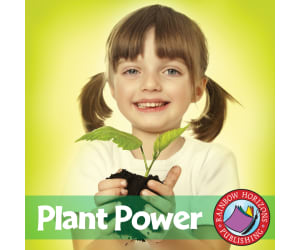
Plant Power Gr. 1-2
Science, Earth and Environmental Sciences, Environmental Science, Grade 1, 2, Teacher Tools, Lesson Plans
"Plant Power Gr. 1-2": A teaching resource to introduce Botanical World "Plant Power Gr. 1-2" is a highly adaptable educational resource aiming at introducing grade 1 and grade 2 students to the diversity of edible plants. List of major contents: Interactive storybooks about herbs, vegetables, fruits etc. Online resources offering detailed, accessible content on the subject This resource can be used for whole class instruction, smaller groups, and even as an engaging homework module where learners independently explore various concepts at their own pace. Main features include: Inclusion of "I Am a Flowering Plant with Four Parts" and "My Name is Herb and I Like to Plant and Grow Herbs" bookmaking patterns Pictures of fruits and vegetables. Pocket chart activities & songs for interactive lessons etc. Additionally, there are pocket chart classification tasks, assisting students in categorizing different plants—an important skill reinforcing scientific thinking. The lesson plan extensively covers activities such as: Fostering independent learning through task cards An engaging farmer's market board game enabling application of learned concepts A variety of student worksheets further fostering cognitive abilities among young learners Available as a user-friendly 61-page PDF,, this resource makes learning an intriguing journey in grades 1 and 2 by creating immersive experiences for both teachers facilitating sessions and students exploring their natural surroundings from a scientific perspective.
Author Classroom Complete Press
Tags Environment, Reading Passages, Plants, Task Cards, Word Search
I WONDER - Can House Plants Reduce Air Pollution | Animated Video
Environmental Science, Earth and Environmental Sciences, Science, Grade 2, 3, 4, 5, 6, 7, 8, Lesson Plans, Teacher Tools
Video Introduction An amazing video designed for the students to learn more about STEM. I WONDER - Can House Plants Reduce Air Pollution | Animated Video Lesson Do you like STEM subjects? what is your favorite one? Have you ever tried to plant a seed? If yes, tell us more about it. Or have you ever tried to invent something? If yes, tell us more about it. And how do you think it will help us? Have you ever seen a microorganism under a microscope? What was it? And how it looked like? Mathematics is a marvelous subject. Let' sharpen our brains and solve some equations. Do you like timetable tricks? What is your favorite one? Do you know how to code? Have you ever created an app or a game before? If yes, how was it like? I WONDER - Can House Plants Reduce Air Pollution | Animated Video Lesson The video is perfect for encouraging the researching skills for the students, while learning more about this fantastic topic. I WONDER - Can House Plants Reduce Air Pollution | Animated Video Lesson This friendly designed video is suitable for students at school, homeschooling, and as a group activity. Format Available in MP4 format.
Author Educational Voice
Tags Can House Plants Reduce Air Pollution, Can House Plants Reduce Air Pollution Video, Plants Reduce Air Pollution, Plants Reduce Air Pollution Facts, Plants Reduce Air Pollution Video, Plants Reduce Air Pollution Facts For Kids

I WONDER - How Can I Work Out The Angles In A Shape | Animated Video
STEM, Computer Science, Technology, Science, Grade 6, 7, 8, 9, 10, 11, 12, Lesson Plans, Teacher Tools
Video Introduction An amazing video designed for the students to learn more about STEM. I WONDER - How Can I Work Out The Angles In A Shape | Animated Video Lesson Do you like STEM subjects? what is your favorite one? Have you ever tried to plant a seed? If yes, tell us more about it. Or have you ever tried to invent something? If yes, tell us more about it. And how do you think it will help us? Have you ever seen a microorganism under a microscope? What was it? And how it looked like? Mathematics is a marvelous subject. Let' sharpen our brains and solve some equations. Do you like timetable tricks? What is your favorite one? Do you know how to code? Have you ever created an app or a game before? If yes, how was it like? I WONDER - How Can I Work Out The Angles In A Shape | Animated Video Lesson The video is perfect for encouraging the researching skills for the students, while learning more about this fantastic topic. I WONDER - How Can I Work Out The Angles In A Shape | Animated Video Lesson This friendly designed video is suitable for students at school, homeschooling, and as a group activity. Format Available in MP4 format.
Author Educational Voice
Tags How Can I Work Out The Angles In A Shape, How Can I Work Out The Angles In A Shape Video, Angles, Angle, Angles Facts, Angles Facts For Kids, Angles Video, Angles Video For Kids
I WONDER - What Were The First Golf Balls Made Out Of | Animated Video
Sports, P.E. & Health, Grade 2, 3, 4, 5, 6, 7, 8, Lesson Plans, Teacher Tools
Video Introduction An amazing video designed for the students to learn more about sports in different countries. I WONDER - What Were The First Golf Balls Made Out Of | Animated Video Lesson What is your favorite sport? Tell us more about it. Who is your favorite athlete? Or what is your favorite team? Do you know who invented basketball? When basketball has been invented? Can you tell us where is the first time it has been played? Have you ever played soccer or football? If yes, tell us what was your position: A goal keeper, midfield player, or a defender? Do you like watching golf? If yes who is your favorite player? Can you name the differences between tennis and ping pong? Have you ever played volleyball on the beach? When it has been officially recognized by the Olympics? Do you like watching Formula 1 races? If yes, who is your favorite team or driver? Have you ever tried to play handball? If yes tell us more. Do you like watching people skiing or surfing? I WONDER - What Were The First Golf Balls Made Out Of | Animated Video Lesson The video is perfect for encouraging the researching skills for the students, while learning more about this sport. I WONDER - What Were The First Golf Balls Made Out Of | Animated Video Lesson This friendly designed video is suitable for students at school, homeschooling, and as a group activity. Format Available in MP4 format.
Author Educational Voice
Rating
Tags What Were The First Golf Balls Made Out Of, What Were The First Golf Balls Made Out Of Video, The First Golf Balls, The First Golf Balls Facts, The First Golf Balls Video, The First Golf Balls Video For Kids, The First Golf Balls Facts For Kids
I WONDER - What Does Stomach Acid Do | Animated Video Lesson
STEM, Human Body, Life Sciences, Science, Biology, Grade 4, 5, 6, 7, 8, 9, 10, Lesson Plans, Teacher Tools
Video Overview The human body is full of fascinating wonders to learn. This video is created to help the students recognize the anatomy and the job of the human body. I WONDER - What Does Stomach Acid Do | Animated Video Lesson Every part and organ in our human body is vital so let's see how important they are. Have you ever imagined how we look like if we didn't have a skeleton? Did you know that because we have our amazing muscles we can stand! Do you know how many teeth do we have? Have you ever wondered about the food journey inside our body? Can you name all the glands in our body? Why do we have skin? Our nervous system is really good at sending signals. Can you tell us more about it? Are you really good at Mathematics, painting, or any other thing? You should really thank your brain about it! The famous five senses are really doing a great work? Can you explain how every sense works? I WONDER - What Does Stomach Acid Do | Animated Video Lesson The video is perfect for encouraging the researching skills for the students, while learning more about our fantastic human body. I WONDER - What Does Stomach Acid Do | Animated Video Lesson This friendly designed video is suitable for students at school, homeschooling, and as a group activity. Format Available in MP4 format.
Author Educational Voice
Tags What Does Stomach Acid Do, What Does Stomach Acid Do Video, Stomach Acid, Stomach Acid Facts, Stomach Acid Facts For Kids, Stomach Acid Video, Stomach Acid Video For Kids, Stomach
I WONDER - What Is A Robux | Animated Video Lesson
Computer Science, Technology, Science, Grade 4, 5, 6, 7, 8, 9, 10, Lesson Plans, Teacher Tools
Video Introduction An amazing video designed for the students to learn more about STEM. I WONDER - What Is A Robux | Animated Video Lesson Plants world is really fascinating! Do you know that some flowers eat insects? Some other plants like to grow on walls can you mention any? Do you know what is the difference between fungicide and pesticide? If yes, Can you tell us more about it? What is nuclear energy? Is it safe to use it? Do you think it is a clean energy? Have you ever read about potential energy? If yes, tell us what it is? Do you think that potential energy can be converted into another form of energy? How it happens? I WONDER - What Is A Robux | Animated Video Lesson The video is perfect for encouraging the researching skills for the students, while learning more about this fantastic topic. I WONDER - What Is A Robux | Animated Video Lesson This friendly designed video is suitable for students at school, homeschooling, and as a group activity. Format Available in MP4 format.
Author Educational Voice
Rating
Tags What Is A Robux, Robux, Robux Facts, Robux Video, Robux Video For Kids, Robux Facts For Kids, Roblox, Roblox Facts, Roblox Video, Roblox Video For Kids

The Sun | Interactive Science Lesson | Micro-Learning Deck
Science, Earth and Environmental Sciences, Space, Grade 6, 7, 8, 9, Teacher Tools, Lesson Plans
This micro-learning deck is the perfect accessory to your Science instruction! This digital slideshow presents The Sun, A Real Star. Within this slideshow, you will receive: -Video Lesson -Reading Passage w/ Audio -Close Reading -Quick Write The informational texts included in this resource alongside the informal assessments will keep your students engaged from beginning to end.
Author Teach Me This
Tags The Sun, Interactive, Science, Astronomy, Reading Passage