



3,906 products added recently
Page 149 - Lesson Plan Templates
Simplify your preparation with lesson plan templates designed to help you organize objectives, activities, and assessments. These templates provide a structured framework to ensure comprehensive coverage of material. Incorporate them to save time and enhance the effectiveness of your teaching.

 Show filters

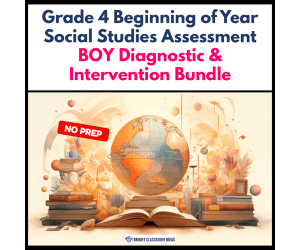
Grade 4 Beginning of Year Social Studies Assessment Diagnostic
Social Studies, Grade 4, Assessments, Teacher Tools, Lesson Plans, Worksheets & Printables
Start the year with confidence using this 4th Grade Beginning of Year Social Studies Assessment and complete targeted intervention system! This comprehensive Grade 4 Social Studies Diagnostic goes far beyond a simple pretest by helping you assess student understanding, identify skill gaps, create flexible small groups, assign targeted practice, provide enrichment, and monitor growth—all with one easy-to-use, no-prep resource. Designed as a complete Assess → Identify → Group → Practice → Reassess system, this resource includes a 44-question diagnostic assessment , skill analysis tools, 26 targeted follow-up practice pages , enrichment activities, and complete answer keys so you can immediately turn assessment data into effective instruction. What's Included This 4th Grade Beginning of Year Social Studies Assessment Bundle includes: ✅ Teacher Guide & Implementation Overview ✅ 44-question Beginning-of-Year Social Studies Diagnostic ✅ Printable Student Answer Sheet ✅ Skill Analysis & Grouping Tools ✅ Item-to-Skill Mapping Guide ✅ Class Skill Grid ✅ Individual Student Profiles ✅ Grouping Planner ✅ Reassessment Tracker ✅ 26 Targeted Follow-Up Practice Worksheets ✅ Extension Activities ✅ Choice Board for enrichment ✅ Complete Answer Key ✅ Scoring Guide ✅ Claim-Evidence-Reasoning (CER) Rubric ✅ Printable PDF format ✅ No-prep, print-and-go resource Students are assessed across five major social studies strands : 🌎 Map & Spatial Skills Map reading & keys Cardinal & intermediate directions Latitude & longitude Scale & distance Physical vs. political maps Regions 📜 Time & Chronology Timeline reading Chronological order BCE & CE Centuries & decades Migration & movement 📰 Sources & Historical Reasoning Primary vs. secondary sources Fact vs. opinion Cause & effect Compare & contrast Point of view Bias & source reliability 🏛 Civics & Economics Three branches of government Rights & responsibilities Citizenship Scarcity & choice Supply & demand 📊 Data & Argument Reading charts & tables Population data Evidence-based inference Claim-Evidence-Reasoning (CER) The Teacher Guide explains that the complete bundle contains approximately 93 printable pages across seven coordinated resources , all using the same skill codes so every component works together seamlessly. How It Works in the Classroom This 4th Grade Social Studies Beginning of Year Assessment follows a simple five-step instructional cycle that transforms assessment data into meaningful instruction. Step 1 — Assess Students complete the 44-question diagnostic using the separate Student Answer Sheet. Step 2 — Identify Skill Gaps Score assessments with the Answer Key and record results using the Class Skill Grid. Step 3 — Group Students Use the Grouping Planner to build flexible intervention groups based on shared skill needs. Step 4 — Assign Targeted Practice Assign only the follow-up practice pages that match each student's assessment results. Step 5 — Reassess Monitor student growth using the Reassessment Tracker and regroup as needed. The Teacher Guide recommends administering the assessment during the first week of school in approximately 50 minutes , or dividing it into five shorter sessions by skill area. Questions may be read aloud because the assessment is designed to measure social studies knowledge—not reading speed. Perfect for: Beginning of Year Assessment Social Studies Pretest Back to School Activities Diagnostic Assessment RTI MTSS Intervention Small Groups Progress Monitoring Data Meetings Flexible Grouping Review Before State Testing Standards & Learning Goals This 4th Grade Social Studies Diagnostic Assessment reviews the foundational knowledge students should demonstrate at the beginning of fourth grade. Students demonstrate understanding of: Map & Spatial Skills Reading maps Map keys & legends Cardinal directions Intermediate directions Latitude Longitude Scale Measuring distance Physical maps Political maps Regions Time & Chronology Timeline reading Chronological order BCE & CE Centuries Decades Migration Historical movement Sources & Historical Reasoning Primary sources Secondary sources Fact vs. opinion Cause & effect Compare & contrast Point of view Bias Source reliability Civics & Economics Legislative branch Executive branch Judicial branch Rights Responsibilities Citizenship Scarcity Supply & demand Economic choices Data & Argument Reading charts Reading tables Population data Evidence-based conclusions CER writing Students demonstrate understanding through a variety of engaging formats including: Multiple-choice questions Political maps Physical maps Coordinate maps Timelines Historical scenarios Tables Population graphs Written Claim-Evidence-Reasoning response The diagnostic measures 26 beginning-of-year skills across five content areas, and every assessment item is linked directly to a matching practice page through the Skill Analysis Tools. Why Teachers Love It ✨ More than a beginning-of-year test—it is a complete instructional system. ✨ Saves 10+ hours of planning by combining assessment, data analysis, intervention, enrichment, and reassessment into one coordinated resource. ✨ Every assessment question aligns directly to one specific social studies skill. ✨ Easily identify exactly what students know and where additional instruction is needed. ✨ Create flexible intervention groups using built-in planning tools. ✨ Includes 26 targeted follow-up practice worksheets , each beginning with a student-friendly "Remember" mini lesson followed by fresh practice questions that do not repeat the assessment. ✨ Differentiate instruction with ease. Students who need additional support receive targeted reteaching while students demonstrating mastery complete engaging enrichment challenges and a choice board. ✨ Extension Activities encourage higher-level thinking through projects such as: Designing an original region Creating BCE & CE timelines Identifying primary and secondary sources Exploring the three branches of government Running a supply-and-demand market challenge Using latitude and longitude to locate places Reading graphs and defending claims with evidence These enrichment activities emphasize creativity, reasoning, and authentic application rather than repetitive practice. ✨ Skill Analysis Tools simplify instructional planning. Teachers receive: Item-to-Skill Map Class Skill Grid Student Profiles Grouping Planner Reassessment Tracker Every diagnostic question is connected directly to a matching follow-up worksheet, making it easy to assign only the practice each student needs. ✨ Includes complete scoring guidance. The Answer Key provides: Correct answers Skill codes Answer explanations Skill mastery bands CER scoring rubric Teachers can quickly determine whether students are Approaching , On Track , or Strong in each skill area and immediately plan targeted instruction. ✨ Supports meaningful data-driven instruction while remaining easy to administer and simple to score. Start your school year with meaningful assessment data and a clear instructional plan using this 4th Grade Beginning of Year Social Studies Assessment . Whether you're looking for a 4th Grade Social Studies Diagnostic , Beginning of Year Pretest , Back to School Assessment , RTI Intervention Resource , Social Studies Skill Review , Progress Monitoring Tool , Small Group Instruction Resource , or a complete assessment-to-intervention system, this bundle gives you everything you need to assess, analyze, group, reteach, enrich, and monitor student growth throughout the year.
Author Bright Classroom Ideas Marketplace
Rating
Tags Social Studies, Back To School, Diagnostic, Assessment

I WONDER - What Is Musical Pitch | Animated Video Lesson
Music, Creative Arts, Grade 6, 7, 8, 9, 10, 11, 12, Lesson Plans, Teacher Tools
Video Introduction An amazing video designed for the students to learn more about music. I WONDER - What Is Musical Pitch | Animated Video Lesson Pitch is how high or low a musical note sounds. In music, there are different pitches, and they're often represented by the letters A, B, C, D, E, F, and G. The pitch of a note is determined by its frequency, which is measured in Hertz (Hz). High-pitched notes have a higher frequency, while low-pitched notes have a lower frequency. When you sing or play an instrument, you create different pitches by varying the length or tension of the vibrating strings or air column. I WONDER - What Is Musical Pitch | Animated Video Lesson The video is perfect for encouraging the artistic skills for the students, while learning more about this fantastic topic. I WONDER - What Is Musical Pitch | Animated Video Lesson This friendly designed video is suitable for students at school, homeschooling, and as a group activity. Format Available in MP4 format.
Author Educational Voice
Rating
Tags What Is Musical Pitch, What Is Musical Pitch Video, Musical Pitch, Musical Pitch Facts, Musical Pitch Video, Musical Pitch Video For Kids, Musical Pitch Facts For Kids, Musical, Musical Video

Light - Refraction Explained - Fully Resourced Lesson for Middle School
Science, Physics, Grade 5, 6, 7, 8, 9, Lesson Plans, Teacher Tools
<h3>The Light- Refraction Explained - Fully Resourced Lesson for Middle School</h3> This comprehensive teaching resource focuses on the intriguing phenomenon of light refraction, tailored to learners from grades 5 through 9. With an engaging blend of activities and informational materials, this package delves into key subtopics including: <ul> <li><b>Speed of light in different mediums</b></li> <li><b>Direction of bending based on density factors</b></li> <li><i>'Apparent depths' and 'experiencing lightning before thunder' phenomena.</i>>&ldquo/li> /"/ul> P>The Virtual Experiment feature stands out, where students can engage with angles of incidence and refraction within a semi-circular glass block setting. This material comes packed with fifteen distinctive resources designed to encourage creative adaptation according to individual student strengths and available time. These include: &ORAGE0 (This detailed worksheets supporting PowerPoint presentations) ^ Interactive activities like 'Cut-Stick' )Certifications like 'Flip It' (Fact Sheets able to accurately deliver key principles / l Furthermore, these resources are integrated with literacy, oracy aspects along with self- assessment techniques encouraging skill enhancement in areas like public speaking and peer evaluation. t/li> P>In addition is an exit ticket quiz as a helpful assessment tool at the end. And useful recommendations are also provided via a logically plotted flowchart assisting in optimal instructional planning. & italics. (H4)A versatile tool for any educator in the realm of science & physics!
Author Elf off the Shelf Resources
Tags Light Refraction, Interactive Learning, Virtual Experiment, Science Education, Physics
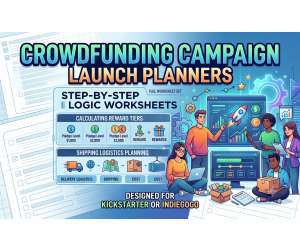
Crowdfunding Campaign Launch Planners
Special Resources, Life Skills, Social Emotional Learning (SEL), Social Skills, Special Education Needs (SEN), Resources for Teachers, Classroom Management, Community Building, STEM, Research, Grade 6, 7, 8, 9, 10, 11, 12, Workbooks, Worksheets & Printables, Worksheets, Word Searches, Teacher Tools, Assessments, Lesson Plans, Quizzes and Tests, Quizzes, Tests
Transform your students from passive learners into active entrepreneurs! Are you looking for a project-based learning (PBL) unit that brings real-world business, economics, and mathematics to life? This comprehensive curriculum guides students through the high-stakes, logical puzzle of launching a product on crowdfunding platforms like Kickstarter or Indiegogo. This isn't just another business plan template. This 44-page, in-depth unit moves beyond marketing fluff and dives deep into the gritty, unforgiving mathematics of product fulfillment and supply chain logistics. Students will act as logistical architects, learning that a successful business isn't just about a great idea—it's about flawless execution. ▶ WHAT'S INSIDE THIS COMPLETE UNIT? Part 1: In-Depth Theory Guide (Chapters 1-4): A professional-grade guide covering the core concepts: The Economics of Crowdfunding: Uncover the hidden fees and calculate the "True Cost" of a funding goal. Behavioral Economics & Pricing: Learn the psychology of reward tiers using concepts like anchoring and the decoy effect. Global Shipping Logistics: Master the devastating impact of Dimensional Weight (DIM), Harmonized System (HS) codes, and international fulfillment hubs. Risk Mitigation & Margin Preservation: Build a contingency matrix and use algebraic modeling to create financial buffers that ensure profitability. Part 2: Student Workbook (10 Worksheets): Rigorous, scaffolded worksheets that put theory into practice. Students will calculate COGS, platform fees, shipping costs, break-even points, and contingency buffers through real-world scenarios. Critical thinking prompts ensure deep understanding. Part 3: Teacher & Visual Resources: Everything you need to teach with confidence! Pedagogical Visuals: Three ready-to-print or projectable anchor charts visually explaining Reward Tier Pricing, Dimensional Weight, and Global Logistics. Comprehensive Answer Key: A full, step-by-step answer key for all 10 student worksheets. Teacher Implementation Guide: Includes a 5-day pacing guide, discussion prompts, classroom demonstration ideas, and enrichment opportunities for advanced students. ▶ PERFECT FOR: High School Business or Entrepreneurship Classes Career and Technical Education (CTE) Programs AP Macroeconomics or Microeconomics (as a real-world application project) Financial Literacy and Math Electives Homeschool curriculum for high schoolers interested in business. Equip your students with the practical math, critical thinking, and financial literacy skills they need to survive in the modern economy. Download now and bring the ultimate business challenge into your classroom! Keywords: Crowdfunding, Kickstarter, Business Plan, Entrepreneurship Project, Project-Based Learning, PBL, High School Business, Economics, Supply Chain, Logistics, Cost of Goods Sold, COGS, Profit Margin, Financial Literacy, CTE, Student Workbook, Answer Key Why Parents/Schools Love It: Real-World Application: It moves economics and math from abstract theory into a tangible, modern context (Kickstarter!) that students find engaging, teaching skills directly applicable to today's economy. Develops Critical 21st-Century Skills: This unit forces students to synthesize data, perform multi-step calculations, think critically about risk, and solve complex logistical problems—skills that are essential for any future career. Comprehensive & Turnkey Solution: This isn't just a worksheet; it's a complete, ready-to-use instructional unit. The included theory, visuals, answer key, and teacher guide save educators dozens of hours of prep time. Rigorous & High-Level: The curriculum respects students' intelligence by presenting them with authentic, high-stakes challenges. It avoids "fluff" and focuses on the rigorous logic and math required to actually run a business, preparing them for post-secondary education and beyond. Target Audience : Based on the content, language ("Grade 11 business and economics students"), and structure, target: Primary Target: High School Teachers of grades 10-12 for subjects like Business, Entrepreneurship, Economics (including AP), and Marketing. The CTE (Career and Technical Education) market is perfect for this. Secondary Target: Homeschool Parents of high school students who are looking for advanced, project-based curriculum that teaches practical life skills. Tertiary Target: College Instructors for introductory business or entrepreneurship courses, who could use this as a practical, foundational module. Copyright/Terms of Use: This Book was copyrighted by Syed Hammad Rizvi. This resource is for personal and single classroom use only. You may not alter, redistribute, or sell any part of this resource. In other words, you may not put it on the Internet where it could be publicly found and downloaded. If you want to share this resource with colleagues, please purchase additional licenses from Teachsimple. Thank you for respecting these terms of use. This product is happily brought to you by Syed Hammad Rizvi
Author Creative Book Store
Rating
Tags Crowdfunding, Entrepreneurship, Kickstarter, SupplyChain, BusinessLogistics, ProfitMargin, CostOfGoodsSold , COGS, ProductLaunch, StartupLife
Geometry: Spatial Relationships - FLASH-MAC
Math, Geometry, Grade 1, 2, Teacher Tools, Lesson Plans
Geometry: Spatial Relationships - FLASH-MAC is an advanced educational tool targeted specifically at first and second-grade educators. Its main objective is to simplify the process of teaching spatial relationships in geometry. The educational content, neatly structured into mini-chapters, adheres to the curriculum. The product seamlessly blends technology with conventional teaching methods and offers useful resources such as: Pre- assessment tests Lesson plans with detailed instructions A range of 'real-world' word problems to explain ideas better A set of timed drill activities for practice and eventual perfection! Evaluating Progress Over Time? No worries! FLASH-MAC takes care of this too by incorporating SMART Response assessment methodologies that offer intelligent feedback. This greatly assists in conducting pedagogical procedures effectively. Making Learning Fun! To make things more fun and interesting, we've also integrated memory match games along with board and spinner games into the curriculum. Linguistic Diversity? We have got you covered! We embrace diverse linguistic capacities - English voice overs & Spanish text options are included apart from the primary English text mode. The FLASH-MAC software package includes files accessible via a zip file that can work across class instruction routines or smaller group interactions. Plus! It's also perfect for assigning individual tasks aimed at home reinforcement allowing students to further practice their skills beyond classroom boundaries. In conclusion,, Think of Geometry: Spatial Relationships - FLASH-MAC as your remote assistant delivering finely curated lesson plans coupled with practical applications thrown within engaging gaming sessions—completely redefining geometry education paradigms within your Grade 1-2 classrooms.
Author Classroom Complete Press
Tags Geometry, Spatial Relationships, Pre-assessment, Math Quiz, Shapes

Geometry: Spatial Relationships - Learn the Skill - PC Software
Math, Geometry, Common Core, Kindergarten, Preschool, Grade 1, 2, Teacher Tools, Lesson Plans
Geometry: Spatial Relationships - Learn the Skill PC Software This teaching resource software is designed to instill a foundational understanding of spatial relationships in Geometry. It's intelligently constructed around practical real-world word problems, in addition to theoretical learning. Key features: Detailed lessons with interactive math tools Curriculum-based content fit for various educational settings Ability to work in both English and Spanish language environments "Geometry: Spatial Relationships - Learn the Skill" stands out through its compliance with several recognized educational standards: Common Core State Standards (CCSS) The National Council of Teachers of Mathematics (NCTM) guidelines STEM initiatives Multilingual Support and Wide Adoption Scope The software embeds default English text and voiceover along with an added Spanish voiceover option. This multilinguality makes it suitable for use within linguistically diverse classrooms, essentially serving as a useful tool for teachers aiming at bridging connections between language arts and maths. Ease-of-use and Installation Flexibility Packed within a ZIP file optimized for easy download, this software can be easily installed on multiple systems – making it considerably resourceful in environments where resources may have to be shared among different teachers or classrooms. Categorized under Math subcategory "Geometry", this high utility teaching aid focuses mainly on early learners ranging from preschool through grade 2 levels. It ultimately offers an approachable way of understanding complex geometrical concepts like spatial relationships along with adaptable versatility suitable across different learning scenarios. A worthy addition to your arsenal!
Author Classroom Complete Press
Tags Spatial, Relationships, Math Lesson, Geometry, Skills
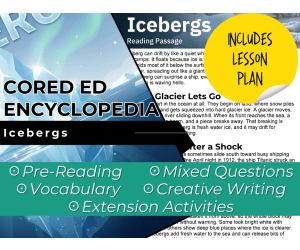
Icebergs Reading Comprehension Passage - Cored Ed Encyclopedia
ELA, Reading Comprehension, Reading, Language Development, History, Social Studies, Science, Physics, Earth and Environmental Sciences, Pre-Reading, Grade 2, 3, 4, 5, Worksheets & Printables, Worksheets, Teacher Tools, Centers, Activities, Writing Prompts, Assessments, Quizzes and Tests, Quizzes, Lesson Plans
This Icebergs reading comprehension with lesson plan includes: Visualization (on the front cover) Start your lesson by taking a minute to think and share something about the topic. Read the script aloud (slowly), perhaps prepare some music or sound effects. Student close their eyes and let their imaginations wander. Students open their eyes, read the question aloud and give them a few minutes to complete. Ask a few students to share or keep answers until the end to compare with what they learn in the passage. Quick pause—thousands of Cored Education products are included with your TeachSimple membership. Download links and encyclopedia index available here. Pre-Reading Trivia Students will write down one thing they already know about the subject and then read five more facts and discuss. These facts are fun, and the students will enjoy learning about the subject before reading more. Give 1 minute for students to write what they already know (no pressure—best guess is fine). Read the five facts together. After each fact, do ask a student for their opinion, was it surprising? Set a purpose by asking students to highlight/underline one fact they want to learn more about during the reading. Reading Passage The text is a high-interest reading passage with set paragraphs, roughly three to four paragraphs long. It contains a variety of themes about the topic, anywhere from history to technology. The passage is between 250 and 350 words in length. First, ask students to look at the headings and see what they’ll learn about today. What do they know about the topic/heading? First read options: Teacher read-aloud (best for support). Partner reading (paragraph by paragraph). While reading, students underline important details, and vocabulary words they think may come up in the questions section. Mixed Questions The first question page contains four multiple-choice questions, each with a choice of four answers, and three written response questions that require a sentence or two from the student. Students complete the mcqs first independently, then review quickly as a class. For the 3 written responses, try to get students giving the answer with some form of evidence: “I think ___ because the text says ___.” If students get stuck, send them back to check the passage. Vocabulary Questions Practice seven key words from the text in this section across two activities. First section is scrambled words where students will unscramble three words given a clue for each. The second section is a word to meaning matching activity. Before starting, have some students read out words they underlined in the passage. Ask students to say the word and read aloud the sentence(s) around each word. Ask students to do scrambled words and the matching exercise in pairs then go through answers as a class. For the scrambled spelling task, get four pairs to come up to the board and write the words for extra practice with the other student reading out the clue. For the matching task, prompt students to give full sentences: “I matched ___ with ___ because ___.” Creative Writing In this question, the student will be required to write a five to eight sentence paragraph on a question related to the topic. Before starting, ask students write down 3 key ideas they are going to include in their piece. Ask students for ideas to share around the class to help those struggling. Pro writing expectations: 5–8 sentences At least 2 facts or details from the passage At least 2 vocabulary words from the previous page Students read their paragraphs while classmates listen for facts and vocabulary words. Extension Activities This page is optional for fast finishers or to take home. There are several activities, each one requiring a different skill. Do some, do none, do all, completely optional - but you will feel reassured knowing every possibility is planned for. Includes summary writting question and additional facts. Answer Key There are answers for the multiple-choice questions, written response questions have sample answers, vocabulary answers and if there is a summary question then a sample summary will be provided as well. Lesson Plan Included Customized lesson plan for this lesson is included. Lesson Snapshot Title: Icebergs Genre: Nonfiction (informational passage) Subject: Reading (Informational Text) / Earth Science Primary Topic: How icebergs form, drift, and change Estimated Guided Reading Level (A–Z): R What This Lesson Teaches Best Key facts about iceberg floating: ice is lighter than seawater and most of an iceberg is below the surface (about 90% underwater). How icebergs form from glaciers on land, including the process called calving when a piece breaks away at the sea. Human safety and history connections: the Titanic tragedy and how the International Ice Patrol began sending warnings to ships. How icebergs change shape over time (waves at the waterline, meltwater weakening from above) and why scientists track them (ocean currents, changing polar ice). Using headings to organize information into focused sections (formation, safety/history, observation/science clues). Learning Goals Explain why most of an iceberg is hidden under the ocean’s surface. Describe how snow becomes hard glacier ice and how a new iceberg forms. Define calving using details from the passage. Identify what happened in 1912 and how it led to safer travel for ships. Describe two ways an iceberg can change shape and one reason scientists watch iceberg paths. Key Vocabulary From the Text seawater — ocean water with salt in it. surface — the top layer of something. glacier — a huge, slow-moving river of ice. calving — when a piece breaks off a glacier. currents — moving flows of ocean water. FULL CATALOG OF DOWNLOAD LINKS AND ENCYCLOPEDIA INDEX HERE
Author Cored Education
Rating
Tags Vocabulary, Reading Comprehension, Reading Passages, Lesson Plans, Ela Lesson Plans, Reading Comprehension Lesson Plans, Pre-reading, History, Science Lesson Plans, Earth Science
Differentiation: The product rule
Math, Calculus, Grade 12, Teacher Tools, Lesson Plans
Differentiation: The Product Rule This 11-slide PowerPoint presentation breaks down step-by-step how to find the derivative of the product of two functions, an essential topic in calculus. Educators can use this resource to introduce the product rule or provide extra practice to students. It works well for whole-class direct instruction, small group remediation, flipped classroom videos, or even student-led peer tutoring. The detailed explanations with examples will reinforce students' understanding of this foundational concept for taking derivatives. Teachers appreciate how this concise presentation focuses specifically on the mechanics of the product rule. By the end, learners will have built fluency in applying this technique to find the derivatives of products of functions. This clears the way for them to tackle more complex problems and develop a conceptual grasp of rates of change.
Author Maths Support Centre
Tags Calculus, Differentiation, The Product Rule, Derivative Of The Product

To Kill A Mockingbird: The Teacher's Companion
ELA, Literature, Grade 7, 8, 9, 10, 11, 12, Teacher Tools, Lesson Plans
To Kill A Mockingbird: The Teacher's Companion Description: An idea factory specifically intended to serve literature teachers teaching grades 7 through 12. The resource is a mix of well-curated ideas, extensive background knowledge, and innovative methods for effective communication of the classic novel "To Kill A Mockingbird". This Companion is not prescriptive; instead it mirrors varied teaching styles that cater to diverse classrooms with differing academic needs. Teachers are prompted to tailor and build upon its contents in line with their unique method and specific student dynamics. Audience: Public school educators - utilized for whole group teaching or small-group tasks, Homeschoolers - leveraged for one-on-one interaction or allocated homework. The resource enables vibrant student engagement with literary text thus enhancing analytical abilities—standing true by its primary philosophy: Using literature to understand our world better. Ease of Use The entire information conveniently condensed into a single (PDF) file type to increase user-friendliness and solidify our philosophy. Main Focus Area The emphasis lies on language arts specially focusing on literature—a critical element in comprehension and critical thinking curriculum—an aid in seamless lesson planning from middle-school level up till high school seniors resulting from an easy yet influential layout. In Conclusion: To Kill A Mockingbird: The Teacher's Companion isn't merely about saving time—it’s about maximizing it in the best possible way—that allows teachers more room for establishing connections between students and texts while creating a love for literature along the journey.
Author Classroom Complete Press
Tags To Kill A Mockingbird, Teacher Unit, Literature , Reading Comprehension
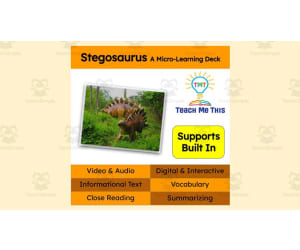
Stegosaurus | Interactive Science Lesson | Micro-Learning Deck
Science, Life Sciences, Animals, Grade 6, 7, 8, 9, Teacher Tools, Lesson Plans
Engage students with an informative slideshow on the Stegosaurus dinosaur. This science resource explores the anatomy and behavior of this iconic Jurassic herbivore through a video lesson, reading passage with audio, close reading activity, and quick write assignment. Educators can utilize the deck in whole or small groups to build knowledge, assess comprehension, and spark discussion. The multimedia format and focused content delivery make this an adaptable resource for reinforcing standards-based learning objectives across middle school grade bands. Students will stay engaged as they move through the self-paced content, analyzing text and visuals to learn extinction theories and intriguing facts about Stegosaurus body features like the double row of kite-shaped plates along its back. Use to supplement your zoology or earth science curriculum .
Author Teach Me This
Tags Stegosaurus, Interactive, Science, Vocabulary, Comprehension
I WONDER - Is Frost Different To Dew | Animated Video Lesson
Earth Sciences, Earth and Environmental Sciences, Science, Grade 4, 5, 6, 7, 8, 9, 10, Lesson Plans, Teacher Tools
Video Introduction An amazing video designed for the students to learn more about famous phenomena in different countries. I WONDER - Is Frost Different To Dew | Animated Video Lesson What do you know about this phenomenon? Where it happens? When it happens? What are the safety measures that we should take to be safe during this phenomenon? Are there any other places in the world that experienced this phenomenon? If yes, tell us more about them. Why do you think it happens? Do you like reading about Geography? What is your favorite country in the whole world? I WONDER - Is Frost Different To Dew | Animated Video Lesson The video is perfect for encouraging the researching skills for the students, while learning more about this fantastic phenomenon. I WONDER - Is Frost Different To Dew | Animated Video Lesson The video is perfect for encouraging the researching skills for the students, while learning more about this fantastic phenomenon. Format Available in a PDF format.
Author Educational Voice
Rating
Tags Is Frost Different To Dew, Is Frost Different To Dew Video, Frost, Frost Facts, Frost Video, Frost Video For Kids, Frost Facts For Kids, Dew, Dew Facts, Dew Video
I WONDER - Where Are The Galapagos Islands | Animated Video Lesson
Geography, Social Studies, Grade 2, 3, 4, 5, 6, 7, 8, Lesson Plans, Teacher Tools
Video Introduction An amazing video designed for the students to learn more about famous places in different countries. I WONDER - Where Are The Galapagos Islands | Animated Video Lesson What do you know about this place? Do you know in which part of the world it is? Have you ever visited this place? If yes, can you tell us more about your adventure, and what do you like the most about this place? Do you like reading about Geography? What is your favorite country in the whole world? If you are going on a trip where it will be? Which country? What you are going to see there? Does this country has a famous place to visit? I WONDER - Where Are The Galapagos Islands | Animated Video Lesson The activity is perfect for encouraging the researching skills for the students, while learning more about this fantastic place. I WONDER - Where Are The Galapagos Islands | Animated Video Lesson This friendly designed video is suitable for students at school, homeschooling, and as a group activity. Format Available in MP4 format.
Author Educational Voice
Tags Where Are The Galapagos Islands, Where Are The Galapagos Islands Video, Galapagos Islands, Galapagos Islands Facts, Galapagos Islands Facts For Kids, Galapagos Islands Video, Galapagos Islands Video For Kids
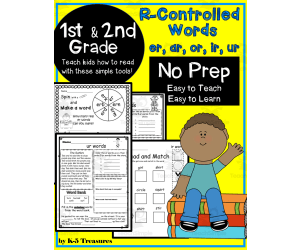
Phonics: R-Controlled Words for 1st and 2nd Grade and Early Readers
ELA, Reading, Reading Comprehension, Grammar, Language Development, Phonics, Strategies, Pre-Reading, Grade 1, 2, Literacy Readers, Teacher Tools, Lesson Plans, Worksheets, Worksheets & Printables
This Phonics: R-Controlled Words for 1st and 2nd Grade and Early Readers is so HELPFUL! Help your student's phonics skills grow to a new level with this Phonics: R-Controlled Words for 1st and 2nd Grade and Early Readers. These engaging worksheets require very little prep work, making it a breeze for your student to conquer the ER, IR, UR, AR, and OR R-Controlled words. These easy and engaging activities can be used in a whole group setting, for individual work, used in centers, and will help your students master these difficult sounds as they effortlessly match, read, write, and identify the r-controlled sounds in words. In this unit, students will read easy passages that require comprehension as they will answer several questions about what they read and highlight or color the r-controlled words in the passage. They will identify at least 5 words that have these sounds from the passage. Furthermore, they will expand their knowledge even more by filling in the blank of words from a word bank in sentences that are missing the r-controlled word sounds. On another worksheet, students will spin a paperclip and fill in the missing words. They will also complete a word search of r-controlled words, and lastly, students will cut, sort, and paste pictures of r-controlled words to the correct written word. There are also worksheets that are differentiated to help all young learners with these sounds. What a great way to help young readers conquer their reading skills with these fun and engaging activities! Get your copy of this Phonics: R-Controlled Words: 1st & 2nd Grade Phonics Worksheets for Early Readers and get ready to be amazed with the skills as they master these words that are so difficult to master! For a list of other phonics and grammar activities, click on the following links:
Author K-5 Treasures
Rating
Tags Phonics, Reading, R-controlled Words, Er Words, Or Words, Ar Words, Early Reading Worksheets, R-controlled Worksheets, Phonics Practice, Phonics Worksheets

I WONDER - What Job Do Veins Do | Animated Video Lesson
Human Body, Life Sciences, Science, Biology, STEM, Grade 6, 7, 8, 9, 10, 11, 12, Lesson Plans, Teacher Tools
Video Overview The human body is full of fascinating wonders to learn. This video is created to help the students recognize the anatomy and the job of the human body. I WONDER - What Job Do Veins Do | Animated Video Lesson Every part and organ in our human body is vital so let's see how important they are. Have you ever imagined how we look like if we didn't have a skeleton? Did you know that because we have our amazing muscles we can stand! Do you know how many teeth do we have? Have you ever wondered about the food journey inside our body? Can you name all the glands in our body? Why do we have skin? Our nervous system is really good at sending signals. Can you tell us more about it? Are you really good at Mathematics, painting, or any other thing? You should really thank your brain about it! The famous five senses are really doing a great work? Can you explain how every sense works? I WONDER - What Job Do Veins Do | Animated Video Lesson The video is perfect for encouraging the researching skills for the students, while learning more about our fantastic human body. I WONDER - What Job Do Veins Do | Animated Video Lesson This friendly designed video is suitable for students at school, homeschooling, and as a group activity. Format Available in MP4 format.
Author Educational Voice
Tags What Job Do Veins Do, What Job Do Veins Do Video, Veins, Vein, Veins Facts, Veins Facts For Kids, Veins Video, Veins Video For Kids, Arteries, Arteries Facts
Number of the Week Unit: All About Number 17
Math, Numbers, Kindergarten, Preschool, Lesson Plans, Teacher Tools
The Number of the Week Unit: All About Number 17 The Number of the Week Unit: All About Number 17 is a comprehensive teaching resource tailored for educators, with a particular focus on preschool and kindergarten. This vast array of resources makes exploring and discovering the concept of the number '17' interactive, engaging, and fun. A Preview: This unit has about 100 pages replete with various activities based on 'Number 17' which aid skill progression relating to crucial developmental stages like identification, categorization, counting groups, number formation, handwriting practice etc. The resources are easy-to-use– just print them out ; some can even be laminated for repeated use. Ideas for Implementation: Implement these resources by establishing a 'Number of the Week' regimen where students delve deep into one specific number each week. Organize themed-events revolving around unique coloring pages,counting snacks mats or solving puzzles etching out an immersive learning experience that is tangible yet enjoyable. Included Resources: Forty posters involving artistic representations A variety of colorful worksheets (also available in black & white) An assortment of creative assignments like dot painting chores,mazes,simple math problems among others Create Engaging Learning Environments: Create vibrant poster boards collectively,and watch your tiny tots tracing,number forming,painting,having fun while unknowingly developing their fine motor skills.This product elevates math education beyond mere numbers by interweaving engaging activities making learning a delightful experience. Note:The creator has also numbered units from 0-20, which are available for educators who want to extend this structured and engaging approach to number learning across the spectrum. In conclusion, The Number of the Week Unit: All About Number 17 helps educators instill strong foundational math skills, fueling student curiosity and ensuring a comprehensive understanding of critical numerical concepts.
Author Simply Schoolgirl
Tags Number Recognition, Counting Skills, Fine Motor Skills, Math Education, Hands-on Activities

I WONDER - How Fast Do Chemical Reactions Occur | Animated Video
Chemistry, Science, STEM, Grade 6, 7, 8, 9, 10, 11, 12, Teacher Tools, Lesson Plans
Video Introduction An amazing video designed for the students to learn more about STEM. I WONDER - How Fast Do Chemical Reactions Occur | Animated Video Lesson Do you like STEM subjects? what is your favorite one? Have you ever tried to plant a seed? If yes, tell us more about it. Or have you ever tried to invent something? If yes, tell us more about it. And how do you think it will help us? Have you ever seen a microorganism under a microscope? What was it? And how it looked like? Mathematics is a marvelous subject. Let' sharpen our brains and solve some equations. Do you like timetable tricks? What is your favorite one? Do you know how to code? Have you ever created an app or a game before? If yes, how was it like? I WONDER - How Fast Do Chemical Reactions Occur | Animated Video Lesson The video is perfect for encouraging the researching skills for the students, while learning more about this fantastic topic. I WONDER - How Fast Do Chemical Reactions Occur | Animated Video Lesson This friendly designed video is suitable for students at school, homeschooling, and as a group activity. Format Available in MP4 format.
Author Educational Voice
Tags How Fast Do Chemical Reactions Occur, How Fast Do Chemical Reactions Occur Video, Chemical Reactions, Chemical Reactions Facts, Chemical Reactions Facts For Kids, Chemical Reactions Video, Chemical Reactions Video For Kids

I WONDER - How Long Does It Take For Plastic To Decompose
Environmental Science, Earth and Environmental Sciences, Science, Grade 6, 7, 8, 9, 10, 11, 12, Lesson Plans, Teacher Tools
Video Introduction An amazing video designed for the students to learn more about STEM. I WONDER - How Long Does It Take For Plastic To Decompose | Animated Video Lesson Do you like STEM subjects? what is your favorite one? Have you ever tried to plant a seed? If yes, tell us more about it. Or have you ever tried to invent something? If yes, tell us more about it. And how do you think it will help us? Have you ever seen a microorganism under a microscope? What was it? And how it looked like? Mathematics is a marvelous subject. Let' sharpen our brains and solve some equations. Do you like timetable tricks? What is your favorite one? Do you know how to code? Have you ever created an app or a game before? If yes, how was it like? I WONDER - How Long Does It Take For Plastic To Decompose | Animated Video Lesson The video is perfect for encouraging the researching skills for the students, while learning more about this fantastic topic. I WONDER - How Long Does It Take For Plastic To Decompose | Animated Video Lesson This friendly designed video is suitable for students at school, homeschooling, and as a group activity. Format Available in MP4 format.
Author Educational Voice
Tags How Long Does It Take For Plastic To Decompose, How Long Does It Take For Plastic To Decompose Video, Plastic Decomposition, Plastic Decomposition Facts, Plastic Decomposition Video, Plastic Decomposition Facts For Kids

Fahrenheit 451: The Teacher's Companion
ELA, Literature, Grade 7, 8, 9, 10, 11, 12, Teacher Tools, Lesson Plans
Fahrenheit 451: The Teacher's Companion Guide The Fahrenheit 451: The Teacher's Companion is a significant resource designed to aid literature educators in educating on this timeless novel. This wide-ranging guide functions as both an insightful background informer and innovative idea generator, customizing key themes, contexts, and teaching techniques to your distinctive instructional style. A Tool For Educators Tailored with educators at heart, this manual accommodates the diverse needs of seventh through twelfth graders studying Language Arts. With an emphasis on efficient lesson planning that saves valuable time while promising an enriched exploration of Fahrenheit 451 for your students. This resource can be adapted across diverse classroom settings- providing flexibility whether you're instructing in school or within a homeschooling context. Real-World Correlation: It encourages student engagement by relating the text with real-life scenarios; thereby helping youngsters grasp how literature assists in interpreting our world. User-friendly Content: Available for download in PDF format for easy access; it offers easy-to-understand content at an appropriate reading level – making it perfect not only for Grade 7 through Grade 12 teachers but also useful for individuals conducting Literature activities under subjects like Language Arts. Beyond Just An Instructional Guide It's worth remembering that beyond being just a guide towards the studious exploration of Fahrenheit 451 novel – it’s often between these pages where students truly begin appreciating literature's knack to interpret life experiences and societal notions. In Conclusion... In essence, The Fahrenheit 451: The Teacher's Companion amounts to more than just lesson plans ; it’s a critical resource laying foundation stones towards instilling a love for language arts within young learners while making the process easy for educators worldwide.
Author Classroom Complete Press
Tags PDF

Zebra Unit Study (Endangered Animals Lesson Plan, Videos, Activities)
ELA, Grammar, Reading, Language Development, Spelling, Writing, Science, Life Sciences, Animals, Grade 1, 2, 3, Lesson Plans, Teacher Tools
Zebra Unit Study (Endangered Animals Lesson Plans for Elementary Students) This 5-day NO PREP cross-curricular unit study teaches students about the endangered zebra through reading passages, videos, worksheets, spelling lists, writing prompts, coloring pages, and more. It covers language arts, science, research skills, and art. Teachers can easily customize the self-contained lesson plans for various ages, reading levels, and learning styles. Use it for whole class instruction, small groups, homework, or independent learning centers . The comprehensive unit engages students while teaching them about zebra conservation. It works well for grades 1-3 classrooms, homeschools, and cooperatives studying endangered species or African wildlife.
Author Heather Huhman
Tags Zebras, Africa, Grasslands, Savanna, Endangered Animals, Science, Zoology, Unit Study, Zebra Activities, Zebra Habitat School Project

I WONDER - What Is The Most Common Metamorphic Rock | Animated Video
Geography, Social Studies, Earth Sciences, Earth and Environmental Sciences, Science, Grade 3, 4, 5, 6, 7, 8, 9, Lesson Plans, Teacher Tools
Video Introduction An amazing video designed for the students to learn more about famous places in different countries. I WONDER - What Is The Most Common Metamorphic Rock | Animated Video Lesson What do you know about this place? Do you know in which part of the world it is? Have you ever visited this place? If yes, can you tell us more about your adventure, and what do you like the most about this place? Do you like reading about Geography? What is your favorite country in the whole world? If you are going on a trip where it will be? Which country? What you are going to see there? Does this country has a famous place to visit? I WONDER - What Is The Most Common Metamorphic Rock | Animated Video Lesson The activity is perfect for encouraging the researching skills for the students, while learning more about this fantastic place. I WONDER - What Is The Most Common Metamorphic Rock | Animated Video Lesson This friendly designed video is suitable for students at school, homeschooling, and as a group activity. Format Available in MP4 format.
Author Educational Voice
Tags What Is The Most Common Metamorphic Rock, What Is The Most Common Metamorphic Rock Video, The Most Common Metamorphic Rock, Metamorphic Rock, Metamorphic Rock Facts, Metamorphic Rock Video
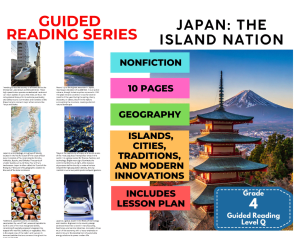
Japan The Island Nation: Guided Reading Level Q with Lesson Plan
ELA, Resources for Teachers, Reading Comprehension, Reading, Science, Geography, Social Studies, History, Earth and Environmental Sciences, Technology, Grade 3, 4, 5, Worksheets & Printables, Worksheets, Teacher Tools, Centers, Activities, Literacy Readers, Quizzes, Quizzes and Tests, Assessments, Lesson Plans
This Japan: The Island Nation (level q) guided reading book with lesson plan includes: Guided Reading Color Label (front cover x1) This is a quick way to match the book’s demands to what students can generally handle.. The overall goal is to use the level/color to pick books for several smaller groups. To qualify for a certain level, a student is expected to read a book from that level with about 90–94% accuracy. If a student is consistently accurate and understands, move up a level. If the student is struggling at that level, drop down and add more support. Each student will improve at completely different rates, but it is generally one of the best ways to check progress across the class. DOWNLOAD THE CATALOG TO VIEW ALL GUIDED READING BOOKS AVAILABLE (SORTED LEVELS A-Z) Pre-Reading Question (x1) Teacher asks the prompt aloud, can be while showing the cover or first page. Students share what they already know, or make educated guesses from the cover. Prompt them to use the target vocabulary. Write some of their responses on the board to look back at during the reading. Vocabulary Words (x5) Introduce the five words, best doing it one at a time. Start by saying it, while students repeat and then see if anyone knows what it means before reading further. Read through the meaning and try to briefly connect each word to a picture or gesture so it’s meaningful. Ask students to flip through the book pages and point to where they see each of the vocabulary words. While reading the book pause upon coming across one of the vocab words or read the sentence twice to make sure students understand the word has appeared. Optional: Ask students to raise hands whenever they see/hear one of the new words. Guided Reading Pages (x10) Check the book snapshot (below) for: primary topic - do you need to prep extra reading or intro materials on this? what is taught best - decide on 1-2 bullets to focus on, use the prompt or words provided here for best results. learning goals - what you are checking for students to be able to do after the session, elicit answers using prompts or words provided. key vocabulary (see section above). questions overview - so you know what is coming up and if you need to prep extra materials to assist understanding. Run the lesson You may have already looked at a few of the pages together, but you can show them some of the pictures again first to set meaning. Depending on how much time you have and how familiar your students are with guided reading class, you may want to read the book aloud first with the group first. Students whisper or partner read, while you listen in. If time, do it as a group, one student reading a page each. Use the guided page’s prompts to coach: “Check the picture / does it make sense?” “Point under the words / try the first sound” “Reread the sentence smoothly”. Try to focus more on one student per session (rotating every time), so you can work out if they are ready to move up or need to move down a level. Comprehension Questions (back cover x3) This is your way to check that students didn’t just say the words, but actually understood the text. First, let students answer by pointing to the page/picture and saying a short sentence. After any answer, follow with: “Show me where you found that in the text.” In bigger groups, have partners answer first (10–20 seconds), then call on 2–3 students to share. Differentiation tips: Emerging speakers/struggling readers: oral + pointing On-level: oral in a full sentence Higher: one written sentence or draw + label Book Snapshot Title: Japan: The Island Nation Genre: Nonfiction Subject: Social Studies (Geography/Culture) Primary Topic: Japan’s islands, cities, traditions, and modern innovations Estimated Guided Reading Level (A–Z): Q What This Book Teaches Best Explains Japan’s geography as an archipelago , naming the four main islands and describing its location off East Asia. Highlights Tokyo as a major metropolitan area , describing its role and features of city life. Describes transportation and technology through the Shinkansen (bullet train), including its speed, safety, and punctuality. Connects landforms and natural features to Japan’s identity by describing Mount Fuji, snow cover, and spring sakura blossoms. Builds understanding of culture and history through Shinto and Buddhism, matsuri festivals, and the Edo period (shoguns, samurai, and castles like Himeji). Learning Goals Students will explain what an archipelago is and name Japan’s four main islands. Students will describe Tokyo’s importance and identify details the text gives about the city. Students will explain how the Shinkansen helps people travel and identify key features the text highlights (such as speed or punctuality). Students will describe Mount Fuji using details from the text, including its height and volcanic history. Students will identify key ideas about Japanese traditions from the text (religions, shrines/torii, cuisine, or festivals). Students will explain how Japan’s climate varies and describe the text’s example of the “snow monkey” in winter. Key Vocabulary From the Text archipelago — a group of islands. metropolitan — related to a very large city area. punctuality — being on time. terraced — built in step-like levels on a hillside. geothermal — heat that comes from inside the Earth. Discussion Prompts Pre-reading question: What places, traditions, or inventions do you expect to learn about in Japan? Comprehension questions: What four main islands does the text name as part of Japan? Comprehension questions: What does the text say the Shinkansen is known for? Comprehension questions: How does the text say the “snow monkey” adapts to cold winters? Printing Tips 1. Best Printing Method (Recommended) “Booklet” Printing (Best if Available) If your printer or PDF viewer supports Booklet Printing , use this. Settings to use: Print mode: Booklet Paper size: Letter or A4 (either works) Orientation: Landscape Print on both sides: Yes Flip on: Short edge Scaling: Fit to printable area Booklet subset: First test: Front sides only Then: Back sides only This will automatically: Pair pages correctly Put the cover on the outside Align everything for folding After printing, fold in half and staple along the spine . 2. If “Booklet” Printing Is NOT Available You can still print this correctly with manual duplex printing . Step-by-step: Open the PDF. Choose Print . Set: Orientation: Landscape Pages per sheet: 1 Print on both sides: Yes Flip on: Short edge Print all pages . Because each PDF page already contains two facing book pages, the result will still fold cleanly into a book. Thousands of Cored Education products are included with your TeachSimple membership. Download links and encyclopedia index available here.
Author Cored Education
Rating
Tags Reading Comprehension, Reading Passages, Reading, Guided Reading, Guided Reading Lesson Plan, Guided Reading Activity, Pre-reading, Social Studies, Geography, History
What's the Difference Between Weather and Climate? | Interactive Science Lesson | Micro-Learning Deck
Science, Earth and Environmental Sciences, Environmental Science, Grade 6, 7, 8, 9, Teacher Tools, Lesson Plans
This micro-learning deck is the perfect accessory to your Science instruction! This digital slideshow presents What's the Difference Between Weather and Climate? Within this slideshow, you will receive: -Video Lesson -Reading Passage w/ Audio -Close Reading -Quick Write The informational texts included in this resource alongside the informal assessments will keep your students engaged from beginning to end.
Author Teach Me This
Tags Weather, Climate, Environment, Reading Passage, Science Lesson

Free Teaching Patience Lesson Plan for First and Second Graders
Special Resources, Social Emotional Learning (SEL), Grade 1, 2, Teacher Tools, Lesson Plans
Free Teaching Patience Lesson Plan for First and Second Graders In early elementary, their are so many skills students are learning as they navigate the school environment and patience is definitely one of those skills. This free, low prep lesson plan teaches 1st and 2nd graders all about patience! This Patience Lesson helps to incorporate reading with positive discussion about where we can be patient and how we can practice it. This lesson can best be used in groups, or in whole group lessons where students can discuss with partners how they can be patient.I have found more success with this lesson in small groups and have even used this lesson to help teach the art of patience to older students that might need a refresher. This patience activity includes a poster for visual reference of what patience is and looks like. This activity also includes a lesson plan to help you facilitate and drive discussion with your small group or whole class lesson. If you are looking for a resource and lesson to teach patience to your students, then this free lesson and activity is definitely for you! Ideas for Use: ⭐Individual Lessons ⭐Push-In Lessons ⭐Group Lessons ⭐SEL Morning Meetings
Author The Feelings and Friends Teacher
Tags School Counseling Lesson Plans, School Counseling Resources, Patience Activities, Patience Lesson Plan, First Grade Patience, Patience Lesson, Character Education Lesson, Teaching Patience Activities, Activities To Teach Patience, Activities To Teach Patience To Adults, Patience Activities For Adults, Lessons About Patience, Lesson On Patience

Animal Science Unit | All About Hippos | Learning about Animals
Science, Life Sciences, Animals, Kindergarten, Preschool, Grade 1, 2, Lesson Plans, Teacher Tools
Animal Science Unit | All About Hippos | Learning about Animals Dive into the world of hippos with this comprehensive animal science unit. Educators will discover a treasure trove of engaging resources to create interdisciplinary lessons about these unique creatures. Students journey through informative articles, vibrant images, interactive worksheets, creative writing prompts , hands-on crafts, and lively games. Differentiated materials cater to diverse learning styles and abilities from preK to 2nd grade. Whether implemented with individuals, small groups, or a whole class, this thorough collection inspires memorable adventures in animal science. Curious young minds read, write, move, and build as they uncover fascinating details about anatomy, habitat, diet, conservation, and more. This thoughtfully designed unit transforms any classroom into a dynamic habitat for discovery.
Author Simply Schoolgirl
Tags Zoology, African Animals, Marine Mammal, Marine Mammals, Hippo Crafts, Hippo Lesson Plans, Hippo Printables, Hippo Worksheets, Hippo Games