



3,952 products added recently
Page 44 - 2nd Grade Lesson Plans
Enhance your second-grade classroom with lesson plans that build on foundational skills and introduce new concepts. These activities promote critical thinking and creativity across subjects. Implement these plans to keep your students motivated and progressing confidently.

 Show filters


The First 21 Days | Day 12: Fiction and Nonfiction | Reading Instruction
ELA, Reading, Preschool, Grade 1, 2, 3, Teacher Tools, Lesson Plans
This resource is Day 12: Fiction and Nonfiction in the First 21 Days lesson set. This presentation is full of comprehension and reading strategies, anchor charts , interactive activities and so much more.
Author First in Line
Tags Reading Lesson Plan, Reading Instruction, Fiction, Nonfiction, Anchor Chart
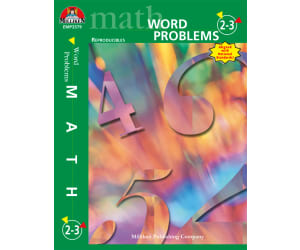
Word Problems Gr 2-3
, Grade 2, 3, Worksheets & Printables, Word Problems, Teacher Tools, Lesson Plans
Introduction Word Problems Gr 2-3 is a strategically organized teaching resource designed to enhance second and third-grade math skills. This flexible educational tool can be optimally utilized in a public school classroom, during homeschooling sessions, or as part of at-home assignments. The resource primarily focuses on the area of Math, with specific emphasis on solving word problems - an area often viewed challenging by many students. Educational Activities and Flexibility This teaching material offers a series of activities arranged in a proposed sequence. However, it offers educators the liberty to rearrange this order based on individual student needs while maintaining its efficacy. It put forwards exercises constructed to promote self-learning and independent thinking among children enabling them to work with minimal supervision whether at school or home. Engaging Design Addressing more than just learning objectives, Word Problems Gr 2-3 flaunts delightful characters throughout its pages - decoration that’s aimed not merely for aesthetics but employed as strategic elements designed pique pupils’ interest and provide entertainment during their learning journey; ensuring motivation levels remain high throughout each lesson. Critical Component: Answer Key An essential component added within this product is an answer key placed towards the conclusion of the book offering educators convenience for swift and effective assessment process. Durable Format The tool comes as a single bundle all encased within one PDF format file – touted for electronic durability perfect for repeated use year after year without fade or wear normally linked with physical resources making it an incredibly practical addition to any educator's toolkit. In Conclusion: All these factors culminate together making Word Problems Gr 2-3 not just another run-of-the-mill educational resource but equipping teachers with practical support system permit effective teaching focused around real-life problem-solving approach; ultimately fostering learners who are capable, confident and equipped problem solvers.
Author Classroom Complete Press
Tags PDF

Whales Reading Comprehension Passage - Cored Ed Encyclopedia
ELA, Language Development, Reading Comprehension, Reading, Pre-Reading, Science, Animals, Life Sciences, Vocabulary, Writing, Grade 2, 3, 4, 5, Worksheets & Printables, Worksheets, Teacher Tools, Centers, Activities, Writing Prompts, Assessments, Quizzes and Tests, Quizzes, Lesson Plans
This whales reading comprehension with lesson plan includes: Visualization (on the front cover) Start your lesson by taking a minute to think and share something about the topic. Read the script aloud (slowly), perhaps prepare some music or sound effects. Student close their eyes and let their imaginations wander. Students open their eyes, read the question aloud and give them a few minutes to complete. Ask a few students to share or keep answers until the end to compare with what they learn in the passage. Quick pause—thousands of Cored Education products are included with your TeachSimple membership. Download links and encyclopedia index available here. Pre-Reading Trivia Students will write down one thing they already know about the subject and then read five more facts and discuss. These facts are fun, and the students will enjoy learning about the subject before reading more. Give 1 minute for students to write what they already know (no pressure—best guess is fine). Read the five facts together. After each fact, do ask a student for their opinion, was it surprising? Set a purpose by asking students to highlight/underline one fact they want to learn more about during the reading. Reading Passage The text is a high-interest reading passage with set paragraphs, roughly three to four paragraphs long. It contains a variety of themes about the topic, anywhere from history to technology. The passage is between 250 and 350 words in length. First, ask students to look at the headings and see what they’ll learn about today. What do they know about the topic/heading? First read options: Teacher read-aloud (best for support). Partner reading (paragraph by paragraph). While reading, students underline important details, and vocabulary words they think may come up in the questions section. Mixed Questions The first question page contains four multiple-choice questions, each with a choice of four answers, and three written response questions that require a sentence or two from the student. Students complete the mcqs first independently, then review quickly as a class. For the 3 written responses, try to get students giving the answer with some form of evidence: “I think ___ because the text says ___.” If students get stuck, send them back to check the passage. Vocabulary Questions Practice seven key words from the text in this section across two activities. First section is scrambled words where students will unscramble three words given a clue for each. The second section is a word to meaning matching activity. Before starting, have some students read out words they underlined in the passage. Ask students to say the word and read aloud the sentence(s) around each word. Ask students to do scrambled words and the matching exercise in pairs then go through answers as a class. For the scrambled spelling task, get four pairs to come up to the board and write the words for extra practice with the other student reading out the clue. For the matching task, prompt students to give full sentences: “I matched ___ with ___ because ___.” Creative Writing In this question, the student will be required to write a five to eight sentence paragraph on a question related to the topic. Before starting, ask students write down 3 key ideas they are going to include in their piece. Ask students for ideas to share around the class to help those struggling. Pro writing expectations: 5–8 sentences At least 2 facts or details from the passage At least 2 vocabulary words from the previous page Students read their paragraphs while classmates listen for facts and vocabulary words. Extension Activities This page is optional for fast finishers or to take home. There are several activities, each one requiring a different skill. Do some, do none, do all, completely optional - but you will feel reassured knowing every possibility is planned for. Includes summary writting question. Answer Key There are answers for the multiple-choice questions, written response questions have sample answers, vocabulary answers and if there is a summary question then a sample summary will be provided as well. Lesson Plan Included Customized lesson plan for this lesson is included. Lesson Snapshot Title: Whales Genre: Nonfiction (informational text) Subject: Life Science / Informational Reading Primary Topic: Whales as mammals, feeding types, fossils, human impacts Estimated Guided Reading Level (A–Z): Q What This Lesson Teaches Best Whales are mammals that breathe air with lungs through blowholes , so they must surface as part of everyday life. Whales can have two different feeding tools : baleen plates that strain food like krill, or sharp teeth used to grab fish or squid. Fossils provide evidence that early whale relatives were land mammals and changed over millions of years to live in the ocean. Human activity affects whales today (fishing gear tangles, ships strike, and loud noise can fill the water where whales communicate), and scientists use tracking tools to help protect them. Learning Goals Students will explain why whales rise to the surface using details about breathing and blowholes. Students will compare how baleen whales and toothed whales get food, using evidence from the text. Students will describe what fossils show about where whales came from long ago. Students will identify one modern problem that can make whale communication harder, based on the passage. Students will describe at least one way scientists track whales to protect them, using details from the text. Key Vocabulary From the Text blowholes — nostrils on top of a whale’s head. baleen — mouth plates that strain tiny food from water. krill — tiny sea creatures baleen whales hold onto. streamlined — shaped to move smoothly through water. fossils — old remains in rock that give clues. FULL CATALOG OF DOWNLOAD LINKS AND ENCYCLOPEDIA INDEX HERE
Author Cored Education
Rating
Tags Vocabulary, Reading Comprehension, Reading Passages, Lesson Plans, Ela Lesson Plans, Reading Comprehension Lesson Plans, Pre-reading, Science Lesson Plans, Life Science, Animals

I WONDER - Why Do Rhinos Love Mud | Animated Video Lesson
STEM, Animals, Life Sciences, Science, Biology, Grade 1, 2, 3, 4, 5, 6, 7, 8, Lesson Plans, Teacher Tools
Video Introduction Animal kingdoms are full of fascinating wonders to learn. This video is designed for the students to learn more about animals in different countries. I WONDER - Why Do Rhinos Love Mud | Animated Video Lesson Do you like animals? what is your favorite one? Do you own a pet? If yes, tell us more about it, like what its name? And what do you like most about it? What are the animal kingdoms? Can you write down the characteristics of each animal class like mammals, birds, reptiles, amphibian, fish and mollusks. Do you know that some animals can sing, can you name any of them? What is the largest and the smallest mammal in the world? What is the largest and the smallest bird in the world? What is the largest and the smallest fish in the world? I WONDER - Why Do Rhinos Love Mud | Animated Video Lesson The video is perfect for encouraging the researching skills for the students, while learning more about these fantastic animals. I WONDER - Why Do Rhinos Love Mud | Animated Video Lesson This friendly designed video is suitable for students at school, homeschooling, and as a group activity. Format Available in MP4 format.
Author Educational Voice
Tags Why Do Rhinos Love Mud, Why Do Rhinos Love Mud Video, Rhinos Love Mud, Rhinos Love Mud Facts, Rhinos Love Mud Facts For Kids, Rhinos Love Mud Video, Rhinos Love Mud Video For Kids, Rhino
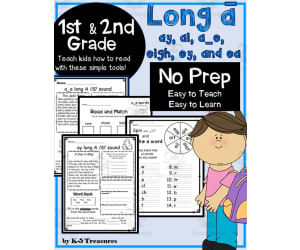
Phonics for 1st and 2nd Grade: Help Students Learn Long A Words: AY, AI, A_E, EIGH, EY, and EA
ELA, Grammar, Language Development, Phonics, Grade 1, 2, Worksheets & Printables, Worksheets, Lesson Plans, Teacher Tools
This unit focuses only on the Long A sounds. Learning how to read can be the most challenging activity for students and for a teacher. Understanding that the combination of letters can make the same vowel sound requires lots of repetitive practice of reading and writing these words with these sounds. There are other phonics units that I sell that focuses on each of the long vowels with a combination of different letters. Reading can be made easier with these phonic helps that repeatedly encourage students to practice these Long A sounds. Activities include: - Reading comprehension and identifying the Long A in their reading - Writing their answers to questions regarding the paragraph - Identifying additional Long A words in sentences using a word bank - Matching words with pictures, spinning a paperclip activity where students will write the word with the Long A sound - and lastly a fun wordsearch with variations of Long A words. These activities are for each long vowel words that are focused on the Long A sounds so there are plenty of opportunities for students to practice their comprehension reading skills and phonic sounds. Students will practice the following Long A Word sounds: AY, AI, A_E, EIGH, EY, and EA. Teachers can use this resource in whole group, individually with students, students can practice with each other in centers, or these worksheets can be assigned as homework. Worksheets are also differentiated for each Long A sounds for all young learners which makes it perfect for all 1st - 2nd graders. A total of 29 pages full of reading and phonic activities. Along with reading and writing there are matching, cutting, and pasting activities. Word searches and spin and make a word activities are also a part of this packet which make learning to read these phonic sounds entertaining for young learners. For a list of other phonics and grammar activities, click on the following links: CVC Word Families for Beginning Readers: Stamp it, Make it, Trace it, and Write it CVC Words | Short Vowel Phonics | Word Families for K- 2nd Grade Phonics for 1st and 2nd Grade: Help Students Learn Long A Words: AY, AI, A_E, EIGH, EY, and EA Phonics for 1st and 2nd Grade: Help Students Learn Long E Words: EE, EA, E_E, and Y Phonics for 1st and 2nd Grade: Help Students Learn Long I Words: I_E, IE, IGH, and Y Phonics for 1st and 2nd Grade: Help Students Learn Long O Words: O_E, OA, OW, OE, and OUGH Phonics for 1st and 2nd Grade: Help Students Learn Long U Words: U_E, EW, OO, UE, UI and OU Phonics / Digraphs for 1st and 2nd Grade: Beginning, Middle, and Ending Sounds Phonics / Digraphs for 1st -2nd: Ending Sounds: CK, NG, SH, TH, and NK Phonics / Digraphs for 1st and 2nd Grade: Beginning Sounds: SH, TH, WH and PH Phonics: R-Controlled Words for 1st and 2nd Grade and Early Readers
Author K-5 Treasures
Tags Phonics, Vowel Sounds, 1st Grade, 2nd Grade, Reading, Grammar, Long A Sounds, Long A Words, Long Vowel Sounds, Phonics 2nd Grade Worksheets
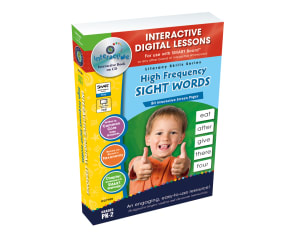
High Frequency Sight Words - Digital Lesson Plan Gr. PK-2 - FLASH-MAC
ELA, Reading, Grade 1, 2, Teacher Tools, Lesson Plans
High Frequency Sight Words - Digital Lesson Plan Gr. PK-2 - FLASH-MAC A dynamic teaching tool designed to facilitate learning among young readers. This resource is ideal for public school teachers and homeschooling parents, offering a highly interactive approach in various settings. This lesson plan caters to children from Pre-K to Grade 2 and serves as an excellent method for improving vocabulary, reading comprehension, and sight word recognition. The course focuses on the following features: 178 Dolch Sight Words with practical illustrations User-friendly features like interactive activities centred around 'working with words', test preparation modules, memory match games, crossword puzzles and word searches Cognitive exercises designed for optimal comprehension capabilities by reinforcing what has been learned. The integration of graphic organizers assisting learners during their writing process. An evaluative Comprehension Quiz concluding each lesson enabling tracking of student progress effectively. The digital lesson plan is compliant with state standards written adhering to Bloom's Taxonomy framework which covers crucial areas related to language arts like reading and writing at primary grade levels (PK-2). About the Product The product file packaged into one MAC-compatible software application offers easy convenience aimed towards our target user group which comprises dedicated educators helping young learners navigate successfully across early stages of literacy development particularly focusing on high frequency sight words. The product promises comprehensive coverage without compromising depth in subject matter understanding while concurrently advocating for an immersive learning experience that combines fun and knowledge seamlessly.
Author Classroom Complete Press
Tags Software (Mac)
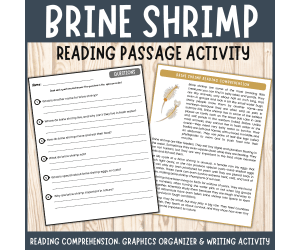
Brine Shrimp reading passage comprehension questions writing activity
Biology, Life Sciences, Science, Animals, Kindergarten, Preschool, Grade 1, 2, 3, Lesson Plans, Teacher Tools, Graphic Organizers, Writing Prompts, Worksheets & Printables
Introduce your students to the fascinating world of Brine Shrimp (Sea Monkeys) with this engaging reading comprehension and writing resource ! Perfect for science, literacy centers, or cross-curricular lessons, this resource blends nonfiction text with interactive comprehension activities and graphic organizers. Students will practice close reading, strengthen vocabulary, and build writing skills while learning about these unique aquatic creatures. What’s Included In This Reading Passage Pack? Reading Passage Writing Activities Vocabulary KWL Chart Word Search Coloring Page & Answer Key Why Teachers Love It • Strengthens science + reading integration • Encourages critical thinking and text-based responses • Supports informational writing and research skills • Easy print-and-go format for classroom or homework use • Aligned with NGSS life science and ELA nonfiction standards Great For • Science centers and literacy rotations • Animal adaptations or life cycle units • Homework or sub plans • Early finishers or enrichment • Homeschool science + reading lessons This Brine Shrimp Reading & Comprehension Pack makes science literacy fun, interactive, and easy to integrate into your classroom routine!
Author Perfect_Printables
Rating
Tags Brine Shrimp Reading Passage, Brine Shrimp Comprehension, Ocean Animals Reading Comprehension, Science Reading Activity, Writing Activity Worksheet, Sea Creature, Nonfiction Passage Elementary, Graphic Organizer Worksheet

Data Analysis & Probability: Probability - Practice the Skill 2 - PC Software
Math, Patterns, Common Core, Kindergarten, Preschool, Grade 1, 2, Teacher Tools, Lesson Plans
Data Analysis & Probability: Probability - Practice the Skill 2 - PC Software Proudly presenting a comprehensive teaching resource for educators and homeschoolers, the Data Analysis & Probability: Probability - Practice the Skill 2 is a PC software designed to promote understanding of probability concepts, directly meeting curriculum -based content requirements. This resource is particularly useful for school teachers and homeschoolers working with: Preschool, Grade 1, Kindergarten, and Grade 2 students. The main functionality of this tool involves helping learners decipher numerous probabilities if they were to roll a standard six-sided die. To achieve this, our software: Offers skill-practice timed drill activities, Incorporates interactive mathematical tools in studies, and ≤ a hands-on educational approach that appeals to different learning styles among students. ); ; The design of our product arms teachers with flexibility : / b > − . " " It supports seamless integration across various instruction methods including whole group discussions or small group activities. Furthermore, it can be assigned as supplemental homework tasks. For inclusivity in education, besides English voice over and text options; Spanish versions have also been incorporated into the lessons. We also assure you that content specifications meet strict educational standards expected in shedding light on our commitment towards maintaining top-tier education. The qualifications include: /STRONG> And other pertinent STEM initiatives. Please note upon purchase, a zip-format file containing the required PC software will be delivered. Suitable for use in classroom settings or at home on personal computers or laptops, this resource is only one click away from advancing your mathematical teaching strategies.">
Author Classroom Complete Press
Tags Math Lesson Plan, Data, Analysis, Patterns, Math Skills

Too vs. To | Beginner Lesson Plan
ELA, Grammar, Grade 2, 3, 4, 8, 9, 10, 11, 12, Teacher Tools, Lesson Plans
Too vs. To | Beginner Lesson Plan This beginner lesson plan teaches students the differences between the common homophones "too" and "to." It includes an infographic explaining the unique meanings of these easily confused words. After learning when to properly use "too" versus "to," students complete exercises to practice applying this grammar skill. Three ready-to-print PDFs provide explanations, assessments , and an answer key. This resource works for whole group or individual instruction. Educators can reinforce an understanding of homophones that will improve student writing. With engaging activities adaptable for grades 2-12, this lesson gives learners the tools to clearly communicate ideas using the appropriate spelling and context of "too" and "to."
Author TEAM TEFL
Tags Adverbs, Prepositions, Grammar Lesson, Language Arts, ESL Lesson Plan
I WONDER - What Equipment is Used To Play Hockey | Animated Video
Sports, P.E. & Health, Grade 2, 3, 4, 5, 6, 7, 8, Lesson Plans, Teacher Tools
Video Introduction An amazing video designed for the students to learn more about sports in different countries. I WONDER - What Equipment is Used To Play Hockey | Animated Video Lesson What is your favorite sport? Tell us more about it. Who is your favorite athlete? Or what is your favorite team? Do you know who invented basketball? When basketball has been invented? Can you tell us where is the first time it has been played? Have you ever played soccer or football? If yes, tell us what was your position: A goal keeper, midfield player, or a defender? Do you like watching golf? If yes who is your favorite player? Can you name the differences between tennis and ping pong? Have you ever played volleyball on the beach? When it has been officially recognized by the Olympics? Do you like watching Formula 1 races? If yes, who is your favorite team or driver? Have you ever tried to play handball? If yes tell us more. Do you like watching people skiing or surfing? I WONDER - What Equipment is Used To Play Hockey | Animated Video Lesson The video is perfect for encouraging the researching skills for the students, while learning more about this sport. I WONDER - What Equipment is Used To Play Hockey | Animated Video Lesson This friendly designed video is suitable for students at school, homeschooling, and as a group activity. Format Available in MP4 format.
Author Educational Voice
Rating
Tags What Equipment Is Used To Play Hockey, What Equipment Is Used To Play Hockey Video, Hockey, Hockey Facts, Hockey Video, Hockey Facts For Kids, Hockey Video For Kids, Sports, Sport
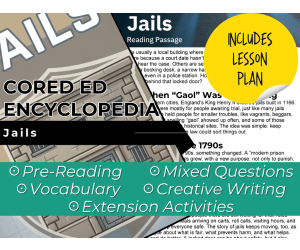
Jails Reading Comprehension Passage - Cored Ed Encyclopedia
ELA, Reading Comprehension, Reading, Pre-Reading, Language Development, Vocabulary, History, Social Studies, Law, Spelling, Grade 2, 3, 4, 5, Worksheets & Printables, Worksheets, Teacher Tools, Centers, Activities, Writing Prompts, Assessments, Quizzes and Tests, Quizzes, Lesson Plans
This Jails reading comprehension with lesson plan includes: Visualization (on the front cover) Start your lesson by taking a minute to think and share something about the topic. Read the script aloud (slowly), perhaps prepare some music or sound effects. Student close their eyes and let their imaginations wander. Students open their eyes, read the question aloud and give them a few minutes to complete. Ask a few students to share or keep answers until the end to compare with what they learn in the passage. Quick pause—thousands of Cored Education products are included with your TeachSimple membership. Download links and encyclopedia index available here. Pre-Reading Trivia Students will write down one thing they already know about the subject and then read five more facts and discuss. These facts are fun, and the students will enjoy learning about the subject before reading more. Give 1 minute for students to write what they already know (no pressure—best guess is fine). Read the five facts together. After each fact, do ask a student for their opinion, was it surprising? Set a purpose by asking students to highlight/underline one fact they want to learn more about during the reading. Reading Passage The text is a high-interest reading passage with set paragraphs, roughly three to four paragraphs long. It contains a variety of themes about the topic, anywhere from history to technology. The passage is between 250 and 350 words in length. First, ask students to look at the headings and see what they’ll learn about today. What do they know about the topic/heading? First read options: Teacher read-aloud (best for support). Partner reading (paragraph by paragraph). While reading, students underline important details, and vocabulary words they think may come up in the questions section. Mixed Questions The first question page contains four multiple-choice questions, each with a choice of four answers, and three written response questions that require a sentence or two from the student. Students complete the mcqs first independently, then review quickly as a class. For the 3 written responses, try to get students giving the answer with some form of evidence: “I think ___ because the text says ___.” If students get stuck, send them back to check the passage. Vocabulary Questions Practice seven key words from the text in this section across two activities. First section is scrambled words where students will unscramble three words given a clue for each. The second section is a word to meaning matching activity. Before starting, have some students read out words they underlined in the passage. Ask students to say the word and read aloud the sentence(s) around each word. Ask students to do scrambled words and the matching exercise in pairs then go through answers as a class. For the scrambled spelling task, get four pairs to come up to the board and write the words for extra practice with the other student reading out the clue. For the matching task, prompt students to give full sentences: “I matched ___ with ___ because ___.” Creative Writing In this question, the student will be required to write a five to eight sentence paragraph on a question related to the topic. Before starting, ask students write down 3 key ideas they are going to include in their piece. Ask students for ideas to share around the class to help those struggling. Pro writing expectations: 5–8 sentences At least 2 facts or details from the passage At least 2 vocabulary words from the previous page Students read their paragraphs while classmates listen for facts and vocabulary words. Extension Activities This page is optional for fast finishers or to take home. There are several activities, each one requiring a different skill. Do some, do none, do all, completely optional - but you will feel reassured knowing every possibility is planned for. Includes summary writting question and additional facts. Answer Key There are answers for the multiple-choice questions, written response questions have sample answers, vocabulary answers and if there is a summary question then a sample summary will be provided as well. Lesson Plan Included Customized lesson plan for this lesson is included. Lesson Snapshot Title: Jails Genre: Nonfiction (informational text) Subject: Social Studies (Civics) / Reading (Informational Text) Primary Topic: What jails are and how they differ from prisons Estimated Guided Reading Level (A–Z): S What This Lesson Teaches Best Explains what a jail is and why people may be there for a short time (waiting for a court date or serving short sentences). Uses history to show how jails were used long ago (England, 1166) and why the spelling “gaol” appeared. Clarifies the difference between “jail” and “prison” in formal American and Canadian English (pretrial custody/shorter sentences vs. longer sentences). Connects jails to community routines and civic values (rules, safety checks, fairness, harm prevention, justice). Builds understanding of how word choice and definitions matter when discussing systems and government roles (counties vs. state/federal). Learning Goals Describe what a jail is and give two reasons people may be held there. Explain how early jails in England were used and what “gaol” means in the passage. Explain what changed in the 1790s in the United States, according to the text. Compare a jail and a prison using details from the passage. Identify examples of routines and rules in jails and explain why they matter. Key Vocabulary From the Text booking — recording a new person in jail. cells — small rooms where people are held. trial — a court process to decide a case. convicted — found guilty of a crime. reform — help someone change for the better. FULL CATALOG OF DOWNLOAD LINKS AND ENCYCLOPEDIA INDEX HERE
Author Cored Education
Rating
Tags Vocabulary, Reading Comprehension, Reading Passages, Lesson Plans, Ela Lesson Plans, Reading Comprehension Lesson Plans, Pre-reading, Social Studies Lesson Plans, History, Jails

Arachnids Gr. 1-2
Science, Life Sciences, Animals, Grade 1, 2, Teacher Tools, Lesson Plans
Arachnids Gr. 1-2: A Comprehensive Educational Resource on Spiders Arachnids Gr. 1-2 is a comprehensive teaching resource designed specifically for grade 1 and grade 2 levels. This makes it perfect for public school teachers and homeschoolers alike to engage students in the fascinating world of spider biology. The package provides a range of information on: The key characteristics of spiders. Different types and species of spiders, along with their unique features. The reproductive cycles of spiders. Natural habitats, locations, and diets of different spider species. Methods employed by different spider species to capture prey. Misconceptions & Mythologies about Spiders This resource not only teaches scientific facts but also addresses common misconceptions about spiders and discusses various mythological narratives related to them, helping bridge cultural knowledge with scientific understanding for an integrated learning experience. Educational Tools Fostering Critical Thinking & Independent Learning Arachnids Gr. 1-2 sets itself apart with its diverse set of tools designed to foster critical thinking while encouraging independent learning. These include: Educational Cards: Packed full with essential facts about spiders. Riveting Task Cards: Including engaging challenges that stimulate problem-solving skills. i Center -Based Activities: Allowing students to learn at their own pace, encouraging autonomy in the learning process. Seamless Integration and Versatility This resource offers seamless integration into your existing lesson plans with exclusive sections for both teachers and students. The format is compatible with both digital devices and printed hardcopies making it versatile for various teaching methods. Provided materials are easily accessible in a user-friendly PDF format. In conclusion Arachnids Gr. 1-2 brings life to science education, specifically animal biology, ensuring an interesting approach that fuels curiosity among young learners about spiders!
Author Classroom Complete Press
Tags PDF

Nonfiction Text Features: Title Lesson
ELA, Reading, Grade 1, 2, 3, 4, Teacher Tools, Lesson Plans
Nonfiction Text Features: Title Lesson Plan This engaging Google Slides resource teaches students about the key nonfiction text feature - the title. Through class discussions and practice activities, students will learn how to identify titles and apply this knowledge. Animated slides explain what a title is and how it is used in nonfiction texts. Additional student slides provide opportunities for further practice. This resource can be used to introduce or review the concept of titles in an interactive small group or whole class setting. Extend student learning by using the additional nonfiction text features lessons linked at the end, covering topics like captions, glossaries, and more. This reading resource helps build nonfiction comprehension in grades 1-4.
Author Ezee 101
Tags Title, Text Features, Nonfiction, Interactive Reading

I WONDER - Do Leopards Live In One Place | Animated Video Lesson
STEM, Animals, Life Sciences, Science, Biology, Grade 1, 2, 3, 4, 5, 6, 7, 8, Lesson Plans, Teacher Tools
Video Introduction Animal kingdoms are full of fascinating wonders to learn. This video is designed for the students to learn more about animals in different countries. I WONDER - Do Leopards Live In One Place | Animated Video Lesson Do you like animals? what is your favorite one? Do you own a pet? If yes, tell us more about it, like what its name? And what do you like most about it? What are the animal kingdoms? Can you write down the characteristics of each animal class like mammals, birds, reptiles, amphibian, fish and mollusks. Do you know that some animals can sing, can you name any of them? What is the largest and the smallest mammal in the world? What is the largest and the smallest bird in the world? What is the largest and the smallest fish in the world? I WONDER - Do Leopards Live In One Place | Animated Video Lesson The video is perfect for encouraging the researching skills for the students, while learning more about these fantastic animals. I WONDER - Do Leopards Live In One Place | Animated Video Lesson This friendly designed video is suitable for students at school, homeschooling, and as a group activity. Format Available in MP4 format.
Author Educational Voice
Tags Do Leopards Live In One Place, Do Leopards Live In One Place Video, Leopards, Leopard, Leopards Facts, Leopards Facts For Kids, Leopards Video, Leopards Video For Kids, Leopard Facts

Polar Bears Past Bedtime (Magic Tree House #12 Lesson Plan, Videos, Activities)
ELA, Reading, Grade 1, 2, 3, Lesson Plans, Teacher Tools
Polar Bears Past Bedtime Novel Study for Grades 1-3 Bring the Magic Tree House series alive for students with this comprehensive 5-day novel study for Polar Bears Past Bedtime. This NO PREP resource includes reading comprehension questions, vocabulary practice, writing prompts, language arts lessons, and engaging extension activities tailored for grades 1-3. Easily customize this adaptable novel study based on your students' age, reading level, learning needs and interests. All worksheets can be used in interactive notebooks or discussed together as a class. This book companion covers reading, writing, grammar, geography, history, art and more - making cross-curricular connections between literature and social studies. An engaging way to build literacy skills!
Author Heather Huhman
Tags Polar Bears Past Bedtime, Magic Tree House, Book Companion, Novel Study, Polar Bears, Arctic, North Pole, Arctic Animals
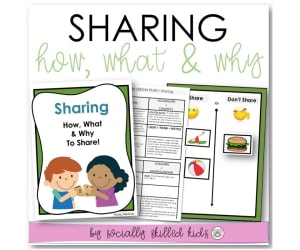
Sharing, Social Skills Lesson Plans and Activities
Special Resources, Social Skills, Preschool, Grade 1, 2, 3, Lesson Plans, Teacher Tools
Do you have students who have a hard time sharing? Do they grab or hoard materials? Do they have trouble sharing recess materials or during small group activities? Mine do! I made this activity to help students who needed explicit teaching to understand how, what and why to share. The activities are fun, interactive, and young child friendly so that students can really gain an understanding of how they can share many different items, even things that are not material, such as friendship. These activities are great for students age or ability level K-2nd grade. My students really enjoy doing these fun activities. I hope yours do too.
Author Socially Skilled Kids
Tags Sharing, Social Skills, Social Pragmatics, Special Education, Inclusion, Social Skills Lessons And Activities, Social Skills Lesson Plans For Preschool, Free Social Skills Curriculum For Elementary Students, Social Skill Lessons For Kindergarten
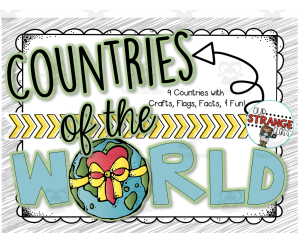
Countries of the World Unit
Social Studies, Geography, Grade 1, 2, 3, 4, Teacher Tools, Lesson Plans
This is a Countries of the World Unit. It is jam-packed with activities that your students are sure to enjoy. There are 9 countries included: 1. China 2. India 3. Brazil 4. Mexico 5. Egypt 6. Australia 7. Canada 8. Antartica 9. Italy For each country, there will be flags, crafts , activities and more!
Author Our Strange Class
Tags World, Geography, Countries, Word Search, Back To School

I WONDER - What Is House Dust Made Of | Animated Video Lesson
Human Body, Life Sciences, Science, Biology, STEM, Grade 2, 3, 4, 5, 6, 7, 8, Lesson Plans, Teacher Tools
Video Overview The human body is full of fascinating wonders to learn. This video is created to help the students recognize the anatomy and the job of the human body. I WONDER - What Is House Dust Made Of | Animated Video Lesson Every part and organ in our human body is vital so let's see how important they are. Have you ever imagined how we look like if we didn't have a skeleton? Did you know that because we have our amazing muscles we can stand! Do you know how many teeth do we have? Have you ever wondered about the food journey inside our body? Can you name all the glands in our body? Why do we have skin? Our nervous system is really good at sending signals. Can you tell us more about it? Are you really good at Mathematics, painting, or any other thing? You should really thank your brain about it! The famous five senses are really doing a great work? Can you explain how every sense works? I WONDER - What Is House Dust Made Of | Animated Video Lesson The video is perfect for encouraging the researching skills for the students, while learning more about our fantastic human body. I WONDER - What Is House Dust Made Of | Animated Video Lesson This friendly designed video is suitable for students at school, homeschooling, and as a group activity. Format Available in MP4 format.
Author Educational Voice
Tags What Is House Dust Made Of, What Is House Dust Made Of Video, House Dust, House Dust Facts, House Dust Facts For Kids, House Dust Video, House Dust Video For Kids, Skin, Skin Facts

Last Shot Animated Writing Activity | Short Film
ELA, Writing, Grade 1, 2, 3, 4, Teacher Tools, Lesson Plans
This resource allows students to explore writing in a fun way. They will engage with an animated short film "Last Shot." Included: -Short animated story -Sequencing -True False -Main Idea & Details -Summarizing
Author Teach Me This
Tags Last Shot, Animated Film, Short Film, Writing Activity, Creative Writing
I WONDER - What Animals Are Like Koalas | Animated Video Lesson
STEM, Biology, Life Sciences, Science, Animals, Grade 1, 2, 3, 4, 5, 6, 7, 8, Lesson Plans, Teacher Tools
Video Introduction Animal kingdoms are full of fascinating wonders to learn. This video is designed for the students to learn more about animals in different countries. I WONDER - What Animals Are Like Koalas | Animated Video Lesson Do you like animals? what is your favorite one? Do you own a pet? If yes, tell us more about it, like what its name? And what do you like most about it? What are the animal kingdoms? Can you write down the characteristics of each animal class like mammals, birds, reptiles, amphibian, fish and mollusks. Do you know that some animals can sing, can you name any of them? What is the largest and the smallest mammal in the world? What is the largest and the smallest bird in the world? What is the largest and the smallest fish in the world? I WONDER - What Animals Are Like Koalas | Animated Video Lesson The video is perfect for encouraging the researching skills for the students, while learning more about these fantastic animals. I WONDER - What Animals Are Like Koalas | Animated Video Lesson This friendly designed video is suitable for students at school, homeschooling, and as a group activity. Format Available in MP4 format.
Author Educational Voice
Tags What Animals Are Like Koalas, What Animals Are Like Koalas Video, Koalas, Koala, Koalas Facts, Koalas Facts For Kids, Koalas Video, Koalas Video For Kids, Koala Facts, Koala Video
I WONDER - How Big Is Russia | Animated Video Lesson
Geography, Social Studies, Grade 2, 3, 4, 5, 6, 7, 8, Lesson Plans, Teacher Tools
Video Introduction An amazing video designed for the students to learn more about famous places in different countries. I WONDER - How Big Is Russia | Animated Video Lesson What do you know about this place? Do you know in which part of the world it is? Have you ever visited this place? If yes, can you tell us more about your adventure, and what do you like the most about this place? Do you like reading about Geography? What is your favorite country in the whole world? If you are going on a trip where it will be? Which country? What you are going to see there? Does this country has a famous place to visit? I WONDER - How Big Is Russia | Animated Video Lesson The activity is perfect for encouraging the researching skills for the students, while learning more about this fantastic place. I WONDER - How Big Is Russia | Animated Video Lesson This friendly designed video is suitable for students at school, homeschooling, and as a group activity. Format Available in MP4 format.
Author Educational Voice
Tags How Big Is Russia, How Big Is Russia Video, Russia, Russia Facts, Russia Facts For Kids, Russia Video, Russia Video For Kids, Asian Countries, European Countries, Country

Measurement: Temperature & Currency - FLASH-MAC
Math, Measurements, Grade 1, 2, Teacher Tools, Lesson Plans
Measurement: Temperature & Currency - FLASH-MAC A comprehensive teaching resource designed to enhance the understanding of Measurement concepts, specifically focusing on temperature and currency. This grade 1-2 specific tool aligns perfectly with measurement-centric curriculum objectives and promotes a structured learning environment. Highly Targeted Content for Grade 1-2 With highly targeted content ideal for first graders and second graders, this FLASH-MAC module broadens pupils' conceptual knowledge base by providing engaging real-world word problems that pertain directly to both temperature and currency measurements. By including applicable lesson plans and interactive activities, such as timed drills, it strategically reinforces integral problem-solving skills in an unobtrusive fashion. An Arsenal of Essential Math Tools & Games Memory match games Board games Spinner games Bilingual Teaching Tool: English & Spanish Support This teaching tool comes bundled with a Spanish voice over and text option in addition to default English voice-over support. This bilingual approach ensures accessibility for all students in our increasingly multilingual classrooms. All-Inclusive Teacher's Guide with Printables The package includes a substantial teacher's guide replete with useful printables aiding you immensely during instructional periods; while making sure students always have tangible materials at their disposal. Compressing all these crisp aspects into one easy-to-install MAC zip file adds much-needed convenience in today's fast-paced educational environments. Versatility: Use Across Multiple Settings This valuable teaching resource can be implemented across multiple settings owing to its adaptability: integrate seamlessly into whole-group instruction or leverage during small-group activities to foster peer-based learning dynamism; alternatively use as homework assignments enabling independent problem-solving practice outside classroom confines. Conclusion To sum up, Measurement: Temperature & Currency - FLASH-MAC serves not just as an expertly crafted teaching aid but is also a fuel for fun-filled yet purposeful learning experiences set around measurement for grade 1 and grade 2 students.
Author Classroom Complete Press
Tags Measurement, Temperature, Currency, Board Game, Math Drills
Measurement: Measuring Time - Practice the Skill 1 - PC Software
Math, Time, Common Core, Kindergarten, Preschool, Grade 1, 2, Teacher Tools, Lesson Plans
The Measurement: Measuring Time - Practice the Skill 1 - PC Software A highly effective educational tool dedicated to understanding the concept of measuring time. Precisely designed for teaching measurements, this software was crafted with engaging, curriculum-driven content. Target Audience & Features Engages preschoolers, kindergarteners, and first and second graders in math activities. Incorporates timed drill activities into its core mechanism. Dynamically matches digital time with corresponding analog times as an activity . Employs real-time images as an effective visual aid for enhanced comprehension. This program serves as an excellent teaching resource bundled with various math tools to reinforce learning through practical applications. It cleverly integrates practice with theory providing students hands-on experience in abstract concepts like time measurement. Languages and Learning Styles Emanating sensitivity to diverse learning styles and language proficiency levels among students, it comes equipped with both English and Spanish voice over options along with text in both languages. Educational Standards & Versatility This interactive resource is adept at meeting Common Core State Standards (CCSS) as well those made out by National Council of Teachers of Mathematics (NCTM). With wide enough versatility for whole-group lessons or small group work or individual self-paced learning at home; it blends seamlessly into any pedagogical framework being used by an educator. It also considerably contributes to STEM initiatives within education systems around the globe. Note: This software is delivered via a zip file containing PC-based software; integrating seamlessly into current teaching materials making lesson planning significantly more streamlined whilst maintaining high educational standards. In summary, The Measurement: Measuring Time - Practice the Skill 1 - PC Software is not just another digital teaching aide; it’s an interactive partner in fostering solid foundational skills about measurements among youngsters while making math learning a fun-filled process.
Author Classroom Complete Press
Tags Measurement, Measuring Time, Time Lesson Plan, Digital Clocks, Digital Math

I WONDER - Is Eating Too Many Carbohydrates Bad | Animated Video
Human Body, Life Sciences, Science, Biology, STEM, Grade 1, 2, 3, 4, 5, 6, 7, 8, Lesson Plans, Teacher Tools
Video Overview The human body is full of fascinating wonders to learn. This video is created to help the students recognize the anatomy and the job of the human body. I WONDER - Is Eating Too Many Carbohydrates Bad | Animated Video Lesson Every part and organ in our human body is vital so let's see how important they are. Have you ever imagined how we look like if we didn't have a skeleton? Did you know that because we have our amazing muscles we can stand! Do you know how many teeth do we have? Have you ever wondered about the food journey inside our body? Can you name all the glands in our body? Why do we have skin? Our nervous system is really good at sending signals. Can you tell us more about it? Are you really good at Mathematics, painting, or any other thing? You should really thank your brain about it! The famous five senses are really doing a great work? Can you explain how every sense works? I WONDER - Is Eating Too Many Carbohydrates Bad | Animated Video Lesson The video is perfect for encouraging the researching skills for the students, while learning more about our fantastic human body. I WONDER - Is Eating Too Many Carbohydrates Bad | Animated Video Lesson This friendly designed video is suitable for students at school, homeschooling, and as a group activity. Format Available in MP4 format.
Author Educational Voice
Tags Is Eating Too Many Carbohydrates Bad, Is Eating Too Many Carbohydrates Bad Video, Carbohydrates, Carbohydrate, Carbohydrates Facts, Carbohydrates Facts For Kids, Carbohydrates Video, Carbohydrates Video For Kids