



3,911 products added recently
Page 187 - 8th Grade Lesson Plans
Equip your eighth graders with the knowledge and skills needed for high school success using these lesson plans. Focused on advanced concepts and independent learning, these resources help students take ownership of their education. Implement them to ensure your students are ready for the next step.

 Show filters

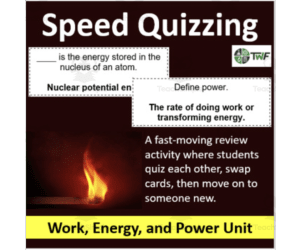
Speed Quizzing – Work, Energy, and Power Unit
Science, Physics, Grade 8, 9, 10, Lesson Plans, Teacher Tools
This activity will get your students out of their seats, moving around, and discussing the material. It is fully editable and requires very little preparation. Simply print, cut out the flash cards, and pass them out to students. Note. This resource can also be used as an excellent question bank as it contains 32 high-quality questions that you can use in any way you see fit. This activity contains 32 questions designed to test your students’ knowledge of the unit they are studying. The questions come directly from the lessons and cover the following topics: • Energy and its Forms • Work and Energy • Kinetic and Gravitational Potential Energy • The Law of Conservation of Energy and Efficiency • Thermal Energy, Temperature and Heat • Power Each of the Speed Quizzes listed below can be found in my Speed Quizzes Growing bundle at a discount of at least 65%. Here’s how you implement them: 1. Provide each student with a flash card 2. Pair up students using the stand up/hands up/pair up method 3. Partner A reads the question to Partner B, who answers. Partner A praises if correct or coaches if incorrect. 4. Partners switch roles 5. Students thank each other and switch cards 6. Partners raise their hands to find a new partner 7. Repeat for a specified amount of time Alternate way to ensure each student gets a new partner each time: Divide students into groups A and B. Have every student pair up with someone from the other group (if there is an odd number of students you participate too!) 1) Do Speed Quizzing 2) Then have group A move to the right and group B stay still. 3) Do Speed Quizzing 4) Then have group B move to the left and group A stay still. Every student in group A will meet every student in group B, but students will not meet students in their own group (a clever way to keep apart students who should not be partnered for whatever reason). This activity can be used to: • Prompt meaningful student conversation • Review prior knowledge • Review new terms/problems after a unit • Gather student ideas • Remediate weak skills • Practice new skills ***************************** For free resources, useful teaching tips, and tools, please visit my blog - TeachScienceWithFergy.com If you have any questions please feel free to send me an email - devon@teachwithfergy.com
Author Teach With Fergy
Tags Law Of Conservation, Forms Of Energy, Science Assessments, Thermal Energy, Speed Quizzing

Hans Christian Andersen - Lapbook & Mini Unit
Social Studies, Biographies, Grade 8, 9, 10, 11, 12, Lesson Plans, Teacher Tools
This Hans Christian Andersen - Lapbook & Mini Unit is a 10-page download. Students will learn about Andersen with this resource and are given the necessary printables to create a lapbook for this Danish author.
Author Creative Learning Connection
Tags History Activity, Social Studies Printable, Hans Christian Andersen, Biography Lapbook, Biography Activity
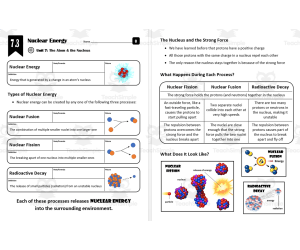
Lesson 7.3 - Nuclear Energy
Science, Chemistry, Physics, Grade 6, 7, 8, 9, 10, 11, 12, Lesson Plans, Teacher Tools
Lesson 7.3 - Nuclear Energy This comprehensive teaching resource aims to enhance student learning of nuclear energy for grades 6 through 12. The guide focuses on various components of nuclear energy, including nuclear fusion, nuclear fission, and radioactive decay. Nuclear Energy Notes: Detailed notes outlining significant differences between the three main types of nuclear energy. These are available in two versions - An interactive format for students to fill in blanks as they learn and a full version which is ideal for absent learners or those needing extra support. Nuclear Energy Simulation: An engaging tool accessed via a provided URL that allows students to study effects of nuclear fission on different nuclei. Nuclear Energy Reading: A segment presenting pro and con arguments from two separate articles at varying lexile levels to cater to different student proficiencies. PowerPoint Notes: Teaching points presented in an easy-to-show format suitable for class time. Objectives & Starter Questions: Prompts designed to get students thinking about core topics before diving into detailed discussions. All the files included can be downloaded as .docx (for Word), .pptx (for PowerPoint) files if revisions are required or .pdf files for quick access without any modifications needed. Lesson 7.3 - Nuclear Energy closely aligns with the Integrated Chemistry & Physics criteria specified by Indiana State Standards making it a perfect educational tool suitable for public educators and homeschooling parents alike..
Author Integrated Chemistry and Physics
Tags Nuclear Fusion, Nuclear Fission, Radioactive Decay, Pros And Cons, Critical Thinking

SLANT Strategy Lesson-A lesson about paying attention and listening
Special Resources, Social Emotional Learning (SEL), Social Skills, Special Education Needs (SEN), Grade 3, 4, 5, 6, 7, 8, 9, 10, Teacher Tools, Lesson Plans
In this resource, students will learn about the strategy called S.L.A.N.T. This is a strategy to teach students how to pay attention and listen. This can be such a critical skill when students are in school, at home, and with their friends. SLANT stands for S-Sit up, L-Lean forward, A-Ask questions, N-Nod head, T-Track the speaker. Students will first be asked about what does "paying attention" and "listening" mean. They will also be encouraged to talk about who and what they need to pay attention to and listen to at home and school. Then they will learn about the SLANT strategy. They will be asked to participate in a partner activity in which they will tell about a happy memory for 2-3 minutes with a beginning, middle, and end for the story. They will then ask their partner a question about their memory to see if they were listening. The partner is allowed to ask 1-2 questions if they are unclear about some details. Next, they will swap roles and the person who shared is now the listener and vice versa. The PPT slideshow will prompt some questions about what was easy or challenging about this activity. The last part of the lesson is a fun game called "When someone claps twice." This is such a fun game that your students will want to play again and again. I placed this at the end of the lesson because you can play it as many times as time allows. There are 27 commands in the game . The teacher begins the game by passing out a strip of paper to each student. Some students may get 2 strips as there are 27 strips and you may not have 27 students. That is o.k.! It adds to the challenges. After the teacher claps twice, the student with the command "When the teacher claps twice, ..." needs to do the task on their strip of paper. Then the next student needs to do the task after the student does their task and so on. To reinforce the SLANT strategy, you can print off either slide 5 or 10 and put up in the classroom.
Author Jennifer Moyer Taylor
Tags SLANT, Listening, Paying Attention, Focus, School Counseling, Special Education, Social Skills, Friendship Skills, Behavior Management
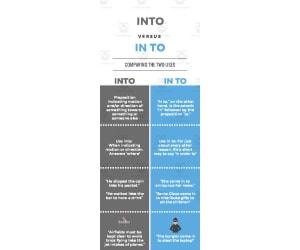
Into vs. In To | Beginner Lesson Plan
ELA, Grammar, Grade 2, 3, 4, 5, 8, 9, 10, 11, 12, Teacher Tools, Lesson Plans
The Into vs. In To | Beginner Lesson Plan provides essential grammar instruction for early language learners on the commonly confused words "into" and "in to." Students will learn the differences between these homophones and practice using them correctly through engaging exercises. This resource includes a fully structured lesson plan to teach the concepts, two printable student worksheets with activities to assess comprehension, and a digital copy for adaptable classroom use. The lesson gives clear explanations and examples that build students' understanding of "into" as a preposition indicating movement, while "in to" functions as an adverb and preposition meaning "in order to." Recognizing homophones is an important foundation for spelling, reading, and writing as students advance their communication abilities. This resource helps cement proper usage of "into" vs. "in to" through focused practice. It can be implemented in whole-group grammar lessons or as small group/individual reinforcement. Answer keys are provided to support instruction and remediation needs.
Author TEAM TEFL
Tags Prepositions, Adverbs, Grammar Worksheet, Language Arts, Lesson Plan
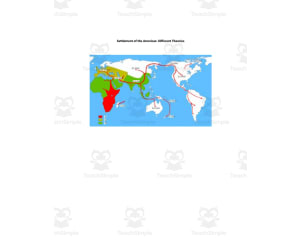
Settlement of the Americas: Different Theories
Social Studies, First Peoples (Native), Geography, Grade 8, 9, 10, Teacher Tools, Lesson Plans
Settlement of the Americas: Different Theories will come equipped with a lesson plan and worksheets for students to complete. Students will explore different theories for how humans arrived at the American continent.
Author Creative Educator
Tags Africa, Settlement, The Americas, World History, Geography, Mapping Skills, Cultures, Continents, Europe, Historians

A Brief Ship Comparison
Social Studies, History, History: USA, Grade 8, 9, 10, 11, 12, Teacher Tools, Lesson Plans
This little unit is a fun way to show students just a bit of how ships have changed over the last two centuries – and some of the differences between warships and cruise ships.
Author Creative Learning Connection
Tags Activity, History, Elementary Age
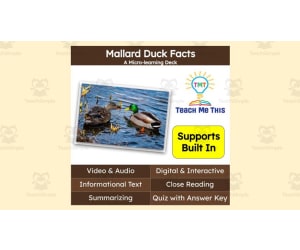
Mallard Duck Facts | Interactive Science Lesson | Micro-Learning Deck
Science, Life Sciences, Animals, Grade 6, 7, 8, 9, Teacher Tools, Lesson Plans
Mallard Duck Facts | Interactive Lesson for Science This science lesson helps students learn fascinating facts about mallard ducks. The interactive digital slideshow engages learners with a short informational video, reading passage with audio, close reading activity, and a quick write prompt. Educators can utilize the materials in whole group instruction, small group work, independent practice, or as reinforcement. The multiple modes of presenting information followed by assessments keep middle school students focused while building science content knowledge. By covering subjects like animal classification, life cycles, and habitats, this versatile resource enhances zoology and biology curriculum. The materials aim to inspire curiosity and appreciation for the natural world.
Author Teach Me This
Tags Mallard Ducks, Duck Habitat, Science, Digital, Interactive
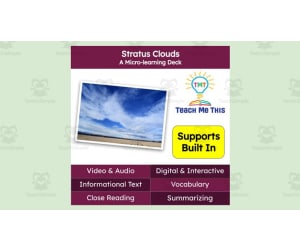
Stratus Clouds | Interactive Science Lesson | Micro-Learning Deck
Science, Earth and Environmental Sciences, Environmental Science, Grade 7, 8, 9, 10, Teacher Tools, Lesson Plans
This micro-learning deck is the perfect accessory to your Science instruction! This digital slideshow presents Stratus Clouds. Within this slideshow, you will receive: -Video Lesson -Reading Passage w/ Audio -Close Reading -Quick Write The informational texts included in this resource alongside the informal assessments will keep your students engaged from beginning to end.
Author Teach Me This
Tags Stratus Clouds, Interactive, Science, Environment, Reading Passage
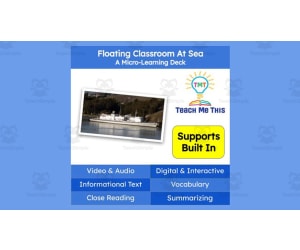
Floating Classroom At Sea | Interactive Science Lesson | Micro-Learning Deck
Science, Earth and Environmental Sciences, Environmental Science, Grade 6, 7, 8, 9, Teacher Tools, Lesson Plans
This micro-learning deck is the perfect accessory to your Science instruction! This digital slideshow presents Floating Classroom At Sea. Within this slideshow, you will receive: -Video Lesson -Reading Passage w/ Audio -Close Reading -Quick Write The informational texts included in this resource alongside the informal assessments will keep your students engaged from beginning to end.
Author Teach Me This
Tags Golden Bear Ship, True False Questions, Classroom At Sea, Engineering, Paramilitary School
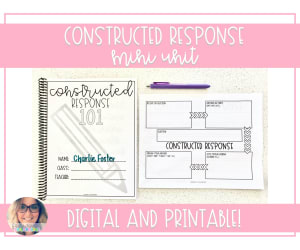
Constructed Response Mini Unit Grades 7-9
ELA, Strategies, Grade 7, 8, 9, Teacher Tools, Lesson Plans
This week long mini unit is perfect for the beginning of the school year or as a review right before testing season! This unit it designed using the RACE strategy for constructed responses. What's included: - 5 day detailed lesson plan with activities - Printable workbook (answer key included) - Digital workbook (Microsoft or Google compatible!) - Digital and printable graphic organizers Check out the preview for a closer look!
Author Fairways and Chalkboards
Tags RACE, Constructed Response, Back To School Skills, Ela Skills, Race Constructed Response, Race Strategy For Constructed Response

Lions | Interactive Science Lesson | Micro-Learning Deck
Science, Life Sciences, Animals, Grade 5, 6, 7, 8, Teacher Tools, Lesson Plans
Lions | Interactive Science Lesson | Micro-Learning Deck This science resource teaches students about the lion, the King of the Jungle. Through an engaging slideshow presentation, students will watch an informative video, read a passage with audio support, analyze the text closely, and complete a quick write activity to demonstrate comprehension. Educators can utilize this resource in a variety of ways - as a whole class lesson to introduce the lion, a small group activity to build background knowledge, or as an independent learning task for students to complete at their own pace. With multiple modalities integrated, this micro-learning deck keeps learners actively engaged from the first slide to the last. Easy to implement and full of essential information, it makes an excellent addition to any middle school science curriculum covering zoology.
Author Teach Me This
Tags Lions Reading Passage, Comprehension, Science Lesson, Zoology, Interactive

How to Make Comics
Creative Arts, Art, Fine Arts, Grade 4, 5, 6, 7, 8, 9, 10, 11, 12, Teacher Tools, Lesson Plans
How to Make Comics: An Educational Resource 'How to Make Comics' is a comprehensive teaching tool tailored for educators. This resource, suitable for Grade 4 through 12, bridges the gap between fine arts and sequential storytelling, providing an engaging lesson about creating comics. Inspiring imaginative potential in students can be challenging, requiring innovative teaching methods. 'How to Make Comics' comes with an art project and a PowerPoint presentation , effectively guiding students into the vibrant world of comic creation. This lesson plan has been successfully implemented amongst fifth-grade students who thoroughly enjoyed both learning about comics and creating their own stories. Key Features of the Toolkit Your class will go through each step essential for making comics. Instructional guidance on forming their storylines with focus on character development, dialogue crafting, panel designing and more are provided enthusiastically. The toolkit includes seven printable comic layout pages in PDF format as well as material requirements like sharpies and colored pencils. The concise 14-slide PowerPoint presentation offers not just instructions but educative content about the history of comics and sequencing art forms while establishing clear learning goals. Boldly scattered critical thinking questions encourage interaction within guide points complemented with success criteria bullet points throughout the journey for clear progression tracking. The adaptable 'How To Make Comics' framework fits effortlessly into varying settings – be it large classrooms or smaller studying groups - its flexibility also lends itself well to independent student homework tasks allowing freedom to explore artistic aptitude at leisure. This handy toolkit serves as a creative booster within art & music curriculums; moreover cultivating understanding on visual narratives across literature subjects - instilling an appreciation of storytelling elements fittingly framed within sequential artwork grids independently executed by your students. In conclusion, 'How To Make Comics' offers a valuable addition to the tools of any educator: simplifying complex concepts without compromising interactive fun. This all-inclusive kit means you're covered with visually stimulating and engaging presentations ready to go!
Author The Art Ninja
Tags Comic Creation, Sequential Storytelling, Art Project, Lesson Plan, Visual Narratives

Bees | Interactive Science Lesson | Micro-Learning Deck
Science, Life Sciences, Insects, Grade 5, 6, 7, 8, Teacher Tools, Lesson Plans
Bees - An Engaging Science Lesson This interactive digital lesson helps middle school science teachers cover key concepts about bees. The informational slide deck acts as a micro-lesson that supplements a broader unit on insects. Through a short video, reading passage with audio, close reading activity, and quick write, students learn bee basics like their physiology, hive roles, pollination, and impact on ecosystems. Implement the complete 15-20 minute lesson or use components like the passage and comprehension questions for individual/group work. The multimedia format appeals to visual and auditory learners alike. By blending direct instruction with knowledge checks, this versatile resource boosts student engagement and retention of essential bee knowledge.
Author Teach Me This
Tags Bees Lesson, Insects Lesson, Interactive Science Lesson, Comprehension, Vocabulary

Greek Mythology Unit Bundle
Social Studies, Grade 4, 5, 6, 7, 8, Lesson Plans, Teacher Tools
This is a 212 page Greek Mythology bundle with passages and questions is a great way to learn about Greek Myths. Great for reading comprehension, it includes Close Reading Passages and questions. King Midas and the Golden Touch,Pandora's Box, Persephone and Demeter, The Story of Arachne, and Athena and Poseidon are included! This bundle contains Text Dependent Questions, Writing Prompts, Character Analysis, Vocabulary Matching Worksheets and more! Great for Centers, Homework, Sub Plans, and more! Each myth is Common Core aligned and created to facilitate “Depth of Knowledge” (DOK) for your students. Each myth is originally written and is aligned to be used as a CLOSE Reading activity (not familiar with CLOSE reading? It’s okay, we have instructions and anchor charts to help you incorporate it into your teaching). You can use each unit in its entirety, or “pick and choose” the components to meet the needs of your students.
Author The Teacher Team
Tags Greek Mythology, Close Reading, Social Studies, Mythology, Greek Unit, Teaching Greek Mythology, Greek Mythology Activity, Greek Mythology Curriculum, Greek Mythology Activities, Greek Mythology Lesson Plans For Middle School
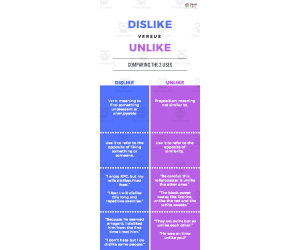
Dislike vs. Unlike | Pre-Intermediate Lesson Plan
ELA, Grammar, Grade 8, 9, 10, 11, 12, Lesson Plans, Teacher Tools
Dislike vs. Unlike Pre-Intermediate Lesson Plan This pre-intermediate English grammar lesson plan helps students learn the difference between "dislike" and "unlike" and when to use each word appropriately. The informative packet begins by clearly explaining the definitions and uses of these commonly confused words. Students then apply their understanding by completing targeted exercises assessing their comprehension and grammar skills. This versatile resource can be used for whole-group grammar instruction, small group remediation, or as a homework assignment for individual practice. Implement digitally or print the engaging worksheet. An answer key is included, making this lesson plan a teacher-friendly resource for promoting student grammar growth. This lesson will show us how to use dislike to show that you don't like something and unlike to emphasise the opposite of similar to. 3 PDFs with 3 ready to print pages. Digital Compatibility & Reflective Feedback A noteworthy feature is its integration with Google Apps that injects digital vibrance into traditional classroom practices. Additionally, keeping the importance of feedback in mind during learning progressions - an answer key provision allows immediate reflection. A solution crafted by teachers themselves - The It's vs Its | Beginner Lesson Plan correlates seamlessly within any curriculum focusing on developing strong foundational knowledge in Language Art amongst learners.
Author TEAM TEFL
Tags Grammar Lesson, Language Arts, Verbs, Prepositions, ESL
One Point Perspective Art Lesson
Creative Arts, Art, Fine Arts, Grade 8, 9, 10, 11, Teacher Tools, Lesson Plans
This is a One Point Perspective Art Lesson for students to take part in. The objective of this lesson is for students to learn understand what one point perspective is, how to apply harmony and unit focus to their art, and to create a multimedia 1-point perspective art piece. This is a resource that is most appropriate for middle school and high school students in an art classroom. It is a 38-slide PowerPoint that begins with a review for what harmony is and what unity is. Students will then be introduced to 1-point perspective following this format: -What is 1 Point Perspective? -History of this art form -Perspective -Elements of perspective -3 visual examples that show the original image and the outline of perspective being applied The next portion of the presentation will give students the opportunity to apply their learning through practice. Each slide will walk students through how to draw their own 1-point perspective on a blank piece of paper. There are 8 steps for students to complete. Upon completion of this practice, students will be tasked with: Creating a multimedia 1-point perspective art piece using recycled cardboard, recycled magazines, and any other materials they choose! Students are welcome to get a creative as they would like, as long as their piece uses this principal, and demonstrates harmony and unity. Six different visual examples are included for students to see a final outcome for what they are working towards. A rubric and success criteria is included. I hope you enjoy! Here is a link to a similar resource in my store: https://teachsimple.com/product/art-history-research-project Here is a link to my store to enjoy other resources from me: https://teachsimple.com/contributor/resource-garden I can be contacted for questions and concerns at nicole.maizelis@gmail.com .
Author Resource Garden
Tags Art Lesson, Elements Of Art, Multimedia Art, Art Project, Success Criteria, Review, One Point Perspective, Art History, Art Materials, Group Work, Two Point Perspective Lesson Plans

Elements of Art Lesson
Creative Arts, Art, Fine Arts, Grade 7, 8, 9, 10, Teacher Tools, Lesson Plans
This is an Elements of Art Lesson designed for middle school and high school art students. This is an editable presentation with the objective of teaching students about the various elements of art and having them demonstrate their understanding. The lesson begins by introducing each element of art: --Line --Texture --Shape --Form --Color --Value --Space For each element, its first slide will provide a detailed explanation and a visual. Its next slide will have an artwork and 3 accompanying questions. You will be able to assess students’ understanding of the element based on their ability to correctly answer the comprehension questions. Following the learning, students will be given this assignment: Think about your personal goals for this year. Choose one goal, and summarize it in one or two words (e.g. focus, time-management, organization, etc.) You will be creating a poster with this word, using any design of your choice. Be creative - there are no rules! Demonstrate your understanding of the Elements of Art by incorporating them into your poster - all 7 should be evident. (...okay fine, one rule) A success criterion is included. I hope you enjoy! Here are links to similar resources in my store: https://teachsimple.com/product/abstract-form-lesson-activity https://teachsimple.com/product/addition-matching-velcro-activity https://teachsimple.com/product/art-history-research-project https://teachsimple.com/product/addition-file-folder Be sure to check out my storefront here: https://teachsimple.com/contributor/resource-garden I can be contacted for questions and concerns at nicole.maizelis@gmail.com .
Author Resource Garden
Tags Art Lesson Plan, Historical Artwork, Art Projects, Elements Of Art, Comprehension Questions, Informal Assessments, Mastery, Small Group Art
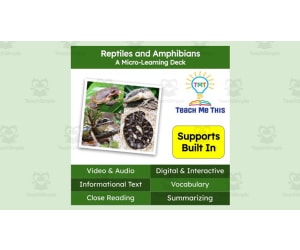
Reptiles and Amphibians | Interactive Science Lesson | Micro-Learning Deck
Science, Life Sciences, Animals, Grade 6, 7, 8, 9, Teacher Tools, Lesson Plans
This micro-learning deck is the perfect accessory to your Science instruction! This digital slideshow presents Reptiles and Amphibians. Within this slideshow, you will receive: -Video Lesson -Reading Passage w/ Audio -Close Reading -Quick Write The informational texts included in this resource alongside the informal assessments will keep your students engaged from beginning to end.
Author Teach Me This
Tags Reptiles, Amphibians, Interactive, Science, Digital Lesson

Cheetahs | Interactive Science Lesson | Micro-Learning Deck
Science, Life Sciences, Animals, Grade 5, 6, 7, 8, Teacher Tools, Lesson Plans
Engaging Cheetahs Micro-Learning Science Lesson for Upper Elementary Students This informative digital slideshow lesson helps teach upper elementary students about the world's fastest land mammal - the cheetah. Ideal for grades 5-8 science classes, it can be used in whole group instruction or for individual student learning. The deck immerses students in learning with a short video, reading passage with audio, close reading activity, and quick write assignment. As the captivating content unfolds, young learners will build knowledge on cheetah characteristics like their speed, habitat, hunting techniques, and more through multiple modalities. This stand-alone resource provokes curiosity about animal classification while aligning to science standards. Implement as a supplemental science lesson or homework for engaged inquiry-based learning.
Author Teach Me This
Tags Cheetahs, Fastest Living Animals, Interactive Science Lesson, Comprehension, Vocabulary

Ancient Civilizations | Reading Comprehension Deck | Interactive Lesson
Social Studies, History, History: Ancient, Grade 6, 7, 8, Teacher Tools, Lesson Plans
Ancient Civilizations Reading Comprehension teaches key concepts of early human societies to middle school students. This interactive lesson aids comprehension using multimedia components to appeal to various learning styles. Students will watch an informational Ancient Civilizations video detailing major achievements of early cultures around the world. Next, students read a passage with audio support to strengthen literacy skills. The lesson concludes by assessing understanding through close reading questions and a quick write prompt for students to summarize key ideas. Use this versatile resource in whole class instruction, small discussion groups, or as independent review. The mixed media and writing exercises promote engagement while evaluating student learning on ancient civilizations.
Author Teach Me This
Tags Ancient Civilizations, Reading, Comprehension, Interactive Lesson, Informational Text
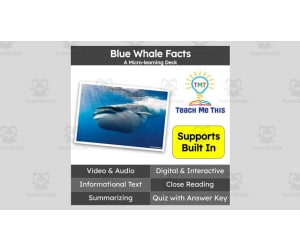
Blue Whale Facts | Interactive Science Lesson | Micro-Learning Deck
Science, Life Sciences, Animals, Grade 5, 6, 7, 8, Teacher Tools, Lesson Plans
This micro-learning deck is the perfect accessory to your Science instruction! This digital slideshow presents Blue Whale Facts. Within this slideshow, you will receive: -Video Lesson -Reading Passage w/ Audio -Close Reading -Quick Write The informational texts included in this resource alongside the informal assessments will keep your students engaged from beginning to end.
Author Teach Me This
Tags Blue Whale Facts, Informational Text, Summarizing, Interactive Science Lesson, Digital Science
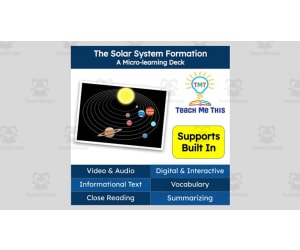
What is a Solar System? | Interactive Science Lesson | Micro-Learning Deck
Science, Earth and Environmental Sciences, Space, Grade 5, 6, 7, 8, Teacher Tools, Lesson Plans
What is a Solar System? Interactive Science Lesson Engages Learners This interactive science lesson helps students gain a clear understanding of solar systems. Through a short video, students are introduced to the key components of solar systems including planets, moons, asteroids, comets, and more. An informational reading passage with audio further builds comprehension. The lesson has a close reading activity and quick write assignment to assess understanding. These materials can be presented to the whole class, small groups, or used for independent homework. The variety of learning materials keeps students fully engaged from start to finish in this informative lesson on the basics of solar systems.
Author Teach Me This
Tags Astronomy, Science Lesson, Interactive, Solar System, Reading Passage
First Farmers | Reading Comprehension Deck | Interactive Lesson
Social Studies, First Peoples (Native), Science, Earth and Environmental Sciences, Life Sciences, Nature & Plants, Grade 6, 7, 8, Teacher Tools, Lesson Plans
First Farmers Reading Comprehension teaches students about the agricultural practices of early civilizations. This interactive digital lesson guides students through an informative video and reading passage with audio about how First Peoples developed farming techniques that allowed communities to settle in one area. After consuming the content, students will answer close reading questions and complete a quick write assignment to demonstrate comprehension. Educators can utilize this versatile resource in various ways - as a whole group activity projected on a screen, a small group lesson at a learning station, or an individual online assignment that students can complete at their own pace outside of class. The combination of engaging media and informal assessments promotes social studies learning while keeping middle school students interested.
Author Teach Me This
Tags First Farmers, History Of Farming, Agriculture Lesson, Social Studies Lesson, Interactive Lesson