



3,942 products added recently
Page 30 - Popular Lesson Plans
Explore a curated selection of popular lesson plans that have proven successful in classrooms. Covering various subjects and topics, these resources provide innovative ideas and activities. Use them to refresh your curriculum and engage your students with tried-and-true methods.

 Show filters

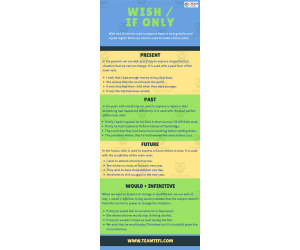
Wish/If Only Advanced ESL Lesson Plan
ELA, Language Development, ESL, Grammar, Not Grade Specific, Adult Education, High School, Teacher Tools, Lesson Plans, Worksheets & Printables
Wish/If Only | Advanced Lesson Plan This advanced English lesson plan helps students learn about wish clauses and conditional sentences using "if only." Educators can implement the informative instructional materials in various ways, such as whole group instruction, small group activities, or independent assignments. After an explanation of wish clauses, students complete practical exercises assessing their comprehension and practicing grammar skills. Answer keys are included for educators. This useful resource works well for English language learners at advanced levels. Adults and children from 12+ and homeschooling parents will appreciate the clear presentation of wish clauses and "if only" conditional sentences. The engaging materials can be conveniently accessed digitally through Google Apps. This lesson allows flexibility to best suit different learning environments while efficiently enhancing students' grammar abilities. The ESL lesson plan includes flashcards, a warmer, grammar rules, exercises, role-play, conversation, writing drill, activity, answers and an extra study that would be good to set as homework. There are 30+ pages and there are teachers notes to guide the teacher.
Author TEAM TEFL
Tags Verbs, Grammar Lesson, Past Simple Tense, Complete The Sentence, ESL
Conservation: Ocean Water Resources Gr. 5-8
Science, Earth and Environmental Sciences, Environmental Science, Grade 5, 6, 7, 8, Teacher Tools, Lesson Plans
Conservation: Ocean Water Resources Gr. 5-8 Conservation: Ocean Water Resources Gr. 5-8 is a dynamic teaching resource that delves into the critical topic of ocean conservation, specifically designed for grades 5 through 8. Given that Earth's oceans cover approximately 71% of its surface and account for 97% of all its water, maintaining their welfare is intrinsically linked to our planet's overall health. Diverse Application Educators can use this resource in various ways—using it as a whole group study or dividing students into small groups to promote collaborative learning and extensive discussion on the matter or assigning related tasks as homework assignments for personal pondering. Creative Engagement The included lessons inspires engaging activities that provide a comprehensive understanding. An opportunity exists for students to design their own board games symbolizing climate change implications on ocean waters, deepening their comprehension further. The Real World Impact The guide illustrates how variations in ocean currents due to climate change could disrupt farming and fishing—a real-world association encouraging thoughtful reflection amongst learners about how conservation directly affects livelihoods. A Case Study Example Included is an intriguing case study taking students into the scene of a shipping accident where multiple cargo containers were lost at sea during intense storms—a vivid representation of what happens far from our shores yet greatly impacts us close at home. Foster Experiential Learning with 'Saltwater' Educators can assist students in creating 'saltwater' representing Earth's oceans—an activity tailored not just towards gaining insights but also cultivating curiosity by adding an experiential element transporting them to the oceans! Aiming to address Bloom’s Taxonomy & STEAM initiatives while ensuring high student engagement makes this resource indispensable for teachers hoping to foster environmental awareness among young learners. Included Assets: Comprehensive Tools For Learning Bullet Point 1: Hands-on activities Bullet Point 2: Interactive graphic organizers, word search puzzles, crosswords Bullet Point 3: Standard comprehension quizzes with answer keys—ensuring a complete learning experience on oceans! All items included are PDF files providing easy referencing.
Author Classroom Complete Press
Tags PDF

Let's Chat Conversation Cards | "Giving Up Is Easy, Effort Wins"
Special Resources, Social Emotional Learning (SEL), Grade 2, 3, 4, 5, 6, Teacher Tools, Lesson Plans
Let's Chat Conversation Cards: Giving Up is Easy, Effort Wins The Let's Chat Conversation Cards help build a positive mindset in students. They encourage perseverance, respect, responsibility, and compassion. Students engage in thoughtful discussions and strengthen friendships by understanding different perspectives. This resource includes conversation cards focused on the theme "Giving Up is Easy, Effort Wins." There are 57 other Let’s Chat card sets available to continue enriching classroom conversations. Matching visuals are also available to display respectful messages. Usage ideas: whole group discussions, small group activities , individual reflections. Implement during morning meetings, advisory periods, class community building. Send home connections to extend the learning. Data from a partner district showed improved outcomes after using Respectful Ways resources: 12% higher GPAs, 37% better attendance, 93% fewer referrals. The program’s trauma-informed model assesses school climate and targets students’ social-emotional needs. To learn more about customizable workshops, blended PBIS frameworks, and other research-based resources, contact Pam@RespectfulWays.com or 404-955-8882.
Author Respectful Ways
Tags SEL Lesson Plan, Conversation Cards, Respectful Ways, Effort Wins, Spanish, SEL, Social Emotional Learning, Character Education, Let's Chat, Perseverance
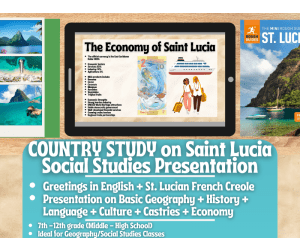
Country Study Presentation - Saint Lucia - Geography - Caribbeans
Social Studies, Economics, Geography, History, Grade 7, 8, 9, 10, 11, 12, Teacher Tools, Presentations, Lesson Plans
Country Study Presentation - Saint Lucia - Geography + Social Studies - Caribbeans Bring Saint Lucia to life in your classroom with this Introductory Teaching Resource on Saint Lucia , designed for Geography, American History ( North America - Caribbeans ), and Social Studies . Ideal for students at Middle School and High School ( from 7th Grade to 12th Grade ) , this PDF digital presentation is informative, visually engaging, and requires little to no preparation . Students will explore Saint Lucia’s geography, history, culture, language, and economy , making this resource perfect for country studies and introductory lessons in Geography and Social Studies. 📘 In this Social Studies and Geograhy Introductory Presentation Lesson, the following topics are dealt: ✅ Hello in English + Saint Lucian French Creole ✅ Geography of Saint Lucia ( Caribbeans ) Bordering countries + interactive Google Maps link ✅ Basic Information of Saint Lucia ( Caribbeans ) Population, population density, capital city, currency, government, currency etc ✅ History Overview of Saint Lucia Summary of Saint Lucia ’s most important historical events ( Caribbeans ) ✅ Geography, Climate & Environment of Saint Lucia Land area, regions, environment and climate zones ✅ Saint Lucia’s Economy Major industries, exports, currency and economic strengths ✅ Castries Saint Lucia' s capital city, including famous landmarks and cultural highlights ✅ Other Key Urban Centers A map with other important major cities in Saint Lucia ( Caribbeans ) ✅ Culture & Traditions Customs, values, and traditions of Saint Lucia ( Caribbeans ) ✅ Goodbye in English + Saint Lucia French Creole 🎯 Perfect For: Geography classes Social Studies World cultures units Country study projects Substitute teacher lessons Digital learning In-class or online teaching 📂 Resource Details Format: PDF Digital Presentation Grade Levels: 7th–12th Grade (Middle School & High School) Prep Time: Low to no preparation required Learning with Alan is an educational resource store created to help teachers, educators, and tutors reach their teaching goals while building a fun, engaging, and stimulating learning environment . Because learning should always be meaningful—and fun! 🎓✨ If you want to browse more of my Teaching Resources, click here Learning with Alan!!
Author Learning with Alan
Rating
Tags Social Studies, Country Study, Lesson, Saint Lucia, Caribbeans, Geography, History, North America, Presentation, Introduction

Hands-On STEM Challenges – Simple Machine Building Worksheets
STEM, Science, Basic Science, Inventors, Theories, Technology, Engineering, Special Resources, Social Emotional Learning (SEL), Special Education Needs (SEN), Homeschool Curriculum, Homeschool Templates, Grade 3, 4, 5, 6, 7, Worksheets & Printables, Workbooks, Worksheets, Word Searches, Teacher Tools, Lesson Plans, Quizzes and Tests, Quizzes, Tests, Assessments
Incorporate Real World Engineering & Discovery into Your Science Classroom with a Comprehensive Simple Machines STEM Unit. Tired of trying to teach students about abstract concepts like force, work, and mechanical advantage in physics without providing a tangible and exciting way to understand them? This complete 5-Week STEM Unit is the all-in-one solution that you've been searching for! It includes everything you need to take your 3rd, 4th & 5th grade students from the theory of physics to creating their very own projects! This product is NOT just a bunch of worksheets, it is an entire educational experience! The resource contains 3 parts: a theoretical guide for teachers, an interactive student workbook & a complete teacher resource pack. The unit provides students with hands-on experiences as they explore 6 classical simple machines (levers, pulleys, inclined planes, wedges, wheels and axles, screws) by examining real-world case studies such as the pyramids of Giza through modern skyscrapers, & then participating in a series of hands-on, challenging activities. Constructivist approaches promote "productive struggle" within the context of providing students with a true understanding of the concepts in this unit, using low-cost, readily available, recycled materials. No more expensive kits, use real-world, authentic inquiry-based learning that develops a true engineering mindset! What This 38-Page Resource Includes: In-depth explanation of Simple Machines: Each of the 6 Simple Machines is explained to teachers in easy-to-understand language. Helpful historical case studies and concept reinforcement questions are included to aid understanding. Worksheets: 10 challenging worksheets designed for students, allow students to demonstrate an understanding of Simple Machines in real-world contexts. These worksheets include activities such as identifying simple machines in everyday objects, analyzing compound machines, calculating mechanical advantage, and working on a design project similar to a Rube Goldberg. Visuals & Helpful Teacher Tools: Three High Contrast Anchor Charts: Vector illustrations of the 6 Simple Machines, a Class 1 Lever (Mechanical Advantage) and the Engineering Design Cycle (STEM). For use in display and projection. Detailed Answer Key: Complete answer key for all 10 worksheets. Complete Teacher Implementation Guide: The Ultimate Resource Guide - Contains teaching reasoning, recommended 5 week pacing guide, list of readily available recycled materials for use in the "Maker Station" and how to facilitate hands on activities and productive struggles in the classroom, as written by seasoned pros. Simple machines, STEM activities, processes used in the design of mechanical systems (engineering design), the learning of physics, the learning of physics from the perspective of children, third grade, fourth grade, fifth-grade science, hands-on learning, project-based learning (PBL), the use of levers and pulleys, worksheets, STEM units or courses together with lesson plans requiring little or no preparation and low-cost preparation; utilizing mechanical advantages using acceleration. The Reasons Parents/Schools Value: Comprehensive & Ready to Use: This isn't just one thing to do; it is a full 5-week unit plan which includes theory, worksheets, visuals, and a detailed teacher's guide. This prepares the teacher for doing the lesson in dozens of hours less than would normally be required. Cost Effective & Easily Accessible: This unit plan was designed to be completed with items that are readily available to you such as cardboard, bottle caps, or string. There is no need to purchase expensive robotic kits that are specialized. Provides Deeper Conceptual Understanding: When students work through building challenges (e.g., utilizing force) they have a hands-on experience they will remember long after the activity is completed. Encourages Developing an Engineering Mindset: In addition to using the Engineering Design Cycle and creating "productive struggle", there is an emphasis on teaching students how to think like an engineer and to use real-world skills to solve problems, be resilient, implement multiple iterations of their solution, and critically think. Target group analysis : The text has an explicit statement of the target audience ("For students in grades 3-5"), so it's clear that the cognitive level of this audience is in the appropriate range. Because of these two factors, we have identified: 1. Primary audience Members consisting of 3rd through 5th Grade Teachers (from public, private and charter schools). 2. Secondary audience members of Homeschooling Families looking for a complete, structured STEM Curriculum. 3. Tertiary audience members will be STEM/STEAM Coordinators, After School Program Directors and Science Club Leaders or Facilitators. Copyright and Terms of Use : Syed Hammad Rizvi is the copyright holder of this resource. This resource is intended for personal and single classroom use only. You cannot modify, distribute or sell this resource. In other words, you cannot post on the Internet for the public to access and download. If you wish to share this resource with other teachers, please consider purchasing a separate license through Teachsimple. Thank you for understanding and following these terms of use. This product has been developed in partnership with Syed Hammad Rizvi
Author Creative Book Store
Rating
Tags SimpleMachines, STEM, STEMeducation, HandsOnLearning, ProjectBasedLearning, ScienceTeacher, TeachersOfInstagram, ITeachScience, ITeachSTEM, EngineeringForKids
Measurement - Digital Lesson Plan Gr. PK-2 | MAC Software
Math, Measurements, Kindergarten, Preschool, Grade 1, 2, Teacher Tools, Lesson Plans
Measurement - Digital Lesson Plan Gr. PK-2 | MAC Software This interactive teaching resource, oriented at students ranging from preschool to the 2nd grade, delivers a heavy-duty math program comprising: Over 150 individual activities. Fully available on nearly 80 dynamic and user-friendly screen pages. The crux here is the paramount subject of Measurement - meticulously aligning with every expectation within the NCTM along with state curriculum measurement math strands. Main Features: Diversity & Drills: The program allows learners to not just take part in diverse tasks but also engage in practical drills—enhancing overall learning experiences manifold! Pre- assessment Activities: A smart feature enabling educators to gauge current understanding levels before commencing each skill set. Word Problems Inspired by Real-life situations:The tool makes abstract concepts relatable using concrete scenarios further boosting comprehension levels significantly. Bonus Tools provided for Hands-on Practice: An array of , printable resources and interactive lessons (including memory match game; board game and spinner game) all work together pumping up absolute fun quotient within the educating space! Evaluation and Progress Tracking Features: A helpful quiz at the end of each chapter aids educators in evaluating students' comprehensions effectively which becomes instrumental for giving timely feedback on progress hence optimizing future lesson plans efficaciously. All this comes neatly housed inside a single lightweight zip file compatible exclusively for MAC software—an ideal format for bustling classrooms or homeschool arrangements. With a thorough emphasis on contextual comprehension coupled with hands-on practice this resource emerges as a perfect match for both whole group instruction or small group sessions—doubling up as handy homework assignments too. Measurement - Digital Lesson Plan Gr. PK-2 | MAC Software, by masterfully marrying interactive engagement and serious academia, emerges as a versatile addition to any PK-2 math teaching toolkit.
Author Classroom Complete Press
Tags Measurement Lesson Plan, Digital Lesson Plan, Math Measurement, Measurement Games, Math Lesson

I WONDER - How Fast Can Giraffes Run | Animated Video Lesson
Life Sciences, Science, Biology, Animals, STEM, Grade 1, 2, 3, 4, 5, 6, 7, 8, Lesson Plans, Teacher Tools
Video Introduction Animal kingdoms are full of fascinating wonders to learn. This video is designed for the students to learn more about animals in different countries. I WONDER - How Fast Can Giraffes Run | Animated Video Lesson Do you like animals? what is your favorite one? Do you own a pet? If yes, tell us more about it, like what its name? And what do you like most about it? What are the animal kingdoms? Can you write down the characteristics of each animal class like mammals, birds, reptiles, amphibian, fish and mollusks. Do you know that some animals can sing, can you name any of them? What is the largest and the smallest mammal in the world? What is the largest and the smallest bird in the world? What is the largest and the smallest fish in the world? I WONDER - How Fast Can Giraffes Run | Animated Video Lesson The video is perfect for encouraging the researching skills for the students, while learning more about these fantastic animals. I WONDER - How Fast Can Giraffes Run | Animated Video Lesson This friendly designed video is suitable for students at school, homeschooling, and as a group activity. Format Available in MP4 format.
Author Educational Voice
Tags How Fast Can Giraffes Run, How Fast Can Giraffes Run Video, Giraffes, Giraffe, Giraffes Facts, Giraffes Facts For Kids, Giraffes Video, Giraffes Video For Kids, Animal, Animals

I WONDER - How Popular Is Football | Animated Video Lesson
Sports, P.E. & Health, Grade 1, 2, 3, 4, 5, 6, 7, 8, Lesson Plans, Teacher Tools
Video Introduction An amazing video designed for the students to learn more about sports in different countries. I WONDER - How Popular Is Football | Animated Video Lesson What is your favorite sport? Tell us more about it. Who is your favorite athlete? Or what is your favorite team? Do you know who invented basketball? When basketball has been invented? Can you tell us where is the first time it has been played? Have you ever played soccer or football? If yes, tell us what was your position: A goal keeper, midfield player, or a defender? Do you like watching golf? If yes who is your favorite player? Can you name the differences between tennis and ping pong? Have you ever played volleyball on the beach? When it has been officially recognized by the Olympics? Do you like watching Formula 1 races? If yes, who is your favorite team or driver? Have you ever tried to play handball? If yes tell us more. Do you like watching people skiing or surfing? I WONDER - How Popular Is Football | Animated Video Lesson The video is perfect for encouraging the researching skills for the students, while learning more about this sport. I WONDER - How Popular Is Football | Animated Video Lesson This friendly designed video is suitable for students at school, homeschooling, and as a group activity. Format Available in MP4 format.
Author Educational Voice
Rating
Tags How Popular Is Football, How Popular Is Football Video, Football, Football Facts, Football Video, Football Video For Kids, Football Facts For Kids, Sport, Sports, Sports Video
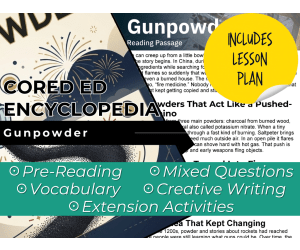
Gunpowder Reading Comprehension Passage - Cored Ed Encyclopedia
ELA, Reading Comprehension, Reading, Science, Technology, Pre-Reading, Language Development, History, Social Studies, Physics, Grade 2, 3, 4, 5, Worksheets & Printables, Worksheets, Teacher Tools, Centers, Activities, Writing Prompts, Assessments, Quizzes and Tests, Quizzes, Lesson Plans
This gunpowder reading comprehension with lesson plan includes: Visualization (on the front cover) Start your lesson by taking a minute to think and share something about the topic. Read the script aloud (slowly), perhaps prepare some music or sound effects. Student close their eyes and let their imaginations wander. Students open their eyes, read the question aloud and give them a few minutes to complete. Ask a few students to share or keep answers until the end to compare with what they learn in the passage. Quick pause—thousands of Cored Education products are included with your TeachSimple membership. Download links and encyclopedia index available here. Pre-Reading Trivia Students will write down one thing they already know about the subject and then read five more facts and discuss. These facts are fun, and the students will enjoy learning about the subject before reading more. Give 1 minute for students to write what they already know (no pressure—best guess is fine). Read the five facts together. After each fact, do ask a student for their opinion, was it surprising? Set a purpose by asking students to highlight/underline one fact they want to learn more about during the reading. Reading Passage The text is a high-interest reading passage with set paragraphs, roughly three to four paragraphs long. It contains a variety of themes about the topic, anywhere from history to technology. The passage is between 250 and 350 words in length. First, ask students to look at the headings and see what they’ll learn about today. What do they know about the topic/heading? First read options: Teacher read-aloud (best for support). Partner reading (paragraph by paragraph). While reading, students underline important details, and vocabulary words they think may come up in the questions section. Mixed Questions The first question page contains four multiple-choice questions, each with a choice of four answers, and three written response questions that require a sentence or two from the student. Students complete the mcqs first independently, then review quickly as a class. For the 3 written responses, try to get students giving the answer with some form of evidence: “I think ___ because the text says ___.” If students get stuck, send them back to check the passage. Vocabulary Questions Practice seven key words from the text in this section across two activities. First section is scrambled words where students will unscramble three words given a clue for each. The second section is a word to meaning matching activity. Before starting, have some students read out words they underlined in the passage. Ask students to say the word and read aloud the sentence(s) around each word. Ask students to do scrambled words and the matching exercise in pairs then go through answers as a class. For the scrambled spelling task, get four pairs to come up to the board and write the words for extra practice with the other student reading out the clue. For the matching task, prompt students to give full sentences: “I matched ___ with ___ because ___.” Creative Writing In this question, the student will be required to write a five to eight sentence paragraph on a question related to the topic. Before starting, ask students write down 3 key ideas they are going to include in their piece. Ask students for ideas to share around the class to help those struggling. Pro writing expectations: 5–8 sentences At least 2 facts or details from the passage At least 2 vocabulary words from the previous page Students read their paragraphs while classmates listen for facts and vocabulary words. Extension Activities This page is optional for fast finishers or to take home. There are several activities, each one requiring a different skill. Do some, do none, do all, completely optional - but you will feel reassured knowing every possibility is planned for. Includes summary writting question and additional facts. Answer Key There are answers for the multiple-choice questions, written response questions have sample answers, vocabulary answers and if there is a summary question then a sample summary will be provided as well. Lesson Plan Included Customized lesson plan for this lesson is included. Lesson Snapshot Title: Gunpowder Genre: Nonfiction (informational text) Subject: Science Primary Topic: How gunpowder was discovered and used over time Estimated Guided Reading Level (A–Z): Q What This Lesson Teaches Best Explains how gunpowder began in China during the Tang dynasty when alchemists mixed ingredients while searching for a life-lasting “elixir.” Identifies the three main powders in gunpowder—charcoal, sulfur, and saltpeter (also called potassium nitrate)—and describes what saltpeter adds to help burning. Describes how gunpowder behaves differently in an open pile versus a tight tube, leading to a strong push of hot gas. Traces how “fire medicine” was used first for celebrations and signals, then developed into fire arrows, bombs, fire lances, and hand cannons by the late 1200s. Shows how ideas travel as gunpowder and stories about rockets reached Europe, and how uses expanded to quarrying rock and digging tunnels, not only fighting. Learning Goals Students will describe how the text says gunpowder was discovered during the Tang dynasty in China. Students will identify the three main powders in gunpowder and explain what saltpeter adds to the burning process. Students will compare what happens when gunpowder burns in an open pile versus in a tight tube. Students will explain how “fire medicine” changed from signals and celebrations to fire arrows and later weapons over time. Students will describe two non-celebration uses of the powder mentioned in the text (quarrying rock and digging tunnels). Students will explain what the author means by “Ideas travel,” using the example of gunpowder reaching Europe. Key Vocabulary From the Text alchemists — people who mixed ingredients while searching for an “elixir.” elixir — a life-lasting drink they searched for. charcoal — powder from burned wood. sulfur — one of the three main powders. saltpeter — a mineral also called potassium nitrate. Discussion Prompts Pre-reading question: What do you think might happen if a powder burns very fast? Comprehension questions: How did the mixture get the name huoyao, or “fire medicine”? Comprehension questions: What role does saltpeter play when a tiny grain is lit? Comprehension questions: How did the uses of “fire medicine” change from celebrations to later tools or weapons? FULL CATALOG OF DOWNLOAD LINKS AND ENCYCLOPEDIA INDEX HERE
Author Cored Education
Rating
Tags Vocabulary, Reading Comprehension, Reading Passages, Lesson Plans, Ela Lesson Plans, Reading Comprehension Lesson Plans, Pre-reading, Science Lesson Plans, Social Studies Lesson Plans, History
Measurement: Perimeter & Area - FLASH-MAC
Math, Measurements, Grade 3, 4, 5, Teacher Tools, Lesson Plans
Measurement: Perimeter & Area - FLASH-MAC A meticulously comprehensive teaching resource designed for grades 3 to 5, addressing the concepts of perimeter and area. Aligns with common math curriculum expectations for this developmental stage. Incorporates engaging activities promoting strong mastery in measurement concepts from pre- assessment tasks through to timed drill exercises. Versatility of Use Be it full classroom sessions, focused high-impact group lessons, or homework assignments for reinforcement; this tool can be employed in every educational setting. Engagingly Interactive The resource includes stimulating games such as memory match game, board game and spinner game embedding learning into playtime scenarios thus effectively aiding student comprehension. Multilingual Accessibility Its multilingual feature with English default voiceover and text options along with additional Spanish serves bilingual classrooms or homeschooling environments striving for English-Spanish competency well. All-encompassing Tools Includes math manipulatives and printables that offer concrete visual aids hence aiding better comprehension among visually-oriented learners. An exclusive guide created solely for teachers provides sage recommendations on structured content delivery while SMART Response Assessment supports effective progress tracking thereby keeping learning at par alongside curricular requisites. Ease of Use The Zip file format housing MAC software eases usability alongside ensuring quick document retrieval maintaining focus on student learning achievements. In conclusion, b Measurement: Perimeter & Area - FLASH-MAC is a significant educational product targeting educators aspiring to bestow upon students a well-rounded comprehension of both the perimeter and area from early academic stages.
Author Classroom Complete Press
Tags Measurement, Perimeter, Area, Math Lesson Plan, Math Curriculum
I WONDER - How Hot Is Lava | Animated Video Lesson
Earth Sciences, Earth and Environmental Sciences, Science, Environmental Science, Geography, Social Studies, Grade 6, 7, 8, 9, 10, 11, 12, Lesson Plans, Teacher Tools
Video Introduction An amazing video designed for the students to learn more about natural disasters in different countries. I WONDER - How Hot Is Lava | Animated Video Lesson What do you know about this natural disaster? Do you know in which part of the world this could happen? Have you ever read about the safety misusers that we could have to protect ourselves from this natural disaster? If yes, can you tell us more about them? Can you name other natural disasters? If yes, tell us more about where they are likely to happen? And how frequently? Do you like reading about Geography? What is your favorite country in the whole world? If you are going on a trip where it will be? Which country? What you are going to see there? Does this country has a famous place to visit? Do you like reading about Geology? If yes, what is your favourite topic? I WONDER - How Hot Is Lava | Animated Video Lesson The video is perfect for encouraging the researching skills for the students, while learning more about this fantastic phenomenon. I WONDER - How Hot Is Lava | Animated Video Lesson This friendly designed video is suitable for students at school, homeschooling, and as a group activity. Format Available in MP4 format.
Author Educational Voice
Tags How Hot Is Lava, How Hot Is Lava Video, Lava, Lava Facts, Lava Facts For Kids, Lava Video, Lava Video For Kids, Volcano, Volcanoes, Volcanoes Video

I WONDER - How Much Water Can Be Wasted From Leaky Pipes
Science, Earth Sciences, Earth and Environmental Sciences, Environmental Science, Geology, Grade 4, 5, 6, 7, 8, 9, 10, Lesson Plans, Teacher Tools
Video Introduction An amazing video designed for the students to learn more about STEM. I WONDER - How Much Water Can Be Wasted From Leaky Pipes | Animated Video Lesson Our environment is so precious, can you name different ways to help our environment to be clean? Have you ever recycled a material? If yes, tell us what was the material was it paper, plastic, glass or aluminum? How did you recycled it? What are the types of clean energy? How do hydro power works? Where can we find wind turbines? What is climate change? And what we can do to stop it? What are the different types of ecosystems? I WONDER - How Much Water Can Be Wasted From Leaky Pipes | Animated Video Lesson The video is perfect for encouraging the researching skills for the students, while learning more about this fantastic topic. I WONDER - How Much Water Can Be Wasted From Leaky Pipes | Animated Video Lesson This friendly designed video is suitable for students at school, homeschooling, and as a group activity. Format Available in MP4 format.
Author Educational Voice
Rating
Tags How Much Water Can Be Wasted From Leaky Pipes, Water Waste, Water Waste Facts, Water Waste Video, Water Waste Video For Kids, Water Waste Facts For Kids, Leaky Pipes, Leaky Pipes And Water Waste

Measurement: Measuring Weight - PC Software
Math, Measurements, Kindergarten, Preschool, Grade 1, 2, Teacher Tools, Lesson Plans
Measurement: Measuring Weight - PC Software An Innovative Teaching Tool: This software is a unique teaching equipment curated meticulously to incorporate numerous aspects of learning from lesson plans to interactive games. It is tailored to engage and encourage preschool through grade 2 students in the concept of weight measurement. How it engages learners? Pre- assessment tasks and real-world problem-solving exercises. Suite of math tools can be utilized during various teaching methods; whether group classroom instruction or individual homework assignments based on student needs. Captivating Printables for Hands-on Learning: An assortment of enthralling printables presents mathematical concepts visually, aiding young learners at an early stage in abstract thinking. Fostering Fun with Games: Interactive games like memory match, board game & spinner game help imbibe lessons about weight measurement while keeping the learning process fun-filled and motivating. Usage during whole-group activities enhances peer interaction along with deeper understanding. Educator Support: An integral teacher guide provides step-by-step instructions aiding educators ensuring effective usage and accurate implementation while meeting core objectives without losing joy in the learning process regardless if they are homeschooling or following public school curriculum alike. The software includes language inclusivity availing English as well as Spanish options catering for diverse linguistic backgrounds within classrooms. Note :The entire content comes packed in a single zip file compatible with PCs promising convenience in installation whilst maintaining high-quality pedagogical content.
Author Classroom Complete Press
Tags Measuring, Weight, Measurement Lesson, Digital Math, Math Activities
I WONDER - What Are Fireworks Made Of | Animated Video Lesson
Chemistry, Science, Physics, STEM, Grade 6, 7, 8, 9, 10, 11, 12, Lesson Plans, Teacher Tools
Video Introduction An amazing video designed for the students to learn more about STEM. I WONDER - What Are Fireworks Made Of | Animated Video Lesson Do you like STEM subjects? what is your favorite one? Have you ever tried to plant a seed? If yes, tell us more about it. Or have you ever tried to invent something? If yes, tell us more about it. And how do you think it will help us? Have you ever seen a microorganism under a microscope? What was it? And how it looked like? Mathematics is a marvelous subject. Let' sharpen our brains and solve some equations. Do you like timetable tricks? What is your favorite one? Do you know how to code? Have you ever created an app or a game before? If yes, how was it like? I WONDER - What Are Fireworks Made Of | Animated Video Lesson The video is perfect for encouraging the researching skills for the students, while learning more about this fantastic topic. I WONDER - What Are Fireworks Made Of | Animated Video Lesson This friendly designed video is suitable for students at school, homeschooling, and as a group activity. Format Available in MP4 format.
Author Educational Voice
Rating
Tags What Are Fireworks Made Of, What Are Fireworks Made Of Video, Fireworks, Fireworks Video, Fireworks Facts, Fireworks Video For Kids, Fireworks Facts For Kids, STEM, STEM Video

Generative AI Ethics, Deepfakes & Responsible Use Case Studies
Science, Technology, Computer Science, Engineering, Research, Resources for Teachers, Classroom Management, STEM, ELA, Language Development, Grade 6, 7, 8, 9, 10, 11, 12, Worksheets & Printables, Workbooks, Worksheets, Word Searches, Writing Prompts, Teacher Tools, Lesson Plans, Presentations, Outlines, Quizzes and Tests
The complete high school curriculum is prepared and provides an interactive exploration of the topic of ethics in generative AI; deepfakes; responsible use of synthetic media; and provides a thorough introduction to how synthetic media works (to be used by all of our student participants in grades 9-12). The curriculum includes an academic overview of Synthetic Media architecture; multiple chapters for deepfake discussion/analysis; Copyright/Author status; algorithmic bias and epistemic security/provability protocols regarding the use of synthetic media. In addition, there are ten practical, complete, and interactive worksheets for active, individual student participation that have real examples, such as "the Synthesized Senator," "Med-Synthetica Diagnostic Bias," "Voice Cloning," "Influencer Avatars," etc. The students have to complete fill-in-the-blank terminology exercises, scenario analyses, and ethical synthesis prompts that promote critical thinking, media literacy, and digital citizenship skill acquisition. There is also the following in the resource book: (conceptual visual diagrams [mind maps, escalation matrices, process flows], a comprehensive answer key with notes for teachers and benchmarks for mastery) and a detailed teacher guide with pedagogical strategies, assessment tools (rubrics) and teaching protocols. This curriculum is also perfect for English/Language Arts, Social Studies, Computer Science, Digital Literacy, or elective Technology & Ethics classes. This resource is an instant digital download and requires no prep time. Give your students the information they need to be responsible in their use of AI and the topics related to ethics regarding the generative technology called "deepfake." Parents/Schools Appreciate It Because: Essential 21st century skills are being taught through critical thinking, verifying media sources & making ethical choices in dealing with misinformation & threats from deep-fakes and counterfeit media, thereby counteracting those very problems. Students remain engaged while staying motivated to learn by using real-world examples of ethical & responsible use of technology through use of case studies/workheets. The format requires zero preparation & can be easily implemented by teachers; includes lesson plans, case studies, worksheets, visuals, answer keys, teacher’s implementation guide (in pdf format). Responsible use of artificial intelligence & digital stewardship is promoted through use of technology in an aligned manner with modern school standards regarding digital citizenship/social-emotional learning. Materials are flexible in nature so can be used across multiple curriculum areas & for hybrid & remote learning situations. Based on a complete analysis of the submitted PDF, the target audience for this document are Students in grades 9-12 (age 14-18). This project is most suited for high school students enrolled in the following classes: - English/Language Arts or Media Literacy - Social Studies/Civics/Government - Computer Science/Digital Citizenship/Technology and Society - Ethics/Philosophy/STEM/STEAM The majority of the content is age appropriate for students and offers academically challenging material using fictional case studies that are relatable to a student's experience (there are no graphic illustrations or inappropriate material) on real-world current events such as misinformation, bias, copyright, and consent regarding the use of generative AI technology. "Terms & Copyright of Use": This resource has been copyrighted by Syed Hammad Rizvi. Personal use/Single-use in a classroom only. You may NOT change, share or sell this resource. i.e You may NOT post this on the Internet for others to search for/download. If you want to share this resource with other people in your school or district purchase additional copies through Teachsimple. Thank you for your cooperation. This product is provided to you by Syed Hammad Rizvi
Author Creative Book Store
Rating
Tags AIEthics, Deepfakes, GenerativeAI, SyntheticMedia, AI Ethics, DeepfakeAwareness, AIEthicsCurriculum, DeepfakesLessonPlans, GenerativeAIEthics, SyntheticMediaEthics

Denali National Park Geography Unit
Social Studies, Geography, Grade 6, 7, 8, 9, Teacher Tools, Lesson Plans
Denali National Park Geography Unit The Denali National Park Geography Unit is aimed at enriching the educational experience of middle school students particularly in Grades 6 to 9. This comprehensive resource is focused on elevating understanding about this geographical marvel. The unit offers an in-depth dive into elements such as the park’s history, its distinct geography, endemic wildlife, and unique climate patterns. A Comprehensive Teaching Package This teaching resource functions as a complete package for educators intending a holistic exploration of Denali National Park's geography. It contains: A PowerPoint presentation guiding teachers and students through the learning journey. Preview sheets available in both PDF and JPEG formats. Included worksheets directly related to the unit's content for reinforcing learned materials. A booklet allowing students to document their learnings systematically. Instructions for creating their own posters that promote creativity amongst learners. An Interactive Learning Platform The unit sets itself apart by featuring QR codes on each reading sheet linking directly to videos about the park-making learning interactive! Reading materials are available in two different formats- extended 2-sheet set or condensed single-sheet format catering perfectly to varied needs within classrooms. Crosswords & Title Cards In addition, crosswords function not only as reinforcement activities but also add variety suiting diverse learning styles whether it be group instruction or individual activities. Furthermore, title cards supplementing student presentations or projects personalize virtually every stage associated with this exploring Denali's landscape well even for homework assignments. center >"Informed about the park and equipped with skills" center > Conclusion The Denali National Park Geography Unit signifies an all-inclusive teaching tool designed with the intent to engage students and ensure effective pacing. It delivers fruitful social studies lessons specifically targeted at mastering geography concepts. It supports well-rounded education by providing insights into Denali National Park, motivating students to explore beyond textbooks and encouraging individual interpretation & analysis.
Author Mr Gray History
Tags Denali National Park, Geography Unit, Middle School, Wildlife, Climate Patterns
I WONDER - Who Invented Alarm Clocks | Animated Video Lesson
History: Europe, History, Social Studies, History: Ancient, Grade 4, 5, 6, 7, 8, 9, 10, Lesson Plans, Teacher Tools
Video Introduction An amazing video designed for the students to learn more about history. I WONDER - Who Invented Alarm Clocks | Animated Video Lesson Do you like history? Which topic do you really enjoy about history? Have you ever read an interesting fact about the Vikings? If yes, can you mention them? What do you like most about the Victorian era? Can you name all the Tudors? Have you ever wondered how people used to live in ancient Japan and ancient China? Do you know any interesting facts about ancient Egyptians and the Pharaohs? Have you ever visited South America? What do you know about Incas and Aztecs? Celtic culture was really one of a kind, can you name any of the places that Celts used to live in? Imagine yourself living during the ancient Roman empire, how your life will look like? Ancient Greece was an amazing place to live in. What do you know about ancient Greek life? I WONDER - Who Invented Alarm Clocks | Animated Video Lesson The video is perfect for encouraging the researching skills for the students, while learning more about history. I WONDER - Who Invented Alarm Clocks | Animated Video Lesson This friendly designed video is suitable for students at school, homeschooling, and as a group activity. Format Available in MP4 format.
Author Educational Voice
Tags Who Invented Alarm Clocks, Who Invented Alarm Clocks Video, Alarm Clocks, Alarm Clock, Alarm Clocks Facts, Alarm Clocks History, Alarm Clocks Facts For Kids, Alarm Clocks Video, Alarm Clocks Video For Kids
Canadian Government: What is Government?
Social Studies, Government, Common Core, Grade 5, 6, 7, 8, Teacher Tools, Lesson Plans
Canadian Government: What is Government? The resource, "Canadian Government: What is Government?", is designed to engage and educate students about the intricacies of the Canadian government and its electoral process. It's tailor-made for students in grades 5 through 8 to learn about politics in an easy-to-understand manner. What does this Resource Include? An explanation of what a government is and why we need one. An overview of the different levels of power within the Canadian system including stakeholders, Senate members, House of Commons representatives, Supreme Court justices - as well as roles of senior members like the Prime Minister. Colorful mini posters that provide visual aids for easier understanding Student activities designed to encourage critical thinking. This includes crossword puzzles for vocabulary practice and reading passages followed by comprehension quizzes to assess understanding. This resource can be used for whole class instruction or can be broken down into smaller groups. It also works well as homework assignments. The 22-page material can easily be printed out from a PDF file format providing flexibility during instructional hours. Educational Standards & Theory Application This educational tool aligns with Common Core State Standards substantiating its academic efficacy. Woven with Bloom's Taxonomy principles ensures balanced cognitive level inclusion needed for effective comprehension. A Productive Learning Experience This comprehensive teaching tool successfully simplifies complex political information thus making social studies instructions both productive and fun!
Author Classroom Complete Press
Tags Electoral Process, Canadian, Government, Supreme Court, Politics
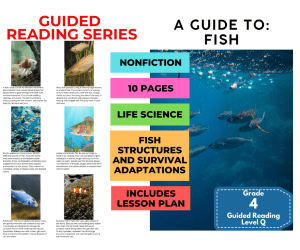
A Guide to Fish: Guided Reading Level Q with Lesson Plan
ELA, Resources for Teachers, Reading Comprehension, Reading, Science, Language Development, Life Sciences, Earth and Environmental Sciences, Pre-Reading, Vocabulary, Grade 3, 4, 5, Worksheets & Printables, Worksheets, Teacher Tools, Centers, Activities, Literacy Readers, Quizzes, Quizzes and Tests, Assessments, Lesson Plans
This A Guide to Fish (level q) guided reading book with lesson plan includes: Guided Reading Color Label (front cover x1) This is a quick way to match the book’s demands to what students can generally handle.. The overall goal is to use the level/color to pick books for several smaller groups. To qualify for a certain level, a student is expected to read a book from that level with about 90–94% accuracy. If a student is consistently accurate and understands, move up a level. If the student is struggling at that level, drop down and add more support. Each student will improve at completely different rates, but it is generally one of the best ways to check progress across the class. DOWNLOAD THE CATALOG TO VIEW ALL GUIDED READING BOOKS AVAILABLE (SORTED LEVELS A-Z) Pre-Reading Question (x1) Teacher asks the prompt aloud, can be while showing the cover or first page. Students share what they already know, or make educated guesses from the cover. Prompt them to use the target vocabulary. Write some of their responses on the board to look back at during the reading. Vocabulary Words (x5) Introduce the five words, best doing it one at a time. Start by saying it, while students repeat and then see if anyone knows what it means before reading further. Read through the meaning and try to briefly connect each word to a picture or gesture so it’s meaningful. Ask students to flip through the book pages and point to where they see each of the vocabulary words. While reading the book pause upon coming across one of the vocab words or read the sentence twice to make sure students understand the word has appeared. Optional: Ask students to raise hands whenever they see/hear one of the new words. Guided Reading Pages (x10) Check the book snapshot (below) for: primary topic - do you need to prep extra reading or intro materials on this? what is taught best - decide on 1-2 bullets to focus on, use the prompt or words provided here for best results. learning goals - what you are checking for students to be able to do after the session, elicit answers using prompts or words provided. key vocabulary (see section above). questions overview - so you know what is coming up and if you need to prep extra materials to assist understanding. Run the lesson You may have already looked at a few of the pages together, but you can show them some of the pictures again first to set meaning. Depending on how much time you have and how familiar your students are with guided reading class, you may want to read the book aloud first with the group first. Students whisper or partner read, while you listen in. If time, do it as a group, one student reading a page each. Use the guided page’s prompts to coach: “Check the picture / does it make sense?” “Point under the words / try the first sound” “Reread the sentence smoothly”. Try to focus more on one student per session (rotating every time), so you can work out if they are ready to move up or need to move down a level. Comprehension Questions (back cover x3) This is your way to check that students didn’t just say the words, but actually understood the text. First, let students answer by pointing to the page/picture and saying a short sentence. After any answer, follow with: “Show me where you found that in the text.” In bigger groups, have partners answer first (10–20 seconds), then call on 2–3 students to share. Differentiation tips: Emerging speakers/struggling readers: oral + pointing On-level: oral in a full sentence Higher: one written sentence or draw + label Book Snapshot Title: A Guide to: Fish Genre: Nonfiction (informational) Subject: Life Science Primary Topic: Fish structures and survival adaptations Estimated Guided Reading Level (A–Z): Q What This Book Teaches Best Explains how gills help fish breathe by extracting oxygen from water and releasing carbon dioxide. Describes how a fish’s streamlined shape and fins support efficient movement, stability, steering, and turning. Introduces the lateral line as a sensory system that detects vibrations and pressure changes to help fish navigate and find prey. Compares freshwater and saltwater habitats and explains how fish maintain the right internal balance of salt and water. Shows multiple survival strategies such as bioluminescence, camouflage, cartilaginous skeletons, and schooling (“safety in numbers”). Learning Goals Explain how fish breathe using gills and what happens as water passes over gill filaments. Describe how fins and a streamlined body shape help fish move, steer, and turn in water. Identify what the lateral line does and how it helps fish survive (navigation and finding prey). Compare how freshwater fish and saltwater fish manage water and salt in their bodies. Explain at least two survival adaptations described in the text (camouflage, bioluminescence, schooling). Describe what “cartilaginous fish” are and what the text says cartilage allows them to do. Key Vocabulary From the Text vertebrates — animals that have a backbone. specialized — made for a specific job or purpose. filaments — thin, threadlike parts of the gills. bioluminescence — the ability to make your own light. cartilaginous — having a skeleton made of cartilage, not hard bone. Discussion Prompts Pre-reading question: What body parts or behaviors might help fish survive in different kinds of water? Comprehension questions: What does the text explain that gills do for a fish? Comprehension questions: How does the lateral line help fish, according to the text? Comprehension questions: Why does the text say swimming in a school can help fish survive? Printing Tips 1. Best Printing Method (Recommended) “Booklet” Printing (Best if Available) If your printer or PDF viewer supports Booklet Printing , use this. Settings to use: Print mode: Booklet Paper size: Letter or A4 (either works) Orientation: Landscape Print on both sides: Yes Flip on: Short edge Scaling: Fit to printable area Booklet subset: First test: Front sides only Then: Back sides only This will automatically: Pair pages correctly Put the cover on the outside Align everything for folding After printing, fold in half and staple along the spine . 2. If “Booklet” Printing Is NOT Available You can still print this correctly with manual duplex printing . Step-by-step: Open the PDF. Choose Print . Set: Orientation: Landscape Pages per sheet: 1 Print on both sides: Yes Flip on: Short edge Print all pages . Because each PDF page already contains two facing book pages, the result will still fold cleanly into a book. Thousands of Cored Education products are included with your TeachSimple membership. Download links and encyclopedia index available here.
Author Cored Education
Rating
Tags Reading Comprehension, Reading Passages, Reading, Guided Reading, Guided Reading Lesson Plan, Guided Reading Activity, Pre-reading, Science Lesson Plans, Life Science, Earth Science
Metacognitive Logs: Reading Response
ELA, Reading, Reading Comprehension, Literature, Strategies, Writing, Grade 6, 7, 8, Teacher Tools, Lesson Plans
This 31-page mini-unit, Metacognitive Logs: Reading Response, is part 5 in my unit Creating Independent Readers in Your Middle School Classroom . In this mini-unit, students learn the following: --how to identify the reading strategies they are using --how to “Talk to the Text” or annotate the text with their thoughts, feelings, ideas, etc. --how to write a thoughtful and cohesive response to what they are reading Response writing allows students to access their subconscious or deeper thinking. Although you will have some students who take to this immediately and come up with amazing observations and thoughtful analyses, most students start out being very self-conscious about their thinking, even students who are reading at or beyond grade level. They are not used to bringing their thoughts to the surface. It is a skill that we have to teach them. Once they learn it, though, you will be surprised at and delighted by their insightful comments. Talking to the Text or annotating a text is an important skill that students need to be taught. Often they are insecure about or inhibited by the idea of marking up the text with their thoughts, feelings, ideas, reactions, etc. Some students come to it naturally, whereas others really struggle with this. I have found over the years that the insecurity or inhibition, as well as the confidence to access their subconscious thoughts, can be in both advanced and struggling readers. Their reading skill or level ultimately isn’t a guarantee that they will do this confidently. This is why it is good to break down the skill by using reading strategies and giving them time to practice. The mini-unit includes detailed lesson plans with clearly stated objectives and learning targets that are aligned with the Common Core Standards for Reading along with the necessary resources you need to engage your students in reading response. Typically, I teach this after I've taught my students how to write a summary of a short story, which I offer in Lesson 4 of my unit. My 95-page complete unit, Creating Independent Readers in Your Middle School Classroom , includes the following: Part 1: What We Do When We Read Part 2: Reading Requirements Part 3: Reading Logs, Setting Goals, and Reflection Part 4: Summary Writing for Short Stories Part 5: Metacognitive Logs: Reading Response Part 6: How to Set Up An Amazing Classroom Library
Author Intentional Teaching and Learning
Tags Independent Readers, Readers Unit, Metacognitive, Reading Logs, Reading Response, Critical Thinking, Literary Analysis, Reading Program, Evidence, Interpretation

Wish ESL TEFL Upper Intermediate Lesson Plan Worksheet
ELA, Language Development, ESL, Grammar, Writing, Resources for Teachers, Not Grade Specific, Adult Education, High School, Middle School, Teacher Tools, Lesson Plans, Worksheets & Printables
Wish | Upper Intermediate Lesson Plan for ESL Students This informative lesson plan helps upper intermediate ESL students further develop their understanding and use of the verb "wish." Through focused exercises and assessments, learners will strengthen their grammar and comprehension abilities. Educators can implement this versatile resource in various settings such as whole group instruction, small group work, or as self-guided practice. The engaging worksheet suite equips students to use "wish" properly in speech and writing. Answer keys are provided for instructors. Accessible via Google Apps, the materials were designed for upper intermediate proficiency levels but may be adapted as needed. By completing these targeted activities, students will gain confidence mastering this essential element of the English language. The ESL lesson plan includes flashcards, a warmer, grammar rules, exercises, role-play, conversation, writing drill, activity , answers and an extra study that would be good to set as homework. There are 30+ pages and there are teachers notes to guide the teacher.
Author TEAM TEFL
Tags Grammar Worksheet, ESL Lesson, Verbs, Wish, Sentence Writing
Geometry: Composing Geometric Shapes - FLASH-MAC
Math, Geometry, Grade 1, 2, Teacher Tools, Lesson Plans
Geometry: Composing Geometric Shapes - FLASH-MAC A comprehensive teaching resource designed to aid educators in conveying key concepts in geometry, composing geometric shapes particular. Intended for grade 1 and grade 2 students, this product helps reinforce knowledge with engaging activities and assessment tools. A Multifaceted Learning Tool This tool offers curriculum-based content through various stages: Pre- assessment phase: guides teachers to identify preliminary gaps in the student's understandings. Detailed lesson plan: delivers instructions step-by-step ensuring smooth transition from basic concepts to solving complex problems independently. Inclusion of real-world problems: these offer learners an opportunity to apply their knowledge practically and foster critical thinking skills. Timed drill exercises: aimed at improving problem-solving speed & accuracy while maintaining learning engagement. An Array of Supplementary Resources The product also includes additional tools such as math tools for hands-on experiences, printables for offline practice and games incorporated into the package for multiple routes towards educational goals engagement: group or individual study sessions are both accommodated. A Convenient, Inclusive Resource The convenience lies within its MAC software availability packed as a single zip file. It welcomes linguistic diversity by offering voiceover options & text content in Spanish alongside English thus accommodating non-English speakers. The included Teacher Guide ensures educators feel equipped throughout their teaching journey leading efficient & enjoyable instructing experience using FLASH-MAC. This resource combines flexibility, educational essence & cultural inclusivity making it ideal for a variety of learning environments including homeschools or public schools with its potential multiplicity means representation & expression.
Author Classroom Complete Press
Tags Geometry, Shapes, Math Printable, Congruent Shapes, Composing Shapes
Global Warming REDUCTION: Lowering Your Greenhouse Gas Emissions - FLASH-MAC
Science, Earth and Environmental Sciences, Environmental Science, Common Core, Grade 5, 6, 7, 8, Teacher Tools, Lesson Plans
Global Warming REDUCTION: Lowering Your Greenhouse Gas Emissions - FLASH-MAC An educational resource by educators, for educators targeting the Grade 5 to Grade 8 learning group. This product serves as a teaching tool for both homeschooling parents and traditional classroom setups. Main Features: Curriculum -based content that aligns with Common Core State Standards. Further incorporation of Bloom's Taxonomy principles in question formation and reading tasks. Inclusion of engaging reading passages focusing on world environmental concerns along with pre-reading ("before you read") and post-reading ("after you read") reviews. A huge selection of printables ready for immediate use in various classroom settings or homework assignments. Vocabulary flashcards to enhance comprehension of new scientific terminology related to global warming and emission reduction. Beyond Just Text: The teaching resource is not just limited to text materials. It contains interactive activities that encourage hands-on learning. Accompanied by video presentations, audio tutorials, it caters especially well to visual and auditory learners alike. Versatile Learning Tool: This resource can be easily adapted into various education environments - from in-person whole-group instruction to smaller online class structures. Crafted specifically with fifth through eighth graders in mind, this user-friendly educational software encourages active learning while cultivating a deeper understanding of their communal role in lessening global environmental impact.
Author Classroom Complete Press
Tags Software (Mac)

Anxiety Management & Stress-Relief Breathing Exercise Worksheets
STEM, Special Resources, Life Skills, Social Emotional Learning (SEL), Social Skills, Special Education Needs (SEN), Speech Therapy, Science, Life Sciences, Human Body, Homeschool Curriculum, Homeschool Templates, Grade 6, 7, 8, 9, Worksheets & Printables, Word Problems, Worksheets, Workbooks, Word Searches, Teacher Tools, Lesson Plans, Quizzes and Tests, Quizzes, Tests
This complete resource for anxiety management & stress relief using breathing exercise worksheets includes everything needed for middle school students. It is designed to be both printable (digital/electronic) and neuroscience-based and consists of 41 pages of student worksheets, real-world case studies, fill in the blank knowledge checks and numerous practical breathing protocols (Box Breathing, 4-7-8 Breath, Resonant Breathing, Physiological Sigh, Extended Exhale, Alternate Nostril Breathing and 5-4-3-2-1 Sensory Grounding) along with teacher answer keys, conceptual visuals and a full trauma informed implementation guide. This curriculum teaches students in 6th, 7th and 8th grades to interrupt amygdala hijacks, switch from the sympathetic "fight, flight or freeze" to the parasympathetic "rest and digest" and develop lifelong emotional resilience through the science of somatic agency, vagus nerve stimulation, neuroplasticity and autonomic nervous system regulation. This PDF product is perfect for school counseling, advisory periods, special education and homeschool implementation. There is no prep work necessary for immediate implementation in the classroom or at home. Keywords: anxiety worksheets for middle school students, breathing exercises for relieving stress for teens, anxiety management neuroscience based printable, somatic breathing toolkit, middle school social emotional learning curriculum, tools for testing anxiety, breathing activities for social anxiety. Parents & Teachers Love This Program Because: Science Supported but Student Friendly: This program teaches students the real science (amygdala, vagus nerve, heartbeat, myelination) behind their feelings in a way that helps them stop blaming themselves for the way they feel and begins to help them take charge of who they are by understanding how their body works. No Prep, Ready to Use: The program comes with student worksheets/answer keys, teacher projectables/visuals, and teacher implementation guides (these guides include trauma informed scripts) for busy community counselors, social-emotional teachers, and parents to use to implement this program with ease. The Efficacy of the Program has been Proven over and over Again Through the Use of the Program Addresses Multiple Anxiety Triggers (such as academic tests, social/cafeterias, digital overstimulation, athletic performance, and sleep difficulties) in multiple ways along with the use of protocols which work in real-world education settings. Creates Resilience Long-term: This program teaches daily habits and neuroplasticity, enabling the student to not only survive through anxiety attacks but also rewire their brain to have a calmer baseline state. An Inclusive and Trauma Informed Program: The program includes opt-out options, soft gazing instead of closing your eyes (making it safe for all students), and addresses the awkwardness associated with these activities, therefore making it safe and respectful for all students! Designation of Eligible Student Group (Overall Analysis of Document): The full curriculum covers the department for the 6th-8th grades (a.k.a. middle school or early adolescent age ~ 11-14). All research studies used in the curriculum have both 7th and 8th graders; the neurobiology part discusses the “development mismatch” between an adolescent’s limbic system and their prefrontal cortex; and every worksheet is designed for the life of a middle school student (i.e. school-themed exams, cafeteria social anxiety, hallway anxiety, sports pressure, digital anxiety). Therefore, the program is inappropriate for elementary students (too advanced) or high school students (language and examples are appropriate for the maturity level of students in grades 6-8). Copyright and Terms of Use This Book is copyrighted by Syed Hammad Rizvi for individual and classroom use only; you may not alter, resell or share the content. You may not place this Book on the web so that others may download it free of charge or for any other purpose (e.g., providing an online file, etc.). If you wish to share the Book with your colleagues, please purchase an additional license from Teachsimple. Thank you for your consideration of these Terms of Use. This Book is presented to you by Syed Hammad Rizvi in a very happy manner!
Author Creative Book Store
Rating
Tags AnxietyManagement, MiddleSchoolAnxiety, BreathingExercisesForTeens, StressReliefForKids, SELWorksheets, NeuroscienceForKids, AnxietyManagementForMiddleSchool, BreathingExercisesForMiddleSchool, StressReliefWorksheets, MiddleSchoolSEL