AR Phonics Worksheets | R-Controlled Vowel AR | Differentiated | SOR


- Grades
- Pre-K–2, Elementary
- Pages
- 57
- File type
- Preparation
- Print ready


- Subject
- Common Core, Reading, ELA, Phonics, Language Development, Reading Comprehension, Spelling
- Topic
- AR Worksheets, R controlled
- Resource types
- Worksheets & Printables, Worksheets
- Preparation
- Print ready
- Standards
- CCSS.RF.3 CCSS.RF.1.3.b +1
About this resource
What's inside this resource
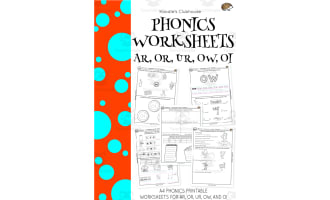
AR Phonics Worksheets | R-Controlled Vowel AR | Differentiated | SOR – 57 Fully Differentiated Phonics Resources
Fifty-seven worksheets teaching the AR digraph, suitable for all abilities in the class.
These resources work for young learners and older pupils with special educational needs. The systematic approach suits all children, including those children suspected of being dyslexic or those requiring explicit, structured teaching. Suitable for intervention work.
What's included
Each worksheet is differentiated at two or three levels. The teaching sequence moves from phonemic awareness through to reading comprehension. Reading passages use controlled vocabulary—a small core of AR words repeated to build fluency without overwhelming the learner. Layout is kept simple to reduce cognitive load.
The teaching sequence
The worksheets cover the full learning arc: phonemic awareness work, writing practice, nine different word-level activities, and three reading passages at three difficulty levels with comprehension exercises.
Activities include spelling tasks, letter ordering, read-and-match exercises, rhyming work, differentiated word searches, hunt-the-AR activities, and word fluency practice.
Design features
Instructions are clear. Layout is uncluttered. Words are double-spaced to support tracking. The structure is fully systematic—each worksheet builds on what came before.
How it works
Word-level activities use a broad range of AR words to establish pattern recognition. Reading passages, however, draw from a much smaller set. This vocabulary control means children can develop reading fluency without encountering too many unfamiliar words at once. They learn to blend widely, but read from a narrower stock until fluency is secure.
Using the resource
Match worksheet difficulty to the pupil's current reading ability, not their age. Some children will move through easier levels quickly. Others need longer at each stage. Both paths are appropriate. The aim is secure understanding before moving forward.
This is a complete teaching sequence in one resource. Fifty-seven worksheets. Fully differentiated. Systematic phonics teaching from phonemic awareness through to reading comprehension. Print and teach.
Related resources
More resources teachers may find useful
24 related resources were found using this product's title, contributor, categories and tags.


In the classroom
Teaching tips & learning objectives

Learning objectives
- Hear and identify the AR sound in spoken words
- Spell and read words with the AR pattern
- Read a decodable passage and answer questions about it

Teaching tips
- Assign each level by the student's current reading stage rather than age, as the file's introduction recommends.

Skills covered
- Letter formation — writing AR and AR words on guided practice pages

No reviews yet
Downloaded this resource? Tell other teachers how it went.
Curriculum
Standards, concepts & topics
Standards
 Standards
- CCSS.RF.3 — Know and apply grade-level phonics and word analysis skills in decoding words.
- CCSS.RF.1.3.b — Decode regularly spelled one-syllable words.
- CCSS.RF.1.3.g — Recognize and read grade-appropriate irregularly spelled words.
Core concepts
 Core concepts
- R-controlled vowels
- AR sound
- Phonemic awareness
- Decodable text
 Topics
Explore more
Categories this resource belongs to
Explore related searches
More to explore
You may also like