Flexible Thinking Worksheets for Adapting to Unexpected Changes


Life Skills, Special Resources, Social Emotional Learning (SEL), Social Skills, Special Education Needs (SEN), Speech Therapy, STEM, Resources for Teachers, Classroom Management, Community Building
Worksheets & Printables, Workbooks, Worksheets, Word Searches, Coloring Pages, Teacher Tools, Quizzes and Tests, Quizzes, Tests


About This Product
Are you sick of experiencing meltdowns because of minor schedule changes, cancelling recess, or having a substitute teacher? Do your students experience rigidity in their thinking and have issues handling unexpected events? This is the resource that you have been looking for.
Help your students develop the essential life skill of cognitive flexibility with this 42-page evidence-based workbook and Teacher's Guide that will provide support for rigid thinkers in grades 3-6 to successfully deal with unexpected changes and disappointments within their schedules without experiencing a meltdown.
This resource is based on the principles of Cognitive Behavioral Therapy (CBT) and provides help for helping students manage their behaviors; however, it is more than providing behaviour management as it is designed to provide support to help students understand their "prediction brain," change their "sticky thoughts," and develop a "Plan B" mindset helping students turn crisis situations into opportunities to demonstrate growth and resilience.
What is inside (42 providing all pages):
Part I: The Theory (for Parents & Educators): Simple, clear and easy to understand concepts of “why” an individual has a rigid way of thinking. Includes information about the neurobiology of an amygdala hijack, anatomy of disappointment, and the principles behind “Predictive Scenario Mapping.” Also, two examples with actual case studies.
Part II: Student Workbook (10 Actionable Worksheets): Fun, appropriate-to-age level worksheets that have examples kids deal with on a daily basis. These worksheets cover:
Identifying “Glitches” vs. Feelings;
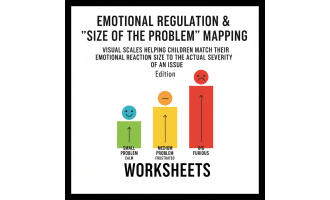
Measuring Problem Size vs. Reaction Size;
Transforming “Sticky” Thought to “Stretchy” Thought;
Creating “Plan B” Blueprints for canceled events;
Being Patient; (i.e. waiting for something);
The Substitute Teacher Protocol;
Compromise and Problem Solving in Social Situations;
Understanding what it means for the body to be in an “alarmless” state (interoception);
Recovering after a meltdown (rebooting your computer).
Part III: Visuals & Educator Resources: 3 Very Powerful Visual Anchors: “The Plan B Transition Flow Chart”, “The Disappointment Thermometer”, and “Rigid vs. Flexible Self TalK Mind Map” (i.e. can be put on the wall in the classroom as a poster or desk reference).
Comprehensive Answer Key & Rubric: Contains detailed instructions for educators on how-to look-for, target answers, and prompts that guide students into providing better-than-expected responses.
Educator Guide to Implementation: Step-by-Step process for educators on how to use this resource in a proactive way; how to providescaffolding for severe rigidness, and create co-regulating classroom environments.
Teachers, counselors, psychologists, social workers and parents wanting to provide their children with real life solutions to assist them with ADHD, Autism (ASD), anxiety issues and difficulties with Executive Functioning will find this tool helpful in building the necessary mental elasticity that children need in these uncertain times.
Keywords: Flexible Thought, Cognitive Flexibility, Emotional Regulation, Executive Functioning, Social-Emotional Learning (SEL), Coping Skills, Rigid Thought, Meltdowns, Cognitive Behavioural Therapy for Children, ADHD Support, Autism Support, Special Education Support, School Counsellor Support. Scenario Worksheets, Problem Solving Worksheets will be included for children in the grades 3, 4, 5, 6.
Why Schools and Parents Love It:
Evidence Based & Effective: Instead of just relying on behavior sheets, the program uses Cognitive Behavioral Therapy techniques to change how the brain responds to stress and disappointment.
Complete & Turn-Key: Not just a worksheet set! Included are implementation guides, answer sheets and visual aids to provide parents and educators all they need to begin using the program.
Life Skill Development: Covers common, highly stressful situations (substitute teacher, canceled plans, losing a game) to give children real life solutions to use in the real world.
Empowerment: Teaches children about their own brains and feelings (interoception) so they can control their emotions and have a means to communicate their needs or requests instead of just demanding obedience.
Less Meltdowns & Disruptive Behavior: Teaching coping skills in a calm environment helps to prevent meltdowns and disruptive behavior, leading to calmer households and classrooms.
Student Target Group:
Based on the content and complexity of the activities/activities in the document, students aged 3rd to 6th grade (approximately 8-12 years) are the priority audience for these resource/ar, as the ages are quoted many times throughout the document).
Individuals with special needs: This resources was created specifically for the following populations:
A. Autism Spectrum Disorder
B. ADHD
C. Anxiety Disorders
D. Executive Functioning Deficits
E. For all children with "rigid thoughts" who have difficulty managing their feelings.
These materials are to be used as a Tier 2 or 3 intervention tool for school personnel who work with the students, as counselors and special education teachers, as well as an initial resource to parents supporting their child(ren).
Copyright of this book :
The copyright of this book is the property of Syed Hammad Rizvi. This book may only be used personally and in a single classroom. The user of this booklet may not make any changes to this book, sell it to others, or share it on the internet. There are no exceptions to these restrictions.
If you would like to share this book with your coworkers, you must purchase separate licenses from Teachsimple. Thank you for your consideration of these terms of use.
Resource Tags
0 Reviews
Check out these other great products