Reading Comprehension Fiction Set 3 Sample: Funland (PPT)




- Grades
- Grades 4–5, Elementary, Homeschool Resources
- Pages
- 28
- File type
- Microsoft PowerPoint
- Answer key
- Included


- Subject
- ELA, Reading, Writing, Common Core, Reading Comprehension, Creative Writing, ESL, Language Development, Vocabulary, Literature
- Topic
- elementary, reading
- Resource types
- Teacher Tools, Presentations, Assessments, Tests, Quizzes and Tests, Activities
- Answer key
- Included
About this resource
What's inside this resource
Reading Comprehension Passages Fiction Set 3 Sample
Overview
No prep reading comprehension lessons, with enjoyable stories and topics.
Each lesson has a blend of post-reading activities. Mixed questions to check overall understanding. Vocabulary activities, plus a writing section.
Lessons also contain a bonus extension exercise at the end. Some you may like, some you may not, either way they are there if you wish to use them. Full answer keys are provided.
Passage Included
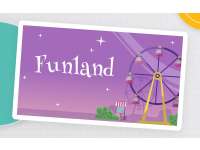
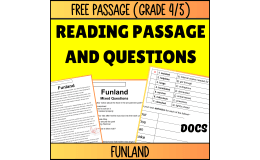
5.Funland: Not such a fun day at Funland for the author in this story.
PPT Version
This is the PPT editable and fillable (when not in presentation mode) version. This download is available in GOOGLE Docs, GOOGLE Forms, GOOGLE Slides. PDF, PPT, WORD.
FULL CATALOG OF DOWNLOAD LINKS HERE
Grade 4/5 Links
Fiction Set 1 - Animals
Fiction Set 2 - Family
Google Slides
PPT
Word
Guided Reading Materials
Fiction Set 3 - Friends
Google Docs
Google Forms
Google Slides
PPT
Word
Guided Reading Materials
Fiction Set 4 - School
Google Docs
Google Forms
Google Slides
PPT
Word
Guided Reading Materials
Fiction Set 5 - Sports
Google Docs
Google Forms
Google Slides
PPT
Word
Guided Reading Materials
Nonfiction Set 1 - Birds
Google Docs
Google Forms
Google Slides
PPT
Word
Guided Reading Materials
Nonfiction Set 2 - Insects
Google Docs
Google Forms
Google Slides
PPT
Word
Guided Reading Materials
Nonfiction Set 3 - Mammals
Google Docs
Google Forms
Google Slides
PPT
Word
Guided Reading Materials
Nonfiction Set 4 - Nature
Google Docs
Google Forms
Google Slides
PPT
Word
Guided Reading Materials
Nonfiction Set 5 - Sea Animals
Google Docs
Google Forms
Google Slides
PPT
Word
Guided Reading Materials
Reading Passages Overview
Each passage is especially written for Grade 4-5 students, including key vocabulary required for this age group.
Topics are varied and are accompanied by colorful graphics. Topics are meant to educate, yet entertain the modern student.
These passages are perfect for the modern classroom. Whereas textbooks can become outdated in no time, any changes to technology or the world will result in updates to this product.
Mixed Questions
The mixed questions section of each lesson includes a variation of five comprehension, vocabulary and math questions. In addition, key reading strategies are frequently covered including cause & effect, summarizing, compare & contrast and making conclusions.
Two or three of the questions will be MCQs and other questions will require a written response of some kind.
Full answers and example responses appear at the end of the lesson.
Spelling & Vocab
Each reading passage contains a variety of words and phrases designed for Grade 4-5 students. Spelling and vocab activities provide the opportunity to build fluency with these words.
As it can become quite mundane doing the same activities over and over, each lesson in a set will contain a different spelling and vocab activity. Activities include: spelling games, sentence match-ups, mixed-up text and decoding words from the lesson.
Writing Prompts
Writing prompts are designed to continue the theme or lessons learned in the story.
Students are persuaded to write in a variety of ways and each prompt includes several cues to help.
As with the spelling/vocab section, writing prompts will vary. This includes research pieces, reading responses, poetry and creative writing prompts.
Full Answer Keys
Full answer keys and sample responses are provided so no matter how busy you are, you know you're covered!
Mixed question answers provide evidence from the text, math questions contain the relevant workings.
Answers are designed for use by the teacher, but also suitable as a handout to the student.
Just for Fun
Each lesson will have a bonus extension exercise. This is something fun to extend the lesson with. You can find these at the end of each lesson, titled Just for Fun.
Just for Funs are optional. Some you may like, some you may not. Either way, they are there to do with as you wish.
For similar downloads and other frees, do check out Cored Group on TeachSimple.
Related resources
More resources teachers may find useful
24 related resources were found using this product's title, contributor, categories and tags.
In the classroom
Teaching tips & learning objectives

Learning objectives
Answer literal comprehension questions from a fiction passage, identifying which ride came after a named event and how fast a ride travelled
Draw an inference from described behaviour - reading a red face, clenched teeth and an inability to sit still as anger
Predict what a narrator might learn from an experience and support the prediction from the events described
Match story vocabulary to definitions, working with insisted, helpless, lungs, humiliated, survive, ridiculous and clenched
Write an original definition for a familiar word without a list of options to choose from
Identify the plot, main character, setting, problem and solution of a narrative in written form

Teaching tips
The deck is sectioned by divider slides - Mixed Questions, Vocabulary, Writing, Just for Fun, Answers - so it can be stopped after any one of them and picked up in the next lesson
Question 6 asks what the narrator will learn, and the answers slide offers five acceptable responses rather than one; treat it as a discussion prompt and accept any lesson the student can tie to an event in the story
The vocabulary matching slide draws its seven words straight from the passage, so it works better after the story has been read than as pre-teaching
The story-element section supplies only headings and blank space, which suits either a written response in books or a talk-through with the deck projected
The file is a PowerPoint, so the passage or a question can be edited before the lesson if a class needs a shorter version

Skills covered
Literal comprehension - three multiple-choice items send students back to a stated detail, from the price of the fries to the speed of the Blast to Mars ride.
Inference from described behaviour - question 4 asks how the friends knew the narrator was angry, which the story answers only through physical description rather than by naming the feeling.
Prediction with justification - question 6 asks what the narrator will learn from the day, and the answers slide models five different defensible responses.
Vocabulary matching and definition writing - seven story words are matched to meanings, then five more are defined by the student with no options supplied.
Identifying story elements - the Writing section asks for plot, main character, setting, problem and solution in the student's own words.
Free word association - fourteen words from the passage are given as prompts for whatever they bring to mind, which loosens the vocabulary out of its story context.
Good to know
Questions teachers ask about this resource
How is the deck sequenced?
In five labelled sections behind divider slides. The story runs first, then Mixed Questions introduces the six comprehension items, Vocabulary covers matching and definition-writing, Writing works the story elements, and Just for Fun closes with word association before the answers slide.
How is the open final question answered?
With a range rather than one response. The answers slide lists five lessons the narrator might take from the day - not to go to amusement parks again, to limit the number of rides, to bring food rather than buy it, to be careful with the salt shaker, and to keep glasses safe on a boat.
What does the word-association slide ask for?
Whatever comes to mind for each of fourteen prompts - fun, summer, amusement, relaxing, sick, shake, ruin, coaster, queue, lungs, ridiculous, suggest, clench and humiliate - which reuses the story's own vocabulary in a freer form with no right answer.

No reviews yet
Downloaded this resource? Tell other teachers how it went.
Resource details
Concepts & topics
Core concepts
 Core concepts
Reading comprehension
Story elements
Vocabulary in context
Making inferences
Fiction passage
 Topics
Explore more
Categories this resource belongs to
Explore related searches
More to explore
You may also like