Romeo and Juliet 1996 – Complete Movie Guide



- Grades
- Grades 8–10
- Pages
- 4
- File type
- Answer key
- Included


- Subject
- ELA, Literature
- Topic
- Romeo and Juliet, 1996 film
- Resource types
- Worksheets
- Answer key
- Included
Product description
From the author
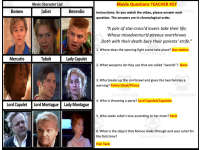
Guide viewing of Baz Luhrmann’s Romeo and Juliet (1996) with 21 questions, a nine-character photo reference and an excerpt from the prologue. The four-page PDF includes two student pages and two teacher-key pages.
Twenty questions focus on film details; the final prompt asks students to consider the characters’ choices, with answers allowed to vary. Arrange film access separately.
Thumbnail Clipart Credit: LE Designs
Related resources
More resources teachers may find useful
24 related resources were found using this product's title, contributor, categories and tags.


In the classroom
Teaching tips & learning objectives

Learning objectives
Track the plot of Baz Luhrmann's 1996 Romeo and Juliet film in chronological sequence while viewing
Identify how the film modernizes specific details from Shakespeare's original play, such as swords portrayed as guns and an Elizabethan setting made contemporary
Form and support a personal opinion about the characters' choices at the story's climax

Teaching tips
Pause the film at natural break points, such as after the party scene or after Tybalt's death, so students can complete the corresponding block of questions without falling behind
Have students compare their answer to question 21 with a partner's before a class discussion, since that prompt has no single correct answer
Use the teacher key to check chronological blocks of answers during a pause in the film, rather than waiting until the guide is fully complete

Skills covered
Sequential plot comprehension — students answer 21 questions in the same chronological order the events occur in the film.
Adaptation details — students identify the film’s setting and props, including the gas-station brawl and weapons called swords.
Opinion writing with justification — students respond to a short-answer prompt evaluating Romeo and Juliet's choices and supporting their own view.
Good to know
Questions teachers ask about this resource
Does the guide ask for students' own opinions, or only for facts from the film?
Both — 20 questions ask for specific plot details, and the final question asks for the student's own opinion on whether Romeo and Juliet had other options besides suicide.

No reviews yet
Downloaded this resource? Tell other teachers how it went.
Resource details
Concepts & topics
Core concepts
 Core concepts
Film adaptation vs. original text
Plot sequencing
Character motivation
Opinion/short response writing
 Topics
Explore more
Categories this resource belongs to
Explore related searches
More to explore
You may also like