



3,903 products added recently
Page 93 - 2nd Grade Activities
Boost your second graders' enthusiasm with activities that combine fun and education. These resources cover various subjects and promote critical thinking and collaboration. Use them to enrich your lessons and keep students actively involved in their learning journey.

 Show filters

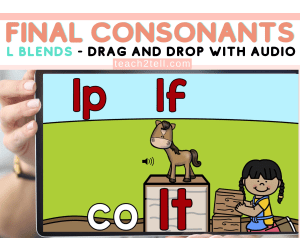
Final Consonants L Ending Blends | Science of Reading (SoR) Aligned
ELA, Language Development, Phonics, Kindergarten, Grade 1, 2, 3, Activities, Games
Looking for an easy, no-prep way to help your students master those tricky final L blends like lb, ld, lt, lm, lp, lk, and lf ? This Science of Reading-aligned Boom Deck is just what you need to build spelling fluency through structured, engaging phonics practice. This set of 32 self-checking Boom Cards gives students meaningful hands-on experience identifying, spelling, and reading words with L ending blends—all in a fun, interactive format that reinforces phoneme-grapheme mapping. What’s Included: ✔️ 32 interactive Boom Cards ✔️ Final L blends: lb, ld, lt, lm, lp, lk, lf ✔️ Visual supports for each word (kid-friendly images) ✔️ Automatic audio playback for word pronunciation ✔️ Drag-and-drop spelling tiles ✔️ Clickable sound icons for repeated listening Students listen to a word, look at the image, then drag the correct L blend to complete the spelling. The first card includes clear instructions, and the last card marks the end of the activity—great for independent work! Why Teachers Love It: Aligned to Science of Reading research and methods Helps develop orthographic mapping and solid spelling habits Perfect for independent work, small group practice , or intervention Compatible with Boom Learning , Google Classroom, and Seesaw No prep required —just assign and let the learning begin! Great for early readers in 1st or 2nd grade or for students who need targeted support with final consonant blends. What You’ll Get: A PDF with a direct link to the Boom Cards deck 32 interactive cards with built-in audio Setup instructions for Boom Learning Support your students’ phonics growth with this fun and focused SoR-aligned resource. They'll love the interactivity, and you'll love how easy it is to implement!
Author Teach2Tell
Rating
Tags L Blends, Ending Blends, Final Blends, Blends, Final Consonant Blends, Ending Sound Blends, Final Blends Word Work, Phoneme-Grapheme Mapping, Orthographic Mapping, Phonics Word Building
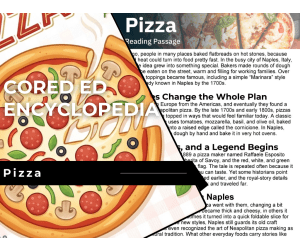
Pizza Reading Comprehension Passage - Cored Ed Encyclopedia
ELA, Language Development, Resources for Teachers, Reading Comprehension, Reading, Pre-Reading, Writing, Strategies, History, Social Studies, Grade 2, 3, 4, 5, Worksheets & Printables, Worksheets, Teacher Tools, Centers, Activities, Writing Prompts, Assessments, Tests, Quizzes and Tests, Quizzes
This pizza reading comprehension contains the following: Visualize on the Cover (Teacher Read Aloud Script) Start your lesson by taking a few moments to visualize the topic and share thoughts or feelings about it. Pre-Reading Trivia Students will write down one thing they already know about the subject and then read five more facts and discuss. These facts are fun, and the students will enjoy learning about the subject before reading more. Reading Passage The text is a high-interest reading passage with set paragraphs, roughly three to four paragraphs long. It contains a variety of themes about the topic, anywhere from history to technology. The passage is between 250 and 350 words in length. Mixed Questions The first question page contains four multiple-choice questions, each with a choice of four answers, and three written response questions that require a sentence or two from the student. Vocabulary Questions Practice seven key words from the text in this section across two activities. First section is scrambled words where students will unscramble three words given a clue for each. The second section is a word to meaning matching activity. Creative Writing In this question, the student will be required to write a five to eight sentence paragraph on a question related to the topic. Extension Activities This page is optional for fast finishers or to take home. There are several activities, each one requiring a different skill. Do some, do none, do all, completely optional - but you will feel reassured knowing every possibility is planned for. Includes summary writting question. Answer Key There are answers for the multiple-choice questions, written response questions have sample answers, vocabulary answers and if there is a summary question then a sample summary will be provided as well. FULL CATALOG OF DOWNLOAD LINKS AND ENCYCLOPEDIA INDEX HERE Lesson Snapshot Title: Pizza Genre: Nonfiction (informational text) Subject: Social Studies (culture/history of food) + Reading Informational Text Primary Topic: How pizza began in Naples and spread Estimated Guided Reading Level (A–Z): Q What This Lesson Teaches Best How pizza grew from simple flatbreads into popular street food in Naples, Italy , including a “Marinara” style known by the 1700s. How tomatoes arriving from the Americas changed pizza toppings, leading to styles that look familiar today. Key details of a classic Margherita-style pizza and a text-defined term: the raised crust edge called the cornicione . How a famous 1889 story about Queen Margherita is presented as a legend with details that are debated by historians. How foods change as people move: pizza “traveled,” becoming thick and cheesy in some places and thin, crisp, or foldable in others—while Naples guards its craft, recognized by UNESCO . Learning Goals Students will explain how the passage describes pizza starting from flatbreads and becoming special in Naples. Students will describe how tomatoes changed pizza in Naples using details from the text. Students will identify the toppings listed for a classic Margherita-style pizza in the passage. Students will explain what the passage says is debated about the Queen Margherita story. Students will describe how the passage says pizza changed as it traveled to new countries. Key Vocabulary From the Text Neapolitan — from Naples; connected to pizza made there. cornicione — the raised edge of the crust. Marinara — a simple pizza style known in Naples long ago. historians — people who study and write about the past. UNESCO — a group that recognizes important cultural traditions. Cored Ed Encyclopedia Overview The Cored Ed Encyclopedia is a weekly series of lessons that you can pick up and use right away. These short readings fit into whatever time you have available. Each one includes a warm-up, a reading, and a set of questions, but it’s flexible — you can do just the reading, the full lesson, or skip the writing section if you need to. Each lesson focuses on a single topic so students don’t get lost. The writing is clear but never childish, making it perfect for grades two through five. Topics range from animals and science to history, inventions, and everyday things. No matter the level of the student, everyone should take away at least one new idea or fact from each lesson. The materials are easy to print, easy to explain, and require no setup. They work well for whole-class teaching, partner work, or independent study.
Author Cored Education
Rating
Tags Vocabulary, Spelling, Reading Comprehension, Reading Passages, Reading, Creative Writing, Reading Strategies, Writing Prompts, Pizza, History

Listen Buddy Interactive Read-Aloud Activities
ELA, Reading, Reading Comprehension, Language Development, Vocabulary, Grade 2, 3, 4, Read Alouds, Activities
This picture book companion is a complete supplemental resource for the book Listen Buddy by Helen Lester. With 28 print-and-go reading activities to choose from, this resource is ideal for customizing learning to your student's specific needs and academic abilities. Students will investigate illustrations, identify story elements, determine the theme, analyze characters, compare & contrast, make predictions, inferences, & connections, answer questions that require them to think beyond the text, and much more! Students will love the engaging and fun activities, and you will appreciate the time saved hunting for high-level resources to teach reading concepts that students frequently struggle with. The activities provided are designed to enable students to apply higher-level thinking skills, encourage them to provide text evidence to support their thinking, and challenge them to express their own thoughts and/or perspectives. ⭐️This Resource Includes:⭐️ Making Predictions: Before reading the book, students will make predictions about the text. Story Elements: Students fill in the boxes with words & pictures to represent the story elements. Sequencing: Students will retell & illustrate the important parts of the story. Recalling events in Chronological Order: Students describe and illustrate four major events in the story in chronological order. Summary: Students complete the Somebody, Wanted, Because, But, So graphic organizer and write a summary of the story. Story Event Sort: Students will describe a scene or event from the story that fits into each of the categories & explain how the event made them feel & how it relates to the category. Making Connections: Students make connections to an event from the story. Problem & Solution: Students will answer questions related to the problem & solution in the story. Making Inferences: Students use clues & schema to make inferences while reading the story. Character Inside & Out: Students include details from the story to describe what the character says, thinks, does, and feels. Character Feelings: Students describe how the character's feelings change throughout the story & give examples of the events that cause them to feel the way they do. Character Development: Students select character traits that best describe Uncle Jim at different times throughout the story and give examples from the book to support the traits they chose. Character Change: Students will explain how the character changed from the beginning to the end of the story and describe the events that caused the change to happen. Character Acrostic Poem: Students will write an acrostic poem that describes Buddy. Sketch a Scene From the Story: Students will draw a scene from the story & explain why it's important. Setting Influences the Plot: Students will draw a scene from the story that takes place in one of the settings and write about what happened there and why it was important to the plot. Setting the Scene: Students identify three different settings in the story and explain how they know the setting changed. Buddy Didn’t Listen: Students draw and label a picture of what Buddy heard or did when his parents asked him to do something. Be a Better Listener: Students read the text from the story and draw a picture of what Buddy was doing when someone was speaking to him. Then explain what Buddy should have done to be a better listener. Author's Message: Students describe four important events from the story and put them in chronological order. Then, answer the questions about the author's message. Theme: Students answer the questions to determine which theme best fits the story and provide text evidence to support their choice. 3-2-1: Students will list three mistakes that Buddy makes because he didn’t listen, explain two reasons that Buddy doesn’t hear what he is being asked to do, and come up with one word that describes Buddy the best and explain why. Before & After: Students describe and illustrate Buddy’s character before he met Scruffy Varmint and after. Thinking About the Text: Students answer the questions about the story & include examples from the text to support their answers. Pick a Path: Students will pay close attention to the illustrations on pages 16-17 and draw their own version of the scene, adding details that show one path is safe and details that show the other path is dangerous. Good Listeners: Students will list at least 4 important things that good listeners should do and four things that a good listener shouldn’t do. Book Review: Students will rate and review the book. Compare & Contrast: Students will compare the books Listen Buddy and Hooway for Wodney Wat. This resource is for extension read-aloud activities only. The book is not included.
Author Creatively Gifted
Tags Fountas And Pinnell, Second Grade, Elementary Ela, Reading Comprehension, Character Traits, Interactive Read-aloud, Picture Book, Read-aloud Activities, Helen Lester, Listen Buddy
Ogre Activity
Social Studies, History, History: Europe, Grade 3, 4, 5, 6, 7, 8, Activities
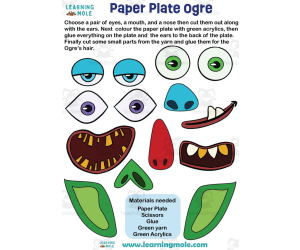
Activity Introduction An amazing activity designed for the students to learn more about mythological creatures in different cultures. Ogres Mythical Creatures What do you know about these amazing mythical creatures? What are their strengthens and weaknesses? In which culture did we found them? Do they do good to humans and their environment? Are there any other mythical creatures that share their characteristics? If yes, tell us more about them. Do you like reading about mythology? What is your favorite mythical creature? Ogre Activity The activity is perfect for encouraging the creativity skills for the students, while learning more about this fantastic mythical creature. Ogres This friendly designed worksheet is suitable for students at school, homeschooling, and as a group activity. Instructions Choose a pair of eyes, a mouth, and a nose then cut them out along with the ears. Next color the paper plate with green acrylics, then glue everything on the plate and the ears to the back of the plate. Finally cut some small parts from the yarn and glue them for the ogre's hair. Materials Needed Paper plate Scissors Glue Green yarn Green acrylics Format Available in a PDF format.
Author Educational Voice
Tags Ogre, Ogres, Ogre Activity, Ogres Activity, Activities For Kids, Mythical Creature, Mythology

Art Speaking Game
Creative Arts, Art, ELA, Language Development, ESL, Preschool, Grade 1, 2, 3, Games, Activities
Art Speaking Game is an engaging resource for building dialogue and speaking skills. This colorful game board can be printed for students to use in small groups or whole class activities. Students take turns moving game pieces while responding to prompts that strengthen skills like explaining, evaluating, and public speaking. Educators can facilitate rich class discussions as learners express opinions on art concepts. Use this versatile resource to support language learners, spark conversation, or make art class interactive. Implement during indoor recess for a screen-free activity , or try it in reading groups to integrate visual arts. With open-ended questions and vibrant visuals, the Art Speaking Game gives students in grades K-3 a fun way to develop speaking and listening abilities.
Author Better Teaching Resources
Tags Art, Crafts, Speaking Game, ESL Activity, Dice Game, Board Game, Small Group, Literacy, Language Skills, Dialogue
Spider Activity
Science, Life Sciences, Biology, Animals, Grade 3, 4, 5, 6, 7, 8, Activities
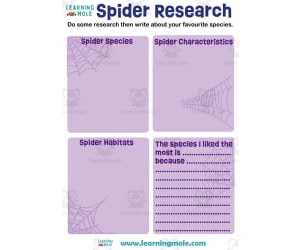
Activity Introduction An amazing activity designed for the students to learn more about famous places in different countries. The Spider Do you like animals? what is your favorite one? Do you own a pet? If yes, tell us more about it, like what its name? And what do you like most about it? What are the animal kingdoms? Can you write down the characteristics of each animal class like mammals, birds, reptiles, amphibian, fish and mollusks. Do you know that some animals can sing, can you name any of them? What is the largest and the smallest mammal in the world? What is the largest and the smallest bird in the world? What is the largest and the smallest fish in the world? Spider Activity The activity is perfect for encouraging the researching skills for the students, while learning more about this fantastic place. Spider This friendly designed worksheet is suitable for students at school, homeschooling, and as a group activity. Instructions Do some research then write about your favorite species. Format Available in a PDF format.
Author Educational Voice
Tags Spider Activity, Spider, Spiders, Spiders Facts, Spiders Facts For Kids, Animals, Animals Facts, Animal, Animals Facts For Kids

Business Profit Activity
Life Studies, Social Studies, Business, Finance, Grade 3, 4, 5, 6, 7, 8, 9, 10, 11, 12, Activities
Activity Introduction An amazing activity designed for the students to learn more about STEM subjects. Business Profit Do you like to learn more about financial matters? what is your favorite subject? Do you like to be an entrepreneur someday? If yes, who is your favourite entrepreneur? What your business will be about? Have you ever tried to calculate your monthly spendings? If yes, tell us more about it. Have you ever seen a grownup using a credit card to making a money transaction online? If yes, do you think it is safe? Mathematics is a marvelous subject. Let' sharpen our brains and solve some equations in our daily life. What are the different types of bank cards? Can you tell what is the job of every type? Using credit cards online is a little bit tricky. What do you think? Have you ever read about investments? If yes, tell us more about it. Business Profit Activity The activity is perfect for encouraging the researching skills for the students, while learning more about this topic. Business Profit This friendly designed worksheet is suitable for students at school, homeschooling, and as a group activity. Instructions Imagine you owned a burger truck, use the following information to figure out your business profit. Format Available in a PDF format.
Author Educational Voice
Tags Business Profit Activity, Business Profit, Business Profit Facts, Business Profit Facts For Kids, Finance, Financial Literacy, Financial Literacy Facts, Financial Literacy Facts For Kids

State of Being Verbs Activity
Grammar, Language Development, ELA, Grade 2, 3, 4, 5, 6, 7, 8, 9, 10, Activities
Activity Introduction An amazing activity designed for the students to learn more about languages. State of Being Verbs Do you enjoy learning English? Which topic do you like the most Grammar, writing, reading, spelling, comprehension, vocabulary or phonics? Have you ever tried to learn any other language? If yes, tell us more about it? How many languages are spoken in the world? What do you think the most interesting one? Can you say Hello in Spanish, French or even Japanese? You can give it a try! Can you name the countries that speaks Portuguese? How many countries speaks Dutch? What is the less spoken language in the whole world? Would you like to learn a new language someday? If yes, which language will you choose? State of Being Verbs Activity The activity is perfect for encouraging the researching skills for the students, while learning more about world languages. State of Being Verbs This friendly designed worksheet is suitable for students at school, homeschooling, and as a group activity. Instructions Circle the action verbs and underline the state of being verbs from the following. The first one is an example. Format Available in a PDF format.
Author Educational Voice
Tags State Of Being Verbs Activity, State Of Being Verbs, Verbs Activity, State Of Being Verbs Facts, State Of Being Verbs Facts For Kids, Verbs Facts, Verb Facts, Verbs , Verbs Facts For Kids, Grammar
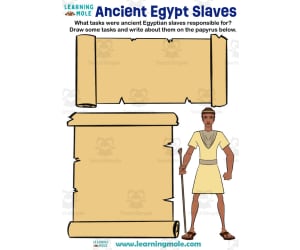
Ancient Egypt Slaves Activity
Social Studies, History, History: African, History: Ancient, History: World, Grade 3, 4, 5, 6, 7, 8, 9, 10, Activities
Activity Introduction An amazing activity designed for the students to learn more about history. Ancient Egypt Slaves Do you like history? Which topic do you really enjoy about history? Have you ever read an interesting facts about the Vikings? If yes, can you mention them? What do you like most about the Victorian era? Can you name all the Tudors? Have you ever wondered how people used to live in ancient Japan and ancient China? Do you know any interesting facts about ancient Egyptians and the Pharaohs? Have you ever visited South America? What do you know about Incas and Aztecs? Celtic culture was really one of a kind, can you name any of the places that Celts used to live in? Imagine yourself living during the ancient Roman empire, how your life will look like? Ancient Greece was an amazing place to live in. What do you know about ancient Greek life? Ancient Egypt Slaves Activity The activity is perfect for encouraging the researching skills for the students, while learning more about history. Ancient Egypt Slaves This friendly designed worksheet is suitable for students at school, homeschooling, and as a group activity. Instructions What tasks were ancient Egyptian slaves responsible for? Draw some tasks and write about them on the papyrus below. Format Available in a PDF format.
Author Educational Voice
Tags Ancient Egypt Slaves Activity, Ancient Egypt Slaves, Ancient Egypt Slaves Facts , Ancient Egypt Slaves Facts For Kids, Ancient Egypt, Ancient Egypt Activity, Ancient Egypt Facts, Ancient Egypt Facts For Kids

Presidential Birthday Statisticians: Math Performance Task (Grades 3-5)
Math, Statistics, Grade 3, 4, 5, Activities
Introducing Presidential Birthday Statisticians, an engaging math project where students take on the role of a statistician commissioned to analyze data about U.S. presidents’ birthdays and ages when they took office. This 17-page resource guides students through collecting, organizing, and interpreting data including calculating percentages, means, medians, modes, and ranges. After crunching the numbers, students showcase their findings by creating an informational poster to present to an important government official as part of a televised special ceremony. This cross-curricular activity integrates math, social studies, research skills, and art into one cohesive open-ended performance task. Presidential Birthday Statisticians's real-world connection gets students excited about math. Use it independently, in small groups, or as an assessment .
Author Beyond Traditional Math
Tags President, Birthday, Math, Project, Statistics

Finger Butterfly Activity
Science, Life Sciences, Biology, Animals, Grade 2, 3, 4, 5, 6, 7, 8, Activities
Activity Introduction An amazing activity designed for the students to learn more about animals in different countries. Finger Butterfly Do you like animals? what is your favorite one? Do you own a pet? If yes, tell us more about it, like what its name? And what do you like most about it? What are the animal kingdoms? Can you write down the characteristics of each animal class like mammals, birds, reptiles, amphibian, fish and mollusks. Do you know that some animals can sing, can you name any of them? What is the largest and the smallest mammal in the world? What is the largest and the smallest bird in the world? What is the largest and the smallest fish in the world? Finger Butterfly Activity The activity is perfect for encouraging the researching skills for the students, while learning more about this fantastic place. Finger Butterfly This friendly designed worksheet is suitable for students at school, homeschooling, and as a group activity. Instructions Cut the butterfly out, then colour it and decorate it as you wish. Fold along the dotted line. Cut two pieces of the pipe cleaner and wrap them around your finger. Take them off, then glue them to the butterfly's body. Wear the butterfly on your fingers and enjoy. Materials needed Colours Scissors Beads/sequins Pipe cleaner Glue Format Available in a PDF format.
Author Educational Voice
Tags Finger Butterfly Activity, Butterfly, Butterflies, Butterfly Facts, Butterfly Facts For Kids, Butterflies Facts, Butterflies Facts For Kids

Geography Word Search - Set 2: 1 Page Sample (PDF)
ELA, Language Development, Vocabulary, Spelling, ESL, Resources for Teachers, Geography, Social Studies, Grade 2, 3, 4, 5, Worksheets & Printables, Worksheets, Teacher Tools, Centers, Activities, Word Searches
THIS IS A ONE PAGE SAMPLE OF A SIX PAGE WORD SEARCH DOWNLOAD FULL SIX PAGE WORD SEARCH DOWNLOAD INFORMATION This wordsearch series is designed for students in grades 2–5. Each set of wordsearches is built around a clear vocabulary theme, helping students develop word recognition, improve spelling, and boost topic-related understanding through engaging visual puzzles. Every wordsearch also includes a fun hidden shape for students to guess—adding an interactive twist to traditional vocabulary practice. These wordsearches are student-friendly, classroom-ready, and perfect for integrating into literacy warmups, seasonal units, fast-finisher tasks, or home learning extensions. Each puzzle reinforces themed vocabulary in a playful, structured format that keeps learners motivated. Geography Word Search Set 2 Word List 1. More Countries of the World Germany, Italy, Russia, South Africa, Argentina, Saudi Arabia, Thailand, Canada 2. More Famous Cities Los Angeles, Beijing, Moscow, Berlin, Dubai, Madrid, Buenos Aires, Seoul 3. More Famous Landmarks Machu Picchu, Big Ben, Leaning Tower, Christ the Redeemer, Stonehenge, Mount Rushmore, Petra, The Louvre 4. Bodies of Water Amazon River, Nile River, Mississippi River, Lake Superior, Mediterranean Sea, Arctic Ocean, Gulf of Mexico, Dead Sea 5. Climate and Weather Tropical, Desert, Polar, Humidity, Hurricane, Tornado, Drought, Monsoon 6. Geography Tools and Maps Globe, Map, Compass, Latitude, Longitude, Equator, Hemisphere, Legend PDF Version Other versions will appear here when available. Follow the store for the lastest on new products. How to Use These Wordsearches These wordsearches are ideal for: Morning work or early finisher bins Vocabulary centers or anchor activities Holiday or seasonal review lessons Independent literacy stations or take-home enrichment Each puzzle includes a themed word list and a shaped grid for students to complete. Word directions may vary (horizontal, vertical, diagonal), and answer keys are included for easy checking. Optional vocabulary challenges or writing tasks can be added to extend the learning experience. Whether you're reviewing key vocabulary, exploring a seasonal topic, or offering fun literacy practice, these wordsearches provide a flexible and engaging tool to support vocabulary growth in grades 2–5. More Geography Themed Products Geography Crosswords (Set 1) PDF Geography Crosswords (Set 2) PDF Geography Crosswords (Set 3) PDF Geography (Set 1) PDF Geography (Set 3) PDF FULL CATALOG OF DOWNLOAD LINKS HERE Themed Word Search Links Addition PDF Animals PDF Around the Home PDF Birthday PDF Candy PDF Christmas PDF Cinco de Mayo PDF Clothes PDF Colors PDF Days and Months PDF Division PDF Earth Day PDF Easter PDF Easy Word Searches PDF Fall PDF Father's Day PDF Food PDF Geography (Set 1) PDF Geography (Set 2) PDF Geography (Set 3) PDF Graduation PDF Health PDF History (Set 1) PDF History (Set 2) PDF History (Set 3) PDF Human Body PDF Kindness PDF Life Skills PDF Mother's Day PDF Multiplication PDF Science Word Searches (Set 1) PDF Science Word Searches (Set 2) PDF Science Word Searches (Set 3) PDF Shapes PDF Social Skills PDF Spring PDF Sports PDF St. Patrick's Day PDF Subtraction PDF Summer PDF Thanksgiving PDF Transport PDF Valentine's Day PDF Winter PDF Wordsearches in Depth Structure Each wordsearch is crafted around a focused sub-theme and includes a visual puzzle shaped like a related object (e.g., balloon, gift, snowman). Students complete each puzzle using the provided themed word list, strengthening both content knowledge and spelling skills in a highly engaging format. Each completed set includes: A shaped wordsearch puzzle with 10 vocabulary words A student instruction guide with search directions (horizontal, vertical, diagonal) An answer key for teacher support or student self-checking A Did You Know? fact connected to the theme for enrichment or discussion Themes Included The wordsearches cover a wide range of fun, age-appropriate themes, including: Seasons & Holidays (e.g., Halloween, Easter, Valentine’s Day) Math Concepts (e.g., Addition, Number Words) Everyday Topics (e.g., Animals, Weather, School) Special Units (e.g., Health, Earth Day, Sports, Kindness) Each topic is selected to reflect students’ real-life experiences and interests while reinforcing literacy skills and content understanding in a playful, visual way. For similar downloads and other frees, do check out Cored Group on TeachSimple.
Author Cored Education
Rating
Tags Vocabulary, Spelling, Geography, Countries Of The World, Famous Cities, Famous Landmarks, Bodies Of Water, Climate And Weather, Geography Word Searches, Word Searches

Summer Descriptive Writing Activities
ELA, Writing, Creative Writing, Grade 3, 4, Activities
Summer Descriptive Writing Activities The Summer Descriptive Writing Activities is a set of three activities aimed to engage your learners during the summer break. Specifically designed for Grade 3 and Grade 4 students, this resource focuses on enhancing their creative writing skills while aligning with Language Arts educational standards. Resource Breakdown: Worksheet 1: This introductory worksheet encourages learners to brainstorm adjectives that describe seven different summer-themed nouns. The worksheet is available in both color and black & white versions for adaptable use. Worksheet 2: Building upon Worksheet 1, this activity prompts students to construct comprehensive descriptive sentences using the previously brainstormed adjectives. Worksheet 3:: Here, students are instructed to craft a narrative in form of a postcard addressing a friend about their summertime adventures - an activity that not only cultivates storytelling ability but also captures the essence of summer. This teaching resource refines vocabulary, promotes stronger sentence formation and fosters creativity among young minds. It is versatile enough for both individual homework assignments or group work within classroom settings or homeschool environments alike. All activities are provided as an easily downloadable PDF file type, promptly delivering efficient instruction rooted specifically in Creative Writing elements of Language Arts fundamentals.. It's more than just tasks; these Summer Descriptive Writing Activities provide intriguing experiences supporting student's academic growth extensively even during 'idle' summer breaks! .
Author Quail Trail Products
Tags Descriptive Writing, Summer Activities, Adjectives, Creative Storytelling, Language Arts, Summer Descriptive Words

Reading Comprehension Passages Fiction Set 6 - Family (PDF)
ELA, Reading, Reading Comprehension, Common Core, Children’s Literature, Literature, Vocabulary, Language Development, Spelling, Writing, Grade 2, 3, Worksheets & Printables, Worksheets, Assessments, Teacher Tools, Tests, Quizzes and Tests, Writing Prompts, Centers, Activities
Reading Comprehension Passages Fiction Set 6 Overview Fascinating reading comprehension passages, each with an array of activities included. Stories are written for the modern classroom and topics are designed to promote enthusiasm from each student. Each lesson contains a mixed questions section to check understanding, a vocabulary or spelling activity to help remember key language introduced, and a writing exercise. Full answer keys are provided. For a more detailed overview, check the section under the links at the bottom of this description. Passages Include 1.Molly's Home Carnival: It looks like Molly will miss the carnival. Until... 2.Big Bro's Big Idea: Noah's big brother does his best to cheer him up. 3.Denny's Car Wash: Denny wants a new game, but does he get the money for it? 4.Tessa's Grandma: Emma misses her grandma, but Tessa has a great idea. 5.Tom's Canadian Mom: The most important person from Canada is...Tom's mom! 6.Big Brother Woes: Big Brother gets to do whatever he wants. It's just not fair! 7.Tell Us a Story, Grandpa: Grandpa's tales are true family treasures. 8.My Weekend: Read about the author's fun weekend in this interesting story. 9.All in the Picture: Learn how the author has changed in the last 22 years. 10.California 'Coaster: Find out how this author spends his summer vacation. Additional File: Big Bro's Big Idea: Cork Boat Instructions PDF Version This is the PDF uneditable version. This download is available in GOOGLE Docs, GOOGLE Forms, GOOGLE Slides. PDF, PPT, WORD. FULL CATALOG OF DOWNLOAD LINKS HERE Grade 2/3 Links Fiction Set 1 - Nature Google Docs Google Forms Google Slides PDF PPT Word Guided Reading Materials Fiction Set 2 - Animals Google Docs Google Forms Google Slides PDF PPT Word Guided Reading Materials Fiction Set 3 - Food Google Docs Google Forms Google Slides PDF PPT Word Guided Reading Materials Fiction Set 4 - School Google Docs Google Forms Google Slides PDF PPT Word Guided Reading Materials Fiction Set 5 - Friends Google Docs Google Forms Google Slides PDF PPT Word Guided Reading Materials Fiction Set 6 - Family Google Docs Google Forms Google Slides PDF PPT Word Guided Reading Materials Fiction Set 7 - Sports Google Docs Google Forms Google Slides PDF PPT Word Guided Reading Materials Nonfiction Set 1 - Technology Google Docs Google Forms Google Slides PDF PPT Word Guided Reading Materials Nonfiction Set 2 - Nutrition Google Docs Google Forms Google Slides PDF PPT Word Guided Reading Materials Nonfiction Set 3 - Animals Google Docs Google Forms Google Slides PDF PPT Word Guided Reading Materials Reading Passages Overview Each passage is especially written for Grade 2-3 students, including key vocabulary required for this age group. Topics are varied and are accompanied by colorful graphics. Topics are meant to educate, yet entertain the modern student. These passages are perfect for the modern classroom. Whereas textbooks can become outdated in no time, any changes to technology or the world will result in updates to this product. Mixed Questions The mixed questions section of each lesson includes a variation of fivecomprehension, vocabulary and math questions. In addition, key reading strategies are frequently covered including cause & effect, summarizing, compare & contrast and making conclusions. Three of the questions will be MCQs and two will require a written response of some kind. Full answers and example responses appear at the end of the lesson. Spelling & Vocab Each reading passage contains a variety of words and phrases designed for Grade 2-3 students. Spelling and vocab activities provide the opportunity to build fluency with these words. As it can become quite mundane doing the same activities over and over, each lesson in a set will contain a different spelling and vocab activity . Writing Prompts Writing prompts are designed to continue the theme or lessons learned in the story. Students are persuaded to write in a variety of ways and each prompt includes several cues to help. As with the spelling/vocab section, writing prompts will vary. This includes research pieces, reading responses, poetry and creative writing prompts. Full Answer Keys Full answer keys and sample responses are provided so no matter how busy you are, you know you're covered! Mixed question answers provide evidence from the text, math questions contain the relevant workings. Answers are designed for use by the teacher, but also suitable as a handout to the student. Additional File One lesson will have an additional file. This is something fun to extend the lesson with. For similar downloads and other frees, do check out Cored Group on TeachSimple.
Author Cored Education
Rating
Tags Elementary, Reading, Comprehension, Vocabulary, Answers, Spelling, Writing, Passages, Reading Centers, Reading Comprehension Assessment
Counting By Elevens Song (MP3)
Math, Numbers, Addition and Subtraction, Addition, Grade 3, 4, 5, 6, Songs, Activities
This song is a great way for students to practice skip counting by 11s. It's fun and engaging, and it helps them to understand the concept better.
Author Have Fun Teaching
Tags Counting, Skip Counting

Measurements: Estimate and Measure Lenght
Math, Measurements, Grade 1, 2, 3, 4, Activities
Measurement: Estimate and Measure Length Measurements: Estimate and Measure Length offers an interactive approach for educators to guide students in consolidating knowledge about length estimation and measurement with metric units (meters and centimeters). Specifically designed for grades 1 through 4, it can be easily integrated into relevant math curricula. The downloadable PDF file consists of two fully editable pages filled with engaging activities. The methodology this worksheet employs is simple yet highly effective — it engages students' attentiveness by assigning tasks to estimate and measure objects or larger spaces using either cm or m. Versatile Usage Scenarios [Classroom]: Classroom teaching, where the theoretical aspects of tape measures come alive in real application! [Home]: Homeschooling parents can leverage this tool as an additional study aide at home or as fun-filled siblings’ joint task! The utility doesn’t stop there. For measurements in meter units, where there may not be the immediate availability of trundle wheels for instance, this worksheet creatively harnesses everyday motor behavior - asking students to approximate a meter's distance through their strides. Quite an innovative means to heighten metric awareness, I’ll say! Cross-disciplinary Learning Enhancement... This versatile worksheet while specifically augmenting math foundation on measurements also enriches learning across other subjects. It promotes logic skills that applies throughout different areas such as science - making the learning experience more {interdisciplinary}. A well-rounded tool indeed that mirrors real-time problem-solving approaches. In Conclusion... Measurement: Estimate and Measure Length, encourages active participation from learners whilst making mathematical concepts relatable within their daily lives.This seamlessly brings alive abstract mathematical concepts from pages of books into tangible reality, making the learning it offers simplest yet extremely fruitful!
Author Elementary Resources 4 U
Tags Measurement, Length Estimation, Metric Units, Interactive, Math Curriculum

My Alien ID Activity
Science, Earth and Environmental Sciences, Space, Grade 2, 3, 4, 5, 6, 7, Activities
Activity Introduction An amazing activity designed for the students to learn more about famous places in different countries. My Alien ID Do you like reading about space? If yes, what is your favorite topic? What do you know about our solar system? What is the smallest planet in our solar system? What is the biggest plant in our solar system? What is the hottest plant in our solar system? And what is the coldest one? Do you think there are aliens? If yes, what do you think they look like? What do they eat and how they speak to each other? Where do they live? What is a galaxy? And what is a milky way? Have you recently saw a shooting star? If yes, tell us more about it, like when did it happen and where? What is a blackhole? Can a blackhole gets bigger by time? Do you like counting the stars? What do you think a star is made of? My Alien ID Activity The activity is perfect for encouraging the researching skills for the students, while learning more about this fantastic place. Aliens This friendly designed worksheet is suitable for students at school, homeschooling, and as a group activity. Instructions Imagine you were an alien in a different planet or galaxy, fill out the information below: Alien Name Planet Name Draw your picture Draw your planet Description of your planet Description of my daily life on the planet Format Available in a PDF format.
Author Educational Voice
Tags My Alien ID Activity, Alien ID, My Alien, Alien Activity, Alien Facts, Alien Facts For Kids, Space, Space Facts, Space Facts For Kids

Carnival of the Animals – Differentiated Leporello
Music, Creative Arts, Grade 1, 2, 3, 4, 5, Crafts, Activities, Projects, Worksheets & Printables, Worksheets
Carnival of the Animals – Differentiated Leporello This teaching material is designed for elementary music classes and focuses on the classical piece Carnival of the Animals by Camille Saint-Saëns. Students explore the music through a creative booklet project. The resource supports listening skills, musical understanding, and knowledge about the composer. It is suitable for students in grades 2 to 5. The main component of this resource is a foldable booklet, called a leporello. It allows students to document their listening experience while interacting with the music. The leporello includes spaces to match animals, name instruments, and complete short texts. The goal is to help students remember key musical movements and understand how music can tell a story. The resource offers four levels of differentiation . Version 1 is fully guided and includes all labels. Version 2 includes cut-and-paste cards for matching. Version 3 is a cloze text version with a word bank. Version 4 has no support and is suitable for students who can write independently. The download includes color and black-and-white versions. Students can color the animals, match instruments, and fold the booklet themselves. A teacher guide is included with step-by-step instructions for preparation, printing, and usage in the classroom. The material can be used in different teaching formats: Whole-class listening sessions Music centers or stations Homework or individual work Substitute teacher plans Interdisciplinary projects (music, art, literacy) Learning goals: Listen to music attentively and describe it Learn the names and sounds of orchestral instruments Recognize the connection between animals and music Know basic facts about Camille Saint-Saëns and his life Express musical impressions through writing and coloring Included in this download: 4 differentiated leporello templates Animal and instrument cards for cut-and-paste activities Cloze text about the composer Color and B/W versions of all pages Teacher instructions for classroom use No additional materials are required , but you will need access to a recording of Carnival of the Animals to use this resource effectively. This activity supports visual, auditory, and kinesthetic learning. It is also suitable for inclusive classrooms, English language learners, and students with different ability levels. Best Wishes, Doreen Blumhagen - Die Relitante
Author Die Relitante
Rating
Tags Carnival Of The Animals, Composer Study, Camille Saint-Saëns, Elementary Music, Classical Music For Kids, Listening Activity, Music Booklet, Differentiated Learning, Music Worksheets

Name That President Smartboard Game
Social Studies, History, History: USA, Grade 2, 3, 4, 5, Activities, Games
Name That President Smartboard Game Using Name That President Smartboard Game, students look at pictures of each president to build their knowledge of our past presidents. What You Get: This is a zip file that includes a PowerPoint and a PDF. The PowerPoint consists of 46 slides. The PDF is a 1-page answer key. How to Implement the Name That President Smartboard Game: This is an exciting game for students to play in the midst of a social studies unit studying presidents. You can play this game at the start of the unit to see how well students know the presidents. When you have spent time introducing and reviewing the presidents, students will be ready to play this game again. You may want to discuss things such as their backgrounds, education, and presidential achievements. This is a game that works well played in small groups. Students will love the friendly competition while racking up points to see who wins the game! Take A Look at Some of My Best Sellers: Ending Blends Pictures Worksheet Making Inferences Worksheet Locating Nonfiction Text Features Worksheet Matching Animal Habitats Worksheet Recognizing Fractions Worksheet Graphing Bugs Worksheet You can find more resources at my storefront here: Have Fun Teaching
Author Have Fun Teaching
Tags Name That President, President Activity, President Game, Small Group Games, Jeopardy, History Game, U.S. History, U.S. Presidents
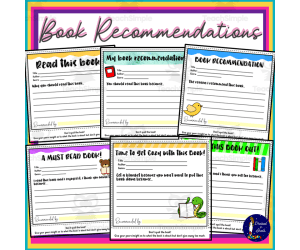
Book Recommendations Forms for Students
ELA, Reading, Grade 1, 2, 3, 4, 5, Activities
That book that you student keeps talking about? Those need to be recommended to fellow peers! These attention grabbing book recommendations are sure to spread the word around about that book that your student can't seem to stop talking about. Comes with a spaces for students to add the author, title, genre, and a good reminder to not spoil the book! Includes 10 dashing templates to place on display on your bulletin board. Enjoy!
Author Soumara Siddiqui
Tags Book Recommendations, Book Recommendation Forms, Recommending Books, Student Recommended Books, Book Recommendation Bulletin Board

Syllable Activities: The History of Hip Hop | Nonfiction Passage with Questions
ELA, Language Development, Phonics, Grade 3, 4, 5, Activities
Hip Hop History Syllable Activities Rap into syllable skills with these engaging activities based on the history of hip hop music. Students will decode multisyllabic words and build comprehension using rap song lyrics as reading passages. With multiple choices for implementation - including whole class, small group, centers , or independent work - these materials creatively reinforce phonics skills. The resource contains rap song lyrics formatted as a nonfiction passage on the origins of hip hop. It also includes syllable activities with answer keys: How Many Syllables, Syllable Hunts, Divide the Syllables, and Syllables on Beast Mode. Through exposure to content-rich vocabulary in song lyrics, students practice decoding skills in an enjoyable way that captures their interest and attention. The accompanying multiple choice questions assess comprehension while keeping engagement high.
Author Rap Opera for Kids!
Tags Decoding Multisyllabic Words, Syllable Activities, History Of Hip Hop Worksheets, History Of Rap Syllable Worksheet, Syllables Rap, Syllable Rap

Antarctica Reading Comprehension Passage - Cored Ed Encyclopedia
ELA, Language Development, Reading Comprehension, Reading, Social Studies, Writing, Pre-Reading, Vocabulary, Geography, History, Grade 2, 3, 4, 5, Worksheets & Printables, Worksheets, Teacher Tools, Centers, Activities, Writing Prompts, Assessments, Quizzes and Tests, Quizzes, Lesson Plans
This Antarctica reading comprehension with lesson plan includes: Visualization (on the front cover) Start your lesson by taking a minute to think and share something about the topic. Read the script aloud (slowly), perhaps prepare some music or sound effects. Student close their eyes and let their imaginations wander. Students open their eyes, read the question aloud and give them a few minutes to complete. Ask a few students to share or keep answers until the end to compare with what they learn in the passage. COMPANION VIDEO NOW AVAILABLE (EMBEDDED AFTER PREVIEW PICTURES IN PRODUCT DESCRIPTION) Quick pause—thousands of Cored Education products are included with your TeachSimple membership. Download links and encyclopedia index available here. Pre-Reading Trivia Students will write down one thing they already know about the subject and then read five more facts and discuss. These facts are fun, and the students will enjoy learning about the subject before reading more. Give 1 minute for students to write what they already know (no pressure—best guess is fine). Read the five facts together. After each fact, do ask a student for their opinion, was it surprising? Set a purpose by asking students to highlight/underline one fact they want to learn more about during the reading. Reading Passage The text is a high-interest reading passage with set paragraphs, roughly three to four paragraphs long. It contains a variety of themes about the topic, anywhere from history to technology. The passage is between 250 and 350 words in length. First, ask students to look at the headings and see what they’ll learn about today. What do they know about the topic/heading? First read options: Teacher read-aloud (best for support). Partner reading (paragraph by paragraph). While reading, students underline important details, and vocabulary words they think may come up in the questions section. Mixed Questions The first question page contains four multiple-choice questions, each with a choice of four answers, and three written response questions that require a sentence or two from the student. Students complete the mcqs first independently, then review quickly as a class. For the 3 written responses, try to get students giving the answer with some form of evidence: “I think ___ because the text says ___.” If students get stuck, send them back to check the passage. Vocabulary Questions Practice seven key words from the text in this section across two activities. First section is scrambled words where students will unscramble three words given a clue for each. The second section is a word to meaning matching activity. Before starting, have some students read out words they underlined in the passage. Ask students to say the word and read aloud the sentence(s) around each word. Ask students to do scrambled words and the matching exercise in pairs then go through answers as a class. For the scrambled spelling task, get four pairs to come up to the board and write the words for extra practice with the other student reading out the clue. For the matching task, prompt students to give full sentences: “I matched ___ with ___ because ___.” Creative Writing In this question, the student will be required to write a five to eight sentence paragraph on a question related to the topic. Before starting, ask students write down 3 key ideas they are going to include in their piece. Ask students for ideas to share around the class to help those struggling. Pro writing expectations: 5–8 sentences At least 2 facts or details from the passage At least 2 vocabulary words from the previous page Students read their paragraphs while classmates listen for facts and vocabulary words. Extension Activities This page is optional for fast finishers or to take home. There are several activities, each one requiring a different skill. Do some, do none, do all, completely optional - but you will feel reassured knowing every possibility is planned for. Includes summary writting question and additional facts. Answer Key There are answers for the multiple-choice questions, written response questions have sample answers, vocabulary answers and if there is a summary question then a sample summary will be provided as well. Lesson Plan Included Customized lesson plan for this lesson is included. Lesson Snapshot Title: Antarctica Genre: Nonfiction (informational passage) Subject: Science / Geography (Polar environments; exploration & research) Primary Topic: Exploration, South Pole, treaty, and ice core science Estimated Guided Reading Level (A–Z): S Support pages noted in the PDF: visualization and pre-reading trivia (pp. 1–2), mixed questions (p. 4), vocabulary activities (p. 5), creative writing (p. 6), extension activities + summary box (p. 7), answer key (p. 8). Support-page QA notes: The vocabulary activity includes “Expedition,” which does not appear in the passage; one mixed question asks why compasses “spin strangely,” which the passage does not explain. What This Lesson Teaches Best How Antarctica went from a blank spot on maps to a confirmed icy continent described by explorers. Key physical features of the continent: cold, dry, windy conditions; little inland snow; land “high above sea level” like a “frozen plateau.” A short exploration timeline using dates and evidence (1820 reports of ice shelves; 1895 people stepped onto the continent). How journeys toward the South Pole were described (sleds, dogs, strange compasses) and what happened in December 1911 and afterward. Why international science cooperation matters there, including the International Geophysical Year, the Antarctic Treaty, and what ice cores can reveal through layers. Learning Goals Students will describe why early mapmakers could not point to land far south “with certainty.” Students will identify details that describe Antarctica’s inland climate and land shape (dry, windy, little snow; “frozen plateau”). Students will retell key events from the passage’s timeline using dates (1820, 1895, 1911, 1959). Students will explain what ships reported seeing in 1820 and how the author describes the coastal environment. Students will describe what happened when Roald Amundsen reached the South Pole and what Robert Falcon Scott found later. Students will explain what the passage says nations promised in 1959 and why ice cores are compared to a “frozen calendar.” Key Vocabulary From the Text certainty — being sure something is true. plateau — a high, flat area of land. shelves — wide, flat sheets of ice. treaty — an agreement between countries. supplies — needed materials stored for later use. FULL CATALOG OF DOWNLOAD LINKS AND ENCYCLOPEDIA INDEX HERE
Author Cored Education
Rating
Tags Vocabulary, Reading Comprehension, Reading Passages, Lesson Plans, Ela Lesson Plans, Reading Comprehension Lesson Plans, Pre-reading, Geography, Geography Lesson Plans

Compound Nouns Activity – Grammar Practice
ELA, Grammar, Grade 2, 3, 4, 5, 6, 7, 8, 9, Activities
Activity Introduction An amazing activity designed for the students to learn more about languages. Compound Nouns Do you enjoy learning English? Which topic do you like the most Grammar, writing, reading, spelling, comprehension, vocabulary or phonics? Have you ever tried to learn any other language? If yes, tell us more about it? How many languages are spoken in the world? What do you think the most interesting one? Can you say Hello in Spanish, French or even Japanese? You can give it a try! Can you name the countries that speaks Portuguese? How many countries speaks Dutch? What is the less spoken language in the whole world? Would you like to learn a new language someday? If yes, which language will you choose? Compound Nouns Activity The activity is perfect for encouraging the researching skills for the students, while learning more about world languages. Compound Nouns This friendly designed worksheet is suitable for students at school, homeschooling, and as a group activity. Instructions Cut everything out then arrange them to make some compound nouns. Format Available in a PDF format.
Author Educational Voice
Rating
Tags Compound Nouns Activity, Compound Nouns, Compound Nouns Facts, Compound Nouns Facts For Kids, Grammar, English, English For Kids, Grammar For Kids
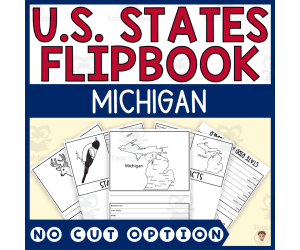
Michigan State Flipbook (Capital, Bird, Flower, Flag, Animal)
Creative Arts, Art, Social Studies, ELA, Government, History, History: USA, Reading, Reading Comprehension, Grammar, Language Development, Spelling, Writing, Grade 2, 3, 4, Activities, Projects
Michigan State Flipbook (Capital, Bird, Flower, Flag, Animal) This interactive Michigan State Flipbook is a perfect hands-on resource specifically designed for elementary teachers and homeschoolers. It encourages immersive learning about Michigan's cultural markers namely: the capital city, the state bird, flower, flag and animal. This low prep tool provides two printing options—one requiring cutting, and another that doesn't. You can also customize it further to student needs with two design choices—one with pictures and one without. Total of four different flipbooks for variety and flexibility of use Ideal for use in general U.S states review or focused units on Midwest region or Michigan itself. Suitable enrichment tool in any social studies or history classes Cross-curricular Opportunities: Art:Via coloring components English Language Arts:Via comprehension exercises Geography:Via mapping skills Extends to grammar, spelling & writing parts weaving into research activity as well as prompts insightful science discussions around native birds or flowers! The teaching intention behind this flipbook set champions active learning strategies. It encourages kinesthetic learners through interactive notebooks while appealing to those who prefer written knowledge consolidation through reading passages. Additionally incorporates curated videos for visual as well as auditory learners. Main Appeal Focus: Grade 2-4 students in Art/Music alongside Social Studies fused Language Arts connections An ideal blend between knowledge acquisition via multi-modal methods perfecting project type activities Incorporates Grammar, Spelling and Writing skills through fascinating content related to Government and U.S History This PDF file is easily accessible for all your needs. Ready, set, explore Michigan!
Author Heather Huhman
Tags Michigan State, Flipbook, Symbols, Interactive Learning, Social Studies