



3,953 products added recently
Page 87 - 3rd Grade Activities
Enhance your third-grade curriculum with activities that stimulate interest and understanding. These resources offer hands-on experiments, creative projects, and problem-solving tasks. Incorporate them to support skill development and make learning a captivating experience.

 Show filters


Candy Reading Comprehension 1 Lesson Sample Google Slides
ELA, Language Development, Resources for Teachers, Vocabulary, Spelling, Reading Comprehension, Reading, Common Core, Grade 2, 3, 4, 5, Teacher Tools, Centers, Activities, Assessments, Tests, Quizzes and Tests, Presentations, Quizzes
THIS IS A ONE LESSON FREE SAMPLE OF THE FOLLOWING PRODUCT: Themed Reading Comprehension Passages Series - Candy This reading comprehension series is built for grades 2 to 5 and keeps things simple, clear, and easy to use. Every title follows a fun, kid-friendly theme and comes with two passage levels, one written for grades 2 to 3 and a more challenging version for grades 4 to 5. Students then work through a mix of follow-up pages that check understanding in different ways: multiple-choice questions, short written responses, scrambled words, a quick summary, and a theme-based word problem. Answer keys are included, so prep stays minimal. Each resource also comes in nine classroom-friendly formats, so you can choose what fits your setup: print or digital, editable or ready to go, and even self-grading options. Because the layout stays consistent, it is easy to plug into whole-class lessons, small groups, literacy centers, morning work, fast finisher tubs, sub plans, or home learning. It is a straightforward way to build comprehension, practice reading skills in context, and strengthen written responses without adding extra steps for you. Candy Lesson List Note: This product has titles different to those in the rest of the themed series. 1. Candy Types 2. Candy Flavors 3. Candy Shapes and Colors 4. Candy Ingredients 5. Candy Fun Facts GOOGLE SLIDES VERSION The same editable layout as PPT, but in the cloud for easy sharing, student access, and instant updates. Other versions are available in the links list below or in the full catalog. How to Use These Lessons Perfect for: Morning work or early-finisher bins Guided reading blocks or comprehension warmups Literacy centers or small-group rotations Holiday/seasonal review lessons Independent stations, sub plans, or take-home enrichment More Candy Themed Products CROSSWORDS WORDSEARCHES MAZES FULL CATALOG OF DOWNLOAD LINKS HERE Themed Reading Links Addition Animals Around the Home Birthday FORMATS: -FORMAL ASSESSMENT VERSION -PRESENTABLE PDF -PPT -SLIDES - PDF -FILLABLE PDF -WORD -FORMS -DOCS SUPPLEMENTARY MATERIALS (COMING SOON): -VISUAL READING PASSAGE VIDEO -GUIDED LEARNING VIDEO -LESSON PLANS Candy FORMATS: -FORMAL ASSESSMENT VERSION -PRESENTABLE PDF -PPT -SLIDES -PDF -FILLABLE PDF -WORD -FORMS -DOCS SUPPLEMENTARY MATERIALS (COMING SOON): -VISUAL READING PASSAGE VIDEO -GUIDED LEARNING VIDEO -LESSON PLANS Christmas Cinco de Mayo Clothes Colors Days and Months Division Earth Day Easter Easy Mazes Fall Father's Day Food Geography (Set 1) Geography (Set 2) Geography (Set 3) Graduation Health History (Set 1) History (Set 2) History (Set 3) Human Body Kindness Life Skills Mother's Day Multiplication Science (Set 1) Science (Set 2) Science (Set 3) Shapes Social Skills Spring Sports St. Patrick's Day Subtraction Summer Thanksgiving Transport Valentine's Day Winter Free One Lesson Themes Chinese New Year Lunar New Year Halloween Pink Shirt Day Independence Day Juneteenth President's Day Groundhog Day Readings in Depth Structure Each resource is built around a focused sub-theme within the broader topic. Students read two leveled passages (Grades 2–3 and Grades 4–5), then move through a short, consistent sequence of activities that checks understanding and keeps momentum: multiple-choice, brief written responses, a scrambled-words review, a compact summary task, and a light theme-linked word problem. The flow is predictable for students, but varied enough to feel fresh across topics. Each completed resource includes: Two differentiated reading passages (lower and upper level) A multiple-choice comprehension page Short written-response questions A scrambled-words or quick vocabulary check A brief summary activity A simple, theme-connected word problem Answer keys for fast marking and easy self-checking Nine classroom-friendly formats, including print, editable, digital, and self-grading options Themes Included These readings span a wide range of age-appropriate, high-interest topics, such as: Seasons and celebrations Real-world science and nature Community, character, and life skills Everyday high-frequency themes students already enjoy Each title connects to familiar experiences while strengthening comprehension, vocabulary in context, and clear written expression. Easy extensions (optional): Read twice: first for gist, second to highlight key details Write two “right there” questions and swap with a partner Create a 3-bullet fact list or mini mind map Turn the summary into a 3-sentence retell using sequence words Add one extra math question connected to the topic Compare the two levels: what details appear in both? Differentiation tips: Pre-teach 2–3 key words with quick examples Offer sentence starters for written responses Use partner reading: one reads aloud, one tracks evidence Allow highlighting or underlining before answering questions Provide a shorter chunking option for students who need breaks Encourage confident readers to justify answers with a quoted detail For similar downloads and other frees, do check out Cored Group on TeachSimple.
Author Cored Education
Rating
Tags Vocabulary, Spelling, Candy, Candy Activities, Writing Prompts, Word Problems, Reading Comprehension, Candy Reading, Candy Passages, Reading Passages
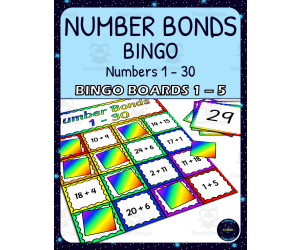
Number Bonds 1-30 Bingo - Boards 1-5
Math, Fact Families, Addition and Subtraction, Addition, Grade 1, 2, 3, Activities, Games
Need a fun, engaging activity for practicing number bonds to 30 with your kiddos? This math bingo game is perfect for getting your students focused on number bonds for numbers 1-30! Preparation: Print and laminate enough Bingo Boards for each student to have one Optional: print, cut and laminate the Playing Squares Print, cut and laminate the Calling Cards. Lamination is optional, but recommended, as it will ensure that the game remains in good condition and can be used for many years to come! To avoid excessive printing and laminating, the Playing Squares could be replaced with other manipulatives such as buttons or counters. Alternatively, students could mark squares off on their Bingo Boards with dry erase markers and then simply clean the boards again after playing (provided that you have laminated the boards) How to Play: Each student needs a Bingo Board and at least 7 Playing Squares (or other manipulatives or a dry erase marker) Shuffle the Calling Cards and place them in a pile. Draw a Calling Card and call out and/or display the contents of the card. Each student looks on their Bingo Board for a block that matches the Calling Card. If they find one, they cover that block with a Playing Square. Draw a new Calling Card and repeat the process. The game continues until somebody wins. To win, a student must shout out “BINGO!” when they have covered three blocks in a row (horizontally, vertically or diagonally). If the Calling Cards run out before anybody wins, simply shuffle them again and continue playing. Please note: Sometimes there may be more than one block on the Bingo Board that matches the Calling Card. The student may only cover one block on a turn. Once that turn is over, the Playing Square may not be moved to cover a different block. This resource includes 5 different bingo board, in colour as well as black and white. If you would like more bingo boards to use for your class, you can find them in here I also have other number bonds bingo games available - CLICK HERE to check them out! You may also be interested in some these resources: · Number bonds grid puzzles · Number bonds strip puzzles · Number bonds worksheets · Fractions matching games · Number bonds activities · Skip counting bingo · Times tables board games · Times tables matching games Your kiddos will love practicing common fractions with this fun bingo game!
Author Colleen's Cosmic Collection
Tags Number Bonds, Number Bonds Games, Addition Game, Addition Activity, Math Facts, Addition Facts, Addition Math Facts, Math Fact Practice, Cccnbb130, Cccnbba

Iguanas Reading Comprehension Passage - Cored Ed Encyclopedia
ELA, Reading Comprehension, Reading, History, Social Studies, Science, Physics, Earth and Environmental Sciences, Life Sciences, Geography, Grade 2, 3, 4, 5, Worksheets & Printables, Worksheets, Teacher Tools, Centers, Activities, Writing Prompts, Assessments, Quizzes and Tests, Quizzes, Lesson Plans
This Iguanas reading comprehension with lesson plan includes: Visualization (on the front cover) Start your lesson by taking a minute to think and share something about the topic. Read the script aloud (slowly), perhaps prepare some music or sound effects. Student close their eyes and let their imaginations wander. Students open their eyes, read the question aloud and give them a few minutes to complete. Ask a few students to share or keep answers until the end to compare with what they learn in the passage. Quick pause—thousands of Cored Education products are included with your TeachSimple membership. Download links and encyclopedia index available here. Pre-Reading Trivia Students will write down one thing they already know about the subject and then read five more facts and discuss. These facts are fun, and the students will enjoy learning about the subject before reading more. Give 1 minute for students to write what they already know (no pressure—best guess is fine). Read the five facts together. After each fact, do ask a student for their opinion, was it surprising? Set a purpose by asking students to highlight/underline one fact they want to learn more about during the reading. Reading Passage The text is a high-interest reading passage with set paragraphs, roughly three to four paragraphs long. It contains a variety of themes about the topic, anywhere from history to technology. The passage is between 250 and 350 words in length. First, ask students to look at the headings and see what they’ll learn about today. What do they know about the topic/heading? First read options: Teacher read-aloud (best for support). Partner reading (paragraph by paragraph). While reading, students underline important details, and vocabulary words they think may come up in the questions section. Mixed Questions The first question page contains four multiple-choice questions, each with a choice of four answers, and three written response questions that require a sentence or two from the student. Students complete the mcqs first independently, then review quickly as a class. For the 3 written responses, try to get students giving the answer with some form of evidence: “I think ___ because the text says ___.” If students get stuck, send them back to check the passage. Vocabulary Questions Practice seven key words from the text in this section across two activities. First section is scrambled words where students will unscramble three words given a clue for each. The second section is a word to meaning matching activity. Before starting, have some students read out words they underlined in the passage. Ask students to say the word and read aloud the sentence(s) around each word. Ask students to do scrambled words and the matching exercise in pairs then go through answers as a class. For the scrambled spelling task, get four pairs to come up to the board and write the words for extra practice with the other student reading out the clue. For the matching task, prompt students to give full sentences: “I matched ___ with ___ because ___.” Creative Writing In this question, the student will be required to write a five to eight sentence paragraph on a question related to the topic. Before starting, ask students write down 3 key ideas they are going to include in their piece. Ask students for ideas to share around the class to help those struggling. Pro writing expectations: 5–8 sentences At least 2 facts or details from the passage At least 2 vocabulary words from the previous page Students read their paragraphs while classmates listen for facts and vocabulary words. Extension Activities This page is optional for fast finishers or to take home. There are several activities, each one requiring a different skill. Do some, do none, do all, completely optional - but you will feel reassured knowing every possibility is planned for. Includes summary writting question and additional facts. Answer Key There are answers for the multiple-choice questions, written response questions have sample answers, vocabulary answers and if there is a summary question then a sample summary will be provided as well. Lesson Plan Included Customized lesson plan for this lesson is included. Lesson Snapshot Title: Iguanas Genre: Nonfiction (informational text) Subject: Reading (Informational Text) / Life Science Primary Topic: Green vs. marine iguanas: tails, habitat, survival Estimated Guided Reading Level (A–Z): R What This Lesson Teaches Best Describes key iguana features and what they look like (dewlap, a line of spines). Explains where iguanas live and notes that most live in the Americas, with some relatives on islands. Shows how a green iguana’s long tail helps with survival (whip-like defense and strong tail strokes for swimming away). Compares two related iguanas by habitat and behavior (tree-climbing green iguana vs. sea-foraging marine iguana that eats algae and basks on dark rocks). Builds awareness of changing habitats and reasons protection matters (building on land, hunting/capturing, predators, El Niño, oil spills). Learning Goals Identify details that describe what an iguana looks like and where it lives. Explain how a green iguana uses its tail when danger comes near water. Describe how the marine iguana finds food and what it does after a cold swim. Compare the green iguana and marine iguana using evidence from the passage. Describe at least two reasons iguanas might need protection based on changes in their habitats. Key Vocabulary From the Text dewlap — loose throat skin that can hang in a fold. spines — pointed bumps that may rise along its back. forages — searches for food. predators — animals that hunt other animals. habitats — places animals need to live. FULL CATALOG OF DOWNLOAD LINKS AND ENCYCLOPEDIA INDEX HERE
Author Cored Education
Rating
Tags Vocabulary, Reading Comprehension, Reading Passages, Lesson Plans, Ela Lesson Plans, Reading Comprehension Lesson Plans, Pre-reading, History, Science Lesson Plans, Life Science
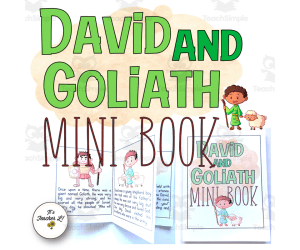
David and Goliath Bible Story Foldable Mini Book Grade 1 2 3 ELA READI
ELA, Reading, Reading Comprehension, Writing, Grade 1, 2, 3, Activities
Inspire your young learners to love reading with this classic Bible story “David And Goliath Foldable Mini Book” packed with meaningful activities. Created for Grade 1, 2 and 3 students, homeschoolers and EFL / ESL learners, this resource is designed with the intentions of teaching valuable lessons and develop students’ English language skills through meaningful activities presented in 5 different foldable mini books: 1. Colored Mini-Book for story telling time and reading comprehension exercises 2. Black and White Mini-Book with Story Tracing Activities 3. Picture-Fill Mini-Book for Sequencing Test or Exercise 4. Black and White Mini-Book for Story Re-Tell and Writing Exercise 5. Blank Mini-Book Pages for Story Re-Tell, Writing, and Drawing Exercises This resource is set can be used as supplemental activities for reading class, fun project and assessment tools, teacher-emergency and subplan resource and so much more! “David And Goliath Foldable Mini Book” is not only a purposeful material to have but it’s also engaging and truly fun experience for your students!
Author It's Teacher L
Tags Bible Story, David And Goliath, Reading Comprehension, ELA Reading, Mini Book, Foldable Mini Book

Quarters Reading Comprehension Passage - Cored Ed Encyclopedia
ELA, Language Development, Resources for Teachers, Reading Comprehension, Reading, Pre-Reading, Social Studies, History, Money, Math, Grade 2, 3, 4, 5, Worksheets & Printables, Worksheets, Teacher Tools, Centers, Activities, Writing Prompts, Assessments, Quizzes and Tests, Quizzes, Lesson Plans
This quarters reading comprehension includes: Visualization (on the front cover) Start your lesson by taking a minute to think and share something about the topic. Read the script aloud (slowly), perhaps prepare some music or sound effects. Student close their eyes and let their imaginations wander. Students open their eyes, read the question aloud and give them a few minutes to complete. Ask a few students to share or keep answers until the end to compare with what they learn in the passage. Quick pause—thousands of Cored Education products are included with your TeachSimple membership. Download links and encyclopedia index available here. Pre-Reading Trivia Students will write down one thing they already know about the subject and then read five more facts and discuss. These facts are fun, and the students will enjoy learning about the subject before reading more. Give 1 minute for students to write what they already know (no pressure—best guess is fine). Read the five facts together. After each fact, do ask a student for their opinion, was it surprising? Set a purpose by asking students to highlight/underline one fact they want to learn more about during the reading. Reading Passage The text is a high-interest reading passage with set paragraphs, roughly three to four paragraphs long. It contains a variety of themes about the topic, anywhere from history to technology. The passage is between 250 and 350 words in length. First, ask students to look at the headings and see what they’ll learn about today. What do they know about the topic/heading? First read options: Teacher read-aloud (best for support). Partner reading (paragraph by paragraph). While reading, students underline important details, and vocabulary words they think may come up in the questions section. Mixed Questions The first question page contains four multiple-choice questions, each with a choice of four answers, and three written response questions that require a sentence or two from the student. Students complete the mcqs first independently, then review quickly as a class. For the 3 written responses, try to get students giving the answer with some form of evidence: “I think ___ because the text says ___.” If students get stuck, send them back to check the passage. Vocabulary Questions Practice seven key words from the text in this section across two activities. First section is scrambled words where students will unscramble three words given a clue for each. The second section is a word to meaning matching activity. Before starting, have some students read out words they underlined in the passage. Ask students to say the word and read aloud the sentence(s) around each word. Ask students to do scrambled words and the matching exercise in pairs then go through answers as a class. For the scrambled spelling task, get four pairs to come up to the board and write the words for extra practice with the other student reading out the clue. For the matching task, prompt students to give full sentences: “I matched ___ with ___ because ___.” Creative Writing In this question, the student will be required to write a five to eight sentence paragraph on a question related to the topic. Before starting, ask students write down 3 key ideas they are going to include in their piece. Ask students for ideas to share around the class to help those struggling. Pro writing expectations: 5–8 sentences At least 2 facts or details from the passage At least 2 vocabulary words from the previous page Students read their paragraphs while classmates listen for facts and vocabulary words. Extension Activities This page is optional for fast finishers or to take home. There are several activities, each one requiring a different skill. Do some, do none, do all, completely optional - but you will feel reassured knowing every possibility is planned for. Includes summary writting question. Answer Key There are answers for the multiple-choice questions, written response questions have sample answers, vocabulary answers and if there is a summary question then a sample summary will be provided as well. Lesson Plan Included Customized lesson plan for this lesson is included. Lesson Snapshot Title: Quarters Genre: Nonfiction (informational reading passage) Subject: Social Studies (U.S. history) / Math (money) Primary Topic: How U.S. quarters changed over time Estimated Guided Reading Level (A–Z): S What This Lesson Teaches Best Understanding money value and fractions (a quarter is 25 cents; one fourth of a dollar; “two bits”). How coin materials and features affected trust and prevented cheating (silver, weight, and ridged edges called “reeding”). Timeline thinking using key dates and changes (1796, 1932, 1965, 1999, 2022–2025, 2026). How symbols/designs on coins reflect history and what a country honors (states, national parks, historical places, notable American women, 250th anniversary themes). Reading informational text with headings and main ideas (three titled sections explain different eras/changes). Learning Goals I can explain why a quarter is worth 25 cents and how it relates to a dollar. I can describe what “two bits” means and where the nickname came from. I can explain how “reeding” (the ridged edge) helped stop people from shaving off metal. I can describe one major change quarters went through over time (design or materials) using details from the passage. I can identify the main idea of the section about changing quarter designs. Key Vocabulary From the Text reeding — tiny ridges on a coin’s edge precious — very valuable recognize — know something by its look or feel coating — a covering layer on something honoring — showing respect by featuring someone or something FULL CATALOG OF DOWNLOAD LINKS AND ENCYCLOPEDIA INDEX HERE
Author Cored Education
Rating
Tags Vocabulary, Reading Comprehension, Reading Passages, Reading, Creative Writing, Reading Strategies, Writing Prompts, Lesson Plans, Quarters, Money

Name The Notes | Interactive Musical Notation Activity
Creative Arts, Art, Music, Preschool, Grade 1, 2, 3, Songs, Activities
Name The Notes | Interactive Musical Notation Activity A dynamic teaching resource created to aid the teaching of note reading. This product is perfect for kindergarten through grade 2 educators, and effective for grade 3. Designed With Care This interactive notation activity assists in reinforcing fine motor skills and note-reading abilities amongst young clarinetists. It begins with only two notes for practice, slowly progressing as per the conventional sequence observed when learning new notes. Compatibility & Ease-of-use Designed for both tablet and computer interfaces. Ideal for traditional classroom setup or distance learning initiatives. Mashes flawlessly with projectors and smart boards. The interface emphasises on ease-of-use; navigation is a simple click or tap away! The content comes delivered as PDF links preventing unnecessary clutter on your device storage - although it should be noted unzipping will be required initially for computer files. A Touch of Randomness & Documentation An element of randomness is employed when presenting slides ensuring each use session remains fresh while enabling efficient reuse from one class to another. An installation guide alongside setup instructions are also included within the contained PDF document - perfect even if this is your first time handling such files! Diverse Applications This resource can be deployed effectively using varied methodologies depending upon group size such as whole-class instruction periods or distributing it amongst smaller student groups. It also makes an excellent tool for individual homework assignments, proving itself as a must-have supplement dor students keen on mastering clarinet note reading!
Author Hbmusicsolutions's Shop
Tags Interactive, Musical Notation, Note Reading, Clarinet Education, Fine Motor Skills
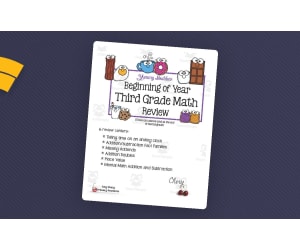
Beginning of Year Third Grade Math Review
Math, Grade 2, 3, Activities
This resource is a Beginning of Year Third Grade Math Review. This activity packet reviews many different math skills that would be ideal for back to school 3rd graders OR end of the year 2nd graders. Skills covered: - Telling time on an analog clock - Addition/subtraction Fact Families - Missing Addends - Addition Doubles - Place Value - Mental Math Addition and Subtraction
Author Easy Peasy Primary Resources
Tags Back To School, August, Math Review, Math Centers, Fact Families, Place Value, Mental Math, Telling Time
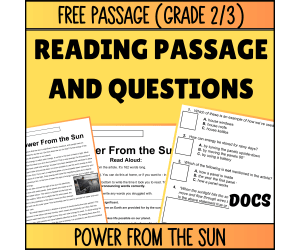
Reading Comprehension Nonfiction Set 1 Sample Power From the Sun Docs
ELA, Reading, Common Core, ESL, Language Development, Writing, Resources for Teachers, Reading Comprehension, Creative Writing, Grade 2, 3, Worksheets & Printables, Worksheets, Writing Prompts, Assessments, Teacher Tools, Tests, Quizzes and Tests, Centers, Activities
Reading Comprehension Passages Nonfiction Set 1 Sample Overview Engaging nonfiction articles, each with a collection of different activities included. Articles are written for the modern classroom and topics are designed to promote enthusiasm from each student. Each lesson contains a mixed questions section to check understanding, a vocabulary or spelling activity to help remember key language introduced, and a writing exercise. Full answer keys are provided. Passage Included 2.Power From the Sun: How does solar power work? Docs Version This is the Docs editable and fillable version. This download is available in GOOGLE Docs, GOOGLE Forms, GOOGLE Slides. PDF, PPT, WORD. FULL CATALOG OF DOWNLOAD LINKS HERE Grade 2/3 Links Fiction Set 1 - Nature Google Docs Google Forms Google Slides PDF PPT Word Guided Reading Materials Fiction Set 2 - Animals Google Docs Google Forms Google Slides PDF PPT Word Guided Reading Materials Fiction Set 3 - Food Google Docs Google Forms Google Slides PDF PPT Word Guided Reading Materials Fiction Set 4 - School Google Docs Google Forms Google Slides PDF PPT Word Guided Reading Materials Fiction Set 5 - Friends Google Docs Google Forms Google Slides PDF PPT Word Guided Reading Materials Fiction Set 6 - Family Google Docs Google Forms Google Slides PDF PPT Word Guided Reading Materials Fiction Set 7 - Sports Google Docs Google Forms Google Slides PDF PPT Word Guided Reading Materials Nonfiction Set 1 - Technology Google Docs Google Forms Google Slides PDF PPT Word Guided Reading Materials Nonfiction Set 2 - Nutrition Google Docs Google Forms Google Slides PDF PPT Word Guided Reading Materials Nonfiction Set 3 - Animals Google Docs Google Forms Google Slides PDF PPT Word Guided Reading Materials Reading Passages Overview Each passage is especially written for Grade 2-3 students, including key vocabulary required for this age group. Topics are varied and are accompanied by colorful graphics. Topics are meant to educate, yet entertain the modern student. These passages are perfect for the modern classroom. Whereas textbooks can become outdated in no time, any changes to technology or the world will result in updates to this product. Mixed Questions The mixed questions section of each lesson includes a variation of fivecomprehension, vocabulary and math questions. In addition, key reading strategies are frequently covered including cause & effect, summarizing, compare & contrast and making conclusions. Three of the questions will be MCQs and two will require a written response of some kind. Full answers and example responses appear at the end of the lesson. Spelling & Vocab Each reading passage contains a variety of words and phrases designed for Grade 2-3 students. Spelling and vocab activities provide the opportunity to build fluency with these words. As it can become quite mundane doing the same activities over and over, each lesson in a set will contain a different spelling and vocab activity . Writing Prompts Writing prompts are designed to continue the theme or lessons learned in the story. Students are persuaded to write in a variety of ways and each prompt includes several cues to help. As with the spelling/vocab section, writing prompts will vary. This includes research pieces, reading responses, poetry and creative writing prompts. Full Answer Keys Full answer keys and sample responses are provided so no matter how busy you are, you know you're covered! Mixed question answers provide evidence from the text, math questions contain the relevant workings. Answers are designed for use by the teacher, but also suitable as a handout to the student. Additional File One lesson will have an additional file. This is something fun to extend the lesson with. For similar downloads and other frees, do check out Cored Group on TeachSimple.
Author Cored Education
Tags Elementary, Reading, Comprehension, Vocabulary, Answers, Ccss, Common Core, Spelling, Writing, Digital Centers

Japan Activity
Geography, Social Studies, Grade 1, 2, 3, 4, 5, 6, 7, 8, 9, 10, Activities
Activity Introduction An amazing activity designed for the students to learn more about famous places in different countries. Japan What do you know about this place? Do you know in which part of the world it is? Have you ever visited this place? If yes, can you tell us more about your adventure, and what do you like the most about this place? Do you like reading about Geography? What is your favorite country in the whole world? If you are going on a trip where it will be? Which country? What you are going to see there? Does this country has a famous place to visit? Japan Activity The activity is perfect for encouraging the researching skills for the students, while learning more about this fantastic place. Japan This friendly designed worksheet is suitable for students at school, homeschooling, and as a group activity. Instructions How much do you know about Japan? Format Available in a PDF format.
Author Educational Voice
Tags Japan Activity, Japan, Japan Facts, Japan Facts For Kids, Country, Countries, Countries Facts, Countries Facts For Kids, Geography, Geography Facts

Nature Art Journal for Kids: Explore Art Elements and Plant Science
Creative Arts, Art, Grade 3, 4, 5, 6, Activities, Projects, Worksheets & Printables, Worksheets
Introducing the Product: Nature Art Journal for Kids: Explore Art Elements and Plant Science This remarkable resource merges two thrilling subjects - art and plant science to create an engaging learning journey for students. Specifically designed to stir the imagination of young learners within the age bracket of 8 to12 years (Grade 3 to Grade 7). Layout of The Journal The journal comprises seven units with each one honing in on a distinct element of art and a particular aspect of plant science. The artistic explorations incorporate line, texture, shape, color, value, space, and form. Simultaneously steering them through the fascinating world of plant kingdom such as monocots and dicots; parts of plants; leaf shapes; flower parts; photosynthesis; plant life cycle ;, making it insightful about changing seasons. Versatility Of This Resource This resource is versatile enough for various modes of instruction. It can be utilized during whole-group instruction or assigned as remote-learning activities or homework assignments stimulating independent thought in learners. About Its Format... The journal is available in a printable PDF format allowing educators to print these black-and-white pages at their convenience! You can bind these fascinating worksheets into three-ring binders ensuring easy accessibility. Inclusive example pages could serve as an answer key providing opportunities for self-correction but educators may choose whether these need to be printed or not. Note that this journal extensively covers all elements of art but does not strictly adhere to any official standard leaving plenty room for customization according to individual class needs. What Does It Contain? The journal houses 49 activities over 73 detailed pages certain to keep young learners engrossed, all while enriching their perception towards nature's marvels around them. In conclusion, as educators commence artistic techniques alongside diving into the botanic beauty found in plant ecosystems using our Nature Art Journal, it becomes a prominent teaching tool bridging education and environment seamlessly! Set your young students on an electrifying exploration journey - Establishing firm roots in plant science while branching out artistically and filling up their world with vibrant colors straight from nature with Nature Art Journal for Kids: Explore Art Elements and Plant Science!
Author ARTventurousanimals
Tags Art Elements, Plant Science, Nature Journal, Interactive Learning, Botanical Exploration

Melody Blocks | Interactive Music Listening Activity
Creative Arts, Art, Music, Grade 1, 2, 3, 4, Activities
Melody Blocks | Interactive Music Listening Activity Engage in a journey of exploration and knowledge acquisition with Melody Blocks, an interactive music listening activity . This innovative educational tool focuses on improving the music-listening abilities of students from grades 1 to 4. It serves as a resourceful element for both, public school education and homeschooling. An Innovative Approach to Aural Skills Development Melody Blocks introduces an invigorating technique to challenge and fine-tune your students' listening skills via quick, practical activities. Expertly crafted for either vocal or instrument use, it can be effectively utilized as an active listening assessment that enhances efficient sight-reading and excels in refining fast recognition of note patterns in treble clef on C. Evolving with Student Progress: This unique resource adapts to your students' progress by producing random questions. Starts with two-note patterns initially, Ramps up complexity based on student proficiency, Serves beginners appropriately and continually assists during first three years of instrumental or vocal study. Key Features User-friendly: Compatible across tablet and PC platforms (currently unavailable on Mac). Launches instantly by clicking given links once you have the provided files installed in the free app articulate mobile player. No additional downloads needed: All features are easily accessible via PDF format links regardless of device type. Inclusive Package: The package includes modules with individual links customized per platform (tablet, web browser & PC) ensuring consistent learning experiences across devices. 'Seeing is Believing': A preview is included that highlights crucial information but does not have active links, allowing you to gauge the product before purchase. Inclusive instructions: Clear-cut guidelines on how to unzip computer files and onboard the app for new users are provided in a PDF document ensures an efficient initial setup. Leverage Melody Blocks Unlock your student's potential with Melody Blocks; encourage, listen, and learn in an extraordinary way. Let's make music-listening as interactive and enjoyable as it should be.
Author Hbmusicsolutions's Shop
Tags Interactive Learning, Music Listening, Aural Skills, Educational Resource, Teaching Tool

Adding 3 Song (Lyric Music Video)
Math, Addition and Subtraction, Addition, Numbers, Preschool, Kindergarten, Grade 1, 2, 3, Songs, Activities
This song is a great way for students to learn and practice adding 3. The addition facts 1-15 are set to music, making it easy and fun for kids to learn. This is a great resource for teachers who want to help their students learn and practice adding 3.
Author Have Fun Teaching
Tags Counting

Build a Mini Golf Course: Learn Geometry Vocabulary with Real World Math Project
Math, Geometry, Grade 3, 4, 5, Activities, Projects
Build a Mini Golf Course is a hands-on math project that teaches geometry vocabulary in a fun, memorable way. Students design, draw, and construct mini golf holes using materials like felt, popsicle sticks, and glue. Over the course of 5 scaffolded lessons, students learn geometric terms like line, point, angle, and more. As they build their mini golf course models, the vocabulary jumps off the page into 3D life. This cross-curricular project also builds real-world skills like following instructions, calculating measurements, and managing money. With 23 pages of structured lessons, assessment tools, math journal prompts, and a reflection, Build a Mini Golf Course ensures geometry standards stick through an unforgettable, DIY experience. Educators can differentiate this project for whole class, small groups, or independent work. Turn vocabulary drills into an engaging geometry adventure with this ready-to-go resource!
Author Beyond Traditional Math
Tags Geometry Project, Math Project, Geometry Terms, Mini Golf Course, Hands On Math

Famous Greeks Activity
Social Studies, History, History: Ancient, History: World, History: Europe, Grade 3, 4, 5, 6, 7, 8, 9, Activities
Activity Introduction An amazing activity designed for the students to learn more about history. Famous Greeks Do you like history? Which topic do you really enjoy about history? Have you ever read an interesting facts about the Vikings? If yes, can you mention them? What do you like most about the Victorian era? Can you name all the Tudors? Have you ever wondered how people used to live in ancient Japan and ancient China? Do you know any interesting facts about ancient Egyptians and the Pharaohs? Have you ever visited South America? What do you know about Incas and Aztecs? Celtic culture was really one of a kind, can you name any of the places that Celts used to live in? Imagine yourself living during the ancient Roman empire, how your life will look like? Ancient Greece was an amazing place to live in. What do you know about ancient Greek life? Famous Greeks Activity The activity is perfect for encouraging the researching skills for the students, while learning more about history. Famous Greeks This friendly designed worksheet is suitable for students at school, homeschooling, and as a group activity. Instructions Write a short bio for each of the famous Ancient Greeks, then draw a portrait. Format Available in a PDF format.
Author Educational Voice
Tags Famous Greeks Activity, Famous Greeks, Greeks, Ancient Greeks, Ancient Greeks Facts, Ancient Greeks Facts For Kids, History, History Facts, History Facts For Kids

Summer Color by Code Music Activity
Creative Arts, Art, Music, Preschool, Grade 1, 2, 3, 4, 5, Activities
This resource is a summer color by code music activity . On each slide, students will click the right note to color in the summer picture.
Author Joyful Noise Teaching
Tags Music Activity, Color By Code, Summer, Coloring, Music Notes

Cookie Roll and Draw Games | Cookie Day December Art Activity
Creative Arts, Art, Fine Arts, Grade 1, 2, 3, 4, 5, Games, Activities, Projects, Centers, Worksheets & Printables
Kooky Cookies Roll and Draw Games | Celebrate Cookie Day on December 4 | Drawing Activity for the Year or Holiday Season Celebrate Candy Corn Day with this fun, no-prep and interactive drawing game that is simple to use or use it on any day. Incorporate the optional companion roll and draw game to add more fun details to the drawing. Just grab a dice and some blank paper and engage your students with this self-directed drawing activity. You can get the whole class involved by following the Change It Up worksheet and dictating elements that students can add to their drawing. Then color and enjoy the different drawings! What are the benefits of roll and draw games? Understanding visual perceptions Increase following direction skills Improving drawing skills Included in this download: 2 Roll and Draw Game Printables 1 Change It Up Page B/W Version Included Additional creative ideas for teachers: Present completed drawings as thoughtful gifts from students Create a wall art gallery Place in students' portfolios Offer a writing activity that corresponds to drawing Perfect for: Art lessons Classroom centers Early finishers Substitute plans Morning work Creativity boosts Bring some creative fun to your classroom or homeschool with this easy and no-prep art activity!
Author Doodle Thinks
Rating
Tags Roll And Draw, Dice Game, Art Activity, Drawing Activity, Coloring, Art Integration, Art Enrichment, Art Supplement, Silly Holiday, December Art
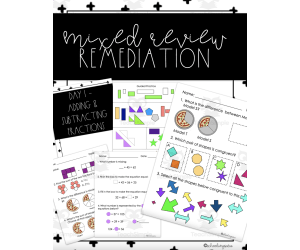
Remediation Plan: Adding Fractions, Congruent Figures, & Equations
Math, Addition and Subtraction, Addition, Algebra, Subtraction, Fractions, Geometry, Grade 2, 3, 4, Teacher Tools, Lesson Plans, Activities
Add & Subtract Fractions, Congruency & Balancing Equations Remediation Add & Subtract Fractions, Congruency & Balancing Equations Remediation is a five-day learning module designed for Grade 2 to Grade 4 educators that focuses on key math concepts. Although aligned mainly with the Virginia SOL education system, its universal content makes it an excellent resource for teachers from any location. The plan covers various subjects including addition, algebra, subtraction, fractions and geometry. Each day presents a strategy towards improving student comprehension. Day 1: Adds and subtracts fractions with insightful teacher directions assisting smooth delivery of lessons. This is followed by guided practice and independent practice pages that help consolidate learner knowledge. Day 2: Introduces congruent and non-congruent figures—a concept made accessible through clear directions and engaging tasks provided in the module. Days 3-4: Delve into balancing equations—an algebra concept important in clarifying addition and subtraction operations within equations—with practical activities aiding mastery over these topics. Day 5: Concludes with a careful review of preceding math topics before testing learner grasp through an exit ticket challenge. It ensures reinforcement in knowledge transition to higher level mathematical concepts becomes smoother moving forward. Leveraging this tool You can utilize this tool effectively for whole-group instruction or divide it amongst smaller groups—it's flexible! Its potential extends beyond classroom boundaries too; It's also beneficial for homeschooling parents seeking comprehensive yet concise lesson plans . If you are looking to strengthen fraction skills or balance equations better among your students or just need refreshing instructional strategies—Add & Subtract Fractions Congruency & Balancing Equations Remediation is a must-have resource in your teaching toolbox.
Author SchoolingSara
Tags Fractions, Congruency, Balancing Equations, Geometry, Math Concepts
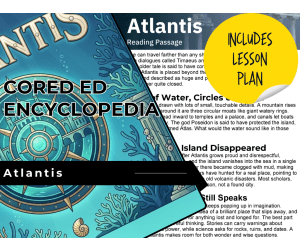
Atlantis Reading Comprehension Passage - Cored Ed Encyclopedia
ELA, Language Development, Reading Comprehension, Reading, Social Studies, Writing, Vocabulary, Geography, History, History: Ancient, Grade 2, 3, 4, 5, Worksheets & Printables, Worksheets, Teacher Tools, Centers, Activities, Writing Prompts, Assessments, Quizzes and Tests, Quizzes, Lesson Plans
This Atlantis reading comprehension with lesson plan includes: Visualization (on the front cover) Start your lesson by taking a minute to think and share something about the topic. Read the script aloud (slowly), perhaps prepare some music or sound effects. Student close their eyes and let their imaginations wander. Students open their eyes, read the question aloud and give them a few minutes to complete. Ask a few students to share or keep answers until the end to compare with what they learn in the passage. Quick pause—thousands of Cored Education products are included with your TeachSimple membership. Download links and encyclopedia index available here. Pre-Reading Trivia Students will write down one thing they already know about the subject and then read five more facts and discuss. These facts are fun, and the students will enjoy learning about the subject before reading more. Give 1 minute for students to write what they already know (no pressure—best guess is fine). Read the five facts together. After each fact, do ask a student for their opinion, was it surprising? Set a purpose by asking students to highlight/underline one fact they want to learn more about during the reading. Reading Passage The text is a high-interest reading passage with set paragraphs, roughly three to four paragraphs long. It contains a variety of themes about the topic, anywhere from history to technology. The passage is between 250 and 350 words in length. First, ask students to look at the headings and see what they’ll learn about today. What do they know about the topic/heading? First read options: Teacher read-aloud (best for support). Partner reading (paragraph by paragraph). While reading, students underline important details, and vocabulary words they think may come up in the questions section. Mixed Questions The first question page contains four multiple-choice questions, each with a choice of four answers, and three written response questions that require a sentence or two from the student. Students complete the mcqs first independently, then review quickly as a class. For the 3 written responses, try to get students giving the answer with some form of evidence: “I think ___ because the text says ___.” If students get stuck, send them back to check the passage. Vocabulary Questions Practice seven key words from the text in this section across two activities. First section is scrambled words where students will unscramble three words given a clue for each. The second section is a word to meaning matching activity. Before starting, have some students read out words they underlined in the passage. Ask students to say the word and read aloud the sentence(s) around each word. Ask students to do scrambled words and the matching exercise in pairs then go through answers as a class. For the scrambled spelling task, get four pairs to come up to the board and write the words for extra practice with the other student reading out the clue. For the matching task, prompt students to give full sentences: “I matched ___ with ___ because ___.” Creative Writing In this question, the student will be required to write a five to eight sentence paragraph on a question related to the topic. Before starting, ask students write down 3 key ideas they are going to include in their piece. Ask students for ideas to share around the class to help those struggling. Pro writing expectations: 5–8 sentences At least 2 facts or details from the passage At least 2 vocabulary words from the previous page Students read their paragraphs while classmates listen for facts and vocabulary words. Extension Activities This page is optional for fast finishers or to take home. There are several activities, each one requiring a different skill. Do some, do none, do all, completely optional - but you will feel reassured knowing every possibility is planned for. Includes summary writting question and additional facts. Answer Key There are answers for the multiple-choice questions, written response questions have sample answers, vocabulary answers and if there is a summary question then a sample summary will be provided as well. Lesson Plan Included Customized lesson plan for this lesson is included. Lesson Snapshot Title: Atlantis Genre: Nonfiction (informational passage about a myth/story’s origins and meaning) Subject: Reading (Informational Text) / Social Studies (Myths & ancient world references) Primary Topic: Atlantis in writing, details, and “lesson” meaning Estimated Guided Reading Level (A–Z): T What This Lesson Teaches Best Identifying where an idea “first appears in writings” and tracking its source (the passage names Plato and two dialogues). Visualizing and describing setting details from informational text (rings of water, bridges, gates, canals, temples, palace). Cause/effect in a legend: how pride and disrespect lead to destruction (earthquakes, floods, island vanishes; travel becomes hard). Distinguishing story-meaning vs scientific proof: stories can warn; science looks for “rocks, ruins, and dates.” Understanding how a name becomes a symbol for “anything lost and longed for” and why mysteries keep people thinking. Learning Goals Students will identify where the Atlantis story first appears and name the two dialogues the passage lists. Students will describe Atlantis’s “circles of water” using details from the passage (moats, bridges, gates, canals). Students will explain what events cause the island to vanish and how the water changes afterward. Students will summarize why people keep hunting for a real location and what “most scholars” think instead. Students will compare what the passage says stories do versus what science asks for. Students will explain how the passage describes Atlantis as a “shortcut” for things that are lost. Key Vocabulary From the Text dialogues — written conversations between speakers. moats — water ditches around a place. canals — water paths that boats can travel on. clogged — blocked so movement becomes difficult. scholars — people who study a topic deeply. FULL CATALOG OF DOWNLOAD LINKS AND ENCYCLOPEDIA INDEX HERE
Author Cored Education
Rating
Tags Vocabulary, Reading Comprehension, Reading Passages, Lesson Plans, Ela Lesson Plans, Reading Comprehension Lesson Plans, Pre-reading, History, History Lesson Plans, Geography

The Lost Coin Bible Story Foldable Mini Book Grade 1 2 3 ELA ELL
ELA, Literature, Reading, Grade 3, 4, 5, Centers, Activities, Worksheets & Printables, Worksheets, Writing Prompts
Give your students a fun but more meaningful learning experience with this classic Bible story The Lost Coin in this The Lost Coin Foldable Mini Book Set! Created for Grade 1, 2, 3 and 4 students, homeschoolers, and EFL / ESL learners, this special story is a sure hit to your reading class and Bible lessons. This resource contains the following: 1. The Lost Coin Colored mini-book 2. The Lost Coin Black and white mini-book with story tracing activities 3. The Lost Coin Picture-fill mini-book for sequencing test or exercise 4. The Lost Coin Black and white mini-book for story re-tell and writing exercise 5. The Lost Coin Blank mini-book pages for story re-tell, writing and drawing exercises 6. The Lost Coin Mini Book Sample lesson plan This set has 3 paper sizes of each mini book for you to choose from, flexible for your classroom needs. And with the five different mini-books to choose from, the possibilities for learning and exploration is endless! This activity can be used to supplement reading lessons, writing exercises, and a perfect assessment tool that can easily be a perfect addition to your students’ portfolio and open house events.
Author It's Teacher L
Rating
Tags Reading, Mini Book, Sequencing, Writing, Reading Comprehension, ELA, ELL, Bible Stories, Sunday School

Social Scenarios – Perspective-Taking Activities
Special Resources, Life Skills, Grade 1, 2, 3, 4, 5, Activities
Perspective Taking is a very important and complex social skill for children to learn. These 4 differentiated Social Scenario activities will help children who struggle to understand the importance of considering other's perspectives. With these activities, children will practice perspective taking using a wide variety of social scenarios which will help them to be more thoughtful and make better decisions in real life social situations. This activity leads to great discussions and really encourages children to think about others in a wide variety of social situations. Great to use in social groups, friendship groups and lunch bunches. Can be used as a whole class lesson too. I created these activities because my students were struggling to understand a variety of everyday social situations and how to handle them. The practice and discussion is very helpful for them. I hope it can be helpful for your students as well!
Author Socially Skilled Kids
Rating
Tags Social Skills, Perspective Taking, Special Education, Social Scenarios, Life Skills, Social Scenarios For Adults, Social Scenarios For Elementary Students, Perspective Taking Scenarios Pdf, Social Perspective Taking

Multiplication Facts Posters and Flashcards BUNDLE
Special Resources, Special Education Needs (SEN), Math, Addition and Subtraction, Addition, Multiplication and Division, Division, Place Value, Grade 2, 3, 4, Teacher Tools, Lesson Plans, Worksheets & Printables, Flashcards, Activities
Multiplication 1 - 10 x 1 - 12 CARDS / MATS / POSTERS to use with your students, display during teaching or on the wall as decor or visual prompts . * Big size versions to work with snap cubes, bricks and other manipulatives on. * Smaller size versions to create task cards and books . Six ( 6 ) books included in this BUNDLE : 1 . Big cards / SPACE THEMED . 2 . Big cards / HALLOWEEN THEMED . 3 . Big cards / With MATH CUBES . 4 . Big cards plain . 5 . Smaller cards / OCEAN THEMED . Smaller cards plain . Each book contains THREE VERSIONS / SETS OF ALL THE FACTS : FACT NUMBER WITH EMBEDDED FACTOR ( x times to make up the fact ) . FACT NUMBER WITH THE FACTOR ( x times to make up the fact ) IN A ROW AT THE BOTTOM OF THE MAT . FACT NUMBER WITH THE RELEVANT FIRST PART OF EQUATION . Facts of each factor 1 - 10 have a mutual distinct color ( when colored ) for sorting and prompting / cueing reasons . Each version / set of facts carries ( when themed ) a different and unique backround space / halloween / ocean themed . Useful in your centers . Try as a flip through laminated book . Great as pictorial reference / explanation for operations and word problems, for repeated addition, multiplication and division . Print and laminate to reuse or display them on your screen ( wall screen or tablet ) . Create task cards . Make classroom books of group reference . A4 size helps for group presentation and activities 1696 pdf pages with big and smaller cards of facts and factors in 3 display versions . For more pdf materials on numeracy, basic math and pictorial / manipulative approach to learning, you can click WORDS ASIDE .
Author WORDS ASIDE
Tags Facts And Factors, Math Center, Math Station, Repeated Addition, Classroom Decoration, Decor, Halloween, Task Cards, Manipulatives, Words Aside
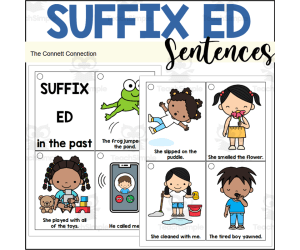
Suffix ED Sentence Reading Rings
ELA, Language Development, Phonics, Grade 2, 3, 4, Activities, Centers, Worksheets & Printables, Task Cards
Practice reading words with the suffix -ED with these sentence reading rings. Students will read words with the suffix -ed in the context of sentences. Each card also includes a bold and colorful image to illustrate each sentence and to help students to learn the meanings of each word. What is Included: This resource includes one reading ring activity for the suffix ed. There are cards each featuring a different word with the suffix ed, with a sentence using the word in context and an image to illustrate that sentence. When to Use Early Finishers - If students finish their work early, they can use these reading rings for extra practice. Small Group Work - Teachers can use these reading rings to target small groups of students who need more practice reading words with suffixes. Independent Practice - Students can work independently at their desks to read this set of suffix cards. Morning Work - Students can read and review this reading ring for morning work as their classmates arrive to class. How to Make: Teachers will print out the pages and cut each card apart. Once cut apart, the teacher can choose to laminate the cards for durability. Then, use a hole punch to punch a hole in the top left corner of the card. Place the cards on a ring to create your reading ring, making sure the cover card is on top. Skills Assessed: These reading rings help with identifying words with suffixes These reading rings help with learning the meaning of suffixes These reading rings help students learn how suffixes change the meaning of words. These affixes reading rings are a low prep activity for teachers to prepare for students to use. Once created, these cards can be used over and over to practice reading words with suffixes in the context of a sentence.
Author The Connett Connection
Rating
Tags Affixes, Morphology, Literacy Activities, Reading Words With Suffixes, Suffixes
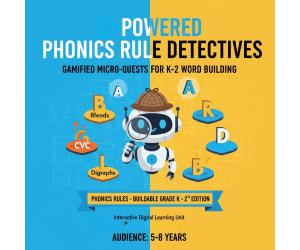
Powered Phonics Rule Detectives Gamified Micro-Quests for K-2
Reading, ELA, Literature, Children’s Literature, Mental Health, P.E. & Health, Mindfulness, Health, Research, STEM, Homeschool Curriculum, Grade 1, 2, 3, 4, 5, Activities, Games, Projects, Experiments, Assessments, Teacher Tools, Lesson Plans, Literacy Readers, Presentations, Rubrics
Unleash the Potential of Literacy with this Full, AI-Supported Phonics Learning Program for Grade K-2 Students! "AIPowered Phonics Rule Detectives: Gamified Micro-Quests for K-2 Word Building - Phonics Rules Buildable Grade K-2nd Edition" features 45 pages of interactive digital lesson material that can turn conventional phonics lesson delivery into an incredibly fun and fascinating detective hunt mystery series for kids. A full range of interactive elements, digital AI advisory tools for adaptive content delivery, worksheets for kids, teacher support material, images, and solution keys have been included in this resource tools package for teachers and home schooling parents for effective decoding, reading, and spelling skill development for kids in Grade K-2. Based on a strong systematic and explicit phonics and synthetic background, the "buildable" sequence in the curriculum includes the following skills for each grade level: Kindergarten—basic CVC words and letter sounds, Grade 1—digraphs, blends, CVCE (or "magic e"), and long vowels, Grade 2—vowel teams, r-controlled vowels, diphthongs, syllables, soft C/G, and silent letters. Use the power of Artificial Intelligence to generate unlimited differentiated scenarios, sentences, and activities for remediation, on-grade, or enrichment purposes, and add gamification components such as role-playing, stories, points, badges, and feedback. Why Parents/Schools Love It: Engage Gamification Increases Motivation: Converts phonics lessons into enjoyable 'detective missions' involving stories, badges, & micro-quests, keeping children eager & preventing burnout, underpinning theories such as Self-Determination Theory & Behaviorism. AI-Enabled Personalization: Saves Time “Teachers use prompt cards to create endless differentiated learning material instantly, serving all children, from struggling to advanced learners, without consuming teaching hours.” Established Effectiveness with Data-Driven Insights: Comes with personalized student data indicating an 60-85% proficiency rate for essential rules, as well as assessment and tracking for literacy gains. Complete Ready-to-Use Resources: The all-inclusive resources are available as a single PDF that includes theory lessons, activity sheets, and answer keys and ethics guidelines related to AI that are suitable according to literacy best practices. It Helps Develop Lifelong Reading Confidence: This scaffolding approach leads children to gain a strong conceptual foundation regarding phonics rules, which results in their fluent reading skills, ability to master spelling concepts, as well as developing their lifelong love Target Classes/Students : On the basis of a comprehensive analysis of the PDF document, which includes the flow of the document, developmental phases, categories of rules, worksheets, as well as examples, the following groups of students can be targeted by it: Kindergarten (Emergent Readers): Emphasis on basic components including letter/sound association, vowel concepts, CVC words, and initial/final sounds. This is to promote cognitive balance in the content. Grade 1: Focuses on mastery of CVC words, introduction to digraphs (sh, ch, th, wh), blends (bl, fr, st), CVCE, magic 'e', Long Vowel teams - ai, ee, oa. Grade 2 (Developing Readers) Focuses on complex long vowel combinations, complex pairs of vowels in a word or syllable (ou, oy, ie), r-controlled combinations of letters and vowels (ar, er, ir, or, ur), diphthongs, inflectional suffixes, syllables, and silent letters Its K-2 continuum is "buildable," in that the rules ramp up cumulatively, and it is therefore ideal for mixed-age, intervention, or enrichment settings in the early grades of schooling. Copyright/Terms of Use : «This Book was copyrighted by Syed Hammad Rizvi.» You cannot modify it or give it or any part of it away or resell it. That means you cannot put it on the Internet where it might be downloaded by anyone who wants it. However, if you need to share this resource with colleagues, just purchase more licenses from Teachsimple. Thanks for following the terms of use! This product has been very proudly presented to you by Syed Hammad Rizvi
Author Creative Book Store
Rating
Tags AIPoweredPhonics, PhonicsRuleDetectives, GamifiedMicroQuests, K2WordBuilding, PhonicsRulesK2, BuildablePhonicsCurriculum, KindergartenPhonics, Grade1Phonics, Grade2Phonics, EarlyLiteracyDevelopment

Motte and Bailey Castle Activity
Geography, Social Studies, History: World, History, Grade 3, 4, 5, 6, 7, 8, 9, 10, Activities
Activity Introduction An amazing activity designed for the students to learn more about history. Motte and Bailey Castle Do you like history? Which topic do you really enjoy about history? Have you ever read an interesting fact about the Vikings? If yes, can you mention them? What do you like most about the Victorian era? Can you name all the Tudors? Have you ever wondered how people used to live in ancient Japan and ancient China? Do you know any interesting facts about ancient Egyptians and the Pharaohs? Have you ever visited South America? What do you know about Incas and Aztecs? Celtic culture was really one of a kind, can you name any of the places that Celts used to live in? Imagine yourself living during the ancient Roman empire, how your life will look like? Ancient Greece was an amazing place to live in. What do you know about ancient Greek life? Motte and Bailey Castle Activity The activity is perfect for encouraging the researching skills for the students, while learning more about history. Motte and Bailey Castle This friendly designed worksheet is suitable for students at school, homeschooling, and as a group activity. Instructions Draw a picture of the castle It’s built because What do the following words mean? Format Available in a PDF format.
Author Educational Voice
Tags Motte And Bailey Castle Activity, Motte And Bailey Castle, Motte And Bailey Castle Facts, Motte And Bailey Castle Facts For Kids, Castle, Castles, Castles Facts, Castles Facts For Kids, Geography