



3,985 products added recently
Page 58 - 4th Grade Activities
Introduce your fourth-grade students to activities that challenge and inspire. These resources encourage analytical thinking, teamwork, and creative expression across subjects. Use them to elevate your teaching and engage students in meaningful learning experiences.

 Show filters


Antarctica Reading Comprehension Passage - Cored Ed Encyclopedia
ELA, Language Development, Reading Comprehension, Reading, Social Studies, Writing, Pre-Reading, Vocabulary, Geography, History, Grade 2, 3, 4, 5, Worksheets & Printables, Worksheets, Teacher Tools, Centers, Activities, Writing Prompts, Assessments, Quizzes and Tests, Quizzes, Lesson Plans
This Antarctica reading comprehension with lesson plan includes: Visualization (on the front cover) Start your lesson by taking a minute to think and share something about the topic. Read the script aloud (slowly), perhaps prepare some music or sound effects. Student close their eyes and let their imaginations wander. Students open their eyes, read the question aloud and give them a few minutes to complete. Ask a few students to share or keep answers until the end to compare with what they learn in the passage. COMPANION VIDEO NOW AVAILABLE (EMBEDDED AFTER PREVIEW PICTURES IN PRODUCT DESCRIPTION) Quick pause—thousands of Cored Education products are included with your TeachSimple membership. Download links and encyclopedia index available here. Pre-Reading Trivia Students will write down one thing they already know about the subject and then read five more facts and discuss. These facts are fun, and the students will enjoy learning about the subject before reading more. Give 1 minute for students to write what they already know (no pressure—best guess is fine). Read the five facts together. After each fact, do ask a student for their opinion, was it surprising? Set a purpose by asking students to highlight/underline one fact they want to learn more about during the reading. Reading Passage The text is a high-interest reading passage with set paragraphs, roughly three to four paragraphs long. It contains a variety of themes about the topic, anywhere from history to technology. The passage is between 250 and 350 words in length. First, ask students to look at the headings and see what they’ll learn about today. What do they know about the topic/heading? First read options: Teacher read-aloud (best for support). Partner reading (paragraph by paragraph). While reading, students underline important details, and vocabulary words they think may come up in the questions section. Mixed Questions The first question page contains four multiple-choice questions, each with a choice of four answers, and three written response questions that require a sentence or two from the student. Students complete the mcqs first independently, then review quickly as a class. For the 3 written responses, try to get students giving the answer with some form of evidence: “I think ___ because the text says ___.” If students get stuck, send them back to check the passage. Vocabulary Questions Practice seven key words from the text in this section across two activities. First section is scrambled words where students will unscramble three words given a clue for each. The second section is a word to meaning matching activity. Before starting, have some students read out words they underlined in the passage. Ask students to say the word and read aloud the sentence(s) around each word. Ask students to do scrambled words and the matching exercise in pairs then go through answers as a class. For the scrambled spelling task, get four pairs to come up to the board and write the words for extra practice with the other student reading out the clue. For the matching task, prompt students to give full sentences: “I matched ___ with ___ because ___.” Creative Writing In this question, the student will be required to write a five to eight sentence paragraph on a question related to the topic. Before starting, ask students write down 3 key ideas they are going to include in their piece. Ask students for ideas to share around the class to help those struggling. Pro writing expectations: 5–8 sentences At least 2 facts or details from the passage At least 2 vocabulary words from the previous page Students read their paragraphs while classmates listen for facts and vocabulary words. Extension Activities This page is optional for fast finishers or to take home. There are several activities, each one requiring a different skill. Do some, do none, do all, completely optional - but you will feel reassured knowing every possibility is planned for. Includes summary writting question and additional facts. Answer Key There are answers for the multiple-choice questions, written response questions have sample answers, vocabulary answers and if there is a summary question then a sample summary will be provided as well. Lesson Plan Included Customized lesson plan for this lesson is included. Lesson Snapshot Title: Antarctica Genre: Nonfiction (informational passage) Subject: Science / Geography (Polar environments; exploration & research) Primary Topic: Exploration, South Pole, treaty, and ice core science Estimated Guided Reading Level (A–Z): S Support pages noted in the PDF: visualization and pre-reading trivia (pp. 1–2), mixed questions (p. 4), vocabulary activities (p. 5), creative writing (p. 6), extension activities + summary box (p. 7), answer key (p. 8). Support-page QA notes: The vocabulary activity includes “Expedition,” which does not appear in the passage; one mixed question asks why compasses “spin strangely,” which the passage does not explain. What This Lesson Teaches Best How Antarctica went from a blank spot on maps to a confirmed icy continent described by explorers. Key physical features of the continent: cold, dry, windy conditions; little inland snow; land “high above sea level” like a “frozen plateau.” A short exploration timeline using dates and evidence (1820 reports of ice shelves; 1895 people stepped onto the continent). How journeys toward the South Pole were described (sleds, dogs, strange compasses) and what happened in December 1911 and afterward. Why international science cooperation matters there, including the International Geophysical Year, the Antarctic Treaty, and what ice cores can reveal through layers. Learning Goals Students will describe why early mapmakers could not point to land far south “with certainty.” Students will identify details that describe Antarctica’s inland climate and land shape (dry, windy, little snow; “frozen plateau”). Students will retell key events from the passage’s timeline using dates (1820, 1895, 1911, 1959). Students will explain what ships reported seeing in 1820 and how the author describes the coastal environment. Students will describe what happened when Roald Amundsen reached the South Pole and what Robert Falcon Scott found later. Students will explain what the passage says nations promised in 1959 and why ice cores are compared to a “frozen calendar.” Key Vocabulary From the Text certainty — being sure something is true. plateau — a high, flat area of land. shelves — wide, flat sheets of ice. treaty — an agreement between countries. supplies — needed materials stored for later use. FULL CATALOG OF DOWNLOAD LINKS AND ENCYCLOPEDIA INDEX HERE
Author Cored Education
Rating
Tags Vocabulary, Reading Comprehension, Reading Passages, Lesson Plans, Ela Lesson Plans, Reading Comprehension Lesson Plans, Pre-reading, Geography, Geography Lesson Plans

Princess Penelope's Parrot Interactive Read-Aloud Activities
ELA, Reading, Reading Comprehension, Language Development, Vocabulary, Grade 2, 3, 4, Read Alouds, Activities
This picture book companion is a complete supplemental resource for the book Princess Penelope's Parrot by Helen Lester. With 32 print-and-go reading activities to choose from, this resource is ideal for customizing learning to your student's specific needs and academic abilities. Students will investigate illustrations, identify story elements, determine the theme, analyze characters, compare & contrast, make predictions, inferences, & connections, answer questions that require them to think beyond the text, and much more! Students will love the engaging and fun activities, and you will appreciate the time saved hunting for high-level resources to teach reading concepts that students frequently struggle with. The activities provided are designed to enable students to apply higher-level thinking skills, encourage them to provide text evidence to support their thinking, and challenge them to express their own thoughts and/or perspectives. ⭐️This Resource Includes:⭐️ Making Predictions: Before reading the book, students will make predictions about the text. Story Elements: Students fill in the boxes with words & pictures to represent the story elements. Sequencing: Students will retell & illustrate the important parts of the story. Recalling events in Chronological Order: Students describe and illustrate four major events in the story in chronological order. Summary: Students complete the Somebody, Wanted, Because, But, So graphic organizer and write a summary of the story. Story Event Sort: Students will describe a scene or event from the story that fits into each of the categories & explain how the event made them feel & how it relates to the category. Making Connections: Students make connections to an event from the story. Making Inferences: Students use clues & schema to make inferences while reading the story. Character Traits: Students choose the most important character traits that describe each of the characters and give one to two examples from the story that support the traits they chose. Character Inside & Out (Princess Penelope): Students include details from the story to describe what the character says, thinks, does, and feels. Character Inside & Out (the Parrot): Students include details from the story to describe what the character says, thinks, does, and feels. Character Feelings (Princess Penelope): Students describe how the character's feelings change throughout the story & give examples of the events that cause them to feel the way they do. Character Feelings (the Parrot): Students describe how the character's feelings change throughout the story & give examples of the events that cause them to feel the way they do. Character Development (Princess Penelope): Students select character traits that best describe the character at different times throughout the story and give examples from the book to support the traits they chose. Character Development (the parrot): Students select character traits that best describe the character at different times throughout the story and give examples from the book to support the traits they chose. Character Change (the Parrot): Students will explain how the character changed from the beginning to the end of the story and describe the events that caused the change to happen. Character Response: Students will describe how the characters reacted to the important events in the story. Character Perspective: Students will use the illustrations below and what they remember from the story to answer the questions about character viewpoints. Character Diary Entry: Students write a diary entry from the point of view of the parrot, Princess Penelope, or Prince Percival, expressing their ideas and feelings about an event in the story, and draw a detailed picture to go with their writing. Sketch a Scene From the Story: Students will draw a scene from the story & explain why it's important. Setting the Scene: Students identify three different settings in the story and explain how they know the setting changed. Author's Message: Students describe four important events from the story and put them in chronological order. Then, answer the questions about the author's message. Theme: Students answer the questions to determine which theme best fits the story and provide text evidence to support their choice. 3-2-1: Students will describe three ways in which Princess Penelope’s actions show that she’s a spoiled brat, identify the two most likely reasons that the parrot wanted to embarrass Princess Penelope in front of the Prince, and come up with one word that best describes Princess Penelope and explain why. Before & After: Students will describe and illustrate the parrot’s life before he escaped with Prince Percival and his life after. Thinking About the Text: Students will answer the questions about the story & include examples from the text to support their answers. Thinking Beyond the Text: Students will answer the questions about the story & include examples from the text to support their answers. Sorry, Not Sorry: Students state their opinion on whether Princess Penelope is rude or just very confident. Then, based on their opinion, students will write an apology note or an explanation defending Princess Penelope’s behavior. Book Review: Students will rate and review the book. Compare & Contrast: Students will compare the books Princess Penelope’s Parrot and All For Me and None For All. Lucky Me List: Students make a list of the things they are lucky to have or grateful for. Their list can include clothes, food, pets, people, things, or anything else that they are grateful for in their lives. Crossword Puzzle: Students use the definitions and the word bank to fill in the crossword puzzle (ANSWER KEY included). This resource is for extension read-aloud activities only. The book is not included.
Author Creatively Gifted
Tags Fountas And Pinnell, Second Grade, Elementary Ela, Reading Comprehension, Character Traits, Interactive Read-aloud, Picture Book, Read-aloud Activities, Helen Lester, Princess Penelope's Parrot
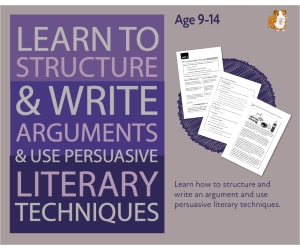
Structure And Write An Argument Using Literary Devices
ELA, Writing, Grade 4, 5, 6, 7, 8, 9, Activities
'Writing A Balanced Argument' work packs are essential for all students wanting to develop their literacy skills and improve their grades in English assignments and examinations. This series of work packs set out how to write a well-balanced argument. The student will learn how to structure their writing, putting forward a point of view, backing it up with convincing evidence, building up a relevant counter argument and knocking it down, as well as, putting forward their own comments and opinions. These work packs focus on discursive writing, enabling the pupil to examine points for and against in a variety of subjects suitable for older children and teenage readers - healthy eating, fashion, social issues and many more. The student will learn vital essay writing skills, that will assist their studies in other areas of the curriculum. In addition to this, the work packs teach organisational and literary devices in persuasive writing, including, figurative language, emotive words, repetition, connectives and use of good vocabulary. The student will learn how to consider writing for the appropriate audience, how to vary sentence types in order to make writing more interesting, and the importance of using good spelling, punctuation and grammar. Each work pack includes an exciting range of model answers and sample texts written by students and provides practice questions to test them. Common errors made by students are highlighted and corrected. They are packed with vital hints and tips to enable the pupil to be successful and gain good grades. The work packs are ideal for home study and will reinforce the work done in school. They may be purchased in any order. There are a number of titles to choose from. By working through the packs, the student will grow in confidence and will learn to enjoy writing. The packs are also a useful resource for teachers and save hours of time when preparing lessons or homework tasks.
Author Guinea Pig Education
Tags Argument Writing, Discursive Essays, Literary Devices, English Writing Skills, Writing Activities
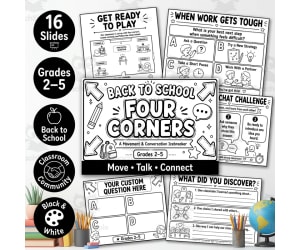
Back to School Four Corners Icebreaker Game | First Week of School
Social Emotional Learning (SEL), Special Resources, Grade 2, 3, 4, 5, Activities, Worksheets & Printables, Teacher Tools, Classroom Decor
Get students moving, talking, and connecting from the very first days of school with this engaging Back to School Four Corners Icebreaker Game ! This interactive Google Slides-style activity gives students a fun, low-pressure way to share their preferences, discover common interests, practice respectful listening, and begin building a positive classroom community. Each round presents four clear choices. Students move to the corner that matches their answer, briefly connect with classmates who made the same choice, and return ready for the next question. The carefully sequenced prompts begin with simple preferences and gradually move toward classroom goals, learning habits, and community-building reflections. What's Included Premium cover slide Quick teacher setup guide Student directions and movement expectations 10 original Four Corners question slides Conversation challenge slide Classroom community reflection slide Create-your-own prompt template Teacher facilitation tips Thank You slide Skills Developed Speaking and listening Classroom communication Social interaction Respectful discussion Decision-making Self-expression Relationship building Classroom community awareness Perfect For First day of school First week of school activities Morning meeting Back to school icebreakers Class community building Brain breaks with purpose Upper elementary classrooms Why Teachers Love It This activity is easy to project, simple to explain, and encourages every student to participate through movement and conversation. The prompts are age-appropriate for grades 2–5, visually clear, and designed to support meaningful interaction without requiring students to prepare materials in advance. Open the slides, assign the four classroom corners, and let the conversations begin! This Back to School Four Corners Icebreaker Game is a lively and meaningful first week of school activity for building classroom community through movement, speaking, and listening.
Author TeachTrend Studio
Rating
Tags Activities, Games, Internet Activities, Classroom Community, Social Emotional Learning, Back To School

Christmas Synonyms & Antonyms Worksheets | 2nd–3rd Grammar Practice Ac
Grammar, Language Development, ELA, Vocabulary, Grade 2, 3, 4, Centers, Activities, Worksheets, Worksheets & Printables
Christmas synonyms & anatonyme This festive 8-page black-and-white printable set helps students in Grades 2–3 build stronger vocabulary skills by practicing synonyms (words with similar meanings) and antonyms (words with opposite meanings). The Christmas theme keeps learners engaged while supporting essential language development in a fun and meaningful way. Each worksheet includes a holiday-themed word box , followed by sentence completion tasks that guide students to choose the correct synonym or antonym. The layout is clear and kid-friendly, making the activities easy to complete independently or during small-group instruction. A full answer key is provided to make checking quick and simple for teachers or students. This resource works perfectly for grammar stations, early finishers, homework, sub plans, December ELA lessons, literacy centers , or any Christmas-themed classroom activity. The print-and-go PDF format makes it effortless to use during the busy holiday season. File type: PDF Number of pages: 8 (worksheets + answer key)
Author Sadigitalart
Rating
Tags Christmas Grammar, Synonyms & Antonyms , Christmas Synonyms & Antonyms , Christmas Grammar No Prep, 2nd–3rd Grammar Practice

Author Study: Dav Pilkey
ELA, Research, Literature, Children’s Literature, Reading, Homeschool Curriculum, Grade 2, 3, 4, 5, 6, Activities, Lesson Plans, Teacher Tools
Description: During this lesson, children will learn about Dav Pilkey, his inspiration, books, and techniques that he uses as an author and illustrator as they watch videos, explore books, and conduct online research. They will try their hand at drawing one of Dav Pilkey's most poplar characters as well! Have fun spending several days learning about and creating like Dav Pilkey or select a few activities from this lesson for a short and sweet learning experience. Learning Objectives: I can… Describe different things Dav Pilkey does as an author and illustrator Research, recall and discuss facts about Dav Pilkey's life Outline Build Interest : Discuss several books based on the covers Read : Read and discuss a picture book Watch & Discuss : Watch and discuss numerous short interview clips with Dav Pilkey Draw : Follow along with a guided drawing of Captain Underpants Explore More Book s: Read more books by this author Research : Work together to conduct online research about Dav Pilkey Let's Recap : Discuss what your child has learned about Dav Pilkey and his works Additional Supplies Needed: Books by Dav Pilkey (or online read alouds....some links within lesson) Subjects English Language Arts Grade Levels 2nd - 4th (with ability to adjust above and below these grade levels) Estimated time 2 hours- Multiple Days
Author Sprout & Inspire
Rating
Tags Dav Pikley, Dogman, Captain Underpants, Author Study, Reluctant Reader, Graphic Novel

Synonyms Sample - Vocabulary Grade 3-4 (Slides)
ELA, Language Development, ESL, Common Core, Resources for Teachers, Vocabulary, Grade 3, 4, Quizzes and Tests, Teacher Tools, Tests, Assessments, Presentations, Activities
Synonyms Sample Lesson ELA MCQS Overview: In this series of lessons, students will embark on an engaging journey to explore the grammar skills that make our language vibrant and expressive. These lessons are crafted to help students identify, comprehend, and effectively apply language arts skills in both writing and speech. Accompanied by free supplementary materials available for all topics, each lesson builds on the previous one, offering a balanced mix of direct instruction, interactive group activities, and independent practice. Through fun and creative tasks, students will learn to recognize grammar within sentences, understand their function, and use them to enrich their own writing and speech. Synonyms Overview: Nouns Synonyms Verbs Synonyms Adjectives Synonyms Synonyms in a Sentence Slides Version This is the Slides editable and interactive version. There is a fillable answer sheet at the end. This download is available in GOOGLE Docs, GOOGLE Forms, GOOGLE Slides. PDF, PPT, WORD, check the links below for more details. FULL CATALOG OF DOWNLOAD LINKS HERE Grade 3/4 Links: Adjectives Google Docs Google Forms Google Slides PDF PPT Word Free Supplementary Materials Pack Adverbs Google Docs Google Forms Google Slides PDF PPT Word Free Supplementary Materials Pack Conjunctions Google Docs Google Forms Google Slides PDF PPT Word Free Supplementary Materials Pack Nouns Google Docs Google Forms Google Slides PDF PPT Word Free Supplementary Materials Pack Pronouns Google Docs Google Forms Google Slides PDF PPT Word Free Supplementary Materials Pack Verbs Google Docs Google Forms Google Slides PDF PPT Word Free Supplementary Materials Pack Sentence Structure Google Docs Google Forms Google Slides PDF PPT Word Free Supplementary Materials Pack Present Tense Google Docs Google Forms Google Slides PDF PPT Word Free Supplementary Materials Pack Past Tense Google Docs Google Forms Google Slides PDF PPT Word Free Supplementary Materials Pack Future Tense Google Docs Google Forms Google Slides PDF PPT Word Free Supplementary Materials Pack Context Clues Google Docs Google Forms Google Slides PDF PPT Word Free Supplementary Materials Pack Defining Words Google Docs Google Forms Google Slides PDF PPT Word Free Supplementary Materials Pack Fill the Blanks Google Docs Google Forms Google Slides PDF PPT Word Free Supplementary Materials Pack Homophones Google Docs Google Forms Google Slides PDF PPT Word Free Supplementary Materials Pack Synonyms Google Docs Google Forms Google Slides PDF PPT Word Free Supplementary Materials Pack ELA Review Questions Overview Questions have three answer choices. There are a handful of pictures on each test for aesthetic purposes, as well as a review sheet covering most of the topics covered in the product. Introduction or Example Sheet Each topic will include an introduction or example sheet to go through first with your students. Full Answer Keys Full answer keys and sample responses are provided so no matter how busy you are, you know you're covered! In the Supplementary Pack Interactive Ice Breakers: Fun, hands-on activities that get students thinking about adjectives right from the start. Guided Practice: Teacher-led exercises that reinforce the day’s lesson, ensuring students can confidently identify and use adjectives. Group and Partner Tasks: Collaborative activities that allow students to work together to solve problems, categorize adjectives, and create descriptive sentences. Independent Worksheets: Structured worksheets that provide individual practice and help solidify understanding of key concepts. Exit Tasks: Quick, reflective activities at the end of each lesson that assess understanding and encourage students to apply what they’ve learned. For similar downloads and other frees, do check out Cored Group on TeachSimple.
Author Cored Education
Tags Elementary, Answers, Ccss, Common Core, Tests, Test Prep, Assessment, Grade 3, Grade 4, Vocabulary

Hey, Al by Arthur Yorinks Read-Aloud Activities
ELA, Reading, Reading Comprehension, Grade 2, 3, 4, Read Alouds, Activities
Enhance your students' reading experience with this comprehensive companion for Hey, Al by Arthur Yorinks. Featuring 33 ready-to-use activities, this resource is perfect for customizing learning to meet your students' needs and academic abilities. Designed to save you time and engage students effectively, these activities foster higher-level thinking skills and encourage textual evidence-based responses. Students will enjoy interactive and educational activities, while you appreciate having high-quality resources at your fingertips. INCLUDED IN THIS RESOURCE: Making Predictions Judging by the Cover Story Elements Sequencing Recalling Events in Chronological Order Summary Story Event Sort Making Connections Making Inferences Character Traits (2 Traits) Character Traits (4 Traits) Character Inside & Out Character Feelings Character Development Character Change Overcoming Obstacles Sketch a Scene From the Story Setting the Scene Thinking About the Text Thinking Beyond the Text 3-2-1 Theme Author's Message Before and After Crossword Puzzle Word Search Puzzle Island in the Sky Wait... There's More! Book Review Acrostic Poem Dear Diary Becoming a Bird Island Travel Brochure This resource is for extension read-aloud activities only. The book is not included.
Author Creatively Gifted
Tags Reading Comprehension, Reading, Upper Elementary Reading, Picture Book , Read-aloud Activities, Interactive Read-aloud Activities, Book Companion, ELAR
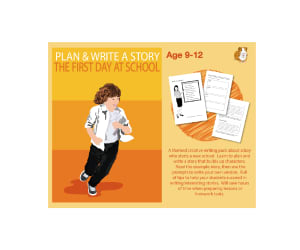
Write A Story Called 'The First Day At School' Age 9-12
ELA, Writing, Creative Writing, Grade 3, 4, 5, 6, 7, Activities
Write A Story Called 'The First Day At School' Age 9-12 This is a teaching resource for educators ranging from public school teachers to homeschooling parents. It caters primarily to children aged between 9 and 12. Set Divisions Some key printables /parts-of-and-anatomy-of">parts of this set include: The White Fox The Creepy Tale The Rescue Each part functions as an individual, easy-to-follow work pack designed to reduce preparation time when planning creative writing tasks. An interesting feature in each section is the example provided which builds upon a given title. This enables students to understand key elements of a well-structured story. Instruction Methods You can use various methods, such as whole group discussions or smaller team sessions, or assign it as homework. The material guides budding writers step by step through their initial story ideas up through their final narrative piece. Elements like characters and plot structure are identified before diving into complex themes like: Narrative viewpoints, Punctuation use, Sentence variation, Mood evocation with accomplished vocabulary usage. These elements are child-friendly and help create high levels of engagement among learners. Literacy Skill Improvement These work packs improve literacy skills while simultaneously improving grades in English assignments and exams at foundational education levels ranging from Grade 3 up till Grade 7. Lastly, these PDF files bring essential insights on frequent mistakes found within student’s works while offering helpful tips on performing better thereby qualifying as a crucial component within any educator's toolbox.
Author Guinea Pig Education
Tags Teaching Resource, Creative Writing, Story Planning, Narrative Structure, Literacy Skills
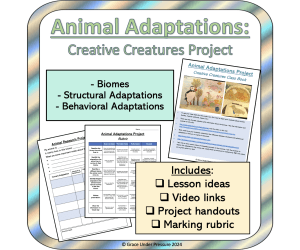
Animal Project: Creative Creatures - Biomes, Structural, and Behavioral Adaptations
Science, Life Sciences, Biology, Earth and Environmental Sciences, Environmental Science, Research, Grade 4, 5, 6, 7, Activities, Projects
Here's a middle grades science project (for grades 4-7) that will let your students use their creativity to apply their knowledge of biomes and adaptations as they complete research, integrate knowledge from several sources, type a report, and make a detailed diagram ! How to Use: Assign each student an animal or let them chose their own. They need to research that animal’s biome and the adaptations the animal currently has. Next, each student chooses a different biome and moves their animal there. They must use their imagination and logic to predict the adaptations the animal would develop in the new biome. Once each student has completed their notes, they can type or write a report to present the information. I encouraged my students to make a four-paragraph report: Paragraph one: describe initial biome Paragraph two: describe initial adaptations Paragraph three: describe new biome Paragraph four: describe new adaptations Students also create their own visual image of their creative creature (labels encouraged). I like to put all the reports and images together into a class book. This is fun way to showcase the students’ hard work. I have included the title page I use for our class book. I have also included the rubric I use to assess the projects. Graces to Use With: This product is appropriate for students in grades 4-7 depending on when your science curriculum includes biomes, structural/physical and behavioural adaptations, or diversity of life standards. What's Included: A total of 6 pages in PDF Format: - Lesson ideas, links and videos to teach students about biomes and structural and behavioural adaptations. - A 2-page graphic organizer for students to take notes as they complete research. - A rubric to assess the final project. - A title page for your completed class book. If you enjoy this science project, check out some other options in my store: STEM Project: Extreme Environment Technology Design and "Shark Tank" Presentation Science Project: Animal Classes Wanted Posters Controlling Variables in Science Experiments: Independent, Dependent and Controlled
Author Grace Under Pressure
Tags Animal Project, Biomes, Animal Adaptations, Biology, Adaptation, Science Project, Natural Selection, Evolution, Structural And Behavioral Adaptations, Science Report
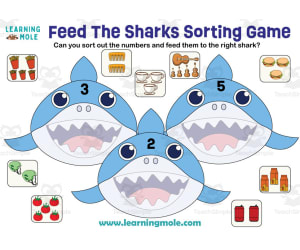
Feed The Sharks Sorting Game
Math, Early Math, Counting, Basic Operations, Numbers, Place Value, Toddler, Infant, Kindergarten, Preschool, Grade 1, 2, 3, 4, Activities
Activity Introduction An amazing activity designed for the students to learn more about STEM. Feed The Sharks Sorting Do you like STEM subjects? what is your favorite one? Have you ever tried to plant a seed? If yes, tell us more about it. Or have you ever tried to invent something? If yes, tell us more about it. And how do you think it will help us? Have you ever seen a microorganism under a microscope? What was it? And how it looked like? Mathematics is a marvelous subject. Let' sharpen our brains and solve some equations. Do you like timetable tricks? What is your favorite one? Do you know how to code? Have you ever created an app or a game before? If yes, how was it like? Feed The Sharks Sorting Activity The activity is perfect for encouraging the researching skills for the students, while learning more about this fantastic topic. Feed The Sharks Sorting This friendly designed worksheet is suitable for students at school, homeschooling, and as a group activity. Instructions Can you sort out the numbers and feed them to the right sharks? Format Available in a PDF format.
Author Educational Voice
Tags Feed The Sharks Sorting Game, Sorting Game, Feed The Sharks, Sorting, Sorting Numbers, Sorting Numbers Activity, Math, Maths, Mathematics, Math Facts

Question Mark Activity
ELA, Grammar, Writing, Grade 2, 3, 4, 5, 6, 7, 8, Activities
Activity Introduction An amazing activity designed for the students to learn more about languages. Question Mark Do you enjoy learning English? Which topic do you like the most Grammar, writing, reading, spelling, comprehension, vocabulary or phonics? Have you ever tried to learn any other language? If yes, tell us more about it? How many languages are spoken in the world? What do you think the most interesting one? Can you say Hello in Spanish, French or even Japanese? You can give it a try! Can you name the countries that speaks Portuguese? How many countries speaks Dutch? What is the less spoken language in the whole world? Would you like to learn a new language someday? If yes, which language will you choose? Question Mark Activity The activity is perfect for encouraging the researching skills for the students, while learning more about world languages. Question Mark This friendly designed worksheet is suitable for students at school, homeschooling, and as a group activity. Instructions What is a question mark? Using question marks, write at least 3 questions for the following picture. Format Available in a PDF format.
Author Educational Voice
Tags Question Mark Activity, Question Mark, Question Mark Facts, Question Mark For Kids, Question Mark Facts For Kids, English, Punctuation , English For Kids, Punctuation For Kids
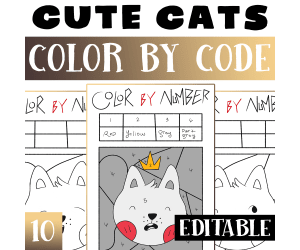
Cat Editable Color By Code Worksheet Activity, Cats Color By Numbers
Creative Arts, Art, Fine Arts, Graphic Arts, Preschool, Grade 1, 2, 3, 4, 5, Activities, Worksheets & Printables, Worksheets
Cat Editable Color By Code Worksheet Activity , Cats Color By Numbers Activities / Digital Resources / Cat Color by Math / Cat Color By Sight Words / Cat Color By Letters: 10 beautifully illustrated worksheets featuring charming and whimsical cat characters. An easy-to-follow color code legend for guidance. Editable sections, allowing you to tailor the activity to your specific educational objectives or theme. ⭐ These worksheets are designed to boost creativity and cognitive skills. Your students or children will have a blast decoding the color patterns and applying them to the lovable cat drawings. This exercise not only promotes fine motor skills but also encourages the development of logical thinking. ⭐ We understand that every classroom or home learning environment is unique. That's why our worksheets are fully editable. You can adapt the color code, add your own color suggestions, or even insert text for additional learning opportunities. Tailor the worksheets to your needs! Ideal for preschool and elementary school students. Perfect for homeschooling, daycare, or early learning centers. Great for morning work activities, indoor recess, or fun homework assignments. ⭐ Start your day with smiles and colorful cats! Download our "Cute Cats Editable Color by Code Worksheets" and watch as your young learners embark on an exciting coloring journey, all while strengthening essential educational skills. Get ready for a purr-fectly fun morning! What's Included: You will receive a download with a zip file containing 10 x A4 sheets.
Author Lapiiin Art Activities
Tags Cat Color By Code, Color By Sight Words, Color By Math, Color By Numbers, Digital Ressources, Cat Coloring Page, Digital Resources, Printable, Morning Work

Create Your Galaxy Activity
Science, Earth and Environmental Sciences, Space, Grade 2, 3, 4, 5, 6, 7, 8, 9, 10, 11, Activities
Activity Introduction An amazing activity designed for the students to learn more about space facts. Create Your Galaxy Do you like reading about space? If yes, what is your favorite topic? What do you know about our solar system? What is the smallest planet in our solar system? What is the biggest plant in our solar system? What is the hottest plant in our solar system? And what is the coldest one? Do you think there are aliens? If yes, what do you think they look like? What do they eat and how they speak to each other? Where do they live? What is a galaxy? And what is a milky way? Have you recently saw a shooting star? If yes, tell us more about it, like when did it happen and where? What is a blackhole? Can a blackhole gets bigger by time? Do you like counting the stars? What do you think a star is made of? Create Your Galaxy Activity The activity is perfect for encouraging the researching skills for the students, while learning more about the fantastic space. Create Your Galaxy This friendly designed worksheet is suitable for students at school, homeschooling, and as a group activity. Instructions Cut each planet, asteroid, and comet you wan to include in your galaxy. Colour your spaceship, and crate a new planet if you want. Arrange the planets as you wish. The don't have to be in the correct order from the sun. Glue them to the first sheet. And how you have created your own galaxy! Format Available in a PDF format.
Author Educational Voice
Tags Create Your Galaxy Activity, Create Your Galaxy, Galaxy Activity, Galaxy, Galaxies, Galaxy Facts, Galaxy Facts For Kids, Planets, Planets Facts, Sun

Scratch New Years Day: Rock Band
Science, Technology, Computer Science, Grade 3, 4, 5, 6, 7, 8, 9, 10, Activities
The Scratch New Years Day: Rock Band Resource This resource is designed to keep students involved and interested no matter if it's a fresh start of the year or just an ordinary school day. Perfect for learners from grades 3 to 10, this package provides a unique method of merging computer science with innovative learning and practical work. It proves beneficial even on occasions like back-to-school events or spring breaks. Usability for Both Beginners and Advanced Learners : This game guide teaches students how to put together their own rock band using the Scratch programming language. Detailed, step-by-step directions are offered in such an inclusive way that even novices can understand confidently. A feature that stands out is that it urges creativity by giving tips on how to stand out from other classmates' games; thereby boosting problem solving abilities and independent thinking . Versatility in Application: Educators can use this guide in numerous ways aligning with your educational outcomes; apply it in whole-class instructions, small group workshops, or as part of homework activities. This should add significant value when used as a reference material during lesson-plan designing. Aiding Advanced Users: More advanced users looking for complexity will find an abundance of challenging but attainable tasks compiled specifically for them on the extension page. Multifunctionality Features:This tool caters across varying levels of schooling alongside different difficulty tiers within one single offering ensuring every user finds something useful which piques their interest! Rely on the Scratch New Years Day: Rock Band resource if you are hunting for teaching materials that merge principles of computer science and give boundless room for creative thinking – seeing your students excel under such conditions will be nothing short of motivational!
Author Roombop
Tags Scratch Programming, Rock Band, Hands-on Learning, Computer Science, Creativity

NO PRINT Halloween Receptive Expressive Language Activities Pack
Special Resources, Speech Therapy, Preschool, Grade 1, 2, 3, 4, 5, Activities
Introducing the Halloween Receptive Expressive Language Activities Pack This digital, interactive language pack is designed to make learning fun and engaging for students by incorporating elements related to Halloween. Perfect for both virtual and in-person classrooms on various platforms (i.e., iPads or SMARTBoards), it eliminates the need for any prep work since no printing is required. Features of the Activity Pack Easy-to-use Interactive Design: Navigation through these activities has been made easy with a 'home' button for quick return to the main page and a 'next' button that carries you forward. Pictorial Analogies: Comprises fifteen pages of pictorial analogies to enhance critical thinking skills amongst students. Pronouns Exercises: Thirty pages tailored towards dealing with pronouns (subjective/objective/possessive) fostering grammar proficiency. Spatial Relation Skills: Fifteen activity sheets centered around prepositions helping promote spatial relation understanding. Description Tasks: Another fifteen tasks focused on comparing & contrasting concepts thereby building strong linguistic associations. Add-On Learning Tools Inference Assignments: Unleashes interpretative abilities of learners. Noun Plural Exercises: Divided into regular (10) & irregular (5) segments improving knowledge about grammatical nuances. Tasks on Verb Agreement: Integrated with subject references provides enhanced comprehension about syntax properties. Bonus Game Included - Make a Witch’s Brew! This exciting addition serves as an application-based learning tool while generating excitement among learners from kindergarten through fifth grade – ideal for both regular and homeschooling teachers. Application These tasks can be utilized in different ways: instigating group discussion, serving as individual assignments or even handed-out as fun-filled yet valuable homework – the potential is limitless!
Author Intrepid Speech Therapy Materials
Tags Halloween, Language Activities, Receptive Language, Expressive Language, Interactive

"My Restaurant" Creative Writing Activity
ELA, Writing, Creative Writing, Grade 3, 4, 5, 6, Activities
This is a "My Restaurant" Creative Writing Activity . You will print off the writing pages for students to choose from. They will write about their restaurant and illustrate it using the included clipart. Then students will create a menu list with prices.
Author Nathan
Tags Creative Writing, Food Menu, Clipart, Graphics, Literacy Station

Dominoes: Fruits
ELA, Language Development, Vocabulary, Grade 1, 2, 3, 4, 5, 6, Activities, Games
Dominoes: Fruits is an engaging vocabulary resource for elementary students to practice matching written words with images. This printable PDF game includes 28 domino tiles, each featuring a labeled color illustration of a fruit next to the corresponding printed name. Educators can utilize this versatile resource in small groups or whole class settings. Students will reinforce fruit vocabulary and spelling as they match the domino halves during engaging games. Teachers may also assign it as a independent or partner center activity to allow students to practice matching skills. With appealing images and clear text, this fruit domino game offers an entertaining way for children to expand their vocabulary.
Author Better Teaching Resources
Tags Domino, Dominoes, Fruit, Matching, Words

Chinese Lantern Activity
Geography, Social Studies, Grade 3, 4, 5, 6, 7, 8, 9, 10, Activities
Activity Introduction An amazing activity designed for the students to learn more about famous places in different countries. Chinese Lantern What do you know about this place? Do you know in which part of the world it is? Have you ever visited this place? If yes, can you tell us more about your adventure, and what do you like the most about this place? Do you like reading about Geography? What is your favorite country in the whole world? If you are going on a trip where it will be? Which country? What you are going to see there? Does this country has a famous place to visit? Chinese Lantern Activity The activity is perfect for encouraging the researching skills for the students, while learning more about this fantastic place. Chinese Lantern This friendly designed worksheet is suitable for students at school, homeschooling, and as a group activity. Circuit Preparation Bend the pins of the LED at a 90 degrees angle. Place the battery between the pins and tape them together, then use the binder clip to hold everything tighter. Note: Make sure the negative end of the battery (Which is the bottom) is connected to the negative part of the LED (which is the shorter pin). Instructions Cut everything out and fold along the solid lines, then use the tabs to create a cuboid. Before gluing the cuboid together, put the LED inside, then close the cuboid. Spray some vegetable oil on the cuboid to make it more translucent. Watch the lantern light up! Format Available in a PDF format.
Author Educational Voice
Tags Chinese Lantern Activity, Chinese Lantern, China Activity, Chinese Lantern Facts, Chinese Lantern Facts For Kids, China, China Facts, China Facts For Kids, Culture, Cultural Facts

Pictorial Math Multiplication Flashcards | SPACE x4
Special Resources, Special Education Needs (SEN), Math, Addition and Subtraction, Addition, Multiplication and Division, Division, Place Value, Grade 2, 3, 4, Teacher Tools, Lesson Plans, Worksheets & Printables, Flashcards, Activities
Pictorial Math Multiplication Flashcards | SPACE x4 This teaching resource is deemed perfect for boosting math comprehension in the 2nd, 3rd, and 4th-grade students. Considering that visual learning has significant importance in the modern-day teaching methodology, this product uses vivid space-themed backgrounds and full-color images to explain multiplication facts from one through ten. The set includes three types of pictorial instructions for each multiplication fact on one page: The first type shows the fact number with an integrated factor demonstrating the multiplication process. The second reveals the fact number with factors at the bottom arranged in rows; concurrently, it takes advantage of repetition as a valuable teaching technique. The third version provides learners with a relevant part of an equation related directly to their current subject of study. Made compactly smaller than standard A4 cards for easy use and handling by young pupils. Each multiple series has been allocated specific colors aiding quick categorization and reference. Potential Utilization Opportunities Include: Serving as handy class resources when laminating into flip-through books or pinned onto bulletin boards providing year-long visual cues to students. A tool during group activities or individual tasks giving educators flexibility while designing lesson plans keeping classrooms engaged while making math learning less daunting yet fun-filled Experience ! A creative classroom décor which greatly assists teachers during word problem explanation sessions. In essence, Pictorial Math Multiplication Flashcards | SPACE x4 not only strengthens primary understanding around multiplication concepts (like repeated addition) but also serves as versatile instruction materials. This thirteen-page complete package presented in PDF format bundles these beneficial math tools all together enhancing excitement and interest during math sessions among elementary students. 13 - page PDF resource with three types of pictorial explanation for multiplication FACTS and FACTORS , for your bulletin boards , your classroom walls , your screens and your custom made task cards and books .
Author WORDS ASIDE
Tags Math Flashcards, Multiplication, Visual Learning, Decor, Bulletin Board, Fun Math, Math Center, Math Station, Factors And Facts, Words Aside

Dinosaurs Reading Comprehension Passage - Cored Ed Encyclopedia
ELA, Language Development, Resources for Teachers, Reading Comprehension, Reading, Pre-Reading, Writing, Life Sciences, Science, Animals, Grade 2, 3, 4, 5, Worksheets & Printables, Worksheets, Teacher Tools, Centers, Activities, Writing Prompts, Assessments, Tests, Quizzes and Tests, Quizzes
This dinosaurs reading comprehension contains the following: Pre-Reading Trivia Students will write down one thing they already know about the subject and then read five more facts and discuss. These facts are fun, and the students will enjoy learning about the subject before reading more. Reading Passage The text is a high-interest reading passage with set paragraphs, roughly three to four paragraphs long. It contains a variety of themes about the topic, anywhere from history to technology. The passage is between 250 and 350 words in length. Mixed Questions The first question page contains four multiple-choice questions, each with a choice of four answers, and three written response questions that require a sentence or two from the student. Creative Writing In this question, the student will be required to write a five to eight sentence paragraph on a question related to the topic. Extension Activities This page is optional for fast finishers. If there are five to ten minutes left at the end of the lesson, the student can choose one of three activities, each one requiring a different skill. Answer Key There are answers for the multiple-choice questions and three written response questions have sample answers. FULL CATALOG OF DOWNLOAD LINKS AND ENCYCLOPEDIA INDEX HERE Cored Ed Encyclopedia Overview The Cored Ed Encyclopedia is a weekly series of lessons that you can pick up and use right away. These short readings fit into whatever time you have available. Each one includes a warm-up, a reading, and a set of questions, but it’s flexible — you can do just the reading, the full lesson, or skip the writing section if you need to. Each lesson focuses on a single topic so students don’t get lost. The writing is clear but never childish, making it perfect for grades two through five. Topics range from animals and science to history, inventions, and everyday things. No matter the level of the student, everyone should take away at least one new idea or fact from each lesson. The materials are easy to print, easy to explain, and require no setup. They work well for whole-class teaching, partner work, or independent study.
Author Cored Education
Rating
Tags Vocabulary, Spelling, Reading Comprehension, Reading Passages, Cored Encyclopedia, Facts, Reading, Creative Writing, Dinosaurs, Life Science
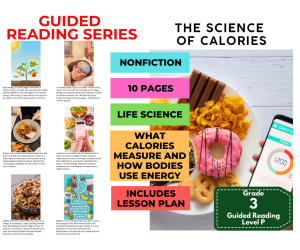
The Science of Calories: Guided Reading Level P with Lesson Plan
ELA, Resources for Teachers, Reading Comprehension, Reading, Science, Life Sciences, Health, P.E. & Health, Physics, Language Development, Grade 2, 3, 4, Worksheets & Printables, Worksheets, Teacher Tools, Centers, Activities, Literacy Readers, Quizzes, Quizzes and Tests, Assessments, Lesson Plans
This The Science of Calories (level p) guided reading book with lesson plan includes: Guided Reading Color Label (front cover x1) This is a quick way to match the book’s demands to what students can generally handle.. The overall goal is to use the level/color to pick books for several smaller groups. To qualify for a certain level, a student is expected to read a book from that level with about 90–94% accuracy. If a student is consistently accurate and understands, move up a level. If the student is struggling at that level, drop down and add more support. Each student will improve at completely different rates, but it is generally one of the best ways to check progress across the class. DOWNLOAD THE CATALOG TO VIEW ALL GUIDED READING BOOKS AVAILABLE (SORTED LEVELS A-Z) Pre-Reading Question (x1) Teacher asks the prompt aloud, can be while showing the cover or first page. Students share what they already know, or make educated guesses from the cover. Prompt them to use the target vocabulary. Write some of their responses on the board to look back at during the reading. Vocabulary Words (x5) Introduce the five words, best doing it one at a time. Start by saying it, while students repeat and then see if anyone knows what it means before reading further. Read through the meaning and try to briefly connect each word to a picture or gesture so it’s meaningful. Ask students to flip through the book pages and point to where they see each of the vocabulary words. While reading the book pause upon coming across one of the vocab words or read the sentence twice to make sure students understand the word has appeared. Optional: Ask students to raise hands whenever they see/hear one of the new words. Guided Reading Pages (x10) Check the book snapshot (below) for: primary topic - do you need to prep extra reading or intro materials on this? what is taught best - decide on 1-2 bullets to focus on, use the prompt or words provided here for best results. learning goals - what you are checking for students to be able to do after the session, elicit answers using prompts or words provided. key vocabulary (see section above). questions overview - so you know what is coming up and if you need to prep extra materials to assist understanding. Run the lesson You may have already looked at a few of the pages together, but you can show them some of the pictures again first to set meaning. Depending on how much time you have and how familiar your students are with guided reading class, you may want to read the book aloud first with the group first. Students whisper or partner read, while you listen in. If time, do it as a group, one student reading a page each. Use the guided page’s prompts to coach: “Check the picture / does it make sense?” “Point under the words / try the first sound” “Reread the sentence smoothly”. Try to focus more on one student per session (rotating every time), so you can work out if they are ready to move up or need to move down a level. Comprehension Questions (back cover x3) This is your way to check that students didn’t just say the words, but actually understood the text. First, let students answer by pointing to the page/picture and saying a short sentence. After any answer, follow with: “Show me where you found that in the text.” In bigger groups, have partners answer first (10–20 seconds), then call on 2–3 students to share. Differentiation tips: Emerging speakers/struggling readers: oral + pointing On-level: oral in a full sentence Higher: one written sentence or draw + label Book Snapshot Title: The Science of Calories Genre: Nonfiction (informational science text) Subject: Science (Nutrition/Human Body) Primary Topic: What calories measure and how bodies use energy Estimated Guided Reading Level (A–Z): P What This Book Teaches Best Defines energy as what living things need to survive and function, and connects energy to everyday examples like cars and lamps. Explains that a calorie measures energy in food (not weight or size) and describes it as a scientific unit of measurement. Shows how most energy starts with the sun , and how plants use photosynthesis to turn light into chemical energy stored in plant parts. Describes how the human body uses energy all the time (even during rest or sleep) to power the heart, lungs, and brain. Explains how food energy is released through digestion , how activity increases energy demand, and how extra calories may be stored as body fat. Learning Goals Explain what energy is and why living things need it. Describe what a calorie measures according to the text. Explain how plants get energy from the sun and where that energy is stored in a plant. Describe how digestion helps the body unlock energy from food. Describe how physical activity changes the body’s need for calories. Explain what happens when more calories are consumed than the body needs for daily activities. Key Vocabulary From the Text measurement — finding out how much of something there is. photosynthesis — plants use sunlight to make chemical energy. digestion — the process that unlocks energy in food. intestines — long tubes that help finish breaking down food. converted — changed from one form into another. Discussion Prompts Pre-reading question: What do you think calories tell us about the food we eat? Comprehension questions: What does the book say a calorie measures? Comprehension questions: How does the book explain that plants capture and store energy from the sun? Comprehension questions: What does the book say happens when a person consumes more calories than needed for daily activities? Printing Tips 1. Best Printing Method (Recommended) “Booklet” Printing (Best if Available) If your printer or PDF viewer supports Booklet Printing , use this. Settings to use: Print mode: Booklet Paper size: Letter or A4 (either works) Orientation: Landscape Print on both sides: Yes Flip on: Short edge Scaling: Fit to printable area Booklet subset: First test: Front sides only Then: Back sides only This will automatically: Pair pages correctly Put the cover on the outside Align everything for folding After printing, fold in half and staple along the spine . 2. If “Booklet” Printing Is NOT Available You can still print this correctly with manual duplex printing . Step-by-step: Open the PDF. Choose Print . Set: Orientation: Landscape Pages per sheet: 1 Print on both sides: Yes Flip on: Short edge Print all pages . Because each PDF page already contains two facing book pages, the result will still fold cleanly into a book. Thousands of Cored Education products are included with your TeachSimple membership. Download links and encyclopedia index available here.
Author Cored Education
Rating
Tags Reading Comprehension, Reading Passages, Reading, Guided Reading, Guided Reading Lesson Plan, Guided Reading Activity, Pre-reading, Science Lesson Plans, Life Science, Health

New York City Marathon Word Search 2nd 3rd 4th 5th Grade worksheet
Vocabulary, Language Development, ELA, Spelling, Sports, P.E. & Health, Grade 2, 3, 4, 5, Games, Activities, Word Searches, Worksheets, Worksheets & Printables
Make learning fun with a no-prep, printable vocabulary word search that builds vocabulary, reinforces literacy, and sparks curiosity! Students can explore the new vocabulary words while practicing spelling, scanning for letters, and identifying keywords. A word search can be a perfect and easy-to-use activity to liven up a lesson by combining learning with fun! It is an excellent way to reinforce concepts within a lesson and engage students' hands-on learning. Purpose: This activity allows students to learn new vocabulary words and contextualized vocabulary related to a topic ✏️, improve spelling, reading, and attention to detail 📚, increase awareness of concepts and knowledge about the world at large 🌍, and encourage curiosity and engagement about the topic 🐾. Word searches are a hands-on way to make learning memorable and fun for students - it engages them at all vocabulary levels! How to Do It: 1️⃣ Hand out the word search worksheet. 2️⃣ Introduce any important vocabulary or concepts that fit with the topic. 3️⃣ The students search for the words and circle or highlight each one. 4️⃣ Discuss the importance of the topic or the words that the student found. 5️⃣ Review the answers using the answer key that is included for each product ✅ Perfect For: Grades 2-5 🌟, independent practice, partner work, students who finish early, science or social studies centers, or for substitute plans 🤝 Way of Implementation: Great for independent practice early finishers, partner work, or substitute plans 🤝. Answer Keys: (these will be pencils under your three files: Given for simple checking and self-assessing. Fun Variations: Timed Challenge ⏳ - record how many words students can find in a set time. Partner Puzzle 🤝 - work together to find all of the words. Vocabulary Extension ✏️ - write sentences or a few short paragraphs using the words. Create-Your-Own Word Search 🧩 - have students make their own word search puzzles using the vocabulary. Standards Alignment: Supports CCSS/ELA vocabulary development, and can also connect to NGSS or other relevant standards, depending on the topic. File & Print Info: PDF includes both a color and black and white version, and is ink-friendly to make printing easy. Teacher Tip! Have students learn by being hands-on, engaged, and active while helping them build awareness, vocabulary, and literacy skills around any topic! 🌟
Author Classsim
Rating
Tags New York , City , Marathon, Word Search , 2nd 3rd 4th 5th Grade, Worksheet , Activity, New York City Marathon Word Search , New York City Marathon Word Search 2nd 3rd 4th 5th Grade , New York City Marathon Word Search 2nd 3rd 4th 5th Grade Worksheet Activity

Bat Crown or Hat Easy Paper Craft Art Project
Creative Arts, Art, Preschool, Kindergarten, Grade 1, 2, 3, 4, 5, Activities, Crafts, Projects
Bat Crown or Hat Easy Paper Craft Art Project | All Year Long Craft Project This fun and engaging paper craft project that is the perfect printable for elementary students to create their own bat-themed craft crown or hat! Designed with easy-to-cut shapes, this activity helps students develop fine motor skills while enjoying a creative, hands-on experience. Choose from 2 craft options: a colorful version of a black and white version for individual coloring. Extend learning by encouraging students to write a creative story about their completed craft. This versatile PDF packet is ideal for classroom or homeschool activities, independent work, or as a sub plan for grades K-5. With minimal prep, this fun activity is perfect for building confidence, developing creativity, boosting fine motor skills, and increasing writing abilities in young learners. Perfect for whole-class crafts, individual projects, or even at-home fun! Like this resource? Check out more paper crafts: Adorable Acorn One Page Paper Craft Smiling Snail One Page Paper Craft Spring Landscape One Page Paper Craft Beach Landscape One Page Paper Craft Jolly Reindeer One Page Paper Craft Thanks for downloading Doodle Thinks resources. Have fun crafting!
Author Doodle Thinks
Rating
Tags Fine Motor Skills, Arts And Crafts, Art Activity, Craft Project, Craft Printables, Self-Expression, Creativity, Bat Craft, Bat Art Project, Halloween Art Project