



3,911 products added recently
Page 7 - Writing Center
Writing Centers are an excellent resource for nurturing students' creativity and enhancing their writing abilities. These centers offer various activities, including journaling, storytelling, poetry, and collaborative writing projects. By implementing a writing center, you create a dedicated space where students feel encouraged to express themselves and experiment with different writing styles. Resources such as graphic organizers, word banks, and writing prompts support students in developing confidence and proficiency in their writing. Enrich your language arts curriculum with these inspiring tools.

 Show filters


Hansel and Gretel Fairy Tale Foldable Mini Book Grade 1 2 3 ELA
ESL, Language Development, ELA, Children’s Literature, Literature, Reading Comprehension, Reading, Handwriting, Writing, Grade 1, 2, 3, Centers, Activities, Crafts, Projects, Assessments, Teacher Tools
Make learning fun and exciting through this Hansel and Gretel Mini Book Set especially designed for Grades 1, 2 and 3 students, homeschoolers, and ESL/EFL learners. This mini book bundle set is packed with meaningful activities for your reading classes, reading comprehension exercises, ELA project, fairy tale unit, reading centers, literacy center, morning work, exercise for early finishers and so much more! What’s Included: •Colored Hansel and Gretel Story Mini Book– for story retelling, reading and reading comprehension practice •Hansel and Gretel Story Mini BookTrace & Read Pages– handwriting practice and motor skills exercise •Hansel and Gretel Story Mini BookSequencing Booklet– sequencing and sorting exercise, story retelling and reading practice •Hansel and Gretel Story Mini BookRetell & Reflect Pages– retell practice, creativity and imagination development •Hansel and Gretel Story Mini BookBlank Create-a-Story Templates– story telling, supporting creative and imaginative thinking skills •Hansel and Gretel Story Mini BookTeacher Guide + Sample Lesson Plan
Author It's Teacher L
Rating
Tags Mini Books, Reading Comprehension, Fairy Tale, Reading Center, Literacy Centers

Reading Comprehension Passages Fiction Set 1 - Nature (Google Forms)
ELA, Reading, Language Development, Vocabulary, Common Core, ESL, Spelling, Reading Comprehension, Writing, Creative Writing, Grade 2, 3, Assessments, Teacher Tools, Tests, Quizzes and Tests, Activities, Centers
Reading Comprehension Passages Fiction Set 1 Overview Fascinating reading comprehension passages, each with an array of activities included. Stories are written for the modern classroom and topics are designed to promote enthusiasm from each student. Each lesson contains a mixed questions section to check understanding, a vocabulary or spelling activity to help remember key language introduced, and a writing exercise. Full answer keys are provided. For a more detailed overview, check the section under the links at the bottom of this description. Passages Include 1.Bring on the Snow: Kellie wants to make it snow. How does she try? 2.Walk through the Woods: A walk in the woods turns into a huge adventure. 3.Nature Photographer: Donna get some amazing snaps in this story. 4.Nature's Beautiful Colors: Rusty enjoys finding out about the colors in nature. 5.Flower Fun: Learn about flower names and colors in this fun lesson. 6.Picking Cherries: Ross spends his day picking cherries but is it worth it? Additional File: Nature Photographer: Drawing Nature Printable Google Forms Version This is the Google Forms editable and fillable/self grading version. This download is available in GOOGLE Docs, GOOGLE Forms, GOOGLE Slides. PDF, PPT, WORD. FULL CATALOG OF DOWNLOAD LINKS HERE Grade 2/3 Links Fiction Set 1 - Nature Google Docs Google Forms Google Slides PDF PPT Word Guided Reading Materials Fiction Set 2 - Animals Google Docs Google Forms Google Slides PDF PPT Word Guided Reading Materials Fiction Set 3 - Food Google Docs Google Forms Google Slides PDF PPT Word Guided Reading Materials Fiction Set 4 - School Google Docs Google Forms Google Slides PDF PPT Word Guided Reading Materials Fiction Set 5 - Friends Google Docs Google Forms Google Slides PDF PPT Word Guided Reading Materials Fiction Set 6 - Family Google Docs Google Forms Google Slides PDF PPT Word Guided Reading Materials Fiction Set 7 - Sports Google Docs Google Forms Google Slides PDF PPT Word Guided Reading Materials Nonfiction Set 1 - Technology Google Docs Google Forms Google Slides PDF PPT Word Guided Reading Materials Nonfiction Set 2 - Nutrition Google Docs Google Forms Google Slides PDF PPT Word Guided Reading Materials Nonfiction Set 3 - Animals Google Docs Google Forms Google Slides PDF PPT Word Guided Reading Materials Reading Passages Overview Each passage is especially written for Grade 2-3 students, including key vocabulary required for this age group. Topics are varied and are accompanied by colorful graphics. Topics are meant to educate, yet entertain the modern student. These passages are perfect for the modern classroom. Whereas textbooks can become outdated in no time, any changes to technology or the world will result in updates to this product. Mixed Questions The mixed questions section of each lesson includes a variation of fivecomprehension, vocabulary and math questions. In addition, key reading strategies are frequently covered including cause & effect, summarizing, compare & contrast and making conclusions. Three of the questions will be MCQs and two will require a written response of some kind. Full answers and example responses appear at the end of the lesson. Spelling & Vocab Each reading passage contains a variety of words and phrases designed for Grade 2-3 students. Spelling and vocab activities provide the opportunity to build fluency with these words. As it can become quite mundane doing the same activities over and over, each lesson in a set will contain a different spelling and vocab activity . Writing Prompts Writing prompts are designed to continue the theme or lessons learned in the story. Students are persuaded to write in a variety of ways and each prompt includes several cues to help. As with the spelling/vocab section, writing prompts will vary. This includes research pieces, reading responses, poetry and creative writing prompts. Full Answer Keys Full answer keys and sample responses are provided so no matter how busy you are, you know you're covered! Mixed question answers provide evidence from the text, math questions contain the relevant workings. Answers are designed for use by the teacher, but also suitable as a handout to the student. Additional File One lesson will have an additional file. This is something fun to extend the lesson with. For similar downloads and other frees, do check out Cored Group on TeachSimple.
Author Cored Education
Rating
Tags Elementary, Reading, Comprehension, Vocabulary, Answers, Common Core, Writing, Passages, Digital Centers, Self Assessment

Aztecs Reading Comprehension Passage - Cored Ed Encyclopedia
ELA, Language Development, Reading Comprehension, Reading, Social Studies, Writing, Vocabulary, Geography, History, History: Ancient, Grade 2, 3, 4, 5, Worksheets & Printables, Worksheets, Teacher Tools, Centers, Activities, Writing Prompts, Assessments, Quizzes and Tests, Quizzes, Lesson Plans
This Aztecs reading comprehension with lesson plan includes: Visualization (on the front cover) Start your lesson by taking a minute to think and share something about the topic. Read the script aloud (slowly), perhaps prepare some music or sound effects. Student close their eyes and let their imaginations wander. Students open their eyes, read the question aloud and give them a few minutes to complete. Ask a few students to share or keep answers until the end to compare with what they learn in the passage. Quick pause—thousands of Cored Education products are included with your TeachSimple membership. Download links and encyclopedia index available here. Pre-Reading Trivia Students will write down one thing they already know about the subject and then read five more facts and discuss. These facts are fun, and the students will enjoy learning about the subject before reading more. Give 1 minute for students to write what they already know (no pressure—best guess is fine). Read the five facts together. After each fact, do ask a student for their opinion, was it surprising? Set a purpose by asking students to highlight/underline one fact they want to learn more about during the reading. Reading Passage The text is a high-interest reading passage with set paragraphs, roughly three to four paragraphs long. It contains a variety of themes about the topic, anywhere from history to technology. The passage is between 250 and 350 words in length. First, ask students to look at the headings and see what they’ll learn about today. What do they know about the topic/heading? First read options: Teacher read-aloud (best for support). Partner reading (paragraph by paragraph). While reading, students underline important details, and vocabulary words they think may come up in the questions section. Mixed Questions The first question page contains four multiple-choice questions, each with a choice of four answers, and three written response questions that require a sentence or two from the student. Students complete the mcqs first independently, then review quickly as a class. For the 3 written responses, try to get students giving the answer with some form of evidence: “I think ___ because the text says ___.” If students get stuck, send them back to check the passage. Vocabulary Questions Practice seven key words from the text in this section across two activities. First section is scrambled words where students will unscramble three words given a clue for each. The second section is a word to meaning matching activity. Before starting, have some students read out words they underlined in the passage. Ask students to say the word and read aloud the sentence(s) around each word. Ask students to do scrambled words and the matching exercise in pairs then go through answers as a class. For the scrambled spelling task, get four pairs to come up to the board and write the words for extra practice with the other student reading out the clue. For the matching task, prompt students to give full sentences: “I matched ___ with ___ because ___.” Creative Writing In this question, the student will be required to write a five to eight sentence paragraph on a question related to the topic. Before starting, ask students write down 3 key ideas they are going to include in their piece. Ask students for ideas to share around the class to help those struggling. Pro writing expectations: 5–8 sentences At least 2 facts or details from the passage At least 2 vocabulary words from the previous page Students read their paragraphs while classmates listen for facts and vocabulary words. Extension Activities This page is optional for fast finishers or to take home. There are several activities, each one requiring a different skill. Do some, do none, do all, completely optional - but you will feel reassured knowing every possibility is planned for. Includes summary writting question and additional facts. Answer Key There are answers for the multiple-choice questions, written response questions have sample answers, vocabulary answers and if there is a summary question then a sample summary will be provided as well. Lesson Plan Included Customized lesson plan for this lesson is included. Lesson Snapshot Title: Aztecs Genre: Nonfiction (informational passage) Subject: Social Studies (Ancient Civilizations) / Reading (Informational Text) Primary Topic: Building lake-city life and what happened later Estimated Guided Reading Level (A–Z): S What This Lesson Teaches Best How a wandering Nahua group (the Mexica) chose a home based on a sign and began building a city on a lake. How people adapted to living on water using chinampas , canals, and causeways to grow food and move around. How Triple Alliance (between Tenochtitlan , Texcoco , and Tlacopan ) helped the capital grow powerful through victories and tribute. Using headings to track a sequence: founding and growth, alliance and power, then conflict and destruction, and what remains today. Connecting past to present by noting how the eagle-and-cactus story lives on and how archaeologists still uncover remains beneath modern streets. Learning Goals Identify the sign the Mexica saw that helped them choose their home. Describe how builders expanded the island and how chinampas helped crops grow near home. Explain how canals and causeways helped the city get fresh water and connect to the shore. Describe how tribute (examples named in the text) helped the capital grow powerful. Describe what the passage says happened after Spanish explorers arrived, including the year the city fell. Explain what the passage says exists today where the city once stood. Key Vocabulary From the Text chinampas — raised garden beds packed with mud. causeways — broad raised roads that connect land and water. tribute — goods sent to rulers as payment. levees — walls or banks that help stop floods. archaeologists — people who uncover and study the past. FULL CATALOG OF DOWNLOAD LINKS AND ENCYCLOPEDIA INDEX HERE
Author Cored Education
Rating
Tags Vocabulary, Reading Comprehension, Reading Passages, Lesson Plans, Ela Lesson Plans, Reading Comprehension Lesson Plans, Pre-reading, History, History Lesson Plans, Geography

Letter J Phonics and Writing Centers with Real Photographs
ELA, Writing, Handwriting, Language Development, Phonics, Kindergarten, Preschool, Centers, Activities
This letter J beginning sounds and handwriting activity includes real photographs to practice learning to recognize, write and identify the sound of the letter J. Each picture has bold colors and includes easily recognized pictures. Each activity can be used in a literacy center for students to practice letter recognition. What is Included: There is an instructional page with printing instructions. There are letter I posters with various letter J words. There are handwriting task cards that allow students to practice writing the letter J as well as words that begin with the letter J. There are beginning sound clip cards that allow students to practice clipping the images that begin with the letter J. There is a sorting activity where you sort pictures that begins with J from words that do not begin with J. The letter J sorting cards that can also be used to play memory, matching, or concentration games. These cards can also be used during a lesson in a pocket chart as well as for a center display. When to Use: All of the activities make great literacy centers, by placing each set of activities in the center and letting students complete activities alone or with a partner. These activities make great morning tub activities. Just place these activities in morning bins for students to complete as their classmates arrive to class. Skills Assessed: These activities assess letter recognition skills, beginning sounds, handwriting, and sorting skills. Each activity in this set is low prep. Each activity just needs to be printed out, cut apart, and laminated if desired. When you laminate the writing cards, you can create a writing center activity that is reusable is you add dry erase markers. The handwriting cards and beginning sound clip cards can be turned into task box activities.
Author The Connett Connection
Tags Phonics, Writing Centers, Real Photographs, Early Literacy, Letter J

Alphabet Letter Worksheets|Kindergarten Writing Center|Sounds Tracing
ELA, Writing, Reading, Handwriting, Formal Writing, Creative Writing, Language Development, Literature, Pre-Reading, Kindergarten, Preschool, Toddler, Grade 1, Activities, Centers, Worksheets, Worksheets & Printables, Teacher Tools
This engaging and interactive Alphabet Worksheet Pack is designed to help young learners develop essential literacy skills through tracing, writing, finding, and coloring letters. With 26 pages, each dedicated to a different letter, this resource ensures a fun and structured approach to learning the alphabet. The goal of this worksheet pack is to support letter recognition, handwriting practice, and fine motor skill development in early learners. By combining tracing, writing, and coloring activities, children can build letter familiarity while enjoying a hands-on learning experience. Letter Recognition – Identify the uppercase versions of the letter. Tracing Practice – Follow guided lines to trace uppercase . Independent Writing – Practice writing the letters without tracing lines. Find the Letter – Locate and circle the correct letter among mixed characters. Preschool (Ages 3-4) – Basic tracing and recognition. Kindergarten (Ages 4-5) – Writing and identifying letters in words. 1st Grade (Ages 5-6) – Reinforcement of letter formation and early phonics. Daily Letter Practice – Assign one page per day for structured learning. Letter of the Week – Focus on one letter each week with extended activities. Centers or Morning Work – Use in literacy centers for independent practice. Laminated for Reuse – Place in sheet protectors and use dry-erase markers. Standards Recognizing and naming all uppercase. Printing many uppercase. Fine Motor Development – Supports pre-writing skills and hand coordination. File Types PDF (Print-ready) Number of Pages 26 pages (One page per letter)
Author LAMO
Tags Worksheets, Alphabet, Handwriting, Language Arts, Tracing, Letter Writing, Kindergarten Writing, Phonics, Homework
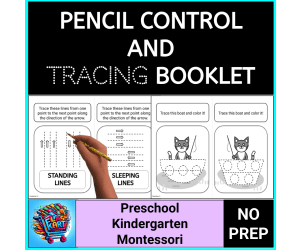
Pencil Control Tracing Worksheets for Pre-K & Kindergarten Pre-Writing
Montessori, Handwriting, Writing, ELA, Numbers, Early Math, Math, Shapes, Patterns, Kindergarten, Preschool, Toddler, Centers, Activities, Worksheets & Printables, Worksheets
Pencil Control and Tracing Worksheets Pre-Writing Practice for Preschool, Montessori, & Kindergarten Build strong pre-writing skills with this no-prep pencil control and tracing worksheet pack. I designed it especially for preschool and kindergarten learners. These engaging tracing activities will help children develop fine motor skills, hand-eye coordination, and pencil control , setting the foundation for confident handwriting. With a gentle progression from simple lines to letters and numbers, this resource is perfect for early learners who are just beginning their writing journey. What’s inside? This workbook features a wide variety of grayscale tracing worksheets that are easy on young eyes and ideal for printing. Tracing activities include: Basic Lines: standing lines, sleeping lines, curved lines, and slanting lines Fun shapes and objects: lollipop, quilt, loops, heart-shaped cookie, starfish, kite, balloons, birdhouse, moon, earrings, boat, mat, hat, gift, flags, jellyfish, and a lot more Themed tracing pages: circles, caterpillar, house, train, elephant bath lines, candle, cake etc. Letters and numbers: uppercase A - Z and numbers 1 - 10 Resource features Grayscale: I kept it black and white for clear and distraction-free tracing Engaging themes that keep children motivated and interested Skill-building progression from basic strokes to letters and numbers Versatile use: It is perfect for classrooms, homeschool settings, or one on one practice Age-appropriate activities for preschool and kindergarten students are included in this set How to use it? Tracing practice: Children may trace lines, shapes, and objects to strengthen pencil control Writing readiness: Feel free to introduce letters and numbers through guided tracing Creative learning: In this resource, I have paired up tracing with coloring for added engagement Daily routines: Use these worksheets as warm-ups, morning work, centers, or fine motor practice Early finishers: You can also put these worksheets in your early finishers basket This resource is helpful for: Teachers: It is great for literacy centers, early finishers, and handwriting lessons For Homeschoolers it is a simple way to create a structured pre-writing routine at home Parents will love it as an easy and effective tool for building fine motor skills through fun practice This pencil control and tracing resource helps young learners build confidence as they practice basic lines, shapes, letters, and numbers. With engaging themes and no-prep worksheets, it’s an ideal choice for developing strong fine motor and pre-writing skills in preschool and kindergarten .
Author FlashKart
Rating
Tags Pencil Control, Pre-writing, Tracing, Workbook, Montessori Worksheets, Handwriting, Fine Motor Skills, Shape Tracing, Number Tracing, Curved Lines
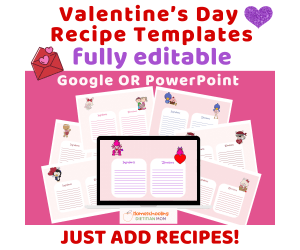
Recipe Book and Cookbook - Life Skills Template - Valentines Day
Life Skills, Special Resources, Writing, ELA, Language Development, Strategies, Reading, Technology, Science, Resources for Teachers, Middle School, High School, Homeschool Resources, Elementary, Templates, Teacher Tools, Centers, Activities, Crafts, Projects, Task Cards, Worksheets & Printables
Editable Recipe Templates - Create a Recipe Book or a Cookbook - 10 Unique Love-Themed Template Designs for Valentines Day (or any other time of year as is appropriate). Each recipe template: Can be printed with the chosen recipes handwritten onto the cards Can be edited using Google Slides or PowerPoint - Font styles can be changed and more. Links to recipe ideas are included as well. This is a project that can be worked on individually or as a team. Students will practice using Google Slides or PowerPoint software which will increase their knowledge of creating products in these creative software programs. Students will practice typing and/or handwriting. Students can give the finished products to a special friend or family member. Students can try out the recipes in the school kitchen as is possible. A lovely home economics and family consumer sciences project. Students will be developing research skills when they utilize the included links to find recipes and choose ones that they think sound yummy. Finding, choosing, and trying out new recipes are all life skills that will be helpful into adulthood, especially if students are given the opportunity to try out any of the recipes. Students will have fun doing this crafty, unique activity, and they will be learning at the same time. Recipes contain ingredients in specific amounts (math), and have to be followed like a lab experiment to complete and end up with a successful finished product. Two zipped files are included: one non-editable pdf file and one editable PowerPoint file that can be used with Google slides which is a free program.
Author Homeschooling Dietitian Mom
Tags Life Skills Template, Templates, Teacher Helps, Valentine, Health Templates, Home Economics, Family And Consumer Science, Food And Nutrition, Writing Prompts, Research Projects
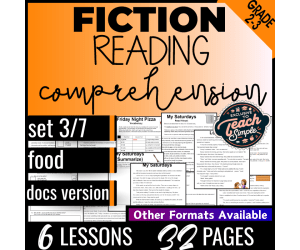
Reading Comprehension Passages Fiction Set 3 - Food (Google Docs)
ELA, Reading, Common Core, Reading Comprehension, ESL, Language Development, Vocabulary, Spelling, Creative Writing, Writing, Grade 2, 3, Worksheets & Printables, Worksheets, Writing Prompts, Assessments, Teacher Tools, Tests, Quizzes and Tests, Centers, Activities
Reading Comprehension Passages Fiction Set 3 Overview Fascinating reading comprehension passages, each with an array of activities included. Stories are written for the modern classroom and topics are designed to promote enthusiasm from each student. Each lesson contains a mixed questions section to check understanding, a vocabulary or spelling activity to help remember key language introduced, and a writing exercise. Full answer keys are provided. For a more detailed overview, check the section under the links at the bottom of this description. Passages Include 1.Happy Birthday Mrs. B: Mrs. Barber has cooked something special for the class. 2.Sophie's Own Garden: Grandma buys Sophie some garden supplies. 3.Lunchtime: Kasey has a surprise for her lunch. 4.Cindy's Tea Party: Cindy invites some special friends to her tea party. 5.My Saturdays: Anything better than baking cookies on a Saturday? 6.Friday Night Pizza: Read about the Webster Family Special in this story. Google Docs Version This is the Google Docs editable and fillable version. This download is available in GOOGLE Docs, GOOGLE Forms, GOOGLE Slides. PDF, PPT, WORD. FULL CATALOG OF DOWNLOAD LINKS HERE Grade 2/3 Links Fiction Set 1 - Nature Google Docs Google Forms Google Slides PDF PPT Word Guided Reading Materials Fiction Set 2 - Animals Google Docs Google Forms Google Slides PDF PPT Word Guided Reading Materials Fiction Set 3 - Food Google Docs Google Forms Google Slides PDF PPT Word Guided Reading Materials Fiction Set 4 - School Google Docs Google Forms Google Slides PDF PPT Word Guided Reading Materials Fiction Set 5 - Friends Google Docs Google Forms Google Slides PDF PPT Word Guided Reading Materials Fiction Set 6 - Family Google Docs Google Forms Google Slides PDF PPT Word Guided Reading Materials Fiction Set 7 - Sports Google Docs Google Forms Google Slides PDF PPT Word Guided Reading Materials Nonfiction Set 1 - Technology Google Docs Google Forms Google Slides PDF PPT Word Guided Reading Materials Nonfiction Set 2 - Nutrition Google Docs Google Forms Google Slides PDF PPT Word Guided Reading Materials Nonfiction Set 3 - Animals Google Docs Google Forms Google Slides PDF PPT Word Guided Reading Materials Reading Passages Overview Each passage is especially written for Grade 2-3 students, including key vocabulary required for this age group. Topics are varied and are accompanied by colorful graphics. Topics are meant to educate, yet entertain the modern student. These passages are perfect for the modern classroom. Whereas textbooks can become outdated in no time, any changes to technology or the world will result in updates to this product. Mixed Questions The mixed questions section of each lesson includes a variation of fivecomprehension, vocabulary and math questions. In addition, key reading strategies are frequently covered including cause & effect, summarizing, compare & contrast and making conclusions. Three of the questions will be MCQs and two will require a written response of some kind. Full answers and example responses appear at the end of the lesson. Spelling & Vocab Each reading passage contains a variety of words and phrases designed for Grade 2-3 students. Spelling and vocab activities provide the opportunity to build fluency with these words. As it can become quite mundane doing the same activities over and over, each lesson in a set will contain a different spelling and vocab activity . Writing Prompts Writing prompts are designed to continue the theme or lessons learned in the story. Students are persuaded to write in a variety of ways and each prompt includes several cues to help. As with the spelling/vocab section, writing prompts will vary. This includes research pieces, reading responses, poetry and creative writing prompts. Full Answer Keys Full answer keys and sample responses are provided so no matter how busy you are, you know you're covered! Mixed question answers provide evidence from the text, math questions contain the relevant workings. Answers are designed for use by the teacher, but also suitable as a handout to the student. Additional File One lesson will have an additional file. This is something fun to extend the lesson with. For similar downloads and other frees, do check out Cored Group on TeachSimple.
Author Cored Education
Rating
Tags Elementary, Reading, Comprehension, Vocabulary, Answers, Common Core, Spelling, Writing, DIGITAL CENTERS, Vocabulary Assessments

Read Trace and Write Sentences Worksheets Writing Practice Kindergarte
Writing, ELA, Handwriting, Kindergarten, Preschool, Grade 1, Centers, Activities, Worksheets, Worksheets & Printables
This Read, Trace, and Write the Sentences worksheet pack is a simple, no-prep resource designed to help young learners practice early writing and reading skills in a clear and structured way. It is perfect for kindergarten and first grade students who are beginning to build confidence with sentence writing, handwriting, and basic reading comprehension. Each page guides students through a simple routine: read a short sentence, trace it to practice handwriting, and then write it again or complete it using picture clues. This repeated structure helps students understand how sentences are formed while strengthening both writing and reading skills in an easy, supportive way. The activities use simple, familiar vocabulary and include picture support to help learners stay engaged and understand meaning more easily. Everything is designed to feel approachable and not overwhelming for early learners, making it suitable for different ability levels. This resource works well for literacy centers, morning work, homework, small groups, or homeschooling. It can be used independently or with teacher support depending on the student’s level. All pages are black and white, easy to print, and ready to use in any learning setting. File type: PDF Number of pages: 10
Author Sadigitalart
Rating
Tags Writing Practice, Sentences Worksheets, Trace And Write

Reading Comprehension Passages Fiction Set 4 - School Presentable PDF
ELA, Reading, Reading Comprehension, Common Core, Language Development, Spelling, Vocabulary, Writing, Children’s Literature, Literature, Grade 2, 3, Worksheets & Printables, Worksheets, Writing Prompts, Assessments, Teacher Tools, Tests, Quizzes and Tests, Centers, Activities
Reading Comprehension Passages Fiction Set 4 Snapshot Title: Title not stated Genre: Fiction (school-themed short stories with comprehension practice pages) Subject: Reading (ELA) Primary Topic: School life, friendships, and growing up Estimated Guided Reading Level (A–Z): P What This Teaches Best Friendship and honesty: Characters learn that keeping secrets can hurt friendships, and that being open with friends matters. Adjusting to new school experiences: Several stories focus on first days, new teachers, and learning to feel comfortable in a new class or school. Rules, fairness, and inclusion: A playground conflict shows how students challenge unfair “rules” and end up playing together. Perseverance and goal-setting: A student works hard—mostly alone—to win a school compost contest despite teasing and setbacks. Strong comprehension routine with support pages: Each story is followed by mixed questions, vocabulary/spelling work, and writing prompts tied to story details (note: one answer-key item lists “confident” where the activity word is “confidently”). Learning Goals Students will recount key events from a selected story in a logical sequence using details from the text. Students will describe a character’s feelings and motivations and explain how they change across the story. Students will identify the story’s message/lesson and support it with evidence from the text. Students will explain cause-and-effect relationships (what happened and why) shown in the stories. Students will determine word meanings using context clues from the surrounding sentences. Students will respond in writing to a prompt connected to a story’s events or theme. Passages Include 1.Don't Tell Anyone: Cherie likes to keep secrets, but her friends don't. 2.Roger's Luck: Roger never wins at anything. Will that change today? 3.Starting Third Grade: Mike feels uneasy at starting a new school year. 4.Bridget's New School: Bridget tries (and fails) to fit in at her new school. 5.Changing the Rules: Jenna changes the rules on her first day. 6.My Love of Art: Read about the author's love of art class in this lesson. PRESENTABLE PDF VERSION Run it like a slide show straight from a PDF, with no PowerPoint or extra software needed, just open, project, and teach. Other versions are available in the links list below or in the full catalog. FULL CATALOG OF DOWNLOAD LINKS HERE For similar downloads and other frees, do check out Cored Group on TeachSimple.
Author Cored Education
Rating
Tags Elementary, Reading, Comprehension, Vocabulary, Common Core, Spelling, Writing, Passages, Reading Centers, Reading Comprehension Assessments

The Little Match Girl Fairy Tale Foldable Mini Book Grade 1 2 3 ELA
ESL, Language Development, ELA, Children’s Literature, Literature, Reading Comprehension, Reading, Handwriting, Writing, Grade 1, 2, 3, Centers, Activities, Crafts, Projects, Assessments, Teacher Tools, Literacy Readers
Experience a meaningful and engaging learning opportunities with your learners through this The Little Match Girl Mini Book Activity Pack! Designed specifically for Grades 1, 2 and 3 students, homeschoolers and EFL/ESL learners, this dynamic resource is perfect for teaching and practicing important literacy skills like reading, writing, speaking, fine motor, as well as supports creativity and imagination. The set of mini books can be used for reading classes, reading centers, reading comprehension exercises, fairy tale units, story telling and re-telling, creative writing, morning work, additional exercises for early finishers and so much more! What’s Inside: •The Little Match Girl Story Mini Book– for story retelling, reading and reading comprehension practice •The Little Match Girl Story Mini BookTrace & Read Pages– handwriting practice and motor skills exercise •The Little Match Girl Mini BookSequencing Booklet– sequencing and sorting exercise, story retelling and reading practice •The Little Match Girl Mini BookRetell & Reflect Pages– retell practice, creativity and imagination development •The Little Match Girl Mini BookBlank Create-a-Story Templates– story telling, supporting creative and imaginative thinking skills •The Little Match Girl Mini BookTeacher Guide + Sample Lesson Plan
Author It's Teacher L
Rating
Tags Fairy Tale Units, The Little Match Girl, ELA Project, Reading Comprehension, Reading Centers, Minibook

Quick Snacks Reading Comprehension Passage - Cored Ed Encyclopedia
ELA, Language Development, Reading Comprehension, Reading, Pre-Reading, Writing, Strategies, Vocabulary, Health, P.E. & Health, Grade 2, 3, 4, 5, Worksheets & Printables, Worksheets, Teacher Tools, Centers, Activities, Writing Prompts, Assessments, Quizzes and Tests, Quizzes, Lesson Plans
This quick snacks reading comprehension includes: Visualization (on the front cover) Start your lesson by taking a minute to think and share something about the topic. Read the script aloud (slowly), perhaps prepare some music or sound effects. Student close their eyes and let their imaginations wander. Students open their eyes, read the question aloud and give them a few minutes to complete. Ask a few students to share or keep answers until the end to compare with what they learn in the passage. Quick pause—thousands of Cored Education products are included with your TeachSimple membership. Download links and encyclopedia index available here. Pre-Reading Trivia Students will write down one thing they already know about the subject and then read five more facts and discuss. These facts are fun, and the students will enjoy learning about the subject before reading more. Give 1 minute for students to write what they already know (no pressure—best guess is fine). Read the five facts together. After each fact, do ask a student for their opinion, was it surprising? Set a purpose by asking students to highlight/underline one fact they want to learn more about during the reading. Reading Passage The text is a high-interest reading passage with set paragraphs, roughly three to four paragraphs long. It contains a variety of themes about the topic, anywhere from history to technology. The passage is between 250 and 350 words in length. First, ask students to look at the headings and see what they’ll learn about today. What do they know about the topic/heading? First read options: Teacher read-aloud (best for support). Partner reading (paragraph by paragraph). While reading, students underline important details, and vocabulary words they think may come up in the questions section. Mixed Questions The first question page contains four multiple-choice questions, each with a choice of four answers, and three written response questions that require a sentence or two from the student. Students complete the mcqs first independently, then review quickly as a class. For the 3 written responses, try to get students giving the answer with some form of evidence: “I think ___ because the text says ___.” If students get stuck, send them back to check the passage. Vocabulary Questions Practice seven key words from the text in this section across two activities. First section is scrambled words where students will unscramble three words given a clue for each. The second section is a word to meaning matching activity. Before starting, have some students read out words they underlined in the passage. Ask students to say the word and read aloud the sentence(s) around each word. Ask students to do scrambled words and the matching exercise in pairs then go through answers as a class. For the scrambled spelling task, get four pairs to come up to the board and write the words for extra practice with the other student reading out the clue. For the matching task, prompt students to give full sentences: “I matched ___ with ___ because ___.” Creative Writing In this question, the student will be required to write a five to eight sentence paragraph on a question related to the topic. Before starting, ask students write down 3 key ideas they are going to include in their piece. Ask students for ideas to share around the class to help those struggling. Pro writing expectations: 5–8 sentences At least 2 facts or details from the passage At least 2 vocabulary words from the previous page Students read their paragraphs while classmates listen for facts and vocabulary words. Extension Activities This page is optional for fast finishers or to take home. There are several activities, each one requiring a different skill. Do some, do none, do all, completely optional - but you will feel reassured knowing every possibility is planned for. Includes summary writting question. Answer Key There are answers for the multiple-choice questions, written response questions have sample answers, vocabulary answers and if there is a summary question then a sample summary will be provided as well. Lesson Plan Included Customized lesson plan for this lesson is included. Lesson Snapshot Title: Quick Snacks Genre: Nonfiction (informational passage) Subject: Health Science (Nutrition) / Reading (Informational Text) Primary Topic: Snacks between meals and steady energy Estimated Guided Reading Level (A–Z): R What This Lesson Teaches Best The purpose of a quick snack: a small, simple food that steadies you between bigger meals (not a meal replacement). How “convenience” packaged snacks are designed (ready to eat, travel well, last longer on a shelf) and what they may include (sweeteners, preservatives, bold flavors). Basic food science for kids: foods carry nutrients, including carbohydrates, protein, and fats, and protein helps tissues grow and repair. How to think about “steadier energy” snack choices (examples in the passage include fruit with yogurt and whole grains with beans). Built-in skill practice with aligned support pages (pre-reading facts, questions, vocabulary, writing, and extension activities based on the passage). Learning Goals Students can explain how the passage defines a quick snack and how it differs from a meal. Students can describe how quick snacks changed from home foods to packaged convenience foods, using text details. Students can identify the three nutrient groups named and describe what protein does in the body. Students can explain what the passage means by “steadier energy” and name a snack example it gives. Students can use section headings to locate information and state the main idea of each section. Key Vocabulary From the Text preservatives — ingredients that help food last longer. nutrients — helpful parts of food your body uses. carbohydrates — a nutrient group that gives the body energy. protein — helps body tissues grow and repair. packaged — put in a package to be ready and easy. FULL CATALOG OF DOWNLOAD LINKS AND ENCYCLOPEDIA INDEX HERE
Author Cored Education
Rating
Tags Vocabulary, Reading Comprehension, Reading Passages, Reading, Creative Writing, Reading Strategies, Writing Prompts, Lesson Plans, Quick Snacks, Health

Ovens Reading Comprehension Passage - Cored Ed Encyclopedia
ELA, Language Development, Resources for Teachers, Reading Comprehension, Reading, Pre-Reading, Writing, Science, Physics, Strategies, Grade 2, 3, 4, 5, Worksheets & Printables, Worksheets, Teacher Tools, Centers, Activities, Writing Prompts, Assessments, Tests, Quizzes and Tests, Quizzes
This ovens reading comprehension contains the following: Visualize on the Cover (Teacher Read Aloud Script) Start your lesson by taking a few moments to visualize the topic and share thoughts or feelings about it. Pre-Reading Trivia Students will write down one thing they already know about the subject and then read five more facts and discuss. These facts are fun, and the students will enjoy learning about the subject before reading more. Reading Passage The text is a high-interest reading passage with set paragraphs, roughly three to four paragraphs long. It contains a variety of themes about the topic, anywhere from history to technology. The passage is between 250 and 350 words in length. Mixed Questions The first question page contains four multiple-choice questions, each with a choice of four answers, and three written response questions that require a sentence or two from the student. Vocabulary Questions Practice seven key words from the text in this section across two activities. First section is scrambled words where students will unscramble three words given a clue for each. The second section is a word to meaning matching activity. Creative Writing In this question, the student will be required to write a five to eight sentence paragraph on a question related to the topic. Extension Activities This page is optional for fast finishers or to take home. There are several activities, each one requiring a different skill. Do some, do none, do all, completely optional - but you will feel reassured knowing every possibility is planned for. Includes summary writting question. Answer Key There are answers for the multiple-choice questions, written response questions have sample answers, vocabulary answers and if there is a summary question then a sample summary will be provided as well. FULL CATALOG OF DOWNLOAD LINKS AND ENCYCLOPEDIA INDEX HERE Lesson Snapshot Title: Ovens Genre: Nonfiction (informational text) Subject: Science & Technology / Reading Informational Text Primary Topic: How ovens work and changed over time Estimated Guided Reading Level (A–Z): R What This Lesson Teaches Best How early ovens began as cooking pits with hot coals underneath and food covered to cook slowly. How clay ovens with thick walls held heat and were used for baking, including flatbread pressed onto the inner wall. How modern ovens can use different heat sources and methods, including gas/electric heat , broiling , and convection (a fan moving hot air). How the first microwave oven grew from an accident involving radar equipment and how microwaves heat food by moving water molecules . How headings organize information in an informational passage (history → features → invention story). Learning Goals Students will describe how some of the earliest ovens cooked food using hot coals and covered pits. Students will explain how clay ovens held heat and how bread could bake on the inner wall. Students will compare ways ovens heat food (baking, broiling, and convection) using details from the text. Students will explain what accident helped lead to the first microwave oven. Students will describe how microwaves heat food quickly based on the passage. Key Vocabulary From the Text insulated — kept heat in, like a protected box. convection — a fan circulates hot air for even heating. microwaves — waves that heat food fast without a fire. molecules — tiny pieces of matter that can move. radar — equipment mentioned that led to a discovery. Cored Ed Encyclopedia Overview The Cored Ed Encyclopedia is a weekly series of lessons that you can pick up and use right away. These short readings fit into whatever time you have available. Each one includes a warm-up, a reading, and a set of questions, but it’s flexible — you can do just the reading, the full lesson, or skip the writing section if you need to. Each lesson focuses on a single topic so students don’t get lost. The writing is clear but never childish, making it perfect for grades two through five. Topics range from animals and science to history, inventions, and everyday things. No matter the level of the student, everyone should take away at least one new idea or fact from each lesson. The materials are easy to print, easy to explain, and require no setup. They work well for whole-class teaching, partner work, or independent study.
Author Cored Education
Rating
Tags Vocabulary, Spelling, Reading Comprehension, Reading Passages, Reading, Creative Writing, Reading Strategies, Writing Prompts, Ovens, Physics

Reading Comprehension Passages Fiction Set 3 - Friends (Google Docs)
ELA, Reading, Common Core, Reading Comprehension, ESL, Language Development, Spelling, Vocabulary, Literature, Writing, Grade 4, 5, Worksheets & Printables, Worksheets, Assessments, Teacher Tools, Tests, Quizzes and Tests, Centers, Activities
Reading Comprehension Passages Fiction Set 3 Overview No prep reading comprehension lessons, with enjoyable stories and topics. Each lesson has a blend of post-reading activities. Mixed questions to check overall understanding. Vocabulary activities, plus a writing section. Lessons also contain a bonus extension exercise at the end. Some you may like, some you may not, either way they are there if you wish to use them. Full answer keys are provided. Passages Include 1.A Friend's Promise: Josh's brother makes sure he keeps his promise to a friend. 2.The Rumor: April feels sad that Selena is getting attention from everybodynow. 3.Finishing Together: Fernando helps a teacher by taking part in a fundraiser. 4.Seniors Acting: Brooke is doing shows at the senior center. Will her friend find out? 5.Funland: Not such a fun day at Funland for the author in this story. 6.Back to School: The author hates the first day back. She doesn't know what to wear! Google Docs Version This is the Docs editable and fillable version. This download is available in GOOGLE Docs, GOOGLE Forms, GOOGLE Slides. PDF, PPT, WORD. Browse the Complete Cored Catalog — 2,000+ Resources Included Reading Passages Each reading passage has been written specifically for students in Grades 4–5, using vocabulary and language that match their age and ability level. The collection covers a wide range of engaging topics, supported by colorful visuals that help bring the content to life. Every lesson is designed to build knowledge while keeping students interested and motivated to read. These resources are also designed with flexibility in mind. Unlike traditional textbooks that can quickly become outdated, lessons can be updated over time to reflect changes in technology, discoveries, and the world around us. Mixed Questions Every lesson includes a variety of questions that help students think more deeply about what they have read. The question section combines reading comprehension, vocabulary, and math skills, while also regularly reinforcing important reading strategies such as cause and effect, summarizing, compare and contrast, and drawing conclusions. Most lessons include a mix of multiple-choice and written-response questions, giving students opportunities to explain their thinking as well as select answers. Complete answer keys and sample responses are provided at the end of each lesson for quick and easy reference. Spelling & Vocabulary Each passage introduces students to useful words and phrases appropriate for Grades 4–5. To help build confidence and word knowledge, every lesson includes a spelling or vocabulary activity. Rather than repeating the same task throughout the collection, activities vary from lesson to lesson to keep practice fresh and engaging. Activities may include spelling challenges, sentence matching, decoding activities, mixed-up text exercises, and other vocabulary-building tasks connected directly to the reading. Writing Prompts Each lesson includes a writing activity that extends the ideas, themes, or topics explored in the passage. Students are encouraged to write in a variety of formats, with prompts providing helpful guidance and ideas to get them started. Writing tasks vary throughout the collection and may include creative writing, research activities, personal responses, poetry, opinion writing, and other engaging assignments. Full Answer Keys Complete answer keys and sample responses are included with every lesson, making planning and marking quicker and easier. Reading comprehension answers include evidence and support from the text, while math-based questions show the relevant working where appropriate. The answer keys are designed primarily for teachers but can also be shared with students when needed. Just for Fun Each lesson finishes with an optional extension activity called Just for Fun . These bonus activities provide an enjoyable way to extend learning beyond the main lesson and often encourage creativity, discussion, or independent thinking. They are completely optional, giving you the flexibility to use the activities that best suit your students and classroom needs. For similar downloads and other frees, do check out Cored Group on TeachSimple.
Author Cored Education
Rating
Tags Elementary, Reading, Comprehension, Vocabulary, Answers, Common Core, Spelling, Writing, Digital Centers, Vocabulary Assessments

Skateboarding Reading Comprehension Passage - Cored Ed Encyclopedia
ELA, Language Development, Reading Comprehension, Reading, Pre-Reading, Writing, Sports, P.E. & Health, Technology, Science, Grade 2, 3, 4, 5, Worksheets & Printables, Worksheets, Teacher Tools, Centers, Activities, Writing Prompts, Assessments, Quizzes and Tests, Quizzes, Lesson Plans
This skateboarding reading comprehension includes: Visualization (on the front cover) Start your lesson by taking a minute to think and share something about the topic. Read the script aloud (slowly), perhaps prepare some music or sound effects. Student close their eyes and let their imaginations wander. Students open their eyes, read the question aloud and give them a few minutes to complete. Ask a few students to share or keep answers until the end to compare with what they learn in the passage. Quick pause—thousands of Cored Education products are included with your TeachSimple membership. Download links and encyclopedia index available here. Pre-Reading Trivia Students will write down one thing they already know about the subject and then read five more facts and discuss. These facts are fun, and the students will enjoy learning about the subject before reading more. Give 1 minute for students to write what they already know (no pressure—best guess is fine). Read the five facts together. After each fact, do ask a student for their opinion, was it surprising? Set a purpose by asking students to highlight/underline one fact they want to learn more about during the reading. Reading Passage The text is a high-interest reading passage with set paragraphs, roughly three to four paragraphs long. It contains a variety of themes about the topic, anywhere from history to technology. The passage is between 250 and 350 words in length. First, ask students to look at the headings and see what they’ll learn about today. What do they know about the topic/heading? First read options: Teacher read-aloud (best for support). Partner reading (paragraph by paragraph). While reading, students underline important details, and vocabulary words they think may come up in the questions section. Mixed Questions The first question page contains four multiple-choice questions, each with a choice of four answers, and three written response questions that require a sentence or two from the student. Students complete the mcqs first independently, then review quickly as a class. For the 3 written responses, try to get students giving the answer with some form of evidence: “I think ___ because the text says ___.” If students get stuck, send them back to check the passage. Vocabulary Questions Practice seven key words from the text in this section across two activities. First section is scrambled words where students will unscramble three words given a clue for each. The second section is a word to meaning matching activity. Before starting, have some students read out words they underlined in the passage. Ask students to say the word and read aloud the sentence(s) around each word. Ask students to do scrambled words and the matching exercise in pairs then go through answers as a class. For the scrambled spelling task, get four pairs to come up to the board and write the words for extra practice with the other student reading out the clue. For the matching task, prompt students to give full sentences: “I matched ___ with ___ because ___.” Creative Writing In this question, the student will be required to write a five to eight sentence paragraph on a question related to the topic. Before starting, ask students write down 3 key ideas they are going to include in their piece. Ask students for ideas to share around the class to help those struggling. Pro writing expectations: 5–8 sentences At least 2 facts or details from the passage At least 2 vocabulary words from the previous page Students read their paragraphs while classmates listen for facts and vocabulary words. Extension Activities This page is optional for fast finishers or to take home. There are several activities, each one requiring a different skill. Do some, do none, do all, completely optional - but you will feel reassured knowing every possibility is planned for. Includes summary writting question. Answer Key There are answers for the multiple-choice questions, written response questions have sample answers, vocabulary answers and if there is a summary question then a sample summary will be provided as well. Lesson Plan Included Customized lesson plan for this lesson is included. Lesson Snapshot Title: Skateboarding Genre: Nonfiction (informational text) Subject: Social Studies (history/culture) / Physical Education (sports) Primary Topic: How skateboarding began and evolved Estimated Guided Reading Level (A–Z): R What This Lesson Teaches Best How skateboarding started in California when surfers tried “sidewalk surfing” using boards and roller-skate wheels. How a problem (hard wheels and injury worries) led to a decline around 1966, and how a new solution helped the sport return. How new technology (polyurethane wheels that gripped and rolled smoothly) changed what riders could do and how safe it felt. How places to ride shaped new styles, from parks with banks/curves to pools, then street spots like curbs, stairs, and rails. How a timeline of key decades/years (1940s–50s, 1960s, 1970s, 1980s, 1995, Tokyo 2020/2021) shows the sport’s growth into major events. Learning Goals Describe why skateboarding began and what early riders used to make boards roll. Explain why skateboarding “nearly disappeared” around 1966 using details from the text. Identify how polyurethane wheels changed riding and why turns felt more controllable. Describe how skate parks and empty swimming pools helped create vertical skating and half-pipes. Explain how street-style skateboarding grew and name major events mentioned in the passage. Key Vocabulary From the Text polyurethane — a wheel material that grips and rolls smoothly. contests — competitions where people try to win. controllable — easy to control and not scary. vertical — going up steeply, like riding up walls. debut — first time something appears in an event. FULL CATALOG OF DOWNLOAD LINKS AND ENCYCLOPEDIA INDEX HERE
Author Cored Education
Rating
Tags Vocabulary, Reading Comprehension, Reading Passages, Reading, Creative Writing, Reading Strategies, Writing Prompts, Lesson Plans, Sports, Skateboarding

Letter O Phonics and Writing Centers with Real Photographs
ELA, Writing, Handwriting, Language Development, Phonics, Kindergarten, Preschool, Centers, Activities
This letter O beginning sounds and handwriting activity includes real photographs to practice learning to recognize, write and identify the sound of the letter O. Each picture has bold colors and includes easily recognized pictures. Each activity can be used in a literacy center for students to practice letter recognition. What is Included: There is an instructional page with printing instructions. There are letter O posters with various letter O words. There are handwriting task cards that allow students to practice writing the letter O as well as words that begin with the letter O. There are beginning sound clip cards that allow students to practice clipping the images that begin with the letter O. There is a sorting activity where you sort pictures that begins with O from words that do not begin with O. The letter O sorting cards that can also be used to play memory, matching, or concentration games. These cards can also be used during a lesson in a pocket chart as well as for a center display. When to Use: All of the activities make great literacy centers, by placing each set of activities in the center and letting students complete activities alone or with a partner. These activities make great morning tub activities. Just place these activities in morning bins for students to complete as their classmates arrive to class. Skills Assessed: These activities assess letter recognition skills, beginning sounds, handwriting, and sorting skills. Each activity in this set is low prep. Each activity just needs to be printed out, cut apart, and laminated if desired. When you laminate the writing cards, you can create a writing center activity that is reusable is you add dry erase markers. The handwriting cards and beginning sound clip cards can be turned into task box activities.
Author The Connett Connection
Tags Phonics, Writing Centers, Real Photographs, Early Literacy, Letter N

Reading Comprehension Nonfiction Set 5 Sample: Stingray (Forms)
ELA, Reading, Language Development, Vocabulary, Common Core, Reading Comprehension, Creative Writing, Writing, Resources for Teachers, ESL, Grade 4, 5, Centers, Activities, Assessments, Teacher Tools, Tests, Quizzes and Tests
Reading Comprehension Passages Nonfiction Set 5 Sample Overview No prep reading comprehension lessons, with enjoyable articles and topics. Each lesson has a blend of post-reading activities. Mixed questions to check overall understanding. Vocabulary activities, plus a writing section. Lessons also contain a bonus extension exercise at the end. Some you may like, some you may not, either way they are there if you wish to use them. Full answer keys are provided. Passage Included 1.Stingray: Close relatives to sharks, read more about this fascinating animal in this article. Forms Version This is the Forms editable and fillable/self grading version. This download is available in GOOGLE Docs, GOOGLE Forms, GOOGLE Slides. PDF, PPT, WORD. FULL CATALOG OF DOWNLOAD LINKS HERE Grade 4/5 Links Fiction Set 1 - Animals Google Docs Google Forms Google Slides PDF PPT Word Guided Reading Materials Fiction Set 2 - Family Google Docs Google Forms Google Slides PDF PPT Word Guided Reading Materials Fiction Set 3 - Friends Google Docs Google Forms Google Slides PDF PPT Word Guided Reading Materials Fiction Set 4 - School Google Docs Google Forms Google Slides PDF PPT Word Guided Reading Materials Fiction Set 5 - Sports Google Docs Google Forms Google Slides PDF PPT Word Guided Reading Materials Nonfiction Set 1 - Birds Google Docs Google Forms Google Slides PDF PPT Word Guided Reading Materials Nonfiction Set 2 - Insects Google Docs Google Forms Google Slides PDF PPT Word Guided Reading Materials Nonfiction Set 3 - Mammals Google Docs Google Forms Google Slides PDF PPT Word Guided Reading Materials Nonfiction Set 4 - Nature Google Docs Google Forms Google Slides PDF PPT Word Guided Reading Materials Nonfiction Set 5 - Sea Animals Google Docs Google Forms Google Slides PDF PPT Word Guided Reading Materials Reading Passages Overview Each passage is especially written for Grade 4-5 students, including key vocabulary required for this age group. Topics are varied and are accompanied by colorful graphics. Topics are meant to educate, yet entertain the modern student. These passages are perfect for the modern classroom. Whereas textbooks can become outdated in no time, any changes to technology or the world will result in updates to this product. Mixed Questions The mixed questions section of each lesson includes a variation of five comprehension, vocabulary and math questions. In addition, key reading strategies are frequently covered including cause & effect, summarizing, compare & contrast and making conclusions. Two or three of the questions will be MCQs and other questions will require a written response of some kind. Full answers and example responses appear at the end of the lesson. Spelling & Vocab Each reading passage contains a variety of words and phrases designed for Grade 4-5 students. Spelling and vocab activities provide the opportunity to build fluency with these words. As it can become quite mundane doing the same activities over and over, each lesson in a set will contain a different spelling and vocab activity . Activities include: spelling games, sentence match-ups, mixed-up text and decoding words from the lesson. Writing Prompts Writing prompts are designed to continue the theme or lessons learned in the story. Students are persuaded to write in a variety of ways and each prompt includes several cues to help. As with the spelling/vocab section, writing prompts will vary. This includes research pieces, reading responses, poetry and creative writing prompts. Full Answer Keys Full answer keys and sample responses are provided so no matter how busy you are, you know you're covered! Mixed question answers provide evidence from the text, math questions contain the relevant workings. Answers are designed for use by the teacher, but also suitable as a handout to the student. Just for Fun Each lesson will have a bonus extension exercise. This is something fun to extend the lesson with. You can find these at the end of each lesson, titled Just for Fun. Just for Funs are optional. Some you may like, some you may not. Either way, they are there to do with as you wish. For similar downloads and other frees, do check out Cored Group on TeachSimple.
Author Cored Education
Tags Elementary, Reading, Comprehension, Vocabulary, Answers, Ccss, Common Core, Spelling, Writing, Passages

Reading Comprehension Passages Fiction Set 2 (Fillable PDF)
ELA, Reading, Reading Comprehension, Common Core, Writing, Vocabulary, Language Development, Spelling, ESL, Creative Writing, Grade 6, 7, Worksheets & Printables, Worksheets, Writing Prompts, Assessments, Teacher Tools, Tests, Quizzes and Tests, Centers, Activities
Reading Comprehension Passages Fiction Set 2 Snapshot Title: Fiction Grade 6-7 Set 2 Genre: Fiction Subject: Reading / SEL Primary Topic: Short fiction about goals, family, fear, and problem-solving Estimated Guided Reading Level (A–Z): X What This Teaches Best Highlights perseverance and goal-setting through stories such as Cooking Camp , where Jason works toward camp money. Develops analysis of realistic character choices in school, family, and community settings, including School Musical , My Key! , and Summer at Gran’s . Encourages discussion of fear and bravery in suspenseful or high-stakes stories such as Creepy Well and Solo Flight . Supports cause-and-effect thinking and problem-solving, especially in stories like Bug Trip and Cooking Camp . Provides broad practice with vocabulary, inference, sequencing, and response writing through matched support pages after each passage. Learning Goals Students will explain how characters work toward a goal or solve a problem. Students will infer character feelings from dialogue, actions, and story events. Students will describe how a challenge changes a character by the end of a story. Students will sequence events and explain cause-and-effect relationships. Students will determine the meaning of important vocabulary from context. Students will compare how different stories present courage, responsibility, or persistence. Passages Include 1.Cooking Camp: Jason tries to make enough money to go to cookery camp. 2.Graduation: Matt helps prepare for his brother's graduation party. 3.No Internet- Sam and Klara discuss life in the past with their gran. 4.School Musical: Maiya and her concerns about the school musical. 5.My Key: Jon has the house to himself for once. Does he enjoy it though? 6.Creepy Well: Jo and some kids from school at a creepy well. 7.Bug Trip: The twins are driving Dad crazy with their science project. 8.Solo Flight: Sid gets his first solo flight in bizarre circumstances. 9.Summer at Gran's: Andrea trying to make the best of her time at Gran's. 10.Wild Wild West: Alec on the ranch with his dad. 11.Danger Mountain: Nath tries a dangerous ride down the mountain. 12.Math Queen: Rhonda doing her best at the Math competition. FILLABLE PDF VERSION Worksheet-style pages, but with type-in answer boxes so students can complete and save their work digitally. Other versions are available in the links list below or in the full catalog. FULL CATALOG OF DOWNLOAD LINKS HERE For similar downloads and other frees, do check out Cored Group on TeachSimple.
Author Cored Education
Rating
Tags Elementary, Reading, Comprehension, Vocabulary, Spelling, Writing, Passages, Reading Centers, Reading Comprehension Assessment

Reindeer Reading Comprehension Passage - Cored Ed Encyclopedia
ELA, Language Development, Reading Comprehension, Reading, Pre-Reading, Science, Writing, Strategies, Animals, Life Sciences, Grade 2, 3, 4, 5, Worksheets & Printables, Worksheets, Teacher Tools, Centers, Activities, Writing Prompts, Assessments, Quizzes and Tests, Quizzes, Lesson Plans
This reindeer reading comprehension includes: Visualization (on the front cover) Start your lesson by taking a minute to think and share something about the topic. Read the script aloud (slowly), perhaps prepare some music or sound effects. Student close their eyes and let their imaginations wander. Students open their eyes, read the question aloud and give them a few minutes to complete. Ask a few students to share or keep answers until the end to compare with what they learn in the passage. Quick pause—thousands of Cored Education products are included with your TeachSimple membership. Download links and encyclopedia index available here. COMPANION VIDEO NOW AVAILABLE (EMBEDDED AFTER PREVIEW PICTURES IN PRODUCT DESCRIPTION) Pre-Reading Trivia Students will write down one thing they already know about the subject and then read five more facts and discuss. These facts are fun, and the students will enjoy learning about the subject before reading more. Give 1 minute for students to write what they already know (no pressure—best guess is fine). Read the five facts together. After each fact, do ask a student for their opinion, was it surprising? Set a purpose by asking students to highlight/underline one fact they want to learn more about during the reading. Reading Passage The text is a high-interest reading passage with set paragraphs, roughly three to four paragraphs long. It contains a variety of themes about the topic, anywhere from history to technology. The passage is between 250 and 350 words in length. First, ask students to look at the headings and see what they’ll learn about today. What do they know about the topic/heading? First read options: Teacher read-aloud (best for support). Partner reading (paragraph by paragraph). While reading, students underline important details, and vocabulary words they think may come up in the questions section. Mixed Questions The first question page contains four multiple-choice questions, each with a choice of four answers, and three written response questions that require a sentence or two from the student. Students complete the mcqs first independently, then review quickly as a class. For the 3 written responses, try to get students giving the answer with some form of evidence: “I think ___ because the text says ___.” If students get stuck, send them back to check the passage. Vocabulary Questions Practice seven key words from the text in this section across two activities. First section is scrambled words where students will unscramble three words given a clue for each. The second section is a word to meaning matching activity. Before starting, have some students read out words they underlined in the passage. Ask students to say the word and read aloud the sentence(s) around each word. Ask students to do scrambled words and the matching exercise in pairs then go through answers as a class. For the scrambled spelling task, get four pairs to come up to the board and write the words for extra practice with the other student reading out the clue. For the matching task, prompt students to give full sentences: “I matched ___ with ___ because ___.” Creative Writing In this question, the student will be required to write a five to eight sentence paragraph on a question related to the topic. Before starting, ask students write down 3 key ideas they are going to include in their piece. Ask students for ideas to share around the class to help those struggling. Pro writing expectations: 5–8 sentences At least 2 facts or details from the passage At least 2 vocabulary words from the previous page Students read their paragraphs while classmates listen for facts and vocabulary words. Extension Activities This page is optional for fast finishers or to take home. There are several activities, each one requiring a different skill. Do some, do none, do all, completely optional - but you will feel reassured knowing every possibility is planned for. Includes summary writting question. Answer Key There are answers for the multiple-choice questions, written response questions have sample answers, vocabulary answers and if there is a summary question then a sample summary will be provided as well. Lesson Plan Included Customized lesson plan for this lesson is included. Lesson Snapshot Title: Reindeer Genre: Nonfiction (informational text) Subject: Life Science (Animals & Habitats) Primary Topic: Reindeer adaptations, migration, and human connections Estimated Guided Reading Level (A–Z): R What This Lesson Teaches Best How reindeer are adapted for cold places (thick coat; wide hooves for soft snow and soggy tundra). How reindeer find food when conditions are harsh (digging through snow to reach lichen). Migration and seasonal movement (some herds travel long journeys; more than 600 miles north in summer, then south again). How people and reindeer have influenced each other (communities watching hoofprints, herding partnerships, reindeer helping with travel and providing resources). A conservation-style question about changing winters (warming turning soft snow into hard ice that seals food away). Learning Goals Students will describe where reindeer live using details from the text (Arctic and subarctic lands). Students will explain two body features that help reindeer in winter conditions. Students will describe how reindeer get food when it is scarce, using the text’s example. Students will explain how long journeys relate to seasons and survival in the passage. Students will describe one way people have interacted with or depended on reindeer in the text. Key Vocabulary From the Text subarctic — very cold region just below the Arctic. tundra — open, cold land with few trees. hoofprints — marks left by hooves in the ground or snow. lichen — crusty plantlike growth on rocks and ground. Vulnerable — at risk of harm or shrinking in number. FULL CATALOG OF DOWNLOAD LINKS AND ENCYCLOPEDIA INDEX HERE
Author Cored Education
Rating
Tags Vocabulary, Reading Comprehension, Reading Passages, Reading, Creative Writing, Reading Strategies, Writing Prompts, Lesson Plans, Reindeer, Life Science

Whales Reading Comprehension Passage - Cored Ed Encyclopedia
ELA, Language Development, Reading Comprehension, Reading, Pre-Reading, Science, Animals, Life Sciences, Vocabulary, Writing, Grade 2, 3, 4, 5, Worksheets & Printables, Worksheets, Teacher Tools, Centers, Activities, Writing Prompts, Assessments, Quizzes and Tests, Quizzes, Lesson Plans
This whales reading comprehension with lesson plan includes: Visualization (on the front cover) Start your lesson by taking a minute to think and share something about the topic. Read the script aloud (slowly), perhaps prepare some music or sound effects. Student close their eyes and let their imaginations wander. Students open their eyes, read the question aloud and give them a few minutes to complete. Ask a few students to share or keep answers until the end to compare with what they learn in the passage. Quick pause—thousands of Cored Education products are included with your TeachSimple membership. Download links and encyclopedia index available here. Pre-Reading Trivia Students will write down one thing they already know about the subject and then read five more facts and discuss. These facts are fun, and the students will enjoy learning about the subject before reading more. Give 1 minute for students to write what they already know (no pressure—best guess is fine). Read the five facts together. After each fact, do ask a student for their opinion, was it surprising? Set a purpose by asking students to highlight/underline one fact they want to learn more about during the reading. Reading Passage The text is a high-interest reading passage with set paragraphs, roughly three to four paragraphs long. It contains a variety of themes about the topic, anywhere from history to technology. The passage is between 250 and 350 words in length. First, ask students to look at the headings and see what they’ll learn about today. What do they know about the topic/heading? First read options: Teacher read-aloud (best for support). Partner reading (paragraph by paragraph). While reading, students underline important details, and vocabulary words they think may come up in the questions section. Mixed Questions The first question page contains four multiple-choice questions, each with a choice of four answers, and three written response questions that require a sentence or two from the student. Students complete the mcqs first independently, then review quickly as a class. For the 3 written responses, try to get students giving the answer with some form of evidence: “I think ___ because the text says ___.” If students get stuck, send them back to check the passage. Vocabulary Questions Practice seven key words from the text in this section across two activities. First section is scrambled words where students will unscramble three words given a clue for each. The second section is a word to meaning matching activity. Before starting, have some students read out words they underlined in the passage. Ask students to say the word and read aloud the sentence(s) around each word. Ask students to do scrambled words and the matching exercise in pairs then go through answers as a class. For the scrambled spelling task, get four pairs to come up to the board and write the words for extra practice with the other student reading out the clue. For the matching task, prompt students to give full sentences: “I matched ___ with ___ because ___.” Creative Writing In this question, the student will be required to write a five to eight sentence paragraph on a question related to the topic. Before starting, ask students write down 3 key ideas they are going to include in their piece. Ask students for ideas to share around the class to help those struggling. Pro writing expectations: 5–8 sentences At least 2 facts or details from the passage At least 2 vocabulary words from the previous page Students read their paragraphs while classmates listen for facts and vocabulary words. Extension Activities This page is optional for fast finishers or to take home. There are several activities, each one requiring a different skill. Do some, do none, do all, completely optional - but you will feel reassured knowing every possibility is planned for. Includes summary writting question. Answer Key There are answers for the multiple-choice questions, written response questions have sample answers, vocabulary answers and if there is a summary question then a sample summary will be provided as well. Lesson Plan Included Customized lesson plan for this lesson is included. Lesson Snapshot Title: Whales Genre: Nonfiction (informational text) Subject: Life Science / Informational Reading Primary Topic: Whales as mammals, feeding types, fossils, human impacts Estimated Guided Reading Level (A–Z): Q What This Lesson Teaches Best Whales are mammals that breathe air with lungs through blowholes , so they must surface as part of everyday life. Whales can have two different feeding tools : baleen plates that strain food like krill, or sharp teeth used to grab fish or squid. Fossils provide evidence that early whale relatives were land mammals and changed over millions of years to live in the ocean. Human activity affects whales today (fishing gear tangles, ships strike, and loud noise can fill the water where whales communicate), and scientists use tracking tools to help protect them. Learning Goals Students will explain why whales rise to the surface using details about breathing and blowholes. Students will compare how baleen whales and toothed whales get food, using evidence from the text. Students will describe what fossils show about where whales came from long ago. Students will identify one modern problem that can make whale communication harder, based on the passage. Students will describe at least one way scientists track whales to protect them, using details from the text. Key Vocabulary From the Text blowholes — nostrils on top of a whale’s head. baleen — mouth plates that strain tiny food from water. krill — tiny sea creatures baleen whales hold onto. streamlined — shaped to move smoothly through water. fossils — old remains in rock that give clues. FULL CATALOG OF DOWNLOAD LINKS AND ENCYCLOPEDIA INDEX HERE
Author Cored Education
Rating
Tags Vocabulary, Reading Comprehension, Reading Passages, Lesson Plans, Ela Lesson Plans, Reading Comprehension Lesson Plans, Pre-reading, Science Lesson Plans, Life Science, Animals
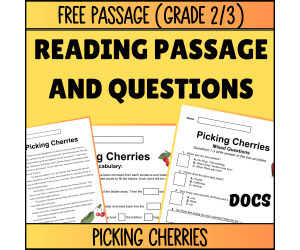
Reading Comprehension Fiction Set 1 Sample - Picking Cherries (Docs)
ELA, Reading, Common Core, Reading Comprehension, Vocabulary, Language Development, ESL, Creative Writing, Writing, Resources for Teachers, Grade 2, 3, Worksheets & Printables, Worksheets, Writing Prompts, Assessments, Teacher Tools, Tests, Quizzes and Tests, Centers, Activities
Reading Comprehension Passages Fiction Set 1 Sample Overview Fascinating reading comprehension passages, each with an array of activities included. Stories are written for the modern classroom and topics are designed to promote enthusiasm from each student. Each lesson contains a mixed questions section to check understanding, a vocabulary or spelling activity to help remember key language introduced, and a writing exercise. Full answer keys are provided. For a more detailed overview, check the section under the links at the bottom of this description. Passage Included 6.Picking Cherries: Ross spends his day picking cherries but is it worth it? Google Docs Version This is the Google Docs editable and fillable version. This download is available in GOOGLE Docs, GOOGLE Forms, GOOGLE Slides. PDF, PPT, WORD. FULL CATALOG OF DOWNLOAD LINKS HERE Grade 2/3 Links Fiction Set 1 - Nature Google Docs Google Forms Google Slides PDF PPT Word Guided Reading Materials Fiction Set 2 - Animals Google Docs Google Forms Google Slides PDF PPT Word Guided Reading Materials Fiction Set 3 - Food Google Docs Google Forms Google Slides PDF PPT Word Guided Reading Materials Fiction Set 4 - School Google Docs Google Forms Google Slides PDF PPT Word Guided Reading Materials Fiction Set 5 - Friends Google Docs Google Forms Google Slides PDF PPT Word Guided Reading Materials Fiction Set 6 - Family Google Docs Google Forms Google Slides PDF PPT Word Guided Reading Materials Fiction Set 7 - Sports Google Docs Google Forms Google Slides PDF PPT Word Guided Reading Materials Nonfiction Set 1 - Technology Google Docs Google Forms Google Slides PDF PPT Word Guided Reading Materials Nonfiction Set 2 - Nutrition Google Docs Google Forms Google Slides PDF PPT Word Guided Reading Materials Nonfiction Set 3 - Animals Google Docs Google Forms Google Slides PDF PPT Word Guided Reading Materials Reading Passages Overview Each passage is especially written for Grade 2-3 students, including key vocabulary required for this age group. Topics are varied and are accompanied by colorful graphics. Topics are meant to educate, yet entertain the modern student. These passages are perfect for the modern classroom. Whereas textbooks can become outdated in no time, any changes to technology or the world will result in updates to this product. Mixed Questions The mixed questions section of each lesson includes a variation of fivecomprehension, vocabulary and math questions. In addition, key reading strategies are frequently covered including cause & effect, summarizing, compare & contrast and making conclusions. Three of the questions will be MCQs and two will require a written response of some kind. Full answers and example responses appear at the end of the lesson. Spelling & Vocab Each reading passage contains a variety of words and phrases designed for Grade 2-3 students. Spelling and vocab activities provide the opportunity to build fluency with these words. As it can become quite mundane doing the same activities over and over, each lesson in a set will contain a different spelling and vocab activity . Writing Prompts Writing prompts are designed to continue the theme or lessons learned in the story. Students are persuaded to write in a variety of ways and each prompt includes several cues to help. As with the spelling/vocab section, writing prompts will vary. This includes research pieces, reading responses, poetry and creative writing prompts. Full Answer Keys Full answer keys and sample responses are provided so no matter how busy you are, you know you're covered! Mixed question answers provide evidence from the text, math questions contain the relevant workings. Answers are designed for use by the teacher, but also suitable as a handout to the student. Additional File One lesson will have an additional file. This is something fun to extend the lesson with. For similar downloads and other frees, do check out Cored Group on TeachSimple.
Author Cored Education
Tags Elementary, Reading, Comprehension, Vocabulary, Answers, Ccss, Common Core, Speling, Writing, Digital Centers
Reading Comprehension Nonfiction Set 1 Sample: Elephant Seals (Docs)
ELA, Reading, Common Core, Reading Comprehension, Vocabulary, Language Development, ESL, Writing, Grade 6, 7, Worksheets & Printables, Worksheets, Assessments, Teacher Tools, Centers, Activities, Writing Prompts, Tests, Quizzes and Tests
Reading Comprehension Passages Nonfiction Set 1 Overview Reading comprehension lessons, especially written for Grade 6-7, providing the chance to read interesting and engaging passages. Each lesson has a mix of questions to check understanding, a vocabulary or spelling activity to help remember key language introduced, and a writing exercise. Full answer keys are provided. Passage Included 3.Elephant Seals: Fact: Elephant Seals spend 2 months a year on the beach! Google Docs Version This is the Docs editable and fillable version. This download is available in GOOGLE Docs, GOOGLE Forms, GOOGLE Slides. PDF, PPT, WORD. FULL CATALOG OF DOWNLOAD LINKS HERE Grade 6/7 Links Fiction Set 1 Google Docs Google Forms Google Slides PDF PPT Word Guided Reading Materials Fiction Set 2 Google Docs Google Forms Google Slides PDF PPT Word Guided Reading Materials Nonfiction Set 1 Google Docs Google Forms Google Slides PDF PPT Word Guided Reading Materials Nonfiction Set 2 Google Docs Google Forms Google Slides PDF PPT Word Guided Reading Materials Reading Passages Overview Each passage is especially written for Grade 6/7 students, including key vocabulary required for this age group. Topics are varied and are accompanied by colorful graphics. Topics are meant to educate, yet entertain the modern student. The majority of these short stories contain an important message - a way of developing these young learners further. Mixed Questions The mixed questions section of each lesson includes a variation of five to six comprehension, vocabulary and Math questions. In addition, key reading strategies are frequently covered including cause & effect, summarizing, compare & contrast and making conclusions. Mixed questions require a written response (no MCQ's), full answers and example responses appear at the end of the lesson. Spelling & Vocab Each reading passage contains a variety of words and phrases designed for Grade 6/7 students. Spelling and vocab activities provide the opportunity to build fluency with these words. Activities provide clues to help assist students. Vocabulary activities include extra questions where students must write a synonym, an antonym or a sentence using a certain word. Writing Prompts Writing prompts are designed to continue the theme or lessons learned in the story. Students are persuaded to write in a variety of ways and each prompt includes several cues to help. The main focus in this product, is the student. Prompts will require the student to relate to past experiences and encourage them to discuss feelings and ways to improve. Full Answer Keys Full answer keys and sample responses are provided so no matter how busy you are, you know you're covered! Mixed question answers provide evidence from the text, Math questions contain the relevant workings. Answers are designed for use by the teacher, but also suitable as a handout to the student. For similar downloads and other frees, do check out Cored Group on TeachSimple.
Author Cored Education
Tags Elementary, Reading, Comprehension, Vocabulary, Answers, Ccss, Common Core, Spelling, Writing, Digital Centers
Reading Comprehension Nonfiction Set 2 Sample: What a Smell (Forms)
ELA, Reading, Language Development, Vocabulary, Common Core, ESL, Reading Comprehension, Writing, Literature, Children’s Literature, Grade 4, 5, Centers, Activities, Assessments, Teacher Tools, Tests, Quizzes and Tests
Reading Comprehension Passages Nonfiction Set 2 Sample Overview No prep reading comprehension lessons, with enjoyable articles and topics. Each lesson has a blend of post-reading activities. Mixed questions to check overall understanding. Vocabulary activities, plus a writing section. Lessons also contain a bonus extension exercise at the end. Some you may like, some you may not, either way they are there if you wish to use them. Full answer keys are provided. Passage Included 2.What a Smell: How does the stink bug protect its children? Find out in this lesson. Forms Version This is the Forms editable and fillable/self grading version. This download is available in GOOGLE Docs, GOOGLE Forms, GOOGLE Slides. PDF, PPT, WORD. FULL CATALOG OF DOWNLOAD LINKS HERE Grade 4/5 Links Fiction Set 1 - Animals Google Docs Google Forms Google Slides PDF PPT Word Guided Reading Materials Fiction Set 2 - Family Google Docs Google Forms Google Slides PDF PPT Word Guided Reading Materials Fiction Set 3 - Friends Google Docs Google Forms Google Slides PDF PPT Word Guided Reading Materials Fiction Set 4 - School Google Docs Google Forms Google Slides PDF PPT Word Guided Reading Materials Fiction Set 5 - Sports Google Docs Google Forms Google Slides PDF PPT Word Guided Reading Materials Nonfiction Set 1 - Birds Google Docs Google Forms Google Slides PDF PPT Word Guided Reading Materials Nonfiction Set 2 - Insects Google Docs Google Forms Google Slides PDF PPT Word Guided Reading Materials Nonfiction Set 3 - Mammals Google Docs Google Forms Google Slides PDF PPT Word Guided Reading Materials Nonfiction Set 4 - Nature Google Docs Google Forms Google Slides PDF PPT Word Guided Reading Materials Nonfiction Set 5 - Sea Animals Google Docs Google Forms Google Slides PDF PPT Word Guided Reading Materials Reading Passages Overview Each passage is especially written for Grade 4-5 students, including key vocabulary required for this age group. Topics are varied and are accompanied by colorful graphics. Topics are meant to educate, yet entertain the modern student. These passages are perfect for the modern classroom. Whereas textbooks can become outdated in no time, any changes to technology or the world will result in updates to this product. Mixed Questions The mixed questions section of each lesson includes a variation of five comprehension, vocabulary and math questions. In addition, key reading strategies are frequently covered including cause & effect, summarizing, compare & contrast and making conclusions. Two or three of the questions will be MCQs and other questions will require a written response of some kind. Full answers and example responses appear at the end of the lesson. Spelling & Vocab Each reading passage contains a variety of words and phrases designed for Grade 4-5 students. Spelling and vocab activities provide the opportunity to build fluency with these words. As it can become quite mundane doing the same activities over and over, each lesson in a set will contain a different spelling and vocab activity . Activities include: spelling games, sentence match-ups, mixed-up text and decoding words from the lesson. Writing Prompts Writing prompts are designed to continue the theme or lessons learned in the story. Students are persuaded to write in a variety of ways and each prompt includes several cues to help. As with the spelling/vocab section, writing prompts will vary. This includes research pieces, reading responses, poetry and creative writing prompts. Full Answer Keys Full answer keys and sample responses are provided so no matter how busy you are, you know you're covered! Mixed question answers provide evidence from the text, math questions contain the relevant workings. Answers are designed for use by the teacher, but also suitable as a handout to the student. Just for Fun Each lesson will have a bonus extension exercise. This is something fun to extend the lesson with. You can find these at the end of each lesson, titled Just for Fun. Just for Funs are optional. Some you may like, some you may not. Either way, they are there to do with as you wish. For similar downloads and other frees, do check out Cored Group on TeachSimple.
Author Cored Education
Tags Elementary, Reading, Comprehension, Vocabulary, Answers, Ccss, Common Core, Spelling, Writing, Passages

Alphabet Tracing Worksheets | Letter Recognition & Beginning Sounds
ELA, Reading, Writing, Phonics, Language Development, Spelling, ESL, Handwriting, Life Sciences, Science, Kindergarten, Preschool, Grade 1, 2, Worksheets & Printables, Teacher Tools, Classroom Decor, Activities, Centers, Worksheets, Workbooks
The alphabet worksheet sets are designed to help young learners develop basic reading and writing skills through tracing, writing, and coloring. This interactive and engaging set of alphabet worksheets is designed to help young learners develop basic letter skills through tracing, writing, finding letters, and coloring. Children can learn letters by enjoying a combination of tradition and hands-on learning fun. These printable worksheets offer useful lessons and provide rich practice in a fun and interactive way. They are designed to help students easily use this second grade resource to learn about alphabet worksheet activities. A collaborative learning activity added by students. Alphabet worksheet sets are designed to help young children develop basic reading and writing skills through tracing, writing, and tracing. This alphabet resource is perfect for kindergarten students and is great as a letter of the week activity. The alphabet worksheet sets are designed to help young children develop basic reading and writing skills through tracing, writing, and tracing.
Author LAMO
Rating
Tags English Language Arts, Phonics , Phonics & Phonological Awareness, Back To School, Worksheets, Printables, Homeschool, Centers, Letter , Alphabet