Let's Investigate! Hands-On Science - Grades 5-6
Provide hands-on science experiments and activities across physical, earth, and life science topics for grades 5-6, supplementing the (U.S.) National Science Education Standards.
Classroom resources
Browse by lesson focus
Choose the topic or kind of practice you need.
Provide hands-on science experiments and activities across physical, earth, and life science topics for grades 5-6, supplementing the (U.S.) National Science Education Standards.
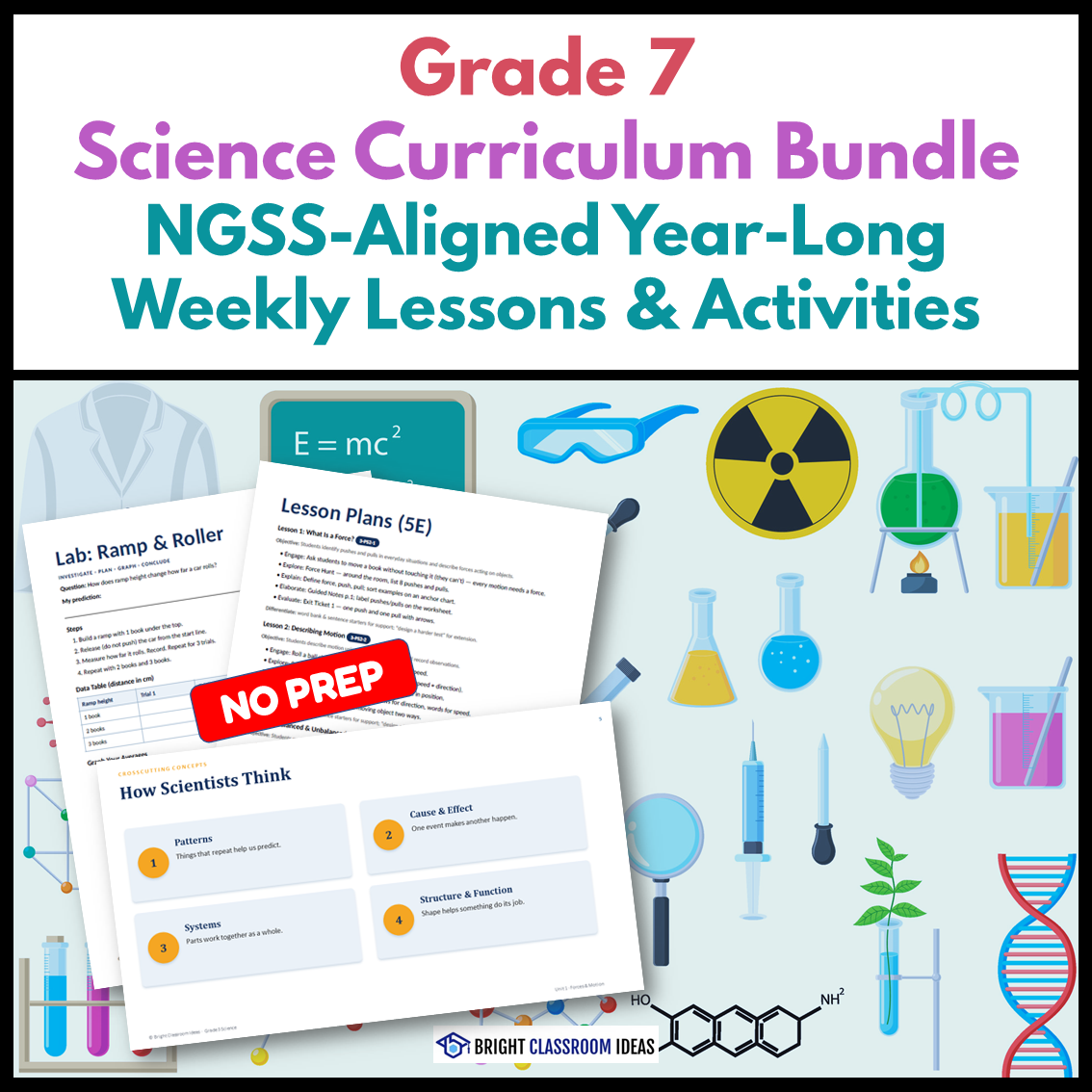
Students take part in daily lessons and guided notes, read original leveled science passages, complete practice worksheets and vocabulary activities, conduct labs/quick investigations and an open-ended STEM engineering challenge per unit, complete exit tickets, quizzes, performance tasks and unit tests, and finish each unit…
Includes: File 1: Teacher Guide & Curriculum Overview (12 pages: year overview, scope & sequence, pacing guide, standards alignment) · File 2: Lesson Plans, 36 Weeks (113 pages, 96 lessons across 10 units) · File 3: Labs, STEM Investigations & Materials (103…
A large collection (101 numbered activities) of hands-on science activities exploring everyday phenomena (breathing, weather, gravity, the human body, recycling) for early-to-upper-elementary students.
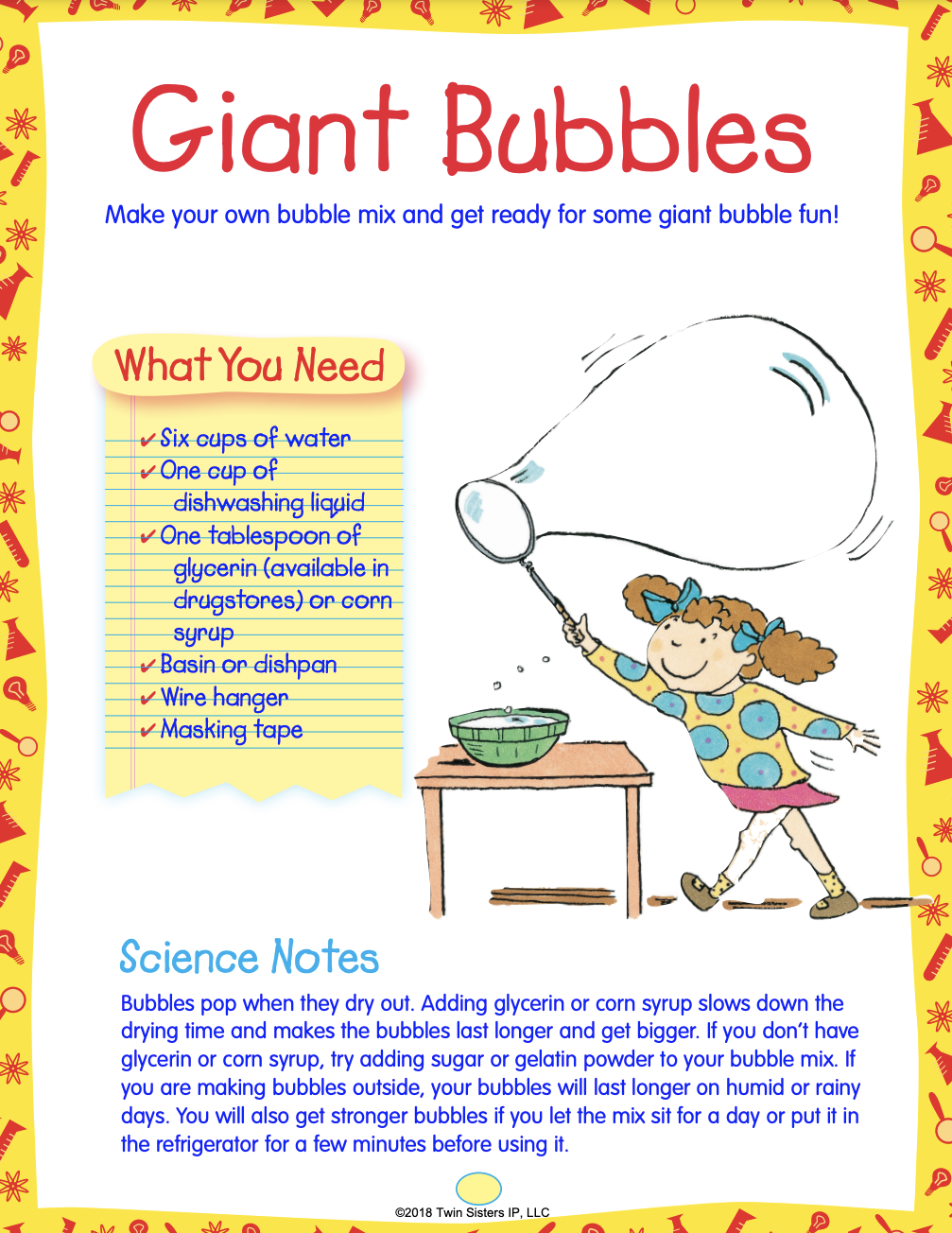
Three simple hands-on early-childhood science craft/experiment activities: making giant bubbles, building a windsock to explore wind, and testing which objects sink or float.
Includes: Giant Bubbles activity (materials list, instructions, science notes, counting song, coloring/tracing page) · Windy Day Fun activity (windsock craft instructions, science notes, kite tracing/coloring page) · Sink or Float? activity (experiment…
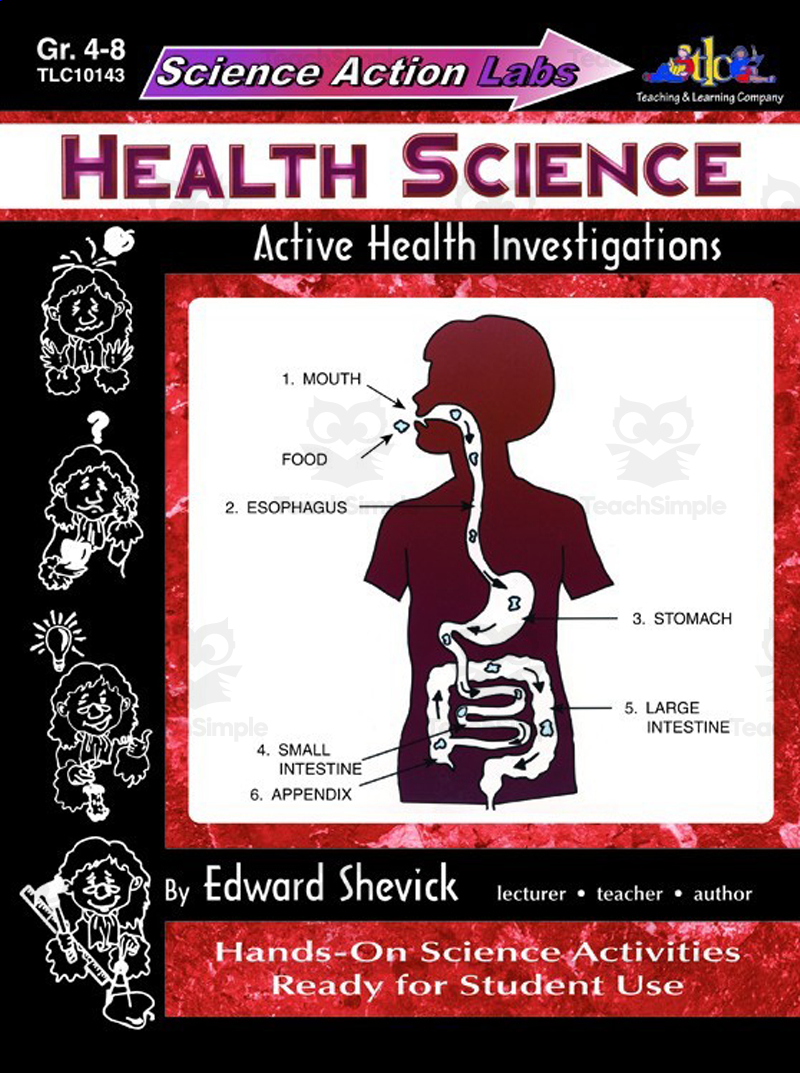
Teach human body/health science concepts (body systems, growth, heredity, circulation, respiration, digestion, nutrition, skin, bones, muscles, senses, brain, and substance-safety topics like alcohol and tobacco) through hands-on activities.
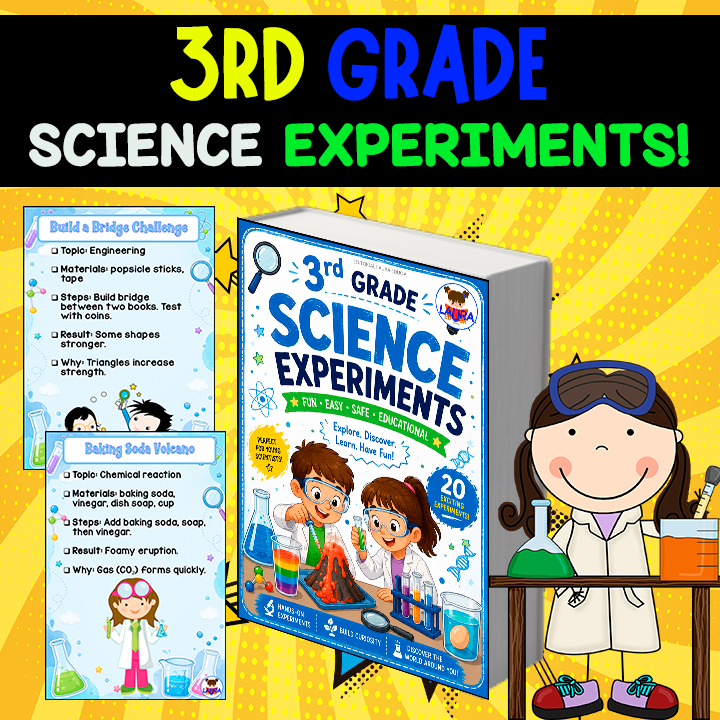
A collection of simple hands-on science experiments (e.g., mini tornado in a bottle, balloon rocket, bridge building challenge, mini parachute), each paired with a student scientific-method worksheet template.
Includes: experiment instruction cards (topic, materials, steps, result, explanation) - at least 4 confirmed: Mini Tornado in a Bottle, Build a Bridge Challenge,… · student scientific-method worksheet template (experiment title, question, hypothesis…
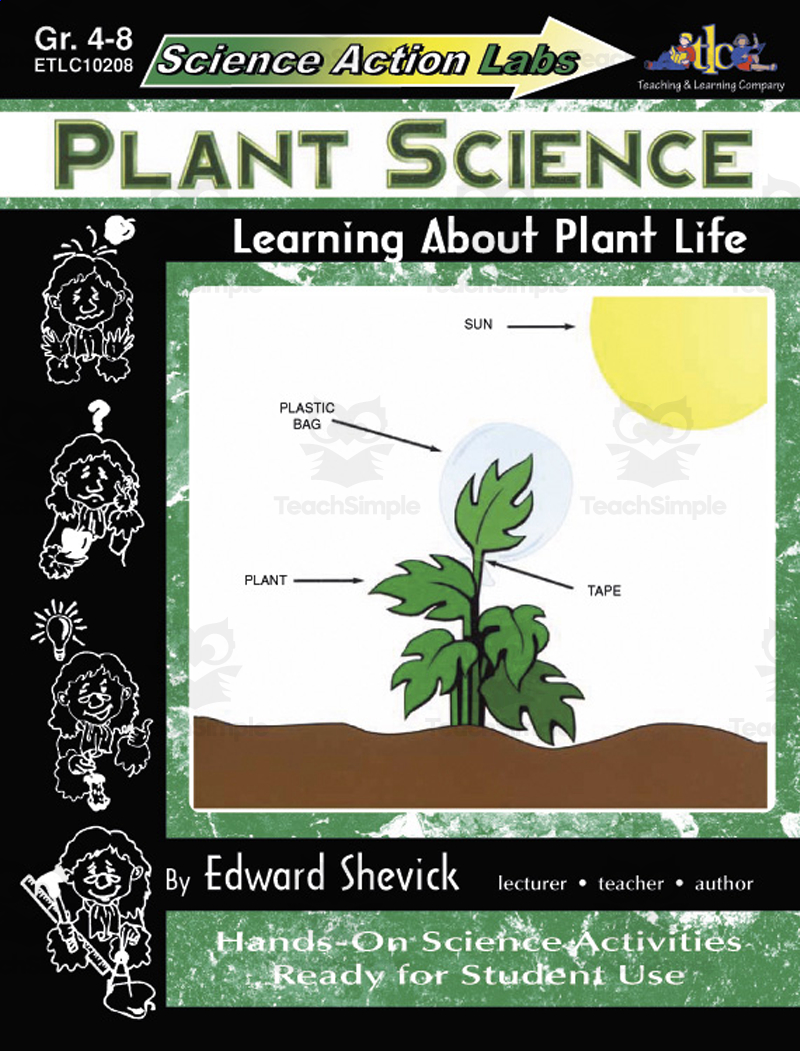
Teach plant science/botany concepts (characteristics of living things, seeds, flowers/pollen, leaves, plant cells, trees, plant classification, and plant survival) through hands-on experiments.
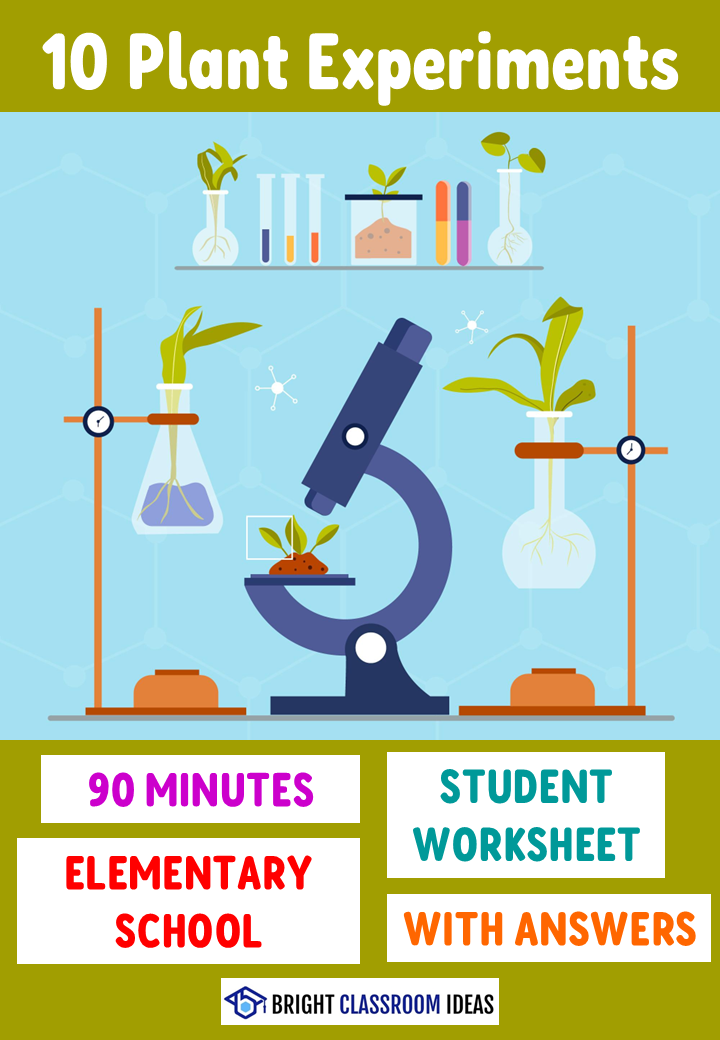
A 90-minute biology lesson package guiding students through 10 hands-on plant experiments exploring how light, water, and soil affect plant growth.
Includes: lesson plan with objectives and time breakdown · 10 experiment instruction cards (goal, materials, steps, observation) · student worksheet (predictions, observation table, matching, reflection)
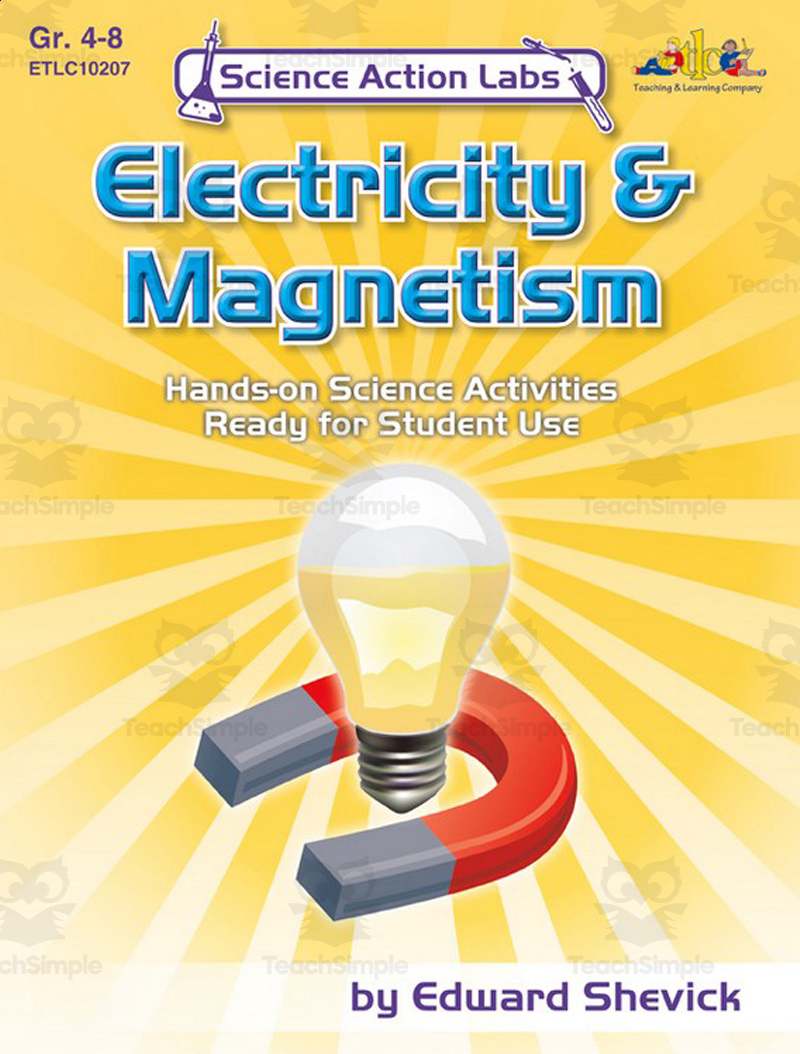
Teach electricity and magnetism concepts (magnetic force, compasses, electromagnets, static electricity, electroscopes, electrical circuits, generating electricity) through hands-on experiments.
Teach air-science concepts (air pressure, gas properties, breathing/respiration in humans/animals/plants, Bernoulli's principle, carbon dioxide, barometers, siphons) through hands-on hypothesis-driven experiments framed around Newton's scientific method.
Provide a collection of hands-on science experiments/demonstrations (chemical reactions, physical science, sensory play) for elementary students to try with adult-supplied household materials.
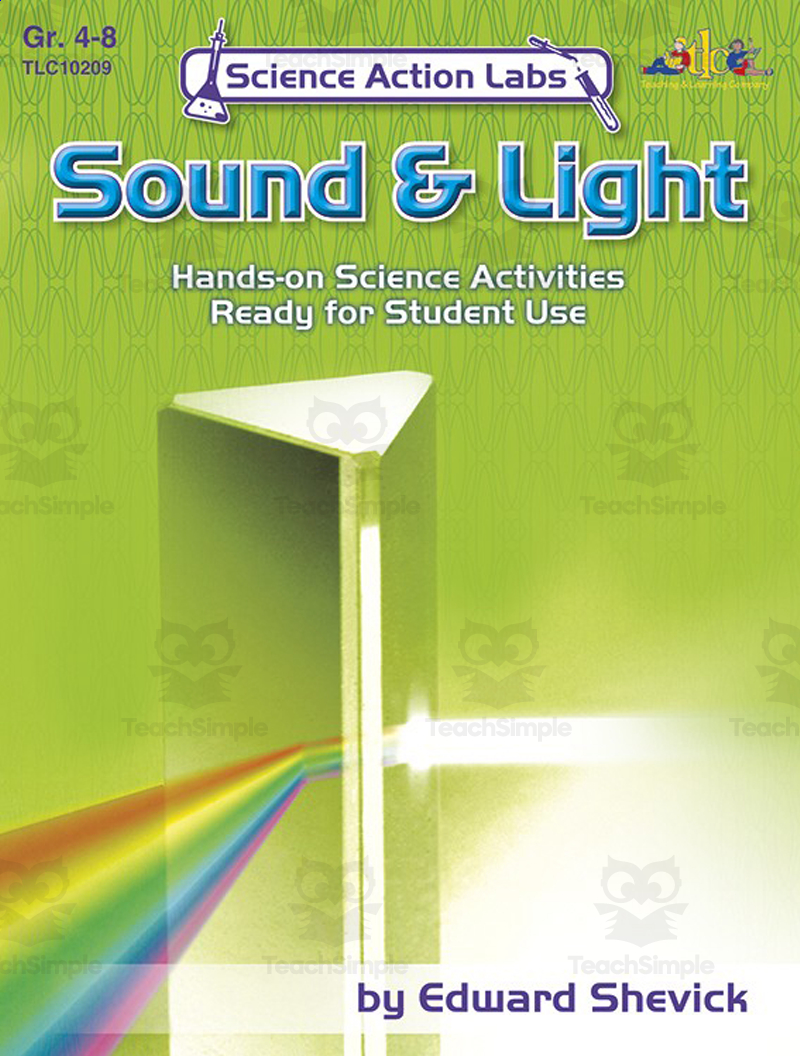
A hands-on physical-science workbook of lab activities exploring sound and light concepts (e.g. mirrors, sound waves, rainbow lab) for classroom demonstration or individual student use.
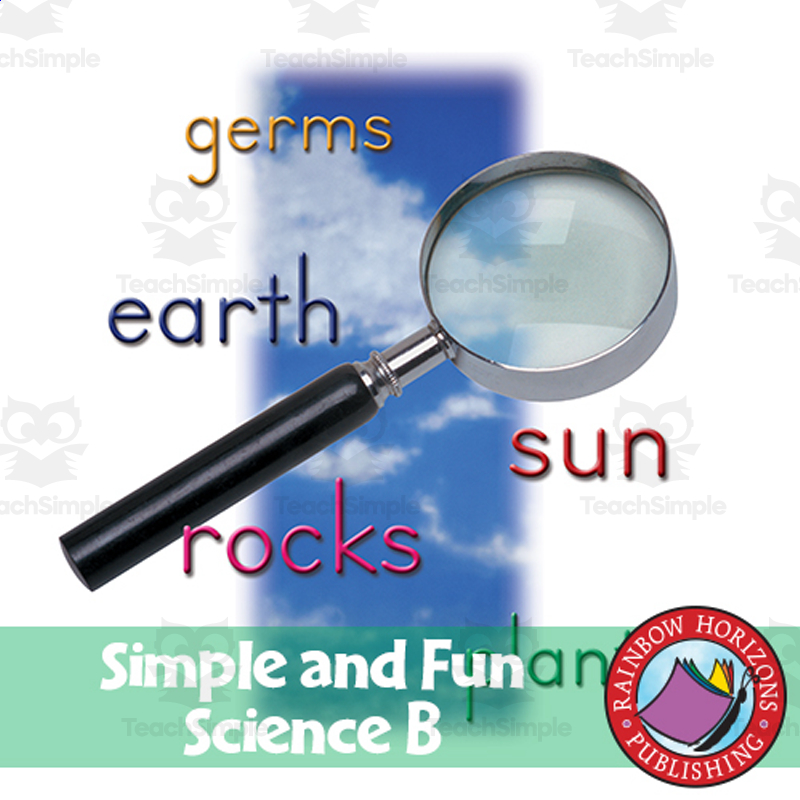
A full science workbook (Book B of the 'Simple and Fun Science' series, ages 6-8) teaching science process skills (observing, predicting, inferring) through hands-on activities beginning with health/germs topics and continuing across further life/earth science lessons.
Includes: introduction to science process skills · safety guidelines
A packet of 4 hands-on science experiments using everyday classroom items, teaching young learners to make predictions and record observational data.
Includes: 'Is it Magnetic?' prediction/results table · 'Does it Float?' prediction/results table
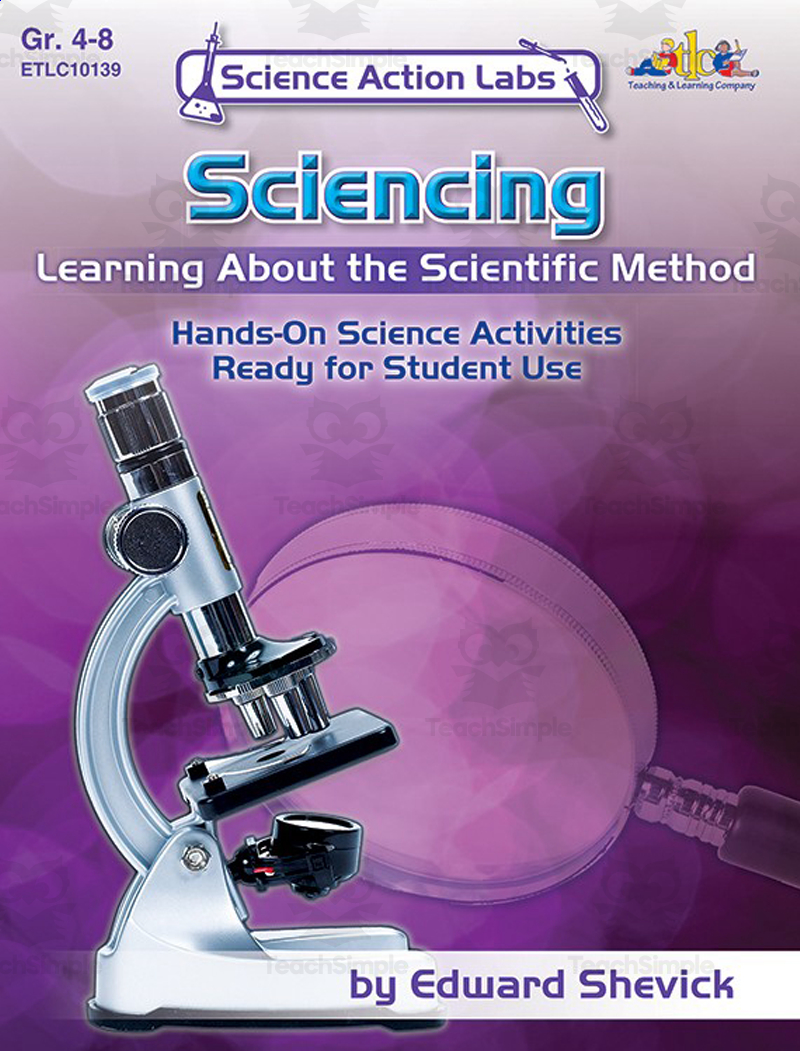
A set of 23 hands-on science labs that teach the scientific method (observation, hypothesis, communication, decision-making) through varied classroom activities and mini-experiments.
Includes: philosophy/teacher intro section · answer key section
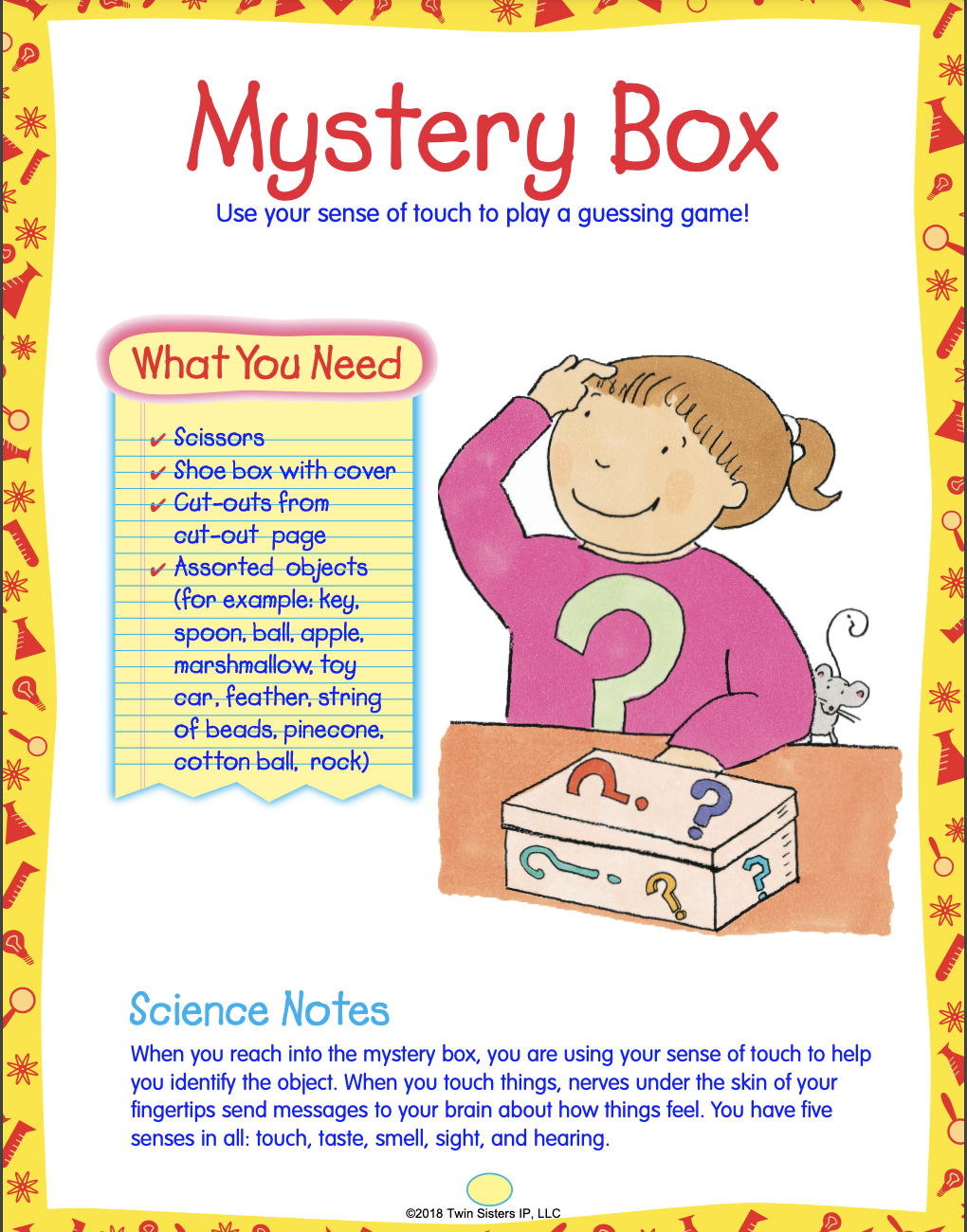
A set of three hands-on preschool science activities introducing the five senses, primary/secondary color mixing, and basic physics concepts (gravity, friction, inclined planes) through play-based experiments.
Includes: Mystery Box: materials list, science notes on the five senses, step-by-step instructions, extension activities (word match, touch scavenger hunt, other-senses… · Color Lab: materials list, science notes on primary/secondary colors, step-by-step…
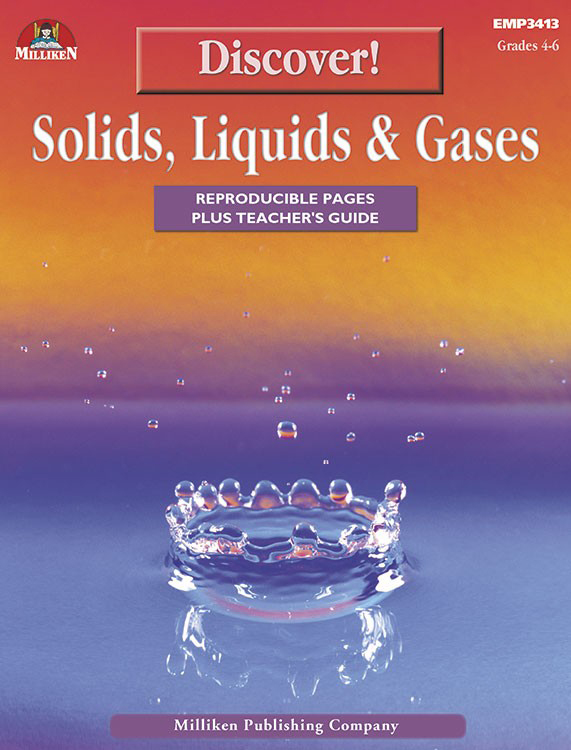
Reinforce elementary/upper-elementary science concepts in solids, liquids and gases (matter, atoms, molecules, physical properties, states of matter and their changes) (grades 4-6) through reproducible worksheets, hands-on activities, and teacher background material.
Includes: fill-in-the-blank and short-answer worksheet pages (one topic per page, Name/Date header) · diagrams/illustrations to label or complete · hands-on activities/experiments with material lists
Teach elementary-level health science concepts (senses, sound and hearing, smell/taste/touch, the brain, heart/circulation, breathing, digestion, calories, bones, muscles, health superstitions, health-related careers, and tobacco awareness) through hands-on experiments.
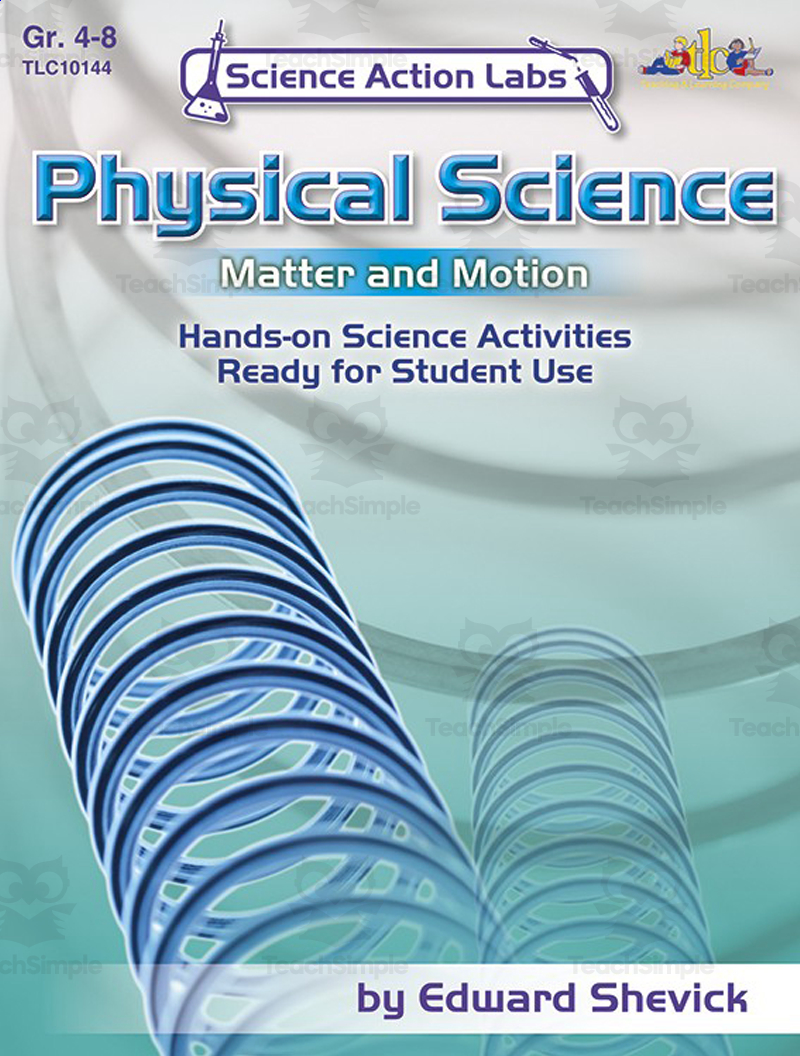
Teach physical science concepts (matter, properties of matter, elasticity, motion, and Newton's First Law) through hands-on experiments, framed around Newton's laws.
Includes: author bio and series list (Edward Shevick's other Science Action Labs titles) · lab sections with data tables and background information
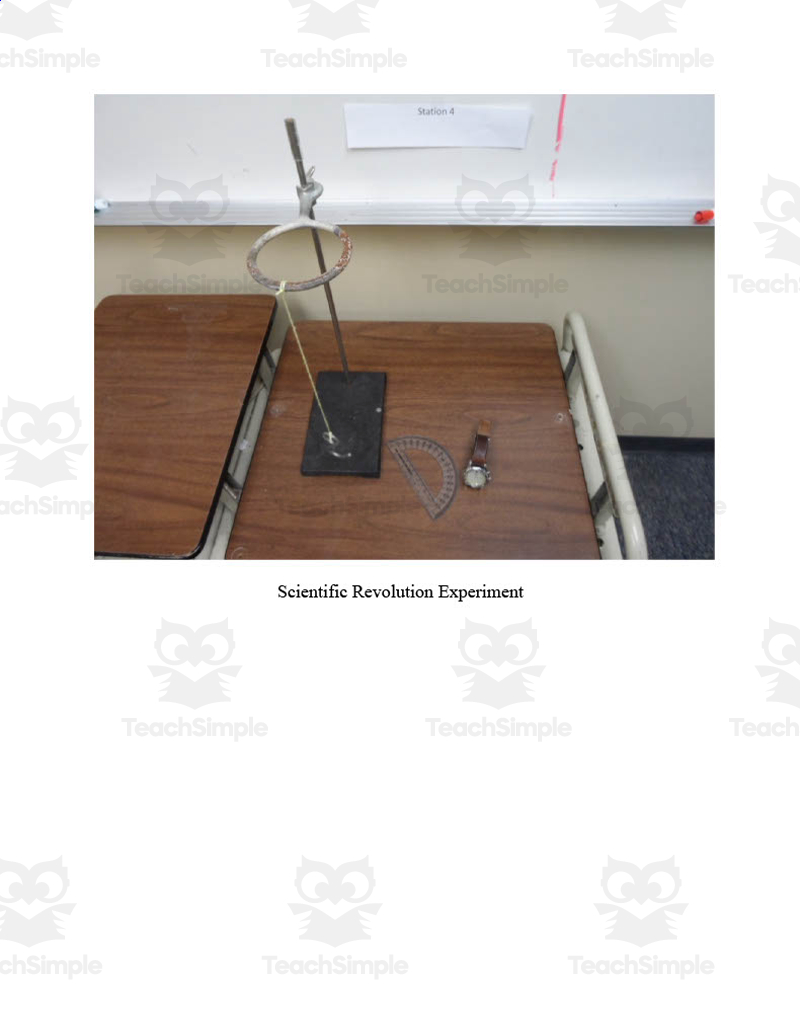
A hands-on history lesson plan in which students rotate through four experiment stations to test claims made by ancient philosophers (Aristotle, Galen) against the findings of Scientific Revolution figures (Galileo, Copernicus, Vesalius), illustrating the shift to the empirical scientific method.
A 14-chapter set of hands-on labs and worksheets introducing young students to the properties, uses, and importance of water (states of water, dissolving, evaporation, pressure, surface tension, the water cycle, conservation).
Includes: 14 numbered lab/worksheet chapters · answer key section
A 1st-grade science resource of hands-on, low-prep experiments (e.g., magnetism, structural stability) adapted for neurodiverse learners, using scaffolded steps, visual prompts, and AI-assisted guidance.
Includes: introduction/methodology narrative · case studies describing use with individual neurodiverse learner profiles (e.g., 'The Wobbly Tower Experiment') · structured experiment steps with prediction/observation worksheets
A full science workbook (Book C of the 'Simple and Fun Science' series, ages 7-8) teaching science process skills (observing, inferring, measuring, predicting, problem-solving) through hands-on activities.
Includes: introduction to science process skills · safety guidelines
Reinforce elementary/upper-elementary science concepts in planet Earth (composition, crust/plates, minerals, rocks, weathering/erosion, mountain building, soil and soil conservation, earthquakes/volcanoes) (grades 4-6) through reproducible worksheets, hands-on activities, and teacher background material.
Includes: fill-in-the-blank and short-answer worksheet pages (one topic per page, Name/Date header) · diagrams/illustrations to label or complete · hands-on activities/experiments with material lists