



3,934 products added recently
Page 189 - Activities
Explore a wide array of educational activities designed to enrich your teaching and captivate students' interest. From hands-on projects to interactive games, these resources span various subjects and grade levels. Incorporate these activities into your lesson plans to foster an engaging and dynamic learning environment for all students.

 Show filters

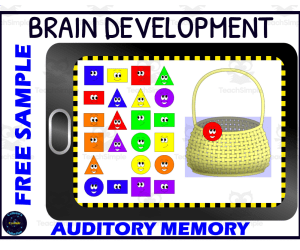
Auditory Memory Activity Boom Cards
Special Resources, Special Education Needs (SEN), Life Skills, Kindergarten, Preschool, Grade 1, 2, 3, Activities
Auditory Memory Activity Boom Cards The Auditory Memory Activity Boom Cards can be defined as a flexible resource for teachers nurturing students from preschool to Grade 3. This inventive asset is applicable in both physical and virtual classrooms. The primary goal of this teaching tool is to promote the enhancement of auditory memory among children through an easy-to-understand approach. Using this resource stimulates their listening skills, combined with cognitive function. The outcome involves children grasping and carrying out instructions around shapes and colors. Process Outline The activity kicks off with straightforward stages where pupils hear explicit guidance about placing a color or shape in a basket. As they progress, the intricacy increases gradually with each instruction moderating the flow, thereby facilitating adequate challenges coupled with incremental learning opportunities. In conclusion, students are meant to remember two factors: both shape and color assignments concurrently. Thus this proves their multitasking ability while also imparting knowledge on short term memory building exercises- making it suitable for brain training activities that kids will find enjoyable whilst gaining critical life skills. About the Set This set consists of nine Boom Cards in total; four cards dedicated explicitly for providing lucid auditory orders and another four cards guiding learners through executing previous instructions received. Notably, these Boom Cards provide immediate feedback allowing "self-checking". Fostering Independent Thinking & Growth Mindset The brain-teaser activity presents an interactive drag-and-drop layout that can be easily integrated into your curriculum encouraging independent thinking among young learners thus fostering growth mindset especially in implementing Special Education Needs (SEN) lessons irrespective of whether it's small group settings or whole class scenarios centrally focusing on enhancing key learning attributes such as attentive listening coupled with coherent thinking – all within a sole dynamic platform!
Author Colleen's Cosmic Collection
Tags Auditory Memory, Listening Skills, Cognitive Development, Brain Training, Interactive Learning

Letter Q Flip Book
ELA, Language Development, Phonics, Kindergarten, Preschool, Activities
This letter Q flipbook is the perfect tool to help preschoolers and kindergarteners learn all about the letter Q! The different pages in this flip book allow students to practice recognizing the letter, writing the letter, and identifying words that begin with the letter. What is Included: This flip book has a cover page for students to simply color. The seek and find page practices letter recognition by having students identify capital and lowercase forms of the letter. The find and color page practices letter recognition of the target letter from other letters of the alphabet. Students can use dot markers to mark the letters, they can color in the letter or use stickers to cover the letters. The cut and paste page allows students to work with scissor skills to cut out examples of the letter from either printed materials, like magazines or newspapers, or students can use the letters provided at the bottom of the page. The trace and write page allows students to practice tracing and writing the capital and lowercase forms of the letter. The beginnings sound page has students coloring the pictures that begin with the letter. The trace and draw page has students tracing a word that begins with the letter, then drawing a picture to represent that word. When to Use: Literacy Centers - This flip book can be placed in a literacy center for students to work on identifying the letter. Morning Work - This flip book is a perfect morning work activity. Doing one or two pages each morning, students can finish one flip book a week. Homework - These flip books can be sent home for parents to work with letter recognition with their children. Small Group Activity - Students who need extra help with identifying letters and sounds can work with the teacher in a small group setting.
Author The Connett Connection
Tags Flip Book, Hands-on Learning, Phonics, Literacy Centers, Letter Q, Letter Q Activity
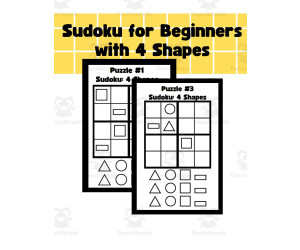
Sudoku for Beginners with 4 Shapes
Math, Patterns, Early Math, Preschool, Grade 1, 2, Activities, Worksheets & Printables, Worksheets, Games
Sudoku Adventures for Young Minds: Exploring 4 Shapes in Puzzles Dive into the World of Sudoku with Engaging Challenges for Students and Homeschooling Families! Activity Snapshot: Unleash your child's logical thinking and problem-solving prowess with our captivating 2 x 2 block, 4 shape Sudoku puzzles. This resource includes solutions for all 4 puzzles, and we've even curated recommended tutorial videos to enhance your understanding of Sudoku, ensuring an enjoyable learning journey for both you and your child. Getting the Most out of this Tool: Introduce each Sudoku puzzle one by one to your eager learner. Emphasize that the aim is to place each shape only once in every row, column, and 2 x 2 block. They can confidently sketch the shapes in the squares using a pencil (equipped with a trusty eraser), or they can take an interactive approach by cutting out the shapes located at the bottom of the page. They can then rearrange and adjust them as needed to crack the puzzle, eventually securing the pieces in place with glue upon solving. Alternatively, the pieces can be neatly stored in a baggie for replay or sharing the challenge with others. Subject: Mathematical Exploration Grades: Kindergarten - 2nd Grade Educational Goal: Empower your young scholar to employ logic and creative problem-solving strategies to master Sudoku puzzles. Time Commitment: Less Than an Hour Supplies Required: Pencil, scissors (optional) Rest assured, solution keys are thoughtfully provided. This activity seamlessly complements lessons on shapes, offering children a hands-on opportunity to recognize and name various shapes. Beyond that, it serves as a captivating exercise in critical thinking, nurturing problem-solving skills and fostering a resilient spirit.
Author Sprout & Inspire
Tags Sudoku, Math Games, Early Math, Preschool Math, Kindergarten Math, Problem Solving, Critical Thinking
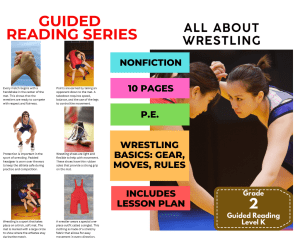
Guided Reading Level K - All About Wrestling (with Lesson Plan)
ELA, Resources for Teachers, Reading Comprehension, Reading, Health, P.E. & Health, Pre-Reading, Language Development, Sports, Physical Education, Grade 1, 2, 3, Worksheets & Printables, Worksheets, Teacher Tools, Centers, Activities, Literacy Readers, Quizzes, Quizzes and Tests, Assessments
This Guided Reading Book - All About Wrestling (Level K) with lesson plan includes: Guided Reading Color Label (front cover x1) This is a quick way to match the book’s demands to what students can generally handle.. The overall goal is to use the level/color to pick books for several smaller groups. To qualify for a certain level, a student is expected to read a book from that level with about 90–94% accuracy. If a student is consistently accurate and understands, move up a level. If the student is struggling at that level, drop down and add more support. Each student will improve at completely different rates, but it is generally one of the best ways to check progress across the class. DOWNLOAD THE CATALOG TO VIEW ALL GUIDED READING BOOKS AVAILABLE (SORTED LEVELS A-Z) Pre-Reading Question (x1) Teacher asks the prompt aloud, can be while showing the cover or first page. Students share what they already know, or make educated guesses from the cover. Prompt them to use the target vocabulary. Write some of their responses on the board to look back at during the reading. Vocabulary Words (x5) Introduce the five words, best doing it one at a time. Start by saying it, while students repeat and then see if anyone knows what it means before reading further. Read through the meaning and try to briefly connect each word to a picture or gesture so it’s meaningful. Ask students to flip through the book pages and point to where they see each of the vocabulary words. While reading the book pause upon coming across one of the vocab words or read the sentence twice to make sure students understand the word has appeared. Optional: Ask students to raise hands whenever they see/hear one of the new words. Guided Reading Pages (x10) Check the book snapshot (below) for: primary topic - do you need to prep extra reading or intro materials on this? what is taught best - decide on 1-2 bullets to focus on, use the prompt or words provided here for best results. learning goals - what you are checking for students to be able to do after the session, elicit answers using prompts or words provided. key vocabulary (see section above). questions overview - so you know what is coming up and if you need to prep extra materials to assist understanding. Run the lesson You may have already looked at a few of the pages together, but you can show them some of the pictures again first to set meaning. Depending on how much time you have and how familiar your students are with guided reading class, you may want to read the book aloud first with the group first. Students whisper or partner read, while you listen in. If time, do it as a group, one student reading a page each. Use the guided page’s prompts to coach: “Check the picture / does it make sense?” “Point under the words / try the first sound” “Reread the sentence smoothly”. Try to focus more on one student per session (rotating every time), so you can work out if they are ready to move up or need to move down a level. Comprehension Questions (back cover x3) This is your way to check that students didn’t just say the words, but actually understood the text. First, let students answer by pointing to the page/picture and saying a short sentence. After any answer, follow with: “Show me where you found that in the text.” In bigger groups, have partners answer first (10–20 seconds), then call on 2–3 students to share. Differentiation tips: Emerging speakers/struggling readers: oral + pointing On-level: oral in a full sentence Higher: one written sentence or draw + label Book Snapshot Title: All About Wrestling Genre: Nonfiction (informational) Subject: Physical Education / Health Primary Topic: Wrestling basics: gear, moves, rules, sportsmanship Estimated Guided Reading Level (A–Z): K What This Book Teaches Best Introduces where wrestling happens and how the mat is marked with a large circle. Explains what wrestlers wear for the sport (a singlet, padded headgear, wrestling shoes). Describes how points are earned and names key actions in a match (takedown, escape, pin). Highlights sportsmanship routines and expectations (handshake, respect and fairness, good sportsmanship). Shows the referee’s role in counting points and making sure rules are followed. Learning Goals Students can describe what the wrestling mat is like and what the large circle shows. Students can identify key wrestling gear from the text and explain its purpose. Students can explain how points are earned in wrestling using details from the book. Students can describe what an escape is and what it means to get back to a standing position. Students can explain what a pin is and what it does to the match. Students can describe how wrestlers show respect and fairness during a match. Key Vocabulary From the Text singlet — a one-piece outfit a wrestler wears. headgear — padded gear worn to protect the ears. opponent — the person you are competing against. takedown — a move that brings an opponent down to the mat. sportsmanship — behaving kindly and fairly during a match. Discussion Prompts Pre-reading question: What rules or routines help athletes compete safely and fairly in sports? Comprehension questions: What does the book say the large circle on the mat shows? Why do wrestlers begin each match with a handshake? What move ends the wrestling match immediately? Printing Tips 1. Best Printing Method (Recommended) “Booklet” Printing (Best if Available) If your printer or PDF viewer supports Booklet Printing , use this. Settings to use: Print mode: Booklet Paper size: Letter or A4 (either works) Orientation: Landscape Print on both sides: Yes Flip on: Short edge Scaling: Fit to printable area Booklet subset: First test: Front sides only Then: Back sides only This will automatically: Pair pages correctly Put the cover on the outside Align everything for folding After printing, fold in half and staple along the spine . 2. If “Booklet” Printing Is NOT Available You can still print this correctly with manual duplex printing . Step-by-step: Open the PDF. Choose Print . Set: Orientation: Landscape Pages per sheet: 1 Print on both sides: Yes Flip on: Short edge Print all pages . Because each PDF page already contains two facing book pages, the result will still fold cleanly into a book. Thousands of Cored Education products are included with your TeachSimple membership. Download links and encyclopedia index available here.
Author Cored Education
Rating
Tags Reading Comprehension, Reading Passages, Reading, Guided Reading, Guided Reading Lesson Plan, Guided Reading Activity, Pre-reading, Vocabulary, Health Lesson Plans, P.e. Lesson Plans

"Fintastic" Rhythms Boom Cards
Creative Arts, Art, Music, Grade 1, 2, Activities
This resource is a set of "Fintastic" Rhythms Boom Cards. There are 24 boom cards included. Students will listen to the sounds on each card and then correctly identify it with the two multiple choice options on the card.
Author The Music Suite
Tags Fintastic Rhythms, Boom Cards, Music, Songs, Digital Task Cards

3D Image Photoshop Activity
Science, Technology, Grade 7, 8, 9, 10, Activities
Students will work with digital tools in the 3D Image Photoshop Activity . Students will create 3D images and 3D glasses. Step by step directions are included.
Author OK Products
Tags Technology Activity, Computer Class, 3D Images, Digital Tools, Science Activity, Art Project, Graphics, Graphic Design, Design Concepts

ESL Conversation Cards – 83 Intermediate Prompts
ELA, Language Development, ESL, Grade 7, 8, 9, 10, 11, 12, Activities
❖ESL - ELL Intermediate Level - 83 Conversation Cards and Speaking Prompts ❖ Use this set of INTERMEDIATE ESL conversation starters and speaking prompt cards to get even your most timid students talking to each other in English. These 83 question cards are terrific for discussion and journal writing prompts and they span 13 different themes: ➤ languages ➤ work ➤ animals ➤ health ➤ your region ➤ transport ➤ books ➤ what would you prefer… ➤ travels ➤ household chores ➤ food ➤ shopping ➤ sports
Author Love Learning Languages
Rating
Tags ESL Activity, Conversation Cards, Speaking Prompts, English Writing, Household Chores Writing, Esl Speaking Prompts, Conversation Cards Esl

Reading Comprehension Passages Nonfiction Set 1 (Fillable PDF)
ELA, Reading, Reading Comprehension, Common Core, Language Development, Spelling, Vocabulary, Creative Writing, Writing, Resources for Teachers, Grade 6, 7, Worksheets & Printables, Worksheets, Writing Prompts, Assessments, Teacher Tools, Tests, Quizzes and Tests, Centers, Activities
Reading Comprehension Passages Nonfiction Set 1 Snapshot Title: Nonfiction Grade 6-7 Set 1 Genre: Nonfiction Subject: Reading / Science / Social Studies / Health Primary Topic: Informational articles on animals, places, health, and environment Estimated Guided Reading Level (A–Z): Y What This Teaches Best Builds informational reading skills across science-rich animal articles such as Elephant Seals , Visayan Pigs , Seahorses , Pandas , Wolves , and Blue Jays . Supports understanding of habitats, adaptations, survival, and conservation. Expands knowledge beyond life science with articles on Iceland , Yogurt , Karate , and Clean Air . Gives strong practice with domain-specific vocabulary and text-based questioning. Works well for comparing informational texts across topics, structures, and author purposes. Learning Goals Students will identify main ideas and supporting details in informational articles. Students will explain how animal features or behaviors help them survive. Students will describe how human actions affect habitats, air quality, or endangered species. Students will determine the meaning of domain-specific vocabulary in context. Students will compare how different nonfiction texts present facts about science, geography, and health. Students will ask and answer questions using evidence from the article. Passages Include 1.American Bison: Find out more about North America's heaviest land animal. 2.Brown Bears: Featuring brown bears and Kodiak bears. 3.Elephant Seals: Fact: Elephant Seals spend 2 months a year on the beach! 4.Visayan Pigs: Punk rock pigs? Discover more about this endangered species. 5.Seahorses:Terrible swimmers but beautiful creatures all the same. 6.Pandas: Read about China's national symbol then write about America's. 7.Wolves: What does a wolf's howl mean? This article features that, and more! 8.Blue Jays: Can imitate other bird calls and feast on other birds' eggs! 9.Iceland: An amazing country, find out everything there is to know in this one. 10.Yogurt: Healthiest treat? Learn how yogurt is made & how it's good for us. 11.Karate: Who? How? When? Where? Did Karate all begin? 12.Clean Air: A longer article but the most important of subjects. FILLABLE PDF VERSION Worksheet-style pages, but with type-in answer boxes so students can complete and save their work digitally. Other versions are available in the links list below or in the full catalog. FULL CATALOG OF DOWNLOAD LINKS HERE For similar downloads and other frees, do check out Cored Group on TeachSimple.
Author Cored Education
Rating
Tags Elementary, Reading, Comprehension, Vocabulary, Answers, Spelling, Writing, Passages, Reading Centers, Reading Comprehension Assessment
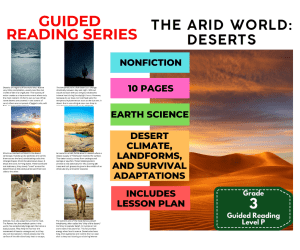
The Arid World - Deserts: Guided Reading Level P with Lesson Plan
ELA, Resources for Teachers, Reading Comprehension, Reading, Science, Language Development, Social Studies, Life Sciences, Geography, Earth and Environmental Sciences, Grade 2, 3, 4, Worksheets & Printables, Worksheets, Teacher Tools, Centers, Activities, Literacy Readers, Quizzes, Quizzes and Tests, Assessments, Lesson Plans
This The Arid World - Deserts (level p) guided reading book with lesson plan includes: Guided Reading Color Label (front cover x1) This is a quick way to match the book’s demands to what students can generally handle.. The overall goal is to use the level/color to pick books for several smaller groups. To qualify for a certain level, a student is expected to read a book from that level with about 90–94% accuracy. If a student is consistently accurate and understands, move up a level. If the student is struggling at that level, drop down and add more support. Each student will improve at completely different rates, but it is generally one of the best ways to check progress across the class. DOWNLOAD THE CATALOG TO VIEW ALL GUIDED READING BOOKS AVAILABLE (SORTED LEVELS A-Z) Pre-Reading Question (x1) Teacher asks the prompt aloud, can be while showing the cover or first page. Students share what they already know, or make educated guesses from the cover. Prompt them to use the target vocabulary. Write some of their responses on the board to look back at during the reading. Vocabulary Words (x5) Introduce the five words, best doing it one at a time. Start by saying it, while students repeat and then see if anyone knows what it means before reading further. Read through the meaning and try to briefly connect each word to a picture or gesture so it’s meaningful. Ask students to flip through the book pages and point to where they see each of the vocabulary words. While reading the book pause upon coming across one of the vocab words or read the sentence twice to make sure students understand the word has appeared. Optional: Ask students to raise hands whenever they see/hear one of the new words. Guided Reading Pages (x10) Check the book snapshot (below) for: primary topic - do you need to prep extra reading or intro materials on this? what is taught best - decide on 1-2 bullets to focus on, use the prompt or words provided here for best results. learning goals - what you are checking for students to be able to do after the session, elicit answers using prompts or words provided. key vocabulary (see section above). questions overview - so you know what is coming up and if you need to prep extra materials to assist understanding. Run the lesson You may have already looked at a few of the pages together, but you can show them some of the pictures again first to set meaning. Depending on how much time you have and how familiar your students are with guided reading class, you may want to read the book aloud first with the group first. Students whisper or partner read, while you listen in. If time, do it as a group, one student reading a page each. Use the guided page’s prompts to coach: “Check the picture / does it make sense?” “Point under the words / try the first sound” “Reread the sentence smoothly”. Try to focus more on one student per session (rotating every time), so you can work out if they are ready to move up or need to move down a level. Comprehension Questions (back cover x3) This is your way to check that students didn’t just say the words, but actually understood the text. First, let students answer by pointing to the page/picture and saying a short sentence. After any answer, follow with: “Show me where you found that in the text.” In bigger groups, have partners answer first (10–20 seconds), then call on 2–3 students to share. Differentiation tips: Emerging speakers/struggling readers: oral + pointing On-level: oral in a full sentence Higher: one written sentence or draw + label Book Snapshot Title: The Arid World: Deserts Genre: Nonfiction (informational) Subject: Earth Science Primary Topic: Desert climate, landforms, and survival adaptations Estimated Guided Reading Level (A–Z): P What This Book Teaches Best Defines deserts by very low precipitation and explains how scarce water shapes the environment. Explains extreme temperature changes in hot deserts from day to night and why they happen. Compares hot deserts and cold deserts , including why icy places can still be deserts. Shows how living things adapt to desert conditions , with examples from plants and animals (cactus, fennec fox, camel, sidewinder snake). Describes how wind shapes desert landforms , including how dunes form and move. Learning Goals Students can define a desert using the book’s description of precipitation and water scarcity. Students can explain why temperatures in a hot desert can drop quickly after sunset, based on the text. Students can describe how a cold desert can exist and name the example given in the book. Students can identify at least three desert adaptations and match them to the plant or animal described. Students can describe how wind forms dunes and what the text says dunes do over time. Students can explain what an oasis is and why it supports life in a desert. Key Vocabulary From the Text precipitation — water that falls from the sky, like rain. evaporation — when water turns to vapor and leaves. nocturnal — active at night and resting in daytime. oasis — a fertile desert area with freshwater reaching the surface. dunes — hills of sand formed when wind drops sand. Discussion Prompts Pre-reading question: What challenges do you think plants and animals face in a very dry place? Comprehension questions: How much rain do deserts usually get in a single year, according to the text? Comprehension questions: What does the book say helps the Saguaro cactus conserve water? Comprehension questions: What is an oasis, and where does its freshwater usually come from? Printing Tips 1. Best Printing Method (Recommended) “Booklet” Printing (Best if Available) If your printer or PDF viewer supports Booklet Printing , use this. Settings to use: Print mode: Booklet Paper size: Letter or A4 (either works) Orientation: Landscape Print on both sides: Yes Flip on: Short edge Scaling: Fit to printable area Booklet subset: First test: Front sides only Then: Back sides only This will automatically: Pair pages correctly Put the cover on the outside Align everything for folding After printing, fold in half and staple along the spine . 2. If “Booklet” Printing Is NOT Available You can still print this correctly with manual duplex printing . Step-by-step: Open the PDF. Choose Print . Set: Orientation: Landscape Pages per sheet: 1 Print on both sides: Yes Flip on: Short edge Print all pages . Because each PDF page already contains two facing book pages, the result will still fold cleanly into a book. Thousands of Cored Education products are included with your TeachSimple membership. Download links and encyclopedia index available here.
Author Cored Education
Rating
Tags Reading Comprehension, Reading Passages, Reading, Guided Reading, Guided Reading Lesson Plan, Guided Reading Activity, Pre-reading, Science Lesson Plans, Social Studies Lesson Plans, Earth Science

Jellyfish Reading Comprehension Passage - Cored Ed Encyclopedia
ELA, Language Development, Resources for Teachers, Reading Comprehension, Reading, Pre-Reading, Writing, Science, Animals, Life Sciences, Grade 2, 3, 4, 5, Worksheets & Printables, Worksheets, Teacher Tools, Centers, Activities, Writing Prompts, Assessments, Tests, Quizzes and Tests, Quizzes
This jellyfish reading comprehension contains the following: Visualize on the Cover Start your lesson by taking a few moments to visualize the topic and share thoughts or feelings about it. Pre-Reading Trivia Students will write down one thing they already know about the subject and then read five more facts and discuss. These facts are fun, and the students will enjoy learning about the subject before reading more. Reading Passage The text is a high-interest reading passage with set paragraphs, roughly three to four paragraphs long. It contains a variety of themes about the topic, anywhere from history to technology. The passage is between 250 and 350 words in length. Mixed Questions The first question page contains four multiple-choice questions, each with a choice of four answers, and three written response questions that require a sentence or two from the student. Vocabulary Questions Practice seven key words from the text in this section across two activities. First section is scrambled words where students will unscramble three words given a clue for each. The second section is a word to meaning matching activity. Creative Writing In this question, the student will be required to write a five to eight sentence paragraph on a question related to the topic. Extension Activities This page is optional for fast finishers or to take home. There are several activities, each one requiring a different skill. Do some, do none, do all, completely optional - but you will feel reassured knowing every possibility is planned for. Answer Key There are answers for the multiple-choice questions, written response questions have sample answers, vocabulary answers and if there is a summary question then a sample summary will be provided as well. FULL CATALOG OF DOWNLOAD LINKS AND ENCYCLOPEDIA INDEX HERE Lesson Snapshot Title: Jellyfish Genre: Nonfiction (Informational Text) Subject: Life Science / Reading (Informational Text) Primary Topic: Jellyfish bodies, movement, stings, and life changes Estimated Guided Reading Level (A–Z): N What This Lesson Teaches Best Identifies what jellyfish are (not fish) and describes their watery, bell-shaped bodies. Explains how jellyfish move by squeezing and relaxing their bell, and sometimes squirting water. Describes how tentacles help jellyfish catch prey using tiny stinging cells. Introduces how jellyfish change forms across their lives (drifting young, attached form, then floating swimmers). Uses headings to organize science information and includes follow-up questions/activities tied to the passage. Learning Goals Describe what a jellyfish can look like and what its main body part is called. Explain why a jellyfish is not a fish, using details from the text. Explain how a jellyfish moves through water. Describe what tentacles do and why people should be careful near jellyfish. Describe one way jellyfish change during their lives. Key Vocabulary From the Text invertebrates — animals without bones. tentacles — long parts that can sting and catch prey. plankton — very small sea life that animals can eat. bell — the main body part shaped like an umbrella. blooms — groups of jellyfish gathered together. Cored Ed Encyclopedia Overview The Cored Ed Encyclopedia is a weekly series of lessons that you can pick up and use right away. These short readings fit into whatever time you have available. Each one includes a warm-up, a reading, and a set of questions, but it’s flexible — you can do just the reading, the full lesson, or skip the writing section if you need to. Each lesson focuses on a single topic so students don’t get lost. The writing is clear but never childish, making it perfect for grades two through five. Topics range from animals and science to history, inventions, and everyday things. No matter the level of the student, everyone should take away at least one new idea or fact from each lesson. The materials are easy to print, easy to explain, and require no setup. They work well for whole-class teaching, partner work, or independent study.
Author Cored Education
Rating
Tags Vocabulary, Spelling, Reading Comprehension, Reading Passages, Reading, Creative Writing, Reading Strategies, Writing Prompts, Jellyfish, Life Science

Reading Passages on Properties of Objects and Materials (Fillable PDF)
ELA, Reading, Reading Comprehension, Science, Physics, Common Core, ESL, Language Development, Vocabulary, Chemistry, Grade 2, 3, 4, Tests, Quizzes and Tests, Teacher Tools, Assessments, Worksheets, Worksheets & Printables, Centers, Activities
Reading Passages on Properties of Objects and Materials for Physical Science Snapshot Genre: Nonfiction Subject: Physical Science Primary Topic: Physical properties, matter, and changes of phase Estimated Guided Reading Level (A–Z): M What This Book Teaches Best It teaches how physical properties such as color, hardness, texture, size, shape, smell, melting point, and boiling point help identify substances. It explains how tools measure physical properties, including temperature, weight, length, and volume. It introduces classification by grouping matter into solids, liquids, gases, metals, and nonmetals. It explains states of matter and how atoms move differently in solids, liquids, and gases. It describes phase changes including melting, freezing, vaporization, and condensation. Learning Goals Students will identify observable physical properties used to describe materials. Students will explain how scientists use tools to measure temperature, length, weight, and volume. Students will classify examples of matter by state and by material type. Students will describe how atoms behave in solids, liquids, and gases. Students will explain how heat can cause melting, freezing, vaporization, and condensation. What's inside? Passage 1: Observable Physical Properties of Objects & Materials Passage 2: Measuring Physical Properties Passage 3: Classification of Matter Passage 4: States of Matter Passage 5: Change of Phase FILLABLE PDF VERSION Worksheet-style pages, but with type-in answer boxes so students can complete and save their work digitally. Other versions are available in the links list below or in the full catalog. FULL CATALOG OF DOWNLOAD LINKS HERE Grade 3/4 Links: Physical Science Part 1 - Properties of Objects and Materials Google Docs/Slides/Forms PDF PPT Word Free Supplementary Pack Accompanying Videos Physical Science Part 2 - Position and Motion of Objects Google Docs/Slides/Forms PDF PPT Word Free Supplementary Pack Accompanying Videos Physical Science Part 3 - Light, Heat, Electricity, Magnetism Google Docs/Slides/Forms PDF PPT Word Free Supplementary Pack Accompanying Videos Life Science Part 1 - Characteristics of Organisms Google Docs/Slides/Forms PDF PPT Word Free Supplementary Pack Accompanying Videos Life Science Part 2 - Life Cycles of Organisms Google Docs/Slides/Forms PDF PPT Word Free Supplementary Pack Accompanying Videos Life Science Part 3 - Organisms and Environments Google Docs/Slides/Forms PDF PPT Word Free Supplementary Pack Accompanying Videos Earth Science Part 1 - Properties of Earth Materials Google Docs/Slides/Forms PDF PPT Word Free Supplementary Pack Accompanying Videos Earth Science Part 2 - Changes in the Earth and Sky Google Docs/Slides/Forms PDF PPT Word Free Supplementary Pack Accompanying Videos Earth Science Part 3 - Objects in the Sky Google Docs/Slides/Forms PDF PPT Word Free Supplementary Pack Accompanying Videos For similar products and other frees, do check out Cored Group on TeachSimple .
Author Cored Education
Rating
Tags Science, Elementary, Reading, Comprehension, Physics, Physical Science, Reading Centers, Reading Comprehension Assessments, Science Assessments, Vocabulary Assessments
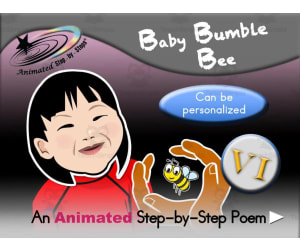
Animated Poem: Baby Bumble Bee VI
ELA, Literature, Poetry, Kindergarten, Preschool, Grade 1, 2, Activities
The Animated Poem: Baby Bumble Bee VI The Animated Poem: Baby Bumble Bee VI is an educational tool created to boost language arts learning for young learners. This resource caters specifically to preschool, kindergarten, first grade, and second-grade students focusing primarily on poetry. This 20-slide PowerPoint presentation fascinates learners with the harmony of vibrant visuals and distinct instructional design, making it a favorite for improving language literacy. Each slide bursts with creative animations that are sure to captivate young minds while infusing fun into learning - as students read through the text in order up until a star marker, they’re rewarded by witnessing animations that bring what they’ve just read alive! In addition, this interactive teaching instrument is also designed with visually impaired children in mind. The animated poem integrates sound effects and high-contrast graphics consistent with their educational needs. Highlighting white or yellow text on a black background improves readability while motion included in these animations helps children focus on prime objects better. Versatile Usage: Educators can use this resource diversely; whether within small group sessions where individual attention can be given towards enhancing poetry comprehension skills or within larger groups encouraging collective reading activities followed by exciting discussions about what was learnt! Beyond its classroom utility, it also works perfectly as homework assignment where parents could engage in interactive sessions outside school hours promoting child-parent bonding along with advanced learning at home. The flexibility of The Animated Poem: Baby Bumble Bee VI knows no bounds! It fits comfortably onto 'big screens' such as interactive whiteboards or large TV screens or smaller devices like computer monitors and tablets - this PowerPoint presentation adjusts flexibly to all tech tools ensuring child-based education remains uninterrupted by the technological requirements of teachers today! Conclusion To conclude, if you are enthusiastic about incorporating an interactive, enjoyable and visually appealing aspect into language arts teaching - the Animated Poem: Baby Bumble Bee VI promises to transform poetry into something engaging, fun and instructive for your young pupils!
Author Bloom Resources
Tags Interactive Learning, Language Literacy, Visual Stimulation, Poetry Comprehension Skills, Educational Tool

Reading Comprehension Fiction Set 2 Sample: Graduation (Google Forms)
ELA, Reading, Language Development, Common Core, ESL, Vocabulary, Reading Comprehension, Writing, Creative Writing, Resources for Teachers, Grade 6, 7, Assessments, Teacher Tools, Quizzes, Quizzes and Tests, Activities
Reading Comprehension Passages Fiction Set 2 Overview Reading comprehension lessons, especially written for Grade 6-7, providing the chance to read interesting and engaging passages. Each lesson has a mix of questions to check understanding, a vocabulary or spelling activity to help remember key language introduced, and a writing exercise. Full answer keys are provided. Passage Included 2.Graduation: Matt helps prepare for his brother's graduation party. Google Forms Version This is the Forms editable and fillable/self grading version. This download is available in GOOGLE Docs, GOOGLE Forms, GOOGLE Slides. PDF, PPT, WORD. FULL CATALOG OF DOWNLOAD LINKS HERE Grade 6/7 Links Fiction Set 1 Google Docs Google Forms Google Slides PDF PPT Word Guided Reading Materials Fiction Set 2 Google Docs Google Forms Google Slides PDF PPT Word Guided Reading Materials Nonfiction Set 1 Google Docs Google Forms Google Slides PDF PPT Word Guided Reading Materials Nonfiction Set 2 Google Docs Google Forms Google Slides PDF PPT Word Guided Reading Materials Reading Passages Overview Each passage is especially written for Grade 6/7 students, including key vocabulary required for this age group. Topics are varied and are accompanied by colorful graphics. Topics are meant to educate, yet entertain the modern student. The majority of these short stories contain an important message - a way of developing these young learners further. Mixed Questions The mixed questions section of each lesson includes a variation of five to six comprehension, vocabulary and Math questions. In addition, key reading strategies are frequently covered including cause & effect, summarizing, compare & contrast and making conclusions. Mixed questions require a written response (no MCQ's), full answers and example responses appear at the end of the lesson. Spelling & Vocab Each reading passage contains a variety of words and phrases designed for Grade 6/7 students. Spelling and vocab activities provide the opportunity to build fluency with these words. Activities provide clues to help assist students. Vocabulary activities include extra questions where students must write a synonym, an antonym or a sentence using a certain word. Writing Prompts Writing prompts are designed to continue the theme or lessons learned in the story. Students are persuaded to write in a variety of ways and each prompt includes several cues to help. The main focus in this product, is the student. Prompts will require the student to relate to past experiences and encourage them to discuss feelings and ways to improve. Full Answer Keys Full answer keys and sample responses are provided so no matter how busy you are, you know you're covered! Mixed question answers provide evidence from the text, Math questions contain the relevant workings. Answers are designed for use by the teacher, but also suitable as a handout to the student. For similar downloads and other frees, do check out Cored Group on TeachSimple.
Author Cored Education
Tags Elementary, Reading, Comprehension, Vocabulary, Answers, Ccss, Common Core, Spelling, Writing, Passages

Brine Shrimp Flipbook craft Animal Science Study writing prompt
Animals, Life Sciences, Science, Biology, Grade 1, 2, 3, 4, Crafts, Activities, Parts of and Anatomy of, Worksheets & Printables, Writing Prompts
Make learning about Brine Shrimp (Artemia) fun and interactive with this printable flipbook craft! Students will explore the fascinating life, habitat, body features, diet, and adaptations of these tiny aquatic animals while strengthening reading comprehension and writing skills through engaging science activities. I like using this resource during animal science units, ocean life studies, invertebrate lessons, classroom centers, independent work, and homeschool learning. It's a low-prep activity that combines science, reading, writing, and creativity into one meaningful project. What You Will Get This resource includes a printable Brine Shrimp (Artemia) flipbook that helps students organize and record what they learn about this unique aquatic animal through reading, writing, and hands-on learning. What's Included in this Flipbook? • Brine Shrimp (Artemia) flipbook craft templates • Reading and writing activities • Animal facts and science research pages • Habitat, diet, and life cycle sections • Physical characteristics and adaptations pages • Writing prompts and reflection activities • Easy-to-follow assembly instructions This resource is perfect for: • Animal science lessons • Ocean and aquatic animal units • Invertebrate studies • Classroom science centers • Homeschool learning • Independent work and early finishers Why you will love this? • Easy to print and assemble • Encourages reading, writing, and scientific thinking • Builds nonfiction reading comprehension skills • Supports research and observation skills • Makes science learning hands-on and engaging • Creates a meaningful keepsake students can share This Brine Shrimp (Artemia) Flipbook Craft is a fun and interactive way for students to discover the amazing world of these tiny aquatic animals while developing reading, writing, and science skills through creative, hands-on learning.
Author Perfect_Printables
Rating
Tags Brine Shrimp, Artemia Flipbook, Animal Science, Ocean Animals, Writing Prompt, Science Craft, Aquatic Animals, Life Cycle, Nonfiction Activities, Science Centers

Done Song (MP3)
ELA, Reading, Preschool, Kindergarten, Grade 1, 2, 3, Songs, Activities
The DONE Song (MP3) is a great way for students to learn the sight word DONE. The song is catchy and easy to follow, and it helps students see the word used in different ways.
Author Have Fun Teaching
Tags Counting

Candy Presentable PDF Reading Comprehension 1 Lesson Sample
ELA, Language Development, Resources for Teachers, Vocabulary, Spelling, Reading Comprehension, Reading, Common Core, Grade 2, 3, 4, 5, Teacher Tools, Centers, Activities, Assessments, Tests, Quizzes and Tests, Presentations, Quizzes
THIS IS A ONE LESSON FREE SAMPLE OF THE FOLLOWING PRODUCT: Themed Reading Comprehension Passages Series - Candy This reading comprehension series is built for grades 2 to 5 and keeps things simple, clear, and easy to use. Every title follows a fun, kid-friendly theme and comes with two passage levels, one written for grades 2 to 3 and a more challenging version for grades 4 to 5. Students then work through a mix of follow-up pages that check understanding in different ways: multiple-choice questions, short written responses, scrambled words, a quick summary, and a theme-based word problem. Answer keys are included, so prep stays minimal. Each resource also comes in nine classroom-friendly formats, so you can choose what fits your setup: print or digital, editable or ready to go, and even self-grading options. Because the layout stays consistent, it is easy to plug into whole-class lessons, small groups, literacy centers, morning work, fast finisher tubs, sub plans, or home learning. It is a straightforward way to build comprehension, practice reading skills in context, and strengthen written responses without adding extra steps for you. Candy Lesson List Note: This product has titles different to those in the rest of the themed series. 1. Candy Types 2. Candy Flavors 3. Candy Shapes and Colors 4. Candy Ingredients 5. Candy Fun Facts PRESENTABLE PDF VERSION Run it like a slide show straight from a PDF, with no PowerPoint or extra software needed, just open, project, and teach. Other versions are available in the links list below or in the full catalog. How to Use These Lessons Perfect for: Morning work or early-finisher bins Guided reading blocks or comprehension warmups Literacy centers or small-group rotations Holiday/seasonal review lessons Independent stations, sub plans, or take-home enrichment More Candy Themed Products CROSSWORDS WORDSEARCHES MAZES FULL CATALOG OF DOWNLOAD LINKS HERE Themed Reading Links Addition Animals Around the Home Birthday FORMATS: -FORMAL ASSESSMENT VERSION -PRESENTABLE PDF -PPT -SLIDES - PDF -FILLABLE PDF -WORD -FORMS -DOCS SUPPLEMENTARY MATERIALS (COMING SOON): -VISUAL READING PASSAGE VIDEO -GUIDED LEARNING VIDEO -LESSON PLANS Candy FORMATS: -FORMAL ASSESSMENT VERSION -PRESENTABLE PDF -PPT -SLIDES -PDF -FILLABLE PDF -WORD -FORMS -DOCS SUPPLEMENTARY MATERIALS (COMING SOON): -VISUAL READING PASSAGE VIDEO -GUIDED LEARNING VIDEO -LESSON PLANS Christmas Cinco de Mayo Clothes Colors Days and Months Division Earth Day Easter Easy Mazes Fall Father's Day Food Geography (Set 1) Geography (Set 2) Geography (Set 3) Graduation Health History (Set 1) History (Set 2) History (Set 3) Human Body Kindness Life Skills Mother's Day Multiplication Science (Set 1) Science (Set 2) Science (Set 3) Shapes Social Skills Spring Sports St. Patrick's Day Subtraction Summer Thanksgiving Transport Valentine's Day Winter Free One Lesson Themes Chinese New Year Lunar New Year Halloween Pink Shirt Day Independence Day Juneteenth President's Day Groundhog Day Readings in Depth Structure Each resource is built around a focused sub-theme within the broader topic. Students read two leveled passages (Grades 2–3 and Grades 4–5), then move through a short, consistent sequence of activities that checks understanding and keeps momentum: multiple-choice, brief written responses, a scrambled-words review, a compact summary task, and a light theme-linked word problem. The flow is predictable for students, but varied enough to feel fresh across topics. Each completed resource includes: Two differentiated reading passages (lower and upper level) A multiple-choice comprehension page Short written-response questions A scrambled-words or quick vocabulary check A brief summary activity A simple, theme-connected word problem Answer keys for fast marking and easy self-checking Nine classroom-friendly formats, including print, editable, digital, and self-grading options Themes Included These readings span a wide range of age-appropriate, high-interest topics, such as: Seasons and celebrations Real-world science and nature Community, character, and life skills Everyday high-frequency themes students already enjoy Each title connects to familiar experiences while strengthening comprehension, vocabulary in context, and clear written expression. Easy extensions (optional): Read twice: first for gist, second to highlight key details Write two “right there” questions and swap with a partner Create a 3-bullet fact list or mini mind map Turn the summary into a 3-sentence retell using sequence words Add one extra math question connected to the topic Compare the two levels: what details appear in both? Differentiation tips: Pre-teach 2–3 key words with quick examples Offer sentence starters for written responses Use partner reading: one reads aloud, one tracks evidence Allow highlighting or underlining before answering questions Provide a shorter chunking option for students who need breaks Encourage confident readers to justify answers with a quoted detail For similar downloads and other frees, do check out Cored Group on TeachSimple.
Author Cored Education
Rating
Tags Vocabulary, Spelling, Candy, Candy Activities, Writing Prompts, Word Problems, Reading Comprehension, Candy Reading, Candy Passages, Reading Passages
Maker STEM Project Planner
STEM, Not Grade Specific, Activities
Maker STEM Project Planner: An Educational Machinery Maker STEM Project Planner is an indispensable resource, specially crafted for educators with a desire to construct fresh and captivating Maker or STEM projects. It offers maximum efficiency with minimum hassle by guiding you through the process systematically. Focused Towards Curriculum Integration Say goodbye to standalone project assignments! This planner initiates the process by focusing on how current curriculum units can naturally include Maker or STEM projects. It suggests potential challenges within these units, thereby fostering critical thinking and problem-solving skills in students. New Teacher Friendly The intuitive interface guides you on additional resources needed. Provides tool integration advice ensuring seamless implementation during teaching sessions. No more fumbling with stubborn equipment or complicated software! Innovation in Education Simplified! This planner manages to take one of the most overwhelming aspects of modern education - creating innovative lessons involving Science, Technology, Engineering, and Math (STEM) – and making it an easy-to-manage part of educational planning. Taking Beyond Routine Teaching Methods... The Maker STEM Project Planner isn’t just a step-by-step guide; it’s a tool that empowers teachers by integrating design thinking principles into each section. The result? Creativity thrives amongst students who work on assignments tailored specifically according to their class profiles. #Applicability Across Various Teaching Contexts * Whole group instructions during regular classroom hours * Smaller cluster-based activities during study sessions * As a homework assignment chart director It works flawlessly across all teaching contexts! This PDF formatted resource spells compatibility across devices – download once and use throughout your professional tenure. No doubts about it; this Maker STEM Project Planner is more than an instructional tool. It's your chance to introduce engaging lessons that push boundaries and incite curiosity in their classrooms. Make every day of teaching a powerhouse learning experience for your students!
Author WhyMaker
Tags STEM Education, Maker Projects, Project Planning, Design Thinking, Resource
High Frequency Sight Words: Memory Match Game - FLASH-MAC
ELA, Language Development, Vocabulary, Grade 1, 2, Activities, Games
High Frequency Sight Words: Memory Match Game - FLASH-MAC A valuable teaching resource, High Frequency Sight Words: Memory Match Game - FLASH-MAC is designed for grade 1 and grade 2 learners. It effectively blends fun with learning through a memory match concept. Dolch sight words system forms the backbone of this game , releasing eight matching puzzles featuring sight words and their corresponding images. Key benefits include: Fosters comprehension of high frequency sight words. Bolsters vocabulary skills. Boosts overall language arts knowledge. Teachers can fully leverage its wide range of applications: Inclusion within classroom activities Serving as an intriguing homework assignment that encourages independent thought alongside language proficiency during self-paced learning or homeschooling sessions. Its interactive yet instructive nature propels it to be a fitting fit across a broad educational spectrum— from public schooling to homeschooling. In conclusion, High Frequency Sight Words: Memory Match Game - FLASH-MAC commands an appealing position with its unique blend of entertainment and education, assisting young minds in mastering high frequency Dolch sight words while developing cognitive abilities such as memory retention and recognition through engaging gameplay.
Author Classroom Complete Press
Tags Software (Mac)

Alphabet Game Cards
ELA, Language Development, Pre-Reading, Kindergarten, Preschool, Activities, Games
This resource is a set of Alphabet Game Cards. You can use these game cards to implement a variety of activities for students to practice uppercase and lowercase letters. Cards can be printed in color or black and white. There is also a hollowed out option that allows students to color the letters. You may wish to use these cards as a Memory game , Go Fish, etc. Instructions are included if you want to play either of these ways.
Author More Than Just Reading
Tags Card Games, Literacy Center, Alphabet, Matching Game, Go Fish

Olympic Games Writing Challenge | Cities, sports, challenges, & wins!
ELA, Writing, Creative Writing, Grammar, Grade 2, 3, 4, 5, Games, Activities
Getting kids to enjoy writing during the early elementary years is key. One way we can do that is to tie in their interests to the writing process. The Olympic games inspire so many young people. In this narrative writing assignment, students will choose their city and sport, as well as what went wrong and what went well. Including the appropriate sequence of events, as well as a conflict is key. Thinking about the way we think is a foundational skill for growing the executive functions our kiddos will use in the editing process. For this reason, a short checklist has been included at the end of page 4 so that learners can begin to go back and check their work. This key skill in developing healthy executive functioning is intentionally made visible to students to prompt ownership over the quality of their writing. STANDARDS: Meets CCSS Writing standards for grades 2-5. Don't forget to check out the Chef's Toolbox, Superhero's Toolbox, and Astronaut's Toolbox activities for more fun! These activities can be used with a whole class in addition to the writing challenge printable. This printable is optimal for 2nd-5th graders who enjoy learning about space and demonstrating their knowledge of it. By using the included matrix to choose the setting, challenge, and characters in their story, they'll use the freedom afforded them to create something they love. *Note, some learners may require a basic explanation of what stocks, investments, and savings accounts are. BONUS: Take advantage of the 4 extension activity ideas included in this printable. These activities will take their writing beyond the page and bring it to life in STEAM-supported outlets. What you'll get: a 4 page PDF including instructions, extension activity ideas, and 3 student pages. One of these pages is simply writing space for you to print off as many copies as you need based on the amount your students are writing. You'll also find the editing checklist to prompt students to edit their own work for spelling, capitalization, and punctuation.
Author Melissa Is Teaching
Tags Writing Prompt, Narrative Writing, Editing Checklist, Creative Writing, Olympics, Olympic Games, Olympic Games Writing, Summer Olympics

Angle Relationships & Equations SCAVENGER HUNT
Math, Geometry, Grade 7, Activities
This resource was developed to meet the requirements of the 7th Grade Geometry Standard below: CCSS.MATH.CONTENT.7.G.B.5 Use facts about supplementary, complementary, vertical, and adjacent angles in a multi-step problem to write and solve simple equations for an unknown angle in a figure.
Author The Math Cafe
Tags Angle Relationships, Equations, Scavenger Hunt, Google Slides, Angles With Equations, Geometry Scavenger Hunt Answer Key
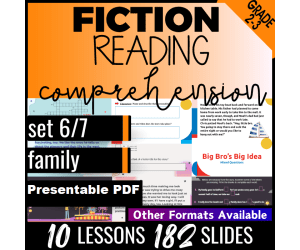
Reading Comprehension Passages Fiction Set 6 - Family Presentable PDF
ELA, Reading, Reading Comprehension, Common Core, Children’s Literature, Literature, Vocabulary, Language Development, Spelling, Writing, Grade 2, 3, Worksheets & Printables, Worksheets, Assessments, Teacher Tools, Tests, Quizzes and Tests, Writing Prompts, Centers, Activities
Reading Comprehension Passages Fiction Set 6 Snapshot Genre: Fiction (short story + comprehension practice) Subject: Reading (Literature) Primary Topic: Family support and problem-solving at home Estimated Guided Reading Level (A–Z): M What This Teaches Best How a character responds when plans change (Molly can’t attend a party because she has a fever). How family members show support through actions (her parents and brother set up games in her room). Sequencing key events across a short narrative with dialogue and action. Understanding setting details and objects that matter to the plot (thermometer, balloons, soda cans, sock ball). Learning Goals Students will identify the problem and explain why it happens in the story. Students will describe how Molly’s family helps her and cite details from the text. Students will retell the story in order, including beginning, middle, and end events. Students will answer questions about key details (who, what, where, why) using the text. Students will use context clues to explain the meaning of unfamiliar words from the story. Passages Include 1.Molly's Home Carnival: It looks like Molly will miss the carnival. Until... 2.Big Bro's Big Idea: Noah's big brother does his best to cheer him up. 3.Denny's Car Wash: Denny wants a new game, but does he get the money for it? 4.Tessa's Grandma: Emma misses her grandma, but Tessa has a great idea. 5.Tom's Canadian Mom: The most important person from Canada is...Tom's mom! 6.Big Brother Woes: Big Brother gets to do whatever he wants. It's just not fair! 7.Tell Us a Story, Grandpa: Grandpa's tales are true family treasures. 8.My Weekend: Read about the author's fun weekend in this interesting story. 9.All in the Picture: Learn how the author has changed in the last 22 years. 10.California 'Coaster: Find out how this author spends his summer vacation. Additional File: Big Bro's Big Idea: Cork Boat Instructions PRESENTABLE PDF VERSION Run it like a slide show straight from a PDF, with no PowerPoint or extra software needed, just open, project, and teach. Other versions are available in the links list below or in the full catalog. FULL CATALOG OF DOWNLOAD LINKS HERE For similar downloads and other frees, do check out Cored Group on TeachSimple.
Author Cored Education
Rating
Tags Elementary, Reading, Comprehension, Vocabulary, Answers, Spelling, Writing, Passages, Reading Centers, Reading Comprehension Assessment

Country Study on Chile Guess Who Game Cards on Famous Chileans
Social Studies, Geography, Grade 6, 7, 8, 9, 10, 11, 12, Activities, Games
Country Study on Chile Guess Who Game Cards on Famous Chileans This Teaching Resource is a fun Guess Who Game PDF (1 slide, 15 cards) on Famous People from Chile. This Printable Resource can be great for Geography and Social Studies Classes. Suitable Learners for this kind of lesson are students from 6th Grade to 12th Grade. This Geography + Social Studies Guess Who Game on Famous Chileans (Country Study) aims to introduce learners to Chile (South America) and its most famous Chileans (leaders, film makers, politicians, writers etc.). Little Preparation is needed for this Social Studies + Geography Activity. Some of the Chilean People selected for this Geography + Social Studies Country Study on Chile are: Bernardo O' Higgins (Chilean Independence Leader) Pablo Neruda (Poet and Novel Literature Prize Laureate) Isabel Allende (Writer) Alejandro Jodorowsky (Film maker) Humberto Maturana (Biologist ang Philosopher) Michelle Bachelet (first Woman President of Chile) Pedro Pascal (Actor) Pablo Larrain (Film Maker) and many more! A very fun and engaging way to play this "Guess Who on Famous People from Chile" (country study on Chile, South America) game can be the following: all Learners sit on the floor in a circle every Learner has a Flash Card on their face every Learner/player asks a question about their Flash Card 's famous Chilean This Social Studies + Geography Country Study on Chile PDF Printable Teaching Resource (1 slide, 15 cards for 15 Famous People from Chile) can be great for learners from 6th grade to 12th grade to introduce Chile and its Culture through its most important and celebrated people. Learning with Alan is a Brand New Teaching Resource/Educational Material Store whose aim is to help Teachers, Educators and Tutors to achieve their teaching objectives while creating a fun and stimulating environment. Never Forget! If you want to browse more of my Teaching Resources, click here Learning with Alan!
Author Learning with Alan
Tags Country Study, Chile, South America, Guess Who, Game, Cards, Social Studies, Geography, Printable, Teaching Resource

Science Reading Passages on Human Body Systems (Google Drive)
Science, Life Sciences, Human Body, Biology, Common Core, Reading Comprehension, Reading, ELA, ESL, Language Development, Grade 5, 6, 7, Assessments, Teacher Tools, Presentations, Tests, Quizzes and Tests, Worksheets, Worksheets & Printables, Centers, Activities
Reading Passages on Human Body Systems for Life Science (Biology) Human Body Systems: Reading Passages Life Science - Stimulate renewed enthusiasm and curiosity in the realm of science with these vibrant science reading comprehension lessons. Bursting with vivid colors and engaging topics, these resources are designed to captivate and motivate your students, urging them to delve deeper into their scientific explorations. And the best part? As an educator, you can be at ease and confident in the effectiveness of these lessons, knowing that a significant portion of the groundwork and preparation has been meticulously taken care of for you, making the teaching process smoother and more enjoyable. What's inside? Part 2 - Human Body Systems Reading Passage 1: Skeletal & Muscular Systems Reading Passage 2: Circulatory & Respiratory Systems Reading Passage 3: Nervous System Reading Passage 4: Digestive System Reading Passage 5: Reproductive System Product Info: 35 PAGES (Docs Version: US English with Answers) 5 FORMS (Self-Grading) 196 Slides Teaching Duration: 2 Weeks Science Reading Comprehension Outline: Introducing a comprehensive resource tailored for 5th and 6th graders, this product offers enriching reading passages supplemented with illustrative pictures and graphs to clarify key concepts. Aligned with the Common Core State Standards (CCSS), it offers a hassle-free approach to teaching, given that the bulk of the preparation is already done for you. The passages present a diverse set of questions – from multiple choice to data analysis and fill-in-the-blanks. This ensures a rich blend of high-interest content and fundamental curriculum-based science themes. With its versatility, you can seamlessly integrate these lessons into various classroom settings, whether it's whole class discussions, morning exercises, independent desk tasks, small group engagements, contingency plans for substitute teachers, regular homework assignments, or even themed activities for holidays. FULL CATALOG OF DOWNLOAD LINKS HERE Grade 5/6 Links: Physical Science Part 1 - Physical and Chemical Properties Google Docs/Slides/Forms PDF PPT Word Free Supplementary Pack Accompanying Videos Physical Science Part 2 - Motion and Energy Google Docs/Slides/Forms PDF PPT Word Free Supplementary Pack Accompanying Videos Physical Science Part 3 - Electricity and Magnets Google Docs/Slides/Forms PDF PPT Word Free Supplementary Pack Accompanying Videos Life Science Part 1 - Cells, Reproduction and Genetics Google Docs/Slides/Forms PDF PPT Word Free Supplementary Pack Accompanying Videos Life Science Part 2 - Human Body Systems Google Docs/Slides/Forms PDF PPT Word Free Supplementary Pack Accompanying Videos Life Science Part 3 - Plant Parts and Ecosystems Google Docs/Slides/Forms PDF PPT Word Free Supplementary Pack Accompanying Videos Earth Science Part 1 - Plate Tectonics and Rock Cycle Google Docs/Slides/Forms PDF PPT Word Free Supplementary Pack Accompanying Videos Earth Science Part 2 - Ocean Exploration and Natural Resources Google Docs/Slides/Forms PDF PPT Word Free Supplementary Pack Accompanying Videos Earth Science Part 3 - Weather and Solar System Google Docs/Slides/Forms PDF PPT Word Free Supplementary Pack Accompanying Videos For similar products and other frees, do check out Cored Group on TeachSimple .
Author Cored Education
Rating
Tags Science, Elementary, Reading, Comprehension, Vocabulary, Answers, Digital Centers, Biology, Life Science, Reading Comprehension Assessments