



3,971 products added recently
Page 5 - Spring Lesson Plans
Embrace the energy of spring with lesson plans that bring new life into your teaching. Explore growth, nature, and renewal through interactive activities across subjects. Implement these resources to invigorate your classroom and engage students with the season's themes.

 Show filters


A Soldier’s Letter Write a story Activity - Memorial Day
ELA, Writing, Creative Writing, Holiday & Seasonal, Holidays, Memorial Day, Months, May, Seasons, Spring, Grade 3, 4, 5, Worksheets & Printables, Writing Prompts, Activities, Centers, Teacher Tools, Assessments, Lesson Plans
A Letter from the Battlefield Write a Story – Memorial Day Activity is a meaningful writing resource that helps upper elementary students connect with the emotions and history behind Memorial Day. In this activity, students observe a cartoon illustration and are given five themed vocabulary words to include in their writing. They are then tasked with writing a short story inspired by the picture, encouraged to imagine it as a letter from a soldier on the battlefield. This engaging prompt supports creative writing, historical thinking, and vocabulary development. It allows students to explore themes of courage, sacrifice, and patriotism in a thoughtful, age-appropriate way. Ways to Use: As a writing prompt during a Memorial Day lesson In literacy centers or as an independent activity For early finishers or substitute plans As a guided writing activity with modeling and discussion As a homework extension connected to social studies Advantages: Strengthens writing and storytelling skills Builds empathy and historical awareness Encourages use of descriptive and emotional language Integrates language arts with history and civic themes Adaptable for various writing levels and classroom needs Fosters respectful reflection on national service and sacrifice Pdf file includes 2 pages. Enjoy!
Author Ponder Palette Plazza
Rating
Tags Memorial Day, Literacy, Writing Centers, Short Stories, Writing Prompts, Sentence Structure, Storytelling
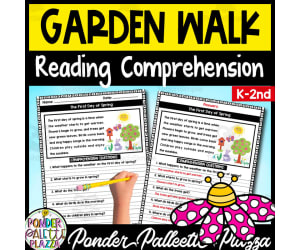
Garden Walk - Reading Comprehension + Answers
ELA, Language Development, Reading Comprehension, Reading, Holiday & Seasonal, Holidays, Months, Seasons, Spring, Kindergarten, Grade 1, 2, Worksheets & Printables, Teacher Tools, Assessments, Lesson Plans, Activities, Centers
A Walk in the Garden – Spring Reading Comprehension + Answers is your new favorite way to sneak some serious reading skills into your springtime routine, without hearing “Do we have to?” from your students. This no-prep activity features a light, engaging passage all about a sunny stroll through a blooming garden. Think: fresh air, buzzing bees, and literacy skills in full bloom. After reading, students answer comprehension questions that help build reading confidence, critical thinking, and attention to detail. And yes, there’s a drawing section, because what kid doesn’t want to illustrate a garden full of flowers, bugs, or maybe a squirrel wearing sunglasses? 🌸 Ways to Use It: ✔️ Morning work that feels like a breath of fresh air ✔️ Spring-themed literacy centers ✔️ Early finisher task (peace restored) ✔️ Homework with zero prep required ✔️ Sub plans that basically run themselves 🌼 Why Teachers Love It: ✔️ Supports comprehension without the sighs ✔️ Mixes reading and creativity ✔️ Comes with answer keys (we got you) ✔️ Totally print-and-go Pdf file includes 2 pages.
Author Ponder Palette Plazza
Rating
Tags Spring Reading, Reading Comprehension, Spring Reading Comprehension, Spring Reading Centers, Reading Centers, Reading Activities, Spring Activities
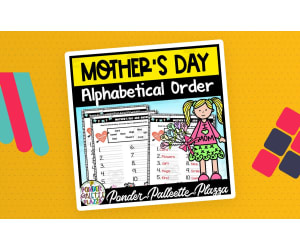
Mother's Day Alphabetical Order + Answers
ELA, Language Development, ESL, Grammar, Vocabulary, Holiday & Seasonal, Holidays, Mother's Day, Seasons, Spring, Kindergarten, Preschool, Grade 1, 2, 3, Worksheets & Printables, Teacher Tools, Assessments, Lesson Plans, Quizzes and Tests, Tests, Activities, Centers
Looking for a meaningful and easy way to celebrate Mother’s Day and sneak in a little language practice? This Mother’s Day Alphabetical Order Activity + Answers is just what you need. Designed for K-3rd graders, this no-fuss printable asks students to take a list of Mother’s Day-themed words, like “flowers,” “hugs,” “kindness,” and “breakfast”, and put them in ABC order. Simple, fun, and totally mess-free. No scissors, no glue, no glitter explosions. Just a straightforward activity that helps kids practice important skills while thinking about the amazing moms and caregivers in their lives. How you can use it: 💐 As morning work that actually feels purposeful 💐 For your literacy centers with a seasonal twist 💐 As a quick activity for early finishers 💐 For your sub plans when you need a breather Why it works: ✅ Builds ABC order skills without eye rolls ✅ Themed vocabulary makes it more fun ✅ Includes an answer key (because you have enough on your plate) ✅ No prep at all, just print and go Pdf file includes 4 pages. Enjoy!
Author Ponder Palette Plazza
Rating
Tags Mothers Day, Mother Day, Mother's Day Literacy, Mother's Day Abc Order, Abc Order, Grammar, Literacy, Spring Literacy, Mother's Day Craft

Year-Long Personal Finance Curriculum | Grades 6-8 | Unit 1
Back To School, Holidays, Holiday & Seasonal, Spring, Seasons, Finance, Life Studies, Money, Math, Grade 6, 7, 8, Lesson Plans, Teacher Tools, Worksheets & Printables
📘 Personal Finance Unit 1: Financial Goals | Grades 6–8 Help middle school students move beyond simply wanting better financial habits. This Financial Goals unit gives students practical tools for setting SMART goals, building realistic budgets, understanding spending behavior, planning for emergencies, and defending financial decisions with evidence. Designed as a 6-week financial literacy unit , it combines reading, financial math, data analysis, case studies, hands-on activities, spreadsheet modeling, argument writing, and a culminating twelve-month financial plan. Please note: This listing includes the Unit 1 student book only . The included teacher resources and bonus materials support the complete six-unit, 30-week Personal Finance curriculum . 📦 What’s Included Student Unit 1: Financial Goals — 87 Pages Each of the six weeks includes a consistent instructional structure: Week opener with essential question and learning targets Original reading passage Comprehension questions Vocabulary in context 10 financial math problems Data graph and analysis Realistic case study Hands-on activity or simulation Spreadsheet modeling task Argument writing with evidence Weekly review and extension activities Six Weeks of Financial Literacy Instruction Week 1 — SMART Goals: Turning Intentions Into Targets Students learn how to turn vague intentions into actionable financial goals. They practice the five SMART criteria, calculate required contributions, prioritize competing goals, and use scheduled reviews to adjust their plans. Week 2 — Budgeting: Building a Budget That Survives Contact With Reality Students construct zero-based budgets and distinguish fixed, variable, and discretionary expenses. They diagnose why budgets fail and repair them using sinking funds. The hands-on activity is a Budget Repair Simulation , with a repaired zero-based budget and written diagnosis as the deliverable. Students also build a zero-based monthly budget spreadsheet. Week 3 — Spending Habits: Why Spending Feels Different Than It Looks Students investigate the psychology behind spending decisions. They identify cognitive biases such as: Impulse purchasing Anchoring Loss aversion Present bias Sunk cost Mental accounting They then analyze spending patterns and design a friction-based intervention for a spending habit. Week 4 — Spending Plans: Allocation Models and the 50/30/20 Debate Students apply the 50/30/20 rule and compare it with alternative allocation approaches. They examine: Needs versus wants Savings and debt Pay-yourself-first strategies Envelope methods Cost of living Proportions and constraints When percentage-based rules work—and when they break down Students ultimately build a personalized allocation model and justify their choices . Week 5 — Emergency Funds: The Fund That Protects Every Other Plan Students calculate an appropriate emergency fund from expense data. They distinguish genuine emergencies from predictable expenses and model how emergency savings can change financial outcomes. Students explore concepts including liquidity, essential expenses, financial shocks, high-yield savings, runway, replenishment, and volatility. Week 6 — Unit Project: The Twelve-Month Financial Plan Students bring the entire unit together by creating a financial plan that must survive unexpected events. The project asks students to: Integrate financial goals Build a budget Account for spending behavior Plan for emergencies Stress-test the plan against realistic shocks Revise the plan Defend decisions using quantitative evidence The project deliverables include a revised twelve-month plan, shock log, and two-page justification . Students also build a spreadsheet model with monthly running balances and documented assumptions. 🎯 How It Works in the Classroom This financial literacy curriculum is built for flexible middle school scheduling. The full program offers approximately 30–36 hours of instruction across 36 weekly lessons , with three pacing options: One hour weekly: 36 weeks Two periods weekly: 18 weeks Block schedule: 36 blocks of 90 minutes For Unit 1, teachers can use the lessons as a weekly financial literacy class, semester elective, advisory activity, or longer block. The materials deliberately maintain the same weekly rhythm. Students quickly learn the routine, allowing more classroom time to focus on financial reasoning rather than directions. ⭐ Built-In Interactive Practice Unit 1 also includes the Shock Year financial literacy simulation. Teams manage a twelve-month household budget while unexpected events occur. Students build a zero-based budget, include at least one sinking fund, respond to financial shocks, track what gets delayed, and compare their results. 📚 Additional Resources Included This Unit 1 resource is supported by a larger Grades 6–8 curriculum system. The complete package includes: Teacher Guide: 130 pages with three pages of notes for every week Answer Key: Complete answers for all 36 weeks Assessment Rubrics: Seven four-point rubrics Unit Tests: Six unit tests with answer keys Vocabulary Cards: 288 financial literacy terms Exit Tickets: 72 quick-check assessments Parent Letters: Welcome letter plus one letter per unit Progress Monitoring Forms Games & Simulations Printable Posters Award Certificates Editable Lesson Plans with fillable fields The 72 exit tickets provide one recall question and one reasoning question per week, giving teachers a quick signal about whether students need reteaching. The vocabulary resource contains 48 Unit 1 terms , including SMART goal, prioritization, zero-based budget, sinking fund, impulse purchase, anchoring, loss aversion, and present bias. 🎯 Standards & Learning Goals Across Unit 1, students learn to: Create and evaluate SMART financial goals. Calculate regular contributions toward financial targets. Prioritize competing financial goals. Construct and repair zero-based budgets. Classify expenses accurately. Use sinking funds for predictable future costs. Analyze psychological influences on spending. Recognize cognitive biases affecting financial decisions. Evaluate percentage-based spending models. Build personalized allocation plans. Calculate emergency fund targets. Distinguish emergencies from predictable expenses. Model the effects of financial shocks. Stress-test financial plans. Identify assumptions and trade-offs. Revise plans after testing. Defend financial decisions with quantitative evidence. Standards alignment includes CEE Saving and Spending standards, Jump$tart 6–8 Financial Decision Making and Spending & Saving standards, and Common Core mathematics and ELA standards , including CCSS.MATH.6.RP.A.3 and CCSS.MATH.7.RP.A.3. ⭐ Why Teachers Love It ⭐ Real financial reasoning: Students work with realistic numbers, scenarios, trade-offs, and financial shocks. ⭐ Beyond worksheets: Students build budgets, analyze data, model decisions, participate in simulations, and create a complete financial plan. ⭐ Math + literacy integration: Financial math is paired with reading, evidence-based writing, vocabulary, and argumentation. ⭐ Strong critical-thinking practice: Students aren't simply told what financial choice to make. They must explain why their choice works. ⭐ Built-in differentiation: The Teacher Guide provides four-tier differentiation guidance for every lesson. ⭐ Easy assessment: Exit tickets, weekly reviews, rubrics, progress-monitoring forms, and a Unit 1 test are already included. ⭐ Teacher-friendly planning: Editable lesson plans come with objectives, standards, and vocabulary already entered, plus fields for pacing, grouping, and notes. ⭐ No personal financial disclosure required: Students work with fictional households and scenarios, so they can practice meaningful financial reasoning without sharing their family's finances. 💡 Build Financial Skills Students Can Actually Use Financial literacy for middle school should do more than define vocabulary. This Financial Goals unit gives students repeated opportunities to calculate, analyze, question, revise, and defend their decisions. By the end of Unit 1, students have moved from a simple SMART goal to a twelve-month financial plan that has been stress-tested against unexpected events . The goal isn't a perfect plan. It's teaching students to recognize assumptions, respond to problems, and use evidence to make better financial decisions.
Author Bright Classroom Ideas Marketplace
Rating
Tags Finance, Financial Literacy, Money, Yearlong, Full Year, Curriculum
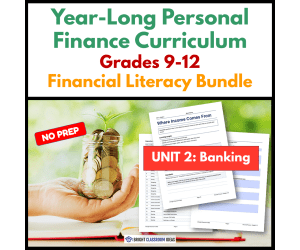
Yearlong Personal Finance Curriculum | Grades 9-12 | Unit 2
Finance, Life Studies, Money, Math, Back To School, Holidays, Holiday & Seasonal, Spring, Seasons, Grade 9, 10, 11, 12, Lesson Plans, Teacher Tools, Worksheets & Printables
🏦 Personal Finance Curriculum for Grades 9–12 | Unit 2 Banking + Complete Teacher Resources Teach real-world banking skills to high school students with a complete, teacher-ready personal finance curriculum focused on checking, savings, online banking, mobile payments, and financial systems. This high school personal finance curriculum gives students repeated opportunities to calculate, analyze, investigate, model, write, and defend practical banking decisions. Important: This version includes the complete teacher resource collection for all six units , while the student component included is Unit 2: Banking . The student book contains Weeks 7–12, while the teacher materials support the full 36-week Grades 9–12 course. 📦 What’s Included 👩🏫 Complete Teacher Resources 167-page Teacher Guide Teaching notes for all 36 weeks Minute-by-minute lesson delivery Three pacing options Four-tier differentiation Misconceptions and corrective moves Discussion prompts Standards alignment Answer and teaching notes Bonus 01: Complete Answer Key Answers for all 36 weeks Comprehension Financial math Data analysis Case studies Reviews Open-ended response guidance Bonus 02: Assessment Rubrics Four-point rubrics Projects Argument writing Journals Financial reasoning Activities and investigations Adaptable blank rubric Bonus 03: Unit Tests Six unit assessments Vocabulary Short answer Calculations Extended responses Complete answer key Bonus 04: Vocabulary Cards All 288 course terms Print-and-cut cards Student-friendly definitions Unit and week organization Unit 2 includes banking vocabulary such as real-time payment, payee, clearing, and stop payment . Bonus 05: Exit Tickets 72 total tickets Two per week Quick checks for understanding Useful for identifying reteaching needs Bonus 06: Parent Letters Welcome letter One letter for each unit Family-friendly course communication Designed so students do not need to disclose personal family finances Bonus 07: Progress Monitoring Forms Class mastery tracking Individual student records Standards monitoring Small-group planning Goal-setting and conference forms Bonus 08: Games & Simulations Six classroom games One connected to each unit Printable cards Student directions Debrief questions Adaptations for different class sizes Unit 2 banking activity: Follow the Money Bonus 09: Printable Posters 12 classroom posters Key financial concepts and formulas Clean black-and-white printing Bonus 10: Certificates Unit achievement awards Financial achievement awards Blank customizable certificate Bonus 11: Editable Lesson Plans Fillable PDF Objectives, standards, and vocabulary already organized Editable pacing, grouping, preparation, differentiation, and reflection fields 👩🎓 Student Resource Included Student Unit 2: Banking — 99 pages Students work through six weeks covering: Checking accounts Savings Online banking Payment systems Mobile payments Deposit insurance Banking system design Financial math Data analysis Case studies Spreadsheet modeling Argument writing Weekly review and extension 🗓️ How It Works in the Classroom The high school personal finance curriculum follows a consistent eleven-part weekly structure: Week opener Reading Comprehension Vocabulary in context Financial math Data analysis Case study Activity or investigation Spreadsheet skills Argument writing Review and extension That consistent structure lets students spend their energy on the financial reasoning , rather than learning a new worksheet format every week. The Teacher Guide provides pacing options for different schedules, while the weekly lessons include preparation notes, teaching moves, misconceptions, and classroom guidance. 🏦 Unit 2: Banking Week 7 — Designing a Personal Banking System Students examine account architecture and learn why separating money by purpose can make financial decisions easier. They design multi-account systems using: Bill accounts Spending accounts Sinking funds Savings Direct deposit splits Automated transfers Deliberate friction The activity has students create an account architecture diagram, calculate a deposit split, and test the system against a late deposit. Week 8 — Where Savings Should Actually Sit Students match savings vehicles to time horizon, access, yield, and risk . They explore: High-yield savings accounts Certificates of deposit CD ladders Money market accounts Treasury bills Early withdrawal penalties Laddering Students also build a CD ladder and compare the long-term value of different savings choices. The classroom investigation requires a sourced rate comparison, ladder design, and justified allocation . Week 9 — Payment Rails: How Money Actually Moves Students investigate what happens between sending a payment and the money arriving. They compare: ACH Wire transfers Cards Real-time payments Settlement Clearing Reversibility Stop payments The focus is not simply on memorizing payment types—it is on selecting an appropriate payment method based on speed, cost, and reversibility . Week 10 — Peer-to-Peer Apps and the Balance That Is Not Insured Students examine mobile and peer-to-peer payment systems, focusing on how convenience, fraud exposure, account protection, and insurance differ across financial tools. They are challenged to think beyond the displayed balance and ask what protection actually applies when something goes wrong. Week 11 — Deposit Insurance and What Happens When a Bank Fails Students investigate deposit insurance and evaluate whether balances are actually protected under different circumstances. The week connects banking choices to coverage limits, account ownership, concentration risk, and system design , helping students understand that "the money is in a bank" does not automatically answer every protection question. Week 12 — The Banking System Audit Students bring the unit together through the Banking System Audit . The essential question asks: Can you design and defend a complete banking arrangement for a real household? Students must: Design a complete banking system. Match the system to a household's goals and financial pattern. Quantify annual costs and benefits. Consider opportunity cost. Build redundancy into the system. Think about liquidity. Address trade-offs and limitations. Defend the recommendation against challenges about complexity and risk. The final activity produces a six-component banking system report with cost analysis and a panel defense , supported by a banking system cost model. 🎯 Standards & Learning Goals Students learn to: Design a personal banking system. Structure multiple accounts according to purpose. Use automation and direct deposit strategically. Compare savings vehicles. Match financial products to time horizons. Calculate interest and opportunity costs. Build and analyze CD ladders. Compare payment methods. Understand speed, cost, settlement, and reversibility. Evaluate mobile payment risks. Analyze deposit insurance and banking protection. Calculate the annual cost of a banking arrangement. Model financial systems in spreadsheets. Identify trade-offs and limitations. Defend financial recommendations using evidence and calculations. Unit 2 aligns with CEE Saving 5.4–5.8 , Jump$tart 9–12 Saving and Investing / Financial Decision Making standards , and applicable Common Core mathematics and literacy standards throughout the unit. ⭐ Why Teachers Love It ⭐ Real-world banking literacy: Students work with the systems they are likely to encounter as they become financially independent. ⭐ Beyond basic banking vocabulary: Students don't just define checking accounts and savings accounts—they design systems and defend why those systems make sense. ⭐ Strong financial math: Students calculate interest, savings allocations, penalties, opportunity costs, annual fees, and the financial impact of different banking arrangements. ⭐ Hands-on investigations: Students create banking system diagrams, investigate real savings products, compare payment methods, and conduct coverage audits. ⭐ Spreadsheet skills: Students build models using formulas rather than simply typing answers, then change assumptions to see how the model responds. ⭐ Built-in critical thinking: Students are repeatedly asked to identify the strongest objection, examine assumptions, and consider whether a theoretically better system would actually be maintained. ⭐ Complete teacher support: The Teacher Guide, answer key, assessments, vocabulary cards, exit tickets, parent letters, progress monitoring, games, posters, certificates, and editable lesson plans are all designed to work together. ⭐ Practical final project: The Banking System Audit gives students a meaningful end-of-unit task instead of another traditional worksheet or test. ✨ Build Banking Skills Students Can Actually Use Give students a high school personal finance curriculum that moves beyond "What is a checking account?" and into the harder questions: How should your accounts be structured? Where should your savings sit? Which payment method makes sense? What protection do you actually have? And does your financial system work in real life? Student Unit 2: Banking provides six weeks of structured student learning, while the extensive teacher resource collection gives you the planning, assessment, differentiation, and classroom-support tools needed to teach the broader 36-week course with confidence.
Author Bright Classroom Ideas Marketplace
Rating
Tags Finance, Financial Literacy, Money, Yearlong, Curriculum, Full Year

A Garden Full of Surprises - Reading Comprehension + Answers
ELA, Language Development, Reading, Reading Comprehension, Holiday & Seasonal, Holidays, Months, Seasons, Spring, Grade 3, 4, 5, Worksheets & Printables, Teacher Tools, Assessments, Lesson Plans, Activities, Centers
Get ready to plant some serious reading skills with A Garden Full of Surprises - Reading Comprehension + Answers ! This fun and engaging passage is perfect for 3rd–5th graders who love a good story, and maybe a few unexpected twists (spoiler alert: not all surprises are about vegetables). Students will read about a lively garden adventure full of discoveries, and then test their understanding with ready-to-go comprehension questions. Ways to use this resource: Morning work that’s more exciting than sharpening pencils Homework that students might actually enjoy (we can dream) Small group reading practice with built-in laughs Test prep disguised as a story about plants Advantages: Builds comprehension skills without the yawns Perfect for spring or any time students need a reading pick-me-up Includes an answer key, so you can grade faster than a rabbit eating a carrot Encourages students to connect reading with real-world themes (gardening, exploration, and unexpected surprises!) Pdf file includes 2 pages. Enjoy!
Author Ponder Palette Plazza
Rating
Tags Reading, Reading Comprehension, Reading Centers, Spring, Spring Reading, Spring Reading Comprehension, ELA
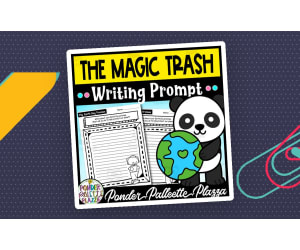
Recycled Treasure - Writing Prompt
Creative Arts, Graphic Arts, ELA, Writing, Creative Writing, Holiday & Seasonal, Holidays, Earth Day, Seasons, Spring, Kindergarten, Preschool, Grade 1, 2, 3, 4, 5, Worksheets & Printables, Worksheets, Coloring Pages, Writing Prompts, Teacher Tools, Assessments, Lesson Plans
Looking for an Earth Day activity that’s fun, creative, and just a little bit silly? The Magic Trash That Turned into Treasure is a two-part writing and drawing prompt where students imagine a piece of trash that turns into something totally unexpected, and totally awesome. Maybe it becomes a rocket ship, a superhero sidekick, or even a musical instrument made of banana peels. (Hey, anything’s possible in the recycling world.) First, students write a short story about the magical transformation, what the trash was, what it turned into, and how it made the world just a little bit better (or weirder). Then, they draw their creation in all its upcycled glory. Expect plenty of wild inventions and even wilder imaginations. Ways to Use It: Earth Day writing center or station Creative writing lesson with a recycling twist Fun activity for early finishers Classroom or hallway display Why You’ll Love It: Encourages kids to think about reusing in a fun way Sparks storytelling and creativity No prep needed, just print and pass out Great mix of writing and art Works across multiple elementary grade levels Because sometimes, saving the Earth starts with a banana peel and a big idea. 🍌♻️ Pdf file includes 2 pages.
Author Ponder Palette Plazza
Rating
Tags Earth Day, Earth Day Writing, Earth Day Writing Prompt, Writing Prompts, Earth Day Activities, Spring Activities, Earth Day Coloring, Writing

If I Were a Doctor - Writing Prompt
ELA, Writing, Creative Writing, Language Development, Holiday & Seasonal, Holidays, Months, Seasons, Spring, Kindergarten, Preschool, Grade 1, 2, Worksheets & Printables, Writing Prompts, Teacher Tools, Assessments, Lesson Plans, Bulletin Boards, Classroom Decor, Activities, Centers
Paging all future kid doctors! If your students have ever imagined themselves in a lab coat with a stethoscope and the power to prescribe lollipops, this is the writing prompt for them. If I Were a Doctor is a fun, creative activity that encourages K–2 students to think about how they’d help others if they were in charge of the exam room. This resource includes a writing section where students can explain what kind of doctor they’d be (pet doctors? toe doctors?), how they’d help their patients, and what tools they’d use, spoiler: band-aids will be everywhere. There’s also a drawing section so they can show off their dream doctor outfit and office setup, expect LOTS of stickers. Ways to Use: Perfect for community helpers units or career day. Great for early finishers or morning work. Use in writing centers or for a creative Friday activity. Makes a fun class bulletin board display, Dr. Jellybean, anyone? Advantages: Encourages imaginative thinking and storytelling. Helps kids connect learning to real-world careers. Supports sentence writing, sequencing, and drawing skills. No prep required, just print and go! Pdf file includes 2 pages. Enjoy!
Author Ponder Palette Plazza
Rating
Tags Writing, Writing Centers, Writing Prompts, Writing Prompt, Spring Writing, Spring Writing Prompts, Literacy, Career, Careers, Careers Writing

I WONDER - What Is Songkran | Animated Video Lesson
Holidays, Holiday & Seasonal, April, Months, Spring, Seasons, Grade 4, 5, 6, 7, 8, 9, 10, Lesson Plans, Teacher Tools
Video Introduction An amazing video designed for the students to learn more about Religions, holidays and festivals in different countries. I WONDER - What Is Songkran | Animated Video Lesson World religions and festivals is really a great topic to read about. What do you know about festivals in every country? Do you know in which part of the world this celebration happens? Have you ever read about religious holidays and festivals? If yes, can you tell us more about them? What is your favourite holiday? Can you name other holidays and festivals that you celebrate in your country? If you are going on a trip to another county that celebrates a national holiday, where it will be? Which country? What you are going to see there? What do people do to celebrate that day? Can you name all the national holidays that your country celebrates? I WONDER - What Is Songkran | Animated Video Lesson The video is perfect for encouraging the researching skills for the students, while learning more about this fantastic holiday/festival or religion. I WONDER - What Is Songkran | Animated Video Lesson This friendly designed video is suitable for students at school, homeschooling, and as a group activity. Format Available in MP4 format.
Author Educational Voice
Rating
Tags What Is Songkran, What Is Songkran Video, Songkran, Songkran Facts, Songkran Video, Songkran Video For Kids, Songkran Facts For Kids, Festival, Festivals, Festivals Facts

Raising the Flag Write a Story Activity - Memorial Day
ELA, Writing, Creative Writing, Holiday & Seasonal, Holidays, Memorial Day, Seasons, Spring, Months, May, Kindergarten, Preschool, Grade 1, 2, Worksheets & Printables, Writing Prompts, Activities, Centers, Teacher Tools, Assessments, Lesson Plans
The Raising the Flag Write a Story – Memorial Day Activities resource is a meaningful and engaging writing activity designed especially for kindergarten through 2nd grade students. This activity features a bright, cartoon-style picture of children raising the American flag on Memorial Day. Students are encouraged to look closely at the scene, use the five given vocabulary words, and write a short story about what they see. This resource helps young learners connect writing with the real-world significance of Memorial Day. It builds key language skills, like vocabulary, sentence structure, and storytelling, while also introducing themes of patriotism, teamwork, and respect. It’s a simple yet powerful way to blend social studies and literacy in the classroom. Ways to Use: As a whole-class or small group writing activity During writing centers or independent work time As a meaningful take-home assignment To start a conversation about American symbols and holidays As a seasonal lesson that supports both writing and social studies Advantages: Helps build early writing and vocabulary skills Encourages observation and creative thinking Makes learning about Memorial Day fun and age-appropriate Easily adapted for different ability levels Supports respectful conversations about national holidays Pdf file includes 2 pages. Enjoy!
Author Ponder Palette Plazza
Rating
Tags Memorial Day, Us History, Writing, Writing Centers, Writing Prompts, Written Expression, Memorial Day Activities, Literacy, Sentence Structure
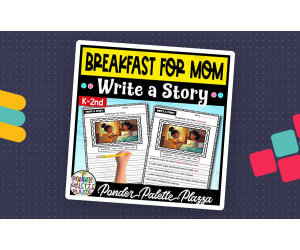
Breakfast for Mom - Write a Story : Mother's Day Activity
ELA, Writing, Creative Writing, Holiday & Seasonal, Holidays, Mother's Day, Seasons, Summer, Spring, Language Development, Kindergarten, Preschool, Grade 1, 2, Worksheets & Printables, Writing Prompts, Teacher Tools, Assessments, Lesson Plans, Activities, Centers
What do kids love more than breakfast? Making up stories about pancakes, orange juice, and maybe a toast that talks. This “Breakfast for Mom – Write a Story” Mother’s Day Activity is a creative writing task that invites students to imagine the perfect breakfast surprise for Mom, burnt toast optional! Students will plan and write a short story about preparing (or attempting to prepare!) breakfast for their mom or a mother figure. From kitchen chaos to heartfelt moments, their imaginations will run wild, and the results are often as hilarious as they are heartwarming. Ways to Use: Writing center or literacy station Whole-class writing activity Morning work leading up to Mother’s Day Homework assignment with a creative twist Paired with a handmade card or drawing for Mom Advantages: Encourages storytelling and descriptive writing Engages students with a fun, meaningful prompt Perfect blend of humor and heart (just like moms!) No prep needed, just print and let them write Supports grammar, sequencing, and vocabulary skills Makes a sweet keepsake gift for families Pdf file includes 2 pages Enjoy!
Author Ponder Palette Plazza
Rating
Tags Writing, Write A Story, Writing Centers, Writing Expression, Mothers Day, Mothers Day Writing, Mothers Day Writing Expression, Literacy, End Of Year Activities

Memorial Day Song Write a Story Activity - Memorial Day
ELA, Writing, Creative Writing, Holiday & Seasonal, Holidays, Memorial Day, Seasons, Spring, Months, May, Kindergarten, Preschool, Grade 1, 2, Worksheets & Printables, Writing Prompts, Activities, Centers, Teacher Tools, Assessments, Lesson Plans
Bring patriotic joy into your classroom with this fun and thoughtful “Singing a Memorial Day Song” writing activity! Perfect for K–2 learners, this no-prep resource invites students to observe a lively cartoon-style picture of children singing in celebration of Memorial Day. Using five age-appropriate vocabulary words, students will write a short story based on the image, practicing sentence building and storytelling in a meaningful context. This activity adds a musical twist to your Memorial Day lesson plans while keeping young writers engaged and learning. Ways to Use: Literacy or writing center activity Morning work or journal writing prompt Social studies and music lesson tie-in Early finisher enrichment task Take-home or parent-share project Advantages: Promotes vocabulary development through themed word use Encourages creativity, observation, and narrative skills Reinforces the importance of national holidays Inspires expression through both language and art Strengthens writing fluency in a fun, low-pressure way Requires no prep, just print and go! Celebrate Memorial Day with stories and songs, your students will love combining writing and imagination while honoring this important holiday! Pdf file includes 2 pages. Enjoy!
Author Ponder Palette Plazza
Rating
Tags Memorial Day, Writing Centers, Writing Prompts, Written Expression, Literacy, Creative Writing, Us History, Writing, Vocabulary

Animals Word search Puzzles + Answers Included
ELA, Language Development, ESL, Spelling, Vocabulary, Holiday & Seasonal, Seasons, Months, Holidays, Spring, Kindergarten, Grade 1, 2, 3, 4, 5, Worksheets & Printables, Worksheets, Word Searches, Activities, Centers, Teacher Tools, Assessments, Lesson Plans
Need a classroom activity that keeps kids learning and lets you catch your breath? Enter: Animals Word Search Puzzles + Answers , aka your new best friend. These word searches are packed with animal names that kids love (we’re talking lions, penguins, elephants, and more). It’s like a safari without the sunscreen and bug spray. Designed for elementary learners, these puzzles are the perfect mix of fun and literacy. Students search for animal words hidden in a grid like tiny word-hunting detectives. Plus, every puzzle comes with an answer key, because no one has time to squint at a hundred diagonally spelled “hippopotamuses.” Ways to Use It: 🦁 Morning warm-up before the wiggles set in 🐧 Early finisher activity that doesn’t involve glitter 🐘 Literacy centers without the chaos 🦊 Sub plans with zero explanation needed 🐼 Take-home fun that feels like a game Why Teachers Love It: ✔️ Reinforces animal vocabulary ✔️ Boosts spelling and word recognition ✔️ Builds focus and visual scanning skills ✔️ Totally no-prep, just print and hand out ✔️ Quiet, independent fun = peace in the classroom So go wild, in the calmest way possible, with these animal word searches. Your students will love them, and your sanity will thank you. PDF File includes 2 pages.
Author Ponder Palette Plazza
Rating
Tags Animals, Animal, Animals Vocabulary, Vocabulary, Animals Wordsearch, Animals Word Search
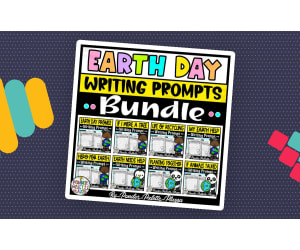
Earth Day Writing Prompts BUNDLE
ELA, Writing, Creative Writing, Holiday & Seasonal, Holidays, Earth Day, Seasons, Spring, Science, Kindergarten, Preschool, Grade 1, 2, 3, 4, 5, Worksheets & Printables, Writing Prompts, Coloring Pages, Worksheets, Teacher Tools, Assessments, Lesson Plans
Looking for a way to celebrate Earth Day that doesn’t involve muddy shoes, bug bites, or chasing down runaway recycling bins? This Earth Day Writing Prompts BUNDLE includes 10 creative prompts , each with a writing section and a drawing section , designed to get your students thinking, laughing, and learning about how to take care of our one-and-only planet. From imagining what animals would say on Earth Day, to designing green dream homes and telling the tale of magic trash, these prompts let students explore environmental themes with humor and heart. Best of all? They're fun to read, even when it’s the end of the day and you’ve had one too many student pencil-sharpening marathons. Ways to Use It: Earth Day writing center Morning work or fast-finisher activity Cross-curricular science + ELA lessons Hallway or classroom displays Why You’ll Love It: No prep—print and go Combines creative writing and drawing Sparks meaningful Earth Day conversations Appeals to a variety of grade levels and learning styles Makes Earth Day educational and entertaining Because saving the planet is important—but having fun while doing it? Even better. 🌎✏️🎨 Pdf file includes 20 pages.
Author Ponder Palette Plazza
Rating
Tags Earth Day, Earth Day Writing, Earth Day Writing Prompts, Writing Prompts, Spring Writing Prompts, Earth Day Activities, Spring Writing, Spring Activities

How Plants Grow - Reading Comprehension + Answers
ELA, Language Development, Reading, Reading Comprehension, Holiday & Seasonal, Holidays, Months, Seasons, Spring, Summer, Grade 3, 4, 5, Worksheets & Printables, Teacher Tools, Assessments, Lesson Plans, Activities, Centers
Watch your students grow right alongside their learning with How Plants Grow - Reading Comprehension + Answers ! This no-prep resource is packed with everything your 3rd–5th graders need to dig into science and reading skills, without anyone needing a shovel or a green thumb. Students will explore the magical (and slightly messy) world of plant life, learning about seeds, soil, sunlight, and all the good stuff that makes plants pop out of the ground like tiny leafy superheroes. The comprehension questions help students flex those critical thinking muscles without making them wilt halfway through the lesson. Plus, answer keys are included because you deserve an easier grading day. Ways to Use: 🌱 Science and reading centers 🌱 Small group instruction 🌱 Homework that actually makes sense 🌱 Sub plans that don’t cause panic Why It’s Awesome: ✅ Connects science and literacy in one easy step ✅ Builds real-world knowledge about nature ✅ Encourages careful reading and discussion ✅ Super easy print-and-go format (no watering can required) ✅ Perfect for spring units or life science themes Pdf file includes 2 pages. Enjoy!
Author Ponder Palette Plazza
Rating
Tags Reading, Reading Comprehension, Reading Centers, Spring, Spring Reading, Spring Reading Comprehension, Spring Craft, Spring Worksheets
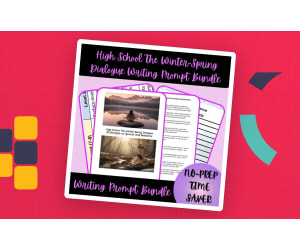
High School The Winter-Spring Dialogue Writing Prompt Bundle
ELA, Reading, Writing, Spring, Seasons, Holiday & Seasonal, Winter, Research, Resources for Teachers, Creative Writing, Homeschool Resources, High School, Teacher Tools, Worksheets & Printables, Writing Prompts, Worksheets, Assessments, Lesson Plans, Quizzes and Tests
I will be honest—high school hit us like a ton of bricks! Watching my 9th-grade daughter outgrow our old curriculum was a huge wake-up call; the 'fluff' that worked in middle school just made her roll her eyes. I realized we didn’t need more prompts; we needed better conversations. That is why I built High School The Winter-Spring Dialogue Writing Prompt Bundle . I wanted something that felt as deep and complex as she is. We have spent the last few weeks sitting at the kitchen table, watching the literal thaw outside while she tackles these big, 'grown-up' ideas. Seeing her actually think instead of just filling in blanks? Those are the moments that remind me why we chose to homeschool in the first place. INCLUDED IN THIS RESOURCE: 20 reflective nature prompts 10 brainstorming note-taking sheets Analytical grading rubric Weighted high school grading scale TOPICS COVERED: Dormancy & Growth Liminality & Transitions Seasonal Reliability Vulnerability & Light If your teen gets stuck on a tough prompt, just let them sit with it. I tell my daughter all the time: some of the best ideas need a little time in the dark before they are ready to surface. I cannot wait to hear about the 'aha!' moments that happen at your house this season. Keep leaning into the thaw—the growth is coming. If you and your students/homeschoolers enjoyed this resource, please leave a review. Thank you for your support! Tina - Big Easy Homeschooling Mom
Author Homeschool with Big Easy Homeschooling Mom
Rating
Tags High School Creative Writing, Homeschool Writing Curriculum, High School ELA Resources, Eclectic Homeschool Writing Prompts, Winter To Spring Transition For High Schoolers, Nature Study For High School English, Creative Writing For High School, Creative Writing Curriculum, Teenage Self-reflection, Teen Nature Journaling
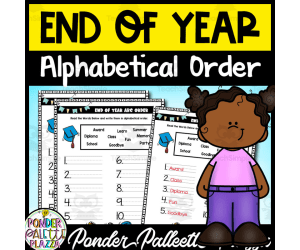
End of Year Alphabetical Order + Answers
ELA, Language Development, ESL, Grammar, Vocabulary, Holiday & Seasonal, Holidays, Seasons, Spring, End Of Year, Kindergarten, Preschool, Grade 1, 2, 3, Worksheets & Printables, Worksheets, Teacher Tools, Assessments, Quizzes and Tests, Tests, Lesson Plans, Activities, Centers
Ready to wrap up the school year with something fun and educational (yes, it’s possible)? This End of Year Alphabetical Order Activity + Answers is the perfect low-prep way to keep young learners engaged while your coffee goes cold for the fifth time. Designed for K–3rd grade, this cheerful worksheet asks students to alphabetize end-of-year themed words like “summer,” “vacation,” and “friends.” It’s learning with a side of sunshine. Ways to Use: ☀️ Slide it into your literacy centers for a quick review ☀️ Use it as a calm morning activity during that end-of-year excitement ☀️ Keep early finishers busy without the need for glitter or glue ☀️ Add it to your sub plans (because yes, June still counts) Why You’ll Love It: ✅ Reinforces ABC order skills (without groans) ✅ End-of-year vocabulary keeps things light and fun ✅ Answer key included, because you're already doing the work of five people ✅ No prep – just print, hand out, and pretend you planned it weeks ago Pdf file includes 4 pages. Enjoy!
Author Ponder Palette Plazza
Rating
Tags Literacy, Abc Order, Alphabet Order, End Of Year, End Of Year Grammar, Grammar, Summer Grammar, Summer Activities, Summer Literacy
Year-Long Personal Finance Curriculum | Grades 6-8 | Unit 5
Back To School, Holidays, Holiday & Seasonal, Spring, Seasons, Finance, Life Studies, Money, Math, Grade 6, 7, 8, Lesson Plans, Teacher Tools, Worksheets & Printables
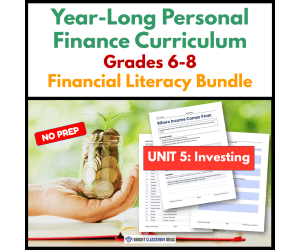
📈 Personal Finance Unit 5: Investing | Grades 6–8 Help middle school students build a practical understanding of investing and financial literacy through six weeks of reading, financial math, data analysis, realistic case studies, simulations, spreadsheet modeling, and argument writing. Students explore inflation, compound growth, stocks, bonds, mutual funds, fees, risk, diversification, and portfolio management. This Investing unit is designed to move students beyond memorizing vocabulary. They calculate, compare, model, defend decisions, and experience how investing choices can play out over time. Please note: This listing includes the Unit 5 student book only . The included teacher resources and bonus materials support the complete six-unit, 30-week Personal Finance curriculum . 📦 What’s Included Student Unit 5: Investing — 84 Pages This six-week financial literacy unit covers Weeks 25–30. Every week follows the same eleven-part structure: Week opener with essential question and learning targets Original reading passage Comprehension and analysis Vocabulary in context 10 financial math problems Data graph and analysis Realistic case study Hands-on activity or simulation Spreadsheet modeling task Argument writing Weekly review and extension activity Six Weeks of Investing Instruction Week 25 — Why Invest: Inflation, Time, and the Cost of Waiting Students discover why simply holding cash can have a cost. They explore: Inflation Purchasing power Real return Nominal return Compound growth Time horizon Rule of 72 Opportunity cost Students calculate inflation's effect on purchasing power, model compound growth, and investigate the financial cost of delaying investing. The Compounding and Inflation Lab has students build a forty-year model, adjust balances for inflation, compare starting ages, calculate the cost of ten-year delays, and test different return assumptions. Week 26 — Stocks: What a Share Actually Is Students learn that owning a stock means owning a share of a real business. They explore: Stocks Shareholders Dividends Capital gains Market capitalization Volatility Indexes Speculation Students calculate capital gains, dividend income, total return, market capitalization, percentage changes, and dividend yield. They also investigate why comparing investments by price change alone can be misleading. The Total Return Investigation has students rank investments by price change and then by total return. Students also examine volatility and explain why the rankings may change. Week 27 — Bonds: Lending Instead of Owning Students compare bonds and stocks by focusing on the fundamental difference between lending and ownership . They learn about: Bonds Issuers Face value Coupon rates Maturity Yield Credit ratings Default risk Students calculate coupon income and current yield while investigating the inverse relationship between interest rates and bond prices. The Bond Pricing Investigation includes a comparison table, rate-shock modeling, and recommendations based on investment horizons. The spreadsheet model calculates current yield and models what happens to bond prices when rates change. Week 28 — Mutual Funds: Funds, Fees, and Why Costs Compound Too Students investigate how pooled investments work and why seemingly small fees can have a major long-term impact. They explore: Mutual funds Index funds ETFs Expense ratios Active management Passive management Net asset value Benchmarks Students compare active and passive approaches and calculate the long-term cost of expense ratios. The financial math demonstrates how fees compound alongside investment growth. For example, students compare long-term results using different expense ratios and calculate the dollar impact of seemingly small annual fees. Week 29 — Risk & Diversification: Risk, Correlation, and Not Owning One Thing Students learn why diversification can reduce specific investment risk without eliminating all risk. They explore: Investment risk Specific risk Market risk Diversification Correlation Asset allocation Rebalancing Risk tolerance Students construct allocations matched to different time horizons and investigate how investments can behave differently during market shocks. The Portfolio Construction Simulation gives students three allocation scenarios, shock outcomes, and a rebalancing record. The spreadsheet model calculates portfolio drift and generates a rebalance action when drift exceeds five percentage points. Week 30 — Unit 5 Project: The Portfolio Simulation Students put the entire unit together in a Twelve-Round Portfolio Simulation . Students: Create an investment policy Build a portfolio around an objective and time horizon Respond to simulated market events Make decisions under pressure Track portfolio performance Compare results with a benchmark Calculate drawdown Calculate annualized return Explain which decisions contributed to results Reflect on hindsight bias and investment discipline The culminating deliverable includes an investment policy, twelve-round decision log, and attribution report . 🎯 How It Works in the Classroom This investing curriculum combines direct instruction with repeated opportunities for students to use financial information. Students read, calculate, interpret graphs, analyze realistic scenarios, build spreadsheet models, write arguments, and participate in simulations. Classroom activities include: Compounding and Inflation Lab Total Return Investigation Bond Pricing Investigation Fee Impact Investigation Portfolio Construction Simulation Twelve-Round Portfolio Simulation The consistent weekly structure makes the unit easy to navigate while gradually increasing the complexity of the financial decisions students analyze. 🎯 Standards & Learning Goals Across the unit, students learn to: Calculate the effect of inflation on purchasing power. Apply compound growth to long-horizon investing. Quantify the cost of delaying investing. Explain stock ownership, dividends, and capital gains. Calculate total investment return. Distinguish investing from speculation. Explain the structure and terms of bonds. Calculate coupon income and current yield. Explain why bond prices and interest rates move in opposite directions. Explain mutual funds, index funds, and ETFs. Calculate the long-term impact of expense ratios. Compare active and passive investment approaches. Distinguish specific risk from market risk. Explain how diversification reduces specific risk. Understand correlation and asset allocation. Construct allocations based on time horizon and risk tolerance. Understand rebalancing. Evaluate portfolio performance against a benchmark. Calculate drawdown and annualized return. Explain investment decisions using evidence and data. Recognize hindsight bias and the importance of following an investment policy. Standards addressed include CEE Investing 8.1–8.5 , Jump$tart 6–8 Saving and Investing 1–5 , and supporting CCSS.MATH.7.RP.A.3, CCSS.MATH.7.SP.C.5, CCSS.MATH.8.EE.A.1, and CCSS.ELA.W.7.1 . ⭐ Why Teachers Love It ⭐ Real-world investing concepts: Students learn ideas they can use to understand future financial decisions. ⭐ Financial math every week: Each week includes ten problems requiring students to show their work. ⭐ Investing becomes concrete: Students calculate actual returns, fees, bond yields, portfolio changes, and investment growth. ⭐ Strong spreadsheet practice: Students build models that respond when assumptions change. ⭐ Hands-on simulations: Students experience portfolio decisions instead of only reading about them. ⭐ Critical thinking: Students compare evidence, challenge assumptions, analyze risk, and defend financial decisions. ⭐ Diversification gets demonstrated: Students can see how different allocations behave during simulated market shocks. ⭐ Long-term thinking: Students examine how inflation, compound growth, fees, and time can dramatically change outcomes. ⭐ Built-in writing practice: Argument tasks require a clear position, evidence, calculations, vocabulary, and consideration of opposing viewpoints. ⭐ Culminating project: The Portfolio Simulation gives students a meaningful way to apply concepts from all six weeks. 💡 Help Students Think Like Investors Financial literacy for middle school should be more than learning definitions like stock , bond , or diversification . This Investing unit asks students to investigate the numbers behind those concepts. They see why time matters. They calculate how fees compound. They discover why bond prices can fall when rates rise. They compare total return instead of looking only at price changes. They test diversification through simulated market shocks. Finally, students must build and manage a portfolio, explain their decisions, compare their results with a benchmark, and evaluate what actually drove their performance. It's a complete middle school investing unit built around calculation, evidence, decision-making, and real-world financial reasoning.
Author Bright Classroom Ideas Marketplace
Rating
Tags Finance, Financial Literacy, Money, Curriculum, Yearlong, Full Year

Easter Missing Middles - Numbers 1 - 20
Holiday & Seasonal, Holidays, Back To School, Easter, Seasons, Spring, Math, Early Math, Numbers, Kindergarten, Preschool, Grade 1, 2, 3, 4, Classroom Decor, Door Decor, Bulletin Boards, Activities, Centers, Teacher Tools, Assessments, Lesson Plans
Let’s face it, getting kids to focus on number sequences can feel like trying to herd jellybeans. But with Easter Missing Middles – Numbers 1–20 , you’ll have them cracking the code in no time (egg pun 100% intended). 🐣 Each egg in this no-prep activity is divided into three pieces. The top and bottom parts have numbers, and the middle? Well, that’s where the little mathematicians come in. Their job is to figure out what number is missing in the middle and write it in. It’s like detective work, but cuter and with pastel eggs. Ways to Use It: ✔️ Morning math warm-up – Easy, festive, and effective. ✔️ Easter-themed centers – Because math should get to wear a costume too. ✔️ Number sequence review – Sneaky skill-building in disguise. ✔️ Early finisher activity – Keeps them busy without chaos. ✔️ Small group work – A great way to hatch some math discussions. Why It Works: 🥚 Builds number sequencing skills 🥚 Encourages logical thinking 🥚 Easy to prep (just print and go!) 🥚 Fun, engaging, and totally classroom-approved Who knew eggs could teach math? Now if only they could grade papers too… Pdf files includes 10 pages.
Author Ponder Palette Plazza
Rating
Tags Numbers, Numbers In Between, Easter, Easter Math, Easter Missing Number, Missing Numbers, Missing Number, Easter Activities, Middle Numbers
Park with Mom: Write a Story - Mother's Day Activity
ELA, Language Development, Writing, Creative Writing, Holiday & Seasonal, Holidays, Seasons, Spring, Summer, Mother's Day, Kindergarten, Preschool, Grade 1, 2, Worksheets & Printables, Writing Prompts, Activities, Centers, Teacher Tools, Assessments, Lesson Plans
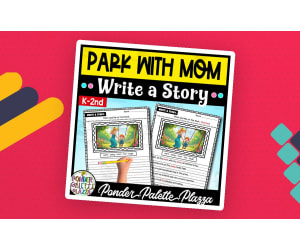
What do you get when you mix Mom, a sunny day, and a park full of squirrels, swings, and spilled juice boxes? A perfect writing prompt! This “Write a Story: Mom and Me at the Park” Mother’s Day Activity lets students craft a fun, heartfelt story about spending time at the park with Mom (or a special grown-up). Students can imagine the perfect outing—feeding ducks, flying kites, or maybe chasing a runaway sandwich. Whether the story is sweet, silly, or somewhere in between, it’s a chance for kids to show appreciation while flexing those writing muscles. Ways to Use: Mother’s Day writing activity during language arts Writing center or small group work Morning work or early finisher task Paired with a drawing or card Take-home surprise for Mother’s Day Advantages: Encourages creative thinking and storytelling Builds narrative structure and sequencing skills Promotes emotional connection and gratitude No prep, just print and write Fits easily into any elementary writing lesson Creates a keepsake full of love (and maybe mud pies) Pdf file includes 2 pages. Enjoy!
Author Ponder Palette Plazza
Rating
Tags Writing, Writing Prompts, Writing Centers, Writing Expression, Mothers Day, Mothers Day Writing, End Of Year Activities, Literacy, Creative Writing
Year-Long Personal Finance Curriculum | Grades 3-5 | Unit 1
Back To School, Holidays, Holiday & Seasonal, Finance, Life Studies, Money, Math, Spring, Seasons, Grade 3, 4, 5, Lesson Plans, Teacher Tools, Worksheets & Printables
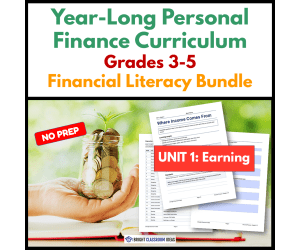
Personal Finance Curriculum | Unit 1: Earning | Grades 3–5 Teach the foundations of financial literacy for grades 3–5 with this engaging Unit 1 student resource focused on earning. Students explore careers, income, entrepreneurship, and the skills that influence earning potential through reading, math, graphs, real-world scenarios, and writing. Please note: This listing includes the Unit 1 student book only . The included teacher resources and bonus materials support the complete six-unit, 30-week Personal Finance curriculum . 📦 What’s Included Student Resource — Unit 1: Earning 64-page student unit 5 weeks of instruction Week 1: Careers Week 2: Income Week 3: Entrepreneurship Week 4: Skills Week 5: Unit 1 Project Original weekly reading passages Comprehension questions Vocabulary practice Financial math Graph reading and analysis Realistic financial scenarios Application activities Evidence-based writing Weekly reviews and essential questions ⭐ Teacher Resources for the Full Curriculum The Teacher Guide supports all 30 weeks and all six units , rather than Unit 1 alone. It includes: 109-page Teacher Guide Week-by-week teaching notes 50–60 minute lesson pacing Misconceptions to watch for Four-level differentiation Standards alignment Assessment guidance Family engagement Materials lists The weekly structure is consistent across the curriculum, making it easier to plan and teach from week to week. 🎁 Bonus Resources for the Full 6-Unit Curriculum The accompanying bonus resources are designed to support the entire 30-week curriculum , including: Complete Answer Key for all 30 weeks Assessment Rubrics Six Unit Tests 180 Vocabulary Definition Cards 180 Word-Wall Cards 60 Exit Tickets Parent Letters and Family Glossary Progress Monitoring Forms Six Financial Literacy Games 12 Classroom Posters Award Certificates Editable Lesson Plans for all 30 weeks 🏫 How It Works in the Classroom Use the Unit 1 student resource for approximately five weeks of focused instruction on earning and careers. Each week follows a predictable learning sequence. Students read, practice vocabulary, solve financial math problems, analyze graphs, apply concepts to scenarios, complete an activity, and write about their learning. Unit 1 Topics Include: Careers Jobs vs. careers Career clusters Training pathways Apprenticeships Credentials Income Income Wages and salary Gross pay Net pay Deductions Entrepreneurship Entrepreneurs Revenue Costs Profit Loss Investment Skills Hard skills Soft skills Human capital Experience Earning potential The unit culminates in a Career and Income Plan project, allowing students to bring together what they learned about careers, income, and skills. 🎯 Standards & Learning Goals Students will: Explain the difference between a job and a career. Explore career clusters and training pathways. Understand different forms of income. Distinguish gross pay from net pay. Explain deductions. Understand entrepreneurship and basic business concepts. Calculate financial amounts connected to earning. Identify hard and soft skills. Explain human capital and experience. Consider how education and skills affect earning potential. Unit 1 identifies alignment with CEE Earning Income 4.1 and 4.2, Jump$tart 3–5 Employment and Income 1, and CCSS.ELA.RI.4.3 . 💛 Why Teachers Love It ⭐ Low-prep instruction: The student pages provide a clear weekly learning path. ⭐ More than worksheets: Students read, calculate, analyze, discuss, apply, and write. ⭐ Real-world connections: Financial concepts are presented through realistic situations and decisions. ⭐ Built-in financial math: Students practice calculations connected to authentic earning situations. ⭐ Easy assessment: The larger curriculum includes answer keys, exit tickets, rubrics, tests, and progress-monitoring tools. ⭐ Teacher support extends across the full curriculum: The Teacher Guide and bonus resources are ready to support Units 1–6, even though this student listing provides Unit 1: Earning . ✨ A Strong Start to Financial Literacy Give students an age-appropriate introduction to personal finance, careers, income, entrepreneurship, and earning potential with a structured Unit 1 that builds practical financial literacy skills. This resource is especially useful for teachers introducing a larger 30-week personal finance curriculum or teaching Unit 1 as a standalone financial literacy unit.
Author Bright Classroom Ideas Marketplace
Rating
Tags Yearlong, Finance, Curriculum, Financial Literacy, Money

Write a Story: A Surprise Gift - Mother's Day Activity
ELA, Language Development, Writing, Creative Writing, Holiday & Seasonal, Holidays, Seasons, Spring, Summer, Mother's Day, Kindergarten, Preschool, Grade 1, 2, Worksheets & Printables, Writing Prompts, Teacher Tools, Assessments, Lesson Plans, Activities, Centers
What do moms love more than a surprise? A surprise that doesn’t involve glitter in the carpet or a frog in their purse. This “Write a Story: A Surprise Gift” Mother’s Day Activity gives students the chance to imagine and write a creative story about giving their mom the perfect unexpected present. Will it be a handmade masterpiece, breakfast in bed, or a macaroni necklace that doubles as a bracelet? Students will use their storytelling skills to describe how they planned, created, or discovered a surprise gift for Mom, and her unforgettable reaction (tears, laughter, or a suspicious “What is it?” smile). Ways to Use: Mother’s Day-themed writing assignment Literacy centers or creative writing stations Morning work during the lead-up to Mother’s Day Paired with an art or craft project Take-home story gift for families Advantages: Encourages creativity, empathy, and expression Strengthens narrative structure and sequencing Supports vocabulary and descriptive writing skills Zero prep, print and go! Suitable for all elementary levels Results in a heartfelt (and sometimes hilarious) keepsake Pdf file includes 2 pages. Enjoy!
Author Ponder Palette Plazza
Rating
Tags Writing, Writing Prompts, Writing Centers, Written Expression, Write A Story, Mothers Day, End Of Year Activities, End Of Year, Literacy

Memorial Day Decorations Write a Story - Memorial Day
ELA, Writing, Creative Writing, Holiday & Seasonal, Holidays, Seasons, Memorial Day, Spring, Months, May, Grade 3, 4, 5, Worksheets & Printables, Writing Prompts, Activities, Centers, Teacher Tools, Assessments, Lesson Plans
Decorating for Memorial Day Write a Story is a thoughtful writing activity designed for 3rd–5th grade students. In this resource, students are shown a cartoon-style picture related to decorating for Memorial Day. Using all five provided vocabulary words, they are asked to write a short story based on what they observe. This activity encourages creativity while helping students reflect on the meaning and traditions of Memorial Day. Students will practice using descriptive language and storytelling skills while also learning how Americans honor those who have served in the military. It’s a great way to blend writing practice with social studies content in a meaningful and age-appropriate way. Ways to Use: Writing warm-up or center activity Literacy block or holiday-themed lesson Independent work or early finisher task Homework or substitute plan Group writing and sharing activity Advantages: Promotes creativity and critical thinking Reinforces vocabulary and sentence structure Encourages thoughtful reflection on patriotic traditions Connects writing with history and civic understanding Easily adaptable to different skill levels Helps students understand the importance of honoring service members Pdf file includes 2 pages. Enjoy!
Author Ponder Palette Plazza
Rating
Tags Memorial Day, Writing Centers, Writing Prompts, Literacy, Sentence Structure, Short Stories, Memorial Day Activities

April Read and Draw - No Prep Activity
Creative Arts, ELA, Holiday & Seasonal, Reading, Seasons, Spring, Months, April, Holidays, Kindergarten, Grade 1, 2, Worksheets, Worksheets & Printables, Coloring Pages, Teacher Tools, Assessments, Lesson Plans, Classroom Decor, Activities, Centers, Crafts
April is here, and so is a fresh way to practice reading! This Read and Draw – April Activity brings together two things kids love, stories and doodles. Each page has a short, kid-friendly sentence, and students get to draw a picture that matches it. It’s reading comprehension in disguise… because who wouldn’t rather draw a bunny jumping in a puddle than fill in bubbles? This activity is perfect for kindergarten to 2nd grade. It gets kids reading, thinking, and creating, all in one go. Best part? You don’t need scissors, glue, or a pep talk to get them started. Ways to Use It: 🌸 Morning warm-up with a creative twist 🌸 Literacy centers that actually keep kids busy 🌸 Sub plans you can print and forget 🌸 Quick, fun homework that parents will thank you for Why You’ll Love It: ✔️ Boosts reading comprehension in a low-pressure way ✔️ Lets kids show understanding through drawing ✔️ Zero prep, just print and go ✔️ Adds a little joy to your literacy routine Give your students a chance to read, imagine, and draw their way through April! PDF file includes 4 pages. Enjoy!
Author Ponder Palette Plazza
Rating
Tags Read, Reading, Read And Draw, April Activities, April Craft, April Crafts, Spring Craft, Spring Crafts, Spring Reading, Spring Centers