



3,906 products added recently
Page 107 - Lesson Plan Templates
Simplify your preparation with lesson plan templates designed to help you organize objectives, activities, and assessments. These templates provide a structured framework to ensure comprehensive coverage of material. Incorporate them to save time and enhance the effectiveness of your teaching.

 Show filters

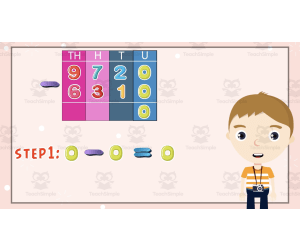
All About Subtracting 10,000 | Animated Math Video Lesson
Math, Addition and Subtraction, Subtraction, Grade 2, 3, 4, Lesson Plans, Teacher Tools
All About Subtracting 10,000 | Animated Math Video Lesson All About Subtracting 10,000 | Animated Math Video Lesson is an exceptional teaching resource that simplifies large number subtraction for students in Grade 2, Grade 3 and Grade 4. This animated math video lesson motivates learners by presenting subtraction in a fun and innovative way. Making complex topics such as these interesting for young minds can be tough sometimes. However,this video trains the learners step-by-step to solve various subtraction problems interactively. The lesson lasts approximately ten minutes thereby fitting conveniently into any instructional time period or schedule. It can be used as a primary teaching method during regular math class time with whole group instruction. This could also be broken down into smaller sections for small group work or individual practice sessions. The animated format of the tutorial features clear visual cues. This helps enhance comprehension issues even for students who might struggle with reading text-based material. Moreover, this all-inclusive resource is provided as an MP4 file which makes it compatible across numerous devices including computers, tablets ,and digital whiteboards in classroom settings or personal gadgets at home for homeschoolers too. Fostering Invaluable Mathematical Skills All About Subtracting 10,000 | Animated Math Video Lesson unfolds as an ideal tool not only introducing the concept but also serving well while reviewing before tests or re-teaching principles crucial to build strong mathematical foundations amongst learners. Therefore,this invaluable learning product successfully supplements teachers’ efforts and fosters essential mathematical skills in students that will benefit them later on. So gear up your mathematics teaching mechanism using this engaging All About Subtracting 10,000 | Animated Math Video Lesson, where learning becomes fun!
Author Educational Voice
Tags Subtraction, Large Numbers, Interactive Learning, Visual Cues, Mathematical Foundations

Future-Ready Creators: AI Ethics & Career Exploration Gamified Project
Life Skills, Special Resources, Social Emotional Learning (SEL), Social Skills, Special Education Needs (SEN), STEM, Research, Classroom Management, Resources for Teachers, Community Building, Grade 3, 4, 5, 9, 10, 11, 12, Worksheets & Printables, Workbooks, Worksheets, Teacher Tools, Assessments, Lesson Plans, Presentations, Rubrics
Future-Ready Creators: AI Ethics & Career Exploration Gamified Project Unit (Edition) Unleash the future of education by digging into this all-inclusive, gamified AI ethics curriculum for high schoolers, Grades 9-12. Join the AI revolution with theory, real-life case studies, and interactive worksheets that explore algorithmic bias, data privacy, surveillance, transparency, and how AI will shift careers. This 24-page digital PDF unit mingles rigorous academics with activities like a student workbook, ethical audits, SVG visuals of mind maps and flowcharts, and teacher resources filled with answer keys. Suitable for classes dealing with STEM, computer science, ethics, and career guidance, this ready-to-use project nurtures critical thinking, ethical decision-making, and career exploration in an AI-filled world. AI Ethics Lesson Plans, High School AI Curriculum, Gamified AI Projects, AI Bias Activities, Future Careers in AI, Digital Workbook on Ethics, Teacher Resources for AI Education. For homeschooling, classroom use, or in after-school programs, give teens the power to create their vision as responsible AI innovators today! Why Parents/Schools Love It: Prepares Students for the Future with AI: It teaches necessary skills for ethical AI practices, detection of bias in AI, and exploring a job market with a high degree of automation with technology-related jobs. Engaging Gamified Format: Converts difficult-to-understand information into challenges, simulations, and projects, which serve as motivation and learning aids and add fun to learning. Teaching Tools: Teaches educators with comprehensive ready-to-use teaching tools, including illustrations, work sheets, and answered keys, making it easy to integrate into any high school curriculum. Cultivates Ethical Thinking and Responsibility: Helps students deal with pressing issues such as the loss of privacy rights and the need for algorithmic justice, encouraging ethical thinkers capable of living with the consequences of artificial intelligence. Versatile and Inclusive: "The book is very versatile and inclusive, being suitable for learning environments such as classrooms, home-schooling, or online learning with equity, diversity, and increasing AI jobs as the appeal." Target Student Classes : From an exhaustive analysis of the PDF, wherein it is clearly mentioned that it is "designed specifically for high school students (Grades 9-12)" and is targeted at advanced concepts involving AI, you need to target high school students belonging to Grades 9-12. This is in line with the level of material, which is of an advanced level of understanding, assuming that these individuals possess critical and digital literacy skills characteristic of individuals on the threshold of higher education or professional life, in particular: Main target audience: Classes involving Computer Science, STEM, Technology, Ethics/Philosophy, Career Guidance, or Social Secondary Audience: Home-school programs, after-school activities, or classes on digital citizenship, innovation, or future studies. Refrain from targeting younger groups, such as the middle school level or younger, because the contents involve intricate subject matters such as deep learning, data sovereignty, or predictive policing. Copyright/Terms of Use : This Book was copyrighted under the name of Syed Hammad Rizvi. This document or repository is for personal use only. You cannot modify, distribute, or give away a single piece of this document. In other words, you cannot place it on the World Wide Web so that people can download it for free. If you would like to share these resources with your colleagues, you can purchase additional licenses from Teachsimple. Thank you for respecting these use terms. This product is happily brought to you by Syed Hammad Rizvi
Author Creative Book Store
Rating
Tags AIEthics, AICurriculum, ArtificialIntelligence, HighSchoolAI, GamifiedLearning, FutureCareers, EthicalAI, MachineLearning, AIBias, DataPrivacy

I WONDER - Can A Cat Own Money | Animated Video Lesson
Life Sciences, Science, Animals, Grade 3, 4, 5, 6, 7, 8, 9, Lesson Plans, Teacher Tools
Video Introduction Animal kingdoms are full of fascinating wonders to learn. This video is designed for the students to learn more about animals in different countries. I WONDER - Can A Cat Own Money | Animated Video Lesson Pets are really great companions for humans. Have you ever had a pet at your house? If yes, tell us more about it. Do you know how many types of birds do we have on Earth? Can you name some of these types? Can you think of some characteristics that mammals have and why they are different from the other types of animals? Do you think humans are mammals? I WONDER - Can A Cat Own Money | Animated Video Lesson The video is perfect for encouraging the researching skills for the students, while learning more about these fantastic animals. I WONDER - Can A Cat Own Money | Animated Video Lesson This friendly designed video is suitable for students at school, homeschooling, and as a group activity. Format Available in MP4 format.
Author Educational Voice
Rating
Tags Can A Cat Own Money, Cat, Cats, Cat Facts, Cats Facts, Cat Video, Cats Video, Cats Facts For Kids, Cat Facts For Kids, Cats Video For Kids

A Coward Text: Full Lesson Plan w/ PowerPoints & Graphic Organizers
ELA, Reading, Grade 6, 7, 8, 9, 10, Lesson Plans, Teacher Tools
A Coward Text: Full Lesson Plan w/ PowerPoints & Graphic Organizers renders lesson planning seamless with its comprehensive kit. It is thoughtfully devised to teach A Coward text by Guy De Maupassant to students from 6th to 10th grade, mainly targeting Language Arts - Reading. The files are available in PDF and Word document formats, providing versatile usage as per your requirements. It includes an assortment of graphic organizers like: Characterization chart Author's purpose diagram Figrative language chart , etc. These tools enhance student engagement and critique of the text, usable for group activities or individual assignments. An extensive range of PowerPoints on literary concepts like: Theme interpretation, Plot structure, add on: symbolism & allegory These presentations promote class-wide discussions whilst harnessing unique comprehension about the text's crucial elements. Included is a detailed worksheet fostering thorough grasp over the text as well as its answer key for swift yet exhaustive scrutiny of students' progress. The provided lesson plan designates distinct objectives for each session assuring their alignment with pedagogical necessities. Additional learning aids involve: Universal plot diagram, Venn Diagram, Offering tools that boost critical thinking skills through comparative analysis and exploration multi-dimensional story elements view. To conclude this package, an evaluation sheet allows proficient grading of group collaborations as well as fostering useful peer reviews. Given its wide application across grades 6 through 10, A Coward Text: Full Lesson Plan w/ PowerPoints & Graphic Organizers arms you with a plethora of materials to introduce your students to the complex elements of Language Arts. This multi-faceted resource proves to be a valuable asset in student engagement, comprehension and examination, all while simplifying your preparatory work.
Author Quality Teaching Products
Tags Coward, Guy De Maupassant, Literacy, Graphic Organizers, PowerPoints

7th Grade Science Diagnostic Assessment & Review System
Science, Grade 7, Assessments, Teacher Tools, Lesson Plans, Worksheets & Printables
Start the year with a clear picture of student readiness using this 7th grade beginning of year science assessment and targeted skills system. With a 50-question diagnostic worth 114 points , scoring and analysis tools, instructional grouping support, 11 targeted follow-up practice pages , scientific reading passages, CER tasks, and complete explained answer keys, this resource helps teachers move from assessment results to focused instruction. Designed as a complete Assess → Analyze → Group → Review → Reteach system, this Grade 7 science resource measures both content knowledge and students’ ability to reason with evidence . Students analyze scientific models, data tables, multi-series graphs, short science texts, experimental scenarios, and Claim-Evidence-Reasoning tasks across Life Science, Physical Science, Earth Science, and Scientific Practices & Reading . What’s Included This 7th grade science assessment and review system includes: ✅ 50-question beginning-of-year science diagnostic ✅ 114 total assessment points ✅ Life Science questions ✅ Physical Science questions ✅ Earth Science questions ✅ Scientific Practices & Reading questions ✅ Multiple-choice questions ✅ Short-answer questions ✅ Labeling activities ✅ Matching questions ✅ Diagram and model interpretation ✅ Data tables ✅ Graph reading ✅ Multi-series graph analysis ✅ Scientific scenarios ✅ Vocabulary-in-context questions ✅ Claim-Evidence-Reasoning (CER) tasks ✅ 2 short scientific reading passages ✅ 5 evidence-based reading questions ✅ Photosynthesis model ✅ Cellular respiration model ✅ DNA and gene hierarchy ✅ Punnett square practice ✅ Genetics and heredity analysis ✅ Ecosystem data interpretation ✅ Chemical reaction model ✅ Conservation of mass ✅ Heat transfer diagrams ✅ Velocity-time graph analysis ✅ Earth systems and natural resources ✅ Experimental design and variables ✅ Mean and repeated-trial analysis ✅ Answer recording sheet ✅ Quick-reference answer key ✅ Skill-by-skill scoring chart ✅ Strand analysis tool ✅ Secure, Developing, and Needs Support performance bands ✅ Individual Student Performance Profile ✅ Whole-class data tracker ✅ Suggested instructional groups ✅ Group planning sheet ✅ 11 targeted follow-up science practice pages ✅ “Key Concept” refresher on every follow-up page ✅ “Extension” task for students who are Secure ✅ All-new follow-up practice with no repeated assessment questions ✅ Reading-for-evidence follow-up practice ✅ CER writing follow-up practice ✅ Complete answer keys ✅ Suggested short-answer responses ✅ Suggested reading-response answers ✅ Completed visual and diagram answers ✅ Sample CER responses ✅ Short “why” explanation for every assessment item ✅ Partial-credit guidance ✅ CER scoring guidance Part 1 contains 50 mixed-format questions worth 114 total points . The Teacher Guide recommends two 45-minute sessions and explains that the diagnostic measures both retained science knowledge and students’ ability to reason with evidence. The At-a-Glance chart on page 2 identifies four reporting areas: Life Science, Physical Science, Earth Science, and Scientific Practices & Reading . Part 2 turns student responses into actionable data with an answer recording sheet, quick-reference key, skill-by-skill scoring chart, strand analysis, performance bands, student profiles, a class data tracker, suggested instructional groups, and group planning support. Part 3 includes 11 ready-to-assign targeted follow-up pages with all-new practice. Every page includes a concise Key Concept refresher and an Extension task, and the set includes dedicated pages for both Reading Science for Evidence and CER Writing . Part 4 provides correct answers for all 50 questions, explanations of why answers are correct, suggested responses for short-answer and reading items, completed diagrams, sample CER responses, and partial-credit guidance. How It Works in the Classroom Use this 7th grade beginning of year science assessment during the first weeks of school to identify what students retained from earlier science learning, how well they interpret scientific information, and where instruction should begin. The resource follows a practical five-step system: 🔎 Assess — Students complete the 50-item mixed-format science diagnostic 📊 Analyze — Score by skill and strand to identify patterns and gaps 👥 Group — Form targeted instructional groups based on shared needs 📝 Review — Assign focused follow-up practice by strand or skill 🎯 Reteach — Use complete explanations, worked visuals, and model CER responses to support next steps The Assess → Reteach System chart on page 2 of Part 1 directly connects each stage to the matching component of the four-part resource. The same page shows the broad format range, strand organization, two scientific reading passages, and suggested two-session administration plan. Use this resource for: ⭐ Beginning-of-year science assessment ⭐ 7th grade science diagnostic ⭐ Middle school science pre-assessment ⭐ Back-to-school science review ⭐ Science readiness check ⭐ Formative assessment ⭐ Small-group planning ⭐ Science intervention ⭐ Targeted reteaching ⭐ Data-driven instruction ⭐ Skill-based grouping ⭐ Independent follow-up practice ⭐ Science stations ⭐ CER practice ⭐ Reading in science ⭐ Text-evidence practice ⭐ Graph and data interpretation ⭐ Middle school science reasoning The Scoring at a Glance chart on page 2 of Part 2 breaks the assessment into four totals: Life Science /41, Physical Science /31, Earth Science /20, and Scientific Practices /22 , for 114 total points . It also defines three performance bands: Secure (80%–100%) , Developing (50%–79%) , and Needs Support (below 50%) . The Student Performance Profile on page 15 of Part 2 provides a one-page strand snapshot with space for strengths, focus areas, assigned Part 3 practice pages, and group placement. The Class Data Tracker on page 16 gives teachers a whole-class view of strand percentages, while the Suggested Instructional Groups on page 17 connect shared student needs to specific follow-up practice. Standards & Learning Goals This seventh grade science diagnostic assessment reviews foundational science concepts, evidence-based reading, and scientific reasoning across four major areas: 🌱 Life Science — cell structure and function, photosynthesis, cellular respiration, matter cycling, traits, DNA and gene hierarchy, Punnett squares, dominant and recessive alleles, probability of traits, sexual reproduction, genetic ratios, ecosystem energy flow, organism roles, limiting factors, population data, and ecosystem CER reasoning ⚛️ Physical Science — atoms and elements, chemical reactions, conservation of mass, signs of chemical reactions, heat transfer, conduction, convection, radiation, thermal energy flow, forces and motion, velocity-time graphs, acceleration, force and mass relationships, and chemical-reaction CER reasoning 🌎 Earth Science — Earth’s four interacting systems, system components, system interactions, renewable and nonrenewable resources, energy-source graphs, human impact, sustainability, and resource-use CER reasoning 🔬 Scientific Practices & Reading — experimental design, independent and dependent variables, controlled variables, inference, repeated trials, averages, graph analysis, reading scientific texts for evidence, citing text details, interpreting passage data, drawing conclusions, and reading-based CER Students demonstrate understanding through varied science tasks rather than one question type. The assessment includes a photosynthesis diagram , cellular respiration diagram , DNA hierarchy , Bb × Bb Punnett square , genetics data, ecosystem population data, a chemical reaction model, sealed-container mass data, heat-transfer scenes, a velocity-time graph, Earth-system interactions, an energy-source graph, experimental variables, repeated-trial averages, and a two-series plant-growth graph. The Skill-by-Skill Scoring Chart on pages 11–13 of Part 2 helps teachers pinpoint specific gaps rather than relying only on one overall score. Skills include photosynthesis, respiration, DNA and genes, Punnett squares, heredity, ecosystem energy, chemical reactions, conservation of mass, heat transfer, forces, acceleration, Earth systems, natural resources, experimental design, variables, averages, graph analysis, reading for evidence, text evidence, passage-data interpretation, and reading-based CER. A particularly valuable feature is the integration of science literacy . Part 1 includes two short scientific texts— “The Hand-Washing Study” and “Coral Reefs and Warming Oceans” —followed by evidence-based questions that ask students to identify variables, cite controlled-test details, explain relationships, interpret numerical trends, and construct a CER response from text evidence. Why Teachers Love It ✨ Move beyond a single test score. Results can be analyzed by strand and individual skill, helping teachers see exactly where students are secure and where review is needed. ✨ Measure both science knowledge and evidence-based reasoning. The diagnostic checks content while also asking students to interpret models, analyze data, read scientific texts, cite evidence, and explain reasoning. ✨ Turn assessment data into an instructional plan. The scoring tools connect results to performance bands, student profiles, instructional groups, and targeted follow-up practice instead of leaving teachers with a stack of completed tests. ✨ Integrate science and reading skills. Two short scientific passages are followed by five evidence-based questions, giving teachers insight into how well students extract and use information from science texts. ✨ Use authentic scientific topics for reading practice. Students analyze a hand-washing investigation and a passage about coral reefs and warming oceans, then answer questions using specific evidence from the texts. ✨ Build genetics readiness. Students work with traits, DNA and gene hierarchy, dominant and recessive alleles, Punnett squares, predicted ratios, and observed offspring data. ✨ Connect photosynthesis and cellular respiration. Students interpret both processes through diagrams, equations, inputs, outputs, organelles, energy relationships, and matter cycling. ✨ Assess chemical reactions through models and evidence. Students analyze atom rearrangement, conservation of mass, reaction signs, sealed-container data, and CER evidence from temperature change and gas formation. ✨ Strengthen graph and data analysis. Students interpret ecosystem tables, genetic ratios, reaction mass data, velocity-time graphs, energy-source graphs, repeated trials, multi-series plant-growth graphs, and numerical trends in scientific passages. ✨ Support data-driven small groups. The Suggested Instructional Groups on page 17 of Part 2 organize students around shared gaps in Life Science, Physical Science, Earth Science, or Scientific Practices and connect those groups to matching Part 3 pages. ✨ Differentiate with clear performance bands. Use Secure, Developing, and Needs Support ranges to guide enrichment, targeted practice, or foundational small-group reteaching. ✨ Assign only the review students need. The 11 targeted follow-up pages include: Cells & Energy Review Genetics & Heredity Review Ecosystems Review Chemical Reactions & Matter Review Heat Transfer Review Forces & Motion Review Earth’s Systems Review Natural Resources Review Experimental Design & Data Review Reading Science for Evidence Review CER Writing Review The Practice Page Menu on page 2 of Part 3 directly matches common student difficulties to specific follow-up pages, making targeted assignment faster. ✨ Refresh key concepts before practice. Every targeted page includes a concise Key Concept section. Students review essential ideas before completing fresh practice, reducing the need to create separate reteaching notes. ✨ Extend learning for students who are already secure. Every follow-up page includes an Extension task that pushes students into explanation, application, prediction, argument, or investigation design. ✨ Use fresh follow-up practice instead of repeating the diagnostic. Part 3 explicitly provides all-new practice so students can demonstrate understanding with new examples and situations. ✨ Teach students how to read science for evidence. The dedicated Reading Science for Evidence Review page includes a new earthworm investigation passage and asks students to cite evidence, explain repeated trials, connect biological information to results, and generate a testable follow-up question. ✨ Build stronger Claim-Evidence-Reasoning responses. CER appears throughout the diagnostic and also receives its own targeted follow-up page. Students practice distinguishing claim, evidence, and reasoning and constructing a complete response from data. ✨ Make grading more manageable. Part 4 provides correct answers, short explanations of why, suggested responses for open-ended and reading items, completed diagrams, sample CER responses, and partial-credit guidance. ✨ Use completed diagrams for faster checking. The Completed Diagrams Quick View on page 2 of Part 4 points teachers to fully worked versions of photosynthesis, cellular respiration, DNA hierarchy, the Punnett square, the chemical reaction model, and heat-transfer scenes. ✨ Score open-ended work more consistently. Part 4 explains that multi-part items can receive point-by-point partial credit and that CER and reading items should be evaluated for a reasonable claim, specific evidence, and reasoning that connects them. ✨ Keep the instructional loop connected. Assessment, analysis, grouping, targeted review, science literacy practice, reteaching, and answer support are designed as one coordinated system rather than disconnected activities. Start the year knowing what students understand, how well they reason with evidence, and what they need next with this 7th grade beginning of year science assessment . Download this complete middle school science diagnostic and targeted review system to assess readiness, analyze results by strand and skill, create focused instructional groups, assign specific follow-up practice, strengthen science reading and CER writing, and support reteaching with complete explained answer keys. Perfect for teachers searching for a 7th grade science diagnostic assessment , beginning-of-year science review, middle school science pre-assessment, back-to-school science assessment, seventh grade science review, Life Science review, Physical Science review, Earth Science review, Scientific Practices assessment, photosynthesis and cellular respiration, genetics and heredity, Punnett squares, ecosystems, chemical reactions, conservation of mass, heat transfer, forces and motion, Earth systems, natural resources, experimental design, variables, graph analysis, reading science for evidence, CER practice, science intervention, small-group science planning, data-driven instruction, or targeted science reteaching.
Author Bright Classroom Ideas Marketplace
Rating
Tags Science, Worksheet, Back To School, Assessment, Lesson, Review
Number & Operations: Addition & Subtraction - FLASH-MAC
Math, Addition and Subtraction, Addition, Grade 1, 2, Teacher Tools, Lesson Plans
Number & Operations: Addition & Subtraction - FLASH-MAC An innovative teaching tool designed to enhance students' understanding of addition and subtraction. A perfect fit for Grade 1 and Grade 2, this resource offers: A focus on pre- assessment techniques, allowing for targeted learning. A variety of real-world word problems, encouraging deeper comprehension. Timed drill activities, adding an element of fun-filled competition. Besides student-engaging content, it also offers advantages for the instructors: An in-depth guide for effective lesson planning along with relevant printables to reinforce knowledge gained during lessons. Captivating Games For Better Learning Experience: The memory match game, The interactive board game, The exciting spinner game! Note: These games provide versatility and can be used in different settings like whole group activities or smaller groups during work-stations time. They make learning enjoyable yet rigorous. Included Assessment Features : An included SMART Response helps to monitor student performance after each lesson, ensuring detailed tracking of comprehension levels throughout the year. Languages Support : Consistency is maintained across text and auditory teaching methods through English voiceovers. Keeping bilingual classrooms in mind, a Spanish language option has been included. Compatibility Note: The FLASH-MAC requires Mac Compatible Software ensuring seamless digital integration within your classroom technology ecosystem. Our aim is to facilitate joy while giving students what they need to excel— consider this comprehensive tool as part of your resources in nurturing future mathematicians.
Author Classroom Complete Press
Tags Software (Mac)

Skink Facts | Interactive Science Lesson | Micro-Learning Deck
Science, Life Sciences, Animals, Grade 6, 7, 8, 9, Teacher Tools, Lesson Plans
This micro-learning deck is the perfect accessory to your Science instruction! This digital slideshow presents Skink Facts. Within this slideshow, you will receive: -Video Lesson -Reading Passage w/ Audio -Close Reading -Quick Write The informational texts included in this resource alongside the informal assessments will keep your students engaged from beginning to end.
Author Teach Me This
Tags Skink Facts, Animal Lesson Plan, Animal Habitats, Informational Text, Summarizing

As The Crow Flies | Figurative Language Activity | Micro-Learning Deck
ELA, Reading, Reading Comprehension, Grade 2, 3, 4, 5, Teacher Tools, Lesson Plans
This resource allows students to explore figurative learning in a fun way. The figurative language term for this learning deck is "As The Crow Flies" Through close reading and a reading passage with audio, your students will better comprehend figurative language! Included: -Video lesson on language concept -Reading passage w/ audio Comprehension -Quick write
Author Teach Me This
Tags Digital Lesson, Learning Deck, Figurative Language, Comprehension, Activity
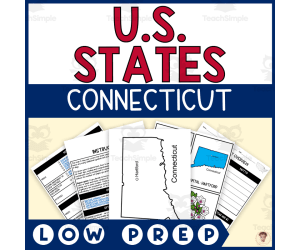
Connecticut State Unit Study (Capital, Bird, Flower, Flag, Animal)
Social Studies, Geography, Grade 2, 3, 4, Lesson Plans, Teacher Tools
Connecticut State Unit Study (Capital, Bird, Flower, Flag and Animal) As an educational provider, you'd appreciate the value that the Connecticut State Unit Study presents. This resource provides a comprehensive five-day unit study exploring the key characteristics of Connecticut. To make this journey engaging for learners in Grade 2 to 4 or homeschoolers taking their first steps into geography or social studies - this LOW PREP resource is easy to implement and can be modified depending on learner's age. Learners will uncover facts about Connecticut's state capital Meet its representative bird Analyze its distinctive flower Inquire about its unique flag design Delve into info about its notable animal Daily worksheets and Interactive Activities: The package includes daily worksheets coupled with activities aiming at stimulating young minds. The interactive notebook pieces deepen critical thinking skills fostering note-taking strategies which are useful across various study areas. Fusion of English Language Arts & Science: This teaching pack combines English language arts through related writing exercises while science topics pertain to botany when learning distinct features of state-specific flora or zoology when discussing unique attributes specificity to each state’s animal. An Insight into History & Social Studies: Apart from Geography- broader subjects such as History & Social Studies shape up as important components where research assignments focus on investigative understanding instead of rote learning aiding sustainable comprehension for future grade levels. In conclusion, this comprehensive Connecticut State Unit Study (Capital, Bird, Flower, Flag and Animal) proudly delivers rich content that meets academic standards ensuring that learning remains fun and engaging always!
Author Heather Huhman
Tags Connecticut, State Unit Study, Capital, Bird, Flower
World Political Leaders: Mikhail Gorbachev (Soviet Union/Russia) Gr. 5-8
Social Studies, Government, Grade 5, 6, 7, 8, Teacher Tools, Lesson Plans
World Political Leaders: Mikhail Gorbachev (Soviet Union/Russia) Gr. 5-8 This teaching resource, aimed at grade 5 to grade 8 Social Studies classes, offers comprehensive coverage on twelve global political leaders of the last century with special emphasis on Mikhail Gorbachev. Its core focus is to provide a wide lens on global history and politics. Governance Styles: Includes real-world examples such as George W. Bush's war against terror and Ronald Reagan's cold war dynamics. Diplomatic Relationships: Explores Mexico’s Vicente Fox's pivotal role in an international summit involving George W. Bush and Fidel Castro. Influence on International Politics: Examines Margaret Thatcher’s instrumental role in South Africa's apartheid abolition. Soviet Leader Spotlight: Traces Mikhail Gorbachev's continued historical influence as a Nobel Peace Prize laureate. Courage in Leadership: Emphasizes Nelson Mandela’s struggle for equal rights within South Africa. Spiritual Leadership: Introduces Dalai Lama as an alternative example of leadership apart from mainstream political practices. Built to conform with State Standards, this resource caters to various learning objectives outlined in Bloom's Taxonomy — including knowledge, comprehension etc.… It includes engaging activities such as writing tasks and quizzes with corresponding answer keys that are seamlessly integrated into the lesson plan. The product incorporates both traditional teaching methods suitable for whole class instruction as well dynamic approaches beneficial for smaller group interactions based upon individual educational strategies+ Easily Accessible Format The World Political Leaders: Mikhail Gorbachev (Soviet Union/Russia) Gr. 5-8 is available in an easily accessible PDF format, which is adaptable to teacher preferences and versatile enough to meet diverse student needs. This resource is a valuable addition for educators looking to deliver high-quality, tangible learning experiences at scale — be it in a school context or even for home-schooling scenarios.
Author Classroom Complete Press
Tags PDF

Washington, D.C. Mini Unit - eBook
Social Studies, Geography, Grade 6, 7, 8, 9, Lesson Plans, Teacher Tools
The Washington, D.C. Mini Unit - eBook is a 14-page download with historical background and pictures to create a lapbook. Important monuments, memorials and statues that represent Washington, D.C. are a part of this resource!
Author Creative Learning Connection
Tags Federal Government, Washington Monument, White House, Union Station, Library Of Congress

Lesson 3.3 - Newton's 1st Law of Motion (Inertia)
Science, Chemistry, Physics, Grade 6, 7, 8, 9, 10, 11, 12, Lesson Plans, Teacher Tools
Lesson 3.3 - Newton's 1st Law of Motion includes the following files: 3.3 1st Law of Motion Notes Covers the idea of inertia and gives examples of its presence in everyday life. This notes sheet comes with an (A) version that has blanks for students to fill out as well as a completed (B) version for students who are absent or may require accommodations. 3.3 Inertia Demo Stations Activity This activity is much like a lab , although I don't call it that because it does not follow the scientific process. It is more like a hands-on practice sheet. Students rotate to different stations and perform tasks while answering questions. The tasks are all designed to demonstrate inertia - an object staying at rest or staying in motion. 3.3 Objectives & Starter Questions PowerPoint Learning objectives and sample starter questions for the topic. 3.3 PowerPoint Notes Notes in PowerPoint format to make presentation to the class a breeze. The following 2016 Indiana State Standards for Integrated Chemistry & Physics are addressed in this resource: ICP.3.1 Develop pictorial and graphical representations which show that a single external applied force changes the velocity of an object, and that when no force acts, the velocity of an object remains constant.
Author Integrated Chemistry and Physics
Tags Integrated Chemistry & Physics, Newton's 1st Law, Inertia

Mapping Skills with Google Earth - Digital Lesson Plan Gr. 6-8 - FLASH-MAC
Social Studies, Geography, Grade 6, 7, 8, Teacher Tools, Lesson Plans
Mapping Skills with Google Earth - Digital Lesson Plan Gr. 6-8 - FLASH-MAC An engaging interactive learning journey for middle school students exploring the fascinating world of geography. This 80 screen-page digital lesson plan, designed specifically for grades six to eight, transitions from basic map reading to more complex mapping skills. Exploring Geography Beyond Just Locations "Geography is not just about knowing where countries and landmarks are located." The core is understanding how different elements in our world connect and interact. Through viewing weather and population maps, students gain invaluable insights into these intricate relationships. Skillset Expansion: This resource propels traditional atlas use into enabling students to detail their own country's mapping. Spotlighting provinces or states and capitals along with unique cultural and geographical features of each area. Moving from local knowledge competence to continental exploration culminating in a deeper global ecosystem understanding. Tailored For Interactive Whiteboards: Built for any interactive whiteboard brand, this tool morphs traditional passive learning into an actively engaged process. Stimulating reading passages are embedded within each ready-made screen alongside interactive pre and post-reading activities. Innovation With Google Earth™: Set apart by its tailored compatibility with Google Earth™, it adds a unique aspect to engage digitally oriented learners. Also includes multitasking tests such as memory match game/challenging word searches/ crossword puzzles supported by instructional videos. Evaluating Learner Comprehension & Promoting Inclusivity: Learner comprehension standardized quizzes: Fulfilling all Bloom's Taxonomy educational objectives and aligning with state standards. Text-to-Speech Functionality: In both English & Spanish language options to maximize reach across diverse linguistic preferences. Mixing Traditional Learning With Modern Technology: The unique attribute of Mapping Skills is the thoughtful blend of printables reinforcing offline learning with advanced software techniques, resulting in a comprehensive academic journey that's both immersive and engaging. Social Studies/Geography Education Resource For modern educators looking for an interactive approach, this tool is a comprehensive ally. A reliable resource to create memorable classroom experiences in social studies, specifically geography instruction.
Author Classroom Complete Press
Tags Software (Mac)
I WONDER - How Do Birds Fly | Animated Video Lesson
STEM, Animals, Life Sciences, Science, Biology, Grade 1, 2, 3, 4, 5, 6, 7, 8, Lesson Plans, Teacher Tools
Video Introduction Animal kingdoms are full of fascinating wonders to learn. This video is designed for the students to learn more about animals in different countries. I WONDER - How Do Birds Fly | Animated Video Lesson Do you like animals? what is your favorite one? Do you own a pet? If yes, tell us more about it, like what its name? And what do you like most about it? What are the animal kingdoms? Can you write down the characteristics of each animal class like mammals, birds, reptiles, amphibian, fish and mollusks. Do you know that some animals can sing, can you name any of them? What is the largest and the smallest mammal in the world? What is the largest and the smallest bird in the world? What is the largest and the smallest fish in the world? I WONDER - How Do Birds Fly | Animated Video Lesson The video is perfect for encouraging the researching skills for the students, while learning more about these fantastic animals. I WONDER - How Do Birds Fly | Animated Video Lesson This friendly designed video is suitable for students at school, homeschooling, and as a group activity. Format Available in MP4 format.
Author Educational Voice
Tags How Do Birds Fly, How Do Birds Fly Video, Birds, Bird, Birds Facts, Birds Facts For Kids, Birds Video, Birds Video For Kids, Bird Facts, Bird Video
I WONDER - How Do Pangolins Protect Themselves | Animated Video Lesson
Animals, Life Sciences, Science, STEM, Grade 2, 3, 4, 5, 6, 7, 8, Lesson Plans, Teacher Tools
Video Introduction Animal kingdoms are full of fascinating wonders to learn. This video is designed for the students to learn more about animals in different countries. I WONDER - How Do Pangolins Protect Themselves | Animated Video Lesson Do you like animals? what is your favorite one? Do you own a pet? If yes, tell us more about it, like what its name? And what do you like most about it? What are the animal kingdoms? Can you write down the characteristics of each animal class like mammals, birds, reptiles, amphibian, fish and mollusks. Do you know that some animals can sing, can you name any of them? What is the largest and the smallest mammal in the world? What is the largest and the smallest bird in the world? What is the largest and the smallest fish in the world? I WONDER - How Do Pangolins Protect Themselves | Animated Video Lesson The video is perfect for encouraging the researching skills for the students, while learning more about these fantastic animals. I WONDER - How Do Pangolins Protect Themselves | Animated Video Lesson This friendly designed video is suitable for students at school, homeschooling, and as a group activity. Format Available in MP4 format.
Author Educational Voice
Tags How Do Pangolins Protect Themselves, How Do Pangolins Protect Themselves Video, Pangolins, Pangolin, Pangolins Facts, Pangolins Facts For Kids, Pangolins Video, Pangolins Video For Kids

Funky Phonics®: Learn to Read, vol. 1 Gr. K-1
ELA, Language Development, Phonics, Preschool, Grade 1, Teacher Tools, Lesson Plans
Funky Phonics®: Learn to Read, Vol. 1 Gr. K-1 Welcome to an exciting teaching tool that integrates fun and effectiveness in learning phonics for Kindergarten to Grade 1 students with Funky Phonics®: Learn to Read, Vol. 1. This resource comes packed with: Classroom activities prepared for immediate deployment. Lessons on essential phonetic concepts such as short vowels, high-frequency consonants, and blends are made relatable yet simple. A distillation of design elements delivers these language art lessons without overwhelming young minds. This versatile teaching material can be utilized in various settings - from whole-group classroom interactions down to individual homework assignments making it adaptable according to different teaching styles or needs. Treasure for Educators: Beyond being a crucial supplement for any educator's toolkit, this extensive resource can double as primary teaching material or an aiding tool; classic teachers may enhance their instruction using this while homeschooling parents can consider it their chief subject matter. To make the integration painless into your everyday routine, lessons include reproducible worksheets and exercises well-known for building meaningful student engagement around understanding of phonics sounds. With user-friendly core principle – download once then print multiple copies based on your need, making saving time fully possible! In conclusion, This downloadable PDF file provides meticulously curated lesson plans adhering to professional education standards while allowing room for spontaneous modifications necessary at times. For younger learners newly embarked on their language arts course ,Funky Phonics®: Learn to Read, Vol. 1 Gr. K-1 offers a wealthier inclusion that adds authenticity thus value in foundational stage necessitated in initial language art lessons so that the road to adept readership for your students is strengthened right from the beginning with this comprehensive resource!
Author Classroom Complete Press
Tags PDF
Simple Machines: Gains and Losses with Simple Machines - FLASH-PC
Science, Technology, Engineering, Common Core, Grade 5, 6, 7, 8, Teacher Tools, Lesson Plans
Simple Machines: Gains and Losses with Simple Machines - FLASH-PC FLASH-PC is a resource for educators in the field of science and engineering education, designed specifically for students in Grades 5 to 8. It focuses on the basic principles of simple machines, inviting an exploration into their advantages and disadvantages. This educational product aligns well with the Common Core State Standards. It presents a wealth of material that encourages deep learning. Based on Bloom's Taxonomy, it guides students to attain higher cognitive levels such as understanding, applying, analyzing, evaluating, and creating. Diversity in Instruction Methods The teaching tool enables you to diversify your instruction methods through a host of materials designed to stimulate different learning styles. You'll find enlightening reading segments discussing various facets of simple machines, complemented by challenging pre-reading and post-reading questions that enhance understanding. Key Features: Vocabulary flashcards : Tailored for quick memory retention without overburdening learners. Digital Supports: Including video clips and audio files that make complex concepts easily understandable. Packed with Interactive Activities: To supplement traditional lecture-based teachings helping significantly improve student engagement. Rewarding Convenience! All this is available at your fingertips via its single downloadable Product File format compatible with PC software systems extends seamless integration into current lesson plans; extremely convenient! A Versatile Teaching Tool! It caters effectively across group instructions or small group activities inside class or homework assignments enhancing its utility! Conclusion In contemporary education, 'Simple Machines: Gains and Losses with Simple Machines' emerges as a powerful resource. Let’s embark today on our interactive digital journey exploring gains-and-losses-with-simple-machines & unleash the limitless potential of your students!
Author Classroom Complete Press
Tags Software (PC)

Social Skills: Fostering Relationships Gr. 6-12+
Special Resources, Social Skills, Grade 6, 7, 8, 9, 10, 11, 12, Teacher Tools, Lesson Plans
Social Skills: Fostering Relationships Gr. 6-12+ Social Skills: Fostering Relationships Gr. 6-12+, an indispensable teaching resource curated for teachers and homeschoolers alike, aims at supporting learners in building long-lasting relationships while aiding personal growth. This resource focuses on students from grade six to twelve and helps enhance crucial interpersonal abilities, enabling the foundation of essential social skills. An important aspect is learning how to identify good attributes within relationships alongside traits that should be discouraged. This assists students to become competent communicators promoting emotional intelligence. The package encourages independence in youngsters by guiding them towards self-reliance - a key element in responsible living like handling conflicts, giving consent, or making apt decisions. It incorporates planning strategies fundamental to personal development that inspires students mapping their goals accurately. Nurturing Environment of Accountability A significant emphasis is laid on creating an accountable environment personally and professionally which teaches adequate behavioral reactions when faced with criticism; thus instilling resilience among learners. Fostering collaborative skills with an open mindset forms another core feature of this resource's learning objectives . The program also aids in tackling destructive habits through a systematic 30-day curriculum for continuous personal evolvement . Courtesy Etiquette & Exciting Learning Materials Furthermore, this package diligently works towards imparting polite behavior norms with meticulous etiquette – introducing balanced individuals who respectfully interact within society whilst maintaining their individual authenticity. The instructional material offers exceptional components such as: Inspiring real-world activities centered around informative reading passages rich in knowledge to foster understanding. The Special Resources category includes comprehensive subjects like Social Skills . Integration of fun tools such as graphic organizers, crosswords, and word searches which serve as creative assessment strategies instead of traditional quizzes. Product File & Standards Compliance The resource provides one reproducible Product File in PDF format that can be accessed digitally or printed. This resource abides by state standards and Blooms taxonomy – making it an essential instrument for instilling holistic development in students from grades six through twelve.
Author Classroom Complete Press
Tags PDF

The Boat Trip Short Story | Pre-Intermediate Lesson Plan
ELA, Reading, Grade 10, 11, 12, Teacher Tools, Lesson Plans
The Boat Trip Short Story | Pre-Intermediate Lesson Plan This pre-intermediate English lesson plan helps students improve their reading comprehension and grammar skills. Educators can use this resource to teach the short story "The Boat Trip" to upper elementary or middle school students. The lesson plan includes the full text of the story along with pre-reading questions, vocabulary exercises, and post-reading discussion prompts. It incorporates elements like prediction, summarizing, and making inferences to build critical thinking. Teachers may utilize this resource for whole-group instruction, small reading groups, or as an independent reading assignment. With multiple ways to implement this short story lesson, it engages students meaningfully. The accompanying answer key also makes it easy for teachers to assess student progress. Providing rich literary content, this resource helps cultivate stronger readers. Includes an answer key Makes it easier than ever for educators to evaluate student responses accurately Eases manual workload on teachers when assessing responses delivered using traditional or conventional methods. The package consists of three PDFs with four ready-to-print pages along with one digital access file. With its emphasis on boat trips and gruesome discoveries, it injects a dose of fun into everyday schooling while imparting valuable educational content. In terms of implementation, there's room for flexibility depending on class size or individual learner preferences: whole group setting inclusion, where all learners navigate through collectively; small-sized subsection utilization, allowing more intimate discussion amongst peers; traditional homework assignments that encourage independence in learning.
Author TEAM TEFL
Tags Boats, Short Story, Language Arts, Reading Passage, Comprehension

How to Write an Essay - Digital Lesson Plan Gr. 5-8 - FLASH-MAC
ELA, Writing, Grade 3, 4, 5, 6, 7, 8, Teacher Tools, Lesson Plans
How to Write an Essay - Digital Lesson Plan Gr. 5-8 - FLASH-MAC The How to Write an Essay - Digital Lesson Plan Gr. 5-8 - FLASH-MAC is a remarkable teaching resource that simplifies the essay writing process for students in grades 3 through 8. This highly interactive multi-media corpus offers a expansive span of 80 screen-pages, brimming with captivating lessons and involving activities, all aimed at nurturing a profound understanding of essay writing process and its significance. Gaining Expressive Strengths The primary aim of this intuitive learning aid is to arm students with comprehensive strategies that will empower them to express their views articulately. The compact yet thorough guidelines cover each step from brainstorming thoughts to revising final drafts. In-depth instructions provided on four major types of essays: Descriptive, Narrative, Informative, and Persuasive ensures that learners become well-prepared for various academic tasks they may encounter in future! A deep-dive into important grammatical elements such as verbs, adjectives, and pronouns are also included! A range of activities coupled with test preparation aids ensure post-instruction reinforcement frictionlessly. Pacing Learning Effectively Graphic Organizers : Marvelous inclusion! These assist students in comprehensibly sailing through the complexities ordinarily encountered during writing processes. Interactive reading passages :An intelligent follow-up activity after each passage stimulates active student participation throughout the lesson’s progress . Memory match games keep every learning session fun yet meaningful! Tests and Mindsportz : Yes, there are crossword puzzles too! While these provide some relief, they simultaneously enhance vocabulary skills. Word searches have been included to sufficiently challenge young minds aiding retention! . Plus, supporting video & audio materials augment written content majestically. Aligned with Academic Standards All content within this product integrates effortlessly with State Standards and adheres constructively to Blooms Taxonomy framework encouraging higher-order thinking skills among pupils. This smart software for MAC, supports homeschooling parents beautifully by handing over a comprehensive lesson plan efficiently. This wonderful teaching resource can be used in various setups. It could be a whole group classroom setting or used for small breakout sessions. It supplements homeschooling curriculums excellently or could double as interesting homework assignments that meet individual learning needs. In conclusion,this digital plan is an effective medium enabling educators engage with their students on multiple levels while easily adapting to each student's unique learning style and requirements. A must-have tool to help cultivate competent writers armed not just knowledge but aplomb!
Author Classroom Complete Press
Tags Software (Mac)

I WONDER - What Is Magma | Animated Video Lesson
Earth Sciences, Earth and Environmental Sciences, Science, Environmental Science, Geography, Social Studies, Grade 3, 4, 5, 6, 7, 8, 9, Lesson Plans, Teacher Tools
Video Introduction An amazing video designed for the students to learn more about natural disasters in different countries. I WONDER - What Is Magma | Animated Video Lesson What do you know about this natural disaster? Do you know in which part of the world this could happen? Have you ever read about the safety misusers that we could have to protect ourselves from this natural disaster? If yes, can you tell us more about them? Can you name other natural disasters? If yes, tell us more about where they are likely to happen? And how frequently? Do you like reading about Geography? What is your favorite country in the whole world? If you are going on a trip where it will be? Which country? What you are going to see there? Does this country has a famous place to visit? Do you like reading about Geology? If yes, what is your favourite topic? I WONDER - What Is Magma | Animated Video Lesson The video is perfect for encouraging the researching skills for the students, while learning more about this fantastic phenomenon. I WONDER - What Is Magma | Animated Video Lesson This friendly designed video is suitable for students at school, homeschooling, and as a group activity. Format Available in MP4 format.
Author Educational Voice
Tags What Is Magma, What Is Magma Video, Magma, Magma Facts, Magma Facts For Kids, Magma Video, Magma Video For Kids, Natural Disaster, Natural Disasters, Natural Disaster Video
I WONDER - What Are Stalagmites | Animated Video Lesson
Geography, Social Studies, Grade 4, 5, 6, 7, 8, 9, 10, Lesson Plans, Teacher Tools
Video Introduction An amazing video designed for the students to learn more about famous places in different countries. I WONDER - What Are Stalagmites | Animated Video Lesson What do you know about this place? Do you know in which part of the world it is? Have you ever visited this place? If yes, can you tell us more about your adventure, and what do you like the most about this place? Do you like reading about Geography? What is your favorite country in the whole world? If you are going on a trip where it will be? Which country? What you are going to see there? Does this country has a famous place to visit? I WONDER - What Are Stalagmites | Animated Video Lesson The activity is perfect for encouraging the researching skills for the students, while learning more about this fantastic place. I WONDER - What Are Stalagmites | Animated Video Lesson This friendly designed video is suitable for students at school, homeschooling, and as a group activity. Format Available in MP4 format.
Author Educational Voice
Tags What Are Stalagmites, What Are Stalagmites Video, Stalagmites, Stalagmite, Stalagmites Facts, Stalagmites Facts For Kids, Stalagmites Video, Stalagmites Video For Kids, Geography
I WONDER - Did Aztec Children Go To School | Animated Video Lesson
History: Ancient, History, Social Studies, History: World, Grade 2, 3, 4, 5, 6, 7, 8, Lesson Plans, Teacher Tools
Video Introduction An amazing video designed for the students to learn more about history. I WONDER - Did Aztec Children Go To School | Animated Video Lesson Do you like history? Which topic do you really enjoy about history? Have you ever read an interesting fact about the Vikings? If yes, can you mention them? What do you like most about the Victorian era? Can you name all the Tudors? Have you ever wondered how people used to live in ancient Japan and ancient China? Do you know any interesting facts about ancient Egyptians and the Pharaohs? Have you ever visited South America? What do you know about Incas and Aztecs? Celtic culture was really one of a kind, can you name any of the places that Celts used to live in? Imagine yourself living during the ancient Roman empire, how your life will look like? Ancient Greece was an amazing place to live in. What do you know about ancient Greek life? I WONDER - Did Aztec Children Go To School | Animated Video Lesson The video is perfect for encouraging the researching skills for the students, while learning more about history. I WONDER - Did Aztec Children Go To School | Animated Video Lesson This friendly designed video is suitable for students at school, homeschooling, and as a group activity. Format Available in MP4 format.
Author Educational Voice
Tags Did Aztec Children Go To School, Did Aztec Children Go To School Video, Aztec Children, Aztec Children Facts, Aztec Children Facts For Kids, Aztec Children Video, Aztec Children Video For Kids
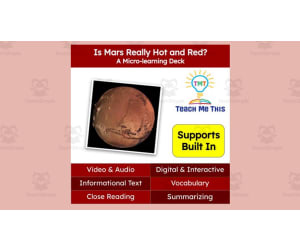
Mars | Interactive Science Lesson | Micro-Learning Deck
Science, Earth and Environmental Sciences, Space, Grade 6, 7, 8, 9, Teacher Tools, Lesson Plans
This micro-learning deck is the perfect accessory to your Science instruction! This digital slideshow presents Is Mars Really Hot and Red? Within this slideshow, you will receive: -Video Lesson -Reading Passage w/ Audio -Close Reading -Quick Write The informational texts included in this resource alongside the informal assessments will keep your students engaged from beginning to end.
Author Teach Me This
Tags Astronomy, Digital Science, Interactive, Planets, Mars