



3,901 products added recently
Page 139 - Lesson Plan Templates
Simplify your preparation with lesson plan templates designed to help you organize objectives, activities, and assessments. These templates provide a structured framework to ensure comprehensive coverage of material. Incorporate them to save time and enhance the effectiveness of your teaching.

 Show filters

Number & Operations: Multiplication & Division - Practice the Skill 2 - FLASH-MAC
Math, Multiplication and Division, Division, Common Core, Grade 3, 4, 5, Teacher Tools, Lesson Plans
Number & Operations: Multiplication & Division - Practice the Skill 2 - FLASH-MAC This integral teaching aid is uniquely designed for educators who wish to boost their students’ understanding of multiplication and division. Mainly catered towards third, fourth and fifth graders, this digital resource offers: Seamless navigation between modules on MAC software systems Meticulously designed activities mapped according to Common Core State Standards and the National Council of Teachers of Mathematics (NCTM) Timed drill exercises using multiplication or division operations Dual language capabilities in English and Spanish for inclusive education regardless of language proficiency Bilingual Capabilities The standout feature in this package is its bilingual capabilities. Inclusion is a core pedagogic value. Catering to this, voiceovers are available in both English and Spanish alongside corresponding written text – tearing down language barriers standing in the way of quality education. Varied Applications This tool can be employed during whole group sessions as well as small study groups or one-on-one tutorials. Tasks can also be assigned as homework enhancing student engagement beyond class-room hours while solidifying understanding of complex multiplication and division topics. Add-ons A host of additional embedded tools further streamline learning by encouraging practical application aligned with theoretical concepts. In essence, Number & Operations: Multiplication & Division - Practice the Skill 2 - FLASH-MAC packages practical use cases within standardized frameworks delivered through engaging activities all while fostering bilingual inclusivity!
Author Classroom Complete Press
Tags Software (Mac)

Natural Resources: Full Day Substitute Plans
Science, Earth and Environmental Sciences, Environmental Science, Common Core, Grade 4, Teacher Tools, Lesson Plans
Use these activities for a sub teacher or for your own teaching practice. All activities are ready to copy and go, without lengthy directions. Explanations for students and for you or the sub are incorporated as scripts which headline some but not all worksheets. The only equipment you need is a copy machine; the only supplies your kids need are pencils, crayons, scissors, and glue. Included in this download: Morning and afternoon large group “messages” for students to complete and for the sub teacher to use as “get acquainted” and “end of day wrap up” meetings. Each message should take from 30 to 45 minutes of class time. Reader Response papers for students to write after they have read independently for 30 (or more) minutes. Students will record what they learned about plot, characters, setting, and new words, whether they read a portion of a book or the whole thing. Nonfiction readers will record facts learned. These reader response papers provide the opportunity for small group or large group sharing upon completion. In reading and science, students will read and respond to comprehension passages on natural resources (natural, man-made, renewable and nonrenewable). They will learn and make a poster about the resources humans need for survival. They will read about how resources are processed for use. They will read about the steps from dairy cow to milk in our kitchen and choose their own product to research and write about. They will determine the natural resources in their own state and complete a chart showing how those resources provide employment and/or activities for residents in the state. They will make a travel poster to advertise the natural attributes of their own state. They will explore methods for conserving natural resources by reusing, recycling, or reducing our use. They will think about methods for reducing and reusing food waste in the school cafeteria They will complete whole number computations (adding, subtracting, multiplication) to fill in and color “We Will Protect Our Natural Resources” coloring page. They will put vocabulary words in alphabetical order and generate own sentences. They will play suggested vocabulary games to extend comprehension. Also included in the plans is an activities grid that briefly explains each activity , possible variations of the activity , materials needed, and Common Core Standard Applied
Author Subplanners by Jean Snowden
Tags Natural Resources, Natural Resources Lesson Plan, Substitute Plans, Science Lesson, Alphabetical Order
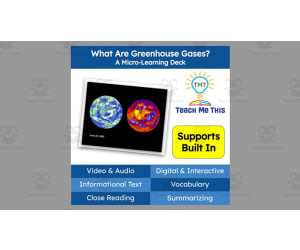
Greenhouse Gases | Interactive Science Lesson | Micro-Learning Deck
Science, Earth and Environmental Sciences, Environmental Science, Grade 7, 8, 9, 10, Teacher Tools, Lesson Plans
This micro-learning deck is the perfect accessory to your Science instruction! This digital slideshow presents Greenhouse Gases. Within this slideshow, you will receive: -Video Lesson -Reading Passage w/ Audio -Close Reading -Quick Write The informational texts included in this resource alongside the informal assessments will keep your students engaged from beginning to end.
Author Teach Me This
Tags Greenhouse Gases, Droughts, Interactive Science, Vocabulary, Comprehension
How to Write a Book Report: Proofreading Your Book Report - FLASH-PC
ELA, Writing, Common Core, Grade 5, 6, 7, 8, Teacher Tools, Lesson Plans
How to Write a Book Report: Proofreading Your Book Report - FLASH-PC FLASH-PC is an essential teaching resource perfect for educators, including public school teachers and homeschoolers. It aims to enhance the writing skills of students, specifically those in grades 5, 6, 7, and 8. This concise digital program offers a software product file compatible with personal computers. Focusing primarily on Language Arts with emphasis on writing. This educational tool provides components crucial for ensuring students can effectively proofread their own book reports. Vitally overlooked in many curricula yet significantly addressed in this product is the art of critical proofreading. The annotated features are: This effective curriculum -based content aids learners' understanding of proofreading strategies through interactive activities based on Bloom's Taxonomy. A pivotal part of this resource includes reading passages accompanied by before-and-after reading questions; designed specifically to encourage critical thinking and active participation. Vocabulary flashcards and graphic organizers included help facilitate enriched learning environments. Usage scenarios: This comprehensive tool can be utilized during whole group sessions or small group discussions as lessons unfold or even assigned as homework exercises for at-home reinforcement – all tailored around educator requirements while focussing on learner outcomes. The content , providing peace-of-mind that pedagogical trends being followed match those proving effective worldwide. Incorporating How to Write a Book Report: Proofreading Your Book Report - FLASH-PC into your Language Arts sessions does not only result in improved writing and editing skills amongst students but also assists in creating an interactive learning space crucial for molding well-rounded intellectuals.
Author Classroom Complete Press
Tags Software (PC)

I WONDER - How Old Is Geothermal Energy | Animated Video Lesson
Environmental Science, Earth and Environmental Sciences, Science, Grade 6, 7, 8, 9, 10, 11, 12, Lesson Plans, Teacher Tools
Video Introduction An amazing video designed for the students to learn more about STEM. I WONDER - How Old Is Geothermal Energy | Animated Video Lesson Do you like STEM subjects? what is your favorite one? Have you ever tried to plant a seed? If yes, tell us more about it. Or have you ever tried to invent something? If yes, tell us more about it. And how do you think it will help us? Have you ever seen a microorganism under a microscope? What was it? And how it looked like? Mathematics is a marvelous subject. Let' sharpen our brains and solve some equations. Do you like timetable tricks? What is your favorite one? Do you know how to code? Have you ever created an app or a game before? If yes, how was it like? I WONDER - How Old Is Geothermal Energy | Animated Video Lesson The video is perfect for encouraging the researching skills for the students, while learning more about this fantastic topic. I WONDER - How Old Is Geothermal Energy | Animated Video Lesson This friendly designed video is suitable for students at school, homeschooling, and as a group activity. Format Available in MP4 format.
Author Educational Voice
Tags How Old Is Geothermal Energy, How Old Is Geothermal Energy Video, Geothermal Energy, Geothermal Energy Facts, Geothermal Energy Facts For Kids, Geothermal Energy Video, Geothermal Energy Video For Kids
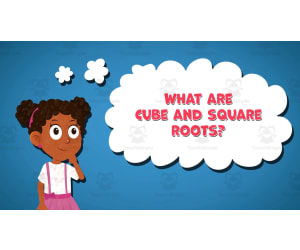
I WONDER - What Are Cube And Square Roots | Animated Video Lesson
STEM, Algebra, Math, Grade 5, 6, 7, 8, 9, 10, 11, Lesson Plans, Teacher Tools
Video Introduction An amazing video designed for the students to learn more about STEM. I WONDER - What Are Cube And Square Roots | Animated Video Lesson Do you like STEM subjects? what is your favorite one? Have you ever tried to plant a seed? If yes, tell us more about it. Or have you ever tried to invent something? If yes, tell us more about it. And how do you think it will help us? Have you ever seen a microorganism under a microscope? What was it? And how it looked like? Mathematics is a marvelous subject. Let' sharpen our brains and solve some equations. Do you like timetable tricks? What is your favorite one? Do you know how to code? Have you ever created an app or a game before? If yes, how was it like? I WONDER - What Are Cube And Square Roots | Animated Video Lesson The video is perfect for encouraging the researching skills for the students, while learning more about this fantastic topic. I WONDER - What Are Cube And Square Roots | Animated Video Lesson This friendly designed video is suitable for students at school, homeschooling, and as a group activity. Format Available in MP4 format.
Author Educational Voice
Tags What Are Cube And Square Roots, What Are Cube And Square Roots Video, Square Root, Square Root Facts, Square Root Facts For Kids, Square Root Video, Square Root Video For Kids, Cubic Root
Geometry: Composing Geometric Shapes - FLASH-MAC
Math, Geometry, Grade 1, 2, Teacher Tools, Lesson Plans
Geometry: Composing Geometric Shapes - FLASH-MAC A comprehensive teaching resource designed to aid educators in conveying key concepts in geometry, composing geometric shapes particular. Intended for grade 1 and grade 2 students, this product helps reinforce knowledge with engaging activities and assessment tools. A Multifaceted Learning Tool This tool offers curriculum-based content through various stages: Pre- assessment phase: guides teachers to identify preliminary gaps in the student's understandings. Detailed lesson plan: delivers instructions step-by-step ensuring smooth transition from basic concepts to solving complex problems independently. Inclusion of real-world problems: these offer learners an opportunity to apply their knowledge practically and foster critical thinking skills. Timed drill exercises: aimed at improving problem-solving speed & accuracy while maintaining learning engagement. An Array of Supplementary Resources The product also includes additional tools such as math tools for hands-on experiences, printables for offline practice and games incorporated into the package for multiple routes towards educational goals engagement: group or individual study sessions are both accommodated. A Convenient, Inclusive Resource The convenience lies within its MAC software availability packed as a single zip file. It welcomes linguistic diversity by offering voiceover options & text content in Spanish alongside English thus accommodating non-English speakers. The included Teacher Guide ensures educators feel equipped throughout their teaching journey leading efficient & enjoyable instructing experience using FLASH-MAC. This resource combines flexibility, educational essence & cultural inclusivity making it ideal for a variety of learning environments including homeschools or public schools with its potential multiplicity means representation & expression.
Author Classroom Complete Press
Tags Geometry, Shapes, Math Printable, Congruent Shapes, Composing Shapes

Rice Reading Comprehension Passage - Cored Ed Encyclopedia
ELA, Language Development, Reading Comprehension, Reading, Pre-Reading, Science, Writing, Strategies, Life Sciences, Nature & Plants, Grade 2, 3, 4, 5, Worksheets & Printables, Worksheets, Teacher Tools, Centers, Activities, Writing Prompts, Assessments, Quizzes and Tests, Quizzes, Lesson Plans
This rice reading comprehension includes: Visualization (on the front cover) Start your lesson by taking a minute to think and share something about the topic. Read the script aloud (slowly), perhaps prepare some music or sound effects. Student close their eyes and let their imaginations wander. Students open their eyes, read the question aloud and give them a few minutes to complete. Ask a few students to share or keep answers until the end to compare with what they learn in the passage. Quick pause—thousands of Cored Education products are included with your TeachSimple membership. Download links and encyclopedia index available here. Pre-Reading Trivia Students will write down one thing they already know about the subject and then read five more facts and discuss. These facts are fun, and the students will enjoy learning about the subject before reading more. Give 1 minute for students to write what they already know (no pressure—best guess is fine). Read the five facts together. After each fact, do ask a student for their opinion, was it surprising? Set a purpose by asking students to highlight/underline one fact they want to learn more about during the reading. Reading Passage The text is a high-interest reading passage with set paragraphs, roughly three to four paragraphs long. It contains a variety of themes about the topic, anywhere from history to technology. The passage is between 250 and 350 words in length. First, ask students to look at the headings and see what they’ll learn about today. What do they know about the topic/heading? First read options: Teacher read-aloud (best for support). Partner reading (paragraph by paragraph). While reading, students underline important details, and vocabulary words they think may come up in the questions section. Mixed Questions The first question page contains four multiple-choice questions, each with a choice of four answers, and three written response questions that require a sentence or two from the student. Students complete the mcqs first independently, then review quickly as a class. For the 3 written responses, try to get students giving the answer with some form of evidence: “I think ___ because the text says ___.” If students get stuck, send them back to check the passage. Vocabulary Questions Practice seven key words from the text in this section across two activities. First section is scrambled words where students will unscramble three words given a clue for each. The second section is a word to meaning matching activity. Before starting, have some students read out words they underlined in the passage. Ask students to say the word and read aloud the sentence(s) around each word. Ask students to do scrambled words and the matching exercise in pairs then go through answers as a class. For the scrambled spelling task, get four pairs to come up to the board and write the words for extra practice with the other student reading out the clue. For the matching task, prompt students to give full sentences: “I matched ___ with ___ because ___.” Creative Writing In this question, the student will be required to write a five to eight sentence paragraph on a question related to the topic. Before starting, ask students write down 3 key ideas they are going to include in their piece. Ask students for ideas to share around the class to help those struggling. Pro writing expectations: 5–8 sentences At least 2 facts or details from the passage At least 2 vocabulary words from the previous page Students read their paragraphs while classmates listen for facts and vocabulary words. Extension Activities This page is optional for fast finishers or to take home. There are several activities, each one requiring a different skill. Do some, do none, do all, completely optional - but you will feel reassured knowing every possibility is planned for. Includes summary writting question. Answer Key There are answers for the multiple-choice questions, written response questions have sample answers, vocabulary answers and if there is a summary question then a sample summary will be provided as well. Lesson Plan Included Customized lesson plan for this lesson is included. Lesson Snapshot Title: Rice Genre: Nonfiction (informational text) Subject: Science (Life Science/Agriculture) Primary Topic: How rice was grown and spread Estimated Guided Reading Level (A–Z): R What This Lesson Teaches Best How rice changed from a wild grass into a crop as people “saved the best” seeds and planted them over many seasons. How rice paddies work: shallow flooded fields that help rice grow and can slow weeds while protecting tender plants. How rice spread to new places as traders and travelers carried it along rivers and coasts, with rice learning to fit different climates. How rice has different types (including indica and japonica) and how rice continues changing as farmers and scientists work on challenges like floods, droughts, and plant diseases. Using evidence from the passage to check understanding (some support-page answer choices/answer key items do not match the passage exactly). Learning Goals Explain how people changed rice over time by saving and planting the best seeds each season. Describe what a rice paddy is and how shallow flooding helps rice plants. Identify how rice traveled from Asia to other regions through traders and travelers. Compare indica and japonica using details stated in the text. Describe ways rice continues to change because meals depend on it and it must handle floods, droughts, and diseases. Key Vocabulary From the Text wetlands — watery land where plants grow near rivers. shattering — breaking apart and scattering away. paddies — muddy fields with low banks holding shallow water. indica — a group of long-grained rice types. droughts — long times with very little rain. Discussion Prompts Pre-reading question: What do you already know or wonder about rice and how it grows? Comprehension questions: How did saving the best seeds change rice over many seasons? Comprehension questions: What is a rice paddy, and how does shallow water help rice plants? Comprehension questions: According to the passage, how did rice travel far from home to new places? FULL CATALOG OF DOWNLOAD LINKS AND ENCYCLOPEDIA INDEX HERE
Author Cored Education
Rating
Tags Vocabulary, Reading Comprehension, Reading Passages, Reading, Creative Writing, Reading Strategies, Writing Prompts, Lesson Plans, Life Science, Rice

The World at War
Social Studies, History, History: World, Grade 7, 8, 9, 10, 11, 12, Teacher Tools, Lesson Plans
The World at War - A Comprehensive Teaching Resource This teaching resource presents a detailed examination of pivotal global events between 1920 and 1945. It provides educators with an exhaustive repertoire to guide students through significant historical periods like the aftermath of World War I and Japan's defeat in World War II. The content elucidates how Europe's strained post-war economies created a landscape ripe for international tension. Moving Beyond Simple Facts 'The World at War' delves into dynamic eras such as the Roaring Twenties, the catastrophic stock market crash of 1929, and the Great Depression. It also explores Roosevelt's New Deal and fascism's rapid rise, along with emphasizing the lasting impacts of the Holocaust. Influential Figures Explored In-depth Influential figures who shaped this era - Hitler, Stalin, Churchill, Roosevelt or Mussolini - are explored in depth. Their legacy is presented engagingly to help students understand their significance within historical context. Roosevelt’s New Deal: An attempt to salvage a crumbling economy. Fascism’s Rise: An illumination on how it came to be. Addition Of Engaging Resources To enhance student engagement, challenging map exercises are included providing geopolitical knowledge during these turbulent years along with provocative review questions aimed at bolstering critical thinking skills from Grade 7 through Grade 12. 'The World At War' proves equally beneficial when implemented in group activities or individual learning settings used by homeschoolers. Flexibility With Convenient Access Available as a PDF file type , this lesson plan offers teachers flexibility and an addition to their lesson planning arsenals. It’s listed under the 'Social Studies' & 'World History' sub-category.
Author Classroom Complete Press
Tags PDF

Global Warming | Interactive Science Lesson | Micro-Learning Deck
Science, Earth and Environmental Sciences, Environmental Science, Grade 6, 7, 8, 9, Teacher Tools, Lesson Plans
This micro-learning deck is the perfect accessory to your Science instruction! This digital slideshow presents Global Warming Explained. Within this slideshow, you will receive: -Video Lesson -Reading Passage w/ Audio -Close Reading -Quick Write The informational texts included in this resource alongside the informal assessments will keep your students engaged from beginning to end.
Author Teach Me This
Tags Global Warming, Environment, Interactive Science, Atmosphere, Inhabitants

Dry Tortugas National Park Geography Unit
Social Studies, Geography, Grade 6, 7, 8, 9, Teacher Tools, Lesson Plans
Dry Tortugas National Park Geography Unit Immerse your middle school students in learning about Dry Tortugas National Park with this comprehensive geography unit. Through informative reading passages, engaging videos, creative projects, and review activities, students will become experts on this unique national park located off the coast of Florida. The reading sheets provide details on Dry Tortugas' history, geography, wildlife, and climate. QR codes link to relevant videos to bring the content to life. Students can choose between full 2-page readings or condensed 1-page versions. A crossword review activity lets students test their knowledge. Use the complete PowerPoint presentation to guide your class through the materials. Image sets, title cards, and templates are included for students to create visually appealing presentations or booklets showcasing what they learned. Modify components to meet your classroom needs - this versatile unit works for whole group, small group, or independent work. Bring the remote Dry Tortugas National Park into your classroom with this engaging and comprehensive geography unit. Students will gain knowledge and have fun learning about this unique park located 70 miles off the coast of Key West, Florida. From wildlife that lives amongst old forts to colorful coral reefs and clear waters, Dry Tortugas has much to offer student explorers. Let the learning adventure begin!
Author Mr Gray History
Tags Geography Project, Geography Unit, Student Presentation, Dry Tortugas, National Parks, Landmarks, Monuments, Crossword Puzzles

The move to Global War - IB Paper 1 Full Course Notes - 39 Pages
Social Studies, History, History: World, Grade 12, Teacher Tools, Lesson Plans
Title: The Move to Global War - IB Paper 1 Full Course Notes - 39 Pages Unleash the potential of your students with this comprehensive set of notes on The Move to Global War for the International Baccalaureate (IB) Paper 1 course. This meticulously arranged thirty-nine-page pack offers an exhaustive exploration into the historical intricacies that paved the road towards global conflict. Covering a multitude of pressing topics including: Japanese expansion leading to global warfare, Italy's position in inter-war European geopolitics and even examining why international response to Abyssinian Crisis was weak, This set of notes presents a thorough understanding for students. In addition, there's a steadfast focus on German foreign policy development comprehension, demonstrating how it evolved in its complexity and purpose. By dissecting key real-world examples from history, learners will grasp these challenging concepts more effectively preparing them for their examination journey. This indispensable resource can be employed seamlessly across various academic settings – whether that is group study sessions or individualized homework assignments. Tailor its use based on your teaching methods and students' needs with its versatile format in Microsoft Word. Designed specifically with Grade 12 Social Studies curriculum focusing on World History in mind, this resource stands as an easy-to-understand yet detailed guide through understanding our world's past conflicts. Its robust content empowers educators like yourself to deliver their lessons confidently without sacrificing depth or knowledge quality Incorporating this rich yet accessible teaching tool into your toolkit will serve you doubly by streamlining preparation time while enhancing student learning efficiency. With these detailed course notes on hand, educators can rely upon a trustworthy resource designed for helping their learners succeed academically not just today but also tomorrow when they take exams incorporating historical studies about global war themes.
Author Innov8tive History
Tags Japanese Expansion, Global Warfare, Italy In Inter-war Europe, Abyssinian Crisis, German Foreign Policy
Morning Adapted Work Binder (for Special Needs) l Adapted Morning Work
Common Core, Math, Algebra, Early Math, Basic Operations, Counting, Fact Families, Numbers, Patterns, Place Value, Kindergarten, Preschool, Grade 1, 2, Activities, Centers, Projects, Games, Teacher Tools, Assessments, Diagrams, Graphic Organizers, Lesson Plans, Literacy Readers
Uncover the most effective special education morning work binder for PreK-4th grade students with varying levels of learning needs, such as autism, developmental delays, and neurodiverse students. This all-inclusive Adapted Morning Work Professional Edition is a teacher planner and binder system that turns the first 30 minutes of the school day into a valuable learning experience. With scaffolded multisensory activities including Velcro-backed pieces, dry-erase tracing, and tactile activities, it addresses key skills in personal information mastery (name, address, phone, birthday), calendar and date understanding, weather tracking and clothing choices, emotional check-in stations, alphabet recognition and phonics, number sense and counting with ten-frames, colors and shapes sorting, money recognition and functional matching, life skills sequencing (hand washing, oral hygiene), fine motor tracing for handwriting preparation, assembly instructions for durability, and a progress monitoring tracker for IEP goal setting. Suitable for special education classrooms, homeschooling, and therapy sessions, this printable PDF resource encourages student independence, errorless learning, fine motor skill development, and routine mastery without the sensory overload and visual noise. Tailor to suit Individualized Education Program (IEP) goals, encourage task persistence, and boost confidence through repetitive and engaging activities. Great for special education teachers, homeschooling parents, and therapists looking for autism-friendly. Why Parents/Schools Love It: Encourages Independence and Routines: Teaches task completion and independence by using predictable and repetitive tasks to develop internalized "work cycles" and minimize morning anxiety and transition behaviors for a smooth start to the day. Errorless Learning and Adaptability: Created with levels of scaffolding and multisensory materials such as Velcro and dry-erase markers for success-based learning, easily adapted to IEP objectives without overwhelming students. Fine Motor and Cognitive Skills: Develops fine motor skills, visual discrimination, and executive functioning skills through tactile exploration, preparing children for handwriting, math, reading, and practical life skills such as money management or personal hygiene tasks. Data-Driven Progress Measurement: Provides a professional accuracy and prompt level tracking system, allowing educators and parents to make data-driven decisions and celebrate progress with objective evidence. Inclusive and Sensory-Friendly Design: Reduces visual and sensory overload, accommodating students with special needs in special education while allowing teachers to work with small groups or on assessments. Target Students : Target PreK through 4th-grade students, especially those with developmental delays, neurodiverse profiles (such as autism spectrum disorder), cognitive impairments, fine motor skill difficulties, or sensory integration dysfunction, based on a comprehensive review of the PDF, which highlights the need for adaptive learning in special education settings. The material is tiered to meet the needs of students across a broad developmental range, making it suitable for early intervention, self-contained special education classes, inclusive classrooms, homeschooling special education students, or therapy programs emphasizing functional independence and basic academic or life skills. Copyright/Terms of Use: This Book is copyrighted by Syed Hammad Rizvi. This resource is for personal and single classroom use only. You may not alter, redistribute, or sell any part of this resource. In other words, you may not put it on the Internet where it could be publicly found and downloaded. If you want to share this resource with colleagues, please purchase additional licenses from Teachsimple. Thank you for respecting these terms of use. This product is happily brought to you by Syed Hammad Rizvi
Author Creative Book Store
Rating
Tags SpecialEducationResources, AdaptedMorningWork, MorningWorkBinder, SpecialNeedsActivities, AutismClassroom, IEPGoals, PreKto4thGrade, NeurodivergentLearning, DevelopmentalDelays, ErrorlessLearning
I WONDER - How Was The Periodic Table Arranged | Animated Video Lesson
Chemistry, Science, Grade 4, 5, 6, 7, 8, 9, 10, Lesson Plans, Teacher Tools
Video Introduction An amazing activity designed for the students to learn more about STEM. I WONDER - How Was The Periodic Table Arranged | Animated Video Lesson Do you like STEM subjects? what is your favorite one? Have you ever tried to plant a seed? If yes, tell us more about it. Or have you ever tried to invent something? If yes, tell us more about it. And how do you think it will help us? Have you ever seen a microorganism under a microscope? What was it? And how it looked like? Mathematics is a marvelous subject. Let' sharpen our brains and solve some equations. Do you like timetable tricks? What is your favorite one? Do you know how to code? Have you ever created an app or a game before? If yes, how was it like? I WONDER - How Was The Periodic Table Arranged | Animated Video Lesson The video is perfect for encouraging the researching skills for the students, while learning more about this fantastic topic. I WONDER - How Was The Periodic Table Arranged | Animated Video Lesson This friendly designed video is suitable for students at school, homeschooling, and as a group activity. Format Available in MP4 format.
Author Educational Voice
Tags How Was The Periodic Table Arranged, How Was The Periodic Table Arranged Video, Periodic Table, Periodic Table Facts, Periodic Table Facts For Kids, Periodic Table Video, Periodic Table Video For Kids

Tigers at Twilight (Magic Tree House #19 Lesson Plan, Videos, Activities)
Social Studies, ELA, Reading, Reading Comprehension, Grammar, Literature, Language Development, Vocabulary, Spelling, Writing, Grade 1, 2, 3, Lesson Plans, Teacher Tools
The Tigers at Twilight (Magic Tree House #19 Lesson Plan, Videos, Activities) Resource This teaching resource is a comprehensive five-day lesson plan for teachers and homeschool educators who want to bring the incredible world of Magic Tree House: Tigers at Twilight to their classrooms. It caters to students from first to third grade and can be tailored according to individual reading comprehension abilities, learning styles, interests and ages. Included in this Book Companion : Chapter Comprehension Questions:A thought-provoking set for each chapter. Vocabulary Exercises:Catering to both beginner and advanced readers these will add value by enriching students' vocabulary. Creative Activities: Includes Art lessons such as drawing sessions & crafts making study more interactive & fun! You can choose various ways of utilizing the content including whole group discussions, smaller breakout groups or one-on-one focus tasks. Your mode may also vary depending on the proficiency level of your pupils with options ranging from regular classroom lessons or assigning homework tasks using this resourceful guide. Additional Benefits Curated videos :We’ve packed our teaching resources with engaging visual media designed to captivate young learners. In-depth Quizzes :We offer challenging comprehension quizzes that are graded according to varying capabilities among students fledging in interactive enjoyment. Vocabulary Exercises :A comprehensive vocabulary workout focused on key words found within each chapter suitable for beginners up towards advanced readers. Nurturing Curiosity :Fueling inherent enthusiasm amongst pupils via introduction such exciting literature series as Magic Tree House aimed towards growing love for reading while making the learning process a whole lot fun!. Use this resource alongside our specially designed worksheets which can be transformed into interactive notebook entries or used as discussion points. This dramatically reduces paper wastage without compromising on the overall quality of teaching and learning experience for both educators and learners. In summary, educators get more than just academic tools but an effective means to spark curiosity amongst children, cultivating a love for reading through exploration of interesting literature like 'Tigers at Twilight', thus fortifying them against scholastic challenges!
Author Heather Huhman
Tags Lesson Plan, Comprehension Questions, Vocabulary Exercises, Activities, Teaching Resource
I WONDER - How Does Digital Literacy Keep Us Safe | Animated Video
Computer Science, Technology, Science, Grade 4, 5, 6, 7, 8, 9, Lesson Plans, Teacher Tools
Video Introduction An amazing video designed for the students to learn more about STEM. I WONDER - How Does Digital Literacy Keep Us Safe | Animated Video Lesson What do you think the future of communication will look like? Do you think we will have an AI friend someday? Have you ever read about quantum computing? If yes, tell us what is it and why it is considered to be the future of computing? Are you interested in learning a coding language? If yes, tell us what is the language you are interested in? And what can this language create: games, apps, or websites? Image if you can create a game, or an app, or even a website. Tell us what you will create and how is it going to serve humanity? I WONDER - How Does Digital Literacy Keep Us Safe | Animated Video Lesson The video is perfect for encouraging the researching skills for the students, while learning more about this fantastic topic. I WONDER - How Does Digital Literacy Keep Us Safe | Animated Video Lesson This friendly designed video is suitable for students at school, homeschooling, and as a group activity. Format Available in MP4 format.
Author Educational Voice
Rating
Tags How Does Digital Literacy Keep Us Safe, Digital Literacy, Digital Literacy Facts, Digital Literacy Video, Digital Literacy Facts For Kids, Digital Literacy Video For Kids, Importance Of Digital Literacy, Importance Of Digital Literacy Video For Kids
Daily Social & Workplace Skills: Making Appointments & Filling Out Forms Gr. 6-12
Special Resources, Life Skills, Common Core, Grade 6, 7, 8, 9, 10, 11, 12, Teacher Tools, Lesson Plans
Daily Social & Workplace Skills: Making Appointments & Filling Out Forms Gr. 6-12 A comprehensive teaching resource designed to engage students in acquiring practical skills required for day-to-day life and future workplaces. Time Management and Daily Planning: This section sets the groundwork by educating students on how to efficiently manage time, complete with valuable strategies for daily routine planning that can lead to increased organization and efficiency. Making Appointments: The next step provides lessons in how to schedule appointments, an equally crucial skill generally overseen in standard curricula but indispensable personally as well as in diverse workplaces. The journey from managing time to booking appointments is smooth, indicating real-life usage of these lessons. Filling out Forms: Third module includes comprehensive training about form-filling. Given forms pervade our lives—from job applications right through bank work—this knowledge is priceless irrespective of individual life paths post-schooling! 'Job Communication Lesson'-'A Dynamic Module'! This section offers valuable insights into a range of necessary communication tools including texting manners, email etiquette and telephoning habits—shaping up digital etiquette that weaves seamlessly into everyday personal or professional life! Hands-on activities make engaging learning- treasure hunts like crossword puzzles or word searches not only excite learners but also reinforce fundamental behavioural concepts without being overbearing! 'Posturing Best-at-Class Behaviour'- It's a perfect final module guiding about building top-notch deportment at the workplace! More relevant than ever to our future generation, regardless of their career choices! What adds more value is intervals of comprehension quizzes—allowing teachers to assess ongoing learner understanding and step-in if more assistance needed - no student left behind! Conforming to state standards with a user-friendly PDF format, this teaching resource complies with Bloom's Taxonomy. It caters primarily for Grades 6-12 but given its unique approach and profound inclusions, it could equally benefit a wider age range.
Author Classroom Complete Press
Tags PDF
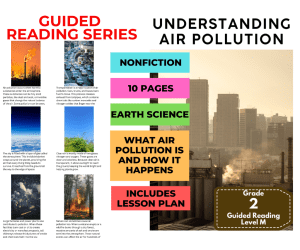
Guided Reading Level M - Air Pollution (with Lesson Plan)
ELA, Resources for Teachers, Reading Comprehension, Reading, Science, Technology, Physics, Life Sciences, Earth and Environmental Sciences, Environmental Science, Grade 2, 3, 4, Worksheets & Printables, Worksheets, Teacher Tools, Centers, Activities, Literacy Readers, Quizzes, Quizzes and Tests, Assessments, Lesson Plans
This Guided Reading Book - Understanding Air Pollution (Level M) with lesson plan includes: Guided Reading Color Label (front cover x1) This is a quick way to match the book’s demands to what students can generally handle.. The overall goal is to use the level/color to pick books for several smaller groups. To qualify for a certain level, a student is expected to read a book from that level with about 90–94% accuracy. If a student is consistently accurate and understands, move up a level. If the student is struggling at that level, drop down and add more support. Each student will improve at completely different rates, but it is generally one of the best ways to check progress across the class. DOWNLOAD THE CATALOG TO VIEW ALL GUIDED READING BOOKS AVAILABLE (SORTED LEVELS A-Z) Pre-Reading Question (x1) Teacher asks the prompt aloud, can be while showing the cover or first page. Students share what they already know, or make educated guesses from the cover. Prompt them to use the target vocabulary. Write some of their responses on the board to look back at during the reading. Vocabulary Words (x5) Introduce the five words, best doing it one at a time. Start by saying it, while students repeat and then see if anyone knows what it means before reading further. Read through the meaning and try to briefly connect each word to a picture or gesture so it’s meaningful. Ask students to flip through the book pages and point to where they see each of the vocabulary words. While reading the book pause upon coming across one of the vocab words or read the sentence twice to make sure students understand the word has appeared. Optional: Ask students to raise hands whenever they see/hear one of the new words. Guided Reading Pages (x10) Check the book snapshot (below) for: primary topic - do you need to prep extra reading or intro materials on this? what is taught best - decide on 1-2 bullets to focus on, use the prompt or words provided here for best results. learning goals - what you are checking for students to be able to do after the session, elicit answers using prompts or words provided. key vocabulary (see section above). questions overview - so you know what is coming up and if you need to prep extra materials to assist understanding. Run the lesson You may have already looked at a few of the pages together, but you can show them some of the pictures again first to set meaning. Depending on how much time you have and how familiar your students are with guided reading class, you may want to read the book aloud first with the group first. Students whisper or partner read, while you listen in. If time, do it as a group, one student reading a page each. Use the guided page’s prompts to coach: “Check the picture / does it make sense?” “Point under the words / try the first sound” “Reread the sentence smoothly”. Try to focus more on one student per session (rotating every time), so you can work out if they are ready to move up or need to move down a level. Comprehension Questions (back cover x3) This is your way to check that students didn’t just say the words, but actually understood the text. First, let students answer by pointing to the page/picture and saying a short sentence. After any answer, follow with: “Show me where you found that in the text.” In bigger groups, have partners answer first (10–20 seconds), then call on 2–3 students to share. Differentiation tips: Emerging speakers/struggling readers: oral + pointing On-level: oral in a full sentence Higher: one written sentence or draw + label Book Snapshot Title: Understanding Air Pollution Genre: Nonfiction (informational science text) Subject: Science (Earth & Environmental Science) Primary Topic: What air pollution is and how it happens Estimated Guided Reading Level (A–Z): M What This Book Teaches Best Introduces the atmosphere as an “invisible blanket” of air around Earth that living things need. Explains what clean air is mostly made of (nitrogen and oxygen) and why transparent air matters for sunlight and plant growth. Defines air pollution and shows that it can be visible (dust, soot) or hidden (invisible gases). Describes major sources of air pollution from transportation and from factories/power plants that burn fuels. Connects air pollution to real effects, including smog , health problems from particulate matter, and damage to plants through acid rain. Learning Goals Describe what the atmosphere is and why it is important for living things. Identify what clean air is mostly made of and describe characteristics of clean air from the text. Explain what air pollution is and name examples of pollutants described in the book. Describe how transportation and factories/power plants contribute to air pollution. Explain what smog is and how it forms, using details from the text. Describe one way technology can reduce air pollution based on the book’s examples. Key Vocabulary From the Text atmosphere — blanket of air around Earth. nitrogen — a gas that makes up much of clean air. oxygen — a gas living things need to survive. particulate — made of tiny pieces or specks. turbines — machines with blades that spin to make electricity. Discussion Prompts Pre-reading question: What are some things you think can make the air around us less clean? Comprehension questions: What two gases is clean air mostly made of? Comprehension questions: What is smog, according to the text? Comprehension questions: How do wind turbines and solar panels help reduce air pollution in the book? Printing Tips 1. Best Printing Method (Recommended) “Booklet” Printing (Best if Available) If your printer or PDF viewer supports Booklet Printing , use this. Settings to use: Print mode: Booklet Paper size: Letter or A4 (either works) Orientation: Landscape Print on both sides: Yes Flip on: Short edge Scaling: Fit to printable area Booklet subset: First test: Front sides only Then: Back sides only This will automatically: Pair pages correctly Put the cover on the outside Align everything for folding After printing, fold in half and staple along the spine . 2. If “Booklet” Printing Is NOT Available You can still print this correctly with manual duplex printing . Step-by-step: Open the PDF. Choose Print . Set: Orientation: Landscape Pages per sheet: 1 Print on both sides: Yes Flip on: Short edge Print all pages . Because each PDF page already contains two facing book pages, the result will still fold cleanly into a book. Thousands of Cored Education products are included with your TeachSimple membership. Download links and encyclopedia index available here.
Author Cored Education
Rating
Tags Reading Comprehension, Reading Passages, Reading, Guided Reading, Guided Reading Lesson Plan, Guided Reading Activity, Pre-reading, Science Lesson Plans, Earth Science, Physics
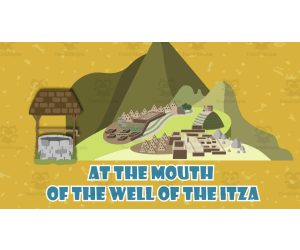
All About The Chichen Itza | Geographical Wonders Video Lesson
Social Studies, Geography, Not Grade Specific, Lesson Plans, Teacher Tools
All About The Chichen Itza | Geographical Wonders Video Lesson A dynamic resource designed to effectively explain geographical wonders with regard to a fascinating world landmark: The Chichen Itza. This MP4 formatted resource is appropriate for various learning stages. This product employs an animated approach that beautifully encapsulates the essence of this ancient Mayan city. Suitable across diverse curriculum needs and teaching styles, creates compelling connections between geography and history. Focus:Social Studies with emphasis on Geography Interdisciplinary Use:Possible incorporation into interdisciplinary lesson plans Capsule Duration:A crisp 12-minute video lesson The implementation potential ranges from whole group instruction to small study circles—even homework assignments can benefit by solidifying teachings presented during class hours. The Benefits of Incorporating in your teaching plan: Incorporates significant global landmarks imparting knowledge about geographical marvels of The Chichen Itza Paves the path for understanding macro concepts such as cultural diversity and ecological balance - Gives practical insights on Geological Concepts through bite-sized information chunks delivered via vibrant animations (easy comprehension)     This video lesson reduces extensive preparation time for educators while fostering intrigue about worldly wonders among students, making it an valuable addition in any educators' teaching kit.
Author Educational Voice
Tags Chichen Itza, Mayan City, Geographic Marvels, Cultural Diversity, Ecological Balance
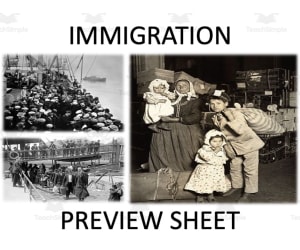
Immigration & Immigrants : Mini Unit
Social Studies, History, History: USA, Grade 8, 9, 10, 11, 12, Lesson Plans, Teacher Tools
Immigration & Immigrants: Mini Unit A comprehensive teaching resource aimed at Grade 8-12 students that provides valuable insights into immigration in the United States. Historical Materials Focusing on America's expansion over the past 250 years, including experiences of Native American and African-American communities during the same period. Vocabulary and Essential Phrases about Immigration Included are illustrative examples of push and pull factors to help learners understand causes of immigration and allow them to articulate these ideas effectively. Tales from Major Immigrant Groups The unit comprises reading materials featuring stories from ten major immigrant groups: Chinese, Jewish, Irish, Japanese, Arab, Italian, German, Vietnamese Norwegian and Indian immigrant communities. Narrative Approach in Reading Materials The narratives provided delve into individual accounts without losing sight of the broader picture. They illustrate successive waves of immigration while highlighting their experiences or discrimination they faced post-arrival in the United States. Worksheets and Multimedia Content Incorporated worksheets are available in both pdf format as well as editable pptx., providing flexibility for teachers delivering lessons or assigning tasks based on student progress. An introductory PowerPoint Presentation serves as an efficient aid for instructors initiating first lessons or facilitating discussions about chosen immigrant group presentations by students based upon their researches inclusive of images data graphs etcetera for balanced comprehension. This mini-unit is particularly relevant within a Social Studies curriculum especially USA History due to its focus on key narrative threads related to immigration - presented through a variety of formats suitable for different teaching styles (group work, small student clusters, individual assignments etcetera). It thus serves as a staple choice supplementing conventional course material providing students with a profound understanding of the central role of immigration in shaping American society.
Author Mr Gray History
Tags Immigration, Immigrants, US History, Push And Pull Factors, Cultural Diversity
I WONDER - How Was The Frisbee Invented | Animated Video Lesson
History, Social Studies, History: Europe, Inventors, Basic Science, Science, History: British, History: World, Grade 4, 5, 6, 7, 8, 9, 10, Lesson Plans, Teacher Tools
Video Introduction An amazing video designed for the students to learn more about history. I WONDER - How Was The Frisbee Invented | Animated Video Lesson Do you like history? Which topic do you really enjoy about history? Have you ever read an interesting fact about the Vikings? If yes, can you mention them? What do you like most about the Victorian era? Can you name all the Tudors? Have you ever wondered how people used to live in ancient Japan and ancient China? Do you know any interesting facts about ancient Egyptians and the Pharaohs? Have you ever visited South America? What do you know about Incas and Aztecs? Celtic culture was really one of a kind, can you name any of the places that Celts used to live in? Imagine yourself living during the ancient Roman empire, how your life will look like? Ancient Greece was an amazing place to live in. What do you know about ancient Greek life? I WONDER - How Was The Frisbee Invented | Animated Video Lesson The video is perfect for encouraging the researching skills for the students, while learning more about history. I WONDER - How Was The Frisbee Invented | Animated Video Lesson This friendly designed video is suitable for students at school, homeschooling, and as a group activity. Format Available in MP4 format.
Author Educational Voice
Tags How Was The Frisbee Invented, How Was The Frisbee Invented Video, The Frisbee History, History Of The Frisbee, History Of The Frisbee Facts, History Of The Frisbee Video, History Of The Frisbee Video For Kids
Lesson 10.2 - Wave Phenomena
Science, Physics, Common Core, Grade 6, 7, 8, 9, 10, 11, 12, Lesson Plans, Teacher Tools
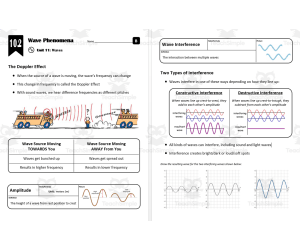
Lesson 10.2 - Wave Phenomena - A comprehensive and engaging teaching resource designed for educators of grades 6 to 12 across public schools and homeschooling contexts. This package explores the captivating concept of Wave Phenomena, encapsulating aspects such as the Doppler Effect, constructive, and destructive interference. The package includes: Note sheets: A deep dive into the theoretical aspect of wave phenomena like Doppler Effect, constructive and destructive interference offered in two versions—one with gaps for learners to fill out during class; one completed version to accommodate absences or requirements. Practice sheets: 'Wave Interference Practice' sheet encourages students to draw waves resulting from different interferences—available in standard (A) format or accommodating format (B). Interactive lab activity : An interesting Waves Lab assignment including three mini-labs sparking inquiry questions: 'Does a longitudinal or transverse wave travel faster through a slinky?' ‘Does a longitudinal or transverse wave decay at greater distance?’ Students are encouraged to formulate their own question followed by proposing their experimental process. 'Starter questions' PowerPoint slides & Formatted notes: Educational objectives along with sample starter-questions have been compiled into an easily-navigable PowerPoint presentation. Compactly addressing ICP-specific Indiana State Standards; The Lesson 10.2 - Wave Phenomena provides educators with state-compliant content ready for classroom use in .docx file type (editable), .pptx file type (editable), along with non-editable PDF ensuring maximal software compatibility. Designed for whole group discussions, smaller group projects, hands-on lab activities, homework assignments alike making it an adaptable resource that caters various teaching styles. Supporting students grasp the intriguing world of wave phenomena in physics while adapting to different requirements and pacing of students.
Author Integrated Chemistry and Physics
Tags Wave Theory, Doppler Effect, Interference, Lab Activity, Educational Objectives

Fractions - Intermediate
Math, Fractions, Grade 3, 4, Teacher Tools, Lesson Plans
Fractions - Intermediate Workbook: An Educational Resource The Fractions - Intermediate workbook is a powerful educational resource for educators, be they public teachers or homeschooling parents. The main focus of this workbook is to offer practice in dealing with fractions and mixed numbers, which are key components of the basic middle grade math curriculum. Enriching Mathematical Skills Designed to enrich mathematical skills, the workbook centers on addition and subtraction of fraction numbers. Each exercise correlates with discussions on fractional numbers found in standard middle-grade math texts. This alignment with core concepts taught strengthens a child's understanding and proficiency. Versatility and Flexibility A unique feature of this workbook is its flexibility. Unlike many rigid teaching resources, it presents pages in a suggested sequence informing educators about preferred order but also allows them the freedom to rearrange based on each child's learning needs; making it an excellent tool for whole group instruction, small group activity or even as homework. Target Audience: The product mainly targets Grade 3 and Grade 4 students. Digital Format:This product contains one PDF file widely accessible by most digital devices easing any remote instruction if necessary. User base:Suited not only for teachers searching supplemental aids but useful also to parents seeking additional practice materials. Simplifying Teaching Fractions at Intermediate Level Easing supervision requirements significantly; these exercises allow kids independent completion fostering self-confidence along their journey towards conquering intermediate fraction problems under minimal adult assistance. Bonus Feature:An easily removable four-page leaflet containing answers located conveniently inside the book hastens reference whenever required without disrupting teaching moments or self-paced study sessions. Conclusion In efficiently simplifying teaching intermediate fractions and concurrently enhancing student engagement, Fractions - Intermediate Workbook emerges as an undeniably valuable tool both inside and outside classrooms in varied learning scenarios.
Author Classroom Complete Press
Tags PDF
I WONDER - Do All Mollusks Have Shells | Animated Video Lesson
STEM, Animals, Life Sciences, Science, Biology, Grade 1, 2, 3, 4, 5, 6, 7, 8, Teacher Tools, Lesson Plans
Video Introduction Animal kingdoms are full of fascinating wonders to learn. This video is designed for the students to learn more about animals in different countries. I WONDER - Do All Mollusks Have Shells | Animated Video Lesson Do you like animals? what is your favorite one? Do you own a pet? If yes, tell us more about it, like what its name? And what do you like most about it? What are the animal kingdoms? Can you write down the characteristics of each animal class like mammals, birds, reptiles, amphibian, fish and mollusks. Do you know that some animals can sing, can you name any of them? What is the largest and the smallest mammal in the world? What is the largest and the smallest bird in the world? What is the largest and the smallest fish in the world? I WONDER - Do All Mollusks Have Shells | Animated Video Lesson The video is perfect for encouraging the researching skills for the students, while learning more about these fantastic animals. I WONDER - Do All Mollusks Have Shells | Animated Video Lesson This friendly designed video is suitable for students at school, homeschooling, and as a group activity. Format Available in MP4 format.
Author Educational Voice
Tags Do All Mollusks Have Shells, Do All Mollusks Have Shells Video, Mollusks Shells, Mollusks Shells Facts, Mollusks Shells Facts For Kids, Mollusks Shells Video, Mollusks Shells Video For Kids, Mollusks