



3,926 products added recently
Page 174 - Lesson Plan Templates
Simplify your preparation with lesson plan templates designed to help you organize objectives, activities, and assessments. These templates provide a structured framework to ensure comprehensive coverage of material. Incorporate them to save time and enhance the effectiveness of your teaching.

 Show filters

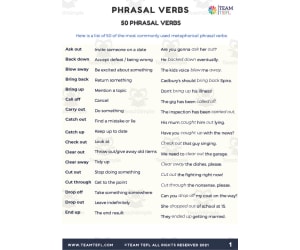
50 Phrasal Verbs Lesson
ELA, Language Development, ESL, Not Grade Specific, Teacher Tools, Lesson Plans
This resource is a set of 50 phrasal verbs and activities to go along with them. There are 6 exercises, from conversation topics to multiple-choice questions. Answer key included. This resource can be accessed through Google Apps.
Author TEAM TEFL
Tags Phrasal, Verbs, ESL Lesson, Matching, Word Meanings
Walrus Facts | Interactive Science Lesson | Micro-Learning Deck
Science, Life Sciences, Animals, Grade 6, 7, 8, 9, Teacher Tools, Lesson Plans
Walrus Facts | Interactive Science Lesson educates students on the biology and behavior of walruses. This digital slideshow can supplement a middle school science curriculum in a variety of settings. Students start by watching an informative video introducing key details about the physical characteristics, habitat, reproduction, and feeding patterns of these marine mammals. Next, students read a passage with audio support to reinforce comprehension of essential walrus facts. The lesson concludes with a close reading activity and a quick write prompt for students to summarize and apply their new knowledge. Implement as a whole class presentation, small group work, or even an independent learning module in both traditional and home classrooms. The mix of informal assessments keeps learners engaged as they expand their understanding of these unique creatures.
Author Teach Me This
Tags Walrus Facts, Interactive, Science, Reading Passage, Vocabulary

I WONDER - Who Was Florence Nightingale | Animated Video Lesson
Biographies, Social Studies, Grade 4, 5, 6, 7, 8, 9, 10, Lesson Plans, Teacher Tools
Video Introduction An amazing video designed for the students to learn more about famous people in different countries. I WONDER - Who Was Florence Nightingale | Animated Video Lesson Do you know this person? How much do you know about him/her? Who is your idol? Why did you choose this person? Tell us more about him/her? Who is your favorite athlete? Or what is your favorite team? Have you recently heard a story about a famous person? Who was this person? Can you tell us more about him/her. Who is your favorite president, king, or queen? Why you chose that person? In your country, who are the most famous people? What did they do? Can you tell us more about them. What is your favorite invention? Who invented it? Who is your favorite artist? What is the most famous thing he/she have done? What is the most enjoyable you have read before? Who wrote it? I WONDER - Who Was Florence Nightingale | Animated Video Lesson The video is perfect for encouraging the researching skills for the students, while learning more about this fantastic place. I WONDER - Who Was Florence Nightingale | Animated Video Lesson This friendly designed video is suitable for students at school, homeschooling, and as a group activity. Format Available in MP4 format.
Author Educational Voice
Rating
Tags Who Was Florence Nightingale, Who Was Florence Nightingale Video, Florence Nightingale, Florence Nightingale Facts, Florence Nightingale Video, Florence Nightingale Video For Kids, Florence Nightingale Facts For Kids

Lesson Plan on Butterfly Life Cycle
Biology, Life Sciences, Science, Insects, Grade 2, 3, 4, Lesson Plans, Teacher Tools, Activities, Worksheets & Printables
Overview of the Lesson Plan: The Intriguing Life Cycle of Butterflies Get ready for an exciting 90-minute butterfly-themed adventure! For young students who are curious about the development and change of butterflies, this lesson is perfect. Together, we will learn about the four fascinating stages of a butterfly's life cycle: from tiny eggs to ravenous caterpillars (larvae), transformation into a pupa (chrysalis), and finally, beautiful adult butterflies. We'll begin with a fun conversation to find out what the students know about butterflies. We will then watch a fascinating and educational YouTube video called "Butterfly Life Cycle" that demonstrates these phases. In order to promote deeper reflection on their learning, students will answer guided questions after seeing the movie. After that, students will work through an interactive worksheet that includes activities like matching, event sequencing, vocabulary discovery, illustration, and solving some critical thinking problems. In addition to fostering creativity and curiosity, these exercises seek to strengthen important ideas. By the end of the lesson, students will understand the idea of metamorphosis, be able to confidently name and describe each stage of the butterfly's life cycle, and even give examples of other animals that experience amazing changes. Whether kids learn best through hands-on activities, visual aids, or aural experiences, this session provides an excellent chance to improve science abilities, increase vocabulary, and suit different learning styles. This lesson is ideal for students in grades two through four, but it can be easily modified for younger or older pupils. Additionally, all the materials you need are included, together with a helpful worksheet and answer key, to guarantee a smooth and successful teaching experience.
Author Bright Classroom Ideas Marketplace
Rating
Tags Butterfly, Life, Cycle, Biology, Insect, Lesson, Plan

Reading Comprehension for Science Articles – Critical Analysis
Science, Basic Science, Inventors, Theories, Chemistry, Earth and Environmental Sciences, Earth Sciences, Environmental Science, Life Sciences, Nature & Plants, Grade 6, 7, 8, 9, 10, 11, 12, Worksheets & Printables, Workbooks, Worksheets, Word Searches, Teacher Tools, Assessments, Lesson Plans, Quizzes and Tests, Quizzes, Tests
This comprehensive literature unit on scientific article analysis will turn your students from being passive readers into critical thinkers! True scientific literacy—being able to evaluate evidence critically—has become the most important skill of our time due to the overwhelming amount of information and misinformation in today’s society. This unit is a complete, no-prep 5-day lesson plan that will help students in middle and high school understand how to break down scientific articles. With this unit’s help, students will learn how to look at methodological procedures; how to find biases; how to tell the difference between correlation and causation; and how to develop evidence-based arguments—all of which are necessary for success in AP classes, as well as in college! This unit is appropriate for the following classes: Biology, Chemistry, Environmental Science, Physics and as a cross-curricular project with ELA. This resource also correlates with the NGSS Science and Engineering Practices (Engaging in Argument Based on Evidence) and other Common Core Literacy standards. Included in this unit: 1. Educator & Student Master Guide (47 pgs) : Part 1 consists of an in-depth detailed core instructional guide for teachers on Scientific Reading Theory. Core principles and concepts included: IMRAD (scientific structure) ; Hierarchy of Evidence ; Identifying Fallacies Part 2 consists of constructing 10 scaffolded, grade level appropriate worksheets using High-Interest/Relevant scientific reading materials. Examples include: Anatomy of an Abstract Isolation of Variable and Control Critique Methodology Interpret Data & Statistical Literacy Correlation vs. Causation Identify Bias/Conflict of Interest Synthesize Competing Hypotheses Peer Review Simulation Part 3 consists of teacher support systems: 3 Visual Professional Anchor Charts/Posters (anatomy of a scientific argument, source credibility matrix, interrogating empirical graphics) Comprehensive Answer Key (all 10 worksheets) 5-Day Implementation/Teaching Plan: step-by-step plan to facilitate complete unit implementation successfully Will enable your students to read as scientists, question as reporters, and think as researchers; providing the necessary tools to assist in developing their confidence/skepticism towards the scientific world. How Parents and Schools Appreciate It: Teaches Skills for the 21st Century: Instead of teaching through rote memorization, this unit prepares students to learn to think critically. Students learn to use the problem-solving skills needed for success in college and their future career paths. Teaches Digital and Media Literacy: In this age of "fake news" and false claims, the unit provides students with tools to evaluate the credibility of scientific information they see online, including news headlines and social media posts. Prepares Students for Academic Challenge: The analytical skills that students develop (being able to analyze dense texts, understand research design, and base their opinion on credible evidence) give students a solid head-start into AP science classes and university studies. Comprehensive Teaching Tools for Teachers: The unit is a complete unit, and includes everything that teachers need to implement student learning. Each teacher will find all of the information and teaching materials necessary, along with a comprehensive teacher guide, ready-to-publish worksheets, visual aids, and answer key; which will save every teacher dozens of hours on the preparation and planning of each lesson. Audience: The Target Audience includes: Primary: Grades 8-12 Science (On Level); High School AP or Honors Biology; Chemistry; Environmental Science; Physics Secondary: Gifted or Advanced (Grades 6-7-Science), as the concepts may be difficult for Sixth-grade students who are not Advanced or Gifted; nevertheless, students classified as Advanced will do well. Cross-Curricular: High School ELA/ELA or Media Literacy planer interested in adding analysis of non-fictional/informational text to their plan. Copyright/Terms of Use: This Book is the property of Syed Hammad Rizvi, and it is provided as a resource for you to use in a personal and single classroom only. You cannot alter, redistribute or sell any part of this resource. Thereby, any part of this resource cannot be placed on the Internet where all can access (e.g., downloaded). If you would like to share this resource with colleagues, please purchase additional licenses from Teachsimple. Thank you for abiding by these terms. Syed Hammad Rizvi, thank you for bringing you (with a smile) this product.
Author Creative Book Store
Rating
Tags STEM, ScienceEducation, Education, Teaching, EdTech, STEMeducation, TeacherLife, Homeschool, BackToSchool, ScientificLiteracy

Creative Writing Workshop: "Show. Don't Tell" Mini Lesson
ELA, Writing, Grade 9, 10, 11, 12, Lesson Plans, Teacher Tools
Sick of repeating the advice, "Show. Don't Tell?" Are your students rushing their writing or turning in vague, boring work? Every writer needs to learn the crucial rule of showing, not telling in their work. With this writing workshop mini-lesson, students will learn what it means to show, not tell, and practice doing so. The slideshow explains "Show. Don't tell" to students, comparing examples of "telling sentences" with "showing paragraphs." After, students will randomly choose a sentence strip with a "telling sentence" on it that they must turn into a "showing paragraph". This lesson is highly scaffolded with examples and the sentence strips turning writing practice into a hands-on activity. With this mini lesson and "Show. Don't Tell" writing workshop activity, you and your students are set up for success! The included lesson plan breaks down the lesson with suggestions for modifications. The student worksheet gives students a place to brainstorm ideas before writing.
Author It's Lit Teaching
Tags Creative Writing, Show Don't Tell, Mini Lesson, Writing Workshop, Writing Process, Mini Lesson For Writing Workshop, Mini Lessons For Writers Workshop, Writing Workshop Lesson Plan, Writing Workshop Middle School Mini Lessons, Writers Workshop Mini Lessons 4th Grade, Writer Workshop Mini Lessons
I Wonder - Why Are Ocean Plants Important | Animated Video Lesson
Earth Sciences, Earth and Environmental Sciences, Science, Environmental Science, Grade 4, 5, 6, 7, 8, 9, 10, Lesson Plans, Teacher Tools
Video Introduction An amazing video designed for the students to learn more about STEM. I WONDER - Why Are Ocean Plants Important | Animated Video Lesson Do you like STEM subjects? what is your favorite one? Have you ever tried to plant a seed? If yes, tell us more about it. Or have you ever tried to invent something? If yes, tell us more about it. And how do you think it will help us? Have you ever seen a microorganism under a microscope? What was it? And how it looked like? Mathematics is a marvelous subject. Let' sharpen our brains and solve some equations. Do you like timetable tricks? What is your favorite one? Do you know how to code? Have you ever created an app or a game before? If yes, how was it like? I WONDER - Why Are Ocean Plants Important | Animated Video Lesson The video is perfect for encouraging the researching skills for the students, while learning more about this fantastic topic. I WONDER - Why Are Ocean Plants Important | Animated Video Lesson This friendly designed video is suitable for students at school, homeschooling, and as a group activity. Format Available in MP4 format.
Author Educational Voice
Tags Why Are Ocean Plants Important, Why Are Ocean Plants Important Video, Ocean Plants, Ocean Plant, Ocean Plants Facts, Ocean Plants Facts For Kids, Ocean Plants Video, Ocean Plants Video For Kids

Vietnam War: Remembering the War Gr. 5-8
Social Studies, History, History: USA, Grade 5, 6, 7, 8, Teacher Tools, Lesson Plans
Vietnam War: Remembering the War Gr. 5-8 is an engaging and informative teaching resource designed specifically for grades 5 through 8. This product encompasses a slice of the full lesson plan on the Vietnam War, focusing on how this far-reaching conflict was commemorated. Ideal for educators in both public school settings and homeschool environments, it presents an accessible way to delve into a significant chapter in American history. Detailed and comprehensive, this package guides students through an exploration of the Vietnam War—the longest military conflict in U.S. history—explaining its origins, key events, players' roles, and outcomes. Students will gain a thorough understanding of how developments following World War II triggered U.S involvement in Vietnam as part of their broader effort to curb communist expansion. The fascinating narratives surrounding Presidents John F. Kennedy, Lyndon B Johnson, and Richard M Nixon are each considered within this resource packet's pages. The package also spotlights technological advancements introduced during the war period such as helicopters that were instrumental during major battles. Educators can encourage students to empathize with soldiers' experiences by facilitating hands-on activities that simulate organizing protests at home — representative of civil opposition against warfare realities faced by veterans who returned home from Vietnam. Delving further into battlefield conditions that soldiers confronted like Southeast Asia's unique climate and terrain gives a rounded understanding about war-time scenarios while broadening geography-related comprehension skills too. This material is aligned with state standards and built according to Bloom's Taxonomy—ensuring comprehensive educational outcomes across critical cognitive domains including knowledge application abilities: analysis; synthesis; evaluation skills - all critical elements for successful academic growth trajectories in middle school learners particularly within social studies contexts. The statement fails to cover about extraordinary navy SEALS teams involved or an appreciation that post-war circumstances treated these personnel differently from those involved previously in similar capacities - all captured within these learning pages available upon purchase. With convenience prioritized alongside pedagogical robustness, the resource is presented in PDF format so it can be effortlessly integrated into any lesson plan, used with whole group class instruction, small group activities or as enriching homework assignments. The package includes 28 ready-to-print pages complete with additional hands-on activities such as crossword puzzles and comprehension quizzes as well as a word search and an answer key for easy tracking of students' grasp over the material.
Author Classroom Complete Press
Tags U.S. Navy, Social Studies, Assessment, Vietnam War, Informational Text

Prepositions of Time ESL ELA ELL Pre-Intermediate Lesson Plan
ELA, Grammar, Grade 7, 8, 9, 10, 11, 12, Teacher Tools, Lesson Plans
This is a pre-intermediate ESL ELA and ELL lesson plan worksheet set for Prepositions of Time. This TEFL resource is ready to go and comprises a range of teaching materials, such as flashcards, activities, conversation topics, and writing drills. Created to raise language proficiency for early English students, the lesson dives into the use of can and could in a variety of situations. It empowers ESL students with the knowledge and confidence to use prepositions of time accurately in every day conversation and writing. With the inclusion of activities, exercises, and real-life examples, this lesson plan strengthens language concepts and establishes a solid foundation in the basics of English grammar. Students will learn more about these and then complete the exercises to follow, which will assess their comprehension and implement grammar skills. This lesson plan includes: Cover page Flash cards A warm-up activity Main use Construction details Rules, along with any exceptions Illustrative examples Two closed exercises One open exercise Revision exercise Writing exercises Chatterbox, a recurring feature in our course books encouraging conversation Activity , such as a game, quiz, puzzle, etc., to conclude the class The lesson plan is available in PDF with 30 ready to print pages and one digital access file. A part of it is on Google Apps. The answer key is also included for reference.
Author TEAM TEFL
Tags Time, Prepositions, Grammar Lesson, Daily Routine, English
Daily Marketplace Skills: Menu Math and Grocery Shopping Math - Canadian Content Gr. 6-12
Life Studies, Math, Money, Grade 6, 7, 8, 9, 10, 11, 12, Teacher Tools, Lesson Plans
The Daily Marketplace Skills: Menu Math and Grocery Shopping Math This is an engaging teaching resource designed specifically with Canadian Content for Grades 6-12. Part of a larger lesson plan, this chapter slice PDF gives students practical understanding of everyday money management. Offering interactive content such as: Reading passages Real-world activities Crossword puzzles A quiz to test comprehension Main Features: Covers crucial fiscal skills using methods that engage learners fully. Goes beyond traditional math education to include scenarios simulating planning personal finances and budgeting for living costs. Incorporates practical tasks like calculating restaurant menus and grocery prices - situations that stress the importance of calculation in managing personal finances. Included extra material explaining how sales tax is applied in different contexts, and how gratuities are calculated. This downloadable PDF can be easily adapted across various classroom dynamics or for individual learning at home. You can break it down into smaller group work, assign portions as homework tasks or use it for whole group instruction. This ensures each student has the chance to explore these essential concepts at their own pace. Note:This product works best in math classes but could also provide value within financial literacy courses too. It skills students will need later on in life by putting a realistic spin on ordinary math problems – helping bring theoretical mathematical principles alive. center ">Aligned With Provincial Standards Across Canada The Daily Marketplace Skills: Menu Math and Grocery Shopping Math resource aligns with Provincial Standards across Canada, ensuring it fits naturally into any Canadian educational framework. Focused on Real-World Applications: By navigating through this innovative teaching tool, kids learn to navigate practical realities like paying bills and grocery shopping. This intertwining of theory and reality helps upgrade their decision-making skills when it comes to financial matters.
Author Classroom Complete Press
Tags PDF

Circulatory,Digestive & Reproductive Systems: The Circulatory System - Blood - FLASH-PC
Science, Life Sciences, Human Body, Common Core, Grade 5, 6, 7, 8, Teacher Tools, Lesson Plans
The Circulatory, Digestive & Reproductive Systems: The Circulatory System - Blood - FLASH-PC An invaluable educational resource designed to enrich learning for students in grades 5 through 8. This chapter mini focuses on the circulatory, digestive and reproductive systems, offering a blend of reading passages complemented by pre-reading and post reading questions. Interactive Learning Activities Printables to enhance hands-on learning. Vocabulary flash cards for retention and recall. Multimedia Elements Incorporated multimedia elements like embedded video and audio content offer potential for both group discussions in class or individual assignments at home thereby making it a flexible tool for educators. Can be used in various instructional contexts from whole-group literary circles in the classroom setting to solitary homework sessions at home. Packaged as PC Software Coming as single zip file makes accessing it on standard computers hassle-free while keeping digital organization neat and accessible. Everything needed is right at your fingertips! Precision Design & Standardized Alignment Bloom's Taxonomy integration with precision design implies pedagogical soundness, mastery; carefully weaved into each segment of lesson plan. Its alignment with Common Core State Standards ensures it stays within standardized curriculum norms aiding performance goals nationwide. In summary, The Circulatory,Digestive & Reproductive Systems: The Circulatory System - Blood - FLASH-PC provides enormous value as a comprehensive science teaching tool which promotes knowledge assimilation about Human Body far beyond conventional methods through its multi-faceted approach effectively capturing interest..
Author Classroom Complete Press
Tags Science Worksheet, Human Body, Reproductive Systems, Science Quiz, Science Puzzle

Lesson 2: Sensory Words - How to Write Using the Senses - A Zombie Wrote my Narrative Essay with Mr. Butt and Bonefish
ELA, Writing, Grade 4, 5, 6, Teacher Tools, Lesson Plans
Sensory Words: How to write using the five senses to make your narrative come alive for the reader. Each lesson contains a story that illustrates the concept being taught. This is followed by an assessment to evaluate a student’s understanding of the concept and a lesson review.
Author Scary Good Writing With Mr. Butt and Bonefish
Tags Colorful Adjectives , How To Write Using The Five Senses, How To Write A Narrative Essay, Creative Writing, How To Start A Narrative Essay, How To Use Adjectives, How To Write Description, Scary Good Writing
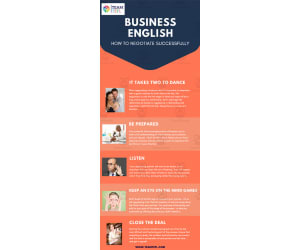
Negotiations Lesson Plan | Business English Level 3
ELA, Language Development, ESL, Grade 10, 11, 12, Teacher Tools, Lesson Plans
Business English ESL EFL ELL TEFL lesson plan about Negotiations. It is ideal for older students and adult education. Students will learn how to negotiate a deal, barter and close a deal. They will learn vital vocabulary and gain confidence on their English speaking journey. This business English lesson plan includes: A warmer Closed exercises Open exercise Group activity Revision Role-play Negotiation scenarios This lesson can also be accessed through Google Apps. There are exercises for students to complete in this lesson. Answer key included. This resource is a part of our level 3 series for intermediate and advanced ESL students. All of the TEAM TEFL Business English lessons are available on Teach Simple. You can see the table of contents for all three levels below: Business English Level 1 contents TELEPHONE SKILLS LETTERS & EMAILS CUSTOMER SERVICE SOCIAL MEDIA BRANDING SETTING TARGETS WORK ENVIRONMENT SALES PRESENTATIONS MEETINGS Business English Level 2 contents LETTERS & EMAILS CUSTOMER SERVICE ADVERTISING NEGOTIATIONS SOCIAL MEDIA SETTING TARGETS MARKETING LEADERSHIP MARKET RESEARCH WORK ENVIRONMENT HOW TO WRITE A C.V ENVIRONMENTAL ISSUES BUSINESS IDIOMS Business English Level 3 contents ADVERTISING SALES MEETINGS COMPUTERS & TECHNOLOGY CULTURAL DIFFERENCES INTERVIEWS MONEY & FINANCE PRESENTATIONS MEDIA IMPACT BUSINESS IDIOMS NEGOTIATIONS LEADERSHIP INVESTMENTS
Author TEAM TEFL
Tags Lesson Plan, ESL, EFL, Communication, Adult Education

Number & Operations: Addition & Subtraction - Practice the Skill 1 - PC Software
Math, Numbers, Common Core, Kindergarten, Preschool, Grade 1, 2, Teacher Tools, Lesson Plans
PC Software: An Indispensable Teaching Tool Number & Operations: Addition & Subtraction - Practice the Skill 1 is an outstanding educational tool designed specifically for educators and homeschoolers. It encompasses a wide range of learners from preschool, kindergarten to grade 1 and grade 2. The forefront purpose of our software is to nourish the understanding of addition and subtraction within the scope of number operations. A Chapter Mini Full of Interactive Activities In its core lies a chapter mini providing curriculum -based content, structured around practice-the-skill timed drill activities. These absorbing activities invite learners to solve provided sums hence drilling their mathematical abilities in relation to addition and subtraction concepts. We also empower visual learners, through an array of intuitive math tools supplementing their learning process. Multilingual Capabilities For Inclusivity To cater for diverse learning spaces, our software defaults in both English voiceover and text but also offers Spanish voiceover and text options. This showcases our commitment towards inclusivity within different pedagogical environments. A Design That Nurtures Pedagogical Approaches The design incorporates efficient teaching methods ensuring consistency with national standards such as Common Core State Standards (CCSS) and National Council of Teachers Mathematics (NCTM). This epitomizes it as a great resource driving STEM initiatives in various formal settings or even homework assignments. Dedicated Towards Fostering Quantitative Skills in Young Minds The software simply consists largely of one zip file making it smoothly functional across different PC systems with minimum setup required. The combination coherently brought together embeds functionality along with simplicity, making Number & Operations: Addition & Subtraction - Practice the Skill 1 a pivotal tool in any teaching toolkit that aims at nurturing young learners' quantitative skills through engaging Math lessons on number operations.
Author Classroom Complete Press
Tags Addition, Subtraction, Number, Operations, Digital Math

Best Value for Money for Elementary Math
Math, Numbers, Grade 3, 4, 5, Teacher Tools, Lesson Plans
Best Value for Money for Elementary Math is a vital teaching tool, specifically designed to elucidate the concept of evaluating the best value for money. This resource holds immense relevance to students in grades 3, 4, and 5, relating exactly to their maths curriculum with prime focus on numbers. The package comprises an easily usable Microsoft PowerPoint lesson plan spanning over eight comprehensible slides. Each slide presents convenient real-life examples conceived intuitively to introduce and enhance comprehension of this crucial life skill in a practical context. The learning journey commences successfully from a properly structured title slide and concludes smartly on an end slide. Educators have the liberty to deploy this detailed guide strategically during whole-group sessions encouraging active group discussion about understanding value for money based on different variables reflected through every example. This package can also be used intensively in small-group settings as breakout exercises promoting cooperative learning or even assigned as home tasks where pupils can delve deeper into these theories independently. This resource is not only beneficial from an educational outlook but also scores high on technical usability since it is available in Microsoft PowerPoint format, enabling hassle-free edits depending upon precise class needs or student capabilities. Finally, amidst everything else, Best Value for Money for Elementary Math does more than merely explaining theory; it includes actual everyday scenarios making classroom learning link directly with the outside world and making the concept of value-for-money incredibly relatable and understandable through its carefully crafted slides.
Author Brian's Math Topics
Tags Value For Money, Elementary Math, Teaching Resource, Interactive Learning, Real-world Applications
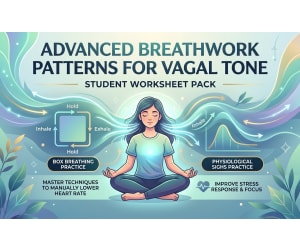
Advanced Breathwork Patterns for Vagal Tone
Science, Life Sciences, Biology, Human Body, Physics, STEM, Special Resources, Life Skills, Social Emotional Learning (SEL), Special Education Needs (SEN), Homeschool Curriculum, Homeschool Templates, Grade 8, 9, 10, 11, 12, Worksheets & Printables, Workbooks, Worksheets, Word Searches, Teacher Tools, Lesson Plans, Quizzes and Tests, Quizzes, Tests, Assessments
Transform Student Stress into Focused Success with Science-Backed Breathwork! Are your high school students struggling with test anxiety, overwhelming stress, and an inability to focus? It's not just in their heads—it's in their biology. The modern academic landscape puts the adolescent nervous system in a constant state of "fight or flight," hijacking their ability to learn and perform. Introducing the Advanced Breathwork Patterns for Vagal Tone Curriculum —a revolutionary, science-based toolkit designed to empower students to take conscious control of their own physiology. This isn't just another mindfulness exercise; it's an applied neurobiology lesson that provides tangible, immediate results. This comprehensive 44-page digital PDF package moves beyond simple "calm down" instructions. It introduces Haptic Respiratory Pacing , a powerful method combining specific breathing protocols (like Box Breathing and the Physiological Sigh) with the kinesthetic act of tracing. This dual-coding mechanism anchors a student's focus, interrupts anxiety loops, and directly stimulates the vagus nerve to manually lower heart rate and calm the nervous system. What's Inside This Complete, "Done-For-You" Curriculum? PHASE 1: Core Content & Theory (Educator/Student Guide): A deep dive into the "why" behind the techniques. This section explains the neurobiology of the stress response, the vagus nerve, and the mechanics of Box Breathing and the Physiological Sigh in clear, scientific terms. Perfect for engaging skeptical teens who want to know how it works. PHASE 2: Student Workbook (10 Rigorous Worksheets): A series of in-depth worksheets that blend academic learning with kinetic practice. Students will map neurobiological pathways, analyze data from their own heart rate, and apply these techniques to real-world scenarios like test-taking and athletic performance. PHASE 3: Visuals & Teacher Resources: High-Fidelity Tracing Diagrams: Clean, printable visual guides for Box Breathing and the Physiological Sigh that students can trace with a finger or pen. Comprehensive Answer Key: A full answer key for every question in the student workbook, including model answers for open-ended questions. Rigorous Teacher Implementation Guide: A step-by-step guide on how to frame the lesson ("Hacking the Nervous System"), run a baseline data protocol to get student buy-in, and integrate the curriculum into different subjects. Trauma-Informed Considerations: Expert guidance on how to apply these techniques safely and effectively for all students. Empower your students with a lifelong skill to manage stress, improve focus, and master their emotional state. Download this resource today and bring the power of applied neuroscience into your classroom! Keywords: Social Emotional Learning (SEL), Stress Management, Anxiety Reduction, Test Anxiety, High School, Biology, Health, PE, School Counselor, Mindfulness, Breathwork, Vagus Nerve, Box Breathing, Physiological Sigh, Self-Regulation, Coping Skills, Neurobiology, Focus, Student Workbook, Digital Download, Printable. Why Parents/Schools Love It: Empowers Students with a Real-World Skill: This isn't just theory. It gives teens a practical, discreet tool they can use anywhere—before an exam, during a stressful social situation, or on the athletic field—to manage their own anxiety and improve performance. Science-Backed & Data-Driven: The curriculum is grounded in real neurobiology, not abstract concepts. The included activities that have students measure their own heart rate provide concrete proof that the techniques work, ensuring high student engagement and buy-in. A Complete, Turnkey Solution: This 44-page PDF is a comprehensive, "plug-and-play" resource. It includes the theory, student worksheets, printable visuals, a full answer key, and a detailed implementation guide, saving teachers valuable prep time. Versatile and Easy to Integrate: The modules can be seamlessly integrated into various classes—Health, Biology, P.E., or even a 10-minute homeroom activity before a big school event. It directly supports school-wide Social-Emotional Learning (SEL) initiatives. Target Audience: Student Classes : Based on the sophisticated language, the scientific concepts, and the real-world examples (AP Calculus exams, athletic performance), target: Primary Target: Senior High School Students (Grades 10, 11, and 12). The content is perfectly matched for their cognitive level and the specific stressors they face. Secondary Target: Advanced 9th Graders in honors or gifted programs. Educators/Buyers: High School Health & P.E. Teachers High School Biology & Anatomy Teachers (excellent for a practical lab on the respiratory/nervous systems) School Counselors and Psychologists Test-Prep Coordinators and Tutors Homeroom/Advisory Teachers Copyright/Terms of Use: This Book was copyrighted by Syed Hammad Rizvi. This resource is for personal and single classroom use only. You may not alter, redistribute, or sell any part of this resource. In other words, you may not put it on the Internet where it could be publicly found and downloaded. If you want to share this resource with colleagues, please purchase additional licenses from Teachsimple. Thank you for respecting these terms of use. This product is happily brought to you by Syed Hammad Rizvi
Author Creative Book Store
Rating
Tags SEL, SocialEmotionalLearning, HighSchoolTeacher, StressManagement, AnxietyRelief, CopingSkills, VagusNerve, BoxBreathing, Neuroscience, ClassroomResources

I WONDER - What Is Radio Useful For | Animated Video Lesson
Physics, Science, Grade 6, 7, 8, 9, 10, 11, 12, Lesson Plans, Teacher Tools
Video Introduction An amazing activity designed for the students to learn more about STEM. I WONDER - What Is Radio Useful For | Animated Video Lesson Do you like STEM subjects? what is your favorite one? Have you ever tried to plant a seed? If yes, tell us more about it. Or have you ever tried to invent something? If yes, tell us more about it. And how do you think it will help us? Have you ever seen a microorganism under a microscope? What was it? And how it looked like? Mathematics is a marvelous subject. Let' sharpen our brains and solve some equations. Do you like timetable tricks? What is your favorite one? Do you know how to code? Have you ever created an app or a game before? If yes, how was it like? I WONDER - What Is Radio Useful For | Animated Video Lesson The video is perfect for encouraging the researching skills for the students, while learning more about this fantastic topic. I WONDER - What Is Radio Useful For | Animated Video Lesson This friendly designed video is suitable for students at school, homeschooling, and as a group activity. Format Available in MP4 format.
Author Educational Voice
Tags What Is Radio Useful For, What Is Radio Useful For Video, Radio, Radio Facts, Radio Facts For Kids, Radio Facts Video, Radio Facts Video For Kids, Science, Stem, Science Facts
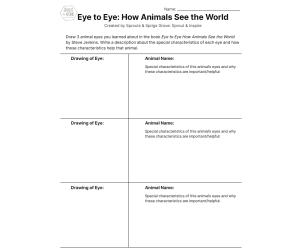
Eye to Eye How Animals See the World
Science, Life Sciences, Animals, Basic Science, Grade 3, 4, 5, 6, Teacher Tools, Lesson Plans
Description: During this lesson, children will examine, read about, and watch animal eyes in action as they learn more about the designs and functions of different eyes. They will create a model of an animal’s eye and present what they know about it to their friends, family, or class. Learning objectives I can… Describe different designs of animals’ eyes. Describe different functions of animals’ eyes. Create a realistic model of an animal’s eye. Teach someone else about a unique animal eye. Outline Build Interest: 1 photo discussion activity Read: 1 book and additional book & online options Draw: 1 realistic eye drawing activity and response Watch: selection of 5 video options (3:00-9:00 min/each) Model: 1 realistic eye model project Present: 1 preparation and presentation activity Debrief/Assess: 1 set of questions Glossary: 1 set of terms Suggested Extension Activities: 2+ activities Time needed: 2 - 4 hours Grade levels: 3rd - 6th Subject: Science Next Generation Science Standards: SCI 3-LS4-2. Use evidence to construct an explanation for how the variations in characteristics among individuals of the same species may provide advantages in surviving, finding mates, and reproducing. 4-LS1-1. Construct an argument that plants and animals have internal and external structures that function to support survival, growth, behavior, and reproduction.
Author Sprout & Inspire
Tags Animals, Eyes, Animal Features, Animal Science

I WONDER - What Is An Onomatopoeia | Animated Video Lesson
Poetry, Literature, ELA, Grade 6, 7, 8, 9, 10, 11, 12, Lesson Plans, Teacher Tools
Video Introduction An amazing video designed for the students to learn more about famous poetry in different countries. I WONDER - What Is An Onomatopoeia | Animated Video Lesson Do you like reading poetry? If yes, what is your favorite poem? Do you have a favorite poet? If yes, tell us more about him/her. What are the types of poetry? Have you ever tried to write a poem before? If yes, tell us more about it. What is acrostic poem? Dow you know who is the first writer to write it? Can you write one? What is limerick? Dow you know who is the first writer to write it? Can you write one? What is sonnet? Dow you know who is the first writer to write it? Can you write one? What is haiku? Dow you know who is the first writer to write it? Can you write one? I WONDER - What Is An Onomatopoeia | Animated Video Lesson The video is perfect for encouraging the researching skills for the students, while learning more about this fantastic poetry. I WONDER - What Is An Onomatopoeia | Animated Video Lesson This friendly designed video is suitable for students at school, homeschooling, and as a group activity. Format Available in MP4 format.
Author Educational Voice
Rating
Tags What Is An Onomatopoeia, What Is An Onomatopoeia Video, Onomatopoeia, Onomatopoeia Facts, Onomatopoeia Video, Onomatopoeia Video For Kids, Onomatopoeia Facts For Kids, Poetry
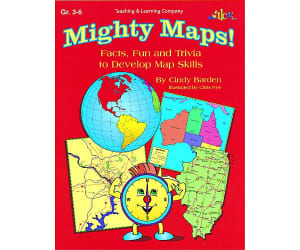
Mighty Maps!: Facts, Fun and Trivia to Develop Map Skills
Social Studies, Geography, Grade 3, 4, Teacher Tools, Lesson Plans
About Mighty Maps!: Facts, Fun and Trivia to Develop Map Skills Mighty Maps!: Facts, Fun and Trivia to Develop Map Skills is an invaluable teaching resource that's mainly designed for educators in public schools as well as homeschooling environments. Peak interest in this package lies among third and fourth graders; making it the perfect stepping stone into the expansive world of geography. What Does Mighty Maps! Offer? Diverse Exposure: Through engagement with Mighty Maps!, learners get a taste of traditional map reading along with interaction with various types of maps including political maps, physical maps, road maps, city maps, weathermaps and product-based geographic diagrams . Comprehensive Learning: The content aims at developing competencies such as efficient compass use—an aspect that ties neatly into subjects like science–and concepts revolving around latitude and longitude. Skill Enhancement: Mighty Maps! focuses on helping students understand difficult topics like timezone comprehension through interactive instruction. It further helps develop their ability to draw map symbols—as significant step towards graph literacy. Leveraging Mighty Maps! Educators can utilize Mighty Maps! based on their specific teaching methodologies—be it group based learning or individual attention models. Assignments derived from these lessons facilitate individual practice thus enforcing core concepts taught during class hours. The Learning Adventure with Mighty Maps! The goal of Mighty Maps! , however,stretches beyond just classroom walls.It sets out to equip learners for real-life exploration; where they navigate open spaces armed with map reading skills introduced to them in school. In it's truest sense, the exciting journey of learning geography has no end—and every moment spent on Mighty Maps! nudges learners closer to that never-ending experience of learning and exploration. All content is conveniently available in a single PDF file, accessible across multiple devices without requiring complex software applications.
Author Classroom Complete Press
Tags PDF, Fun Facts About Maps
What Is A Carbon Footprint? | Interactive Science Lesson | Micro-Learning Deck
Science, Earth and Environmental Sciences, Environmental Science, Grade 6, 7, 8, 9, Teacher Tools, Lesson Plans
This micro-learning deck is the perfect accessory to your Science instruction! This digital slideshow presents What Is A Carbon Footprint? Within this slideshow, you will receive: -Video Lesson -Reading Passage w/ Audio -Close Reading -Quick Write The informational texts included in this resource alongside the informal assessments will keep your students engaged from beginning to end.
Author Teach Me This
Tags Emissions, Carbon Footprint, Weather Conditions, Interactive, Science

'Queen of Katwe' Lesson Plan & Worksheets | Grades 5 - 12
ELA, Social Emotional Learning (SEL), Special Resources, Grade 5, 6, 7, 8, Lesson Plans, Teacher Tools, Worksheets & Printables
Queen of Katwe Movie Study | True Story, ELA, SEL, Growth Mindset, Geography & Chess Activities | Grades 5–12 Inspire students with the remarkable true story of determination, resilience, and hope in this engaging Queen of Katwe Movie Study ! Based on the real-life journey of chess champion Phiona Mutesi, this resource helps students explore themes of perseverance, self-belief, education, mentorship, and opportunity while strengthening reading comprehension, critical thinking, geography, writing, and problem-solving skills. Through 30 thoughtfully designed activities, students discover how courage, hard work, and support can help overcome even the greatest obstacles. What's Included 30 student activities Printable student workbook Comprehensive teacher guide Complete answer key Reading comprehension questions Character analysis activities Compare-and-contrast graphic organizer Theme and symbolism exploration Chess strategy and logic activities Geography activities about Uganda Social studies and poverty-awareness discussions Vocabulary development exercises Cause-and-effect activities Reflection and discussion prompts Growth mindset and resilience lessons Goal-setting activities Diary writing tasks Letter-writing activities Acrostic poetry project Creative poster design challenge Students will explore: Perseverance and resilience Self-belief and confidence Mentorship and leadership Education and opportunity Hope and determination Goal setting and growth mindset Poverty and social challenges Community support Critical thinking and strategic planning Global awareness and cultural understanding How It Works in the Classroom This Queen of Katwe movie guide is designed for flexible classroom use and works well for: English Language Arts lessons Social-Emotional Learning (SEL) Character education units Growth mindset lessons Geography and social studies instruction Independent work Homeschool learning Substitute plans Small-group discussions Cross-curricular learning Students complete activities before, during, and after viewing the film. Lessons include comprehension practice, character studies, symbolism analysis, chess-based logic activities, geography exploration, discussion prompts, reflective writing, and creative projects. The included teacher guide provides a complete 90-minute lesson plan, differentiation strategies, discussion questions, and assessment tools. Standards & Learning Goals Students will: Recall and sequence key events from the film Analyze character traits, motivations, and growth Explore themes of perseverance, hope, and self-belief Interpret symbolism and the pawn-to-queen metaphor Strengthen reading comprehension and vocabulary skills Develop critical-thinking and problem-solving abilities Learn basic chess concepts and strategic thinking Explore geography and culture in Uganda Reflect on personal goals and resilience Support ideas with evidence through discussion and writing Supports instruction in: English Language Arts Social-Emotional Learning (SEL) Geography Social Studies Mathematics & Logic Critical Thinking Character Education Writing Skills Why Teachers Love It ✅ No-prep printable resource ✅ Includes teacher guide and complete answer key ✅ Based on an inspiring true story ✅ Promotes growth mindset and perseverance ✅ Encourages meaningful discussions about opportunity and resilience ✅ Integrates literacy, geography, SEL, and critical thinking ✅ Introduces students to chess concepts in an accessible way ✅ Supports cross-curricular learning ✅ Flexible for classroom, homeschool, and enrichment settings ✅ Encourages students to connect lessons from the film to their own goals and dreams Teachers love how this resource transforms an inspiring true story into a meaningful educational experience. Students build literacy and critical-thinking skills while exploring powerful lessons about determination, mentorship, education, and believing in themselves—even when the odds seem stacked against them. Add this Queen of Katwe Movie Study to your classroom today and help students explore perseverance, resilience, self-belief, and opportunity through an inspiring true story that encourages them to dream big and never give up.
Author Bright Classroom Ideas Marketplace
Rating
Tags Queen Of Katwe, Film, Sel, Movie, Guide, Ela, Lesson, Plan, Worksheet

Literary Devices: Characterization - FLASH-MAC
ELA, Literature, Grade 5, 6, 7, 8, Teacher Tools, Lesson Plans
Overview The Literary Devices: Characterization - FLASH-MAC resource is an all-in-one solution for effective education of literary mechanisms, specifically focusing on characterization. Designed for students in grades 5 through 8, it is a valuable tool for both public school educators and homeschooling parents. Content & Work Flow This software provides comprehensive curriculum -based content that enables deep learning of characterization. Each chapter juxtaposes literary reading passages with 'Before You Read' and 'After You Read' questions, turning passive learning into an active experience. Interactive Activities & Supplementary Materials Printable worksheets: Encourages further exploration of themes or topics covered in the chapters. Vocabulary flash cards: Reinforces new terms introduced during the sessions. Interactive activities:` Especially designed to validate understanding or cull insights regarding character interpretation. In addition to this, visual learners will also benefit from the use of graphic organizers which illustrate abstract concepts such as character development progressions or compare-and-contrast scenarios between key figures within literature being studied. Diverse Pedagogical Approach Adjusted to Class Contexts A whole class session where everyone analyses literature together, School study groups doing collaborative problem-solving exercises after school hours, Inividual assignment exercises set up as homework tasks. Note: All these varieties can easily be handled with this resource because of its adaptiveness according to context or class size. Digital Native Platform Compatibility Harmonizing Virtual & Physical Classroom Settings The product comes as Mac-compatible software which ensures usability is simple and convenient even during virtual sessions if distance teaching becomes necessary. In conclusion, with Literary Devices: Characterization - FLASH-MAC resource one can deliver rigorous but enjoyable teaching-learning experience revolving around mastering characterization within language arts classes in any set up.
Author Classroom Complete Press
Tags Software (Mac)

Eyewitness Testimony (Engaging Lesson and Activity on Memory)
Social Studies, History, Psychology, Grade 7, 8, 9, 10, 11, 12, Lesson Plans, Teacher Tools
Engaging Eyewitness Testimony Lesson on Memory\nThis 30-page product is designed to facilitate student learning about human memory and why it can be unreliable. Students take on the role of a witness to a stolen laptop and describe what they saw. In the process, they realize how fallible memory can be and why eyewitness accounts should not be fully trusted. The materials cover the basics of memory, including the three types of memory (sensory, short-term, long-term). An engaging activity puts students in the shoes of an eyewitness. Reflection questions, statistics, summarized research, videos, and visual slides are also included. Educators can use this versatile product for whole-class instruction or small groups to teach key psychology concepts related to memory in an engaging way.
Author Ed Dynamic
Tags Eyewitness, Memory, Psychology, Engaging, Lesson