



3,917 products added recently
Page 199 - Lesson Plan Templates
Simplify your preparation with lesson plan templates designed to help you organize objectives, activities, and assessments. These templates provide a structured framework to ensure comprehensive coverage of material. Incorporate them to save time and enhance the effectiveness of your teaching.

 Show filters

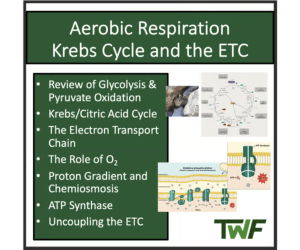
Krebs Cycle and the ETC - Aerobic Cellular Respiration- Biology lesson
Science, Life Sciences, Biology, Grade 11, 12, Teacher Tools, Lesson Plans
Krebs Cycle and the ETC - Aerobic Cellular Respiration - High School Biology lesson Your lesson covers everything from the Krebs cycle to the ETC. In order, the lesson teaches a review of Glycolysis and pyruvate oxidation, the Krebs/Citric Acid Cycle, the Electron Transport Chain, the role of O2, proton gradient and chemiosmosis, ATP Synthase, and uncoupling the ETC. Your lesson includes the teacher and student version of the presentation, four embedded videos, an auto-graded exit ticket, and a student lesson handout so the students can record the notes on a more condensed medium. This lesson is designed to be your go-to resource, whether you're in a traditional classroom or a virtual one. With both a teacher version and a student version, it seamlessly fits into your lesson plans, making learning engaging and adaptable. Assessment made easy We've included an auto-graded Exit Ticket and a quiz with an answer key because I know you don't have an excess of time. I know you don't, because I don't and I know I'll do whatever I can to reduce my grading time. Whether you use PowerPoint or Google Slides, prefer Word or Google Docs, this lesson has you covered. This lesson comes in both Office and Google formats for your convenience. The student version of the presentation has strategically placed blanks for them to fill in as you're teaching. It keeps them active and engaged, encourages discussion, and leaves more time for those "aha" moments.
Author Teach With Fergy
Tags Senior Biology, Biology Lesson, Aerobic Respiration, ETC, Krebs Cycle, Citric Acid Cycle, Pyruvate Oxidation, Proton Gradient, Chemiosmosis

I WONDER - What Were Ancient Roman Schools Called | Animated Video
History: Ancient, History, Social Studies, History: Europe, Grade 3, 4, 5, 6, 7, 8, 9, Lesson Plans, Teacher Tools
Video Introduction An amazing video designed for the students to learn more about history. I WONDER - What Were Ancient Roman Schools Called | Animated Video Lesson Do you like history? Which topic do you really enjoy about history? Have you ever read an interesting fact about the Vikings? If yes, can you mention them? What do you like most about the Victorian era? Can you name all the Tudors? Have you ever wondered how people used to live in ancient Japan and ancient China? Do you know any interesting facts about ancient Egyptians and the Pharaohs? Have you ever visited South America? What do you know about Incas and Aztecs? Celtic culture was really one of a kind, can you name any of the places that Celts used to live in? Imagine yourself living during the ancient Roman empire, how your life will look like? Ancient Greece was an amazing place to live in. What do you know about ancient Greek life? I WONDER - What Were Ancient Roman Schools Called | Animated Video Lesson The video is perfect for encouraging the researching skills for the students, while learning more about history. I WONDER - What Were Ancient Roman Schools Called | Animated Video Lesson This friendly designed video is suitable for students at school, homeschooling, and as a group activity. Format Available in MP4 format.
Author Educational Voice
Tags What Were Ancient Roman Schools Called, What Were Ancient Roman Schools Called Video, Ancient Roman Schools, Ancient Roman Schools Facts, Ancient Roman Schools Video, Ancient Roman Schools Video For Kids

Mapping Skills with Google Earth - Digital Lesson Plan Gr. PK-2 - FLASH-MAC
Social Studies, Geography, Grade 1, 2, Teacher Tools, Lesson Plans
Resource Description: Mapping Skills with Google Earth - Digital Lesson Plan Gr. PK-2 - FLASH-MAC is a digitally interactive teaching aid crafted to assist early learners grasp the basics of map reading. Imbued with an array of versatile activities, this 80 screen-page digital lesson plan provides a comprehensive introduction to fundamental mapping components such as symbols, legends and the compass rose. Catering primarily to students in prekindergarten through second grade, this resource seamlessly combines theoretical insights with practical application. It encourages students to apply their learned knowledge about mapping into designing a map of their classroom or routing their way to school. This program expands the perspective towards larger geographical concepts such as North America's Great Lakes, seven continents & four oceans enveloping our globe. Fully customizable for all Interactive Whiteboard brands, it leads teachers construct an engaging learning journey where active participation enhances comprehension. Each prepared slide incorporates reading sections, pre-and-post reading interactive tasks alongside an interesting feature leveraging Google Earth™ capabilities. A Multivariate Learning Software: The software cultivates various skill sets via its diverse options like interactive map explorations, test preparation tools and memory match games packaged within one single product file. This package also includes quizzes which serve as assessment tests for understanding post-lesson delivery along with features like text-to-speech provision in both English and Spanish considering linguistic diversity among learners. In addition are printable supplements and a specially curated video that intensifies lesson delivery through visual reinforcement. The included lessons plans cater for varied scenarios– from group study sessions or homework tasks on social studies mainly focusing on geography catering primarily to Grade 1 & Grade 2 learners but flexible for adaptation based on student capabilities within homeschool or public school frameworks. Conclusion: This digital lesson plan, designed in alignment with your state's academic norms, applies a multidimensional approach to learning inspired by Bloom's Taxonomy model. It serves as a reliable desktop solution aimed at successfully imparting geographical cognizance among young learners in an interactive and enjoyable manner.
Author Classroom Complete Press
Tags Software (Mac)
I WONDER - What Does A Seed Need | Animated Video Lesson
Nature & Plants, Life Sciences, Science, Grade 4, 5, 6, 7, 8, 9, 10, Lesson Plans, Teacher Tools
Video Introduction An amazing activity designed for the students to learn more about STEM. I WONDER - What Does A Seed Need | Animated Video Lesson Do you like STEM subjects? what is your favorite one? Have you ever tried to plant a seed? If yes, tell us more about it. Or have you ever tried to invent something? If yes, tell us more about it. And how do you think it will help us? Have you ever seen a microorganism under a microscope? What was it? And how it looked like? Mathematics is a marvelous subject. Let' sharpen our brains and solve some equations. Do you like timetable tricks? What is your favorite one? Do you know how to code? Have you ever created an app or a game before? If yes, how was it like? I WONDER - What Does A Seed Need | Animated Video Lesson The video is perfect for encouraging the researching skills for the students, while learning more about this fantastic topic. I WONDER - What Does A Seed Need | Animated Video Lesson This friendly designed video is suitable for students at school, homeschooling, and as a group activity. Format Available in MP4 format.
Author Educational Voice
Tags What Does A Seed Need, What Does A Seed Need Video, Seed, Seeds, Seeds Fact, Seeds Fact For Kids, Plant, Plants, Plants Facts For Kids, Plants Facts Video

Mammoth Cave National Park Geography Unit
Social Studies, Geography, Grade 6, 7, 8, 9, Teacher Tools, Lesson Plans
Mammoth Cave National Park Geography Unit This comprehensive middle school geography unit brings Mammoth Cave National Park to life through informative reading passages, engaging videos, crossword puzzles, PowerPoint presentations , and creative projects. Students will gain key insights into the park's history, wildlife, climate, and more. The flexible materials can be used for whole class instruction or independent study. Students can create brochures, posters, or presentations using the title cards, images, and project guidelines included. Whether you explore the park for a day or a month, this unit has something for every learning style and pace. Allow your students to dive deep into Kentucky's natural wonder with this immersive and illuminating resource.
Author Mr Gray History
Tags Geography Unit, Climate, Wildlife, Vocabulary, Mammoth Cave, National Parks, Student Booklet, National Park Service
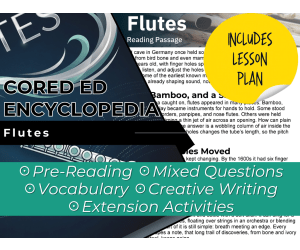
Flutes Reading Comprehension Passage - Cored Ed Encyclopedia
ELA, Reading Comprehension, Reading, Science, Technology, Social Studies, History, Music, Creative Arts, Physics, Grade 2, 3, 4, 5, Worksheets & Printables, Worksheets, Teacher Tools, Centers, Activities, Writing Prompts, Assessments, Quizzes and Tests, Quizzes, Lesson Plans
This flutes reading comprehension with lesson plan includes: Visualization (on the front cover) Start your lesson by taking a minute to think and share something about the topic. Read the script aloud (slowly), perhaps prepare some music or sound effects. Student close their eyes and let their imaginations wander. Students open their eyes, read the question aloud and give them a few minutes to complete. Ask a few students to share or keep answers until the end to compare with what they learn in the passage. Quick pause—thousands of Cored Education products are included with your TeachSimple membership. Download links and encyclopedia index available here. Pre-Reading Trivia Students will write down one thing they already know about the subject and then read five more facts and discuss. These facts are fun, and the students will enjoy learning about the subject before reading more. Give 1 minute for students to write what they already know (no pressure—best guess is fine). Read the five facts together. After each fact, do ask a student for their opinion, was it surprising? Set a purpose by asking students to highlight/underline one fact they want to learn more about during the reading. Reading Passage The text is a high-interest reading passage with set paragraphs, roughly three to four paragraphs long. It contains a variety of themes about the topic, anywhere from history to technology. The passage is between 250 and 350 words in length. First, ask students to look at the headings and see what they’ll learn about today. What do they know about the topic/heading? First read options: Teacher read-aloud (best for support). Partner reading (paragraph by paragraph). While reading, students underline important details, and vocabulary words they think may come up in the questions section. Mixed Questions The first question page contains four multiple-choice questions, each with a choice of four answers, and three written response questions that require a sentence or two from the student. Students complete the mcqs first independently, then review quickly as a class. For the 3 written responses, try to get students giving the answer with some form of evidence: “I think ___ because the text says ___.” If students get stuck, send them back to check the passage. Vocabulary Questions Practice seven key words from the text in this section across two activities. First section is scrambled words where students will unscramble three words given a clue for each. The second section is a word to meaning matching activity. Before starting, have some students read out words they underlined in the passage. Ask students to say the word and read aloud the sentence(s) around each word. Ask students to do scrambled words and the matching exercise in pairs then go through answers as a class. For the scrambled spelling task, get four pairs to come up to the board and write the words for extra practice with the other student reading out the clue. For the matching task, prompt students to give full sentences: “I matched ___ with ___ because ___.” Creative Writing In this question, the student will be required to write a five to eight sentence paragraph on a question related to the topic. Before starting, ask students write down 3 key ideas they are going to include in their piece. Ask students for ideas to share around the class to help those struggling. Pro writing expectations: 5–8 sentences At least 2 facts or details from the passage At least 2 vocabulary words from the previous page Students read their paragraphs while classmates listen for facts and vocabulary words. Extension Activities This page is optional for fast finishers or to take home. There are several activities, each one requiring a different skill. Do some, do none, do all, completely optional - but you will feel reassured knowing every possibility is planned for. Includes summary writting question and additional facts. Answer Key There are answers for the multiple-choice questions, written response questions have sample answers, vocabulary answers and if there is a summary question then a sample summary will be provided as well. Lesson Plan Included Customized lesson plan for this lesson is included. Lesson Snapshot Title: Flutes Genre: Nonfiction (Informational Text) Subject: Music / Science (Sound) / Reading (Informational Text) Primary Topic: How flutes make sound and changed over time Estimated Guided Reading Level (A–Z): Q What This Lesson Teaches Best How very early flutes were made (carved from bird bone and mammoth ivory ) and why these finds matter as early musical instruments. How flutes make a clear note: a thin jet of air across an opening creates a wobbling column of air inside the tube. Cause and effect in instruments: covering or uncovering holes changes the tube’s length, so the pitch goes up or down. How design evolved in Europe, including added holes and keys and Theobald Boehm’s 1800s redesign with tone holes and ring keys . Key features of a modern concert flute (often metal, about 26 inches long, three sections, padded keys, range of a little more than three octaves ). Learning Goals Students will describe what materials some ancient flutes were carved from and how old they were said to be. Students will explain how a flute makes a clear note using the idea of a “column of air” in a tube. Students will explain how covering or uncovering holes changes pitch by changing the tube’s length. Students will summarize how the sideways flute changed over time in Europe, including added holes and keys. Students will identify changes Theobald Boehm made to flute design and how ring keys helped players. Students will describe at least two details of today’s concert flute mentioned in the passage. Key Vocabulary From the Text mammoth — an ancient animal related to today’s elephants. ivory — hard material used for carving. column — a long “tube” shape of air inside. pitch — how high or low a note sounds. octaves — sets of notes higher or lower. FULL CATALOG OF DOWNLOAD LINKS AND ENCYCLOPEDIA INDEX HERE
Author Cored Education
Rating
Tags Vocabulary, Reading Comprehension, Reading Passages, Lesson Plans, Ela Lesson Plans, Reading Comprehension Lesson Plans, Pre-reading, History, Music, Music Lesson Plans
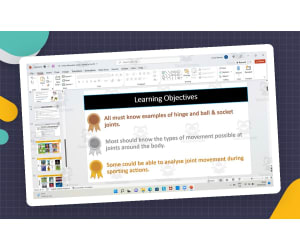
Types of Freely Movable Joints
Science, Life Sciences, Human Body, P.E. & Health, Physical Education, Grade 9, 10, Teacher Tools, Lesson Plans
Full PowerPoint Lesson Presentation reviewing the types of freely movable joints in the body; hinge & ball and socket. Learning Objectives: All must know examples of hinge and ball & socket joints. Most should know the types of movement possible at joints around the body. Some could be able to analyze joint movement during sporting actions.
Author The PE Tutor
Tags Joints, Skeleton, Human Biology, Anatomy, Ball And Socket, Most Freely Movable Joint, Movable Joints

Let's Chat Conversation Cards | "Ignore the Negative"
Special Resources, Social Emotional Learning (SEL), Grade 2, 3, 4, 5, 6, Teacher Tools, Lesson Plans
Let's Chat Conversation Cards - Ignore the Negative helps students build a positive mindset and have meaningful conversations to understand different perspectives. This social-emotional learning resource from Respectful Ways allows students to practice compassion, perseverance, respect and responsibility. The 57 Ignoring the Negative conversation starter cards facilitate small group discussions for students to share outlooks and strengthen connections. The supplementary Home Connects sheets involve families in continuing conversations at home, offered in English and Spanish. As a trauma-informed program, Respectful Ways provides an online curriculum vetted for trauma-sensitive learning. Workshops utilize school climate data so subject-matter experts can address specific student needs. The resources integrate with multi-tiered systems of support like PBIS using evidence-based practices.
Author Respectful Ways
Tags SEL Lesson Plan, Conversation Cards, Respectful Ways, Spanish , Ignore Negative, Perseverance, SEL, Social Emotional Learning, Character Education, Let's Chat
I WONDER - How Many Eyes Do Spiders Have | Animated Video Lesson
STEM, Biology, Life Sciences, Science, Animals, Grade 1, 2, 3, 4, 5, 6, 7, 8, Lesson Plans, Teacher Tools
Video Introduction Animal kingdoms are full of fascinating wonders to learn. This video is designed for the students to learn more about animals in different countries. I WONDER - How Many Eyes Do Spiders Have | Animated Video Lesson Do you like animals? what is your favorite one? Do you own a pet? If yes, tell us more about it, like what its name? And what do you like most about it? What are the animal kingdoms? Can you write down the characteristics of each animal class like mammals, birds, reptiles, amphibian, fish and mollusks. Do you know that some animals can sing, can you name any of them? What is the largest and the smallest mammal in the world? What is the largest and the smallest bird in the world? What is the largest and the smallest fish in the world? I WONDER - How Many Eyes Do Spiders Have | Animated Video Lesson The video is perfect for encouraging the researching skills for the students, while learning more about these fantastic animals. I WONDER - How Many Eyes Do Spiders Have | Animated Video Lesson This friendly designed video is suitable for students at school, homeschooling, and as a group activity. Format Available in MP4 format.
Author Educational Voice
Tags How Many Eyes Do Spiders Have, How Many Eyes Do Spiders Have Video, Spiders, Spiders Eyes, Spiders Eyes Facts, Spiders Eyes Facts For Kids, Spiders Eyes Video, Spiders Eyes Video For Kids

All About The Eye | Human Body Video Lesson
Science, Life Sciences, Human Body, Not Grade Specific, Lesson Plans, Teacher Tools
Product Description: The 'All About The Eye | Human Body Video Lesson' is a comprehensive educational resource that simplifies the complexities of the human eye for learners across grade levels. Key Features Made for all grades - Falling within human biology, this versatile aid can be effectively used by educators across grade levels due to its nongrade specific format. Optimal Duration - In just 10 minutes, it succinctly covers pertinent details about the eye's structure and function. Educational Format - This lesson is presented in an engaging video (MP4 format), stimulating visual learning and ensuring better comprehension among different types of learners. Its versatility allows integration with varied teaching strategies – facilitating small group discussions or even as additional reference for homework assignments. Suitability for Different Teaching Modes Homeschooling educators can seamlessly incorporate this multimedia presentation into their course routine. They enjoy flexibility while planning a customized syllabus, while effortlessly maintaining learner engagement. In traditional classroom settings, teachers might use this tutorial as a supportive supplement alongside textbooks during regular lectures. The practical benefits offered by it make this product stand out as genuinely teacher-friendly tool which simplifies complex concepts. To Conclude: 'All About The Eye | Human Body Video Lesson' serves as an indispensable tool packed with captivating facts about the human eye within just 10 minutes! Regardless of whether you are teaching beginners experimenting with biology basics or older students revising crucial concepts – here’s an invaluable addition to your educational toolkit!
Author Educational Voice
Tags Eye Structure, Eye Function, Visual Learning, Biology Education, Multimedia Resource
Clear the Air | Figurative Language Activity | Micro-Learning Deck
ELA, Reading, Reading Comprehension, Grade 4, 5, 6, 7, Teacher Tools, Lesson Plans
This resource allows students to explore figurative learning in a fun way. The figurative language term for this learning deck is "Clear the Air." Through close reading and a reading passage with audio, your students will better comprehend figurative language! Included: -Video lesson on language concept -Reading passage w/ audio Comprehension -Quick write
Author Teach Me This
Tags Reading Lesson Plan, Digital Lesson, Learning Deck, Figurative Language, Clear The Air
I WONDER - What Is The Most Popular Game On Roblox | Animated Video
Computer Science, Technology, Science, Grade 4, 5, 6, 7, 9, 10, Lesson Plans, Teacher Tools
Video Introduction An amazing video designed for the students to learn more about STEM. I WONDER - What Is The Most Popular Game On Roblox | Animated Video Lesson Plants world is really fascinating! Do you know that some flowers eat insects? Some other plants like to grow on walls can you mention any? Do you know what is the difference between fungicide and pesticide? If yes, Can you tell us more about it? What is nuclear energy? Is it safe to use it? Do you think it is a clean energy? Have you ever read about potential energy? If yes, tell us what it is? Do you think that potential energy can be converted into another form of energy? How it happens? I WONDER - What Is The Most Popular Game On Roblox | Animated Video Lesson The video is perfect for encouraging the researching skills for the students, while learning more about this fantastic topic. I WONDER - What Is The Most Popular Game On Roblox | Animated Video Lesson This friendly designed video is suitable for students at school, homeschooling, and as a group activity. Format Available in MP4 format.
Author Educational Voice
Rating
Tags What Is The Most Popular Game On Roblox, The Most Popular Game On Roblox, The Most Popular Game On Roblox Facts, The Most Popular Game On Roblox Video, The Most Popular Game On Roblox Video For Kids
I WONDER - How Does The Angler Fish Glow | Animated Video Lesson
Animals, Life Sciences, Science, Biology, Grade 4, 5, 6, 7, 8, 9, 10, Lesson Plans, Teacher Tools
Video Introduction Animal kingdoms are full of fascinating wonders to learn. This video is designed for the students to learn more about animals in different countries. I WONDER - How Does The Angler Fish Glow | Animated Video Lesson Do you know what are axolotls? How do they look like and what is special about them? How does the angler fish glow? Do you where does the angler fish live? Can you name any other bioluminescent animal? How does the aye-aye lemur find food? Can you name any other lemurs? and where do they live? Are wolves loyal to their mates? Do all wolf howls sound the same? What is your favourite animal? Where does it live? Can you name any of the animals kingdoms? Do you have a pet animal? If yes, tell us what its name and what kind of animal, bird or fish is it? Format Available in MP4 format.
Author Educational Voice
Rating
Tags How Does The Angler Fish Glow, Angler Fish, Angler Fish Video, Angler Fish Facts, Angler Fish Video For Kids, Angler Fish Facts For Kids, Bioluminescent, Bioluminescent Fish, Bioluminescent Animal

Labelling Bones
Science, Life Sciences, Human Body, Grade 9, 10, Teacher Tools, Lesson Plans
Labelling Bones: A Teaching Resource Labelling Bones is an educational resource tailored for Grade 9 and Grade 10 Science educators, primarily focusing on the study of Anatomy. It provides an interactive learning approach to the intricate subject of the human skeletal system. A Comprehensive PowerPoint Lesson: This comprehensive PowerPoint lesson carefully details various significant bones in the human body. Spread across 30 well-planned slides, it offers a walkthrough of every major bone, highlighting each one's role in different sport functions. Main Learning Goals: The lesson starts by outlining the essential learning objectives, such as identifying major bones, accurately locating them on a skeleton, and relating bones to their functions in sports. These objectives allow students to assess their progress as they move along each slide. Versatile Teaching Tool: Labelling Bones is suitable for whole-class discussions where teachers guide students through each slide. However, it can also work efficiently when incorporated into small group activities or assigned as homework or individual study tasks—making it adaptable for multiple educational contexts. Presentation and Comprehension: The Labelling Bones lesson presents scientific knowledge using clear images combined with straightforward language—an approach particularly fitting for Grade 9-10 comprehension level. This clarity ensures that information is readily digestible while being thorough enough to instil fundamental anatomical concepts in students’ minds. The Value: In conclusion, this instructional resource equips teachers with a novel way to teach anatomy effectively and offers students an enriched understanding of the human skeletal system—facilitating deeper interaction between course content and learners towards lasting educational value.
Author The PE Tutor
Tags Bones, Anatomy, Skeletal System, Interactive Learning, Sports

Nonfiction glossary lesson rainforest inspired
ELA, Literature, Grade 1, 2, 3, Teacher Tools, Lesson Plans
Introducing a Rainforest-Themed Nonfiction Captions and Labels Lesson This informative resource aims to aid students in grades 1-3 in beginning to understand nonfiction text features such as captions and labels. Through engaging class discussions and interactive activities centered around a rainforest theme, students will apply critical thinking, problem-solving, reading, and more as they explore captions and labels. Animated lesson slides, accompanying student activity slides, and answer keys provide a complete lesson that can be used for introduction, review, enrichment, or support of this key literacy concept. Implementation ideas such as whole-group instruction, small-group work, or independent assignments allow flexibility. This concise yet comprehensive resource from Teach Simple will have early elementary students excited about nonfiction in no time!
Author Ezee 101
Tags Nonfiction, Text Features, Glossary, Lesson, Powerpoint, Google Slides
Prevention, Recycling & Conservation: Fresh Water Resources Gr. 5-8
Science, Earth and Environmental Sciences, Environmental Science, Grade 5, 6, 7, 8, Teacher Tools, Lesson Plans
Prevention, Recycling & Conservation: Fresh Water Resources Gr. 5-8 Overview A comprehensive teaching resource specifically designed for Educators of Grades 5 through 8. Featuring detailed insights into Environmental Science, it simplifies and enriches information about Prevention, Recycling & Conservation initiatives. Coverage of Topics The notion of conservation and distinction between natural, renewable and non-renewable resources. Landfill waste reduction techniques and composting practices suitable for everyday life. Understanding how organic materials decompose over time. Educational material on preventing pollution of our critical fresh water resources. Sustainable land management practices to minimize environmental degradation from burning fossil fuels which leads to smog production, ozone layer depletion, and increased levels of greenhouse gases. Simplified Language Usage This specially designed resource breaks down complex topics into easily understandable terms for Grade 5-8 students irrespective of how technical they may initially sound. Educational Aid Features: Inbuilt Lesson Planning System: An ideal companion for teachers or homeschoolers that outlines effective lesson plans in Environmental Science education; this PDF type educational aid includes ready-to-use reading passages aligned meticulously with respective state standards plus a diverse selection of student activities—the perfect choice either as a whole group study aid or small group engagement tool or even for homework assignments. Bloom's Taxonomy Compliant: This resource governs its design based on the educational guidelines provided by Bloom's Taxonomy—it contains test prep materials ensuring effective revisions before examinations while aiding educators in tracking complete development outcomes regarding critical environmental subjects amongst students. Add-on Feature: Special attention is given for remedial learners as it includes color mini posters—catering to visually oriented learners with success in retaining complex concepts—an integrative approach indeed! Conclusion: To sum up: The novel educational instrument that is Prevention, Recycling & Conservation: Fresh Water Resources Gr. 5-8, serves as a reliable resource for educators enthusiastic about instilling necessary environmental knowledge in their students with efficiency.
Author Classroom Complete Press
Tags PDF

Learn to Read and Spell Sight Words | Lesson 2 | Micro-Learning Deck
ELA, Language Development, Spelling, Preschool, Grade 1, 2, Teacher Tools, Lesson Plans
This download is Lesson 2 for Learn to Read and Spell Sight Words. This is a digital lesson with 30 slides to help teach sight words! The sight words for this lesson are: -an -is -see -she -the There are 6 different activities to teach the sight words for this lesson. Activities: -Write words -Letter tiles -Type words -Match the words -Close reading -Sentences
Author Teach Me This
Tags Sight Words, Spelling Lesson, Letter Tiles, Interactive Activity, Digital Reading

I WONDER - What Is Nuclear Fission | Animated Video Lesson
Physics, Science, STEM, Grade 6, 7, 8, 9, 10, 11, 12, Lesson Plans, Teacher Tools
Video Introduction An amazing video designed for the students to learn more about STEM. I WONDER - What Is Nuclear Fission | Animated Video Lesson Do you like STEM subjects? what is your favorite one? Have you ever tried to plant a seed? If yes, tell us more about it. Or have you ever tried to invent something? If yes, tell us more about it. And how do you think it will help us? Have you ever seen a microorganism under a microscope? What was it? And how it looked like? Mathematics is a marvelous subject. Let' sharpen our brains and solve some equations. Do you like timetable tricks? What is your favorite one? Do you know how to code? Have you ever created an app or a game before? If yes, how was it like? I WONDER - What Is Nuclear Fission | Animated Video Lesson The video is perfect for encouraging the researching skills for the students, while learning more about this fantastic topic. I WONDER - What Is Nuclear Fission | Animated Video Lesson This friendly designed video is suitable for students at school, homeschooling, and as a group activity. Format Available in MP4 format.
Author Educational Voice
Tags What Is Nuclear Fission, What Is Nuclear Fission Video, Nuclear Fission, Nuclear Fission Facts, Nuclear Fission Facts For Kids, Nuclear Fission Video, Nuclear Fission Video For Kids, Nuclear Fission Facts Video For Kids
I WONDER - How Do We See Colours | Animated Video Lesson
Biology, Life Sciences, Science, Human Body, Grade 1, 2, 3, 4, 5, 6, 7, 8, Lesson Plans, Teacher Tools
Video Introduction An amazing activity designed for the students to learn more about STEM. I WONDER - How Do We See Colours | Animated Video Lesson Do you like STEM subjects? what is your favorite one? Have you ever tried to plant a seed? If yes, tell us more about it. Or have you ever tried to invent something? If yes, tell us more about it. And how do you think it will help us? Have you ever seen a microorganism under a microscope? What was it? And how it looked like? Mathematics is a marvelous subject. Let' sharpen our brains and solve some equations. Do you like timetable tricks? What is your favorite one? Do you know how to code? Have you ever created an app or a game before? If yes, how was it like? I WONDER - How Do We See Colours | Animated Video Lesson The video is perfect for encouraging the researching skills for the students, while learning more about this fantastic topic. I WONDER - How Do We See Colours | Animated Video Lesson This friendly designed video is suitable for students at school, homeschooling, and as a group activity. Format Available in MP4 format.
Author Educational Voice
Tags Eye, Eyes, Human Eyes, Eyes Facts, Eyes Facts For Kids, Eyes Video, Human Eyes Video , Eyes Video For Kids, Biology, Videos For Kids
Atoms, Molecules & Elements: What Are Elements? Gr. 5-8
Science, Life Sciences, Biology, Grade 5, 6, 7, 8, Teacher Tools, Lesson Plans
Atoms, Molecules & Elements: What Are Elements? Gr. 5-8 A gripping teaching resource for educators that desire to engender a love for science in their pupils. Specially designed for grade ranges 5 to 8, this content plunges into the intriguing and hidden universe of atoms, molecules, and elements. Utilizing simple language and vocabulary, this product presents complex scientific concepts in an understandable format ideal for remedial learners. Included in the lesson plan is guidance on labeling various parts of an atom, thereby providing learners with a detailed understanding of its structure at a basic but comprehensive level. Exciting Student Experience In the subsequent sections of the lesson plan, students explore what makes up compounds while functioning as fledgling scientists! This immersive experience is designed to pique their interest in science while imparting essential knowledge about compound structures. Included are engaging hands-on activities within this package, students have the chance to probe into the mysteries housed within our universe's most fundamental building blocks by exploring patterns in periodic tables. Broadening Access To Science Basics The resource expands access to atomic science and chemistry basics through engaging hooks like exploring popular elements like calcium (Ca), chlorine (Cl), and helium (He); setting aside intimidation typically associated with these subjects. The learning materials feature varied tools that cater diverse learning styles: - Reading passages: These aid progression comprehension; - Student activities: For interactive learning; - Crosswords and word searches: Specially created for linguistic learners; - Colorful mini posters: Ideal for visual-oriented learners. The resource is thus perfectly suited not just for whole class instruction but also small group work or even homework tasks. Benchmarked By Bloom's Taxonomy Standards This ensures rigorous development of cognitive skills in alignment with STEM initiatives making sure your instruction material aligns with your State Standards while remaining sufficiently challenging. Ease Of Use Exclusively available in PDF format, this brings convenience and adaptability to any learning environment – be it classrooms or homes! Equip yourself with Atoms, Molecules & Elements: What Are Elements? Gr. 5-8 – an irreplaceable teaching instrument to throw light on the unknown domains of atoms, molecules, and elements for young budding scientists in your classrooms or homeschools. Happy learning!
Author Classroom Complete Press
Tags PDF

All About Binary | Animated Coding Video Lesson
Science, Technology, Computer Science, Grade 9, 10, 11, 12, Lesson Plans, Teacher Tools
All About Binary Animated Video Lesson This 5-minute animated video serves as an engaging introduction to binary, the language of computer code, for high school computer science students. Students will enjoy this interactive lesson explaining how the binary numeric system works as they see binary code come to life. Educators can use this as a whole class lesson to introduce the concept of binary or assign it as homework for students to preview before learning how to write code. The vivid animations will capture students' interest as they learn the basics of how computers process information through binary numbers. This video effectively explains a complex topic in a simple, straightforward way that connects with learners. It works well as either an introductory lesson or a concise review of the binary system.
Author Educational Voice
Tags Binary, Coding, Science Video, Coding Video, Computer Science
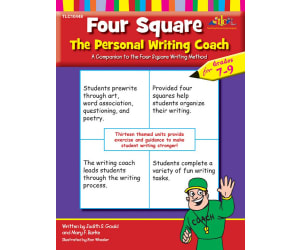
Four Square: The Personal Writing Coach for Grades 7-9:
ELA, Writing, Grade 7, 8, 9, Teacher Tools, Lesson Plans
Four Square: The Personal Writing Coach for Grades 7-9 A stimulating teaching resource for educators and homeschoolers, that navigates young students through the rewarding process of writing. This book, aimed at students in grades 7 to 9, combines art, word association, question-based learning, and more to help develop a versatile writing skill set. Key Features: Thirteen theme-based units: Specifically designed to engage interest and improve the abilities of middle school writers. Creative method: Each unit starts with pre-writing activities through art – stimulating visual creativity – before moving onto word association exercises which enhance vocabulary skills. Critical thinking stimulation:The use of questioning encourages critical thinking; Poetry planning hones structural skills while prose composition provides practical application. Incorporated Topics For Young Learners: This book includes adventurous topics that are directly relatable to young learners. These topics include self-reflection, family ties, friendships and favorite hobbies. This makes the learning process enjoyable instead of boring or daunting. Versatile Teaching Options : The exercises in this resource can be done as part of whole group discussions initiating lively interactive sessions. It could also be used within small study groups promoting peer support learning environments or even assigned as homework assignments boosting independent thought processes. Digital Flexibility : Fulfilling language arts objectives with an emphasis on building writing skills – Four Square: The Personal Writing Coach for Grade 7-9 is available as a PDF file-Type; thus offering you convenient access whenever needed including the ability to project materials during class discussions or print handouts ensuring flexible approaches to instruction.
Author Classroom Complete Press
Tags PDF

Leonardo da Vinci: Flight Mini Unit
Social Studies, History, History: World, Grade 9, 10, 11, 12, Lesson Plans, Teacher Tools
Leonardo da Vinci: Flight Mini Unit is a 9-page download that will teach your readers about da Vinci and his relationship with air travel. A word search and student activity are included.
Author Creative Learning Connection
Tags Da Vinci, Flight Mini Unit, Air Travel, Flight History, Aeronautics
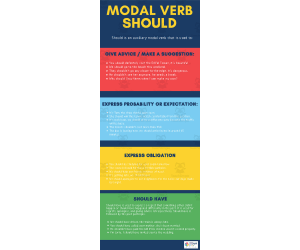
Modal Verb Should Pre ESL ELL ELA Intermediate Lesson Plan
ELA, Grammar, Grade 8, 9, 10, 11, 12, Teacher Tools, Lesson Plans
Modal Verb Should ESL ELA ELL Pre Intermediate ESL Lesson Plan. This English grammar lesson plan helps pre-intermediate ESL students learn how to use the modal verb "should" to give advice, make recommendations, talk about obligations, and express uncertainty. First, an explanation and examples of "should" are provided. Next, students complete exercises to practice using "should" properly in sentences. Educators can implement this resource in many ways - as a whole class activity, small group work, or even as a homework assignment. Answer key included. This practical lesson plan equips students with knowledge to use "should" in everyday conversations and writing. The correct use of should is an essential learning block for all A2 students. This lesson plan includes: Cover page Flash cards A warm-up activity Main use Construction details Rules, along with any exceptions Illustrative examples Two closed exercises One open exercise Revision exercise Writing exercises Chatterbox, a recurring feature in our course books encouraging conversation Activity, such as a game, quiz, puzzle, etc., to conclude the class The lesson plan is available in PDF with 29 ready to print pages and one digital access file. A part of it is on Google Apps. The answer key is also included for reference.
Author TEAM TEFL
Tags Modal Verbs, Grammar Lesson, ESL Lesson, Vocabulary, Reading Passage, Verb Lesson Plans