Types of Freely Movable Joints
- Grades
- Grades 9–11
- Pages
- 18
- File type
- Microsoft PowerPoint
- Answer key
- Included


- Subject
- Science, Physical Education
- Topic
- Synovial joints, Body movement
- Answer key
- Included
Product description
From the author
Full PowerPoint Lesson Presentation reviewing the types of freely movable joints in the body; hinge & ball and socket.
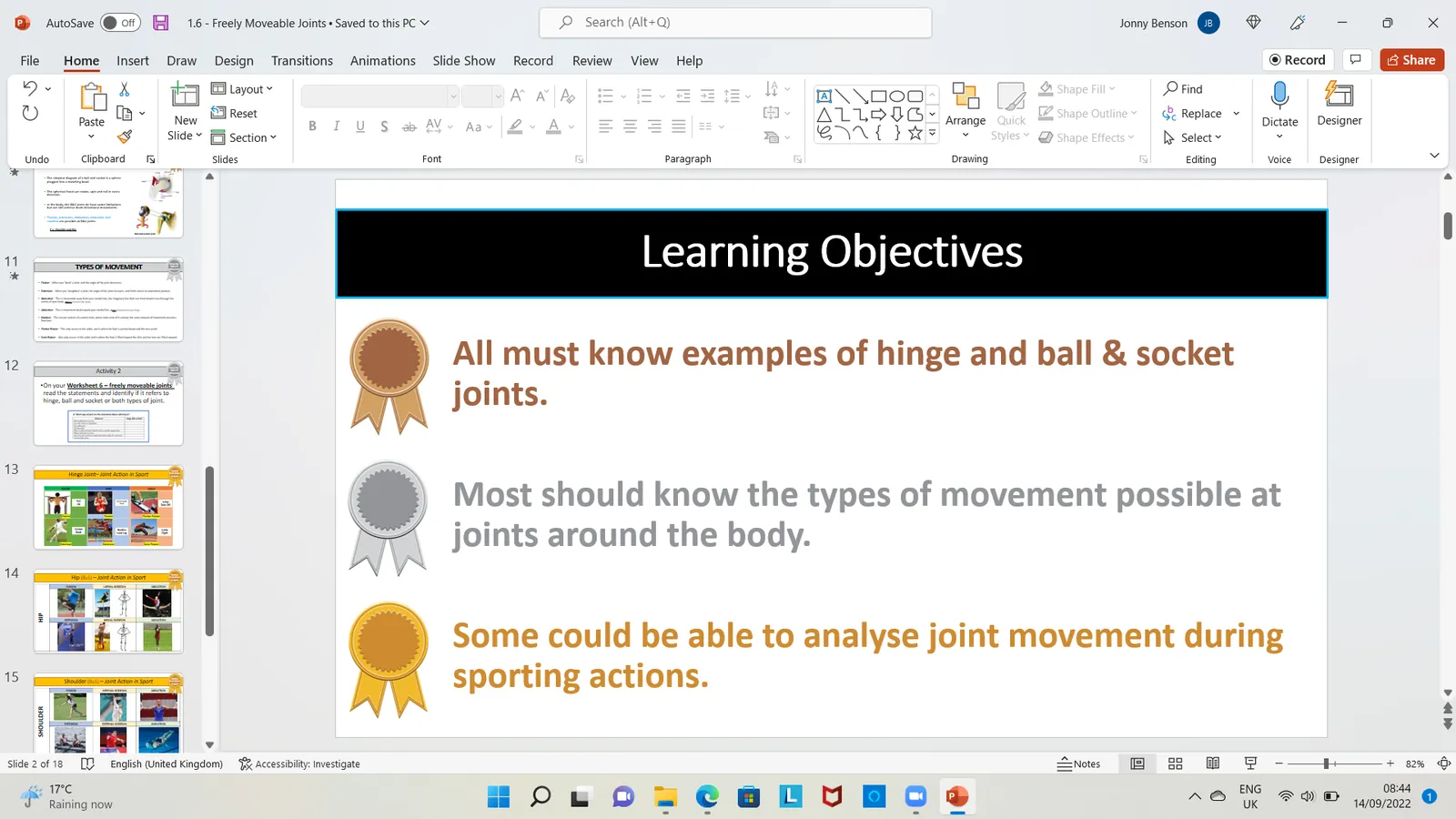
Learning Objectives:
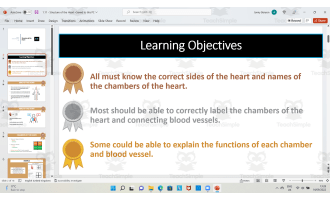
All must know examples of hinge and ball & socket joints.
Most should know the types of movement possible at joints around the body.
Some could be able to analyze joint movement during sporting actions.
Related resources
More resources teachers may find useful
12 related resources were found using this product's title, contributor, categories and tags.


In the classroom
Teaching tips & learning objectives

Learning objectives
Name examples of hinge joints (knee, elbow, ankle) and ball-and-socket joints (shoulder, hip).
Describe the types of movement possible at hinge versus ball-and-socket joints.
Analyze which joint movement (flexion, extension, abduction, adduction, rotation, or plantar flexion) occurs during a given sporting action.

Teaching tips
Obtain or recreate Worksheet 6 before teaching: the three activities refer to a separate worksheet not included in the 18-slide presentation.
Use slide 4 to review the starter answers. The deck defines six movements and also mentions dorsiflexion in a sporting example.
Correct rotation to turning around a bone’s long axis, distinguishing it from circumduction. Treat the hinge-joint description as an introductory model rather than a complete account of knee and ankle motion.

Skills covered
Joint classification — students identify whether a named joint (elbow, hip, ankle) is a hinge or ball-and-socket joint.
Movement terminology — students apply the terms flexion, extension, abduction, adduction, and rotation to specific joint actions.
Sport-action analysis — students match a joint movement to real examples in sport, such as a hurdles lead leg or a cricket bowling action.
Good to know
Questions teachers ask about this resource
What should a teacher prepare before running the three in-class activities in this deck?
All three activities direct students to fill in or reference a separate 'Worksheet 6 – freely moveable joints,' which is not included in this PowerPoint file, so the teacher needs to source or recreate that worksheet ahead of the lesson.

No reviews yet
Downloaded this resource? Tell other teachers how it went.
Resource details
Concepts & topics
Core concepts
 Core concepts
Hinge joints
Ball-and-socket joints
Joint movement terminology
Human anatomy
 Topics
More to explore
You may also like