



3,942 products added recently
Page 15 - First Grade Lesson Plans
Nurture your first graders' curiosity with lesson plans specially designed for their developmental stage. These resources cover essential skills in literacy, math, and more, using engaging activities. Use them to create a supportive and stimulating learning environment for your students.

 Show filters

I WONDER - What Are The Stages In A Butterfly's Life Cycle
STEM, Insects, Life Sciences, Science, Animals, Biology, Grade 1, 2, 3, 4, 5, 6, 7, 8, Lesson Plans, Teacher Tools
Video Introduction Animal kingdoms are full of fascinating wonders to learn. This video is designed for the students to learn more about animals in different countries. I WONDER - What Are The Stages In A Butterfly's Life Cycle | Animated Video Lesson Do you like animals? what is your favorite one? Do you own a pet? If yes, tell us more about it, like what its name? And what do you like most about it? What are the animal kingdoms? Can you write down the characteristics of each animal class like mammals, birds, reptiles, amphibian, fish and mollusks. Do you know that some animals can sing, can you name any of them? What is the largest and the smallest mammal in the world? What is the largest and the smallest bird in the world? What is the largest and the smallest fish in the world? I WONDER - What Are The Stages In A Butterfly's Life Cycle | Animated Video Lesson The video is perfect for encouraging the researching skills for the students, while learning more about these fantastic animals. I WONDER - What Are The Stages In A Butterfly's Life Cycle | Animated Video Lesson This friendly designed video is suitable for students at school, homeschooling, and as a group activity. Format Available in MP4 format.
Author Educational Voice
Tags What Are The Stages In A Butterfly's Life Cycle, What Are The Stages In A Butterfly's Life Cycle Video, Butterfly's Life Cycle, Butterfly's Life Cycle Facts, Butterfly's Life Cycle Facts For Kids, Butterfly's Life Cycle Video

All About Addition 0-20 | Animated Math Video Lesson
Math, Addition and Subtraction, Addition, Preschool, Grade 1, 2, Lesson Plans, Teacher Tools
This animated math video lesson is all about adding numbers 0-20. Students will love this engaging and interactive video that takes them step-by-step on how to add numbers and solve addition problems in a fun way. This video serves as a great introduction or review video for your learners. This is a 6-minute math video lesson.
Author Educational Voice
Tags Addition Problems, Adding Numbers, Math Activity, Math Videos, Video Lessons

Geometry: Spatial Relationships - Learn the Skill - PC Software
Math, Geometry, Common Core, Kindergarten, Preschool, Grade 1, 2, Teacher Tools, Lesson Plans
Geometry: Spatial Relationships - Learn the Skill PC Software This teaching resource software is designed to instill a foundational understanding of spatial relationships in Geometry. It's intelligently constructed around practical real-world word problems, in addition to theoretical learning. Key features: Detailed lessons with interactive math tools Curriculum-based content fit for various educational settings Ability to work in both English and Spanish language environments "Geometry: Spatial Relationships - Learn the Skill" stands out through its compliance with several recognized educational standards: Common Core State Standards (CCSS) The National Council of Teachers of Mathematics (NCTM) guidelines STEM initiatives Multilingual Support and Wide Adoption Scope The software embeds default English text and voiceover along with an added Spanish voiceover option. This multilinguality makes it suitable for use within linguistically diverse classrooms, essentially serving as a useful tool for teachers aiming at bridging connections between language arts and maths. Ease-of-use and Installation Flexibility Packed within a ZIP file optimized for easy download, this software can be easily installed on multiple systems – making it considerably resourceful in environments where resources may have to be shared among different teachers or classrooms. Categorized under Math subcategory "Geometry", this high utility teaching aid focuses mainly on early learners ranging from preschool through grade 2 levels. It ultimately offers an approachable way of understanding complex geometrical concepts like spatial relationships along with adaptable versatility suitable across different learning scenarios. A worthy addition to your arsenal!
Author Classroom Complete Press
Tags Spatial, Relationships, Math Lesson, Geometry, Skills

I WONDER - What Is Special About A Mantis Shrimp | Animated Video
STEM, Animals, Life Sciences, Science, Biology, Grade 1, 2, 3, 4, 5, 6, 7, 8, Lesson Plans, Teacher Tools
Video Introduction Animal kingdoms are full of fascinating wonders to learn. This video is designed for the students to learn more about animals in different countries. I WONDER - What Is Special About A Mantis Shrimp | Animated Video Lesson Do you like animals? what is your favorite one? Do you own a pet? If yes, tell us more about it, like what its name? And what do you like most about it? What are the animal kingdoms? Can you write down the characteristics of each animal class like mammals, birds, reptiles, amphibian, fish and mollusks. Do you know that some animals can sing, can you name any of them? What is the largest and the smallest mammal in the world? What is the largest and the smallest bird in the world? What is the largest and the smallest fish in the world? I WONDER - What Is Special About A Mantis Shrimp | Animated Video Lesson The video is perfect for encouraging the researching skills for the students, while learning more about these fantastic animals. I WONDER - What Is Special About A Mantis Shrimp | Animated Video Lesson This friendly designed video is suitable for students at school, homeschooling, and as a group activity. Format Available in MP4 format.
Author Educational Voice
Tags What Is Special About A Mantis Shrimp, What Is Special About A Mantis Shrimp Video, Mantis Shrimp, Mantis Shrimp Facts, Mantis Shrimp Facts For Kids, Mantis Shrimp Video, Mantis Shrimp Video For Kids

Mental Math Tricks for Kids | Interactive Math Video Lesson
, Grade 1, 2, 3, 4, Lesson Plans, Teacher Tools
Mental Math Tricks for Kids | Interactive Math Video Lesson This teaching resource is specially designed for parents and educators looking to introduce dynamic learning experiences for Grade 1 to Grade 4 learners. This animated video incorporates fun with learning by introducing students to various mental math tricks. Advantages of MP4 Video Lessons The innate versatility of this lesson allows easy integration into group instruction. Possibility to pause or replay sections as required ensuring complete understanding. This video content can also be used in small group settings or for independent work, catering both to learners needing additional help or extra reinforcement. An Innovative Approach To Homework Apart from classroom use, this resource acts as an innovative alternative from traditional worksheets, making homework more engaging. It helps in bridging the gap between school and home-based learning environments by continuity in introducing new topics and revisiting old ones. Focusing on Core Elementary Grades This product primarily focuses on enriching fundamental mathematical skills at crucial developmental stages targeting Grade 1 through Grade 4. User-Friendly Attributes: Easy comprehension: The short duration yield clear instructions allowing quick capture navigating away from potential distraction zones. Nurturing interest towards Mathematics: Not just a tool for arithmetic exercises; it is an effective catalyst encouraging deep-rooted interest towards embracing mathematics. In essence, Mental Math Tricks for Kids | Interactive Math Video Lesson proves an essential asset in any educator's toolkit!</p
Author Educational Voice
Tags Math Tricks, Mental Math, Interactive Video, Teaching Resource, Elementary Math
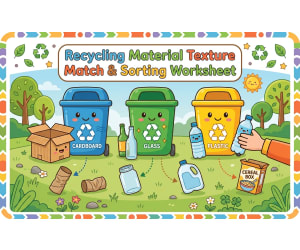
Recycling Material Texture Match & Sorting
Science, Life Sciences, Earth and Environmental Sciences, Earth Sciences, Environmental Science, Geology, Space, Nature & Plants, Human Body, Basic Science, Preschool, Grade 1, 2, 3, 4, 5, 6, Worksheets & Printables, Workbooks, Worksheets, Word Searches, Teacher Tools, Lesson Plans, Quizzes and Tests, Quizzes, Tests, Assessments
Transform your recycling lesson from a flat, boring worksheet into an unforgettable, hands-on sensory adventure! This comprehensive, research-based curriculum is designed to teach toddlers and preschoolers about recycling through the way they learn best: by touching, feeling, and doing. Grounded in the principles of Embodied Cognition, Montessori, and Vygotskian scaffolding , this resource moves beyond simple picture matching. It guides children to understand the fundamental properties of materials like cardboard, plastic, and glass (using safe proxies) through their distinct textures, temperatures, weights, and sounds. It’s the perfect, developmentally appropriate resource for your Earth Day unit, sensory tables, fine motor centers, or at-home learning. This isn't just a set of printables; it's a complete pedagogical system designed for early childhood educators, occupational therapists, and dedicated parents. ► What's Included in this 33-Page PDF? Phase 1: Core Content & Theory: A professional, in-depth guide for the educator. It explains the neuroscience behind tactile learning in early childhood, the design of the sensory materials, and the cognitive mapping process that helps toddlers connect a physical object to a symbolic icon. Phase 2: Facilitator's Workbook: 10 detailed, scaffolded worksheets that serve as lesson plans and observation guides. Each worksheet focuses on a different sensory attribute (e.g., Thermal Conductivity, Auditory Feedback, Material Elasticity) and provides step-by-step instructions and prompts for recording the child's progress. Phase 3: Visuals & Teacher Resources: Everything you need for seamless implementation! Professional Diagrams: Visual models of the learning process and ideal classroom setup. Developmental Milestones Matrix: Track a child's progress from exploration to mastery. Teacher Implementation Guide: Detailed instructions on material preparation, safety protocols, and a step-by-step guide to executing the lessons. Comprehensive Answer Key & Observation Rubric: Understand the "why" behind a child's actions and identify emerging, developing, and mastering skills. ► Skills Developed: Sensory Processing: Tactile, thermal, auditory, and kinesthetic discrimination. Fine Motor Skills: Pincer grasp, grip-force modulation, object manipulation. Cognitive Skills: Sorting and categorizing, problem-solving, working memory, cognitive flexibility. Early Science/Environmental Concepts: Understanding material properties, introduction to recycling and ecological stewardship. Language Development: Builds vocabulary for textures and properties ("bumpy," "smooth," "cold," "crinkly"). ► Perfect For: Preschool, Pre-K, and Toddler Teachers Occupational Therapists (A fantastic tool for sensory integration and fine motor goals!) Homeschooling Parents Special Education Professionals Montessori & Reggio Emilia inspired classrooms Stop the "laminate and lecture" cycle. Download this curriculum today and empower your little learners to become true "somatic ecologists" who understand their world through meaningful interaction! Keywords: Recycling, Earth Day, Sensory Bin, Toddler Activities, Preschool Curriculum, Montessori, Occupational Therapy, Fine Motor Skills, Sorting Activities, Tactile Learning, Hands-On Learning, Special Education, SPED, Sensory Integration, Early Childhood, Teacher Resource, Case Study Why Parents/Schools Love It: Goes Beyond Worksheets: It’s a multi-sensory, hands-on experience that turns abstract concepts like recycling into concrete, memorable play. It aligns perfectly with how young children naturally learn. Builds Real-World Skills: This curriculum masterfully combines critical developmental goals (fine motor, sensory discrimination) with an essential real-world lesson on environmental responsibility. Research-Backed & Professional: Unlike many resources, this curriculum is grounded in solid educational theory (Montessori, Vygotsky) and neuroscience, giving educators and therapists confidence in its effectiveness. Incredibly Versatile & Adaptable: It can be used for one-on-one therapy, a home learning activity, or a classroom sensory station. The detailed rubrics help track individual progress in any setting. Target Student Classes : Based on the content, case studies (ages 28-48 months), and developmental focus, target facilitators (the adults) working with: Toddlers (18 months - 3 years) Preschool / Pre-K (3 - 4 years) This resource is also exceptionally well-suited for Early Intervention and Special Education classrooms focusing on sensory processing and fine motor development, as well as for Occupational Therapy (OT) sessions. Copyright/Terms of Use: This Book was copyrighted by Syed Hammad Rizvi. This resource is for personal and single classroom use only. You may not alter, redistribute, or sell any part of this resource. In other words, you may not put it on the Internet where it could be publicly found and downloaded. If you want to share this resource with colleagues, please purchase additional licenses from Teachsimple. Thank you for respecting these terms of use. This product is happily brought to you by Syed Hammad Rizvi
Author Creative Book Store
Rating
Tags Recycling, Sorting, Earthday, Environment, Sustainability, Recyclingactivities, Sortingactivities, Earthdayactivities, Learningtorecycle, Environmentalscience
High Frequency Picture Words: Sentence Completion - FLASH-PC
ELA, Language Development, Vocabulary, Grade 1, 2, Teacher Tools, Lesson Plans
High Frequency Picture Words: Sentence Completion - FLASH-PC This comprehensive teaching resource targets language arts and vocabulary fields, specifically designed for Grade 1 and Grade 2 learners. It focuses on supplying curriculum -based content with major emphasis on Sentence Completion exercises to improve learners' understanding of high frequency picture words. An array of teaching aids: This product includes various aids designed for different learning styles. It features printables that allow for direct interaction with the lessons and unique picture word flashcards to make vocabulary learning a lot more engaging. Innovative graphic organizers: These are crucial tools in this pack that facilitate learners' thought process in comprehending sentence completion tasks using picture words efficiently. Interactive activities: The FLASH-PC offers interactive activities providing real-time application scenarios, thus ensuring better retention and concept assimilation. All resources within this pack are bundled into a single product file, enhancing ease-of-use. Regardless of tech-saaviness levels, any instructor can conveniently access all resources included in it. Versatility in Implementation This versatile resource can be flexibly adapted across various educational settings reaching from whole group lectures to small group discussions or even solo homework tasks - catering effectively to unique needs posed by each teaching scenario. The High Frequency Picture Words: Sentence Completion - FLASH-PC Package Essentialities Merging practicality, fun, and diversity into a single package makes it an essential tool for any dedicated educator eager on promoting enriched vocabulary learning among early grade students. As such educators whether operating within traditional school structures or those involved homeschooling set-ups would most certainly find immense value from using this innovative educational tool in their pursuits.
Author Classroom Complete Press
Tags Software (PC)
Data Analysis & Probability: Pictographs - MAC Software
Math, Graphing, Kindergarten, Preschool, Grade 1, 2, Teacher Tools, Lesson Plans
Data Analysis & Probability: Pictographs - MAC Software This educational software is an all-encompassing teaching resource designed to improve comprehension of Pictographs within the realm of Data Analysis and Probability. It simplifies these mathematical topics for early learners, ranging from preschool up to grade 2. The dynamic learning tools this software offers include: Pre- assessment tests, Comprehensive lesson plans, Real-world word problems, Timed drill activities etc. The applicability spans both classroom instruction and homeschooling environments. Unique features such as a memory match game, board games and spinner games introduce elements of play, thereby boosting mathematical confidence as skills develop over time. In-depth Mathematical Tools The kit also includes hands-on mathematical tools that promote exploration of different strategies while fostering analytic thinking abilities. Teachers will find the included teacher’s guide helpful for planning lessons hinged on corresponding Math curricula. Versatility in Language options To ensure inclusivity, English voiceover text can be switched to Spanish translation catering for both English-only speakers or bilingual learners alike. Printables accompanying the program engage students' physically further helping solidify knowledge gained during study sessions. Distribution Format: MAC This resource is packaged as a single zip file optimised specifically for MAC computers; it ensures ease of downloading and usage across MacOS platforms globally making this versatile educational tool accessible for teachers desiring interactive and impactful pedagogy whilst aiding their students excel academically especially within Mathematics realms primarily related with Graphing derivatives. </i
Author Classroom Complete Press
Tags Graphing, Pictographs, Data, Probability, Digital Math
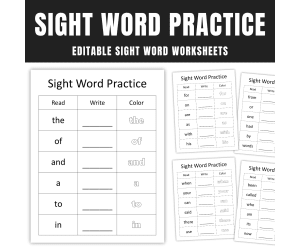
Editable Sight Word Worksheets, Read Write Color Sight Word Practice
Common Core, ELA, Reading, Writing, Resources for Teachers, Kindergarten, Grade 1, 2, Activities, Worksheets & Printables, Teacher Tools, Lesson Plans, Assessments
Editable Sight Word Worksheets, Read Write Color Sight Word Activities This resource includes 3 activities for fry sight words (1st 100), promoting both word familiarity and cognitive skills: Read: Read the sight word aloud to practice word recognition. Write: Write the sight word to strengthen spelling and handwriting. Color: Color the word to add a creative element to learning. This unique combination of activities makes these worksheets an excellent choice for keeping students engaged while they build confidence in their sight word knowledge. The editable format allows you to customize the sight words for different levels, so you can easily adapt the resource to suit your classroom’s needs. Perfect for differentiated instruction, these worksheets can be used for individual practice, small group work, or literacy centers. They are easy to print, making them a hassle-free option for busy educators. Features: Editable: Personalize the sight words to match your lesson plans. Multi-Sensory: Combines reading, writing, and coloring to engage different learning styles. Interactive: Keeps students focused and motivated with varied activities. Print & Go: Simple to prepare for immediate classroom use. This resource includes: 17 pages (PowerPoint) US Letter (8.5" x 11") size Ideal for kindergarten, first grade, or any early literacy learner, these worksheets offer a comprehensive approach to mastering sight words. Download and make learning sight words a fun, creative experience for your students.
Author GY Creations
Tags Sight Words, Fry Sight Words, Sight Words Worksheets, Sight Word Activities, Read Write Color, Editable Sight Words Worksheets, Editable Sight Words, Editable Worksheets, Fry's 1st 100

Measurement: Measuring Length - Practice the Skill 2 - FLASH-MAC
Math, Measurements, Common Core, Grade 1, 2, Teacher Tools, Lesson Plans
Measurement: Measuring Length - Practice the Skill 2 - FLASH-MAC This educational resource offers teachers, both in the classroom setting and at home learning environment,a practice tool in comprehending length measurements. The core of this teaching material centers around organizing practical timed drills to help students understand and estimate lengths and heights of objects presented. It uses real-life image aids that make learning not just factual but also relatable. Students are provided with math tools that are intended to foster their mathematical skills further. These tools are basic yet essential instruments designed for engaged hands-on student learning which is significant when it comes to mathematics. Note: Not only is this resource available with default English voice-over and text but it also includes Spanish voice-over and text options making it bilingual friendly. The teaching 'Material': Available for whole group instructions, small cluster discussions, or as an independent homework assignment. Educators’ Aid:This aligns seamlessly with Common Core State Standards as well as STEM initiatives. NCTM endorsement:The product content follows NCTM (National Council of Teachers of Mathematics) standards augmenting its credibility. Target Audience:The product primarily targets Grade one and Grade two learners under subsubject Measurements in Math subject area effectively making foundational measurement related concepts accessible. Pretty Compatible:This software based product can be used conveniently by Mac users hence complementing tech-friendly classrooms or home schools. In conclusion, this single-file-product equipped educators with a smart teaching resource matching pace and levels of elementary students aiding their learning journey more intuitively.
Author Classroom Complete Press
Tags Software (Mac)

One-Digit Multiplication Worksheets - Winter Math Worksheets
Math, Early Math, Basic Operations, Multiplication and Division, Multiplication, Kindergarten, Preschool, Grade 1, 2, 3, 4, Worksheets & Printables, Worksheets, Activities, Centers, Teacher Tools, Assessments, Lesson Plans
Winter Multiplication Worksheets | One-Digit Math Practice Help your students practice one-digit multiplication with these fun winter-themed worksheets . Perfect for Grade 2 and Grade 3 , these worksheets are simple and easy to use. They are no-prep . Just print and give them to your students. Great for independent work, early finishers, math centers, or homework. The winter theme adds a little seasonal fun. Students stay engaged while practicing multiplication facts. These worksheets help build confidence, improve accuracy, and reinforce important math skills. Use them in the classroom, in small groups, or at home. These worksheets are a simple way to keep multiplication practice consistent and fun during the winter months. Perfect for: Winter math lessons One-digit multiplication practice Independent work and early finishers Math centers and small groups Homework or extra practice Substitute teacher plans Just Print and go. This PDF resource includes 5 worksheets. Enjoy this resource!
Author Ponder Palette Plazza
Rating
Tags Multiplication, Winter Activities, Multiplication Worksheets, One Digit, One Digit Multiplication, Winter Math, New Year Math, New Year Activities, Elementary Math
Algebra: Ordering & Grouping - FLASH-MAC
Math, Algebra, Grade 1, 2, Teacher Tools, Lesson Plans
FLASH-MAC: Comprehensive Teaching Resource for Algebra - Ordering & Grouping FLASH-MAC is a teaching resource especially crafted to boost students' comprehension of fundamental algebraic principles. Particularly suitable for Grade 1 and Grade 2, this tool emphasizes on the areas of ordering and grouping in Algebra. This product sets itself apart with its diversified educational tactics; it equips teachers with more than just algebra lesson plans. By offering: Curriculum-based content, Preliminary assessments for sorting out individual learning needs, and Ingenious lesson structures presenting real-life word problems. Apart from these features, FLASH-MAC also provides classic printable resources plus fun, interactive elements like a memory match game, board game, and spinner game – perfectly designed to capture student interest whilst promoting efficient learning retention. The benefits of using FLASH-MAC extends outside the classroom by providing homework assignments or additional study aids at home—an advantage particularly for homeschoolers who are in search of structured math resources encouraging critical thinking. Dedicated Tech Features: We've included some inclusive tech specifications specifically catering to MAC software users via an incorporated zip file that includes: An English voiceover service supplemented by text options improving accessibility and inclusivity, A Spanish voiceover feature enhancing support for diverse classrooms settings. Evaluation Feature: The distinguishing property about FLASH-MAC is its smart SMART Response assessment function which makes possible instant teacher-student feedback mechanism -- An ideal strategy to keep close checks on progress and adjust teaching strategies as needed. In conclusion,this versatile academic tool aims at making the subject of Algebra gripping and comprehensible for learners of every background and ability.
Author Classroom Complete Press
Tags Algebra, Grouping Numbers, Comparing Numbers, Math Workbook, Algebra Worksheets

Measurement: Measuring Weight - Practice the Skill 3 - PC Software
Math, Measurements, Common Core, Kindergarten, Preschool, Grade 1, 2, Teacher Tools, Lesson Plans
Measurement: Measuring Weight - Practice the Skill 3 - PC Software Developed by experienced educators, this teaching resource is designed to emphasize the practicality of measuring weight. It offers instructors an efficient way to enliven their lesson plans in mathematics. About the software: This software caters comfortably to preschoolers, kindergarteners, and students in grades 1 and 2. It consists of timed drills that hone students' mental agility and mathematical speed along with ingraining the core concept of weight measurement. Key Features: The product includes both English and Spanish voice-over and textual instructions, maximizing inclusivity in classrooms or homeschooling environments. Conforms to recognized educational standards like Common Core State Standards, STEM initiatives, and NCTM guidelines. You can incorporate this tool into whole class instruction or smaller breakout sessions. It can be assigned as engaging homework that promotes independent thinking while cultivating precision due its time-bound nature. Note: The software comes as a downloadable zip file making it easy even for tech-novice teachers. Navigate away from traditional teaching aids today; make learning weights wonderfully meaningful using our exceptional software!
Author Classroom Complete Press
Tags Math Lesson, Measurement Lesson, Measuring Weight, Digital Math, Math Skills
High Frequency Sight Words: Mixed Up Words - FLASH-MAC
ELA, Language Development, Vocabulary, Grade 1, 2, Teacher Tools, Lesson Plans
High Frequency Sight Words: Mixed Up Words - FLASH-MAC This teaching resource is a chapter-mini specifically tailored for Grade 1 and Grade 2 students. Its primary aim is to assist in mastering Dolch Sight Words. A forefront feature of this program is the implementation of Mixed Up Words activities that invigorate learning high frequency sight words. The High Frequency Sight Words: Mixed Up Words - FLASH-MAC isn't constrained to only one teaching methodology. This software tool includes: Graphic Organizers, Printable materials, Engaging interactive activities. All these resources integrate together to allow teachers alternate between different pedagogical approaches such as group projects, individual tasks or even homework assignments. Dolch sight word flash cards are included in this package as efficient study aids for visual learners, supplemented by well-structured lesson plans focusing on vocabulary development and language arts. FLEXIBILITY & COMPATIBILITY The tool's unique adaptability gives instructors room for flexibility while upholding high educational standards — essentially aiding in the development of reading fluency one word at a time. Note that this product file is designed specifically for Mac operating systems—ensuring seamless user-interface experiences across varying platforms within your educational environment. A COMPREHENSIVE EDUCATIONAL RESOURCE TOOL CAPITALIZES ON CURRICULUM -BASED CONTENT: This comprehensive resource effectively leverages curriculum -based academic content through its efficient toolkit catered towards enhancing vocabulary skills among young learners. EFFECTIVE TEACHING STRATEGIES: Investing in High Frequency Sight Words: Mixed Up Words – FLASH-MAC will provide a gateway to not only innovative but also highly effective teaching techniques thereby enhancing your learners' academic proficiency.
Author Classroom Complete Press
Tags Software (Mac)

Measurement: Temperature & Currency - Practice the Skill 3 - FLASH-MAC
Math, Measurements, Common Core, Grade 1, 2, Teacher Tools, Lesson Plans
Measurement: Temperature & Currency - Practice the Skill 3 - FLASH-MAC About: This teaching resource is designed for educators and parents focusing on instilling a strong understanding of temperature and currency measurement among young learners. Suitable for grade 1 and grade 2 students, this material drills real-world application into the basics of mathematics, especially measurements. Format: The core of "Measurement: Temperature & Currency-Practice the Skill 3-FLASH-MAC" serves as a timed drill activity booklet enhancing proficiency in adding coin values. This unique approach uses real-life imagery as visual aids to foster understanding - ideal for learners finding abstract numerical concepts challenging. Usage: Educators can incorporate this material into diverse teaching strategies for whole-group lessons or small group activities, or as homework encouraging self-study. Languages: Specially tailored towards English-speaking learners with a Spanish voice-over option available too, it breaks language barriers making Math instruction comprehensible for all students. The package also includes math tools to enrich each learner’s experience while stimulating mental calculations. National Standards Alignment: "Measurement: Temperature & Currency – Practice the Skill 3 - FLASH-MAC" aligns perfectly with Common Core State Standards and STEM initiatives Follows guidelines set out by the National Council of Teachers of Mathematics (NCTM). This ensures compatibly and efficacy within nationally recognized educational frameworks. Software Format: This product is software compatible on MAC platforms. Its digital format gives teachers flexibility in choosing when and how they wish to introduce these exercises into their lesson plans thereby enabling efficient integration within different teaching paradigms. In Conclusion: This meticulously curated material provides educators with an effective means to enhance numeracy and life skills among their students, laying a solid foundation for Grade 1 and Grade 2 students in their academic journey.
Author Classroom Complete Press
Tags Software (Mac)
Algebra: Simple Patterns - Practice the Skill 1 - FLASH-MAC
Math, Algebra, Common Core, Grade 1, 2, Teacher Tools, Lesson Plans
Algebra: Simple Patterns - Practice the Skill 1 - FLASH-MAC A valuable teaching resource for educators in both traditional school settings and homeschooling environments. This efficient and user-friendly tool makes understanding the simple patterns of Algebra approachable for students at two grade levels—Grade 1 and Grade 2. The product caters to math-centric curriculum, specifically dealing with algebra as its subsubject. Flexibility is inherent to this resource, as it can be seamlessly used within various contexts—be it whole group instruction, small group learning or even as an individual homework assignment. Functionality extends beyond providing practice drills, designed to familiarize students with completing provided algebraic patterns. It also includes several useful math tools aimed at enhancing learning and comprehension. Beneficially, lessons could be modified depending on the learner's capability through personalized grading methods. Crafted keeping in line with national education standards like Common Core State Standards and STEM initiatives. An option for Spanish voice over along with text has been integrated within the product interface—fostering a more inclusive learning atmosphere. A downloadable software file compatible with Mac systems—one singular but comprehensive resource file capable of adapting to diverse classroom dynamics. The 'Algebra: Simple Patterns-Practice The Skills 1-FLASH-MAC' comes as an indispensable assistive element that aligns directly with established national norms while providing innovative tools that enrich mathematical literacy amongst young learners—an ideal asset for any educator aiming to foster solid foundations in algebra!
Author Classroom Complete Press
Tags Software (Mac)
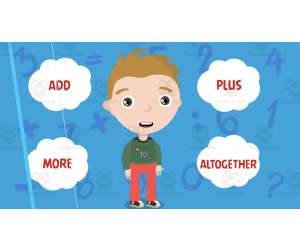
All About Addition 6-10 | Animated Math Video Lesson
Math, Addition and Subtraction, Addition, Preschool, Grade 1, 2, Lesson Plans, Teacher Tools
All About Addition 6-10 | Animated Math Video Lesson Structured as an engaging and interactive teaching resource, All About Addition 6-10 | Animated Math Video Lesson is tailor-fit for students in Kindergarten, Grade 1 and Grade 2. A vibrant video lesson centered on the subject of math; specifically, it elucidates adding numbers from the range of 6 to 10. This valuable educational tool offers a comprehensive introduction for those just starting their journey into addition and serves as a solid review for students who have prior knowledge in this area. The core strength of this video lesson lies within its kinetic learning methodology. The integration of animations not only adds color to learning but deepens comprehension through auditory explanation. These coupled with visual signals inspire learners while they work on solving mathematical problems within a dynamic environment. Each session neatly fits into a span of precisely 15 minutes' This lesson plan's format gives flexibility across different settings whereby it can be utilized during whole group discussions where teachers closely supervise hands-on activities involving concepts illustrated in the video. Suitable also for smaller groups comprising five or fewer students who can work out problems collectively post visualization. A vital resource for homeschooling parents keen on introducing their children to early stage addition lessons at home or even making them accessible online serving dual needs out-of-school assignment or at-the-go learning experience. The charm lies in its ability to break down complex numeric ideas into easy steps using vivid animation which not only garners interest but most importantly brings back joy towards math lessons! As part of our resources, an MP4 file containing this insightful animation is available here: All About Addition 6-10 | Animated Math Video Lesson
Author Educational Voice
Tags Addition, Math Video, Animated Lesson, Numbers 6-10, Interactive

I WONDER - How Fast Can Giraffes Run | Animated Video Lesson
Life Sciences, Science, Biology, Animals, STEM, Grade 1, 2, 3, 4, 5, 6, 7, 8, Lesson Plans, Teacher Tools
Video Introduction Animal kingdoms are full of fascinating wonders to learn. This video is designed for the students to learn more about animals in different countries. I WONDER - How Fast Can Giraffes Run | Animated Video Lesson Do you like animals? what is your favorite one? Do you own a pet? If yes, tell us more about it, like what its name? And what do you like most about it? What are the animal kingdoms? Can you write down the characteristics of each animal class like mammals, birds, reptiles, amphibian, fish and mollusks. Do you know that some animals can sing, can you name any of them? What is the largest and the smallest mammal in the world? What is the largest and the smallest bird in the world? What is the largest and the smallest fish in the world? I WONDER - How Fast Can Giraffes Run | Animated Video Lesson The video is perfect for encouraging the researching skills for the students, while learning more about these fantastic animals. I WONDER - How Fast Can Giraffes Run | Animated Video Lesson This friendly designed video is suitable for students at school, homeschooling, and as a group activity. Format Available in MP4 format.
Author Educational Voice
Tags How Fast Can Giraffes Run, How Fast Can Giraffes Run Video, Giraffes, Giraffe, Giraffes Facts, Giraffes Facts For Kids, Giraffes Video, Giraffes Video For Kids, Animal, Animals

I WONDER - Why Do We Need To Eat Fruit And Vegetables | Animated Video
Human Body, Life Sciences, Science, Biology, STEM, Grade 1, 2, 3, 4, 5, 6, 7, 8, Lesson Plans, Teacher Tools
Video Overview The human body is full of fascinating wonders to learn. This video is created to help the students recognize the anatomy and the job of the human body. I WONDER - Why Do We Need To Eat Fruit And Vegetables | Animated Video Lesson Every part and organ in our human body is vital so let's see how important they are. Have you ever imagined how we look like if we didn't have a skeleton? Did you know that because we have our amazing muscles we can stand! Do you know how many teeth do we have? Have you ever wondered about the food journey inside our body? Can you name all the glands in our body? Why do we have skin? Our nervous system is really good at sending signals. Can you tell us more about it? Are you really good at Mathematics, painting, or any other thing? You should really thank your brain about it! The famous five senses are really doing a great work? Can you explain how every sense works? I WONDER - Why Do We Need To Eat Fruit And Vegetables | Animated Video Lesson The video is perfect for encouraging the researching skills for the students, while learning more about our fantastic human body. I WONDER - Why Do We Need To Eat Fruit And Vegetables | Animated Video Lesson This friendly designed video is suitable for students at school, homeschooling, and as a group activity. Format Available in MP4 format.
Author Educational Voice
Tags Why Do We Need To Eat Fruit And Vegetables, Why Do We Need To Eat Fruit And Vegetables Video, Fruit And Vegetables, Fruit And Vegetables Facts, Fruit And Vegetables Facts For Kids, Fruit And Vegetables Video
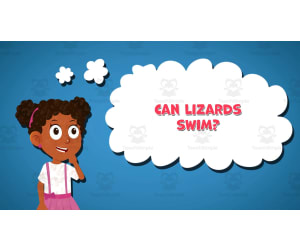
I WONDER - Can Lizards Swim | Animated Video Lesson
STEM, Life Sciences, Science, Animals, Biology, Grade 1, 2, 3, 4, 5, 6, 7, 8, Lesson Plans, Teacher Tools
Video Introduction Animal kingdoms are full of fascinating wonders to learn. This video is designed for the students to learn more about animals in different countries. I WONDER - Can Lizards Swim | Animated Video Lesson Do you like animals? what is your favorite one? Do you own a pet? If yes, tell us more about it, like what its name? And what do you like most about it? What are the animal kingdoms? Can you write down the characteristics of each animal class like mammals, birds, reptiles, amphibian, fish and mollusks. Do you know that some animals can sing, can you name any of them? What is the largest and the smallest mammal in the world? What is the largest and the smallest bird in the world? What is the largest and the smallest fish in the world? I WONDER - Can Lizards Swim | Animated Video Lesson The video is perfect for encouraging the researching skills for the students, while learning more about these fantastic animals. I WONDER - Can Lizards Swim | Animated Video Lesson This friendly designed video is suitable for students at school, homeschooling, and as a group activity. Format Available in MP4 format.
Author Educational Voice
Tags Can Lizards Swim, Can Lizards Swim Video, Swimming Lizards, Swimming Lizards Facts, Swimming Lizards Facts For Kids, Swimming Lizards Video, Swimming Lizards Video For Kids, Lizard, Lizards

Zoo Animal Research Writing Project on MONKEYS for K-2nd Grade
Life Studies, ELA, Writing, Creative Writing, Reading, Science, Life Sciences, Animals, Research, Kindergarten, Grade 1, 2, Activities, Teacher Tools, Lesson Plans, Worksheets & Printables, Worksheets, Coloring Pages, Writing Prompts
Animal Research Writing Project on Monkeys for K-2nd Grade. Engage young learners in reading, writing, and science with this 19-page informational writing project on monkeys. Students will examine real-life photos, read age-appropriate facts, color images, draw habitat scenes, and organize information using writing organizers. Differentiated writing pages allow kids to write at their level. When finished, students and the entire classroom can bind everything together into a customized book. This monkey-themed unit promotes creativity, reading comprehension, and nonfiction writing skills. Implement as whole class, small group, centers, or individual work. Suitable for homeschools or grades Kindergarten, first grade classrooms., and for second graders. Click the links below to view similar units on other zoo animals and to do research on zoo animals. Teachers appreciate the ready-to-use animal units covering reading, note-taking, drafting, illustrating, and publishing. Engage your class in meaningful informational writing with this standards-based project on monkeys. Plus, there are many more zoo animals to research as well in my store: K-5 Treasures! For additional Zoo Animal reports, click on the following links below: Animal Research Writing Project on TIGERS for K-2nd Grade Animal Research Writing Project on MONKEYS for K-2nd Grade Animal Research Writing Project on PANDAS for K-2nd Grade Animal Research Writing Project on HIPPOS for K-2nd Grade Animal Research Writing Project on ELEPHANTS for K-2nd Grade Animal Research Writing Project on GIRAFFES for K-2nd Grade Here are even more informational resources on report writing for OCEAN ANIMALS. Click on the links below: Animal Research Writing Project on WHALES for K-2nd Grade Animal Research Writing Project on the OCTOPUS for K-2nd Grade Animal Research Writing Project on SEA TURTLES for K-2nd Grade Animal Research Writing Project on ORCAS for K-2nd Grade Animal Research Writing Project on the SHELLFISH for K-2nd Grade Animal Research Writing Project on DOLPHINS for K-2nd Grade Animal Research Writing Project on SEALS for K-2nd Grade
Author K-5 Treasures
Tags Animal Research, Informational Writing, Writing Report, Zoo Animals, Report On Animals, Report On Zoo Animals, 1st Grade Writing, 2nd Grade Writing, Monkeys, Report On Monkeys
High Frequency Picture Words: Mixed Up Words - FLASH-MAC
ELA, Language Development, Vocabulary, Grade 1, 2, Teacher Tools, Lesson Plans
High Frequency Picture Words: Mixed Up Words - Flash Mac Developed for Grade 1 and Grade 2 learners, High Frequency Picture Words: Mixed Up Words - Flash Mac provides an effective tool for language arts vocabulary expansion. This educational resource harnesses the power of picture flashcards and mixed-up word activities to captivate students and stimulate their participation. Focus This product is specifically designed to target high-frequency words that are commonly used in everyday conversations. It brings curriculum -based content into sharp focus, aiming at enhancing comprehension using visual aids. The picture word flashcards engage visual learners by linking images with terms, thus fostering better memory retention. In addition, graphic organizers are employed to promote structured thinking when introducing new words. Mixed-Up Word Activities The mixed-up word exercises provide a platform for interactive learning experiences. Students can enrich their understanding and cultivate problem-solving abilities during the process of unscrambling the words. A software-compatible version included in the package is tailored for home assignments or group sessions within a digital learning framework. This allows students to reinforce what they have learned independently beyond traditional school hours. Homeschooling Application Apart from its use in regular classroom instruction involving large groups of students, homeschooling families could also take advantage of this innovative resource due to its adaptability; it can seamlessly fit into personalized study plans best suited for one-on-one teaching or independent learning projects . The High Frequency Picture Words: Mixed Up Words - Flash Mac stands as a pertinent answer to current needs for intuitive yet simple teaching resources applicable across diverse instructional environments, be it conventional classrooms or online platforms.
Author Classroom Complete Press
Tags Software (Mac)

I WONDER - What Materials Do Trees Give Us | Animated Video Lesson
Nature & Plants, Life Sciences, Science, Environmental Science, Earth and Environmental Sciences, Earth Sciences, Biology, Grade 1, 2, 3, 4, 5, 6, 7, 8, Lesson Plans, Teacher Tools
Video Introduction An amazing video designed for the students to learn more about STEM. I WONDER - What Materials Do Trees Give Us | Animated Video Lesson Do you like STEM subjects? what is your favorite one? Have you ever tried to plant a seed? If yes, tell us more about it. Or have you ever tried to invent something? If yes, tell us more about it. And how do you think it will help us? Have you ever seen a microorganism under a microscope? What was it? And how it looked like? Mathematics is a marvelous subject. Let' sharpen our brains and solve some equations. Do you like timetable tricks? What is your favorite one? Do you know how to code? Have you ever created an app or a game before? If yes, how was it like? I WONDER - What Materials Do Trees Give Us | Animated Video Lesson The video is perfect for encouraging the researching skills for the students, while learning more about this fantastic topic. I WONDER - What Materials Do Trees Give Us | Animated Video Lesson This friendly designed video is suitable for students at school, homeschooling, and as a group activity. Format Available in MP4 format.
Author Educational Voice
Tags What Materials Do Trees Give Us, What Materials Do Trees Give Us Video, Trees, Trees Facts, Trees Facts For Kids, Trees Video, Trees Video For Kids, Trees Materials, Trees Materials Video For Kids
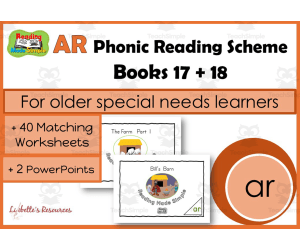
Phonic Reading Scheme for Older Students: AR Words Books 17 and 18
Special Resources, ELA, Special Education Needs (SEN), Language Development, Phonics, Reading, Kindergarten, Preschool, Grade 1, Literacy Readers, Teacher Tools, Worksheets & Printables, Lesson Plans
A pack of 2 AR Phonic reading books with matching PowerPoints and workbooks to support learning. These books are part of an incremental phonics reading scheme with a difference. Introducing just 10 words in each phonics family, the words are repeated from book to book, giving even those with very poor word recall the chance to learn to read fluently without having to decode every word. Ideal for dyslexics, or those suspected of being dyslexic and all children with a special need. You can view the first CK pack with a set of 30+ supporting activities and games FREE here. The books cover these sounds and must be taught in this order: CK; OO; SH; CH; ND/NT; NK; TH; NG; AR; Rationale: It has long been proven that teaching children to decode is a powerful tool for teaching reading, as opposed to the Look and Say method. However, this has led to a proliferation of reading books that throw as many words with a shared phonics sound into a book as possible, not realising that some children with very poor word recall find it hard to recognise words when they see them again without much repetition. To combat this problem, while we recognise that, technically, once a child has been taught a new sound s/he can sound out many words with that new sound, when it comes to reading fluently a child needs a core set of words in each family that they can recognise, which can act as a launch pad as they gain confidence. These books have been designed accordingly. For each sound family, just 10 words are studied with the help of the workbooks and are then repeated throughout the books, each book building on the vocabulary that has already been learned, repeating it and including it in new phrases as new sounds are learned. As the programme progresses, new sounds from the learned families are incorporated to widen vocabulary, while taking care to maintain fluency. The books are designed to limit guessing (though most children will try and guess, which must be avoided at all costs). Pluses of this phonics reading programme Easy to print Cheap to buy compared with expensive reading schemes They are just as effective as the best reading programmes out there, and more importantly, they have been tried and tested on real children with severe difficulties and proven to work if the child is taught as outlined. Aligned with the aims and objectives of LETRS and the Science of Reading. They work! My pupils tell me if they don't work, so I re-edit them and try them before I put them out for the general public. Introduces most high-frequency words in the phonics family to which they belong, and gradually introduces genuine, non-decodable sight words into the text without causing overload or throwing the child off course. What is included? Each book is 12 pages long Each book comes with a matching PowerPoint, making it suitable for online teaching, for private tutors, parents, classroom assistants, etc... The AR books come with 40 matching worksheets
Author Lilibette's Resources
Rating
Tags Decodable Reading Books, Phonic Reading Scheme, Download And Print Decodable Readers, Reading Fluency, Guided Reading, Special Needs, Phonics Intervention, NG Words