



3,954 products added recently
Page 55 - 2nd Grade Lesson Plans
Enhance your second-grade classroom with lesson plans that build on foundational skills and introduce new concepts. These activities promote critical thinking and creativity across subjects. Implement these plans to keep your students motivated and progressing confidently.

 Show filters

I WONDER - Did Viking Children Do Sports | Animated Video Lesson
History: Ancient, History, Social Studies, History: British, History: Canada, History: Europe, History: USA, History: World, Sports, P.E. & Health, Grade 2, 3, 4, 5, 6, 7, 8, Lesson Plans, Teacher Tools
Video Introduction An amazing video designed for the students to learn more about history. I WONDER - Did Viking Children Do Sports | Animated Video Lesson Do you like history? Which topic do you really enjoy about history? Have you ever read an interesting fact about the Vikings? If yes, can you mention them? What do you like most about the Victorian era? Can you name all the Tudors? Have you ever wondered how people used to live in ancient Japan and ancient China? Do you know any interesting facts about ancient Egyptians and the Pharaohs? Have you ever visited South America? What do you know about Incas and Aztecs? Celtic culture was really one of a kind, can you name any of the places that Celts used to live in? Imagine yourself living during the ancient Roman empire, how your life will look like? Ancient Greece was an amazing place to live in. What do you know about ancient Greek life? I WONDER - Did Viking Children Do Sports | Animated Video Lesson The video is perfect for encouraging the researching skills for the students, while learning more about history. I WONDER - Did Viking Children Do Sports | Animated Video Lesson This friendly designed video is suitable for students at school, homeschooling, and as a group activity. Format Available in MP4 format.
Author Educational Voice
Tags Did Viking Children Do Sports, Did Viking Children Do Sports Video, Viking Children, Viking Children Facts, Viking Children Facts For Kids, Viking Children Video, Viking Children Video For Kids, Vikings
Data Analysis & Probability: Pictographs - FLASH-PC
Math, Statistics, Grade 1, 2, Teacher Tools, Lesson Plans
Data Analysis & Probability: Pictographs - FLASH-PC This cutting-edge teaching resource is expertly designed for the pivotal skill of interpreting pictographs. Ideal for teachers seeking to make the tough subject of data analysis and probability more understandable and relatable. It's geared towards Grade 1 and Grade 2 students, merging classroom instruction in math with particular emphasis on statistics. The package comes with various features: Pre- assessment materials: These allow teachers to assess their students' base level of understanding before starting the lesson plan. This facilitates efficient teaching, assuring no student is overlooked. Theoretical lessons: Introduces the fundamental concept of pictographs in a simple style that students can easily comprehend. Diverse word problems within real-world contexts: Relates mathematical principles with everyday life scenarios fostering learning retention. Timed drill activities: Promotes quick thinking skills while mastering the presented topic. Inclusive language support: Contains English voice over along with Spanish voice over options, eliminating language barriers. Tactile gaming elements: Fun factors such as memory match game, board game, etc themed around data analysis using pictographs are integrated into learning experience. User-friendly teacher guides: Effectively helps navigate through content delivery. Fulfiling printables: Offers additional reinforcement material deployable for both in-classroom usage or as home assignments. Precise assessment tool: - SMART Response assessment feature assists teachers evaluate student performance swiftly thereby pointing out areas needing extra attention. All together, Data Analysis & Probability: Pictographs - FLASH-PC offers robust backing for various teaching environments, including classrooms or homeschooling setups. It's flexible enough to be implemented across multiple formats like whole-class teaching, small-group sessions or individual homework assignments.
Author Classroom Complete Press
Tags Software (PC)
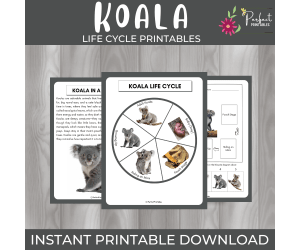
Life Cycle of a Koala, Australian Wildlife Unit Study fun facts
Animals, Life Sciences, Science, Biology, Kindergarten, Preschool, Grade 1, 2, 3, Parts of and Anatomy of, Worksheets & Printables, Flashcards, Diagrams, Teacher Tools, Lesson Plans
Bring Australian wildlife into your classroom with this Life Cycle of a Koala worksheet . Students will explore each stage of a koala’s development, from joey to adulthood, while learning fascinating facts about their diet, habitat, and unique adaptations. Perfect for science centers, unit studies, or literacy integration. What’s Included In This Kola life cycle pack? • A short Koala overiview • Life cycle diagram • Cut-and-paste sequencing activity • Flashcards for review and games • Matching activity for reinforcement • Fun facts about koalas • Coloring page Why Teachers Love It • Supports life science and animal studies • Engaging, hands-on activities for elementary learners • Easy to use – no prep required • Combines science, reading, and creativity • Helps students connect with real-world wildlife Great For • Australian animal unit studies • Science centers and small group work • Independent practice or homework • Early finishers • Cross-curricular learning with geography and literacy This koala life cycle activity helps students build science knowledge while having fun exploring one of Australia’s most iconic animals.
Author Perfect_Printables
Rating
Tags Life Cycle Of A Koala, Koala Life Cycle Worksheet, Australian Wildlife Unit Study, Marsupial Life Cycle Printable, Koala Science Activity, Australian Animals Worksheet, Life Cycle Of Animals Printable, Koala Facts For Kids, Australian Unit Study Worksheet, Koala Classroom Activity
I WONDER - Where Is The Biggest Zoo In The World | Animated Video
Geography, Social Studies, Animals, Life Sciences, Science, Grade 1, 2, 3, 4, 5, 6, 7, 8, Lesson Plans, Teacher Tools
Video Introduction An amazing video designed for the students to learn more about famous places in different countries. I WONDER - Where Is The Biggest Zoo In The World | Animated Video Lesson Do you like geography?! Let's discover this amazing place and know more about its unique stories. Have you ever visited a unique place or a different country than yours? If yes, tell us about it! If no, tell us what kind of places you would like to visit in the future? Every country has it's own story tell us the story about your country: Where it is located? And when it has been established? I WONDER - Where Is The Biggest Zoo In The World | Animated Video Lesson The activity is perfect for encouraging the researching skills for the students, while learning more about this fantastic place. I WONDER - Where Is The Biggest Zoo In The World | Animated Video Lesson This friendly designed video is suitable for students at school, homeschooling, and as a group activity. Format Available in MP4 format.
Author Educational Voice
Rating
Tags Where Is The Biggest Zoo In The World, The Biggest Zoo In The World, Biggest Zoo In The World Facts, Biggest Zoo In The World Video, Biggest Zoo In The World Video For Kids, Biggest Zoo In The World Facts For Kids

Lorikeet Unit Study | Build a Love Bird Craft | Rainforest Animals
ELA, Reading, Reading Comprehension, Grammar, Language Development, Spelling, Writing, Science, Life Sciences, Animals, Grade 2, 3, 4, Lesson Plans, Teacher Tools
Lorikeet Unit Study | Build a Love Bird Craft | Rainforest Animals This engaging and ready-to-use educational resource is designed for Grades 2, 3, and 4. It's versatile enough to fit into any lesson plans, be it language arts or science. Boasting an interactive learning experience, the unit study engages multiple subjects including zoology, spelling, writing, grammar and reading comprehension along with elements of Science. No-Prep Feature One of its key features is its No-Prep functionality. This ensures that high content quality and engagement are delivered without compromising on your valuable teaching time - be it teaching large groups or single students at home. About The Unit The unit revolves around Rainbow Lorikeets. It focuses on developing fine motor skills through cutting & crafting activities while stimulating critical thinking with literature art interactions. 'Fast Facts about rainbow lorikeets' provides inputs for mini projects or class discussions— a hands-on approach in learning about rainforests animal ecosystems. Inclusion of various online sources such as YouTube via QR codes allows user-friendly digital access still maintaining necessary hygiene factor during these times. Holiday-based themes like Valentine’s Day can transform into charming love bird crafts serving as both an educational project each adding value beyond aesthetics besides making early finisher activities fun! All Round Growth & Assessment Avenues Apart from improving cognitive development amongst students by blending varied interdisciplinary methods; to ascertain effective understanding—a delicate balance between interest & assessment —is maintained through designing comprehension quizzes in multiple-choice format yet not intimidating young learners! In essence, the Lorikeet Unit Study isn't just another educational resource.. it's a fun-filled journey exploring the fascinating world of lorikeets.
Author Heather Huhman
Tags Lorikeet, Rainforest Animals, Bird Craft, Language Arts, Science
Fossils Reading Comprehension Passage - Cored Ed Encyclopedia
ELA, Reading Comprehension, Reading, Science, Technology, Earth and Environmental Sciences, Life Sciences, Pre-Reading, Language Development, Vocabulary, Grade 2, 3, 4, 5, Worksheets & Printables, Worksheets, Teacher Tools, Centers, Activities, Writing Prompts, Assessments, Quizzes and Tests, Quizzes, Lesson Plans
This fossils reading comprehension with lesson plan includes: Visualization (on the front cover) Start your lesson by taking a minute to think and share something about the topic. Read the script aloud (slowly), perhaps prepare some music or sound effects. Student close their eyes and let their imaginations wander. Students open their eyes, read the question aloud and give them a few minutes to complete. Ask a few students to share or keep answers until the end to compare with what they learn in the passage. Quick pause—thousands of Cored Education products are included with your TeachSimple membership. Download links and encyclopedia index available here. Pre-Reading Trivia Students will write down one thing they already know about the subject and then read five more facts and discuss. These facts are fun, and the students will enjoy learning about the subject before reading more. Give 1 minute for students to write what they already know (no pressure—best guess is fine). Read the five facts together. After each fact, do ask a student for their opinion, was it surprising? Set a purpose by asking students to highlight/underline one fact they want to learn more about during the reading. Reading Passage The text is a high-interest reading passage with set paragraphs, roughly three to four paragraphs long. It contains a variety of themes about the topic, anywhere from history to technology. The passage is between 250 and 350 words in length. First, ask students to look at the headings and see what they’ll learn about today. What do they know about the topic/heading? First read options: Teacher read-aloud (best for support). Partner reading (paragraph by paragraph). While reading, students underline important details, and vocabulary words they think may come up in the questions section. Mixed Questions The first question page contains four multiple-choice questions, each with a choice of four answers, and three written response questions that require a sentence or two from the student. Students complete the mcqs first independently, then review quickly as a class. For the 3 written responses, try to get students giving the answer with some form of evidence: “I think ___ because the text says ___.” If students get stuck, send them back to check the passage. Vocabulary Questions Practice seven key words from the text in this section across two activities. First section is scrambled words where students will unscramble three words given a clue for each. The second section is a word to meaning matching activity. Before starting, have some students read out words they underlined in the passage. Ask students to say the word and read aloud the sentence(s) around each word. Ask students to do scrambled words and the matching exercise in pairs then go through answers as a class. For the scrambled spelling task, get four pairs to come up to the board and write the words for extra practice with the other student reading out the clue. For the matching task, prompt students to give full sentences: “I matched ___ with ___ because ___.” Creative Writing In this question, the student will be required to write a five to eight sentence paragraph on a question related to the topic. Before starting, ask students write down 3 key ideas they are going to include in their piece. Ask students for ideas to share around the class to help those struggling. Pro writing expectations: 5–8 sentences At least 2 facts or details from the passage At least 2 vocabulary words from the previous page Students read their paragraphs while classmates listen for facts and vocabulary words. Extension Activities This page is optional for fast finishers or to take home. There are several activities, each one requiring a different skill. Do some, do none, do all, completely optional - but you will feel reassured knowing every possibility is planned for. Includes summary writting question and additional facts. Answer Key There are answers for the multiple-choice questions, written response questions have sample answers, vocabulary answers and if there is a summary question then a sample summary will be provided as well. Lesson Plan Included Customized lesson plan for this lesson is included. Lesson Snapshot Title: Fossils Genre: Nonfiction (Informational Text) Subject: Science (Earth Science/Life Science) / Reading (Informational Text) Primary Topic: Fossils, how they form, and what they reveal Estimated Guided Reading Level (A–Z): Q What This Lesson Teaches Best Defines a fossil and explains that fossils can be body parts (tooth, bone) or traces (footprint, burrow, fossilized poop) that become clues in the “fossil record.” Explains how fossils form when remains are quickly covered by sediment , and minerals in water replace material or fill empty spaces until remains harden like stone. Teaches mold and cast formation: a body can disappear, leaving a hollow mold that later fills to make a cast. Introduces paleontology and shows how scientists “read” patterns in sedimentary rock layers to learn how life has changed over time. Shows how fossils can guide new discoveries , including using rock layers to search for missing kinds of creatures (Tiktaalik example). Learning Goals Students will identify two kinds of fossils named in the text and give an example of each. Students will explain how sediment and minerals help remains become hard “as stone.” Students will describe how a mold and a cast can form, using the text’s explanation. Students will explain how scientists use patterns in sedimentary rock layers to learn which fossils are older. Students will describe why the fossil record is “not complete,” based on the passage. Students will describe how fossils can help scientists decide where to search for new discoveries. Key Vocabulary From the Text sediment — dirt and tiny bits of rock. minerals — materials in water that can harden remains. mold — a hollow shape left after a body is gone. cast — a filled-in copy of a hollow shape. paleontology — the study of ancient life using fossils. FULL CATALOG OF DOWNLOAD LINKS AND ENCYCLOPEDIA INDEX HERE
Author Cored Education
Rating
Tags Vocabulary, Reading Comprehension, Reading Passages, Lesson Plans, Ela Lesson Plans, Reading Comprehension Lesson Plans, Pre-reading, Science Lesson Plans, Earth Science, Life Science

Hands-On - Physical Science: Light and Sound Gr. 1-5
Science, Physics, Grade 1, 2, 3, 4, 5, Teacher Tools, Lesson Plans
Hands-On Physical Science: Light and Sound Gr. 1-5 This exclusive teaching resource is designed to arouse the curiosity of your students about the fascinating world of energy and motion. This educational treasure is a comprehensive fusion of Science, Technology, Engineering, Art, and Math (STEAM), keeping up with Next Generation Science Standards. A Special Focus on "Light and Sound" We offer an in-depth chapter dedicated to "Light and Sound," designed to engage pupils in grades 1 through 5. The primary aim here is to impart a deep understanding of balanced vs unbalanced forces. Activities include practical experiences such as observing how gravity affects different objects dropped at varied heights or measuring the distance of lightning using sound. Group Activities: Engages students with model-making sessions for water waves, sound waves and light waves reinforcing theoretical learning. Fascinating Electricity Experiments: Learning about static electricity becomes exciting with activities involving magic tricks like making balloons stick on walls! Educational Tools Included This resource comes packed with tools such as reading passages and graphic organizers that aid comprehension before you delve into new topics. Pre-Reading Exercises:: These help in understanding forthcoming topics better. Cumulative Assessments :: After each fun-filled learning session comes detailed assessments reflecting their grasp on each topic. Innovative Descriptions:: Students learn challenging concepts like solids liquids or gases through relatable home-based examples; thus aiding their memory retention coupled with enjoyment! In addition, student’s creativity gets fueled when they utilize what they’ve learned by collaboratively creating compound machinery; spurring teamwork while improving learning effectively! This superlative lesson plan facilitates experiential learning, bringing classrooms alive one experiment at a time! It comes as a PDF file type that ensures it's easily accessible across various digital devices making it convenient for educators and homeschooling parents alike. Whether you're offering this material to your entire class, assigning them as small group activities or even giving them out as unique homework assignments – Hands-On Physical Science: Light and Sound Gr. 1-5, is an essential addition to your teaching resources!
Author Classroom Complete Press
Tags PDF

Ancient Egypt Packet
Social Studies, History, History: Ancient, Grade 1, 2, Teacher Tools, Lesson Plans
Ancient Egypt Packet The Ancient Egypt Packet is a comprehensive and engaging resource ideal for educators, public school teachers, and homeschoolers focusing on Grades 1 and 2. This product fits perfectly into social studies classes with its core concentration area being ancient history. This informative packet ushers you on an educational journey back to the era of Pharaohs, Pyramids, and Sphinx through 18 content-abundant pages. It embodies a plethora of activities that establish equilibrium between learning enjoyable facts about ancient Egypt and comprehending the historical importance tied to this captivating civilization. Included in this innovative packet are: - Secret Message Writing Activity using Hieroglyphs- - Enlightening Hieroglyph resources- - Clear Unit Folder instructions - - Fun crafts such as creating your own Cartouche, Mummy writing piece, Sarcophagus craftwork- Nile Barge Template/Craft facilitating student creations An insightful word search activity revolving around age-old Egypt terminology- - Sphinx materials along with corresponding writing activities To optimally print from these PDF files – change your printer options setting to "fit" instead of "actual size". This ensures none of the parts will be cut off during printing. Adding a personal touch - special graphics by Scrappin Doodles included specifically for use in this package. In conclusion:, the Ancient Egypt Packet outfits you with unusual tools engineered to animate your social studies lessons whilst bringing history alive – all compiled into one manageable PDF document! Take pleasure in educating students differently!
Author Super Teacher Tactics
Tags Ancient Egypt, Hieroglyphs, History Crafts, Sphinx Resources, Pharaoh Activities

Measurement Unit Vocabulary Words Interactive Foldables for 3rd Grade – EBOOK
Math, Measurements, Grade 2, 3, 4, Lesson Plans, Teacher Tools
The Measurement Unit Vocabulary Words Interactive Foldables for 3rd Grade is a detailed and engaging resource that covers vital math principles relevant to collective state standards, with the main emphasis on measurement units. This educational material is mainly ideal as a supplement tool for second, third, and fourth grade curricula This informative eBook spans 11 pages in PDF format, incorporating two vocabulary interactive foldables that provide learners an enjoyable and hands-on approach towards math topics. Teachers have the flexibility to adapt their instruction based on their students' specific needs owing to three distinct format options: words only, definitions only, or words with definitions. Topics covered include: Additive property of area Area Capacity Composite figures Decomposing figures Liquid volume and perimeter All these concepts are designed specifically from a 3rd grader's perspective. The resource also ventures into more advanced ideas like polygons and weights enabling children to widen their math vocabulary while fostering interest in key measurement themes. This digital resource's adaptability makes it befitting for use during whole group activities where learners can collectively complete worksheets or individual learning time when they can work independently. Teachers may also find it useful as homework thus facilitating parents' involvement in their child's education by giving them insight into the school curriculum . The ease this product brings cannot be overlooked; upon download one simply has to follow uncomplicated instructions involving cutting, folding gluing - yielding your interactive foldable! Such convenience makes it an excellent choice not just for public school educators but also homeschooling instructors looking for potent ways to refine children’s understanding of measurement units.</p
Author Knowledge Box Central
Tags Measurement Units, Vocabulary, Interactive Foldables, Math Concepts, Hands-on Learning

Rainbows Reading Comprehension Passage - Cored Ed Encyclopedia
ELA, Language Development, Reading Comprehension, Reading, Pre-Reading, Science, Earth Sciences, Earth and Environmental Sciences, Writing, Strategies, Grade 2, 3, 4, 5, Worksheets & Printables, Worksheets, Teacher Tools, Centers, Activities, Writing Prompts, Assessments, Quizzes and Tests, Quizzes, Lesson Plans
This rainbows reading comprehension includes: Visualization (on the front cover) Start your lesson by taking a minute to think and share something about the topic. Read the script aloud (slowly), perhaps prepare some music or sound effects. Student close their eyes and let their imaginations wander. Students open their eyes, read the question aloud and give them a few minutes to complete. Ask a few students to share or keep answers until the end to compare with what they learn in the passage. Quick pause—thousands of Cored Education products are included with your TeachSimple membership. Download links and encyclopedia index available here. Pre-Reading Trivia Students will write down one thing they already know about the subject and then read five more facts and discuss. These facts are fun, and the students will enjoy learning about the subject before reading more. Give 1 minute for students to write what they already know (no pressure—best guess is fine). Read the five facts together. After each fact, do ask a student for their opinion, was it surprising? Set a purpose by asking students to highlight/underline one fact they want to learn more about during the reading. Reading Passage The text is a high-interest reading passage with set paragraphs, roughly three to four paragraphs long. It contains a variety of themes about the topic, anywhere from history to technology. The passage is between 250 and 350 words in length. First, ask students to look at the headings and see what they’ll learn about today. What do they know about the topic/heading? First read options: Teacher read-aloud (best for support). Partner reading (paragraph by paragraph). While reading, students underline important details, and vocabulary words they think may come up in the questions section. Mixed Questions The first question page contains four multiple-choice questions, each with a choice of four answers, and three written response questions that require a sentence or two from the student. Students complete the mcqs first independently, then review quickly as a class. For the 3 written responses, try to get students giving the answer with some form of evidence: “I think ___ because the text says ___.” If students get stuck, send them back to check the passage. Vocabulary Questions Practice seven key words from the text in this section across two activities. First section is scrambled words where students will unscramble three words given a clue for each. The second section is a word to meaning matching activity. Before starting, have some students read out words they underlined in the passage. Ask students to say the word and read aloud the sentence(s) around each word. Ask students to do scrambled words and the matching exercise in pairs then go through answers as a class. For the scrambled spelling task, get four pairs to come up to the board and write the words for extra practice with the other student reading out the clue. For the matching task, prompt students to give full sentences: “I matched ___ with ___ because ___.” Creative Writing In this question, the student will be required to write a five to eight sentence paragraph on a question related to the topic. Before starting, ask students write down 3 key ideas they are going to include in their piece. Ask students for ideas to share around the class to help those struggling. Pro writing expectations: 5–8 sentences At least 2 facts or details from the passage At least 2 vocabulary words from the previous page Students read their paragraphs while classmates listen for facts and vocabulary words. Extension Activities This page is optional for fast finishers or to take home. There are several activities, each one requiring a different skill. Do some, do none, do all, completely optional - but you will feel reassured knowing every possibility is planned for. Includes summary writting question. Answer Key There are answers for the multiple-choice questions, written response questions have sample answers, vocabulary answers and if there is a summary question then a sample summary will be provided as well. Lesson Plan Included Customized lesson plan for this lesson is included. Lesson Snapshot Title: Rainbows Genre: Nonfiction (informational text with support pages) Subject: Science (Light & Weather) Primary Topic: How sunlight and raindrops make rainbows Estimated Guided Reading Level (A–Z): R What This Lesson Teaches Best Explains the conditions for seeing a rainbow (Sun behind you; rain or mist in front; rainbow appears opposite the Sun). Builds a clear scientific model of how rainbows form (sunlight enters a raindrop, bends, bounces inside, and bends again as it leaves). Teaches that a rainbow is part of a circle and why it can “disappear” when the Sun is higher (the circle drops below the horizon). Connects science ideas to history of discovery (scholars testing with water-filled glass spheres; Descartes and Newton using a prism to explain white light and colors). Extends learning with aligned practice pages (questions, writing, and activities); vocabulary is mostly aligned, but “Refraction” appears on a vocab page while the passage describes “bending” without using that word. Learning Goals Students will describe where the Sun and rain/mist need to be to see a rainbow. Students will explain the “twisty trip” sunlight takes inside a raindrop using key details from the passage. Students will describe why a rainbow is part of a circle and what happens when the Sun is higher. Students will explain how two bounces inside droplets create a fainter outer bow and flip the color order. Students will identify how people helped solve the rainbow mystery (examples from the Middle Ages, Descartes, and Newton). Key Vocabulary From the Text horizon — where the sky seems to meet the land. raindrop — a tiny drop of water from rain. prism — clear object that spreads white light into colors. scholars — people who study and test ideas carefully. droplets — very small drops of water in the air. FULL CATALOG OF DOWNLOAD LINKS AND ENCYCLOPEDIA INDEX HERE
Author Cored Education
Rating
Tags Vocabulary, Reading Comprehension, Reading Passages, Reading, Creative Writing, Reading Strategies, Writing Prompts, Lesson Plans, Earth Science, Rainbows
I WONDER - Do All Mammals Have Hair | Animated Video Lesson
STEM, Animals, Life Sciences, Science, Biology, Grade 1, 2, 3, 4, 5, 6, 7, 8, Lesson Plans, Teacher Tools
Video Introduction Animal kingdoms are full of fascinating wonders to learn. This video is designed for the students to learn more about animals in different countries. I WONDER - Do All Mammals Have Hair | Animated Video Lesson Do you like animals? what is your favorite one? Do you own a pet? If yes, tell us more about it, like what its name? And what do you like most about it? What are the animal kingdoms? Can you write down the characteristics of each animal class like mammals, birds, reptiles, amphibian, fish and mollusks. Do you know that some animals can sing, can you name any of them? What is the largest and the smallest mammal in the world? What is the largest and the smallest bird in the world? What is the largest and the smallest fish in the world? I WONDER - Do All Mammals Have Hair | Animated Video Lesson The video is perfect for encouraging the researching skills for the students, while learning more about these fantastic animals. I WONDER - Do All Mammals Have Hair | Animated Video Lesson This friendly designed video is suitable for students at school, homeschooling, and as a group activity. Format Available in MP4 format.
Author Educational Voice
Tags Do All Mammals Have Hair, Do All Mammals Have Hair Video, Mammals Hair, Mammals Hair Facts, Mammals Hair Facts For Kids, Mammals Hair Video, Mammals Hair Video For Kids, Mammals
Gasoline Reading Comprehension Passage - Cored Ed Encyclopedia
ELA, Reading Comprehension, Reading, Science, Technology, Earth and Environmental Sciences, Pre-Reading, Language Development, Vocabulary, Physics, Grade 2, 3, 4, 5, Worksheets & Printables, Worksheets, Teacher Tools, Centers, Activities, Writing Prompts, Assessments, Quizzes and Tests, Quizzes, Lesson Plans
This gasoline reading comprehension with lesson plan includes: Visualization (on the front cover) Start your lesson by taking a minute to think and share something about the topic. Read the script aloud (slowly), perhaps prepare some music or sound effects. Student close their eyes and let their imaginations wander. Students open their eyes, read the question aloud and give them a few minutes to complete. Ask a few students to share or keep answers until the end to compare with what they learn in the passage. Quick pause—thousands of Cored Education products are included with your TeachSimple membership. Download links and encyclopedia index available here. Pre-Reading Trivia Students will write down one thing they already know about the subject and then read five more facts and discuss. These facts are fun, and the students will enjoy learning about the subject before reading more. Give 1 minute for students to write what they already know (no pressure—best guess is fine). Read the five facts together. After each fact, do ask a student for their opinion, was it surprising? Set a purpose by asking students to highlight/underline one fact they want to learn more about during the reading. Reading Passage The text is a high-interest reading passage with set paragraphs, roughly three to four paragraphs long. It contains a variety of themes about the topic, anywhere from history to technology. The passage is between 250 and 350 words in length. First, ask students to look at the headings and see what they’ll learn about today. What do they know about the topic/heading? First read options: Teacher read-aloud (best for support). Partner reading (paragraph by paragraph). While reading, students underline important details, and vocabulary words they think may come up in the questions section. Mixed Questions The first question page contains four multiple-choice questions, each with a choice of four answers, and three written response questions that require a sentence or two from the student. Students complete the mcqs first independently, then review quickly as a class. For the 3 written responses, try to get students giving the answer with some form of evidence: “I think ___ because the text says ___.” If students get stuck, send them back to check the passage. Vocabulary Questions Practice seven key words from the text in this section across two activities. First section is scrambled words where students will unscramble three words given a clue for each. The second section is a word to meaning matching activity. Before starting, have some students read out words they underlined in the passage. Ask students to say the word and read aloud the sentence(s) around each word. Ask students to do scrambled words and the matching exercise in pairs then go through answers as a class. For the scrambled spelling task, get four pairs to come up to the board and write the words for extra practice with the other student reading out the clue. For the matching task, prompt students to give full sentences: “I matched ___ with ___ because ___.” Creative Writing In this question, the student will be required to write a five to eight sentence paragraph on a question related to the topic. Before starting, ask students write down 3 key ideas they are going to include in their piece. Ask students for ideas to share around the class to help those struggling. Pro writing expectations: 5–8 sentences At least 2 facts or details from the passage At least 2 vocabulary words from the previous page Students read their paragraphs while classmates listen for facts and vocabulary words. Extension Activities This page is optional for fast finishers or to take home. There are several activities, each one requiring a different skill. Do some, do none, do all, completely optional - but you will feel reassured knowing every possibility is planned for. Includes summary writting question and additional facts. Answer Key There are answers for the multiple-choice questions, written response questions have sample answers, vocabulary answers and if there is a summary question then a sample summary will be provided as well. Lesson Plan Included Customized lesson plan for this lesson is included. Lesson Snapshot Title: Gasoline Genre: Nonfiction (informational text) Subject: Science Primary Topic: What gasoline is, how it works, and impacts Estimated Guided Reading Level (A–Z): Q What This Lesson Teaches Best Explains what gasoline is and why it must be handled carefully because it “can catch fire very easily.” Describes how gasoline helps a car engine work (a spark burns gasoline in a controlled way to move parts that turn the wheels). Traces a brief history of gasoline’s changing value (from “leftover” in 1859 to useful once automobiles appeared in 1892). Introduces the idea of octane ratings and how they relate to engine “knocking” and early ignition. Connects gasoline use to environmental effects (vapors can pollute; burning creates gases including carbon dioxide) and mentions cleaner travel choices. Learning Goals Students will identify what gasoline is and where it comes from (petroleum/crude oil from deep underground). Students will describe how gasoline is used inside a car engine to help make the wheels turn. Students will explain how gasoline changed from being thrown away to becoming a valuable fuel. Students will explain what “octane” measures and how it relates to engine knocking. Students will describe two ways gasoline can affect the air (vapors and burning gases). Students will name choices mentioned in the text for using less gasoline (electric vehicles, bikes, buses, walking). Key Vocabulary From the Text gasoline — fuel liquid used in many cars. petroleum — thick oil material gasoline is made from. crude — raw oil from deep underground. kerosene — lamp fuel people wanted in 1859. octane — rating showing resistance to early ignition. FULL CATALOG OF DOWNLOAD LINKS AND ENCYCLOPEDIA INDEX HERE
Author Cored Education
Rating
Tags Vocabulary, Reading Comprehension, Reading Passages, Lesson Plans, Ela Lesson Plans, Reading Comprehension Lesson Plans, Pre-reading, Science Lesson Plans, Earth Science, Physics
Winnie the Pooh Lesson Plan, Worksheets & PowerPoint | Grades 1 - 2
ELA, Social Emotional Learning (SEL), Special Resources, Grade 1, 2, Lesson Plans, Teacher Tools, Worksheets & Printables
Winnie the Pooh Lesson Plan, Worksheets & PowerPoint | Grades 1 - 2 Teach kindness, friendship, and early math skills with this engaging, no-prep lesson inspired by Winnie the Pooh (2011)! Students journey to the Hundred Acre Wood as they explore what makes a good friend, practice helping and sharing, and build foundational math skills through tally charts, bar graphs, and simple addition activities. Perfect for social-emotional learning, character education, friendship units, substitute plans, and cross-curricular instruction, this ready-to-use resource helps young learners develop positive relationship skills while strengthening literacy and math concepts. ⭐ What's Included: ✔ Detailed Teacher Lesson Plan & Guide ✔ Student Worksheet Packet ✔ Complete Answer Key ✔ Friendship Vocabulary Activities ✔ Character Matching Exercise ✔ Tally Chart & Bar Graph Practice ✔ Simple Addition Activities ✔ Kindness Reflection Questions ✔ Create-a-Kindness Card Activity 📚 Skills Covered: • Friendship and relationship-building • Kindness, helping, and sharing • Social-emotional learning (SEL) • Reading and interpreting tally charts • Creating and analyzing bar graphs • Addition within 10 • Early literacy and vocabulary development • Reflection and personal connections 🎯 Learning Objectives: Students will: • Identify ways to be a good friend. • Understand the importance of helping and sharing. • Match characters to key story traits. • Read and interpret tally chart data. • Create a bar graph using collected information. • Solve simple addition problems. • Reflect on ways they can show kindness to others. 🏫 Perfect For: • Grades 1–2 • Social-Emotional Learning (SEL) • Friendship & Kindness Units • Character Education Lessons • Early Math Practice • Literacy Centers • Substitute Teacher Plans • Homeschool Learning ✨ Why Teachers Love It: • No-prep and easy to implement • Combines SEL, literacy, and math in one lesson • Reinforces positive classroom community skills • Engages young learners with familiar characters • Includes answer keys for quick grading • Encourages meaningful discussion and reflection • Supports multiple learning standards Students will learn that friendship, kindness, and teamwork can solve problems while building confidence with graphing, counting, and addition skills. This heartwarming lesson helps create a caring classroom community while making learning fun and meaningful.
Author Bright Classroom Ideas Marketplace
Rating
Tags Winnie, Movie, Film, Sel, Ela, End Of Year, Worksheet

Oak tree Life Cycle diagram Fall science activities cut paste fun fact
Life Sciences, Science, Biology, Nature & Plants, Kindergarten, Preschool, Grade 1, 2, 3, Coloring Pages, Worksheets, Worksheets & Printables, Parts of and Anatomy of, Flashcards, Diagrams, Teacher Tools, Lesson Plans
Make learning about the life cycle of an oak tree fun and interactive with this printable fall science activity! Students will explore how an oak tree grows through different stages while learning about acorns, germination, growth, seasonal changes, and the importance of trees in nature. I like using this resource during fall science units, autumn classroom activities, tree studies, forest lessons, botany units, and seasonal learning. It's a low-prep activity that combines science, cut-and-paste practice, and interesting oak tree facts. What You Will Get This printable Oak Tree Life Cycle resource helps students identify and sequence the stages of an oak tree's growth while building plant science vocabulary and learning fascinating facts about oak trees. What's Included in this Resource? • Oak tree life cycle diagram activity • Cut-and-paste life cycle activity • Acorn and tree growth stages • Plant science vocabulary • Seasonal changes and tree facts • Fun facts about oak trees • Student-friendly printable pages • Easy-to-use classroom format This resource is perfect for: • Fall science lessons • Autumn classroom activities • Tree and forest studies • Plant life cycle units • Botany lessons • Science centers • Homeschool learning • Early finisher activities Why you will love this? • Easy to print and use • Connects plant science with a popular fall theme • Reinforces life cycle sequencing skills • Builds plant and tree vocabulary • Encourages observation and scientific thinking • Combines learning with hands-on cut-and-paste practice This Oak Tree Life Cycle activity is a fun way for students to discover how an oak tree grows from acorn to mature tree while exploring seasonal changes and fascinating facts about one of the most recognizable trees in North America.
Author Perfect_Printables
Rating
Tags Life Cycle, Fall Activities, Squash Life Cycle, Fall Science, Tree Life Cycle, Oak Tree Life Cycle, Oak Tree Activities, Fall Tree, Fall Science Worksheet, Acorn
Data Analysis & Probability: Probability - Learn the Skill - MAC Software
Math, Patterns, Common Core, Kindergarten, Preschool, Grade 1, 2, Teacher Tools, Lesson Plans
Data Analysis & Probability: Probability - Learn the Skill for MAC Software Welcome to a resource designed to ensure an engaging learning experience, specifically tailored for preschool, kindergarten, and grades 1-2 students. This content teaches math through real-world problems and is available as a zip file for MAC users. Integrated understanding of Probability within Data Analysis: The focus here is on grasping the concept of probability within the framework of data analysis, connecting patterns in mathematics to probabilities. Pedagogical Approaches Aligned with Educational Standards: Not only does this material meet the Common Core State Standards, but it also supports STEM advancements enhancing its adaptability by educators worldwide. Linguistically Inclusive: There's an English language context by default complemented by a dual-language Spanish option which ensures no learner is left out regardless of their linguistic background. The Role of Technology in Learning: This package embraces technology via its built-in maths software encouraging self-paced exploration that promotes independent thinking skills crucial for overall development. Versatile Implementation: It allows flexible application suitable for whole group lessons or small teacher-led groups or even as homework assignments ensuring total control over lesson delivery depending on student abilities or class performance levels. In conclusion, whether you're a public school teacher looking at diverse resources tailored to high standards or homeschoolers aiming at rich content that enthralls your child/children while instilling essential mathematical skills; this MAC software product 'Data Analysis & Probability: Probability - Learn the Skill' essentially caters to everyone striving towards academic excellence one lesson at a time.
Author Classroom Complete Press
Tags Math Skills, Probability, Data, Analysis, Digital Math
The First 21 Days | Day 7: Problem and Solution | Reading Instruction
ELA, Reading, Preschool, Grade 1, 2, 3, Teacher Tools, Lesson Plans
This resource is Day 7: Problem and Solution in the First 21 Days lesson set. This presentation is full of comprehension and reading strategies, anchor charts , interactive activities and so much more.
Author First in Line
Tags Story Elements, Problem And Solution, Anchor Charts, Reading Story, Lesson Plan
I WONDER - What Is A Sphere | Animated Video Lesson
STEM, Geometry, Math, Grade 1, 2, 3, 4, 5, 6, 7, 8, Lesson Plans, Teacher Tools
Video Introduction An amazing video designed for the students to learn more about STEM. I WONDER - What Is A Sphere | Animated Video Lesson Do you like STEM subjects? what is your favorite one? Have you ever tried to plant a seed? If yes, tell us more about it. Or have you ever tried to invent something? If yes, tell us more about it. And how do you think it will help us? Have you ever seen a microorganism under a microscope? What was it? And how it looked like? Mathematics is a marvelous subject. Let' sharpen our brains and solve some equations. Do you like timetable tricks? What is your favorite one? Do you know how to code? Have you ever created an app or a game before? If yes, how was it like? I WONDER - What Is A Sphere | Animated Video Lesson The video is perfect for encouraging the researching skills for the students, while learning more about this fantastic topic. I WONDER - What Is A Sphere | Animated Video Lesson This friendly designed video is suitable for students at school, homeschooling, and as a group activity. Format Available in MP4 format.
Author Educational Voice
Tags What Is A Sphere, What Is A Sphere Video, Sphere, Sphere Facts, Sphere Facts For Kids, Sphere Video, Sphere Video For Kids, Shape, Shapes, Shapes Video

Winter Hibernation Mini Unit
Science, Basic Science, Earth and Environmental Sciences, Earth Sciences, Environmental Science, Grade 1, 2, 3, Lesson Plans, Teacher Tools
Winter Hibernation Mini Unit This educational material familiarizes students with concepts such as animal behaviors, survival strategies, and the interconnectedness of living organisms with their environment. It aims to enhance students' understanding of how animals adapt to changes in their surroundings, especially during challenging seasons like winter. Includes: Reading on hibernation with comprehension questions Information on animals that hibernate Questions about animals that hibernate Activity page on creating shelters during hibernation Answer key for reference Students will be able to tell why animals hibernate, when they hibernate, how they wake up from hibernation, and what happens to an animals body during the hibernation process. By learning about this attribute in animals students will also be able to deduce which animals go into hibernation and what locations they may use to hibernate. Additionally, students will learn about bears, groundhogs, chipmunks, hedgehogs, and how they survive the winter months. Engage students in reading, writing, and drawing to express their knowledge gained from the resource. A valuable addition to any winter science unit. Enjoy the learning experience! Winter Hibernation Mini Unit | Winter Hibernation Mini Unit | Winter Hibernation Mini Unit | Winter Hibernation Mini Unit | Winter Hibernation Mini Unit | Winter Hibernation Mini Unit |
Author Soumara Siddiqui
Tags Hibernation, Winter Hibernation, Winter, Animals And Winter, Winter Animals
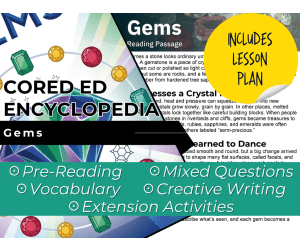
Gems Reading Comprehension Passage - Cored Ed Encyclopedia
ELA, Reading Comprehension, Reading, Science, Technology, Earth and Environmental Sciences, Pre-Reading, Language Development, Physics, Life Sciences, Grade 2, 3, 4, 5, Worksheets & Printables, Worksheets, Teacher Tools, Centers, Activities, Writing Prompts, Assessments, Quizzes and Tests, Quizzes, Lesson Plans
This gems reading comprehension with lesson plan includes: Visualization (on the front cover) Start your lesson by taking a minute to think and share something about the topic. Read the script aloud (slowly), perhaps prepare some music or sound effects. Student close their eyes and let their imaginations wander. Students open their eyes, read the question aloud and give them a few minutes to complete. Ask a few students to share or keep answers until the end to compare with what they learn in the passage. Quick pause—thousands of Cored Education products are included with your TeachSimple membership. Download links and encyclopedia index available here. Pre-Reading Trivia Students will write down one thing they already know about the subject and then read five more facts and discuss. These facts are fun, and the students will enjoy learning about the subject before reading more. Give 1 minute for students to write what they already know (no pressure—best guess is fine). Read the five facts together. After each fact, do ask a student for their opinion, was it surprising? Set a purpose by asking students to highlight/underline one fact they want to learn more about during the reading. Reading Passage The text is a high-interest reading passage with set paragraphs, roughly three to four paragraphs long. It contains a variety of themes about the topic, anywhere from history to technology. The passage is between 250 and 350 words in length. First, ask students to look at the headings and see what they’ll learn about today. What do they know about the topic/heading? First read options: Teacher read-aloud (best for support). Partner reading (paragraph by paragraph). While reading, students underline important details, and vocabulary words they think may come up in the questions section. Mixed Questions The first question page contains four multiple-choice questions, each with a choice of four answers, and three written response questions that require a sentence or two from the student. Students complete the mcqs first independently, then review quickly as a class. For the 3 written responses, try to get students giving the answer with some form of evidence: “I think ___ because the text says ___.” If students get stuck, send them back to check the passage. Vocabulary Questions Practice seven key words from the text in this section across two activities. First section is scrambled words where students will unscramble three words given a clue for each. The second section is a word to meaning matching activity. Before starting, have some students read out words they underlined in the passage. Ask students to say the word and read aloud the sentence(s) around each word. Ask students to do scrambled words and the matching exercise in pairs then go through answers as a class. For the scrambled spelling task, get four pairs to come up to the board and write the words for extra practice with the other student reading out the clue. For the matching task, prompt students to give full sentences: “I matched ___ with ___ because ___.” Creative Writing In this question, the student will be required to write a five to eight sentence paragraph on a question related to the topic. Before starting, ask students write down 3 key ideas they are going to include in their piece. Ask students for ideas to share around the class to help those struggling. Pro writing expectations: 5–8 sentences At least 2 facts or details from the passage At least 2 vocabulary words from the previous page Students read their paragraphs while classmates listen for facts and vocabulary words. Extension Activities This page is optional for fast finishers or to take home. There are several activities, each one requiring a different skill. Do some, do none, do all, completely optional - but you will feel reassured knowing every possibility is planned for. Includes summary writting question and additional facts. Answer Key There are answers for the multiple-choice questions, written response questions have sample answers, vocabulary answers and if there is a summary question then a sample summary will be provided as well. Lesson Plan Included Customized lesson plan for this lesson is included. Lesson Snapshot Title: Gems Genre: Nonfiction (informational text) Subject: Science Primary Topic: How gems form, are cut, and examined Estimated Guided Reading Level (A–Z): Q What This Lesson Teaches Best Defines what a gemstone is and explains how cutting/polishing helps light travel through it. Explains multiple ways gems can form (heat/pressure underground; melted rock cooling into crystals). Describes how gem cutting changed over time, introducing facets and why angles increase sparkle. Introduces how experts check gems (strong light, magnifier, and looking for tiny clues inside). Uses key describing words— color, cut, clarity, carat —to show how gems are evaluated. Learning Goals Students will explain what a gemstone is using details from the text. Students will describe two ways crystals/gems can form, based on the passage. Students will identify what facets are and explain how they help a gem sparkle. Students will explain what a lapidary does and why angles matter in cutting. Students will describe how gem experts examine gems and what they look for inside. Students will use the words color, cut, clarity, and carat to describe a gem. Key Vocabulary From the Text gemstone — a beautiful crystal or material, cut or polished to shine. minerals — natural materials that can form crystals underground. facets — flat surfaces cut on a gem to guide light. lapidary — a person who plans how a gem is cut. magnifier — a small tool that makes tiny details look bigger. FULL CATALOG OF DOWNLOAD LINKS AND ENCYCLOPEDIA INDEX HERE
Author Cored Education
Rating
Tags Vocabulary, Reading Comprehension, Reading Passages, Lesson Plans, Ela Lesson Plans, Reading Comprehension Lesson Plans, Pre-reading, Science Lesson Plans, Earth Science, Physics

Geometry: Spatial Relationships - MAC Software
Math, Geometry, Kindergarten, Preschool, Grade 1, 2, Teacher Tools, Lesson Plans
Geometry: Spatial Relationships - MAC Software A must-have teaching resource aimed at enhancing understanding of Geometry's Spatial Relationships. Invaluable for educators across public school sand homeschoolers alike. Best suited for Preschool, Kindergarten, Grade 1 and Grade 2. Focused on the pivotal subject of Mathematics, specifically its sub-topic, Geometry. Packed with comprehensive lesson plans that demystify complex geometry concepts. Innovative Features: * Pre- assessment resources to gauge a learner’s base knowledge prior to initiating lessons. * Real-world word problems that tie geometric concepts into daily life situations. * Timed drill activities for speed and accuracy while ensuring an engaging learning environment. Apart from these features, the software also includes exciting educational games such as memory match games, board games and spinner games. These convert challenging lessons into enjoyable experiences thereby aiding better understanding! Educators can also conveniently assign homework or carry out reinforcement practice sessions using our printable materials during small group discussions or whole group sessions in classrooms or homeschooled settings. Multilingual support: The software incorporates English voice over & text default setting along with Spanish voice over & text options. This allows easy integration within multilingual classrooms or when teaching students bilingual skills! Simpler Access: Our resources are easily available in MAC format as a single zip file containing all curriculum-based content suite just one click away! All-in-all, Geometry: Spatial Relationship - MAC Software completely transforms your traditional approach to educating about geometric spatial relationships. It serves as an effective tool enabling educators deliver engaging lessons!
Author Classroom Complete Press
Tags Geometry Lesson, Math Lesson, Spatial Relationships, Digital Math, Digital Activities
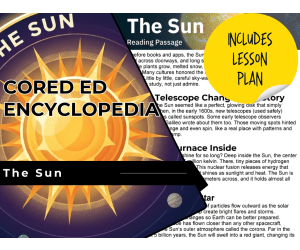
The Sun Reading Comprehension Passage - Cored Ed Encyclopedia
ELA, Language Development, Reading Comprehension, Reading, Pre-Reading, Writing, Science, Earth Sciences, Earth and Environmental Sciences, Space, Grade 2, 3, 4, 5, Worksheets & Printables, Worksheets, Teacher Tools, Centers, Activities, Writing Prompts, Assessments, Quizzes and Tests, Quizzes, Lesson Plans
This Sun reading comprehension includes: Visualization (on the front cover) Start your lesson by taking a minute to think and share something about the topic. Read the script aloud (slowly), perhaps prepare some music or sound effects. Student close their eyes and let their imaginations wander. Students open their eyes, read the question aloud and give them a few minutes to complete. Ask a few students to share or keep answers until the end to compare with what they learn in the passage. Quick pause—thousands of Cored Education products are included with your TeachSimple membership. Download links and encyclopedia index available here. Pre-Reading Trivia Students will write down one thing they already know about the subject and then read five more facts and discuss. These facts are fun, and the students will enjoy learning about the subject before reading more. Give 1 minute for students to write what they already know (no pressure—best guess is fine). Read the five facts together. After each fact, do ask a student for their opinion, was it surprising? Set a purpose by asking students to highlight/underline one fact they want to learn more about during the reading. Reading Passage The text is a high-interest reading passage with set paragraphs, roughly three to four paragraphs long. It contains a variety of themes about the topic, anywhere from history to technology. The passage is between 250 and 350 words in length. First, ask students to look at the headings and see what they’ll learn about today. What do they know about the topic/heading? First read options: Teacher read-aloud (best for support). Partner reading (paragraph by paragraph). While reading, students underline important details, and vocabulary words they think may come up in the questions section. Mixed Questions The first question page contains four multiple-choice questions, each with a choice of four answers, and three written response questions that require a sentence or two from the student. Students complete the mcqs first independently, then review quickly as a class. For the 3 written responses, try to get students giving the answer with some form of evidence: “I think ___ because the text says ___.” If students get stuck, send them back to check the passage. Vocabulary Questions Practice seven key words from the text in this section across two activities. First section is scrambled words where students will unscramble three words given a clue for each. The second section is a word to meaning matching activity. Before starting, have some students read out words they underlined in the passage. Ask students to say the word and read aloud the sentence(s) around each word. Ask students to do scrambled words and the matching exercise in pairs then go through answers as a class. For the scrambled spelling task, get four pairs to come up to the board and write the words for extra practice with the other student reading out the clue. For the matching task, prompt students to give full sentences: “I matched ___ with ___ because ___.” Creative Writing In this question, the student will be required to write a five to eight sentence paragraph on a question related to the topic. Before starting, ask students write down 3 key ideas they are going to include in their piece. Ask students for ideas to share around the class to help those struggling. Pro writing expectations: 5–8 sentences At least 2 facts or details from the passage At least 2 vocabulary words from the previous page Students read their paragraphs while classmates listen for facts and vocabulary words. Extension Activities This page is optional for fast finishers or to take home. There are several activities, each one requiring a different skill. Do some, do none, do all, completely optional - but you will feel reassured knowing every possibility is planned for. Includes summary writting question. Answer Key There are answers for the multiple-choice questions, written response questions have sample answers, vocabulary answers and if there is a summary question then a sample summary will be provided as well. Lesson Plan Included Customized lesson plan for this lesson is included. Lesson Snapshot Title: The Sun Genre: Nonfiction (informational text with support pages) Subject: Science (Space Science) Primary Topic: How the Sun affects Earth and works Estimated Guided Reading Level (A–Z): S What This Lesson Teaches Best How people used the Sun and changing shadows to notice time long before clocks, phones, and apps. How telescopes in the early 1600s revealed sunspots and helped people realize the Sun can change and even spin. How the Sun shines for so long because nuclear fusion joins hydrogen to make helium and releases energy as sunlight and heat. Key facts about the Sun’s size and importance in the solar system (about 1.39 million kilometres across; holds almost all the mass in the solar system). How the Sun can be active (solar wind, flares, storms) and how spacecraft like NASA’s Parker Solar Probe study the Sun’s outer atmosphere, the corona . Learning Goals Describe how changing shadows helped people notice time long ago. Explain what sunspots are and what they helped early observers realize about the Sun. Explain, using details from the text, how nuclear fusion makes energy inside the Sun. Identify what the corona is and why the Parker Solar Probe flew close to the Sun. Describe two ways the Sun is “not always calm,” based on the passage. Key Vocabulary From the Text telescopes — tools used to see faraway objects in the sky. sunspots — dark freckles seen on the Sun. hydrogen — a gas that joins together deep inside the Sun. helium — what hydrogen becomes when it joins together. corona — the Sun’s outer atmosphere. FULL CATALOG OF DOWNLOAD LINKS AND ENCYCLOPEDIA INDEX HERE
Author Cored Education
Rating
Tags Vocabulary, Reading Comprehension, Reading Passages, Lesson Plans, Ela Lesson Plans, Reading Comprehension Lesson Plans, Reading, Pre-reading, The Sun, Earth Science

Zoo Animal Research Writing Project on MONKEYS for K-2nd Grade
Life Studies, ELA, Writing, Creative Writing, Reading, Science, Life Sciences, Animals, Research, Kindergarten, Grade 1, 2, Activities, Teacher Tools, Lesson Plans, Worksheets & Printables, Worksheets, Coloring Pages, Writing Prompts
Animal Research Writing Project on Monkeys for K-2nd Grade. Engage young learners in reading, writing, and science with this 19-page informational writing project on monkeys. Students will examine real-life photos, read age-appropriate facts, color images, draw habitat scenes, and organize information using writing organizers. Differentiated writing pages allow kids to write at their level. When finished, students and the entire classroom can bind everything together into a customized book. This monkey-themed unit promotes creativity, reading comprehension, and nonfiction writing skills. Implement as whole class, small group, centers, or individual work. Suitable for homeschools or grades Kindergarten, first grade classrooms., and for second graders. Click the links below to view similar units on other zoo animals and to do research on zoo animals. Teachers appreciate the ready-to-use animal units covering reading, note-taking, drafting, illustrating, and publishing. Engage your class in meaningful informational writing with this standards-based project on monkeys. Plus, there are many more zoo animals to research as well in my store: K-5 Treasures! For additional Zoo Animal reports, click on the following links below: Animal Research Writing Project on TIGERS for K-2nd Grade Animal Research Writing Project on MONKEYS for K-2nd Grade Animal Research Writing Project on PANDAS for K-2nd Grade Animal Research Writing Project on HIPPOS for K-2nd Grade Animal Research Writing Project on ELEPHANTS for K-2nd Grade Animal Research Writing Project on GIRAFFES for K-2nd Grade Here are even more informational resources on report writing for OCEAN ANIMALS. Click on the links below: Animal Research Writing Project on WHALES for K-2nd Grade Animal Research Writing Project on the OCTOPUS for K-2nd Grade Animal Research Writing Project on SEA TURTLES for K-2nd Grade Animal Research Writing Project on ORCAS for K-2nd Grade Animal Research Writing Project on the SHELLFISH for K-2nd Grade Animal Research Writing Project on DOLPHINS for K-2nd Grade Animal Research Writing Project on SEALS for K-2nd Grade
Author K-5 Treasures
Tags Animal Research, Informational Writing, Writing Report, Zoo Animals, Report On Animals, Report On Zoo Animals, 1st Grade Writing, 2nd Grade Writing, Monkeys, Report On Monkeys

High Frequency Picture Words: Picture Word Match - FLASH-MAC
ELA, Language Development, Vocabulary, Grade 1, 2, Teacher Tools, Lesson Plans
High Frequency Picture Words: Picture Word Match - FLASH-MAC This is a comprehensive educational resource designed to assist Grade 1 and Grade 2 teachers in teaching vocabulary in the area of Language Arts. It's tailor-made for use by public school educators and homeschoolers seeking effective methods to improve their students' understanding of high-frequency picture words. The structure of this resource: Detailed chapter mini: Contains curriculum -aligned content delivered through engaging Picture Word Match activities that gradually introduce students to new words. Inclusive printable materials : Offering an offline option where digital access may be limited or non-existent. Prominent visual aid supplements:In the form of picture word flashcards for additional reinforcement. The major advantages being, instructors are equipped with diverse strategies for teaching these essential language elements. Also has utility with graphic organizers allowing teachers to structure lesson delivery effectively. This product comes contained within a single zip file compatible with Mac software, guaranteeing convenience due its easy-to-access nature brought about by digital format compatibility across various MacOS devices used within educational spaces today. For educators interested in optimizing their vocabulary teaching approach especially under Language Arts subject for Grade 1-2 pupils, the High Frequency Picture Words: Picture Word Match - FLASH-MAC offers an advantageous starting point and an enduring solution along this pedagogical pathway.
Author Classroom Complete Press
Tags Picture Words, Language Arts, Vocabulary, Word Matching, High Frequency Words

Manatee Unit Study (Endangered Animals Lesson Plan, Videos, Activities)
ELA, Grammar, Reading, Language Development, Spelling, Writing, Science, Life Sciences, Animals, Grade 1, 2, 3, Lesson Plans, Teacher Tools
Manatee Unit Study for Grades 1-3 Dive into learning about the endangered West Indian manatee with this 5-day NO PREP comprehensive unit . This resource includes engaging videos about manatees, reading passages, discussions, activities , and interactive notebook pages covering topics like manatee anatomy, habitat, diet, threats to survival, and conservations efforts. Easily customize each day's lessons for your students based on age, skills, and learning styles. Use this versatile cross-curricular unit during your ocean animals, arctic animals, or endangered species studies. It aligns to state standards for reading, writing, science, and more. With thought-provoking questions and activities , this unit helps students gain empathy for at-risk animals while building language arts, science, and research skills.
Author Heather Huhman
Tags Manatee, Ocean Animals, Endangered Animals, Zoology, Science, Unit Study