



3,908 products added recently
Page 63 - 3rd Grade Lesson Plans
Support your third graders' expanding abilities with lesson plans that encourage exploration and deeper understanding. Covering a range of subjects, these resources offer hands-on activities and discussions. Use them to create a vibrant learning atmosphere that fosters enthusiasm.

 Show filters


Grade 3 Science Curriculum Bundle | NGSS-Aligned Year-Long Lessons
Science, Grade 3, Lesson Plans, Teacher Tools, Worksheets & Printables
Grade 3 NGSS Science Curriculum | Year-Long Science Bundle | 36 Weeks | Print & Digital Looking for a complete Grade 3 NGSS Science curriculum that is engaging, low-prep, and truly aligned to the Next Generation Science Standards? This Grade 3 NGSS Science Curriculum provides everything you need for an entire school year with hands-on investigations, differentiated activities, editable planning tools, assessments, and interactive lessons designed around the 5E instructional model . Whether you're planning your first year teaching Grade 3 science or simply want a curriculum that saves time while keeping students engaged, this comprehensive science bundle has every lesson organized and ready to teach. ⭐ What's Included Complete 36-week Grade 3 NGSS Science Curriculum 10 standards-aligned science units Teacher Guide Year-at-a-Glance Overview Scope & Sequence Editable Pacing Guide NGSS Standards Alignment Guide Teacher Lesson Plans Student Reading Passages Guided Notes Interactive Notebook Activities Hands-on Science Labs STEM Challenges Graphic Organizers Exit Tickets Quizzes Unit Tests Performance Tasks Assessment Rubrics Vocabulary Cards Multi-Version Differentiated Worksheets Full-Color Teaching Slides for every unit Print and digital resources 🔬 How It Works in the Classroom This Grade 3 NGSS Science curriculum follows the research-based 5E instructional model : Engage with real-world science phenomena Explore through hands-on investigations Explain using reading passages and guided instruction Elaborate with STEM challenges and meaningful practice Evaluate through exit tickets, quizzes, unit assessments, and performance tasks Perfect for: Whole-group instruction Small groups Science centers Interactive notebooks Independent practice STEM blocks Substitute plans Print or digital classrooms 🌎 Standards & Learning Goals Students investigate concepts across all Grade 3 NGSS domains, including: Forces & Motion Weather & Climate Life Cycles Ecosystems Traits & Inheritance Engineering Design Earth Systems Habitats Natural Hazards Review & Capstone Projects Students develop understanding through the three dimensions of NGSS by integrating: Science & Engineering Practices Disciplinary Core Ideas Crosscutting Concepts ❤️ Why Teachers Love It ✅ Low-prep lessons ready to teach ✅ Complete year-long curriculum ✅ Fully aligned to Grade 3 NGSS ✅ Print and digital flexibility ✅ Built-in differentiation ✅ Hands-on investigations and STEM activities ✅ Consistent assessment system ✅ Interactive notebook activities included ✅ Vocabulary, labs, slides, worksheets, and assessments all in one purchase ✅ Organized pacing that makes long-term planning simple If you're looking for a Grade 3 NGSS Science Curriculum that combines rigorous standards alignment with engaging, student-centered instruction, this complete bundle is designed to make science planning easier while helping students build lasting scientific understanding.
Author Bright Classroom Ideas Marketplace
Rating
Tags Science, Back To School, Yearlong, Full Year, Curriculum, Lesson, Weekly

I WONDER - What Is A Melody | Animated Video Lesson
Music, Creative Arts, Grade 2, 3, 4, 5, 6, 7, 8, Lesson Plans, Teacher Tools
Video Introduction An amazing video designed for the students to learn more about music. I WONDER - What Is A Melody | Animated Video Lesson A melody is a series of musical notes played one after the other, creating a tune or main theme in a piece of music. It is often the most recognizable part of a song and can be played by a single instrument or sung by a voice. Melodies can be simple or complex and are usually created using a combination of steps (moving to the next note in the scale) and leaps (skipping one or more notes in the scale). A well-crafted melody will often have a balance of both steps and leaps, creating an interesting and memorable tune. I WONDER - What Is A Melody | Animated Video Lesson The video is perfect for encouraging the artistic skills for the students, while learning more about this fantastic topic. I WONDER - What Is A Melody | Animated Video Lesson This friendly designed video is suitable for students at school, homeschooling, and as a group activity. Format Available in MP4 format.
Author Educational Voice
Rating
Tags What Is A Melody, What Is A Melody Video, Melody, Melody Facts, Melody Video, Melody Facts For Kids, Melody Video For Kids, Music, Music Facts, Music Video
I WONDER - What Did Omnivore Dinosaurs Eat | Animated Video Lesson
History: Ancient, History, Social Studies, History: World, Animals, Life Sciences, Science, Grade 2, 3, 4, 5, 6, 7, 8, Lesson Plans, Teacher Tools
Video Introduction An amazing video designed for the students to learn more about dinosaurs in different countries. I WONDER - What Did Omnivore Dinosaurs Eat | Animated Video Lesson Do you like dinosaurs? what is your favorite one? Do you own a pet? If yes, tell us more about it, like what its name? And what do you like most about it? Do you think that your pet has been evolved from a dinosaur? Can you write down the characteristics of your favourite dinosaur like it's shape, their rivals, where did it use to live and what was their favourite food? What is the largest and the smallest dinosaur that ever found? Why is the T-rex is so famous? Have you ever read any interesting facts about it? Can you name any of the carnivores or herbivores dinosaurs? I WONDER - What Did Omnivore Dinosaurs Eat | Animated Video Lesson The video is perfect for encouraging the researching skills for the students, while learning more about dinosaurs. I WONDER - What Did Omnivore Dinosaurs Eat | Animated Video Lesson This friendly designed video is suitable for students at school, homeschooling, and as a group activity. Format Available in MP4 format.
Author Educational Voice
Rating
Tags What Did Omnivore Dinosaurs Eat, What Did Omnivore Dinosaurs Eat Video, Omnivore Dinosaurs, Omnivore Dinosaurs Facts, Omnivore Dinosaurs Video, Omnivore Dinosaurs Video For Kids, Omnivore Dinosaurs Facts For Kids
Measurement: Perimeter & Area - Learn the Skill - FLASH-PC
Math, Measurements, Common Core, Grade 3, 4, 5, Teacher Tools, Lesson Plans
Measurement: Perimeter & Area - Learn the Skill - FLASH-PC This innovative teaching tool has been carefully crafted to meet the needs of educators teaching third to fifth grade mathematics. Its unique focus is on the fundamental concept of measurement, in particular Perimeter and Area. The defining aspect of this software is its comprehensive approach. It integrates real-world word problems that perfectly mimic real-life scenarios, transforming abstract principles into palpable knowledge. This way, students get to see where their learning can be utilized practically. Engaging Tools: The FLASH-PC package comes fitted with constructive math tools that serve as strong visual aids during problem-solving sessions. Dual Language Support: The software provides both English and Spanish voice over and text options—a significant advantage for multilingual classes and bilingual learners. Educational Standards Compliance: Furthermore, it aligns with educational standards like Common Core State Standards (CCSS) and STEM initiatives while adhering also to guidelines set by National Council of Teachers of Mathematics (NCTM). The Measurement: Perimeter & Area - Learn the Skill – FLASH-PC software can be a versatile addition to your teaching toolkit; suitable for whole group instruction or study groups; or even as homework assignments. As digital material, it can be conveniently shared across devices—facilitating effective learning regardless of geographical limitations. To Conclude... This resource offers a compact solution through its interactive lessons based on real-world examples in combination with bilingual support options while fulfilling crucial curriculum standards—a substantial investment towards nurturing future mathematicians!
Author Classroom Complete Press
Tags Software (PC)

Wool Reading Comprehension Passage - Cored Ed Encyclopedia
ELA, Language Development, Reading Comprehension, Reading, Pre-Reading, Science, Technology, Physics, History, Social Studies, Grade 2, 3, 4, 5, Worksheets & Printables, Worksheets, Teacher Tools, Centers, Activities, Writing Prompts, Assessments, Quizzes and Tests, Quizzes, Lesson Plans
This wool reading comprehension with lesson plan includes: Visualization (on the front cover) Start your lesson by taking a minute to think and share something about the topic. Read the script aloud (slowly), perhaps prepare some music or sound effects. Student close their eyes and let their imaginations wander. Students open their eyes, read the question aloud and give them a few minutes to complete. Ask a few students to share or keep answers until the end to compare with what they learn in the passage. Quick pause—thousands of Cored Education products are included with your TeachSimple membership. Download links and encyclopedia index available here. Pre-Reading Trivia Students will write down one thing they already know about the subject and then read five more facts and discuss. These facts are fun, and the students will enjoy learning about the subject before reading more. Give 1 minute for students to write what they already know (no pressure—best guess is fine). Read the five facts together. After each fact, do ask a student for their opinion, was it surprising? Set a purpose by asking students to highlight/underline one fact they want to learn more about during the reading. Reading Passage The text is a high-interest reading passage with set paragraphs, roughly three to four paragraphs long. It contains a variety of themes about the topic, anywhere from history to technology. The passage is between 250 and 350 words in length. First, ask students to look at the headings and see what they’ll learn about today. What do they know about the topic/heading? First read options: Teacher read-aloud (best for support). Partner reading (paragraph by paragraph). While reading, students underline important details, and vocabulary words they think may come up in the questions section. Mixed Questions The first question page contains four multiple-choice questions, each with a choice of four answers, and three written response questions that require a sentence or two from the student. Students complete the mcqs first independently, then review quickly as a class. For the 3 written responses, try to get students giving the answer with some form of evidence: “I think ___ because the text says ___.” If students get stuck, send them back to check the passage. Vocabulary Questions Practice seven key words from the text in this section across two activities. First section is scrambled words where students will unscramble three words given a clue for each. The second section is a word to meaning matching activity. Before starting, have some students read out words they underlined in the passage. Ask students to say the word and read aloud the sentence(s) around each word. Ask students to do scrambled words and the matching exercise in pairs then go through answers as a class. For the scrambled spelling task, get four pairs to come up to the board and write the words for extra practice with the other student reading out the clue. For the matching task, prompt students to give full sentences: “I matched ___ with ___ because ___.” Creative Writing In this question, the student will be required to write a five to eight sentence paragraph on a question related to the topic. Before starting, ask students write down 3 key ideas they are going to include in their piece. Ask students for ideas to share around the class to help those struggling. Pro writing expectations: 5–8 sentences At least 2 facts or details from the passage At least 2 vocabulary words from the previous page Students read their paragraphs while classmates listen for facts and vocabulary words. Extension Activities This page is optional for fast finishers or to take home. There are several activities, each one requiring a different skill. Do some, do none, do all, completely optional - but you will feel reassured knowing every possibility is planned for. Includes summary writting question. Answer Key There are answers for the multiple-choice questions, written response questions have sample answers, vocabulary answers and if there is a summary question then a sample summary will be provided as well. Lesson Plan Included Customized lesson plan for this lesson is included. Lesson Snapshot Title: Wool Genre: Nonfiction (informational text) Subject: Life Science / Informational Reading Primary Topic: How wool works, history, and uses Estimated Guided Reading Level (A–Z): R Support pages present: Pre-reading trivia, mixed questions, vocabulary activities, creative writing, extension activities, and an answer key (all match the passage’s ideas and terms). What This Lesson Teaches Best Explains what wool is made of (tiny protein fibers) and how a natural wave called crimp helps fibers cling when spun into yarn. Teaches a clear cause-and-effect science idea : wool cloth traps air pockets, and trapped air helps keep warmth close. Builds understanding of how humans and sheep changed over time , including breeding for thicker coats, learning to shear, and wool becoming valuable through trade. Describes the process from fleece to finished materials , including shearing, lanolin in fresh wool, washing/sorting, spinning into yarn, and rubbing fibers into felt. Highlights real-world uses and properties of wool , including moisture handling and resistance to melting/dripping in fire because it chars instead. Learning Goals Students will explain how crimp helps wool fibers cling together when making yarn. Students will describe how wool cloth keeps warmth close using details about trapped air. Students will identify two ways people have used wool, based on examples in the text. Students will sequence key steps from fleece to yarn or felt that are stated in the passage. Students will describe why freshly shorn wool is called “greasy,” using evidence from the passage. Key Vocabulary From the Text fleece — a sheep’s coat that can be sheared off. protein — a natural building block that wool fibers are made of. crimp — a natural wave in each wool fiber. lanolin — a waxy substance from a sheep’s skin. felt — thick material made when fibers lock together. FULL CATALOG OF DOWNLOAD LINKS AND ENCYCLOPEDIA INDEX HERE
Author Cored Education
Rating
Tags Vocabulary, Reading Comprehension, Reading Passages, Lesson Plans, Ela Lesson Plans, Reading Comprehension Lesson Plans, Pre-reading, Science Lesson Plans, History Lesson Plans, Wool
I WONDER - What Are The Different Types of Pyramids | Animated Video
Shapes, Early Math, Math, Geometry, Grade 3, 4, 5, 6, 7, 8, 9, Lesson Plans, Teacher Tools
Video Introduction An amazing video designed for the students to learn more about STEM. I WONDER - What Are The Different Types of Pyramids | Animated Video Lesson Shapes are all around us. What are your favourite ones? And can you give us some real life examples? Can you name the difference between the 2D shapes and 3D shapes? Have you ever tried to calculate the surface area of the square? If yes can you write the equation down? What is the perimeter of the rectangle? And can you tell the difference between radius and diameter of a circle? Can you mention what is the difference between the right angle and the acute angle? Have you ever heard about the obtuse angle? I WONDER - What Are The Different Types of Pyramids | Animated Video Lesson The video is perfect for encouraging the researching skills for the students, while learning more about this fantastic topic. I WONDER - What Are The Different Types of Pyramids | Animated Video Lesson This friendly designed video is suitable for students at school, homeschooling, and as a group activity. Format Available in MP4 format.
Author Educational Voice
Rating
Tags What Are The Different Types Of Pyramids, Different Types Of Pyramids, Different Types Of Pyramids Facts, Different Types Of Pyramids Video, Different Types Of Pyramids Video For Kids, Different Types Of Pyramids Facts For Kids

I WONDER - What Is A Carbohydrate | Animated Video Lesson
Biology, Life Sciences, Science, Human Body, STEM, Grade 1, 2, 3, 4, 5, 6, 7, 8, Lesson Plans, Teacher Tools
Video Overview The human body is full of fascinating wonders to learn. This video is created to help the students recognize the anatomy and the job of the human body. I WONDER - What Is A Carbohydrate | Animated Video Lesson Every part and organ in our human body is vital so let's see how important they are. Have you ever imagined how we look like if we didn't have a skeleton? Did you know that because we have our amazing muscles we can stand! Do you know how many teeth do we have? Have you ever wondered about the food journey inside our body? Can you name all the glands in our body? Why do we have skin? Our nervous system is really good at sending signals. Can you tell us more about it? Are you really good at Mathematics, painting, or any other thing? You should really thank your brain about it! The famous five senses are really doing a great work? Can you explain how every sense works? I WONDER - What Is A Carbohydrate | Animated Video Lesson The video is perfect for encouraging the researching skills for the students, while learning more about our fantastic human body. I WONDER - What Is A Carbohydrate | Animated Video Lesson This friendly designed video is suitable for students at school, homeschooling, and as a group activity. Format Available in MP4 format.
Author Educational Voice
Tags What Is A Carbohydrate, What Is A Carbohydrate Video, Carbohydrate, Carbohydrate Facts, Carbohydrates, Carbohydrates Facts, Carbohydrates Facts For Kids, Carbohydrates Video, Carbohydrates Video For Kids

I WONDER - What Is Hibernation | Animated Video Lesson
STEM, Biology, Life Sciences, Science, Animals, Grade 1, 2, 3, 4, 5, 6, 7, 8, Lesson Plans, Teacher Tools
Video Introduction Animal kingdoms are full of fascinating wonders to learn. This video is designed for the students to learn more about animals in different countries. I WONDER - What Is Hibernation | Animated Video Lesson Do you like animals? what is your favorite one? Do you own a pet? If yes, tell us more about it, like what its name? And what do you like most about it? What are the animal kingdoms? Can you write down the characteristics of each animal class like mammals, birds, reptiles, amphibian, fish and mollusks. Do you know that some animals can sing, can you name any of them? What is the largest and the smallest mammal in the world? What is the largest and the smallest bird in the world? What is the largest and the smallest fish in the world? I WONDER - What Is Hibernation | Animated Video Lesson The video is perfect for encouraging the researching skills for the students, while learning more about these fantastic animals. I WONDER - What Is Hibernation | Animated Video Lesson This friendly designed video is suitable for students at school, homeschooling, and as a group activity. Format Available in MP4 format.
Author Educational Voice
Tags What Is Hibernation, What Is Hibernation Video, Hibernation, Hibernation Facts, Hibernation Facts For Kids, Hibernation Video, Hibernation Video For Kids, Animals, Animal, Animals Facts
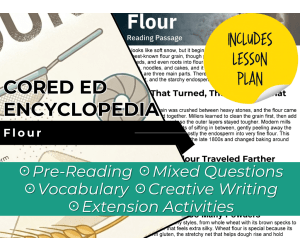
Flour Reading Comprehension Passage - Cored Ed Encyclopedia
ELA, Reading Comprehension, Reading, Science, Technology, Language Development, Social Studies, History, Pre-Reading, Life Sciences, Grade 2, 3, 4, 5, Worksheets & Printables, Worksheets, Teacher Tools, Centers, Activities, Writing Prompts, Assessments, Quizzes and Tests, Quizzes, Lesson Plans
This flour reading comprehension with lesson plan includes: Visualization (on the front cover) Start your lesson by taking a minute to think and share something about the topic. Read the script aloud (slowly), perhaps prepare some music or sound effects. Student close their eyes and let their imaginations wander. Students open their eyes, read the question aloud and give them a few minutes to complete. Ask a few students to share or keep answers until the end to compare with what they learn in the passage. Quick pause—thousands of Cored Education products are included with your TeachSimple membership. Download links and encyclopedia index available here. Pre-Reading Trivia Students will write down one thing they already know about the subject and then read five more facts and discuss. These facts are fun, and the students will enjoy learning about the subject before reading more. Give 1 minute for students to write what they already know (no pressure—best guess is fine). Read the five facts together. After each fact, do ask a student for their opinion, was it surprising? Set a purpose by asking students to highlight/underline one fact they want to learn more about during the reading. Reading Passage The text is a high-interest reading passage with set paragraphs, roughly three to four paragraphs long. It contains a variety of themes about the topic, anywhere from history to technology. The passage is between 250 and 350 words in length. First, ask students to look at the headings and see what they’ll learn about today. What do they know about the topic/heading? First read options: Teacher read-aloud (best for support). Partner reading (paragraph by paragraph). While reading, students underline important details, and vocabulary words they think may come up in the questions section. Mixed Questions The first question page contains four multiple-choice questions, each with a choice of four answers, and three written response questions that require a sentence or two from the student. Students complete the mcqs first independently, then review quickly as a class. For the 3 written responses, try to get students giving the answer with some form of evidence: “I think ___ because the text says ___.” If students get stuck, send them back to check the passage. Vocabulary Questions Practice seven key words from the text in this section across two activities. First section is scrambled words where students will unscramble three words given a clue for each. The second section is a word to meaning matching activity. Before starting, have some students read out words they underlined in the passage. Ask students to say the word and read aloud the sentence(s) around each word. Ask students to do scrambled words and the matching exercise in pairs then go through answers as a class. For the scrambled spelling task, get four pairs to come up to the board and write the words for extra practice with the other student reading out the clue. For the matching task, prompt students to give full sentences: “I matched ___ with ___ because ___.” Creative Writing In this question, the student will be required to write a five to eight sentence paragraph on a question related to the topic. Before starting, ask students write down 3 key ideas they are going to include in their piece. Ask students for ideas to share around the class to help those struggling. Pro writing expectations: 5–8 sentences At least 2 facts or details from the passage At least 2 vocabulary words from the previous page Students read their paragraphs while classmates listen for facts and vocabulary words. Extension Activities This page is optional for fast finishers or to take home. There are several activities, each one requiring a different skill. Do some, do none, do all, completely optional - but you will feel reassured knowing every possibility is planned for. Includes summary writting question and additional facts. Answer Key There are answers for the multiple-choice questions, written response questions have sample answers, vocabulary answers and if there is a summary question then a sample summary will be provided as well. Lesson Plan Included Customized lesson plan for this lesson is included. Lesson Snapshot Title: Flour Genre: Nonfiction (Informational Text) Subject: Science (Food Science) / Reading (Informational Text) Primary Topic: How flour is made from seeds and grains Estimated Guided Reading Level (A–Z): P What This Lesson Teaches Best Explains what flour is made from: flour begins as a seed , and people grind grains (and other plants) into powder used for many foods. Teaches the three main parts inside a grain seed — bran , germ , and endosperm —and what each part is like. Describes how milling changed over time, from heavy stones to steel rollers and lots of sifting to make very fine flour. Builds understanding of why white flour became popular (it kept longer) and what “enriched” flour means in this text. Connects ingredient science to baking by explaining how wheat proteins can form gluten , helping dough rise and hold bubbles of air. Learning Goals Students will explain how flour begins as a seed and becomes powder through grinding. Students will identify the three main parts of a grain seed: bran, germ, and endosperm. Students will describe how modern mills use rollers and sifting to make fine flour. Students will explain why white flour kept longer, based on what the text says about oils. Students will describe what “enriched” flour means in the passage and why it mattered. Students will explain how gluten helps dough rise and hold bubbles of air. Key Vocabulary From the Text bran — the outer part of a grain seed. germ — the tiny part that could sprout. endosperm — the starchy part that feeds the seed. enriched — flour with certain vitamins and iron added back. gluten — stretchy net that helps dough rise and hold air. FULL CATALOG OF DOWNLOAD LINKS AND ENCYCLOPEDIA INDEX HERE
Author Cored Education
Rating
Tags Vocabulary, Reading Comprehension, Reading Passages, Lesson Plans, Ela Lesson Plans, Reading Comprehension Lesson Plans, Pre-reading, Science Lesson Plans, History, Technology

G 3–5 Health Curriculum | Nutrition & Physical Education Activities
P.E. & Health, Grade 3, 4, 5, Lesson Plans, Teacher Tools, Worksheets & Printables
Nutrition & Physical Literacy Curriculum | Complete Health Curriculum for Grades 3–5 | Health, PE & Wellness Activities Looking for a comprehensive Nutrition & Physical Literacy curriculum that makes teaching health engaging, meaningful, and easy to implement? This complete Grades 3–5 Health Curriculum includes everything you need to teach nutrition, fitness, healthy habits, sportsmanship, personal wellness, and informed decision-making through high-interest reading passages, hands-on activities, data analysis, writing, vocabulary, and real-world application. Designed for upper elementary classrooms, this low-prep resource helps students build healthy habits that last a lifetime while strengthening literacy and critical thinking skills across the curriculum. With over 600 printable pages , six comprehensive instructional units, and an extensive collection of teacher resources, assessments, and classroom materials, this complete curriculum makes health instruction simple, engaging, and standards-aligned. ⭐ What's Included This complete curriculum includes: Core Curriculum ✅ Complete Teacher Guide with lesson plans, differentiation, facilitation notes, pacing guide, and answer guidance ✅ 392 student activity pages ✅ Six complete instructional units ✅ 23 engaging health and physical literacy topics ✅ Reading passages ✅ Vocabulary development ✅ Graphic organizers ✅ Data analysis and graphing activities ✅ Hands-on learning tasks ✅ Weekly challenges ✅ Discussion prompts ✅ Writing activities ✅ Reflection pages ✅ Real-world application activities Bonus Teacher Resources ✅ Answer Key ✅ Assessment Rubrics (including editable rubric) ✅ Unit Tests ✅ Exit Tickets ✅ Vocabulary Cards (126 terms) ✅ Concept Flashcards ✅ Classroom Posters ✅ Award Certificates ✅ Parent Letters ✅ Progress Checklists ✅ Editable Planning Documents Over 600 printable pages are included across all files, making this a complete, year-long health and wellness resource. ❤️ Topics Covered Unit 1: Nutrition Basics Unit 1: Nutrition Basics Students learn about: Food Groups Nutrients Healthy Snacks Reading Nutrition Labels Unit 2: Physical Activity Students explore: Fitness Components Daily Physical Activity Warm-Ups Cool-Downs Unit 3: Healthy Lifestyle Lessons include: Sleep Hydration Screen Time Hygiene Unit 4: Sports Skills Students develop: Teamwork Fair Play Coordination Goal Setting in Sports Unit 5: Healthy Decisions Students investigate: Food Advertising Sugar Processed Foods Portion Sizes Unit 6: Personal Wellness Students focus on: Healthy Habits Personal Goal Setting Reflection & Personal Growth Every topic includes engaging reading, vocabulary, graphic organizers, data analysis, discussion, hands-on activities, and reflection to help students apply what they learn in meaningful ways. 🏫 How It Works in the Classroom This curriculum is designed to be flexible and easy to teach. Use it for: Health Class Physical Education Classroom Health Lessons Science Connections Literacy Integration Morning Meeting Small Groups Intervention Homeschool Summer Learning Each lesson follows a consistent instructional sequence: Read & Learn Vocabulary Practice Comprehension Questions Graphic Organizer Data Analysis Hands-On Application Discussion Reflection Assessment Lessons are designed for approximately 45–60 minutes and can easily be divided into shorter class periods. 🎯 Standards & Learning Goals Students will learn to: Build healthy eating habits Understand food groups and nutrients Read Nutrition Facts labels confidently Develop lifelong physical activity habits Improve fitness knowledge Practice healthy sleep and hydration habits Balance screen time responsibly Understand hygiene and disease prevention Demonstrate teamwork and sportsmanship Make healthy food choices Analyze advertising critically Set personal health goals Reflect on personal wellness and growth ❤️ Why Teachers Love It ⭐ Complete Nutrition & Physical Literacy curriculum for Grades 3–5 ⭐ Over 600 printable pages with everything needed for instruction ⭐ Low-prep, print-and-teach lessons ⭐ Integrates reading, writing, science, health, and physical education ⭐ Consistent lesson structure saves planning time ⭐ Hands-on activities keep students engaged ⭐ Includes assessments, rubrics, tests, exit tickets, and answer keys ⭐ Editable planning tools simplify lesson organization ⭐ Parent communication resources strengthen home-school connections ⭐ Classroom posters, vocabulary cards, flashcards, and certificates extend learning beyond individual lessons ⭐ Perfect for classroom teachers, PE teachers, health educators, homeschool families, intervention teachers, and enrichment programs 📚 Help Students Build Lifelong Healthy Habits Give your students the knowledge and confidence to make healthy choices with this engaging Nutrition & Physical Literacy Curriculum for Grades 3–5 . Combining literacy, science, health, physical education, and real-world application, this comprehensive program helps students develop healthy habits, critical thinking skills, and lifelong wellness while making health instruction easy, organized, and engaging for teachers.
Author Bright Classroom Ideas Marketplace
Rating
Tags Nutrition, Health, Physical, Activities, Yearlong, Curriculum, Full Year, Back To School

Baseball Reading Comprehension Passage - Cored Ed Encyclopedia
ELA, Language Development, Reading Comprehension, Reading, Social Studies, Writing, Vocabulary, History, Geography, Pre-Reading, Grade 2, 3, 4, 5, Worksheets & Printables, Worksheets, Teacher Tools, Centers, Activities, Writing Prompts, Assessments, Quizzes and Tests, Quizzes, Lesson Plans
This baseball reading comprehension with lesson plan includes: Visualization (on the front cover) Start your lesson by taking a minute to think and share something about the topic. Read the script aloud (slowly), perhaps prepare some music or sound effects. Student close their eyes and let their imaginations wander. Students open their eyes, read the question aloud and give them a few minutes to complete. Ask a few students to share or keep answers until the end to compare with what they learn in the passage. COMPANION VIDEO NOW AVAILABLE (EMBEDDED AFTER PREVIEW PICTURES IN PRODUCT DESCRIPTION) Quick pause—thousands of Cored Education products are included with your TeachSimple membership. Download links and encyclopedia index available here. Pre-Reading Trivia Students will write down one thing they already know about the subject and then read five more facts and discuss. These facts are fun, and the students will enjoy learning about the subject before reading more. Give 1 minute for students to write what they already know (no pressure—best guess is fine). Read the five facts together. After each fact, do ask a student for their opinion, was it surprising? Set a purpose by asking students to highlight/underline one fact they want to learn more about during the reading. Reading Passage The text is a high-interest reading passage with set paragraphs, roughly three to four paragraphs long. It contains a variety of themes about the topic, anywhere from history to technology. The passage is between 250 and 350 words in length. First, ask students to look at the headings and see what they’ll learn about today. What do they know about the topic/heading? First read options: Teacher read-aloud (best for support). Partner reading (paragraph by paragraph). While reading, students underline important details, and vocabulary words they think may come up in the questions section. Mixed Questions The first question page contains four multiple-choice questions, each with a choice of four answers, and three written response questions that require a sentence or two from the student. Students complete the mcqs first independently, then review quickly as a class. For the 3 written responses, try to get students giving the answer with some form of evidence: “I think ___ because the text says ___.” If students get stuck, send them back to check the passage. Vocabulary Questions Practice seven key words from the text in this section across two activities. First section is scrambled words where students will unscramble three words given a clue for each. The second section is a word to meaning matching activity. Before starting, have some students read out words they underlined in the passage. Ask students to say the word and read aloud the sentence(s) around each word. Ask students to do scrambled words and the matching exercise in pairs then go through answers as a class. For the scrambled spelling task, get four pairs to come up to the board and write the words for extra practice with the other student reading out the clue. For the matching task, prompt students to give full sentences: “I matched ___ with ___ because ___.” Creative Writing In this question, the student will be required to write a five to eight sentence paragraph on a question related to the topic. Before starting, ask students write down 3 key ideas they are going to include in their piece. Ask students for ideas to share around the class to help those struggling. Pro writing expectations: 5–8 sentences At least 2 facts or details from the passage At least 2 vocabulary words from the previous page Students read their paragraphs while classmates listen for facts and vocabulary words. Extension Activities This page is optional for fast finishers or to take home. There are several activities, each one requiring a different skill. Do some, do none, do all, completely optional - but you will feel reassured knowing every possibility is planned for. Includes summary writting question and additional facts. Answer Key There are answers for the multiple-choice questions, written response questions have sample answers, vocabulary answers and if there is a summary question then a sample summary will be provided as well. Lesson Plan Included Customized lesson plan for this lesson is included. Lesson Snapshot Title: Baseball Genre: Nonfiction (informational passage) Subject: Physical Education / Social Studies (Sports history) / Reading (Informational Text) Primary Topic: How baseball works and how it spread Estimated Guided Reading Level (A–Z): S What This Lesson Teaches Best Clear explanation of how a baseball game works (bases in a diamond, two teams, innings, outs, extra innings). How shared written rules helped organize the modern game (clubs writing rules; later standards like nine innings and a 90-foot base path). A brief timeline of key turning points using dates and evidence (1845 rules, 1869 first all-professional team, 1903 World Series, 1872 introduction in Japan). How baseball changed as it grew (teams traveling, paid players, big leagues forming, some leagues using timing rules). How baseball spread beyond its early American home (popularity across parts of the Americas and East Asia). Learning Goals Identify key parts of a baseball game described in the passage (bases, teams, innings, outs, extra innings). Explain how keeping shared rules helped baseball become more organized. Describe the “safer idea” included in the 1845 rules. Describe what it meant for baseball to turn “professional,” using details from the text. Retell the passage’s key dates in order and explain what happened at each date. Describe how the passage shows baseball spreading to new places and continuing to change. Key Vocabulary From the Text inning — part of the game when teams take turns playing. outs — times when a player is put out. standards — agreed-upon rules that many people follow. professional — paid to play as a job. leagues — organized groups of teams that play each other. FULL CATALOG OF DOWNLOAD LINKS AND ENCYCLOPEDIA INDEX HERE
Author Cored Education
Rating
Tags Vocabulary, Reading Comprehension, Reading Passages, Lesson Plans, Ela Lesson Plans, Reading Comprehension Lesson Plans, Pre-reading, History, History Lesson Plans, Social Studies Lesson Plans
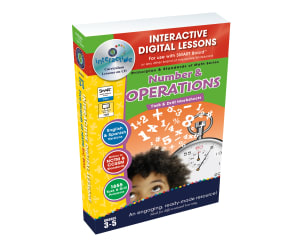
Number & Operations - Digital Lesson Plan Gr. 3-5 | MAC Software
Math, Algebra, Grade 3, 4, 5, Teacher Tools, Lesson Plans
Number & Operations - Digital Lesson Plan Gr. 3-5 | MAC Software This educational software targets grades 3 through 5 focusing on Number and Operations. With over 230 individual activities across 80 interactive screen pages, the aim is to bring excitement and engagement to mathematics. Held accountable by the standards of NCTM and State Curriculum Math Strand of Number & Operations, it covers all essential topics with enriching content. Learning Methods Mixed Instruction: The software uses a combination of task-based activities and drill techniques, balancing creativity with procedural proficiency skills. Pre- assessment Activities: The tool conducts an initial assessment for each student, identifying areas for growth or advancement. Incorporation of Word Problems: Numerical operations are presented in real-world contexts, setting maths firmly in reality making learning relevant. Main Features A variety of maths tools that work with both imperial and metric systems. Inclusion of Spanish Text-to-Speech functionality makes this ideal for multilingual classrooms. A selection of printable resources plus Interactive board games or spinner games. To track progress, each chapter ends with an assessment quiz confirming the student's understanding." About This Product : This digital lesson plan exists as MAC software (available as a single zip file download). Teachers can use it for whole-group instruction during class hours, small groups during targeted learning sessions or assigning tasks as enriching homework assignments.
Author Classroom Complete Press
Tags Digital Lesson Plan, Digital Math Lesson, Digital Math Games, Number And Operations, Extension Activity
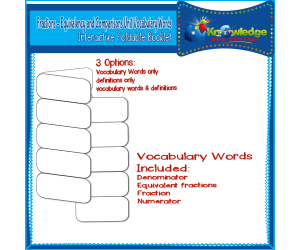
Fractions – Equivalency and Comparisons Unit Vocabulary Words Interactive Foldable for 3rd Grade – EBOOK
Math, Fractions, Grade 2, 3, 4, Lesson Plans, Teacher Tools
Fractions – Equivalency and Comparisons Unit Vocabulary Words Interactive Foldable for 3rd Grade – EBOOK A valuable teaching resource offering a unique approach to learning fundamental math concepts. Tailored to meet 3rd grade standards, with specific focus on fractions, equivalency and comparisons units. The Foldable Curriculum Addresses Essential Vocabulary Words: Denominator Numerator Fraction Equivalent fractions This interactive foldable is designed to engage students in hands-on learning by simplifying the complex world of fractions. The resource offers three versatile formats: words only; definitions only; and words with definitions. Versatility For Use: Suited for various environments catering different student needs like whole-group instruction, conjugated small group sessions or even as a homework assignment - making it ideal for both public school teachers as well homeschooling parents. Ease of Functionality: The product is available immediately after download in PDF format and contains 7 pages worth content ensuring robust coverage without overwhelming young ones..It involves simple actions like cut out ,fold up thus also working on motor skills while learning mathematical concepts. Cross-Grade Utility: An equally effective tool across grade levels (Grade 2 through Grade 4), this educational instrument focusses on the sub-subject of Fractions ensuring understanding solidly grounded in real-world applications.As an added benefit , students also enjoy self-learning enhancing their skills alongside subject specific understanding.Stretching over variety formats from concise worksheets to engaging interactive aspects,this tool bets heavily on diversification. As a whole,Fractions – Equivalency and Comparisons Unit Vocabulary Words Interactive Foldable for 3rd Grade – EBOOK guarantees to make the subject of Fractions an enjoyable experience rather than a dreaded concept. .
Author Knowledge Box Central
Tags Fractions, Equivalency, Comparisons, Vocabulary Words, Interactive Foldable

The First 21 Days | Day 2: Looks Right, Sounds Right | Reading Instruction
ELA, Reading, Preschool, Grade 1, 2, 3, Teacher Tools, Lesson Plans
This resource is Day 2: Looks Right, Sounds Right in the First 21 Days lesson set. This presentation is full of comprehension and reading strategies, anchor charts , interactive activities and so much more.
Author First in Line
Tags Reading Instruction, Anchor Charts, Reading Chart, Interactive Notebook, Listening Strategies
I WONDER - How Many Types Of Rocks Are There | Animated Video Lesson
Social Studies, Geography, Grade 1, 2, 3, 4, 5, 6, 7, 8, Lesson Plans, Teacher Tools
Video Introduction An amazing video designed for the students to learn more about famous places in different countries. I WONDER - How Many Types Of Rocks Are There | Animated Video Lesson What do you know about this place? Do you know in which part of the world it is? Have you ever visited this place? If yes, can you tell us more about your adventure, and what do you like the most about this place? Do you like reading about Geography? What is your favorite country in the whole world? If you are going on a trip where it will be? Which country? What you are going to see there? Does this country has a famous place to visit? I WONDER - How Many Types Of Rocks Are There | Animated Video Lesson The activity is perfect for encouraging the researching skills for the students, while learning more about this fantastic place. I WONDER - How Many Types Of Rocks Are There | Animated Video Lesson This friendly designed video is suitable for students at school, homeschooling, and as a group activity. Format Available in MP4 format.
Author Educational Voice
Tags How Many Types Of Rocks Are There, How Many Types Of Rocks Are There Video, Types Of Rocks, Types Of Rocks Video, Types Of Rocks Video For Kids, Types Of Rocks Facts, Types Of Rocks Facts For Kids

I WONDER - How Big Is Brazil | Animated Video Lesson
Geography, Social Studies, Grade 2, 3, 4, 5, 6, 7, 8, Lesson Plans, Teacher Tools
Video Introduction An amazing video designed for the students to learn more about famous places in different countries. I WONDER - How Big Is Brazil | Animated Video Lesson What do you know about this place? Do you know in which part of the world it is? Have you ever visited this place? If yes, can you tell us more about your adventure, and what do you like the most about this place? Do you like reading about Geography? What is your favorite country in the whole world? If you are going on a trip where it will be? Which country? What you are going to see there? Does this country has a famous place to visit? I WONDER - How Big Is Brazil | Animated Video Lesson The activity is perfect for encouraging the researching skills for the students, while learning more about this fantastic place. I WONDER - How Big Is Brazil | Animated Video Lesson This friendly designed video is suitable for students at school, homeschooling, and as a group activity. Format Available in MP4 format.
Author Educational Voice
Tags How Big Is Brazil, How Big Is Brazil Video, Brazil, Brazil Facts, Brazil Facts For Kids, Brazil Video, Brazil Video For Kids, Country, Countries, Countries Facts
Fifth Wheel | Figurative Language Activity | Micro-Learning Deck
ELA, Reading, Reading Comprehension, Grade 2, 3, 4, 5, Teacher Tools, Lesson Plans
This resource allows students to explore figurative learning in a fun way. The figurative language term for this learning deck is "Fifth Wheel." Through close reading and a reading passage with audio, your students will better comprehend figurative language! Included: -Video lesson on language concept -Reading passage w/ audio Comprehension -Quick write
Author Teach Me This
Tags Fifth Wheel, Figurative, Language, Learning Deck, Writing Template, Fifth Wheel Deck

I WONDER - How Does The Spine Help Us Move | Animated Video Lesson
Human Body, Life Sciences, Science, Biology, STEM, Grade 3, 4, 5, 6, 7, 8, 9, Lesson Plans, Teacher Tools
Video Overview The human body is full of fascinating wonders to learn. This video is created to help the students recognize the anatomy and the job of the human body. I WONDER - How Does The Spine Help Us Move | Animated Video Lesson Every part and organ in our human body is vital so let's see how important they are. Have you ever imagined how we look like if we didn't have a skeleton? Did you know that because we have our amazing muscles we can stand! Do you know how many teeth do we have? Have you ever wondered about the food journey inside our body? Can you name all the glands in our body? Why do we have skin? Our nervous system is really good at sending signals. Can you tell us more about it? Are you really good at Mathematics, painting, or any other thing? You should really thank your brain about it! The famous five senses are really doing a great work? Can you explain how every sense works? I WONDER - How Does The Spine Help Us Move | Animated Video Lesson The video is perfect for encouraging the researching skills for the students, while learning more about our fantastic human body. I WONDER - How Does The Spine Help Us Move | Animated Video Lesson This friendly designed video is suitable for students at school, homeschooling, and as a group activity. Format Available in MP4 format.
Author Educational Voice
Tags How Does The Spine Help Us Move, How Does The Spine Help Us Move Video, The Spine, The Spine Facts, The Spine Facts For Kids, The Spine Video, The Spine Video For Kids, Skeleton, Skeleton Facts

I WONDER - What Is A Dinosaur Biped | Animated Video Lesson
History: Ancient, History, Social Studies, History: World, Grade 3, 4, 5, 6, 7, 8, 9, Lesson Plans, Teacher Tools
Video Introduction An amazing video designed for the students to learn more about dinosaurs in different countries. I WONDER - What Is A Dinosaur Biped | Animated Video Lesson Do you like dinosaurs? what is your favorite one? Do you own a pet? If yes, tell us more about it, like what its name? And what do you like most about it? Do you think that your pet has been evolved from a dinosaur? Can you write down the characteristics of your favourite dinosaur like it's shape, their rivals, where did it use to live and what was their favourite food? What is the largest and the smallest dinosaur that ever found? Why is the T-rex is so famous? Have you ever read any interesting facts about it? Can you name any of the carnivores or herbivores dinosaurs? I WONDER - What Is A Dinosaur Biped | Animated Video Lesson The video is perfect for encouraging the researching skills for the students, while learning more about dinosaurs. I WONDER - What Is A Dinosaur Biped | Animated Video Lesson This friendly designed video is suitable for students at school, homeschooling, and as a group activity. Format Available in MP4 format.
Author Educational Voice
Rating
Tags What Is A Dinosaur Biped, What Is A Dinosaur Biped Video, Dinosaur Biped, Dinosaur Biped Video, Dinosaur Biped Facts, Dinosaur Biped Video For Kids, Dinosaur Biped Facts For Kids, Dinosaur
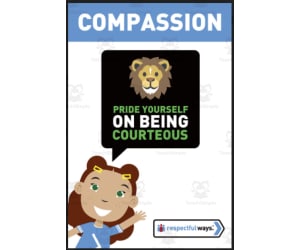
Let's Chat Conversation Cards | "Pride Yourself on Being Courteous"
Special Resources, Social Emotional Learning (SEL), Grade 2, 3, 4, 5, 6, Teacher Tools, Lesson Plans
This resource is a set of Let's Chat Conversation Cards for "Pride Yourself On Being Courteous." The “Let’s Chat Conversation Cards is a wonderful resource to help students build a positive mindset. This resource is part of a whole program that works towards having students believe they can be compassionate, have perseverance, respect, and responsibility and through it all, achieve great things! Let’s Chat Conversation Cards allows for real conversations through which students may learn of different perspectives and strengthen friendships through truly understanding each other. This resource is a set of Let's Chat Conversation Cards for "Pride Yourself On Being Courteous." There are 57 other Let's Chat resources available, along with matching Respectful Signage listed under "graphics". The "Home Connects" for families is available in English and Spanish. Meridian MS Public Schools has been a partner district of Respectful Ways since October of 2020 and they shared this year’s Panorama Data with us. Meridian students who are utilizing Respectful Ways and PBIS showed great improvements in these 3 key areas: 12% higher GPAs 37% attendance improvements 93% less referrals Respectful Ways is a trauma-informed program: Assessment: Take our survey to assess your school climate. Targeted Results: Your survey identifies modules that meet your students' social and emotional needs. Our trauma-informed online curriculum has been vetted by the Attachment & Trauma Network. Custom Professional Development: We offer workshops with subject-matter experts who use your data to address student behavioral needs and educator wellness needs. Blended Education Interventions: Respectful Ways (RW) integrates seamlessly with different instructional frameworks such as PBIS and MTSS, using evidence and research-based practices. For more information email Pam@RespectfulWays.com or call 404-955-8882.
Author Respectful Ways
Tags Conversation Cards, Respectful Ways, Courteous, Compassion, Let's Chat, Social Emotional Learning, Character Education, SEL, Be Courteous

I WONDER - How Clever Are Bears | Animated Video Lesson
STEM, Biology, Life Sciences, Science, Animals, Grade 1, 2, 3, 4, 5, 6, 7, 8, Lesson Plans, Teacher Tools
Video Introduction Animal kingdoms are full of fascinating wonders to learn. This video is designed for the students to learn more about animals in different countries. I WONDER - How Clever Are Bears | Animated Video Lesson Do you like animals? what is your favorite one? Do you own a pet? If yes, tell us more about it, like what its name? And what do you like most about it? What are the animal kingdoms? Can you write down the characteristics of each animal class like mammals, birds, reptiles, amphibian, fish and mollusks. Do you know that some animals can sing, can you name any of them? What is the largest and the smallest mammal in the world? What is the largest and the smallest bird in the world? What is the largest and the smallest fish in the world? I WONDER - How Clever Are Bears | Animated Video Lesson The video is perfect for encouraging the researching skills for the students, while learning more about these fantastic animals. I WONDER - How Clever Are Bears | Animated Video Lesson This friendly designed video is suitable for students at school, homeschooling, and as a group activity. Format Available in MP4 format.
Author Educational Voice
Tags How Clever Are Bears, How Clever Are Bears Vidfeo, Clever Bears, Clever Bears Facts, Clever Bears Facts For Kids, Clever Bears Video, Clever Bears Video For Kids, Clever Bear, Clever Bear Video For Kids

Alliteration Poem Template Poetry Writing Activity with Examples
ELA, Poetry, Literature, Homeschool Templates, Grade 2, 3, 4, 5, Centers, Activities, Graphic Organizers, Teacher Tools, Lesson Plans, Rubrics, Worksheets & Printables
Looking for a way to help your students actually understand alliteration without it turning into a bunch of random or overly silly sentences? I’ve found that alliteration can be one of those concepts students either overdo or don’t quite grasp, especially when they’re trying to apply it in their own writing. Having a bit of structure really makes a difference. This activity gives students a starting point, so they’re not guessing what to do. Instead of just identifying alliteration, they’re using it in their own poems, which helps it stick. The examples make it easier for them to see what’s expected, and the templates guide them through the process without taking away their creativity. In my experience, this works well whether you’re introducing alliteration for the first time or revisiting it during a poetry unit. You can model a few examples together, then let students have a go using the templates. Some will need a bit more support, and others will run with it—but the structure is there for both. Once they’ve drafted their poem, they can create a final version to display. It’s one of those activities where students actually enjoy reading each other’s work, which is always a win. There’s also a simple lesson outline included if you want something easy to follow, along with a rubric to make marking more straightforward. It fits nicely into literacy rotations, whole-class lessons, or even as something to leave for early finishers when you need a meaningful task that doesn’t require a lot of extra explanation. Items Included Alliteration poem interactive notebook templates Student-friendly example (color and blackline posters) Step-by-step lesson plan Publishing page for a final copy Assessment rubric
Author Teach2Tell
Rating
Tags Poetry Lesson Plan, Poetry Writing Activity, Alliteration Poem Template, Alliteration Activity, Alliteration Examples, Phonics Alliteration, Literacy Centers Writing, Creative Writing Activity, Figurative Language Activity, Poetry Lesson Elementary

I WONDER - How Many Muscles Does It Take To Smile | Animated Video
Human Body, Life Sciences, Science, Biology, STEM, Grade 2, 3, 4, 5, 6, 7, 8, Lesson Plans, Teacher Tools
Video Overview The human body is full of fascinating wonders to learn. This video is created to help the students recognize the anatomy and the job of the human body. I WONDER - How Many Muscles Does It Take To Smile | Animated Video Lesson Every part and organ in our human body is vital so let's see how important they are. Have you ever imagined how we look like if we didn't have a skeleton? Did you know that because we have our amazing muscles we can stand! Do you know how many teeth do we have? Have you ever wondered about the food journey inside our body? Can you name all the glands in our body? Why do we have skin? Our nervous system is really good at sending signals. Can you tell us more about it? Are you really good at Mathematics, painting, or any other thing? You should really thank your brain about it! The famous five senses are really doing a great work? Can you explain how every sense works? I WONDER - How Many Muscles Does It Take To Smile | Animated Video Lesson The video is perfect for encouraging the researching skills for the students, while learning more about our fantastic human body. I WONDER - How Many Muscles Does It Take To Smile | Animated Video Lesson This friendly designed video is suitable for students at school, homeschooling, and as a group activity. Format Available in MP4 format.
Author Educational Voice
Tags How Many Muscles Does It Take To Smile, How Many Muscles Does It Take To Smile Facts, Muscles, Muscle, Muscles Facts, Muscles Facts For Kids, Muscles Video, Muscles Video For Kids, Smiling

I WONDER - Are Hippos Dangerous | Animated Video Lesson
STEM, Biology, Life Sciences, Science, Animals, Grade 1, 2, 3, 4, 5, 6, 7, 8, Lesson Plans, Teacher Tools
Video Introduction Animal kingdoms are full of fascinating wonders to learn. This video is designed for the students to learn more about animals in different countries. I WONDER - Are Hippos Dangerous | Animated Video Lesson Do you like animals? what is your favorite one? Do you own a pet? If yes, tell us more about it, like what its name? And what do you like most about it? What are the animal kingdoms? Can you write down the characteristics of each animal class like mammals, birds, reptiles, amphibian, fish and mollusks. Do you know that some animals can sing, can you name any of them? What is the largest and the smallest mammal in the world? What is the largest and the smallest bird in the world? What is the largest and the smallest fish in the world? I WONDER - Are Hippos Dangerous | Animated Video Lesson The video is perfect for encouraging the researching skills for the students, while learning more about these fantastic animals. I WONDER - Are Hippos Dangerous | Animated Video Lesson This friendly designed video is suitable for students at school, homeschooling, and as a group activity. Format Available in MP4 format.
Author Educational Voice
Tags Are Hippos Dangerous, Are Hippos Dangerous Video, Hippos, Hippo, Hippos Facts, Hippos Facts For Kids, Hippos Video, Hippos Video For Kids, Hippo Facts, Hippo Video