



3,926 products added recently
Page 75 - 3rd Grade Lesson Plans
Support your third graders' expanding abilities with lesson plans that encourage exploration and deeper understanding. Covering a range of subjects, these resources offer hands-on activities and discussions. Use them to create a vibrant learning atmosphere that fosters enthusiasm.

 Show filters

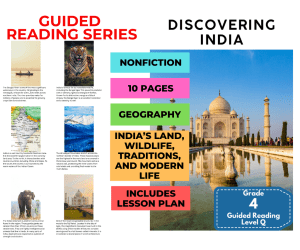
Discovering India: Guided Reading Level Q with Lesson Plan
ELA, Resources for Teachers, Reading Comprehension, Reading, Science, Geography, Social Studies, Technology, History, Life Sciences, Grade 3, 4, 5, Worksheets & Printables, Worksheets, Teacher Tools, Centers, Activities, Literacy Readers, Quizzes, Quizzes and Tests, Assessments, Lesson Plans
This Discovering India (level q) guided reading book with lesson plan includes: Guided Reading Color Label (front cover x1) This is a quick way to match the book’s demands to what students can generally handle.. The overall goal is to use the level/color to pick books for several smaller groups. To qualify for a certain level, a student is expected to read a book from that level with about 90–94% accuracy. If a student is consistently accurate and understands, move up a level. If the student is struggling at that level, drop down and add more support. Each student will improve at completely different rates, but it is generally one of the best ways to check progress across the class. DOWNLOAD THE CATALOG TO VIEW ALL GUIDED READING BOOKS AVAILABLE (SORTED LEVELS A-Z) Pre-Reading Question (x1) Teacher asks the prompt aloud, can be while showing the cover or first page. Students share what they already know, or make educated guesses from the cover. Prompt them to use the target vocabulary. Write some of their responses on the board to look back at during the reading. Vocabulary Words (x5) Introduce the five words, best doing it one at a time. Start by saying it, while students repeat and then see if anyone knows what it means before reading further. Read through the meaning and try to briefly connect each word to a picture or gesture so it’s meaningful. Ask students to flip through the book pages and point to where they see each of the vocabulary words. While reading the book pause upon coming across one of the vocab words or read the sentence twice to make sure students understand the word has appeared. Optional: Ask students to raise hands whenever they see/hear one of the new words. Guided Reading Pages (x10) Check the book snapshot (below) for: primary topic - do you need to prep extra reading or intro materials on this? what is taught best - decide on 1-2 bullets to focus on, use the prompt or words provided here for best results. learning goals - what you are checking for students to be able to do after the session, elicit answers using prompts or words provided. key vocabulary (see section above). questions overview - so you know what is coming up and if you need to prep extra materials to assist understanding. Run the lesson You may have already looked at a few of the pages together, but you can show them some of the pictures again first to set meaning. Depending on how much time you have and how familiar your students are with guided reading class, you may want to read the book aloud first with the group first. Students whisper or partner read, while you listen in. If time, do it as a group, one student reading a page each. Use the guided page’s prompts to coach: “Check the picture / does it make sense?” “Point under the words / try the first sound” “Reread the sentence smoothly”. Try to focus more on one student per session (rotating every time), so you can work out if they are ready to move up or need to move down a level. Comprehension Questions (back cover x3) This is your way to check that students didn’t just say the words, but actually understood the text. First, let students answer by pointing to the page/picture and saying a short sentence. After any answer, follow with: “Show me where you found that in the text.” In bigger groups, have partners answer first (10–20 seconds), then call on 2–3 students to share. Differentiation tips: Emerging speakers/struggling readers: oral + pointing On-level: oral in a full sentence Higher: one written sentence or draw + label Book Snapshot Title: Discovering India Genre: Nonfiction Subject: Social Studies (Geography/Culture) Primary Topic: India’s land, wildlife, traditions, and modern life Estimated Guided Reading Level (A–Z): Q What This Book Teaches Best Key geography facts about India’s location in Southern Asia, nearby borders, and surrounding waters. How landforms shape life in India, including the Himalayan Mountains and the Ganges River. Notable wildlife of India through examples like the Bengal tiger and the Indian elephant. Cultural traditions and everyday life, including spices used in meals and the celebration of Diwali. Modern India today, including transportation (auto-rickshaws) and major cities connected to technology and innovation. Learning Goals Students will describe where India is located and name details about its borders and southern waters. Students will explain how the Himalayan Mountains are described as protecting the inner plains. Students will explain why the Ganges River is important to people and farming in northern India. Students will describe key traits of the Bengal tiger and the Indian elephant using details from the text. Students will identify facts about the Taj Mahal, including where it is and features described in the book. Students will describe examples of Indian culture and modern life mentioned in the text (foods/spices, Diwali, transportation, cities). Key Vocabulary From the Text vast — very large in size. significant — very important. distinctive — easy to notice because it looks different. minarets — tall towers on a monument. diyas — small clay lamps used during Diwali. Discussion Prompts Pre-reading question: What are you hoping to learn about India as you read? Comprehension questions: What warm waters does the text say surround India to the south? Comprehension questions: According to the text, why is the Ganges River essential? Comprehension questions: What does the text say diyas symbolize during Diwali? Printing Tips 1. Best Printing Method (Recommended) “Booklet” Printing (Best if Available) If your printer or PDF viewer supports Booklet Printing , use this. Settings to use: Print mode: Booklet Paper size: Letter or A4 (either works) Orientation: Landscape Print on both sides: Yes Flip on: Short edge Scaling: Fit to printable area Booklet subset: First test: Front sides only Then: Back sides only This will automatically: Pair pages correctly Put the cover on the outside Align everything for folding After printing, fold in half and staple along the spine . 2. If “Booklet” Printing Is NOT Available You can still print this correctly with manual duplex printing . Step-by-step: Open the PDF. Choose Print . Set: Orientation: Landscape Pages per sheet: 1 Print on both sides: Yes Flip on: Short edge Print all pages . Because each PDF page already contains two facing book pages, the result will still fold cleanly into a book. Thousands of Cored Education products are included with your TeachSimple membership. Download links and encyclopedia index available here.
Author Cored Education
Rating
Tags Reading Comprehension, Reading Passages, Reading, Guided Reading, Guided Reading Lesson Plan, Guided Reading Activity, Pre-reading, Social Studies, Geography, History

The Elementary Geographer: Latitude & Longitude
Social Studies, Geography, Grade 2, 3, 4, 5, Teacher Tools, Lesson Plans
Help your student explore the world with this in-depth longitude and latitude PDF. With over 9 worksheets , the basics of geography have never been easier to understand! BONUS: teacher answer keys included!
Author Chuck's Cornucopia
Tags Geography, Directions, Location, Map, Hemisphere, Longitude And Latitude Worksheets Pdf, Latitude Longitude Worksheets, Simple Latitude

I WONDER - Can Mollusks Be Eaten | Animated Video Lesson
STEM, Animals, Life Sciences, Science, Biology, Grade 1, 2, 3, 4, 5, 6, 7, 8, Lesson Plans, Teacher Tools
Video Introduction Animal kingdoms are full of fascinating wonders to learn. This video is designed for the students to learn more about animals in different countries. I WONDER - Can Mollusks Be Eaten | Animated Video Lesson Do you like animals? what is your favorite one? Do you own a pet? If yes, tell us more about it, like what its name? And what do you like most about it? What are the animal kingdoms? Can you write down the characteristics of each animal class like mammals, birds, reptiles, amphibian, fish and mollusks. Do you know that some animals can sing, can you name any of them? What is the largest and the smallest mammal in the world? What is the largest and the smallest bird in the world? What is the largest and the smallest fish in the world? I WONDER - Can Mollusks Be Eaten | Animated Video Lesson The video is perfect for encouraging the researching skills for the students, while learning more about these fantastic animals. I WONDER - Can Mollusks Be Eaten | Animated Video Lesson This friendly designed video is suitable for students at school, homeschooling, and as a group activity. Format Available in MP4 format.
Author Educational Voice
Tags Can Mollusks Be Eaten, Can Mollusks Be Eaten Video, Mollusks, Mollusk, Mollusks Facts, Mollusks Facts Or Kids, Mollusks Video, Mollusks Video For Kids, Mollusk Facts, Mollusk Video

Data Analysis & Probability - Digital Lesson Plan Gr. 3-5 | PC Software
Math, Patterns, Grade 3, 4, 5, Teacher Tools, Lesson Plans
Data Analysis & Probability - Digital Lesson Plan Gr. 3-5 | PC Software An all-in-one math teaching resource specifically designed for students in grades 3 to 5. This expansive program offers an impressive range of both task and drill activities, ensuring a comprehensive learning experience. Curriculum Alignment: The curriculum falls perfectly in line with NCTM and state curriculum expectations, focusing on the Data Analysis & Probability strand of Math. The program consists of over 230 unique activities presented across more than 80 interactive screens. Versatility: A notable feature is its ability to meet different classroom needs. Whether you're structuring a whole-group discussion or organizing smaller breakout sessions, the resource can be used for individual homework assignments too. a standout component within the digital lesson plan is its inclusion of pre- assessment activities. It also includes word problems themed around real-life experiences—a strategic approach known to boost engagement levels while contextualizing abstract ideas. There are approximately: 150 drill problems specially structured to reinforce newly learnt skills And other tools included like: saving teachers time hunting down resources elsewhere, English and Spanish text-to-speech function built into every screen page, Compatibility: Supported currently only for PCs - delivered within a single zip file. As concluding elements: concludes each chapter with assessment quizzes designed explicitly for gauging student comprehension levels—. In conclusion, this title offers an engaging and well-rounded learning resource that thoroughly navigates through the realm of data analysis and probability for Grade 3-5 Math classes. An ideal tool for teachers and homeschoolers alike: Engaging interactive lessons Game-based learning activities Printable resources Test preparation tools And vital assessment components-all in one accessible package.
Author Classroom Complete Press
Tags Digital Lesson Plan, Data Lesson Plan, Probability Lesson Plan, Patterns, Digital Math

I WONDER - Where Did The Olympics Begin | Animated Video Lesson
Sports, P.E. & Health, Grade 2, 3, 4, 5, 6, 7, 8, Lesson Plans, Teacher Tools
Video Introduction An amazing video designed for the students to learn more about sports in different countries. I WONDER - Where Did The Olympics Begin | Animated Video Lesson What is your favorite sport? Tell us more about it. Who is your favorite athlete? Or what is your favorite team? Do you know who invented basketball? When basketball has been invented? Can you tell us where is the first time it has been played? Have you ever played soccer or football? If yes, tell us what was your position: A goal keeper, midfield player, or a defender? Do you like watching golf? If yes who is your favorite player? Can you name the differences between tennis and ping pong? Have you ever played volleyball on the beach? When it has been officially recognized by the Olympics? Do you like watching Formula 1 races? If yes, who is your favorite team or driver? Have you ever tried to play handball? If yes tell us more. Do you like watching people skiing or surfing? I WONDER - Where Did The Olympics Begin | Animated Video Lesson The video is perfect for encouraging the researching skills for the students, while learning more about this sport. I WONDER - Where Did The Olympics Begin | Animated Video Lesson This friendly designed video is suitable for students at school, homeschooling, and as a group activity. Format Available in MP4 format.
Author Educational Voice
Rating
Tags Where Did The Olympics Begin, Where Did The Olympics Begin Video, The Olympics, The Olympics Facts, The Olympics Video, The Olympics Facts For Kids, The Olympics Video For Kids, The Olympics History

Multiplication and Division Math Interactive Notebook
Math, Multiplication and Division, Division, Grade 3, 4, 5, Teacher Tools, Lesson Plans
This product covers the 2016 Virginia (VA) Standards of Learning (SOL) 3.4: The student will a) represent multiplication and division through 10 × 10, using a variety of approaches and models; b) create and solve single-step practical problems that involve multiplication and division through 10 x 10; and c) demonstrate fluency with multiplication facts of 0, 1, 2, 5, and 10; d) solve single-step practical problems involving multiplication (note that this will also work for the 2023 VA SOL 3.CE.2 The student will recall with automaticity multiplication and division facts through 10 × 10; and represent, solve, and justify solutions to single-step contextual problems using multiplication and division with whole numbers. It contains notes pages on understanding multiplication models, division models, properties, different ways to solve multiplication and division problems. It also has notes and practice pages for multiplication facts practice as well as word problems and double-digit by single-digit multiplication. There are practice pages for each topic, with an answer key included. The notes pages come in two sizes. The first size is a full-page size. You can print them as-is, or you can print them two to a pages. This is what I do as it saves on paper and the sheets will fit in a notebook. The second size is formatted to fit on a standard composition notebook page. Additionally, there are two links included in the pdf: one which opens a digital version of the notes, and another that opens a slide show version, optimized for a projector or interactive board. In both cases, which you click the link, you will be prompted to make a copy, which you can then use with Google Slides or download and use with Keynote or PowerPoint. Pages included in the notebook: Vocabulary Repeated Addition Repeated Subtraction Equal Groups Multiplication Equal Groups Division G.E.T. strategy (groups-each-total for equal groups with multiplication) Arrays Area Model Number Line Multiplication Number Line Division Identity Property of Multiplication Commutative Property of Multiplication Balancing Equations Related Facts/Inverse Facts ("Fact families") Skip Counting Practice Pages Word Problem Strategies Math Verbs/Key Words pages Multiplication and Division Word Problems Multiplication Fact Practice Double Digit Multiplication Mathematical Properties For more no and low-prep activities, check these out: October No-Prep Math Activities No Prep Spiral Math Daily Review and Quizzes Comparing Money Practice 1 Identifying Money Practice Area and Perimeter Digital Activity Counting Money Practice
Author SchoolingSara
Tags Multiplication, Division, VA SOL, Related Facts, Word Problems
Late Lunch with Llamas (Magic Tree House #34 Lesson Plan)
ELA, Social Studies, Reading, Reading Comprehension, Grammar, Literature, Language Development, Spelling, Vocabulary, Writing, History, History: Ancient, Geography, Grade 1, 2, 3, Lesson Plans, Teacher Tools
Title: Late Lunch with Llamas (Magic Tree House #34 Lesson Plan) This resource provides a comprehensive 5-day lesson plan for Grades 1 to 3, structured around the enchanting story of Late Lunch with Llamas. Blending Language Arts and Social Studies, this educational tool also sparks students' curiosity and encourages active learning through related activities. An easy-to-use teaching aid, it aligns teaching objectives with chapter comprehension questions, vocabulary practice and includes links to relevant video materials. Group discussions can be tailored according to each day's tasks, accommodating diverse learner interests and styles due to its customizable nature depending on student age or reading level. Multidisciplinary Learning Objectives: Arts: Engage students through drawing and coloring exercises. Comprehension Skills & English Language Arts: Enhance grammar, spelling and writing abilities Social Studies & History: Integration of geography lessons inspires holistic understanding. The material places an emphasis on developing research skills for a strong foundation in critical thinking. Make use of pre-reading activities to prepare young learners; try our comprehensive chapter quizzes for reinforcement; assign worksheets based on story elements that focus on literature-driven vocabulary expansion. Fostering Deep Analysis: Carefully curated character analysis materials guide students throughout their discovery journey. Post-reading project-based tasks boost experiential learning—an integral element in modern education practices. Sustainable Teaching Methods: The worksheets provided are versatile— they can be used traditionally or transformed into interactive digital exercises reducing print usage—a sustainable teaching practice we all aim for today. Use this brilliant tool crafted meticulously intertwining fun elements practical along with pedagogic methodology into learning— there's no better way to deepen students' love for the Magic Tree House collection. Nurture inquiring minds through a journey that not only transforms them into confident readers but also critical thinkers and enthusiastic learners.
Author Heather Huhman
Tags Lesson Plan, Magic Tree House, Comprehension, Vocabulary, Geography

I WONDER - What Is The Smallest Reptile In The World | Animated Video
STEM, Animals, Life Sciences, Science, Biology, Grade 1, 2, 3, 4, 5, 6, 7, 8, Lesson Plans, Teacher Tools
Video Introduction Animal kingdoms are full of fascinating wonders to learn. This video is designed for the students to learn more about animals in different countries. I WONDER - What Is The Smallest Reptile In The World | Animated Video Lesson Do you like animals? what is your favorite one? Do you own a pet? If yes, tell us more about it, like what its name? And what do you like most about it? What are the animal kingdoms? Can you write down the characteristics of each animal class like mammals, birds, reptiles, amphibian, fish and mollusks. Do you know that some animals can sing, can you name any of them? What is the largest and the smallest mammal in the world? What is the largest and the smallest bird in the world? What is the largest and the smallest fish in the world? I WONDER - What Is The Smallest Reptile In The World | Animated Video Lesson The video is perfect for encouraging the researching skills for the students, while learning more about these fantastic animals. I WONDER - What Is The Smallest Reptile In The World | Animated Video Lesson This friendly designed video is suitable for students at school, homeschooling, and as a group activity. Format Available in MP4 format.
Author Educational Voice
Tags What Is The Smallest Reptile In The World, What Is The Smallest Reptile In The World Video, Smallest Reptile In The World, Smallest Reptile In The World Facts, Smallest Reptile In The World Facts For Kids, Smallest Reptile In The World Video
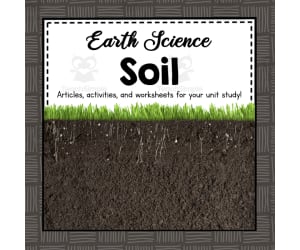
All About Soil | Earth Science Unit
Science, Earth and Environmental Sciences, Earth Sciences, Grade 1, 2, 3, 4, Lesson Plans, Teacher Tools
All About Soil | Earth Science Unit for Grades 1-4 The All About Soil | Earth Science Unit is a comprehensive teaching resource that extensively covers all aspects of soil in an engaging way. Suited exceptionally for learners in grades 1 through 4, this resource proves invaluable for educators such as public school teachers or homeschoolers, as it makes earth science lessons enjoyable and impactful. This exhaustive earth science unit addresses everything from various types of soil to its importance in sustainable development, leaving no aspect unexplored. Not only does it form a solid foundation on the study of soil but also arouses curiosity among young learners about the planet and its intricate systems. Vibrant posters on topics like 'Soil Provides a Place for Organisms to Live' or 'Soil Filters and Cleans Water' Diverse materials such as vocabulary word strips (e.g., Soil, Clay, Loam) Differentiated reading level articles on topics like composting and recycling elements Craft templates (e.g., Compost Bin printable craft template) Worksheets: 'What is Soil Made Of?' eLearning Compatible Resources: All resources mentioned above can simply be used as interactive slides too enhancing online learning experiences. Videos & Vocabulary: Crafted meticulously with recommended video links fostering visual learning and thematic vocabulary lists that reinforce language skills alongside science study – this teaching toolbox provides much more than knowledge transfer: it cultivates curiosity! All About Soil | Earth Science Unit not just imparts information but kindles innovation within young minds thus shaping future scientists and fostering life-long learning. Note: This product comprises 1 zip file including Google Doc describing what is included, JPEGs explaining some of the individual activities, 53 page PDF with ready to print pages to serve as the ultimate teaching aid. It's perfect for Grades 1-4 under subjects: Science, Sub-subjects: Earth Sciences and includes multiple file types.
Author Simply Schoolgirl
Tags Soil Types, Sustainable Development, Earth Science, Experiential Learning, Interactive Slides

I WONDER - How Do Earthquakes Occur | Animated Video Lesson
Geography, Social Studies, Earth Sciences, Earth and Environmental Sciences, Science, Environmental Science, Grade 2, 3, 4, 5, 6, 7, 8, Lesson Plans, Teacher Tools
Video Introduction An amazing video designed for the students to learn more about natural disasters in different countries. I WONDER - How Do Earthquakes Occur | Animated Video Lesson What do you know about this natural disaster? Do you know in which part of the world this could happen? Have you ever read about the safety misusers that we could have to protect ourselves from this natural disaster? If yes, can you tell us more about them? Can you name other natural disasters? If yes, tell us more about where they are likely to happen? And how frequently? Do you like reading about Geography? What is your favorite country in the whole world? If you are going on a trip where it will be? Which country? What you are going to see there? Does this country has a famous place to visit? Do you like reading about Geology? If yes, what is your favourite topic? I WONDER - How Do Earthquakes Occur | Animated Video Lesson The video is perfect for encouraging the researching skills for the students, while learning more about this fantastic phenomenon. I WONDER - How Do Earthquakes Occur | Animated Video Lesson This friendly designed video is suitable for students at school, homeschooling, and as a group activity. Format Available in MP4 format.
Author Educational Voice
Tags How Do Earthquakes Occur, How Do Earthquakes Occur Video, Earthquakes, Earthquake, Earthquakes Facts, Earthquakes Facts For Kids, Earthquakes Video, Earthquakes Video For Kids

The Adventures of Tom Sawyer: Exploring Literature Teaching Unit
ELA, Literature, Grade 3, 4, 5, 6, Teacher Tools, Lesson Plans
Exploring Literature is a complete teaching unit designed to give you everything needed to help students understand and appreciate fine literature. This exciting approach includes classroom-tested activities sure to save you hours of valuable preparation time.
Author Classroom Complete Press
Tags The Adventures Of Tom Sawyer, Teacher Unit, Reading Comprehension, Lesson Plan, Literature, The Adventures Of Tom Sawyer Lesson Plans Middle School

Science Lesson Plan: What Is A Bird's Nest?
Science, Life Sciences, Animals, Grade 3, 4, 5, 6, Teacher Tools, Lesson Plans
This resource is a Science Lesson Plan: What Is A Bird's Nest? This is Lesson #3 in a full science unit - Birds and Their Habitats. You will receive a full step-by-step science lesson on how various kinds of bird’s nests are formed and what their purpose is in the bird’s habitat.
Author The Language of Learning
Tags Birds, Habitats, Compare And Contraste, Science Lesson Plan, Animals

Hands-On - Physical Science: Force and Motion Gr. 1-5
Science, Physics, Grade 1, 2, 3, 4, 5, Teacher Tools, Lesson Plans
Hands-On - Physical Science: Force and Motion Gr. 1-5 A comprehensive resource designed to immerse students in the practical aspects of physical science applicable for grades 1 through 5. It bridges different educational stages aiming to stimulate excitement about energy and motion. Aligns with STEAM (Science, Technology, Engineering, Art, Math) initiatives and Next Generation Science Standards presenting concepts through hands-on activities that allow for experiential learning. A combination of theory with practical application. Contents: Lessons on balanced & unbalanced forces - gravity's effect & air resistance on dropped objects. An exciting exploration of lightning distance via visual tracking alongside thunder sounds observation. A unique interactive experience of making balloons stick to walls demonstrating principles behind static electricity. Create models as a group work activity including water waves, light waves, sound waves. Tools simplifying complex phenomena understanding! Bonus Features: Incorporates instructions and creative activities concerning solids', liquids', and gases' classification based on properties discovered at home— bringing everyday reality closer to science education! Plus opportunities for constructing compound machines using elements from simple machines— makes learning interactive & fun along with promoting teamwork! 'Before you read' exercises + graphic organizers helping comprehending material better accompanied by assessment tasks reviewing concept grasp level ensuring academic rigor while being enjoyable! Fits flexibly into various classroom settings such as large-scale instruction or smaller discussion groups ideal suit both for school teachers or even homeschoolers having fewer students in number! A resource readily available in PDF format, ensuring easy access across different electronic devices.
Author Classroom Complete Press
Tags PDF

We All Scream for Ice Cream: Emergency Lesson Plan
ELA, Reading, Grade 3, 4, Teacher Tools, Lesson Plans
We All Scream for Ice Cream: Emergency Lesson Plan This extraordinary teaching resource brilliantly fits the educational needs of Grade 3 and Grade 4 pupils. Perfectly covering their Language Arts curriculum with a focus on Reading, it also incorporates other educational areas, retaining its relevance in diverse scenarios. A Fascinating Nonfiction Article The core of this resource is a nonfiction article that dives into the rich history of ice cream. The pleasurable read traces back to its origins among ancient Greeks and Romans while offering insights into modern production techniques. This engaging content enhances independent research skills and promotes reading comprehension abilities in an exciting manner. Interactive Worksheets for Further Understanding Beyond the article, additional worksheets help instill a deeper understanding of the topic by encouraging group activities or individual work related to ice cream. Perfect Fallback for Sudden Absences In unexpected instances where educators might be hindered from their teaching duties due to illness or schedule conflicts such as last-minute school assemblies, this lesson plan comes as an ideal alternative - never compromising on effectiveness or engagement despite unscheduled shifts in classroom routine. Type: PDF file format Use cases: Whole class lessons, pair share activities, homework assignments or mini quizzes Nature: Highly adaptable to various instruction models. Purpose: Supports continuity even during unplanned time slots. We All Scream For Ice Cream: Emergency Lesson Plan not only meets academic outcomes but also sparks joy – after all who wouldn’t be captivated by learning about everyone’s favorite dessert? It brings a fun twist to the usual class setting, making your pupils squeal not in frustration but in pure delight over a freshly imparted knowledge.
Author Classroom Complete Press
Tags PDF

I WONDER - What Desserts Did Ancient Greeks Eat | Animated Video
History: Ancient, History, Social Studies, History: Europe, Grade 3, 4, 5, 6, 7, 8, 9, Lesson Plans, Teacher Tools
Video Introduction An amazing video designed for the students to learn more about history. I WONDER - What Desserts Did Ancient Greeks Eat | Animated Video Lesson Do you like history? Which topic do you really enjoy about history? Have you ever read an interesting fact about the Vikings? If yes, can you mention them? What do you like most about the Victorian era? Can you name all the Tudors? Have you ever wondered how people used to live in ancient Japan and ancient China? Do you know any interesting facts about ancient Egyptians and the Pharaohs? Have you ever visited South America? What do you know about Incas and Aztecs? Celtic culture was really one of a kind, can you name any of the places that Celts used to live in? Imagine yourself living during the ancient Roman empire, how your life will look like? Ancient Greece was an amazing place to live in. What do you know about ancient Greek life? I WONDER - What Desserts Did Ancient Greeks Eat | Animated Video Lesson The video is perfect for encouraging the researching skills for the students, while learning more about history. I WONDER - What Desserts Did Ancient Greeks Eat | Animated Video Lesson This friendly designed video is suitable for students at school, homeschooling, and as a group activity. Format Available in MP4 format.
Author Educational Voice
Tags What Desserts Did Ancient Greeks Eat, What Desserts Did Ancient Greeks Eat Video, Ancient Greek Desserts, Ancient Greek Desserts Facts, Ancient Greek Desserts Video, Ancient Greek Desserts Video For Kids
I WONDER - What Are The Different Types Of Vertebrates
STEM, Biology, Life Sciences, Science, Animals, Grade 1, 2, 3, 4, 5, 6, 7, 8, Lesson Plans, Teacher Tools
Video Introduction Animal kingdoms are full of fascinating wonders to learn. This video is designed for the students to learn more about animals in different countries. I WONDER - What Are The Different Types Of Vertebrates | Animated Video Lesson Do you like animals? what is your favorite one? Do you own a pet? If yes, tell us more about it, like what its name? And what do you like most about it? What are the animal kingdoms? Can you write down the characteristics of each animal class like mammals, birds, reptiles, amphibian, fish and mollusks. Do you know that some animals can sing, can you name any of them? What is the largest and the smallest mammal in the world? What is the largest and the smallest bird in the world? What is the largest and the smallest fish in the world? I WONDER - What Are The Different Types Of Vertebrates | Animated Video Lesson The video is perfect for encouraging the researching skills for the students, while learning more about these fantastic animals. I WONDER - What Are The Different Types Of Vertebrates | Animated Video Lesson This friendly designed video is suitable for students at school, homeschooling, and as a group activity. Format Available in MP4 format.
Author Educational Voice
Tags What Are The Different Types Of Vertebrates, What Are The Different Types Of Vertebrates Video, Different Types Of Vertebrates, Different Types Of Vertebrates Video, Different Types Of Vertebrates Facts, Different Types Of Vertebrates Video For Kids

3rd Grade Math Exit Slip Journal | Unit 6 Math Expressions
, Grade 3, Lesson Plans, Teacher Tools
This resource is a 3rd Grade Math Exit Slip Journal. This journal is for Unit 6 Math Expressions. Print and set-up instructions are included. Books are printed 2 per page. This journal comes with a cover page and it will walk through each skill taught during this unit . This is a great way to formatively assess your math students.
Author Sarah Sorensen
Tags Equations, Word Problems, Expressions, Exit Slips, Math Journal
The First 21 Days | Day 6: Setting | Reading Instruction
ELA, Reading, Preschool, Grade 1, 2, 3, Teacher Tools, Lesson Plans
This resource is Day 6: Setting in the First 21 Days lesson set. This presentation is full of comprehension and reading strategies, anchor charts , interactive activities and so much more.
Author First in Line
Tags Reading Lesson Plan, Character, Setting, Plot, Story Elements Anchor Chart

Pictorial Math Multiplication Flashcards | SPACE x4
Special Resources, Special Education Needs (SEN), Math, Addition and Subtraction, Addition, Multiplication and Division, Division, Place Value, Grade 2, 3, 4, Teacher Tools, Lesson Plans, Worksheets & Printables, Flashcards, Activities
Pictorial Math Multiplication Flashcards | SPACE x4 This teaching resource is deemed perfect for boosting math comprehension in the 2nd, 3rd, and 4th-grade students. Considering that visual learning has significant importance in the modern-day teaching methodology, this product uses vivid space-themed backgrounds and full-color images to explain multiplication facts from one through ten. The set includes three types of pictorial instructions for each multiplication fact on one page: The first type shows the fact number with an integrated factor demonstrating the multiplication process. The second reveals the fact number with factors at the bottom arranged in rows; concurrently, it takes advantage of repetition as a valuable teaching technique. The third version provides learners with a relevant part of an equation related directly to their current subject of study. Made compactly smaller than standard A4 cards for easy use and handling by young pupils. Each multiple series has been allocated specific colors aiding quick categorization and reference. Potential Utilization Opportunities Include: Serving as handy class resources when laminating into flip-through books or pinned onto bulletin boards providing year-long visual cues to students. A tool during group activities or individual tasks giving educators flexibility while designing lesson plans keeping classrooms engaged while making math learning less daunting yet fun-filled Experience ! A creative classroom décor which greatly assists teachers during word problem explanation sessions. In essence, Pictorial Math Multiplication Flashcards | SPACE x4 not only strengthens primary understanding around multiplication concepts (like repeated addition) but also serves as versatile instruction materials. This thirteen-page complete package presented in PDF format bundles these beneficial math tools all together enhancing excitement and interest during math sessions among elementary students. 13 - page PDF resource with three types of pictorial explanation for multiplication FACTS and FACTORS , for your bulletin boards , your classroom walls , your screens and your custom made task cards and books .
Author WORDS ASIDE
Tags Math Flashcards, Multiplication, Visual Learning, Decor, Bulletin Board, Fun Math, Math Center, Math Station, Factors And Facts, Words Aside

I WONDER - What Is A Hurricane | Animated Video Lesson
Geography, Social Studies, Earth Sciences, Earth and Environmental Sciences, Science, Environmental Science, Grade 3, 4, 5, 6, 7, 8, 9, Lesson Plans, Teacher Tools
Video Introduction An amazing video designed for the students to learn more about natural disasters in different countries. I WONDER - What Is A Hurricane | Animated Video Lesson What do you know about this natural disaster? Do you know in which part of the world this could happen? Have you ever read about the safety misusers that we could have to protect ourselves from this natural disaster? If yes, can you tell us more about them? Can you name other natural disasters? If yes, tell us more about where they are likely to happen? And how frequently? Do you like reading about Geography? What is your favorite country in the whole world? If you are going on a trip where it will be? Which country? What you are going to see there? Does this country has a famous place to visit? Do you like reading about Geology? If yes, what is your favourite topic? I WONDER - What Is A Hurricane | Animated Video Lesson The video is perfect for encouraging the researching skills for the students, while learning more about this fantastic phenomenon. I WONDER - What Is A Hurricane | Animated Video Lesson This friendly designed video is suitable for students at school, homeschooling, and as a group activity. Format Available in MP4 format.
Author Educational Voice
Tags What Is A Hurricane, What Is A Hurricane Video, Hurricane, Hurricanes, Hurricane Facts, Hurricane Facts For Kids, Hurricane Video, Hurricane Video For Kids, Hurricanes Facts, Hurricanes Video

I WONDER - What Is The Largest Bird In The World | Animated Video
STEM, Animals, Life Sciences, Science, Biology, Grade 1, 2, 3, 4, 5, 6, 7, 8, Lesson Plans, Teacher Tools
Video Introduction Animal kingdoms are full of fascinating wonders to learn. This video is designed for the students to learn more about animals in different countries. I WONDER - What Is The Largest Bird In The World | Animated Video Lesson Do you like animals? what is your favorite one? Do you own a pet? If yes, tell us more about it, like what its name? And what do you like most about it? What are the animal kingdoms? Can you write down the characteristics of each animal class like mammals, birds, reptiles, amphibian, fish and mollusks. Do you know that some animals can sing, can you name any of them? What is the largest and the smallest mammal in the world? What is the largest and the smallest bird in the world? What is the largest and the smallest fish in the world? I WONDER - What Is The Largest Bird In The World | Animated Video Lesson The video is perfect for encouraging the researching skills for the students, while learning more about these fantastic animals. I WONDER - What Is The Largest Bird In The World | Animated Video Lesson This friendly designed video is suitable for students at school, homeschooling, and as a group activity. Format Available in MP4 format.
Author Educational Voice
Tags What Is The Largest Bird In The World, What Is The Largest Bird In The World Video, Largest Bird In The World, Largest Bird In The World Facts, Largest Bird In The World Facts For Kids, Largest Bird In The World Video
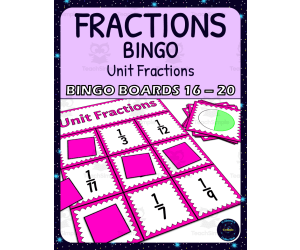
Unit Fractions Activity - Bingo Game - Fraction Symbols - Boards 16-20
Math, Fractions, Grade 2, 3, 4, Lesson Plans, Teacher Tools
Unit Fractions Bingo engages students in identifying and matching unit fractions represented as fractions, circles, squares, strips, and symbols. This self-checking game builds fraction fluency through repeated exposure and matching. To play, provide each student a bingo board and counters. Draw a call card and state the fraction. Students search their boards, covering matches. Continue drawing and calling until a student covers 3 spaces in a row and calls Bingo! Winning boards help teachers quickly assess understanding. 5 unique bingo boards allow the whole class to play together. Boards come in both color and black and white. Laminate for durability. Pair Fraction Bingo with matching games and other fraction resources for a comprehensive unit. This engaging game is easy to implement whole group or independently during math rotations. Students love racing to call Bingo!
Author Colleen's Cosmic Collection
Tags Unit Fractions, Math Games, Fraction Games, Fraction Activities, Common Fractions, Math Activities, Unit Fraction Games, Math Bingo, Fractions Bingo, Cccfbus

Blue Whale Unit Study (Endangered Animals Lesson Plan, Videos, Activities)
ELA, Reading, Reading Comprehension, Language Development, Spelling, Writing, Science, Life Sciences, Animals, Grade 1, 2, 3, Lesson Plans, Teacher Tools
Blue Whale Unit Study (Endangered Animals Lesson Plan, Videos, Activities) This teaching resource delivers a fully prepped 5-day unit study centered around the enchanting blue whale. Curated with convenience in mind to ensure efficient use of time by educators. Designed for educators instructing first through third grade learners, this inclusive unit study instills knowledge encompassing: Drawing and coloring for Artistic development Vocabulary enhancement through English language arts and Grammar Promotion of Reading skills Fostering Research skills towards science facts concerning whales & their environment Cultivating basic writing capabilities . The resource comes equipped with daily worksheets providing substantive information on various aspects of blue whales including diet, habitat, life cycle, predators among others. It can be utilized either within an interactive notebook setting or discriminatory oral discussion to reduce printing requirements. Videos and Activities Included! This product offers fun videos and activities tailored to maximize engagement from all types of learners whether they learn optimally by observing or doing. Moreover, this package can be personalized influenced by variables such as learners age or proficiency allowing maximization on each student's comprehension capacity. Fostering Individual Creativity while Building Thorough Understanding Applicable Knowledge! Incorporated also are project-centric activities designed to foster creativity inducing problem-solving skills while reinforcing understanding around endangered animals akin to the blue whale along with other crucial scientific concepts relevant across ocean habitats in general. In essence,'Blue Whale Unit Study'demonstrates an exhaustive yet intriguing journey into one extraordinary creature extending not only knowledge but building appreciation for these gentle giants whereas shedding light on sober topics such as animal endangerment.
Author Heather Huhman
Tags Blue Whale, Endangered Animals, Lesson Plan, Activities, Multimedia
Mayflower: History - Hands On
Social Studies, History, History: USA, Grade 1, 2, 3, 4, Teacher Tools, Lesson Plans
The Mayflower: History - Hands On is a robust teaching resource, specially crafted for educators across the board—from public school teachers to homeschooling enthusiasts. It is intended for grades 1 through 4 and seeks to illuminate the integral journey of the Pilgrims and their crucial relations with Native Americans during America's foundation. This resource proudly presents a rich assortment of 34 PDF pages that are fully prepared for printing and integration into your upcoming social studies lessons. Venturing away from routine textbook-centric learning, it follows an experiential methodology towards understanding history. An atmosphere is fostered where students are prompted to delve deeper into why Pilgrims decided upon a sudden departure from their homeland in search of new territories—a theme ideally suited for invigorating discourse surrounding human migration, displacement, and resilience. Furthermore, students gain comprehensive information regarding the Mayflower—the vessel that courageously transported these adventurers over tumultuous waters—and get insight into what comprised their meals during this transit as well as how they occupied themselves aboard—a perfect transition point to discuss survival strategies and naval history. In addition to voyages at sea, this toolkit goes deep into describing how Pilgrims faced challenges adapting in an alien land—the nascent Plymouth Colony. Students grasp how these pioneers managed forging a life out of unfamiliar environs—an ideal avenue for introducing topics like colonization & adaptability. The voyage continues as students uncover how reciprocal cooperation between settler Pilgrims & indigenous residents facilitated peaceful coexistence—an unparalleled lesson on forbearance & inter-cultural respect. Alluding importantly though is Squanto’s narrative seamlessly integrated within this material—it provides valuable viewpoints on individual roles within historical chronicles. When employed in whole-group sessions, the full impact of Mayflower: History - Hands On can be realized due to its holistic subject matter adept for group ideation. Yet, it also presents substantial value when utilized within smaller collaborative learning circles or as stimulating homework tasks—encouraging independent exploration beyond classroom confines. In short, Mayflower: History - Hands On exists as an educational apparatus intended to boost comprehension of U.S. history uniquely and engagingly. Its mission is to equip educators with a means to nurture discerning & empathetic future citizens while concurrently satisfying grade-level Social Studies benchmarks.
Author Classroom Complete Press
Tags Social Studies, U.S. History, Reading Passage, The Mayflower, Thanksgiving Activities