



3,911 products added recently
Page 25 - History Lesson Plans
Transport your students through time with history lesson plans that vividly illustrate past events and societies. These resources include primary sources, discussions, and projects. Implement them to foster critical thinking and a deeper understanding of our world's history.

 Show filters

I WONDER - Where Do Selkies Live | Animated Video Lesson
History, Social Studies, Common Core, Grade 4, 5, 6, 7, 8, 9, 10, Lesson Plans, Teacher Tools
Video Introduction An amazing video designed for the students to learn more about mythological creatures in different cultures. I WONDER - Where Do Selkies Live | Animated Video Lesson Mythology is full of wonders and spectacular stories. Ancient civilizations were trying to explore every aspect of life, while they search for new technologies, they wanted to believe in something big and can change the world, so they created mythical creatures and mythical stories. Let's hear about them! What do you know about these creatures? Cyclops, Centaurs, Selkies, Phoenix, Gnomes, Dragons, Gorgons, Orcs, Cerberus, Trolls, Minotaur, Griffins, Mermaids, Elves, Polyphemus, Pegasus, and Ogres. I WONDER - Where Do Selkies Live | Animated Video Lesson The video is perfect for encouraging the creativity skills for the students, while learning more about this fantastic mythical creature. I WONDER - Where Do Selkies Live | Animated Video Lesson This friendly designed video is suitable for students at school, homeschooling, and as a group activity. Format Available in MP4 format.
Author Educational Voice
Rating
Tags Where Do Selkies Live, Where Do Selkies Live Video, Selkies, Selkies Video, Selkies Facts, Selkies Facts For Kids, Selkies Video For Kids, Mythology, Mythology Facts, Mythology Video
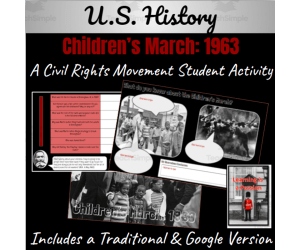
U.S. History: Children's March | Civil Rights Movement Activity
Social Studies, History, History: USA, Grade 8, 9, 10, 11, Teacher Tools, Lesson Plans
U.S. History: Children's March | Civil Rights Movement Activity This is a unique teaching resource that blends perfectly into your history or social studies curriculum , particularly developed for grade 8-11 students. Concentrating on the pivotal Children's March event from the Civil Rights Movement of 1963, this package allows educational exploration of a key period in history. Key Element - Mighty Times: The Children’s March Documentary The core component of this resource leans on an engaging public access video titled Mighty Times: The Children’s March. This 40-minute video remarkably demonstrates the courage and resilience portrayed by Birmingham children against segregation. An Engaging Learning Process Preliminary warm-up activity consists of analysing pictures or primary source excerpts directly associated with The Children's March. After viewing the documentary, additional understanding is attained through guided questions prompting deeper analysis. An optional extension adds another layer presenting real-life accounts from children involved in these demonstrations for further analysis. Resource Inclusions & Accessibility Options All essential materials are provided including student handouts and relevant website links, making it supremely adaptable whether planned for whole group education or smaller study groups; also feasible as homework assignment material! To ease classroom task integration compatibility issues both Google and traditional versions have been kept onboard. Aiding Teachers with Key Materials An accompanying answer key makes marking straightforward while also ensuring useful during peer-review sessions. Aid For Active Learning Focus Strategy Famous for promoting active learning strategies, resources like U.S. History: Children's march induce classrooms into lively learning atmospheres where students evolve as dynamic participators rather than mundane spectators of their educational journey.
Author Learning is a Passion
Tags Children's March, Civil Rights Movement, 1963, Birmingham, Documentary

Ancient Civilizations: Aztec, Inca, and Maya Unit Study
Social Studies, History, History: Ancient, Grade 3, 4, 5, 6, Lesson Plans, Teacher Tools
Discover the ancient Aztec, Maya and Inca societies with this expansive teaching kit. Through vivid posters, interactive maps and hands-on projects, core knowledge comes alive on topics like agriculture, architecture, culture and ultimately Spanish conquest. The bundle includes an assortment of fiction and non-fiction book recommendations, ensuring a well-rounded approach to learning about Aztec, Maya, and Inca civilizations. Beyond conventional learning materials, project and craft ideas breathe life into history, fostering hands-on engagement. Supplementing classroom instruction, curated links to YouTube videos and documentaries add a visual dimension to the educational experience. Timeline cards and illustrated narratives adapted to two reading levels chronicle the trajectory of each civilization. Enhance learning via coloring pages, glyph tracing activities and artifact analysis extensions. 3D crafts let students design codex books, geometric tunics and more. Assess comprehension with a competitive Jeopardy-style game addressing everything from staple foods like maize to the basics of the ritual ball game. This resource contains plentiful teacher support guiding connections to social studies standards for grades 3-6. Easily incorporate as a stand-alone Mesoamerican unit or alongside lessons on the conquistadors. Writing prompts facilitate connections across narrative, informative and persuasive genres. Writing prompts are provided at multiple writing levels to be accessible to all learners. Check out other resources from my store: Simply Schoolgirl! I can be contacted for questions and concerns at simplyschoolgirl1@gmail.com
Author Simply Schoolgirl
Rating 1
Tags Maya, Inca, Aztec, Ancient Civilizations, History Project, Central America, South America, Codex, Glyphs, Machu Picchu, Incas Aztecs Mayans Map, Inca Vs Aztec Vs Maya Map, Inca Aztec Maya, Inca Maya Aztec Map, Inca And Maya, Maya Inca Aztec Timeline, Aztec Inca, Mayan Aztec Inca, Inca Maya Aztec Timeline, Maya Inca Aztec Map, Maya Inca Aztec, Aztecs Incas Mayans, Inca And Mayan Civilization, Aztec Mayan Inca Timeline, Mayan Vs Aztec Vs Inca Timeline, Maya Aztec Inca Map, Aztec Vs Inca Vs Maya, Aztec Inca Maya Map, Aztec Mayan Inca Map, Mayan Aztec Inca Map, Aztec Maya And Inca Map, Inca Vs Aztec, Map Of Maya Aztec And Inca, Mayan And Inca, Aztec Inca And Maya Map, Map Of Aztecs Mayans And Incas, Inca And Mayan, Aztec Landform, Inca Maya, Aztecs Incas And Mayans, Inca Maya Aztecs, Inca And Aztec, Aztec Inca Mayan Timeline, Inca Vs Maya, Maya Aztec Inca Timeline, The Aztec Inca And Mayan Civilization, Mayan Aztec Inca Timeline, Aztec Incas Mayas, Incas Aztecs And Mayans, Aztec Maya Inca Timeline, Inca Aztec, Aztecs Inca Maya

Windmills Reading Comprehension Passage - Cored Ed Encyclopedia
ELA, Language Development, Reading Comprehension, Reading, Pre-Reading, Science, Technology, Physics, History, Social Studies, Grade 2, 3, 4, 5, Worksheets & Printables, Worksheets, Teacher Tools, Centers, Activities, Writing Prompts, Assessments, Quizzes and Tests, Quizzes, Lesson Plans
This windmills reading comprehension with lesson plan includes: Visualization (on the front cover) Start your lesson by taking a minute to think and share something about the topic. Read the script aloud (slowly), perhaps prepare some music or sound effects. Student close their eyes and let their imaginations wander. Students open their eyes, read the question aloud and give them a few minutes to complete. Ask a few students to share or keep answers until the end to compare with what they learn in the passage. Quick pause—thousands of Cored Education products are included with your TeachSimple membership. Download links and encyclopedia index available here. Pre-Reading Trivia Students will write down one thing they already know about the subject and then read five more facts and discuss. These facts are fun, and the students will enjoy learning about the subject before reading more. Give 1 minute for students to write what they already know (no pressure—best guess is fine). Read the five facts together. After each fact, do ask a student for their opinion, was it surprising? Set a purpose by asking students to highlight/underline one fact they want to learn more about during the reading. Reading Passage The text is a high-interest reading passage with set paragraphs, roughly three to four paragraphs long. It contains a variety of themes about the topic, anywhere from history to technology. The passage is between 250 and 350 words in length. First, ask students to look at the headings and see what they’ll learn about today. What do they know about the topic/heading? First read options: Teacher read-aloud (best for support). Partner reading (paragraph by paragraph). While reading, students underline important details, and vocabulary words they think may come up in the questions section. Mixed Questions The first question page contains four multiple-choice questions, each with a choice of four answers, and three written response questions that require a sentence or two from the student. Students complete the mcqs first independently, then review quickly as a class. For the 3 written responses, try to get students giving the answer with some form of evidence: “I think ___ because the text says ___.” If students get stuck, send them back to check the passage. Vocabulary Questions Practice seven key words from the text in this section across two activities. First section is scrambled words where students will unscramble three words given a clue for each. The second section is a word to meaning matching activity. Before starting, have some students read out words they underlined in the passage. Ask students to say the word and read aloud the sentence(s) around each word. Ask students to do scrambled words and the matching exercise in pairs then go through answers as a class. For the scrambled spelling task, get four pairs to come up to the board and write the words for extra practice with the other student reading out the clue. For the matching task, prompt students to give full sentences: “I matched ___ with ___ because ___.” Creative Writing In this question, the student will be required to write a five to eight sentence paragraph on a question related to the topic. Before starting, ask students write down 3 key ideas they are going to include in their piece. Ask students for ideas to share around the class to help those struggling. Pro writing expectations: 5–8 sentences At least 2 facts or details from the passage At least 2 vocabulary words from the previous page Students read their paragraphs while classmates listen for facts and vocabulary words. Extension Activities This page is optional for fast finishers or to take home. There are several activities, each one requiring a different skill. Do some, do none, do all, completely optional - but you will feel reassured knowing every possibility is planned for. Includes summary writting question. Answer Key There are answers for the multiple-choice questions, written response questions have sample answers, vocabulary answers and if there is a summary question then a sample summary will be provided as well. Lesson Plan Included Customized lesson plan for this lesson is included. Lesson Snapshot Title: Windmills Genre: Nonfiction (informational text) Subject: Science & Technology / Social Studies (history of technology) Primary Topic: How windmills evolved to do work Estimated Guided Reading Level (A–Z): Q What This Lesson Teaches Best Explains how people learned wind’s “steady push” could do work like grinding grain . Traces a clear history of windmills over time (western Asia → Europe → modern wind turbines). Shows how windmills were redesigned to solve problems in different places , such as pumping water out of low, wet land into canals. Introduces how modern wind turbines make electricity using lift , spinning blades, a shaft, and a generator . Learning Goals Students will describe how early windmills helped with grinding grain, using details from the passage. Students will identify where and when the text says the panemone was used. Students will explain how some European windmills were built to turn and face the wind. Students will describe how Dutch engineers used windmills to move water and help make dry land. Students will explain how a wind turbine makes electricity, based on the final section. Key Vocabulary From the Text panemone — an early windmill with cloth sails behind walls. shaft — a rod that turns to power a machine. millstones — heavy stones that grind wheat and rye into flour. canals — built waterways that carry water away from land. generator — a machine a spinning shaft turns to make electricity. FULL CATALOG OF DOWNLOAD LINKS AND ENCYCLOPEDIA INDEX HERE
Author Cored Education
Rating
Tags Vocabulary, Reading Comprehension, Reading Passages, Lesson Plans, Ela Lesson Plans, Reading Comprehension Lesson Plans, Pre-reading, Science Lesson Plans, History Lesson Plans, Technology
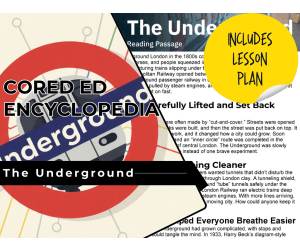
The Underground Reading Comprehension Passage - Cored Ed Encyclopedia
ELA, Language Development, Reading Comprehension, Reading, Science, Technology, Engineering, History, Social Studies, Geography, Grade 2, 3, 4, 5, Worksheets & Printables, Worksheets, Teacher Tools, Centers, Activities, Writing Prompts, Assessments, Quizzes and Tests, Quizzes, Lesson Plans
This Underground reading comprehension with lesson plan includes: Visualization (on the front cover) Start your lesson by taking a minute to think and share something about the topic. Read the script aloud (slowly), perhaps prepare some music or sound effects. Student close their eyes and let their imaginations wander. Students open their eyes, read the question aloud and give them a few minutes to complete. Ask a few students to share or keep answers until the end to compare with what they learn in the passage. Quick pause—thousands of Cored Education products are included with your TeachSimple membership. Download links and encyclopedia index available here. Pre-Reading Trivia Students will write down one thing they already know about the subject and then read five more facts and discuss. These facts are fun, and the students will enjoy learning about the subject before reading more. Give 1 minute for students to write what they already know (no pressure—best guess is fine). Read the five facts together. After each fact, do ask a student for their opinion, was it surprising? Set a purpose by asking students to highlight/underline one fact they want to learn more about during the reading. Reading Passage The text is a high-interest reading passage with set paragraphs, roughly three to four paragraphs long. It contains a variety of themes about the topic, anywhere from history to technology. The passage is between 250 and 350 words in length. First, ask students to look at the headings and see what they’ll learn about today. What do they know about the topic/heading? First read options: Teacher read-aloud (best for support). Partner reading (paragraph by paragraph). While reading, students underline important details, and vocabulary words they think may come up in the questions section. Mixed Questions The first question page contains four multiple-choice questions, each with a choice of four answers, and three written response questions that require a sentence or two from the student. Students complete the mcqs first independently, then review quickly as a class. For the 3 written responses, try to get students giving the answer with some form of evidence: “I think ___ because the text says ___.” If students get stuck, send them back to check the passage. Vocabulary Questions Practice seven key words from the text in this section across two activities. First section is scrambled words where students will unscramble three words given a clue for each. The second section is a word to meaning matching activity. Before starting, have some students read out words they underlined in the passage. Ask students to say the word and read aloud the sentence(s) around each word. Ask students to do scrambled words and the matching exercise in pairs then go through answers as a class. For the scrambled spelling task, get four pairs to come up to the board and write the words for extra practice with the other student reading out the clue. For the matching task, prompt students to give full sentences: “I matched ___ with ___ because ___.” Creative Writing In this question, the student will be required to write a five to eight sentence paragraph on a question related to the topic. Before starting, ask students write down 3 key ideas they are going to include in their piece. Ask students for ideas to share around the class to help those struggling. Pro writing expectations: 5–8 sentences At least 2 facts or details from the passage At least 2 vocabulary words from the previous page Students read their paragraphs while classmates listen for facts and vocabulary words. Extension Activities This page is optional for fast finishers or to take home. There are several activities, each one requiring a different skill. Do some, do none, do all, completely optional - but you will feel reassured knowing every possibility is planned for. Includes summary writting question. Answer Key There are answers for the multiple-choice questions, written response questions have sample answers, vocabulary answers and if there is a summary question then a sample summary will be provided as well. Lesson Plan Included Customized lesson plan for this lesson is included. Lesson Snapshot Title: The Underground Genre: Nonfiction (informational text) Subject: Social Studies (History) Primary Topic: How London built and improved the Underground Estimated Guided Reading Level (A–Z): R What This Lesson Teaches Best Explains why planners wanted trains under crowded London streets in the 1800s. Teaches key early-history facts, including the Metropolitan Railway opening on January 10, 1863, between Paddington and Farringdon. Describes the “cut-and-cover” method (opening streets like a trench, building tracks, then putting the street back). Shows how deeper “tube” tunnels and electric trains reduced street disruption and avoided steam smoke. Demonstrates how a clearer diagram-style map (Harry Beck, 1933) helped riders understand a complicated system. Learning Goals Students will explain why some planners imagined trains going under London in the 1800s. Students will identify what opened on January 10, 1863, and name the two stations connected in the text. Students will describe the steps of “cut-and-cover” tunnel building using details from the passage. Students will explain how digging deeper “tube” tunnels changed building the Underground and affected smoke underground. Students will explain how Harry Beck’s 1933 diagram-style map made the system easier to follow. Key Vocabulary From the Text Metropolitan — the name of an early London railway line. cut-and-cover — open a street, build tracks, rebuild street on top. tunneling — digging a passage underground. shield — a strong ring that helps bore tunnels safely. complicated — hard to understand because there are many parts. FULL CATALOG OF DOWNLOAD LINKS AND ENCYCLOPEDIA INDEX HERE
Author Cored Education
Rating
Tags Vocabulary, Reading Comprehension, Reading Passages, Lesson Plans, Ela Lesson Plans, Reading Comprehension Lesson Plans, Pre-reading, History, History Lesson Plans, Geography

Day of the Dragon King (Magic Tree House #14 Lesson Plan, Videos, Activities)
ELA, Social Studies, Reading, Reading Comprehension, Grammar, Literature, Language Development, Spelling, Vocabulary, Writing, History, History: Asian, Geography, Grade 1, 2, 3, Lesson Plans, Teacher Tools
Day of the Dragon King (Magic Tree House #14 Lesson Plan, Videos, Activities) A comprehensive NO PREP novel study designed for first through third grade classrooms which robustly covers Language Arts and seamlessly extends into Social Studies too. About the Resource Focused on the Day of the Dragon King from the popular Magic Tree House series, this resource constructs a 5-day lesson plan that cultivates students' comprehension and vocabulary through situations which engage them in activities within multiple subjects. The interactive format of exercises help reinforce understanding and appreciation for literature among students. What it Includes? Reading Skills: This is nurtured with chapter-wise comprehension quizzes. Vocabulary Building: Mastery is promoted via two distinct options to cater different learning styles. Writing Abilities: Capacities are sharpened as students get involved in writing craftivity expressions post reading sessions. Students also demonstrate their learnings via book review reports. Beyond Language Art's reach expands into Social Studies with compelling content: Geography-related tasks arouse curiosity about Asian locations central to this story; History-focused activities that impel research and exploration regarding fascinating elements from past-times related to China. The resource includes all essential worksheets required across course duration, . All interactive note-book pieces can be easily tweaked if tutors prefer reducing paper usage without hampering valuable discussions these segments instigate. Limited Paper Usage Option The planning emphasizes an interesting narrative experience fostering independent thought paired with a structured pattern ensuring retention amongst Grade 1-3 learners. All materials required are detailed, along with optional supplements so teachers have an effortless guided journey from preparation through closure of each chapter - viewed via videos leading towards suggested project-based activities. Summary Day of The Dragon King (Magic Tree House #14 Lesson Plan, Videos & Activities) is a comprehensive package that includes: language arts elevation via creative sentence construction opportunities; cultural exposure via Geography & Asian History lessons; and also cross-disciplinary integration fostering holistic knowledge acquisition among young learners.
Author Heather Huhman
Tags Magic Tree House, Comprehension, Vocabulary Enrichment, Writing Skills, Social Studies

Korean War: Background and Causes Gr. 5-8
Social Studies, History, History: USA, Grade 5, 6, 7, 8, Teacher Tools, Lesson Plans
"Korean War: Background and Causes Gr. 5-8" A comprehensive teaching resource, uniquely designed for educators focusing on History: USA. This resource delves into the sphere of the Korean War, addressing its potent background and causes. Designed to cover social studies curriculums from Grade 5 to Grade 8, this expansive learning material is a highly informative 27-page PDF that offers students an instructive overview of one of the most prominent events in world history - the first real conflict during the Cold War era. Pivotal Aspects Covered: Geography of North and South Korea. Potraitures of key figures during these events. Narration of major battles fought during this period. The Core Learning: This teaching source provides information about essential players such as President Harry S.Truman, Joseph Stalin, Kim Il-sung among others. It covers engaging details about significant battles that saw US troops grapple with North Korean army advances while introducing weaponry used during combat. This encourages practical learning by integrating hands-on activities presenting historical accounts more tangibly. "Beyond Text-Driven Narratives" Familiarizing students with post-world war tension between two superpowers—United States and Russia—and how it transitioned into what we understand today as 'The Cold War.' Their grasp on acquired knowledge is assessed through designated comprehension quizzeswith an answer key for further clarity when needed. Complementing its immersive content are crosswords and word searches infused to engage young minds. This product not only meets state standards but aligns with Bloom's Taxonomy. It can serve as an enlightening whole-group learning instrument, also suitable for small group instruction or individual students.
Author Classroom Complete Press
Tags Korean War, World War II, Soviet Union, Social Studies Lesson, History Passage
I WONDER - Where Was Saint Patrick From | Animated Video Lesson
History, Social Studies, History: Ancient, History: Europe, History: British, Grade 2, 3, 4, 5, 6, 7, 8, Lesson Plans, Teacher Tools
Video Introduction An amazing video designed for the students to learn more about history. I WONDER - Where Was Saint Patrick From | Animated Video Lesson Do you like history? Which topic do you really enjoy about history? Have you ever read an interesting fact about the Vikings? If yes, can you mention them? What do you like most about the Victorian era? Can you name all the Tudors? Have you ever wondered how people used to live in ancient Japan and ancient China? Do you know any interesting facts about ancient Egyptians and the Pharaohs? Have you ever visited South America? What do you know about Incas and Aztecs? Celtic culture was really one of a kind, can you name any of the places that Celts used to live in? Imagine yourself living during the ancient Roman empire, how your life will look like? Ancient Greece was an amazing place to live in. What do you know about ancient Greek life? I WONDER - Where Was Saint Patrick From | Animated Video Lesson The video is perfect for encouraging the researching skills for the students, while learning more about history. I WONDER - Where Was Saint Patrick From | Animated Video Lesson This friendly designed video is suitable for students at school, homeschooling, and as a group activity. Format Available in MP4 format.
Author Educational Voice
Tags Where Was Saint Patrick From, Where Was Saint Patrick From Video, Saint Patrick, Saint Patrick Video, Saint Patrick Facts, Saint Patrick Video For Kids, Saint Patrick Facts For Kids, Ireland

West Africa World History Unit
Social Studies, History, History: World, Grade 6, 7, 8, 9, Teacher Tools, Lesson Plans
West Africa World History Unit for Middle Schoolers Immerse your middle school students in the history of West Africa with this comprehensive unit. Through engaging readings, analysis questions, projects, flashcards, and more, students will gain an in-depth understanding of key topics like the geography of West Africa, the Ghana, Mali and Songhai Empires, and West African culture. Modified versions of all materials are included to support ELL students and those needing curriculum accommodations. Use the PowerPoint with vivid images and animations for whole-class learning. Students can also work through replacement note-taking slides independently. With a concluding multiple choice and short answer test, your students will feel equipped to tackle assessments on this important era. This unit brings West African history to life while building students’ knowledge and skills.
Author Mr Gray History
Tags West Africa, World History Unit, World History Assessment, Reading Worksheets, West African Geography, Ghana Empire, Crossword Puzzles

Unit of Study all about New Zealand
Social Studies, ELA, Economics, History, History: British, History: World, First Peoples (Native), Government, Geography, Reading, Reading Comprehension, Grammar, Language Development, Vocabulary, Spelling, Writing, Science, Life Sciences, Animals, Basic Science, Grade 4, 5, 6, Teacher Tools, Lesson Plans, Worksheets & Printables, Flashcards, Activities, Projects, Assessments, Worksheets
There's something magical about being able to bring the world into our classrooms. I'm excited to share with you a comprehensiveUnit of Study all about New Zealand. This resource is filled with meticulously designed tools to help our students journey into the vibrant heart of this incredible country. New Zealand, with its stunning landscapes and layered history, offers a world of exploration. Through this unit, our students will unravel tales, traditions, and truths that form the fabric of this nation. Designed with versatility in mind, we can shape the content to fit our students’ unique needs - be it age, reading proficiency, interests, or learning preferences. Here's a Glimpse of What's Inside: Lesson Plans: Flexible and adjustable, we can spread these out to suit our classroom pace and scheduling. Reading Passages: Each lesson is complemented by a passage, giving students a deep textual insight into New Zealand's many aspects. Videos: Handpicked to align with the readings, these videos provide a multisensory experience. Discussion Avenues: Thought-provoking prompts to foster classroom discussions and encourage student reflections. Vocabulary Boosters: Clear, defined vocabulary cards for every lesson. Additionally, dedicated dictionary activity pages will help our students enrich their lexicons. Note-taking & Graphic Organizers: Available in three formats, ensuring each student can comfortably document their learnings. Assessment Tools: Comprehensive tests, in both short answer and multiple-choice formats, come with ready answer keys for our convenience. Writing Opportunities: Every lesson comes with a structured prompt, allowing students to articulate their understanding. Hands-on Activities: Perfect for our kinesthetic learners, these activities are interactive and engaging. Designed with 4th to 6th graders in mind and spanning 345 pages, this PDF resource is ready to be printed and integrated into our lesson plans. It offers a rich, in-depth view of New Zealand, from its breathtaking nature to its societal structures. Whether you've been teaching for years in a school or are homeschooling, thisUnit of Study on New Zealandis a treasure trove. Together, let's embark on this enlightening journey and bring a slice of New Zealand to our eager learners. Happy teaching!
Author Heather Huhman
Tags New Zealand, Unit Study, Maori, Geography, History, James Cook, Ernest Rutherford, Auckland, Christchurch, Treaty Of Waitangi

Early Settlers: History - Hands On
Social Studies, History, History: USA, Grade 1, 2, 3, 4, Teacher Tools, Lesson Plans
'Early Settlers: History - Hands On' Teaching Resource Explore the rich tapestry of early American history with this immersive educational resource. Designed for Grades 1 through 4, 'Early Settlers: History - Hands On' takes learning beyond textbooks, inviting students to recreate the lives of America's first settlers in a hands-on, interactive way. A New Approach to History Lessons Traditional theoretical instruction takes a backseat with the 'Hands-On' approach: Inspired by true events: Students learn how settlers built huts using materials like sod bricks and straw coverings. Versatile: The activity can be implemented as a group project or as individual homework assignments where each student creates their own miniature settlement at home. A Seamless Integration into Your Existing Curriculum This teaching resource comes in the form of seamless lesson plans that are: - Ready to implement: It provides ready-to-implement instructions along with historical context. - Tailored to fit needs: Educators can modify lessons based on different classes and individual students. Digitally Ready Lessons Plans The Early Settler's History -Hands-On is available in PDF format ensuring availability on all digital platforms. It also negates any need for specialized software installations. The Outcome > Redefining classroom instruction, this method captures learners’ curiosity while equipping them with vital historical knowledge leading towards their overall development.
Author Classroom Complete Press
Tags PDF

Ancient Civilizations: Rome Unit Study
Social Studies, History, History: Ancient, Grade 3, 4, 5, 6, Lesson Plans, Teacher Tools
Reawaken the wonders of ancient Roman civilization with this expansive teaching toolkit. Through vivid posters, interactive maps and crafts, pupils uncover facets of daily life alongside major events that shaped Western history. Introduce figures like Julius Caesar and Caligula while tracing Rome’s rise and fall on an illustrated timeline. Articles adapted to two reading levels unpack triumphs in infrastructure along with gladiatorial spectacles. Extend comprehension via coloring pages, coin templates and hands-on activities /projects/projects-by-subject/math-projects/3d-projects">3D projects building chariots, wreaths and architectural marvels like the Colosseum. Interdisciplinary writing prompts, artifact analysis activities and video links encourage connections between past and present. Worksheets allow learners to outline their own Roman city informed by geography concepts. Assess retention with a competitive Jeopardy-style game addressing everything from Latin derivations to deities. This Roman Empire package contains plentiful teacher support outlining connections to social studies standards across grades 3-8. Easily incorporate engaging elements into existing units or facilitate an entire stand-alone study on the grandeur that was Rome. Through multi-sensory materials, tap into the visual, auditory and kinesthetic channels vital for concept retention. Rediscover what shaped Europe and the Mediterranean two millennia ago! Check out other resources from my store: Simply Schoolgirl! I can be contacted for questions and concerns at simplyschoolgirl1@gmail.com
Author Simply Schoolgirl
Tags Ancient Rome, Social Studies, Nonfiction Book, Artifacts, Landmarks, Italy, Romans, Aquaducts, Gladiators, Chariots, Rome Ancient Civilizations
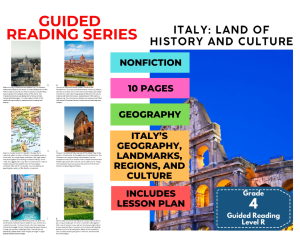
Italy History and Culture: Guided Reading Level R with Lesson Plan
ELA, Resources for Teachers, Reading Comprehension, Reading, Science, Geography, Social Studies, History, Earth and Environmental Sciences, Technology, Grade 3, 4, 5, Worksheets & Printables, Worksheets, Teacher Tools, Centers, Activities, Literacy Readers, Quizzes, Quizzes and Tests, Assessments, Lesson Plans
This Germany: The Heart of Europe (level r) guided reading book with lesson plan includes: Guided Reading Color Label (front cover x1) This is a quick way to match the book’s demands to what students can generally handle.. The overall goal is to use the level/color to pick books for several smaller groups. To qualify for a certain level, a student is expected to read a book from that level with about 90–94% accuracy. If a student is consistently accurate and understands, move up a level. If the student is struggling at that level, drop down and add more support. Each student will improve at completely different rates, but it is generally one of the best ways to check progress across the class. DOWNLOAD THE CATALOG TO VIEW ALL GUIDED READING BOOKS AVAILABLE (SORTED LEVELS A-Z) Pre-Reading Question (x1) Teacher asks the prompt aloud, can be while showing the cover or first page. Students share what they already know, or make educated guesses from the cover. Prompt them to use the target vocabulary. Write some of their responses on the board to look back at during the reading. Vocabulary Words (x5) Introduce the five words, best doing it one at a time. Start by saying it, while students repeat and then see if anyone knows what it means before reading further. Read through the meaning and try to briefly connect each word to a picture or gesture so it’s meaningful. Ask students to flip through the book pages and point to where they see each of the vocabulary words. While reading the book pause upon coming across one of the vocab words or read the sentence twice to make sure students understand the word has appeared. Optional: Ask students to raise hands whenever they see/hear one of the new words. Guided Reading Pages (x10) Check the book snapshot (below) for: primary topic - do you need to prep extra reading or intro materials on this? what is taught best - decide on 1-2 bullets to focus on, use the prompt or words provided here for best results. learning goals - what you are checking for students to be able to do after the session, elicit answers using prompts or words provided. key vocabulary (see section above). questions overview - so you know what is coming up and if you need to prep extra materials to assist understanding. Run the lesson You may have already looked at a few of the pages together, but you can show them some of the pictures again first to set meaning. Depending on how much time you have and how familiar your students are with guided reading class, you may want to read the book aloud first with the group first. Students whisper or partner read, while you listen in. If time, do it as a group, one student reading a page each. Use the guided page’s prompts to coach: “Check the picture / does it make sense?” “Point under the words / try the first sound” “Reread the sentence smoothly”. Try to focus more on one student per session (rotating every time), so you can work out if they are ready to move up or need to move down a level. Comprehension Questions (back cover x3) This is your way to check that students didn’t just say the words, but actually understood the text. First, let students answer by pointing to the page/picture and saying a short sentence. After any answer, follow with: “Show me where you found that in the text.” In bigger groups, have partners answer first (10–20 seconds), then call on 2–3 students to share. Differentiation tips: Emerging speakers/struggling readers: oral + pointing On-level: oral in a full sentence Higher: one written sentence or draw + label Book Snapshot Title: Italy: Land of History and Culture Genre: Nonfiction Subject: Social Studies (Geography/History/Culture) Primary Topic: Italy’s geography, landmarks, regions, and culture Estimated Guided Reading Level (A–Z): R What This Book Teaches Best Describes Italy’s location and physical geography , including its peninsula shape, the Alps, and the Mediterranean Sea. Highlights important historical landmarks and what they represent, such as the Colosseum and the Vatican City/St. Peter’s Basilica. Connects history to art and architecture through Florence and the Renaissance, including the Duomo’s engineering. Explains regional life and land use , including Tuscany’s landscape and agriculture (olive oil, grapes, ingredients for cooking). Shows how Italy blends past and present , from Pompeii and Mount Vesuvius to modern fashion, design, technology, cars, and trains. Learning Goals Students will describe Italy’s location and explain how the text describes its shape. Students will identify key facts about Rome and explain what the text says the Colosseum symbolizes today. Students will describe why Vatican City is important using details from the text. Students will explain why Florence is called the “Cradle of the Renaissance” using text details about arts and learning. Students will describe how Venice’s canals affect transportation in the city. Students will explain one way Italy influences the world today, based on the text’s examples of modern industry and innovation. Key Vocabulary From the Text peninsula — land surrounded by water on three sides. amphitheater — large open building for watching public events. Renaissance — time when art, science, and literature flourished. gondolas — long narrow boats used to travel Venice’s canals. archaeological — about studying the past by examining old remains. Discussion Prompts Pre-reading question: What places or foods do you already connect with Italy? Comprehension questions: What shape does the text say Italy resembles? Comprehension questions: What does the text say the Colosseum could hold in ancient times? Comprehension questions: What does the text say caused the Leaning Tower of Pisa to start tilting? Printing Tips 1. Best Printing Method (Recommended) “Booklet” Printing (Best if Available) If your printer or PDF viewer supports Booklet Printing , use this. Settings to use: Print mode: Booklet Paper size: Letter or A4 (either works) Orientation: Landscape Print on both sides: Yes Flip on: Short edge Scaling: Fit to printable area Booklet subset: First test: Front sides only Then: Back sides only This will automatically: Pair pages correctly Put the cover on the outside Align everything for folding After printing, fold in half and staple along the spine . 2. If “Booklet” Printing Is NOT Available You can still print this correctly with manual duplex printing . Step-by-step: Open the PDF. Choose Print . Set: Orientation: Landscape Pages per sheet: 1 Print on both sides: Yes Flip on: Short edge Print all pages . Because each PDF page already contains two facing book pages, the result will still fold cleanly into a book. Thousands of Cored Education products are included with your TeachSimple membership. Download links and encyclopedia index available here.
Author Cored Education
Rating
Tags Reading Comprehension, Reading Passages, Reading, Guided Reading, Guided Reading Lesson Plan, Guided Reading Activity, Pre-reading, Social Studies, Geography, History
British Loyalists | Reading Comprehension Deck | Interactive Lesson
Social Studies, History, History: British, Grade 8, 9, 10, 11, Teacher Tools, Lesson Plans
This reading comprehension deck is the perfect accessory to your Social Studies instruction! This digital slideshow presents British Loyalists. Within this slideshow, you will receive: -Video Lesson -Reading Passage w/ Audio -Close Reading -Quick Write The informational texts included in this resource alongside the informal assessments will keep your students engaged from beginning to end.
Author Teach Me This
Tags British Loyalists, Video Lesson, Sons Of Liberty, Social Studies Lesson, Comprehension

I WONDER - Did Girls Go To School In Ancient Rome | Animated Video
History: Ancient, History, Social Studies, History: Europe, Grade 2, 3, 4, 5, 6, 7, 8, Lesson Plans, Teacher Tools
Video Introduction An amazing video designed for the students to learn more about history. I WONDER - Did Girls Go To School In Ancient Rome | Animated Video Lesson Do you like history? Which topic do you really enjoy about history? Have you ever read an interesting fact about the Vikings? If yes, can you mention them? What do you like most about the Victorian era? Can you name all the Tudors? Have you ever wondered how people used to live in ancient Japan and ancient China? Do you know any interesting facts about ancient Egyptians and the Pharaohs? Have you ever visited South America? What do you know about Incas and Aztecs? Celtic culture was really one of a kind, can you name any of the places that Celts used to live in? Imagine yourself living during the ancient Roman empire, how your life will look like? Ancient Greece was an amazing place to live in. What do you know about ancient Greek life? I WONDER - Did Girls Go To School In Ancient Rome | Animated Video Lesson The video is perfect for encouraging the researching skills for the students, while learning more about history. I WONDER - Did Girls Go To School In Ancient Rome | Animated Video Lesson This friendly designed video is suitable for students at school, homeschooling, and as a group activity. Format Available in MP4 format.
Author Educational Voice
Tags Did Girls Go To School In Ancient Rome, Did Girls Go To School In Ancient Rome Video, School In Ancient Rome, Ancient Roman Schools, Ancient Roman Schools Video, Ancient Roman Schools Facts, Ancient Roman Schools Video For Kids

Judicial Branch of the Government: History Speaks . . .
Social Studies, History, Law, Grade 4, 5, 6, 7, 8, Teacher Tools, Lesson Plans
Judicial Branch of the Government: History Speaks This teaching tool is designed to enlighten students about the crucial aspects of our nation's judiciary system. It primarily focuses on subjects such as Social Studies and Law, taking a deep dive into the essence and functionalities of the Supreme Court. Our comprehensive lesson plan aims to answer questions like: Why is the Bill of Rights so important? What signifies personal rights from a legal perspective? The resource integrates seamlessly within various educational settings. It can serve as full class instruction during Social Studies periods, a deep-dive during law-subject class time for older grades, or supplemental homework material. The resource includes engaging research activities, focusing on notable Supreme Court cases. These tasks aim to boost student engagement while sharpening their research skills. In addition, we also have map exercises. These make education dynamic and fun while enhancing spatial awareness for planning local civics projects or understanding world geography. In Essence... Combining historical facts with imaginative activities makes learning about our Judicial system both entertaining and enlightening. This resource advocates for informed responsible citizenship by laying down a wholesome foundation about democratic principles. "The Judicial Branch of The Government: History Speaks": this teaching resource brings American Law alive in an understandable way. Transform your students into young historians prepared for life inside and beyond classroom confines.
Author Classroom Complete Press
Tags PDF
I WONDER - How Did Henry VIII Show Off His Wealth | Animated Video
History: British, History, Social Studies, History: Ancient, History: Europe, Grade 4, 5, 6, 7, 8, 9, 10, Lesson Plans, Teacher Tools
Video Introduction An amazing video designed for the students to learn more about history. I WONDER - How Did Henry VIII Show Off His Wealth | Animated Video Lesson Do you like history? Which topic do you really enjoy about history? Have you ever read an interesting fact about the Vikings? If yes, can you mention them? What do you like most about the Victorian era? Can you name all the Tudors? Have you ever wondered how people used to live in ancient Japan and ancient China? Do you know any interesting facts about ancient Egyptians and the Pharaohs? Have you ever visited South America? What do you know about Incas and Aztecs? Celtic culture was really one of a kind, can you name any of the places that Celts used to live in? Imagine yourself living during the ancient Roman empire, how your life will look like? Ancient Greece was an amazing place to live in. What do you know about ancient Greek life? I WONDER - How Did Henry VIII Show Off His Wealth | Animated Video Lesson The video is perfect for encouraging the researching skills for the students, while learning more about history. I WONDER - How Did Henry VIII Show Off His Wealth | Animated Video Lesson This friendly designed video is suitable for students at school, homeschooling, and as a group activity. Format Available in MP4 format.
Author Educational Voice
Tags How Did Henry VIII Show Off His Wealth, How Did Henry VIII Show Off His Wealth Video, Henry VIII, Henry VIII Facts, Henry VIII Video, Henry VIII Facts For Kids, Henry VIII Video For Kids , History
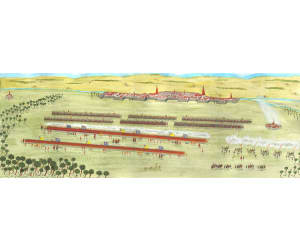
French and Indian War: "La Petite Guerre" Lesson
Social Studies, History, History: World, Grade 6, 7, 8, 9, Teacher Tools, Lesson Plans
The French and Indian War: La Petite Guerre Lesson This is a dynamic educational resource that primarily targets grade 6 to 9 educators and is optimized for Social Studies teachers with a focus on World History. Through it, students embark on an enriching exploration of the French and Indian war. Focus of content The lesson content centers around La Petite Guerre or small war, a term used by the French to denote the unique style of warfare employed by Native Americans. This part of the lesson ensures that students comprehend how wars in North America contrasted vastly from those in Europe during that time. They will also understand how these military tactics sharply differed from British approaches. Resource materials included Instructive text documents. Two PowerPoints files. Three Word documents. } An .MOV file (video clip). Two JPG files (images). The assorted set aligns with various learning styles promoting deeper student engagement and understanding. Diverse implementation options offered to teachers This resource can either be implemented as whole group instruction material or subdivided for intensive small group deliberations. Select resources within this bundle offer excellent homework assignment options extending learning beyond classroom confinement. Educational Impact Teachers have been provided with original source documents for their students enabling them get significant historical context along with solid evidence support thereby bolstering critical thinking abilities. You'll find wide applications ranging from improving cultural understanding power while amplifying comprehension on world history topics – making it an elixir whether you're homeschooling or engaged in public school teaching.
Author BCM Creations
Tags French And Indian War, La Petite Guerre, Native American Tactics, British Warfare, Primary Source Analysis

Lesson Plan on The Bill of Rights
Government, Social Studies, History: USA, History, Law, High School, Middle School, Lesson Plans, Teacher Tools, Worksheets & Printables
The Bill of Rights is made up of the initial 10 Amendments to the Constitution, detailing the rights of Americans concerning their government. It guarantees civil rights and freedoms for people, including freedom of expression, the press, and religion. It sets forth regulations for the due process of law and retains all powers not assigned to the Federal Government for the people or the States. Furthermore, it indicates that "the listing of specific rights in the Constitution shall not be interpreted to deny or belittle other rights kept by the people." The Bill of Rights is one of the most esteemed documents, protecting numerous individual liberties and shaping many of the most significant and controversial cases in federal courts. Nevertheless, for over a hundred years, the Bill of Rights stayed as one of America’s most hidden treasures. This lesson plan seeks to teach young learners about the significance of the Bill of Rights. It is intended to last around 90 minutes. The Student's Worksheet includes various activities, with each one having its own answer sheet.
Author Bright Classroom Ideas Marketplace
Tags Bill Of Rights, Lesson, Plan, Usa, Constitution

World War I: Background and Causes Gr. 5-8
Social Studies, History, History: World, Common Core, Grade 5, 6, 7, 8, Teacher Tools, Lesson Plans
'World War I: Background and Causes Gr. 5-8' is an astute teaching resource, designed to instill a comprehensive understanding of historical events for students between Grade 5 and Grade 8. It meticulously focuses on the catalytic events, key factors, and notable figures that triggered what history recognizes as 'The Great War' or 'the first man-made conflict in history'. This educational club directs students into delving deep into the antecedents of World War I - bringing concepts like Nationalism, Imperialism, & Militarism under their ambit of learning. A detailed account on how Europe's internal grudge burgeoned into international warfare post Archduke Franz Ferdinand's fateful death; aids learners understand that each global conflict is preceded by multiple prequels. This teaching guide comprises: An overview of eminent coalitions like The Triple Alliance & The Triple Entente. Epic Warwick instances such as The Battle Of Somme. In-depth exploration about America’s entry strategy & incidents causing their participation like sinking of Lusitania or news revelation hinting mainland attack possibilities. A noteworthy inclusion in this resource is its coverage regarding President Woodrow Wilson's Fourteen Point peace plan submitted before Congress - it provides a unique narrative adding dimension to the complex diplomatic relations amidst wartime scenario. The Industrial Revolution painted not only society but also war mechanisms with technological innovation colors. This tool helps discover the numerous inventions heightened due to industrialization altering weapons technology eventually. Notable After-effects: Treaties after wars had significant repercussions . Main short-term Effects: Geographic alterations in Europe post Treaty of Versailles Complying with your State Standards & Bloom's Taxonomy guidelines, it supports learning through comprehension quizzes aimed to fortify student engagement & retention. With word-searches & crosswords exercises included, this method ensures historical browsing doesn't stop only at books but includes elements of fun as well! The digital PDF format of this module contains lucid and detailed lesson plans under the arena of Social Studies focusing on World History. It proves to be an excellent educational tool for both group learning environments or individual study sessions - being immensely flexible across standard classrooms and homeschooling arrangements. In gist, 'World War I: Background and Causes Gr. 5-8' is a rich teaching resource sculpted to facilitate educators in communicating crucial historical wisdom among young learners.
Author Classroom Complete Press
Tags PDF

I WONDER - Did The Archaeopteryx Have Any Special Features
History: Ancient, History, Social Studies, History: World, Animals, Life Sciences, Science, Grade 4, 5, 6, 7, 8, 9, 10, Lesson Plans, Teacher Tools
Video Introduction An amazing video designed for the students to learn more about dinosaurs in different countries. I WONDER - Did The Archaeopteryx Have Any Special Features | Animated Video Lesson Do you like dinosaurs? what is your favorite one? Do you own a pet? If yes, tell us more about it, like what its name? And what do you like most about it? Do you think that your pet has been evolved from a dinosaur? Can you write down the characteristics of your favourite dinosaur like it's shape, their rivals, where did it use to live and what was their favourite food? What is the largest and the smallest dinosaur that ever found? Why is the T-rex is so famous? Have you ever read any interesting facts about it? Can you name any of the carnivores or herbivores dinosaurs? I WONDER - Did The Archaeopteryx Have Any Special Features | Animated Video Lesson The video is perfect for encouraging the researching skills for the students, while learning more about dinosaurs. I WONDER - Did The Archaeopteryx Have Any Special Features | Animated Video Lesson This friendly designed video is suitable for students at school, homeschooling, and as a group activity. Format Available in MP4 format.
Author Educational Voice
Rating
Tags Did The Archaeopteryx Have Any Special Features, Did The Archaeopteryx Have Any Special Features Video, Archaeopteryx, Archaeopteryx Video, Archaeopteryx Facts, Archaeopteryx Video For Kids, Archaeopteryx Facts For Kids

Lindbergh's Flight Across the Atlantic: History - Hands On
Social Studies, History, History: USA, Grade 1, 2, 3, 4, Teacher Tools, Lesson Plans
Lindbergh's Flight Across the Atlantic: History - Hands On This is a comprehensive teaching resource ideal forGrades 1 to 4. This learning material focuses on a significant historical event - Charles Lindbergh's ground-breaking flight from New York to Paris, which revolutionized commercial aviation. With this lesson plan, students get an in-depth insight into : How Lindbergh's early flying experiences prepared him for his remarkable achievement. The importance of viewing each flight as an incredible adventure. An understanding and appreciation for advancements in modern travel often taken-for-granted. Versatility and Ease-of-Use Specially crafted for educators, this lesson plan can be used either in a large lecture or divided among smaller focus groups. The material is also suitable for homework assignments, allowing students to learn at their own pace while cementing their classroom knowledge at home. Resource Format and Subjects Covered The resources come mainly in PDF format ensuring compatibility across all platforms especially easy printing if required. Although primarily categorized under Social Studies – 'History: USA,' the lesson also opens discussions about technological evolution, thoroughly stirring student curiosity towards science too. Aiming to Create Historically Aware Students? Choose Lindbergh's Flight Across Atlantic: History-Hands On! This teaching resource not only imbues life into history lessons but also nurtures curiosity among young minds about domestic air travels. Thus, any educator aiming at creating memorable learning experiences with fun yet meaningful content should consider incorporating this resource into their class plans.
Author Classroom Complete Press
Tags PDF
I WONDER - How Did A Celt Become A Druid | Animated Video Lesson
History: British, History, Social Studies, History: Europe, History: Ancient, Grade 4, 5, 6, 7, 8, 9, 10, Lesson Plans, Teacher Tools
Video Introduction An amazing video designed for the students to learn more about history. I WONDER - How Did A Celt Become A Druid | Animated Video Lesson Do you like history? Which topic do you really enjoy about history? Have you ever read an interesting fact about the Vikings? If yes, can you mention them? What do you like most about the Victorian era? Can you name all the Tudors? Have you ever wondered how people used to live in ancient Japan and ancient China? Do you know any interesting facts about ancient Egyptians and the Pharaohs? Have you ever visited South America? What do you know about Incas and Aztecs? Celtic culture was really one of a kind, can you name any of the places that Celts used to live in? Imagine yourself living during the ancient Roman empire, how your life will look like? Ancient Greece was an amazing place to live in. What do you know about ancient Greek life? I WONDER - How Did A Celt Become A Druid | Animated Video Lesson The video is perfect for encouraging the researching skills for the students, while learning more about history. I WONDER - How Did A Celt Become A Druid | Animated Video Lesson This friendly designed video is suitable for students at school, homeschooling, and as a group activity. Format Available in MP4 format.
Author Educational Voice
Tags How Did A Celt Become A Druid, How Did A Celt Become A Druid Video, Celt Druid, Celt Druids, Celt Druid Facts, Celt Druid Video, Celt Druid Facts For Kids, Celt Druid Video For Kids, Celt Druids Video

I WONDER - How Did Stone Age People Make Tools | Animated Video Lesson
History: Ancient, History, Social Studies, History: Asian, History: Europe, History: World, History: African, Grade 6, 7, 8, 9, 10, 11, 12, Lesson Plans, Teacher Tools
Video Introduction An amazing video designed for the students to learn more about history. I WONDER - How Did Stone Age People Make Tools | Animated Video Lesson Do you like history? Which topic do you really enjoy about history? Have you ever read an interesting fact about the Vikings? If yes, can you mention them? What do you like most about the Victorian era? Can you name all the Tudors? Have you ever wondered how people used to live in ancient Japan and ancient China? Do you know any interesting facts about ancient Egyptians and the Pharaohs? Have you ever visited South America? What do you know about Incas and Aztecs? Celtic culture was really one of a kind, can you name any of the places that Celts used to live in? Imagine yourself living during the ancient Roman empire, how your life will look like? Ancient Greece was an amazing place to live in. What do you know about ancient Greek life? I WONDER - How Did Stone Age People Make Tools | Animated Video Lesson The video is perfect for encouraging the researching skills for the students, while learning more about history. I WONDER - How Did Stone Age People Make Tools | Animated Video Lesson This friendly designed video is suitable for students at school, homeschooling, and as a group activity. Format Available in MP4 format.
Author Educational Voice
Tags How Did Stone Age People Make Tools, How Did Stone Age People Make Tools Video, Stone Age, Stone Age Facts, Stone Age Facts For Kids, Stone Age Video, Stone Age Video For Kids, Stone Age People