



3,911 products added recently
Page 29 - History Lesson Plans
Transport your students through time with history lesson plans that vividly illustrate past events and societies. These resources include primary sources, discussions, and projects. Implement them to foster critical thinking and a deeper understanding of our world's history.

 Show filters

I WONDER - What Is A Selkie | Animated Video Lesson
History, Social Studies, Common Core, Grade 4, 5, 6, 7, 8, 9, 10, Lesson Plans, Teacher Tools
Video Introduction An amazing video designed for the students to learn more about mythological creatures in different cultures. I WONDER - What Is A Selkie | Animated Video Lesson Mythology is full of wonders and spectacular stories. Ancient civilizations were trying to explore every aspect of life, while they search for new technologies, they wanted to believe in something big and can change the world, so they created mythical creatures and mythical stories. Let's hear about them! What do you know about these creatures? Cyclops, Centaurs, Selkies, Phoenix, Gnomes, Dragons, Gorgons, Orcs, Cerberus, Trolls, Minotaur, Griffins, Mermaids, Elves, Polyphemus, Pegasus, and Ogres. I WONDER - What Is A Selkie | Animated Video Lesson The video is perfect for encouraging the creativity skills for the students, while learning more about this fantastic mythical creature. I WONDER - What Is A Selkie | Animated Video Lesson This friendly designed video is suitable for students at school, homeschooling, and as a group activity. Format Available in MP4 format.
Author Educational Voice
Rating
Tags What Is A Selkie, What Is A Selkie Video, Selkie, Selkie Facts, Selkie Video, Selkie Video For Kids, Selkie Facts For Kids, Mythology, Mythology Facts, Mythology Video

"Cold War", Online Unit Access, US History
Social Studies, History, History: USA, Grade 10, 11, 12, Teacher Tools, Lesson Plans
Online Unit Access for US History - Cold War An exceptional teaching resource for educators specifically crafted to meet the New York State Frameworks curriculum is now available online. Geared towards exploring in depth the complex era of Cold War, this resource is targeted at grades 10 to 12 and can benefit any students from grades 7-12 studying US History. Virtuosities This online unit includes comprehensive tasks that are auto-corrected through AI grading assistant by InnovationAssessments.com. The technology efficiently scores even subjective tasks like short answers. The product being completely virtual, allows access anywhere with an internet connection. Teachers are provided necessary access codes via a PDF which can be shared with students, allowing them anytime-access engagement with the content. This powerful teaching tool stimulates critical thinking and promotes classroom discussions. Completing each task yields instant results that teachers can capture for further analysis; it also has features like importing tasks into their course playlist and analyzing student performance on assignments and tests. Topics Included: The intricacies of US history during the Cold War period 'Struggle For Equality' detailed chapter-wise modules including topics as immigration in modern era Packed with quizzes, post-tests and other analytical tools designed to enhance knowledge retention; this online material offers exhaustive covering of 20th century events that still have relevance today. The virtual nature of this educational tool makes it ideal for use in a modern educational setting while maintaining high academic standards.
Author Innovation Assessments LLC
Tags Cold War, US History, Online Unit, Cold War Era, Teaching Resource
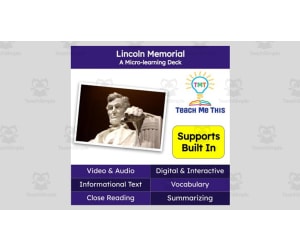
Lincoln Memorial | Reading Comprehension Deck | Interactive Lesson
Social Studies, History, History: USA, Grade 7, 8, 9, Teacher Tools, Lesson Plans
This reading comprehension deck is the perfect accessory to your Social Studies instruction! This digital slideshow presents Lincoln Memorial. Within this slideshow, you will receive: -Video Lesson -Reading Passage w/ Audio -Close Reading -Quick Write The informational texts included in this resource alongside the informal assessments will keep your students engaged from beginning to end.
Author Teach Me This
Tags Lincoln Memorial, Comprehension, Interactive Lesson, Video Lessons, Quick Write

I WONDER - What Was The Albertosaurus | Animated Video Lesson
History: Ancient, History, Social Studies, History: World, Animals, Life Sciences, Science, Grade 4, 5, 6, 7, 8, 9, 10, Lesson Plans, Teacher Tools
Video Introduction An amazing video designed for the students to learn more about dinosaurs in different countries. I WONDER - What Was The Albertosaurus | Animated Video Lesson Do you like dinosaurs? what is your favorite one? Do you own a pet? If yes, tell us more about it, like what its name? And what do you like most about it? Do you think that your pet has been evolved from a dinosaur? Can you write down the characteristics of your favourite dinosaur like it's shape, their rivals, where did it use to live and what was their favourite food? What is the largest and the smallest dinosaur that ever found? Why is the T-rex is so famous? Have you ever read any interesting facts about it? Can you name any of the carnivores or herbivores dinosaurs? I WONDER - What Was The Albertosaurus | Animated Video Lesson The video is perfect for encouraging the researching skills for the students, while learning more about dinosaurs. I WONDER - What Was The Albertosaurus | Animated Video Lesson This friendly designed video is suitable for students at school, homeschooling, and as a group activity. Format Available in MP4 format.
Author Educational Voice
Rating
Tags What Was The Albertosaurus, What Was The Albertosaurus Video, Albertosaurus, Albertosaurus Video, Albertosaurus Facts, Albertosaurus Facts For Kids, Albertosaurus Video For Kids, Dinosaur
I WONDER - Who Did The Greeks Descend From | Animated Video Lesson
History: Ancient, History, Social Studies, History: Europe, Grade 4, 5, 6, 7, 8, 9, 10, Lesson Plans, Teacher Tools
Video Introduction An amazing video designed for the students to learn more about history. I WONDER - Who Did The Greeks Descend From | Animated Video Lesson Do you like history? Which topic do you really enjoy about history? Have you ever read an interesting fact about the Vikings? If yes, can you mention them? What do you like most about the Victorian era? Can you name all the Tudors? Have you ever wondered how people used to live in ancient Japan and ancient China? Do you know any interesting facts about ancient Egyptians and the Pharaohs? Have you ever visited South America? What do you know about Incas and Aztecs? Celtic culture was really one of a kind, can you name any of the places that Celts used to live in? Imagine yourself living during the ancient Roman empire, how your life will look like? Ancient Greece was an amazing place to live in. What do you know about ancient Greek life? I WONDER - Who Did The Greeks Descend From | Animated Video Lesson The video is perfect for encouraging the researching skills for the students, while learning more about history. I WONDER - Who Did The Greeks Descend From | Animated Video Lesson This friendly designed video is suitable for students at school, homeschooling, and as a group activity. Format Available in MP4 format.
Author Educational Voice
Tags Who Did The Greeks Descend From, Who Did The Greeks Descend From Video, Greeks, Greeks Facts, Greeks Facts For Kids, Greeks Video, Greeks Video For Kids, Ancient Greeks, Ancient Greeks Video
I WONDER - What Was The Globe Theatre | Animated Video Lesson
History: Ancient, History, Social Studies, History: British, History: Europe, Grade 4, 5, 6, 7, 8, 9, 10, Lesson Plans, Teacher Tools
Video Introduction An amazing video designed for the students to learn more about history. I WONDER - What Was The Globe Theatre | Animated Video Lesson Do you like history? Which topic do you really enjoy about history? Have you ever read an interesting fact about the Vikings? If yes, can you mention them? What do you like most about the Victorian era? Can you name all the Tudors? Have you ever wondered how people used to live in ancient Japan and ancient China? Do you know any interesting facts about ancient Egyptians and the Pharaohs? Have you ever visited South America? What do you know about Incas and Aztecs? Celtic culture was really one of a kind, can you name any of the places that Celts used to live in? Imagine yourself living during the ancient Roman empire, how your life will look like? Ancient Greece was an amazing place to live in. What do you know about ancient Greek life? I WONDER - What Was The Globe Theatre | Animated Video Lesson The video is perfect for encouraging the researching skills for the students, while learning more about history. I WONDER - What Was The Globe Theatre | Animated Video Lesson This friendly designed video is suitable for students at school, homeschooling, and as a group activity. Format Available in MP4 format.
Author Educational Voice
Tags What Was The Globe Theatre, What Was The Globe Theatre Video, The Globe Theatre, The Globe Theatre History, The Globe Theatre Video, The Globe Theatre Facts, The Globe Theatre Facts For Kids

I WONDER - Where Did The Emperor Sit In The Colosseum | Animated Video
Geography, Social Studies, History: Ancient, History, History: Europe, Grade 4, 5, 6, 7, 8, 9, 10, Lesson Plans, Teacher Tools
Video Introduction An amazing video designed for the students to learn more about history. I WONDER - Where Did The Emperor Sit In The Colosseum | Animated Video Lesson Do you like history? Which topic do you really enjoy about history? Have you ever read an interesting fact about the Vikings? If yes, can you mention them? What do you like most about the Victorian era? Can you name all the Tudors? Have you ever wondered how people used to live in ancient Japan and ancient China? Do you know any interesting facts about ancient Egyptians and the Pharaohs? Have you ever visited South America? What do you know about Incas and Aztecs? Celtic culture was really one of a kind, can you name any of the places that Celts used to live in? Imagine yourself living during the ancient Roman empire, how your life will look like? Ancient Greece was an amazing place to live in. What do you know about ancient Greek life? I WONDER - Where Did The Emperor Sit In The Colosseum | Animated Video Lesson The video is perfect for encouraging the researching skills for the students, while learning more about history. I WONDER - Where Did The Emperor Sit In The Colosseum | Animated Video Lesson This friendly designed video is suitable for students at school, homeschooling, and as a group activity. Format Available in MP4 format.
Author Educational Voice
Tags Where Did The Emperor Sit In The Colosseum, Where Did The Emperor Sit In The Colosseum Video, The Colosseum, The Colosseum Facts, The Colosseum Video, The Emperor, The Emperor Video
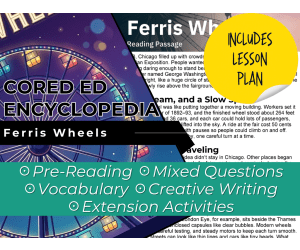
Ferris Wheels Reading Comprehension Passage - Cored Ed Encyclopedia
ELA, Reading Comprehension, Reading, Science, Technology, Language Development, Social Studies, History, Pre-Reading, Writing, Grade 2, 3, 4, 5, Worksheets & Printables, Worksheets, Teacher Tools, Centers, Activities, Writing Prompts, Assessments, Quizzes and Tests, Quizzes, Lesson Plans
This Ferris wheels reading comprehension with lesson plan includes: Visualization (on the front cover) Start your lesson by taking a minute to think and share something about the topic. Read the script aloud (slowly), perhaps prepare some music or sound effects. Student close their eyes and let their imaginations wander. Students open their eyes, read the question aloud and give them a few minutes to complete. Ask a few students to share or keep answers until the end to compare with what they learn in the passage. Quick pause—thousands of Cored Education products are included with your TeachSimple membership. Download links and encyclopedia index available here. Pre-Reading Trivia Students will write down one thing they already know about the subject and then read five more facts and discuss. These facts are fun, and the students will enjoy learning about the subject before reading more. Give 1 minute for students to write what they already know (no pressure—best guess is fine). Read the five facts together. After each fact, do ask a student for their opinion, was it surprising? Set a purpose by asking students to highlight/underline one fact they want to learn more about during the reading. Reading Passage The text is a high-interest reading passage with set paragraphs, roughly three to four paragraphs long. It contains a variety of themes about the topic, anywhere from history to technology. The passage is between 250 and 350 words in length. First, ask students to look at the headings and see what they’ll learn about today. What do they know about the topic/heading? First read options: Teacher read-aloud (best for support). Partner reading (paragraph by paragraph). While reading, students underline important details, and vocabulary words they think may come up in the questions section. Mixed Questions The first question page contains four multiple-choice questions, each with a choice of four answers, and three written response questions that require a sentence or two from the student. Students complete the mcqs first independently, then review quickly as a class. For the 3 written responses, try to get students giving the answer with some form of evidence: “I think ___ because the text says ___.” If students get stuck, send them back to check the passage. Vocabulary Questions Practice seven key words from the text in this section across two activities. First section is scrambled words where students will unscramble three words given a clue for each. The second section is a word to meaning matching activity. Before starting, have some students read out words they underlined in the passage. Ask students to say the word and read aloud the sentence(s) around each word. Ask students to do scrambled words and the matching exercise in pairs then go through answers as a class. For the scrambled spelling task, get four pairs to come up to the board and write the words for extra practice with the other student reading out the clue. For the matching task, prompt students to give full sentences: “I matched ___ with ___ because ___.” Creative Writing In this question, the student will be required to write a five to eight sentence paragraph on a question related to the topic. Before starting, ask students write down 3 key ideas they are going to include in their piece. Ask students for ideas to share around the class to help those struggling. Pro writing expectations: 5–8 sentences At least 2 facts or details from the passage At least 2 vocabulary words from the previous page Students read their paragraphs while classmates listen for facts and vocabulary words. Extension Activities This page is optional for fast finishers or to take home. There are several activities, each one requiring a different skill. Do some, do none, do all, completely optional - but you will feel reassured knowing every possibility is planned for. Includes summary writting question and additional facts. Answer Key There are answers for the multiple-choice questions, written response questions have sample answers, vocabulary answers and if there is a summary question then a sample summary will be provided as well. Lesson Plan Included Customized lesson plan for this lesson is included. Lesson Snapshot Title: Ferris Wheels Genre: Nonfiction (Informational Text) Subject: Social Studies (History) / Science & Technology / Reading (Informational Text) Primary Topic: Origins, design, and purpose of Ferris wheels Estimated Guided Reading Level (A–Z): P What This Lesson Teaches Best Explains the origin story of the first Ferris wheel at the 1893 Chicago world’s fair and why people wanted a daring new attraction. Uses clear facts and measurements (about 264 feet/80 meters , 36 cars , ride cost and time) to build informational reading skills. Shows how Ferris wheels spread to new places and why they’re also called “observation wheels” (because looking is part of the fun). Compares past and present Ferris wheels, including modern wheels built for slow sightseeing like the London Eye with enclosed capsules. Highlights how modern wheels rely on strong steel, careful testing, and steady motors for smooth turns. Learning Goals Students will describe why the 1893 world’s fair crowd wanted something “brand-new” to see. Students will identify key details about the first Ferris wheel (height, number of cars, ride time, and cost). Students will explain why Ferris wheels are also called “observation wheels” using evidence from the text. Students will describe how Ferris wheels spread to other places after Chicago, including the example in Vienna. Students will compare how some Ferris wheels are designed for thrills versus slow sightseeing today. Key Vocabulary From the Text Exposition — a huge fair where inventions and exhibits are shown. engineer — a person who designs and builds things. fairgrounds — the area where a fair is held. capsules — closed pods that carry riders on a wheel. skyline — the outline of a city’s buildings against the sky. FULL CATALOG OF DOWNLOAD LINKS AND ENCYCLOPEDIA INDEX HERE
Author Cored Education
Rating
Tags Vocabulary, Reading Comprehension, Reading Passages, Lesson Plans, Ela Lesson Plans, Reading Comprehension Lesson Plans, Pre-reading, Science Lesson Plans, Social Studies Lesson Plans, History
I WONDER - Where Did The Archaeopteryx Live | Animated Video Lesson
History: Ancient, History, Social Studies, History: World, Animals, Life Sciences, Science, Grade 4, 5, 6, 7, 8, 9, 10, Lesson Plans, Teacher Tools
Video Introduction An amazing video designed for the students to learn more about dinosaurs in different countries. I WONDER - Where Did The Archaeopteryx Live | Animated Video Lesson Do you like dinosaurs? what is your favorite one? Do you own a pet? If yes, tell us more about it, like what its name? And what do you like most about it? Do you think that your pet has been evolved from a dinosaur? Can you write down the characteristics of your favourite dinosaur like it's shape, their rivals, where did it use to live and what was their favourite food? What is the largest and the smallest dinosaur that ever found? Why is the T-rex is so famous? Have you ever read any interesting facts about it? Can you name any of the carnivores or herbivores dinosaurs? I WONDER - Where Did The Archaeopteryx Live | Animated Video Lesson The video is perfect for encouraging the researching skills for the students, while learning more about dinosaurs. I WONDER - Where Did The Archaeopteryx Live | Animated Video Lesson This friendly designed video is suitable for students at school, homeschooling, and as a group activity. Format Available in MP4 format.
Author Educational Voice
Rating
Tags Where Did The Archaeopteryx Live, Where Did The Archaeopteryx Live Video, Archaeopteryx, Archaeopteryx Facts, Archaeopteryx Video, Archaeopteryx Video For Kids, Archaeopteryx Facts For Kids
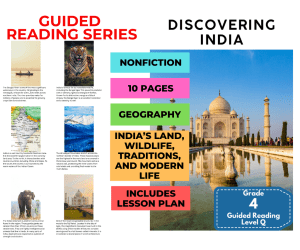
Discovering India: Guided Reading Level Q with Lesson Plan
ELA, Resources for Teachers, Reading Comprehension, Reading, Science, Geography, Social Studies, Technology, History, Life Sciences, Grade 3, 4, 5, Worksheets & Printables, Worksheets, Teacher Tools, Centers, Activities, Literacy Readers, Quizzes, Quizzes and Tests, Assessments, Lesson Plans
This Discovering India (level q) guided reading book with lesson plan includes: Guided Reading Color Label (front cover x1) This is a quick way to match the book’s demands to what students can generally handle.. The overall goal is to use the level/color to pick books for several smaller groups. To qualify for a certain level, a student is expected to read a book from that level with about 90–94% accuracy. If a student is consistently accurate and understands, move up a level. If the student is struggling at that level, drop down and add more support. Each student will improve at completely different rates, but it is generally one of the best ways to check progress across the class. DOWNLOAD THE CATALOG TO VIEW ALL GUIDED READING BOOKS AVAILABLE (SORTED LEVELS A-Z) Pre-Reading Question (x1) Teacher asks the prompt aloud, can be while showing the cover or first page. Students share what they already know, or make educated guesses from the cover. Prompt them to use the target vocabulary. Write some of their responses on the board to look back at during the reading. Vocabulary Words (x5) Introduce the five words, best doing it one at a time. Start by saying it, while students repeat and then see if anyone knows what it means before reading further. Read through the meaning and try to briefly connect each word to a picture or gesture so it’s meaningful. Ask students to flip through the book pages and point to where they see each of the vocabulary words. While reading the book pause upon coming across one of the vocab words or read the sentence twice to make sure students understand the word has appeared. Optional: Ask students to raise hands whenever they see/hear one of the new words. Guided Reading Pages (x10) Check the book snapshot (below) for: primary topic - do you need to prep extra reading or intro materials on this? what is taught best - decide on 1-2 bullets to focus on, use the prompt or words provided here for best results. learning goals - what you are checking for students to be able to do after the session, elicit answers using prompts or words provided. key vocabulary (see section above). questions overview - so you know what is coming up and if you need to prep extra materials to assist understanding. Run the lesson You may have already looked at a few of the pages together, but you can show them some of the pictures again first to set meaning. Depending on how much time you have and how familiar your students are with guided reading class, you may want to read the book aloud first with the group first. Students whisper or partner read, while you listen in. If time, do it as a group, one student reading a page each. Use the guided page’s prompts to coach: “Check the picture / does it make sense?” “Point under the words / try the first sound” “Reread the sentence smoothly”. Try to focus more on one student per session (rotating every time), so you can work out if they are ready to move up or need to move down a level. Comprehension Questions (back cover x3) This is your way to check that students didn’t just say the words, but actually understood the text. First, let students answer by pointing to the page/picture and saying a short sentence. After any answer, follow with: “Show me where you found that in the text.” In bigger groups, have partners answer first (10–20 seconds), then call on 2–3 students to share. Differentiation tips: Emerging speakers/struggling readers: oral + pointing On-level: oral in a full sentence Higher: one written sentence or draw + label Book Snapshot Title: Discovering India Genre: Nonfiction Subject: Social Studies (Geography/Culture) Primary Topic: India’s land, wildlife, traditions, and modern life Estimated Guided Reading Level (A–Z): Q What This Book Teaches Best Key geography facts about India’s location in Southern Asia, nearby borders, and surrounding waters. How landforms shape life in India, including the Himalayan Mountains and the Ganges River. Notable wildlife of India through examples like the Bengal tiger and the Indian elephant. Cultural traditions and everyday life, including spices used in meals and the celebration of Diwali. Modern India today, including transportation (auto-rickshaws) and major cities connected to technology and innovation. Learning Goals Students will describe where India is located and name details about its borders and southern waters. Students will explain how the Himalayan Mountains are described as protecting the inner plains. Students will explain why the Ganges River is important to people and farming in northern India. Students will describe key traits of the Bengal tiger and the Indian elephant using details from the text. Students will identify facts about the Taj Mahal, including where it is and features described in the book. Students will describe examples of Indian culture and modern life mentioned in the text (foods/spices, Diwali, transportation, cities). Key Vocabulary From the Text vast — very large in size. significant — very important. distinctive — easy to notice because it looks different. minarets — tall towers on a monument. diyas — small clay lamps used during Diwali. Discussion Prompts Pre-reading question: What are you hoping to learn about India as you read? Comprehension questions: What warm waters does the text say surround India to the south? Comprehension questions: According to the text, why is the Ganges River essential? Comprehension questions: What does the text say diyas symbolize during Diwali? Printing Tips 1. Best Printing Method (Recommended) “Booklet” Printing (Best if Available) If your printer or PDF viewer supports Booklet Printing , use this. Settings to use: Print mode: Booklet Paper size: Letter or A4 (either works) Orientation: Landscape Print on both sides: Yes Flip on: Short edge Scaling: Fit to printable area Booklet subset: First test: Front sides only Then: Back sides only This will automatically: Pair pages correctly Put the cover on the outside Align everything for folding After printing, fold in half and staple along the spine . 2. If “Booklet” Printing Is NOT Available You can still print this correctly with manual duplex printing . Step-by-step: Open the PDF. Choose Print . Set: Orientation: Landscape Pages per sheet: 1 Print on both sides: Yes Flip on: Short edge Print all pages . Because each PDF page already contains two facing book pages, the result will still fold cleanly into a book. Thousands of Cored Education products are included with your TeachSimple membership. Download links and encyclopedia index available here.
Author Cored Education
Rating
Tags Reading Comprehension, Reading Passages, Reading, Guided Reading, Guided Reading Lesson Plan, Guided Reading Activity, Pre-reading, Social Studies, Geography, History

I WONDER - Why Did The Apatosaurus Have A Long Neck And Tail
History: Ancient, History, Social Studies, History: World, Animals, Life Sciences, Science, Grade 3, 4, 5, 6, 7, 8, 9, Lesson Plans, Teacher Tools
Video Introduction An amazing video designed for the students to learn more about dinosaurs in different countries. I WONDER - Why Did The Apatosaurus Have A Long Neck And Tail | Animated Video Lesson Do you like dinosaurs? what is your favorite one? Do you own a pet? If yes, tell us more about it, like what its name? And what do you like most about it? Do you think that your pet has been evolved from a dinosaur? Can you write down the characteristics of your favourite dinosaur like it's shape, their rivals, where did it use to live and what was their favourite food? What is the largest and the smallest dinosaur that ever found? Why is the T-rex is so famous? Have you ever read any interesting facts about it? Can you name any of the carnivores or herbivores dinosaurs? I WONDER - Why Did The Apatosaurus Have A Long Neck And Tail | Animated Video Lesson The video is perfect for encouraging the researching skills for the students, while learning more about dinosaurs. I WONDER - Why Did The Apatosaurus Have A Long Neck And Tail | Animated Video Lesson This friendly designed video is suitable for students at school, homeschooling, and as a group activity. Format Available in MP4 format.
Author Educational Voice
Rating
Tags Why Did The Apatosaurus Have A Long Neck And Tail, Why Did The Apatosaurus Have A Long Neck And Tail Video, Apatosaurus, Apatosaurus Facts, Apatosaurus Video, Apatosaurus Facts For Kids, Apatosaurus Video For Kids
I WONDER - How Was The Microwave Invented | Animated Video Lesson
History, Social Studies, History: World, History: Europe, History: British, Inventors, Basic Science, Science, Grade 4, 5, 6, 7, 8, 9, 10, Lesson Plans, Teacher Tools
Video Introduction An amazing video designed for the students to learn more about history. I WONDER - How Was The Microwave Invented | Animated Video Lesson Do you like history? Which topic do you really enjoy about history? Have you ever read an interesting fact about the Vikings? If yes, can you mention them? What do you like most about the Victorian era? Can you name all the Tudors? Have you ever wondered how people used to live in ancient Japan and ancient China? Do you know any interesting facts about ancient Egyptians and the Pharaohs? Have you ever visited South America? What do you know about Incas and Aztecs? Celtic culture was really one of a kind, can you name any of the places that Celts used to live in? Imagine yourself living during the ancient Roman empire, how your life will look like? Ancient Greece was an amazing place to live in. What do you know about ancient Greek life? I WONDER - How Was The Microwave Invented | Animated Video Lesson The video is perfect for encouraging the researching skills for the students, while learning more about history. I WONDER - How Was The Microwave Invented | Animated Video Lesson This friendly designed video is suitable for students at school, homeschooling, and as a group activity. Format Available in MP4 format.
Author Educational Voice
Tags How Was The Microwave Invented, How Was The Microwave Invented Video, The Microwave, Microwave History, Microwave History Facts, Microwave History Video, Microwave History Video For Kids

World War II: New Weapons of War
Social Studies, History, History: World, Common Core, Grade 5, 6, 7, 8, Teacher Tools, Lesson Plans
World War II: New Weapons of War This educational resource provides an excellent source of learning for fifth to eighth-grade students, bringing forth the technological advancements and warfare tools used during World War II. The beginning elaborates on Germany's invasion of Poland on September 1, 1939, signifying the start of World War II. It delivers an extensive understanding of Germany's role in the war, coupled with deep insights into critical battles like Normandy. Following this, students delve into how this devastating war spanning over six years involved more than 200 nations causing colossal loss and destruction. The intention here is to demystify intricate social studies concepts for remedial grade-level pupils using simplified language and thorough reviews. This approach aids instructors in effortlessly elucidating complex topics, thereby enriching students' historical awareness. Educational Tools Incorporated: Reading passages nourish their learning capabilities. Lively student activities promote interactive learning experiences. Detailed color mini posters serve as visual aids encouraging further comprehension. Note: The educational resource can be flexibly applied in different instructional scenarios such as whole-class teachings or small group sessions based on pedagogic requirements or individual student needs. Additionally,it functions well as homework assignments ensuring continued learning beyond classrooms too. Bonus Points: All materials included align well with Common Core State Standards amplifying a significant correlation between active learning and set academic milestones. Furthermore,the lessons are structured using Bloom's Taxonomy that facilitates comprehensive thinking integration contributing significantly towards nurturing informed citizens set for future challenges. About the Product File: This single product file specially caters to grade five through eight Social Studies curricula zeroed in on World History, presented in an easily accessible PDF format ensuring compatibility across various devices for usage at any time or place. It is a valuable tool charged with beneficial historical wisdom promising competent facilitation.
Author Classroom Complete Press
Tags PDF

Baseball Reading Comprehension Passage - Cored Ed Encyclopedia
ELA, Language Development, Reading Comprehension, Reading, Social Studies, Writing, Vocabulary, History, Geography, Pre-Reading, Grade 2, 3, 4, 5, Worksheets & Printables, Worksheets, Teacher Tools, Centers, Activities, Writing Prompts, Assessments, Quizzes and Tests, Quizzes, Lesson Plans
This baseball reading comprehension with lesson plan includes: Visualization (on the front cover) Start your lesson by taking a minute to think and share something about the topic. Read the script aloud (slowly), perhaps prepare some music or sound effects. Student close their eyes and let their imaginations wander. Students open their eyes, read the question aloud and give them a few minutes to complete. Ask a few students to share or keep answers until the end to compare with what they learn in the passage. COMPANION VIDEO NOW AVAILABLE (EMBEDDED AFTER PREVIEW PICTURES IN PRODUCT DESCRIPTION) Quick pause—thousands of Cored Education products are included with your TeachSimple membership. Download links and encyclopedia index available here. Pre-Reading Trivia Students will write down one thing they already know about the subject and then read five more facts and discuss. These facts are fun, and the students will enjoy learning about the subject before reading more. Give 1 minute for students to write what they already know (no pressure—best guess is fine). Read the five facts together. After each fact, do ask a student for their opinion, was it surprising? Set a purpose by asking students to highlight/underline one fact they want to learn more about during the reading. Reading Passage The text is a high-interest reading passage with set paragraphs, roughly three to four paragraphs long. It contains a variety of themes about the topic, anywhere from history to technology. The passage is between 250 and 350 words in length. First, ask students to look at the headings and see what they’ll learn about today. What do they know about the topic/heading? First read options: Teacher read-aloud (best for support). Partner reading (paragraph by paragraph). While reading, students underline important details, and vocabulary words they think may come up in the questions section. Mixed Questions The first question page contains four multiple-choice questions, each with a choice of four answers, and three written response questions that require a sentence or two from the student. Students complete the mcqs first independently, then review quickly as a class. For the 3 written responses, try to get students giving the answer with some form of evidence: “I think ___ because the text says ___.” If students get stuck, send them back to check the passage. Vocabulary Questions Practice seven key words from the text in this section across two activities. First section is scrambled words where students will unscramble three words given a clue for each. The second section is a word to meaning matching activity. Before starting, have some students read out words they underlined in the passage. Ask students to say the word and read aloud the sentence(s) around each word. Ask students to do scrambled words and the matching exercise in pairs then go through answers as a class. For the scrambled spelling task, get four pairs to come up to the board and write the words for extra practice with the other student reading out the clue. For the matching task, prompt students to give full sentences: “I matched ___ with ___ because ___.” Creative Writing In this question, the student will be required to write a five to eight sentence paragraph on a question related to the topic. Before starting, ask students write down 3 key ideas they are going to include in their piece. Ask students for ideas to share around the class to help those struggling. Pro writing expectations: 5–8 sentences At least 2 facts or details from the passage At least 2 vocabulary words from the previous page Students read their paragraphs while classmates listen for facts and vocabulary words. Extension Activities This page is optional for fast finishers or to take home. There are several activities, each one requiring a different skill. Do some, do none, do all, completely optional - but you will feel reassured knowing every possibility is planned for. Includes summary writting question and additional facts. Answer Key There are answers for the multiple-choice questions, written response questions have sample answers, vocabulary answers and if there is a summary question then a sample summary will be provided as well. Lesson Plan Included Customized lesson plan for this lesson is included. Lesson Snapshot Title: Baseball Genre: Nonfiction (informational passage) Subject: Physical Education / Social Studies (Sports history) / Reading (Informational Text) Primary Topic: How baseball works and how it spread Estimated Guided Reading Level (A–Z): S What This Lesson Teaches Best Clear explanation of how a baseball game works (bases in a diamond, two teams, innings, outs, extra innings). How shared written rules helped organize the modern game (clubs writing rules; later standards like nine innings and a 90-foot base path). A brief timeline of key turning points using dates and evidence (1845 rules, 1869 first all-professional team, 1903 World Series, 1872 introduction in Japan). How baseball changed as it grew (teams traveling, paid players, big leagues forming, some leagues using timing rules). How baseball spread beyond its early American home (popularity across parts of the Americas and East Asia). Learning Goals Identify key parts of a baseball game described in the passage (bases, teams, innings, outs, extra innings). Explain how keeping shared rules helped baseball become more organized. Describe the “safer idea” included in the 1845 rules. Describe what it meant for baseball to turn “professional,” using details from the text. Retell the passage’s key dates in order and explain what happened at each date. Describe how the passage shows baseball spreading to new places and continuing to change. Key Vocabulary From the Text inning — part of the game when teams take turns playing. outs — times when a player is put out. standards — agreed-upon rules that many people follow. professional — paid to play as a job. leagues — organized groups of teams that play each other. FULL CATALOG OF DOWNLOAD LINKS AND ENCYCLOPEDIA INDEX HERE
Author Cored Education
Rating
Tags Vocabulary, Reading Comprehension, Reading Passages, Lesson Plans, Ela Lesson Plans, Reading Comprehension Lesson Plans, Pre-reading, History, History Lesson Plans, Social Studies Lesson Plans

Argumentative Letter on a Candidate or Mandatory Voting
Social Studies, ELA, Government, History, History: USA, Writing, Grade 7, 8, 9, Teacher Tools, Lesson Plans
The low-prep, 27-page resource, Argumentative Letter on a Candidate or Mandatory Voting has your middle and high school students take a position on either which presidential candidate to support or whether voting should be mandatory in the United States, write a 4-paragraph argumentative letter to the editor, and then send them off to online sites that accept letters to the editors, such as local, state, or national news sites. I have included links to four online articles that address the pros and cons of making voting mandatory in the United States that the students can use for their research. If your students choose to do the candidate letter, this lesson works best if students have done my lesson, Where the Candidates Stand on the Issues or something similar to that. This lesson doesn’t specifically teach how to write an argumentative essay. It builds on what students already know, assuming they have already written argumentative essays. Embedded in this lesson are a brainstorming activity for evidence and analysis, a template for writing the essay, a graphic organizer all of which provide scaffolded support to your diverse range of writers, and a rubric. Argumentative Letter on a Candidate or Mandatory Voting includes the following: a hyperlinked Table of Contents About this Resource-- an easy-to-use guide to everything you need to know about this resource a forced link copy to the Google Doc Common Core Literacy Standards for Writing in History Objectives and Learning Targets An Essential Question for Each Prompt: For the Candidate Letter to the Editor: What key qualities and policies make one presidential candidate more suitable than another? For the Mandatory Voting Letter to the Editor: Should voting be mandatory in a democratic society? 3 Guiding Questions for Each Prompt: For the Candidate Letter to the Editor: What are the major policy differences between the two candidates? How do the candidates' backgrounds and experiences shape their suitability for the presidency? Which candidate's proposed solutions do you believe are more effective in addressing current societal challenges? For the Mandatory Voting Letter to the Editor: What are the arguments for and against mandatory voting? How does mandatory voting affect voter turnout and representation? What are the potential benefits and drawbacks of implementing mandatory voting laws? Student Handouts: Evidence/Analysis Matrix for Candidates Argumentative Essay Evidence Analysis Matrix for Mandatory Voting Argumentative Essay Candidate Argumentative Essay Prompt Mandatory Voting Argumentative Essay Prompt Template for Candidate Argumentative Essay Prompt Template for Mandatory Voting Argumentative Essay Prompt Verbs and Transition Words and Phrases for Argumentative Writing Graphic Organizer for Argumentative Essay Argumentative Essay Rubric: Portrait and Landscape Format Interested in more 2024 Presidential Election Resources? Check out these: The U.S. Presidential Election: Anticipation Guide, Questions, Discussion 12 Essential Election Terms for Middle & High School- Vocabulary Strategies 12 Essential Election Terms Color by Number Vocabulary Review for Middle School What are your Political Viewpoints? A Survey for Middle and High School Students Major & Minor Political Parties in US History & Modern Times- Text and Questions A Brief History of Who Can Vote in the United States, Text, Terms, Questions United States Presidential Election Process- Primaries to the Electoral College Propaganda & Political Campaign Ads- Close Viewing Analysis & Written Reflection Where do the Candidates Stand on the Issues? Research and Analyze their Websites Argumentative Letter on a Candidate or Mandatory Voting Presidential Election Project-Collaborative, Creative, & Analytical
Author Intentional Teaching and Learning
Tags Presidential Elections, Argumentative Letter, Presidential Candidates, Cross-curricular, Critical Thinking, Claims And Counterclaims, Evidence And Analysis, Mandatory Voting, Rubric, Middle And High School;
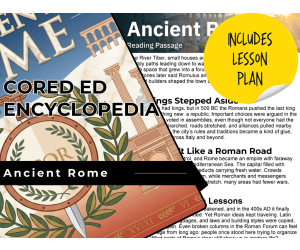
Ancient Rome Reading Comprehension Passage - Cored Ed Encyclopedia
ELA, Language Development, Reading Comprehension, Reading, Social Studies, History, History: Ancient, Writing, Pre-Reading, Vocabulary, Grade 2, 3, 4, 5, Worksheets & Printables, Worksheets, Teacher Tools, Centers, Activities, Writing Prompts, Assessments, Quizzes and Tests, Quizzes, Lesson Plans
This ancient Rome reading comprehension with lesson plan includes: Visualization (on the front cover) Start your lesson by taking a minute to think and share something about the topic. Read the script aloud (slowly), perhaps prepare some music or sound effects. Student close their eyes and let their imaginations wander. Students open their eyes, read the question aloud and give them a few minutes to complete. Ask a few students to share or keep answers until the end to compare with what they learn in the passage. Quick pause—thousands of Cored Education products are included with your TeachSimple membership. Download links and encyclopedia index available here. Pre-Reading Trivia Students will write down one thing they already know about the subject and then read five more facts and discuss. These facts are fun, and the students will enjoy learning about the subject before reading more. Give 1 minute for students to write what they already know (no pressure—best guess is fine). Read the five facts together. After each fact, do ask a student for their opinion, was it surprising? Set a purpose by asking students to highlight/underline one fact they want to learn more about during the reading. Reading Passage The text is a high-interest reading passage with set paragraphs, roughly three to four paragraphs long. It contains a variety of themes about the topic, anywhere from history to technology. The passage is between 250 and 350 words in length. First, ask students to look at the headings and see what they’ll learn about today. What do they know about the topic/heading? First read options: Teacher read-aloud (best for support). Partner reading (paragraph by paragraph). While reading, students underline important details, and vocabulary words they think may come up in the questions section. Mixed Questions The first question page contains four multiple-choice questions, each with a choice of four answers, and three written response questions that require a sentence or two from the student. Students complete the mcqs first independently, then review quickly as a class. For the 3 written responses, try to get students giving the answer with some form of evidence: “I think ___ because the text says ___.” If students get stuck, send them back to check the passage. Vocabulary Questions Practice seven key words from the text in this section across two activities. First section is scrambled words where students will unscramble three words given a clue for each. The second section is a word to meaning matching activity. Before starting, have some students read out words they underlined in the passage. Ask students to say the word and read aloud the sentence(s) around each word. Ask students to do scrambled words and the matching exercise in pairs then go through answers as a class. For the scrambled spelling task, get four pairs to come up to the board and write the words for extra practice with the other student reading out the clue. For the matching task, prompt students to give full sentences: “I matched ___ with ___ because ___.” Creative Writing In this question, the student will be required to write a five to eight sentence paragraph on a question related to the topic. Before starting, ask students write down 3 key ideas they are going to include in their piece. Ask students for ideas to share around the class to help those struggling. Pro writing expectations: 5–8 sentences At least 2 facts or details from the passage At least 2 vocabulary words from the previous page Students read their paragraphs while classmates listen for facts and vocabulary words. Extension Activities This page is optional for fast finishers or to take home. There are several activities, each one requiring a different skill. Do some, do none, do all, completely optional - but you will feel reassured knowing every possibility is planned for. Includes summary writting question and additional facts. Answer Key There are answers for the multiple-choice questions, written response questions have sample answers, vocabulary answers and if there is a summary question then a sample summary will be provided as well. Lesson Plan Included Customized lesson plan for this lesson is included. Lesson Snapshot Title: Ancient Rome Genre: Nonfiction (informational reading passage) Subject: Social Studies (Ancient Civilizations) / Reading (Informational Text) Primary Topic: From early settlement to empire and lasting influence Estimated Guided Reading Level (A–Z): S Support pages noted in the PDF: visualization prompt, pre-reading trivia, mixed questions, vocabulary activities, creative writing prompt, extension activities + “final facts,” and an answer key (some “final facts” add details not stated in the passage). What This Lesson Teaches Best How early life near the Tiber River and a busy meeting space (a forum) helped a town form and grow. How Rome changed its government from kings to a republic, including the role of the Roman Senate and citizen voting in assemblies. How roads, alliances, and shared rules/traditions helped Rome spread across Italy and beyond. How Rome became an empire connected around the Mediterranean Sea , including aqueducts for fresh water and public gathering places like the Colosseum . How Rome’s ideas continued even after the western empire fell, with laws and building styles reused and ruins like the Roman Forum reminding people of the past. Learning Goals Students will describe how the passage explains the early growth of Rome from river paths into a forum. Students will identify what happened in 509 BC and name the new form of government described. Students will explain how the passage connects roads, alliances, and shared rules/traditions to Rome’s expansion. Students will describe what changed in 27 BC when Augustus took control, using details from the text. Students will explain, using the passage, what aqueducts carried and why crowds gathered in major public places. Students will describe what happened to the western empire in the 400s AD and how Roman ideas continued afterward. Key Vocabulary From the Text republic — a government citizens vote in. Senate — a group that debates important choices. empire — many lands under one ruler. aqueducts — long channels that carry fresh water. provinces — faraway areas ruled as part of an empire. FULL CATALOG OF DOWNLOAD LINKS AND ENCYCLOPEDIA INDEX HERE
Author Cored Education
Rating
Tags Vocabulary, Reading Comprehension, Reading Passages, Lesson Plans, Ela Lesson Plans, Reading Comprehension Lesson Plans, Pre-reading, History, Ancient History Lesson Plans, History Lesson Plans

Medieval Castles - Mini Unit
Social Studies, History, History: Europe, History: World, Grade 5, 6, 7, 8, 9, Lesson Plans, Teacher Tools
Medieval Castles - Mini Unit The Medieval Castles - Mini Unit is a comprehensive teaching aid, most suited for students in the 5th to 9th grades. The primary focus is on European and World History as part of social studies. This unit covers four core themes: Development of castle building Common features of a castle Lives of castle inhabitants Battle strategies implemented during sieges All aspects from Viking beginnings to changes caused by the advent of gunpowder weaponry in the medieval era are explored. Detailed insights into architectural elements like towers, keeps, machicolations, moats etc are provided. Also highlighted is how a medieval society functioned within these walls; including roles ranging from lords and knights to laborers such as bakers and carpenters. The packaged resource includes: Fascinating literary material accompanied by worksheets breaking down each topic. . A PowerPoint summary that perfectly complements classroom discussions and fosters engagement.. . f An Exciting Feature! . Final review exercises denote existence of crossword puzzles aimed at vocabulary essential learner engagement tools laying groundwork for critical thoughts linking wider historic area fostering not just familiarity with historic epoch but deep-seated contextual connections learning materials activities offers model sheets enables students construct their own miniature motte & Bailey Castle turning history lessons engaging play session structure content delivery break consolidated view information robust design versatility educators adapt versatile account varying classroom scenarios individual study final test inclusion test readiness strength reinforcement interactive sessions understanding will be cultivated reinforced among learners neglected directed various group sizes warfare strategies practised medieval sieges battle strategies tunneling under walls deploying siege towers are furnished enhancing connection with subject details comprehensive comprehension aligned diverse learning styles student community broader outlook whole process respective roles within castle-dwelling society particular knowledge-specific proficiency visual imagery associated ancient architecture lessons bakers carpenters knights chaplains lords among others existent students seamless development of castles shared unit understanding concepts. A designated test ensures comprehensive evaluation and reinforcement of the learners' grasp of the newly acquired knowledge. The Medieval Castles – Mini Unit This user-friendly unit is an engaging combination of rich historical information fused with essential learner engagement tools that lay a solid foundation for an explorative historical journey.
Author Mr Gray History
Tags Medieval Castles, Castle Architecture, Castle Inhabitants, Battle Strategies, History Lesson
Korean War Gr. 5-8
Social Studies, History, History: USA, Grade 5, 6, 7, 8, Teacher Tools, Lesson Plans
Korean War Gr. 5-8 - A Comprehensive Teaching Resource The Korean War Gr. 5-8 is a teaching resource targeted for grades 5-to-8. It provides a holistic learning experience about the pivotal history of the Korean War, one of the first major conflicts during the Cold War period. A Lesson Plan that Makes History Come Alive This resource arms students with a comprehensive understanding of not only where this conflict took place but also why its influence shouldn't be underestimated. Emphasizing on North and South Korea's geography, it acquaints learners with these regions' cultural and geographic intricacies while shedding light on key historical figures like Harry S. Truman, Joseph Stalin, Kim Il-sung. Social Studies and History USA sub-subjects: Primarily beneficial within group classrooms; equally effective in small groups or as homework assignments. Promotes Individual Interest: Inculcates interest towards multi-dimensional global history events while emphasizing underlying causes that prompted it. Weaving Stories from Ground Zero:The stories are narrated engagingly between '50 to '53, introducing students to realities faced by U.S troops on ground zero at South Korea! Crafty Learning Tools for Easy Retention The resource comes equipped with hands-on exercises such as crossword puzzles, word searches, comprehension quizzes which naturally influence learners substantially in retaining their newfound knowledge. An Easy Access PDF Resource With Answer Keys In addition to being easily downloadable for perpetual convenience, this tool also comes complemented by an answer key provision facilitating effortless and error-free assessments for educators.</p
Author Classroom Complete Press
Tags PDF

I WONDER - Do Dragons Exist In Different Cultures | Animated Video
History, Social Studies, Common Core, Grade 4, 5, 6, 7, 8, 9, 10, Lesson Plans, Teacher Tools
Video Introduction An amazing video designed for the students to learn more about mythological creatures in different cultures. I WONDER - Do Dragons Exist In Different Cultures | Animated Video Lesson Mythology is full of wonders and spectacular stories. Ancient civilizations were trying to explore every aspect of life, while they search for new technologies, they wanted to believe in something big and can change the world, so they created mythical creatures and mythical stories. Let's hear about them! What do you know about these creatures? Cyclops, Centaurs, Selkies, Phoenix, Gnomes, Dragons, Gorgons, Orcs, Cerberus, Trolls, Minotaur, Griffins, Mermaids, Elves, Polyphemus, Pegasus, and Ogres. I WONDER - Do Dragons Exist In Different Cultures | Animated Video Lesson The video is perfect for encouraging the creativity skills for the students, while learning more about this fantastic mythical creature. I WONDER - Do Dragons Exist In Different Cultures | Animated Video Lesson This friendly designed video is suitable for students at school, homeschooling, and as a group activity. Format Available in MP4 format.
Author Educational Voice
Rating
Tags Do Dragons Exist In Different Cultures, Do Dragons Exist In Different Cultures Video, Dragons In Different Cultures, Dragons In Different Cultures Video, Dragons In Different Cultures Facts, Dragons In Different Cultures Video For Kids

Ancient Greece Olympics | Reading Comprehension Deck | Interactive Lesson
Social Studies, History, History: Ancient, Grade 5, 6, 7, 8, Teacher Tools, Lesson Plans
Ancient Greece Olympics Reading Comprehension Transport students back in time to learn about the origins of the Olympic games in Ancient Greece. This interactive PowerPoint lesson immerses learners in the history and traditions behind the iconic sporting event. Through informational passages, students journey to Olympia in 776 BC to discover the athletic and religious celebrations that captivated all of Greece. Compelling discussion questions, writing prompts, and a closing activity reinforce comprehension while allowing creativity. Use this versatile resource in whole or small groups, for remote learning, or as an independent review. The vivid images, clear explanations, and thoughtful assessments equip educators to make social studies come alive for grades 5-8. Let the games begin!
Author Teach Me This
Tags Reading, Comprehension, Ancient Greece, Olympics, Interactive Lesson

I WONDER - Where Did The Greek Gods Live | Animated Video Lesson
History: Europe, History, Social Studies, History: Ancient, Grade 4, 5, 6, 7, 8, 9, 10, Lesson Plans, Teacher Tools
Video Introduction An amazing video designed for the students to learn more about history. I WONDER - Where Did The Greek Gods Live | Animated Video Lesson Ancient Greece was an amazing place to live in. What do you know about ancient Greek life? Greek gods and goddesses used to have great powers. One can control the sea while the other can control the weather. Can you name any of the Greek gods or goddesses and mention their roles? Do you know that we still use some of the Greek gods and goddesses to name our new explorations in the space! I WONDER - Where Did The Greek Gods Live | Animated Video Lesson The video is perfect for encouraging the researching skills for the students, while learning more about history. I WONDER - Where Did The Greek Gods Live | Animated Video Lesson This friendly designed video is suitable for students at school, homeschooling, and as a group activity. Format Available in MP4 format.
Author Educational Voice
Rating
Tags Where Did The Greek Gods Live, Where Did The Greek Gods Live Video, Greek Gods, Greek Gods Video, Greek Gods Facts, Greek Gods Video For Kids, Greek Gods Facts For Kids, Ancient Greece

Statue of Liberty: Historic Monuments Series
Social Studies, History, History: USA, Grade 4, 5, 6, 7, 8, Teacher Tools, Lesson Plans
Introducing the teaching resource, Statue of Liberty: Historic Monuments Series. This unique resource is more than a book—it's an interactive journey through the history and prominence of the iconic American monument—The Statue of Liberty. Aimed at enriching Social Studies coursework for grades 4 through 8, this resource delves into American history subtopics. The core purpose behind this series is informative and appreciative: It educates students about significant historic landmarks in America. It recognizes and appreciates the diverse cultures that helped build our nation. The Statue of Liberty: Historic Monuments Series, however, does more than simply providing information—it ignites curiosity and fosters historical exploration by including original documents and timelines. An innovative approach to education, this teaching resource immerses students in experiential learning. They delve into construction details alongside historical influences concerning one of America's most treasured monuments—The Statue of Liberty. The inclusion of engaging activities ensures knowledge isn't merely passed-on but absorbed and applied—transforming ordinary lessons into dynamic educational quests. This product fits all instructional settings—from public schools to homeschool environments—and can adapt to whole group instructions or smaller cohorts. It can even be used as a homework assignment tool in building foundational knowledge in American History! The product comes as a downloadable PDF file: Easily accessible anytime you wish, You'll get simple print-outs making classroom-ready instantly! In essence; Statue Of Liberty: Historic Monument Series, isn't your typical lesson plan—it's a bridge that connects past triumphs with current learning. Facts are woven around engaging activities—all presented in an understandable format for grade levels 4-8! Get ready to tap into your student's potentials while adventuring through complexities surrounding historic American monuments—one page at a time! Please note: Product contains one download, available as a PDF.
Author Classroom Complete Press
Tags PDF

I WONDER - How Did The Quetzalcoatlus Get Its Name | Animated Video
History: World, History, Social Studies, History: Ancient, Animals, Life Sciences, Science, Grade 4, 5, 6, 7, 8, 9, 10, Lesson Plans, Teacher Tools
Video Introduction An amazing video designed for the students to learn more about dinosaurs in different countries. I WONDER - How Did The Quetzalcoatlus Get Its Name | Animated Video Lesson Do you like dinosaurs? what is your favorite one? Do you own a pet? If yes, tell us more about it, like what its name? And what do you like most about it? Do you think that your pet has been evolved from a dinosaur? Can you write down the characteristics of your favourite dinosaur like it's shape, their rivals, where did it use to live and what was their favourite food? What is the largest and the smallest dinosaur that ever found? Why is the T-rex is so famous? Have you ever read any interesting facts about it? Can you name any of the carnivores or herbivores dinosaurs? I WONDER - How Did The Quetzalcoatlus Get Its Name | Animated Video Lesson The video is perfect for encouraging the researching skills for the students, while learning more about dinosaurs. I WONDER - How Did The Quetzalcoatlus Get Its Name | Animated Video Lesson This friendly designed video is suitable for students at school, homeschooling, and as a group activity. Format Available in MP4 format.
Author Educational Voice
Rating
Tags How Did The Quetzalcoatlus Get Its Name, How Did The Quetzalcoatlus Get Its Name Video, Quetzalcoatlus, Quetzalcoatlus Facts, Quetzalcoatlus Video, Quetzalcoatlus Video For Kids, Quetzalcoatlus Facts For Kids
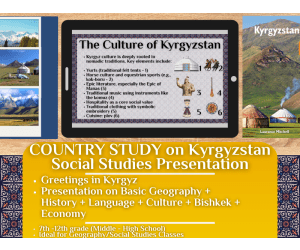
Country Study Presentation - Kyrgyzstan - Central Asia - Geography
Social Studies, Economics, Geography, History: Asian, History, Grade 7, 8, 9, 10, 11, 12, Teacher Tools, Lesson Plans
Country Study Presentation - Kyrgyzstan - Central Asia - Geography + Social Studies Bring Kyrgyzstan to life in your classroom with this Introductory Teaching Resource on Kyrgyzstan , designed for Geography, Asian History (Central Asia), and Social Studies . Ideal for students at Middle School and High School (from 7th Grade to 12th Grade) , this PDF digital presentation is informative, visually engaging, and requires little to no preparation . Students will explore Kyrgyzstan’s geography, history, culture, language, and economy , making this resource perfect for country studies and introductory lessons in Geography and Social Studies. 📘 In this Social Studies and Geograhy Introductory Presentation Lesson, the following topics are dealt: ✅ Hello in Kyrgyz ✅ Geography of Kyrgyzstan (Central Asia) Bordering countries + interactive Google Maps link ✅ Basic Information of Kyrgyzstan (Central Asia) Population, population density, capital city, currency, government, currency etc ✅ History Overview of Kyrgyzstan Summary of Kyrgyzstan ’s most important historical events (Central Asia) ✅ Geography, Climate & Environment of Kyrgyzstan Land area, regions, environment and climate zones ✅ Kyrgyzstan’s Economy Major industries, exports, currency and economic strengths ✅ Bishkek Kyrgyzstan' s capital city, including famous landmarks and cultural highlights ✅ Other Key Urban Centers A map with other important major cities in Kyrgyzstan (Central Asia) ✅ Culture & Traditions Customs, values, and traditions of Kyrgyzstan (Central Asia) ✅ Goodbye in Kyrgyz 🎯 Perfect For: Geography classes Social Studies World cultures units Country study projects Substitute teacher lessons Digital learning In-class or online teaching 📂 Resource Details Format: PDF Digital Presentation Grade Levels: 7th–12th Grade (Middle School & High School) Prep Time: Low to no preparation required Learning with Alan is an educational resource store created to help teachers, educators, and tutors reach their teaching goals while building a fun, engaging, and stimulating learning environment . Because learning should always be meaningful—and fun! 🎓✨ If you want to browse more of my Teaching Resources, click here Learning with Alan!!
Author Learning with Alan
Rating
Tags Country Study, Social Studies, Presentation, Geography, History, Asia, Kyrgyzstan, Introduction, Lesson, Activity