



3,885 products added recently
Page 5 - Basic Science Lesson Plans
Introduce your students to the wonders of science with these basic lesson plans that make fundamental concepts accessible. Designed to stimulate interest and encourage questioning, these resources cover essential topics through interactive activities. Use them to lay a strong foundation and ignite a lifelong passion for scientific exploration.

 Show filters

I WONDER - How Was The Microwave Invented | Animated Video Lesson
History, Social Studies, History: World, History: Europe, History: British, Inventors, Basic Science, Science, Grade 4, 5, 6, 7, 8, 9, 10, Lesson Plans, Teacher Tools
Video Introduction An amazing video designed for the students to learn more about history. I WONDER - How Was The Microwave Invented | Animated Video Lesson Do you like history? Which topic do you really enjoy about history? Have you ever read an interesting fact about the Vikings? If yes, can you mention them? What do you like most about the Victorian era? Can you name all the Tudors? Have you ever wondered how people used to live in ancient Japan and ancient China? Do you know any interesting facts about ancient Egyptians and the Pharaohs? Have you ever visited South America? What do you know about Incas and Aztecs? Celtic culture was really one of a kind, can you name any of the places that Celts used to live in? Imagine yourself living during the ancient Roman empire, how your life will look like? Ancient Greece was an amazing place to live in. What do you know about ancient Greek life? I WONDER - How Was The Microwave Invented | Animated Video Lesson The video is perfect for encouraging the researching skills for the students, while learning more about history. I WONDER - How Was The Microwave Invented | Animated Video Lesson This friendly designed video is suitable for students at school, homeschooling, and as a group activity. Format Available in MP4 format.
Author Educational Voice
Tags How Was The Microwave Invented, How Was The Microwave Invented Video, The Microwave, Microwave History, Microwave History Facts, Microwave History Video, Microwave History Video For Kids
Ice Cream Curriculum Pack
Creative Arts, Art, Social Studies, ELA, Language Development, Vocabulary, Math, Early Math, Science, Basic Science, Kindergarten, Lesson Plans, Teacher Tools
If your students are learning about seasonal activities or are about to begin a ice cream unit, I have just the resource to provide you with everything you need and more! This is an Ice Cream Curriculum Pack complete with an abundance of printable resources and engaging activities for students to complete. This curriculum was designed for your preschool students. The curriculum goal is to impart new and expanded knowledge and experiences on a subject that children are familiar with and have a frame of reference on – while building skills in a fun way. The vocabulary that students will focus on is ice cream, frozen, dairy, flavors, parlor, sherbet, freezing, vanilla, chocolate, strawberry, sundae, scoop, banana split, and udders. There is a letter of the week (I) and colors of the week (white, brown, and pink). This curriculum pack includes: --Sensory Table Ideas --Art Activities --Cooking Experience --Community Time --Math Activities --Home/School Connection Ideas --Science Table Enrichments --Science Concepts/Activities --Prop Box Ideas/Dramatic Play Enrichments --Movement and Motor --Playground/Walk Activities --Transition/Waiting Ideas --Block Area Enrichments --Flannel Board --Teacher Made Enrichment Ideas --Field Trip Ideas --Supplemental Learning Ideas/Activities At the start of this pack, you will receive a list of supplies needed for activities and projects. The worksheets, activities, and tasks included in this pack are intended to be completed in a variety of formats – whole group, small group, and independent work. I hope you enjoy!
Author Learning Foundations
Tags Ice Cream Curriculum, Learning Foundations, Sensory Table Ideas, Prop Box Ideas, Summer Activity, Nature Walk, Preschool, Cross-curricular
I WONDER - What Uses Do Crystals Have | Animated Video Lesson
Basic Science, Science, Earth Sciences, Earth and Environmental Sciences, Grade 6, 7, 8, 9, 10, 11, 12, Lesson Plans, Teacher Tools
Video Introduction An amazing activity designed for the students to learn more about STEM. I WONDER - What Uses Do Crystals Have | Animated Video Lesson Do you like STEM subjects? what is your favorite one? Have you ever tried to plant a seed? If yes, tell us more about it. Or have you ever tried to invent something? If yes, tell us more about it. And how do you think it will help us? Have you ever seen a microorganism under a microscope? What was it? And how it looked like? Mathematics is a marvelous subject. Let' sharpen our brains and solve some equations. Do you like timetable tricks? What is your favorite one? Do you know how to code? Have you ever created an app or a game before? If yes, how was it like? I WONDER - What Uses Do Crystals Have | Animated Video Lesson The video is perfect for encouraging the researching skills for the students, while learning more about this fantastic topic. I WONDER - What Uses Do Crystals Have | Animated Video Lesson This friendly designed video is suitable for students at school, homeschooling, and as a group activity. Format Available in MP4 format.
Author Educational Voice
Tags What Uses Do Crystals Have, What Uses Do Crystals Have Video, Crystals, Crystals Facts, Crystals Facts For Kids, Crystals Video, Crystals Video For Kids, Science, Science Facts, Science Video
I WONDER - What Informs A Hypothesis | Animated Video Lesson
Research, Theories, Basic Science, Science, STEM, Grade 6, 7, 8, 9, 10, 11, 12, Lesson Plans, Teacher Tools
Video Introduction An amazing video designed for the students to learn more about STEM. I WONDER - What Informs A Hypothesis | Animated Video Lesson Do you like STEM subjects? what is your favorite one? Have you ever tried to plant a seed? If yes, tell us more about it. Or have you ever tried to invent something? If yes, tell us more about it. And how do you think it will help us? Have you ever seen a microorganism under a microscope? What was it? And how it looked like? Mathematics is a marvelous subject. Let' sharpen our brains and solve some equations. Do you like timetable tricks? What is your favorite one? Do you know how to code? Have you ever created an app or a game before? If yes, how was it like? I WONDER - What Informs A Hypothesis | Animated Video Lesson The video is perfect for encouraging the researching skills for the students, while learning more about this fantastic topic. I WONDER - What Informs A Hypothesis | Animated Video Lesson This friendly designed video is suitable for students at school, homeschooling, and as a group activity. Format Available in MP4 format.
Author Educational Voice
Tags What Informs A Hypothesis, What Informs A Hypothesis Video, Hypothesis, Hypothesis Facts, Hypothesis Facts For Kids, Hypothesis Video, Hypothesis Video For Kids, Science, Science Video For Kids
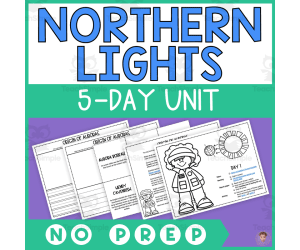
Northern Lights Unit Study (5-Day Lesson Plan, Original Reading Passages, and Activities)
Science, Basic Science, Grade 1, 2, 3, Lesson Plans, Teacher Tools
Learn about the northern lights (aurora borealis) and southern lights (aurora australis) with this 5-day NO PREP unit study. It makes a great interactive addition to your writing lessons or science class. This project-based resource teaches the origin of auroras, what causes auroras, the types of auroras, and the sounds auroras make. It's perfect for first grade, second grade, and third grade classrooms, homeschool families, and cooperatives.
Author Heather Huhman
Tags Science, Writing, Northern Lights, Aurora Borealis, Astronomy, Northern Lights Activities
I WONDER - Was Stephen Hawkins Adventurous | Animated Video Lesson
Inventors, Basic Science, Science, Biographies, Social Studies, Grade 4, 5, 6, 7, 8, 9, 10, Lesson Plans, Teacher Tools
Video Introduction An amazing video designed for the students to learn more about famous people in different countries. I WONDER - Was Stephen Hawkins Adventurous | Animated Video Lesson What do you know about Stephen Hawking? Can you tell us five five facts about him? Was Stephen Hawking always good at school? Was Stephen Hawkins adventurous? Was Stephen Hawkins a good teacher? What did Stephen Hawking discover? When was Stephen Hawking diagnosed with ALS? What do you know about black holes? And what did Stephen Hawkins discovered about them? I WONDER - Was Stephen Hawkins Adventurous | Animated Video Lesson The video is perfect for encouraging the researching skills for the students, while learning more about this fantastic place. I WONDER - Was Stephen Hawkins Adventurous | Animated Video Lesson This friendly designed video is suitable for students at school, homeschooling, and as a group activity. Format Available in MP4 format.
Author Educational Voice
Rating
Tags Was Stephen Hawkins Adventurous, Stephen Hawkins, Stephen Hawkins Facts, Stephen Hawkins Video, Stephen Hawkins Facts For Kids, Stephen Hawkins Video For Kids, Famous People, Famous People Facts

Measurement and Classification
Science, Basic Science, Grade 5, Teacher Tools, Lesson Plans
Measurement and Classification Teaching Resource - Grade 5 Measurement and Classification is a comprehensive teaching resource specifically constructed with a focus on basic science for grade 5 students. This product not only supports teachers in shaping engaging lessons but also encourages learners to delve deeper into the world of science, cultivating their analytical thinking and problem-solving skills. The Concept of Classification This detailed lesson plan starts by introducing students to the concept of classification. It encourages young minds to comprehend categorizing objects, plants, and animals according to unique characteristics. This interactive section paves the way for students to understand how grouping items based on commonalities helps bring order and understanding. An Exploration of Bar Graphs We then seamlessly transition into an exploration of bar graphs. Here, learners will get hands-on experience with: Data collection followed by charting this data using bar graphs—pivotal tools in obtaining scientific conclusions accurately displayed visually. Answering queries about collected data relying primarily on their plotted bar graph—a significant skill in analytical interpretation. The Understanding of Physical Properties & Materials The educational journey continues through delving into physical properties of materials where identifiers such as texture, color or flexibility influence classification decisions. Students engage in sorting a variety of objects according to these salient physical properties providing an interactive understanding towards material characteristic identification. Diving Deep Into Measurements The finale involves demystifying measurements—an essential skill not confined solely within scientific boundaries but forming an integral part across real-life scenarios too! The resource guides learners into comprehending various units from length and mass up till volume best measured using predefined tools like rulers or graduated cylinders—it all dives down here! Additionally setting a strong foundation about standardized measures’ importance because consistency matters when it comes down comparing or estimating quantities overall! Thus exemplifying its utility across different learning setups whether a whole class session, small group interaction even extending down towards homework assignments as well! An ideal choice for both public school teachers focused on ensuring standard-compliant lessons or homeschooling parents eager pollutants imbibe comprehensive knowledge among kids practically intertwined thoroughly around everyday life situations. Resource Format This PDF format file contains everything that educators need to pursue fun-filled, knowledge-packed science lessons covering measurement and classification in depth. Get ready for interactive, engaging classroom experiences rooting deep within students’ minds effectively making "science" their favorite subject!
Author Classroom Complete Press
Tags PDF
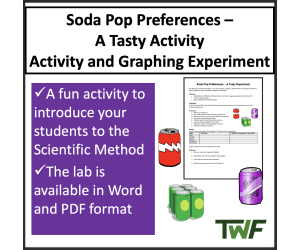
Soda Pop Preferences - Scientific Method Lesson Included
Science, Basic Science, Grade 6, 7, 8, 9, Lesson Plans, Teacher Tools
Soda Pop Preferences - Scientific Method Lesson Included This engaging activity introduces students to the scientific method through an experiment involving their favorite soda pops. Students will form a hypothesis about which soda flavor they think will be most popular among their classmates. They will then collect data by sorting and counting soda pieces from multiple sample packages. Your students are provided with clear procedures that will guide them to record their results in a well-organized data table and graph. As a class, data can be compiled and percentages calculated to identify trends. Students learn important data analysis skills as they create graphs to visually represent the results. Educators will appreciate the post- experiment reflection questions that reinforce the purpose and process of the scientific method. This hands-on lab nurtures students' natural curiosity while teaching fundamental experimental design. With its real-world topic and tactile investigation, it motivates learners across various grades and learning styles. After completing the activity, students will better understand how to use observation, critical thinking, and representation of evidence to answer a testable question. Additionally, this resource includes my lesson on the Scientific Method. The lesson includes a detailed overview of what the scientific method is as well as how to implement it.
Author Teach With Fergy
Tags Scientific Method, Graphing, Start Of Year

I WONDER - How Was Polonium Named | Animated Video Lesson
Biographies, Social Studies, Inventors, Basic Science, Science, Chemistry, Grade 4, 5, 6, 7, 8, 9, 10, Lesson Plans, Teacher Tools
Video Introduction An amazing video designed for the students to learn more about famous people in different countries. I WONDER - How Was Polonium Named | Animated Video Lesson Do you know this person? How much do you know about him/her? Who is your idol? Why did you choose this person? Tell us more about him/her? Who is your favorite athlete? Or what is your favorite team? Have you recently heard a story about a famous person? Who was this person? Can you tell us more about him/her. Who is your favorite president, king, or queen? Why you chose that person? In your country, who are the most famous people? What did they do? Can you tell us more about them. What is your favorite invention? Who invented it? Who is your favorite artist? What is the most famous thing he/she have done? What is the most enjoyable you have read before? Who wrote it? I WONDER - How Was Polonium Named | Animated Video Lesson The video is perfect for encouraging the researching skills for the students, while learning more about this fantastic place. I WONDER - How Was Polonium Named | Animated Video Lesson This friendly designed video is suitable for students at school, homeschooling, and as a group activity. Format Available in MP4 format.
Author Educational Voice
Rating
Tags How Was Polonium Named, How Was Polonium Named Video, Polonium, Polonium Facts, Polonium Video, Polonium Video For Kids, Polonium Facts For Kids, Marie Curie, Marie Curie Video
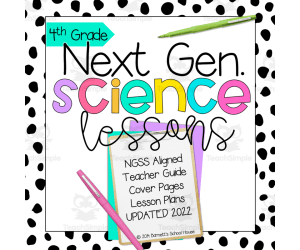
4th Grade Next Generation Science Standards Resource with Guided Lessons
Science, Basic Science, Grade 4, Teacher Tools, Lesson Plans
This ngss 4th grade resource includes lesson plan outlines, guided activities and resource links to outside lessons to assist you in teaching your science classes! Each standard is included within this resource. Please note that this resource is meant to serve as a supplemental add-on to your current textbook or program. It will assist you in your lesson planning for science!
Author Barnett's School House
Tags Ngss, Ngss Lessons, Science Resources, 4th Grade Science, 4th Grade Ngss Lessons, Ngss Standards 4th Grade, 4th Grade Next Generation Science Standards
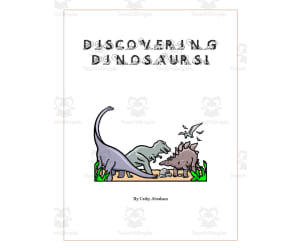
Discovering Dinosaurs Curriculum Pack
Creative Arts, Art, Social Studies, ELA, Language Development, Vocabulary, Math, Early Math, Science, Basic Science, Kindergarten, Lesson Plans, Teacher Tools
If your students are studying dinosaurs or are about to begin an animal unit, I have just the resource to provide you with everything you need and more! This is a Discovering Dinosaurs Curriculum Pack complete with an abundance of printable resources and engaging activities for students to complete. This curriculum was designed for your preschool students. The curriculum goal is to expand children’s knowledge base on the topic of prehistoric life, and assist in enhancing the abstract thought process, while encouraging imagination. The vocabulary that students will focus on is prehistoric, dinosaurs, carnivorous, stegosaurus, T – Rex, Brachiosaurus, herbivore, Brontosaurus, Pterodactyl, extinct, paleontologist, fossil, and triceratops. This curriculum will come with colors of the week (green and brown) and a letter of the week (D). This curriculum pack includes: --Sensory Table Ideas --Art Activities --Cooking Experience --Community Time --Math Activities --Home/School Connection Ideas --Science Table Enrichments --Science Concepts/Activities --Prop Box Ideas/Dramatic Play Enrichments --Movement and Motor --Playground/Walk Activities --Transition/Waiting Ideas --Block Area Enrichments --Flannel Board --Teacher Made Enrichment Ideas --Field Trip Ideas --Supplemental Learning Ideas/Activities At the start of this pack, you will receive a list of supplies needed for activities and projects. The worksheets, activities, and tasks included in this pack are intended to be completed in a variety of formats – whole group, small group, and independent work. I hope you enjoy!
Author Learning Foundations
Tags Dinosaurs, Science Vocabulary, Preschool, Reading Curriculum, Prehistoric Life, Animal Unit, Sensory Table, Art Activities, Learning Goals

I WONDER - How Does Our Environment Affect Designs | Animated Video
Theories, Basic Science, Science, Environmental Science, Earth and Environmental Sciences, STEM, Research, Grade 6, 7, 8, 9, 10, 11, 12, Lesson Plans, Teacher Tools
Video Introduction An amazing video designed for the students to learn more about STEM. I WONDER - How Does Our Environment Affect Designs | Animated Video Lesson Do you like STEM subjects? what is your favorite one? Have you ever tried to plant a seed? If yes, tell us more about it. Or have you ever tried to invent something? If yes, tell us more about it. And how do you think it will help us? Have you ever seen a microorganism under a microscope? What was it? And how it looked like? Mathematics is a marvelous subject. Let' sharpen our brains and solve some equations. Do you like timetable tricks? What is your favorite one? Do you know how to code? Have you ever created an app or a game before? If yes, how was it like? I WONDER - How Does Our Environment Affect Designs | Animated Video Lesson The video is perfect for encouraging the researching skills for the students, while learning more about this fantastic topic. I WONDER - How Does Our Environment Affect Designs | Animated Video Lesson This friendly designed video is suitable for students at school, homeschooling, and as a group activity. Format Available in MP4 format.
Author Educational Voice
Tags How Does Our Environment Affect Designs, How Does Our Environment Affect Designs Video, Designs, Designs Facts, Environment, Designs Facts For Kids, Designs Video, Environment Video

I WONDER - Was Stephen Hawking Always Good At School | Animated Video
Biographies, Social Studies, Inventors, Basic Science, Science, Grade 4, 5, 6, 7, 8, 9, 10, Lesson Plans, Teacher Tools
Video Introduction An amazing video designed for the students to learn more about famous people in different countries. I WONDER - Was Stephen Hawking Always Good At School | Animated Video Lesson What do you know about Stephen Hawking? Can you tell us five five facts about him? Was Stephen Hawking always good at school? Was Stephen Hawkins adventurous? Was Stephen Hawkins a good teacher? What did Stephen Hawking discover? When was Stephen Hawking diagnosed with ALS? What do you know about black holes? I WONDER - Was Stephen Hawking Always Good At School | Animated Video Lesson The video is perfect for encouraging the researching skills for the students, while learning more about this fantastic place. I WONDER - Was Stephen Hawking Always Good At School | Animated Video Lesson This friendly designed video is suitable for students at school, homeschooling, and as a group activity. Format Available in MP4 format.
Author Educational Voice
Rating
Tags Was Stephen Hawking Always Good At School, Stephen Hawking, Stephen Hawking Facts, Stephen Hawking Video, Stephen Hawking Facts For Kids, Stephen Hawking Video For Kids, Famous People
I WONDER - How Have TVs Changed | Animated Video Lesson
Inventors, Basic Science, Science, Technology, STEM, Grade 4, 5, 6, 7, 8, 9, 10, Lesson Plans, Teacher Tools
Video Introduction An amazing activity designed for the students to learn more about STEM. I WONDER - How Have TVs Changed | Animated Video Lesson Do you like STEM subjects? what is your favorite one? Have you ever tried to plant a seed? If yes, tell us more about it. Or have you ever tried to invent something? If yes, tell us more about it. And how do you think it will help us? Have you ever seen a microorganism under a microscope? What was it? And how it looked like? Mathematics is a marvelous subject. Let' sharpen our brains and solve some equations. Do you like timetable tricks? What is your favorite one? Do you know how to code? Have you ever created an app or a game before? If yes, how was it like? I WONDER - How Have TVs Changed | Animated Video Lesson The video is perfect for encouraging the researching skills for the students, while learning more about this fantastic topic. I WONDER - How Have TVs Changed | Animated Video Lesson This friendly designed video is suitable for students at school, homeschooling, and as a group activity. Format Available in MP4 format.
Author Educational Voice
Tags How Have TVs Changed, How Have TVs Changed Video, TVs, TVs Facts, TVs Facts For Kids, TVs Video, TVs Video For Kids, TV Facts, Inventions, Inventions Video
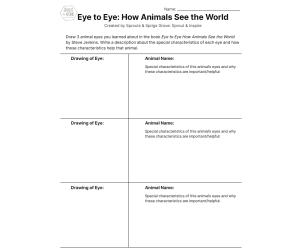
Eye to Eye How Animals See the World
Science, Life Sciences, Animals, Basic Science, Grade 3, 4, 5, 6, Teacher Tools, Lesson Plans
Description: During this lesson, children will examine, read about, and watch animal eyes in action as they learn more about the designs and functions of different eyes. They will create a model of an animal’s eye and present what they know about it to their friends, family, or class. Learning objectives I can… Describe different designs of animals’ eyes. Describe different functions of animals’ eyes. Create a realistic model of an animal’s eye. Teach someone else about a unique animal eye. Outline Build Interest: 1 photo discussion activity Read: 1 book and additional book & online options Draw: 1 realistic eye drawing activity and response Watch: selection of 5 video options (3:00-9:00 min/each) Model: 1 realistic eye model project Present: 1 preparation and presentation activity Debrief/Assess: 1 set of questions Glossary: 1 set of terms Suggested Extension Activities: 2+ activities Time needed: 2 - 4 hours Grade levels: 3rd - 6th Subject: Science Next Generation Science Standards: SCI 3-LS4-2. Use evidence to construct an explanation for how the variations in characteristics among individuals of the same species may provide advantages in surviving, finding mates, and reproducing. 4-LS1-1. Construct an argument that plants and animals have internal and external structures that function to support survival, growth, behavior, and reproduction.
Author Sprout & Inspire
Tags Animals, Eyes, Animal Features, Animal Science

Scientific Method – M&M’s Activity – Graphing Experiment and Lesson
Science, Basic Science, Grade 6, 7, 8, 9, Lesson Plans, Teacher Tools
Scientific Method – M&M’s Activity – Graphing Experiment and Lesson This colorful activity introduces students to both the scientific method and data analysis through hands-on exploration of M&M distributions. Using a familiar snack, students will form a hypothesis about which candy colors occur most frequently. Clear procedures guide your students to sort, count, and record M&M colors from multiple sample packs. Their results tables lead to graphing skills as data is compiled and percentages calculated. Students learn by doing as they test hypotheses, control variables, and analyze trends. Post-lab reflection questions help internalize the purpose and cognitive skills nurtured. The thorough companion lesson defines each component of the method. Examples illustrate how curiosity and evidence-based thinking benefit discovery. This multi-sensory lab motivates learners across disciplines through discovery fueled by their own observations. After participating, students emerge with a strengthened understanding of systematic investigation and interpretation of quantitative results. Additionally, this resource includes my complete lesson on the scientific method. The lesson will teach your students what the scientific method is as well as how it can be carried out to solve problems and get answers to questions. You, as their teacher, will appreciate how the included lesson reinforces each stage of the scientific process, from questioning to discussing conclusions.
Author Teach With Fergy
Tags Scientific Method, Graphing, Start Of Year, M&m Lab, M And M Graphing Worksheets, Scientific Method Classroom Activities, M&m Fractions Activity, M&m Math Worksheet, M&m Scientific Method Experiment, M&m Science Projects, M And M Science Experiment, Middle School Scientific Method Lab, M&m Science Fair Project, Scientific Method Labs Middle School, M And M Graphing Worksheet, M&m Science Project, M&m Graphs, M&m Science Experiment, M&m Science Fair Projects, M&m Fraction Activities

Unit of Study all about New Zealand
Social Studies, ELA, Economics, History, History: British, History: World, First Peoples (Native), Government, Geography, Reading, Reading Comprehension, Grammar, Language Development, Vocabulary, Spelling, Writing, Science, Life Sciences, Animals, Basic Science, Grade 4, 5, 6, Teacher Tools, Lesson Plans, Worksheets & Printables, Flashcards, Activities, Projects, Assessments, Worksheets
There's something magical about being able to bring the world into our classrooms. I'm excited to share with you a comprehensiveUnit of Study all about New Zealand. This resource is filled with meticulously designed tools to help our students journey into the vibrant heart of this incredible country. New Zealand, with its stunning landscapes and layered history, offers a world of exploration. Through this unit, our students will unravel tales, traditions, and truths that form the fabric of this nation. Designed with versatility in mind, we can shape the content to fit our students’ unique needs - be it age, reading proficiency, interests, or learning preferences. Here's a Glimpse of What's Inside: Lesson Plans: Flexible and adjustable, we can spread these out to suit our classroom pace and scheduling. Reading Passages: Each lesson is complemented by a passage, giving students a deep textual insight into New Zealand's many aspects. Videos: Handpicked to align with the readings, these videos provide a multisensory experience. Discussion Avenues: Thought-provoking prompts to foster classroom discussions and encourage student reflections. Vocabulary Boosters: Clear, defined vocabulary cards for every lesson. Additionally, dedicated dictionary activity pages will help our students enrich their lexicons. Note-taking & Graphic Organizers: Available in three formats, ensuring each student can comfortably document their learnings. Assessment Tools: Comprehensive tests, in both short answer and multiple-choice formats, come with ready answer keys for our convenience. Writing Opportunities: Every lesson comes with a structured prompt, allowing students to articulate their understanding. Hands-on Activities: Perfect for our kinesthetic learners, these activities are interactive and engaging. Designed with 4th to 6th graders in mind and spanning 345 pages, this PDF resource is ready to be printed and integrated into our lesson plans. It offers a rich, in-depth view of New Zealand, from its breathtaking nature to its societal structures. Whether you've been teaching for years in a school or are homeschooling, thisUnit of Study on New Zealandis a treasure trove. Together, let's embark on this enlightening journey and bring a slice of New Zealand to our eager learners. Happy teaching!
Author Heather Huhman
Tags New Zealand, Unit Study, Maori, Geography, History, James Cook, Ernest Rutherford, Auckland, Christchurch, Treaty Of Waitangi

Electricity is Everywhere: Bright Ideas for Students Lesson Plan, Assessment and Answer Key
Science, Basic Science, Grade 6, Lesson Plans, Teacher Tools
Electricity is Everywhere: Bright Ideas for Students Lesson Plan, Assessment and Answer Key The 'Electricity is Everywhere: Bright Ideas for Students Lesson Plan, Assessment and Answer Key' resource presents a unique opportunity to enlighten young learners about the ubiquity of electricity in their daily life - from powering their school premises to the multitude of appliances at home. Teachers will find this comprehensive package invaluable as it not only includes an engaging lesson plan on electricity but also provides an assessment tool. This allows educators to gauge students’ understanding both pre and post-lesson thus serving a dual role. The versatility of this resource lends itself well for application in many settings such as: A whole class plenary session, Part of small group discussion activities, or even presented as homework assignments. A distinctive element of this teaching kit lies with its ability to stimulate curiosity among sixth-grade students around the concepts relating to power generation, distribution circuits, and the journey undertaken by electrical current all the way from source points into buildings. Keeping student interest piqued through examples highlighting role played by static & current electricity in our lives gets them actively engaged with learning new content leading invariably towards higher level questions facilitating deeper comprehension. This material strongly adheres to focus on basic science principles while streamlining lesson-planning task significantly for dedicated educators always racing against time performing myriad obligations over typical school days. The downloadable PDF file format ensures easy retrieval whenever required along with assured good quality viewing experience during classroom instruction sessions or when assigned tasks meant for home environments. Overall, this methodically structured yet creatively constructed innovative teaching aid supports grade six teachers striving hard towards imparting science education effectively while keeping learner engagement at consistently high levels manifesting as visible student progress all throughout units centered around judicious domestic use of precious utilities like electricity powering our modern lives.
Author Easy As ABC
Tags Electricity, Lesson Plan, Assessment, Power Generation, Circuits

Northern Lights DIGITAL Unit Study (Aurora Borealis)
Science, Basic Science, Grade 2, 3, 4, Lesson Plans, Teacher Tools
The Northern Lights DIGITAL Unit Study (Aurora Borealis): An Interactive Educational Resource Designed for Grades 2 through 4, this engaging unit study digs deep into the magic of Auroras, known as the northern lights (aurora borealis) and southern lights (aurora australis). Unique Educational Materials: Original reading passages: Learn about the origin of these celestial lights, what causes them, their different types and the distinctive sounds they make. Comprehension skills activities: Each passage is followed by self-checking questions to consolidate learning and understanding. Vocabulary matching activities: Develop extensive vocabulary associated with auroras via self-checking activities. Virtual games : Perfect team-building exercises that also embed scientific concepts. Great for group work or independent learning. Versatile Use: This dynamic resource can supplement science curriculums or arctic unit studies in classrooms, serve as homework assignments or even provide comprehensive content for homeschooling. Easily Accessible Format: The study material is available in PDF format ensuring seamless accessibility across various platforms without compromise on quality or usability. In conclusion,, whether you aim to enhance regular science lessons; launch an engaging Arctic unit study; supplement home-based learning plans; foster collaborative efforts through innovative group activities; assess comprehension levels - The Northern Lights DIGITAL Unit Study ticks all boxes while sparking learners' curiosity about one of nature's greatest wonders.
Author Heather Huhman
Tags Northern Lights, Aurora Borealis, Science Curriculum, Interactive Learning, Phenomenon

Winter Hibernation Mini Unit
Science, Basic Science, Earth and Environmental Sciences, Earth Sciences, Environmental Science, Grade 1, 2, 3, Lesson Plans, Teacher Tools
Winter Hibernation Mini Unit This educational material familiarizes students with concepts such as animal behaviors, survival strategies, and the interconnectedness of living organisms with their environment. It aims to enhance students' understanding of how animals adapt to changes in their surroundings, especially during challenging seasons like winter. Includes: Reading on hibernation with comprehension questions Information on animals that hibernate Questions about animals that hibernate Activity page on creating shelters during hibernation Answer key for reference Students will be able to tell why animals hibernate, when they hibernate, how they wake up from hibernation, and what happens to an animals body during the hibernation process. By learning about this attribute in animals students will also be able to deduce which animals go into hibernation and what locations they may use to hibernate. Additionally, students will learn about bears, groundhogs, chipmunks, hedgehogs, and how they survive the winter months. Engage students in reading, writing, and drawing to express their knowledge gained from the resource. A valuable addition to any winter science unit. Enjoy the learning experience! Winter Hibernation Mini Unit | Winter Hibernation Mini Unit | Winter Hibernation Mini Unit | Winter Hibernation Mini Unit | Winter Hibernation Mini Unit | Winter Hibernation Mini Unit |
Author Soumara Siddiqui
Tags Hibernation, Winter Hibernation, Winter, Animals And Winter, Winter Animals