



3,924 products added recently
Page 104 - Science Lesson Plan Template
Enhance your science instruction with a flexible lesson plan template designed for educators. This tool helps you structure objectives, materials, procedures, and assessments efficiently. Use it to create organized and impactful science lessons that cater to your students' needs.

 Show filters

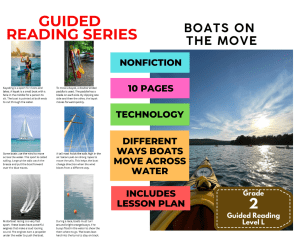
Guided Reading Level L - Boats on the Move (with Lesson Plan)
ELA, Resources for Teachers, Reading Comprehension, Reading, Science, Engineering, Technology, Physics, Sports, P.E. & Health, Grade 2, 3, 4, Worksheets & Printables, Worksheets, Teacher Tools, Centers, Activities, Literacy Readers, Quizzes, Quizzes and Tests, Assessments, Lesson Plans
This Guided Reading Book - Boats on the Move (Level L) with lesson plan includes: Guided Reading Color Label (front cover x1) This is a quick way to match the book’s demands to what students can generally handle.. The overall goal is to use the level/color to pick books for several smaller groups. To qualify for a certain level, a student is expected to read a book from that level with about 90–94% accuracy. If a student is consistently accurate and understands, move up a level. If the student is struggling at that level, drop down and add more support. Each student will improve at completely different rates, but it is generally one of the best ways to check progress across the class. DOWNLOAD THE CATALOG TO VIEW ALL GUIDED READING BOOKS AVAILABLE (SORTED LEVELS A-Z) Pre-Reading Question (x1) Teacher asks the prompt aloud, can be while showing the cover or first page. Students share what they already know, or make educated guesses from the cover. Prompt them to use the target vocabulary. Write some of their responses on the board to look back at during the reading. Vocabulary Words (x5) Introduce the five words, best doing it one at a time. Start by saying it, while students repeat and then see if anyone knows what it means before reading further. Read through the meaning and try to briefly connect each word to a picture or gesture so it’s meaningful. Ask students to flip through the book pages and point to where they see each of the vocabulary words. While reading the book pause upon coming across one of the vocab words or read the sentence twice to make sure students understand the word has appeared. Optional: Ask students to raise hands whenever they see/hear one of the new words. Guided Reading Pages (x10) Check the book snapshot (below) for: primary topic - do you need to prep extra reading or intro materials on this? what is taught best - decide on 1-2 bullets to focus on, use the prompt or words provided here for best results. learning goals - what you are checking for students to be able to do after the session, elicit answers using prompts or words provided. key vocabulary (see section above). questions overview - so you know what is coming up and if you need to prep extra materials to assist understanding. Run the lesson You may have already looked at a few of the pages together, but you can show them some of the pictures again first to set meaning. Depending on how much time you have and how familiar your students are with guided reading class, you may want to read the book aloud first with the group first. Students whisper or partner read, while you listen in. If time, do it as a group, one student reading a page each. Use the guided page’s prompts to coach: “Check the picture / does it make sense?” “Point under the words / try the first sound” “Reread the sentence smoothly”. Try to focus more on one student per session (rotating every time), so you can work out if they are ready to move up or need to move down a level. Comprehension Questions (back cover x3) This is your way to check that students didn’t just say the words, but actually understood the text. First, let students answer by pointing to the page/picture and saying a short sentence. After any answer, follow with: “Show me where you found that in the text.” In bigger groups, have partners answer first (10–20 seconds), then call on 2–3 students to share. Differentiation tips: Emerging speakers/struggling readers: oral + pointing On-level: oral in a full sentence Higher: one written sentence or draw + label Book Snapshot Title: Boats on the Move Genre: Nonfiction (informational) Subject: Science (Forces & Motion) / Reading (Informational Text) Primary Topic: Different ways boats move across water Estimated Guided Reading Level (A–Z): L What This Book Teaches Best Different ways boats move on water (wind, oars, paddles, engines). How specific boat parts help movement (sails, mast, ropes, propeller). How coordinated actions affect motion (oars dipping “at the same time” to go straight). How markers guide movement during a race (boats turn around bright orange buoys to stay on track). Comparing speed and movement styles (quiet glide vs fast roar; forward motion by alternating paddle sides). Learning Goals Students will identify several ways boats move across the water using details from the text. Students will explain how sails and wind help pull a boat forward. Students will describe how rowers use oars together to move a boat straight ahead. Students will describe how a double-ended paddle helps a kayak move forward quickly. Students will explain how an engine and propeller help push a motorboat through the water. Students will describe why boats turn around buoys during a race, based on the text. Key Vocabulary From the Text mast — a tall pole that holds sails up. rhythm — a steady pattern of movement. double-ended — having an end on both sides. propeller — a spinning part that helps push a boat. buoys — floating markers that show where to go. Discussion Prompts Pre-reading question: What are some different ways a boat could move across the water? Comprehension questions: How do large white sails help a boat move forward? What do rowers do “at the same time,” and what does that help the boat do? Why must boats turn around bright orange buoys during a race? Printing Tips 1. Best Printing Method (Recommended) “Booklet” Printing (Best if Available) If your printer or PDF viewer supports Booklet Printing , use this. Settings to use: Print mode: Booklet Paper size: Letter or A4 (either works) Orientation: Landscape Print on both sides: Yes Flip on: Short edge Scaling: Fit to printable area Booklet subset: First test: Front sides only Then: Back sides only This will automatically: Pair pages correctly Put the cover on the outside Align everything for folding After printing, fold in half and staple along the spine . 2. If “Booklet” Printing Is NOT Available You can still print this correctly with manual duplex printing . Step-by-step: Open the PDF. Choose Print . Set: Orientation: Landscape Pages per sheet: 1 Print on both sides: Yes Flip on: Short edge Print all pages . Because each PDF page already contains two facing book pages, the result will still fold cleanly into a book. Thousands of Cored Education products are included with your TeachSimple membership. Download links and encyclopedia index available here.
Author Cored Education
Rating
Tags Reading Comprehension, Reading Passages, Reading, Guided Reading, Guided Reading Lesson Plan, Guided Reading Activity, Pre-reading, Science Lesson Plans, Physics, Technology

Galaxies & The Universe: Nebulae - FLASH-PC
Science, Earth and Environmental Sciences, Space, Common Core, Grade 5, 6, 7, 8, Teacher Tools, Lesson Plans
Galaxies & The Universe: Nebulae - FLASH-PC Galaxies & The Universe: Nebulae - FLASH-PC is an all-in-one instructional tool dedicated to facilitating comprehension of nebulae within galaxies and the universe for students in grades 5 through 8. This pedagogical asset features comprehensive content that correlates with both the Common Core State Standards and Bloom's Taxonomy. In-depth Learning Resources: Engaging reading passages: Comes with pre-and post-reading questions designed to bolster understanding. Educator-friendly print materials and interactive activities: These resources maintain learner engagement and promote active participation during lessons, adaptable for a wide range of teaching scenarios—classroom or remote learning alike. Add-ons for Enhanced Learning: Vocabulary flashcards :Focused on promoting language acquisition relevant to the unit's topic, making them perfect for independent study or teamwork. Multimedia aids included in the software package: Specially developed to cater to diverse learning styles while enhancing student knowledge around astronomy topics. A single click engages this robust world brimming with opportunities for deepened understanding. This versatile tool was developed by science educators specifically tailored to address essential educational needs associated with astronomy studies, thereby deeming it suitable supplementation when dealing with themes centered around galaxies and celestial bodies. This instructional solution can easily be adapted according various teaching strategies. Whether it's served as primary content for group instruction or selectively employed during small group exercises, its flexible application makes it a boon across varied schooling environments—including homeschooling setups seeking thorough yet accessible science-centric lesson plans.
Author Classroom Complete Press
Tags Software (PC)

I WONDER - How Much Bacteria Is On My Mobile Phone | Animated Video
Chemistry, Science, Physics, Biology, Life Sciences, Grade 6, 7, 8, 9, 10, 11, 12, Lesson Plans, Teacher Tools
Video Introduction An amazing activity designed for the students to learn more about STEM. I WONDER - How Much Bacteria Is On My Mobile Phone | Animated Video Lesson Do you like STEM subjects? what is your favorite one? Have you ever tried to plant a seed? If yes, tell us more about it. Or have you ever tried to invent something? If yes, tell us more about it. And how do you think it will help us? Have you ever seen a microorganism under a microscope? What was it? And how it looked like? Mathematics is a marvelous subject. Let' sharpen our brains and solve some equations. Do you like timetable tricks? What is your favorite one? Do you know how to code? Have you ever created an app or a game before? If yes, how was it like? I WONDER - How Much Bacteria Is On My Mobile Phone | Animated Video Lesson The video is perfect for encouraging the researching skills for the students, while learning more about this fantastic topic. I WONDER - How Much Bacteria Is On My Mobile Phone | Animated Video Lesson This friendly designed video is suitable for students at school, homeschooling, and as a group activity. Format Available in MP4 format.
Author Educational Voice
Tags How Much Bacteria Is On My Mobile Phone, How Much Bacteria Is On My Mobile Phone Video, Mobile Phone, Mobile Phone Facts, Mobile Phone Facts For Kids, Mobile Phone Facts Video, Bacteria
I WONDER - How Do The Fingers Move | Animated Video Lesson
Human Body, Life Sciences, Science, Biology, STEM, Grade 2, 3, 4, 5, 6, 7, 8, Lesson Plans, Teacher Tools
Video Overview The human body is full of fascinating wonders to learn. This video is created to help the students recognize the anatomy and the job of the human body. I WONDER - How Do The Fingers Move | Animated Video Lesson Every part and organ in our human body is vital so let's see how important they are. Have you ever imagined how we look like if we didn't have a skeleton? Did you know that because we have our amazing muscles we can stand! Do you know how many teeth do we have? Have you ever wondered about the food journey inside our body? Can you name all the glands in our body? Why do we have skin? Our nervous system is really good at sending signals. Can you tell us more about it? Are you really good at Mathematics, painting, or any other thing? You should really thank your brain about it! The famous five senses are really doing a great work? Can you explain how every sense works? I WONDER - How Do The Fingers Move | Animated Video Lesson The video is perfect for encouraging the researching skills for the students, while learning more about our fantastic human body. I WONDER - How Do The Fingers Move | Animated Video Lesson This friendly designed video is suitable for students at school, homeschooling, and as a group activity. Format Available in MP4 format.
Author Educational Voice
Tags How Do The Fingers Move, How Do The Fingers Move Video, Fingers, Finger, Fingers Facts, Fingers Facts For Kids, Fingers Video, Fingers Video For Kids, Bone, Bones Facts

I WONDER - How Old Can Dogs Live | Animated Video Lesson
STEM, Animals, Life Sciences, Science, Biology, Grade 1, 2, 3, 4, 5, 6, 7, 8, Lesson Plans, Teacher Tools
Video Introduction Animal kingdoms are full of fascinating wonders to learn. This video is designed for the students to learn more about animals in different countries. I WONDER - How Old Can Dogs Live | Animated Video Lesson Do you like animals? what is your favorite one? Do you own a pet? If yes, tell us more about it, like what its name? And what do you like most about it? What are the animal kingdoms? Can you write down the characteristics of each animal class like mammals, birds, reptiles, amphibian, fish and mollusks. Do you know that some animals can sing, can you name any of them? What is the largest and the smallest mammal in the world? What is the largest and the smallest bird in the world? What is the largest and the smallest fish in the world? I WONDER - How Old Can Dogs Live | Animated Video Lesson The video is perfect for encouraging the researching skills for the students, while learning more about these fantastic animals. I WONDER - How Old Can Dogs Live | Animated Video Lesson This friendly designed video is suitable for students at school, homeschooling, and as a group activity. Format Available in MP4 format.
Author Educational Voice
Tags How Old Can Dogs Live, How Old Can Dogs Live Video, Dogs, Dog, Dogs Facts, Dogs Facts For Kids, Dogs Video, Dogs Video For Kids, Dog Facts, Dog Video
I WONDER - Are There Bones In Our Ears | Animated Video Lesson
Human Body, Life Sciences, Science, Biology, STEM, Grade 4, 5, 6, 7, 8, 9, 10, Lesson Plans, Teacher Tools
Video Overview The human body is full of fascinating wonders to learn. This video is created to help the students recognize the anatomy and the job of the human body. I WONDER - Are There Bones In Our Ears | Animated Video Lesson Every part and organ in our human body is vital so let's see how important they are. Have you ever imagined how we look like if we didn't have a skeleton? Did you know that because we have our amazing muscles we can stand! Do you know how many teeth do we have? Have you ever wondered about the food journey inside our body? Can you name all the glands in our body? Why do we have skin? Our nervous system is really good at sending signals. Can you tell us more about it? Are you really good at Mathematics, painting, or any other thing? You should really thank your brain about it! The famous five senses are really doing a great work? Can you explain how every sense works? I WONDER - Are There Bones In Our Ears | Animated Video Lesson The video is perfect for encouraging the researching skills for the students, while learning more about our fantastic human body. I WONDER - Are There Bones In Our Ears | Animated Video Lesson This friendly designed video is suitable for students at school, homeschooling, and as a group activity. Format Available in MP4 format.
Author Educational Voice
Tags Are There Bones In Our Ears, Are There Bones In Our Ears Video, Bones In Our Ears, Bones In Our Ears Facts, Bones In Our Ears Facts For Kids, Bones In Our Ears Video, Bones In Our Ears Video For Kids
I WONDER - How Do I Know A Tsunami Is Coming | Animated Video Lesson
Environmental Science, Earth and Environmental Sciences, Science, Earth Sciences, Economics, Social Studies, Grade 6, 7, 8, 9, 10, 11, 12, Lesson Plans, Teacher Tools
Video Introduction An amazing video designed for the students to learn more about natural disasters in different countries. I WONDER - How Do I Know A Tsunami Is Coming | Animated Video Lesson What do you know about this natural disaster? Do you know in which part of the world this could happen? Have you ever read about the safety misusers that we could have to protect ourselves from this natural disaster? If yes, can you tell us more about them? Can you name other natural disasters? If yes, tell us more about where they are likely to happen? And how frequently? Do you like reading about Geography? What is your favorite country in the whole world? If you are going on a trip where it will be? Which country? What you are going to see there? Does this country has a famous place to visit? Do you like reading about Geology? If yes, what is your favourite topic? I WONDER - How Do I Know A Tsunami Is Coming | Animated Video Lesson The video is perfect for encouraging the researching skills for the students, while learning more about this fantastic phenomenon. I WONDER - How Do I Know A Tsunami Is Coming | Animated Video Lesson This friendly designed video is suitable for students at school, homeschooling, and as a group activity. Format Available in MP4 format.
Author Educational Voice
Tags How Do I Know A Tsunami Is Coming, How Do I Know A Tsunami Is Coming Video, Tsunami, Tsunami Facts, Tsunami Facts For Kids, Tsunami Video, Tsunami Video For Kids, Natural Disaster

I WONDER - Is Python Easy To Debug | Animated Video Lesson
STEM, Computer Science, Technology, Science, Grade 6, 7, 8, 9, 10, 11, 12, Lesson Plans, Teacher Tools
Video Introduction An amazing video designed for the students to learn more about STEM. I WONDER - Is Python Easy To Debug | Animated Video Lesson Do you like STEM subjects? what is your favorite one? Have you ever tried to plant a seed? If yes, tell us more about it. Or have you ever tried to invent something? If yes, tell us more about it. And how do you think it will help us? Have you ever seen a microorganism under a microscope? What was it? And how it looked like? Mathematics is a marvelous subject. Let' sharpen our brains and solve some equations. Do you like timetable tricks? What is your favorite one? Do you know how to code? Have you ever created an app or a game before? If yes, how was it like? I WONDER - Is Python Easy To Debug | Animated Video Lesson The video is perfect for encouraging the researching skills for the students, while learning more about this fantastic topic. I WONDER - Is Python Easy To Debug | Animated Video Lesson This friendly designed video is suitable for students at school, homeschooling, and as a group activity. Format Available in MP4 format.
Author Educational Voice
Tags Is Python Easy To Debug, Is Python Easy To Debug Video, Python, Python Facts, Python Video, Python Video For Kids, Debug, Debug Facts, Debug Video, Debug Video For Kids
I WONDER - What Does A Shark's Skin Feel Like | Animated Video Lesson
Animals, Life Sciences, Science, Biology, STEM, Grade 3, 4, 5, 6, 7, 8, 9, Lesson Plans, Teacher Tools
Video Introduction Animal kingdoms are full of fascinating wonders to learn. This video is designed for the students to learn more about animals in different countries. I WONDER - What Does A Shark's Skin Feel Like | Animated Video Lesson Do you like animals? what is your favorite one? Do you own a pet? If yes, tell us more about it, like what its name? And what do you like most about it? What are the animal kingdoms? Can you write down the characteristics of each animal class like mammals, birds, reptiles, amphibian, fish and mollusks. Do you know that some animals can sing, can you name any of them? What is the largest and the smallest mammal in the world? What is the largest and the smallest bird in the world? What is the largest and the smallest fish in the world? I WONDER - What Does A Shark's Skin Feel Like | Animated Video Lesson The video is perfect for encouraging the researching skills for the students, while learning more about these fantastic animals. I WONDER - What Does A Shark's Skin Feel Like | Animated Video Lesson This friendly designed video is suitable for students at school, homeschooling, and as a group activity. Format Available in MP4 format.
Author Educational Voice
Tags What Does A Shark's Skin Feel Like, What Does A Shark's Skin Feel Like Video, Shark's Skin, Shark's Skin Facts, Shark's Skin Facts For Kids, Shark's Skin Video, Shark's Skin Video For Kids, Shark

I WONDER - Is Snow Really White | Animated Video Lesson
Earth Sciences, Earth and Environmental Sciences, Science, STEM, Chemistry, Grade 4, 5, 6, 7, 8, 9, 10, Lesson Plans, Teacher Tools
Video Introduction An amazing video designed for the students to learn more about famous phenomena in different countries. I WONDER - Is Snow Really White | Animated Video Lesson What do you know about this phenomenon? Where it happens? When it happens? What are the safety measures that we should take to be safe during this phenomenon? Are there any other places in the world that experienced this phenomenon? If yes, tell us more about them. Why do you think it happens? Do you like reading about Geography? What is your favorite country in the whole world? I WONDER - Is Snow Really White | Animated Video Lesson The video is perfect for encouraging the researching skills for the students, while learning more about this fantastic phenomenon. I WONDER - Is Snow Really White | Animated Video Lesson The video is perfect for encouraging the researching skills for the students, while learning more about this fantastic phenomenon. Format Available in a PDF format.
Author Educational Voice
Rating
Tags Is Snow Really White, Is Snow Really White Video, Snow, Snow Video, Snow Facts, Snow Facts For Kids, Snow Video For Kids, Snow White, Snow Colour, Snow Color
I WONDER - Where Do Hailstorms Happen Most Often | Animated Video
Earth Sciences, Earth and Environmental Sciences, Science, Grade 4, 5, 6, 7, 8, 9, 10, Lesson Plans, Teacher Tools
Video Introduction An amazing video designed for the students to learn more about famous phenomena in different countries. I WONDER - Where Do Hailstorms Happen Most Often | Animated Video Lesson Weather phenomena can affect our lives, crops and even animals! Can you name any of the weather phenomena that happened in your country? Do you know when hailstorms happen? And what is the most country who has lots of hailstorms happening per year? Do you think the all countries have four seasons? If no, can you name any? Why do some animals sleep at winter? Can you name any of these animals? I WONDER - Where Do Hailstorms Happen Most Often | Animated Video Lesson The video is perfect for encouraging the researching skills for the students, while learning more about this fantastic phenomenon. I WONDER - Where Do Hailstorms Happen Most Often | Animated Video Lesson The video is perfect for encouraging the researching skills for the students, while learning more about this fantastic phenomenon. Format Available in a PDF format.
Author Educational Voice
Rating
Tags Where Do Hailstorms Happen Most Often, Hailstorms, Hailstorms Facts, Hailstorms Video, Hailstorms Video For Kids, Hailstorms Facts For Kids, Where Do Hailstorms Happen, Hail, Hail Facts
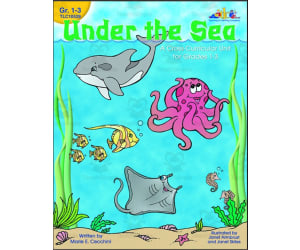
Under the Sea: A Cross-Curricular Unit for Grades 1-3
Science, Life Sciences, Animals, Grade 1, 2, 3, Teacher Tools, Lesson Plans
Starfish, sand, seashells, fish and more‚ students will dive right in as they learn more about the ocean and the inhabitants that live there. This cross-curriculum thematic resource has it all including bulletin board ideas, math activities, science experiments, riddles, worksheets, crafts, clip art and snack ideas.
Author Classroom Complete Press
Tags Under The Sea, Science Riddles, Ocean Sounds, Sea Animals Activity, Animal Unit, Under The Sea Lesson Plans Elementary, 3 By The Sea

Force: Balanced and Unbalanced Forces - FLASH-PC
Science, Physics, Common Core, Grade 5, 6, 7, 8, Teacher Tools, Lesson Plans
Force: Balanced and Unbalanced Forces - FLASH-PC This brilliant teaching tool specifically targets the science field, specially physics, for students from Grade 5 to Grade 8. Its comprehensive approach makes it a must-have resource for public school educators and homeschooling parents alike. Key Features: Comprehensive Guidebook: Divides each chapter into easily digestible segments 'Before you read' Questions: Stimulating questions at the onset of every lesson to pique student curiosity 'After you read' Questions: Designed to assess comprehension and encourage critical thinking post lesson reading passage. Beyond just text-based content, this resource also provides multimedia components like pictures that aid visual learners and an interactive vocabulary flash card system. It further engages students by incorporating digital-age tools such as audio-visual aids enabling them to better grapple with intricate physics concepts on their PC either athome or at school. The Force: Balanced and Unbalanced Forces - FLASH-PC in a modern educational set-up: This module fits perfectly with innovative teaching methodologies like flipped learning or blended learning methods involving student-led groups or peer-tutoring sessions. Sections can be assigned for self-study making it adaptable for different modes of education delivery. Allignement with Educational Standards: The adherence to Common Core State Standards (CCSS) is enhanced by employing this tool as it enables students not just meet but surpass national expectations in education making their learning journey more rewarding. Employment of Bloom's Taxonomy levels while using this resource aids teachers frame lessons addressing varied cognitive learning levels thus assuring balanced development among learners.
Author Classroom Complete Press
Tags Software (PC)

Global Warming CAUSES: Global Warming - FLASH-MAC
Science, Earth and Environmental Sciences, Environmental Science, Common Core, Grade 5, 6, 7, 8, Teacher Tools, Lesson Plans
Global Warming CAUSES: Global Warming - FLASH-MAC A unique teaching road-map crafted for educators aspiring to instill the critical understanding about global warming and its catastrophic repercussions. Primarily designed for Grade 5 to Grade 8 students, it elegantly fits into your science syllabus, especially when teaching Environmental Science. Elevated with curriculum -centric resources, this software brings in a slew of scientifically curated content. It features: Readable Passages: Enhances comprehension of key subjects before delving deeper into the grave matter of global warming. After-Read Questions: Meticulously designed following Bloom’s Taxonomy to bolster cognitive learning at varying levels. A Palette of Interactive Activities: The extensive range adds meaningful dialogues in classroom teachings or homeschooling sessions: Vocabulary Flash Cards: Supports terminology clarity. Printable Study Materials: Amplifies memory recall by displaying them around study spaces. Vivid Video Insights,: Invoking clear imaginary depictions among young learners addressing environmental issues. Poignant Audio Narrations :Inspiring lucid message interpretation without visual aids. The above adopt an experiential learning approach aligning with Common Core State Standards (CCSS). One standout aspect is its versatility -- not only limited to whole group instruction but extends compatibility towards small group discussions too. Encouraging homework tasks and supporting long distance education come as part & parcel with zero compromises on educational deliverance. This innovative tool proffers an illustrious blend of technology & curriculum -driven matter; taking strides toward transforming education and molding environmentally mindful future leaders. It comes in an easy-to-install Mac-compatible software, enabling teachers to concentrate on their main objective - edifying young minds.
Author Classroom Complete Press
Tags Software (Mac)

I WONDER - What Wildlife Lives On The Matterhorn | Animated Video
Geography, Social Studies, Insects, Life Sciences, Science, Nature & Plants, Animals, Grade 6, 7, 8, 9, 10, 11, 12, Lesson Plans, Teacher Tools
Video Introduction An amazing video designed for the students to learn more about famous places in different countries. I WONDER - What Wildlife Lives On The Matterhorn | Animated Video Lesson What do you know about this place? Do you know in which part of the world it is? Have you ever visited this place? If yes, can you tell us more about your adventure, and what do you like the most about this place? Do you like reading about Geography? What is your favorite country in the whole world? If you are going on a trip where it will be? Which country? What you are going to see there? Does this country has a famous place to visit? I WONDER - What Wildlife Lives On The Matterhorn | Animated Video Lesson The activity is perfect for encouraging the researching skills for the students, while learning more about this fantastic place. I WONDER - What Wildlife Lives On The Matterhorn | Animated Video Lesson This friendly designed video is suitable for students at school, homeschooling, and as a group activity. Format Available in MP4 format.
Author Educational Voice
Tags What Wildlife Lives On The Matterhorn, What Wildlife Lives On The Matterhorn Video, Matterhorn, Matterhorn Facts, Matterhorn Facts For Kids, Matterhorn Video, Matterhorn Video For Kids, Matterhorn Wildlife
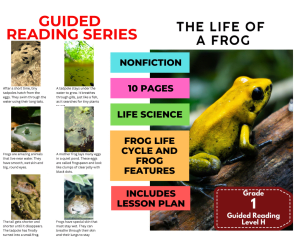
Guided Reading Level H - The Life of a Frog (with Lesson Plan)
ELA, Resources for Teachers, Reading Comprehension, Reading, Science, Animals, Life Sciences, Pre-Reading, Language Development, Vocabulary, Grade 1, 2, 3, Worksheets & Printables, Worksheets, Teacher Tools, Centers, Activities, Literacy Readers, Quizzes, Quizzes and Tests, Assessments, Lesson Plans
This Guided Reading Book - The Life of a Frog (Level H) with lesson plan includes: Guided Reading Color Label (front cover x1) This is a quick way to match the book’s demands to what students can generally handle.. The overall goal is to use the level/color to pick books for several smaller groups. To qualify for a certain level, a student is expected to read a book from that level with about 90–94% accuracy. If a student is consistently accurate and understands, move up a level. If the student is struggling at that level, drop down and add more support. Each student will improve at completely different rates, but it is generally one of the best ways to check progress across the class. DOWNLOAD THE CATALOG TO VIEW ALL GUIDED READING BOOKS AVAILABLE (SORTED LEVELS A-Z) Pre-Reading Question (x1) Teacher asks the prompt aloud, can be while showing the cover or first page. Students share what they already know, or make educated guesses from the cover. Prompt them to use the target vocabulary. Write some of their responses on the board to look back at during the reading. Vocabulary Words (x5) Introduce the five words, best doing it one at a time. Start by saying it, while students repeat and then see if anyone knows what it means before reading further. Read through the meaning and try to briefly connect each word to a picture or gesture so it’s meaningful. Ask students to flip through the book pages and point to where they see each of the vocabulary words. While reading the book pause upon coming across one of the vocab words or read the sentence twice to make sure students understand the word has appeared. Optional: Ask students to raise hands whenever they see/hear one of the new words. Guided Reading Pages (x10) Check the book snapshot (below) for: primary topic - do you need to prep extra reading or intro materials on this? what is taught best - decide on 1-2 bullets to focus on, use the prompt or words provided here for best results. learning goals - what you are checking for students to be able to do after the session, elicit answers using prompts or words provided. key vocabulary (see section above). questions overview - so you know what is coming up and if you need to prep extra materials to assist understanding. Run the lesson You may have already looked at a few of the pages together, but you can show them some of the pictures again first to set meaning. Depending on how much time you have and how familiar your students are with guided reading class, you may want to read the book aloud first with the group first. Students whisper or partner read, while you listen in. If time, do it as a group, one student reading a page each. Use the guided page’s prompts to coach: “Check the picture / does it make sense?” “Point under the words / try the first sound” “Reread the sentence smoothly”. Try to focus more on one student per session (rotating every time), so you can work out if they are ready to move up or need to move down a level. Comprehension Questions (back cover x3) This is your way to check that students didn’t just say the words, but actually understood the text. First, let students answer by pointing to the page/picture and saying a short sentence. After any answer, follow with: “Show me where you found that in the text.” In bigger groups, have partners answer first (10–20 seconds), then call on 2–3 students to share. Differentiation tips: Emerging speakers/struggling readers: oral + pointing On-level: oral in a full sentence Higher: one written sentence or draw + label Book Snapshot Title: The Life of a Frog Genre: Nonfiction (informational life cycle) Subject: Life Science + Reading (Informational Text) Primary Topic: Frog life cycle and frog features Estimated Guided Reading Level (A–Z): H What This Book Teaches Best Explains where frogs live and describes basic frog traits (smooth, wet skin; big, round eyes; living near water). Teaches the frog life cycle in clear steps: eggs (frogspawn) → tadpoles → legs grow → tail disappears → small frog. Shows how a tadpole lives and grows in water, including breathing through gills and eating tiny plants. Describes how frogs breathe (through skin and lungs) and how they get food (long, sticky tongue catching insects). Connects body parts to movement (strong back legs help frogs hop and jump high). Learning Goals Students will describe where frogs live and name physical traits the text mentions. Students will explain what frog eggs are called and describe what they look like. Students will retell the main stages of a frog’s life from eggs to a small frog. Students will describe how tadpoles move, breathe, and find food in the water. Students will explain how the frog’s body changes as legs grow and the tail disappears. Students will use text details to describe how a frog hunts and how it jumps. Key Vocabulary From the Text frogspawn — frog eggs that look like jelly. tadpoles — baby frogs that live in water and have tails. gills — body parts that help an animal breathe underwater. lungs — body parts used for breathing air. insects — small animals a frog can catch and eat. Discussion Prompts Pre-reading question: What changes do you think happen as a tadpole grows into a frog? Comprehension questions: Where does a mother frog lay many eggs, according to the text? Comprehension questions: What do tiny tadpoles use to swim through the water? Comprehension questions: What happens to the tadpole’s tail as it turns into a small frog? Printing Tips 1. Best Printing Method (Recommended) “Booklet” Printing (Best if Available) If your printer or PDF viewer supports Booklet Printing , use this. Settings to use: Print mode: Booklet Paper size: Letter or A4 (either works) Orientation: Landscape Print on both sides: Yes Flip on: Short edge Scaling: Fit to printable area Booklet subset: First test: Front sides only Then: Back sides only This will automatically: Pair pages correctly Put the cover on the outside Align everything for folding After printing, fold in half and staple along the spine . 2. If “Booklet” Printing Is NOT Available You can still print this correctly with manual duplex printing . Step-by-step: Open the PDF. Choose Print . Set: Orientation: Landscape Pages per sheet: 1 Print on both sides: Yes Flip on: Short edge Print all pages . Because each PDF page already contains two facing book pages, the result will still fold cleanly into a book. Thousands of Cored Education products are included with your TeachSimple membership. Download links and encyclopedia index available here.
Author Cored Education
Rating
Tags Reading Comprehension, Reading Passages, Reading, Guided Reading, Guided Reading Lesson Plan, Guided Reading Activity, Pre-reading, Science Lesson Plans, Animals, Frog Life Cycle

Space Travel & Technology - Digital Lesson Plan Gr. 5-8 - FLASH-PC
Science, Earth and Environmental Sciences, Space, Grade 5, 6, 7, 8, Teacher Tools, Lesson Plans
Space Travel & Technology is a comprehensive and interactive digital lesson plan crafted ideally for grades 5 to 8. This unique resource bridges the gap between learning and discovery as students envision themselves as integral members of an exciting shuttle mission to the International Space Station. Coupling knowledge with creativity, this resource positions the student in roles of scientists, engineers, astronauts and leaders. In this highly engaging program that spans over 80 screen pages, learners are guided deeper into theories of space exploration taking them on a cognitive journey through our solar system - from the Moon to Mars and beyond. It underscores not only how our understanding of space has advanced over time but also how it will continue evolving with their contribution. Instructional Content & Activities: Reading Passages: Designed according to Bloom's Taxonomy principles. Gauging Activities: Pre-reading and post-reading activities integrated into each lesson. Diverse Learning Support:Aids such as memory match games, crosswords, word searches included. This program serves as an excellent primary tool for classroom teaching whether it is directed at a whole group or could be subdivided for small group collaborations aiming for more individual-oriented discussions in classrooms or even as robust homework assignments presenting practical application possibilities that resonate real-world situations. Digital Accessibility & Extras Flash PC software format: Makes technology integration effortless without compromising content quality or engagement aspects. Supplementary Video Materials: Extend topic comprehension Text-to-Speech Functions: Available in English and Spanish facilitating ease of understanding amongst varied students' demographics. Rounding up every lesson is an achievable test preparation component designed to evaluate student’s comprehension seamlessly while familiarizing them with testing formats. Adherence to State Standards makes this digital product further trustworthy enabling educators ensure curriculum alignment effortlessly through contemporary teaching avenues reinforcing both - subject matter expertise & modern pedagogical approaches further elevating teaching quality. Space Travel & Technology - Digital Lesson Plan Gr. 5-8 thrives in creating not just lessons, but ambitions on a path towards continual future-bound learning till beyond the limits of our sky.
Author Classroom Complete Press
Tags Software (PC)

Animal Science Unit | All About Tigers | Learning about Animals
Science, Life Sciences, Animals, Kindergarten, Preschool, Grade 1, 2, Teacher Tools, Lesson Plans
Animal Science Unit | All About Tigers Dive into the exciting world of tigers with this expansive collection of engaging resources for students preK-2nd grade. Young learners will build knowledge through real photos, nonfiction reading, crafts , worksheets, and more. Differentiated materials allow implementation in whole group, small group, or independent settings. Students will learn about tiger adaptation, habitats, life cycles, anatomy, behaviors, and more while practicing literacy skills. Teachers can facilitate hands-on active learning with paper crafts , games, writing templates, and discussion questions. This thoughtfully designed unit aims to foster curiosity and appreciation for the natural world. Children will be delighted by vibrant tiger multimedia as they gain science and research abilities. Customize activities to suit all skill levels and learning styles in your classroom.
Author Simply Schoolgirl
Tags Zoology, Big Cats, Predator, Predators, Asia, Asian Animals, Tiger Crafts, Tiger Lesson, Tiger Activities, Tiger Projects

Animal Science Unit | All About Turkeys | Learning about Animals | Turkey
Science, Life Sciences, Animals, Kindergarten, Preschool, Grade 1, 2, Teacher Tools, Lesson Plans
Animal Science Unit | All About Turkeys Dive into learning all about turkeys with this expansive animal science unit! Budding scientists will enjoy a multi-sensory, cross-curricular turkey adventure. Over 100 pages of differentiated reading, writing, math, and hands-on activities cater to various learning styles and abilities. Studious preK-2nd graders can explore turkey classification, adaptations, habitats, life cycles, and more through vibrant images, texts, discussions, crafts, and games. Flexible resources allow for whole group, small group, or independent exploration. Watch curiosity and wonder unfold as little zoologists empathize with wildlife through imaginative stories and express knowledge through their own minibook creations! Thoughtfully designed by an experienced elementary educator, this one-of-a-kind unit transforms any classroom into a junior research center bursting with turkey discoveries!
Author Simply Schoolgirl
Tags Zoology, Farm Animals, Thanksgiving, Bird, Birds, Turkey Crafts, Turkey Lesson, Turkey Projects, Turkey Printables, Turkey Activities

I WONDER - Do Muscles Help You Stand | Animated Video Lesson
Human Body, Life Sciences, Science, Biology, STEM, Grade 4, 5, 6, 7, 8, 9, 10, Lesson Plans, Teacher Tools
Video Overview The human body is full of fascinating wonders to learn. This video is created to help the students recognize the anatomy and the job of the human body. I WONDER - Do Muscles Help You Stand | Animated Video Lesson Every part and organ in our human body is vital so let's see how important they are. Have you ever imagined how we look like if we didn't have a skeleton? Did you know that because we have our amazing muscles we can stand! Do you know how many teeth do we have? Have you ever wondered about the food journey inside our body? Can you name all the glands in our body? Why do we have skin? Our nervous system is really good at sending signals. Can you tell us more about it? Are you really good at Mathematics, painting, or any other thing? You should really thank your brain about it! The famous five senses are really doing a great work? Can you explain how every sense works? I WONDER - Do Muscles Help You Stand | Animated Video Lesson The video is perfect for encouraging the researching skills for the students, while learning more about our fantastic human body. I WONDER - Do Muscles Help You Stand | Animated Video Lesson This friendly designed video is suitable for students at school, homeschooling, and as a group activity. Format Available in MP4 format.
Author Educational Voice
Tags Do Muscles Help You Stand, Do Muscles Help You Stand Video, Muscles, Muscle, Muscles Fact, Muscles Fact For Kids, Muscles Video, Muscles Video For Kids, Muscle Facts, Muscle Facts For Kids
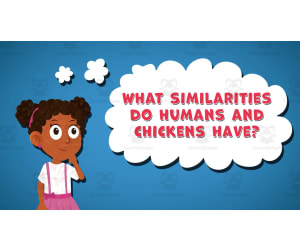
I WONDER - What Similarities Do Humans And Chicken Have
STEM, Biology, Life Sciences, Science, Animals, Grade 1, 2, 3, 4, 5, 6, 7, 8, Lesson Plans, Teacher Tools
Video Introduction Animal kingdoms are full of fascinating wonders to learn. This video is designed for the students to learn more about animals in different countries. I WONDER - What Similarities Do Humans And Chicken Have | Animated Video Lesson Do you like animals? what is your favorite one? Do you own a pet? If yes, tell us more about it, like what its name? And what do you like most about it? What are the animal kingdoms? Can you write down the characteristics of each animal class like mammals, birds, reptiles, amphibian, fish and mollusks. Do you know that some animals can sing, can you name any of them? What is the largest and the smallest mammal in the world? What is the largest and the smallest bird in the world? What is the largest and the smallest fish in the world? I WONDER - What Similarities Do Humans And Chicken Have | Animated Video Lesson The video is perfect for encouraging the researching skills for the students, while learning more about these fantastic animals. I WONDER - What Similarities Do Humans And Chicken Have | Animated Video Lesson This friendly designed video is suitable for students at school, homeschooling, and as a group activity. Format Available in MP4 format.
Author Educational Voice
Tags What Similarities Do Humans And Chicken Have, What Similarities Do Humans And Chicken Have Video, Chicken, Chicken Facts, Chicken Facts For Kids, Chicken Video, Chicken Video For Kids, Humans

I WONDER - What Are Leafcutter Ants | Animated Video Lesson
STEM, Animals, Life Sciences, Science, Biology, Grade 1, 2, 3, 4, 5, 6, 7, 8, Lesson Plans, Teacher Tools
Video Introduction Animal kingdoms are full of fascinating wonders to learn. This video is designed for the students to learn more about animals in different countries. I WONDER - What Are Leafcutter Ants | Animated Video Lesson Do you like animals? what is your favorite one? Do you own a pet? If yes, tell us more about it, like what its name? And what do you like most about it? What are the animal kingdoms? Can you write down the characteristics of each animal class like mammals, birds, reptiles, amphibian, fish and mollusks. Do you know that some animals can sing, can you name any of them? What is the largest and the smallest mammal in the world? What is the largest and the smallest bird in the world? What is the largest and the smallest fish in the world? I WONDER - What Are Leafcutter Ants | Animated Video Lesson The video is perfect for encouraging the researching skills for the students, while learning more about these fantastic animals. I WONDER - What Are Leafcutter Ants | Animated Video Lesson This friendly designed video is suitable for students at school, homeschooling, and as a group activity. Format Available in MP4 format.
Author Educational Voice
Tags What Are Leafcutter Ants, What Are Leafcutter Ants Video, Leafcutter Ants, Leafcutter Ants Video, Leafcutter Ants Facts, Leafcutter Ants Facts For Kids, Leafcutter Ants Video For Kids, Leafcutter Ant

I WONDER - What Is Fair Food Trade | Animated Video Lesson
Environmental Science, Earth and Environmental Sciences, Science, Earth Sciences, Grade 6, 7, 8, 9, 10, 11, 12, Lesson Plans, Teacher Tools
Video Introduction An amazing video designed for the students to learn more about STEM. I WONDER - What Is Fair Food Trade | Animated Video Lesson Do you like STEM subjects? what is your favorite one? Have you ever tried to plant a seed? If yes, tell us more about it. Or have you ever tried to invent something? If yes, tell us more about it. And how do you think it will help us? Have you ever seen a microorganism under a microscope? What was it? And how it looked like? Mathematics is a marvelous subject. Let' sharpen our brains and solve some equations. Do you like timetable tricks? What is your favorite one? Do you know how to code? Have you ever created an app or a game before? If yes, how was it like? I WONDER - What Is Fair Food Trade | Animated Video Lesson The video is perfect for encouraging the researching skills for the students, while learning more about this fantastic topic. I WONDER - What Is Fair Food Trade | Animated Video Lesson This friendly designed video is suitable for students at school, homeschooling, and as a group activity. Format Available in MP4 format.
Author Educational Voice
Tags What Is Fair Food Trade, What Is Fair Food Trade Video, Fair Food Trade, Fair Food Trade Facts, Fair Food Trade Facts For Kids, Fair Food Trade Video, Fair Food Trade Video For Kids

I WONDER - How Much Water Does It Take To Grow Cotton | Animated Video
Environmental Science, Earth and Environmental Sciences, Science, Earth Sciences, Nature & Plants, Life Sciences, Grade 6, 7, 8, 9, 10, 11, 12, Lesson Plans, Teacher Tools
Video Introduction An amazing video designed for the students to learn more about STEM. I WONDER - How Much Water Does It Take To Grow Cotton | Animated Video Lesson Do you like STEM subjects? what is your favorite one? Have you ever tried to plant a seed? If yes, tell us more about it. Or have you ever tried to invent something? If yes, tell us more about it. And how do you think it will help us? Have you ever seen a microorganism under a microscope? What was it? And how it looked like? Mathematics is a marvelous subject. Let' sharpen our brains and solve some equations. Do you like timetable tricks? What is your favorite one? Do you know how to code? Have you ever created an app or a game before? If yes, how was it like? I WONDER - How Much Water Does It Take To Grow Cotton | Animated Video Lesson The video is perfect for encouraging the researching skills for the students, while learning more about this fantastic topic. I WONDER - How Much Water Does It Take To Grow Cotton | Animated Video Lesson This friendly designed video is suitable for students at school, homeschooling, and as a group activity. Format Available in MP4 format.
Author Educational Voice
Tags How Much Water Does It Take To Grow Cotton, How Much Water Does It Take To Grow Cotton Video, Cotton, Cotton Facts, Cotton Facts For Kids, Cotton Video, Cotton Video For Kids, Plants