



3,930 products added recently
Page 13 - Science Lesson Plan Template
Enhance your science instruction with a flexible lesson plan template designed for educators. This tool helps you structure objectives, materials, procedures, and assessments efficiently. Use it to create organized and impactful science lessons that cater to your students' needs.

 Show filters

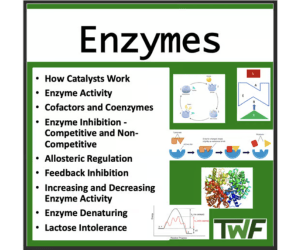
Enzymes - Senior High School Biology lesson
Science, Life Sciences, Biology, Grade 11, 12, Teacher Tools, Lesson Plans
Enyzmes - Senior High School Biology lesson The lesson covers the following topics; How Catalysts Work, Enzyme Activity, Cofactors and Coenzymes, Enzyme Inhibition - Competitive and Non-Competitive, Allosteric Regulation, Feedback Inhibition, Increasing and Decreasing Enzyme Activity, Enzyme Denaturing, and Lactose Intolerance. The lesson includes the teacher and student version of the presentation, three embedded videos, an auto-graded exit ticket, and a student lesson handout so the students can record the notes on a more condensed medium. The lesson is entertaining, engaging, and classroom-tested. This lesson is designed to be effective whether you're in a traditional classroom or a virtual one. With both a teacher version and a student version, it seamlessly fits into your lesson plans, making learning engaging and adaptable. Assessment made easy I've included an auto-graded Exit Ticket and a quiz with an answer key. This allows you to assess your student's understanding without increasing your workload. Whether you use PowerPoint or Google Slides, prefer Word or Google Docs, this lesson will be perfect for your classroom as it comes in both Office and Google formats for your convenience. The student version of the presentation has some of the text removed so that your students can fill in some notes while not spending the entire class doing so. This keeps them active and engaged, and encourages discussion.
Author Teach With Fergy
Tags Biochemistry, Senior Biology Lesson, Biology Lesson, Senior Biology, Proteins, Enzymes, Cofactors, Coenzymes, Allosteric Regulation

Iguanas Reading Comprehension Passage - Cored Ed Encyclopedia
ELA, Reading Comprehension, Reading, History, Social Studies, Science, Physics, Earth and Environmental Sciences, Life Sciences, Geography, Grade 2, 3, 4, 5, Worksheets & Printables, Worksheets, Teacher Tools, Centers, Activities, Writing Prompts, Assessments, Quizzes and Tests, Quizzes, Lesson Plans
This Iguanas reading comprehension with lesson plan includes: Visualization (on the front cover) Start your lesson by taking a minute to think and share something about the topic. Read the script aloud (slowly), perhaps prepare some music or sound effects. Student close their eyes and let their imaginations wander. Students open their eyes, read the question aloud and give them a few minutes to complete. Ask a few students to share or keep answers until the end to compare with what they learn in the passage. Quick pause—thousands of Cored Education products are included with your TeachSimple membership. Download links and encyclopedia index available here. Pre-Reading Trivia Students will write down one thing they already know about the subject and then read five more facts and discuss. These facts are fun, and the students will enjoy learning about the subject before reading more. Give 1 minute for students to write what they already know (no pressure—best guess is fine). Read the five facts together. After each fact, do ask a student for their opinion, was it surprising? Set a purpose by asking students to highlight/underline one fact they want to learn more about during the reading. Reading Passage The text is a high-interest reading passage with set paragraphs, roughly three to four paragraphs long. It contains a variety of themes about the topic, anywhere from history to technology. The passage is between 250 and 350 words in length. First, ask students to look at the headings and see what they’ll learn about today. What do they know about the topic/heading? First read options: Teacher read-aloud (best for support). Partner reading (paragraph by paragraph). While reading, students underline important details, and vocabulary words they think may come up in the questions section. Mixed Questions The first question page contains four multiple-choice questions, each with a choice of four answers, and three written response questions that require a sentence or two from the student. Students complete the mcqs first independently, then review quickly as a class. For the 3 written responses, try to get students giving the answer with some form of evidence: “I think ___ because the text says ___.” If students get stuck, send them back to check the passage. Vocabulary Questions Practice seven key words from the text in this section across two activities. First section is scrambled words where students will unscramble three words given a clue for each. The second section is a word to meaning matching activity. Before starting, have some students read out words they underlined in the passage. Ask students to say the word and read aloud the sentence(s) around each word. Ask students to do scrambled words and the matching exercise in pairs then go through answers as a class. For the scrambled spelling task, get four pairs to come up to the board and write the words for extra practice with the other student reading out the clue. For the matching task, prompt students to give full sentences: “I matched ___ with ___ because ___.” Creative Writing In this question, the student will be required to write a five to eight sentence paragraph on a question related to the topic. Before starting, ask students write down 3 key ideas they are going to include in their piece. Ask students for ideas to share around the class to help those struggling. Pro writing expectations: 5–8 sentences At least 2 facts or details from the passage At least 2 vocabulary words from the previous page Students read their paragraphs while classmates listen for facts and vocabulary words. Extension Activities This page is optional for fast finishers or to take home. There are several activities, each one requiring a different skill. Do some, do none, do all, completely optional - but you will feel reassured knowing every possibility is planned for. Includes summary writting question and additional facts. Answer Key There are answers for the multiple-choice questions, written response questions have sample answers, vocabulary answers and if there is a summary question then a sample summary will be provided as well. Lesson Plan Included Customized lesson plan for this lesson is included. Lesson Snapshot Title: Iguanas Genre: Nonfiction (informational text) Subject: Reading (Informational Text) / Life Science Primary Topic: Green vs. marine iguanas: tails, habitat, survival Estimated Guided Reading Level (A–Z): R What This Lesson Teaches Best Describes key iguana features and what they look like (dewlap, a line of spines). Explains where iguanas live and notes that most live in the Americas, with some relatives on islands. Shows how a green iguana’s long tail helps with survival (whip-like defense and strong tail strokes for swimming away). Compares two related iguanas by habitat and behavior (tree-climbing green iguana vs. sea-foraging marine iguana that eats algae and basks on dark rocks). Builds awareness of changing habitats and reasons protection matters (building on land, hunting/capturing, predators, El Niño, oil spills). Learning Goals Identify details that describe what an iguana looks like and where it lives. Explain how a green iguana uses its tail when danger comes near water. Describe how the marine iguana finds food and what it does after a cold swim. Compare the green iguana and marine iguana using evidence from the passage. Describe at least two reasons iguanas might need protection based on changes in their habitats. Key Vocabulary From the Text dewlap — loose throat skin that can hang in a fold. spines — pointed bumps that may rise along its back. forages — searches for food. predators — animals that hunt other animals. habitats — places animals need to live. FULL CATALOG OF DOWNLOAD LINKS AND ENCYCLOPEDIA INDEX HERE
Author Cored Education
Rating
Tags Vocabulary, Reading Comprehension, Reading Passages, Lesson Plans, Ela Lesson Plans, Reading Comprehension Lesson Plans, Pre-reading, History, Science Lesson Plans, Life Science

High School Science The Keystone Paradigm Unit
ELA, Reading, Writing, Reading Comprehension, Research, Resources for Teachers, Science, Earth and Environmental Sciences, Homeschool Resources, High School, Teacher Tools, Assessments, Lesson Plans, Quizzes and Tests, Rubrics, Worksheets & Printables, Writing Prompts, Worksheets
Let’s be real: finding science curriculum for a ninth grader that is not fluff feels like a full-time job. Once we hit the high school years, the "nature study" phase is over, and suddenly we are staring down the barrel of complex theories and massive textbooks. I built this unit because I was tired of "busy work" packets. I wanted my own daughter to see that science isn't just a list of facts to memorize—it is a messy, fascinating debate that is still happening right now. INCLUDED IN THIS RESOURCE: Keystone Paradigm Text 30-Year Population Data MacNulty Science Challenge Complete Grading Suite TOPICS COVERED: Trophic Cascade Mechanics Ecosystem Engineering Abiotic vs. Biotic Factors Scientific Model Critiques I will never forget the morning she finally sat at the table, nose deep in the MacNulty critique, and the "aha!" moment hit. Watching her connect the dots on how a wolf can actually shift the course of a river... that is the spark we’re all chasing, right? I designed this to give your student/homeschooler that same intellectual respect while giving you a breather. It is rigorous, it’s deep, and most importantly, it is ready to go. I hope it brings some incredible "lightbulb moments" and lively debates to your house, too. If you and your students/homeschoolers enjoyed this resource, please leave a review. Thank you for your support! Tina - Big Easy Homeschooling Mom
Author Homeschool with Big Easy Homeschooling Mom
Rating
Tags High School Science, Homeschool Science, Ecology Unit, Trophic Cascades, Yellowstone Wolves, Biology Module, Environmental Science, High School Ecology Curriculum, MacNulty Challenge Science, High School Biology Curriculum

I WONDER - What Is Special About The Moon Charon | Animated Video Less
Space, Earth and Environmental Sciences, Science, Grade 6, 7, 8, 9, 10, 11, 12, Lesson Plans, Teacher Tools
Video Introduction An amazing video designed for the students to learn more about space facts. I WONDER - What Is Special About The Moon Charon | Animated Video Lesson Do you like reading about space? If yes, what is your favorite topic? What do you know about our solar system? What is the smallest planet in our solar system? What is the biggest planet in our solar system? What is the hottest planet in our solar system? And what is the coldest one? Do you think there are aliens? If yes, what do you think they look like? What do they eat and how they speak to each other? Where do they live? What is a galaxy? And what is a milky way? Have you recently saw a shooting star? If yes, tell us more about it, like when did it happen and where? What is a blackhole? Can a blackhole gets bigger by time? Do you like counting the stars? What do you think a star is made of? I WONDER - What Is Special About The Moon Charon | Animated Video Lesson The video is perfect for encouraging the researching skills for the students, while learning more about the fantastic space. I WONDER - What Is Special About The Moon Charon | Animated Video Lesson This friendly designed video is suitable for students at school, homeschooling, and as a group activity. Format Available in MP4 format.
Author Educational Voice
Tags What Is Special About The Moon Charon, What Is Special About The Moon Charon Video, The Moon Charon, The Moon Charon Facts, The Moon Charon Facts For Kids, The Moon Charon Video, The Moon Charon Video For Kids

I WONDER - Is Rewilding Good For Humans | Animated Video Lesson
Environmental Science, Earth and Environmental Sciences, Science, Earth Sciences, Nature & Plants, Life Sciences, Human Body, Biology, Animals, Insects, Grade 6, 7, 8, 9, 10, 11, 12, Lesson Plans, Teacher Tools
Video Introduction An amazing video designed for the students to learn more about STEM. I WONDER - Is Rewilding Good For Humans | Animated Video Lesson Do you like STEM subjects? what is your favorite one? Have you ever tried to plant a seed? If yes, tell us more about it. Or have you ever tried to invent something? If yes, tell us more about it. And how do you think it will help us? Have you ever seen a microorganism under a microscope? What was it? And how it looked like? Mathematics is a marvelous subject. Let' sharpen our brains and solve some equations. Do you like timetable tricks? What is your favorite one? Do you know how to code? Have you ever created an app or a game before? If yes, how was it like? I WONDER - Is Rewilding Good For Humans | Animated Video Lesson The video is perfect for encouraging the researching skills for the students, while learning more about this fantastic topic. I WONDER - Is Rewilding Good For Humans | Animated Video Lesson This friendly designed video is suitable for students at school, homeschooling, and as a group activity. Format Available in MP4 format.
Author Educational Voice
Tags Is Rewilding Good For Humans, Is Rewilding Good For Humans Video, Rewilding, Rewilding Facts, Rewilding Facts For Kids, Rewilding Video, Rewilding Video For Kids, Rewilding Tips, Rewilding Tips For Kids
I WONDER - What Is The Busiest Muscle In The Body | Animated Video
Human Body, Life Sciences, Science, Biology, STEM, Grade 6, 7, 8, 9, 10, 11, 12, Lesson Plans, Teacher Tools
Video Overview The human body is full of fascinating wonders to learn. This video is created to help the students recognize the anatomy and the job of the human body. I WONDER - What Is The Busiest Muscle In The Body | Animated Video Lesson Every part and organ in our human body is vital so let's see how important they are. Have you ever imagined how we look like if we didn't have a skeleton? Did you know that because we have our amazing muscles we can stand! Do you know how many teeth do we have? Have you ever wondered about the food journey inside our body? Can you name all the glands in our body? Why do we have skin? Our nervous system is really good at sending signals. Can you tell us more about it? Are you really good at Mathematics, painting, or any other thing? You should really thank your brain about it! The famous five senses are really doing a great work? Can you explain how every sense works? I WONDER - What Is The Busiest Muscle In The Body | Animated Video Lesson The video is perfect for encouraging the researching skills for the students, while learning more about our fantastic human body. I WONDER - What Is The Busiest Muscle In The Body | Animated Video Lesson This friendly designed video is suitable for students at school, homeschooling, and as a group activity. Format Available in MP4 format.
Author Educational Voice
Tags What Is The Busiest Muscle In The Body, What Is The Busiest Muscle In The Body Video, Busiest Muscle, Busiest Muscle Facts, Busiest Muscle Facts For Kids, Busiest Muscle Video, Busiest Muscle Video For Kids

I WONDER - Why Do We Have Holes In Our Skulls | Animated Video Lesson
Human Body, Life Sciences, Science, Biology, STEM, Grade 3, 4, 5, 6, 7, 8, 9, Lesson Plans, Teacher Tools
Video Overview The human body is full of fascinating wonders to learn. This video is created to help the students recognize the anatomy and the job of the human body. I WONDER - Why Do We Have Holes In Our Skulls | Animated Video Lesson Every part and organ in our human body is vital so let's see how important they are. Have you ever imagined how we look like if we didn't have a skeleton? Did you know that because we have our amazing muscles we can stand! Do you know how many teeth do we have? Have you ever wondered about the food journey inside our body? Can you name all the glands in our body? Why do we have skin? Our nervous system is really good at sending signals. Can you tell us more about it? Are you really good at Mathematics, painting, or any other thing? You should really thank your brain about it! The famous five senses are really doing a great work? Can you explain how every sense works? I WONDER - Why Do We Have Holes In Our Skulls | Animated Video Lesson The video is perfect for encouraging the researching skills for the students, while learning more about our fantastic human body. I WONDER - Why Do We Have Holes In Our Skulls | Animated Video Lesson This friendly designed video is suitable for students at school, homeschooling, and as a group activity. Format Available in MP4 format.
Author Educational Voice
Tags Why Do We Have Holes In Our Skulls, Why Do We Have Holes In Our Skulls Video, Holes In Our Skulls, Holes In Our Skulls Facts, Holes In Our Skulls Facts For Kids, Holes In Our Skulls Video, Holes In Our Skulls Video For Kids

All About The Water Cycle | Animated Weather Video Lesson
Science, Earth and Environmental Sciences, Environmental Science, Not Grade Specific, Lesson Plans, Teacher Tools
This animated science video lesson is All About The Water Cycle. Students will love to go on this adventure and learn more about the different aspects of weather. It is a 3-minute video.
Author Educational Voice
Tags Environmental, Science, Water Cycle, Science Facts, Condensation, Animated Water Cycle, Water Cycle Videos For 4th Graders

I WONDER - Where Do We See Potential Energy In Everyday Life
Physics, Science, Grade 4, 5, 6, 7, 8, 9, 10, Lesson Plans, Teacher Tools
Video Introduction An amazing video designed for the students to learn more about STEM. I WONDER - Where Do We See Potential Energy In Everyday Life | Animated Video Lesson Plants world is really fascinating! Do you know that some flowers eat insects? Some other plants like to grow on walls can you mention any? Do you know what is the difference between fungicide and pesticide? If yes, Can you tell us more about it? What is nuclear energy? Is it safe to use it? Do you think it is a clean energy? Have you ever read about potential energy? If yes, tell us what it is? Do you think that potential energy can be converted into another form of energy? How it happens? I WONDER - Where Do We See Potential Energy In Everyday Life | Animated Video Lesson The video is perfect for encouraging the researching skills for the students, while learning more about this fantastic topic. I WONDER - Where Do We See Potential Energy In Everyday Life | Animated Video Lesson This friendly designed video is suitable for students at school, homeschooling, and as a group activity. Format Available in MP4 format.
Author Educational Voice
Rating
Tags Where Do We See Potential Energy In Everyday Life, Potential Energy, Potential Energy Facts, Potential Energy Video, Potential Energy Video For Kids, Potential Energy Facts For Kids, Potential Energy In Everyday Life

Classification & Adaptation: A Case Study: The Koala and Its Adaptations Gr. 5-8
Science, Life Sciences, Biology, Grade 5, 6, 7, 8, Teacher Tools, Lesson Plans
Classification & Adaptation: A Case Study: The Koala and Its Adaptations Gr. 5-8 This engaging teaching resource is tailored for students in grades 5 to 8. It delves into the captivating world of biology, specifically focusing on the sphere of animal adaptation through an intimate exploration of the survival mechanisms adopted by the koala bear. This teaching aid encourages students to consider pressing questions such as: What distinguishes warm-blooded and cold-blooded animals? How are vertebrates different from invertebrates? BLOOM's Taxonomy Concepts In trying to answer these fundamental scientific inquiries, students will come face-to-face with concepts that make up BLOOM's taxonomy like comprehension, application, analysis and synthesis. The Core Subject – The Koala Bear The core of this resource a detailed case study about one of Australia's most iconic fauna – The Koala Bear. Students learn about this unique creature and its remarkable adaptations for survival in intricate environmental conditions. Educational Activities Included "How Important Are Thumbs?" "The Lake Habitat Thermometer" "A Day in the Life of a Paleontologist!" Apart from enlightening reading passages that simplify complex scientific concepts, this valuable resource also contains hands-on activities that facilitate practical understanding application. Educational Standards Alignment & Student Guide Additions This bundle conforms with your State’s educational standards ensuring relevance while aligning with STEM initiatives guarantees rigor in critical thinking and problem-solving skills development. Its simplified language makes learning enjoyable even to remedial students. Instruction Modes Educators can utilize this vital source material for various instruction modes including: Whole-class teaching Small group sessions Homework assignments fostering independent thought processes among learners. The addition of a student guide adds flexibility into usage possibilities. For educators keen on enhancing their grade 5-8 wards' scientific acumen, "Classification & Adaptation: A Case Study: The Koala and Its Adaptations Gr. 5-8" is an invaluable partner for the journey of comprehension, analysis, synthesis and evaluation of every learning endeavor.
Author Classroom Complete Press
Tags PDF
I WONDER - Where Do Turtles Lay Eggs | Animated Video Lesson
STEM, Biology, Life Sciences, Science, Animals, Grade 1, 2, 3, 4, 5, 6, 7, 8, Lesson Plans, Teacher Tools
Video Introduction Animal kingdoms are full of fascinating wonders to learn. This video is designed for the students to learn more about animals in different countries. I WONDER - Where Do Turtles Lay Eggs | Animated Video Lesson Do you like animals? what is your favorite one? Do you own a pet? If yes, tell us more about it, like what its name? And what do you like most about it? What are the animal kingdoms? Can you write down the characteristics of each animal class like mammals, birds, reptiles, amphibian, fish and mollusks. Do you know that some animals can sing, can you name any of them? What is the largest and the smallest mammal in the world? What is the largest and the smallest bird in the world? What is the largest and the smallest fish in the world? I WONDER - Where Do Turtles Lay Eggs | Animated Video Lesson The video is perfect for encouraging the researching skills for the students, while learning more about these fantastic animals. I WONDER - Where Do Turtles Lay Eggs | Animated Video Lesson This friendly designed video is suitable for students at school, homeschooling, and as a group activity. Format Available in MP4 format.
Author Educational Voice
Tags Where Do Turtles Lay Eggs, Where Do Turtles Lay Eggs Video, Turtles Lay Eggs, Turtles Lay Eggs Facts, Turtles Lay Eggs Facts For Kids, Turtles Lay Eggs Video, Turtles Lay Eggs Video For Kids, Turtles
I WONDER - How Long Are The Blood Vessels | Animated Video Lesson
Biology, Life Sciences, Science, Human Body, STEM, Grade 6, 7, 8, 9, 10, 11, 12, Lesson Plans, Teacher Tools
Video Overview The human body is full of fascinating wonders to learn. This video is created to help the students recognize the anatomy and the job of the human body. I WONDER - How Long Are The Blood Vessels | Animated Video Lesson Every part and organ in our human body is vital so let's see how important they are. Have you ever imagined how we look like if we didn't have a skeleton? Did you know that because we have our amazing muscles we can stand! Do you know how many teeth do we have? Have you ever wondered about the food journey inside our body? Can you name all the glands in our body? Why do we have skin? Our nervous system is really good at sending signals. Can you tell us more about it? Are you really good at Mathematics, painting, or any other thing? You should really thank your brain about it! The famous five senses are really doing a great work? Can you explain how every sense works? I WONDER - How Long Are The Blood Vessels | Animated Video Lesson The video is perfect for encouraging the researching skills for the students, while learning more about our fantastic human body. I WONDER - How Long Are The Blood Vessels | Animated Video Lesson This friendly designed video is suitable for students at school, homeschooling, and as a group activity. Format Available in MP4 format.
Author Educational Voice
Tags How Long Are The Blood Vessels, How Long Are The Blood Vessels Video, Blood Vessels, Blood Vessel, Blood Vessels Facts, Blood Vessels Facts For Kids, Blood Vessels Video, Blood Vessels Video For Kids
I WONDER - What Size Is The Bee Hummingbird | Animated Video Lesson
STEM, Animals, Life Sciences, Science, Biology, Grade 1, 2, 3, 4, 5, 6, 7, 8, Lesson Plans, Teacher Tools
Video Introduction Animal kingdoms are full of fascinating wonders to learn. This video is designed for the students to learn more about animals in different countries. I WONDER - What Size Is The Bee Hummingbird | Animated Video Lesson Do you like animals? what is your favorite one? Do you own a pet? If yes, tell us more about it, like what its name? And what do you like most about it? What are the animal kingdoms? Can you write down the characteristics of each animal class like mammals, birds, reptiles, amphibian, fish and mollusks. Do you know that some animals can sing, can you name any of them? What is the largest and the smallest mammal in the world? What is the largest and the smallest bird in the world? What is the largest and the smallest fish in the world? I WONDER - What Size Is The Bee Hummingbird | Animated Video Lesson The video is perfect for encouraging the researching skills for the students, while learning more about these fantastic animals. I WONDER - What Size Is The Bee Hummingbird | Animated Video Lesson This friendly designed video is suitable for students at school, homeschooling, and as a group activity. Format Available in MP4 format.
Author Educational Voice
Tags What Size Is The Bee Hummingbird, What Size Is The Bee Hummingbird Video, Bee Hummingbird, Bee Hummingbird Video, Bee Hummingbird Facts, Bee Hummingbird Facts For Kids, Bee Hummingbird Video For Kids

Night Flyers: A Cross-Curricular Unit on Bats
Science, Life Sciences, Animals, Grade 1, 2, Teacher Tools, Lesson Plans
Night Flyers: A Cross-Curricular Unit on Bats A comprehensive teaching and learning resource primarily designed for Grade 1 and Grade 2 students. The unit employs interactive strategy to demystify misconceptions about bats — an enrichment tool packed with supplementary worksheets! Product Attributes: Worksheets are ready-to-print Cross-curricular approach to learning – bat-themed math problems, narrative writing etc. Leverages on different pedagogical approaches – group settings or individual engagement Magnifies depth-of-knowledge by complementing classroom lessons with homework assignments Activities can be administered as whole class or small group instructions for flexible teaching strategies This product extends itself beyond conventional boundaries encouraging application of knowledge across varying disciplines – a classic example is posing math problems in the theme of bats. The resource also urges learners to expand their imaginative space by prompting them to write their own sensational stories featuring these night flyers. About the Lessons : The setup enables efficient execution in both collective scenarios or smaller focused groups, broadening possibilities into engaging homework tasks that enhance depth-of-knowledge at home.The provided activities comprise seven pages in PDF format. Night Flyers: A Cross-Curricular Unit on Bats - Enhanced Learning Perks! Digs deep into scientific facts about bats specifying under zoological aspects while bridging educational spheres like creative writing or problem-solving within a mathematical framework—seamlessly weaving robust multi-disciplinary learning ingredient. Note:Makes learning fun using tantalizing truths about exciting night flyers! This subtly intriguing product promises quality engagement while lighting up young minds towards broader understanding perspectives bridging gaps amid various subjects under consideration.
Author Classroom Complete Press
Tags Science Activity, Math Printable, Bats, Reading Passage, Science Reading

I WONDER - Do Koalas And Humans Have Anything In Common | Animated
STEM, Biology, Life Sciences, Science, Animals, Grade 1, 2, 3, 4, 5, 6, 7, 8, Lesson Plans, Teacher Tools
Video Introduction Animal kingdoms are full of fascinating wonders to learn. This video is designed for the students to learn more about animals in different countries. I WONDER - Do Koalas And Humans Have Anything In Common | Animated Video Lesson Do you like animals? what is your favorite one? Do you own a pet? If yes, tell us more about it, like what its name? And what do you like most about it? What are the animal kingdoms? Can you write down the characteristics of each animal class like mammals, birds, reptiles, amphibian, fish and mollusks. Do you know that some animals can sing, can you name any of them? What is the largest and the smallest mammal in the world? What is the largest and the smallest bird in the world? What is the largest and the smallest fish in the world? I WONDER - Do Koalas And Humans Have Anything In Common | Animated Video Lesson The video is perfect for encouraging the researching skills for the students, while learning more about these fantastic animals. I WONDER - Do Koalas And Humans Have Anything In Common | Animated Video Lesson This friendly designed video is suitable for students at school, homeschooling, and as a group activity. Format Available in MP4 format.
Author Educational Voice
Tags Do Koalas And Humans Have Anything In Common, Do Koalas And Humans Have Anything In Common Video, Koalas, Koala, Koalas Facts, Koalas Facts For Kids, Koalas Video, Koalas Video For Kids
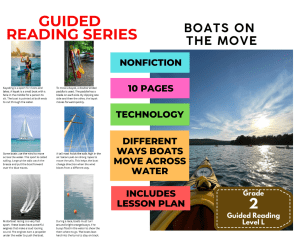
Guided Reading Level L - Boats on the Move (with Lesson Plan)
ELA, Resources for Teachers, Reading Comprehension, Reading, Science, Engineering, Technology, Physics, Sports, P.E. & Health, Grade 2, 3, 4, Worksheets & Printables, Worksheets, Teacher Tools, Centers, Activities, Literacy Readers, Quizzes, Quizzes and Tests, Assessments, Lesson Plans
This Guided Reading Book - Boats on the Move (Level L) with lesson plan includes: Guided Reading Color Label (front cover x1) This is a quick way to match the book’s demands to what students can generally handle.. The overall goal is to use the level/color to pick books for several smaller groups. To qualify for a certain level, a student is expected to read a book from that level with about 90–94% accuracy. If a student is consistently accurate and understands, move up a level. If the student is struggling at that level, drop down and add more support. Each student will improve at completely different rates, but it is generally one of the best ways to check progress across the class. DOWNLOAD THE CATALOG TO VIEW ALL GUIDED READING BOOKS AVAILABLE (SORTED LEVELS A-Z) Pre-Reading Question (x1) Teacher asks the prompt aloud, can be while showing the cover or first page. Students share what they already know, or make educated guesses from the cover. Prompt them to use the target vocabulary. Write some of their responses on the board to look back at during the reading. Vocabulary Words (x5) Introduce the five words, best doing it one at a time. Start by saying it, while students repeat and then see if anyone knows what it means before reading further. Read through the meaning and try to briefly connect each word to a picture or gesture so it’s meaningful. Ask students to flip through the book pages and point to where they see each of the vocabulary words. While reading the book pause upon coming across one of the vocab words or read the sentence twice to make sure students understand the word has appeared. Optional: Ask students to raise hands whenever they see/hear one of the new words. Guided Reading Pages (x10) Check the book snapshot (below) for: primary topic - do you need to prep extra reading or intro materials on this? what is taught best - decide on 1-2 bullets to focus on, use the prompt or words provided here for best results. learning goals - what you are checking for students to be able to do after the session, elicit answers using prompts or words provided. key vocabulary (see section above). questions overview - so you know what is coming up and if you need to prep extra materials to assist understanding. Run the lesson You may have already looked at a few of the pages together, but you can show them some of the pictures again first to set meaning. Depending on how much time you have and how familiar your students are with guided reading class, you may want to read the book aloud first with the group first. Students whisper or partner read, while you listen in. If time, do it as a group, one student reading a page each. Use the guided page’s prompts to coach: “Check the picture / does it make sense?” “Point under the words / try the first sound” “Reread the sentence smoothly”. Try to focus more on one student per session (rotating every time), so you can work out if they are ready to move up or need to move down a level. Comprehension Questions (back cover x3) This is your way to check that students didn’t just say the words, but actually understood the text. First, let students answer by pointing to the page/picture and saying a short sentence. After any answer, follow with: “Show me where you found that in the text.” In bigger groups, have partners answer first (10–20 seconds), then call on 2–3 students to share. Differentiation tips: Emerging speakers/struggling readers: oral + pointing On-level: oral in a full sentence Higher: one written sentence or draw + label Book Snapshot Title: Boats on the Move Genre: Nonfiction (informational) Subject: Science (Forces & Motion) / Reading (Informational Text) Primary Topic: Different ways boats move across water Estimated Guided Reading Level (A–Z): L What This Book Teaches Best Different ways boats move on water (wind, oars, paddles, engines). How specific boat parts help movement (sails, mast, ropes, propeller). How coordinated actions affect motion (oars dipping “at the same time” to go straight). How markers guide movement during a race (boats turn around bright orange buoys to stay on track). Comparing speed and movement styles (quiet glide vs fast roar; forward motion by alternating paddle sides). Learning Goals Students will identify several ways boats move across the water using details from the text. Students will explain how sails and wind help pull a boat forward. Students will describe how rowers use oars together to move a boat straight ahead. Students will describe how a double-ended paddle helps a kayak move forward quickly. Students will explain how an engine and propeller help push a motorboat through the water. Students will describe why boats turn around buoys during a race, based on the text. Key Vocabulary From the Text mast — a tall pole that holds sails up. rhythm — a steady pattern of movement. double-ended — having an end on both sides. propeller — a spinning part that helps push a boat. buoys — floating markers that show where to go. Discussion Prompts Pre-reading question: What are some different ways a boat could move across the water? Comprehension questions: How do large white sails help a boat move forward? What do rowers do “at the same time,” and what does that help the boat do? Why must boats turn around bright orange buoys during a race? Printing Tips 1. Best Printing Method (Recommended) “Booklet” Printing (Best if Available) If your printer or PDF viewer supports Booklet Printing , use this. Settings to use: Print mode: Booklet Paper size: Letter or A4 (either works) Orientation: Landscape Print on both sides: Yes Flip on: Short edge Scaling: Fit to printable area Booklet subset: First test: Front sides only Then: Back sides only This will automatically: Pair pages correctly Put the cover on the outside Align everything for folding After printing, fold in half and staple along the spine . 2. If “Booklet” Printing Is NOT Available You can still print this correctly with manual duplex printing . Step-by-step: Open the PDF. Choose Print . Set: Orientation: Landscape Pages per sheet: 1 Print on both sides: Yes Flip on: Short edge Print all pages . Because each PDF page already contains two facing book pages, the result will still fold cleanly into a book. Thousands of Cored Education products are included with your TeachSimple membership. Download links and encyclopedia index available here.
Author Cored Education
Rating
Tags Reading Comprehension, Reading Passages, Reading, Guided Reading, Guided Reading Lesson Plan, Guided Reading Activity, Pre-reading, Science Lesson Plans, Physics, Technology

All About Elephants | Five Facts Video Lesson
Science, Life Sciences, Animals, Not Grade Specific, Lesson Plans, Teacher Tools
This animated video lesson will give you five facts all about elephants. Students will love this engaging and interactive video. This video serves as a great introduction or review video for your learners. This is a 3-minute video lesson.
Author Educational Voice
Tags Elephants, Animal Habitats, Animal Communication, Habitats, Science Video
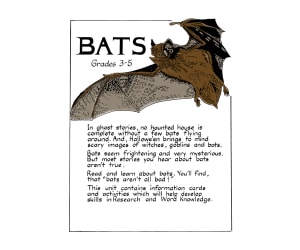
BATS Gr. 3-5
Science, Life Sciences, Animals, Grade 3, 4, Teacher Tools, Lesson Plans
BATS Gr. 3-5: A Dynamic Teaching Resource The BATS Gr. 3-5 product is a dynamic teaching resource created to shed light on the often misunderstood world of bats, debunk common myths, and promote curiosity about these unique creatures. Ideally suited for Grade 3 and Grade 4 Science students, this unit focuses on the Zoology subfield and uses bats as its framework. Eliminating misconceptions and emphasizing factual understanding is essential when teaching young learners about nature's diversity. Pack Components: Information Cards: These include facts designed to provoke thought, stimulate discussion, and elicit analysis among students. They guide learners towards independent research. Vocabulary Activities: The pack enhances Word Knowledge skills through engaging vocabulary activities related to bat biology, habituation and more. A total of 36 ready-to-print pages are provided in one handy PDF file format making it an easily accessible resource for any educator or homeschooling parent. Teaching Methods Supported: Whole-group discussions: Focused on shared readings of the fact cards. SAM activities: The deconstructive examination of materials. Solo assignments: Promoting self-study skills. In summary: informative yet entertaining; flexible in execution; beneficial for learning multiple subject areas simultaneously – highlighting why our friendly nocturnal critters "bats aren't all bad", BATS Gr 3.-5 helps enrich your science curriculum while providing a memorable study experience filled with enlightening discoveries! >
Author Classroom Complete Press
Tags Bats, Reading Passage, True Or False, Research, Comprehension Questions

Free Science - Force and Motion Interactive Vocabulary Activity
Science, Physics, Grade 8, Teacher Tools, Lesson Plans
Free Science - Force and Motion Interactive Vocabulary Activity Engage your 8th grade science students with this interactive vocabulary review on force and motion. Students will learn 33 key terms through definitions and visuals. The activity allows students to practice the vocabulary before taking a multiple choice quiz to assess understanding. With this engaging PowerPoint, students will reinforce their knowledge of concepts like inertia, gravity, and acceleration. Use it whole-group on a projector, assign it individually, or have students work in small groups at stations. The activity provides immediate feedback to support student learning. Check out other 8th grade science vocabulary and review activities in our store to align with units on geology, astronomy, traits and reproduction. Spanish versions also available for math, reading, writing, and language practice. This force and motion presentation includes 33 interactive quiz slides.
Author ShapeUp-N-Matematicas y Lenguaje
Tags FORCE AND MOTION REVIEW, INTERACTIVE MULTIPLE CHOICE ACTIVITY, PHYSICS VOCABULARY, SMALL OR WHOLE GROUP, FORCE, MOTION, SCIENCE MULTIPLE CHOICE
I WONDER - How Do Humans Impact Endangered Animals | Animated Video
STEM, Animals, Life Sciences, Science, Biology, Grade 4, 5, 6, 7, 8, 9, 10, Lesson Plans, Teacher Tools
Video Introduction Animal kingdoms are full of fascinating wonders to learn. This video is designed for the students to learn more about animals in different countries. I WONDER - How Do Humans Impact Endangered Animals | Animated Video Lesson Do you like animals? what is your favorite one? Do you own a pet? If yes, tell us more about it, like what its name? And what do you like most about it? What are the animal kingdoms? Can you write down the characteristics of each animal class like mammals, birds, reptiles, amphibian, fish and mollusks. Do you know that some animals can sing, can you name any of them? What is the largest and the smallest mammal in the world? What is the largest and the smallest bird in the world? What is the largest and the smallest fish in the world? I WONDER - How Do Humans Impact Endangered Animals | Animated Video Lesson The video is perfect for encouraging the researching skills for the students, while learning more about these fantastic animals. I WONDER - How Do Humans Impact Endangered Animals | Animated Video Lesson This friendly designed video is suitable for students at school, homeschooling, and as a group activity. Format Available in MP4 format.
Author Educational Voice
Tags How Do Humans Impact Endangered Animals, How Do Humans Impact Endangered Animals Video, Endangered Animals, Endangered Animals Facts, Endangered Animals Video, Endangered Animals Facts For Kids
I WONDER - Are There Different Types Of Lightning | Animated Video
Earth Sciences, Earth and Environmental Sciences, Science, Grade 3, 4, 5, 6, 7, 8, 9, Lesson Plans, Teacher Tools
Video Introduction An amazing video designed for the students to learn more about famous phenomena in different countries. I WONDER - Are There Different Types Of Lightning | Animated Video Lesson What do you know about this phenomenon? Where it happens? When it happens? What are the safety measures that we should take to be safe during this phenomenon? Are there any other places in the world that experienced this phenomenon? If yes, tell us more about them. Why do you think it happens? Do you like reading about Geography? What is your favorite country in the whole world? I WONDER - Are There Different Types Of Lightning | Animated Video Lesson The video is perfect for encouraging the researching skills for the students, while learning more about this fantastic phenomenon. I WONDER - Are There Different Types Of Lightning | Animated Video Lesson The video is perfect for encouraging the researching skills for the students, while learning more about this fantastic phenomenon. Format Available in a PDF format.
Author Educational Voice
Rating
Tags Are There Different Types Of Lightning, Are There Different Types Of Lightning Video, Different Types Of Lightning, Different Types Of Lightning Video, Different Types Of Lightning Facts, Different Types Of Lightning Video For Kids

I WONDER - What Is A Frost Flower | Animated Video Lesson
Earth Sciences, Earth and Environmental Sciences, Science, Grade 4, 5, 6, 7, 8, 9, 10, Lesson Plans, Teacher Tools
Video Introduction An amazing video designed for the students to learn more about famous phenomena in different countries. I WONDER - What Is A Frost Flower | Animated Video Lesson Weather phenomena can affect our lives, crops and even animals! Can you name any of the weather phenomena that happened in your country? Do you know when hailstorms happen? And what is the most country who has lots of hailstorms happening per year? Do you think the all countries have four seasons? If no, can you name any? Why do some animals sleep at winter? Can you name any of these animals? I WONDER - What Is A Frost Flower | Animated Video Lesson The video is perfect for encouraging the researching skills for the students, while learning more about this fantastic phenomenon. I WONDER - What Is A Frost Flower | Animated Video Lesson The video is perfect for encouraging the researching skills for the students, while learning more about this fantastic phenomenon. Format Available in a PDF format.
Author Educational Voice
Rating
Tags What Is A Frost Flower, Frost Flower, Frost Flower Facts, Frost Flower Video, Frost Flower Video For Kids, Frost Flower Facts For Kids, Severe Weather Phenomena, Severe Weather Phenomena Video
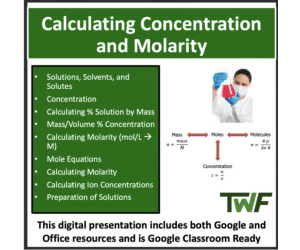
Calculating Concentration and Molarity - Senior Chemistry lesson
Science, Chemistry, Grade 10, 11, 12, Teacher Tools, Lesson Plans
Calculating Concentration and Molarity - Engaging Chemistry Lesson This comprehensive chemistry lesson helps students master concepts of solutions, concentration, and molarity. The well-organized slideshow introduces key vocabulary like solvents, solutes, mass/volume percentage, and molar concentration. It then explains step-by-step calculations for finding concentration, mass percentage, molarity, ion concentrations, and preparing solutions. Interactive elements keep learners engaged as they follow along, fill in blanks, and discuss examples. The lesson concludes with an auto-graded exit ticket that quickly assesses understanding. A detailed student handout is also provided for note-taking. This adaptable resource works for in-person or remote teaching. It includes editable teacher and student slide deck versions, meeting diverse classroom needs. Whether you use PowerPoint, Google Slides, Word, or Google Docs, this lesson seamlessly integrates into your plans. Save time prepping and grading with this turnkey curriculum supplement. Help your chemistry students master solution calculations through focused instruction, practice problems, class discussions, and standards-based assessment.
Author Teach With Fergy
Tags Chemistry Lesson, Solutions, Solvents, Solutes, Concentration, Molarity

I WONDER - How Are Radio Waves Transmitted On The Radio
Physics, Science, Grade 6, 7, 8, 9, 10, 11, 12, Lesson Plans, Teacher Tools
Video Introduction An amazing activity designed for the students to learn more about STEM. I WONDER - How Are Radio Waves Transmitted On The Radio | Animated Video Lesson Do you like STEM subjects? what is your favorite one? Have you ever tried to plant a seed? If yes, tell us more about it. Or have you ever tried to invent something? If yes, tell us more about it. And how do you think it will help us? Have you ever seen a microorganism under a microscope? What was it? And how it looked like? Mathematics is a marvelous subject. Let' sharpen our brains and solve some equations. Do you like timetable tricks? What is your favorite one? Do you know how to code? Have you ever created an app or a game before? If yes, how was it like? I WONDER - How Are Radio Waves Transmitted On The Radio | Animated Video Lesson The video is perfect for encouraging the researching skills for the students, while learning more about this fantastic topic. I WONDER - How Are Radio Waves Transmitted On The Radio | Animated Video Lesson This friendly designed video is suitable for students at school, homeschooling, and as a group activity. Format Available in MP4 format.
Author Educational Voice
Tags How Are Radio Waves Transmitted On The Radio, How Are Radio Waves Transmitted On The Radio Video, Radio Waves, Radio Waves Facts, Radio Waves Facts For Kids, Radio Waves Facts Video For Kids, Radio