



3,878 products added recently
Page 36 - Science Lesson Plan Template
Enhance your science instruction with a flexible lesson plan template designed for educators. This tool helps you structure objectives, materials, procedures, and assessments efficiently. Use it to create organized and impactful science lessons that cater to your students' needs.

 Show filters


I WONDER - Can Any Bones In The Skull Move | Animated Video Lesson
Human Body, Life Sciences, Science, Biology, STEM, Grade 3, 4, 5, 6, 7, 8, 9, Lesson Plans, Teacher Tools
Video Overview The human body is full of fascinating wonders to learn. This video is created to help the students recognize the anatomy and the job of the human body. I WONDER - Can Any Bones In The Skull Move | Animated Video Lesson Every part and organ in our human body is vital so let's see how important they are. Have you ever imagined how we look like if we didn't have a skeleton? Did you know that because we have our amazing muscles we can stand! Do you know how many teeth do we have? Have you ever wondered about the food journey inside our body? Can you name all the glands in our body? Why do we have skin? Our nervous system is really good at sending signals. Can you tell us more about it? Are you really good at Mathematics, painting, or any other thing? You should really thank your brain about it! The famous five senses are really doing a great work? Can you explain how every sense works? I WONDER - Can Any Bones In The Skull Move | Animated Video Lesson The video is perfect for encouraging the researching skills for the students, while learning more about our fantastic human body. I WONDER - Can Any Bones In The Skull Move | Animated Video Lesson This friendly designed video is suitable for students at school, homeschooling, and as a group activity. Format Available in MP4 format.
Author Educational Voice
Tags Can Any Bones In The Skull Move, Can Any Bones In The Skull Move Video, The Skull, The Skull Facts, The Skull Facts For Kids, The Skull Video, The Skull Video For Kids, The Skull Bones, The Skull Bones Facts For Kids

I WONDER - What Size Is The Pygmy Lemur | Animated Video Lesson
STEM, Animals, Life Sciences, Science, Biology, Grade 1, 2, 3, 4, 5, 6, 7, 8, Lesson Plans, Teacher Tools
Video Introduction Animal kingdoms are full of fascinating wonders to learn. This video is designed for the students to learn more about animals in different countries. I WONDER - What Size Is The Pygmy Lemur | Animated Video Lesson Do you like animals? what is your favorite one? Do you own a pet? If yes, tell us more about it, like what its name? And what do you like most about it? What are the animal kingdoms? Can you write down the characteristics of each animal class like mammals, birds, reptiles, amphibian, fish and mollusks. Do you know that some animals can sing, can you name any of them? What is the largest and the smallest mammal in the world? What is the largest and the smallest bird in the world? What is the largest and the smallest fish in the world? I WONDER - What Size Is The Pygmy Lemur | Animated Video Lesson The video is perfect for encouraging the researching skills for the students, while learning more about these fantastic animals. I WONDER - What Size Is The Pygmy Lemur | Animated Video Lesson This friendly designed video is suitable for students at school, homeschooling, and as a group activity. Format Available in MP4 format.
Author Educational Voice
Tags What Size Is The Pygmy Lemur, What Size Is The Pygmy Lemur Video, Pygmy Lemur, Pygmy Lemur Video, Pygmy Lemur Facts, Pygmy Lemur Facts For Kids, Pygmy Lemur Video For Kids, Lemur
I WONDER - What Is An Internet Troll | Animated Video Lesson
Life Skills, Special Resources, Social Emotional Learning (SEL), Social Skills, Computer Science, Technology, Science, Grade 4, 5, 6, 7, 8, 9, 10, Lesson Plans, Teacher Tools
Video Introduction An amazing video designed for the students to learn more about social and soft skills in our daily life. I WONDER - What Is An Internet Troll | Animated Video Lesson Have you ever read about soft skills or social skills? If yes, can you tell us more about them? Body language is so important for us to learn about, as it teaches us how to deliver the correct message to the people we are talking to, and get the right message from the people who talk to us, by simply reading their body language. What do you know about etiquette? Do you know that every country has got its unique etiquette? What do you know about online etiquette? What is your strongest soft/social skill? Can you name other social or soft skills? Do you think we should be always nice to our friends and family? Do you think we should be kind with animals? Have you ever read about online etiquette? If yes, tell us more about it. What are the essential skills that we should have while dealing with people online? I WONDER - What Is An Internet Troll | Animated Video Lesson The video is perfect for encouraging the researching skills for the students, while learning more about these fantastic social and soft skills in our daily life. I WONDER - What Is An Internet Troll | Animated Video Lesson This friendly designed video is suitable for students at school, homeschooling, and as a group activity. Format Available in MP4 format.
Author Educational Voice
Rating
Tags What Is An Internet Troll, What Is An Internet Troll Video, Internet Troll, Internet Troll Facts, Internet Troll Video, Internet Troll Facts For Kids, Internet Troll Video For Kids, Troll, Trolls
I WONDER - How Long Does it Take for a Comet to Orbit The Sun
Space, Earth and Environmental Sciences, Science, Grade 3, 4, 5, 6, 7, 8, 9, Lesson Plans, Teacher Tools
Video Introduction An amazing video designed for the students to learn more about space facts. I WONDER - How Long Does it Take for a Comet to Orbit The Sun | Animated Video Lesson Do you like reading about space? If yes, what is your favorite topic? What do you know about our solar system? What is the smallest planet in our solar system? What is the biggest planet in our solar system? What is the hottest planet in our solar system? And what is the coldest one? Do you think there are aliens? If yes, what do you think they look like? What do they eat and how they speak to each other? Where do they live? What is a galaxy? And what is a milky way? Have you recently saw a shooting star? If yes, tell us more about it, like when did it happen and where? What is a blackhole? Can a blackhole gets bigger by time? Do you like counting the stars? What do you think a star is made of? I WONDER - How Long Does it Take for a Comet to Orbit The Sun | Animated Video Lesson The video is perfect for encouraging the researching skills for the students, while learning more about the fantastic space. I WONDER - How Long Does it Take for a Comet to Orbit The Sun | Animated Video Lesson This friendly designed video is suitable for students at school, homeschooling, and as a group activity. Format Available in MP4 format.
Author Educational Voice
Tags How Long Does It Take For A Comet To Orbit The Sun, How Long Does It Take For A Comet To Orbit The Sun Video, Comet, Comet Facts, Comet Video, Comet Video For Kids, Sun, Sun Facts, Sun Video

I WONDER - What Is A Pliosaurus | Animated Video Lesson
History: Ancient, History, Social Studies, History: World, Animals, Life Sciences, Science, Grade 3, 4, 5, 6, 7, 8, 9, Lesson Plans, Teacher Tools
Video Introduction An amazing video designed for the students to learn more about dinosaurs in different countries. I WONDER - What Is A Pliosaurus | Animated Video Lesson Do you like dinosaurs? what is your favorite one? Do you own a pet? If yes, tell us more about it, like what its name? And what do you like most about it? Do you think that your pet has been evolved from a dinosaur? Can you write down the characteristics of your favourite dinosaur like it's shape, their rivals, where did it use to live and what was their favourite food? What is the largest and the smallest dinosaur that ever found? Why is the T-rex is so famous? Have you ever read any interesting facts about it? Can you name any of the carnivores or herbivores dinosaurs? I WONDER - What Is A Pliosaurus | Animated Video Lesson The video is perfect for encouraging the researching skills for the students, while learning more about dinosaurs. I WONDER - What Is A Pliosaurus | Animated Video Lesson This friendly designed video is suitable for students at school, homeschooling, and as a group activity. Format Available in MP4 format.
Author Educational Voice
Rating
Tags What Is A Pliosaurus, What Is A Pliosaurus Video, Pliosaurus, Pliosaurus Facts, Pliosaurus Video, Pliosaurus Facts For Kids, Pliosaurus Video For Kids, Dinosaur, Dinosaur Facts, Dinosaur Video
I WONDER - How Do Wind Turbines Work | Animated Video Lesson
Environmental Science, Earth and Environmental Sciences, Science, Earth Sciences, STEM, Grade 5, 6, 7, 8, 9, 10, Lesson Plans, Teacher Tools
Video Introduction An amazing video designed for the students to learn more about STEM. I WONDER - How Do Wind Turbines Work | Animated Video Lesson Do you like STEM subjects? what is your favorite one? Have you ever tried to plant a seed? If yes, tell us more about it. Or have you ever tried to invent something? If yes, tell us more about it. And how do you think it will help us? Have you ever seen a microorganism under a microscope? What was it? And how it looked like? Mathematics is a marvelous subject. Let' sharpen our brains and solve some equations. Do you like timetable tricks? What is your favorite one? Do you know how to code? Have you ever created an app or a game before? If yes, how was it like? I WONDER - How Do Wind Turbines Work | Animated Video Lesson The video is perfect for encouraging the researching skills for the students, while learning more about this fantastic topic. I WONDER - How Do Wind Turbines Work | Animated Video Lesson This friendly designed video is suitable for students at school, homeschooling, and as a group activity. Format Available in MP4 format.
Author Educational Voice
Tags How Do Wind Turbines Work, How Do Wind Turbines Work Video, Wind Turbines, Wind Turbines Facts, Wind Turbines Facts For Kids, Wind Turbines Video, Wind Turbines Video For Kids
I WONDER - What Are The Different Parts Of A Comet | Animated Video
Space, Earth and Environmental Sciences, Science, STEM, Grade 4, 5, 6, 7, 8, 9, 10, Lesson Plans, Teacher Tools
Video Introduction An amazing video designed for the students to learn more about space facts. I WONDER - What Are The Different Parts Of A Comet | Animated Video Lesson Do you like reading about space? If yes, what is your favorite topic? What do you know about our solar system? What is the smallest planet in our solar system? What is the biggest planet in our solar system? What is the hottest planet in our solar system? And what is the coldest one? Do you think there are aliens? If yes, what do you think they look like? What do they eat and how they speak to each other? Where do they live? What is a galaxy? And what is a milky way? Have you recently saw a shooting star? If yes, tell us more about it, like when did it happen and where? What is a blackhole? Can a blackhole gets bigger by time? Do you like counting the stars? What do you think a star is made of? I WONDER - What Are The Different Parts Of A Comet | Animated Video Lesson The video is perfect for encouraging the researching skills for the students, while learning more about the fantastic space. I WONDER - What Are The Different Parts Of A Comet | Animated Video Lesson This friendly designed video is suitable for students at school, homeschooling, and as a group activity. Format Available in MP4 format.
Author Educational Voice
Tags What Are The Different Parts Of A Comet, What Are The Different Parts Of A Comet Video, Different Parts Of A Comet, Different Parts Of A Comet Video, Comet, Comets, Comets Facts, Space

Climate Change: Causes: Earth’s Atmosphere Gr. 5-8
Science, Earth and Environmental Sciences, Environmental Science, Grade 5, 6, 7, 8, Teacher Tools, Lesson Plans
Climate Change: Causes: Earth’s Atmosphere Gr. 5-8 This exceptional teaching resource is designed for educators focusing on grades 5 through 8. It provides an enlightening perspective on climate change, grounded in scientific knowledge to enable students differentiate between fact and fiction in this crucial area. Focused Insight into the Science of Our Atmosphere The product delves deep into the science of our atmosphere, particularly the impact of human actions on the Earth System. Important atmospheric layers are broken down into easy-to-understand sections allowing students to grasp complex environmental phenomena. Incorporates an experiment demonstrating how object color influences radiation absorption - a key aspect of understanding heat absorption and global warming effects. Details the impacts rising temperatures have on our oceans, facilitating hands-on learning for abstract concepts. Emphasizes critical areas like carbon cycle and methane's residence time in earth's atmosphere necessary for devising educated solutions towards climate impact mitigation. Bloom's Taxonomy and STEAM Initiatives Integration To enhance comprehension, Bloom's Taxonomy and STEAM initiatives are taken into account. These span science-related subjects connecting core academic disciplines using real-world context. Crosswords, word searches, quizzes & more! This resource incorporates fun student activities like crossword puzzles and word searches as well as comprehension quizzes to reinforce knowledge retention from classwork or homework assignments effectively. Note: All lesson plans are digital downloads (file type PDF) accessible anytime anywhere easing instruction preparation thereby allowing you to focus fully on delivering a comprehensive & engaging learning experience." In conclusion, Coupling valuable information with multifaceted learning approaches aids in nurturing a future generation conscious about climate change. No wonder why Climate Change: Causes: Earth's Atmosphere Gr. 5-8 is a fundamental tool in a modern educator's toolkit aiming to teach environmental sciences more efficiently.
Author Classroom Complete Press
Tags PDF
I WONDER - How Do Solar Flares Affect Earth | Animated Video Lesson
Space, Earth and Environmental Sciences, Science, Grade 6, 7, 8, 9, 10, 11, 12, Lesson Plans, Teacher Tools
Video Introduction An amazing video designed for the students to learn more about space facts. I WONDER - How Do Solar Flares Affect Earth | Animated Video Lesson Do you like reading about space? If yes, what is your favorite topic? What do you know about our solar system? What is the smallest planet in our solar system? What is the biggest planet in our solar system? What is the hottest planet in our solar system? And what is the coldest one? Do you think there are aliens? If yes, what do you think they look like? What do they eat and how they speak to each other? Where do they live? What is a galaxy? And what is a milky way? Have you recently saw a shooting star? If yes, tell us more about it, like when did it happen and where? What is a blackhole? Can a blackhole gets bigger by time? Do you like counting the stars? What do you think a star is made of? I WONDER - How Do Solar Flares Affect Earth | Animated Video Lesson The video is perfect for encouraging the researching skills for the students, while learning more about the fantastic space. I WONDER - How Do Solar Flares Affect Earth | Animated Video Lesson This friendly designed video is suitable for students at school, homeschooling, and as a group activity. Format Available in MP4 format.
Author Educational Voice
Tags How Do Solar Flares Affect Earth, How Do Solar Flares Affect Earth Video, Solar Flares, Solar Flare, Solar Flares Facts, Solar Flares Facts For Kids, Solar Flares Video, Solar Flares Video For Kids

Climate Change: Reduction: Green Buildings Gr. 5-8
Science, Earth and Environmental Sciences, Environmental Science, Grade 5, 6, 7, 8, Teacher Tools, Lesson Plans
Climate Change: Reduction: Green Buildings Gr. 5-8 An incredible resource that intertwines Science and Environmental Studies to enlighten and engage students about environmental conservation from grade 5 through grade 8. Fostering Sustainable Thinking The "Green Buildings" chapter of the "Climate Change: Reduction" lesson plan concentrates on innovative ways we can decrease consumption levels, reduce our environmental footprint, and adopt cost-efficient methods. Interactive Learning Modules The curriculum encourages student interaction with future concepts – guiding them in making predictions about Earth's temperature given current emission trends. Your dream car creation with an eco-twist! The program lets students imagine vehicles running solely on alternative fuels thus challenging their creativity while enhancing their knowledge of sustainable technology. A Community-Focused Approach Inspiring a community-wide effort toward change, this educational resource highlights the importance of researching regional transportation solutions and compiling them into easy-to-understand brochures. Product Life Cycles: A key discussion point within Climate Change: Reduction: Green Buildings Gr. 5-8 is around product life cycles where companies can lessen emission load substantially. Sustainable Cities: The module makes macro-scale topics relatable for young learners by helping them visualize green cities powered entirely by clean energy! Taking it Global! International efforts aligning with carbon-free objectives & waste management strategies are highlighted. Through structured tasks aligned with Bloom's Taxonomy and STEAM initiatives (Science Technology Engineering Arts Mathematics), students are offered: Creative activities. Vocabulary-building exercises like word searches. Comprehension-enhancing quizzes. A comprehensive answer key. Climate Change: Reduction: Green Buildings Gr. 5-8 shines as an excellent tool that aims to inspire students to acknowledge and contribute towards a cleaner, greener future. This instruction kit is available as an automatically printable 27-page PDF, making it extremely convenient for public school teachers and homeschooling parents.
Author Classroom Complete Press
Tags Science Lesson, Environmental Science, Global Warmining, Climate Change, Reading Passage

I WONDER - What Is A Group Of Starfish Called | Animated Video Lesson
Animals, Life Sciences, Science, Biology, STEM, Grade 1, 2, 3, 4, 5, 6, 7, 8, Lesson Plans, Teacher Tools
Video Introduction Animal kingdoms are full of fascinating wonders to learn. This video is designed for the students to learn more about animals in different countries. I WONDER - What Is A Group Of Starfish Called | Animated Video Lesson Do you like animals? what is your favorite one? Do you own a pet? If yes, tell us more about it, like what its name? And what do you like most about it? What are the animal kingdoms? Can you write down the characteristics of each animal class like mammals, birds, reptiles, amphibian, fish and mollusks. Do you know that some animals can sing, can you name any of them? What is the largest and the smallest mammal in the world? What is the largest and the smallest bird in the world? What is the largest and the smallest fish in the world? I WONDER - What Is A Group Of Starfish Called | Animated Video Lesson The video is perfect for encouraging the researching skills for the students, while learning more about these fantastic animals. I WONDER - What Is A Group Of Starfish Called | Animated Video Lesson This friendly designed video is suitable for students at school, homeschooling, and as a group activity. Format Available in MP4 format.
Author Educational Voice
Tags What Is A Group Of Starfish Called, What Is A Group Of Starfish Called Video, Starfish, Starfish Group, Starfish Facts, Starfish Facts For Kids, Starfish Video, Starfish Video For Kids, Starfish Group Facts For Kids
Global Warming EFFECTS: Climate and Human Health - FLASH-MAC
Science, Earth and Environmental Sciences, Environmental Science, Common Core, Grade 5, 6, 7, 8, Teacher Tools, Lesson Plans
Global Warming EFFECTS: Climate and Human Health - FLASH-MAC A comprehensive teaching resource, the Global Warming EFFECTS: Climate and Human Health - FLASH-MAC, has been designed meticulously to help teachers facilitate knowledge to students about global warming’s significant impact on climate and human health. Aimed at 5th to 8th graders, this lesson plan proves instrumental in educating about environmental science—a real-world issue that stands critical for present times. The resource works particularly well as a whole group instruction tool but can easily adapt for small group instruction or independent assignments. Furthermore, it fits seamlessly into a homework assignment framework—providing versatile utility for educators. As evidence of its meticulous development, the content aligns explicitly with the Common Core State Standards while hinging upon Bloom's Taxonomy, assuring educators that their teaching is grounded in recognized instructional principles. The material contained within encompasses reading passages coupled with 'before you read' and 'after you read' queries—prompting learners to actively investigate the subject matter not only during engagement with the text but also pre and post-reading. Additionally included are numerous printables along with vocabulary flashcards —aiding pupils in strengthening their scientific lexicon through consistent repetition. Educators acquire tools like video content crafted specifically for visual learners alongside audios—a boon for auditory learning enthusiasts. The package does not confine innovation to conventional mediums—it includes interactive activities too; an innovative learning approach stimulating student participation resulting in improved comprehension retention rates of the taught concepts related to global warming effects. In essence: this Mac compatible software serves as an indispensable aid simplifying explanation of complex environmental science topics without compromising on depth or detail—an intuitive tool equipping students with scientific knowledge whilst nurturing critical thinking skills about ecological implications of our actions.
Author Classroom Complete Press
Tags Software (Mac)

I WONDER - What Is Day And Night Like In Antarctica | Animated Video
Earth Sciences, Earth and Environmental Sciences, Science, Geography, Social Studies, Grade 4, 5, 6, 7, 8, 9, 10, Lesson Plans, Teacher Tools
Video Introduction An amazing video designed for the students to learn more about famous places in different countries. I WONDER - What Is Day And Night Like In Antarctica | Animated Video Lesson What do you know about this place? Do you know in which part of the world it is? Have you ever visited this place? If yes, can you tell us more about your adventure, and what do you like the most about this place? Do you like reading about Geography? What is your favorite country in the whole world? If you are going on a trip where it will be? Which country? What you are going to see there? Does this country has a famous place to visit? I WONDER - What Is Day And Night Like In Antarctica | Animated Video Lesson The activity is perfect for encouraging the researching skills for the students, while learning more about this fantastic place. I WONDER - What Is Day And Night Like In Antarctica | Animated Video Lesson This friendly designed video is suitable for students at school, homeschooling, and as a group activity. Format Available in MP4 format.
Author Educational Voice
Tags What Is Day And Night Like In Antarctica, What Is Day And Night Like In Antarctica Video, Day And Night In Antarctica, Day And Night In Antarctica Video, Day And Night In Antarctica Facts, Day And Night In Antarctica Video For Kids

I WONDER - Are There Different Types Of Carbohydrate | Animated Video
Biology, Life Sciences, Science, Human Body, STEM, Grade 2, 3, 4, 5, 6, 7, 8, Lesson Plans, Teacher Tools
Video Overview The human body is full of fascinating wonders to learn. This video is created to help the students recognize the anatomy and the job of the human body. I WONDER - Are There Different Types Of Carbohydrate | Animated Video Lesson Every part and organ in our human body is vital so let's see how important they are. Have you ever imagined how we look like if we didn't have a skeleton? Did you know that because we have our amazing muscles we can stand! Do you know how many teeth do we have? Have you ever wondered about the food journey inside our body? Can you name all the glands in our body? Why do we have skin? Our nervous system is really good at sending signals. Can you tell us more about it? Are you really good at Mathematics, painting, or any other thing? You should really thank your brain about it! The famous five senses are really doing a great work? Can you explain how every sense works? I WONDER - Are There Different Types Of Carbohydrate | Animated Video Lesson The video is perfect for encouraging the researching skills for the students, while learning more about our fantastic human body. I WONDER - Are There Different Types Of Carbohydrate | Animated Video Lesson This friendly designed video is suitable for students at school, homeschooling, and as a group activity. Format Available in MP4 format.
Author Educational Voice
Tags Are There Different Types Of Carbohydrate, Are There Different Types Of Carbohydrate Video, Different Types Of Carbohydrate, Different Types Of Carbohydrate Facts, Different Types Of Carbohydrate Facts For Kids

Animal Science Unit | All About Polar Bears | Learning about Animals
Science, Life Sciences, Animals, Kindergarten, Preschool, Grade 1, 2, Lesson Plans, Teacher Tools
This resource teaches students everything they need to know about polar bears while strengthening kindergarten through second grade literacy skills ranging from science to reading fluency. Strategically designed for differentiated implementation, the materials transform a spotlight on beloved polar bears into applied opportunities to advance academic abilities across ability levels. Over 200 pages of vibrant printables, activities, games and leveled articles break down complex zoological concepts into engaging sequences suited for emerging learners. Teachers may present the full comprehensive unit or customize preferred components matching specific learning objectives. Robust optionality empowers educators to adapt materials for whole group instruction, literacy circles or independent exploration. While vibrant images and maps ignite initial interest, leveled nonfiction passages, customized writing templates and sorting/matching games systematically cement knowledge on evolution, habitats, life cycles and conservation issues. ELA skills strengthen through accountable talk discussion cards, reading comprehension booklets and journaling templates embracing multiple perspectives from field scientists to the bears themselves. Beyond building academic competencies, the heartwarming narratives and activities nurture empathy and environmental stewardship. Students gain confidence in their growing expertise by curating imaginary museums showcasing original plushie designs, sculptures, dioramas and informational brochures about threats facing polar bear populations in increasingly fragile Arctic terrain. This versatile cross-disciplinary resource reflects best practices from project-based learning to social emotional development. Students across learning styles will thrive while collaborating, creating and reflecting around the beloved frigid dwelling bears through authentic, empowering tasks mimicking real world scientific exploration.
Author Simply Schoolgirl
Tags Zoology, Arctic Animals, Blubber, Animal Adaptations, Marine Mammal, Ocean Predator, Winter , Polar Bear Crafts, Polar Bear Activities, Polar Bear Worksheets
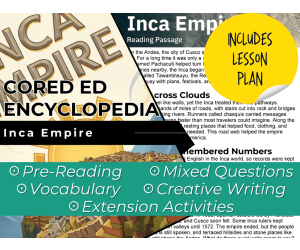
Inca Empire Reading Comprehension Passage - Cored Ed Encyclopedia
ELA, Reading Comprehension, Reading, History, Social Studies, Science, Geography, Technology, Pre-Reading, Language Development, Grade 2, 3, 4, 5, Worksheets & Printables, Worksheets, Teacher Tools, Centers, Activities, Writing Prompts, Assessments, Quizzes and Tests, Quizzes, Lesson Plans
This Inca Empire reading comprehension with lesson plan includes: Visualization (on the front cover) Start your lesson by taking a minute to think and share something about the topic. Read the script aloud (slowly), perhaps prepare some music or sound effects. Student close their eyes and let their imaginations wander. Students open their eyes, read the question aloud and give them a few minutes to complete. Ask a few students to share or keep answers until the end to compare with what they learn in the passage. Quick pause—thousands of Cored Education products are included with your TeachSimple membership. Download links and encyclopedia index available here. Pre-Reading Trivia Students will write down one thing they already know about the subject and then read five more facts and discuss. These facts are fun, and the students will enjoy learning about the subject before reading more. Give 1 minute for students to write what they already know (no pressure—best guess is fine). Read the five facts together. After each fact, do ask a student for their opinion, was it surprising? Set a purpose by asking students to highlight/underline one fact they want to learn more about during the reading. Reading Passage The text is a high-interest reading passage with set paragraphs, roughly three to four paragraphs long. It contains a variety of themes about the topic, anywhere from history to technology. The passage is between 250 and 350 words in length. First, ask students to look at the headings and see what they’ll learn about today. What do they know about the topic/heading? First read options: Teacher read-aloud (best for support). Partner reading (paragraph by paragraph). While reading, students underline important details, and vocabulary words they think may come up in the questions section. Mixed Questions The first question page contains four multiple-choice questions, each with a choice of four answers, and three written response questions that require a sentence or two from the student. Students complete the mcqs first independently, then review quickly as a class. For the 3 written responses, try to get students giving the answer with some form of evidence: “I think ___ because the text says ___.” If students get stuck, send them back to check the passage. Vocabulary Questions Practice seven key words from the text in this section across two activities. First section is scrambled words where students will unscramble three words given a clue for each. The second section is a word to meaning matching activity. Before starting, have some students read out words they underlined in the passage. Ask students to say the word and read aloud the sentence(s) around each word. Ask students to do scrambled words and the matching exercise in pairs then go through answers as a class. For the scrambled spelling task, get four pairs to come up to the board and write the words for extra practice with the other student reading out the clue. For the matching task, prompt students to give full sentences: “I matched ___ with ___ because ___.” Creative Writing In this question, the student will be required to write a five to eight sentence paragraph on a question related to the topic. Before starting, ask students write down 3 key ideas they are going to include in their piece. Ask students for ideas to share around the class to help those struggling. Pro writing expectations: 5–8 sentences At least 2 facts or details from the passage At least 2 vocabulary words from the previous page Students read their paragraphs while classmates listen for facts and vocabulary words. Extension Activities This page is optional for fast finishers or to take home. There are several activities, each one requiring a different skill. Do some, do none, do all, completely optional - but you will feel reassured knowing every possibility is planned for. Includes summary writting question and additional facts. Answer Key There are answers for the multiple-choice questions, written response questions have sample answers, vocabulary answers and if there is a summary question then a sample summary will be provided as well. Lesson Plan Included Customized lesson plan for this lesson is included. Lesson Snapshot Title: Inca Empire Genre: Nonfiction (informational passage) Subject: Social Studies (History) / Reading (Informational Text) Primary Topic: Cusco, roads, quipu records, terraces, legacy Estimated Guided Reading Level (A–Z): S What This Lesson Teaches Best How Cusco grew from a small kingdom into a larger Inca state in the 1400s under a leader named Pachacuti, and how the state was called Tawantinsuyu (the Realm of the Four Parts). How Inca engineers built a wide road system with stairs cut into rock and bridges, plus storehouses and resting places that helped the empire spread across western South America. How the Inca kept records without an English-like alphabet by using a quipu (cords with knots and colors for counts and notes). How terraces were used on hillsides to hold soil and water for crops like potatoes and corn, and how work was organized by the state as a kind of tax. How the empire ended after conflict and Spanish conquest, while people and culture continued (Quechua still spoken; terraces and stone places remain). Learning Goals Describe how Cusco changed in the 1400s and name the Inca state described in the passage. Explain how roads, bridges, and storehouses helped the Inca move messages, supplies, and armies. Explain what a quipu is and what it could record, based on the text. Describe what terraces are used for and how they helped farming on hillsides. Identify what happened in the 1500s that led to the end of the empire and one way Inca life continued afterward. Key Vocabulary From the Text Tawantinsuyu — the Inca state called the Realm of the Four Parts. chasquis — runners who carried messages from stop to stop. quipu — cords with knots and colors for records. terraces — flat steps that hold soil and water. storehouses — places along routes that kept needed supplies. FULL CATALOG OF DOWNLOAD LINKS AND ENCYCLOPEDIA INDEX HERE
Author Cored Education
Rating
Tags Vocabulary, Reading Comprehension, Reading Passages, Lesson Plans, Ela Lesson Plans, Reading Comprehension Lesson Plans, Pre-reading, History, Social Studies Lesson Plans, Geography
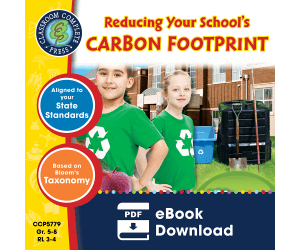
Reducing Your School's Carbon Footprint Gr. 5-8
Science, Earth and Environmental Sciences, Environmental Science, Grade 5, 6, 7, 8, Teacher Tools, Lesson Plans
Reducing Your School's Carbon Footprint Gr. 5-8 This educational resource engages students in grades 5 through 8 with the pivotal topic of climate change, emphasizing how our actions, specifically within local school environments, impact our planet. Focal Topics include: The use of fossil fuels at school and their environmental impact. Brainstorming strategies to reduce energy consumption. Understanding idle-free zones and the potential positive effects of tree planting around schools. Note: This multifunctional resource can be utilized across various teaching scenarios such as full group discussions or small group activities. Flexible enough to extend as homework assignments bringing environmental consciousness into students' homes. Actionable Learning Beyond mere theory, this program guides students through the planning process for a project that directly impacts their institution's ecological footprint. A real alignment with Bloom’s Taxonomy approach! Additional features An engaging bonus feature explains how carbon offsets work and helps schools make purchase decisions that reduce greenhouse gases elsewhere. "Reducing Your School’s Carbon Footprint Gr. 5-8" includes supplemental tools like: Additionally graphic organizers, A uniquely designed footprint calculator (PDF file), Crossword puzzles & word search challenges: aimed at reinforcing learning while keeping it fun - all accompanied by corresponding answer keys ensuring correct approaches. Fulfill STEAM initiatives from your classroom! This product diligently aligns with STEAM initiatives and criteria fostering awareness, learning, and actionable change. Perfect for cultivating responsible global citizens!
Author Classroom Complete Press
Tags PDF

I WONDER - When Does A Meteor Shower Occur | Animated Video Lesson
Space, Earth and Environmental Sciences, Science, Grade 4, 5, 6, 7, 8, 9, 10, Lesson Plans, Teacher Tools
Video Introduction An amazing video designed for the students to learn more about space facts. I WONDER - When Does A Meteor Shower Occur | Animated Video Lesson Do you like reading about space? If yes, what is your favorite topic? What do you know about our solar system? What is the smallest planet in our solar system? What is the biggest planet in our solar system? What is the hottest planet in our solar system? And what is the coldest one? Do you think there are aliens? If yes, what do you think they look like? What do they eat and how they speak to each other? Where do they live? What is a galaxy? And what is a milky way? Have you recently saw a shooting star? If yes, tell us more about it, like when did it happen and where? What is a blackhole? Can a blackhole gets bigger by time? Do you like counting the stars? What do you think a star is made of? I WONDER - When Does A Meteor Shower Occur | Animated Video Lesson The video is perfect for encouraging the researching skills for the students, while learning more about the fantastic space. I WONDER - When Does A Meteor Shower Occur | Animated Video Lesson This friendly designed video is suitable for students at school, homeschooling, and as a group activity. Format Available in MP4 format.
Author Educational Voice
Tags When Does A Meteor Shower Occur, When Does A Meteor Shower Occur Video, Meteor Shower, Meteor Shower Facts, Meteor Shower Facts For Kids, Meteor Shower Video, Meteor Shower Video For Kids
I WONDER - Is A Coral Reef An Ecosystem | Animated Video Lesson
Nature & Plants, Life Sciences, Science, Animals, Biology, Environmental Science, Earth and Environmental Sciences, Earth Sciences, Grade 6, 7, 8, 9, 10, 11, 12, Lesson Plans, Teacher Tools
Video Introduction An amazing video designed for the students to learn more about STEM. I WONDER - Is A Coral Reef An Ecosystem | Animated Video Lesson Do you like STEM subjects? what is your favorite one? Have you ever tried to plant a seed? If yes, tell us more about it. Or have you ever tried to invent something? If yes, tell us more about it. And how do you think it will help us? Have you ever seen a microorganism under a microscope? What was it? And how it looked like? Mathematics is a marvelous subject. Let' sharpen our brains and solve some equations. Do you like timetable tricks? What is your favorite one? Do you know how to code? Have you ever created an app or a game before? If yes, how was it like? I WONDER - Is A Coral Reef An Ecosystem | Animated Video Lesson The video is perfect for encouraging the researching skills for the students, while learning more about this fantastic topic. I WONDER - Is A Coral Reef An Ecosystem | Animated Video Lesson This friendly designed video is suitable for students at school, homeschooling, and as a group activity. Format Available in MP4 format.
Author Educational Voice
Tags Is A Coral Reef An Ecosystem, Is A Coral Reef An Ecosystem Video, Coral Reef, Coral Reef Facts, Coral Reef Facts For Kids, Coral Reef Video, Coral Reef Video For Kids, Ecosystem, Ecosystem Facts
I WONDER - How Do Pangolins Protect Themselves | Animated Video Lesson
Animals, Life Sciences, Science, STEM, Grade 2, 3, 4, 5, 6, 7, 8, Lesson Plans, Teacher Tools
Video Introduction Animal kingdoms are full of fascinating wonders to learn. This video is designed for the students to learn more about animals in different countries. I WONDER - How Do Pangolins Protect Themselves | Animated Video Lesson Do you like animals? what is your favorite one? Do you own a pet? If yes, tell us more about it, like what its name? And what do you like most about it? What are the animal kingdoms? Can you write down the characteristics of each animal class like mammals, birds, reptiles, amphibian, fish and mollusks. Do you know that some animals can sing, can you name any of them? What is the largest and the smallest mammal in the world? What is the largest and the smallest bird in the world? What is the largest and the smallest fish in the world? I WONDER - How Do Pangolins Protect Themselves | Animated Video Lesson The video is perfect for encouraging the researching skills for the students, while learning more about these fantastic animals. I WONDER - How Do Pangolins Protect Themselves | Animated Video Lesson This friendly designed video is suitable for students at school, homeschooling, and as a group activity. Format Available in MP4 format.
Author Educational Voice
Tags How Do Pangolins Protect Themselves, How Do Pangolins Protect Themselves Video, Pangolins, Pangolin, Pangolins Facts, Pangolins Facts For Kids, Pangolins Video, Pangolins Video For Kids

I WONDER - What Did Marie Curie Discover | Animated Video Lesson
Biographies, Social Studies, Inventors, Basic Science, Science, Grade 4, 5, 6, 7, 8, 9, 10, Lesson Plans, Teacher Tools
Video Introduction An amazing video designed for the students to learn more about famous people in different countries. I WONDER - What Did Marie Curie Discover | Animated Video Lesson Do you know this person? How much do you know about him/her? Who is your idol? Why did you choose this person? Tell us more about him/her? Who is your favorite athlete? Or what is your favorite team? Have you recently heard a story about a famous person? Who was this person? Can you tell us more about him/her. Who is your favorite president, king, or queen? Why you chose that person? In your country, who are the most famous people? What did they do? Can you tell us more about them. What is your favorite invention? Who invented it? Who is your favorite artist? What is the most famous thing he/she have done? What is the most enjoyable you have read before? Who wrote it? I WONDER - What Did Marie Curie Discover | Animated Video Lesson The video is perfect for encouraging the researching skills for the students, while learning more about this fantastic place. I WONDER - What Did Marie Curie Discover | Animated Video Lesson This friendly designed video is suitable for students at school, homeschooling, and as a group activity. Format Available in MP4 format.
Author Educational Voice
Rating
Tags Marie Curie, What Did Marie Curie Discover, What Did Marie Curie Discover Video, Marie Curie Video, Marie Curie Facts, Marie Curie Video For Kids, Marie Curie Facts For Kids, Marie Curie Discovery

Circulatory, Digestive & Reproductive Systems - Digital Lesson Plan Gr. 5-8 | PC Software
Science, Life Sciences, Human Body, Grade 3, 4, 5, 6, 7, 8, Teacher Tools, Lesson Plans
Circulatory, Digestive & Reproductive Systems - Digital Lesson Plan Gr. 5-8 | PC Software A comprehensive teaching tool customized for educators underlining anatomy and physiology courses. This resource fits seamlessly into science circulums from grade 3 to 8-- a perfect fusion of informative and interactive content for high-grade student learning experiences. The digital lesson plan inducts students into the intricate world of human body's circulatory, digestive, and reproductive systems through high-definition visuals. The user-friendly interface allows students to experience a virtual journey through veins as red blood cells or even trace down the intricacies of nutrient assimilation from food intake. A Sneak Peek Into its Key Features: In-depth reading material: Incorporates before-and-after reading exercises which enhance comprehension skills effectively. Test preparation sections: A useful tool that helps assess student' understanding accurately. Fusion of fun & learning: Engaging memory match games , crosswords and word searches related directly with anatomy lessons serve dual objectives of reinforcing classroom teachings while keeping monotony at bay. Multimedia elements: Audio-visual components make this product appealing to today's generation thriving on digital resources intensively. This software promises flexibility facilitating different learning environments spanning whole-group instruction or broken down to smaller group sessions or individual homework assignments – marking it a versatile aide in every contemporary educator's toolkit. Packaging Details : All contents available within a single zip file containing PC compatible software – A worthy investment indeed towards nurturing our future scientists!
Author Classroom Complete Press
Tags Reproductive Systems, Anatomy Lesson, Digital Science Lesson, Digital Anatomy Reading, Reading Lesson

Climate Change: Effects: Climate and the Economy Gr. 5-8
Science, Earth and Environmental Sciences, Environmental Science, Grade 5, 6, 7, 8, Teacher Tools, Lesson Plans
Climate Change: Effects: Climate and the Economy Gr. 5-8 An engaging addition to any middle-grade science curriculum, this resource is specifically designed for students in grades 5 to 8. It allows a deeper understanding of the far-reaching impacts of climate change on both the environment and human society. On Earth's History: This insightful teaching guide extends classroom instruction beyond theory with a journey into Earth's history - i.e., examination of ice ages and their effects on early human populations. Hands-on Experiments: Students learn through interactive, hands-on experiments illustrating how melting ice sheets can dramatically alter sea levels. Learners get an opportunity to create physical models demonstrating rising sea levels in real-time. Economic Implications of Climate Change: The resource introduces learners to recent extreme weather patterns influenced by climate change along with potential health hazards such as pollution, heatstroke, and insect-borne diseases. It also highlights the devastating effects of climate change on farming industries. About Integrated Learning Approach: The resource emphasizes an integrated learning approach that enables students to select a specific ecosystem for more in-depth exploration. This involves research on biodiversity including plant life, wildlife and overall balance within that ecosystem under threat from climatic changes. This comprehensive educational tool is designed based upon Bloom's Taxonomy principles and STEAM initiatives. The package includes: Answer keys for comprehension quizzes Ramified interactive components - crossword puzzles & word search activities Inventive project-based assignments Note:This educational resource, with its explicit focus on environmental science and offered in a convenient downloadable PDF format, aims to foster critical thinking among students about pressing environmental concerns while shaping them into responsible global citizens.
Author Classroom Complete Press
Tags PDF
I WONDER - How Does The Redwood Tree Get Enough Water | Animated Video
Environmental Science, Earth and Environmental Sciences, Science, Earth Sciences, Nature & Plants, Life Sciences, Grade 6, 7, 8, 9, 10, 11, 12, Lesson Plans, Teacher Tools
Video Introduction An amazing video designed for the students to learn more about STEM. I WONDER - How Does The Redwood Tree Get Enough Water | Animated Video Lesson Do you like STEM subjects? what is your favorite one? Have you ever tried to plant a seed? If yes, tell us more about it. Or have you ever tried to invent something? If yes, tell us more about it. And how do you think it will help us? Have you ever seen a microorganism under a microscope? What was it? And how it looked like? Mathematics is a marvelous subject. Let' sharpen our brains and solve some equations. Do you like timetable tricks? What is your favorite one? Do you know how to code? Have you ever created an app or a game before? If yes, how was it like? I WONDER - How Does The Redwood Tree Get Enough Water | Animated Video Lesson The video is perfect for encouraging the researching skills for the students, while learning more about this fantastic topic. I WONDER - How Does The Redwood Tree Get Enough Water | Animated Video Lesson This friendly designed video is suitable for students at school, homeschooling, and as a group activity. Format Available in MP4 format.
Author Educational Voice
Tags How Does The Redwood Tree Get Enough Water, How Does The Redwood Tree Get Enough Water Video, Redwood Tree, Redwood Tree Facts, Redwood Tree Facts For Kids, Redwood Tree Video, Redwood Tree Video For Kids