



3,887 products added recently
Page 38 - Science Lesson Plan Template
Enhance your science instruction with a flexible lesson plan template designed for educators. This tool helps you structure objectives, materials, procedures, and assessments efficiently. Use it to create organized and impactful science lessons that cater to your students' needs.

 Show filters


I WONDER - What Are Fingernails Made From | Animated Video Lesson
Human Body, Life Sciences, Science, Biology, Grade 3, 4, 5, 6, 7, 8, 9, Lesson Plans, Teacher Tools
Video Overview The human body is full of fascinating wonders to learn. This video is created to help the students recognize the anatomy and the job of the human body. I WONDER - What Are Fingernails Made From | Animated Video Lesson Every part and organ in our human body is vital so let's see how important they are. Have you ever imagined how we look like if we didn't have a skeleton? Did you know that because we have our amazing muscles we can stand! Do you know how many teeth do we have? Have you ever wondered about the food journey inside our body? Can you name all the glands in our body? Why do we have skin? Our nervous system is really good at sending signals. Can you tell us more about it? Are you really good at Mathematics, painting, or any other thing? You should really thank your brain about it! The famous five senses are really doing a great work? Can you explain how every sense works? I WONDER - What Are Fingernails Made From | Animated Video Lesson The video is perfect for encouraging the researching skills for the students, while learning more about our fantastic human body. I WONDER - What Are Fingernails Made From | Animated Video Lesson This friendly designed video is suitable for students at school, homeschooling, and as a group activity. Format Available in MP4 format.
Author Educational Voice
Tags What Are Fingernails Made From, What Are Fingernails Made From Video, Fingernails, Fingernail, Fingernails Facts, Fingernails Facts For Kids, Fingernails Video, Fingernails Video For Kids

I WONDER - What Are Zonal Jets | Animated Video Lesson
Space, Earth and Environmental Sciences, Science, Grade 6, 7, 8, 9, 10, 11, 12, Lesson Plans, Teacher Tools
Video Introduction An amazing video designed for the students to learn more about space facts. I WONDER - What Are Zonal Jets | Animated Video Lesson Do you like reading about space? If yes, what is your favorite topic? What do you know about our solar system? What is the smallest planet in our solar system? What is the biggest planet in our solar system? What is the hottest planet in our solar system? And what is the coldest one? Do you think there are aliens? If yes, what do you think they look like? What do they eat and how they speak to each other? Where do they live? What is a galaxy? And what is a milky way? Have you recently saw a shooting star? If yes, tell us more about it, like when did it happen and where? What is a blackhole? Can a blackhole gets bigger by time? Do you like counting the stars? What do you think a star is made of? I WONDER - What Are Zonal Jets | Animated Video Lesson The video is perfect for encouraging the researching skills for the students, while learning more about the fantastic space. I WONDER - What Are Zonal Jets | Animated Video Lesson This friendly designed video is suitable for students at school, homeschooling, and as a group activity. Format Available in MP4 format.
Author Educational Voice
Tags What Are Zonal Jets, What Are Zonal Jets Video, Zonal Jets, Zonal Jet, Zonal Jets Facts, Zonal Jets Facts For Kids, Zonal Jets Video, Zonal Jets Video For Kids, Zonal Jet Facts, Zonal Jet Video
Galaxies & The Universe: Gravity - FLASH-PC
Science, Earth and Environmental Sciences, Space, Common Core, Grade 5, 6, 7, 8, Teacher Tools, Lesson Plans
Galaxies & The Universe: Gravity - FLASH-PC A comprehensive teaching resource designed to enrich astronomical pedagogy. Targeted: Geared towards students in grades 5 through 8. Multimedia Approach: Integrates written and audio-visual elements to accommodate diverse learning styles. The resource incorporates various features to aid understanding of complex concepts such as galaxies, the universe, and gravitational forces. It aligns with Common Core State Standards and Bloom's Taxonomy; encouraging higher levels of thinking. Pedagogical Elements Included: "Before You Read" Questions: Prepared learners for key contents they are about to explore. "After Reading" Assessments : Helps solidify knowledge acquisition through evaluation. Detailed Reading Passages: Provides deeper insight into the explored topics. This tool also utilises current technological advancements by integrating audio-visual components such as videos and interactive activities, making it fit nicely into any classroom settings irrespective of its size or dynamic; thereby ensuring all learners are catered for while increasing their engagement with the subjects at hand. The package provides seamless use with its single software (PC) file containing all resources bundled together – guaranteeing smooth delivery during classroom instructions. Overall, Galaxies & The Universe: Gravity - FLASH-PC resource demystifies astronomy; transforming it from an intimidating subject into an exciting journey of universal exploration neatly packed within your teaching toolkit.
Author Classroom Complete Press
Tags Software (PC)
I WONDER - How Does A Windmill Work | Animated Video Lesson
Environmental Science, Earth and Environmental Sciences, Science, Grade 6, 7, 8, 9, 10, 11, 12, Lesson Plans, Teacher Tools
Video Introduction An amazing video designed for the students to learn more about STEM. I WONDER - How Does A Windmill Work | Animated Video Lesson Do you like STEM subjects? what is your favorite one? Have you ever tried to plant a seed? If yes, tell us more about it. Or have you ever tried to invent something? If yes, tell us more about it. And how do you think it will help us? Have you ever seen a microorganism under a microscope? What was it? And how it looked like? Mathematics is a marvelous subject. Let' sharpen our brains and solve some equations. Do you like timetable tricks? What is your favorite one? Do you know how to code? Have you ever created an app or a game before? If yes, how was it like? I WONDER - How Does A Windmill Work | Animated Video Lesson The video is perfect for encouraging the researching skills for the students, while learning more about this fantastic topic. I WONDER - How Does A Windmill Work | Animated Video Lesson This friendly designed video is suitable for students at school, homeschooling, and as a group activity. Format Available in MP4 format.
Author Educational Voice
Tags How Does A Windmill Work, How Does A Windmill Work Video, Windmill, Windmill Facts, Windmill Facts For Kids, Windmill Video, Windmill Video For Kids, Renewable Energy, Renewable Energy Video
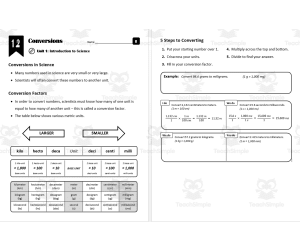
Lesson 1.2 - Conversions
Science, Chemistry, Physics, Grade 6, 7, 8, 9, 10, 11, 12, Lesson Plans, Teacher Tools
Lesson 1.2 - Conversions An all-encompassing teaching resource for educators in fields such as Physics and Chemistry, easing the process of metric system transformations. This resource caters to grades from 6 to 12. Core Components: 'Conversions Notes': A notes sheet that simplifies conversions between metric units. This comes in two versions: Version A: Designed with blanks for students taking notes while listening to instructions or lectures. Version B: Ideal for absentees or those requiring special accommodations. 'Conversions Practice Stations':A compilation of six stations offering two conversion problems per page, encouraging an interactive learning session. The stations can be affixed onto manila folders and propped up for student use, accompanying an answer page facilitating self-assessment and instant feedback. 'Conversions Practice':An exercise document catering to individual training specifics on identifying conversion factors and transitioning between metric units. Two Versions are available: A-version: For general student demographics B-version: Focuses more towards learners requiring specialized attention. The impactful 'Metric Lab Conversions", a part where measurements taken during labs give students a practical understanding of conceptual theories by converting these into various metric units implicitly.' An essential tool termed as "" comes provisioned with this package that promotes effective classroom presentations reinforcing key subject takeaways. A bundled starter kit paves the way smooth into the lesson plan saving precious time for educators. This comprehensive teaching tool serves its purpose beyond the classroom and works as an excellent assignment tool as well. Ensure you have a correct software version that supports .docx, .pptx, or .pdf file types to derive maximum benefit from this product according to your student's academic needs.
Author Integrated Chemistry and Physics
Tags Conversions, Metric System, Dimensional Analysis, Measurements, Interactive Exercises

Lesson 10.3 - Electromagnetic Spectrum
Science, Physics, Grade 6, 7, 8, 9, 10, 11, 12, Lesson Plans, Teacher Tools
Lesson 10.3 - Electromagnetic Spectrum This comprehensive teaching resource, Lesson 10.3 - Electromagnetic Spectrum, is an invaluable tool for educators aiming to facilitate engaging and thorough exploration of physics- specifically the study of waves. About this Resource This multifaceted unit has been meticulously designed to cover a broad spectrum of topics related to waves while maintaining a variety in learning styles and methods. The unit feature countless activities that can be employed in diverse settings such as: whole group instruction, small group projects, or individual assignments including homework tasks. Contains detailed Notes Sheets offering key concepts and terminologies associated with the subject matter. Also includes hands-on laboratory exercises like “Ultraviolet Waves Lab” for practical application of concepts. All resources are designed at middle grade level particularly grades 6 through 12. Included Materials: Notes Sheets: In both PowerPoint format for teacher presentation convenience and blank versions which allow students to interactively absorb information during lessons. Simulation Activities & Reading Assignments: These encourage students' explorative learning followed by summarizing tasks thus fostering creativity alongside cognitive growth. Waves Vocab Card Sort activity & Mini Posters depicting electromagnetic waves:: Aids learners with visual representation and vocabulary retention. In addition... Puzzles & Quizzes Included: A range of formative assessments comprised in Unit Tests varying from multiple-choice questions to computational puzzles. These ensure comprehensive understanding of topics that are covered throughout the unit. A Recovery Quiz that helps students improve upon weaker areas by revisiting commonly mixed-up questions from initial testing experiences. Note: All documents included come in both .docx (editable) & compact pdf formats paved through compatible software like Microsoft Word & Adobe Reader respectively making it flexible for educators wanting either lesson adaptability or user-friendly usage ease conveniently available at their fingertips. Conclusion This uniquely crafted resource, hence, ably addresses the 2016 Indiana State Integrated Chemistry & Physics Standards and supports educators’ endeavors to offer quality physics lessons while simultaneously fostering student’s holistic growth in wave study. So whether you are a teacher navigating through public school syllabus or a homeschooler designing bespoke instruction plans – this versatile resource will prove immensely beneficial in delivering meaningful learning outcomes.<p
Author Integrated Chemistry and Physics
Tags Electromagnetic Spectrum, Waves, Physics Education Resources, Interactive Learning, Formative Assessments

Chimps | Interactive Science Lesson | Micro-Learning Deck
Science, Life Sciences, Animals, Grade 5, 6, 7, 8, Teacher Tools, Lesson Plans
Chimps - An Engaging Science Lesson Transport students into the realm of primates with this interactive chimpanzee lesson for grades 5-8. This science resource utilizes a PowerPoint slideshow to showcase remarkable video footage and passages about these charismatic creatures. Educators can implement this product in various ways - as a whole class activity, small group work, or even a homework supplement. The deck incorporates useful assessments like close reads and quick writes to gauge comprehension. Overall, by blending media and short assessments , this product offers a dynamic way to study chimpanzees that aligns with middle school science curriculums and captures student interest. Use it to elucidate key concepts like adaptation, habitats, social structures, locomotion, and more!
Author Teach Me This
Tags Chimps, Zoology, Comprehension, Reading Passage, Science Lesson

Atoms, Molecules & Elements: The Periodic Table Gr. 5-8
Science, Life Sciences, Biology, Grade 5, 6, 7, 8, Teacher Tools, Lesson Plans
Atoms, Molecules & Elements: The Periodic Table Gr. 5-8 A highly constructed teaching resource specifically designed for grade 5 to grade 8 students. This material offers budding scientists an enlightening plunge into the unseen world of atoms, molecules and elements in a way that they can easily comprehend. This learning guide focuses on simplifying complicated topics for remedial learners using simple language and vocabulary. It covers wide-ranging subject matter such as: Describing various parts of an atom with labeling activities An understanding about compounds In-depth exploration of the periodic table patterns The value addition is made through: Hands-on activities which will engage young minds directly. Lively color mini posters providing arresting visual effects to supplement theory learning. Crosswords, word searches and comprehension quizzes stimulating vocabulary enhancement,lengthening memory recall skills while also allowing you to adequately evaluate learner's progress. Note:All our content adheres with your state standards—assuring you meet educational requirements efficiently while keeping up with Blooms Taxonomy teachings; promoting cognitive growth within learners; along with STEM initiatives encouraging innovation and creativity. The advantages aren’t limited only to being a valuable teaching tool—this resource can also populate homework assignments or used during small group discussions centered on particular sections depending on needs observed within your classroom setting. This must-have resource comes in a single product file format (PDF), making it readily deployable even for those educators not very comfortable using technology. Promote exciting science classes with Atoms, Molecules & Elements: The Periodic Table Gr. 5-8 - The perfect resource for Biology teaching at grades 5 to 8!
Author Classroom Complete Press
Tags PDF, Teaching Molecules To Kindergarten, Periodic Table Lesson Plan

Global Warming REDUCTION: Alternative Fuels - FLASH-PC
Science, Earth and Environmental Sciences, Environmental Science, Common Core, Grade 5, 6, 7, 8, Teacher Tools, Lesson Plans
Global Warming REDUCTION: Alternative Fuels - FLASH-PC FLASH-PC is a comprehensive teaching resource designed for fifth to eighth-grade teachers. Particularly useful for those instructing Environmental Science, it offers an important tool to tackle the critical subject of global warming and studies alternative fuels as a reduction measure. This digital learning tool takes students on an enlightening journey, fostering understanding via educational text passages coupled with knowledge tests before and after each section. The content is accurately developed to comply with Common Core State Standards while simultaneously stimulating learners' cognitive skills following Bloom's Taxonomy. Teaching Adaptability Teachers will find this resource's modular design beneficial. They can divide this lesson into smaller segments suited for group work or individual study, enabling differentiated instruction effortlessly. Consider using "before you read" questions as discussion triggers in whole class sessions or applying the printables and vocabulary flash cards in a small group setting. Multimedia Support Further enhancing its interactive nature are video and audio features integrated within this software file providing multimedia assistance – ideal for catering to diverse learner types from visual to auditory learners. Homeschooling Application Beyond traditional school settings, homeschooling educators eager about infusing environmental science in their curriculum will appreciate that Global Warming REDUCTION: Alternative Fuels - FLASH-PC breaks down complex subjects into manageable pieces of information – giving them confidence in conducting effective instruction during home schooling. Innovation Meets Versatility This robust plan acquires its strength not just through its content but also by offering various delivery methods; making it truly adaptable across different instructional settings. The accessibility offered spanning from traditional classrooms to modern distant-learning scenarios makes climate change awareness easily available to all learners.
Author Classroom Complete Press
Tags Software (PC)

Grade 4 Digital Citizenship Yearlong Curriculum | 36 Weekly Lessons
Technology, Science, Grade 4, Worksheets & Printables, Lesson Plans, Teacher Tools
Grade 4 Digital Citizenship Curriculum | Yearlong Digital Citizenship Lessons, Internet Safety, Media Literacy, Online Research, Worksheets & Slides Help your students become responsible online researchers and critical digital thinkers with this comprehensive Grade 4 Digital Citizenship Curriculum ! This complete 36-week digital citizenship program goes beyond internet safety by teaching students how search engines work, verify online information, recognize advertising and persuasion, evaluate evidence, use copyright responsibly, and collaborate effectively in digital environments. With ready-to-teach lessons, engaging activities, assessments, projects, and interactive slides, you'll have everything needed for an entire year of meaningful digital citizenship instruction. What's Included This complete curriculum includes everything needed to teach one engaging digital citizenship lesson each week: ⭐ 36 complete weekly digital citizenship lessons ⭐ Comprehensive teacher lesson plans with scripted instruction ⭐ Student workbook with over 300 printable pages ⭐ Weekly student reflection journal ⭐ Approximately 264 presentation slides with built-in teaching notes ⭐ 160+ printable no-prep worksheets ⭐ 36 weekly exit tickets ⭐ 18 standards-aligned quizzes ⭐ 10 engaging classroom projects with student-friendly rubrics ⭐ Complete answer keys ⭐ Teacher Planning & Assessment Pack with class record sheets, reteach plans, vocabulary references, and skills progression ⭐ Teacher Toolkit featuring assessment guidance, differentiation, classroom management strategies, cross-curricular connections, substitute plans, family communication, and planning resources ⭐ Graphs, class charts, and progress trackers to reinforce key concepts visually How It Works in the Classroom Every lesson follows a consistent weekly routine that builds student confidence while minimizing teacher preparation. Each lesson includes: Bell ringer activity Teacher mini lesson Interactive presentation slides Student reading passage Guided notes Hands-on practice activity Partner discussions Real-world digital citizenship scenarios Independent application tasks Weekly reflection journal Exit ticket Optional family connection Differentiation ideas Complete answer keys Perfect for: Classroom teachers Technology and computer classes Library and media centers STEM programs Homeschool instruction Whole-group lessons Print or digital learning environments Standards & Learning Goals Students develop advanced digital literacy and digital citizenship skills through six engaging units: Unit 1 – Search Strategies How search engines rank results Filtering by site, file type, and date Reading search results critically Reverse image searching Databases and catalogs Search refinement strategies Unit 2 – Reliable Sources & Verification Primary and secondary sources Lateral reading Corroborating information Following claims to their original source Corrections, updates, and retractions Website investigations Unit 3 – Advertisements & Persuasion How advertising funds the internet Native advertising Sponsored content Influencer disclosure Targeted advertising Clickbait and persuasive techniques Unit 4 – Fact, Opinion & Evidence Distinguishing facts, opinions, and claims Testing whether claims are verifiable Evaluating the strength of evidence Reading misleading graphs Correlation vs. causation Evidence-based debates Unit 5 – Copyright, Creative Commons & Citation Copyright and licensing Creative Commons Proper attribution Ethical use of digital content Research citation Academic integrity Unit 6 – Collaboration & Digital Footprints Online collaboration Shared documents Digital communication Responsible online participation Digital footprints Becoming a responsible online researcher Why Teachers Love It ❤️ Complete yearlong curriculum with minimal prep ❤️ Ready-to-use lessons, slides, worksheets, and assessments ❤️ Focuses on real-world digital literacy and media literacy skills ❤️ Builds critical thinking, research, and evidence evaluation ❤️ Authentic scenarios encourage meaningful classroom discussions ❤️ Reflection journals promote student self-awareness and growth ❤️ Built-in formative and summative assessments simplify progress monitoring ❤️ Hands-on projects strengthen inquiry, collaboration, and problem-solving ❤️ Teacher planning tools make differentiation and data collection easy ❤️ Ideal for classroom teachers, technology teachers, media specialists, and homeschool educators looking for a comprehensive digital citizenship curriculum. Build Confident, Critical Digital Citizens Today's students need more than internet safety—they need the ability to evaluate online information, recognize persuasive media, verify sources, think critically, collaborate responsibly, and make informed digital decisions. This Grade 4 Digital Citizenship Curriculum provides a complete, engaging, and easy-to-teach solution that develops those lifelong skills while saving teachers valuable planning time.
Author Bright Classroom Ideas Marketplace
Rating
Tags Digital, Citizenship, Technology, Yearlong, Curriculum, Full Year

I WONDER - Has A Cat Ever Travelled To Space | Animated Video Lesson
Space, Earth and Environmental Sciences, Science, Animals, Life Sciences, Grade 4, 5, 6, 7, 8, 9, 10, Lesson Plans, Teacher Tools
Video Introduction An amazing video designed for the students to learn more about space facts. I WONDER - Has A Cat Ever Travelled To Space | Animated Video Lesson Do you like reading about space? If yes, what is your favorite topic? What do you know about our solar system? What is the smallest planet in our solar system? What is the biggest planet in our solar system? What is the hottest planet in our solar system? And what is the coldest one? Do you think there are aliens? If yes, what do you think they look like? What do they eat and how they speak to each other? Where do they live? What is a galaxy? And what is a milky way? Have you recently saw a shooting star? If yes, tell us more about it, like when did it happen and where? What is a blackhole? Can a blackhole gets bigger by time? Do you like counting the stars? What do you think a star is made of? I WONDER - Has A Cat Ever Travelled To Space | Animated Video Lesson The video is perfect for encouraging the researching skills for the students, while learning more about the fantastic space. I WONDER - Has A Cat Ever Travelled To Space | Animated Video Lesson This friendly designed video is suitable for students at school, homeschooling, and as a group activity. Format Available in MP4 format.
Author Educational Voice
Tags Has A Cat Ever Travelled To Space, Has A Cat Ever Travelled To Space Video, Cat, Cat Facts, Cat Facts For Kids, Cat Video, Space, Space Video, Space Video For Kids, Cat Video For Kids

I WONDER - Where Does Coffee Come From | Animated Video Lesson
Nature & Plants, Life Sciences, Science, Grade 4, 5, 6, 7, 8, 9, 10, Lesson Plans, Teacher Tools
Video Introduction An amazing activity designed for the students to learn more about STEM. I WONDER - Where Does Coffee Come From | Animated Video Lesson Do you like STEM subjects? what is your favorite one? Have you ever tried to plant a seed? If yes, tell us more about it. Or have you ever tried to invent something? If yes, tell us more about it. And how do you think it will help us? Have you ever seen a microorganism under a microscope? What was it? And how it looked like? Mathematics is a marvelous subject. Let' sharpen our brains and solve some equations. Do you like timetable tricks? What is your favorite one? Do you know how to code? Have you ever created an app or a game before? If yes, how was it like? I WONDER - Where Does Coffee Come From | Animated Video Lesson The video is perfect for encouraging the researching skills for the students, while learning more about this fantastic topic. I WONDER - Where Does Coffee Come From | Animated Video Lesson This friendly designed video is suitable for students at school, homeschooling, and as a group activity. Format Available in MP4 format.
Author Educational Voice
Tags Where Does Coffee Come From, Where Does Coffee Come From Video, Coffee, Coffee Facts, Coffee Facts For Kids, Coffee Facts Video, Coffee Video, Coffee Facts Video For Kids, Science
Prevention, Recycling & Conservation Gr. 5-8
Science, Earth and Environmental Sciences, Environmental Science, Grade 5, 6, 7, 8, Teacher Tools, Lesson Plans
Prevention, Recycling & Conservation Gr. 5-8: A Key Teaching Resource This teaching tool is designed to deepen students' understanding of sustainable practices and environmental conservation. It expertly brings together theory and practice for Grade 5 to Grade 8 learners depicting a real-life approach to science. An Invitation for Active Participation Intelligence-driven, this material invites students' active participation emphasizing that the battle for Earth's preservation begins with them. Sustainable Learning Experiences In-depth explanations on waste prevention methods and environmental problem-solving. Promotes creativity through innovative recycling management within their community. Harnesses practical knowledge by providing hands-on opportunities like building a classroom compost system. Inclusion of fun activities such as word search and crossword puzzles supporting vocabulary building! A Focus on Water Safety & Independent Research Skills The resource includes critical information about water safety - where it comes from and how it should be conserved. Also encourages developing independent research skills through Internet-based assignments such as creating green business guides or reporting specifically about greenhouse gases. All-Inclusive Teaching Toolkit in PDF Format! The downloadable PDF file comes with: Ready-to-use lesson plans:Fulfilling Bloom's Taxonomy and STEAM objectives aimed at various Environmental Science classes or any course addressing global issues User-friendly evaluation tools:Simplified student assessments like comprehension quizzes coupled with an answer key. The package has everything you need to equip your students with eco-conscious knowledge, outlining the future's biggest battles! Make learning fun while unraveling the complexities of our fragile ecosystems and creating eco-conscious global citizens.
Author Classroom Complete Press
Tags PDF

I WONDER - What Is The Largest Bird In The World | Animated Video
STEM, Animals, Life Sciences, Science, Biology, Grade 1, 2, 3, 4, 5, 6, 7, 8, Lesson Plans, Teacher Tools
Video Introduction Animal kingdoms are full of fascinating wonders to learn. This video is designed for the students to learn more about animals in different countries. I WONDER - What Is The Largest Bird In The World | Animated Video Lesson Do you like animals? what is your favorite one? Do you own a pet? If yes, tell us more about it, like what its name? And what do you like most about it? What are the animal kingdoms? Can you write down the characteristics of each animal class like mammals, birds, reptiles, amphibian, fish and mollusks. Do you know that some animals can sing, can you name any of them? What is the largest and the smallest mammal in the world? What is the largest and the smallest bird in the world? What is the largest and the smallest fish in the world? I WONDER - What Is The Largest Bird In The World | Animated Video Lesson The video is perfect for encouraging the researching skills for the students, while learning more about these fantastic animals. I WONDER - What Is The Largest Bird In The World | Animated Video Lesson This friendly designed video is suitable for students at school, homeschooling, and as a group activity. Format Available in MP4 format.
Author Educational Voice
Tags What Is The Largest Bird In The World, What Is The Largest Bird In The World Video, Largest Bird In The World, Largest Bird In The World Facts, Largest Bird In The World Facts For Kids, Largest Bird In The World Video

Metabolism - High School Biology lesson
Science, Life Sciences, Biology, Grade 11, 12, Teacher Tools, Lesson Plans
Metabolism - High School Biology lesson Your lesson covers everything from energy to ATP. In order, the lesson teaches; Energy and Metabolism, Thermodynamics, Kinetics vs. Potential Energy, Chemical/Bond Energy, Exothermic and Endothermic Reactions, Calculating reaction net energy change, and Enthalpy and ATP. Your lesson includes the teacher and student version of the presentation, one embedded video, an auto-graded exit ticket, and a student lesson handout so the students can record the notes on a more condensed medium. This lesson is designed to be your go-to resource, whether you're in a traditional classroom or a virtual one. With both a teacher version and a student version, it seamlessly fits into your lesson plans, making learning engaging and adaptable. Assessment made easy We've included an auto-graded Exit Ticket and a quiz with an answer key – because who doesn't love saving time on grading? Whether you're a PowerPoint pro or a Google Slides user, prefer Word or Google Docs – we've got you covered. This lesson comes in both Office and Google formats for your convenience. The student version of the presentation has strategically placed blanks for them to fill in as you're teaching. It keeps them active, and engaged, encourages discussion, and leaves more time for those "aha" moments.
Author Teach With Fergy
Tags Metabolism, Senior Biology, Biology Lesson, Endothermic, Exothermic

I WONDER - What Is Radiation | Animated Video
Chemistry, Science, Physics, STEM, Grade 6, 7, 8, 9, 10, 11, 12, Lesson Plans, Teacher Tools
Video Introduction An amazing video designed for the students to learn more about STEM. I WONDER - What Is Radiation | Animated Video Lesson Do you like STEM subjects? what is your favorite one? Have you ever tried to plant a seed? If yes, tell us more about it. Or have you ever tried to invent something? If yes, tell us more about it. And how do you think it will help us? Have you ever seen a microorganism under a microscope? What was it? And how it looked like? Mathematics is a marvelous subject. Let' sharpen our brains and solve some equations. Do you like timetable tricks? What is your favorite one? Do you know how to code? Have you ever created an app or a game before? If yes, how was it like? I WONDER - What Is Radiation | Animated Video Lesson The video is perfect for encouraging the researching skills for the students, while learning more about this fantastic topic. I WONDER - What Is Radiation | Animated Video Lesson This friendly designed video is suitable for students at school, homeschooling, and as a group activity. Format Available in MP4 format.
Author Educational Voice
Tags What Is Radiation, What Is Radiation Video, Radiation, Radiation Facts, Radiation Facts For Kids, Radiation Video, Radiation Facts Video, Radiation Facts Video For Kids, Science Video For Kids
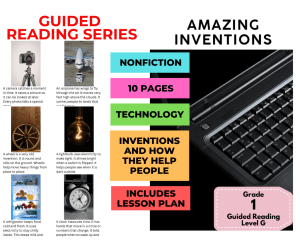
Guided Reading Level G - Amazing Inventions (with Lesson Plan)
ELA, Resources for Teachers, Reading Comprehension, Reading, Science, Engineering, Technology, Language Development, Pre-Reading, Vocabulary, Grade 1, 2, 3, Worksheets & Printables, Worksheets, Teacher Tools, Centers, Activities, Literacy Readers, Quizzes, Quizzes and Tests, Assessments, Lesson Plans
This Guided Reading Book - Amazing Inventions (Level G) with lesson plan includes: Guided Reading Color Label (front cover x1) This is a quick way to match the book’s demands to what students can generally handle.. The overall goal is to use the level/color to pick books for several smaller groups. To qualify for a certain level, a student is expected to read a book from that level with about 90–94% accuracy. If a student is consistently accurate and understands, move up a level. If the student is struggling at that level, drop down and add more support. Each student will improve at completely different rates, but it is generally one of the best ways to check progress across the class. DOWNLOAD THE CATALOG TO VIEW ALL GUIDED READING BOOKS AVAILABLE (SORTED LEVELS A-Z) Pre-Reading Question (x1) Teacher asks the prompt aloud, can be while showing the cover or first page. Students share what they already know, or make educated guesses from the cover. Prompt them to use the target vocabulary. Write some of their responses on the board to look back at during the reading. Vocabulary Words (x5) Introduce the five words, best doing it one at a time. Start by saying it, while students repeat and then see if anyone knows what it means before reading further. Read through the meaning and try to briefly connect each word to a picture or gesture so it’s meaningful. Ask students to flip through the book pages and point to where they see each of the vocabulary words. While reading the book pause upon coming across one of the vocab words or read the sentence twice to make sure students understand the word has appeared. Optional: Ask students to raise hands whenever they see/hear one of the new words. Guided Reading Pages (x10) Check the book snapshot (below) for: primary topic - do you need to prep extra reading or intro materials on this? what is taught best - decide on 1-2 bullets to focus on, use the prompt or words provided here for best results. learning goals - what you are checking for students to be able to do after the session, elicit answers using prompts or words provided. key vocabulary (see section above). questions overview - so you know what is coming up and if you need to prep extra materials to assist understanding. Run the lesson You may have already looked at a few of the pages together, but you can show them some of the pictures again first to set meaning. Depending on how much time you have and how familiar your students are with guided reading class, you may want to read the book aloud first with the group first. Students whisper or partner read, while you listen in. If time, do it as a group, one student reading a page each. Use the guided page’s prompts to coach: “Check the picture / does it make sense?” “Point under the words / try the first sound” “Reread the sentence smoothly”. Try to focus more on one student per session (rotating every time), so you can work out if they are ready to move up or need to move down a level. Comprehension Questions (back cover x3) This is your way to check that students didn’t just say the words, but actually understood the text. First, let students answer by pointing to the page/picture and saying a short sentence. After any answer, follow with: “Show me where you found that in the text.” In bigger groups, have partners answer first (10–20 seconds), then call on 2–3 students to share. Differentiation tips: Emerging speakers/struggling readers: oral + pointing On-level: oral in a full sentence Higher: one written sentence or draw + label Book Snapshot Title: Amazing Inventions Genre: Nonfiction (informational text) Subject: Science/Technology + Reading (Informational Text) Primary Topic: Inventions and how they help people Estimated Guided Reading Level (A–Z): G What This Book Teaches Best Introduces common inventions (wheel, lightbulb, telephone, computer, camera, airplane, refrigerator, clock, robot) and what each one does. Explains how inventions help people in everyday life (moving heavy things, seeing in the dark, connecting over distances, doing work quickly, keeping food cold, telling time, doing chores). Builds understanding of technology as something that changes, with “new things… invented every day to help people.” Supports describing key details from short informational passages paired with clear photos. Learning Goals Identify several inventions named in the book and tell what each helps people do. Describe how a wheel helps move heavy things from place to place. Explain how a lightbulb helps people see when it is dark outside. Tell how a telephone connects people who are far apart. Describe one way computers help people work quickly and what they can do. Explain what the book says about technology changing and new inventions helping people. Key Vocabulary From the Text invention — something made for the first time to help people. electricity — power that runs lights and machines. distances — how far apart places are. refrigerator — a machine that keeps food cold. sensors — parts that help a machine notice what is around it. Discussion Prompts Pre-reading question: What inventions do you use, and how do they help you? Comprehension questions: How do wheels help move heavy things from place to place? Comprehension questions: What does a lightbulb help people do when it is dark outside? Comprehension questions: What does the book say about new technology and how it helps people? Printing Tips 1. Best Printing Method (Recommended) “Booklet” Printing (Best if Available) If your printer or PDF viewer supports Booklet Printing , use this. Settings to use: Print mode: Booklet Paper size: Letter or A4 (either works) Orientation: Landscape Print on both sides: Yes Flip on: Short edge Scaling: Fit to printable area Booklet subset: First test: Front sides only Then: Back sides only This will automatically: Pair pages correctly Put the cover on the outside Align everything for folding After printing, fold in half and staple along the spine . 2. If “Booklet” Printing Is NOT Available You can still print this correctly with manual duplex printing . Step-by-step: Open the PDF. Choose Print . Set: Orientation: Landscape Pages per sheet: 1 Print on both sides: Yes Flip on: Short edge Print all pages . Because each PDF page already contains two facing book pages, the result will still fold cleanly into a book. Thousands of Cored Education products are included with your TeachSimple membership. Download links and encyclopedia index available here.
Author Cored Education
Rating
Tags Reading Comprehension, Reading Passages, Reading, Guided Reading, Guided Reading Lesson Plan, Guided Reading Activity, Pre-reading, Science Lesson Plans, Technology, Engineering

I WONDER - What Triggers An Avalanche | Animated Video Lesson
Geography, Social Studies, Earth Sciences, Earth and Environmental Sciences, Science, Environmental Science, Grade 2, 3, 4, 5, 6, 7, 8, Lesson Plans, Teacher Tools
Video Introduction An amazing video designed for the students to learn more about natural disasters in different countries. I WONDER - What Triggers An Avalanche | Animated Video Lesson What do you know about this natural disaster? Do you know in which part of the world this could happen? Have you ever read about the safety misusers that we could have to protect ourselves from this natural disaster? If yes, can you tell us more about them? Can you name other natural disasters? If yes, tell us more about where they are likely to happen? And how frequently? Do you like reading about Geography? What is your favorite country in the whole world? If you are going on a trip where it will be? Which country? What you are going to see there? Does this country has a famous place to visit? Do you like reading about Geology? If yes, what is your favourite topic? I WONDER - What Triggers An Avalanche | Animated Video Lesson The video is perfect for encouraging the researching skills for the students, while learning more about this fantastic phenomenon. I WONDER - What Triggers An Avalanche | Animated Video Lesson This friendly designed video is suitable for students at school, homeschooling, and as a group activity. Format Available in MP4 format.
Author Educational Voice
Tags What Triggers An Avalanche, What Triggers An Avalanche Video, Avalanche, Avalanche Facts, Avalanche Facts For Kids, Avalanche Video, Avalanche Video For Kids, Avalanches Facts, Avalanches Video
A Trip to the Zoo: A Cross-Curricular Unit
Science, Life Sciences, Animals, Kindergarten, Preschool, Teacher Tools, Lesson Plans
A Trip to the Zoo: A Cross-Curricular Unit "A Trip to the Zoo: A Cross-Curricular Unit" is an engaging and interactive teaching resource designed to both entertain and enlighten young learners. This unit provides a fascinating journey into both the subject areas of science and zoology, focusing on animals namely - monkeys, giraffes, and penguins. The packet takes students on an exciting experience of a trip to the zoo without actually requiring physical transport. It aims at being an ideal learning tool for educators in public schools or those homeschooling preschoolers or children in kindergarten. This PDF contains seven easy-to-navigate pages that guide learners through various stages of discovery. The unit begins with a two-page story designed to attract students towards these intriguing animals. Following this delightful narrative are three thoroughly prepared worksheets offering activities that extend knowledge about each animal species while nurturing observational skills, promoting active engagement with what they're learning. This cross-curricular unit fosters synergistic learning across multiple disciplines. Suitable for group lessons where peer collaboration can enhance understanding, it also offers adaptability for solo assignments or smaller group sessions according to individual learner requirements or teaching preferences. In conclusion, A Trip to the Zoo: A Cross-Curricular Unit presents a fun-filled immersive experience integrated with narrative elements besides activity -based content. The visit enables students with greater insight about monkeys, giraffes, penguins – all introduced within educational limits fostering scientific fascination among early learners. Consider implementing this resource as part of regular curricula diversification – after all; who doesn't enjoy taking occasional trips around lively zoological gardens?
Author Classroom Complete Press
Tags Zoo Trips, Trip To The Zoo, Science Lesson, Cross-curricular Unit, Worksheets, Zoo Lesson Plans For Pre-k, Zoo Field Trip Lesson Plans
I WONDER - How Long Are Orangutan's Arms | Animated Video Lesson
STEM, Biology, Life Sciences, Science, Animals, Grade 2, 3, 4, 5, 6, 7, 8, Lesson Plans, Teacher Tools
Video Introduction Animal kingdoms are full of fascinating wonders to learn. This video is designed for the students to learn more about animals in different countries. I WONDER - How Long Are Orangutan's Arms | Animated Video Lesson Do you like animals? what is your favorite one? Do you own a pet? If yes, tell us more about it, like what its name? And what do you like most about it? What are the animal kingdoms? Can you write down the characteristics of each animal class like mammals, birds, reptiles, amphibian, fish and mollusks. Do you know that some animals can sing, can you name any of them? What is the largest and the smallest mammal in the world? What is the largest and the smallest bird in the world? What is the largest and the smallest fish in the world? I WONDER - How Long Are Orangutan's Arms | Animated Video Lesson The video is perfect for encouraging the researching skills for the students, while learning more about these fantastic animals. I WONDER - How Long Are Orangutan's Arms | Animated Video Lesson This friendly designed video is suitable for students at school, homeschooling, and as a group activity. Format Available in MP4 format.
Author Educational Voice
Tags How Long Are Orangutan's Arms, How Long Are Orangutan's Arms Video, Orangutan's Arms, Orangutan's Arms Facts, Orangutan's Arms Facts For Kids, Orangutan's Arms Video, Orangutan's Arms Video For Kids
YOLKING AROUND WITH EGGS Gr. 3-5
Science, Life Sciences, Animals, Grade 3, 4, Teacher Tools, Lesson Plans
Yolk Around With Eggs Gr. 3-5: An Insightful Teaching Resource An engaging learning package designed particularly for students between third to fifth grade level, fostering curiosity and exploration about the world of eggs. Main Features: Hands-on learning techniques and exciting activities to build foundational knowledge In-depth scientific experiments that boost practical understanding of zoological concepts Creative 'egg crafts' that incorporate an artistic twist into science instruction Diverse Learning Approach: Games & Crafts This resource includes fun, egg-based games and craft suggestions which can be used for whole group discussions or small collaborative clusters, making it suitable for various class dynamics. Educational Tools Included: A useful checklist guide for progress tracking Word scrambles and word finds to stimulate cognitive abilities Blank activity cards that offer customization according to preferences or specific lesson needs. Homeschool Friendly The structured yet flexible format of this set makes it a valuable tool not only in traditional classrooms but also in home-based education setups, catering effectively to independent learning or guided discovery sessions. Nurture Appreciation For Nature's Marvels With Yolk Around With Eggs Gr. 3-5! This resource enables comprehensive lessons on sciences such as zoology less complex. Through its interactive practices, learners connect with material on a deeper level – effectively cultivating an appreciation for nature's wonders encapsulated in something as seemingly simple as an egg. Note: This resource is downloadable as a PDF file; hence it's readily available and convenient both for virtual and physical classroom setups.
Author Classroom Complete Press
Tags PDF
Space Travel & Technology: Looking Into Space Gr. 5-8
Science, Earth and Environmental Sciences, Space, Grade 5, 6, 7, 8, Teacher Tools, Lesson Plans
Space Travel & Technology: Looking Into Space Gr. 5-8 Take your students on a stimulating journey to the stars with our teaching resource, 'Space Travel & Technology: Looking Into Space.' This product is specially designed for Grade 5 to 8 students who harbor interest towards science and space exploration. Relevant to public school teachers as well as those involved in homeschooling, this teaching tool encourages learners to visualize and plan for a future where they play an active role in pursuing the wonders of our universe. Our Approach Understanding: Our resource focuses on facilitating understanding through simplified language and vocabulary, making complex scientific concepts more comprehensible for remedial students. Inquisitive Learning: It includes reading passages that spark curiosity. Fostering Problem-solving skills: The material has student activities fostering problem-solving skills Evaluation preparation: Contains test preparation materials Vivid Teaching Aids: Also includes colorful mini posters intended to enhance knowledge retention. We explore potential shuttle missions to the International Space Station (ISS) as part of this teaching resource entitled "Looking into Space". Teachers become essential guides that nurture these space exploration ambitions while transforming students into scientists, engineers or astronauts leading humanity's quest onto the Moon or Mars. Fits Within Your Instructional Methodology! This educational material can be utilized efficiently across varying instructional methodologies like whole-class instruction or small group activities. Additionally, it may serve as a supplementary assignment at home reinforcing what has been learnt during classroom sessions or upcoming examinations. Meticulously Aligned with Educational Standards Carefully aligned with your State Standards, these learning sectors written cater not only for Bloom's Taxonomy but cover STEM initiatives too—a comprehensive coverage harnessing fundamental principles of science. What Do You Get? Upon availing this lesson plan, you will receive one PDF type product file readily accessible across multiple digital platforms—compact yet rich content right at your fingertips! With 'Space Travel & Technology: Looking Into Space' we aim to make astronomy lessons riveting experiences worth remembering for Grade 5 through Grade 8 classrooms.
Author Classroom Complete Press
Tags PDF
I WONDER - Can We Power Any Machines With Bio Energy | Animated Video
Environmental Science, Earth and Environmental Sciences, Science, Grade 6, 7, 8, 9, 10, 11, 12, Lesson Plans, Teacher Tools
Video Introduction An amazing video designed for the students to learn more about STEM. I WONDER - Can We Power Any Machines With Bio Energy | Animated Video Lesson Do you like STEM subjects? what is your favorite one? Have you ever tried to plant a seed? If yes, tell us more about it. Or have you ever tried to invent something? If yes, tell us more about it. And how do you think it will help us? Have you ever seen a microorganism under a microscope? What was it? And how it looked like? Mathematics is a marvelous subject. Let' sharpen our brains and solve some equations. Do you like timetable tricks? What is your favorite one? Do you know how to code? Have you ever created an app or a game before? If yes, how was it like? I WONDER - Can We Power Any Machines With Bio Energy | Animated Video Lesson The video is perfect for encouraging the researching skills for the students, while learning more about this fantastic topic. I WONDER - Can We Power Any Machines With Bio Energy | Animated Video Lesson This friendly designed video is suitable for students at school, homeschooling, and as a group activity. Format Available in MP4 format.
Author Educational Voice
Tags Can We Power Any Machines With Bio Energy, Can We Power Any Machines With Bio Energy Video, Bio Energy, Bio Energy Facts, Bio Energy Facts For Kids, Bio Energy Video, Bio Energy Video For Kids

I WONDER - What Happens When Lava Cools | Animated Video Lesson
Geography, Social Studies, Earth Sciences, Earth and Environmental Sciences, Science, Environmental Science, Grade 4, 5, 6, 7, 8, 9, 10, Lesson Plans, Teacher Tools
Video Introduction An amazing video designed for the students to learn more about natural disasters in different countries. I WONDER - What Happens When Lava Cools | Animated Video Lesson What do you know about this natural disaster? Do you know in which part of the world this could happen? Have you ever read about the safety misusers that we could have to protect ourselves from this natural disaster? If yes, can you tell us more about them? Can you name other natural disasters? If yes, tell us more about where they are likely to happen? And how frequently? Do you like reading about Geography? What is your favorite country in the whole world? If you are going on a trip where it will be? Which country? What you are going to see there? Does this country has a famous place to visit? Do you like reading about Geology? If yes, what is your favourite topic? I WONDER - What Happens When Lava Cools | Animated Video Lesson The video is perfect for encouraging the researching skills for the students, while learning more about this fantastic phenomenon. I WONDER - What Happens When Lava Cools | Animated Video Lesson This friendly designed video is suitable for students at school, homeschooling, and as a group activity. Format Available in MP4 format.
Author Educational Voice
Tags What Happens When Lava Cools, What Happens When Lava Cools Video, Lava, Lava Facts, Lava Facts For Kids, Lava Video, Lava Video For Kids, Volcano, Volcanoes, Volcanoes Facts