



3,890 products added recently
Page 40 - Science Lesson Plan Template
Enhance your science instruction with a flexible lesson plan template designed for educators. This tool helps you structure objectives, materials, procedures, and assessments efficiently. Use it to create organized and impactful science lessons that cater to your students' needs.

 Show filters


I WONDER - Why Did The Microraptor Have Feathers | Animated Video
Animals, Life Sciences, Science, History: Ancient, History, Social Studies, History: World, Grade 4, 5, 6, 7, 8, 9, 10, Lesson Plans, Teacher Tools
Video Introduction An amazing video designed for the students to learn more about dinosaurs in different countries. I WONDER - Why Did The Microraptor Have Feathers | Animated Video Lesson Do you like dinosaurs? what is your favorite one? Do you own a pet? If yes, tell us more about it, like what its name? And what do you like most about it? Do you think that your pet has been evolved from a dinosaur? Can you write down the characteristics of your favourite dinosaur like it's shape, their rivals, where did it use to live and what was their favourite food? What is the largest and the smallest dinosaur that ever found? Why is the T-rex is so famous? Have you ever read any interesting facts about it? Can you name any of the carnivores or herbivores dinosaurs? I WONDER - Why Did The Microraptor Have Feathers | Animated Video Lesson The video is perfect for encouraging the researching skills for the students, while learning more about dinosaurs. I WONDER - Why Did The Microraptor Have Feathers | Animated Video Lesson This friendly designed video is suitable for students at school, homeschooling, and as a group activity. Format Available in MP4 format.
Author Educational Voice
Rating
Tags Why Did The Microraptor Have Feathers, Why Did The Microraptor Have Feathers Video, Microraptor, Microraptor Facts, Microraptor Video, Microraptor Video For Kids, Microraptor Facts For Kids

The Executive Mastery Framework A Developmentally Scaffolding
STEM, Special Resources, Life Skills, Social Emotional Learning (SEL), Social Skills, Special Education Needs (SEN), Science, Technology, Computer Science, Engineering, Grade 1, 2, 3, 4, 5, 9, 10, 11, Worksheets & Printables, Flashcards, Workbooks, Worksheets, Word Problems, Teacher Tools, Lesson Plans, Quizzes and Tests, Quizzes, Tests
The Executive Mastery Framework: A Developmentally Scaffolding Curriculum for Neurodiverse Learners "In The Executive Mastery Framework: A Developmentally Scaffolding Curriculum for Neurodiverse Learners," you will find a digital workbook, guide for educators, and other resources that support executive function development in neurodiverse individuals. The 30-page workbook and teacher resource guide provide a new perspective by shifting away from deficit-based models to a neuro-affirming outlook; it equips teachers, parents, and professionals with usable tools and strategies to build external cognitive supports that develop into the internalized capability of neurodiverse individuals. You will discover in this curriculum: Phase 1: Core concepts of neurobiology, executive function challenges, and developmental scaffolding; Phase 2: Ten worksheets (age progression/ability) that assist neurodiverse individuals in developing somatic awareness, impulse control, task initiation, working memory, cognitive flexibility, organizational skills, metacognitive awareness, persistence, vocational skills, and self-advocacy; and Phase 3: Visual frameworks, flowcharts, answer keys with evaluator rubrics. The curriculum contains case studies, reflections and practitioner insights, as well as action-based methodologies such as backward chaining, cognitive offloading, and environmental prosthetics to help neurodivergent children succeed in all aspects of education, work, and life from Pre-K through adulthood. This resource is perfect for special education resources, homeschool ADHD curriculum, autism teaching tools, executive function activities, neurodiversity-affirming education, and for IEP/504 plan support. Why Schools/Parents Appreciate It: Neuroscience-Informed and Research-Based: Uses positive, scaffolded support (shifting from a traditional punitive, deficit-based model) that relies on neuroscience principles to support neurodivergent learners in developing authentic skills in an environment free of shame and frustration. Complete and Versatile: Includes comprehensive [theory and research], interactive [worksheets/visuals/case studies], and teacher resources for easy adaptation for specific learner needs such as ADHD task initiation or autism transition plans. Demonstrated Effectiveness through Case Studies: Real-life examples proving quick and/or dramatic change in many areas and reduced challenging behaviors (i.e. decreasing aggressiveness, reducing instances of "lazy," creating self-advocacy skills) — resulting in higher levels of self-esteem and improved academic performance. Progression through Developmentally Appropriate Stages for Future Success: Provides information supporting learners in developing co-regulation to full independence (from an early age) and preparing them for success post-school (e.g. self-advocacy portfolio). Support for Educators and Parents/Guardians through Time-Saving Ready-to-Use Resources: Provide educators with reflective/reflection-based/rubric-based resources that enable educators to create student autonomy, while minimizing planning time, hence creating fewer behavioural concerns and more engagement. Target Audience of This Curriculum: This Curriculum was designed for use with students who present Neurodiverse profiles. The key characteristics of these profiles include ADHD, autism, dyslexia, executive dysfunction, or NVLD. The curricula analyzed within this PDF have been organized according to developmental progression from Pre-K to 2nd Grade, 3rd to 5th Grade, Middle School/6th to 8th grade, and High School/9th to 12th grade and beyond. Pre-K to 2nd Grade: The focus on early childhood developmentally appropriate foundational learning skills which includes the topics of use of environmental prosthetics, somatic awareness (awareness of the body), impulse inhibition, and developing an ability to co-regulate (worksheets 1 - 2). This would be appropriate for a 4 to 8-year-old child who is either autistic or has ADHD and experiences difficulty with sensory predictability or emotional regulation. 3rd to 5th Grade: Students at this grade level should be practicing the skills of upper elementary school co-regulated navigation, working memory expansion, and task initiation (worksheets 3 - 4). This would be appropriate for any student who displays signs of experiencing transitional anxiety or experiencing a working memory bottleneck. Middle School/ 6th to 8th Grades: The students in this age group should be able to internalize their tooling, develop cognitive flexibility, and work on their organizational systems (worksheets 5 - 6). This would apply to an adolescent who would display signs of experiencing difficulties with social hierarchies or temporal discounting due to their ADHD or AuDHD profile. High School/ 9th to 12th and Transition to Adulthood: Students should be developing their metacognitive self-advocacy skills, time management skills, goal persistence, vocational navigation skills, and independence (worksheets 7 - 10). This would apply to any teen or young adult who is preparing to enter college, work, or request the need for accommodations under the Americans with Disabilities Act due to severe executive dysfunction. This curriculum can be used in a variety of settings including: special education classes, home schooling, therapy sessions, implementation of an IEP, or within an inclusive classroom setting, ages 4-20+. Copyright/Terms of Use : This resource is the property of Syed Hammad Rizvi and is only to be purchased and used for personal or one single classroom activity. You cannot change/distribute/sell (however you choose) any part of this resource and cannot publish this resource to the Internet so other may have the opportunity to download or view it. If you would like to provide a colleague with a copy of this resource, you may do so by purchasing another license through Teachsimple. Thank You for following the terms provided above This product is happy to be provided by Syed Hammad Rizvi
Author Creative Book Store
Rating
Tags ADHD, Autism, Neurodivergent, SpecialEducation, IEP, 504Plan, TeacherResources, SpecialEdTeacher, HomeschoolCurriculum, Dyslexia

Grade 1 Digital Citizenship Yearlong Curriculum | 36 Weekly Lessons
Technology, Science, Life Skills, Special Resources, August, Months, Holiday & Seasonal, September, Fall, Seasons, Grade 1, Lesson Plans, Teacher Tools, Worksheets, Worksheets & Printables
Grade 1 Digital Citizenship Curriculum | Yearlong Digital Citizenship Lessons, Activities, Slides, Worksheets & Assessments Help your students become confident, responsible technology users with this Grade 1 Digital Citizenship Curriculum ! This comprehensive, yearlong resource includes everything you need to teach digital citizenship through engaging, age-appropriate lessons that build safe technology habits from the very first week. With 36 complete lessons, presentation slides, student workbook pages, worksheets, quizzes, projects, and assessments, you'll have a true grab-and-go curriculum for the entire school year. What's Included ⭐ 36 complete weekly digital citizenship lessons ⭐ Full teacher lesson plans with scripted instruction ⭐ Student workbook with 180 printable pages ⭐ Nearly 200 presentation slides for whole-group instruction ⭐ 100+ no-prep printable worksheets ⭐ 36 weekly exit tickets for quick formative assessment ⭐ 10 unit and cumulative quizzes ⭐ 8 collaborative, hands-on classroom projects with rubrics ⭐ Complete answer keys ⭐ Teacher toolkit with assessment, planning, data tracking, and small-group support ⭐ Graphs, class charts, and progress trackers ⭐ Family connection activities built into every lesson How It Works in the Classroom This Digital Citizenship Curriculum follows a predictable weekly routine that keeps lesson preparation simple while helping students build confidence. Each lesson includes: Bell ringer Mini lesson Interactive presentation slides Reading passage Guided notes Hands-on practice activity Partner discussion Real-world digital citizenship scenario Independent practice Journal writing Exit ticket Optional family connection Answer key The resource works beautifully for: Whole-group instruction Technology class Classroom teachers Media center lessons Computer lab 1:1 classrooms Limited-device classrooms Print or projected instruction Homeschool and co-op settings Standards & Learning Goals Students develop age-appropriate digital citizenship skills throughout the school year, including: Choosing the right digital device for different tasks Understanding buttons, icons, and menus Logging in, saving work, and logging out safely Keyboard and basic technology skills Internet basics Websites, links, and online searching Online safety Advertising awareness Evaluating information Digital footprints Password creation and private information Respectful online communication Cyberbullying prevention and being an upstander Healthy screen balance Responsible technology use Technology careers and helpers Lessons emphasize decision-making through authentic scenarios rather than simple rule memorization, helping students apply digital citizenship concepts in meaningful ways. Why Teachers Love It ❤️ Zero-prep weekly lessons ❤️ Complete yearlong curriculum in one purchase ❤️ Consistent lesson format saves planning time ❤️ Engaging, developmentally appropriate activities ❤️ Built-in formative and summative assessments ❤️ Easy differentiation with projects, worksheets, discussions, and independent work ❤️ Works whether students have devices or not ❤️ Includes answer keys for every activity ❤️ Perfect for classroom teachers, technology teachers, and media specialists ❤️ Strong balance of direct instruction, collaboration, writing, discussion, and hands-on learning Give your students the digital citizenship foundation they need! If you're looking for a complete Grade 1 Digital Citizenship Curriculum with engaging lessons, printable activities, assessments, slides, projects, and teacher support, this resource provides everything needed to confidently teach digital citizenship all year long.
Author Bright Classroom Ideas Marketplace
Rating
Tags Digital, Citizenship, Back To School, Yearlong, Curriculum, Full Year, Technology

I WONDER - How Are Peacock Feather So Colourful | Animated Video
STEM, Animals, Life Sciences, Science, Biology, Grade 1, 2, 3, 4, 5, 6, 7, 8, Lesson Plans, Teacher Tools
Video Introduction Animal kingdoms are full of fascinating wonders to learn. This video is designed for the students to learn more about animals in different countries. I WONDER - How Are Peacock Feather So Colourful | Animated Video Lesson Do you like animals? what is your favorite one? Do you own a pet? If yes, tell us more about it, like what its name? And what do you like most about it? What are the animal kingdoms? Can you write down the characteristics of each animal class like mammals, birds, reptiles, amphibian, fish and mollusks. Do you know that some animals can sing, can you name any of them? What is the largest and the smallest mammal in the world? What is the largest and the smallest bird in the world? What is the largest and the smallest fish in the world? I WONDER - How Are Peacock Feather So Colourful | Animated Video Lesson The video is perfect for encouraging the researching skills for the students, while learning more about these fantastic animals. I WONDER - How Are Peacock Feather So Colourful | Animated Video Lesson This friendly designed video is suitable for students at school, homeschooling, and as a group activity. Format Available in MP4 format.
Author Educational Voice
Tags How Are Peacock Feather So Colourful, How Are Peacock Feather So Colourful Video, Peacock Feather, Peacock Feather Facts, Peacock Feather Facts For Kids, Peacock Feather Video, Peacock Feather Video For Kids

Glaciers: The Chilly Facts: A Cross-Curricular Unit
Science, Earth and Environmental Sciences, Environmental Science, Grade 3, 4, Teacher Tools, Lesson Plans
Glaciers: The Chilly Facts: A Cross-Curricular Unit An engaging educational resource crafted for teachers and homeschoolers targeting third-grade and fourth-grade students. This comprehensive teaching tool takes a deep dive into the intriguing world of glaciers, bridging scientific knowledge with practical learning. A Unique Learning Approach The distinctive aspect of this product lies in its structured content, integrating an informative nonfiction article revealing intriguing facts about these slow-moving ice structures. Students have the opportunity to gain a deeper understanding of glaciers from various perspectives, enriching their knowledge beyond simply defining what a glacier is. Cross-curricular Worksheets Included besides this well-researched article are several cross-curricular worksheets. These worksheets developed with interdisciplinary insight cover distinct subject areas contributing to holistic learning experiences surpassing pure science education constraints. Fostering Creative Thinking: Activities within this unit encourage thinking creatively while reinforcing learned concepts from the main text. Versatility in Teaching Situations: Activity ideas can adapt seamlessly across multiple teaching situations - be it whole-group classroom discussions or assigned homework for personalized at-home learning engagements. Simplified Structuring & Efficient Planning This PDF file spans six pages ready for immediate printing upon purchase, serving effectively as both a comprehensive lesson plan and time-efficient prep-tool for educators focused on delivering top-tier environmental science instruction. Inspire Interest & Knowledge Growth In Environmental Sciences: Utilizing Glaciers: The Chilly Facts: A Cross-Curricular Unit will stimulate increased student interest in environmental sciences while equipping them with essential glacier information – transforming lessons into captivating explorations of Earth's icy wonders.
Author Classroom Complete Press
Tags Glaciers, Chilly Facts, Environmental Science, Cross-curricular Unit, Science Worksheet

I WONDER - How Did Mars Get Its Name | Animated Video Lesson
Space, Earth and Environmental Sciences, Science, Grade 4, 5, 6, 7, 8, 9, 10, Teacher Tools, Lesson Plans
Video Introduction An amazing video designed for the students to learn more about space facts. I WONDER - How Did Mars Get Its Name | Animated Video Lesson Do you like reading about space? If yes, what is your favorite topic? What do you know about our solar system? What is the smallest planet in our solar system? What is the biggest planet in our solar system? What is the hottest planet in our solar system? And what is the coldest one? Do you think there are aliens? If yes, what do you think they look like? What do they eat and how they speak to each other? Where do they live? What is a galaxy? And what is a milky way? Have you recently saw a shooting star? If yes, tell us more about it, like when did it happen and where? What is a blackhole? Can a blackhole gets bigger by time? Do you like counting the stars? What do you think a star is made of? I WONDER - How Did Mars Get Its Name | Animated Video Lesson The video is perfect for encouraging the researching skills for the students, while learning more about the fantastic space. I WONDER - How Did Mars Get Its Name | Animated Video Lesson This friendly designed video is suitable for students at school, homeschooling, and as a group activity. Format Available in MP4 format.
Author Educational Voice
Tags How Did Mars Get Its Name, How Did Mars Get Its Name Video, Mars Name, Mars Name Facts, Mars Name Facts For Kids, Mars Name Video, Mars Name Video For Kids, Mars, Mars Video For Kids
I WONDER - Can Dolphins Dream | Animated Video Lesson
Biology, Life Sciences, Science, Animals, STEM, Grade 1, 2, 3, 4, 5, 6, 7, 8, Lesson Plans, Teacher Tools
Video Introduction Animal kingdoms are full of fascinating wonders to learn. This video is designed for the students to learn more about animals in different countries. I WONDER - Can Dolphins Dream | Animated Video Lesson Do you like animals? what is your favorite one? Do you own a pet? If yes, tell us more about it, like what its name? And what do you like most about it? What are the animal kingdoms? Can you write down the characteristics of each animal class like mammals, birds, reptiles, amphibian, fish and mollusks. Do you know that some animals can sing, can you name any of them? What is the largest and the smallest mammal in the world? What is the largest and the smallest bird in the world? What is the largest and the smallest fish in the world? I WONDER - Can Dolphins Dream | Animated Video Lesson The video is perfect for encouraging the researching skills for the students, while learning more about these fantastic animals. I WONDER - Can Dolphins Dream | Animated Video Lesson This friendly designed video is suitable for students at school, homeschooling, and as a group activity. Format Available in MP4 format.
Author Educational Voice
Tags Can Dolphins Dream, Can Dolphins Dream Video, Dolphins Can Dream, Dolphins Can Dream Facts, Dolphins Can Dream Facts For Kids, Dolphins Can Dream Video, Dolphins Can Dream Video For Kids

I WONDER - How Fast Was The Carontaurus | Animated Video Lesson
History: Ancient, History, Social Studies, History: World, Animals, Life Sciences, Science, Grade 4, 5, 6, 7, 8, 9, 10, Lesson Plans, Teacher Tools
Video Introduction An amazing video designed for the students to learn more about dinosaurs in different countries. I WONDER - How Fast Was The Carontaurus | Animated Video Lesson Do you like dinosaurs? what is your favorite one? Do you own a pet? If yes, tell us more about it, like what its name? And what do you like most about it? Do you think that your pet has been evolved from a dinosaur? Can you write down the characteristics of your favourite dinosaur like it's shape, their rivals, where did it use to live and what was their favourite food? What is the largest and the smallest dinosaur that ever found? Why is the T-rex is so famous? Have you ever read any interesting facts about it? Can you name any of the carnivores or herbivores dinosaurs? I WONDER - How Fast Was The Carontaurus | Animated Video Lesson The video is perfect for encouraging the researching skills for the students, while learning more about dinosaurs. I WONDER - How Fast Was The Carontaurus | Animated Video Lesson This friendly designed video is suitable for students at school, homeschooling, and as a group activity. Format Available in MP4 format.
Author Educational Voice
Rating
Tags How Fast Was The Carontaurus, How Fast Was The Carontaurus Video, Carontaurus, Carontaurus Facts, Carontaurus Video, Carontaurus Facts For Kids, Carontaurus Video For Kids, Dinosaur, Dinosaurs
Simple Machines: What Are Simple Machines - FLASH-PC
Science, Technology, Engineering, Common Core, Grade 5, 6, 7, 8, Teacher Tools, Lesson Plans
Simple Machines: What Are Simple Machines - FLASH-PC This is a teaching aid specially designed for educators in the fields of Science and Engineering, most suited for students from grades 5 through 8. It offers a comprehensive approach to the subject of Simple Machines. Main Objective The primary objective lies in giving an in-depth understanding of what simple machines are, supported by reading passages that deliver curriculum -based content. Before and after reading discussions help to reinforce learning and stimulate critical thinking. Highlights Of The Product Videos and audios: Various forms of media are used to engage students since they cater to different learning styles. Interactive activities: Active student participation is encouraged throughout each lesson via interactive sessions. Printables & flashcards: These resources enhance recall rates while on the one hand, expanding domain-specific vocabulary, on the other. This teaching resource can be utilized flexibly based on class size (whole group or smaller focus groups) or instructional methods (in-class teaching or homework assignments). Pedagogical Alignment & Standards Adherence Blooms Taxonomy - This software adheres strictly to Bloom's Taxonomy thereby promoting comprehensive topic mastery among learners by ensuring depth within all instructional components. CSS Alignment - The software aligns with Common Core State Standards affirms its relevance as well as effectiveness within modern syllabi aims. In conclusion,, "Simple Machines: What Are Simple Machines - FLASH-PC" provides an engaging blend of textual readings, interactive sessions & varied multimedia resources, making it a versatile and adaptable to multiple teaching strategies.
Author Classroom Complete Press
Tags Software (PC)

Discolouration | Animated Kitchen Science Video Lesson
Science, Physics, Not Grade Specific, Lesson Plans, Teacher Tools
Discolouration: Animated Kitchen Science Video Lesson The Discolouration Animated Kitchen Science Video Lesson aims to provide educators with a dynamic and interactive teaching resource. It's an effective tool for public school teachers seeking to energize their classroom, and homeschoolers in need of engaging content. Adaptive Learning Content No specific grade level is required for this resource. It's perfect as a teaching aid for learners of all levels. The video focuses on Physical Science, specifically discolouration phenomena, all using familiar kitchen settings that students can relate to. Versatile Learning Tool The video lesson is designed at 12 minutes long—an optimal length for keeping students motivated. Being digital (in MP4 format), it offers flexible use: Whether virtually in online classes, face-to-face lessons or assigned independently as homework—it fits the bill. Bullet Point 1: Created as a recapitulation or introduction tool Bullet Point 2: Fits perfectly into conventional and digital classrooms Fostering Engagement through Interaction and Fun This Animated Kitchen Science Video wonderfully merges knowledge acquisition with fun and interactive graphics—amplifying student engagement. The primary objective here is not just factual understanding but also knowledge transfer in memorable ways—sparking student curiosity about everyday phenomena around them nestled in reflection. In Conclusion, The Discolouration | Animated Kitchen Science Video Lesson assists educators striving towards creating effective yet entertaining learning experiences by merging compelling visualization methods with rich scientific content. Aside from being enjoyable,the video simplifies complex ideas into easily digestible snippets while sustaining the students' attention throughout the course of the lesson. Remember, even though the video doesn't have ‘graded’ content, it makes a brilliant springboard for in-depth-discussion on the topic and could inspire related experiments!
Author Educational Voice
Tags Discolouration, Kitchen Science, Interactive Lesson, Physical Science, Animated Video

I WONDER - What Is Radio Useful For | Animated Video Lesson
Physics, Science, Grade 6, 7, 8, 9, 10, 11, 12, Lesson Plans, Teacher Tools
Video Introduction An amazing activity designed for the students to learn more about STEM. I WONDER - What Is Radio Useful For | Animated Video Lesson Do you like STEM subjects? what is your favorite one? Have you ever tried to plant a seed? If yes, tell us more about it. Or have you ever tried to invent something? If yes, tell us more about it. And how do you think it will help us? Have you ever seen a microorganism under a microscope? What was it? And how it looked like? Mathematics is a marvelous subject. Let' sharpen our brains and solve some equations. Do you like timetable tricks? What is your favorite one? Do you know how to code? Have you ever created an app or a game before? If yes, how was it like? I WONDER - What Is Radio Useful For | Animated Video Lesson The video is perfect for encouraging the researching skills for the students, while learning more about this fantastic topic. I WONDER - What Is Radio Useful For | Animated Video Lesson This friendly designed video is suitable for students at school, homeschooling, and as a group activity. Format Available in MP4 format.
Author Educational Voice
Tags What Is Radio Useful For, What Is Radio Useful For Video, Radio, Radio Facts, Radio Facts For Kids, Radio Facts Video, Radio Facts Video For Kids, Science, Stem, Science Facts

I WONDER - How Hot Are Sun Spots | Animated Video Lesson
Space, Earth and Environmental Sciences, Science, Grade 6, 7, 8, 9, 10, 11, 12, Lesson Plans, Teacher Tools
Video Introduction An amazing video designed for the students to learn more about space facts. I WONDER - How Hot Are Sun Spots | Animated Video Lesson Do you like reading about space? If yes, what is your favorite topic? What do you know about our solar system? What is the smallest planet in our solar system? What is the biggest planet in our solar system? What is the hottest planet in our solar system? And what is the coldest one? Do you think there are aliens? If yes, what do you think they look like? What do they eat and how they speak to each other? Where do they live? What is a galaxy? And what is a milky way? Have you recently saw a shooting star? If yes, tell us more about it, like when did it happen and where? What is a blackhole? Can a blackhole gets bigger by time? Do you like counting the stars? What do you think a star is made of? I WONDER - How Hot Are Sun Spots | Animated Video Lesson The video is perfect for encouraging the researching skills for the students, while learning more about the fantastic space. I WONDER - How Hot Are Sun Spots | Animated Video Lesson This friendly designed video is suitable for students at school, homeschooling, and as a group activity. Format Available in MP4 format.
Author Educational Voice
Tags How Hot Are Sun Spots, How Hot Are Sun Spots Video, Sun Spots, Sun Spots Facts, Sun Spots Facts For Kids, Sun Spots Video, Sun Spots Video For Kids, Sun, The Sun, Space Video
I WONDER - How Many Eggs Did The Diplodocus Lay | Animated Video
History: Ancient, History, Social Studies, History: World, Animals, Life Sciences, Science, Grade 4, 5, 6, 7, 8, 9, 10, Lesson Plans, Teacher Tools
Video Introduction An amazing video designed for the students to learn more about dinosaurs in different countries. I WONDER - How Many Eggs Did The Diplodocus Lay | Animated Video Lesson Do you like dinosaurs? what is your favorite one? Do you own a pet? If yes, tell us more about it, like what its name? And what do you like most about it? Do you think that your pet has been evolved from a dinosaur? Can you write down the characteristics of your favourite dinosaur like it's shape, their rivals, where did it use to live and what was their favourite food? What is the largest and the smallest dinosaur that ever found? Why is the T-rex is so famous? Have you ever read any interesting facts about it? Can you name any of the carnivores or herbivores dinosaurs? I WONDER - How Many Eggs Did The Diplodocus Lay | Animated Video Lesson The video is perfect for encouraging the researching skills for the students, while learning more about dinosaurs. I WONDER - How Many Eggs Did The Diplodocus Lay | Animated Video Lesson This friendly designed video is suitable for students at school, homeschooling, and as a group activity. Format Available in MP4 format.
Author Educational Voice
Rating
Tags How Many Eggs Did The Diplodocus Lay, How Many Eggs Did The Diplodocus Lay Video, Diplodocus, Diplodocus Video, Diplodocus Facts, Diplodocus Eggs, Diplodocus Eggs Video, Diplodocus Eggs Facts
I WONDER - Is Air Resistance The Same As Friction | Animated Video
Physics, Science, STEM, Grade 6, 7, 8, 9, 10, 11, 12, Lesson Plans, Teacher Tools
Video Introduction An amazing video designed for the students to learn more about STEM. I WONDER - Is Air Resistance The Same As Friction | Animated Video Lesson Do you like STEM subjects? what is your favorite one? Have you ever tried to plant a seed? If yes, tell us more about it. Or have you ever tried to invent something? If yes, tell us more about it. And how do you think it will help us? Have you ever seen a microorganism under a microscope? What was it? And how it looked like? Mathematics is a marvelous subject. Let' sharpen our brains and solve some equations. Do you like timetable tricks? What is your favorite one? Do you know how to code? Have you ever created an app or a game before? If yes, how was it like? I WONDER - Is Air Resistance The Same As Friction | Animated Video Lesson The video is perfect for encouraging the researching skills for the students, while learning more about this fantastic topic. I WONDER - Is Air Resistance The Same As Friction | Animated Video Lesson This friendly designed video is suitable for students at school, homeschooling, and as a group activity. Format Available in MP4 format.
Author Educational Voice
Tags Is Air Resistance The Same As Friction, Is Air Resistance The Same As Friction Video, Air Resistance, Air Resistance Facts, Air Resistance Facts For Kids, Air Resistance Video, Friction, Friction Video

I WONDER - Is Rewilding Good For Humans | Animated Video Lesson
Environmental Science, Earth and Environmental Sciences, Science, Earth Sciences, Nature & Plants, Life Sciences, Human Body, Biology, Animals, Insects, Grade 6, 7, 8, 9, 10, 11, 12, Lesson Plans, Teacher Tools
Video Introduction An amazing video designed for the students to learn more about STEM. I WONDER - Is Rewilding Good For Humans | Animated Video Lesson Do you like STEM subjects? what is your favorite one? Have you ever tried to plant a seed? If yes, tell us more about it. Or have you ever tried to invent something? If yes, tell us more about it. And how do you think it will help us? Have you ever seen a microorganism under a microscope? What was it? And how it looked like? Mathematics is a marvelous subject. Let' sharpen our brains and solve some equations. Do you like timetable tricks? What is your favorite one? Do you know how to code? Have you ever created an app or a game before? If yes, how was it like? I WONDER - Is Rewilding Good For Humans | Animated Video Lesson The video is perfect for encouraging the researching skills for the students, while learning more about this fantastic topic. I WONDER - Is Rewilding Good For Humans | Animated Video Lesson This friendly designed video is suitable for students at school, homeschooling, and as a group activity. Format Available in MP4 format.
Author Educational Voice
Tags Is Rewilding Good For Humans, Is Rewilding Good For Humans Video, Rewilding, Rewilding Facts, Rewilding Facts For Kids, Rewilding Video, Rewilding Video For Kids, Rewilding Tips, Rewilding Tips For Kids
I WONDER - Where Did The Archaeopteryx Live | Animated Video Lesson
History: Ancient, History, Social Studies, History: World, Animals, Life Sciences, Science, Grade 4, 5, 6, 7, 8, 9, 10, Lesson Plans, Teacher Tools
Video Introduction An amazing video designed for the students to learn more about dinosaurs in different countries. I WONDER - Where Did The Archaeopteryx Live | Animated Video Lesson Do you like dinosaurs? what is your favorite one? Do you own a pet? If yes, tell us more about it, like what its name? And what do you like most about it? Do you think that your pet has been evolved from a dinosaur? Can you write down the characteristics of your favourite dinosaur like it's shape, their rivals, where did it use to live and what was their favourite food? What is the largest and the smallest dinosaur that ever found? Why is the T-rex is so famous? Have you ever read any interesting facts about it? Can you name any of the carnivores or herbivores dinosaurs? I WONDER - Where Did The Archaeopteryx Live | Animated Video Lesson The video is perfect for encouraging the researching skills for the students, while learning more about dinosaurs. I WONDER - Where Did The Archaeopteryx Live | Animated Video Lesson This friendly designed video is suitable for students at school, homeschooling, and as a group activity. Format Available in MP4 format.
Author Educational Voice
Rating
Tags Where Did The Archaeopteryx Live, Where Did The Archaeopteryx Live Video, Archaeopteryx, Archaeopteryx Facts, Archaeopteryx Video, Archaeopteryx Video For Kids, Archaeopteryx Facts For Kids

Atomic Theory and Structure Overview - Senior Chemistry lesson
Science, Chemistry, Grade 10, 11, 12, Teacher Tools, Lesson Plans
Atomic Theory and Structure Overview - Senior Chemistry Lesson Your lesson covers atomic theory and structure. In order, the lesson teaches about; Organizing Matter, Relative Masses, Atomic History and Theory, The Modern Periodic Table, Structure of an Atom, Ions, Atomic Mass, and Isotopes. Your lesson includes the teacher and student version of the presentation, TWO embedded videos, an auto-graded exit ticket, and a student lesson handout so the students can record the notes on a more condensed medium. This lesson is designed to be your go-to resource, whether you're in a traditional classroom or a virtual one. With both a teacher version and a student version, it seamlessly fits into your lesson plans, making learning engaging and adaptable. Assessment made easy We've included an auto-graded Exit Ticket and a quiz with an answer key because I know you don't have an excess of time. I know you don't, because I don't and I know I'll do whatever I can to reduce my grading time. Whether you use PowerPoint or Google Slides, prefer Word or Google Docs, this lesson has you covered. This lesson comes in both Office and Google formats for your convenience. The student version of the presentation has strategically placed blanks for them to fill in as you're teaching. It keeps them active and engaged, encourages discussion, and leaves more time for those "aha" moments.
Author Teach With Fergy
Tags Chemistry Lesson, Matter, Relative Mass, Atomic History, Atomic Theory, Periodic Table, Ions, Atomic Mass, Isotopes

Force: Kinds of Force - FLASH-PC
Science, Physics, Common Core, Grade 5, 6, 7, 8, Teacher Tools, Lesson Plans
Force: Kinds of Force - FLASH-PC FLASH-PC, a comprehensive teaching resource, has been expertly crafted for educators as an effective digital educational tool. This product enhances students’ knowledge about force and its various manifestations, with distinct alignment to Common Core State Standards and a purposeful adaptation to Bloom’s Taxonomy. A Unique Multimedia Package The learning journey begins with engaging reading passages for the earliest exposure to the topic. Complementary questions for pre-reading anticipation and post-reading reflection help students develop their predictive skills and encourage thoughtful responses after each passage. Suitable for Grade 5 through Grade 8. Supplementary Printables The package extends learning beyond the digital sphere with intensive review materials that aid in memory retention - crucial for internalizing complex scientific principles such as force. Detailed Vocabulary Flashcards Varying methods of instruction cater to individual student's needs. Students can learn at their own pace. Filled with instrumental tools in navigating intricate science concepts while accommodating different learning styles. Multimedia Elements Videos, Audios,, and other immersive components provide an intriguing interaction with complex physics principles, leading us closer in forming a comprehensive understanding of forces' captivating world. The Fun Learning! Interactive Activities! Puzzles, games, quizzes – all aimed towards entertainment infused learning! Indeed! Witness your classrooms buzzing over exciting scientific exploration! In summary, if you're seeking an engaging way to present gravity or inertia concepts through modern technology applications designed specifically for today's classroom settings, then Force: Kinds of Force - FLASH-PC will undoubtedly breathe life into your lesson plans. Experience firsthand why countless educators value this innovative resource encased within one downloadable product file from TeachSimple! Step up your teaching approach with us - TeachSimple’s Kinds of Force educational resource. Leverage it today!
Author Classroom Complete Press
Tags Software (PC)
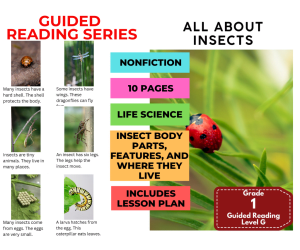
All About Insects: Guided Reading Level G with Lesson Plan
ELA, Resources for Teachers, Reading Comprehension, Reading, Science, Language Development, Vocabulary, Pre-Reading, Insects, Life Sciences, Kindergarten, Grade 1, 2, Worksheets & Printables, Worksheets, Teacher Tools, Centers, Activities, Literacy Readers, Quizzes, Quizzes and Tests, Assessments, Lesson Plans
This All About Insects (level g) guided reading book with lesson plan includes: Guided Reading Color Label (front cover x1) This is a quick way to match the book’s demands to what students can generally handle.. The overall goal is to use the level/color to pick books for several smaller groups. To qualify for a certain level, a student is expected to read a book from that level with about 90–94% accuracy. If a student is consistently accurate and understands, move up a level. If the student is struggling at that level, drop down and add more support. Each student will improve at completely different rates, but it is generally one of the best ways to check progress across the class. DOWNLOAD THE CATALOG TO VIEW ALL GUIDED READING BOOKS AVAILABLE (SORTED LEVELS A-Z) Pre-Reading Question (x1) Teacher asks the prompt aloud, can be while showing the cover or first page. Students share what they already know, or make educated guesses from the cover. Prompt them to use the target vocabulary. Write some of their responses on the board to look back at during the reading. Vocabulary Words (x5) Introduce the five words, best doing it one at a time. Start by saying it, while students repeat and then see if anyone knows what it means before reading further. Read through the meaning and try to briefly connect each word to a picture or gesture so it’s meaningful. Ask students to flip through the book pages and point to where they see each of the vocabulary words. While reading the book pause upon coming across one of the vocab words or read the sentence twice to make sure students understand the word has appeared. Optional: Ask students to raise hands whenever they see/hear one of the new words. Guided Reading Pages (x10) Check the book snapshot (below) for: primary topic - do you need to prep extra reading or intro materials on this? what is taught best - decide on 1-2 bullets to focus on, use the prompt or words provided here for best results. learning goals - what you are checking for students to be able to do after the session, elicit answers using prompts or words provided. key vocabulary (see section above). questions overview - so you know what is coming up and if you need to prep extra materials to assist understanding. Run the lesson You may have already looked at a few of the pages together, but you can show them some of the pictures again first to set meaning. Depending on how much time you have and how familiar your students are with guided reading class, you may want to read the book aloud first with the group first. Students whisper or partner read, while you listen in. If time, do it as a group, one student reading a page each. Use the guided page’s prompts to coach: “Check the picture / does it make sense?” “Point under the words / try the first sound” “Reread the sentence smoothly”. Try to focus more on one student per session (rotating every time), so you can work out if they are ready to move up or need to move down a level. Comprehension Questions (back cover x3) This is your way to check that students didn’t just say the words, but actually understood the text. First, let students answer by pointing to the page/picture and saying a short sentence. After any answer, follow with: “Show me where you found that in the text.” In bigger groups, have partners answer first (10–20 seconds), then call on 2–3 students to share. Differentiation tips: Emerging speakers/struggling readers: oral + pointing On-level: oral in a full sentence Higher: one written sentence or draw + label Book Snapshot Title: All About Insects Genre: Nonfiction (informational) Subject: Science (Life Science) Primary Topic: Insect body parts, features, and where they live Estimated Guided Reading Level (A–Z): G What This Book Teaches Best Explains what insects are by stating they are tiny animals that live in many places . Teaches basic insect anatomy: insects have six legs and three body parts (head, thorax, abdomen). Connects structures to functions: legs help the insect move and antennae are used to smell things . Describes common insect features: some have a hard shell that protects the body , and some have wings (dragonflies can fly fast ). Introduces early life stages: many insects come from eggs , and a larva hatches from an egg. Learning Goals Students will describe insects as tiny animals that live in many places. Students will identify that an insect has six legs that help it move. Students will name the three body parts of an insect: head, thorax, and abdomen. Students will explain that most insects have two antennae used to smell things. Students will describe details from the text about insect features (shells, wings) and how insects begin life (eggs, larva). Key Vocabulary From the Text thorax — the middle part of an insect’s body. abdomen — the back part of an insect’s body. antennae — body parts insects use to smell things. larva — a young insect that hatches from an egg. dragonflies — insects that can fly fast. Discussion Prompts Pre-reading question: Where have you seen insects living before? Comprehension questions: What does the book say insects are? Comprehension questions: How many legs does an insect have? Comprehension questions: Where does the book tell you to look to find an insect? Printing Tips 1. Best Printing Method (Recommended) “Booklet” Printing (Best if Available) If your printer or PDF viewer supports Booklet Printing , use this. Settings to use: Print mode: Booklet Paper size: Letter or A4 (either works) Orientation: Landscape Print on both sides: Yes Flip on: Short edge Scaling: Fit to printable area Booklet subset: First test: Front sides only Then: Back sides only This will automatically: Pair pages correctly Put the cover on the outside Align everything for folding After printing, fold in half and staple along the spine . 2. If “Booklet” Printing Is NOT Available You can still print this correctly with manual duplex printing . Step-by-step: Open the PDF. Choose Print . Set: Orientation: Landscape Pages per sheet: 1 Print on both sides: Yes Flip on: Short edge Print all pages . Because each PDF page already contains two facing book pages, the result will still fold cleanly into a book. Thousands of Cored Education products are included with your TeachSimple membership. Download links and encyclopedia index available here.
Author Cored Education
Rating
Tags Reading Comprehension, Reading Passages, Reading, Guided Reading, Guided Reading Lesson Plan, Guided Reading Activity, Pre-reading, Science Lesson Plans, Life Science, Insects

I WONDER - Do Avalanches Have Any Warning Signs | Animated Video
Geography, Social Studies, Earth Sciences, Earth and Environmental Sciences, Science, Environmental Science, Grade 4, 5, 6, 7, 8, 9, 10, Lesson Plans, Teacher Tools
Video Introduction An amazing video designed for the students to learn more about natural disasters in different countries. I WONDER - Do Avalanches Have Any Warning Signs | Animated Video Lesson What do you know about this natural disaster? Do you know in which part of the world this could happen? Have you ever read about the safety misusers that we could have to protect ourselves from this natural disaster? If yes, can you tell us more about them? Can you name other natural disasters? If yes, tell us more about where they are likely to happen? And how frequently? Do you like reading about Geography? What is your favorite country in the whole world? If you are going on a trip where it will be? Which country? What you are going to see there? Does this country has a famous place to visit? Do you like reading about Geology? If yes, what is your favourite topic? I WONDER - Do Avalanches Have Any Warning Signs | Animated Video Lesson The video is perfect for encouraging the researching skills for the students, while learning more about this fantastic phenomenon. I WONDER - Do Avalanches Have Any Warning Signs | Animated Video Lesson This friendly designed video is suitable for students at school, homeschooling, and as a group activity. Format Available in MP4 format.
Author Educational Voice
Tags Do Avalanches Have Any Warning Signs, Do Avalanches Have Any Warning Signs Video, Avalanches Warning Signs, Avalanches Warning Signs Facts, Avalanches Warning Signs Video, Avalanches Warning Signs Video For Kids
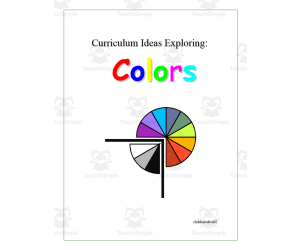
Colors Curriculum Pack
Creative Arts, Art, Social Studies, ELA, Language Development, Vocabulary, Math, Early Math, Science, Basic Science, Kindergarten, Lesson Plans, Teacher Tools
If your students are studying colors or are about to begin a colors unit, I have just the resource to provide you with everything you need and more! This is a Colors Curriculum Pack complete with an abundance of printable resources and engaging activities for students to complete. This curriculum was designed for your preschool students. The curriculum goal is to identify colors and explore and expand upon their knowledge of the concepts associated with the properties of, and creating different colors. The vocabulary that students will focus on is primary, secondary, diffused, light, opaque, translucent, dark, shades, rainbow, and spectrum. This curriculum will come with colors of the week (all colors) and a letter of the week (C). This curriculum pack includes: --Sensory Table Ideas --Art Activities --Cooking Experience --Community Time --Math Activities --Home/School Connection Ideas --Science Table Enrichments --Science Concepts/Activities --Prop Box Ideas/Dramatic Play Enrichments --Movement and Motor --Playground/Walk Activities --Transition/Waiting Ideas --Block Area Enrichments --Flannel Board --Teacher Made Enrichment Ideas --Field Trip Ideas --Supplemental Learning Ideas/Activities At the start of this pack, you will receive a list of supplies needed for activities and projects. The worksheets, activities, and tasks included in this pack are intended to be completed in a variety of formats – whole group, small group, and independent work. I hope you enjoy!
Author Learning Foundations
Tags Colors, Color Of The Week, Letter Of The Week, Math Activity, Sensory Table Ideas, Learning Foundations, Math Curriculum, Flannel Board, Art

Foxes | Interactive Science Lesson | Micro-Learning Deck
Science, Life Sciences, Animals, Grade 4, 5, 6, 7, Teacher Tools, Lesson Plans
Foxes | Engaging Science Lesson This informative slideshow resource teaches students about the unique features and behaviors of foxes. Students will watch a video lesson explaining key details about foxes, including their appearance, habitats, eating habits, and more. An accompanying reading passage and comprehension activity allows students to reinforce what they learned. Teachers can utilize this resource in a variety of ways - as an introductory lesson on foxes, a small group activity to build background knowledge, or even as a take-home assignment for students to learn independently. With an engaging video component combined with reading and writing tasks, this foxes lesson keeps students focused while building their science knowledge. The resource covers relevant next generation science standards for grades 4-7.
Author Teach Me This
Tags Foxes, Interactive Science Lesson, Summarizing, Zoology, Science Lesson

Digital Product Layout Wireframing
Technology, Science, Computer Science, Engineering, Research, Resources for Teachers, Classroom Management, Community Building, Language Development, ELA, Grade 6, 7, 8, 9, 10, 11, 12, Worksheets & Printables, Workbooks, Worksheets, Word Searches, Teacher Tools, Assessments, Lesson Plans, Quizzes and Tests, Quizzes, Tests
Unlock the world of digital design for your students with this complete, no-prep UI/UX Wireframing Curriculum! Are you looking for a dynamic, project-based learning (PBL) unit that teaches relevant, real-world STEM and CTE skills? This comprehensive resource transforms students from passive tech consumers into thoughtful digital architects. With zero software required, this pencil-and-paper curriculum is an accessible and powerful way to introduce the core principles of User Interface (UI) and User Experience (UX) design. Students will embark on a journey through the "architecture of digital space," learning how to structure mobile apps, simple websites, and interactive digital planners. This unit is meticulously designed to build skills from the ground up, blending foundational theory with hands-on, practical application. WHAT'S INCLUDED IN THIS 46-PAGE UNIT: PHASE 1: Core Content & Theory (10 Pages): An engaging student-facing textbook that clearly explains the "why" behind digital design. Topics include: The Anatomy of a Grid System (Columns, Rows, Gutters, Margins) Designing for Different Screens: Apps vs. Websites vs. Digital Planners Mastering Visual Hierarchy and creating intuitive User Flow Real-world case studies and professional vocabulary. PHASE 2: Student Workbook (21 Pages): A collection of 10 rigorous worksheets that challenge students to apply their knowledge. Activities include: Analytical questions and vocabulary reinforcement. Grid-based math and layout calculations. Hands-on drafting exercises for mobile apps, websites, and digital planners. A final "Master Project" to design a complete app wireframe from scratch. PHASE 3: Visuals & Teacher Resources (15 Pages): Everything you need to teach with confidence and save valuable prep time! Conceptual Vector Graphics: Clear, projectable diagrams for direct instruction (Anatomy of a Grid, Eye-Tracking Patterns, Typology of Wireframes). Comprehensive Answer Key: Complete, detailed answers for all 10 worksheets. Teacher Implementation Guide: A pedagogical philosophy, a full 2-week (10-day) pacing guide , and milestone suggestions. Differentiated Instruction & Accessibility Guide: Strategies for supporting students with fine motor challenges, advanced learners, and those needing cognitive scaffolding. Summative Grading Rubric: A detailed 4-point rubric to easily and objectively assess student wireframe projects on Grid Application, Visual Hierarchy, User Flow, and Clarity. Keywords: UI/UX Design, Wireframing, Web Design, App Design, Graphic Design, Digital Design, STEM, CTE, Project-Based Learning (PBL), Computer Science, Technology, Middle School, High School, No-Prep, Printable Worksheets, Answer Key, Rubric. Why Parents/Schools Love It: Teaches In-Demand, Real-World Skills: This unit goes beyond basic computer literacy, introducing students to the highly sought-after field of UI/UX design. It equips them with the language and thinking skills used by professionals at companies like Apple, Google, and Spotify. Completely Turnkey & No-Prep: This is a full curriculum in a box. With a detailed 2-week pacing guide, student-facing texts, worksheets, answer keys, and a grading rubric, it saves teachers dozens of hours of planning and prep time. 100% Accessible, No Software Needed: The "pencil-and-paper first" approach is pedagogically sound and equitable. It ensures that every student can participate without the need for expensive computer software, licenses, or high-spec devices. It focuses on critical thinking, not tech skills. Fosters Critical Thinking & Problem Solving: Students don't just draw boxes; they use mathematical reasoning to build grids, apply psychological principles to guide users, and practice empathy to create intuitive, frustration-free digital experiences. Target Student Classes & Grade Levels : Based on the vocabulary, concepts, and explicit mentions in the teacher's guide ("seventh-grade students"), target the following: Primary Target: Middle School (Grades 7-9) Technology / Computer Applications Classes STEM or STEAM Labs Introduction to Graphic Design or Coding Classes Secondary Target: High School (Grades 10-12) Introductory Web Design or Graphic Design Courses Computer Science Principles (as a design-focused unit) Career and Technical Education (CTE) pathways Homeschool students with an interest in technology and art. Copyright/Terms of Use: This Book was copyrighted by Syed Hammad Rizvi. This resource is for personal and single classroom use only. You may not alter, redistribute, or sell any part of this resource. In other words, you may not put it on the Internet where it could be publicly found and downloaded. If you want to share this resource with colleagues, please purchase additional licenses from Teachsimple. Thank you for respecting these terms of use. This product is happily brought to you by Syed Hammad Rizvi
Author Creative Book Store
Rating
Tags UIUX, Wireframing, WebDesign, AppDesign, GraphicDesign, UserInterface, UserExperience, UIDesign, UXDesign, DesignThinking

Space Space Space Gr. 1-3
Science, Earth and Environmental Sciences, Space, Grade 1, 2, Teacher Tools, Lesson Plans
Space Space Space Gr. 1-3: An Engaging Teaching Resource Space Space Space Gr. 1-3 is designed to simplify and explain the vast mysteries of the Universe to Grade 1, Grade 2 and Grade 3 students. It serves as an excellent introduction to space science and astronomy. Coverage of Wide Range of Topics This comprehensive resource package covers a diverse range of topics which include: The Universe The Solar System The Sun, The Moon, Other Moons Stars, Comets and Constellations. Innovative Learning Tools Included! Task Cards: These encourage independent learning among students by presenting compelling questions about various cosmic concepts. Journal Word Cards: The Journal Word Cards enhance a student's creative writing abilities using new terms related to space science. Hands-On Activities: This feature refines skills in Math & Language Arts by encouraging student engagement within these core subjects through unique astronomical contexts." Fosters Foundation for Advanced Studies & Ease-of-use on Digital Devices! "Space Space Space Gr. 1-3", offers an easy-to-use PDF file format ensuring simple accessibility on most digital devices without sacrificing print quality if hard copies are required. This product lays groundwork for more advanced studies – fostering an appreciation for Earth Science from a young age that can permeate throughout subsequent school years. Versatility in Teaching! This product performs wonderfully during whole group instruction periods or small group activities where individual knowledge gaps could be addressed more meticulously. It comes with an all-inclusive teacher and student section complete with reading passages, activities, word search task cards, a quiz , and an answer key making it an invaluable asset in any Grade 1-3 educator's toolkit.
Author Classroom Complete Press
Tags PDF