



3,890 products added recently
Page 48 - Science Lesson Plan Template
Enhance your science instruction with a flexible lesson plan template designed for educators. This tool helps you structure objectives, materials, procedures, and assessments efficiently. Use it to create organized and impactful science lessons that cater to your students' needs.

 Show filters


Cells: The Building Blocks of Life Gr. 7-8
Science, Life Sciences, Biology, Grade 7, 8, Teacher Tools, Lesson Plans
Cells: The Building Blocks of Life Gr. 7-8 This teaching resource opens up an engaging window into the fascinating world of cells for grade 7 and grade 8 students, focusing on aspects like: Characteristics and functions of cells Diffusion and osmosis process Reproduction in cells An interactive hands-on amoeba-labelling exercise An Intimate Acquaintance with Cellular Life: This tool makes students intimately acquainted with one-celled organisms versus multi-celled ones. Learners are also introduced to concepts such as tissues, organs, and organ systems. Cancer cell peculiarities are among the intriguing topics investigated. Balanced Learning Approach: A variety of reading passages ensure that students at different aptitude levels can comfortably engage without feeling overwhelmed. Fun activities like crosswords and word searches serve as effective tools for reinforcing learnt concepts. Educational Versatility: Serving educators well too, this resource fits within diverse instruction settings - be it whole-class teaching, small group sessions, homework assignments or even distance learning scenarios. Note: This unit provides detailed instruction on microscope usage aligning Science as both an observing and experimental subject. A readily available 'PDF version' , eases dissemination via various channels making it perfect for homeschoolers or teachers needing remote learning resources. In a nutshell,this lesson plan offers succinct information minus unnecessary elements – thus excellently arming educators with a ready-to-use tool without losing sight from learning objectives! Please Note: This science lesson should always be conducted under adult supervision where actual practical applications (example, microscope use) are involved.
Author Classroom Complete Press
Tags Cells, One-celled Organism, Multi-celled Organism, Functions, Characteristics, Tissue, Organs, Diffusion, Osmosis
I WONDER - Why Do Kangaroos Have A Pouch | Animated Video Lesson
STEM, Biology, Life Sciences, Science, Animals, Grade 1, 2, 3, 4, 5, 6, 7, 8, Lesson Plans, Teacher Tools
Video Introduction Animal kingdoms are full of fascinating wonders to learn. This video is designed for the students to learn more about animals in different countries. I WONDER - Why Do Kangaroos Have A Pouch | Animated Video Lesson Do you like animals? what is your favorite one? Do you own a pet? If yes, tell us more about it, like what its name? And what do you like most about it? What are the animal kingdoms? Can you write down the characteristics of each animal class like mammals, birds, reptiles, amphibian, fish and mollusks. Do you know that some animals can sing, can you name any of them? What is the largest and the smallest mammal in the world? What is the largest and the smallest bird in the world? What is the largest and the smallest fish in the world? I WONDER - Why Do Kangaroos Have A Pouch | Animated Video Lesson The video is perfect for encouraging the researching skills for the students, while learning more about these fantastic animals. I WONDER - Why Do Kangaroos Have A Pouch | Animated Video Lesson This friendly designed video is suitable for students at school, homeschooling, and as a group activity. Format Available in MP4 format.
Author Educational Voice
Tags Why Do Kangaroos Have A Pouch, Why Do Kangaroos Have A Pouch Video, Kangaroos Pouch, Kangaroos Pouch Video, Kangaroos Pouch Facts, Kangaroos Pouch Facts For Kids, Kangaroos Pouch Video For Kids

I WONDER - How Fast Can Leopards Run | Animated Video Lesson
STEM, Life Sciences, Science, Animals, Grade 1, 2, 3, 4, 5, 6, 7, 8, Lesson Plans, Teacher Tools
Video Introduction Animal kingdoms are full of fascinating wonders to learn. This video is designed for the students to learn more about animals in different countries. I WONDER - How Fast Can Leopards Run | Animated Video Lesson Do you like animals? what is your favorite one? Do you own a pet? If yes, tell us more about it, like what its name? And what do you like most about it? What are the animal kingdoms? Can you write down the characteristics of each animal class like mammals, birds, reptiles, amphibian, fish and mollusks. Do you know that some animals can sing, can you name any of them? What is the largest and the smallest mammal in the world? What is the largest and the smallest bird in the world? What is the largest and the smallest fish in the world? I WONDER - How Fast Can Leopards Run | Animated Video Lesson The video is perfect for encouraging the researching skills for the students, while learning more about these fantastic animals. I WONDER - How Fast Can Leopards Run | Animated Video Lesson This friendly designed video is suitable for students at school, homeschooling, and as a group activity. Format Available in MP4 format.
Author Educational Voice
Tags How Fast Can Leopards Run, How Fast Can Leopards Run Video, Leopards, Leopard, Leopards Facts, Leopards Facts For Kids, Leopards Video, Leopards Video For Kids, Animal, Animals

Global Warming REDUCTION: Transportation - FLASH-PC
Science, Earth and Environmental Sciences, Environmental Science, Common Core, Grade 5, 6, 7, 8, Teacher Tools, Lesson Plans
Global Warming REDUCTION: Transportation - FLASH-PC This comprehensive teaching tool offers educators an in-depth exploration of the influence of transportation on global warming. Carefully developed for Grade 5 to Grade 8, this software fits perfectly within Science and especially Environmental Science programs. The resource focuses deeply on how changes in transportation can reduce global warming - a prime factor. It offers: Detailed reading passages to deepen students' understanding 'Before you read': questions designed to provoke thinking and set context. 'After you read': questions to enforce comprehension, knowledge retention, and critical thinking skills. A variety of printable materials perfect for hands-on practice outside computer interaction. Multimedia interactive activities like captivating videos and audio narratives that keeps the learners engaged throughout. The vocabulary flashcards are pivotal resources useful for getting familiarized with scientific terms related to reduction strategies centering around global warming via transportation modification. These can be utilized effectively both during classroom discussions as well as individual studies. The adherence to 'Common Core State Standards' guarantees a structured content flow while sticking onto 'Bloom's Taxonomy' accelerates cognitive domain development from remembering facts up to evaluation skills acquisition. This tool's versatile use potential makes it equally effective whether deployed in whole-group instruction or small-group work or even for self-paced study by individual learners. In summary, Global Warming REDUCTION: Transportation - FLASH-PC is not just another lesson plan tool! Instead, it is an immersive learning software providing diverse experiences that caters to varying capacities of learners. This makes complex concepts like environmental dynamics much more tangible than traditional teaching methods.
Author Classroom Complete Press
Tags Software (PC)

Senses,Nervous & Respiratory Systems: The Sense of Sight - FLASH-PC
Science, Life Sciences, Human Body, Common Core, Grade 5, 6, 7, 8, Teacher Tools, Lesson Plans
Senses, Nervous & Respiratory Systems: The Sense of Sight - FLASH-PC A valuable teaching resource that explores the complexities of our visual system. Perfect for students from grade 5 through 8, it offers an insightful mix of curriculum -oriented content enriched with interactive features. An Educational Simplification Tool This resource will help you break down complex scientific principles about the senses, nervous system and respiratory system for younger learners. Comprehensive Study Module on Sight Instructive reading passages paired with questions to engage students before and after the reading process. Printable resources to promote hands-on learning . Vocabulary flashcards to reinforce understanding further . Video Materials & Interactive Activities The provision of video materials and interactive activities makes learning even more engaging by stimulating active participation. Each offering real-world application situations as they relate to theoretical knowledge. Potential Uses for Educators: Useful in whole group instruction during science hours. Create small groups with assigned lesson plans promoting peer discussions and collaborative problem-solving. . Create individual homework assignments catering to each student's progress rate and understanding level. Note:This tool aligns seamlessly with Common Core State Standards while using Bloom's Taxonomy framework structure; this resource aids comprehension on human functioning critical aspects while fostering essential skills such as critical thinking, creativity, communication skills along with problem-solving abilities according to 21st-century needs. To summarize,Senses,Nervous & Respiratory Systems: The Sense of Sight - FLASH-PC provides a comprehensive approach usable whether you're an experienced public school educator or a homeschooling guide.
Author Classroom Complete Press
Tags Science Assessment, Nervous System, Human Body, Science Quiz, Reading Comprehension

All About The Eye | Human Body Video Lesson
Science, Life Sciences, Human Body, Not Grade Specific, Lesson Plans, Teacher Tools
Product Description: The 'All About The Eye | Human Body Video Lesson' is a comprehensive educational resource that simplifies the complexities of the human eye for learners across grade levels. Key Features Made for all grades - Falling within human biology, this versatile aid can be effectively used by educators across grade levels due to its nongrade specific format. Optimal Duration - In just 10 minutes, it succinctly covers pertinent details about the eye's structure and function. Educational Format - This lesson is presented in an engaging video (MP4 format), stimulating visual learning and ensuring better comprehension among different types of learners. Its versatility allows integration with varied teaching strategies – facilitating small group discussions or even as additional reference for homework assignments. Suitability for Different Teaching Modes Homeschooling educators can seamlessly incorporate this multimedia presentation into their course routine. They enjoy flexibility while planning a customized syllabus, while effortlessly maintaining learner engagement. In traditional classroom settings, teachers might use this tutorial as a supportive supplement alongside textbooks during regular lectures. The practical benefits offered by it make this product stand out as genuinely teacher-friendly tool which simplifies complex concepts. To Conclude: 'All About The Eye | Human Body Video Lesson' serves as an indispensable tool packed with captivating facts about the human eye within just 10 minutes! Regardless of whether you are teaching beginners experimenting with biology basics or older students revising crucial concepts – here’s an invaluable addition to your educational toolkit!
Author Educational Voice
Tags Eye Structure, Eye Function, Visual Learning, Biology Education, Multimedia Resource
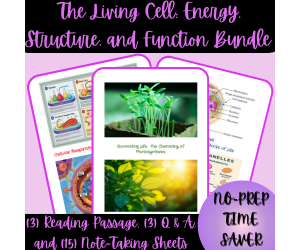
High School The Living Cell: Energy, Structure, and Function Bundle
ELA, Reading, Writing, Research, Resources for Teachers, Science, Biology, Life Sciences, Homeschool Resources, High School, Teacher Tools, Assessments, Lesson Plans, Quizzes and Tests, Worksheets & Printables, Writing Prompts
This comprehensive High School The Living Cell: Energy, Structure, and Function Bundle is more than just a collection of readings; it is a meticulously curated learning experience designed to empower your high school student/homeschooler. By integrating these interconnected topics—cellular structure, photosynthesis, and cellular respiration—students/homeschoolers will develop a holistic understanding of how life functions at its most fundamental level. This deep dive into core biological processes not only fosters a genuine appreciation for the complexity of living systems but also provides an invaluable academic advantage for college prep, laying a robust groundwork for! future science courses and assessments. It is my hope that these resources will inspire curiosity and cultivate a lifelong love for science in your student/homeschooler, preparing them for academic excellence. INCLUDED IN THIS RESOURCE: Three comprehensive reading passages covering key biological topics. Engaging Question & Answer sections to reinforce understanding. Five note-taking sheets per resource, designed for active learning. A complete bundle of essential high school biology concepts. TOPICS COVERED: The intricate chemistry of photosynthesis and its vital role in life. Cellular respiration, detailing how cells extract energy for survival. An in-depth exploration of cell structure and the functions of organelles. Fundamental processes that define life at the cellular level. What sets this High School The Living Cell: Energy, Structure, and Function Bundle apart is how thoughtfully everything connects together. Rather than teaching these topics in isolation, I have woven cellular structure, photosynthesis, and cellular respiration into a cohesive learning experience that shows students/homeschoolers how life actually works at the cellular level. Through my own journey homeschooling, I have learned that when students see these connections, biology suddenly makes sense in a way it never did before. This is not just about passing tests—though it certainly prepares students/homeschoolers well for assessments and future science courses. It is about building that genuine curiosity and understanding that will serve your student/homeschooler throughout their academic journey and beyond. I truly believe these resources can spark a love for science that lasts a lifetime. If you and your students/homeschoolers, enjoyed this resource, please leave a review. Thank you for your support! Tina - Big Easy Homeschooling Mom
Author Homeschool with Big Easy Homeschooling Mom
Rating
Tags High School Biology Curriculum For Homeschool, Understanding Photosynthesis And Cellular Respiration, Detailed Guide To Cell Structure And Function, Teaching Cellular Processes To High Schoolers/homeschoolers, Explore The Building Blocks Of Life High School, Essential Biology Concepts For Advanced Study, Photosynthesis Steps And Importance, Homeschool Science Curriculum High School, Foundational Biology For Future Studies, High School Science Curriculum Suppor
I WONDER - What Similarities Do Humans And Chicken Have
STEM, Biology, Life Sciences, Science, Animals, Grade 1, 2, 3, 4, 5, 6, 7, 8, Lesson Plans, Teacher Tools
Video Introduction Animal kingdoms are full of fascinating wonders to learn. This video is designed for the students to learn more about animals in different countries. I WONDER - What Similarities Do Humans And Chicken Have | Animated Video Lesson Do you like animals? what is your favorite one? Do you own a pet? If yes, tell us more about it, like what its name? And what do you like most about it? What are the animal kingdoms? Can you write down the characteristics of each animal class like mammals, birds, reptiles, amphibian, fish and mollusks. Do you know that some animals can sing, can you name any of them? What is the largest and the smallest mammal in the world? What is the largest and the smallest bird in the world? What is the largest and the smallest fish in the world? I WONDER - What Similarities Do Humans And Chicken Have | Animated Video Lesson The video is perfect for encouraging the researching skills for the students, while learning more about these fantastic animals. I WONDER - What Similarities Do Humans And Chicken Have | Animated Video Lesson This friendly designed video is suitable for students at school, homeschooling, and as a group activity. Format Available in MP4 format.
Author Educational Voice
Tags What Similarities Do Humans And Chicken Have, What Similarities Do Humans And Chicken Have Video, Chicken, Chicken Facts, Chicken Facts For Kids, Chicken Video, Chicken Video For Kids, Humans

I WONDER - What Is A Polar And Non-polar Bond | Animated Video Lesson
Chemistry, Science, STEM, Grade 6, 7, 8, 9, 11, 12, Lesson Plans, Teacher Tools
Video Introduction An amazing video designed for the students to learn more about STEM. I WONDER - What Is A Polar And Non-polar Bond | Animated Video Lesson Do you like STEM subjects? what is your favorite one? Have you ever tried to plant a seed? If yes, tell us more about it. Or have you ever tried to invent something? If yes, tell us more about it. And how do you think it will help us? Have you ever seen a microorganism under a microscope? What was it? And how it looked like? Mathematics is a marvelous subject. Let' sharpen our brains and solve some equations. Do you like timetable tricks? What is your favorite one? Do you know how to code? Have you ever created an app or a game before? If yes, how was it like? I WONDER - What Is A Polar And Non-polar Bond | Animated Video Lesson The video is perfect for encouraging the researching skills for the students, while learning more about this fantastic topic. I WONDER - What Is A Polar And Non-polar Bond | Animated Video Lesson This friendly designed video is suitable for students at school, homeschooling, and as a group activity. Format Available in MP4 format.
Author Educational Voice
Tags What Is A Polar And Non-polar Bond, What Is A Polar And Non-polar Bond Video, Polar Bond, Polar Bonds, Polar Bond Facts, Polar Bond Facts For Kids, Polar Bond Video, Non-polar Bond, Non-polar Bond Facts
I WONDER - Is A Jaguar A Nocturnal Creature | Animated Video Lesson
STEM, Animals, Life Sciences, Science, Biology, Grade 1, 2, 3, 4, 5, 6, 7, 8, Lesson Plans, Teacher Tools
Video Introduction Animal kingdoms are full of fascinating wonders to learn. This video is designed for the students to learn more about animals in different countries. I WONDER - Is A Jaguar A Nocturnal Creature | Animated Video Lesson Do you like animals? what is your favorite one? Do you own a pet? If yes, tell us more about it, like what its name? And what do you like most about it? What are the animal kingdoms? Can you write down the characteristics of each animal class like mammals, birds, reptiles, amphibian, fish and mollusks. Do you know that some animals can sing, can you name any of them? What is the largest and the smallest mammal in the world? What is the largest and the smallest bird in the world? What is the largest and the smallest fish in the world? I WONDER - Is A Jaguar A Nocturnal Creature | Animated Video Lesson The video is perfect for encouraging the researching skills for the students, while learning more about these fantastic animals. I WONDER - Is A Jaguar A Nocturnal Creature | Animated Video Lesson This friendly designed video is suitable for students at school, homeschooling, and as a group activity. Format Available in MP4 format.
Author Educational Voice
Tags Is A Jaguar A Nocturnal Creature, Is A Jaguar A Nocturnal Creature Video, Jaguar, Jaguar Facts, Jaguar Facts For Kids, Jaguar Video, Jaguar Video For Kids, Nocturnal Animal, Nocturnal Animals

I WONDER - How Does Biodiversity Work | Animated Video Lesson
Environmental Science, Earth and Environmental Sciences, Science, Grade 6, 7, 8, 9, 10, 11, 12, Lesson Plans, Teacher Tools
Video Introduction An amazing video designed for the students to learn more about STEM. I WONDER - How Does Biodiversity Work | Animated Video Lesson Do you like STEM subjects? what is your favorite one? Have you ever tried to plant a seed? If yes, tell us more about it. Or have you ever tried to invent something? If yes, tell us more about it. And how do you think it will help us? Have you ever seen a microorganism under a microscope? What was it? And how it looked like? Mathematics is a marvelous subject. Let' sharpen our brains and solve some equations. Do you like timetable tricks? What is your favorite one? Do you know how to code? Have you ever created an app or a game before? If yes, how was it like? I WONDER - How Does Biodiversity Work | Animated Video Lesson The video is perfect for encouraging the researching skills for the students, while learning more about this fantastic topic. I WONDER - How Does Biodiversity Work | Animated Video Lesson This friendly designed video is suitable for students at school, homeschooling, and as a group activity. Format Available in MP4 format.
Author Educational Voice
Tags How Does Biodiversity Work, How Does Biodiversity Work Video, Biodiversity, Biodiversity Facts, Biodiversity Facts For Kids, Biodiversity Video, Biodiversity Video For Kids, Science, Environment

I WONDER - What Organs Are Part Of The Nervous System
Biology, Life Sciences, Science, Human Body, STEM, Grade 3, 4, 5, 6, 7, 8, 9, Lesson Plans, Teacher Tools
Video Overview The human body is full of fascinating wonders to learn. This video is created to help the students recognize the anatomy and the job of the human body. I WONDER - What Organs Are Part Of The Nervous System | Animated Video Lesson Every part and organ in our human body is vital so let's see how important they are. Have you ever imagined how we look like if we didn't have a skeleton? Did you know that because we have our amazing muscles we can stand! Do you know how many teeth do we have? Have you ever wondered about the food journey inside our body? Can you name all the glands in our body? Why do we have skin? Our nervous system is really good at sending signals. Can you tell us more about it? Are you really good at Mathematics, painting, or any other thing? You should really thank your brain about it! The famous five senses are really doing a great work? Can you explain how every sense works? I WONDER - What Organs Are Part Of The Nervous System | Animated Video Lesson The video is perfect for encouraging the researching skills for the students, while learning more about our fantastic human body. I WONDER - What Organs Are Part Of The Nervous System | Animated Video Lesson This friendly designed video is suitable for students at school, homeschooling, and as a group activity. Format Available in MP4 format.
Author Educational Voice
Tags What Organs Are Part Of The Nervous System, What Organs Are Part Of The Nervous System Video, Nervous System, Nervous System Facts, Nervous System Facts For Kids, Nervous System Video, Nervous System Video For Kids
I WONDER - How Do Trees Help The Soil | Animated Video Lesson
Nature & Plants, Life Sciences, Science, Grade 6, 7, 8, 9, 10, 11, 12, Lesson Plans, Teacher Tools
Video Introduction An amazing activity designed for the students to learn more about STEM. I WONDER - How Do Trees Help The Soil | Animated Video Lesson Do you like STEM subjects? what is your favorite one? Have you ever tried to plant a seed? If yes, tell us more about it. Or have you ever tried to invent something? If yes, tell us more about it. And how do you think it will help us? Have you ever seen a microorganism under a microscope? What was it? And how it looked like? Mathematics is a marvelous subject. Let' sharpen our brains and solve some equations. Do you like timetable tricks? What is your favorite one? Do you know how to code? Have you ever created an app or a game before? If yes, how was it like? I WONDER - How Do Trees Help The Soil | Animated Video Lesson The video is perfect for encouraging the researching skills for the students, while learning more about this fantastic topic. I WONDER - How Do Trees Help The Soil | Animated Video Lesson This friendly designed video is suitable for students at school, homeschooling, and as a group activity. Format Available in MP4 format.
Author Educational Voice
Tags How Do Trees Help The Soil, How Do Trees Help The Soil Video, Trees, Trees Facts, Trees Facts For Kids, Trees Video, Trees Video For Kids, Soil Video, Soil, Soil Facts

Circulatory,Digestive & Reproductive Systems: The Reproductive System - FLASH-PC
Science, Life Sciences, Human Body, Common Core, Grade 5, 6, 7, 8, Teacher Tools, Lesson Plans
The Circulatory, Digestive & Reproductive Systems: The Reproductive System - FLASH-PC FLASH-PC is a comprehensive teaching resource developed for teachers of grades 5 to 8. It supplements the educator's efforts to impart knowledge about the human body's reproductive system, strictly aligning with the Common Core State Standards. A peek into what you'll find: A mini module elucidating information on the reproductive system. It also incorporates before and after reading questions that foster conceptual understanding. Printable resources that encourage hands-on learning experiences. Vocabulary flashcards for boosting students' biological terminology knowledge. Digital tools like videos and audios promoting interactive learning efficiently among varying types of learners. This resource can blend seamlessly into group lessons or break-out discussion formats, treading teacher-specific classroom requirements. Its versatility even permits usage as take-home assignments, facilitating flexibility on student comprehension outside classrooms too. The FLASH-PC program concerning The Reproductive System offers an in-depth yet nuanced walkthrough one of human body’s most complex systems; syncing educational rigour and accessibility prerequisite in middle school science classes. Note: Worth highlighting is this software-based lesson plan's compatibility with PC file systems that streamlines access for educators, endorsing smooth instructional planning which effortlessly integrates within their routine pedagogical structures. Finally, coupling engaging multimedia elements with curriculum-centric textual resources; this product efficiently binds different facets imperative for potent science education intended to augment understanding about our bodies’ inner functional mechanisms.
Author Classroom Complete Press
Tags Software (PC)
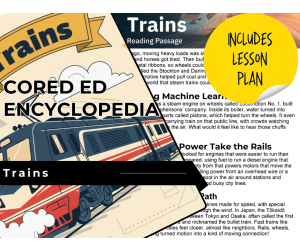
Trains Reading Comprehension Passage - Cored Ed Encyclopedia
ELA, Language Development, Reading Comprehension, Reading, Science, Technology, Engineering, History, Social Studies, Physics, Grade 2, 3, 4, 5, Worksheets & Printables, Worksheets, Teacher Tools, Centers, Activities, Writing Prompts, Assessments, Quizzes and Tests, Quizzes, Lesson Plans
This trains reading comprehension with lesson plan includes: Visualization (on the front cover) Start your lesson by taking a minute to think and share something about the topic. Read the script aloud (slowly), perhaps prepare some music or sound effects. Student close their eyes and let their imaginations wander. Students open their eyes, read the question aloud and give them a few minutes to complete. Ask a few students to share or keep answers until the end to compare with what they learn in the passage. Quick pause—thousands of Cored Education products are included with your TeachSimple membership. Download links and encyclopedia index available here. Pre-Reading Trivia Students will write down one thing they already know about the subject and then read five more facts and discuss. These facts are fun, and the students will enjoy learning about the subject before reading more. Give 1 minute for students to write what they already know (no pressure—best guess is fine). Read the five facts together. After each fact, do ask a student for their opinion, was it surprising? Set a purpose by asking students to highlight/underline one fact they want to learn more about during the reading. Reading Passage The text is a high-interest reading passage with set paragraphs, roughly three to four paragraphs long. It contains a variety of themes about the topic, anywhere from history to technology. The passage is between 250 and 350 words in length. First, ask students to look at the headings and see what they’ll learn about today. What do they know about the topic/heading? First read options: Teacher read-aloud (best for support). Partner reading (paragraph by paragraph). While reading, students underline important details, and vocabulary words they think may come up in the questions section. Mixed Questions The first question page contains four multiple-choice questions, each with a choice of four answers, and three written response questions that require a sentence or two from the student. Students complete the mcqs first independently, then review quickly as a class. For the 3 written responses, try to get students giving the answer with some form of evidence: “I think ___ because the text says ___.” If students get stuck, send them back to check the passage. Vocabulary Questions Practice seven key words from the text in this section across two activities. First section is scrambled words where students will unscramble three words given a clue for each. The second section is a word to meaning matching activity. Before starting, have some students read out words they underlined in the passage. Ask students to say the word and read aloud the sentence(s) around each word. Ask students to do scrambled words and the matching exercise in pairs then go through answers as a class. For the scrambled spelling task, get four pairs to come up to the board and write the words for extra practice with the other student reading out the clue. For the matching task, prompt students to give full sentences: “I matched ___ with ___ because ___.” Creative Writing In this question, the student will be required to write a five to eight sentence paragraph on a question related to the topic. Before starting, ask students write down 3 key ideas they are going to include in their piece. Ask students for ideas to share around the class to help those struggling. Pro writing expectations: 5–8 sentences At least 2 facts or details from the passage At least 2 vocabulary words from the previous page Students read their paragraphs while classmates listen for facts and vocabulary words. Extension Activities This page is optional for fast finishers or to take home. There are several activities, each one requiring a different skill. Do some, do none, do all, completely optional - but you will feel reassured knowing every possibility is planned for. Includes summary writting question. Answer Key There are answers for the multiple-choice questions, written response questions have sample answers, vocabulary answers and if there is a summary question then a sample summary will be provided as well. Lesson Plan Included Customized lesson plan for this lesson is included. Lesson Snapshot Title: Trains Genre: Nonfiction (informational text) Subject: Science (Technology & Engineering) Primary Topic: How rails and train power changed over time Estimated Guided Reading Level (A–Z): R What This Lesson Teaches Best Explains how smooth rails reduce “rubbing,” helping heavy loads move more easily than wagons on muddy roads. Uses a real historical example (the Stockton and Darlington Railway opening in 1825) to show steam trains carrying coal and people. Describes how a steam locomotive works (water becomes steam, steam pushes pistons, pistons help turn wheels). Compares train power types—steam, diesel (engine spins a generator), and electric (overhead wire or third rail). Shows how high-speed rail was designed for speed (special tracks, trains shaped to slice through wind), including Japan’s Tōkaidō Shinkansen (1964) “bullet train.” QA check (support pages vs. passage): The pre-reading trivia uses the word “friction,” but the main passage describes the idea as “rubbing.” Other questions and vocabulary (boiler, pistons, diesel, generator, third rail, high-speed rail) match the passage. Learning Goals Students will explain why smooth rails helped heavy loads move with less rubbing. Students will identify what happened in 1825 with the Stockton and Darlington Railway. Students will describe how steam in a boiler can help power wheel movement using pistons. Students will compare steam, diesel, and electric explanations of how trains get power in the text. Students will describe how train design and tracks can increase speed, using details about high-speed rail. Key Vocabulary From the Text locomotive — the front engine that pulls the train cars. boiler — the part where water is heated to make steam. pistons — parts steam pushes to help turn the wheels. generator — a machine that makes electricity for the train. soot — black dirty particles in the air from smoke. FULL CATALOG OF DOWNLOAD LINKS AND ENCYCLOPEDIA INDEX HERE
Author Cored Education
Rating
Tags Vocabulary, Reading Comprehension, Reading Passages, Lesson Plans, Ela Lesson Plans, Reading Comprehension Lesson Plans, Pre-reading, History, History Lesson Plans, Physics

Hummingbirds | Interactive Science Lesson | Micro-Learning Deck
Science, Life Sciences, Animals, Grade 5, 6, 7, 8, Teacher Tools, Lesson Plans
This micro-learning deck is the perfect accessory to your Science instruction! This digital slideshow presents Hummingbirds. Within this slideshow, you will receive: -Video Lesson -Reading Passage w/ Audio -Close Reading -Quick Write The informational texts included in this resource alongside the informal assessments will keep your students engaged from beginning to end.
Author Teach Me This
Tags Hummingbirds, Interactive Science, No Prep, Mini Lesson, Informational Text
I WONDER - How Can Wind Energy Be Used | Animated Video Lesson
Earth Sciences, Earth and Environmental Sciences, Science, Environmental Science, Physics, Grade 4, 5, 6, 7, 8, 9, 10, Lesson Plans, Teacher Tools
Video Introduction An amazing video designed for the students to learn more about famous phenomena in different countries. I WONDER - How Can Wind Energy Be Used | Animated Video Lesson What do you know about this phenomenon? Where it happens? When it happens? What are the safety measures that we should take to be safe during this phenomenon? Are there any other places in the world that experienced this phenomenon? If yes, tell us more about them. Why do you think it happens? Do you like reading about Geography? What is your favorite country in the whole world? I WONDER - How Can Wind Energy Be Used | Animated Video Lesson The video is perfect for encouraging the researching skills for the students, while learning more about this fantastic phenomenon. I WONDER - How Can Wind Energy Be Used | Animated Video Lesson The video is perfect for encouraging the researching skills for the students, while learning more about this fantastic phenomenon. Format Available in a PDF format.
Author Educational Voice
Rating
Tags How Can Wind Energy Be Used, How Can Wind Energy Be Used Video, Wind Energy, Wind Energy Video, Wind Energy Facts, Wind Energy Facts For Kids, Wind Energy Video For Kids, Wind

Classification & Adaptation: Invertebrates Gr. 5-8
Science, Life Sciences, Biology, Grade 5, 6, 7, 8, Teacher Tools, Lesson Plans
Classification & Adaptation: Invertebrates Gr. 5-8 A comprehensive teaching resource adopting an innovative approach to learning about animal classification and adaptation that effectively simplifies complex scientific concepts for students in grades 5-8. Main Features: Provides clear instruction on how to classify animals into two primary groups: vertebrates and invertebrates. Differentiates between endothermic (warm-blooded) and ectothermic (cold-blooded) animals. Captivating case study on Koala adaptations, providing real-world context for theoretical knowledge. Covers evolution topics with a focus on fossil records, offering insights into historical evolutionary changes within species. Included Activities: 'How Important Are Thumbs?' A hands-on activity enhancing learning retention of the classification topic while fostering curiosity about biology's wonders! 'The Lake Habitat Thermometer' An interactive experimental methodology for better understanding of animal adaptations in different environments! 'A Day in the Life of a Paleontologist' An engaging simulation game illustrating practicality of the information on fossils studied during the lessons! The resource is designed with flexibility in mind - it is perfect for either whole-class instruction or small group intervention sessions. It can also be assigned as independent work or homework. The downloadable PDF file format offers unparalleled convenience – simply download once and reuse countless times without hassle or worry about physical storage constraints or degradation over time. Incorporated in the lesson content is test preparation material – enhancing academic performance by equipping students with necessary skills for excelling during assessment periods. Also included are vibrant colored mini posters that further supplement visual learning while making lessons engagingly interactive for students. Conclusion: Classification & Adaptation: Invertebrates Gr. 5-8 is a valuable addition to any educator's toolkit, designed to promote more tangible and engaging learning experiences in biological sciences for middle school students.
Author Classroom Complete Press
Tags PDF
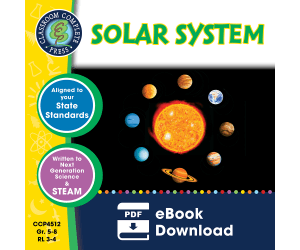
Solar System Gr. 5-8
Science, Earth and Environmental Sciences, Space, Grade 5, 6, 7, 8, Teacher Tools, Lesson Plans
Solar System Gr. 5-8: Indispensable Teaching Resource Solar System Gr. 5-8 is a meticulously crafted teaching resource designed to inspire and educate young learners about the mysteries and wonders of our solar system. Customized to simplify fundamental astronomy concepts for students in grades 5 through 8, this resource illuminates every facet of our celestial neighborhood. Enlightening Content This asset demystifies constituents of the solar system such as planets, moons, asteroids, and beyond. It further delves into each inner and outer planet presenting a comprehensive view for curious minds. Versatile Teaching Tool Used effectively in whole group lessons fueling interactive discussions. Encourages teamwork when incorporated into smaller learning clusters. A useful reference material for homework assignments. Addition of Practical Experience This educational module includes hands-on projects like constructing scale models of the solar system or planning imaginary trips to any chosen planet stimulating knowledge retention among students significantly! The Phases of the Moon: An Essential Topic Intriguing phenomena like 'Blue Moon' are covered promoting enhanced understanding towards mysterious lunar phases. Differences Between Stars Based on Colour and Size: For instance: Yellow Dwarfs Vs Blue Giants comparison encourages awareness about stellar differences among pupils! Creativity Meets Science: Students can also create imaginative presentations recounting fascinating stories about their favourite constellation. Distinguishing Astronomy Objects: This guide dives deep into differentiating asteroids from meteors and comets cultivating critical differentiation skills among young learners. Accordance with Education Standards The tool aligns seamlessly with Next Generation State Standards, Bloom's Taxonomy and STEAM initiatives ensuring comprehensive knowledge delivery within lessons. Additional Engagement Features To make learning further engaging, this guide also includes: Experiments, Crossword Puzzles, Word Searches, and Comprehension Quizzes An answer key is available promptly validating the acquired understanding of students. The entire resource comes enclosed as a single PDF file for swift accessibility to all aspects of 'Solar System Gr. 5-8 making it an excellent choice to sharpen students’ cosmic knowledge significantly!
Author Classroom Complete Press
Tags PDF

I WONDER - Who Is Peggy Whitson | Animated Video Lesson
Space, Earth and Environmental Sciences, Science, Grade 6, 7, 8, 9, 10, 11, 12, Lesson Plans, Teacher Tools
Video Introduction An amazing video designed for the students to learn more about space facts. I WONDER - Who Is Peggy Whitson | Animated Video Lesson Do you like reading about space? If yes, what is your favorite topic? What do you know about our solar system? What is the smallest planet in our solar system? What is the biggest planet in our solar system? What is the hottest planet in our solar system? And what is the coldest one? Do you think there are aliens? If yes, what do you think they look like? What do they eat and how they speak to each other? Where do they live? What is a galaxy? And what is a milky way? Have you recently saw a shooting star? If yes, tell us more about it, like when did it happen and where? What is a blackhole? Can a blackhole gets bigger by time? Do you like counting the stars? What do you think a star is made of? I WONDER - Who Is Peggy Whitson | Animated Video Lesson The video is perfect for encouraging the researching skills for the students, while learning more about the fantastic space. I WONDER - Who Is Peggy Whitson | Animated Video Lesson This friendly designed video is suitable for students at school, homeschooling, and as a group activity. Format Available in MP4 format.
Author Educational Voice
Tags Who Is Peggy Whitson, Who Is Peggy Whitson Video, Peggy Whitson, Peggy Whitson Facts, Peggy Whitson Facts For Kids, Peggy Whitson Video, Peggy Whitson Video For Kids, Space, Space Video For Kids

I WONDER - Why Are Some Plants Spicy | Animated Video Lesson
Science, Life Sciences, Nature & Plants, Grade 1, 2, 3, 4, 5, 6, 7, 8, Teacher Tools, Lesson Plans
Video Introduction An amazing activity designed for the students to learn more about STEM. I WONDER - Why Are Some Plants Spicy | Animated Video Lesson Do you like STEM subjects? what is your favorite one? Have you ever tried to plant a seed? If yes, tell us more about it. Or have you ever tried to invent something? If yes, tell us more about it. And how do you think it will help us? Have you ever seen a microorganism under a microscope? What was it? And how it looked like? Mathematics is a marvelous subject. Let' sharpen our brains and solve some equations. Do you like timetable tricks? What is your favorite one? Do you know how to code? Have you ever created an app or a game before? If yes, how was it like? I WONDER - Why Are Some Plants Spicy | Animated Video Lesson The video is perfect for encouraging the researching skills for the students, while learning more about this fantastic topic. I WONDER - Why Are Some Plants Spicy | Animated Video Lesson This friendly designed video is suitable for students at school, homeschooling, and as a group activity. Format Available in MP4 format.
Author Educational Voice
Tags Plant, Plants, Stem, Plant Video, Plants Video, Stem Video, Educational Video, Educational Videos For Kids

I WONDER - How Do Humans Breathe | Animated Video
Human Body, Life Sciences, Science, Biology, STEM, Grade 4, 5, 6, 7, 8, 9, 10, Lesson Plans, Teacher Tools
Video Overview The human body is full of fascinating wonders to learn. This video is created to help the students recognize the anatomy and the job of the human body. I WONDER - How Do Humans Breathe | Animated Video Lesson Every part and organ in our human body is vital so let's see how important they are. Have you ever imagined how we look like if we didn't have a skeleton? Did you know that because we have our amazing muscles we can stand! Do you know how many teeth do we have? Have you ever wondered about the food journey inside our body? Can you name all the glands in our body? Why do we have skin? Our nervous system is really good at sending signals. Can you tell us more about it? Are you really good at Mathematics, painting, or any other thing? You should really thank your brain about it! The famous five senses are really doing a great work? Can you explain how every sense works? I WONDER - How Do Humans Breathe | Animated Video Lesson The video is perfect for encouraging the researching skills for the students, while learning more about our fantastic human body. I WONDER - How Do Humans Breathe | Animated Video Lesson This friendly designed video is suitable for students at school, homeschooling, and as a group activity. Format Available in MP4 format.
Author Educational Voice
Tags How Do Humans Breathe, How Do Humans Breathe Video, Breath, Breathing, Breathing Facts, Breathing Facts For Kids, Breathing Video, Breathing Video For Kids, Human Body, Human Body Facts

I WONDER - How Can Heat Transfer Be Used | Animated Video Lesson
Chemistry, Science, Physics, STEM, Grade 6, 7, 8, 9, 10, 11, 12, Lesson Plans, Teacher Tools
Video Introduction An amazing video designed for the students to learn more about STEM. I WONDER - How Can Heat Transfer Be Used | Animated Video Lesson Do you like STEM subjects? what is your favorite one? Have you ever tried to plant a seed? If yes, tell us more about it. Or have you ever tried to invent something? If yes, tell us more about it. And how do you think it will help us? Have you ever seen a microorganism under a microscope? What was it? And how it looked like? Mathematics is a marvelous subject. Let' sharpen our brains and solve some equations. Do you like timetable tricks? What is your favorite one? Do you know how to code? Have you ever created an app or a game before? If yes, how was it like? I WONDER - How Can Heat Transfer Be Used | Animated Video Lesson The video is perfect for encouraging the researching skills for the students, while learning more about this fantastic topic. I WONDER - How Can Heat Transfer Be Used | Animated Video Lesson This friendly designed video is suitable for students at school, homeschooling, and as a group activity. Format Available in MP4 format.
Author Educational Voice
Tags How Can Heat Transfer Be Used, How Can Heat Transfer Be Used Video, Heat Transfer, Heat Transfer Facts, Heat Transfer Facts For Kids, Heat Transfer Video, Heat Transfer Video For Kids, Heat Transfer Facts Video For Kids

I WONDER - What Is A Stegosaurus | Animated Video Lesson
History: Ancient, History, Social Studies, History: World, Animals, Life Sciences, Science, Grade 3, 4, 5, 6, 7, 8, 9, Lesson Plans, Teacher Tools
Video Introduction An amazing video designed for the students to learn more about dinosaurs in different countries. I WONDER - What Is A Stegosaurus | Animated Video Lesson Do you like dinosaurs? what is your favorite one? Do you own a pet? If yes, tell us more about it, like what its name? And what do you like most about it? Do you think that your pet has been evolved from a dinosaur? Can you write down the characteristics of your favourite dinosaur like it's shape, their rivals, where did it use to live and what was their favourite food? What is the largest and the smallest dinosaur that ever found? Why is the T-rex is so famous? Have you ever read any interesting facts about it? Can you name any of the carnivores or herbivores dinosaurs? I WONDER - What Is A Stegosaurus | Animated Video Lesson The video is perfect for encouraging the researching skills for the students, while learning more about dinosaurs. I WONDER - What Is A Stegosaurus | Animated Video Lesson This friendly designed video is suitable for students at school, homeschooling, and as a group activity. Format Available in MP4 format.
Author Educational Voice
Rating
Tags What Is A Stegosaurus, What Is A Stegosaurus Video, Stegosaurus, Stegosaurus Video, Stegosaurus Facts, Stegosaurus Video For Kids, Stegosaurus Facts For Kids, Dinosaur, Dinosaur Video