



3,906 products added recently
Page 81 - Science Lesson Plan Template
Enhance your science instruction with a flexible lesson plan template designed for educators. This tool helps you structure objectives, materials, procedures, and assessments efficiently. Use it to create organized and impactful science lessons that cater to your students' needs.

 Show filters


I WONDER - What Are The Different Types Of Cells | Animated Video
Human Body, Life Sciences, Science, Biology, Grade 5, 6, 7, 8, 9, 10, 11, Lesson Plans, Teacher Tools
Video Overview The human body is full of fascinating wonders to learn. This video is created to help the students recognize the anatomy and the job of the human body. I WONDER - What Are The Different Types Of Cells | Animated Video Lesson Every part and organ in our human body is vital so let's see how important they are. Have you ever imagined how we look like if we didn't have a skeleton? Did you know that because we have our amazing muscles we can stand! Do you know how many teeth do we have? Have you ever wondered about the food journey inside our body? Can you name all the glands in our body? Why do we have skin? Our nervous system is really good at sending signals. Can you tell us more about it? Are you really good at Mathematics, painting, or any other thing? You should really thank your brain about it! The famous five senses are really doing a great work? Can you explain how every sense works? I WONDER - What Are The Different Types Of Cells | Animated Video Lesson The video is perfect for encouraging the researching skills for the students, while learning more about our fantastic human body. I WONDER - What Are The Different Types Of Cells | Animated Video Lesson This friendly designed video is suitable for students at school, homeschooling, and as a group activity. Format Available in MP4 format.
Author Educational Voice
Tags What Are The Different Types Of Cells, What Are The Different Types Of Cells Video, Different Types Of Cells, Different Types Of Cells Facts, Different Types Of Cells Facts For Kids, Different Types Of Cells Video

Carbohydrates and Lipids - Senior High School Biology lesson
Science, Life Sciences, Biology, Grade 11, 12, Teacher Tools, Lesson Plans
Carbohydrates and Lipids - Senior High School Biology lesson The lesson covers the following topics; Carbohydrates, Isomers, Mono-, Di-, and Polysaccharides, Lipids, Fatty Acids, Fats - Triglycerides, Phospholipids, Steroids, and Waxes. Your lesson includes the teacher and student version of the presentation, two embedded videos, an auto-graded exit ticket, and a student lesson handout so the students can record the notes on a more condensed medium. The lesson is entertaining, engaging, and classroom-tested. This lesson is designed to be your go-to resource, whether you're in a traditional classroom or a virtual one. With both a teacher version and a student version, it seamlessly fits into your lesson plans, making learning engaging and adaptable. Assessment made easy We've included an auto-graded Exit Ticket and a quiz with an answer key – because who doesn't love saving time on grading? Whether you're a PowerPoint pro or a Google Slides user, prefer Word or Google Docs – we've got you covered. This lesson comes in both Office and Google formats for your convenience. The student version of the presentation has strategically placed blanks for them to fill in as you're teaching. It keeps them active and engaged, encourages discussion, and leaves more time for those "aha" moments.
Author Teach With Fergy
Tags Biochemistry, Senior Biology Lesson, Biology Lesson, Senior Biology, Carbohydrates, Lipids, Isomers, Polysaccharides, Fatty Acids, Phospholipids

I WONDER - What Are Minecraft Dimensions | Animated Video Lesson
STEM, Computer Science, Technology, Science, Grade 6, 7, 8, 9, 10, 11, 12, Lesson Plans, Teacher Tools
Video Introduction An amazing video designed for the students to learn more about STEM. I WONDER - What Are Minecraft Dimensions | Animated Video Lesson Do you like STEM subjects? what is your favorite one? Have you ever tried to plant a seed? If yes, tell us more about it. Or have you ever tried to invent something? If yes, tell us more about it. And how do you think it will help us? Have you ever seen a microorganism under a microscope? What was it? And how it looked like? Mathematics is a marvelous subject. Let' sharpen our brains and solve some equations. Do you like timetable tricks? What is your favorite one? Do you know how to code? Have you ever created an app or a game before? If yes, how was it like? I WONDER - What Are Minecraft Dimensions | Animated Video Lesson The video is perfect for encouraging the researching skills for the students, while learning more about this fantastic topic. I WONDER - What Are Minecraft Dimensions | Animated Video Lesson This friendly designed video is suitable for students at school, homeschooling, and as a group activity. Format Available in MP4 format.
Author Educational Voice
Tags What Are Minecraft Dimensions, What Are Minecraft Dimensions Video, Minecraft Dimensions, Minecraft Dimensions Video, Minecraft Dimensions Video For Kids, Minecraft Dimensions Facts, Minecraft Dimensions Facts For Kids

Thermoregulation - Senior Biology lesson
Science, Life Sciences, Biology, Grade 11, 12, Teacher Tools, Lesson Plans
Thermoregulation - Senior High School Biology lesson Your lesson discusses how animals regulate their internal body temperatures. In order, the lesson teaches; the importance of regulating body temperature, ectotherms, endotherms, metabolic responses to external temperatures, responses to cold and heat, Hypothalamus, Torpor, Hibernation, and Estivation. Your lesson includes the teacher and student version of the presentation, two embedded videos, an auto-graded exit ticket, and a student lesson handout so the students can record the notes on a more condensed medium. This lesson is designed to be your go-to resource, whether you're in a traditional classroom or a virtual one. With both a teacher version and a student version, it seamlessly fits into your lesson plans, making learning engaging and adaptable. Assessment made easy We've included an auto-graded Exit Ticket and a quiz with an answer key because I know you don't have an excess of time. I know you don't, because I don't and I know I'll do whatever I can to reduce my grading time. Whether you use PowerPoint or Google Slides, prefer Word or Google Docs, this lesson has you covered. This lesson comes in both Office and Google formats for your convenience. The student version of the presentation has strategically placed blanks for them to fill in as you're teaching. It keeps them active and engaged, encourages discussion, and leaves more time for those "aha" moments.
Author Teach With Fergy
Tags Senior Biology, Biology Lesson, Thermoregulation, Homeostasis, Ectotherms, Endotherms, Metabolic, Hypothalamus
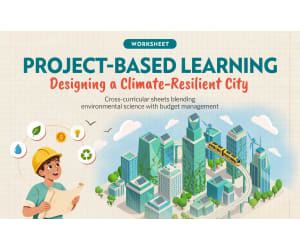
Project-Based Learning Designing a Climate-Resilient City
Science, Earth and Environmental Sciences, Life Sciences, Earth Sciences, Environmental Science, Geology, Space, Nature & Plants, STEM, Special Resources, Grade 6, 7, 8, 9, 10, 11, 12, Teacher Tools, Lesson Plans, Quizzes and Tests, Quizzes, Tests, Worksheets & Printables, Workbooks, Worksheets, Word Searches, Assessments
Transform your classroom into a hub of real-world problem-solving with this comprehensive Project-Based Learning (PBL) module: Designing a Climate-Resilient City! Are you looking for a rigorous, engaging, and cross-curricular project that prepares students for the challenges of the 21st century? This turnkey resource is the perfect solution. It masterfully blends Environmental Science, Earth Science, Mathematics, Economics, and Civics into one high-impact simulation. Students step into the dual role of a city's Chief Sustainability Officer and Chief Financial Officer. Tasked with a $500,000,000 budget , they must make critical decisions to protect their fictional municipality, "Nova Civitas," from the escalating impacts of climate change. From urban heat islands and flood defense to renewable energy transitions and waste management, every choice has both ecological and financial consequences. This isn't just a worksheet packet; it's a complete, three-phase educational experience: Phase 1: Core Content & Theory (Student Field Manual): A detailed guide that teaches the foundational scientific and economic principles, including concepts like CapEx vs. OpEx, Return on Investment (ROI), green vs. grey infrastructure, and the circular economy. Phase 2: The Student Workbook: Ten detailed, scaffolded worksheets guide students through the entire city-planning process. They will perform calculations, analyze data, and justify their budgetary decisions, tackling everything from energy grids and public transit to disaster insurance and sustainable housing. Phase 3: Visuals & Teacher Resources: This package is ready to go with printable/projectable visual aids (flowcharts, graphs, mind maps) and a comprehensive, step-by-step answer key with exemplar responses and crucial teacher notes. Perfect for in-class, hybrid, or homeschool environments, this project fosters critical thinking, financial literacy, data analysis, and collaborative problem-solving. Empower your students to grapple with relevant, real-world issues and discover that the most sustainable solutions are often the most economically sound. Download today and empower your students to build a better, more resilient future! Keywords: Project-Based Learning (PBL), STEM, STEAM, Climate Change, Environmental Science, AP Environmental Science (APES), Earth Science, Economics, Civics, Sustainability, Urban Planning, City Design, Budgeting, Financial Literacy, Math, Critical Thinking, Real-World Application, Cross-Curricular, Middle School, High School, Digital Resource, Printable Worksheets. Why Parents/Schools Love It: Teaches Real-World Skills: This project moves beyond theory. It teaches critical 21st-century skills like financial literacy, data-driven decision-making, and long-term strategic planning that students will use their entire lives. Deeply Engaging & Relevant: The role-playing simulation is highly engaging. Students are not just learning about climate change; they are actively working to solve its challenges, making the topic personal and urgent. Truly Cross-Curricular: In an era of siloed subjects, this resource beautifully demonstrates how science, math, and social studies are interconnected in the real world, promoting holistic understanding. Complete Turnkey Solution: It is a massive time-saver for educators. The package includes all student-facing materials, teacher visuals, and a comprehensive answer key with detailed calculations, saving hours of prep work. Target Audience: Student Classes : Based on the complexity of the concepts (e.g., municipal finance, payback periods, ROI) and the level of mathematics, target the following: High School (Grades 9-12): This is the primary target. It is perfect for: Environmental Science / AP Environmental Science (APES): This is a perfect fit, covering numerous topics from the APES curriculum. Earth Science: Excellent for units on human impact and climate systems. Economics / Government / Civics: Provides a practical, tangible application of public finance, policy-making, and resource allocation. General Math / Financial Algebra: A fantastic real-world application for math concepts. STEM or PBL Elective Courses: An ideal capstone or unit-long project. Advanced Middle School (Grades 7-8): This resource would be highly effective for gifted and talented programs, advanced science or math classes, or a school with a strong PBL focus. The concepts are challenging but achievable with the right guidance. Copyright/Terms of Use: This Book was copyrighted by Syed Hammad Rizvi. This resource is for personal and single classroom use only. You may not alter, redistribute, or sell any part of this resource. In other words, you may not put it on the Internet where it could be publicly found and downloaded. If you want to share this resource with colleagues, please purchase additional licenses from Teachsimple. Thank you for respecting these terms of use. This product is happily brought to you by Syed Hammad Rizvi
Author Creative Book Store
Rating
Tags EnvironmentalScience, EarthScience, STEM, STEAM, Economics, ClimateChange, Sustainability, Civics, UrbanPlanning, Ecology
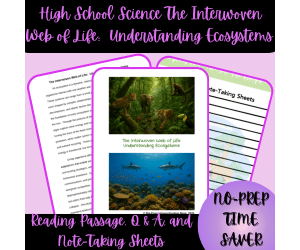
High School Science: Understanding Ecosystems Reading Passage
ELA, Reading, Writing, Resources for Teachers, Science, Life Sciences, Biology, High School, Homeschool Resources, Teacher Tools, Assessments, Lesson Plans, Quizzes and Tests, Worksheets & Printables, Writing Prompts
Teaching ecosystems can feel overwhelming with so many moving parts—living organisms, energy flow, nutrient cycles, and human impacts. That is why I designed this High School Science The Interwoven Web of Life: Understanding Ecosystems resource to make complex ecological concepts approachable without sacrificing depth. It combines a detailed reading passage, thought-provoking Q & A, and flexible note-taking sheets so students/homeschoolers can absorb, process, and engage with the content meaningfully. Whether you are guiding a full lesson or supplementing science and writing practice, this pack provides both structure and freedom for deeper exploration. INCLUDED IN THIS RESOURCE: 1 engaging, advanced reading passage 20 thought-provoking, high-order questions A guided answer key with in-depth explanations 5 versatile note-taking sheets for student use TOPICS COVEREDL Energy flow vs. matter cycling in ecosystems Roles of producers, consumers, and decomposers Keystone species and biodiversity impacts Human activities and conservation efforts This High School Science The Interwoven Web of Life: Understanding Ecosystems resource offers a comprehensive way to explore ecosystems while balancing structure, independence, and creativity. If you have ever wanted your teen to dig deeper into science concepts while strengthening writing and reasoning skills, this is the perfect fit. I hope it helps make your homeschool days just a little smoother and your student’s learning even more meaningful. If you and your students/homeschoolers enjoyed this resource, please leave a review. Thank you for your support! Tina - Big Easy Homeschooling Mom
Author Homeschool with Big Easy Homeschooling Mom
Rating
Tags Homeschool Ecosystems Resource With Answer Key, Ecosystem Reading Passage, Biodiversity Lessons, High School Ecosystems, Ecosystems Cross-curricular Resource, Ecosystem Study Guide, Ecosystems Science Passage, Ecosystems Homeschool Resource, Ecosystems Enrichment Resource, Ecosystem Lesson Resource
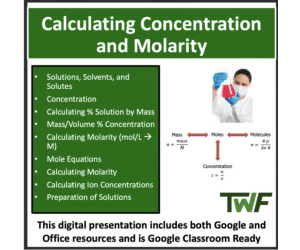
Calculating Concentration and Molarity - Senior Chemistry lesson
Science, Chemistry, Grade 10, 11, 12, Teacher Tools, Lesson Plans
Calculating Concentration and Molarity - Engaging Chemistry Lesson This comprehensive chemistry lesson helps students master concepts of solutions, concentration, and molarity. The well-organized slideshow introduces key vocabulary like solvents, solutes, mass/volume percentage, and molar concentration. It then explains step-by-step calculations for finding concentration, mass percentage, molarity, ion concentrations, and preparing solutions. Interactive elements keep learners engaged as they follow along, fill in blanks, and discuss examples. The lesson concludes with an auto-graded exit ticket that quickly assesses understanding. A detailed student handout is also provided for note-taking. This adaptable resource works for in-person or remote teaching. It includes editable teacher and student slide deck versions, meeting diverse classroom needs. Whether you use PowerPoint, Google Slides, Word, or Google Docs, this lesson seamlessly integrates into your plans. Save time prepping and grading with this turnkey curriculum supplement. Help your chemistry students master solution calculations through focused instruction, practice problems, class discussions, and standards-based assessment.
Author Teach With Fergy
Tags Chemistry Lesson, Solutions, Solvents, Solutes, Concentration, Molarity

Galaxies & The Universe: Black Holes Gr. 5-8
Science, Earth and Environmental Sciences, Space, Grade 5, 6, 7, 8, Teacher Tools, Lesson Plans
Galaxies & The Universe: Black Holes Gr. 5-8 - An Ultimate Teaching Resource This teaching resource, a chapter slice "Black Holes" from the full lesson plan "Galaxies & The Universe", offers an extensive exploration into galaxies and everything within them. Main Offerings: Detailed understanding of galaxies, from smallest particles to star systems. An enriching journey through our Milky Way Galaxy. In-depth knowledge about black holes and gravity—key elements of our universe. Broadened Topics: Nebulae. Light sources and its speed. Distant quasars within our universe. The product includes reader-friendly passages complemented by activities for before and after reading along with hands-on tasks to enhance active learning amongst students. The Resource Data: This resource comes in PDF format that contains color mini posters which serve as visual aids during lessons or study sessions. Aiming Towards Improved Scholastic Success With Simplified Language The language used is simplified paired with complex concepts presented in a friendly manner—making it easily understandable yet academically challenging enough for young learners. Catering To Different Class Dynamics While Adhering To Guidelines Suitable for whole-class discussions, small group conversations, or independent work—this teaching resource adheres to State Standards, Bloom's Taxonomy, and STEM initiatives. A Comprehensive Teaching Tool That Goes Beyond Curriculum Standards Beyond merely adhering to state curriculum standards, this resource serves as a comprehensive tool to stimulate curiosity about the wonders of our universe. Be it an engaging homework assignment or a foundation for in-depth classroom activities—Galaxies & The Universe: Black Holes Gr. 5-8 makes science feel more approachable and fun.
Author Classroom Complete Press
Tags PDF

I WONDER - How Many Times Do We Blink In One Day | Animated Video
Human Body, Life Sciences, Science, Biology, STEM, Grade 1, 2, 3, 4, 5, 6, 7, 8, Lesson Plans, Teacher Tools
Video Overview The human body is full of fascinating wonders to learn. This video is created to help the students recognize the anatomy and the job of the human body. I WONDER - How Many Times Do We Blink In One Day | Animated Video Lesson Every part and organ in our human body is vital so let's see how important they are. Have you ever imagined how we look like if we didn't have a skeleton? Did you know that because we have our amazing muscles we can stand! Do you know how many teeth do we have? Have you ever wondered about the food journey inside our body? Can you name all the glands in our body? Why do we have skin? Our nervous system is really good at sending signals. Can you tell us more about it? Are you really good at Mathematics, painting, or any other thing? You should really thank your brain about it! The famous five senses are really doing a great work? Can you explain how every sense works? I WONDER - How Many Times Do We Blink In One Day | Animated Video Lesson The video is perfect for encouraging the researching skills for the students, while learning more about our fantastic human body. I WONDER - How Many Times Do We Blink In One Day | Animated Video Lesson This friendly designed video is suitable for students at school, homeschooling, and as a group activity. Format Available in MP4 format.
Author Educational Voice
Tags How Many Times Do We Blink In One Day, How Many Times Do We Blink In One Day Video, Blink, Blinking, Blinking Facts, Blinking Facts For Kids, Blinking Video, Blinking Video Facts For Kids
I WONDER - What Are Exoplanets | Animated Video Lesson
Space, Earth and Environmental Sciences, Science, Grade 3, 4, 5, 6, 7, 8, 9, Lesson Plans, Teacher Tools
Video Introduction An amazing video designed for the students to learn more about space facts. I WONDER - What Are Exoplanets | Animated Video Lesson Have you ever thought about travelling to space?! Join us with this amazing video about The Moon Ganymede. Can you name any three facts about The Moon Ganymede? How amazing is space! Let's discover some amazing facts about planets and moons! Do you know that we have two kinds of planets in our solar system? Can you name the planets based upon their core type? I WONDER - What Are Exoplanets | Animated Video Lesson The video is perfect for encouraging the researching skills for the students, while learning more about the fantastic space. I WONDER - What Are Exoplanets | Animated Video Lesson This friendly designed video is suitable for students at school, homeschooling, and as a group activity. Format Available in MP4 format.
Author Educational Voice
Rating
Tags What Are Exoplanets, Exoplanets, Exoplanets Facts, Exoplanets Video, Exoplanets Video For Kids, Exoplanets Facts For Kids, Exoplanet, Exoplanet Facts, Exoplanet Video, Exoplanet Video For Kids

I WONDER - What Is The Endocrine System | Animated Video Lesson
Biology, Life Sciences, Science, Human Body, STEM, Grade 5, 6, 7, 8, 9, 10, 11, Lesson Plans, Teacher Tools
Video Overview The human body is full of fascinating wonders to learn. This video is created to help the students recognize the anatomy and the job of the human body. I WONDER - What Is The Endocrine System | Animated Video Lesson Every part and organ in our human body is vital so let's see how important they are. Have you ever imagined how we look like if we didn't have a skeleton? Did you know that because we have our amazing muscles we can stand! Do you know how many teeth do we have? Have you ever wondered about the food journey inside our body? Can you name all the glands in our body? Why do we have skin? Our nervous system is really good at sending signals. Can you tell us more about it? Are you really good at Mathematics, painting, or any other thing? You should really thank your brain about it! The famous five senses are really doing a great work? Can you explain how every sense works? I WONDER - What Is The Endocrine System | Animated Video Lesson The video is perfect for encouraging the researching skills for the students, while learning more about our fantastic human body. I WONDER - What Is The Endocrine System | Animated Video Lesson This friendly designed video is suitable for students at school, homeschooling, and as a group activity. Format Available in MP4 format.
Author Educational Voice
Tags What Is The Endocrine System, What Is The Endocrine System Video, Endocrine System, Endocrine System Facts, Endocrine System Facts For Kids, Endocrine System Video, Endocrine System Video For Kids
I WONDER - What Is The Smallest Tortoise Species In The World
STEM, Animals, Life Sciences, Science, Biology, Grade 1, 2, 3, 4, 5, 6, 7, 8, Lesson Plans, Teacher Tools
Video Introduction Animal kingdoms are full of fascinating wonders to learn. This video is designed for the students to learn more about animals in different countries. I WONDER - What Is The Smallest Tortoise Species In The World | Animated Video Lesson Do you like animals? what is your favorite one? Do you own a pet? If yes, tell us more about it, like what its name? And what do you like most about it? What are the animal kingdoms? Can you write down the characteristics of each animal class like mammals, birds, reptiles, amphibian, fish and mollusks. Do you know that some animals can sing, can you name any of them? What is the largest and the smallest mammal in the world? What is the largest and the smallest bird in the world? What is the largest and the smallest fish in the world? I WONDER - What Is The Smallest Tortoise Species In The World | Animated Video Lesson The video is perfect for encouraging the researching skills for the students, while learning more about these fantastic animals. I WONDER - What Is The Smallest Tortoise Species In The World | Animated Video Lesson This friendly designed video is suitable for students at school, homeschooling, and as a group activity. Format Available in MP4 format.
Author Educational Voice
Tags What Is The Smallest Tortoise Species In The World, What Is The Smallest Tortoise Species In The World Video, Smallest Tortoise In The World, Smallest Tortoise Species, Smallest Tortoise In The World Video, Smallest Tortoise Species Video
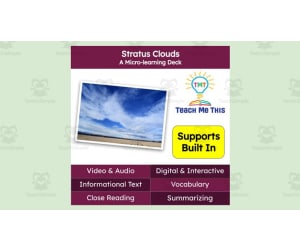
Stratus Clouds | Interactive Science Lesson | Micro-Learning Deck
Science, Earth and Environmental Sciences, Environmental Science, Grade 7, 8, 9, 10, Teacher Tools, Lesson Plans
This micro-learning deck is the perfect accessory to your Science instruction! This digital slideshow presents Stratus Clouds. Within this slideshow, you will receive: -Video Lesson -Reading Passage w/ Audio -Close Reading -Quick Write The informational texts included in this resource alongside the informal assessments will keep your students engaged from beginning to end.
Author Teach Me This
Tags Stratus Clouds, Interactive, Science, Environment, Reading Passage
I WONDER - Why Is Sleep Important For The Brain | Animated Video
Human Body, Life Sciences, Science, Biology, STEM, Grade 1, 2, 3, 4, 5, 6, 7, 8, Lesson Plans, Teacher Tools
Video Overview The human body is full of fascinating wonders to learn. This video is created to help the students recognize the anatomy and the job of the human body. I WONDER - Why Is Sleep Important For The Brain | Animated Video Lesson Every part and organ in our human body is vital so let's see how important they are. Have you ever imagined how we look like if we didn't have a skeleton? Did you know that because we have our amazing muscles we can stand! Do you know how many teeth do we have? Have you ever wondered about the food journey inside our body? Can you name all the glands in our body? Why do we have skin? Our nervous system is really good at sending signals. Can you tell us more about it? Are you really good at Mathematics, painting, or any other thing? You should really thank your brain about it! The famous five senses are really doing a great work? Can you explain how every sense works? I WONDER - Why Is Sleep Important For The Brain | Animated Video Lesson The video is perfect for encouraging the researching skills for the students, while learning more about our fantastic human body. I WONDER - Why Is Sleep Important For The Brain | Animated Video Lesson This friendly designed video is suitable for students at school, homeschooling, and as a group activity. Format Available in MP4 format.
Author Educational Voice
Tags Why Is Sleep Important For The Brain, Why Is Sleep Important For The Brain Video, Sleep, Sleeping, Sleeping Facts, Sleeping Facts For Kids, Sleeping Video, Brain, Brain Facts, Brain Facts For Kids

Anxiety Management & Stress-Relief Breathing Exercise Worksheets
STEM, Special Resources, Life Skills, Social Emotional Learning (SEL), Social Skills, Special Education Needs (SEN), Speech Therapy, Science, Life Sciences, Human Body, Homeschool Curriculum, Homeschool Templates, Grade 6, 7, 8, 9, Worksheets & Printables, Word Problems, Worksheets, Workbooks, Word Searches, Teacher Tools, Lesson Plans, Quizzes and Tests, Quizzes, Tests
This complete resource for anxiety management & stress relief using breathing exercise worksheets includes everything needed for middle school students. It is designed to be both printable (digital/electronic) and neuroscience-based and consists of 41 pages of student worksheets, real-world case studies, fill in the blank knowledge checks and numerous practical breathing protocols (Box Breathing, 4-7-8 Breath, Resonant Breathing, Physiological Sigh, Extended Exhale, Alternate Nostril Breathing and 5-4-3-2-1 Sensory Grounding) along with teacher answer keys, conceptual visuals and a full trauma informed implementation guide. This curriculum teaches students in 6th, 7th and 8th grades to interrupt amygdala hijacks, switch from the sympathetic "fight, flight or freeze" to the parasympathetic "rest and digest" and develop lifelong emotional resilience through the science of somatic agency, vagus nerve stimulation, neuroplasticity and autonomic nervous system regulation. This PDF product is perfect for school counseling, advisory periods, special education and homeschool implementation. There is no prep work necessary for immediate implementation in the classroom or at home. Keywords: anxiety worksheets for middle school students, breathing exercises for relieving stress for teens, anxiety management neuroscience based printable, somatic breathing toolkit, middle school social emotional learning curriculum, tools for testing anxiety, breathing activities for social anxiety. Parents & Teachers Love This Program Because: Science Supported but Student Friendly: This program teaches students the real science (amygdala, vagus nerve, heartbeat, myelination) behind their feelings in a way that helps them stop blaming themselves for the way they feel and begins to help them take charge of who they are by understanding how their body works. No Prep, Ready to Use: The program comes with student worksheets/answer keys, teacher projectables/visuals, and teacher implementation guides (these guides include trauma informed scripts) for busy community counselors, social-emotional teachers, and parents to use to implement this program with ease. The Efficacy of the Program has been Proven over and over Again Through the Use of the Program Addresses Multiple Anxiety Triggers (such as academic tests, social/cafeterias, digital overstimulation, athletic performance, and sleep difficulties) in multiple ways along with the use of protocols which work in real-world education settings. Creates Resilience Long-term: This program teaches daily habits and neuroplasticity, enabling the student to not only survive through anxiety attacks but also rewire their brain to have a calmer baseline state. An Inclusive and Trauma Informed Program: The program includes opt-out options, soft gazing instead of closing your eyes (making it safe for all students), and addresses the awkwardness associated with these activities, therefore making it safe and respectful for all students! Designation of Eligible Student Group (Overall Analysis of Document): The full curriculum covers the department for the 6th-8th grades (a.k.a. middle school or early adolescent age ~ 11-14). All research studies used in the curriculum have both 7th and 8th graders; the neurobiology part discusses the “development mismatch” between an adolescent’s limbic system and their prefrontal cortex; and every worksheet is designed for the life of a middle school student (i.e. school-themed exams, cafeteria social anxiety, hallway anxiety, sports pressure, digital anxiety). Therefore, the program is inappropriate for elementary students (too advanced) or high school students (language and examples are appropriate for the maturity level of students in grades 6-8). Copyright and Terms of Use This Book is copyrighted by Syed Hammad Rizvi for individual and classroom use only; you may not alter, resell or share the content. You may not place this Book on the web so that others may download it free of charge or for any other purpose (e.g., providing an online file, etc.). If you wish to share the Book with your colleagues, please purchase an additional license from Teachsimple. Thank you for your consideration of these Terms of Use. This Book is presented to you by Syed Hammad Rizvi in a very happy manner!
Author Creative Book Store
Rating
Tags AnxietyManagement, MiddleSchoolAnxiety, BreathingExercisesForTeens, StressReliefForKids, SELWorksheets, NeuroscienceForKids, AnxietyManagementForMiddleSchool, BreathingExercisesForMiddleSchool, StressReliefWorksheets, MiddleSchoolSEL

I WONDER - Why Are Leaves Green | Animated Video Lesson
Science, Nature & Plants, Life Sciences, Grade 4, 5, 6, 7, 8, 9, 10, Lesson Plans, Teacher Tools
Video Introduction An amazing activity designed for the students to learn more about STEM. I WONDER - Why Are Leaves Green | Animated Video Lesson Do you like STEM subjects? what is your favorite one? Have you ever tried to plant a seed? If yes, tell us more about it. Or have you ever tried to invent something? If yes, tell us more about it. And how do you think it will help us? Have you ever seen a microorganism under a microscope? What was it? And how it looked like? Mathematics is a marvelous subject. Let' sharpen our brains and solve some equations. Do you like timetable tricks? What is your favorite one? Do you know how to code? Have you ever created an app or a game before? If yes, how was it like? I WONDER - Why Are Leaves Green | Animated Video Lesson The video is perfect for encouraging the researching skills for the students, while learning more about this fantastic topic. I WONDER - Why Are Leaves Green | Animated Video Lesson This friendly designed video is suitable for students at school, homeschooling, and as a group activity. Format Available in MP4 format.
Author Educational Voice
Tags Why Are Leaves Green, Why Are Leaves Green Video, Leaves, Leaves Are Green, Leaves Facts, Leaves Facts For Kids, Stem, Stem Video, Science, Biology
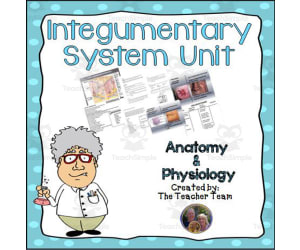
Integumentary System Unit
Science, Life Sciences, Human Body, Grade 7, 8, 9, 10, 11, 12, Lesson Plans, Teacher Tools
Our Integumentary System Unit (Skin Unit) for Anatomy and Physiology as well as Biology includes PowerPoints, Cornell-style editable note taking system ( great for AVID schools!), labs, writing assignment, test with answers, crossword puzzle for early finishers, and a suggested daily teaching planner. Please Note: This product is designed to be used in conjunction with an Anatomy text that a teacher would have in their classroom. In addition, another tool that is utilized in this product is “The Anatomy Coloring Book” by Kapit and Elson. If an Anatomy text is not available, the Internet can also be used as a source for supplemental reading. It is Great for any level student from English Learner - EL - to more advanced students.
Author The Teacher Team
Tags Anatomy, Physiology, Integumentary, Skin Unit, ELL, Integumentary System Crossword Puzzle Answer Key
I WONDER - Who Invented The World Wide Web | Animated Video Lesson
Biographies, Social Studies, Inventors, Basic Science, Science, Grade 4, 5, 6, 7, 8, 9, 10, Lesson Plans, Teacher Tools
Video Introduction An amazing video designed for the students to learn more about famous people in different countries. I WONDER - Who Invented The World Wide Web | Animated Video Lesson Do you know this person? How much do you know about him/her? Who is your idol? Why did you choose this person? Tell us more about him/her? Who is your favorite athlete? Or what is your favorite team? Have you recently heard a story about a famous person? Who was this person? Can you tell us more about him/her. Who is your favorite president, king, or queen? Why you chose that person? In your country, who are the most famous people? What did they do? Can you tell us more about them. What is your favorite invention? Who invented it? Who is your favorite artist? What is the most famous thing he/she have done? What is the most enjoyable you have read before? Who wrote it? I WONDER - Who Invented The World Wide Web | Animated Video Lesson The video is perfect for encouraging the researching skills for the students, while learning more about this fantastic place. I WONDER - Who Invented The World Wide Web | Animated Video Lesson This friendly designed video is suitable for students at school, homeschooling, and as a group activity. Format Available in MP4 format.
Author Educational Voice
Rating
Tags Who Invented The World Wide Web, Who Invented The World Wide Web Video, The World Wide Web, Sir Tim Berners-Lee, Sir Tim Berners-Lee Video, Sir Tim Berners-Lee Facts, Sir Tim Berners-Lee Video For Kids

Moose | Interactive Science Lesson | Micro-Learning Deck
Science, Life Sciences, Animals, Grade 5, 6, 7, Teacher Tools, Lesson Plans
Introducing an engaging moose science lesson for upper elementary and middle school students. This interactive micro-learning deck efficiently integrates video, reading, assessment, and writing into one moose-themed package. Students will watch an informative video about the physical characteristics, habitat, diet, and life cycle of moose. Next, they will read a passage with audio support to deepen comprehension. The lesson concludes by analyzing a text through close reading questions and synthesizing learning in a quick write. This versatile resource can be used for whole group instruction, small group differentiation, or independent practice. The multimedia format and informal assessments keep students focused while building science content knowledge and literacy skills.
Author Teach Me This
Tags Moose Lesson, Interactive Science, Quick Write, Exit Ticket, Reading Passage
I WONDER - What Is A Pancreas | Animated Video Lesson
Biology, Life Sciences, Science, Human Body, STEM, Grade 4, 5, 6, 7, 8, 9, Lesson Plans, Teacher Tools
Video Overview The human body is full of fascinating wonders to learn. This video is created to help the students recognize the anatomy and the job of the human body. I WONDER - What Is A Pancreas | Animated Video Lesson Every part and organ in our human body is vital so let's see how important they are. Have you ever imagined how we look like if we didn't have a skeleton? Did you know that because we have our amazing muscles we can stand! Do you know how many teeth do we have? Have you ever wondered about the food journey inside our body? Can you name all the glands in our body? Why do we have skin? Our nervous system is really good at sending signals. Can you tell us more about it? Are you really good at Mathematics, painting, or any other thing? You should really thank your brain about it! The famous five senses are really doing a great work? Can you explain how every sense works? I WONDER - What Is A Pancreas | Animated Video Lesson The video is perfect for encouraging the researching skills for the students, while learning more about our fantastic human body. I WONDER - What Is A Pancreas | Animated Video Lesson This friendly designed video is suitable for students at school, homeschooling, and as a group activity. Format Available in MP4 format.
Author Educational Voice
Tags What Is A Pancreas, What Is A Pancreas Video, Pancreas, Pancreas Facts, Pancreas Facts For Kids, Pancreas Video, Pancreas Video For Kids, Human Body, Human Body Facts, Digestive System
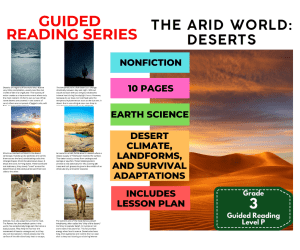
The Arid World - Deserts: Guided Reading Level P with Lesson Plan
ELA, Resources for Teachers, Reading Comprehension, Reading, Science, Language Development, Social Studies, Life Sciences, Geography, Earth and Environmental Sciences, Grade 2, 3, 4, Worksheets & Printables, Worksheets, Teacher Tools, Centers, Activities, Literacy Readers, Quizzes, Quizzes and Tests, Assessments, Lesson Plans
This The Arid World - Deserts (level p) guided reading book with lesson plan includes: Guided Reading Color Label (front cover x1) This is a quick way to match the book’s demands to what students can generally handle.. The overall goal is to use the level/color to pick books for several smaller groups. To qualify for a certain level, a student is expected to read a book from that level with about 90–94% accuracy. If a student is consistently accurate and understands, move up a level. If the student is struggling at that level, drop down and add more support. Each student will improve at completely different rates, but it is generally one of the best ways to check progress across the class. DOWNLOAD THE CATALOG TO VIEW ALL GUIDED READING BOOKS AVAILABLE (SORTED LEVELS A-Z) Pre-Reading Question (x1) Teacher asks the prompt aloud, can be while showing the cover or first page. Students share what they already know, or make educated guesses from the cover. Prompt them to use the target vocabulary. Write some of their responses on the board to look back at during the reading. Vocabulary Words (x5) Introduce the five words, best doing it one at a time. Start by saying it, while students repeat and then see if anyone knows what it means before reading further. Read through the meaning and try to briefly connect each word to a picture or gesture so it’s meaningful. Ask students to flip through the book pages and point to where they see each of the vocabulary words. While reading the book pause upon coming across one of the vocab words or read the sentence twice to make sure students understand the word has appeared. Optional: Ask students to raise hands whenever they see/hear one of the new words. Guided Reading Pages (x10) Check the book snapshot (below) for: primary topic - do you need to prep extra reading or intro materials on this? what is taught best - decide on 1-2 bullets to focus on, use the prompt or words provided here for best results. learning goals - what you are checking for students to be able to do after the session, elicit answers using prompts or words provided. key vocabulary (see section above). questions overview - so you know what is coming up and if you need to prep extra materials to assist understanding. Run the lesson You may have already looked at a few of the pages together, but you can show them some of the pictures again first to set meaning. Depending on how much time you have and how familiar your students are with guided reading class, you may want to read the book aloud first with the group first. Students whisper or partner read, while you listen in. If time, do it as a group, one student reading a page each. Use the guided page’s prompts to coach: “Check the picture / does it make sense?” “Point under the words / try the first sound” “Reread the sentence smoothly”. Try to focus more on one student per session (rotating every time), so you can work out if they are ready to move up or need to move down a level. Comprehension Questions (back cover x3) This is your way to check that students didn’t just say the words, but actually understood the text. First, let students answer by pointing to the page/picture and saying a short sentence. After any answer, follow with: “Show me where you found that in the text.” In bigger groups, have partners answer first (10–20 seconds), then call on 2–3 students to share. Differentiation tips: Emerging speakers/struggling readers: oral + pointing On-level: oral in a full sentence Higher: one written sentence or draw + label Book Snapshot Title: The Arid World: Deserts Genre: Nonfiction (informational) Subject: Earth Science Primary Topic: Desert climate, landforms, and survival adaptations Estimated Guided Reading Level (A–Z): P What This Book Teaches Best Defines deserts by very low precipitation and explains how scarce water shapes the environment. Explains extreme temperature changes in hot deserts from day to night and why they happen. Compares hot deserts and cold deserts , including why icy places can still be deserts. Shows how living things adapt to desert conditions , with examples from plants and animals (cactus, fennec fox, camel, sidewinder snake). Describes how wind shapes desert landforms , including how dunes form and move. Learning Goals Students can define a desert using the book’s description of precipitation and water scarcity. Students can explain why temperatures in a hot desert can drop quickly after sunset, based on the text. Students can describe how a cold desert can exist and name the example given in the book. Students can identify at least three desert adaptations and match them to the plant or animal described. Students can describe how wind forms dunes and what the text says dunes do over time. Students can explain what an oasis is and why it supports life in a desert. Key Vocabulary From the Text precipitation — water that falls from the sky, like rain. evaporation — when water turns to vapor and leaves. nocturnal — active at night and resting in daytime. oasis — a fertile desert area with freshwater reaching the surface. dunes — hills of sand formed when wind drops sand. Discussion Prompts Pre-reading question: What challenges do you think plants and animals face in a very dry place? Comprehension questions: How much rain do deserts usually get in a single year, according to the text? Comprehension questions: What does the book say helps the Saguaro cactus conserve water? Comprehension questions: What is an oasis, and where does its freshwater usually come from? Printing Tips 1. Best Printing Method (Recommended) “Booklet” Printing (Best if Available) If your printer or PDF viewer supports Booklet Printing , use this. Settings to use: Print mode: Booklet Paper size: Letter or A4 (either works) Orientation: Landscape Print on both sides: Yes Flip on: Short edge Scaling: Fit to printable area Booklet subset: First test: Front sides only Then: Back sides only This will automatically: Pair pages correctly Put the cover on the outside Align everything for folding After printing, fold in half and staple along the spine . 2. If “Booklet” Printing Is NOT Available You can still print this correctly with manual duplex printing . Step-by-step: Open the PDF. Choose Print . Set: Orientation: Landscape Pages per sheet: 1 Print on both sides: Yes Flip on: Short edge Print all pages . Because each PDF page already contains two facing book pages, the result will still fold cleanly into a book. Thousands of Cored Education products are included with your TeachSimple membership. Download links and encyclopedia index available here.
Author Cored Education
Rating
Tags Reading Comprehension, Reading Passages, Reading, Guided Reading, Guided Reading Lesson Plan, Guided Reading Activity, Pre-reading, Science Lesson Plans, Social Studies Lesson Plans, Earth Science
I WONDER - What Animals Live In Wetlands | Animated Video Lesson
Environmental Science, Earth and Environmental Sciences, Science, Earth Sciences, Grade 4, 5, 6, 7, 8, 9, 10, Lesson Plans, Teacher Tools
Video Introduction An amazing video designed for the students to learn more about STEM. I WONDER - What Animals Live In Wetlands | Animated Video Lesson Do you like STEM subjects? what is your favorite one? Have you ever tried to plant a seed? If yes, tell us more about it. Or have you ever tried to invent something? If yes, tell us more about it. And how do you think it will help us? Have you ever seen a microorganism under a microscope? What was it? And how it looked like? Mathematics is a marvelous subject. Let' sharpen our brains and solve some equations. Do you like timetable tricks? What is your favorite one? Do you know how to code? Have you ever created an app or a game before? If yes, how was it like? I WONDER - What Animals Live In Wetlands | Animated Video Lesson The video is perfect for encouraging the researching skills for the students, while learning more about this fantastic topic. I WONDER - What Animals Live In Wetlands | Animated Video Lesson This friendly designed video is suitable for students at school, homeschooling, and as a group activity. Format Available in MP4 format.
Author Educational Voice
Tags What Animals Live In Wetlands, What Animals Live In Wetlands Video, Animals Live In Wetlands, Animals Live In Wetlands Facts, Animals Live In Wetlands Facts For Kids, Animals Live In Wetlands Video
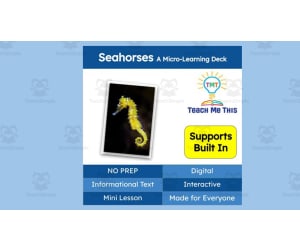
Seahorses | Interactive Science Lesson | Micro-Learning Deck
Science, Life Sciences, Animals, Grade 6, 7, 8, 9, Teacher Tools, Lesson Plans
Are you an educator looking to ignite your students' passion for marine biology? Dive into the underwater world of Seahorses with our captivating Interactive Science Lesson: Micro-Learning Deck! Turn your classroom into an oceanic adventure as students explore these fascinating creatures. Our digital slideshow has been carefully crafted to engage and educate students through various learning methods, such as: - A visually stunning video lesson that brings the world of seahorses to life - An immersive reading passage, supported by audio narration catering to different learning styles and fostering active listening skills - Thoughtfully designed close reading exercises that focus on comprehension and analytical thinking - Quick write prompts aimed at inspiring creative expression while reinforcing new-found knowledge The 23-slide PowerPoint presentation is skillfully structured for easy display in the classroom. Our Seahorses Interactive Science Lesson offers a rich multimedia experience designed with modern learners in mind. Don't let this opportunity slip away - invest in this dynamic educational resource today! Together, we can inspire a future generation of curious minds who admire and respect the wonders beneath our ocean's waves.
Author Teach Me This
Tags Animal Habitats, Seahorses, Learning Deck, Comprehension, Interactive
Global Warming EFFECTS: Climate and Human Health - FLASH-MAC
Science, Earth and Environmental Sciences, Environmental Science, Common Core, Grade 5, 6, 7, 8, Teacher Tools, Lesson Plans
Global Warming EFFECTS: Climate and Human Health - FLASH-MAC A comprehensive teaching resource, the Global Warming EFFECTS: Climate and Human Health - FLASH-MAC, has been designed meticulously to help teachers facilitate knowledge to students about global warming’s significant impact on climate and human health. Aimed at 5th to 8th graders, this lesson plan proves instrumental in educating about environmental science—a real-world issue that stands critical for present times. The resource works particularly well as a whole group instruction tool but can easily adapt for small group instruction or independent assignments. Furthermore, it fits seamlessly into a homework assignment framework—providing versatile utility for educators. As evidence of its meticulous development, the content aligns explicitly with the Common Core State Standards while hinging upon Bloom's Taxonomy, assuring educators that their teaching is grounded in recognized instructional principles. The material contained within encompasses reading passages coupled with 'before you read' and 'after you read' queries—prompting learners to actively investigate the subject matter not only during engagement with the text but also pre and post-reading. Additionally included are numerous printables along with vocabulary flashcards —aiding pupils in strengthening their scientific lexicon through consistent repetition. Educators acquire tools like video content crafted specifically for visual learners alongside audios—a boon for auditory learning enthusiasts. The package does not confine innovation to conventional mediums—it includes interactive activities too; an innovative learning approach stimulating student participation resulting in improved comprehension retention rates of the taught concepts related to global warming effects. In essence: this Mac compatible software serves as an indispensable aid simplifying explanation of complex environmental science topics without compromising on depth or detail—an intuitive tool equipping students with scientific knowledge whilst nurturing critical thinking skills about ecological implications of our actions.
Author Classroom Complete Press
Tags Software (Mac)