



3,910 products added recently
Page 87 - Science Lesson Plan Template
Enhance your science instruction with a flexible lesson plan template designed for educators. This tool helps you structure objectives, materials, procedures, and assessments efficiently. Use it to create organized and impactful science lessons that cater to your students' needs.

 Show filters

I WONDER - What Are The Stages In A Butterfly's Life Cycle
STEM, Insects, Life Sciences, Science, Animals, Biology, Grade 1, 2, 3, 4, 5, 6, 7, 8, Lesson Plans, Teacher Tools
Video Introduction Animal kingdoms are full of fascinating wonders to learn. This video is designed for the students to learn more about animals in different countries. I WONDER - What Are The Stages In A Butterfly's Life Cycle | Animated Video Lesson Do you like animals? what is your favorite one? Do you own a pet? If yes, tell us more about it, like what its name? And what do you like most about it? What are the animal kingdoms? Can you write down the characteristics of each animal class like mammals, birds, reptiles, amphibian, fish and mollusks. Do you know that some animals can sing, can you name any of them? What is the largest and the smallest mammal in the world? What is the largest and the smallest bird in the world? What is the largest and the smallest fish in the world? I WONDER - What Are The Stages In A Butterfly's Life Cycle | Animated Video Lesson The video is perfect for encouraging the researching skills for the students, while learning more about these fantastic animals. I WONDER - What Are The Stages In A Butterfly's Life Cycle | Animated Video Lesson This friendly designed video is suitable for students at school, homeschooling, and as a group activity. Format Available in MP4 format.
Author Educational Voice
Tags What Are The Stages In A Butterfly's Life Cycle, What Are The Stages In A Butterfly's Life Cycle Video, Butterfly's Life Cycle, Butterfly's Life Cycle Facts, Butterfly's Life Cycle Facts For Kids, Butterfly's Life Cycle Video
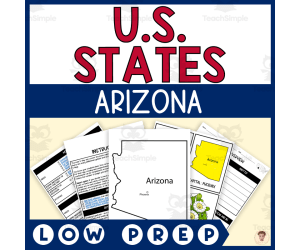
Arizona State Unit Study (Capital, Bird, Flower, Flag, Animal)
ELA, Social Studies, Reading, Reading Comprehension, Grammar, Language Development, Spelling, Writing, Science, Life Sciences, Animals, History, History: USA, Geography, Grade 2, 3, 4, Lesson Plans, Teacher Tools
Arizona State Unit Study This comprehensive, five-day resource dives into fascinating aspects like the state capital, bird, flower, flag and animal. Designed for low preparation yet rich in detail, making it an ideal tool for second to fourth grade students. Main Integration Areas: Language Arts (Comprehension, grammar, reading spelling & writing) Science (Zoology) Social Studies (U.S. history and geography). This multifaceted resource is equally appealing to artistic learners with colouring exercises or crafting activities that hone their English Language Arts skills. Simultaneously technical subjects like geography or history are catered with rigorous readings and information-loaded research tasks centered around Arizona's state symbols. Cross-curricular resource details: Packed with teaching instructions and a designated five-day lesson plan. Fascinating video content provided as an extra stimulant alongside reading passages or research assignments. The activities improve active learning cycles boosting student engagement whilst the included discussion guides foster interactive communication skills among them. Interactive notebook elements based on Arizona's key identifiers spur visual-spatial stimuli- whether used individually in small groups or full-classroom involvement. Variations considerations: The unit study can be seamlessly adjusted based on age grading comprehension level individual interests learning style utilizing its adaptive features. Note: Reducing pages option exists when discussing aloud is preferred over written assignment submission in its printables. Add-ons: Colourful & B&W versions of six symbol cards about Arizonian state values along with mix-match report sheets supplement research portions perfectly during this journey around Arizona.
Author Heather Huhman
Tags Arizona, State Symbols, Unit Study, Cross-curricular, Interactive Notebook
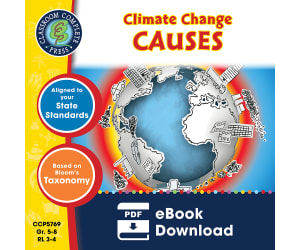
Climate Change: Causes Gr. 5-8
Science, Earth and Environmental Sciences, Environmental Science, Grade 5, 6, 7, 8, Teacher Tools, Lesson Plans
Climate Change: Causes GR. 5-8 - An educational resource for grades 5-8 This informative material focuses on blending scientific insights into climate change with hands-on activities, encouraging learners to distinguish between fact and fiction. Main Features: Covers critical topics in Environmental Science, such as the planet's atmosphere and human impact thereon. Fosters understanding through practical activities like color-based radiation absorption tests. Detailed exploration of increasing global temperatures and their effects on oceanic ecosystems. Individual model projects that illustrate carbon cycles and methane control. Ozone impact assessment highlighting its significant effect on human health. An out-of-the-box approach to learning is taken, combining theoretical knowledge with fun-filled yet impactful activities like crossword puzzles or word searches in line with Bloom's Taxonomy and STEAM initiatives. Bonus Features: Inclusive Learning Assistance: This resource also has numerous other types of support such as: Quizzes, answer keys providing immediate feedback for self- assessment , Lectures designed for both full-fledged classroom sessions or small group discussions, Homework assignments reinforcing class lessons ensuring better retention. Concisely wrapping up, Climate Change: Causes Gr. 5-8 can be a perfect tool for educators aiming to shape astute environmental stewards. Easily accessible in PDF format allows swift sharing among student groups. A comprehension quiz along with an answer key ensures expedited issue resolution.
Author Classroom Complete Press
Tags PDF

I WONDER - Why Should We Use Natural Pesticides | Animated Video
Earth Sciences, Earth and Environmental Sciences, Science, Environmental Science, Nature & Plants, Life Sciences, Insects, Animals, Grade 6, 7, 8, 9, 10, 11, 12, Lesson Plans, Teacher Tools
Video Introduction An amazing video designed for the students to learn more about STEM. I WONDER - Why Should We Use Natural Pesticides | Animated Video Lesson Do you like STEM subjects? what is your favorite one? Have you ever tried to plant a seed? If yes, tell us more about it. Or have you ever tried to invent something? If yes, tell us more about it. And how do you think it will help us? Have you ever seen a microorganism under a microscope? What was it? And how it looked like? Mathematics is a marvelous subject. Let' sharpen our brains and solve some equations. Do you like timetable tricks? What is your favorite one? Do you know how to code? Have you ever created an app or a game before? If yes, how was it like? I WONDER - Why Should We Use Natural Pesticides | Animated Video Lesson The video is perfect for encouraging the researching skills for the students, while learning more about this fantastic topic. I WONDER - Why Should We Use Natural Pesticides | Animated Video Lesson This friendly designed video is suitable for students at school, homeschooling, and as a group activity. Format Available in MP4 format.
Author Educational Voice
Tags Why Should We Use Natural Pesticides, Why Should We Use Natural Pesticides Video, Natural Pesticides, Natural Pesticide, Natural Pesticides Facts, Natural Pesticides Facts For Kids, Natural Pesticides Video
I WONDER - What Are Eyebrows For | Animated Video Lesson
Human Body, Life Sciences, Science, Biology, STEM, Grade 1, 2, 3, 4, 5, 6, 7, 8, Lesson Plans, Teacher Tools
Video Overview The human body is full of fascinating wonders to learn. This video is created to help the students recognize the anatomy and the job of the human body. I WONDER - What Are Eyebrows For | Animated Video Lesson Every part and organ in our human body is vital so let's see how important they are. Have you ever imagined how we look like if we didn't have a skeleton? Did you know that because we have our amazing muscles we can stand! Do you know how many teeth do we have? Have you ever wondered about the food journey inside our body? Can you name all the glands in our body? Why do we have skin? Our nervous system is really good at sending signals. Can you tell us more about it? Are you really good at Mathematics, painting, or any other thing? You should really thank your brain about it! The famous five senses are really doing a great work? Can you explain how every sense works? I WONDER - What Are Eyebrows For | Animated Video Lesson The video is perfect for encouraging the researching skills for the students, while learning more about our fantastic human body. I WONDER - What Are Eyebrows For | Animated Video Lesson This friendly designed video is suitable for students at school, homeschooling, and as a group activity. Format Available in MP4 format.
Author Educational Voice
Tags What Are Eyebrows For, What Are Eyebrows For Video, Eyebrows, Eyebrows Facts, Eyebrows Facts For Kids, Eyebrow, Eye, Eyes, Eyes Facts, Eyes Facts For Kids

Motion: Velocity and Speed Gr. 5-8
Science, Physics, Grade 5, 6, 7, 8, Teacher Tools, Lesson Plans
Motion: Velocity and Speed Gr. 5-8: A Comprehensive Teaching Resource This teaching resource provides an essential aid for educators working with students in the fifth through eighth grades, specifically those seeking to enhance their learners' understanding of physics-related subjects. The educational tool addresses the concept of motion extensively, breaking down its four primary types: linear, accelerating, rotating, and oscillating. Each type is connected to daily scenarios or significant phenomena such as movements within our solar system. This tangible link to reality promotes thorough comprehension amongst young scientists. Beyond exploring types of motion, this resource further clarifies key aspects like: Speed Velocity Acceleration All these elements come with clear explanations that align with State Standards. The teaching guide also makes references to Bloom's Taxonomy and STEM initiatives – ensuring alignment with established educational goals. Pedagogical Techniques & Features This resource incorporates a variety of pedagogical techniques suitable for both whole-group instruction and small-group activities. Among its standout features are: Theory call-outs interspersed throughout reading passages promoting comprehension skills. Vibrantly designed mini posters more likely than plain text options to capture student interest. Simplified language rendering physics concepts accessible without compromising academic standards upheld by national curriculum frameworks. Puzzles aiding long-term memory imprintation among students. Categorically related quizzes designed as assessment tools. Easily implementable ready-to-use PDF files matching various classroom structures at disposal. Conclusion In a nutshell, "Motion: Velocity and Speed Gr. 5-8" is a comprehensive tool designed to enrich the understanding of motion mechanics in young scientists in an enjoyable, effective, and relatable manner.
Author Classroom Complete Press
Tags PDF

I WONDER - Are There Different Types Of Liquids | Animated Video Less
Chemistry, Science, Grade 4, 5, 6, 7, 8, 9, 10, Lesson Plans, Teacher Tools
Video Introduction An amazing activity designed for the students to learn more about STEM. I WONDER - Are There Different Types Of Liquids | Animated Video Lesson Do you like STEM subjects? what is your favorite one? Have you ever tried to plant a seed? If yes, tell us more about it. Or have you ever tried to invent something? If yes, tell us more about it. And how do you think it will help us? Have you ever seen a microorganism under a microscope? What was it? And how it looked like? Mathematics is a marvelous subject. Let' sharpen our brains and solve some equations. Do you like timetable tricks? What is your favorite one? Do you know how to code? Have you ever created an app or a game before? If yes, how was it like? I WONDER - Are There Different Types Of Liquids | Animated Video Lesson The video is perfect for encouraging the researching skills for the students, while learning more about this fantastic topic. I WONDER - Are There Different Types Of Liquids | Animated Video Lesson This friendly designed video is suitable for students at school, homeschooling, and as a group activity. Format Available in MP4 format.
Author Educational Voice
Tags Are There Different Types Of Liquids, Are There Different Types Of Liquids Video, Types Of Liquids, Types Of Liquids Facts, Types Of Liquids Facts For Kids, Liquids, Liquids Facts, Liquids Facts For Kids

I WONDER - Why Are Some Plants Spicy | Animated Video Lesson
Science, Life Sciences, Nature & Plants, Grade 1, 2, 3, 4, 5, 6, 7, 8, Teacher Tools, Lesson Plans
Video Introduction An amazing activity designed for the students to learn more about STEM. I WONDER - Why Are Some Plants Spicy | Animated Video Lesson Do you like STEM subjects? what is your favorite one? Have you ever tried to plant a seed? If yes, tell us more about it. Or have you ever tried to invent something? If yes, tell us more about it. And how do you think it will help us? Have you ever seen a microorganism under a microscope? What was it? And how it looked like? Mathematics is a marvelous subject. Let' sharpen our brains and solve some equations. Do you like timetable tricks? What is your favorite one? Do you know how to code? Have you ever created an app or a game before? If yes, how was it like? I WONDER - Why Are Some Plants Spicy | Animated Video Lesson The video is perfect for encouraging the researching skills for the students, while learning more about this fantastic topic. I WONDER - Why Are Some Plants Spicy | Animated Video Lesson This friendly designed video is suitable for students at school, homeschooling, and as a group activity. Format Available in MP4 format.
Author Educational Voice
Tags Plant, Plants, Stem, Plant Video, Plants Video, Stem Video, Educational Video, Educational Videos For Kids

I WONDER - How Do Rockets Launch Into Space | Animated Video Lesson
Space, Earth and Environmental Sciences, Science, Grade 6, 7, 8, 9, 10, 11, 12, Lesson Plans, Teacher Tools
Video Introduction An amazing video designed for the students to learn more about space facts. I WONDER - How Do Rockets Launch Into Space | Animated Video Lesson Do you like reading about space? If yes, what is your favorite topic? What do you know about our solar system? What is the smallest planet in our solar system? What is the biggest planet in our solar system? What is the hottest planet in our solar system? And what is the coldest one? Do you think there are aliens? If yes, what do you think they look like? What do they eat and how they speak to each other? Where do they live? What is a galaxy? And what is a milky way? Have you recently saw a shooting star? If yes, tell us more about it, like when did it happen and where? What is a blackhole? Can a blackhole gets bigger by time? Do you like counting the stars? What do you think a star is made of? I WONDER - How Do Rockets Launch Into Space | Animated Video Lesson The video is perfect for encouraging the researching skills for the students, while learning more about the fantastic space. I WONDER - How Do Rockets Launch Into Space | Animated Video Lesson This friendly designed video is suitable for students at school, homeschooling, and as a group activity. Format Available in MP4 format.
Author Educational Voice
Tags How Do Rockets Launch Into Space, How Do Rockets Launch Into Space Video, Rockets, Rocket, Rockets Facts, Rocket Science, Rockets Facts For Kids, Rockets Video, Rockets Video For Kids

I WONDER - What Was The First Metal To Be Discovered | Animated Video
Chemistry, Science, Grade 4, 5, 6, 7, 8, 9, 10, Lesson Plans, Teacher Tools
Video Introduction An amazing activity designed for the students to learn more about STEM. I WONDER - What Was The First Metal To Be Discovered | Animated Video Lesson Do you like STEM subjects? what is your favorite one? Have you ever tried to plant a seed? If yes, tell us more about it. Or have you ever tried to invent something? If yes, tell us more about it. And how do you think it will help us? Have you ever seen a microorganism under a microscope? What was it? And how it looked like? Mathematics is a marvelous subject. Let' sharpen our brains and solve some equations. Do you like timetable tricks? What is your favorite one? Do you know how to code? Have you ever created an app or a game before? If yes, how was it like? I WONDER - What Was The First Metal To Be Discovered | Animated Video Lesson The video is perfect for encouraging the researching skills for the students, while learning more about this fantastic topic. I WONDER - What Was The First Metal To Be Discovered | Animated Video Lesson This friendly designed video is suitable for students at school, homeschooling, and as a group activity. Format Available in MP4 format.
Author Educational Voice
Tags What Was The First Metal To Be Discovered, What Was The First Metal To Be Discovered Video, Metals, Metals Facts, Metals Facts For Kids, Metals Video, Metals Video For Kids, Chemistry, Chemistry Video For Kids

Frames of Reference and Relativity - Senior Physics Lesson
Science, Physics, Grade 10, 11, 12, Teacher Tools, Lesson Plans
Frames of Reference and Relativity - Senior Physics Lesson Your lesson covers chemical reactions and balancing. In order, the lesson teaches about; Newtonian Physics, Problems with Classical Physics, Modern Physics & Einstein’s Special Theory of Relativity, Michelson and Morley, Postulates of Special Relativity, Time Dilation, and Length Contraction. Your lesson includes the teacher and student version of the presentation, an auto-graded exit ticket, TWO EMBEDDED videos and a student lesson handout so the students can record the notes on a more condensed medium. This lesson is designed to be your go-to resource, whether you're in a traditional classroom or a virtual one. With both a teacher version and a student version, it seamlessly fits into your lesson plans, making learning engaging and adaptable. Assessment made easy We've included an auto-graded Exit Ticket and a quiz with an answer key because I know you don't have an excess of time. I know you don't, because I don't and I know I'll do whatever I can to reduce my grading time. Whether you use PowerPoint or Google Slides, prefer Word or Google Docs, this lesson has you covered. This lesson comes in both Office and Google formats for your convenience. The student version of the presentation has strategically placed blanks for them to fill in as you're teaching. It keeps them active and engaged, encourages discussion, and leaves more time for those "aha" moments.
Author Teach With Fergy
Tags Chemistry Lesson, Newtonian Physics, Classical Physics, Modern Physics, Einstein Special Theory Of Relativity, Relativity, Special Relativity, Time Dilation, Length Contraction
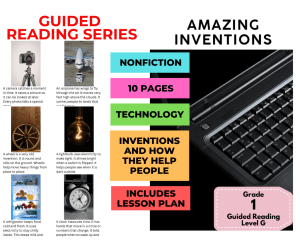
Guided Reading Level G - Amazing Inventions (with Lesson Plan)
ELA, Resources for Teachers, Reading Comprehension, Reading, Science, Engineering, Technology, Language Development, Pre-Reading, Vocabulary, Grade 1, 2, 3, Worksheets & Printables, Worksheets, Teacher Tools, Centers, Activities, Literacy Readers, Quizzes, Quizzes and Tests, Assessments, Lesson Plans
This Guided Reading Book - Amazing Inventions (Level G) with lesson plan includes: Guided Reading Color Label (front cover x1) This is a quick way to match the book’s demands to what students can generally handle.. The overall goal is to use the level/color to pick books for several smaller groups. To qualify for a certain level, a student is expected to read a book from that level with about 90–94% accuracy. If a student is consistently accurate and understands, move up a level. If the student is struggling at that level, drop down and add more support. Each student will improve at completely different rates, but it is generally one of the best ways to check progress across the class. DOWNLOAD THE CATALOG TO VIEW ALL GUIDED READING BOOKS AVAILABLE (SORTED LEVELS A-Z) Pre-Reading Question (x1) Teacher asks the prompt aloud, can be while showing the cover or first page. Students share what they already know, or make educated guesses from the cover. Prompt them to use the target vocabulary. Write some of their responses on the board to look back at during the reading. Vocabulary Words (x5) Introduce the five words, best doing it one at a time. Start by saying it, while students repeat and then see if anyone knows what it means before reading further. Read through the meaning and try to briefly connect each word to a picture or gesture so it’s meaningful. Ask students to flip through the book pages and point to where they see each of the vocabulary words. While reading the book pause upon coming across one of the vocab words or read the sentence twice to make sure students understand the word has appeared. Optional: Ask students to raise hands whenever they see/hear one of the new words. Guided Reading Pages (x10) Check the book snapshot (below) for: primary topic - do you need to prep extra reading or intro materials on this? what is taught best - decide on 1-2 bullets to focus on, use the prompt or words provided here for best results. learning goals - what you are checking for students to be able to do after the session, elicit answers using prompts or words provided. key vocabulary (see section above). questions overview - so you know what is coming up and if you need to prep extra materials to assist understanding. Run the lesson You may have already looked at a few of the pages together, but you can show them some of the pictures again first to set meaning. Depending on how much time you have and how familiar your students are with guided reading class, you may want to read the book aloud first with the group first. Students whisper or partner read, while you listen in. If time, do it as a group, one student reading a page each. Use the guided page’s prompts to coach: “Check the picture / does it make sense?” “Point under the words / try the first sound” “Reread the sentence smoothly”. Try to focus more on one student per session (rotating every time), so you can work out if they are ready to move up or need to move down a level. Comprehension Questions (back cover x3) This is your way to check that students didn’t just say the words, but actually understood the text. First, let students answer by pointing to the page/picture and saying a short sentence. After any answer, follow with: “Show me where you found that in the text.” In bigger groups, have partners answer first (10–20 seconds), then call on 2–3 students to share. Differentiation tips: Emerging speakers/struggling readers: oral + pointing On-level: oral in a full sentence Higher: one written sentence or draw + label Book Snapshot Title: Amazing Inventions Genre: Nonfiction (informational text) Subject: Science/Technology + Reading (Informational Text) Primary Topic: Inventions and how they help people Estimated Guided Reading Level (A–Z): G What This Book Teaches Best Introduces common inventions (wheel, lightbulb, telephone, computer, camera, airplane, refrigerator, clock, robot) and what each one does. Explains how inventions help people in everyday life (moving heavy things, seeing in the dark, connecting over distances, doing work quickly, keeping food cold, telling time, doing chores). Builds understanding of technology as something that changes, with “new things… invented every day to help people.” Supports describing key details from short informational passages paired with clear photos. Learning Goals Identify several inventions named in the book and tell what each helps people do. Describe how a wheel helps move heavy things from place to place. Explain how a lightbulb helps people see when it is dark outside. Tell how a telephone connects people who are far apart. Describe one way computers help people work quickly and what they can do. Explain what the book says about technology changing and new inventions helping people. Key Vocabulary From the Text invention — something made for the first time to help people. electricity — power that runs lights and machines. distances — how far apart places are. refrigerator — a machine that keeps food cold. sensors — parts that help a machine notice what is around it. Discussion Prompts Pre-reading question: What inventions do you use, and how do they help you? Comprehension questions: How do wheels help move heavy things from place to place? Comprehension questions: What does a lightbulb help people do when it is dark outside? Comprehension questions: What does the book say about new technology and how it helps people? Printing Tips 1. Best Printing Method (Recommended) “Booklet” Printing (Best if Available) If your printer or PDF viewer supports Booklet Printing , use this. Settings to use: Print mode: Booklet Paper size: Letter or A4 (either works) Orientation: Landscape Print on both sides: Yes Flip on: Short edge Scaling: Fit to printable area Booklet subset: First test: Front sides only Then: Back sides only This will automatically: Pair pages correctly Put the cover on the outside Align everything for folding After printing, fold in half and staple along the spine . 2. If “Booklet” Printing Is NOT Available You can still print this correctly with manual duplex printing . Step-by-step: Open the PDF. Choose Print . Set: Orientation: Landscape Pages per sheet: 1 Print on both sides: Yes Flip on: Short edge Print all pages . Because each PDF page already contains two facing book pages, the result will still fold cleanly into a book. Thousands of Cored Education products are included with your TeachSimple membership. Download links and encyclopedia index available here.
Author Cored Education
Rating
Tags Reading Comprehension, Reading Passages, Reading, Guided Reading, Guided Reading Lesson Plan, Guided Reading Activity, Pre-reading, Science Lesson Plans, Technology, Engineering

I WONDER - What Is The Science Behind Chocolate | Animated Video
STEM, Nature & Plants, Life Sciences, Science, Grade 6, 7, 8, 9, 10, 11, 12, Lesson Plans, Teacher Tools
Video Introduction An amazing activity designed for the students to learn more about STEM. I WONDER - What Is The Science Behind Chocolate | Animated Video Lesson Do you like STEM subjects? what is your favorite one? Have you ever tried to plant a seed? If yes, tell us more about it. Or have you ever tried to invent something? If yes, tell us more about it. And how do you think it will help us? Have you ever seen a microorganism under a microscope? What was it? And how it looked like? Mathematics is a marvelous subject. Let' sharpen our brains and solve some equations. Do you like timetable tricks? What is your favorite one? Do you know how to code? Have you ever created an app or a game before? If yes, how was it like? I WONDER - What Is The Science Behind Chocolate | Animated Video Lesson The video is perfect for encouraging the researching skills for the students, while learning more about this fantastic topic. I WONDER - What Is The Science Behind Chocolate | Animated Video Lesson This friendly designed video is suitable for students at school, homeschooling, and as a group activity. Format Available in MP4 format.
Author Educational Voice
Tags What Is The Science Behind Chocolate, What Is The Science Behind Chocolate Video, Chocolate, Chocolate Facts, Chocolate Facts For Kids, Chocolate Facts Video, Chocolate Video, Chocolate Facts Video For Kids

Simple Machines - Digital Lesson Plan Gr. 5-8 | MAC Software
Science, Physics, Grade 3, 4, 5, 6, 7, 8, Teacher Tools, Lesson Plans
Simple Machines - Digital Lesson Plan for Grades 5-8 An ideal resource for teaching science, particularly physics, to middle grade students. This MAC software package is streamlined for educators and simplifies the understanding and application of compound and simple machines. Fundamental Topics Covered Levers Inclined Planes Wedges Screws Pulleys Wheel & Axles The software provides comprehensive teaching material presented across a substantial number of interactive screens. A unique selling point of this resource is the high level of interaction it affords students. Interactive activities are provided before and after reading sessions—promoting comprehension skills while making learning enjoyable. Built-in Assessments Features: Test Prep Features: High-resolution memory match games designed to reinforce learned concepts. Crossword puzzles aimed at improving vocabulary. A word search feature for recognizing key terms pertinent to lessons on force and motion. This digital lesson plan encapsulates all these captivating methods within a single easy-to-manage zip file containing MAC software. All elements in this product are aligned with State Standards and rooted deeply in Bloom's Taxonomy principles—making learning simpler while maintaining academic rigor—a perfect blend regardless if the platform is catered for whole group discussions or small-group breakout activities; even as an enriching homework assignment .
Author Classroom Complete Press
Tags Digital Lesson Plan, Simple Machines, Machines Lesson Plan, Simple Machines Activity, Levers And Pulleys

Synovial Joints
Science, Life Sciences, Human Body, Grade 9, 10, Teacher Tools, Lesson Plans
Synovial Joints: Teaching Resource Synovial Joints is a comprehensive teaching resource specifically designed to empower educators in expanding students' knowledge about the intricate structure of synovial joints in the human body. Primarily targeted towards grade 9 and 10 learners studying science, especially those focusing on anatomy, this innovative tool assists teachers by turning complicated scientific concepts into comprehensible sections. Resource Description: The Synovial Joints resource is an enriching PowerPoint lesson plan encompassing a series of 22 well-structured slides dense with vital information. Each slide cleverly breaks down the complex learning objective into simplified learning checkpoints for ease of understanding and retention by students. The step-by-step progression within the lesson effectively helps students to first familiarize themselves with: The components of a synovial joint The specific role each element plays within various synovial joints How each component's functionality influences diverse sporting scenarios (for advanced learners) Tailored Teaching Styles: Given its easy-to-grasp format, Synovial Joints cater flexibly towards various teaching styles and student engagement methods. The lesson can be: Utilized as a focal point for whole-group discussions or divided for small group study sessions, followed by comprehensive reviews. Rpurposed parts of it as independent assignments or homework tasks enhancing learner’s personal growth outside class hours. In presenting well-researched content vividly through Microsoft PowerPoint slides, Synovial Joints ensures that educators provide their learners with pertinent insights engagingly without compromising on factual accuracy and depth - ensuring that every student advances their prowess in dissecting anatomy-related concepts one slide at a time.
Author The PE Tutor
Tags Synovial Joints, Anatomy, Science, Teaching Resource, PowerPoint
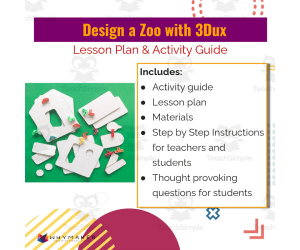
Design a Zoo Lesson Plan + Activity Guide
Science, Technology, Computer Science, Grade 1, 2, 3, 4, 5, 6, 7, 8, Lesson Plans, Teacher Tools
Everything you need to run a successful and fun lesson! Students will redesign an animal enclosure that provides the animal with all it’s needs being met. This fun and engaging activity comes a materials list and coupon code for the WhyMaker Store. However this can be done with cardboard, scissors and tape.
Author WhyMaker
Tags Computer Science - Technology, Instructional Technology, Engineering, Design A Zoo, Zoo Lesson Plans, Design A Zoo Project
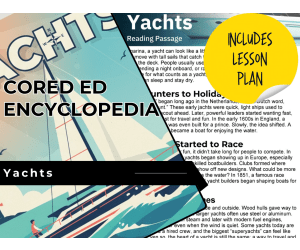
Yachts Reading Comprehension Passage - Cored Ed Encyclopedia
ELA, Language Development, Reading Comprehension, Reading, Science, History, Social Studies, Technology, Engineering, Pre-Reading, Grade 2, 3, 4, 5, Worksheets & Printables, Worksheets, Teacher Tools, Centers, Activities, Writing Prompts, Assessments, Quizzes and Tests, Quizzes, Lesson Plans
This yachts reading comprehension with lesson plan includes: Visualization (on the front cover) Start your lesson by taking a minute to think and share something about the topic. Read the script aloud (slowly), perhaps prepare some music or sound effects. Student close their eyes and let their imaginations wander. Students open their eyes, read the question aloud and give them a few minutes to complete. Ask a few students to share or keep answers until the end to compare with what they learn in the passage. Quick pause—thousands of Cored Education products are included with your TeachSimple membership. Download links and encyclopedia index available here. Pre-Reading Trivia Students will write down one thing they already know about the subject and then read five more facts and discuss. These facts are fun, and the students will enjoy learning about the subject before reading more. Give 1 minute for students to write what they already know (no pressure—best guess is fine). Read the five facts together. After each fact, do ask a student for their opinion, was it surprising? Set a purpose by asking students to highlight/underline one fact they want to learn more about during the reading. Reading Passage The text is a high-interest reading passage with set paragraphs, roughly three to four paragraphs long. It contains a variety of themes about the topic, anywhere from history to technology. The passage is between 250 and 350 words in length. First, ask students to look at the headings and see what they’ll learn about today. What do they know about the topic/heading? First read options: Teacher read-aloud (best for support). Partner reading (paragraph by paragraph). While reading, students underline important details, and vocabulary words they think may come up in the questions section. Mixed Questions The first question page contains four multiple-choice questions, each with a choice of four answers, and three written response questions that require a sentence or two from the student. Students complete the mcqs first independently, then review quickly as a class. For the 3 written responses, try to get students giving the answer with some form of evidence: “I think ___ because the text says ___.” If students get stuck, send them back to check the passage. Vocabulary Questions Practice seven key words from the text in this section across two activities. First section is scrambled words where students will unscramble three words given a clue for each. The second section is a word to meaning matching activity. Before starting, have some students read out words they underlined in the passage. Ask students to say the word and read aloud the sentence(s) around each word. Ask students to do scrambled words and the matching exercise in pairs then go through answers as a class. For the scrambled spelling task, get four pairs to come up to the board and write the words for extra practice with the other student reading out the clue. For the matching task, prompt students to give full sentences: “I matched ___ with ___ because ___.” Creative Writing In this question, the student will be required to write a five to eight sentence paragraph on a question related to the topic. Before starting, ask students write down 3 key ideas they are going to include in their piece. Ask students for ideas to share around the class to help those struggling. Pro writing expectations: 5–8 sentences At least 2 facts or details from the passage At least 2 vocabulary words from the previous page Students read their paragraphs while classmates listen for facts and vocabulary words. Extension Activities This page is optional for fast finishers or to take home. There are several activities, each one requiring a different skill. Do some, do none, do all, completely optional - but you will feel reassured knowing every possibility is planned for. Includes summary writting question. Answer Key There are answers for the multiple-choice questions, written response questions have sample answers, vocabulary answers and if there is a summary question then a sample summary will be provided as well. Lesson Plan Included Customized lesson plan for this lesson is included. Lesson Snapshot Title: Yachts Genre: Nonfiction (informational text) Subject: Social Studies (history of technology) / Informational Reading Primary Topic: What yachts are, their history, and how they changed Estimated Guided Reading Level (A–Z): Q What This Lesson Teaches Best Describes what a yacht can look and sound like at a marina, and explains that yachts may move by sails or by a motor beneath the deck. Explains how people use yachts for pleasure, such as cruising along a coast, spending a night onboard, or racing across open water, and notes that many yachts have a cabin where someone can sleep and stay dry. Traces how the word “yacht” began in Netherlands from a Dutch word meaning “hunt,” and how early yachts were quick ships used to chase pirates and scout ahead before becoming boats for travel and fun. Shows how yacht racing grew in Europe in the 1600s and how a race in 1851 helped launch the America’s Cup, influencing yacht designs for speed and handling. Explains how yachts changed over time (new materials like fiberglass, larger yachts using steel or aluminum, and engines arriving from steam to modern fuel engines), including very large “superyachts” that may need a hired crew. Learning Goals Students will identify two ways yachts can be powered using details from the text. Students will describe what the passage says people do on yachts for pleasure. Students will explain how the meaning and use of “yacht” changed over time in the passage. Students will describe how racing influenced yacht design, using the passage’s examples. Students will describe at least two changes in yacht materials or engines mentioned in the text. Key Vocabulary From the Text marina — a place where boats dock. cabin — a room where someone can sleep and stay dry. hulls — the outer bodies of boats. fiberglass — a newer material used instead of wood. crew — a hired group to run a yacht. FULL CATALOG OF DOWNLOAD LINKS AND ENCYCLOPEDIA INDEX HERE
Author Cored Education
Rating
Tags Vocabulary, Reading Comprehension, Reading Passages, Lesson Plans, Ela Lesson Plans, Reading Comprehension Lesson Plans, Pre-reading, History Lesson Plans, Science Lesson Plans, Engineering

Cumulus Clouds | Interactive Science Lesson | Micro-Learning Deck
Science, Earth and Environmental Sciences, Environmental Science, Grade 6, 7, 8, 9, Teacher Tools, Lesson Plans
This micro-learning deck is the perfect accessory to your Science instruction! This digital slideshow presents Cumulus Clouds. Within this slideshow, you will receive: -Video Lesson -Reading Passage w/ Audio -Close Reading -Quick Write The informational texts included in this resource alongside the informal assessments will keep your students engaged from beginning to end.
Author Teach Me This
Tags Cumulus, Clounds, Weather, Interactive Science Lesson, Vocabulary

Solstice and Equinox | Interactive Science Lesson | Micro-Learning Deck
Science, Earth and Environmental Sciences, Space, Grade 6, 7, 8, 9, Teacher Tools, Lesson Plans
Solstice and Equinox | Engaging Science Resource This informative science resource teaches students about solstices and equinoxes. The digital slide deck can be used in whole group, small group, or individual settings to foster student understanding of these astronomical concepts. Students will watch an explanatory video detailing solstices and equinoxes. An accompanying reading passage that students can follow along with using the provided audio further cements comprehension. A close reading activity and quick write prompt allow educators to assess learning in multiple formats. Overall, the varied activities, assessments, and flexible implementation options in this resource promote engaged learning about solstices and equinoxes. Students will gain core science knowledge and astronomy vocabulary in an interactive way. Any middle or high school science teacher aiming to bolster student comprehension of solstices and equinoxes will find this resource impactful.
Author Teach Me This
Tags Solstice, Equinox, Interactive, Science, Digital Lesson
I WONDER - Are There Different Types Of Zebras | Animated Video Lesson
STEM, Animals, Life Sciences, Science, Biology, Grade 1, 2, 3, 4, 5, 6, 7, 8, Lesson Plans, Teacher Tools
Video Introduction Animal kingdoms are full of fascinating wonders to learn. This video is designed for the students to learn more about animals in different countries. I WONDER - Are There Different Types Of Zebras | Animated Video Lesson Do you like animals? what is your favorite one? Do you own a pet? If yes, tell us more about it, like what its name? And what do you like most about it? What are the animal kingdoms? Can you write down the characteristics of each animal class like mammals, birds, reptiles, amphibian, fish and mollusks. Do you know that some animals can sing, can you name any of them? What is the largest and the smallest mammal in the world? What is the largest and the smallest bird in the world? What is the largest and the smallest fish in the world? I WONDER - Are There Different Types Of Zebras | Animated Video Lesson The video is perfect for encouraging the researching skills for the students, while learning more about these fantastic animals. I WONDER - Are There Different Types Of Zebras | Animated Video Lesson This friendly designed video is suitable for students at school, homeschooling, and as a group activity. Format Available in MP4 format.
Author Educational Voice
Tags Are There Different Types Of Zebras, Are There Different Types Of Zebras Video, Different Types Of Zebras, Different Types Of Zebras Facts, Different Types Of Zebras Facts For Kids, Different Types Of Zebras Video

I WONDER - How Do Reindeers Keep Warm | Animated Video Lesson
Animals, Life Sciences, Science, Biology, STEM, Grade 1, 2, 3, 4, 5, 6, 7, 8, Lesson Plans, Teacher Tools
Video Introduction Animal kingdoms are full of fascinating wonders to learn. This video is designed for the students to learn more about animals in different countries. I WONDER - How Do Reindeers Keep Warm | Animated Video Lesson Do you like animals? what is your favorite one? Do you own a pet? If yes, tell us more about it, like what its name? And what do you like most about it? What are the animal kingdoms? Can you write down the characteristics of each animal class like mammals, birds, reptiles, amphibian, fish and mollusks. Do you know that some animals can sing, can you name any of them? What is the largest and the smallest mammal in the world? What is the largest and the smallest bird in the world? What is the largest and the smallest fish in the world? I WONDER - How Do Reindeers Keep Warm | Animated Video Lesson The video is perfect for encouraging the researching skills for the students, while learning more about these fantastic animals. I WONDER - How Do Reindeers Keep Warm | Animated Video Lesson This friendly designed video is suitable for students at school, homeschooling, and as a group activity. Format Available in MP4 format.
Author Educational Voice
Tags How Do Reindeers Keep Warm, How Do Reindeers Keep Warm Video, Reindeers, Reindeer, Reindeers Facts, Reindeers Facts For Kids, Reindeers Video, Reindeers Video For Kids, Reindeer Video

I WONDER - How Fast Do Nails Grow | Animated Video Lesson
Human Body, Life Sciences, Science, Biology, STEM, Grade 1, 2, 3, 4, 5, 6, 7, 8, Lesson Plans, Teacher Tools
Video Overview The human body is full of fascinating wonders to learn. This video is created to help the students recognize the anatomy and the job of the human body. I WONDER - How Fast Do Nails Grow | Animated Video Lesson Every part and organ in our human body is vital so let's see how important they are. Have you ever imagined how we look like if we didn't have a skeleton? Did you know that because we have our amazing muscles we can stand! Do you know how many teeth do we have? Have you ever wondered about the food journey inside our body? Can you name all the glands in our body? Why do we have skin? Our nervous system is really good at sending signals. Can you tell us more about it? Are you really good at Mathematics, painting, or any other thing? You should really thank your brain about it! The famous five senses are really doing a great work? Can you explain how every sense works? I WONDER - How Fast Do Nails Grow | Animated Video Lesson The video is perfect for encouraging the researching skills for the students, while learning more about our fantastic human body. I WONDER - How Fast Do Nails Grow | Animated Video Lesson This friendly designed video is suitable for students at school, homeschooling, and as a group activity. Format Available in MP4 format.
Author Educational Voice
Tags How Fast Do Nails Grow, How Fast Do Nails Grow Video, Nails, Nail, Nails Facts, Nails Facts For Kids, Nails Video, Nails Video For Kids, Finger, Fingers

I WONDER - What Job Does The Thyroid Gland Do | Animated Video Lesson
Human Body, Life Sciences, Science, Biology, STEM, Grade 6, 7, 8, 9, 10, 11, 12, Lesson Plans, Teacher Tools
Video Overview The human body is full of fascinating wonders to learn. This video is created to help the students recognize the anatomy and the job of the human body. I WONDER - What Job Does The Thyroid Gland Do | Animated Video Lesson Every part and organ in our human body is vital so let's see how important they are. Have you ever imagined how we look like if we didn't have a skeleton? Did you know that because we have our amazing muscles we can stand! Do you know how many teeth do we have? Have you ever wondered about the food journey inside our body? Can you name all the glands in our body? Why do we have skin? Our nervous system is really good at sending signals. Can you tell us more about it? Are you really good at Mathematics, painting, or any other thing? You should really thank your brain about it! The famous five senses are really doing a great work? Can you explain how every sense works? I WONDER - What Job Does The Thyroid Gland Do | Animated Video Lesson The video is perfect for encouraging the researching skills for the students, while learning more about our fantastic human body. I WONDER - What Job Does The Thyroid Gland Do | Animated Video Lesson This friendly designed video is suitable for students at school, homeschooling, and as a group activity. Format Available in MP4 format.
Author Educational Voice
Tags What Job Does The Thyroid Gland Do, What Job Does The Thyroid Gland Do Video, Thyroid Gland, Thyroid Gland Facts, Thyroid Gland Facts For Kids, Thyroid Gland Video, Thyroid Gland Video For Kids

Mr. Bones Gr. K-2
Science, Life Sciences, Animals, Grade 1, Teacher Tools, Lesson Plans
Engaging Dinosaur-Themed Stories: Mr. Bones Gr.K-2 This comprehensive teaching resource, particularly suited to Grade 1 students with a fondness for Science and Zoology, consists of fascinating dinosaur stories designed to pique children's interest and curiosity about these extinct creatures. A Wealth of Activities After delving into the intriguing tales of dinosaurs such as Megalosaurus, Triceratops, Mrs.Protoceratops, and Tyrannosaurus Tex, the children can partake in a variety of stimulating activities: Comprehension exercises: Follow-up questions allow students to better understand the story elements and aspects about these prehistoric beasts. Creative tasks: Prompts calling for drawings or opinion-based writing engages students' creativity after reading assertions or hypotheses related to dinosaurs. Scientific examinations: Students are encouraged to delve deeper into science by examining dinosaur traits scattered within each story. Poetry writing session:The resource kit includes opportunities for learners to create poetry inspired by their new dinosaur friends so as introduce an element of literature into the lesson plan. Glossary & Flexibility in Execution Included in Mr.Bones Gr.K-2 is a glossary that clarifies unfamiliar terminologies related to dinosaurs. This ensures an easier grasp on concepts being introduced within both stories and follow-up questions. Furthermore,this teaching tool allows versatility in delivery styles - it caters not only for whole classroom instruction but also works well with small-group discussions or individual assignments during school hours or as homework tasks at home. Diversity Creative Formats : The Fun Factor! All encapsulated within one product file in PDF format are the dynamic creative formats centered around fostering knowledge and building a love for science through fun and engaging narratives. Titles include interesting premises like 'Dinosaur Nonsense,' 'I Wish I Were A Dinosaur', 'If Dinosaurs Lived Today' further ensuring comprehension is deepened through a fun-play model integrated within scholastic learning. The Mr.Bones Advantage: Encouraging Multidimensional Development This unique resource doesn't only enhance students' understanding of zoology but also aims to foster their reading comprehension, creativity, critical thinking skills and poetry creating inspirations. All while taking them on an exciting exploration back to the Mesozoic era where dinosaurs were the kings of earth!
Author Classroom Complete Press
Tags PDF