



3,973 products added recently
Page 125 - Popular Lesson Plans
Explore a curated selection of popular lesson plans that have proven successful in classrooms. Covering various subjects and topics, these resources provide innovative ideas and activities. Use them to refresh your curriculum and engage your students with tried-and-true methods.

 Show filters

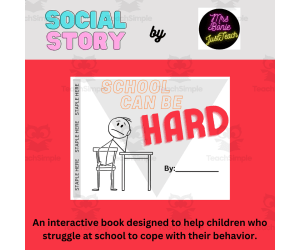
Behavior Problems - Interactive Book/Printable Support/SEL Lesson
Special Resources, Social Emotional Learning (SEL), Social Skills, Grade 3, 4, 5, 6, Lesson Plans, Teacher Tools
Behavior Problems - Interactive Book/Printable Support/SEL Lesson: General Overview Behavior Problems - Interactive Book/Printable Support/SEL Lesson is a valuable teaching resource designed to address natural anxieties and fears that are common among children preparing for the transition to a new grade level. With this interactive book and printable, learners essentially take control as they become the main characters of their own social stories. Relevance and Age Appropriateness Ideal for children aged 7-12, this resource provides compelling support as learners articulate their favorite things about their current grade while assisting in smooth transitions into subsequent grades. Use it to enhance END OF THE SCHOOL YEAR activities,, fostering readiness for what lies ahead. Possible Classroom Implementation Scenarios The Whole Class: In whole class scenarios, initiate thought-provoking discussions with each page of the half-page book printout prepared for every learner. The included discussion guide facilitates these conversations seamlessly. Remeidation: When necessary, it can serve as an efficient calming tool; pupils can withdraw to reflectively reread their Social Story and recall outlined expectations—potentially transforming your progressive discipline plan's initial steps. In Small Groups or Individual Sessions: Applied in smaller group settings or one-on-one intervention sessions, instructors can tailor discussions around distinct behavior needs surfaced within each group of students. As you complete the book together on such occasions, youth gain direct insights into personal needs and are empowered with solutions immediately at hand. The Impact of SEL Material on Teaching Practice This digital PDF download underscores how creative teaching resources like social emotional learning (SEL) material can make profound differences in educators' day-to-day workings—whether homeschooling parents or public school educators teaching grade levels 3 through 6.
Author Mrs Bonie Just Teach
Tags Behavior Problems, Interactive Book, Printable Support, SEL Lesson, Transition Preparation
I WONDER - How Big Was The Giganotosaurus | Animated Video Lesson
History: Ancient, History, Social Studies, History: World, Animals, Life Sciences, Science, Grade 4, 5, 6, 7, 8, 9, 10, Lesson Plans, Teacher Tools
Video Introduction An amazing video designed for the students to learn more about dinosaurs in different countries. I WONDER - How Big Was The Giganotosaurus | Animated Video Lesson Do you like dinosaurs? what is your favorite one? Do you own a pet? If yes, tell us more about it, like what its name? And what do you like most about it? Do you think that your pet has been evolved from a dinosaur? Can you write down the characteristics of your favourite dinosaur like it's shape, their rivals, where did it use to live and what was their favourite food? What is the largest and the smallest dinosaur that ever found? Why is the T-rex is so famous? Have you ever read any interesting facts about it? Can you name any of the carnivores or herbivores dinosaurs? I WONDER - How Big Was The Giganotosaurus | Animated Video Lesson The video is perfect for encouraging the researching skills for the students, while learning more about dinosaurs. I WONDER - How Big Was The Giganotosaurus | Animated Video Lesson This friendly designed video is suitable for students at school, homeschooling, and as a group activity. Format Available in MP4 format.
Author Educational Voice
Rating
Tags How Big Was The Giganotosaurus, How Big Was The Giganotosaurus Video, Giganotosaurus, Giganotosaurus Facts, Giganotosaurus Video, Giganotosaurus Video For Kids, Giganotosaurus Facts For Kids
Shakespeare Unit Study: Romeo and Juliet - eBook
ELA, Literature, Grade 9, 10, 11, 12, Lesson Plans, Teacher Tools
Within this 17-page download, students will take a closer look at Shakespeare and his written work Romeo and Juliet. Students will examine a timeline, characters, notes and quotes from the play. At the end of this unit of study, students will be able to complete worksheets and a word search . Answer key for word search is included.
Author Creative Learning Connection
Tags Shakespeare, Unit Study, Literature, Romeo And Juliet, Readers Theatre

Number & Operations: Counting & Ordering Objects - Practice the Skill 3 - PC Software
Math, Numbers, Common Core, Kindergarten, Preschool, Grade 1, 2, Teacher Tools, Lesson Plans
Introducing Number & Operations: Counting & Ordering Objects An excellent teaching resource for early childhood education. This interactive software assists students in understanding the basics of counting and ordering objects. Key Features: Timed drills for practice Differentiating between odd or even numbers Incorporation of math tools for practical application The exercises can be integrated into study sessions or as homework assignments, allowing children to reinforce learning at their own pace. Inclusivity and Standards Alignment: The software caters to both English and Spanish speakers. It aligns with Common Core State Standards (CCSS), meets STEM initiatives and conforms to the National Council of Teachers Mathematics (NCTM) guidelines. User-friendly Software Format: Included is a zip file compatible with Windows OS. It can be installed on school computers or personal laptops, making it accessible wherever learning happens. Versatility in Learning Scenarios: The tool proves beneficial for whole group instruction in classrooms, small study groups, or individual learning environments at home. A valuable addition to your educational resources indeed! Suggestion:Incorporate Number & Operations: Counting & Ordering Objects into your lesson plans today! Enhance teaching prowess while catering effectively to varied learning styles!
Author Classroom Complete Press
Tags Numbers, Operations, Ordering Objects, Digital Math, Math Skills

I WONDER - How Does Pollution Affect Health | Animated Video Lesson
Environmental Science, Earth and Environmental Sciences, Science, Earth Sciences, Human Body, Life Sciences, Biology, STEM, Grade 4, 5, 6, 7, 8, 9, 10, Lesson Plans, Teacher Tools
Video Introduction An amazing video designed for the students to learn more about STEM. I WONDER - How Does Pollution Affect Health | Animated Video Lesson Do you like STEM subjects? what is your favorite one? Have you ever tried to plant a seed? If yes, tell us more about it. Or have you ever tried to invent something? If yes, tell us more about it. And how do you think it will help us? Have you ever seen a microorganism under a microscope? What was it? And how it looked like? Mathematics is a marvelous subject. Let' sharpen our brains and solve some equations. Do you like timetable tricks? What is your favorite one? Do you know how to code? Have you ever created an app or a game before? If yes, how was it like? I WONDER - How Does Pollution Affect Health | Animated Video Lesson The video is perfect for encouraging the researching skills for the students, while learning more about this fantastic topic. I WONDER - How Does Pollution Affect Health | Animated Video Lesson This friendly designed video is suitable for students at school, homeschooling, and as a group activity. Format Available in MP4 format.
Author Educational Voice
Tags How Does Pollution Affect Health, How Does Pollution Affect Health Video, Pollution Affect Health, Pollution, Pollution Facts, Pollution Video, Pollution Video For Kids, Pollution Facts For Kids

Taking Time for Teamwork: Creating Vehicles
, Grade 4, 5, 6, 7, 8, 9, 10, 11, 12, Teacher Tools, Lesson Plans
Taking Time for Teamwork: Creating Vehicles A dynamic educational resource that injects creativity, problem-solving, and collaboration into the classroom. This hands-on kit not only encourages teamwork but spurs on critical thinking among students. A Versatile Tool for Learning Challenges involve the construction and propelling of cars and boats in an interactive environment. Designed with flexibility in mind, this product is suitable from fourth graders to twelfth graders, making it a versatile tool for learning. Including everything you need: Detailed supply lists, Visible requirements, Testing protocols, Scoring goals Bonus: Beneficial teacher notes guide through effective implementation of each challenge. Purchasing Information: A single product file which can be easily shared amongst educators or printed out for reference during class sessions. Fostering Communication & Cooperation Taking Time For Teamwork presents opportunities for pupils to communicate ideas constructively and handle tasks cooperatively, crucial aptitudes needed in adulthood! It includes fun elements to keep them engaged while deepening their understanding of ingenuity applied in real-life context. Ideal uses: Your regular course offering or special events such as Science Week or engineering-themed school fairs; The perfect project for family participation - creating bonds between home education reinforcement and what's being taught at school. Important Note: This material embodies an approach where teaching isn't only about imparting knowledge but fostering an environment where learners can explore new skills actively. This product comes in a PDF file format ensuring easy accessibility across various devices.
Author Classroom Complete Press
Tags PDF
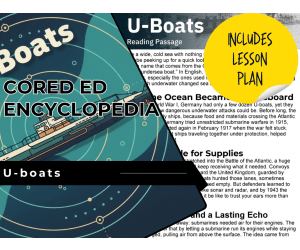
U-Boats Reading Comprehension Passage - Cored Ed Encyclopedia
ELA, Language Development, Reading Comprehension, Reading, Science, Technology, Engineering, History, Social Studies, Physics, Grade 2, 3, 4, 5, Worksheets & Printables, Worksheets, Teacher Tools, Centers, Activities, Writing Prompts, Assessments, Quizzes and Tests, Quizzes, Lesson Plans
This U-boats reading comprehension with lesson plan includes: Visualization (on the front cover) Start your lesson by taking a minute to think and share something about the topic. Read the script aloud (slowly), perhaps prepare some music or sound effects. Student close their eyes and let their imaginations wander. Students open their eyes, read the question aloud and give them a few minutes to complete. Ask a few students to share or keep answers until the end to compare with what they learn in the passage. Quick pause—thousands of Cored Education products are included with your TeachSimple membership. Download links and encyclopedia index available here. Pre-Reading Trivia Students will write down one thing they already know about the subject and then read five more facts and discuss. These facts are fun, and the students will enjoy learning about the subject before reading more. Give 1 minute for students to write what they already know (no pressure—best guess is fine). Read the five facts together. After each fact, do ask a student for their opinion, was it surprising? Set a purpose by asking students to highlight/underline one fact they want to learn more about during the reading. Reading Passage The text is a high-interest reading passage with set paragraphs, roughly three to four paragraphs long. It contains a variety of themes about the topic, anywhere from history to technology. The passage is between 250 and 350 words in length. First, ask students to look at the headings and see what they’ll learn about today. What do they know about the topic/heading? First read options: Teacher read-aloud (best for support). Partner reading (paragraph by paragraph). While reading, students underline important details, and vocabulary words they think may come up in the questions section. Mixed Questions The first question page contains four multiple-choice questions, each with a choice of four answers, and three written response questions that require a sentence or two from the student. Students complete the mcqs first independently, then review quickly as a class. For the 3 written responses, try to get students giving the answer with some form of evidence: “I think ___ because the text says ___.” If students get stuck, send them back to check the passage. Vocabulary Questions Practice seven key words from the text in this section across two activities. First section is scrambled words where students will unscramble three words given a clue for each. The second section is a word to meaning matching activity. Before starting, have some students read out words they underlined in the passage. Ask students to say the word and read aloud the sentence(s) around each word. Ask students to do scrambled words and the matching exercise in pairs then go through answers as a class. For the scrambled spelling task, get four pairs to come up to the board and write the words for extra practice with the other student reading out the clue. For the matching task, prompt students to give full sentences: “I matched ___ with ___ because ___.” Creative Writing In this question, the student will be required to write a five to eight sentence paragraph on a question related to the topic. Before starting, ask students write down 3 key ideas they are going to include in their piece. Ask students for ideas to share around the class to help those struggling. Pro writing expectations: 5–8 sentences At least 2 facts or details from the passage At least 2 vocabulary words from the previous page Students read their paragraphs while classmates listen for facts and vocabulary words. Extension Activities This page is optional for fast finishers or to take home. There are several activities, each one requiring a different skill. Do some, do none, do all, completely optional - but you will feel reassured knowing every possibility is planned for. Includes summary writting question. Answer Key There are answers for the multiple-choice questions, written response questions have sample answers, vocabulary answers and if there is a summary question then a sample summary will be provided as well. Lesson Plan Included Customized lesson plan for this lesson is included. Lesson Snapshot Title: U-Boats Genre: Nonfiction (informational text) Subject: Social Studies (World History) Primary Topic: U-boats, convoys, and the Battle of the Atlantic Estimated Guided Reading Level (A–Z): R What This Lesson Teaches Best Explains what “U-boat” means and where the name comes from (German U-Boot , short for Unterseeboot , meaning “undersea boat”). Shows how underwater attacks shifted World War I fighting toward supply ships , and why food and materials crossing the Atlantic mattered. Teaches how convoys (merchant ships traveling together under protection) helped weaken the U-boat threat. Highlights how defenders used tools like sonar and radar to listen and search better during the Battle of the Atlantic, and how the balance began to swing by 1943. Describes the snorkel as a solution for getting air to submarine engines while staying mostly submerged, including testing in 1943 and wider use in 1944. Learning Goals Students will explain what the term “U-boat” means and where the name comes from using details from the text. Students will describe why supply ships crossing the Atlantic became so important in both World War I and World War II. Students will identify how convoys worked and explain how they helped weaken the U-boat threat. Students will explain how sonar and radar helped defenders find and track U-boats better. Students will describe what problem the snorkel solved for submarines and how it worked. Key Vocabulary From the Text convoys — groups of ships traveling together with protection. unrestricted — not limited by rules or limits. sonar — a tool that uses sound to find underwater objects. radar — a tool that helps detect objects by radio waves. snorkel — a tube that brings air while mostly underwater. FULL CATALOG OF DOWNLOAD LINKS AND ENCYCLOPEDIA INDEX HERE
Author Cored Education
Rating
Tags Vocabulary, Reading Comprehension, Reading Passages, Lesson Plans, Ela Lesson Plans, Reading Comprehension Lesson Plans, Pre-reading, History, History Lesson Plans, Physics
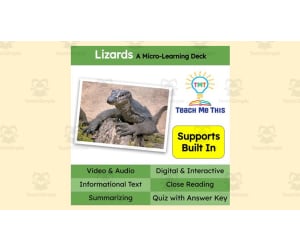
Lizards | Interactive Science Lesson | Micro-Learning Deck
Science, Life Sciences, Animals, Grade 4, 5, 6, 7, Teacher Tools, Lesson Plans
This micro-learning deck is the perfect accessory to your Science instruction! This digital slideshow presents Lizards. Within this slideshow, you will receive: -Video Lesson -Reading Passage w/ Audio -Close Reading -Quick Write The informational texts included in this resource alongside the informal assessments will keep your students engaged from beginning to end.
Author Teach Me This
Tags Interactive Science, Lizards, Habitats, Chat Prompts, Quick Write

The Inuit Gr. 4-6
Social Studies, History, History: Canada, Grade 4, 5, Teacher Tools, Lesson Plans
The Inuit Gr. 4-6: A Comprehensive Teaching Resource The Inuit Gr. 4-6 is a robust teaching resource for educators, developed with a focus on the culture, heritage, and lifestyle of the Inuit people. This well-designed learning tool combines stories, vocabulary development exercises, phonics instruction and spelling training to ensure students achieve comprehensive understanding through high engagement levels. Features: Vivid reading passages for group or individual study promoting critical thinking using comprehension quotes. Involvement in brainstorming and researching activities as well as creative tasks like art projects . An array of student writing projects alongside independent activities providing effective ways to gauge each child's progress in an individualistic or small group setting. This learning package can be enhanced with resources such as videos, books focused on the Inuit people or relevant artworks displayed around the classroom. An enriching enhancement would be inviting guest speakers after completion of this unit for fostering interaction among learners. Specially Crafted Towards Canada-focused Social Studies Lesson: Packed with diverse strategies along with tools such as crosswords and word searches using terms from a designated glossary related to the subject content. Comes complete with an answer key that assists teachers efficiently assessing learners' understanding level while keeping them interactively engaged throughout tasks delivery. Suitable For Diverse Learning Atmospheres: This versatile teaching resource not only caters to formal public-school settings but is also perfect for homeschool setups because of its adjustable formats according to different learning atmospheres. All this convenience is available in an easily accessible PDF file type. Designed mainly for grade 4-6 level children studying "History: Canada" under the Social Studies subject category, this resource provides an enriching experience of an integral facet of Canadian culture and history.
Author Classroom Complete Press
Tags PDF

I WONDER - What Are The Different Types Of Pesticides | Animated Video
Biology, Life Sciences, Science, Insects, Nature & Plants, Grade 4, 5, 6, 7, 8, 9, 10, Lesson Plans, Teacher Tools
Video Introduction An amazing video designed for the students to learn more about STEM. I WONDER - What Are The Different Types Of Pesticides | Animated Video Lesson Plants world is really fascinating! Do you know that some flowers eat insects? Some other plants like to grow on walls can you mention any? Do you know what is the difference between fungicide and pesticide? If yes, Can you tell us more about it? What is nuclear energy? Is it safe to use it? Do you think it is a clean energy? Have you ever read about potential energy? If yes, tell us what it is? Do you think that potential energy can be converted into another form of energy? How it happens? I WONDER - What Are The Different Types Of Pesticides | Animated Video Lesson The video is perfect for encouraging the researching skills for the students, while learning more about this fantastic topic. I WONDER - What Are The Different Types Of Pesticides | Animated Video Lesson This friendly designed video is suitable for students at school, homeschooling, and as a group activity. Format Available in MP4 format.
Author Educational Voice
Rating
Tags What Are The Different Types Of Pesticides, Different Types Of Pesticides, Different Types Of Pesticides Facts, Different Types Of Pesticides Video For Kids, Different Types Of Pesticides Video, Different Types Of Pesticides Facts For Kids
Mindfulness for Exam Stress – Focused Attention Worksheets
Life Skills, Special Resources, Social Emotional Learning (SEL), Social Skills, Special Education Needs (SEN), Speech Therapy, STEM, Resources for Teachers, Classroom Management, Community Building, Grade 6, 7, 8, 9, 10, 11, 12, Worksheets & Printables, Workbooks, Worksheets, Word Searches, Teacher Tools, Assessments, Lesson Plans, Presentations, Quizzes and Tests, Tests
A complete 40-page workbook to promote the use of mindfulness and learn how to manage exam stress using neuroscience-based methods. This workbook includes clear theoretical concepts (e.g., "Amygdala Hijacking", "Working Memory Bottleneck", "Default Mode Network versus Task Positive Network") paired with a total of 10 student worksheets, 3 visually appealing colored models for use throughout the course, an answer key that shows all answers for the worksheets and a teacher guide to implementation. In addition to theory, there are practical tools to help the student manage their stress level and perform well on assessments. Practical tools include: Cognitive Defusion (to eliminate the "failure script" you tell yourself), using Somatic Mapping and micro-interventions (e.g., Physiological Sigh, 5-4-3-2-1 Grounding, Box Breathing), using the POP (Pause, Observe, Proceed) method to eliminate "blanks" on assessments, utilizing pre-test mental rehearsal and post-test decompression exercises. This workbook is perfect for use in the classroom, individual counseling sessions, study skills programs, or home schooling. It is available for immediate digital download, and can be printed from your computer or used in your digital course materials with no preparation needed. These strategies have been researched and proven to effectively lower levels of test anxiety and provide access to your working memory when under pressure to perform. Reasons Parents and Schools Love this Product: Science-based methods that help students calm themselves when they take exams through teaching them how to control their brains instead of just telling them to calm themselves down. No preparation required on the part of teachers with regard to having materials like worksheets, visuals, answer keys, and an implementation guide to use immediately in their classrooms or with students who need support. Helps develop true resilience by teaching students ways to cope with anxiety over a lifetime rather than relying on temporary motivation techniques. All micro-interventions available through this product can be done without being seen or heard, therefore making it more conducive to use during exam time. Very easy for both parents and counselors to understand how to use the micro-interventions in a way that they will get maximum benefit from doing so; great for SEL programs, study skills classes, or using at home. Intended Readers : The target audience for this resource is students who belong to the ages of 12-16 (Grades 7-10). The research case studies were conducted with 7th grade (ADHD/test anxiety), 8th grade, 9th grade and 10th grade (AP Biology) students. The resource sections of the Teacher Implementation Guide focus on the students themselves as they relate to their neurodevelopmental stage (middle and early high school). This resource is perfect for middle school (Grades 7-8) and early high school (Grades 9-10) students, who are preparing for any number of major exams, standardized exams and high stakes assessments (i.e., any subject). Not intended for elementary students (too difficult) or late high school/college students (the language and examples were written specifically for the adolescent population). Copyright / Terms of Use : This book is copyrighted to Syed Hammad Rizvi. It should only be used by you or as a single classroom reference resource. You cannot edit, share, or sell anything contained in this book, so please do not upload it to the internet and make it available for download to anyone else. If you would like to share this book with co-workers, please purchase another copy of this book through Teachsimple and respect the above terms of use. Thanks for using and supporting this product from Syed Hammad Rizvi!
Author Creative Book Store
Rating
Tags Mindfulness, TestAnxiety, ExamStress, StressRelief, AnxietyRelief, MentalHealth, SelfCare, SEL, SocialEmotionalLearning, MindfulnessForStudents
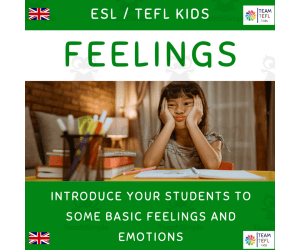
Feelings ESL Lesson Plan For Kids and Early Learners
ELA, Language Development, ESL, Not Grade Specific, Teacher Tools, Lesson Plans
Feelings ESL Lesson Plan For Kids and Early Learners This is a valuable teaching resource that opens the world of feelings for kids and early learners, offering essential support to public school teachers and homeschoolers. It's a part of the TEAM TEFL First 25 ESL Lesson Plans For Kids series, developed for students aged 3 to 14 years. Format: The lesson plan comes in a two-part PDF format - worksheets for students, and comprehensive teacher's notes - aiding easy preparations. Lesson Structure: Describing feelings Understanding why we experience certain emotions Finding solutions to manage negative emotions Practice & Reinforcement: Creative exercises and games integrated within the unit provide active learning opportunities. This allows children to apply what they have learnt without intimidation. Bonus Feature: Flash Cards ! The flash cards make lessons visually appealing. They also reinforce recall making learning experiences lasting beyond class hours. Versatility! The lesson plan can be used in various settings right from group discussions or small group activities to homework assignments making independent study productive amidst remote schooling situations. Educator Support: Gives conversations prompts for educators guiding them in getting thoughtful responses from kids... Main takeaways-User-friendly designs enhance understanding of emotional landscapes fostering empathetic future adults proficiently expressing themselves thus warrioring healthy global communication.
Author TEAM TEFL
Tags Feelings, Emotions, ESL Lesson Plan, Kids, Early Learners

Global Warming CAUSES: Global Warming - FLASH-PC
Science, Earth and Environmental Sciences, Environmental Science, Common Core, Grade 5, 6, 7, 8, Teacher Tools, Lesson Plans
Global Warming CAUSES: Global Warming - FLASH-PC An advanced teaching resource designed to facilitate understanding of global warming and its causes especially for students in grades 5 through 8 studying environmental science. Comprehensive Resource Core Component: Curriculum -aligned reading passages that provide structured information on the underlying causes of global warming. Includes 'before you read' and 'after you read' questions to encourage student engagement and foster critical thinking skills. Diverse Features Printables: Useful for off-screen learning activities or reinforcement exercises, perfect for homework or independent study time. Vocabulary Flash Cards: Incorporated into the package allowing enhancement of environmental science lexicon. Beyond traditional written materials, our tool integrates digital mediums like video and audio pieces that cater to group discussions or smaller breakout sessions, catering to all learners' needs. Educational Standards Alignment The platform adheres to contemporary pedagogical standards aligning with Common Core State Standards . The content is developed following Bloom's Taxonomy principles aiding teachers in fostering higher-order thinking skills among students. Versatile & High-Quality Content Delivery Tool All these resources are offered within one product file accessible through a PC software making it ideal during lesson planning or instruction times. Despite this convenience, there's no compromise on depth and quality of information imparted making 'Global Warming CAUSES: Global Warming - FLASH-PC', a vital tool for educators aiming to instill an in-depth understanding about causes of global warming among their students.
Author Classroom Complete Press
Tags Software (PC)
The Bet: Full Lesson Plan w/ PowerPoints & Graphic Organizers
ELA, Literature, Grade 7, 8, 9, 10, Lesson Plans, Teacher Tools
The Bet Full Lesson Plan Bundle for Middle and High School This comprehensive reading lesson plan bundle for the short story The Bet by Anton Chekhov includes everything educators need to teach this classic text. The bundle contains a complete standards-aligned lesson plan, graphic organizers , worksheets, answer keys, and PowerPoint presentations to teach topics like theme, plot, characterization, figurative language, and more. Implementation ideas include whole-class instruction, small group discussion, independent practice, and essay writing. This practical resource allows flexibility for teachers to pick and choose materials to meet the needs of their students across grades 7-12. With multiple file types provided, educators can easily integrate these engaging activities into their existing literature units.
Author Quality Teaching Products
Tags Reading Lesson, Reading Powerpoint, Short Story, Fiction Text, Graphic Organizer, Theme Of The Bet, What Is The Theme Of The Bet
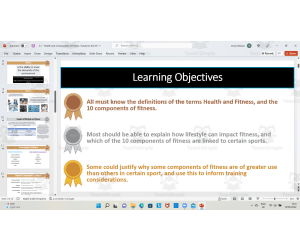
Components of Fitness
, Grade 7, 8, 9, 10, 11, Teacher Tools, Lesson Plans
Components of Fitness: An Indispensable Teaching Resource Components of Fitness is a comprehensive PowerPoint lesson presentation, meticulously crafted with concise content that clarifies the differences between health and fitness. Tailored for educational levels from grade 7 through grade 11, this resource is suitable for whole-class discussions, small-group activities, or homework assignments. Focused Content The teaching tool elaborates clear definitions and characteristics associated with health and fitness along with their components. The intelligently designed slides ensure students comprehend these terms in relation to real-life applications. The presentation also elucidates how lifestyle choices significantly impact personal fitness levels, promoting discussions about healthy habits and lifestyle adjustments. A Deeper Dive into Sports-specific Training In addition to introducing basic concepts, the advanced learning objective of this lesson allows some learners to discuss why certain components are more applicable than others in particular sports activities. Such discussions foster deeper understanding of training considerations specific to different sports types. Ease of Access Components of Fitness, being an easily downloadable Microsoft PowerPoint file type, supports quick access in today’s fast-paced digital classroom environments where educators need effective resources that promote active learning across varied grades simultaneously. Conclusion: Changing Perspectives on Health and Fitness In essence,"Components of Fitness"acts as a catalyst aimed at transforming student perspectives regarding health maintenance through conscious lifestyle changes resulting in enhanced personal fitness levels.. It is much more than just your standard lesson presentation!
Author The PE Tutor
Tags Health, Fitness, Components, Lifestyle Choices, Physical Activities

I WONDER - What Is The Largest Reptile In The World | Animated Video
STEM, Animals, Life Sciences, Science, Biology, Grade 1, 2, 3, 4, 5, 6, 7, 8, Lesson Plans, Teacher Tools
Video Introduction Animal kingdoms are full of fascinating wonders to learn. This video is designed for the students to learn more about animals in different countries. I WONDER - What Is The Largest Reptile In The World | Animated Video Lesson Do you like animals? what is your favorite one? Do you own a pet? If yes, tell us more about it, like what its name? And what do you like most about it? What are the animal kingdoms? Can you write down the characteristics of each animal class like mammals, birds, reptiles, amphibian, fish and mollusks. Do you know that some animals can sing, can you name any of them? What is the largest and the smallest mammal in the world? What is the largest and the smallest bird in the world? What is the largest and the smallest fish in the world? I WONDER - What Is The Largest Reptile In The World | Animated Video Lesson The video is perfect for encouraging the researching skills for the students, while learning more about these fantastic animals. I WONDER - What Is The Largest Reptile In The World | Animated Video Lesson This friendly designed video is suitable for students at school, homeschooling, and as a group activity. Format Available in MP4 format.
Author Educational Voice
Tags What Is The Largest Reptile In The World, What Is The Largest Reptile In The World Video, The Largest Reptile In The World, The Largest Reptile In The World Facts, The Largest Reptile In The World Facts For Kids

Global Warming EFFECTS: Earth's Climate - FLASH-PC
Science, Earth and Environmental Sciences, Environmental Science, Common Core, Grade 5, 6, 7, 8, Teacher Tools, Lesson Plans
Global Warming EFFECTS: Earths Climate - FLASH-PC An unparalleled reservoir of educational content, the central focus of this resource lies primarily within the use in 5th to 8th grade Environmental Science teachings. It delves deeply into the effects and impacts traditioned by global warming on Earth's climate. Purpose: Constructed as an effective teaching tool, FLASH-PC facilitates learners to develop a polished comprehension of how closely interwoven global warming and earth’s climatic transformations are. The package is inclusive of engaging reading passages that feature essential questions; probing inquiries meant to be dialogued before and after each reading session. Components: Videos & Audio: Alongside up-to-date, relevancy-based video resources are dynamic audio components which cater for auditory learners. Interactive Activities: All-inclusive educational activities package every section that allows absorbing learning experiences and helps students retain vital knowledge all while having fun simultaneously. Vocabulary Enhancement & Printables: Flashcards facilitating vocabulary enhancements can be individualized by teachers according to their students' capacities or directly used in a whole group responding process during classes. Printable elements open doors for extra assignment possibilities or small combined crew tasks within class hours - perfect for homework creation or small in-house projects alike. Illustrations & Educational Standards Alignments: The real-life images manifested within these flashcards create unforgettable visual helps regarding environmental concept brought about by Global Warming effects on Earth’s Climatic alterations. This boosts theoretical understanding via concepts also practical implementation achievements regarding theoretical examinations. The design aligns with Common Core State Standards (CCSS), reducing lesson planning stresses around potential compliance concerns. With consideration of Blooms taxonomy during question set creation, critical thinking capability growth is further enhanced throughout the learning process. Uses: This teaching aid allows educators to smoothly incorporate differentiated instruction method either via small group or individual assignments within grade-appropriate constraints. Summary: The user-friendly FLASH-PC software-type teaching box offers a digital pathway into Environmental Science teachings, providing a sound stepping stone to ensure viability for forward-thinking classrooms in the 21st-century education sector.
Author Classroom Complete Press
Tags Software (PC)
I WONDER - What Animals Have Gone Extinct | Animated Video Lesson
STEM, Animals, Life Sciences, Science, Biology, Grade 1, 2, 3, 4, 5, 6, 7, 8, Lesson Plans, Teacher Tools
Video Introduction Animal kingdoms are full of fascinating wonders to learn. This video is designed for the students to learn more about animals in different countries. I WONDER - What Animals Have Gone Extinct | Animated Video Lesson Do you like animals? what is your favorite one? Do you own a pet? If yes, tell us more about it, like what its name? And what do you like most about it? What are the animal kingdoms? Can you write down the characteristics of each animal class like mammals, birds, reptiles, amphibian, fish and mollusks. Do you know that some animals can sing, can you name any of them? What is the largest and the smallest mammal in the world? What is the largest and the smallest bird in the world? What is the largest and the smallest fish in the world? I WONDER - What Animals Have Gone Extinct | Animated Video Lesson The video is perfect for encouraging the researching skills for the students, while learning more about these fantastic animals. I WONDER - What Animals Have Gone Extinct | Animated Video Lesson This friendly designed video is suitable for students at school, homeschooling, and as a group activity. Format Available in MP4 format.
Author Educational Voice
Tags What Animals Have Gone Extinct, What Animals Have Gone Extinct Video, Extinct Animals, Extinct Animals Facts, Extinct Animals Video, Extinct Animals Facts For Kids, Extinct Animals Video For Kids

The Oregon Trail : Mini Unit
Social Studies, History, History: USA, Grade 4, 5, 6, 7, 8, Lesson Plans, Teacher Tools
The Oregon Trail : Mini Unit is a great resource to have students explore and learn about the topic. The materials included are designed to teach the story of the Oregon Trail. Reading material, questions, and activity sheets are provided for the following topics : Planning the journey. Transport. Supplies. Children on the trail. Obstacles. Dangers. Disasters. This unit contains all the files needed for students to explore the topic in detail and for them to show their knowledge at the end. Among the files included are: Presentations file includes information about the The Oregon Trail : Mini Unit Additionally, it presents 3 different options for students to demonstrate their knowledge in the topic. Each of the options are shown with instructions, hints and tips. The options are: A Guidebook project or a Dairy project. Worksheets file includes reading comprehension worksheets and also all necessary worksheets for students to engage in an activity where they need to choose the supplies they need but their wagon can only carry a maximum of 2400 pounds. If they try to carry any more than this then their wagon will probably break and their animals will be too tired. Separated material contains individual ready-to-print worksheets to be used throughout the unit.
Author Mr Gray History
Tags Oregon, Oregon Trail, Oregon Trail Unit, Lesson Plans On The Oregon Trail, Oregon Trail Lesson Plans, Oregon Trail Lesson Plans 5th Grade

Leisure Activities ESL ELA ELL Pre-Intermediate Lesson Plan
ELA, Language Development, ESL, Grade 7, 8, 9, 10, 11, 12, Lesson Plans, Teacher Tools
Leisure Activities ESL ELA ELL Pre-Intermediate Lesson Plan This pre-intermediate English lesson plan helps students learn vocabulary and grammar related to leisure activities. Educators can implement the plan as a whole group activity , small group work, or as a homework assignment to reinforce the material. It begins by introducing vocabulary words and common phrases about hobbies and recreation. Learners then read a short dialogue and respond to comprehension questions. Finally, students complete exercises practicing grammar in context, with an answer key included for the teacher. With engaging content presented across multiple pages, this lesson allows flexibility to pace the activities. It encourages English language learners to expand their skills in a meaningful way. Teachers of grades 3 through 5 can utilize this resource to supplement their curriculum. Flash cards, a writing exercise and extra study are now also included as part of this resource. Components of this lesson plan include: Flash cards A warm-up activity Vocabulary Reading activity Illustrative examples Two closed exercises One open exercise Listening exercise Revision exercise Writing exercises Chatterbox, a recurring feature in our course books encouraging conversation Activity , such as a game, quiz, puzzle, etc., to conclude the class The lesson plan is available in PDF with 29 ready to print pages and one digital access file. One MP3 file included. A part of it is on Google Apps. The answer key is also included for reference.
Author TEAM TEFL
Tags Activities, ESL Lesson, Language Arts, Vocabulary, Reading Passage
I WONDER - How Do People Around The World Collect Water
Earth Sciences, Earth and Environmental Sciences, Science, Environmental Science, Geology, Grade 4, 5, 6, 7, 8, 9, 10, Lesson Plans, Teacher Tools
Video Introduction An amazing video designed for the students to learn more about STEM. I WONDER - How Do People Around The World Collect Water | Animated Video Lesson Our environment is so precious, can you name different ways to help our environment to be clean? Have you ever recycled a material? If yes, tell us what was the material was it paper, plastic, glass or aluminum? How did you recycled it? What are the types of clean energy? How do hydro power works? Where can we find wind turbines? What is climate change? And what we can do to stop it? What are the different types of ecosystems? I WONDER - How Do People Around The World Collect Water | Animated Video Lesson The video is perfect for encouraging the researching skills for the students, while learning more about this fantastic topic. I WONDER - How Do People Around The World Collect Water | Animated Video Lesson This friendly designed video is suitable for students at school, homeschooling, and as a group activity. Format Available in MP4 format.
Author Educational Voice
Rating
Tags How Do People Around The World Collect Water, Water, Water Facts, Water Video, Water Video For Kids, Water Facts For Kids, Collecting Water , Collecting Water Facts, Collecting Water Video
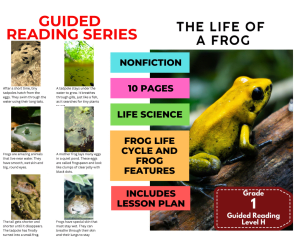
Guided Reading Level H - The Life of a Frog (with Lesson Plan)
ELA, Resources for Teachers, Reading Comprehension, Reading, Science, Animals, Life Sciences, Pre-Reading, Language Development, Vocabulary, Grade 1, 2, 3, Worksheets & Printables, Worksheets, Teacher Tools, Centers, Activities, Literacy Readers, Quizzes, Quizzes and Tests, Assessments, Lesson Plans
This Guided Reading Book - The Life of a Frog (Level H) with lesson plan includes: Guided Reading Color Label (front cover x1) This is a quick way to match the book’s demands to what students can generally handle.. The overall goal is to use the level/color to pick books for several smaller groups. To qualify for a certain level, a student is expected to read a book from that level with about 90–94% accuracy. If a student is consistently accurate and understands, move up a level. If the student is struggling at that level, drop down and add more support. Each student will improve at completely different rates, but it is generally one of the best ways to check progress across the class. DOWNLOAD THE CATALOG TO VIEW ALL GUIDED READING BOOKS AVAILABLE (SORTED LEVELS A-Z) Pre-Reading Question (x1) Teacher asks the prompt aloud, can be while showing the cover or first page. Students share what they already know, or make educated guesses from the cover. Prompt them to use the target vocabulary. Write some of their responses on the board to look back at during the reading. Vocabulary Words (x5) Introduce the five words, best doing it one at a time. Start by saying it, while students repeat and then see if anyone knows what it means before reading further. Read through the meaning and try to briefly connect each word to a picture or gesture so it’s meaningful. Ask students to flip through the book pages and point to where they see each of the vocabulary words. While reading the book pause upon coming across one of the vocab words or read the sentence twice to make sure students understand the word has appeared. Optional: Ask students to raise hands whenever they see/hear one of the new words. Guided Reading Pages (x10) Check the book snapshot (below) for: primary topic - do you need to prep extra reading or intro materials on this? what is taught best - decide on 1-2 bullets to focus on, use the prompt or words provided here for best results. learning goals - what you are checking for students to be able to do after the session, elicit answers using prompts or words provided. key vocabulary (see section above). questions overview - so you know what is coming up and if you need to prep extra materials to assist understanding. Run the lesson You may have already looked at a few of the pages together, but you can show them some of the pictures again first to set meaning. Depending on how much time you have and how familiar your students are with guided reading class, you may want to read the book aloud first with the group first. Students whisper or partner read, while you listen in. If time, do it as a group, one student reading a page each. Use the guided page’s prompts to coach: “Check the picture / does it make sense?” “Point under the words / try the first sound” “Reread the sentence smoothly”. Try to focus more on one student per session (rotating every time), so you can work out if they are ready to move up or need to move down a level. Comprehension Questions (back cover x3) This is your way to check that students didn’t just say the words, but actually understood the text. First, let students answer by pointing to the page/picture and saying a short sentence. After any answer, follow with: “Show me where you found that in the text.” In bigger groups, have partners answer first (10–20 seconds), then call on 2–3 students to share. Differentiation tips: Emerging speakers/struggling readers: oral + pointing On-level: oral in a full sentence Higher: one written sentence or draw + label Book Snapshot Title: The Life of a Frog Genre: Nonfiction (informational life cycle) Subject: Life Science + Reading (Informational Text) Primary Topic: Frog life cycle and frog features Estimated Guided Reading Level (A–Z): H What This Book Teaches Best Explains where frogs live and describes basic frog traits (smooth, wet skin; big, round eyes; living near water). Teaches the frog life cycle in clear steps: eggs (frogspawn) → tadpoles → legs grow → tail disappears → small frog. Shows how a tadpole lives and grows in water, including breathing through gills and eating tiny plants. Describes how frogs breathe (through skin and lungs) and how they get food (long, sticky tongue catching insects). Connects body parts to movement (strong back legs help frogs hop and jump high). Learning Goals Students will describe where frogs live and name physical traits the text mentions. Students will explain what frog eggs are called and describe what they look like. Students will retell the main stages of a frog’s life from eggs to a small frog. Students will describe how tadpoles move, breathe, and find food in the water. Students will explain how the frog’s body changes as legs grow and the tail disappears. Students will use text details to describe how a frog hunts and how it jumps. Key Vocabulary From the Text frogspawn — frog eggs that look like jelly. tadpoles — baby frogs that live in water and have tails. gills — body parts that help an animal breathe underwater. lungs — body parts used for breathing air. insects — small animals a frog can catch and eat. Discussion Prompts Pre-reading question: What changes do you think happen as a tadpole grows into a frog? Comprehension questions: Where does a mother frog lay many eggs, according to the text? Comprehension questions: What do tiny tadpoles use to swim through the water? Comprehension questions: What happens to the tadpole’s tail as it turns into a small frog? Printing Tips 1. Best Printing Method (Recommended) “Booklet” Printing (Best if Available) If your printer or PDF viewer supports Booklet Printing , use this. Settings to use: Print mode: Booklet Paper size: Letter or A4 (either works) Orientation: Landscape Print on both sides: Yes Flip on: Short edge Scaling: Fit to printable area Booklet subset: First test: Front sides only Then: Back sides only This will automatically: Pair pages correctly Put the cover on the outside Align everything for folding After printing, fold in half and staple along the spine . 2. If “Booklet” Printing Is NOT Available You can still print this correctly with manual duplex printing . Step-by-step: Open the PDF. Choose Print . Set: Orientation: Landscape Pages per sheet: 1 Print on both sides: Yes Flip on: Short edge Print all pages . Because each PDF page already contains two facing book pages, the result will still fold cleanly into a book. Thousands of Cored Education products are included with your TeachSimple membership. Download links and encyclopedia index available here.
Author Cored Education
Rating
Tags Reading Comprehension, Reading Passages, Reading, Guided Reading, Guided Reading Lesson Plan, Guided Reading Activity, Pre-reading, Science Lesson Plans, Animals, Frog Life Cycle
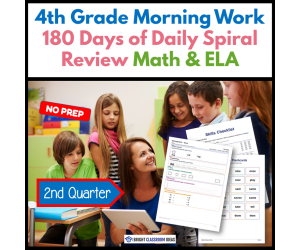
4th Grade Morning Work | 180 Days Review | Math & ELA | 2nd Quarter
ELA, Math, Grade 4, Centers, Activities, Lesson Plans, Teacher Tools, Worksheets & Printables
Grade 4 Morning Work | 2nd Quarter Student Pages + Full-Year Teacher Resources Keep your fourth grade mornings consistent, purposeful, and easy to manage with 45 days of Grade 4 morning work for Quarter 2 . This resource includes ALL teacher resources for the complete 180-day program , while the student practice pages in this pack are specifically for 2nd Quarter: Days 46–90 . What’s Included ⭐ FULL-YEAR TEACHER RESOURCES You receive the complete teacher toolkit for planning, organizing, differentiating, and assessing the entire 180-day Grade 4 morning work program : Teacher Guide Full 36-week Pacing Guide Skills Checklist for tracking student progress Fully Editable Morning Work Schedule Weekly planning support 36-week Year-at-a-Glance Planner Differentiation strategies Complete Answer Key for Days 1–180 Printing and classroom organization guidance 📚 STUDENT PAGES INCLUDED: 2ND QUARTER The student portion of this product includes Days 46–90 , providing 45 days of ready-to-use Grade 4 morning work . Each day includes a two-page set with 24 consistent sections . Page A — Language Arts Grammar Vocabulary Reading comprehension and reading skills Writing Vocabulary Word of the Day Writing Prompt Reading Challenge Morning SEL Check-In Joke of the Day Brain Teaser Growth Mindset Would You Rather Page B — Math & Think Number Sense Mental Math & Fact Fluency Multi-Digit Multiplication Long Division Fractions Decimals Measurement Geometry Data and Graphs Word Problems Math Challenges Daily Enrichment Fun Facts Important: The student practice pages included in this product are Days 46–90 only . The teacher resources and complete Answer Key cover all 180 days . How It Works in the Classroom Use this Grade 4 morning work as a daily bell ringer, morning routine, independent practice, homework, or spiral review. Each daily two-page set is designed to take approximately 10–15 minutes . Students work through Language Arts and Math & Think while you circulate, confer, pull small groups, or prepare for the day. The predictable format makes it easy for students to know what to expect each morning. Use the pages for: Morning work Bell ringers Homework Early finishers Sub plans Small-group warm-ups Math intervention Spiral review Test preparation Independent practice Print the pages two-sided, flipping on the long edge , for one sheet per student per day. You can print a week at a time or staple the Quarter 2 pages into a student packet. Standards & Learning Goals This Grade 4 morning work resource provides daily spiral review across important Grade 4 ELA and math skills. The full program covers grammar, vocabulary, reading, writing, number sense, operations, fractions, decimals, measurement, geometry, data, and problem solving. 📖 ELA Skills Students practice: Grammar and language conventions Vocabulary Prefixes, suffixes, and word meanings Reading comprehension Supporting details Cause and effect Writing and constructed responses Revising and editing Reading challenges Vocabulary development Quarter 2 specifically shifts reading practice toward supporting details and cause-and-effect relationships. Full reading passages appear twice each week. Other days target specific reading skills such as main idea, supporting details, cause and effect, inference, and text features. 🔢 Math Skills Students practice: Number sense through 999,999 Mental math Multi-digit multiplication Division with remainders Fractions Decimals Measurement Geometry Data and graphs Word problems Multi-step mathematical reasoning Quarter 2 increases the difficulty from Quarter 1, moving into larger multiplication factors and division with remainders while expanding number sense to 999,999 . Students continue applying their skills through real-world word problems, visual models, data displays, geometry, measurement, and daily math challenges. Why Teachers Love It ✨ You get ALL the teacher resources for the entire year. The Teacher Guide, pacing guide, Skills Checklist, editable schedule, differentiation support, and complete 180-day Answer Key are included. ✨ Students get exactly what they need for Quarter 2. Days 46–90 provide a complete 45-day student set for the second quarter. ✨ Save valuable planning time. The daily routine is already organized across ELA, math, enrichment, and engaging thinking activities. ✨ Build student independence. The same 24 sections appear every day, helping students quickly learn the routine and work independently. ✨ True spiral review. Skills return throughout the 180-day program while the difficulty increases. Every passage, grammar item, vocabulary item, word problem, joke, puzzle, and prompt is different across the 180 days. ✨ A built-in difficulty ramp. Quarter 2 moves students from smaller multiplication and division work into larger factors and division with remainders . Reading also progresses toward supporting details and cause and effect . ✨ Differentiate with ease. The Teacher Guide suggests highlighting fewer sections for students who need a shorter task, reading passages aloud, using multiplication charts, and adding extension challenges for advanced learners. ✨ Support small groups. Page B can double as a warm-up for math intervention groups, giving you meaningful practice without creating another activity. ✨ Track student growth. Use the Skills Checklist to mark skills as Introduced, Practiced, or Mastered and identify areas that need additional instruction. ✨ Keep mornings engaging. Jokes, brain teasers, growth mindset prompts, SEL check-ins, reading challenges, daily enrichment, and Would You Rather questions add variety to the academic routine. ✨ Have answers for the whole year. The Answer Key provides answers for the complete Days 1–180 program, so your teacher materials remain useful across every quarter. Looking for Grade 4 morning work for Quarter 2 that saves planning time and keeps students practicing essential skills every day? This pack includes 45 days of student practice (Days 46–90) PLUS ALL teacher resources for the full 180-day program . Give your fourth graders a predictable, engaging morning routine that strengthens ELA and math skills while building independence throughout the school year! Print it, prep it, and make your fourth grade mornings easier! 💛
Author Bright Classroom Ideas Marketplace
Rating
Tags Math, Ela, Morning Work, Back To School

I WONDER - What Does The Respiratory System Do | Animated Video Lesson
Human Body, Life Sciences, Science, Biology, STEM, Grade 4, 5, 6, 7, 8, 9, 10, Lesson Plans, Teacher Tools
Video Overview The human body is full of fascinating wonders to learn. This video is created to help the students recognize the anatomy and the job of the human body. I WONDER - What Does The Respiratory System Do | Animated Video Lesson Every part and organ in our human body is vital so let's see how important they are. Have you ever imagined how we look like if we didn't have a skeleton? Did you know that because we have our amazing muscles we can stand! Do you know how many teeth do we have? Have you ever wondered about the food journey inside our body? Can you name all the glands in our body? Why do we have skin? Our nervous system is really good at sending signals. Can you tell us more about it? Are you really good at Mathematics, painting, or any other thing? You should really thank your brain about it! The famous five senses are really doing a great work? Can you explain how every sense works? I WONDER - What Does The Respiratory System Do | Animated Video Lesson The video is perfect for encouraging the researching skills for the students, while learning more about our fantastic human body. I WONDER - What Does The Respiratory System Do | Animated Video Lesson This friendly designed video is suitable for students at school, homeschooling, and as a group activity. Format Available in MP4 format.
Author Educational Voice
Tags What Does The Respiratory System Do, What Does The Respiratory System Do Video, Respiratory System, Respiratory System Facts, Respiratory System Facts For Kids, Respiratory System Video, Respiratory System Video For Kids