



3,984 products added recently
Page 135 - Popular Lesson Plans
Explore a curated selection of popular lesson plans that have proven successful in classrooms. Covering various subjects and topics, these resources provide innovative ideas and activities. Use them to refresh your curriculum and engage your students with tried-and-true methods.

 Show filters


The Later Middle Ages World History Unit
Social Studies, History, History: World, Grade 6, 7, 8, 9, Teacher Tools, Lesson Plans
The Later Middle Ages World History Unit This is aThe Later Middle Ages World History Unit that will provide students with resources from the beginning to end of a unit. This unit will leave students feeling more knowledgeable about this point in history and equipped to tackle any and all comprehensive activities related toThe Later Middle Ages. This unit is great for middle school students. What You Get: You will receive a zip file that includes: 1. Info Sheet 2. Homework 3. Lesson Plans 4. Crosswords 5. Flashcards 6. Presentation 7. Tests How to Use The Later Middle Ages World History Unit: This is a comprehensive unit of study that will have many components to make learning come to life: Worksheets cover six topics on the history of the later Middle Ages: • Popes and Kings. • The Crusades • The Church in the Middle Ages. • Magna Carta • The 100 Years War • The Black Death The basic set includes text readings, analysis questions, and a variety of different project and image sheets. Modified worksheets are included in the file which have more concise readings as well as a variety of different tasks and activities for ELL students and those who require a modified curriculum. Each worksheet has a corresponding answer sheet to help check students work. A test is included which features multiple choice, short written response, and picture questions. Students can use a set of flashcards to help revise of their tests. A PowerPoint presentation is included which features enlarged readings, animations, and images to help guide students through the materials and illustrate key points. Also included are replacement note-taking slides and sheets which can be used in place of the readings/worksheets for each topic if you wish to save time or practice note taking. Crossword sheets have been made for each topic as potential review/challenge activities for students. I hope you enjoy!! Take A Look At My Best Sellers: Biscayne Bay National Park Geography Unit Medieval Castles Mini Unit The Underground Railroad Mini Unit Japan Complete Elementary Unit Navajo Code Talkers Mini Unit Black Canyon National Park Geography Unit You Can Find More Resources at My Store Front Here: Mr. Gray History
Author Mr Gray History
Tags The Later Middle Ages, World History Unit, History Assessment, Flash Cards, Geography, Crossword Puzzles, Magna Carta, The Black Death
I WONDER - What Food Do Inuit People Eat | Animated Video Lesson
History, Social Studies, Geography, History: Asian, History: Canada, History: Europe, History: USA, History: World, Grade 3, 4, 5, 6, 7, 8, 9, Lesson Plans, Teacher Tools
Video Introduction An amazing video designed for the students to learn more about history. I WONDER - What Food Do Inuit People Eat | Animated Video Lesson Do you like history? Which topic do you really enjoy about history? Have you ever read an interesting fact about the Vikings? If yes, can you mention them? What do you like most about the Victorian era? Can you name all the Tudors? Have you ever wondered how people used to live in ancient Japan and ancient China? Do you know any interesting facts about ancient Egyptians and the Pharaohs? Have you ever visited South America? What do you know about Incas and Aztecs? Celtic culture was really one of a kind, can you name any of the places that Celts used to live in? Imagine yourself living during the ancient Roman empire, how your life will look like? Ancient Greece was an amazing place to live in. What do you know about ancient Greek life? I WONDER - What Food Do Inuit People Eat | Animated Video Lesson The video is perfect for encouraging the researching skills for the students, while learning more about history. I WONDER - What Food Do Inuit People Eat | Animated Video Lesson This friendly designed video is suitable for students at school, homeschooling, and as a group activity. Format Available in MP4 format.
Author Educational Voice
Tags What Food Do Inuit People Eat, What Food Do Inuit People Eat Video, Inuit People, Inuit People Video, Inuit People Video For Kids, Inuit People Facts, Inuit People Facts For Kids, The Inuit

I WONDER - Where Does Lava Come From | Animated Video Lesson
Geography, Social Studies, Earth Sciences, Earth and Environmental Sciences, Science, Environmental Science, Grade 4, 5, 6, 7, 8, 9, 10, Lesson Plans, Teacher Tools
Video Introduction An amazing video designed for the students to learn more about natural disasters in different countries. I WONDER - Where Does Lava Come From | Animated Video Lesson What do you know about this natural disaster? Do you know in which part of the world this could happen? Have you ever read about the safety misusers that we could have to protect ourselves from this natural disaster? If yes, can you tell us more about them? Can you name other natural disasters? If yes, tell us more about where they are likely to happen? And how frequently? Do you like reading about Geography? What is your favorite country in the whole world? If you are going on a trip where it will be? Which country? What you are going to see there? Does this country has a famous place to visit? Do you like reading about Geology? If yes, what is your favourite topic? I WONDER - Where Does Lava Come From | Animated Video Lesson The video is perfect for encouraging the researching skills for the students, while learning more about this fantastic phenomenon. I WONDER - Where Does Lava Come From | Animated Video Lesson This friendly designed video is suitable for students at school, homeschooling, and as a group activity. Format Available in MP4 format.
Author Educational Voice
Tags Where Does Lava Come From, Where Does Lava Come From Video, Lava, Lava Facts, Lava Facts For Kids, Lava Video, Lava Video For Kids, Volcanoes, Volcano, Volcano Video
I WONDER - What Is Catatumbo Lightning | Animated Video Lesson
Earth Sciences, Earth and Environmental Sciences, Science, Grade 4, 5, 6, 7, 8, 9, 10, Lesson Plans, Teacher Tools
Video Introduction An amazing video designed for the students to learn more about famous phenomena in different countries. I WONDER - What Is Catatumbo Lightning | Animated Video Lesson Weather phenomena can affect our lives, crops and even animals! Can you name any of the weather phenomena that happened in your country? Do you know when hailstorms happen? And what is the most country who has lots of hailstorms happening per year? Do you think the all countries have four seasons? If no, can you name any? Why do some animals sleep at winter? Can you name any of these animals? I WONDER - What Is Catatumbo Lightning | Animated Video Lesson The video is perfect for encouraging the researching skills for the students, while learning more about this fantastic phenomenon. I WONDER - What Is Catatumbo Lightning | Animated Video Lesson The video is perfect for encouraging the researching skills for the students, while learning more about this fantastic phenomenon. Format Available in a PDF format.
Author Educational Voice
Rating
Tags What Is Catatumbo Lightning, Catatumbo Lightning, Catatumbo Lightning Facts, Catatumbo Lightning Video, Catatumbo Lightning Video For Kids, Catatumbo Lightning Facts For Kids, Severe Weather Phenomena

Energy: Thermal Energy
Science, Physics, Common Core, Grade 5, 6, 7, 8, Teacher Tools, Lesson Plans
Energy: Thermal Energy This is a specialized chapter from the comprehensive lesson plan on energy. It is designed to demystify the complex topic of thermal energy and make it more accessible for students. Suitable for grades 5 through 8, this resource complements instruction in science, specifically physics. Key Features: User-friendly language and vocabulary to facilitate understanding, ideal for all learners including remedial students. Adoption of both information delivery and engaging activities make it suitable for whole-class lessons, small group work or individual homework assignments. Delves into related topics such as Mechanical Energy, Sound Energy and Waves as well as Light Energy thereby adding depth to learning by allowing students to explore other variations of potential energy. In addition: This module also helps learners understand how energy transmits and transforms. . Reading passages designed to boost comprehension skills are provided along with colorful mini posters that support visualization when explaining concepts. All content aligns with Common Core State Standards and meets Bloom's Taxonomy requirements hence promoting cognitive development ranging from remembering facts through creating new ideas. . The teaching resource is offered in a PDF format ensuring compatibility across different devices. Teachers can easily use them during presentations or print out as needed making it a convenient tool in every educator's toolbox. Total Takeaway: The 'Energy: Thermal Energy' instructional plan offers educators an invaluable tool which simplifies the process of helping their students navigate the complexities associated with thermal energy while enriching their overall learning experience during physics lessons revolving around different forms of natural and man-made energies.
Author Classroom Complete Press
Tags PDF

Climate Change: Reduction: Transportation Gr. 5-8
Science, Earth and Environmental Sciences, Environmental Science, Grade 5, 6, 7, 8, Teacher Tools, Lesson Plans
Climate Change: Reduction: Transportation Gr. 5-8 Climate Change: Reduction: Transportation Gr. 5-8 is an innovative teaching resource designed to explore the critical topic of climate change with students from Grade 5 to Grade 8. This informative material consists of a chapter called "Transportation", carefully segmented from the full lesson plan titled "Climate Change: Reduction". The content and topics contained within intend to spark creativity among learners while enlightening them on ways to reduce human consumption and output. Ideal for use in classrooms, small group lessons, or as homework assignments, this teaching resource serves as an effective educational tool that meets grade-level standards. It holds immense value for both advocates and skeptics of climate change, providing valuable insights that promote environmental awareness among our future generations. Learners Engagement Learners are prompted not just to absorb information, but also use it in practical engagements such as designing their fantasy car fueled by alternative energy or crafting a pamphlet highlighting different transportation options within their locality. The study extends itself into other important areas such as product life cycles with focus given on industries' efforts towards emission reduction. This lesson plan isn't merely limited to theoretical education – it ignites learners' imagination by allowing them to create their ideal green city running entirely on clean energy sources. Learners gain knowledge about green buildings and understand worldwide efforts in creating communities devoid of carbon dioxide emissions and waste. Apart from the primary text, Climate Change: Reduction: Transportation Gr. 5-8 includes hands-on activities designed according to Bloom's Taxonomy and STEAM initiatives - an effective integrated approach combining Science, Technology Engineering Arts Mathematics concepts into coordinated learning experiences which maximize student engagement whilst enhancing skill development seamlessly seeped across multiple topic areas . Furthermore, engaging crosswords, word searches and comprehension quizzes enhance understanding while adding fun elements during instruction. An answer key provides clear guidance ensuring educators can efficiently measure student progress. Presentation Format For your ease of use when delivering these exciting classes about climate change reduction with a focus on transportation methods it is provided in a PDF file format. With this resource at hand, teaching environmental sciences in grades 5 through 8 will become a more enriching and illuminating experience.
Author Classroom Complete Press
Tags PDF
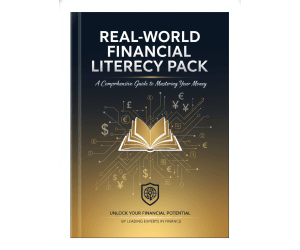
Real World Financial Literacy Pack
Math, Money, Statistics, Time, Mental Health, P.E. & Health, Mindfulness, Research, Resources for Teachers, Classroom Management, Grade 6, 7, 8, 9, 10, 11, 12, Assessments, Teacher Tools, Lesson Plans, Outlines, Presentations, Worksheets & Printables, Workbooks, Worksheets, Word Searches
The Real-World Financial Literacy Pack Professional Edition is an extensive educational resource that contains 14 detailed financial worksheets and modules within its 52-page scope. The financial resource covers essential financial management skills such as financial goal setting using the SMART system, understanding paychecks and deductions, the 50/30/20 budgeting system, the difference between wants and needs, daily expense management, banking and ledger balancing, credit score explanations, debt management strategies such as the debt snowball and avalanche methods, compound interest, emergency savings, smart grocery shopping using unit pricing, apartment move-in cost calculators, automobile purchase vs. lease comparisons, and net worth statements. The financial resource is suitable for developing financial independence and is geared toward interactive classroom and homeschooling environments, progressing from basic financial management skills to complex decision-making strategies for financial success. Unleash vital high school financial literacy knowledge with the Real-World Financial Literacy Pack Professional Edition – a 52-page PDF package of 14 printable worksheets covering budgeting, managing debt, credit scores, compound interest, emergency savings, grocery shopping techniques, cost of apartments, cost of cars (loans vs. leases), and net worth calculations. Ideal for high school educators, homeschooling parents, and teachers looking for exciting personal finance activities, life skills learning, and money management instruction. This SEO-optimized digital product includes step-by-step instructions, calculation tools, self-assessment activities, and visual charts to teach high school students vital budgeting tips, debt relief techniques, credit building knowledge, and wealth creation skills. Improve financial freedom for your students, avoid debt traps, and ready them for adulthood with these classroom-ready, homeschool-friendly financial literacy worksheets. Why Parents/Schools Love It: Practical Life Skills Focus: Engages students with real-world topics like budgeting, debt, and credit in an interactive worksheet style that prepares young people for independent living. Comprehensive Coverage: Offers 14 modules with examples, calculations, and visuals, making it an exhaustive curriculum that can cover personal finance classes or homeschooling. Easy Implementation: Includes printable, ready-to-use resources with easy-to-follow instructions that even parents without financial knowledge can follow. Fosters Financial Independence: Encourages responsible practices like goal setting, expense tracking, and smart shopping that can help young adults avoid debt in the future. Adaptable for All Learners: Suitable for high school students with different learning abilities, including thought-provoking questions that stimulate critical thinking. Target Student Classes: From the comprehensive analysis of the PDF, the various terms such as "high school students," "adolescence to early adulthood," and the examples provided that are suitable for teens who are getting ready for college, part-time jobs, or living on their own (such as saving for prom, college, paychecks, loans, etc.) indicate that the target classes for the provided material are high school students in grades 9-12, ages 14-18 years old. The material provided assumes that the reader knows basic math skills but has no prior financial knowledge, thus eliminating the possibility of using the material for middle school students or college-level classes. Copyright/Terms of Use: This Book was copyrighted by Syed Hammad Rizvi. This resource is for personal and single classroom use only. You shall not reproduce, redistribute, or sell in any manner any part of this resource. This means that you shall not place it on the Internet in such a way that it can be found and downloaded by anyone. If you wish to share it with your colleagues, you can buy additional licenses from Teachsimple. Thank you for your understanding. This product is happily brought to you by Syed Hammad Rizvi
Author Creative Book Store
Rating
Tags FinancialLiteracy, PersonalFinance, BudgetingTips, MoneyManagement, HighSchoolFinance, HomeschoolResources, TeacherTools, FinancialEducation, DebtManagement, CreditScoreTips

I WONDER - What Are Zodiac Constellations | Animated Video Lesson
Space, Earth and Environmental Sciences, Science, Grade 6, 7, 8, 9, 10, 11, 12, Lesson Plans, Teacher Tools
Video Introduction An amazing video designed for the students to learn more about space facts. I WONDER - What Are Zodiac Constellations | Animated Video Lesson Do you like reading about space? If yes, what is your favorite topic? What do you know about our solar system? What is the smallest planet in our solar system? What is the biggest planet in our solar system? What is the hottest planet in our solar system? And what is the coldest one? Do you think there are aliens? If yes, what do you think they look like? What do they eat and how they speak to each other? Where do they live? What is a galaxy? And what is a milky way? Have you recently saw a shooting star? If yes, tell us more about it, like when did it happen and where? What is a blackhole? Can a blackhole gets bigger by time? Do you like counting the stars? What do you think a star is made of? I WONDER - What Are Zodiac Constellations | Animated Video Lesson The video is perfect for encouraging the researching skills for the students, while learning more about the fantastic space. I WONDER - What Are Zodiac Constellations | Animated Video Lesson This friendly designed video is suitable for students at school, homeschooling, and as a group activity. Format Available in MP4 format.
Author Educational Voice
Tags What Are Zodiac Constellations, What Are Zodiac Constellations Video, Zodiac Constellations, Zodiac Constellations Facts, Zodiac Constellations Facts For Kids, Zodiac Constellations Video, Zodiac Constellations Video For Kids

I WONDER - Who Is Jane Goodall | Animated Video Lesson
Biographies, Social Studies, Grade 4, 5, 6, 7, 8, 9, 10, Lesson Plans, Teacher Tools
Video Introduction An amazing video designed for the students to learn more about famous people in different countries. I WONDER - Who Is Jane Goodall | Animated Video Lesson Do you know this person? How much do you know about him/her? Who is your idol? Why did you choose this person? Tell us more about him/her? Who is your favorite athlete? Or what is your favorite team? Have you recently heard a story about a famous person? Who was this person? Can you tell us more about him/her. Who is your favorite president, king, or queen? Why you chose that person? In your country, who are the most famous people? What did they do? Can you tell us more about them. What is your favorite invention? Who invented it? Who is your favorite artist? What is the most famous thing he/she have done? What is the most enjoyable you have read before? Who wrote it? I WONDER - Who Is Jane Goodall | Animated Video Lesson The video is perfect for encouraging the researching skills for the students, while learning more about this fantastic place. I WONDER - Who Is Jane Goodall | Animated Video Lesson This friendly designed video is suitable for students at school, homeschooling, and as a group activity. Format Available in MP4 format.
Author Educational Voice
Rating
Tags Who Is Jane Goodall, Who Is Jane Goodall Video, Jane Goodall, Jane Goodall Facts, Jane Goodall Video, Jane Goodall Video For Kids, Jane Goodall Facts For Kids, Jane Goodall Life, Famous People
I WONDER - How Big Is The Amazon River | Animated Video Lesson
Geography, Social Studies, Grade 3, 4, 5, 6, 7, 8, 9, Lesson Plans, Teacher Tools
Video Introduction An amazing video designed for the students to learn more about famous places in different countries. I WONDER - How Big Is The Amazon River | Animated Video Lesson What do you know about this place? Do you know in which part of the world it is? Have you ever visited this place? If yes, can you tell us more about your adventure, and what do you like the most about this place? Do you like reading about Geography? What is your favorite country in the whole world? If you are going on a trip where it will be? Which country? What you are going to see there? Does this country has a famous place to visit? I WONDER - How Big Is The Amazon River | Animated Video Lesson The activity is perfect for encouraging the researching skills for the students, while learning more about this fantastic place. I WONDER - How Big Is The Amazon River | Animated Video Lesson This friendly designed video is suitable for students at school, homeschooling, and as a group activity. Format Available in MP4 format.
Author Educational Voice
Tags How Big Is The Amazon River, How Big Is The Amazon River Video, The Amazon River, Amazon River, Amazon River Facts, Amazon River Facts For Kids, Amazon River Video, Amazon River Video For Kids
I WONDER - Do Sharks Have Bones | Animated Video Lesson
Animals, Life Sciences, Science, Biology, STEM, Grade 3, 4, 5, 6, 7, 8, 9, Lesson Plans, Teacher Tools
Video Introduction Animal kingdoms are full of fascinating wonders to learn. This video is designed for the students to learn more about animals in different countries. I WONDER - Do Sharks Have Bones | Animated Video Lesson Do you like animals? what is your favorite one? Do you own a pet? If yes, tell us more about it, like what its name? And what do you like most about it? What are the animal kingdoms? Can you write down the characteristics of each animal class like mammals, birds, reptiles, amphibian, fish and mollusks. Do you know that some animals can sing, can you name any of them? What is the largest and the smallest mammal in the world? What is the largest and the smallest bird in the world? What is the largest and the smallest fish in the world? I WONDER - Do Sharks Have Bones | Animated Video Lesson The video is perfect for encouraging the researching skills for the students, while learning more about these fantastic animals. I WONDER - Do Sharks Have Bones | Animated Video Lesson This friendly designed video is suitable for students at school, homeschooling, and as a group activity. Format Available in MP4 format.
Author Educational Voice
Tags Do Sharks Have Bones, Do Sharks Have Bones Video, Sharks, Shark, Sharks Facts, Sharks Facts For Kids, Sharks Video, Sharks Video For Kids, Shark Bones, Shark Bones Facts

Meerkats | Interactive Science Lesson | Micro-Learning Deck
Science, Life Sciences, Animals, Grade 6, 7, 8, 9, Teacher Tools, Lesson Plans
This micro-learning deck is the perfect accessory to your Science instruction! This digital slideshow presents Meerkats. Within this slideshow, you will receive: -Video Lesson -Reading Passage w/ Audio -Close Reading -Quick Write The informational texts included in this resource alongside the informal assessments will keep your students engaged from beginning to end.
Author Teach Me This
Tags Meerkats, Interactive, Animal, Science, Digital Lesson

I WONDER - What Are The Different Blood Types | Animated Video Lesson
Human Body, Life Sciences, Science, Biology, STEM, Grade 6, 7, 8, 9, 10, 11, 12, Lesson Plans, Teacher Tools
Video Overview The human body is full of fascinating wonders to learn. This video is created to help the students recognize the anatomy and the job of the human body. I WONDER - What Are The Different Blood Types | Animated Video Lesson Every part and organ in our human body is vital so let's see how important they are. Have you ever imagined how we look like if we didn't have a skeleton? Did you know that because we have our amazing muscles we can stand! Do you know how many teeth do we have? Have you ever wondered about the food journey inside our body? Can you name all the glands in our body? Why do we have skin? Our nervous system is really good at sending signals. Can you tell us more about it? Are you really good at Mathematics, painting, or any other thing? You should really thank your brain about it! The famous five senses are really doing a great work? Can you explain how every sense works? I WONDER - What Are The Different Blood Types | Animated Video Lesson The video is perfect for encouraging the researching skills for the students, while learning more about our fantastic human body. I WONDER - What Are The Different Blood Types | Animated Video Lesson This friendly designed video is suitable for students at school, homeschooling, and as a group activity. Format Available in MP4 format.
Author Educational Voice
Tags What Are The Different Blood Types, What Are The Different Blood Types Video, Different Blood Types, Different Blood Types Facts, Different Blood Types Facts For Kids, Different Blood Types Video, Different Blood Types Video For Kids
Motion: What is Motion? - FLASH-PC
Science, Physics, Common Core, Grade 5, 6, 7, 8, Teacher Tools, Lesson Plans
Motion: What is Motion? - FLASH-PC A highly useful teaching resource, especially designed to assist educators from public school teachers to homeschoolers in conveying the concept of Motion. It has been created as an optimal tool for learners within the bracket of Grade 5 through Grade 8. Focus and Content Includes Science with a primary focus on Physics. Presents curriculum -oriented content around the integral question: "What is motion?" This dynamic learning aid presents a wealth of informative material derived from precise scientific resources. The resources house reading passages that provide learners with an understanding of motion. 'Before you read' and 'after you read' questions help foster comprehension and reinforces learning. Provided Material: Vocabulary flashcards detailing crucial terminology related to motion, ensuring clear communication when furthering their scientific knowledge base. The package extends beyond typical resources by presenting printable materials, allowing tutors the ability to broaden their teaching tools within classroom environments or home education settings. Incorporates video and audio mediums coupled with interactive activities as reinforcement mechanisms enabling long-term retention of course content for young learners. This product adheres strictly to Common Core State Standards while mirroring Bloom's Taxonomy principles. Motion: What is Motion - FLASH-PC: - Formulated keeping modern educational needs in mind. - Operates as user-friendly software for PC. - Ensures high-quality science education delivery. Multipurpose Application: Can be used within small group discussions or designated homework assignments – catering flexibility, variety, and comprehensiveness. A versatile instrument within any educational setup – public schools or home-based learning scenarios. Aim: To facilitate profound understanding of motion among learners, making Physics an accessible, engaging and enriching field for young minds.
Author Classroom Complete Press
Tags Software (PC)
Number & Operations: Base-Ten & Place Value for 3rd-5th - Practice the Skill 2 - MAC Software
Math, Place Value, Common Core, Grade 3, 4, 5, Teacher Tools, Lesson Plans
Number & Operations: Base-Ten & Place Value for 3rd-5th - Practice the Skill 2 - MAC Software Number & Operations: Base-Ten & Place Value for 3rd-5th - Practice the Skill 2 - MAC Software is a comprehensive teaching tool intended to fortify student comprehension of Base-Ten and Place Value concepts in Number and Operations. This software is geared towards pupils studying in Grades 3, 4, and 5. The focal point resides in enabling learners to discern what numerical value represented by given base-ten blocks through timed drill exercises. This pedagogical resource disseminates ample content founded on standard curriculum principles with an emphasis on experiential learning via intentionally timed drills. The continuous recurrence of these activities bolsters students' fluency in mathematical concepts while steadily challenging their understanding. Inclusive Learning Tools The appealing incorporation of math tools acts as a pivotal aid to propel problem-solving capabilities among learners. Critically, it encompasses software that carries out voice overs in both English and Spanish granting complete bilingual functionality. A textual option is integrated to serve as extra reinforcement or potential multilingual approach expanding its linguistic scope diverse enough to meet various learning needs. The content aligns harmoniously with Common Core State Standards interlaced intricately with STEM initiatives adhering closely to modern educational norms guided by NCTM guidelines. Versatile Use Cases As an educator or homeschooler, this tool can be employed diversely within your teaching methods such as spearheading whole group instruction, Organizing small group tasks or delegating it as homework practice drills. This comprehensive package comes compiled into one downloadable zip file emcompassing all essential MAC software enabling swift setup thus saving you prep time devoting more to actual teaching facilitation. In conclusion, investing in this pedagogical asset indicates channeling towards total mastery of Base-Ten and Place Value concepts. Its structured approach, user-friendly interface, and compatibility with international educational standards make it sine qua non within any current educator's resource pool.
Author Classroom Complete Press
Tags Math Skills, Place Value Practice, Base-ten Worksheet, Operations, Digital Math
Jails Reading Comprehension Passage - Cored Ed Encyclopedia
ELA, Reading Comprehension, Reading, Pre-Reading, Language Development, Vocabulary, History, Social Studies, Law, Spelling, Grade 2, 3, 4, 5, Worksheets & Printables, Worksheets, Teacher Tools, Centers, Activities, Writing Prompts, Assessments, Quizzes and Tests, Quizzes, Lesson Plans
This Jails reading comprehension with lesson plan includes: Visualization (on the front cover) Start your lesson by taking a minute to think and share something about the topic. Read the script aloud (slowly), perhaps prepare some music or sound effects. Student close their eyes and let their imaginations wander. Students open their eyes, read the question aloud and give them a few minutes to complete. Ask a few students to share or keep answers until the end to compare with what they learn in the passage. Quick pause—thousands of Cored Education products are included with your TeachSimple membership. Download links and encyclopedia index available here. Pre-Reading Trivia Students will write down one thing they already know about the subject and then read five more facts and discuss. These facts are fun, and the students will enjoy learning about the subject before reading more. Give 1 minute for students to write what they already know (no pressure—best guess is fine). Read the five facts together. After each fact, do ask a student for their opinion, was it surprising? Set a purpose by asking students to highlight/underline one fact they want to learn more about during the reading. Reading Passage The text is a high-interest reading passage with set paragraphs, roughly three to four paragraphs long. It contains a variety of themes about the topic, anywhere from history to technology. The passage is between 250 and 350 words in length. First, ask students to look at the headings and see what they’ll learn about today. What do they know about the topic/heading? First read options: Teacher read-aloud (best for support). Partner reading (paragraph by paragraph). While reading, students underline important details, and vocabulary words they think may come up in the questions section. Mixed Questions The first question page contains four multiple-choice questions, each with a choice of four answers, and three written response questions that require a sentence or two from the student. Students complete the mcqs first independently, then review quickly as a class. For the 3 written responses, try to get students giving the answer with some form of evidence: “I think ___ because the text says ___.” If students get stuck, send them back to check the passage. Vocabulary Questions Practice seven key words from the text in this section across two activities. First section is scrambled words where students will unscramble three words given a clue for each. The second section is a word to meaning matching activity. Before starting, have some students read out words they underlined in the passage. Ask students to say the word and read aloud the sentence(s) around each word. Ask students to do scrambled words and the matching exercise in pairs then go through answers as a class. For the scrambled spelling task, get four pairs to come up to the board and write the words for extra practice with the other student reading out the clue. For the matching task, prompt students to give full sentences: “I matched ___ with ___ because ___.” Creative Writing In this question, the student will be required to write a five to eight sentence paragraph on a question related to the topic. Before starting, ask students write down 3 key ideas they are going to include in their piece. Ask students for ideas to share around the class to help those struggling. Pro writing expectations: 5–8 sentences At least 2 facts or details from the passage At least 2 vocabulary words from the previous page Students read their paragraphs while classmates listen for facts and vocabulary words. Extension Activities This page is optional for fast finishers or to take home. There are several activities, each one requiring a different skill. Do some, do none, do all, completely optional - but you will feel reassured knowing every possibility is planned for. Includes summary writting question and additional facts. Answer Key There are answers for the multiple-choice questions, written response questions have sample answers, vocabulary answers and if there is a summary question then a sample summary will be provided as well. Lesson Plan Included Customized lesson plan for this lesson is included. Lesson Snapshot Title: Jails Genre: Nonfiction (informational text) Subject: Social Studies (Civics) / Reading (Informational Text) Primary Topic: What jails are and how they differ from prisons Estimated Guided Reading Level (A–Z): S What This Lesson Teaches Best Explains what a jail is and why people may be there for a short time (waiting for a court date or serving short sentences). Uses history to show how jails were used long ago (England, 1166) and why the spelling “gaol” appeared. Clarifies the difference between “jail” and “prison” in formal American and Canadian English (pretrial custody/shorter sentences vs. longer sentences). Connects jails to community routines and civic values (rules, safety checks, fairness, harm prevention, justice). Builds understanding of how word choice and definitions matter when discussing systems and government roles (counties vs. state/federal). Learning Goals Describe what a jail is and give two reasons people may be held there. Explain how early jails in England were used and what “gaol” means in the passage. Explain what changed in the 1790s in the United States, according to the text. Compare a jail and a prison using details from the passage. Identify examples of routines and rules in jails and explain why they matter. Key Vocabulary From the Text booking — recording a new person in jail. cells — small rooms where people are held. trial — a court process to decide a case. convicted — found guilty of a crime. reform — help someone change for the better. FULL CATALOG OF DOWNLOAD LINKS AND ENCYCLOPEDIA INDEX HERE
Author Cored Education
Rating
Tags Vocabulary, Reading Comprehension, Reading Passages, Lesson Plans, Ela Lesson Plans, Reading Comprehension Lesson Plans, Pre-reading, Social Studies Lesson Plans, History, Jails

I WONDER - What Are Natural Pesticides | Animated Video Lesson
Science, Insects, Life Sciences, Nature & Plants, Biology, Grade 5, 6, 7, 8, 9, 10, Lesson Plans, Teacher Tools
Video Introduction An amazing video designed for the students to learn more about STEM. I WONDER - What Are Natural Pesticides | Animated Video Lesson Plants world is really fascinating! Do you know that some flowers eat insects? Some other plants like to grow on walls can you mention any? Do you know what is the difference between fungicide and pesticide? If yes, Can you tell us more about it? What is nuclear energy? Is it safe to use it? Do you think it is a clean energy? Have you ever read about potential energy? If yes, tell us what it is? Do you think that potential energy can be converted into another form of energy? How it happens? I WONDER - What Are Natural Pesticides | Animated Video Lesson The video is perfect for encouraging the researching skills for the students, while learning more about this fantastic topic. I WONDER - What Are Natural Pesticides | Animated Video Lesson This friendly designed video is suitable for students at school, homeschooling, and as a group activity. Format Available in MP4 format.
Author Educational Voice
Rating
Tags What Are Natural Pesticides, Natural Pesticides, Natural Pesticides Facts, Natural Pesticides Video, Natural Pesticides Video For Kids, Natural Pesticides Facts For Kids, Pesticides, Pesticides Facts

A Bitter Pill to Swallow | Figurative Language Activity | Micro-Learning Deck
ELA, Reading, Reading Comprehension, Grade 2, 3, 4, 5, Teacher Tools, Lesson Plans
A Bitter Pill to Swallow | Figurative Language Activity teaches students about the figurative language term "a bitter pill to swallow" in an engaging way. Through a short video lesson, reading passage with audio, and comprehension activities, educators can use this resource to strengthen grade 2-5 students' understanding of figurative language. The resource guides students to comprehend the meaning of the idiom through close reading. Then, by applying their knowledge in a quick write activity , students get hands-on practice using this expression appropriately. This resource works well during whole group language arts instruction and makes a great small group activity to differentiate instruction. Students will enjoy learning about this colorful idiom!
Author Teach Me This
Tags Figurative Language, Reading Activity, Learning Deck, Comprehension Lesson, Reading Lesson

I WONDER - What Is Tempo | Animated Video Lesson
Music, Creative Arts, Grade 3, 4, 5, 6, 7, 8, 9, Lesson Plans, Teacher Tools
Video Introduction An amazing video designed for the students to learn more about music. I WONDER - What Is Tempo | Animated Video Lesson Tempo is the speed at which a piece of music is played, measured in beats per minute (BPM). It can greatly affect the mood and feel of a piece. Faster tempos often create excitement and energy, while slower tempos may convey a sense of calm or sadness. Musicians use Italian words to describe tempo, like "allegro" for a fast and lively pace, "adagio" for a slow and peaceful pace, or "moderato" for a medium pace. Sometimes, a composer will use a metronome marking to indicate the exact tempo they want the piece to be played at. I WONDER - What Is Tempo | Animated Video Lesson The video is perfect for encouraging the artistic skills for the students, while learning more about this fantastic topic. I WONDER - What Is Tempo | Animated Video Lesson This friendly designed video is suitable for students at school, homeschooling, and as a group activity. Format Available in MP4 format.
Author Educational Voice
Rating
Tags What Is Tempo, What Is Tempo Video, Tempo, Tempo Facts, Tempo Video, Tempo Video For Kids, Tempo Facts For Kids, Music, Music Facts, Music Video

Tree House Animated Writing Activity | Short Film
ELA, Writing, Grade 1, 2, Teacher Tools, Lesson Plans
Tree House Animated Writing Activity | Short Film is a creative teaching resource that brings writing lessons to life. This animated short film tells the story of characters building a treehouse, allowing students to practice key ELA skills like sequencing events, identifying main ideas and details, summarizing plots, and differentiating true and false story elements. Educators can use this lively video and supplemental materials in whole group, small group, or individual settings to build 1st and 2nd grade writing abilities. By integrating this engaging narrative into the curriculum , teachers give young students a fun way to develop their comprehension and composition abilities.
Author Teach Me This
Tags Animated Film, Short Film, Creative Writing, Writing Prompts, Interactive Lesson

I WONDER - What Fish Live In The Amazon River | Animated Video Lesson
STEM, Biology, Life Sciences, Science, Animals, Grade 1, 2, 3, 4, 5, 6, 7, 8, Lesson Plans, Teacher Tools
Video Introduction Animal kingdoms are full of fascinating wonders to learn. This video is designed for the students to learn more about animals in different countries. I WONDER - What Fish Live In The Amazon River | Animated Video Lesson Do you like animals? what is your favorite one? Do you own a pet? If yes, tell us more about it, like what its name? And what do you like most about it? What are the animal kingdoms? Can you write down the characteristics of each animal class like mammals, birds, reptiles, amphibian, fish and mollusks. Do you know that some animals can sing, can you name any of them? What is the largest and the smallest mammal in the world? What is the largest and the smallest bird in the world? What is the largest and the smallest fish in the world? I WONDER - What Fish Live In The Amazon River | Animated Video Lesson The video is perfect for encouraging the researching skills for the students, while learning more about these fantastic animals. I WONDER - What Fish Live In The Amazon River | Animated Video Lesson This friendly designed video is suitable for students at school, homeschooling, and as a group activity. Format Available in MP4 format.
Author Educational Voice
Tags What Fish Live In The Amazon River, What Fish Live In The Amazon River Video, Fish, Fish Facts, Fish Video, Fish Video For Kids, Amazon River, Amazon River Facts, Amazon River Video
How to Write a Paragraph: Prewriting Practice
ELA, Writing, Common Core, Grade 5, 6, 7, 8, Teacher Tools, Lesson Plans
How to Write a Paragraph: Prewriting Practice An efficient teaching tool emphasizing on learning through well-constructed sentences, leading towards effective paragraph composition - an essential skill for any student. Prewriting Phase Focus This important part of our comprehensive lesson plan concentrates on the vital prewriting phase. It provides students with the process of structuring their thoughts using different graphic organizers. The six colorful tools introduce the main focus and also lead your learners seamlessly through each part of their unique writing journey. Type of Paragraph Forms Introduction The resource introduces students to these types: Narrative paragraph form. Persuasive paragraph form. Descriptive paragraph form. Expository paragraph form. In Accordance With Bloom's Taxonomy Approach... The learning objectives are consciously defined in this material, making it perfect as a supplement to your current language arts program or for independent assignments. Additionals Included! An implementation guide assisting you in harmoniously integrating this lesson into your standing curriculum. Plus! A detailed student assessment rubic and comprehension and retention activities such as word puzzles and quizzes. Bonus! This PDF file product is spectacularly suited for group discussions while equally beneficial during individual study sessions. High Quality Content Content is thoroughly designed in line with Common Core State Standards and Blooms Taxonomy ensuring top-notch content quality while emphasizing critical thinking skills development among students. A Multifaceted Language Arts Lesson Plan.... This detailed lesson plan is comprehensive when it comes down to equipping educators with efficient tools that enhances transparent communication amongst young learners, thus improving their success within and out of the classroom.
Author Classroom Complete Press
Tags PDF

A Rose for Emily: Full Lesson Plan w/ PowerPoints & Graphic Organizers
ELA, Reading, Grade 7, 8, 9, 10, 11, 12, Lesson Plans, Teacher Tools
This resource will give you everything you need to complete a full, comprehensive reading lesson plan for A Rose for Emily text by William Faulkner. Files are offered as PDFs and Word documents. Included: -A Rose for Emily Lesson Plan -A Rose for Emily Worksheet -A Rose for Emily Answer Key Graphic Organizers: Author’s Purpose Characterization Chart Figurative Language Chart Historical Analysis Chart Imagery Chart Peer Evaluation Sheet Plot Diagram Read for Detail Setting Style Chart Symbol Chart Symbolism Chart Theme Diagram Tone and Mood Diagram Universal Plot Diagram Venn Diagram PowerPoints: Characterization Imagery, Voice, and Persona Irony and Ambiguity Narrator and Voice Plot Structure Symbolism and Allegory Theme - How to Interpret Theme Thank You Bonus Stuff!
Author Quality Teaching Products
Tags A Rose For Emily, Reading Lesson Plan, Graphic Organizer, Bookmarks, Historical Analysis Chart, Figurative Language In A Rose For Emily, What Is The Plot Of A Rose For Emily

Reindeer Reading Comprehension Passage - Cored Ed Encyclopedia
ELA, Language Development, Reading Comprehension, Reading, Pre-Reading, Science, Writing, Strategies, Animals, Life Sciences, Grade 2, 3, 4, 5, Worksheets & Printables, Worksheets, Teacher Tools, Centers, Activities, Writing Prompts, Assessments, Quizzes and Tests, Quizzes, Lesson Plans
This reindeer reading comprehension includes: Visualization (on the front cover) Start your lesson by taking a minute to think and share something about the topic. Read the script aloud (slowly), perhaps prepare some music or sound effects. Student close their eyes and let their imaginations wander. Students open their eyes, read the question aloud and give them a few minutes to complete. Ask a few students to share or keep answers until the end to compare with what they learn in the passage. Quick pause—thousands of Cored Education products are included with your TeachSimple membership. Download links and encyclopedia index available here. COMPANION VIDEO NOW AVAILABLE (EMBEDDED AFTER PREVIEW PICTURES IN PRODUCT DESCRIPTION) Pre-Reading Trivia Students will write down one thing they already know about the subject and then read five more facts and discuss. These facts are fun, and the students will enjoy learning about the subject before reading more. Give 1 minute for students to write what they already know (no pressure—best guess is fine). Read the five facts together. After each fact, do ask a student for their opinion, was it surprising? Set a purpose by asking students to highlight/underline one fact they want to learn more about during the reading. Reading Passage The text is a high-interest reading passage with set paragraphs, roughly three to four paragraphs long. It contains a variety of themes about the topic, anywhere from history to technology. The passage is between 250 and 350 words in length. First, ask students to look at the headings and see what they’ll learn about today. What do they know about the topic/heading? First read options: Teacher read-aloud (best for support). Partner reading (paragraph by paragraph). While reading, students underline important details, and vocabulary words they think may come up in the questions section. Mixed Questions The first question page contains four multiple-choice questions, each with a choice of four answers, and three written response questions that require a sentence or two from the student. Students complete the mcqs first independently, then review quickly as a class. For the 3 written responses, try to get students giving the answer with some form of evidence: “I think ___ because the text says ___.” If students get stuck, send them back to check the passage. Vocabulary Questions Practice seven key words from the text in this section across two activities. First section is scrambled words where students will unscramble three words given a clue for each. The second section is a word to meaning matching activity. Before starting, have some students read out words they underlined in the passage. Ask students to say the word and read aloud the sentence(s) around each word. Ask students to do scrambled words and the matching exercise in pairs then go through answers as a class. For the scrambled spelling task, get four pairs to come up to the board and write the words for extra practice with the other student reading out the clue. For the matching task, prompt students to give full sentences: “I matched ___ with ___ because ___.” Creative Writing In this question, the student will be required to write a five to eight sentence paragraph on a question related to the topic. Before starting, ask students write down 3 key ideas they are going to include in their piece. Ask students for ideas to share around the class to help those struggling. Pro writing expectations: 5–8 sentences At least 2 facts or details from the passage At least 2 vocabulary words from the previous page Students read their paragraphs while classmates listen for facts and vocabulary words. Extension Activities This page is optional for fast finishers or to take home. There are several activities, each one requiring a different skill. Do some, do none, do all, completely optional - but you will feel reassured knowing every possibility is planned for. Includes summary writting question. Answer Key There are answers for the multiple-choice questions, written response questions have sample answers, vocabulary answers and if there is a summary question then a sample summary will be provided as well. Lesson Plan Included Customized lesson plan for this lesson is included. Lesson Snapshot Title: Reindeer Genre: Nonfiction (informational text) Subject: Life Science (Animals & Habitats) Primary Topic: Reindeer adaptations, migration, and human connections Estimated Guided Reading Level (A–Z): R What This Lesson Teaches Best How reindeer are adapted for cold places (thick coat; wide hooves for soft snow and soggy tundra). How reindeer find food when conditions are harsh (digging through snow to reach lichen). Migration and seasonal movement (some herds travel long journeys; more than 600 miles north in summer, then south again). How people and reindeer have influenced each other (communities watching hoofprints, herding partnerships, reindeer helping with travel and providing resources). A conservation-style question about changing winters (warming turning soft snow into hard ice that seals food away). Learning Goals Students will describe where reindeer live using details from the text (Arctic and subarctic lands). Students will explain two body features that help reindeer in winter conditions. Students will describe how reindeer get food when it is scarce, using the text’s example. Students will explain how long journeys relate to seasons and survival in the passage. Students will describe one way people have interacted with or depended on reindeer in the text. Key Vocabulary From the Text subarctic — very cold region just below the Arctic. tundra — open, cold land with few trees. hoofprints — marks left by hooves in the ground or snow. lichen — crusty plantlike growth on rocks and ground. Vulnerable — at risk of harm or shrinking in number. FULL CATALOG OF DOWNLOAD LINKS AND ENCYCLOPEDIA INDEX HERE
Author Cored Education
Rating
Tags Vocabulary, Reading Comprehension, Reading Passages, Reading, Creative Writing, Reading Strategies, Writing Prompts, Lesson Plans, Reindeer, Life Science