



3,970 products added recently
Page 143 - Popular Lesson Plans
Explore a curated selection of popular lesson plans that have proven successful in classrooms. Covering various subjects and topics, these resources provide innovative ideas and activities. Use them to refresh your curriculum and engage your students with tried-and-true methods.

 Show filters

I WONDER - Where Was Volleyball Invented | Animated Video Lesson
Sports, P.E. & Health, Grade 1, 2, 3, 4, 5, 6, 7, 8, Lesson Plans, Teacher Tools
Video Introduction An amazing video designed for the students to learn more about sports in different countries. I WONDER - Where Was Volleyball Invented | Animated Video Lesson What is your favorite sport? Tell us more about it. Who is your favorite athlete? Or what is your favorite team? Do you know who invented basketball? When basketball has been invented? Can you tell us where is the first time it has been played? Have you ever played soccer or football? If yes, tell us what was your position: A goal keeper, midfield player, or a defender? Do you like watching golf? If yes who is your favorite player? Can you name the differences between tennis and ping pong? Have you ever played volleyball on the beach? When it has been officially recognized by the Olympics? Do you like watching Formula 1 races? If yes, who is your favorite team or driver? Have you ever tried to play handball? If yes tell us more. Do you like watching people skiing or surfing? I WONDER - Where Was Volleyball Invented | Animated Video Lesson The video is perfect for encouraging the researching skills for the students, while learning more about this sport. I WONDER - Where Was Volleyball Invented | Animated Video Lesson This friendly designed video is suitable for students at school, homeschooling, and as a group activity. Format Available in MP4 format.
Author Educational Voice
Rating
Tags Where Was Volleyball Invented, Where Was Volleyball Invented Video, Volleyball, Volleyball Facts, Volleyball Video, Volleyball Video For Kids, Volleyball Facts For Kids, Sport, Sports

I WONDER - Can We Hear When We Are Asleep | Animated Video Lesson
Human Body, Life Sciences, Science, Biology, STEM, Grade 4, 5, 6, 7, 8, 9, 10, Lesson Plans, Teacher Tools
Video Overview The human body is full of fascinating wonders to learn. This video is created to help the students recognize the anatomy and the job of the human body. I WONDER - Can We Hear When We Are Asleep | Animated Video Lesson Every part and organ in our human body is vital so let's see how important they are. Have you ever imagined how we look like if we didn't have a skeleton? Did you know that because we have our amazing muscles we can stand! Do you know how many teeth do we have? Have you ever wondered about the food journey inside our body? Can you name all the glands in our body? Why do we have skin? Our nervous system is really good at sending signals. Can you tell us more about it? Are you really good at Mathematics, painting, or any other thing? You should really thank your brain about it! The famous five senses are really doing a great work? Can you explain how every sense works? I WONDER - Can We Hear When We Are Asleep | Animated Video Lesson The video is perfect for encouraging the researching skills for the students, while learning more about our fantastic human body. I WONDER - Can We Hear When We Are Asleep | Animated Video Lesson This friendly designed video is suitable for students at school, homeschooling, and as a group activity. Format Available in MP4 format.
Author Educational Voice
Tags Can We Hear When We Are Asleep, Can We Hear When We Are Asleep Video, Hear, Hearing, Hearing Facts, Hearing Facts For Kids, Hearing Video, Hearing Video For Kids, Ear, Ears
I WONDER - How Big Are Asteroids | Animated Video Lesson
Space, Earth and Environmental Sciences, Science, Grade 2, 3, 4, 5, 6, 7, 8, Lesson Plans, Teacher Tools
Video Introduction An amazing video designed for the students to learn more about space facts. I WONDER - How Big Are Asteroids | Animated Video Lesson Have you ever thought about travelling to space?! Join us with this amazing video about asteroids. Do you think an asteroid could be a planet some day? How amazing is space! Let's discover some amazing facts about planets and asteroids! Do you know that we have two kinds of planets in our solar system? Can you name the planets based upon their core type? I WONDER - How Big Are Asteroids | Animated Video Lesson The video is perfect for encouraging the researching skills for the students, while learning more about the fantastic space. I WONDER - How Big Are Asteroids | Animated Video Lesson This friendly designed video is suitable for students at school, homeschooling, and as a group activity. Format Available in MP4 format.
Author Educational Voice
Rating
Tags How Big Are Asteroids, Asteroids, Asteroids Facts, Asteroids Video, Asteroids Video For Kids, Space, Space Facts, Space Video, Space Facts For Kids, Space Video For Kids

Animal Science Unit | All About Sharks | Learning about Animals
Science, Life Sciences, Animals, Kindergarten, Preschool, Grade 1, 2, Lesson Plans, Teacher Tools
Animal Science Unit | Exploring Sharks This unit introduces young explorers to the mysterious and amazing world of sharks. Through engaging articles, vivid photographs, crafts, games, and more, students will uncover shark habitats, adaptations, life cycles, and other captivating details. Differentiated materials allow implementation in diverse classroom settings, from pre-K to grade 2. Students read leveled nonfiction articles and fictional stories, complete vocabulary worksheets, create shark crafts like articulated paper sharks, analyze macro photographs in a guessing game , and more. Writing templates for various skills and group collaboration support personalized learning. Extension ideas facilitate interdisciplinary connections. Compare shark teeth to human teeth or track global shark habitats on a map. Contrast great white shark adaptations with goldfish traits. Use the 12 high-quality habitat photos to inspire descriptive writing. Possibilities are endless for an exciting shark adventure!
Author Simply Schoolgirl
Tags Zoology, Ocean Animals, Fish, Predator, Predators, Sea Animals, Shark Crafts, Shark Lesson, Shark Printables, Shark Worksheets

Circulatory,Digestive & Reproductive Systems: The Digestive System - From Stomach to Fuel - FLASH-PC
Science, Life Sciences, Human Body, Common Core, Grade 5, 6, 7, 8, Teacher Tools, Lesson Plans
The Circulatory, Digestive and Reproductive Systems: The Digestive System - From Stomach to Fuel - FLASH-PC This product provides educators in the fifth to eighth grades with an indispensable tool in teaching about human body systems. It is of particular importance for explaining the journey of digestion—from stomach to fuel. Core Areas: Circulatory System Digestive System Reproductive System This software works by offering a comprehensive approach towards learning complex subjects through engaging methods. Included in its content are Reading Passages along with Before You Read and After You Read questions that are designed based on curriculum standards, ensuring seamless comprehension from one topic to the next. Additional Features: Printable materials for kinesthetic learners Vocabulary flash cards that cater to visual learners, This promotes inclusive education – enabling each learner's unique abilities. Interactive activities urging self-learning as well as group discussion capabilities enhance the overall learning experience by making science fun! Note: There are video clips and audio snippets available directly within each lesson plan that significantly improve multimedia classroom experiences. To save you preparation time, this software comes bundled together neatly in one zip file compatible specifically with PC software systems. It’s design is closely aligned with Common Core State Standards and carries Bloom’s Taxonomy principles within— aiding tremendously in teaching bodily processes confidently and effortlessly. Aim: The primary goal of this product—the Circulatory, Digestive & Reproductive Systems: The Digestive System - From Stomach to Fuel - FLASH-PC—is helping educators deliver high-quality science education that engages young minds and encourages a natural sense of curiosity.
Author Classroom Complete Press
Tags Science Assessment, Human Body, Digestive System, Reading Passage, Word Search
Future-Ready Creators: AI Ethics & Career Exploration Gamified Project
Life Skills, Special Resources, Social Emotional Learning (SEL), Social Skills, Special Education Needs (SEN), STEM, Research, Classroom Management, Resources for Teachers, Community Building, Grade 3, 4, 5, 9, 10, 11, 12, Worksheets & Printables, Workbooks, Worksheets, Teacher Tools, Assessments, Lesson Plans, Presentations, Rubrics
Future-Ready Creators: AI Ethics & Career Exploration Gamified Project Unit (Edition) Unleash the future of education by digging into this all-inclusive, gamified AI ethics curriculum for high schoolers, Grades 9-12. Join the AI revolution with theory, real-life case studies, and interactive worksheets that explore algorithmic bias, data privacy, surveillance, transparency, and how AI will shift careers. This 24-page digital PDF unit mingles rigorous academics with activities like a student workbook, ethical audits, SVG visuals of mind maps and flowcharts, and teacher resources filled with answer keys. Suitable for classes dealing with STEM, computer science, ethics, and career guidance, this ready-to-use project nurtures critical thinking, ethical decision-making, and career exploration in an AI-filled world. AI Ethics Lesson Plans, High School AI Curriculum, Gamified AI Projects, AI Bias Activities, Future Careers in AI, Digital Workbook on Ethics, Teacher Resources for AI Education. For homeschooling, classroom use, or in after-school programs, give teens the power to create their vision as responsible AI innovators today! Why Parents/Schools Love It: Prepares Students for the Future with AI: It teaches necessary skills for ethical AI practices, detection of bias in AI, and exploring a job market with a high degree of automation with technology-related jobs. Engaging Gamified Format: Converts difficult-to-understand information into challenges, simulations, and projects, which serve as motivation and learning aids and add fun to learning. Teaching Tools: Teaches educators with comprehensive ready-to-use teaching tools, including illustrations, work sheets, and answered keys, making it easy to integrate into any high school curriculum. Cultivates Ethical Thinking and Responsibility: Helps students deal with pressing issues such as the loss of privacy rights and the need for algorithmic justice, encouraging ethical thinkers capable of living with the consequences of artificial intelligence. Versatile and Inclusive: "The book is very versatile and inclusive, being suitable for learning environments such as classrooms, home-schooling, or online learning with equity, diversity, and increasing AI jobs as the appeal." Target Student Classes : From an exhaustive analysis of the PDF, wherein it is clearly mentioned that it is "designed specifically for high school students (Grades 9-12)" and is targeted at advanced concepts involving AI, you need to target high school students belonging to Grades 9-12. This is in line with the level of material, which is of an advanced level of understanding, assuming that these individuals possess critical and digital literacy skills characteristic of individuals on the threshold of higher education or professional life, in particular: Main target audience: Classes involving Computer Science, STEM, Technology, Ethics/Philosophy, Career Guidance, or Social Secondary Audience: Home-school programs, after-school activities, or classes on digital citizenship, innovation, or future studies. Refrain from targeting younger groups, such as the middle school level or younger, because the contents involve intricate subject matters such as deep learning, data sovereignty, or predictive policing. Copyright/Terms of Use : This Book was copyrighted under the name of Syed Hammad Rizvi. This document or repository is for personal use only. You cannot modify, distribute, or give away a single piece of this document. In other words, you cannot place it on the World Wide Web so that people can download it for free. If you would like to share these resources with your colleagues, you can purchase additional licenses from Teachsimple. Thank you for respecting these use terms. This product is happily brought to you by Syed Hammad Rizvi
Author Creative Book Store
Rating
Tags AIEthics, AICurriculum, ArtificialIntelligence, HighSchoolAI, GamifiedLearning, FutureCareers, EthicalAI, MachineLearning, AIBias, DataPrivacy

I WONDER - How Popular Is Football | Animated Video Lesson
Sports, P.E. & Health, Grade 1, 2, 3, 4, 5, 6, 7, 8, Lesson Plans, Teacher Tools
Video Introduction An amazing video designed for the students to learn more about sports in different countries. I WONDER - How Popular Is Football | Animated Video Lesson What is your favorite sport? Tell us more about it. Who is your favorite athlete? Or what is your favorite team? Do you know who invented basketball? When basketball has been invented? Can you tell us where is the first time it has been played? Have you ever played soccer or football? If yes, tell us what was your position: A goal keeper, midfield player, or a defender? Do you like watching golf? If yes who is your favorite player? Can you name the differences between tennis and ping pong? Have you ever played volleyball on the beach? When it has been officially recognized by the Olympics? Do you like watching Formula 1 races? If yes, who is your favorite team or driver? Have you ever tried to play handball? If yes tell us more. Do you like watching people skiing or surfing? I WONDER - How Popular Is Football | Animated Video Lesson The video is perfect for encouraging the researching skills for the students, while learning more about this sport. I WONDER - How Popular Is Football | Animated Video Lesson This friendly designed video is suitable for students at school, homeschooling, and as a group activity. Format Available in MP4 format.
Author Educational Voice
Rating
Tags How Popular Is Football, How Popular Is Football Video, Football, Football Facts, Football Video, Football Video For Kids, Football Facts For Kids, Sport, Sports, Sports Video

Waste: At the Source: Pollution Gr. 5-8
Science, Earth and Environmental Sciences, Environmental Science, Grade 5, 6, 7, 8, Teacher Tools, Lesson Plans
Waste: At the Source: Pollution Gr. 5-8 Waste: At the Source: Pollution Gr. 5-8 is a ready-to-use resource targeting students in grades 5 to 8. The material simplifies concepts related to waste and pollution using straightforward language and accessible vocabulary. The resource explores topics such as what constitutes waste at its source, how pollution affects humans, wildlife, and different ecosystems. The comprehensive guide works effectively as a teaching tool for both public school teachers and homeschool educators focusing on science and environmental studies. The comprehensive guide includes reading passages that discuss: - pre-consumer waste, raw materials, - natural resources, - post-consumer waste including consumable products vs durable goods, - impact of product packaging on our ecosystem. In addition to this, it provides an in-depth analysis of landfill management by shedding light on solid wastes disposal processes along with discussions about hazardous toxins resulting from improper handling of toxic wastes. Learner Engagement Strategies This isn't just an informational read! This digital file promotes interactive learning through hands-on activities like crosswords or word searches which serve to consolidate knowledge from readings. Additionally, colorful mini posters are utilized as visual aids stimulating understanding through imaginative visualization leading to engaging learning experiences! Assessment Tools for Educators Educators will also find added value in using comprehension quizzes provided for each module coupled with test preparation tools designed perfectly for critical assessments down the line. Suitability & Convenience This unique package is perfectly suited for Science students from grades 5 to 8. As it's a downloadable resource, it doesn't require steady internet connection or additional subscription – making it ideal for both group learning and independent study.
Author Classroom Complete Press
Tags PDF

All About Binary | Animated Coding Video Lesson
Science, Technology, Computer Science, Grade 9, 10, 11, 12, Lesson Plans, Teacher Tools
All About Binary Animated Video Lesson This 5-minute animated video serves as an engaging introduction to binary, the language of computer code, for high school computer science students. Students will enjoy this interactive lesson explaining how the binary numeric system works as they see binary code come to life. Educators can use this as a whole class lesson to introduce the concept of binary or assign it as homework for students to preview before learning how to write code. The vivid animations will capture students' interest as they learn the basics of how computers process information through binary numbers. This video effectively explains a complex topic in a simple, straightforward way that connects with learners. It works well as either an introductory lesson or a concise review of the binary system.
Author Educational Voice
Tags Binary, Coding, Science Video, Coding Video, Computer Science

Gas | Interactive Science Lesson | Micro-Learning Deck
Science, Physics, Grade 6, 7, 8, 9, Teacher Tools, Lesson Plans
This micro-learning deck is the perfect accessory to your Science instruction! This digital slideshow presents Gas. Within this slideshow, you will receive: -Video Lesson -Reading Passage w/ Audio -Close Reading -Quick Write The informational texts included in this resource alongside the informal assessments will keep your students engaged from beginning to end.
Author Teach Me This
Tags Notice And Wonder, Gas, Latex Balloons, Chemicals, Science Quiz

Solar System - Digital Lesson Plan Gr. 5-8 | MAC Software
Science, Earth and Environmental Sciences, Space, Grade 3, 4, 5, 6, 7, 8, Teacher Tools, Lesson Plans
Solar System - Digital Lesson Plan Gr. 5-8 | MAC Software This interactive learning experience is designed for young astronomers between Grade 5 and Grade 8, providing an in-depth exploration of our Solar System over a digestible expanse of 80 screen pages. Lesson Focus The inner and outer planets The moon, stars, constellations Asteroids, meteors and comets Language used within this digital lesson plan has been simplified to maintain accessibility while maintaining academic rigor suitable for middle-grade learners. Covered Concepts Include: Planetary orbits, asteroid belts Lunar cycle complexities along with phases of the moon Meteor showers or shooting stars phenomenon. To facilitate a better learning experience teachers can incorporate this lesson plan as whole group instruction, or in smaller study groups or even as individual homework assignments which caters students self-study skills. The digital format allows adaptability for diverse teaching strategies while inviting higher student involvement. Creative Learning Tools Included: (Each screen formulates reading passages packed with activities) - Memory match game - cultivates cognitive skills among learners. - Crosswords puzzle - encourages word search stimulating language proficiency amidst different learners. The resource supports 'text-to-speech' feature in English & Spanish improving accessibility options.A comprehensiveset of quizzes provided ensures feedback on progression through the lessons inspiring confidence amongst students acknowledging gains achieved aligning content complying with State Standards tuned appropriately meeting Bloom's Taxonomy guidelines. Product Compatibility This lesson plan is stored in a zip file format and is compatible with various Mac devices, incorporating modern day gadgetry seamlessly into the service of education. Bolster your student's understanding of our Solar System and foster their love for astronomy with this comprehensive lesson plan.
Author Classroom Complete Press
Tags Digital Lesson Plan, Science Lesson Plan, Astronomy Lesson Plan, Science Interactive Activity, Reading Passage

Darts Reading Comprehension Passage - Cored Ed Encyclopedia
ELA, Language Development, Reading Comprehension, Reading, Pre-Reading, History, Social Studies, Math, Sports, P.E. & Health, Grade 2, 3, 4, 5, Worksheets & Printables, Worksheets, Teacher Tools, Centers, Activities, Writing Prompts, Assessments, Quizzes and Tests, Quizzes, Lesson Plans
This darts reading comprehension with lesson plan includes: Visualization (on the front cover) Start your lesson by taking a minute to think and share something about the topic. Read the script aloud (slowly), perhaps prepare some music or sound effects. Student close their eyes and let their imaginations wander. Students open their eyes, read the question aloud and give them a few minutes to complete. Ask a few students to share or keep answers until the end to compare with what they learn in the passage. Quick pause—thousands of Cored Education products are included with your TeachSimple membership. Download links and encyclopedia index available here. Pre-Reading Trivia Students will write down one thing they already know about the subject and then read five more facts and discuss. These facts are fun, and the students will enjoy learning about the subject before reading more. Give 1 minute for students to write what they already know (no pressure—best guess is fine). Read the five facts together. After each fact, do ask a student for their opinion, was it surprising? Set a purpose by asking students to highlight/underline one fact they want to learn more about during the reading. Reading Passage The text is a high-interest reading passage with set paragraphs, roughly three to four paragraphs long. It contains a variety of themes about the topic, anywhere from history to technology. The passage is between 250 and 350 words in length. First, ask students to look at the headings and see what they’ll learn about today. What do they know about the topic/heading? First read options: Teacher read-aloud (best for support). Partner reading (paragraph by paragraph). While reading, students underline important details, and vocabulary words they think may come up in the questions section. Mixed Questions The first question page contains four multiple-choice questions, each with a choice of four answers, and three written response questions that require a sentence or two from the student. Students complete the mcqs first independently, then review quickly as a class. For the 3 written responses, try to get students giving the answer with some form of evidence: “I think ___ because the text says ___.” If students get stuck, send them back to check the passage. Vocabulary Questions Practice seven key words from the text in this section across two activities. First section is scrambled words where students will unscramble three words given a clue for each. The second section is a word to meaning matching activity. Before starting, have some students read out words they underlined in the passage. Ask students to say the word and read aloud the sentence(s) around each word. Ask students to do scrambled words and the matching exercise in pairs then go through answers as a class. For the scrambled spelling task, get four pairs to come up to the board and write the words for extra practice with the other student reading out the clue. For the matching task, prompt students to give full sentences: “I matched ___ with ___ because ___.” Creative Writing In this question, the student will be required to write a five to eight sentence paragraph on a question related to the topic. Before starting, ask students write down 3 key ideas they are going to include in their piece. Ask students for ideas to share around the class to help those struggling. Pro writing expectations: 5–8 sentences At least 2 facts or details from the passage At least 2 vocabulary words from the previous page Students read their paragraphs while classmates listen for facts and vocabulary words. Extension Activities This page is optional for fast finishers or to take home. There are several activities, each one requiring a different skill. Do some, do none, do all, completely optional - but you will feel reassured knowing every possibility is planned for. Includes summary writting question and additional facts. Answer Key There are answers for the multiple-choice questions, written response questions have sample answers, vocabulary answers and if there is a summary question then a sample summary will be provided as well. Lesson Plan Included Customized lesson plan for this lesson is included. Lesson Snapshot Title: Darts Genre: Nonfiction (informational text with headings) Subject: Reading (Informational Text) / Math (numbers & scoring context) Primary Topic: History, dartboard design, and how scoring works Estimated Guided Reading Level (A–Z): Q What This Lesson Teaches Best Explains how darts began as indoor throwing at targets in England and became a friendly challenge in taverns and homes. Teaches key dartboard features (20 pie-shaped sections, thin wires, double/triple rings, and a bull’s-eye that can be 50 points). Builds real-world math context by describing common game formats (301 or 501) where points are subtracted each turn. Uses a cause-and-claim structure to discuss uncertainties and evidence (a debated story about why numbers are scrambled; a court case about skill vs luck). Connects materials/technology to sports equipment (sisal fibers that close up; tungsten barrels for a slimmer grip) and modern leagues/championships. Learning Goals Students will summarize how the text describes darts’ early history and where people played. Students will identify key parts of a dartboard in the text and explain what they do for scoring. Students will explain how a 301 or 501 game works in the passage, including what happens each turn. Students will describe why the dartboard numbers might be scrambled and explain what the text says is uncertain about that story. Students will explain what happened in 1908 and how it relates to whether darts is luck or skill. Students will cite details about modern boards and darts (sisal fibers, tungsten barrels, leagues/championships). Key Vocabulary From the Text taverns — places where people gather for food and drink. oche — the throwing line you stand behind. subtracted — taken away from a total number. sisal — strong fibers used to make dartboards. tungsten — a dense metal used for slimmer dart barrels. Discussion Prompts FULL CATALOG OF DOWNLOAD LINKS AND ENCYCLOPEDIA INDEX HERE
Author Cored Education
Rating
Tags Vocabulary, Reading Comprehension, Reading Passages, Lesson Plans, Ela Lesson Plans, Reading Comprehension Lesson Plans, Pre-reading, Sports, History, Social Studies Lesson Plans

Statue of Liberty: Historic Monuments Series
Social Studies, History, History: USA, Grade 4, 5, 6, 7, 8, Teacher Tools, Lesson Plans
Introducing the teaching resource, Statue of Liberty: Historic Monuments Series. This unique resource is more than a book—it's an interactive journey through the history and prominence of the iconic American monument—The Statue of Liberty. Aimed at enriching Social Studies coursework for grades 4 through 8, this resource delves into American history subtopics. The core purpose behind this series is informative and appreciative: It educates students about significant historic landmarks in America. It recognizes and appreciates the diverse cultures that helped build our nation. The Statue of Liberty: Historic Monuments Series, however, does more than simply providing information—it ignites curiosity and fosters historical exploration by including original documents and timelines. An innovative approach to education, this teaching resource immerses students in experiential learning. They delve into construction details alongside historical influences concerning one of America's most treasured monuments—The Statue of Liberty. The inclusion of engaging activities ensures knowledge isn't merely passed-on but absorbed and applied—transforming ordinary lessons into dynamic educational quests. This product fits all instructional settings—from public schools to homeschool environments—and can adapt to whole group instructions or smaller cohorts. It can even be used as a homework assignment tool in building foundational knowledge in American History! The product comes as a downloadable PDF file: Easily accessible anytime you wish, You'll get simple print-outs making classroom-ready instantly! In essence; Statue Of Liberty: Historic Monument Series, isn't your typical lesson plan—it's a bridge that connects past triumphs with current learning. Facts are woven around engaging activities—all presented in an understandable format for grade levels 4-8! Get ready to tap into your student's potentials while adventuring through complexities surrounding historic American monuments—one page at a time! Please note: Product contains one download, available as a PDF.
Author Classroom Complete Press
Tags PDF
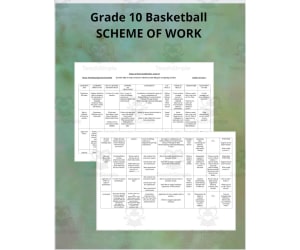
Scheme of Work 7 weeks: BASKETBALL Grade 10
P.E. & Health, Physical Education, Grade 10, Teacher Tools, Lesson Plans
SCHEME OF WORK is a resource that includes the lesson plans for 7 weeks for Physical Education of BASKETBALL FOR 10th graders. Ready-to-go plans for 7 weeks!
Author The PE Tutor
Tags Basketball, Grade 10 PE, Scheme Of Work , Physical Education Lesson Plans, Scheme Of Work For PE

I WONDER - What Is Insulin | Animated Video Lesson
Human Body, Life Sciences, Science, Biology, STEM, Grade 6, 7, 8, 9, 10, 11, 12, Lesson Plans, Teacher Tools
Video Overview The human body is full of fascinating wonders to learn. This video is created to help the students recognize the anatomy and the job of the human body. I WONDER - What Is Insulin | Animated Video Lesson Every part and organ in our human body is vital so let's see how important they are. Have you ever imagined how we look like if we didn't have a skeleton? Did you know that because we have our amazing muscles we can stand! Do you know how many teeth do we have? Have you ever wondered about the food journey inside our body? Can you name all the glands in our body? Why do we have skin? Our nervous system is really good at sending signals. Can you tell us more about it? Are you really good at Mathematics, painting, or any other thing? You should really thank your brain about it! The famous five senses are really doing a great work? Can you explain how every sense works? I WONDER - What Is Insulin | Animated Video Lesson The video is perfect for encouraging the researching skills for the students, while learning more about our fantastic human body. I WONDER - What Is Insulin | Animated Video Lesson This friendly designed video is suitable for students at school, homeschooling, and as a group activity. Format Available in MP4 format.
Author Educational Voice
Tags What Is Insulin, What Is Insulin Video, Insulin, Insulin Facts, Insulin Facts For Kids, Insulin Video, Insulin Video For Kids, Pancreas, Pancreas Facts, Pancreas Facts For Kids

I WONDER - Who Invented JAVA | Animated Video Lesson
STEM, Science, Computer Science, Technology, Grade 5, 6, 7, 8, 9, 10, 11, Lesson Plans, Teacher Tools
Video Introduction An amazing video designed for the students to learn more about STEM. I WONDER - Who Invented JAVA | Animated Video Lesson Do you like STEM subjects? what is your favorite one? Have you ever tried to plant a seed? If yes, tell us more about it. Or have you ever tried to invent something? If yes, tell us more about it. And how do you think it will help us? Have you ever seen a microorganism under a microscope? What was it? And how it looked like? Mathematics is a marvelous subject. Let' sharpen our brains and solve some equations. Do you like timetable tricks? What is your favorite one? Do you know how to code? Have you ever created an app or a game before? If yes, how was it like? I WONDER - Who Invented JAVA | Animated Video Lesson The video is perfect for encouraging the researching skills for the students, while learning more about this fantastic topic. I WONDER - Who Invented JAVA | Animated Video Lesson This friendly designed video is suitable for students at school, homeschooling, and as a group activity. Format Available in MP4 format.
Author Educational Voice
Tags Who Invented JAVA, Who Invented JAVA Video, JAVA, JAVA Facts, JAVA Facts For Kids, JAVA Video, JAVA Video For Kids, Coding, Coding For Kids, Coding Video

Grade 2 Yearlong Reading Comprehension Curriculum | 72 Worksheets
ELA, Grade 2, Lesson Plans, Teacher Tools, Worksheets & Printables
Grade 2 Yearlong Reading Comprehension Curriculum | 72 No-Prep Worksheets Build strong readers all year long with this comprehensive Grade 2 Reading Comprehension Curriculum ! Designed specifically for second-grade learners, this year-long resource includes 72 original fiction and nonfiction passages , vocabulary development, comprehension practice, and meaningful writing activities that help students grow into confident, independent readers. With engaging topics, spiraled skills, and a predictable instructional routine, you'll have everything you need for reading comprehension instruction from the first week of school through the last. What's Included ✅ 36 weeks of reading comprehension instruction ✅ 72 original fiction and nonfiction passages ✅ 2 passages per week ✅ Vocabulary matching activity for every passage ✅ Four comprehension questions per passage ✅ Writing prompt with every lesson ✅ Complete Student Worksheet Book ✅ Teacher's Guide with pacing and differentiation support ✅ Answer Key for quick grading ✅ Reading skills spiraled throughout the year How It Works in the Classroom This Grade 2 reading curriculum is designed for flexible implementation and works well for: Whole-group reading instruction Small-group lessons Literacy centers Independent practice Reading intervention Homework Morning work Substitute plans Each lesson follows a simple routine: Read and discuss the passage Complete vocabulary practice Answer comprehension questions using text evidence Respond to the writing prompt The consistent format builds student confidence and independence while strengthening comprehension skills all year long. Standards & Learning Goals Students will practice: Key details Story characters and setting Main idea and main topic Cause and effect Compare and contrast Sequence of events Making predictions Drawing conclusions Author's purpose Fact and opinion Problem and solution Story elements Reading comprehension strategies Vocabulary development Written responses using text evidence Skills are revisited and expanded throughout the year to support mastery and long-term retention. Why Teachers Love It ⭐ No weekly planning required ⭐ Consistent structure students quickly learn ⭐ Balanced fiction and nonfiction reading practice ⭐ Vocabulary, comprehension, and writing in one resource ⭐ Supports differentiated instruction ⭐ Encourages text-based responses ⭐ Builds reading stamina and confidence ⭐ Perfect for classroom, homeschool, and intervention settings Students explore engaging themes including families, animals, seasons, community helpers, plants, healthy habits, transportation, Earth science, and imaginative stories while strengthening comprehension skills across the entire school year. Perfect For ✔ Grade 2 classrooms ✔ Reading intervention ✔ Literacy centers ✔ Homeschool instruction ✔ Independent reading practice ✔ Small-group instruction ✔ Supplemental reading curriculum ✔ Year-long reading programs Download Today If you're looking for a complete Grade 2 Reading Comprehension Curriculum that combines engaging reading passages, vocabulary practice, comprehension questions, writing prompts, teacher support materials, and answer keys into one easy-to-use resource, this comprehensive year-long program is ready to support your students every step of the way.
Author Bright Classroom Ideas Marketplace
Rating
Tags Back-to-school, Yearlong, Curriculum, Full Year, Ela, Reading, Comprehension, Writing
Global Warming EFFECTS: Climate and Human Civilizations - FLASH-PC
Science, Earth and Environmental Sciences, Environmental Science, Common Core, Grade 5, 6, 7, 8, Teacher Tools, Lesson Plans
The Global Warming EFFECTS: Climate and Human Civilizations - FLASH-PC This valuable teaching resource is designed for grades 5 to 8. It primarily focuses on the expasive field of environmental science, with a special emphasis on understanding the effects of global warming over climate and human civilizations. Designed for effective use in classrooms or homeschooling environments, this comprehensive resource uses a multifaceted approach to deliver curriculum -based content. The key feature of this product are its insightful reading passages which introduce learners to important concepts in an easly understandable manner. Comprehension Elements 'Before you read' questions 'After you read' questions In addition to these comprehension techniques, educators will find practical printables adaptable for diverse learning styles. These materials can be utilized during: Whole group instruction sessions, Individual assignments, Promoting conducive small group activities for peer learning. } {} {} {} The product's contents also align with Common Core State Standards – offering teachers confidence that they are providing their students quality education that stands up nationally. Emphasizing Bloom's Taxonomy—widely recognized as an effective tool in crafting successful learning objectives—in its development process ensures teachers ignite various cognitive domains among students optimizing retention and application of knowledge beyond mere recitation. This lesson planning tool is available as software compatible with personal computers (PC). This innovation provides users comfort by assuring easy access anytime amidst our rapidly changing world. This rare combination of technology-based resources with comprehensive subject matter promotes high-level student engagement while enriching educator tools ensuring effective delivery of lessons across various classroom contexts.
Author Classroom Complete Press
Tags Software (PC)

I WONDER - What Does Quad Mean | Animated Video Lesson
STEM, Geometry, Math, Grade 2, 3, 4, 5, 6, 7, 8, Lesson Plans, Teacher Tools
Video Introduction An amazing video designed for the students to learn more about STEM. I WONDER - What Does Quad Mean | Animated Video Lesson Do you like STEM subjects? what is your favorite one? Have you ever tried to plant a seed? If yes, tell us more about it. Or have you ever tried to invent something? If yes, tell us more about it. And how do you think it will help us? Have you ever seen a microorganism under a microscope? What was it? And how it looked like? Mathematics is a marvelous subject. Let' sharpen our brains and solve some equations. Do you like timetable tricks? What is your favorite one? Do you know how to code? Have you ever created an app or a game before? If yes, how was it like? I WONDER - What Does Quad Mean | Animated Video Lesson The video is perfect for encouraging the researching skills for the students, while learning more about this fantastic topic. I WONDER - What Does Quad Mean | Animated Video Lesson This friendly designed video is suitable for students at school, homeschooling, and as a group activity. Format Available in MP4 format.
Author Educational Voice
Tags What Does Quad Mean, What Does Quad Mean Video, Quad, Meaning Of Quad, Meaning Of Quad Facts, Meaning Of Quad Facts For Kids, Meaning Of Quad Video, Meaning Of Quad Video For Kids
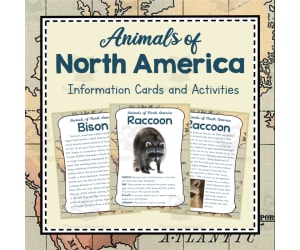
Animals of North America | North America Unit | Geography Bundle
Social Studies, Geography, Grade 3, 4, 5, 6, 7, Lesson Plans, Teacher Tools
The Animals of North America | Continent of North America Unit Study | Geography Bundle is a comprehensive teaching resource tailored for students in grades 3 to 7. It is perfect for Social Studies and Geography lessons, offering key resources to enhance knowledge about the animal inhabitants across the continent. This remarkable bundle provides: A set of 12 colorful, double-sided animal cards, each presenting engaging photos and important facts on one side with an enlightening write-up about the specific animal on the other. Intricate coloring pages corresponding to each animal card adding a fun element to learning, suitable both for leisure as well as homework tasks. Larger color cards representing all animals included in this resource pack meant for classroom display near your geographical map of North America. These cards feature both metric and imperial measurements rendering them usable anywhere around the globe irrespective of measurement system preferences. An appealing mini student booklet where students can not only color but also pen down fascinating facts about each animal advancing their research skills whilst creating informative booklets. Suggestions on how you can incorporate this bundle into your teaching plan include small group discussions, here-and-now teachings or even as engaging homework assignments. On receiving this digital resource you would simply require printing out desired content preferably laminating them for future use or even binding them together depending upon your convenience. A bonus advantage is that these resources blend flawlessly within geography centers laying excellent groundwork when initiating thoroughgoing animal reports aiding oral presentations; generally fostering productive research experiences thereby catalyzing active student engagement within classrooms. Bundled Contents Include: "Animal Matching" worksheet Detailed mini-booklet featuring 14 half-pages for student's convenience Cut-apart cards of featured animals apt for classroom display If you're endeavoring to facilitate an engaging, informative discourse about North America's wildlife amongst your students, this extensive geography bundle serves as a one-stop solution.
Author Simply Schoolgirl
Tags North America, Animals, Geography, Unit Study, Teaching Resource

I WONDER - What Is A Fraction | Animated Video Lesson
STEM, Fractions, Math, Grade 5, 6, 7, 8, 9, 10, 11, Lesson Plans, Teacher Tools
Video Introduction An amazing video designed for the students to learn more about STEM. I WONDER - What Is A Fraction | Animated Video Lesson Do you like STEM subjects? what is your favorite one? Have you ever tried to plant a seed? If yes, tell us more about it. Or have you ever tried to invent something? If yes, tell us more about it. And how do you think it will help us? Have you ever seen a microorganism under a microscope? What was it? And how it looked like? Mathematics is a marvelous subject. Let' sharpen our brains and solve some equations. Do you like timetable tricks? What is your favorite one? Do you know how to code? Have you ever created an app or a game before? If yes, how was it like? I WONDER - What Is A Fraction | Animated Video Lesson The video is perfect for encouraging the researching skills for the students, while learning more about this fantastic topic. I WONDER - What Is A Fraction | Animated Video Lesson This friendly designed video is suitable for students at school, homeschooling, and as a group activity. Format Available in MP4 format.
Author Educational Voice
Tags What Is A Fraction, What Is A Fraction Video, Fraction, Fraction Video, Fraction Video For Kids, Fraction Facts, Fraction Facts For Kids, Fraction For Kids, Math, Math Video
Capitalism vs. Communism: Capitalism Since the Cold War Gr. 5-8
Social Studies, Government, Grade 5, 6, 7, 8, Teacher Tools, Lesson Plans
"Capitalism vs. Communism: Capitalism Since the Cold War Gr. 5-8" Teaching Resource This educational guide provides an enriched channel for educators, aiding in teaching students about significant aspects of global economics - particularly, capitalism since the conclusion of the Cold War. The resource includes a ready-to-use 26 page PDF designed to cater to learners from grades 5 through 8. Category and Uses Fitting primarily under Social Studies and sub-categorized under Government, this lesson plan encompasses extensive content and activities which are usable in various methods, such as whole group activity or independent study work for small groups or individual pupils. Content Overview The package delivers engaging insights on: The Capitalistic economic system, The Communist economic system, and The Globalization economy. In addition, it delves into historic turning points including the Dust Bowl era Great Depression as well as how Industrial Revolution fueled communism's popularity. It further guides learners into understanding changes that came about in Capitalistic systems post-Cold War. [Engaging Participation] Pupils get to participate actively by contextualizing scenarios such as shopping at a mall situated in a Communist nation or pondering over implications of monopolies within capitalist societies. [Unexpected Connections] Furthermore, connections between ancient Incan civilization and principles of communism are also introduced thereby adding an intriguing dimension to lessons. Linguistic Tools & Interactive Features Crosswords puzzles, Word searches, Writing tasks, Comprehension quizzes, Answer keys. All serving as effective assessment instruments and ensuring greater retention rates of imparted knowledge. These tools not only reinforce key concepts but also enable pupils to apply their learning practically while maintaining arduous academic standards. The resource proves extremely useful for educators in conveying sophisticated economic theories in manageable, age-appropriate manners. This ultimately aids in enhancing critical thinking skills and helps pupils make enlightened decisions about their global citizenship responsibilities. By establishing a solid foundational understanding on these topics, students are strategically prepared for higher levels of information they are likely to encounter further along their educational journey.
Author Classroom Complete Press
Tags Capitalism, Communism, Cold War, Government Lesson, Great Depression, Cold War Capitalism Vs Communism, Communism Vs Capitalism Cold War
I WONDER - When Was The Internet Invented | Animated Video Lesson
Technology, Science, STEM, Grade 4, 5, 6, 7, 8, 9, 10, Lesson Plans, Teacher Tools
Video Introduction An amazing activity designed for the students to learn more about STEM. I WONDER - When Was The Internet Invented | Animated Video Lesson Do you like STEM subjects? what is your favorite one? Have you ever tried to plant a seed? If yes, tell us more about it. Or have you ever tried to invent something? If yes, tell us more about it. And how do you think it will help us? Have you ever seen a microorganism under a microscope? What was it? And how it looked like? Mathematics is a marvelous subject. Let' sharpen our brains and solve some equations. Do you like timetable tricks? What is your favorite one? Do you know how to code? Have you ever created an app or a game before? If yes, how was it like? I WONDER - When Was The Internet Invented | Animated Video Lesson The video is perfect for encouraging the researching skills for the students, while learning more about this fantastic topic. I WONDER - When Was The Internet Invented | Animated Video Lesson This friendly designed video is suitable for students at school, homeschooling, and as a group activity. Format Available in MP4 format.
Author Educational Voice
Tags When Was The Internet Invented, When Was The Internet Invented Video, Internet, Internet Facts, Internet Facts For Kids, Internet Inventions, Internet Invention Facts, Internet Invention Video For Kid
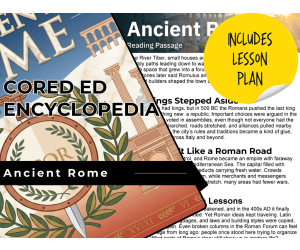
Ancient Rome Reading Comprehension Passage - Cored Ed Encyclopedia
ELA, Language Development, Reading Comprehension, Reading, Social Studies, History, History: Ancient, Writing, Pre-Reading, Vocabulary, Grade 2, 3, 4, 5, Worksheets & Printables, Worksheets, Teacher Tools, Centers, Activities, Writing Prompts, Assessments, Quizzes and Tests, Quizzes, Lesson Plans
This ancient Rome reading comprehension with lesson plan includes: Visualization (on the front cover) Start your lesson by taking a minute to think and share something about the topic. Read the script aloud (slowly), perhaps prepare some music or sound effects. Student close their eyes and let their imaginations wander. Students open their eyes, read the question aloud and give them a few minutes to complete. Ask a few students to share or keep answers until the end to compare with what they learn in the passage. Quick pause—thousands of Cored Education products are included with your TeachSimple membership. Download links and encyclopedia index available here. Pre-Reading Trivia Students will write down one thing they already know about the subject and then read five more facts and discuss. These facts are fun, and the students will enjoy learning about the subject before reading more. Give 1 minute for students to write what they already know (no pressure—best guess is fine). Read the five facts together. After each fact, do ask a student for their opinion, was it surprising? Set a purpose by asking students to highlight/underline one fact they want to learn more about during the reading. Reading Passage The text is a high-interest reading passage with set paragraphs, roughly three to four paragraphs long. It contains a variety of themes about the topic, anywhere from history to technology. The passage is between 250 and 350 words in length. First, ask students to look at the headings and see what they’ll learn about today. What do they know about the topic/heading? First read options: Teacher read-aloud (best for support). Partner reading (paragraph by paragraph). While reading, students underline important details, and vocabulary words they think may come up in the questions section. Mixed Questions The first question page contains four multiple-choice questions, each with a choice of four answers, and three written response questions that require a sentence or two from the student. Students complete the mcqs first independently, then review quickly as a class. For the 3 written responses, try to get students giving the answer with some form of evidence: “I think ___ because the text says ___.” If students get stuck, send them back to check the passage. Vocabulary Questions Practice seven key words from the text in this section across two activities. First section is scrambled words where students will unscramble three words given a clue for each. The second section is a word to meaning matching activity. Before starting, have some students read out words they underlined in the passage. Ask students to say the word and read aloud the sentence(s) around each word. Ask students to do scrambled words and the matching exercise in pairs then go through answers as a class. For the scrambled spelling task, get four pairs to come up to the board and write the words for extra practice with the other student reading out the clue. For the matching task, prompt students to give full sentences: “I matched ___ with ___ because ___.” Creative Writing In this question, the student will be required to write a five to eight sentence paragraph on a question related to the topic. Before starting, ask students write down 3 key ideas they are going to include in their piece. Ask students for ideas to share around the class to help those struggling. Pro writing expectations: 5–8 sentences At least 2 facts or details from the passage At least 2 vocabulary words from the previous page Students read their paragraphs while classmates listen for facts and vocabulary words. Extension Activities This page is optional for fast finishers or to take home. There are several activities, each one requiring a different skill. Do some, do none, do all, completely optional - but you will feel reassured knowing every possibility is planned for. Includes summary writting question and additional facts. Answer Key There are answers for the multiple-choice questions, written response questions have sample answers, vocabulary answers and if there is a summary question then a sample summary will be provided as well. Lesson Plan Included Customized lesson plan for this lesson is included. Lesson Snapshot Title: Ancient Rome Genre: Nonfiction (informational reading passage) Subject: Social Studies (Ancient Civilizations) / Reading (Informational Text) Primary Topic: From early settlement to empire and lasting influence Estimated Guided Reading Level (A–Z): S Support pages noted in the PDF: visualization prompt, pre-reading trivia, mixed questions, vocabulary activities, creative writing prompt, extension activities + “final facts,” and an answer key (some “final facts” add details not stated in the passage). What This Lesson Teaches Best How early life near the Tiber River and a busy meeting space (a forum) helped a town form and grow. How Rome changed its government from kings to a republic, including the role of the Roman Senate and citizen voting in assemblies. How roads, alliances, and shared rules/traditions helped Rome spread across Italy and beyond. How Rome became an empire connected around the Mediterranean Sea , including aqueducts for fresh water and public gathering places like the Colosseum . How Rome’s ideas continued even after the western empire fell, with laws and building styles reused and ruins like the Roman Forum reminding people of the past. Learning Goals Students will describe how the passage explains the early growth of Rome from river paths into a forum. Students will identify what happened in 509 BC and name the new form of government described. Students will explain how the passage connects roads, alliances, and shared rules/traditions to Rome’s expansion. Students will describe what changed in 27 BC when Augustus took control, using details from the text. Students will explain, using the passage, what aqueducts carried and why crowds gathered in major public places. Students will describe what happened to the western empire in the 400s AD and how Roman ideas continued afterward. Key Vocabulary From the Text republic — a government citizens vote in. Senate — a group that debates important choices. empire — many lands under one ruler. aqueducts — long channels that carry fresh water. provinces — faraway areas ruled as part of an empire. FULL CATALOG OF DOWNLOAD LINKS AND ENCYCLOPEDIA INDEX HERE
Author Cored Education
Rating
Tags Vocabulary, Reading Comprehension, Reading Passages, Lesson Plans, Ela Lesson Plans, Reading Comprehension Lesson Plans, Pre-reading, History, Ancient History Lesson Plans, History Lesson Plans