



3,950 products added recently
Page 68 - Popular Lesson Plans
Explore a curated selection of popular lesson plans that have proven successful in classrooms. Covering various subjects and topics, these resources provide innovative ideas and activities. Use them to refresh your curriculum and engage your students with tried-and-true methods.

 Show filters

I WONDER - How Long Have Octopi Existed | Animated Video Lesson
STEM, Biology, Life Sciences, Science, Animals, Grade 1, 2, 3, 4, 5, 6, 7, 8, Lesson Plans, Teacher Tools
Video Introduction Animal kingdoms are full of fascinating wonders to learn. This video is designed for the students to learn more about animals in different countries. I WONDER - How Long Have Octopi Existed | Animated Video Lesson Do you like animals? what is your favorite one? Do you own a pet? If yes, tell us more about it, like what its name? And what do you like most about it? What are the animal kingdoms? Can you write down the characteristics of each animal class like mammals, birds, reptiles, amphibian, fish and mollusks. Do you know that some animals can sing, can you name any of them? What is the largest and the smallest mammal in the world? What is the largest and the smallest bird in the world? What is the largest and the smallest fish in the world? I WONDER - How Long Have Octopi Existed | Animated Video Lesson The video is perfect for encouraging the researching skills for the students, while learning more about these fantastic animals. I WONDER - How Long Have Octopi Existed | Animated Video Lesson This friendly designed video is suitable for students at school, homeschooling, and as a group activity. Format Available in MP4 format.
Author Educational Voice
Tags How Long Have Octopi Existed, How Long Have Octopi Existed Video, Octopi, Octopi Facts, Octopi Facts For Kids, Octopi Video, Octopi Video For Kids, Octopus, Octopus Facts, Octopus Video

Bears Theme VALUE PACK Gr. PK-2
Science, Life Sciences, Animals, Kindergarten, Preschool, Grade 1, 2, Teacher Tools, Lesson Plans
Bears Theme VALUE PACK Gr. PK-2 This pack is a comprehensive learning aid that focuses on providing education about the magnificent world of bears to students aged between preschool and second grade. With its primary focus being on science, in particular, Zoology, this pack provides an array of teaching aids. Package Content: Bing Bear's Balloons: A unit which includes engaging activities for fostering creative skills amongst learners such as picture patterns for large and small book creation. Colour Bear: This unit includes hands-on tasks that cater to enhancing color recognition among pupils whilst boosting their visual learning capabilities. Good Shapes for a Hungry Bear: The aim of this particular unit is to stir interest in mathematics by teaching them number recognition from 1-8 through practical activities. I Love My Learning Centres: Including themed name tags for improving word familiarity and reading passages focusing on Zoological exploration. The product — a single PDF file consists of 103 printable educational pages all set to be employed into various classroom settings - be it entire group lessons or individual assignments. This resource offers exhaustive coverage suiting early childhood development needs across primary-grade levels (Preschool through Grade 2). This pack serves as an indispensable toolset with remarkable comprehensiveness coupled with practical application potentials not just limited to school settings but also home-based tutoring scenarios hence making necessary strides towards holistically nurturing young minds.
Author Classroom Complete Press
Tags Reading Passages, Bear Theme Decor, Big Book Assembly, Bear Name Tags, Counting Skills

I WONDER - What Is Imagery | Animated Video Lesson
Poetry, Literature, ELA, Grade 5, 6, 7, 8, 9, 10, 11, Lesson Plans, Teacher Tools
Video Introduction An amazing video designed for the students to learn more about famous poetry in different countries. I WONDER - What Is Imagery| Animated Video Lesson Do you like reading poetry? If yes, what is your favorite poem? Do you have a favorite poet? If yes, tell us more about him/her. What are the types of poetry? Have you ever tried to write a poem before? If yes, tell us more about it. What is acrostic poem? Dow you know who is the first writer to write it? Can you write one? What is limerick? Dow you know who is the first writer to write it? Can you write one? What is sonnet? Dow you know who is the first writer to write it? Can you write one? What is haiku? Dow you know who is the first writer to write it? Can you write one? I WONDER - What Is Imagery | Animated Video Lesson The video is perfect for encouraging the researching skills for the students, while learning more about this fantastic poetry. I WONDER - What Is Imagery | Animated Video Lesson This friendly designed video is suitable for students at school, homeschooling, and as a group activity. Format Available in MP4 format.
Author Educational Voice
Rating
Tags What Is Imagery, What Is Imagery Video, Imagery, Imagery Facts, Imagery Video, Imagery Facts For Kids, Imagery Video For Kids, Poetry, Poetry Facts, Poetry Video
Conservation: Waterway Habitat Resources: Where Are Aquatic Ecosystems? Gr. 5-8
Science, Earth and Environmental Sciences, Environmental Science, Grade 5, 6, 7, 8, Teacher Tools, Lesson Plans
The Conservation: Waterway Habitat Resources: Where Are Aquatic Ecosystems? Gr. 5-8 A comprehensive and insightful teaching resource aimed at educators wishing to enhance Grade 5 to Grade 8 students' understanding of conservation, aquatic ecosystems, and sustainable environmental behaviours. This engaging tool can be used in a variety of settings, including classrooms, homeschooling environments or even during field trips. This valuable resource offers an exhaustive investigation into the aquatic ecosystems that are globally facing serious issues due to climate change and human intervention. Students will be able to examine how these changes disrupt the fragile balance within these habitats. They'll also learn about biotic factors such as organisms living in water bodies and abiotic factors like sunlight, temperature etc., which are crucial components of this ecosystem. Teachers can utilise this package for whole group instruction or small group activities depending on their requirement or learning objectives. This curriculum could feature in projects, homework assignments or discussions that stimulate critical thought among budding ecologists in your class. Aquatic Site Visits: With proposed visits to local aquatic sites within this guidebook, students gain exposure to real-life instances where they can observe firsthand the effects of climate change on aquatic species unable to adapt quickly enough. Holistic Understanding: Looking at human actions impacting these ecosystems correlates greatly with educating students about their potential to effect positive changes through their habits at home or even methods for reviving dead zones within local bodies of water. Blooms Taxonomy & Teaching Standards Incorporation Incorporating Bloom's taxonomy into its diverse elements armours it beyond regular teaching standards. You get adaptable tasks & activities like graphic organisers reinforcing theoretical knowledge visually. Stimulating Crosswords contributing to increasing recognition & recall skills in a fun yet challenging manner. Whetting students' literacy skills through comprehensive quizzes & word searches. Included in one ready-to-print PDF file, this 30-page document is packed with detailed and engaging curriculum suited for Grade 5 to Grade 8 students interested in environmental science. Recognised as an invaluable asset for educators aiming to nurture a generation committed to conservation and sustainability.
Author Classroom Complete Press
Tags Squatic, Ecosystems, Habitats, Environmental, Science

Energy: What Is Energy?
Science, Physics, Common Core, Grade 5, 6, 7, 8, Teacher Tools, Lesson Plans
Energy: What Is Energy? A comprehensive teaching resource specially designed to demystify the concept of energy for middle school students. This reliable supplemental material is closely aligned with Common Core State Standards, Bloom's Taxonomy, and STEM initiatives. Diverse Forms of Energy This resource provides a deep dive into various forms of energy such as: Mechanical Thermal Sound waves Light energy. Potential Energy Types - Simplified! In addition, the text offers insights into potential energy types, often found challenging by students. The versatility allows for both whole-group instruction and small group discussions or individual learning activities. Crafted using highly readable language aimed at grade level 5 through 8 students, even complex ideas are distilled down in an accessible format. The module is uniformly welcoming to all students regardless of prior knowledge or ability. A Thoughtfully Constructed Teaching Resource An informative module complete with a collection of reading passages further elaborated with student-oriented activities aimed at sustaining engagement while reinforcing concepts learned. Included within this unique package are mini posters that bridge verbal and visual learning mediums providing an interactive mode aiding in better retention and understanding. "Energy: What Is Energy?" explains 'the ability to do work' in easily digestible chunks that encourages interactive learning while staying true to curriculum goals." Finally, "Energy: What Is Energy?" is available as a PDF-formatted teaching resource suited perfectly for technology-driven classrooms. Consequently serving as a potent tool for homework assignments or learning adventures embarked upon solo, fostering independent thinking among young minds.
Author Classroom Complete Press
Tags PDF

I WONDER - How Big Is Lake Superior | Animated Video Lesson
Geography, Social Studies, Grade 1, 2, 3, 4, 5, 6, 7, 8, Lesson Plans, Teacher Tools
Video Introduction An amazing video designed for the students to learn more about famous places in different countries. I WONDER - How Big Is Lake Superior | Animated Video Lesson What do you know about this place? Do you know in which part of the world it is? Have you ever visited this place? If yes, can you tell us more about your adventure, and what do you like the most about this place? Do you like reading about Geography? What is your favorite country in the whole world? If you are going on a trip where it will be? Which country? What you are going to see there? Does this country has a famous place to visit? I WONDER - How Big Is Lake Superior | Animated Video Lesson The activity is perfect for encouraging the researching skills for the students, while learning more about this fantastic place. I WONDER - How Big Is Lake Superior | Animated Video Lesson This friendly designed video is suitable for students at school, homeschooling, and as a group activity. Format Available in MP4 format.
Author Educational Voice
Tags How Big Is Lake Superior, How Big Is Lake Superior Facts, Lake Superior, Lake Superior Facts, Lake Superior Facts For Kids, Lake Superior Video, Lake Superior Video For Kids, Lake, Lakes

Adverbs of Frequency ESL ELA ELL Pre Intermediate Lesson Plan
ELA, Grammar, Grade 6, 7, 8, 9, 10, 11, 12, Teacher Tools, Lesson Plans
Adverbs of Frequency Pre-Intermediate Lesson Plan. This pre-intermediate lesson plan helps students learn about adverbs of frequency in an engaging way. Students will first study common adverbs like "always," "usually," and "sometimes" to understand their meaning and usage. Next, they will apply what they learned by completing comprehension exercises that implement these new grammar skills. This versatile resource can be used for whole group instruction, small group practice, or even as a homework assignment. The material is presented clearly for grade 3-5 students to grasp at their level. Answer keys are included so educators can easily assess student progress. This well-rounded lesson gives students the knowledge and tools to start confidently using adverbs of frequency in their writing and speaking. This lesson plan includes: Cover page Flash cards A warm-up activity Main use Construction details Rules, along with any exceptions Illustrative examples Two closed exercises One open exercise Revision exercise Writing exercises Chatterbox, a recurring feature in our course books encouraging conversation Activity, such as a game, quiz, puzzle, etc., to conclude the class The lesson plan is available in PDF with 25 ready to print pages and one digital access file. A part of it is on Google Apps. The answer key is also included for reference.
Author TEAM TEFL
Tags Adverbs, Grammar, ESL, Language Arts, Verbs
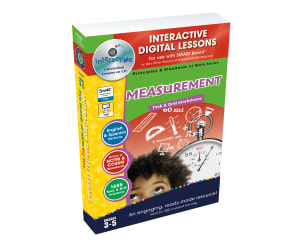
Measurement - Digital Lesson Plan Gr. 3-5 | PC Software
Math, Measurements, Grade 3, 4, 5, Teacher Tools, Lesson Plans
Measurement - Digital Lesson Plan Gr. 3-5 | PC Software Overview This comprehensive math program includes over 230 individual activities distributed across more than 80 interactive screen pages. With a direct alignment to the guidelines outlined by the NCTM and State Curriculum Math Strand, this tool is an essential resource for both public school and homeschool educators. Educational Strategy & Features The learning journey starts with pre- assessment activities facilitating an understanding of students' existing knowledge about measurements. The inclusion of real-world word problems aids in making complex concepts relevant and easily understandable for students. A multitude of drill problems (150 precisely) ensuring certain procedural proficiency skills enhancement. The ability to effortlessly switch between imperial and metric units thanks to integrated measurement tools, providing a smooth learning experience without interruptions. English and Spanish Text-to-Speech broadening accessibility options catering to different student demographics or dual-language learners. Included Resources & Game Elements In addition to on-screen lessons, printable resources are also provided for offline use or as homework assignments. Learners stay enthusiastic with memory match games, spinner games, and board games strategically placed within chapters. This adds a fun element whilst reinforcing important math concepts learned throughout each lesson unit. Evaluation Method: To ensure learners are successfully grasping measurement concepts throughout the course, comprehension tests conclude each chapter—providing valuable information on each student's level of mastery at every phase. Convenience features include packaging within one easy-to-install zip file designed exclusively for use on PC software platforms offering seamless functioning. In conclusion, Measurement - Digital Lesson Plan Gr. 3-5 | PC Software provides teachers with a comprehensive, highly engaging, and interactive measure learning resource irrespective of class size or teaching style—whole group, small group or one-on-one.
Author Classroom Complete Press
Tags Measurement Lesson Plan, Digital Math, Digital Math Lesson, Math Lesson Plan, Measuring Tools
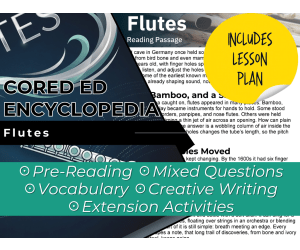
Flutes Reading Comprehension Passage - Cored Ed Encyclopedia
ELA, Reading Comprehension, Reading, Science, Technology, Social Studies, History, Music, Creative Arts, Physics, Grade 2, 3, 4, 5, Worksheets & Printables, Worksheets, Teacher Tools, Centers, Activities, Writing Prompts, Assessments, Quizzes and Tests, Quizzes, Lesson Plans
This flutes reading comprehension with lesson plan includes: Visualization (on the front cover) Start your lesson by taking a minute to think and share something about the topic. Read the script aloud (slowly), perhaps prepare some music or sound effects. Student close their eyes and let their imaginations wander. Students open their eyes, read the question aloud and give them a few minutes to complete. Ask a few students to share or keep answers until the end to compare with what they learn in the passage. Quick pause—thousands of Cored Education products are included with your TeachSimple membership. Download links and encyclopedia index available here. Pre-Reading Trivia Students will write down one thing they already know about the subject and then read five more facts and discuss. These facts are fun, and the students will enjoy learning about the subject before reading more. Give 1 minute for students to write what they already know (no pressure—best guess is fine). Read the five facts together. After each fact, do ask a student for their opinion, was it surprising? Set a purpose by asking students to highlight/underline one fact they want to learn more about during the reading. Reading Passage The text is a high-interest reading passage with set paragraphs, roughly three to four paragraphs long. It contains a variety of themes about the topic, anywhere from history to technology. The passage is between 250 and 350 words in length. First, ask students to look at the headings and see what they’ll learn about today. What do they know about the topic/heading? First read options: Teacher read-aloud (best for support). Partner reading (paragraph by paragraph). While reading, students underline important details, and vocabulary words they think may come up in the questions section. Mixed Questions The first question page contains four multiple-choice questions, each with a choice of four answers, and three written response questions that require a sentence or two from the student. Students complete the mcqs first independently, then review quickly as a class. For the 3 written responses, try to get students giving the answer with some form of evidence: “I think ___ because the text says ___.” If students get stuck, send them back to check the passage. Vocabulary Questions Practice seven key words from the text in this section across two activities. First section is scrambled words where students will unscramble three words given a clue for each. The second section is a word to meaning matching activity. Before starting, have some students read out words they underlined in the passage. Ask students to say the word and read aloud the sentence(s) around each word. Ask students to do scrambled words and the matching exercise in pairs then go through answers as a class. For the scrambled spelling task, get four pairs to come up to the board and write the words for extra practice with the other student reading out the clue. For the matching task, prompt students to give full sentences: “I matched ___ with ___ because ___.” Creative Writing In this question, the student will be required to write a five to eight sentence paragraph on a question related to the topic. Before starting, ask students write down 3 key ideas they are going to include in their piece. Ask students for ideas to share around the class to help those struggling. Pro writing expectations: 5–8 sentences At least 2 facts or details from the passage At least 2 vocabulary words from the previous page Students read their paragraphs while classmates listen for facts and vocabulary words. Extension Activities This page is optional for fast finishers or to take home. There are several activities, each one requiring a different skill. Do some, do none, do all, completely optional - but you will feel reassured knowing every possibility is planned for. Includes summary writting question and additional facts. Answer Key There are answers for the multiple-choice questions, written response questions have sample answers, vocabulary answers and if there is a summary question then a sample summary will be provided as well. Lesson Plan Included Customized lesson plan for this lesson is included. Lesson Snapshot Title: Flutes Genre: Nonfiction (Informational Text) Subject: Music / Science (Sound) / Reading (Informational Text) Primary Topic: How flutes make sound and changed over time Estimated Guided Reading Level (A–Z): Q What This Lesson Teaches Best How very early flutes were made (carved from bird bone and mammoth ivory ) and why these finds matter as early musical instruments. How flutes make a clear note: a thin jet of air across an opening creates a wobbling column of air inside the tube. Cause and effect in instruments: covering or uncovering holes changes the tube’s length, so the pitch goes up or down. How design evolved in Europe, including added holes and keys and Theobald Boehm’s 1800s redesign with tone holes and ring keys . Key features of a modern concert flute (often metal, about 26 inches long, three sections, padded keys, range of a little more than three octaves ). Learning Goals Students will describe what materials some ancient flutes were carved from and how old they were said to be. Students will explain how a flute makes a clear note using the idea of a “column of air” in a tube. Students will explain how covering or uncovering holes changes pitch by changing the tube’s length. Students will summarize how the sideways flute changed over time in Europe, including added holes and keys. Students will identify changes Theobald Boehm made to flute design and how ring keys helped players. Students will describe at least two details of today’s concert flute mentioned in the passage. Key Vocabulary From the Text mammoth — an ancient animal related to today’s elephants. ivory — hard material used for carving. column — a long “tube” shape of air inside. pitch — how high or low a note sounds. octaves — sets of notes higher or lower. FULL CATALOG OF DOWNLOAD LINKS AND ENCYCLOPEDIA INDEX HERE
Author Cored Education
Rating
Tags Vocabulary, Reading Comprehension, Reading Passages, Lesson Plans, Ela Lesson Plans, Reading Comprehension Lesson Plans, Pre-reading, History, Music, Music Lesson Plans
I WONDER - Where Did The Word Monsoon Come From | Animated Video
Geography, Social Studies, Earth Sciences, Earth and Environmental Sciences, Science, Environmental Science, Grade 4, 5, 6, 7, 8, 9, 10, Lesson Plans, Teacher Tools
Video Introduction An amazing video designed for the students to learn more about natural disasters in different countries. I WONDER - Where Did The Word Monsoon Come From | Animated Video Lesson What do you know about this natural disaster? Do you know in which part of the world this could happen? Have you ever read about the safety misusers that we could have to protect ourselves from this natural disaster? If yes, can you tell us more about them? Can you name other natural disasters? If yes, tell us more about where they are likely to happen? And how frequently? Do you like reading about Geography? What is your favorite country in the whole world? If you are going on a trip where it will be? Which country? What you are going to see there? Does this country has a famous place to visit? Do you like reading about Geology? If yes, what is your favourite topic? I WONDER - Where Did The Word Monsoon Come From | Animated Video Lesson The video is perfect for encouraging the researching skills for the students, while learning more about this fantastic phenomenon. I WONDER - Where Did The Word Monsoon Come From | Animated Video Lesson This friendly designed video is suitable for students at school, homeschooling, and as a group activity. Format Available in MP4 format.
Author Educational Voice
Tags Where Did The Word Monsoon Come From, Where Did The Word Monsoon Come From Video, Monsoon, Monsoon Facts, Monsoon Facts For Kids, Monsoon Video, Monsoon Video For Kids, Monsoons

Vegetables Reading Comprehension Passage - Cored Ed Encyclopedia
ELA, Language Development, Reading Comprehension, Reading, Pre-Reading, Science, Life Sciences, Health, P.E. & Health, Nature & Plants, Grade 2, 3, 4, 5, Worksheets & Printables, Worksheets, Teacher Tools, Centers, Activities, Writing Prompts, Assessments, Quizzes and Tests, Quizzes, Lesson Plans
This vegetables reading comprehension with lesson plan includes: Visualization (on the front cover) Start your lesson by taking a minute to think and share something about the topic. Read the script aloud (slowly), perhaps prepare some music or sound effects. Student close their eyes and let their imaginations wander. Students open their eyes, read the question aloud and give them a few minutes to complete. Ask a few students to share or keep answers until the end to compare with what they learn in the passage. Quick pause—thousands of Cored Education products are included with your TeachSimple membership. Download links and encyclopedia index available here. COMPANION VIDEO NOW AVAILABLE (EMBEDDED AFTER PREVIEW PICTURES IN PRODUCT DESCRIPTION) Pre-Reading Trivia Students will write down one thing they already know about the subject and then read five more facts and discuss. These facts are fun, and the students will enjoy learning about the subject before reading more. Give 1 minute for students to write what they already know (no pressure—best guess is fine). Read the five facts together. After each fact, do ask a student for their opinion, was it surprising? Set a purpose by asking students to highlight/underline one fact they want to learn more about during the reading. Reading Passage The text is a high-interest reading passage with set paragraphs, roughly three to four paragraphs long. It contains a variety of themes about the topic, anywhere from history to technology. The passage is between 250 and 350 words in length. First, ask students to look at the headings and see what they’ll learn about today. What do they know about the topic/heading? First read options: Teacher read-aloud (best for support). Partner reading (paragraph by paragraph). While reading, students underline important details, and vocabulary words they think may come up in the questions section. Mixed Questions The first question page contains four multiple-choice questions, each with a choice of four answers, and three written response questions that require a sentence or two from the student. Students complete the mcqs first independently, then review quickly as a class. For the 3 written responses, try to get students giving the answer with some form of evidence: “I think ___ because the text says ___.” If students get stuck, send them back to check the passage. Vocabulary Questions Practice seven key words from the text in this section across two activities. First section is scrambled words where students will unscramble three words given a clue for each. The second section is a word to meaning matching activity. Before starting, have some students read out words they underlined in the passage. Ask students to say the word and read aloud the sentence(s) around each word. Ask students to do scrambled words and the matching exercise in pairs then go through answers as a class. For the scrambled spelling task, get four pairs to come up to the board and write the words for extra practice with the other student reading out the clue. For the matching task, prompt students to give full sentences: “I matched ___ with ___ because ___.” Creative Writing In this question, the student will be required to write a five to eight sentence paragraph on a question related to the topic. Before starting, ask students write down 3 key ideas they are going to include in their piece. Ask students for ideas to share around the class to help those struggling. Pro writing expectations: 5–8 sentences At least 2 facts or details from the passage At least 2 vocabulary words from the previous page Students read their paragraphs while classmates listen for facts and vocabulary words. Extension Activities This page is optional for fast finishers or to take home. There are several activities, each one requiring a different skill. Do some, do none, do all, completely optional - but you will feel reassured knowing every possibility is planned for. Includes summary writting question. Answer Key There are answers for the multiple-choice questions, written response questions have sample answers, vocabulary answers and if there is a summary question then a sample summary will be provided as well. Lesson Plan Included Customized lesson plan for this lesson is included. Lesson Snapshot Title: Vegetables Genre: Nonfiction (Informational text) Subject: Science (Life Science: plants, nutrition) / Reading (informational text) Primary Topic: What vegetables are and why they matter Estimated Guided Reading Level (A–Z): N What This Lesson Teaches Best What counts as a vegetable (in this text): Defines vegetables as edible parts of plants people choose to eat, including roots (carrot), leaves (spinach), and flower buds (broccoli). Plant parts and categories: Explains that many vegetables come from soft-stemmed, herbaceous plants rather than woody trees, and that vegetables come in many shapes because plants have many useful parts. Early farming and seed-saving: Describes how people once gathered edible plants from the wild, then began planting and saving seeds (about 10,000–7,000 BC), keeping and sharing plants that tasted better or grew bigger. Science vs. everyday language (tomato debate): Contrasts the botanical definition of “fruit” (seed-bearing part formed from a flower’s ovary) with how “vegetable” often means a savory plant food served with meals, noting a U.S. court decision in 1893 calling tomatoes vegetables for a tax rule. Nutrition and food preservation: States vegetables are usually low in fat and calories, filling because they bring water and fiber, and may contain vitamins/minerals (examples include vitamin A and vitamin C); also notes chilling, freezing, or canning to keep vegetables longer. Learning Goals Students will define a vegetable using examples from the text (root, leaf, bud). Students will describe where many vegetables come from (soft-stemmed, herbaceous plants) and explain what that means. Students will explain how seed-saving helped wild plants become “garden favorites,” using details from the passage. Students will compare the botanical meaning of fruit with the cooking meaning of vegetable, using the tomato example. Students will identify two reasons vegetables can be filling and healthy (water, fiber, vitamins/minerals) based on the text. Key Vocabulary From the Text edible — safe and good to eat. herbaceous — soft-stemmed; not woody. botanists — scientists who study plants. ovary — flower part that can form fruit. fiber — nutrient that helps you feel full. FULL CATALOG OF DOWNLOAD LINKS AND ENCYCLOPEDIA INDEX HERE
Author Cored Education
Rating
Tags Vocabulary, Reading Comprehension, Reading Passages, Lesson Plans, Ela Lesson Plans, Reading Comprehension Lesson Plans, Pre-reading, Science Lesson Plans, Nature And Plants, Health

How to Write a Paragraph: Revising Your Paragraph - FLASH-MAC
ELA, Writing, Common Core, Grade 5, 6, 7, 8, Teacher Tools, Lesson Plans
How to Write a Paragraph: Revising Your Paragraph - FLASH-MAC The How to Write a Paragraph: Revising Your Paragraph - FLASH-MAC teaching resource is an invaluable tool for educators. It's primarily designed for grade levels five through eight and focuses on the important skill of revising written paragraphs. This resource provides valuable information through curriculum -based content. Uniquely, this tool uses before and after reading questions to facilitate comprehension, encourage active learning, and offer practice opportunities. Educational Aids Printable materials, Vocabulary flashcards, Interactive activities for hands-on experience, Blooms Taxonomy principles. This product is thoughtfully designed to meet Common Core State Standards in education. Focused Instruction & Homework Practice The components offer flexibility adapted for varied instruction scenarios. They can be used in full group sessions or small groups, tailored based on individual needs. The provided resources also make effective homework assignments. Digital Accessibility & Graphic Organizers Advantage Inclusion of graphic organizers simplifies idea organization when writing paragraphs. An added advantage is its compatibility with any Mac software making it user-friendly where teachers can easily navigate lessons without technical fusses. In essence, "How to Write a Paragraph: Revising Your Paragraph - FLASH-MAC" specifically aids language arts teachers aiming at developing proficient writers from grades five through eight.
Author Classroom Complete Press
Tags Software (Mac)
I WONDER - What Are The Stages In A Butterfly's Life Cycle
STEM, Insects, Life Sciences, Science, Animals, Biology, Grade 1, 2, 3, 4, 5, 6, 7, 8, Lesson Plans, Teacher Tools
Video Introduction Animal kingdoms are full of fascinating wonders to learn. This video is designed for the students to learn more about animals in different countries. I WONDER - What Are The Stages In A Butterfly's Life Cycle | Animated Video Lesson Do you like animals? what is your favorite one? Do you own a pet? If yes, tell us more about it, like what its name? And what do you like most about it? What are the animal kingdoms? Can you write down the characteristics of each animal class like mammals, birds, reptiles, amphibian, fish and mollusks. Do you know that some animals can sing, can you name any of them? What is the largest and the smallest mammal in the world? What is the largest and the smallest bird in the world? What is the largest and the smallest fish in the world? I WONDER - What Are The Stages In A Butterfly's Life Cycle | Animated Video Lesson The video is perfect for encouraging the researching skills for the students, while learning more about these fantastic animals. I WONDER - What Are The Stages In A Butterfly's Life Cycle | Animated Video Lesson This friendly designed video is suitable for students at school, homeschooling, and as a group activity. Format Available in MP4 format.
Author Educational Voice
Tags What Are The Stages In A Butterfly's Life Cycle, What Are The Stages In A Butterfly's Life Cycle Video, Butterfly's Life Cycle, Butterfly's Life Cycle Facts, Butterfly's Life Cycle Facts For Kids, Butterfly's Life Cycle Video

Arts Upper Intermediate ESL Lesson Plan
Creative Arts, Art, Art History, Grade 6, 7, 8, Teacher Tools, Lesson Plans, Worksheets & Printables
This is an upper intermediate ESL ELA ELL lesson plan worksheet set for Arts. Students will learn more about these topics and then complete the exercises to follow, which will assess their comprehension and implement conversation skills. This informative lesson plan helps upper intermediate ESL students learn about the arts. Educators can implement this flexible resource in various ways - as a whole class activity, small group work, or even a homework assignment. Overall, this concise lesson plan helps ESL teachers effectively introduce the arts to ESL ELLA ELA and TEFL upper intermediate students. This resource can also be accessed through Google Apps. Answer key included. An audio file is included. The ESL lesson plan includes flashcards, a warmer, exercises, role-play, conversation, writing drill, activity, answers and an extra study that would be good to set as homework. There are 34+ pages and there are teachers notes to guide the teacher.
Author TEAM TEFL
Tags Arts, ESL Lesson, Minimalism, Vocabulary, Art History
Bird Migration | Animated Birds Video Lesson
Science, Life Sciences, Animals, Not Grade Specific, Lesson Plans, Teacher Tools
Title: Bird Migration | Animated Birds Video Lesson This educational resource, named Bird Migration | Animated Birds Video Lesson, is a tool for all educators in public and home-schooling settings. It provides an engaging way to learn about bird science. Main Specifications A 12-minute video lesson which uses animation to explain advanced concepts. The video is not grade-specific and can be integrated across various curriculum levels. The resource exists in MP4 format, making learning more efficient without unnecessary clutter or hard-to-follow instructions. Categorization & Applications Bird Migration | Animated Birds Video Lesson falls under the broader subject of Science with Zoology being its specific field of study. Though primarily meant for classrooms, it's as effective when used for small group sessions or individual tasks at home. This makes it a versatile addition to any educator's teaching toolkit. Suited Learning Styles & Investment Worthiness This animated bird migration video lesson caters mainly to visual learners who find picture-based learning more beneficial than the traditional methods that rely solely on text-based information. However, auditory learners are also catered to via helpful voiceovers that come with each animation. In short, this pedagogic strategy brings strong conceptual clarity along with interactivity, thus proving worth every penny invested in this innovative solution.
Author Educational Voice
Tags Bird Migration, Animated Birds, Video Lesson, Science, Zoology, Birds Animated

All About Addition 0-20 | Animated Math Video Lesson
Math, Addition and Subtraction, Addition, Preschool, Grade 1, 2, Lesson Plans, Teacher Tools
This animated math video lesson is all about adding numbers 0-20. Students will love this engaging and interactive video that takes them step-by-step on how to add numbers and solve addition problems in a fun way. This video serves as a great introduction or review video for your learners. This is a 6-minute math video lesson.
Author Educational Voice
Tags Addition Problems, Adding Numbers, Math Activity, Math Videos, Video Lessons

War Party: Full Lesson Plan w/ PowerPoints & Graphic Organizers
ELA, Literature, Grade 9, 10, 11, 12, Lesson Plans, Teacher Tools
War Party: Full Lesson Plan w/ PowerPoints & Graphic Organizers A comprehensive, all-in-one package designed with the busy educator in mind. Whether you're tackling this text in a public school or homeschooling setup, this resource gives you everything needed to guide students through War Party by Louis L’Amour from start to finish. Detailed Lesson Plan The centrepiece of this teaching assistance package is our detailed lesson plan. Provided with clear and concise instructions, educators can rid themselves of unnecessary planning hours. Additionally, its content directly aligns with curriculum expectations for grades 9-12 Language Arts with a Literature focus. Supplemental Materials Included are various supplemental materials such as: Worksheet and answer key- Practical application opportunities taking student comprehension to new levels. Graphic organizers- Tools for deeper analysis into literary techniques employed by Louis L’Amour and their contribution towards theme construction or character development among others. Peer evaluation sheets- Encourage collaboration among students facilitating socially nurturing learning spaces where ideas are freely exchanged. Captivating PowerPoints The package also includes eight captivating PowerPoints on various literacy elements like Irony, Ambiguity or Imagery - creating engaging visual aids while livening up lesson delivery simultaneously! Modes usage: PDFs & Word Documents Last but not least,, files that are offered as both PDFs and Word Documents provide ample flexibility on mode usage depending on classroom requirements; ready-to-print pages can transform into hands-on activities during class or engaging homework assignments that extend student learning beyond school premises. Conclusion: Ensuring quality instruction does not always require extensive preparation time. An efficient Teaching resource such as this one can lead to more productive classroom experiences while enjoying literature!
Author Quality Teaching Products
Tags Lesson Plan, War Party, Louis L’Amour, Graphic Organizers, PowerPoints

Literary Devices: Foreshadowing,Flashback, Symbolism and Irony - FLASH-PC
ELA, Literature, Grade 5, 6, 7, 8, Teacher Tools, Lesson Plans
Literary Devices: Foreshadowing, Flashback, Symbolism and Irony - FLASH-PC An expertly crafted teaching resource for students between grades 5 and 8. What sets this learning tool apart is its implementation of curriculum -based content encompassed in a chapter mini format for ease-of-use. The significance of this resource: It makes the elements of literature tangible. It outlines four key literary devices – foreshadowing, flashback, symbolism, and irony with engaging reading passages. 'Before you Read' and 'After you Read' questions are integrated to ensure comprehension while promoting student discussion. Versatility This tool offers various approaches to its incorporation: Whole-group activity during classroom hours. Teachers can lead device-specific discussions post completion of sections. In smaller peer groups where learners facilitate their own discussion utilizing provided questions as guiding points. Included Practicals: Printables related to each device aid in understanding through practical application. Vocabulary flashcards serve dual roles – assists independent study time or as additional aids during classroom reviews. Graphic organizers offer visual tools that help conceptual development while improving critical-thinking skills. This interactive program interspersed throughout maintains learning fun without removing the essence – encouraging an active engagement with reinforcing taught concepts. A Comprehensive Tool for Understanding Literary Devices: A convenient single zip file includes PC software permitting easy access without compromising on instructional value. The FLASH-PC covers more than just lesson plans; it forms an integral part of Language Arts subjects specifically focusing on literature subtopics. "With the FLASH-PC, you’re not just teaching but mentoring future critics and connoisseurs of literature."
Author Classroom Complete Press
Tags Foreshadowing, Symbolism, Irony, Literary, Literature, Flashback Literature

Lesson 4.2 - Conservation of Energy
Science, Chemistry, Physics, Grade 6, 7, 8, 9, 10, 11, 12, Lesson Plans, Teacher Tools
Lesson 4.2 - Conservation of Energy Take your teaching experience to the next level with our expertly created resource, designed specifically for Integrated Chemistry & Physics education. This extensive digital package provides a multitude of materials that explain the concept of energy conservation and its real-world application. This comprehensive resource includes: Educational notes addressing energy conservation in systems, available in an interactive fill-in-the-blank version (A version) and completed version (B version). A captivating Energy Skate Park Simulation for displaying the transformative process encompassing various forms of energy. Intriguing activities to encourage students' creativity by finding tangible examples of energy conservation within their daily life, backed up by a lab activity focusing on kinetic and potential energies. A structured PowerPoint known as Objectives & Starter Questions to effectively spark class discussions or quizzes. Detailed PowerPoint Notes for presenting material to students smoothly. The aforementioned contents are designed in accordance with 2016 Indiana State Standards ICP.4.2 and ICP.4.3, suiting different learning environments including full-class instruction, small group work, or individual assignments. The files included come in .docx (editable), .pptx (editable PowerPoint), and .pdf (non-editable) formats, compatible with popular software like Microsoft Word & PowerPoint or Adobe Reader. Note: All editable materials can be adjusted to fit your teaching preferences with the right software. Non-editable .pdf files, however, require a PDF viewer like Adobe Reader. It's recommended to check software compatibility before purchase and download. Ideal for Grade 6 to 12 students, this one-stop solution in the realms of Chemistry and Physics education combines comprehensive theoretical input with practical activities. Introduce Lesson 4 - Conservation of Energy in your curriculum today! Reference: The pronouns 'you', 'your' are intended for educators or teachers.
Author Integrated Chemistry and Physics
Tags Energy Conservation, Systems, Interactive Simulation, Lab Activity, Classroom Discussion

Color: A Cross-Curricular Unit
Creative Arts, Art, Kindergarten, Preschool, Teacher Tools, Lesson Plans
Color: A Cross-Curricular Unit This teaching resource offers an engaging design to immerse your students in the world of primary colors. It follows a captivating story about a class that embarks on a color exploration, introducing an intriguing educational approach that broadens children's understanding of colors beyond recognition. Your preschooler or kindergarten student will be captivated by the interactive, ready-to-use activities. They will learn not only to identify individual primary colors but also gain insights into how these can mix to create new hues. The beauty lies in their simplicity, allowing them to concentrate on their favorite color while appreciating the rest. Product Details This PDF product consists of 6 print-ready pages designed for use as lesson plans in Art & Music sessions. Each activity adds variety and cognitive depth suitable for full classroom instruction or smaller groups tailored towards personalized lessons based on your teaching style and dynamics. Versatility and Integration You can easily integrate this resource into your current curriculum or assign it as homework for hands-on practice at home. This meticulously developed unit combines learning about primary colors with critical creative thinking and practical experience - all vital pieces for nurturing early learners' keen artistic minds.Simplicity and versatility are key features of this product. The Magic of Colors: "Color: A Cross-Curricular Unit" engages more than just sight – it provides a tangible link between thought process and oftentimes unseen worlds within the vast potential of color theory. Parents, teachers, homeschoolers hoping to creatively deepen young students’ understanding of art’s fundamental components would find this resource indispensable.
Author Classroom Complete Press
Tags Art Lesson, Art Curriculum, Colors Lesson, Colors Worksheet, Crafts

Appreciating Differences
Special Resources, Life Skills, Grade 3, 4, 5, 6, Teacher Tools, Lesson Plans
Appreciating Differences Appreciating Differences, a mindfully crafted teaching resource, is available as an easy-to-use PDF which features 146 print-ready pages. Typically suited for students from Grade 3 to Grade 6, it's ideal for educators wanting to cultivate empathy and inclusivity in the classroom. The resource offers a broad perspective on multicultural education, understanding that it goes beyond merely addressing ethnicity. "Appreciating Differences" helps students comprehend and respect various aspects of diversity they encounter in their everyday lives. This includes physical, social, and economic differences that are prevalent in today's fast-paced global society. Diverse Set of Activities Writing Exercises: These stimulate self-exploration and expression while developing essential language skills. Gaming Sessions: This element encourages essential critical thinking capacity while highlighting the importance of team effort and unity. Creative Arts:A platform granting children an opportunity express their views about diversity through art forms. Incorporation of Practical Applications The effectively designed "Appreciating Differences" , allows learners engage in hands-on learning experiences like surveying and graphing skills application. It transfers individuals beyond native English-speaking environments by introducing them to different languages strengthening their global perspective. Versatile Usage Scenario This diverse educational tool can be integrated into a wide range of learning scenarios such as group lessons promoting whole class discussions or small focus groups to facilitate role-play scenarios associated with diversity themes. Elements from the material can also be assigned as tasks for students at home enabling reinforcement concept incorporation learned during school hours. In Summary Appreciating Differences provides educators with a multi-faceted approach in teaching, going beyond standard lesson plans , it aids them to nurture sensitivity towards dissimilarities amongst young impressionable minds. With this resource will they gain an understanding of how individualities add vibrancy and harmony to our world. It thereby helps inspire students to acknowledge and appreciate the beauty of divergences within humanity, leaping towards the goal of making our world a friendlier place.
Author Classroom Complete Press
Tags Thematic Units, Immigration, Multicultural, Cultures, Melting Pot, Appreciating Differences

Geometry: Spatial Relationships - Learn the Skill - PC Software
Math, Geometry, Common Core, Kindergarten, Preschool, Grade 1, 2, Teacher Tools, Lesson Plans
Geometry: Spatial Relationships - Learn the Skill PC Software This teaching resource software is designed to instill a foundational understanding of spatial relationships in Geometry. It's intelligently constructed around practical real-world word problems, in addition to theoretical learning. Key features: Detailed lessons with interactive math tools Curriculum-based content fit for various educational settings Ability to work in both English and Spanish language environments "Geometry: Spatial Relationships - Learn the Skill" stands out through its compliance with several recognized educational standards: Common Core State Standards (CCSS) The National Council of Teachers of Mathematics (NCTM) guidelines STEM initiatives Multilingual Support and Wide Adoption Scope The software embeds default English text and voiceover along with an added Spanish voiceover option. This multilinguality makes it suitable for use within linguistically diverse classrooms, essentially serving as a useful tool for teachers aiming at bridging connections between language arts and maths. Ease-of-use and Installation Flexibility Packed within a ZIP file optimized for easy download, this software can be easily installed on multiple systems – making it considerably resourceful in environments where resources may have to be shared among different teachers or classrooms. Categorized under Math subcategory "Geometry", this high utility teaching aid focuses mainly on early learners ranging from preschool through grade 2 levels. It ultimately offers an approachable way of understanding complex geometrical concepts like spatial relationships along with adaptable versatility suitable across different learning scenarios. A worthy addition to your arsenal!
Author Classroom Complete Press
Tags Spatial, Relationships, Math Lesson, Geometry, Skills
I WONDER - Are All Plastics The Same | Animated Video Lesson
Chemistry, Science, STEM, Grade 6, 7, 8, 9, 10, 11, 12, Lesson Plans, Teacher Tools
Video Introduction An amazing video designed for the students to learn more about STEM. I WONDER - Are All Plastics The Same | Animated Video Lesson Do you like STEM subjects? what is your favorite one? Have you ever tried to plant a seed? If yes, tell us more about it. Or have you ever tried to invent something? If yes, tell us more about it. And how do you think it will help us? Have you ever seen a microorganism under a microscope? What was it? And how it looked like? Mathematics is a marvelous subject. Let' sharpen our brains and solve some equations. Do you like timetable tricks? What is your favorite one? Do you know how to code? Have you ever created an app or a game before? If yes, how was it like? I WONDER - Are All Plastics The Same | Animated Video Lesson The video is perfect for encouraging the researching skills for the students, while learning more about this fantastic topic. I WONDER - Are All Plastics The Same | Animated Video Lesson This friendly designed video is suitable for students at school, homeschooling, and as a group activity. Format Available in MP4 format.
Author Educational Voice
Tags Are All Plastics The Same, Are All Plastics The Same Video, Plastics, Plastics Facts, Plastics Facts For Kids, Plastics Video, Plastics Video For Kids, Plastics Facts Video For Kids, Science

I WONDER - What Is Special About A Mantis Shrimp | Animated Video
STEM, Animals, Life Sciences, Science, Biology, Grade 1, 2, 3, 4, 5, 6, 7, 8, Lesson Plans, Teacher Tools
Video Introduction Animal kingdoms are full of fascinating wonders to learn. This video is designed for the students to learn more about animals in different countries. I WONDER - What Is Special About A Mantis Shrimp | Animated Video Lesson Do you like animals? what is your favorite one? Do you own a pet? If yes, tell us more about it, like what its name? And what do you like most about it? What are the animal kingdoms? Can you write down the characteristics of each animal class like mammals, birds, reptiles, amphibian, fish and mollusks. Do you know that some animals can sing, can you name any of them? What is the largest and the smallest mammal in the world? What is the largest and the smallest bird in the world? What is the largest and the smallest fish in the world? I WONDER - What Is Special About A Mantis Shrimp | Animated Video Lesson The video is perfect for encouraging the researching skills for the students, while learning more about these fantastic animals. I WONDER - What Is Special About A Mantis Shrimp | Animated Video Lesson This friendly designed video is suitable for students at school, homeschooling, and as a group activity. Format Available in MP4 format.
Author Educational Voice
Tags What Is Special About A Mantis Shrimp, What Is Special About A Mantis Shrimp Video, Mantis Shrimp, Mantis Shrimp Facts, Mantis Shrimp Facts For Kids, Mantis Shrimp Video, Mantis Shrimp Video For Kids