



3,949 products added recently
Page 42 - Holiday and Seasonal Quizzes
Holiday and Seasonal Quizzes add a festive element to assessments, making them more enjoyable for students. These quizzes feature questions related to holidays like Christmas, Halloween, and Spring festivals, blending curriculum content with seasonal themes. They can cover topics such as historical origins, cultural practices, or subject-specific questions presented in a holiday context. Using these quizzes keeps students motivated and interested in learning, especially during times when attention spans might wane due to holiday excitement.

 Show filters

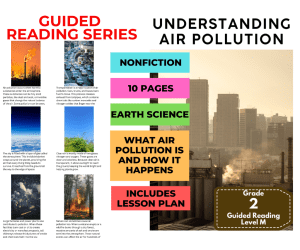
Guided Reading Level M - Air Pollution (with Lesson Plan)
ELA, Resources for Teachers, Reading Comprehension, Reading, Science, Technology, Physics, Life Sciences, Earth and Environmental Sciences, Environmental Science, Grade 2, 3, 4, Worksheets & Printables, Worksheets, Teacher Tools, Centers, Activities, Literacy Readers, Quizzes, Quizzes and Tests, Assessments, Lesson Plans
This Guided Reading Book - Understanding Air Pollution (Level M) with lesson plan includes: Guided Reading Color Label (front cover x1) This is a quick way to match the book’s demands to what students can generally handle.. The overall goal is to use the level/color to pick books for several smaller groups. To qualify for a certain level, a student is expected to read a book from that level with about 90–94% accuracy. If a student is consistently accurate and understands, move up a level. If the student is struggling at that level, drop down and add more support. Each student will improve at completely different rates, but it is generally one of the best ways to check progress across the class. DOWNLOAD THE CATALOG TO VIEW ALL GUIDED READING BOOKS AVAILABLE (SORTED LEVELS A-Z) Pre-Reading Question (x1) Teacher asks the prompt aloud, can be while showing the cover or first page. Students share what they already know, or make educated guesses from the cover. Prompt them to use the target vocabulary. Write some of their responses on the board to look back at during the reading. Vocabulary Words (x5) Introduce the five words, best doing it one at a time. Start by saying it, while students repeat and then see if anyone knows what it means before reading further. Read through the meaning and try to briefly connect each word to a picture or gesture so it’s meaningful. Ask students to flip through the book pages and point to where they see each of the vocabulary words. While reading the book pause upon coming across one of the vocab words or read the sentence twice to make sure students understand the word has appeared. Optional: Ask students to raise hands whenever they see/hear one of the new words. Guided Reading Pages (x10) Check the book snapshot (below) for: primary topic - do you need to prep extra reading or intro materials on this? what is taught best - decide on 1-2 bullets to focus on, use the prompt or words provided here for best results. learning goals - what you are checking for students to be able to do after the session, elicit answers using prompts or words provided. key vocabulary (see section above). questions overview - so you know what is coming up and if you need to prep extra materials to assist understanding. Run the lesson You may have already looked at a few of the pages together, but you can show them some of the pictures again first to set meaning. Depending on how much time you have and how familiar your students are with guided reading class, you may want to read the book aloud first with the group first. Students whisper or partner read, while you listen in. If time, do it as a group, one student reading a page each. Use the guided page’s prompts to coach: “Check the picture / does it make sense?” “Point under the words / try the first sound” “Reread the sentence smoothly”. Try to focus more on one student per session (rotating every time), so you can work out if they are ready to move up or need to move down a level. Comprehension Questions (back cover x3) This is your way to check that students didn’t just say the words, but actually understood the text. First, let students answer by pointing to the page/picture and saying a short sentence. After any answer, follow with: “Show me where you found that in the text.” In bigger groups, have partners answer first (10–20 seconds), then call on 2–3 students to share. Differentiation tips: Emerging speakers/struggling readers: oral + pointing On-level: oral in a full sentence Higher: one written sentence or draw + label Book Snapshot Title: Understanding Air Pollution Genre: Nonfiction (informational science text) Subject: Science (Earth & Environmental Science) Primary Topic: What air pollution is and how it happens Estimated Guided Reading Level (A–Z): M What This Book Teaches Best Introduces the atmosphere as an “invisible blanket” of air around Earth that living things need. Explains what clean air is mostly made of (nitrogen and oxygen) and why transparent air matters for sunlight and plant growth. Defines air pollution and shows that it can be visible (dust, soot) or hidden (invisible gases). Describes major sources of air pollution from transportation and from factories/power plants that burn fuels. Connects air pollution to real effects, including smog , health problems from particulate matter, and damage to plants through acid rain. Learning Goals Describe what the atmosphere is and why it is important for living things. Identify what clean air is mostly made of and describe characteristics of clean air from the text. Explain what air pollution is and name examples of pollutants described in the book. Describe how transportation and factories/power plants contribute to air pollution. Explain what smog is and how it forms, using details from the text. Describe one way technology can reduce air pollution based on the book’s examples. Key Vocabulary From the Text atmosphere — blanket of air around Earth. nitrogen — a gas that makes up much of clean air. oxygen — a gas living things need to survive. particulate — made of tiny pieces or specks. turbines — machines with blades that spin to make electricity. Discussion Prompts Pre-reading question: What are some things you think can make the air around us less clean? Comprehension questions: What two gases is clean air mostly made of? Comprehension questions: What is smog, according to the text? Comprehension questions: How do wind turbines and solar panels help reduce air pollution in the book? Printing Tips 1. Best Printing Method (Recommended) “Booklet” Printing (Best if Available) If your printer or PDF viewer supports Booklet Printing , use this. Settings to use: Print mode: Booklet Paper size: Letter or A4 (either works) Orientation: Landscape Print on both sides: Yes Flip on: Short edge Scaling: Fit to printable area Booklet subset: First test: Front sides only Then: Back sides only This will automatically: Pair pages correctly Put the cover on the outside Align everything for folding After printing, fold in half and staple along the spine . 2. If “Booklet” Printing Is NOT Available You can still print this correctly with manual duplex printing . Step-by-step: Open the PDF. Choose Print . Set: Orientation: Landscape Pages per sheet: 1 Print on both sides: Yes Flip on: Short edge Print all pages . Because each PDF page already contains two facing book pages, the result will still fold cleanly into a book. Thousands of Cored Education products are included with your TeachSimple membership. Download links and encyclopedia index available here.
Author Cored Education
Rating
Tags Reading Comprehension, Reading Passages, Reading, Guided Reading, Guided Reading Lesson Plan, Guided Reading Activity, Pre-reading, Science Lesson Plans, Earth Science, Physics

UK/Aus English Prefixes and Suffixes Practice Year 6-7 (PPT)
ELA, Language Development, ESL, Grammar, Common Core, Resources for Teachers, Grade 5, 6, 7, Quizzes and Tests, Teacher Tools, Tests, Assessments, Activities, Presentations, Quizzes
THIS IS THE UK/AUS ENGLISH SPELLING VERSION. CHECK THE CATALOG FOR THE ORIGINAL AMERICAN ENGLISH VERSION. Prefixes and Suffixes Grammar Practice MCQS ELA MCQS Overview: In this series of lessons, students will embark on an engaging journey to explore the grammar skills that make our language vibrant and expressive. These lessons are crafted to help students identify, comprehend, and effectively apply language arts skills in both writing and speech. This UK/Aus English version is especially useful for schools, teachers, and families working with British-based spelling and language conventions. It is a helpful option for classrooms using UK curriculum expectations, international programmes influenced by British English, or any setting where learners need to practise the correct capitalisation and punctuation forms for that version of English. Prefixes and Suffixes Overview: Match Affix to Meaning Match Meaning to Affix Forming Affixes Fill the Gaps Additional Affix Practice PPT Version This is the PPT editable and interactive version. There is a fillable answer sheet at the end. This download is available in GOOGLE Docs, GOOGLE Forms, GOOGLE Slides. PDF, PPT, WORD, check the links below for more details. FULL CATALOG OF DOWNLOAD LINKS HERE ELA Review Questions Overview Each review test includes three answer choices for every question, which helps keep things simple and manageable for students. The layout is clear and easy to follow, so students can focus on the questions instead of figuring out what to do. A few pictures are included on each test to make the pages feel a little more inviting and less overwhelming. A review sheet is also included, giving students a chance to go back over many of the main skills covered in the resource. Introduction or Example Sheet Each topic comes with an introduction or example sheet to look at before students begin. This gives students a clear starting point and helps them feel more prepared. It also lets them see what to expect before moving into the main work. For many students, it is a helpful way to quickly refresh the key ideas before they start practicing on their own. Full Answer Keys Full answer keys are included to make marking and checking work faster and easier. Sample responses are also provided where needed, especially for open-ended tasks. This can be a real time-saver on busy days and makes the resource more practical to use. Everything is there to help make planning, teaching, and checking student work feel a little more straightforward. For More Like This For similar downloads and other frees, do check out Cored Group on TeachSimple.
Author Cored Education
Rating
Tags Elementary, Answers, Ccss, Common Core, Grammar, Tests, Test Prep, Assessment, Grade 5, Grade 6
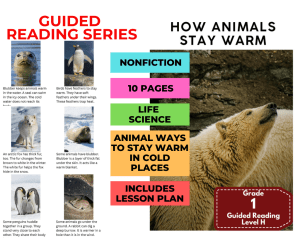
Guided Reading Level H - How Animals Stay Warm (with Lesson Plan)
ELA, Resources for Teachers, Reading Comprehension, Reading, Animals, Life Sciences, Science, Pre-Reading, Language Development, Vocabulary, Kindergarten, Grade 1, 2, Worksheets & Printables, Worksheets, Teacher Tools, Centers, Activities, Literacy Readers, Quizzes, Quizzes and Tests, Assessments
This Guided Reading Book - How Animals Stay Warm (Level H) with lesson plan includes: Guided Reading Color Label (front cover x1) This is a quick way to match the book’s demands to what students can generally handle.. The overall goal is to use the level/color to pick books for several smaller groups. To qualify for a certain level, a student is expected to read a book from that level with about 90–94% accuracy. If a student is consistently accurate and understands, move up a level. If the student is struggling at that level, drop down and add more support. Each student will improve at completely different rates, but it is generally one of the best ways to check progress across the class. DOWNLOAD THE CATALOG TO VIEW ALL GUIDED READING BOOKS AVAILABLE (SORTED LEVELS A-Z) Pre-Reading Question (x1) Teacher asks the prompt aloud, can be while showing the cover or first page. Students share what they already know, or make educated guesses from the cover. Prompt them to use the target vocabulary. Write some of their responses on the board to look back at during the reading. Vocabulary Words (x5) Introduce the five words, best doing it one at a time. Start by saying it, while students repeat and then see if anyone knows what it means before reading further. Read through the meaning and try to briefly connect each word to a picture or gesture so it’s meaningful. Ask students to flip through the book pages and point to where they see each of the vocabulary words. While reading the book pause upon coming across one of the vocab words or read the sentence twice to make sure students understand the word has appeared. Optional: Ask students to raise hands whenever they see/hear one of the new words. Guided Reading Pages (x10) Check the book snapshot (below) for: primary topic - do you need to prep extra reading or intro materials on this? what is taught best - decide on 1-2 bullets to focus on, use the prompt or words provided here for best results. learning goals - what you are checking for students to be able to do after the session, elicit answers using prompts or words provided. key vocabulary (see section above). questions overview - so you know what is coming up and if you need to prep extra materials to assist understanding. Run the lesson You may have already looked at a few of the pages together, but you can show them some of the pictures again first to set meaning. Depending on how much time you have and how familiar your students are with guided reading class, you may want to read the book aloud first with the group first. Students whisper or partner read, while you listen in. If time, do it as a group, one student reading a page each. Use the guided page’s prompts to coach: “Check the picture / does it make sense?” “Point under the words / try the first sound” “Reread the sentence smoothly”. Try to focus more on one student per session (rotating every time), so you can work out if they are ready to move up or need to move down a level. Comprehension Questions (back cover x3) This is your way to check that students didn’t just say the words, but actually understood the text. First, let students answer by pointing to the page/picture and saying a short sentence. After any answer, follow with: “Show me where you found that in the text.” In bigger groups, have partners answer first (10–20 seconds), then call on 2–3 students to share. Differentiation tips: Emerging speakers/struggling readers: oral + pointing On-level: oral in a full sentence Higher: one written sentence or draw + label Book Snapshot Title: How Animals Stay Warm Genre: Nonfiction (informational) Subject: Life Science Primary Topic: Animal ways to stay warm in cold places Estimated Guided Reading Level (A–Z): H What This Book Teaches Best Animals must stay warm to live in places with snow and ice. Body coverings can help animals stay warm (thick fur and feathers that trap heat). Some animals use body fat for warmth (blubber acts like a “warm blanket” and keeps cold water from reaching the body). Animals can use behaviors to stay warm (penguins huddle close and share body heat; some animals go underground; some sit in the sun). Learning Goals Explain why animals must stay warm to live in snow and ice. Describe how thick fur helps keep warm air near an animal’s skin. Describe how blubber helps animals stay warm, including in icy water. Describe how feathers help birds stay warm by trapping heat. Identify actions animals take to stay warm (huddling, going into a burrow, sitting in the sun). Key Vocabulary From the Text arctic — very cold, snowy place. blubber — thick fat under skin that helps keep warm. feathers — soft bird covering that helps trap heat. huddle — stand very close together in a group. burrow — a deep hole an animal digs to go underground. Discussion Prompts Pre-reading question: What are some ways animals might stay warm when it is very cold? Comprehension questions: Why must animals stay warm to live in snow and ice? Comprehension questions: How does blubber help a seal swim in the icy ocean? Comprehension questions: What do penguins do in a group to stay warm? Printing Tips 1. Best Printing Method (Recommended) “Booklet” Printing (Best if Available) If your printer or PDF viewer supports Booklet Printing , use this. Settings to use: Print mode: Booklet Paper size: Letter or A4 (either works) Orientation: Landscape Print on both sides: Yes Flip on: Short edge Scaling: Fit to printable area Booklet subset: First test: Front sides only Then: Back sides only This will automatically: Pair pages correctly Put the cover on the outside Align everything for folding After printing, fold in half and staple along the spine . 2. If “Booklet” Printing Is NOT Available You can still print this correctly with manual duplex printing . Step-by-step: Open the PDF. Choose Print . Set: Orientation: Landscape Pages per sheet: 1 Print on both sides: Yes Flip on: Short edge Print all pages . Because each PDF page already contains two facing book pages, the result will still fold cleanly into a book. Thousands of Cored Education products are included with your TeachSimple membership. Download links and encyclopedia index available here.
Author Cored Education
Rating
Tags Reading Comprehension, Reading Passages, Reading, Guided Reading, Guided Reading Lesson Plan, Guided Reading Activity, Pre-reading, Vocabulary, Animals, Life Science
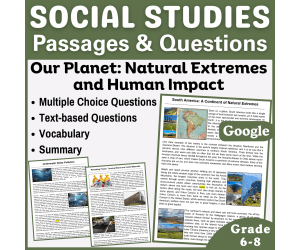
Social Studies Reading Passages: Our Planet and Human Impact (Docs)
ELA, Reading, Reading Comprehension, Strategies, Resources for Teachers, Social Studies, Geography, Grade 6, 7, 8, 9, Writing Prompts, Worksheets & Printables, Centers, Activities, Teacher Tools, Assessments, Quizzes and Tests, Quizzes, Tests
Social Studies Reading Comprehension Passages and Questions: Our Planet: Natural Extremes and Human Impact (Word) This resource introduces a collection of Social Studies reading comprehension passages with questions about Our Planet: Natural Extremes and Human Impact. The passages are carefully designed to bridge the gap between social studies and literacy through strengthening reading comprehension and sparking knowledge curiosity in middle school students. Each passage blends English Language Arts skills with accurate social studies content . Ideal for interdisciplinary learning in ELA and Social Studies. Suitable for Grade 9 review, too! What Is Included in this Collection? There are three informational passages (with full answer keys): Remaking Plastic: Turning Waste into Useful Materials Underwater Noise Pollution South America: A Continent of Natural Extremes For Each Passage, students will have multiple tasks to complete as follow: 5 multiple-choice questions targeting main idea, key details, inference, vocabulary in context, and use of evidence 5 vocabulary matching items with clear, student-friendly definitions 5 text-based questions that require citing specific lines or facts 1 summary prompt that asks students to condense central ideas accurately Available Formats for this Resource PDF Fillable PDF Word Docs FULL CATALOG OF DOWNLOADING LINKS HERE For more Social Studies Reading Passages, check the following Links: Ancient Civilizations PDF Fillable PDF Word Docs Google Docs Early Empires and Trade Networks PDF Fillable PDF Word Docs Google Docs The Founding of the United States PDF Fillable PDF Word Docs Google Docs Language, Culture, and Meaning PDF Fillable PDF Word Docs Google Docs Psychology and Society PDF Fillable PDF Word Docs Google Docs Global Festivals and Traditions PDF Fillable PDF Word Docs Google Docs Extreme Environments and People PDF Fillable PDF Word Docs Google Docs Food, Culture, and Preservation PDF Fillable PDF Word Docs Google Docs Global Food Customs PDF Fillable PDF Word Docs Google Docs Media, Communication, and Popular Culture PDF Fillable PDF Word Docs Google Docs Human Impact on the Environment PDF Fillable PDF Word Docs Google Docs Civic Action and Social Change PDF Fillable PDF Word Docs Google Docs Fashion, Society, and Power PDF Fillable PDF Word Docs Google Docs People, Places, and Unusual Histories PDF Fillable PDF Word Docs Google Docs Product Details Length: 15 pages total Grades: 6–8, also suitable for Grade 9 review Use cases: close reading, stations, homework, intervention, test prep, and sub plans Why Teachers Choose This Set Authentic social studies content paired with rigorous literacy practice Consistent task structure across all passages for easier planning and smoother student routines Clear, age-appropriate writing that builds confidence without oversimplifying Use this set to reinforce ELA skills in social studies, to add literacy to your lessons, and to support independent work. The passages strengthen main idea, evidence use, vocabulary in context, inference, cause and effect, and summary writing. With ready-to-use assessments and complete answer keys, you can provide focused practice that is simple to run and fast to review.
Author Middle & High School - CORED Education
Rating
Tags Middle School, Reading Comprehension, Reading Strategies, ELA, Centers, Reading Passage, Assessments, Vocabulary, Social Studies, Geography
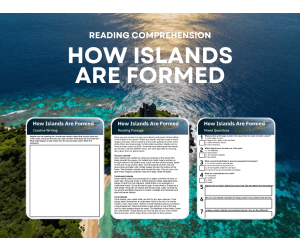
Islands Free Reading Comprehension Passage
ELA, Reading Comprehension, Reading, Language Development, ESL, Library, Science, Earth Sciences, Earth and Environmental Sciences, Strategies, Grade 2, 3, 4, 5, Worksheets & Printables, Worksheets, Teacher Tools, Centers, Activities, Writing Prompts, Assessments, Quizzes and Tests, Quizzes, Tests
Islands reading comprehension: Snapshot Title: How Islands Are Formed Genre: Nonfiction Subject: Earth Science Primary Topic: How different types of islands form Estimated Guided Reading Level (A–Z): S What This Lesson Teaches Best Explains that islands can form in several different ways. Compares volcanic islands, continental islands, and coral islands. Teaches sequence and process through volcano eruptions, lava layers, and island growth. Connects landforms to Earth processes such as magma, sea-level rise, and tectonic plates. Explains why low coral islands are vulnerable to rising oceans. Learning Goals Students will define islands using details from the passage. Students will explain how volcanic islands form over time. Students will describe how continental islands can separate from a mainland. Students will identify coral islands as atolls built by tiny sea creatures. Students will compare volcanic islands and continental islands using text evidence. Key Vocabulary From the Text Magma — hot melted rock beneath Earth. Crust — Earth’s outer rocky layer. Tectonic — related to moving plates of Earth. Atolls — ring-shaped coral islands. Polyps — tiny sea creatures that build coral. Did you know there are thousands of Cored Education products included with a TeachSimple membership? Click here for the free catalog. This product includes: Reading Passage The text is a high-interest reading passage with set paragraphs, roughly three to four paragraphs long. It contains a variety of themes about the topic, anywhere from history to technology. The passage is between 250 and 350 words in length. First, ask students to look at the headings and see what they’ll learn about today. What do they know about the topic/heading? First read options: Teacher read-aloud (best for support). Partner reading (paragraph by paragraph). While reading, students underline important details, and vocabulary words they think may come up in the questions section. Mixed Questions The first question page contains four multiple-choice questions, each with a choice of four answers, and three written response questions that require a sentence or two from the student. Students complete the mcqs first independently, then review quickly as a class. For the 3 written responses, try to get students giving the answer with some form of evidence: “I think ___ because the text says ___.” If students get stuck, send them back to check the passage. Creative Writing In this question, the student will be required to write a five to eight sentence paragraph on a question related to the topic. Before starting, ask students write down 3 key ideas they are going to include in their piece. Ask students for ideas to share around the class to help those struggling. Pro writing expectations: 5–8 sentences At least 2 facts or details from the passage At least 2 vocabulary words from the previous page Students read their paragraphs while classmates listen for facts and vocabulary words. Answer Key There are answers for the multiple-choice questions, written response questions have sample answers, vocabulary answers and if there is a summary question then a sample summary will be provided as well.
Author Cored Education
Rating
Tags Reading Comprehension, Reading Passages, Reading, Ela Mcqs, Creative Writing, Comprehension, Free, Free Reading, Science, Earth Science

Nouns Supplementary Materials - Grammar Grades 1-2 (PDF)
ELA, Language Development, ESL, Grammar, Common Core, Resources for Teachers, Grade 1, 2, Teacher Tools, Lesson Plans, Outlines, Quizzes, Quizzes and Tests, Tests, Assessments, Worksheets & Printables
Nouns Supplementary Materials Note: This download DOES NOT include the tests themselves. You can still make use of these materials without them but they are recommended. Download in a format of your choice in the "Links" section below. In the Supplementary Pack Interactive Ice Breakers: Fun, hands-on activities that get students thinking about adjectives right from the start. Guided Practice: Teacher-led exercises that reinforce the day’s lesson, ensuring students can confidently identify and use adjectives. Group and Partner Tasks: Collaborative activities that allow students to work together to solve problems, categorize adjectives, and create descriptive sentences. Independent Worksheets: Structured worksheets that provide individual practice and help solidify understanding of key concepts. Exit Tasks: Quick, reflective activities at the end of each lesson that assess understanding and encourage students to apply what they’ve learned. Nouns Overview: Includes: Common Nouns Proper Nouns Irregular Plurals Possessive Nouns Collective Nouns Google Docs Google Forms Google Slides PDF PPT Word FULL CATALOG OF DOWNLOAD LINKS HERE Grade 1/2 Links: Capitalization and Punctuation Google Docs Google Forms Google Slides PDF PPT Word Free Supplementary Materials Pack Adjectives Google Docs Google Forms Google Slides PDF PPT Word Free Supplementary Materials Pack Nouns Google Docs Google Forms Google Slides PDF PPT Word Free Supplementary Materials Pack Pronouns Google Docs Google Forms Google Slides PDF PPT Word Free Supplementary Materials Pack Verbs Google Docs Google Forms Google Slides PDF PPT Word Free Supplementary Materials Pack Prefixes & Suffixes Google Docs Google Forms Google Slides PDF PPT Word Free Supplementary Materials Pack Sentence Structure Google Docs Google Forms Google Slides PDF PPT Word Free Supplementary Materials Pack Subject-Verb Agreement Google Docs Google Forms Google Slides PDF PPT Word Free Supplementary Materials Pack ELA Review Questions Overview Questions have three answer choices. There are a handful of pictures on each test for aesthetic purposes, as well as a review sheet covering most of the topics covered in the product. Introduction or Example Sheet Each topic will include an introduction or example sheet to go through first with your students. Full Answer Keys Full answer keys and sample responses are provided so no matter how busy you are, you know you're covered! For similar downloads and other frees, do check out Cored Group on TeachSimple.
Author Cored Education
Tags Elementary, Reading, Comprehension, Vocabulary, Answers, Ccss, Common Core, Spelling, Writing, Passages

Iguanas Reading Comprehension Passage - Cored Ed Encyclopedia
ELA, Reading Comprehension, Reading, History, Social Studies, Science, Physics, Earth and Environmental Sciences, Life Sciences, Geography, Grade 2, 3, 4, 5, Worksheets & Printables, Worksheets, Teacher Tools, Centers, Activities, Writing Prompts, Assessments, Quizzes and Tests, Quizzes, Lesson Plans
This Iguanas reading comprehension with lesson plan includes: Visualization (on the front cover) Start your lesson by taking a minute to think and share something about the topic. Read the script aloud (slowly), perhaps prepare some music or sound effects. Student close their eyes and let their imaginations wander. Students open their eyes, read the question aloud and give them a few minutes to complete. Ask a few students to share or keep answers until the end to compare with what they learn in the passage. Quick pause—thousands of Cored Education products are included with your TeachSimple membership. Download links and encyclopedia index available here. Pre-Reading Trivia Students will write down one thing they already know about the subject and then read five more facts and discuss. These facts are fun, and the students will enjoy learning about the subject before reading more. Give 1 minute for students to write what they already know (no pressure—best guess is fine). Read the five facts together. After each fact, do ask a student for their opinion, was it surprising? Set a purpose by asking students to highlight/underline one fact they want to learn more about during the reading. Reading Passage The text is a high-interest reading passage with set paragraphs, roughly three to four paragraphs long. It contains a variety of themes about the topic, anywhere from history to technology. The passage is between 250 and 350 words in length. First, ask students to look at the headings and see what they’ll learn about today. What do they know about the topic/heading? First read options: Teacher read-aloud (best for support). Partner reading (paragraph by paragraph). While reading, students underline important details, and vocabulary words they think may come up in the questions section. Mixed Questions The first question page contains four multiple-choice questions, each with a choice of four answers, and three written response questions that require a sentence or two from the student. Students complete the mcqs first independently, then review quickly as a class. For the 3 written responses, try to get students giving the answer with some form of evidence: “I think ___ because the text says ___.” If students get stuck, send them back to check the passage. Vocabulary Questions Practice seven key words from the text in this section across two activities. First section is scrambled words where students will unscramble three words given a clue for each. The second section is a word to meaning matching activity. Before starting, have some students read out words they underlined in the passage. Ask students to say the word and read aloud the sentence(s) around each word. Ask students to do scrambled words and the matching exercise in pairs then go through answers as a class. For the scrambled spelling task, get four pairs to come up to the board and write the words for extra practice with the other student reading out the clue. For the matching task, prompt students to give full sentences: “I matched ___ with ___ because ___.” Creative Writing In this question, the student will be required to write a five to eight sentence paragraph on a question related to the topic. Before starting, ask students write down 3 key ideas they are going to include in their piece. Ask students for ideas to share around the class to help those struggling. Pro writing expectations: 5–8 sentences At least 2 facts or details from the passage At least 2 vocabulary words from the previous page Students read their paragraphs while classmates listen for facts and vocabulary words. Extension Activities This page is optional for fast finishers or to take home. There are several activities, each one requiring a different skill. Do some, do none, do all, completely optional - but you will feel reassured knowing every possibility is planned for. Includes summary writting question and additional facts. Answer Key There are answers for the multiple-choice questions, written response questions have sample answers, vocabulary answers and if there is a summary question then a sample summary will be provided as well. Lesson Plan Included Customized lesson plan for this lesson is included. Lesson Snapshot Title: Iguanas Genre: Nonfiction (informational text) Subject: Reading (Informational Text) / Life Science Primary Topic: Green vs. marine iguanas: tails, habitat, survival Estimated Guided Reading Level (A–Z): R What This Lesson Teaches Best Describes key iguana features and what they look like (dewlap, a line of spines). Explains where iguanas live and notes that most live in the Americas, with some relatives on islands. Shows how a green iguana’s long tail helps with survival (whip-like defense and strong tail strokes for swimming away). Compares two related iguanas by habitat and behavior (tree-climbing green iguana vs. sea-foraging marine iguana that eats algae and basks on dark rocks). Builds awareness of changing habitats and reasons protection matters (building on land, hunting/capturing, predators, El Niño, oil spills). Learning Goals Identify details that describe what an iguana looks like and where it lives. Explain how a green iguana uses its tail when danger comes near water. Describe how the marine iguana finds food and what it does after a cold swim. Compare the green iguana and marine iguana using evidence from the passage. Describe at least two reasons iguanas might need protection based on changes in their habitats. Key Vocabulary From the Text dewlap — loose throat skin that can hang in a fold. spines — pointed bumps that may rise along its back. forages — searches for food. predators — animals that hunt other animals. habitats — places animals need to live. FULL CATALOG OF DOWNLOAD LINKS AND ENCYCLOPEDIA INDEX HERE
Author Cored Education
Rating
Tags Vocabulary, Reading Comprehension, Reading Passages, Lesson Plans, Ela Lesson Plans, Reading Comprehension Lesson Plans, Pre-reading, History, Science Lesson Plans, Life Science
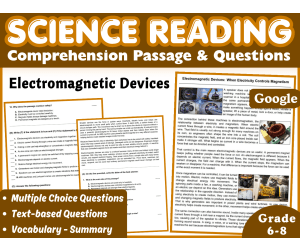
Electromagnetic Devices: Physical Science Reading Comprehension (Docs)
Science, ELA, Reading, Reading Comprehension, Strategies, Resources for Teachers, Physics, Grade 6, 7, 8, 9, 10, Writing Prompts, Worksheets & Printables, Centers, Activities, Teacher Tools, Assessments, Quizzes and Tests, Quizzes, Tests
Physical Science Reading Comprehension Passage and Questions for Middle School: Electromagnetic Devices (Google Document) This engaging middle school science resource explores electromagnetic devices and shows students how electricity and magnetism work together in real-world technology. Students learn how electric current creates magnetic fields, why coils and iron cores can strengthen electromagnets, and how controlling electric current allows magnetic force to be turned on, changed, or switched off. This passage is designed to bridge the gap between science and literacy by strengthening reading comprehension while sparking scientific curiosity in middle school students. It blends English Language Arts skills with accurate science content, helping students build background knowledge, understand key concepts, use evidence from the text, and explain scientific ideas clearly. This resource supports science classroom practice while also reinforcing important literacy skills such as main idea, vocabulary, comprehension, and summarizing. Ideal for interdisciplinary learning in ELA and Science. Suitable for Grade 9 review, too! Student Tasks for The Passage: 10 multiple-choice questions targeting main idea, key details, science concepts, comparison, and real-world applications 10 True/False statements to check understanding and address common misconceptions 5 text-based short-answer questions that require students to explain important ideas from the passage 5 vocabulary matching items with clear, student-friendly definitions 1 summary prompt that asks students to condense the central ideas accurately Full answer key for every section Available Formats for this Resource PDF Fillable PDF Word Docs Product Details Length: 7 pages total Grades: 6–8, also suitable for Grade 9 review Use cases: close reading, stations, homework, intervention, test prep, and sub plans Standards support: Reinforces informational-text skills and supports NGSS-style sense-making by helping students read scientific explanations, connect evidence to key concepts, interpret real-world examples, and explain cause-and-effect relationships in science. FULL CATALOG OF DOWNLOADING LINKS HERE Other Science Reading Collections and Topics You May Find in the Store: 1. Astronomy & Space Science 2. Volcanoes, Rocks, & Mountains 3. Rock Cycle, Soil, & Sinkholes 4. Mars, Glaciers, & Antarctica 5. Water Cycle, Acid Rain, & Wastewater 6. Insects, Animals, & Ecosystems 7. Bioluminescence & Insects 8. Animal Skin, Cats, & T. Rex 9. Human Body and Senses 10. Health & Applied Bioscience 11. Waves, Light, & Imaging 12. Electricity & Energy 13. Motion & Materials 14. Chemistry and Materials Science 15. Electromagnetism 16. Acids and Bases 17. Gas Laws 18. Biotechnology 19. Periodic Trends 20. Protists and Fungi 21. Microevolution 22. Blood 23. Chemical Bonding 24. Magnets 25. Muscles 26. Nuclear Chemistry 27. Electromagnetic Devices 28. Epigenetics 29. The Law of Conservation of Mass 30. Atomic Models 31. Isotopes and Ions 32. Light 33. Human-Environment Interaction 34. Theory of Evolution 35. Photosynthesis 36. Origins of Life and Early Earth 37. Gene Expression and Regulation 38. Thermochemistry 39. Allergies 40. Coevolution 41. Birth to Adulthood 42. Cells 43. Entropy and Free Energy 44. The Human Brain 45. Mixtures and Solutions 46. Invertebrates 47. Zoo Animals 48. Biochemistry 49. Animal Behavior 50. Population Ecology ...and many more engaging science reading passages that cover intriguing and important topics designed to spark curiosity and support student learning. Use this passage to reinforce ELA skills in science, to add literacy to your lessons, and to support independent work. The passages strengthen main idea, evidence use, vocabulary in context, inference, cause and effect, and summary writing. With ready-to-use assessments and complete answer keys, you can provide focused practice that is simple to run and fast to review.
Author Middle & High School - CORED Education
Rating
Tags Middle School, Reading Comprehension, Reading Strategies, ELA, Centers, Reading Passage, Assessments, Vocabulary, Physical Science, Electromagnetism

Social Studies SAMPLE Reading Passage: Food in South America (PDF)
ELA, Reading, Reading Comprehension, Strategies, Resources for Teachers, Social Studies, Sociology, Grade 6, 7, 8, 9, Writing Prompts, Worksheets & Printables, Centers, Activities, Teacher Tools, Assessments, Quizzes and Tests, Quizzes, Tests
This is a ONE PASSAGE SAMPLE. The following is the description of the FULL resource and the downloading links: Social Studies Reading Comprehension Passages and Questions: Food and Culture (PDF) This resource introduces a collection of Social Studies reading comprehension passages with questions about Food, Culture, and Preservation. The passages are carefully designed to bridge the gap between social studies and literacy through strengthening reading comprehension and sparking knowledge curiosity in middle school students. Each passage blends English Language Arts skills with accurate social studies content . Ideal for interdisciplinary learning in ELA and Social Studies. Suitable for Grade 9 review, too! What Is Included in this Collection? There are three informational passages (with full answer keys): Homemade Cottage Cheese: Food, Family, and Local Trade Salty Traditions: How Salami and Kimchi Stay Safe to Eat From Grasslands to Grill: The Foods of South America For Each Passage, students will have multiple tasks to complete as follow: 5 multiple-choice questions targeting main idea, key details, inference, vocabulary in context, and use of evidence 5 vocabulary matching items with clear, student-friendly definitions 5 text-based questions that require citing specific lines or facts 1 summary prompt that asks students to condense central ideas accurately Available Formats for this Resource Fillable PDF Word Docs Google Docs FULL CATALOG OF DOWNLOADING LINKS HERE For more Social Studies Reading Passages, check the following Links: Ancient Civilizations PDF Fillable PDF Word Docs Google Docs Early Empires and Trade Networks PDF Fillable PDF Word Docs Google Docs The Founding of the United States PDF Fillable PDF Word Docs Google Docs Language, Culture, and Meaning PDF Fillable PDF Word Docs Google Docs Psychology and Society PDF Fillable PDF Word Docs Google Docs Global Festivals and Traditions PDF Fillable PDF Word Docs Google Docs Extreme Environments and People PDF Fillable PDF Word Docs Google Docs Food, Culture, and Preservation PDF Fillable PDF Word Docs Google Docs Global Food Customs PDF Fillable PDF Word Docs Google Docs Media, Communication, and Popular Culture PDF Fillable PDF Word Docs Google Docs Human Impact on the Environment PDF Fillable PDF Word Docs Google Docs Civic Action and Social Change PDF Fillable PDF Word Docs Google Docs Fashion, Society, and Power PDF Fillable PDF Word Docs Google Docs People, Places, and Unusual Histories PDF Fillable PDF Word Docs Google Docs Product Details Length: 14 pages total Grades: 6–8, also suitable for Grade 9 review Use cases: close reading, stations, homework, intervention, test prep, and sub plans Why Teachers Choose This Set Authentic social studies content paired with rigorous literacy practice Consistent task structure across all passages for easier planning and smoother student routines Clear, age-appropriate writing that builds confidence without oversimplifying Use this set to reinforce ELA skills in social studies, to add literacy to your lessons, and to support independent work. The passages strengthen main idea, evidence use, vocabulary in context, inference, cause and effect, and summary writing. With ready-to-use assessments and complete answer keys, you can provide focused practice that is simple to run and fast to review.
Author Middle & High School - CORED Education
Rating
Tags Middle School, Reading Comprehension, Reading Strategies, ELA, Centers, Reading Passage, Assessments, Vocabulary, Social Studies, Food And Culture
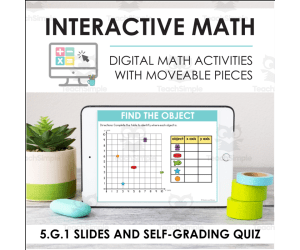
Digital Math for 5.G.1 - Graph Points on the Coordinate Plane (Slides + Self-Grading Quiz)
Math, Geometry, Grade 5, Quizzes, Quizzes and Tests, Teacher Tools
Digital Math for 5.G.1 - Graph Points on the Coordinate Plane (Slides + Self-Grading Quiz) This dynamic education tool is particularly curated for Grade 5 educators aiming to teach the standard 5.G.1 in Math. It combines technology with math lessons, enhancing students' comprehension of geometric concepts. Usability and Accessibility It features a simple deployment function that makes it easy to meld into your lesson plans. These interactive slides are completely digital and paperless, making preparation efficient while promoting a rich learning environment. A Unique Leaning Experience The selling point of this resource is its visual illustrations where students get hands-on experiences by dragging, dropping, and organizing images onto slides. Through these activities, student engagement transcends passive note-taking or lecture listening—they immerse themselves in enriching experiences aimed at improving their graphical understanding. Assessment Tools: Included is a self-marked Google Forms quiz for assessing or reinforcing student understanding post-interaction on the slides. Instant Feedback: It offers immediate performance feedback without manual grading—ideal for large classroom management or homeschooling setups requiring quick evaluations. Versatile Format Options Select between PowerPoint presentation format or Google Slides depending on your preference or compatibility with your virtual classroom setting—both formats entertain equally well while facilitating comprehension of graph points on a coordinate plane under geometry subject matter. Ease-of-use:Inclusive are teacher-friendly steps so you can effortlessly allocate either the entire file or portioned selection of slides relevant to your instruction goals without encountering technical obstacles; Versatility:The instructions cater to distance learning assignments or small group education delivery in traditional classroom setups. Boost Student Comprehension Today! This unique mix of technology and curriculum-led activities, designed specifically for Grade 5's Geometry point of view, can be yours to deploy. Enhance your student understanding today!
Author Markers and Minions
Tags Interactive Slides, Digital Technology, Graph Points, Coordinate Plane, Self-grading Quiz, Coordinate Plane Lesson Plans 5th Grade
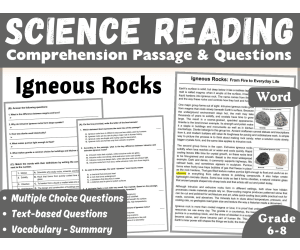
Earth Science Reading Comprehension Passage: Igneous Rocks (Word)
Science, ELA, Reading, Reading Comprehension, Strategies, Resources for Teachers, Earth and Environmental Sciences, Earth Sciences, Grade 6, 7, 8, 9, Writing Prompts, Worksheets & Printables, Centers, Activities, Teacher Tools, Assessments, Quizzes and Tests, Quizzes, Tests
Science Reading Comprehension Passages and Questions: Igneous Rocks (Word) This very engaging earth science reading passage about Igneous Rocks is designed to bridge the gap between science and literacy through strengthening reading comprehension and sparking scientific curiosity in middle school students. The passage blends English Language Arts skills with accurate science content that supports NGSS classroom practice. Ideal for interdisciplinary learning in ELA and Science. Suitable for Grade 9 review, too! Student Tasks for The Passage: 5 multiple-choice questions targeting main idea, key details, inference, vocabulary in context, and use of evidence 5 vocabulary matching items with clear, student-friendly definitions 5 text-based questions that require citing specific lines or facts 1 summary prompt that asks students to condense central ideas accurately Full answer key for every section Available Formats for this Resource PDF Fillable PDF Google Docs FULL CATALOG OF DOWNLOADING LINKS HERE Product Details Length: 4 pages total Grades: 6–8, also suitable for Grade 9 review Use cases: close reading, stations, homework, intervention, test prep, and sub plans Standards support: reinforces informational-text skills and supports NGSS-style sense making through observation, modeling, and clear use of claim, evidence, and reasoning Why Teachers Choose This Set Authentic science content paired with rigorous literacy practice Consistent task structure across all passages for easier planning and smoother student routines Clear, age-appropriate writing that builds confidence without oversimplifying Other Science Reading Collections you May find in the store: 1. Astronomy & Space Science 2. Volcanoes, Rocks, & Mountains 3. Rock Cycle, Soil, & Sinkholes 4. Mars, Glaciers, & Antarctica 5. Water Cycle, Acid Rain, & Wastewater 6. Insects, Animals, & Ecosystems 7. Bioluminescence & Insects 8. Animal Skin, Cats, & T. Rex 9. Human Body and Senses 10. Health & Applied Bioscience 11. Waves, Light, & Imaging 12. Electricity & Energy 13. Motion & Materials 14. Chemistry and Materials Science Use this set to reinforce ELA skills in science, to add literacy to your lessons, and to support independent work. The passages strengthen main idea, evidence use, vocabulary in context, inference, cause and effect, and summary writing. With ready-to-use assessments and complete answer keys, you can provide focused practice that is simple to run and fast to review.
Author Middle & High School - CORED Education
Rating
Tags Middle School, Reading Comprehension, Reading Strategies, ELA, Centers, Reading Passage, Assessments, Vocabulary, Environmental Science, Earth Science

Benjamin Franklin: Social Studies Comprehension Passage (Fillable PDF)
ELA, Reading, Reading Comprehension, Strategies, Resources for Teachers, Social Studies, History, History: USA, Grade 6, 7, 8, 9, Writing Prompts, Worksheets & Printables, Centers, Activities, Teacher Tools, Assessments, Quizzes and Tests, Quizzes, Tests
Benjamin Franklin: Social Studies Reading Comprehension Passage (Fillable PDF) This resource introduces a unique Social Studies reading comprehension passage with questions about Benjamin Franklin and his Ideas. The passage is carefully designed to bridge the gap between social studies and literacy through strengthening reading comprehension and sparking knowledge curiosity in middle school students. Each passage blends English Language Arts skills with accurate social studies content . Ideal for interdisciplinary learning in ELA and Social Studies. Suitable for Grade 9 review, too! This resource is designed as a fillable PDF , which means students can type their answers directly into the document on any computer or tablet . Each page includes highlighted text fields that show them exactly where to type! Student Tasks throughout the passage: 5 multiple-choice questions targeting the following skills: main idea, key details, inference, vocabulary in context, and use of evidence 5 vocabulary matching items with clear, student-friendly definitions 5 text-based questions that require citing specific lines or facts 1 summary prompt that asks students to condense central ideas accurately Full answer key for every section Available Formats for this Resource: PDF Word Docs Google Docs FULL CATALOG OF DOWNLOADING LINKS HERE Social Studies Reading Comprehension Collection Links: 1. Ancient Civilizations PDF Fillable PDF Word Docs Google Docs 2. Early Empires and Trade Networks PDF Fillable PDF Word Docs Google Docs 3. The Founding of the United States PDF Fillable PDF Word Docs Google Docs 4. Language, Culture, and Meaning PDF Fillable PDF Word Docs Google Docs 5. Psychology and Society PDF Fillable PDF Word Docs Google Docs 6. Global Festivals and Traditions PDF Fillable PDF Word Docs Google Docs 7. Extreme Environments and People PDF Fillable PDF Word Docs Google Docs 8. Food, Culture, and Preservation PDF Fillable PDF Word Docs Google Docs 9. Global Food Customs PDF Fillable PDF Word Docs Google Docs 10. Media, Communication, and Popular Culture PDF Fillable PDF Word Docs Google Docs 11. Human Impact on the Environment PDF Fillable PDF Word Docs Google Docs 12. Civic Action and Social Change PDF Fillable PDF Word Docs Google Docs 13. Fashion, Society, and Power PDF Fillable PDF Word Docs Google Docs 14. People, Places, and Unusual Histories PDF Fillable PDF Word Docs Google Docs Product Details: Length: 4 pages Grades: 6–8, also suitable for Grade 9 review Use cases: close reading, stations, homework, intervention, test prep, and sub plans Why Teachers Choose This Passage: Authentic social studies content paired with rigorous literacy practice Consistent task structure for easier planning and smoother student routines Clear, age-appropriate writing that builds confidence without oversimplifying Use this passage to reinforce ELA skills in social studies, to add literacy to your lessons, and to support independent work. The passage strengthens main idea, evidence use, vocabulary in context, inference, cause and effect, and summary writing. With ready-to-use assessments and complete answer keys, you can provide focused practice that is simple to run and fast to review.
Author Middle & High School - CORED Education
Rating
Tags Middle School, Reading Comprehension, Reading Strategies, ELA, Centers, Reading Passage, Assessments, Vocabulary, Social Studies, US HISTORY

Bible Quiz Volume #1
ELA, Special Resources, Writing, Handwriting, Reading, Reading Comprehension, Language Development, Spelling, Kindergarten, Preschool, Grade 1, Quizzes, Quizzes and Tests, Teacher Tools
Bible Quiz Volume #1 Bible Quiz Volume #1 was created as an individual activity that can be an introduction bible stories for children or to enhance your own lessons/story telling of these stories. You will get exactly what is shown in the photos in this listing. In this Bible Quiz game , your kids will match exact pictures to the information in each box. They will match famous Bible people with the stories they were involved in or the things they did. Your kids will love the super cute illustrations and you will love having a Bible game that you can pull out and play at any time! This Bible Quiz is perfect to play at home, in a classroom, or at church. You can also make the quiz a little more challenging by showing the picture card from the quiz and then ask a question about the Biblical person. This can be a good time to provide the children with more information about some great people in the Bible. There is also a Bonus page so you child can trace the words in the Quiz. They will be having fun learning about the Bible and developing their reading, spelling and handwriting skills. I believe this product would be a great addition to a Sunday school class, or Vacation Bible school classroom. This Bible memory game features Bible characters and stories to match including: David & Saul David & Goliath Moses as an Egyptian Moses returns to Egypt to save his people Includes 17 pages Instructions: Print out the 9 x14 legal paper PDF Laminate for longer use Cut out the picture cards Assemble Add binder Add Velcro dots
Author KD's Kids School Shop
Tags Bible Stories, Moses, King David, King Saul, Bible, Christian Study For Kids

Walkie-Talkies Reading Comprehension Passage - Cored Ed Encyclopedia
ELA, Language Development, Reading Comprehension, Reading, Pre-Reading, Science, Social Studies, History, Technology, Physics, Grade 2, 3, 4, 5, Worksheets & Printables, Worksheets, Teacher Tools, Centers, Activities, Writing Prompts, Assessments, Quizzes and Tests, Quizzes, Lesson Plans
This walkie-talkies reading comprehension with lesson plan includes: Visualization (on the front cover) Start your lesson by taking a minute to think and share something about the topic. Read the script aloud (slowly), perhaps prepare some music or sound effects. Student close their eyes and let their imaginations wander. Students open their eyes, read the question aloud and give them a few minutes to complete. Ask a few students to share or keep answers until the end to compare with what they learn in the passage. Quick pause—thousands of Cored Education products are included with your TeachSimple membership. Download links and encyclopedia index available here. Pre-Reading Trivia Students will write down one thing they already know about the subject and then read five more facts and discuss. These facts are fun, and the students will enjoy learning about the subject before reading more. Give 1 minute for students to write what they already know (no pressure—best guess is fine). Read the five facts together. After each fact, do ask a student for their opinion, was it surprising? Set a purpose by asking students to highlight/underline one fact they want to learn more about during the reading. Reading Passage The text is a high-interest reading passage with set paragraphs, roughly three to four paragraphs long. It contains a variety of themes about the topic, anywhere from history to technology. The passage is between 250 and 350 words in length. First, ask students to look at the headings and see what they’ll learn about today. What do they know about the topic/heading? First read options: Teacher read-aloud (best for support). Partner reading (paragraph by paragraph). While reading, students underline important details, and vocabulary words they think may come up in the questions section. Mixed Questions The first question page contains four multiple-choice questions, each with a choice of four answers, and three written response questions that require a sentence or two from the student. Students complete the mcqs first independently, then review quickly as a class. For the 3 written responses, try to get students giving the answer with some form of evidence: “I think ___ because the text says ___.” If students get stuck, send them back to check the passage. Vocabulary Questions Practice seven key words from the text in this section across two activities. First section is scrambled words where students will unscramble three words given a clue for each. The second section is a word to meaning matching activity. Before starting, have some students read out words they underlined in the passage. Ask students to say the word and read aloud the sentence(s) around each word. Ask students to do scrambled words and the matching exercise in pairs then go through answers as a class. For the scrambled spelling task, get four pairs to come up to the board and write the words for extra practice with the other student reading out the clue. For the matching task, prompt students to give full sentences: “I matched ___ with ___ because ___.” Creative Writing In this question, the student will be required to write a five to eight sentence paragraph on a question related to the topic. Before starting, ask students write down 3 key ideas they are going to include in their piece. Ask students for ideas to share around the class to help those struggling. Pro writing expectations: 5–8 sentences At least 2 facts or details from the passage At least 2 vocabulary words from the previous page Students read their paragraphs while classmates listen for facts and vocabulary words. Extension Activities This page is optional for fast finishers or to take home. There are several activities, each one requiring a different skill. Do some, do none, do all, completely optional - but you will feel reassured knowing every possibility is planned for. Includes summary writting question. Answer Key There are answers for the multiple-choice questions, written response questions have sample answers, vocabulary answers and if there is a summary question then a sample summary will be provided as well. Lesson Plan Included Customized lesson plan for this lesson is included. Lesson Snapshot Title: Walkie-Talkies Genre: Nonfiction (informational text) Subject: Science & Technology (Informational Reading) Primary Topic: How walkie-talkies work, history, and clear communication Estimated Guided Reading Level (A–Z): P What This Lesson Teaches Best Explains how a walkie-talkie works as a handheld two-way radio that switches from listening to sending when the talk button is pressed. Builds understanding of shared communication rules , including that only one radio can transmit at a time and messages stay “short and clear.” Introduces a simple history of portable radios , from early military use (including a “packset” and the Motorola SCR-300) to later helpers on job sites. Highlights how word choice matters when people share the air, connecting clear/kind words to teamwork and getting things done. Uses comparisons and descriptive language (e.g., “scratchy,” “like a distant whisper,” “lighter than a deck of cards”) to help readers picture sound and size. Learning Goals Students will describe what a walkie-talkie is and what it can do (send and receive messages). Students will explain what happens when the talk button is pressed and why the radio listens most of the time. Students will identify at least two ways early walkie-talkies differed from many walkie-talkies today. Students will describe why teams keep messages short and clear when using walkie-talkies. Students will use evidence from the text to explain what “over” means in walkie-talkie talk. Key Vocabulary From the Text antenna — the part that sticks up to help signals travel. channel — a shared path where people hear the same messages. portable — easy to carry from place to place. transmit — send a message through the air. rugged — strong and built to last. FULL CATALOG OF DOWNLOAD LINKS AND ENCYCLOPEDIA INDEX HERE
Author Cored Education
Rating
Tags Vocabulary, Reading Comprehension, Reading Passages, Lesson Plans, Ela Lesson Plans, Reading Comprehension Lesson Plans, Pre-reading, Science Lesson Plans, History Lesson Plans, Technology

Animal Skin, Cats, & T. Rex: Reading Comprehension passages (PDF)
Science, ELA, Reading, Reading Comprehension, Strategies, Resources for Teachers, Life Sciences, Animals, Insects, Nature & Plants, Grade 6, 7, 8, 9, Writing Prompts, Worksheets & Printables, Centers, Activities, Teacher Tools, Assessments, Quizzes and Tests, Quizzes, Tests
Animal Skin, Cats, & T. Rex: Reading Comprehension Passages (PDF) This very engaging collection of life science reading passages about Animal Skin, Cats, & T. Rex is designed to bridge the gap between science and literacy through strengthening reading comprehension and sparking scientific curiosity in middle school students. Each passage blends English Language Arts skills with accurate science content that supports NGSS classroom practice. Ideal for interdisciplinary learning in ELA and Science. Suitable for Grade 9 review, too! What Is Included? There are (3) informational passages: Tyrannosaurus rex: The Tyrant Lizard King Step into the late Cretaceous and see T. rex up close, from its towering build and crushing bite to the clues fossils give about speed and feeding. CT scans, trackways, and healed injuries help scientists piece together how this predator lived. Cats and Sweetness: A Taste They Don’t Have A small change in a taste receptor means cats do not detect sugar. This trait fits a meat-first diet and helps explain why scent, texture, fats, and proteins matter more than sweetness. Animal Skin: A Tool for Survival Skin works as armor, thermostat, camouflage, warning, and display. Examples include the hippo’s natural sunscreen, zebra stripes that confuse attackers, and king snakes that copy coral snake colors to stay safe. Student Tasks for Each Passage: 5 multiple-choice questions targeting main idea, key details, inference, vocabulary in context, and use of evidence 5 vocabulary matching items with clear, student-friendly definitions 5 text-based questions that require citing specific lines or facts 1 summary prompt that asks students to condense central ideas accurately Full answer key for every section Available Formats for this Resource Word Docs Google Docs FULL CATALOG OF DOWNLOADING LINKS HERE Other Science Reading Collections and Topics You May Find in the Store: 1. Astronomy & Space Science 2. Volcanoes, Rocks, & Mountains 3. Rock Cycle, Soil, & Sinkholes 4. Mars, Glaciers, & Antarctica 5. Water Cycle, Acid Rain, & Wastewater 6. Insects, Animals, & Ecosystems 7. Bioluminescence & Insects 8. Animal Skin, Cats, & T. Rex 9. Human Body and Senses 10. Health & Applied Bioscience 11. Waves, Light, & Imaging 12. Electricity & Energy 13. Motion & Materials 14. Chemistry and Materials Science 15. Electromagnetism 16. Acids and Bases 17. Gas Laws 18. Biotechnology 19. Periodic Trends 20. Protists and Fungi 21. Microevolution 22. Blood 23. Chemical Bonding 24. Magnets 25. Muscles 26. Nuclear Chemistry 27. Electromagnetic Devices 28. Epigenetics 29. The Law of Conservation of Mass 30. Atomic Models 31. Isotopes and Ions 32. Light 33. Human-Environment Interaction 34. Theory of Evolution 35. Photosynthesis 36. Origins of Life and Early Earth 37. Gene Expression and Regulation 38. Thermochemistry 39. Allergies 40. Coevolution 41. Birth to Adulthood 42. Cells 43. Entropy and Free Energy 44. The Human Brain 45. Mixtures and Solutions 46. Invertebrates 47. Zoo Animals 48. Biochemistry 49. Animal Behavior 50. Population Ecology ...and many more engaging science reading passages that cover intriguing and important topics designed to spark curiosity and support student learning. Product Details Length: 1e pages total Grades: 6–8, also suitable for Grade 9 review Use cases: close reading, stations, homework, intervention, test prep, and sub plans Standards support: reinforces informational-text skills and supports NGSS-style sense making through observation, modeling, and clear use of claim, evidence, and reasoning Why Teachers Choose This Set Authentic science content paired with rigorous literacy practice Consistent task structure across all passages for easier planning and smoother student routines Clear, age-appropriate writing that builds confidence without oversimplifying Use this set to reinforce ELA skills in science, to add literacy to your lessons, or to support independent work. The passages strengthen main idea, evidence use, vocabulary in context, inference, cause and effect, and summary writing. With ready-to-use assessments and complete answer keys, you can provide focused practice that is simple to run and fast to review.
Author Middle & High School - CORED Education
Rating
Tags Middle School, Reading Comprehension, Reading Strategies, ELA, Centers, Reading Passage, Assessments, Vocabulary, Life Science, Dinosaurs
Gravy Reading Comprehension Passage - Cored Ed Encyclopedia
ELA, Language Development, Resources for Teachers, Reading Comprehension, Reading, Pre-Reading, Writing, Strategies, Common Core, ESL, Grade 2, 3, 4, 5, Worksheets & Printables, Worksheets, Teacher Tools, Centers, Activities, Writing Prompts, Assessments, Tests, Quizzes and Tests, Quizzes
This gravy reading comprehension contains the following: Pre-Reading Trivia Students will write down one thing they already know about the subject and then read five more facts and discuss. These facts are fun, and the students will enjoy learning about the subject before reading more. Reading Passage The text is a high-interest reading passage with set paragraphs, roughly three to four paragraphs long. It contains a variety of themes about the topic, anywhere from history to technology. The passage is between 250 and 350 words in length. Mixed Questions The first question page contains four multiple-choice questions, each with a choice of four answers, and three written response questions that require a sentence or two from the student. Creative Writing In this question, the student will be required to write a five to eight sentence paragraph on a question related to the topic. Extension Activities This page is optional for fast finishers. If there are five to ten minutes left at the end of the lesson, the student can choose one of three activities, each one requiring a different skill. Answer Key There are answers for the multiple-choice questions and three written response questions have sample answers. FULL CATALOG OF DOWNLOAD LINKS AND ENCYCLOPEDIA INDEX HERE Cored Ed Encyclopedia Overview The Cored Ed Encyclopedia is a weekly series of lessons that you can pick up and use right away. These short readings fit into whatever time you have available. Each one includes a warm-up, a reading, and a set of questions, but it’s flexible — you can do just the reading, the full lesson, or skip the writing section if you need to. Each lesson focuses on a single topic so students don’t get lost. The writing is clear but never childish, making it perfect for grades two through five. Topics range from animals and science to history, inventions, and everyday things. No matter the level of the student, everyone should take away at least one new idea or fact from each lesson. The materials are easy to print, easy to explain, and require no setup. They work well for whole-class teaching, partner work, or independent study.
Author Cored Education
Rating
Tags Vocabulary, Spelling, Reading Comprehension, Reading Passages, Cored Encyclopedia, Facts, Reading, Creative Writing, Gravy, Food
Farms Reading Comprehension Passage - Cored Ed Encyclopedia
ELA, Language Development, Resources for Teachers, Reading Comprehension, Reading, Pre-Reading, Writing, Nature & Plants, Life Sciences, Science, Grade 2, 3, 4, 5, Worksheets & Printables, Worksheets, Teacher Tools, Centers, Activities, Writing Prompts, Assessments, Tests, Quizzes and Tests, Quizzes
This farms reading comprehension contains the following: Pre-Reading Trivia Students will write down one thing they already know about the subject and then read five more facts and discuss. These facts are fun, and the students will enjoy learning about the subject before reading more. Reading Passage The text is a high-interest reading passage with set paragraphs, roughly three to four paragraphs long. It contains a variety of themes about the topic, anywhere from history to technology. The passage is between 250 and 350 words in length. Mixed Questions The first question page contains four multiple-choice questions, each with a choice of four answers, and three written response questions that require a sentence or two from the student. Creative Writing In this question, the student will be required to write a five to eight sentence paragraph on a question related to the topic. Extension Activities This page is optional for fast finishers. If there are five to ten minutes left at the end of the lesson, the student can choose one of three activities, each one requiring a different skill. Answer Key There are answers for the multiple-choice questions and three written response questions have sample answers. FULL CATALOG OF DOWNLOAD LINKS AND ENCYCLOPEDIA INDEX HERE Cored Ed Encyclopedia Overview The Cored Ed Encyclopedia is a weekly series of lessons that you can pick up and use right away. These short readings fit into whatever time you have available. Each one includes a warm-up, a reading, and a set of questions, but it’s flexible — you can do just the reading, the full lesson, or skip the writing section if you need to. Each lesson focuses on a single topic so students don’t get lost. The writing is clear but never childish, making it perfect for grades two through five. Topics range from animals and science to history, inventions, and everyday things. No matter the level of the student, everyone should take away at least one new idea or fact from each lesson. The materials are easy to print, easy to explain, and require no setup. They work well for whole-class teaching, partner work, or independent study.
Author Cored Education
Rating
Tags Vocabulary, Spelling, Reading Comprehension, Reading Passages, Reading, Creative Writing, Reading Strategies, Writing Prompts, Farms, Life Science
Earth Science Reading Comprehension Passage: Igneous Rocks (PDF)
Science, ELA, Reading, Reading Comprehension, Strategies, Resources for Teachers, Earth and Environmental Sciences, Earth Sciences, Grade 6, 7, 8, 9, Writing Prompts, Worksheets & Printables, Centers, Activities, Teacher Tools, Assessments, Quizzes and Tests, Quizzes, Tests
Science Reading Comprehension Passages and Questions: Igneous Rocks (PDF) This very engaging earth science reading passage about Igneous Rocks is designed to bridge the gap between science and literacy through strengthening reading comprehension and sparking scientific curiosity in middle school students. The passage blends English Language Arts skills with accurate science content that supports NGSS classroom practice. Ideal for interdisciplinary learning in ELA and Science. Suitable for Grade 9 review, too! Student Tasks for The Passage: 5 multiple-choice questions targeting main idea, key details, inference, vocabulary in context, and use of evidence 5 vocabulary matching items with clear, student-friendly definitions 5 text-based questions that require citing specific lines or facts 1 summary prompt that asks students to condense central ideas accurately Full answer key for every section Available Formats for this Resource Fillable PDF Word Docs Google Docs FULL CATALOG OF DOWNLOADING LINKS HERE Product Details Length: 4 pages total Grades: 6–8, also suitable for Grade 9 review Use cases: close reading, stations, homework, intervention, test prep, and sub plans Standards support: reinforces informational-text skills and supports NGSS-style sense making through observation, modeling, and clear use of claim, evidence, and reasoning Why Teachers Choose This Set Authentic science content paired with rigorous literacy practice Consistent task structure across all passages for easier planning and smoother student routines Clear, age-appropriate writing that builds confidence without oversimplifying Other Science Reading Collections you May find in the store: 1. Astronomy & Space Science 2. Volcanoes, Rocks, & Mountains 3. Rock Cycle, Soil, & Sinkholes 4. Mars, Glaciers, & Antarctica 5. Water Cycle, Acid Rain, & Wastewater 6. Insects, Animals, & Ecosystems 7. Bioluminescence & Insects 8. Animal Skin, Cats, & T. Rex 9. Human Body and Senses 10. Health & Applied Bioscience 11. Waves, Light, & Imaging 12. Electricity & Energy 13. Motion & Materials 14. Chemistry and Materials Science Use this set to reinforce ELA skills in science, to add literacy to your lessons, and to support independent work. The passages strengthen main idea, evidence use, vocabulary in context, inference, cause and effect, and summary writing. With ready-to-use assessments and complete answer keys, you can provide focused practice that is simple to run and fast to review.
Author Middle & High School - CORED Education
Rating
Tags Middle School, Reading Comprehension, Reading Strategies, ELA, Centers, Reading Passage, Assessments, Vocabulary, Environmental Science, Earth Science

Science Reading Comprehension Passage: Baseball Science (Docs)
Science, ELA, Reading, Reading Comprehension, Strategies, Resources for Teachers, Physics, Grade 6, 7, 8, 9, Writing Prompts, Worksheets & Printables, Centers, Activities, Teacher Tools, Assessments, Quizzes and Tests, Quizzes, Tests
Science Reading Comprehension Passage and Questions: Baseball Science (Docs) This very engaging science reading passage is about the physics of baseball , especially how forces and energy affect the way a baseball moves after it is hit or pitched. It explains how kinetic energy transfers from the bat to the ball, how launch angle affects distance, how air resistance/drag slows the ball, and how spin creates the Magnus effect, which can make pitches curve or make batted balls carry farther. It also explains how weather and location, such as high altitude, warm air, and humidity, can affect how far a ball travels. This passage is designed to bridge the gap between science and literacy through strengthening reading comprehension and sparking scientific curiosity in middle school students. The passage blends English Language Arts skills with accurate science content that supports NGSS classroom practice. Ideal for interdisciplinary learning in ELA and Science. Suitable for Grade 9 review, too! Student Tasks for The Passage: 5 multiple-choice questions targeting main idea, key details, inference, vocabulary in context, and use of evidence 5 vocabulary matching items with clear, student-friendly definitions 5 text-based questions that require citing specific lines or facts 1 summary prompt that asks students to condense central ideas accurately Full answer key for every section Available Formats for this Resource PDF Fillable PDF Word Docs FULL CATALOG OF DOWNLOADING LINKS HERE Product Details Length: 4 pages total Grades: 6–8, also suitable for Grade 9 review Use cases: close reading, stations, homework, intervention, test prep, and sub plans Standards support: reinforces informational-text skills and supports NGSS-style sense making through observation, modeling, and clear use of claim, evidence, and reasoning Why Teachers Choose This Set Authentic science content paired with rigorous literacy practice Consistent task structure across all passages for easier planning and smoother student routines Clear, age-appropriate writing that builds confidence without oversimplifying Other Science Reading Collections you May find in the store: 1. Astronomy & Space Science 2. Volcanoes, Rocks, & Mountains 3. Rock Cycle, Soil, & Sinkholes 4. Mars, Glaciers, & Antarctica 5. Water Cycle, Acid Rain, & Wastewater 6. Insects, Animals, & Ecosystems 7. Bioluminescence & Insects 8. Animal Skin, Cats, & T. Rex 9. Human Body and Senses 10. Health & Applied Bioscience 11. Waves, Light, & Imaging 12. Electricity & Energy 13. Motion & Materials 14. Chemistry and Materials Science Use this set to reinforce ELA skills in science, to add literacy to your lessons, and to support independent work. The passages strengthen main idea, evidence use, vocabulary in context, inference, cause and effect, and summary writing. With ready-to-use assessments and complete answer keys, you can provide focused practice that is simple to run and fast to review.
Author Middle & High School - CORED Education
Rating
Tags Middle School, Reading Comprehension, Reading Strategies, ELA, Centers, Reading Passage, Assessments, Vocabulary, Making Candy, Physics
The Spice Trade: Social Studies Reading Passage (Fillable PDF)
ELA, Reading, Reading Comprehension, Strategies, Resources for Teachers, Social Studies, History, History: World, Grade 6, 7, 8, 9, Writing Prompts, Worksheets & Printables, Centers, Activities, Teacher Tools, Assessments, Quizzes and Tests, Quizzes, Tests
The Spice Trade: Social Studies Reading Comprehension Passage (Fillable PDF) This resource introduces a unique Social Studies reading comprehension passage with questions about The Spice Trade: When Spices Ruled the World: Trade, Power, and Taste. The passage is carefully designed to bridge the gap between social studies and literacy through strengthening reading comprehension and sparking knowledge curiosity in middle school students. Each passage blends English Language Arts skills with accurate social studies content . Ideal for interdisciplinary learning in ELA and Social Studies. Suitable for Grade 9 review, too! This resource is designed as a fillable PDF , which means students can type their answers directly into the document on any computer or tablet . Each page includes highlighted text fields that show them exactly where to type! Student Tasks throughout the passage: 5 multiple-choice questions targeting the following skills: main idea, key details, inference, vocabulary in context, and use of evidence 5 vocabulary matching items with clear, student-friendly definitions 5 text-based questions that require citing specific lines or facts 1 summary prompt that asks students to condense central ideas accurately Full answer key for every section Available Formats for this Resource: PDF Word Docs Google Docs FULL CATALOG OF DOWNLOADING LINKS HERE Social Studies Reading Comprehension Collection Links: 1. Ancient Civilizations PDF Fillable PDF Word Docs Google Docs 2. Early Empires and Trade Networks PDF Fillable PDF Word Docs Google Docs 3. The Founding of the United States PDF Fillable PDF Word Docs Google Docs 4. Language, Culture, and Meaning PDF Fillable PDF Word Docs Google Docs 5. Psychology and Society PDF Fillable PDF Word Docs Google Docs 6. Global Festivals and Traditions PDF Fillable PDF Word Docs Google Docs 7. Extreme Environments and People PDF Fillable PDF Word Docs Google Docs 8. Food, Culture, and Preservation PDF Fillable PDF Word Docs Google Docs 9. Global Food Customs PDF Fillable PDF Word Docs Google Docs 10. Media, Communication, and Popular Culture PDF Fillable PDF Word Docs Google Docs 11. Human Impact on the Environment PDF Fillable PDF Word Docs Google Docs 12. Civic Action and Social Change PDF Fillable PDF Word Docs Google Docs 13. Fashion, Society, and Power PDF Fillable PDF Word Docs Google Docs 14. People, Places, and Unusual Histories PDF Fillable PDF Word Docs Google Docs Product Details: Length: 5 pages Grades: 6–8, also suitable for Grade 9 review Use cases: close reading, stations, homework, intervention, test prep, and sub plans Why Teachers Choose This Passage: Authentic social studies content paired with rigorous literacy practice Consistent task structure for easier planning and smoother student routines Clear, age-appropriate writing that builds confidence without oversimplifying Use this passage to reinforce ELA skills in social studies, to add literacy to your lessons, and to support independent work. The passage strengthens main idea, evidence use, vocabulary in context, inference, cause and effect, and summary writing. With ready-to-use assessments and complete answer keys, you can provide focused practice that is simple to run and fast to review.
Author Middle & High School - CORED Education
Rating
Tags Middle School, Reading Comprehension, Reading Strategies, ELA, Centers, Reading Passage, Assessments, Vocabulary, Social Studies, Ancient Civilization

Insects, Animals, & Ecosystems: Reading passages (FILLABLE PDF)
Science, ELA, Reading, Reading Comprehension, Strategies, Resources for Teachers, Life Sciences, Animals, Insects, Nature & Plants, Grade 6, 7, 8, 9, Writing Prompts, Worksheets & Printables, Centers, Activities, Teacher Tools, Assessments, Quizzes and Tests, Quizzes, Tests
Insects, Animals, & Ecosystems: Reading Comprehension Passages (FILLABLE PDF) This engaging and fillable collection of life science reading passages about Insects, Animals, & Ecosystems is designed to bridge the gap between science and literacy through strengthening reading comprehension and sparking scientific curiosity in middle school students. Each passage blends English Language Arts skills with accurate science content that supports NGSS classroom practice. Ideal for interdisciplinary learning in ELA and Science. Suitable for Grade 9 review, too! These worksheets are designed as fillable PDFs , which means students can type their answers directly into the document on any computer or tablet . Each page includes highlighted text fields that show them exactly where to type! What Is Included? There are (3) informational passages: Ecosystems: Webs of Life and Change Insects: Small Creatures, Giant Impact Unique Animals of the Rainforest Student Tasks for Each Passage: 5 multiple-choice questions targeting main idea, key details, inference, vocabulary in context, and use of evidence 5 vocabulary matching items with clear, student-friendly definitions 5 text-based questions that require citing specific lines or facts 1 summary prompt that asks students to condense central ideas accurately Full answer key for every section Available Formats for this Resource Word Docs Google Docs FULL CATALOG OF DOWNLOADING LINKS HERE Other Science Reading Collections and Topics You May Find in the Store: 1. Astronomy & Space Science 2. Volcanoes, Rocks, & Mountains 3. Rock Cycle, Soil, & Sinkholes 4. Mars, Glaciers, & Antarctica 5. Water Cycle, Acid Rain, & Wastewater 6. Insects, Animals, & Ecosystems 7. Bioluminescence & Insects 8. Animal Skin, Cats, & T. Rex 9. Human Body and Senses 10. Health & Applied Bioscience 11. Waves, Light, & Imaging 12. Electricity & Energy 13. Motion & Materials 14. Chemistry and Materials Science 15. Electromagnetism 16. Acids and Bases 17. Gas Laws 18. Biotechnology 19. Periodic Trends 20. Protists and Fungi 21. Microevolution 22. Blood 23. Chemical Bonding 24. Magnets 25. Muscles 26. Nuclear Chemistry 27. Electromagnetic Devices 28. Epigenetics 29. The Law of Conservation of Mass 30. Atomic Models 31. Isotopes and Ions 32. Light 33. Human-Environment Interaction 34. Theory of Evolution 35. Photosynthesis 36. Origins of Life and Early Earth 37. Gene Expression and Regulation 38. Thermochemistry 39. Allergies 40. Coevolution 41. Birth to Adulthood 42. Cells 43. Entropy and Free Energy 44. The Human Brain 45. Mixtures and Solutions 46. Invertebrates 47. Zoo Animals 48. Biochemistry 49. Animal Behavior 50. Population Ecology ...and many more engaging science reading passages that cover intriguing and important topics designed to spark curiosity and support student learning. How to Use These PDFs Click on the highlighted area to start typing your answer. Move to the next question by clicking in the next highlighted box. When you are finished, close the document and select SAVE so your answers stay recorded. If you want to keep a blank copy for later, choose Save As and give your completed version a new name. Product Details Length: 14 pages total Grades: 6–8, also suitable for Grade 9 review Use cases: close reading, stations, homework, intervention, test prep, and sub plans Standards support: reinforces informational-text skills and supports NGSS-style sense making through observation, modeling, and clear use of claim, evidence, and reasoning Why Teachers Choose This Set Authentic science content paired with rigorous literacy practice Consistent task structure across all passages for easier planning and smoother student routines Clear, age-appropriate writing that builds confidence without oversimplifying Use this set to reinforce ELA skills in science, to add literacy to your lessons, or to support independent work. The passages strengthen main idea, evidence use, vocabulary in context, inference, cause and effect, and summary writing. With ready-to-use assessments and complete answer keys, you can provide focused practice that is simple to run and fast to review.
Author Middle & High School - CORED Education
Rating
Tags Middle School, Reading Comprehension, Reading Strategies, ELA, Centers, Reading Passage, Assessments, Vocabulary, Life Science, Insects
Characteristics of Triangles + One Unique, Many, & No Triangles QUIZ
Math, Geometry, Grade 7, Quizzes, Quizzes and Tests, Teacher Tools
Characteristics of Triangles + One Unique, Many, & No Triangles QUIZ Designed to boost the comprehension of Geometry standard CCSS.MATH.CONTENT.7.G.A.2, this teaching resource concentrates on the construction of triangles using three measures of angles or sides. It delves into situations where conditions indicate a unique triangle, numerous triangles or no triangle at all. Compatible with public schools and homeschooling setups, this flexible module can be employed for whole group instruction and small group learning sessions or given as homework tasks. The Comprehensive Pack Includes: A 10-Question Multiple Choice Quiz in both printable format and Google Forms version. Coverage for critical topics within geometry like the Triangle Angle Sum Theorem and Triangle Inequality Theorem. An exploration into determining whether given measures (of sides or angles) will create one unique triangle, several triangles, or none. Note: This pack does not contain questions where students are required to draw out a triangle but focuses predominantly on constructing understanding from predefined conditions pertaining to side lengths and internal angles. Inclusion: A handy Answer Key has been included which assists with evaluation efforts by offering an efficient means to assess student understanding levels. This PDF file enhances ease-of-use across various devices without compromising content delivery. "Characteristics of Triangles + One Unique Many & No Triangels QUIZ", educational rigor is coupled with accessible presentation boosting overall student comprehension around fundamental math principles taking them one step forward in their educational journey.
Author The Math Cafe
Tags Triangles, Angle Sum Theorem, Triangle Inequality Theorem, Unique Triangles, Multiple Triangles, No Triangles

System of Equations Basic Concepts QUIZ
Math, Algebra, Grade 8, Quizzes, Quizzes and Tests, Teacher Tools
System of Equations Basic Concepts QUIZ Offering a practical and effective tool for educators, the System of Equations Basic Concepts QUIZ boosts student comprehension of fundamental principles related to systems of equations. Specially designed for Grade 8 Mathematics curriculum, this exciting resource provides an interactive platform to gauge their students' knowledge base. This QUIZ has been constructed in a format fitting either as in-class assessment or homework practice. Importantly, it doesn't divert attention towards complex algebraic resolution but stays focused on central theories and ideas. Versatile Formats Printable PDF:An option well suited for physical classrooms. Online Version via Google Forms: A flexible solution viable for both group activities and individual assignments pivoting between real-time classroom settings or remote learning environments. School Homework made easier! In addition to these diverse formats, the digital version variant also allows instant feedback which can be timed either immediately upon completion or delayed until teachers collect all assessments; providing flexibility based on preference. A Teacher's Convenience Included with every purchase are Key answers along with automatic grading system inherent within the digital form providing further convenience. So if you are seeking reliable resources enabling you to breakdown tricky algebraic concepts to your class, look no further than 'System Of Equations Basic Concepts QUIZ'. ' By leveraging this resource teachers are able to save precious instructional time while facilitating progressive understanding in students!
Author The Math Cafe
Tags System Of Equations, Basic Concepts, Quiz, Mathematics Curriculum, Interactive Platform
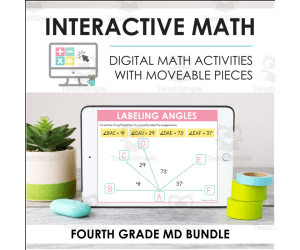
Digital Math for 4th Grade MD Standards - (BUNDLE of Slides + Self-Grading Quiz)
Math, Measurements, Grade 4, Quizzes, Quizzes and Tests, Teacher Tools
Digital Math for 4th Grade MD Standards - (BUNDLE of Slides + Self-Grading Quiz) This comprehensive teaching resource aligns with4.MD.1 - 4.MD.7 standards. It's designed to facilitate interactive math experiences focused on measurements. Interactive Learning Experiences This bundle comprises digital elements such as interactive slides that enable review, practice, and enrichment of mathematical concepts via activities like dragging and dropping images or visually sorting them. Digital Efficiency The entirely digital nature eliminates physical paperwork, providing you with ready-to-use materials for your virtual classroom. Interactive Slides:The bundle includes slides available in both PowerPoint and Google Slids formats tailored to each specific standard being taught. Self-grading Quizzes:Incorporates a handy self-grading Google Forms quiz per standard, allowing quick understanding gauge without having to manually score each response individually. Versatility in Usage This product offers flexibility regarding its use; it can be utilized as a standalone distance learning assignment—as well as incorporated into small group instruction or utilized as an activity within a center during normal classroom activities. Ease of Use: Google Workspace Compatible b The product's compatibility with Google Workspace allows straightforward assignment through Google Classroom. Included instructions guide educators about how they can assign either whole files or select individual slides at any particular time along with corresponding quizzes through their preferred platform. In Conclusion: The Digital Math for 4th Grade MD Standards serves many purposes simultaneously – reinforcing measurements education in mathematics while promoting student engagement through hands-on digital tasks – a staple in today's technologically advanced classrooms. It is, without a doubt, an indispensable teaching resource for educators and homeschoolers.
Author Markers and Minions
Tags Interactive Slides, Self-grading Quiz, Measurements Education, Digital Math, Distance Learning