



3,890 products added recently
Page 8 - Popular Quizzes
Our Popular Quizzes collection features the most widely used and highly rated assessments among teachers. These quizzes have been praised for their quality, alignment with educational standards, and ability to accurately gauge student comprehension. Covering various subjects and grade levels, they can be easily integrated into your teaching routine. By choosing from our Popular Quizzes, you can trust that you're utilizing proven tools to evaluate and enhance your students' learning experiences.

 Show filters


Mars, Glaciers, & Antarctica: SAMPLE Reading Passage (Word)
Science, Space, Earth and Environmental Sciences, ELA, Reading, Reading Comprehension, Strategies, Resources for Teachers, Environmental Science, Grade 6, 7, 8, 9, Writing Prompts, Worksheets & Printables, Centers, Activities, Teacher Tools, Assessments, Quizzes and Tests, Quizzes, Tests
This is a ONE PASSAGE SAMPLE. The following is the description of the FULL resource and the downloading links: Mars, Glaciers, and Antarctica: Reading Comprehension Passages (Word) This very engaging collection of science reading passages about Mars, Glaciers, and Antarctica (Earth and Space Environments) is designed to bridge the gap between science and literacy through strengthening reading comprehension and sparking scientific curiosity in middle school students. Each passage blends English Language Arts skills with accurate science content that supports NGSS classroom practice. Ideal for interdisciplinary learning in ELA and Science. Suitable for Grade 9 review, too! What Is Included? There are (3) informational passages: Antarctica: Science at the End of the Earth Explore a protected polar laboratory where clear air, ancient ice, and unique wildlife let scientists study climate change, ocean circulation, and even space signals with high precision. From Earth to Mars: What Life Would Require Contrast Earth and Mars, then outline what settlers would need: breathable air, liquid water, radiation shielding, steady energy, food production, and closed-loop systems for waste and resources. Ice Age Leftovers: From Glaciers to Sea Ice Differentiate glaciers, ice shelves, sea ice, and icebergs, and see how they shape coasts, reflect sunlight, steer ocean temperatures, and preserve clues to past climates. Student Tasks for Each Passage: 5 multiple-choice questions targeting main idea, key details, inference, vocabulary in context, and use of evidence 5 vocabulary matching items with clear, student-friendly definitions 5 text-based questions that require citing specific lines or facts 1 summary prompt that asks students to condense central ideas accurately Full answer key for every section Available Formats for this Resource PDF Google Docs FULL CATALOG OF DOWNLOADING LINKS HERE Other Science Reading Collections and Topics You May Find in the Store: 1. Astronomy & Space Science 2. Volcanoes, Rocks, & Mountains 3. Rock Cycle, Soil, & Sinkholes 4. Mars, Glaciers, & Antarctica 5. Water Cycle, Acid Rain, & Wastewater 6. Insects, Animals, & Ecosystems 7. Bioluminescence & Insects 8. Animal Skin, Cats, & T. Rex 9. Human Body and Senses 10. Health & Applied Bioscience 11. Waves, Light, & Imaging 12. Electricity & Energy 13. Motion & Materials 14. Chemistry and Materials Science 15. Electromagnetism 16. Acids and Bases 17. Gas Laws 18. Biotechnology 19. Periodic Trends 20. Protists and Fungi 21. Microevolution 22. Blood 23. Chemical Bonding 24. Magnets 25. Muscles 26. Nuclear Chemistry 27. Electromagnetic Devices 28. Epigenetics 29. The Law of Conservation of Mass 30. Atomic Models 31. Isotopes and Ions 32. Light 33. Human-Environment Interaction 34. Theory of Evolution 35. Photosynthesis 36. Origins of Life and Early Earth 37. Gene Expression and Regulation 38. Thermochemistry 39. Allergies 40. Coevolution 41. Birth to Adulthood 42. Cells 43. Entropy and Free Energy 44. The Human Brain 45. Mixtures and Solutions 46. Invertebrates 47. Zoo Animals 48. Biochemistry 49. Animal Behavior 50. Population Ecology ...and many more engaging science reading passages that cover intriguing and important topics designed to spark curiosity and support student learning. Product Details Length: 15 pages total Grades: 6–8, also suitable for Grade 9 review Use cases: close reading, stations, homework, intervention, test prep, and sub plans Standards support: reinforces informational-text skills and supports NGSS-style sense making through observation, modeling, and clear use of claim, evidence, and reasoning Why Teachers Choose This Set Authentic science content paired with rigorous literacy practice Consistent task structure across all passages for easier planning and smoother student routines Clear, age-appropriate writing that builds confidence without oversimplifying Use this set to reinforce ELA skills in science, to add literacy to your lessons, or to support independent work. The passages strengthen main idea, evidence use, vocabulary in context, inference, cause and effect, and summary writing. With ready-to-use assessments and complete answer keys, you can provide focused practice that is simple to run and fast to review.
Author Middle & High School - CORED Education
Rating
Tags Middle School, Reading Comprehension, Reading Strategies, Reading Passages, ELA, Centers, Reading Passage, Assessments, Vocabulary, Earth Science

Benjamin Franklin's Notebook of Virtues: Social Studies Passage (Word)
ELA, Reading, Reading Comprehension, Strategies, Resources for Teachers, Social Studies, History, History: USA, Grade 6, 7, 8, 9, Writing Prompts, Worksheets & Printables, Centers, Activities, Teacher Tools, Assessments, Quizzes and Tests, Quizzes, Tests
Benjamin Franklin's Notebook of Virtues: Social Studies Reading Comprehension Passage (Word) This resource introduces a unique Social Studies reading comprehension passage with questions about Benjamin Franklin's Notebook of Virtues. The passage is carefully designed to bridge the gap between social studies and literacy through strengthening reading comprehension and sparking knowledge curiosity in middle school students. Each passage blends English Language Arts skills with accurate social studies content . Ideal for interdisciplinary learning in ELA and Social Studies. Suitable for Grade 9 review, too! Student Tasks throughout the passage: 5 multiple-choice questions targeting the following skills: main idea, key details, inference, vocabulary in context, and use of evidence 5 vocabulary matching items with clear, student-friendly definitions 5 text-based questions that require citing specific lines or facts 1 summary prompt that asks students to condense central ideas accurately Full answer key for every section Available Formats for this Resource: PDF Fillable PDF Google Docs FULL CATALOG OF DOWNLOADING LINKS HERE Social Studies Reading Comprehension Collection Links: 1. Ancient Civilizations PDF Fillable PDF Word Docs Google Docs 2. Early Empires and Trade Networks PDF Fillable PDF Word Docs Google Docs 3. The Founding of the United States PDF Fillable PDF Word Docs Google Docs 4. Language, Culture, and Meaning PDF Fillable PDF Word Docs Google Docs 5. Psychology and Society PDF Fillable PDF Word Docs Google Docs 6. Global Festivals and Traditions PDF Fillable PDF Word Docs Google Docs 7. Extreme Environments and People PDF Fillable PDF Word Docs Google Docs 8. Food, Culture, and Preservation PDF Fillable PDF Word Docs Google Docs 9. Global Food Customs PDF Fillable PDF Word Docs Google Docs 10. Media, Communication, and Popular Culture PDF Fillable PDF Word Docs Google Docs 11. Human Impact on the Environment PDF Fillable PDF Word Docs Google Docs 12. Civic Action and Social Change PDF Fillable PDF Word Docs Google Docs 13. Fashion, Society, and Power PDF Fillable PDF Word Docs Google Docs 14. People, Places, and Unusual Histories PDF Fillable PDF Word Docs Google Docs Product Details: Length: 4 pages Grades: 6–8, also suitable for Grade 9 review Use cases: close reading, stations, homework, intervention, test prep, and sub plans Why Teachers Choose This Passage: Authentic social studies content paired with rigorous literacy practice Consistent task structure for easier planning and smoother student routines Clear, age-appropriate writing that builds confidence without oversimplifying Use this passage to reinforce ELA skills in social studies, to add literacy to your lessons, and to support independent work. The passage strengthens main idea, evidence use, vocabulary in context, inference, cause and effect, and summary writing. With ready-to-use assessments and complete answer keys, you can provide focused practice that is simple to run and fast to review.
Author Middle & High School - CORED Education
Rating
Tags Middle School, Reading Comprehension, Reading Strategies, ELA, Centers, Reading Passage, Assessments, Vocabulary, Social Studies, US HISTORY

Kettles Reading Comprehension Passage - Cored Ed Encyclopedia
ELA, Language Development, Resources for Teachers, Reading Comprehension, Reading, Pre-Reading, Writing, Strategies, Physics, Science, Grade 2, 3, 4, 5, Worksheets & Printables, Worksheets, Teacher Tools, Centers, Activities, Writing Prompts, Assessments, Tests, Quizzes and Tests, Quizzes
This kettles reading comprehension contains the following: Visualize on the Cover (Teacher Read Aloud Script) Start your lesson by taking a few moments to visualize the topic and share thoughts or feelings about it. Pre-Reading Trivia Students will write down one thing they already know about the subject and then read five more facts and discuss. These facts are fun, and the students will enjoy learning about the subject before reading more. Reading Passage The text is a high-interest reading passage with set paragraphs, roughly three to four paragraphs long. It contains a variety of themes about the topic, anywhere from history to technology. The passage is between 250 and 350 words in length. Mixed Questions The first question page contains four multiple-choice questions, each with a choice of four answers, and three written response questions that require a sentence or two from the student. Vocabulary Questions Practice seven key words from the text in this section across two activities. First section is scrambled words where students will unscramble three words given a clue for each. The second section is a word to meaning matching activity. Creative Writing In this question, the student will be required to write a five to eight sentence paragraph on a question related to the topic. Extension Activities This page is optional for fast finishers or to take home. There are several activities, each one requiring a different skill. Do some, do none, do all, completely optional - but you will feel reassured knowing every possibility is planned for. Includes summary writting question. Answer Key There are answers for the multiple-choice questions, written response questions have sample answers, vocabulary answers and if there is a summary question then a sample summary will be provided as well. FULL CATALOG OF DOWNLOAD LINKS AND ENCYCLOPEDIA INDEX HERE Lesson Snapshot Title: Kettles Genre: Nonfiction (informational text) Subject: Science (Physical Science: heat/boiling) / Reading (Informational Text) Primary Topic: How kettles boil water, convection, and safety Estimated Guided Reading Level (A–Z): O What This Lesson Teaches Best What a kettle is and what it’s used for (a vessel for boiling water for foods/drinks like tea, cocoa, soup, or oatmeal). How stovetop and electric kettles heat water (burner heat vs. a heating element; some shut off automatically). Why boiling water “swirls” (convection: warmer, less dense water rises while cooler water sinks). Key science facts connected to boiling (about 212°F at sea level; lower boiling temperature on high mountains). Safe habits around hot water and steam (steam can sting, spilled hot water can scald, and careful pouring/spout direction helps). Learning Goals Students will identify the main purpose of a kettle using details from the passage. Students will describe how a stovetop kettle and an electric kettle heat water, based on the text. Students will explain convection in boiling water using the passage’s description of rising and sinking water. Students will state what the text says about boiling temperature at sea level and on high mountains. Students will list safety rules mentioned in the passage for handling steam and hot water. Key Vocabulary From the Text vessel — a container that holds something. cauldron — a large pot. convection — heat moving as warm water rises and cool sinks. dense — packed tightly; not light. scald — burn skin with very hot liquid. Cored Ed Encyclopedia Overview The Cored Ed Encyclopedia is a weekly series of lessons that you can pick up and use right away. These short readings fit into whatever time you have available. Each one includes a warm-up, a reading, and a set of questions, but it’s flexible — you can do just the reading, the full lesson, or skip the writing section if you need to. Each lesson focuses on a single topic so students don’t get lost. The writing is clear but never childish, making it perfect for grades two through five. Topics range from animals and science to history, inventions, and everyday things. No matter the level of the student, everyone should take away at least one new idea or fact from each lesson. The materials are easy to print, easy to explain, and require no setup. They work well for whole-class teaching, partner work, or independent study.
Author Cored Education
Rating
Tags Vocabulary, Spelling, Reading Comprehension, Reading Passages, Reading, Creative Writing, Reading Strategies, Writing Prompts, Physics, Kettles
Science Reading Comprehension Passage. Stars of Many Sizes. SAMPLE
Science, ELA, Reading, Reading Comprehension, Strategies, Resources for Teachers, Space, Earth and Environmental Sciences, Grade 6, 7, 8, 9, Writing Prompts, Worksheets & Printables, Centers, Activities, Teacher Tools, Assessments, Quizzes and Tests, Quizzes, Tests
This is a free passage sample from the complete resource. The full version includes everything needed for a complete reading comprehension activity: the passage, multiple-choice questions, short-answer questions, vocabulary matching, a summary-writing task, and a detailed answer key. Download the complete passage resource by clicking on the following links: PDF Fillable PDF Word Docs Google Docs Science Reading Comprehension Passages and Questions: Stars of Many Sizes (PDF) This very engaging science reading passage about Stars of Many Sizes is designed to bridge the gap between science and literacy through strengthening reading comprehension and sparking scientific curiosity in middle school students. The passage blends English Language Arts skills with accurate science content that supports NGSS classroom practice. Ideal for interdisciplinary learning in ELA and Science. Suitable for Grade 9 review, too! Student Tasks for The Passage: 5 multiple-choice questions targeting main idea, key details, inference, vocabulary in context, and use of evidence 5 vocabulary matching items with clear, student-friendly definitions 5 text-based questions that require citing specific lines or facts 1 summary prompt that asks students to condense central ideas accurately Full answer key for every section FULL CATALOG OF DOWNLOADING LINKS HERE Product Details Length: 4 pages total Grades: 6–8, also suitable for Grade 9 review Use cases: close reading, stations, homework, intervention, test prep, and sub plans Standards support: reinforces informational-text skills and supports NGSS-style sense making through observation, modeling, and clear use of claim, evidence, and reasoning Why Teachers Choose This Set Authentic science content paired with rigorous literacy practice Consistent task structure across all passages for easier planning and smoother student routines Clear, age-appropriate writing that builds confidence without oversimplifying Other Science Reading Collections you May find in the store: 1. Astronomy & Space Science 2. Volcanoes, Rocks, & Mountains 3. Rock Cycle, Soil, & Sinkholes 4. Mars, Glaciers, & Antarctica 5. Water Cycle, Acid Rain, & Wastewater 6. Insects, Animals, & Ecosystems 7. Bioluminescence & Insects 8. Animal Skin, Cats, & T. Rex 9. Human Body and Senses 10. Health & Applied Bioscience 11. Waves, Light, & Imaging 12. Electricity & Energy 13. Motion & Materials 14. Chemistry and Materials Science Use this set to reinforce ELA skills in science, to add literacy to your lessons, and to support independent work. The passages strengthen main idea, evidence use, vocabulary in context, inference, cause and effect, and summary writing. With ready-to-use assessments and complete answer keys, you can provide focused practice that is simple to run and fast to review.
Author Middle & High School - CORED Education
Rating
Tags Middle School, Reading Comprehension, Reading Strategies, ELA, Centers, Reading Passage, Assessments, Vocabulary, Environmental Science, Space

How Languages Change: Social Studies Reading Passage (Fillable PDF)
ELA, Reading, Reading Comprehension, Strategies, Resources for Teachers, Social Studies, History, History: World, Grade 6, 7, 8, 9, Writing Prompts, Worksheets & Printables, Centers, Activities, Teacher Tools, Assessments, Quizzes and Tests, Quizzes, Tests
How Languages Change and Disappear: Social Studies Reading Comprehension Passage (Fillable PDF) This resource introduces a unique Social Studies reading comprehension passage with questions about How Languages Change and Disappear. The passage is carefully designed to bridge the gap between social studies and literacy through strengthening reading comprehension and sparking knowledge curiosity in middle school students. Each passage blends English Language Arts skills with accurate social studies content . Ideal for interdisciplinary learning in ELA and Social Studies. Suitable for Grade 9 review, too! This resource is designed as a fillable PDF , which means students can type their answers directly into the document on any computer or tablet . Each page includes highlighted text fields that show them exactly where to type! Student Tasks throughout the passage: 5 multiple-choice questions targeting the following skills: main idea, key details, inference, vocabulary in context, and use of evidence 5 vocabulary matching items with clear, student-friendly definitions 5 text-based questions that require citing specific lines or facts 1 summary prompt that asks students to condense central ideas accurately Full answer key for every section Available Formats for this Resource: PDF Word Docs Google Docs FULL CATALOG OF DOWNLOADING LINKS HERE Social Studies Reading Comprehension Collection Links: 1. Ancient Civilizations PDF Fillable PDF Word Docs Google Docs 2. Early Empires and Trade Networks PDF Fillable PDF Word Docs Google Docs 3. The Founding of the United States PDF Fillable PDF Word Docs Google Docs 4. Language, Culture, and Meaning PDF Fillable PDF Word Docs Google Docs 5. Psychology and Society PDF Fillable PDF Word Docs Google Docs 6. Global Festivals and Traditions PDF Fillable PDF Word Docs Google Docs 7. Extreme Environments and People PDF Fillable PDF Word Docs Google Docs 8. Food, Culture, and Preservation PDF Fillable PDF Word Docs Google Docs 9. Global Food Customs PDF Fillable PDF Word Docs Google Docs 10. Media, Communication, and Popular Culture PDF Fillable PDF Word Docs Google Docs 11. Human Impact on the Environment PDF Fillable PDF Word Docs Google Docs 12. Civic Action and Social Change PDF Fillable PDF Word Docs Google Docs 13. Fashion, Society, and Power PDF Fillable PDF Word Docs Google Docs 14. People, Places, and Unusual Histories PDF Fillable PDF Word Docs Google Docs Product Details: Length: 5 pages Grades: 6–8, also suitable for Grade 9 review Use cases: close reading, stations, homework, intervention, test prep, and sub plans Why Teachers Choose This Passage: Authentic social studies content paired with rigorous literacy practice Consistent task structure for easier planning and smoother student routines Clear, age-appropriate writing that builds confidence without oversimplifying Use this passage to reinforce ELA skills in social studies, to add literacy to your lessons, and to support independent work. The passage strengthens main idea, evidence use, vocabulary in context, inference, cause and effect, and summary writing. With ready-to-use assessments and complete answer keys, you can provide focused practice that is simple to run and fast to review.
Author Middle & High School - CORED Education
Rating
Tags Middle School, Reading Comprehension, Reading Strategies, ELA, Centers, Reading Passage, Assessments, Vocabulary, Social Studies, WORLD HISTORY

Reading Comprehension Passages Fiction Set 1 - Nature Presentable PDF
ELA, Reading, Reading Comprehension, Common Core, ESL, Language Development, Spelling, Vocabulary, Writing, Resources for Teachers, Grade 2, 3, Worksheets & Printables, Worksheets, Writing Prompts, Assessments, Teacher Tools, Quizzes, Quizzes and Tests, Centers, Activities
Reading Comprehension Passages Fiction Set 1 Snapshot Genre: Fiction (collection of short nature-themed stories) Subject: Reading (Comprehension) Primary Topic: Nature-themed fiction passages and comprehension practice Estimated Guided Reading Level (A–Z): O What This Teaches Best Character feelings and motivations: Characters want or value something strongly (e.g., Kellie wants snow to use her new sled; Rusty wants to finish his color task; Ross would rather play but ends up enjoying his work). Observation and using the environment for answers: Rusty finds blue and purple by looking more carefully at what’s around him (sky, stream, leaf backs). Cause and effect in everyday situations: Weather and choices affect what happens next (snow finally comes; a thunderstorm ends cherry picking; a volcano eruption changes the climbers’ plans). Nature vocabulary in meaningful contexts: Words connected to seasons, plants, animals, and outdoor features appear across the stories (snow “accumulation,” “canopy,” “eruption,” “perennials,” “marmalade”). Built-in practice pages that match the passages: Each story is followed by questions and skill pages (mixed questions, spelling/vocabulary, short writing prompts) that directly reference details from the story text. Learning Goals Students will recount key events from a selected story in a logical order using details from the text. Students will describe characters’ wants, feelings, and choices and connect them to what happens in the story. Students will identify the setting/season and name text evidence that supports it. Students will explain cause-and-effect relationships shown in the stories (problem → response → outcome). Students will use context clues to determine the meaning of unfamiliar words from the passages. Students will compare information presented in the story (for example, annuals vs. perennials) by stating how they are different using the text’s wording. Passages Include 1.Bring on the Snow: Kellie wants to make it snow. How does she try? 2.Walk through the Woods: A walk in the woods turns into a huge adventure. 3.Nature Photographer: Donna get some amazing snaps in this story. 4.Nature's Beautiful Colors: Rusty enjoys finding out about the colors in nature. 5.Flower Fun: Learn about flower names and colors in this fun lesson. 6.Picking Cherries: Ross spends his day picking cherries but is it worth it? Additional File: Nature Photographer: Drawing Nature Printable PRESENTABLE PDF VERSION Run it like a slide show straight from a PDF, with no PowerPoint or extra software needed, just open, project, and teach. Other versions are available in the links list below or in the full catalog. FULL CATALOG OF DOWNLOAD LINKS HERE For similar downloads and other frees, do check out Cored Group on TeachSimple.
Author Cored Education
Rating
Tags Elementary, Reading, Comprehension, Vocabulary, Common Core, Speling, Writing, Passages, Reading Centers, Reading Comprehension Assessments
Science Reading Comprehension Passage: Green Tea (Fillable PDF)
Science, ELA, Reading, Reading Comprehension, Strategies, Resources for Teachers, Grade 6, 7, 8, 9, Writing Prompts, Worksheets & Printables, Centers, Activities, Teacher Tools, Assessments, Quizzes and Tests, Quizzes, Tests
Science Reading Comprehension Passage and Questions: Green Tea (Fillable PDF) This very engaging science reading passage about green tea, its ingredients, and how science studies its possible effects on the body. It explains that green tea comes from the same plant as black tea, Camellia sinensis , but green tea leaves are heated quickly to stop oxidation. This helps preserve more of the leaves’ original compounds. The passage focuses on key ingredients such as caffeine , catechins , and L-theanine , and explains how they may affect alertness, relaxation, cell protection, heart health, sleep, and iron absorption. It also makes clear that green tea can be part of healthy habits, but it is not a miracle drink or medical treatment . This passage is designed to bridge the gap between science and literacy through strengthening reading comprehension and sparking scientific curiosity in middle school students. The passage blends English Language Arts skills with accurate science content that supports NGSS classroom practice. Ideal for interdisciplinary learning in ELA and Science. Suitable for Grade 9 review, too! This passage is designed as a fillable PDF , which means students can type their answers directly into the document on any computer or tablet . Each page includes highlighted text fields that show them exactly where to type! Student Tasks for The Passage: 5 multiple-choice questions targeting main idea, key details, inference, vocabulary in context, and use of evidence 5 vocabulary matching items with clear, student-friendly definitions 5 text-based questions that require citing specific lines or facts 1 summary prompt that asks students to condense central ideas accurately Full answer key for every section Available Formats for this Resource PDF Word Docs Google Docs FULL CATALOG OF DOWNLOADING LINKS HERE Product Details Length: 5 pages total Grades: 6–8, also suitable for Grade 9 review Use cases: close reading, stations, homework, intervention, test prep, and sub plans Standards support: reinforces informational-text skills and supports NGSS-style sense making through observation, modeling, and clear use of claim, evidence, and reasoning Why Teachers Choose This Set Authentic science content paired with rigorous literacy practice Consistent task structure across all passages for easier planning and smoother student routines Clear, age-appropriate writing that builds confidence without oversimplifying Other Science Reading Collections you May find in the store: 1. Astronomy & Space Science 2. Volcanoes, Rocks, & Mountains 3. Rock Cycle, Soil, & Sinkholes 4. Mars, Glaciers, & Antarctica 5. Water Cycle, Acid Rain, & Wastewater 6. Insects, Animals, & Ecosystems 7. Bioluminescence & Insects 8. Animal Skin, Cats, & T. Rex 9. Human Body and Senses 10. Health & Applied Bioscience 11. Waves, Light, & Imaging 12. Electricity & Energy 13. Motion & Materials 14. Chemistry and Materials Science Use this set to reinforce ELA skills in science, to add literacy to your lessons, and to support independent work. The passages strengthen main idea, evidence use, vocabulary in context, inference, cause and effect, and summary writing. With ready-to-use assessments and complete answer keys, you can provide focused practice that is simple to run and fast to review.
Author Middle & High School - CORED Education
Rating
Tags Middle School, Reading Comprehension, Reading Strategies, ELA, Centers, Reading Passage, Assessments, Vocabulary, Bioscience, Green Tea
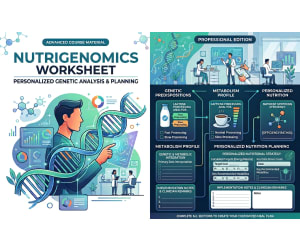
Nutrigenomics & DNA-Based Diet Planning
Science, Chemistry, Life Sciences, Biology, Human Body, Research, Resources for Teachers, Classroom Management, Community Building, STEM, Grade 6, 7, 8, 9, 10, 11, 12, Worksheets & Printables, Worksheets, Workbooks, Word Searches, Teacher Tools, Assessments, Lesson Plans, Quizzes and Tests, Quizzes, Tests
Unlock the future of personalized nutrition with this comprehensive, 42-page curriculum on Nutrigenomics and DNA-Based Diet Planning . Are your students or clients tired of one-size-fits-all health advice? This digital resource is the perfect tool to bridge the gap between complex genetic data and real-world, actionable meal planning. Designed for advanced learners, this unit moves beyond basic nutrition and dives into the cutting-edge science of how our unique genetic makeup dictates our response to foods. Students will learn to translate raw genetic data (SNPs) from common variants like MTHFR, APOE, TCF7L2, CYP1A2 (caffeine metabolism), and MCM6 (lactose intolerance) into highly personalized dietary protocols. This is not just a lecture—it's a complete, turnkey educational package perfect for AP Biology, IB Biology, university-level nutrition or genetics courses, and professional development for health coaches and dietitians. What's Included in This 42-Page All-in-One Resource: Part 1: Core Content & Theory (11 pages): A robust introduction to the molecular paradigm of nutrition, covering the genetics of macronutrient metabolism, enzymatic pathways (caffeine & lactose), and a hierarchical approach to building a DNA-based meal plan. Includes two detailed case studies (Elena & Marcus) that demonstrate how to synthesize multiple genetic factors into a cohesive plan. Part 2: Student Workbook (20 pages): Ten in-depth, high-level worksheets that guide students through an analytical process. They will map their own (or a case study's) genetic predispositions related to: Caffeine Metabolism (CYP1A2) Lactose Persistence (MCM6/LCT) Folate Metabolism (MTHFR) Lipid Transport & Saturated Fat (APOE/APOA2) Starch Digestion (AMY1) Vitamin D Receptor (VDR) Sodium Sensitivity (ACE/AGT) Histamine Degradation (DAO) And a final, integrated "Master Meal Plan" worksheet. Part 3: Visuals & Teacher Resources (11 pages): Includes high-resolution diagrams perfect for presentations and handouts, plus a complete Teacher Answer Key for the case study worksheets, providing detailed, expert-level answers and rationale. Learning Outcomes: Upon completion, students will be able to: Analyze and interpret key single nucleotide polymorphisms (SNPs) related to diet. Understand the biochemical impact of genetic variants on metabolism. Develop a prioritized, evidence-based dietary plan from genetic data. Critically evaluate how diet can be used to mitigate genetic risk and optimize health. Move from abstract theory to practical, real-world application. Keywords: Nutrigenomics, Personalized Nutrition, DNA Diet, Genetics, Biology Curriculum, AP Biology, IB Biology, University Nutrition, Dietetics, Health Coach Resource, SNP, MTHFR, APOE, CYP1A2, Caffeine Metabolism, Lactose Intolerance, Printable, Digital Workbook, Science, Project-Based Learning. Why Parents/Schools Love It: Bridges Theory and Real-World Application: This isn't just memorizing facts. It teaches students critical thinking by applying complex genetic science to a practical, everyday subject: food. Prepares Students for Future-Focused Careers: It provides a strong foundation in the rapidly growing fields of personalized medicine and wellness, giving students a significant advantage in college applications and future careers. Turnkey, Comprehensive Curriculum: It's an all-in-one resource with theory, worksheets, visuals, and a complete answer key, saving teachers valuable preparation time while providing a rigorous, high-quality lesson. Makes Science Personal and Engaging: By focusing on how DNA affects an individual's own body (or compelling case studies), it transforms an abstract topic into a deeply personal and engaging investigation. Target Audience (Student Classes) : Based on the advanced vocabulary ("phenotypic risk stratification," "cytochrome P450," "thermolabile enzyme") and the complexity of the tasks, target the following groups: University/College Students: This is the primary audience. It's perfectly suited for undergraduate and graduate courses in: Nutrition and Dietetics Human Biology and Kinesiology Genetics and Molecular Biology Naturopathic or Functional Medicine Programs Advanced High School Students: This is an excellent resource for accelerated programs, providing a significant competitive edge. AP Biology (especially for units on genetics and gene expression) IB Biology (Higher Level) Advanced Health Science Electives Professional Development: This workbook is a valuable upskilling tool for practicing or training: Health Coaches Nutritionists Personal Trainers with an interest in advanced nutrition. Copyright/Terms of Use: This Book was copyrighted by Syed Hammad Rizvi. This resource is for personal and single classroom use only. You may not alter, redistribute, or sell any part of this resource. In other words, you may not put it on the Internet where it could be publicly found and downloaded. If you want to share this resource with colleagues, please purchase additional licenses from Teachsimple. Thank you for respecting these terms of use. This product is happily brought to you by Syed Hammad Rizvi
Author Creative Book Store
Rating
Tags Nutrigenomics, PersonalizedNutrition, DNADiet, NutritionalGenomics, PrecisionNutrition, FunctionalNutrition, GeneticTesting, Biohacking, HealthScience, MolecularBiology
Digital Math for 5.MD.4 - Understand Concepts of Volume (Slides + Self-Grading Quiz)
Math, Measurements, Grade 5, Quizzes, Quizzes and Tests, Teacher Tools
Digital Math for 5.MD.4 - Understand Concepts of Volume (Slides + Self-Grading Quiz) This highly effective and interactive teaching product is tailored for Grade 5 educators aiming to enhance their Math curriculum, especially within the area of measurements. Provides enchanting review, practice, and enrichment while maintaining student interest. No-preparation needed due to its digital nature powered by PowerPoint and Google Slides . The visuals are engaging as it motivates students to drag, drop, sort images; bringing abstract math concepts closer via visualization. Interactive Student Slides A set of 20 slides are ready to illustrate mathematical standards relating volume. Flexibility in design caters to whole group or small group instructions based on your teaching style or students' pacing strengths. Google Forms Quizzes & Insights An efficient feedback loop is maintained with quizzes designed in alignment with each slide content. The data generated from these quizzes can guide you toward more focused instructional design decisions. In a Nutshell... Digital Math for 5.MD.4 supports comprehensive learning through rich visual insights paired with self-evaluative exercises — a robust package custom-made for building mastery level competence amongst Grade 5 pupils involved with measurement principles. particularly volume calculation.</p
Author Markers and Minions
Tags Interactive Slides, Volume Concepts, Digital Math, Self-grading Quiz, Measurement Principles
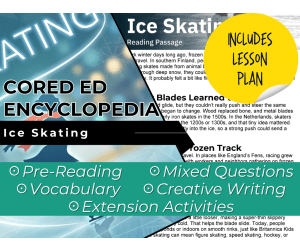
Ice Skating Reading Comprehension Passage - Cored Ed Encyclopedia
ELA, Reading Comprehension, Reading, Language Development, History, Social Studies, Science, Physics, Sports, P.E. & Health, Grade 2, 3, 4, 5, Worksheets & Printables, Worksheets, Teacher Tools, Centers, Activities, Writing Prompts, Assessments, Quizzes and Tests, Quizzes, Lesson Plans
This Ice Skating reading comprehension with lesson plan includes: Visualization (on the front cover) Start your lesson by taking a minute to think and share something about the topic. Read the script aloud (slowly), perhaps prepare some music or sound effects. Student close their eyes and let their imaginations wander. Students open their eyes, read the question aloud and give them a few minutes to complete. Ask a few students to share or keep answers until the end to compare with what they learn in the passage. Quick pause—thousands of Cored Education products are included with your TeachSimple membership. Download links and encyclopedia index available here. Pre-Reading Trivia Students will write down one thing they already know about the subject and then read five more facts and discuss. These facts are fun, and the students will enjoy learning about the subject before reading more. Give 1 minute for students to write what they already know (no pressure—best guess is fine). Read the five facts together. After each fact, do ask a student for their opinion, was it surprising? Set a purpose by asking students to highlight/underline one fact they want to learn more about during the reading. Reading Passage The text is a high-interest reading passage with set paragraphs, roughly three to four paragraphs long. It contains a variety of themes about the topic, anywhere from history to technology. The passage is between 250 and 350 words in length. First, ask students to look at the headings and see what they’ll learn about today. What do they know about the topic/heading? First read options: Teacher read-aloud (best for support). Partner reading (paragraph by paragraph). While reading, students underline important details, and vocabulary words they think may come up in the questions section. Mixed Questions The first question page contains four multiple-choice questions, each with a choice of four answers, and three written response questions that require a sentence or two from the student. Students complete the mcqs first independently, then review quickly as a class. For the 3 written responses, try to get students giving the answer with some form of evidence: “I think ___ because the text says ___.” If students get stuck, send them back to check the passage. Vocabulary Questions Practice seven key words from the text in this section across two activities. First section is scrambled words where students will unscramble three words given a clue for each. The second section is a word to meaning matching activity. Before starting, have some students read out words they underlined in the passage. Ask students to say the word and read aloud the sentence(s) around each word. Ask students to do scrambled words and the matching exercise in pairs then go through answers as a class. For the scrambled spelling task, get four pairs to come up to the board and write the words for extra practice with the other student reading out the clue. For the matching task, prompt students to give full sentences: “I matched ___ with ___ because ___.” Creative Writing In this question, the student will be required to write a five to eight sentence paragraph on a question related to the topic. Before starting, ask students write down 3 key ideas they are going to include in their piece. Ask students for ideas to share around the class to help those struggling. Pro writing expectations: 5–8 sentences At least 2 facts or details from the passage At least 2 vocabulary words from the previous page Students read their paragraphs while classmates listen for facts and vocabulary words. Extension Activities This page is optional for fast finishers or to take home. There are several activities, each one requiring a different skill. Do some, do none, do all, completely optional - but you will feel reassured knowing every possibility is planned for. Includes summary writting question and additional facts. Answer Key There are answers for the multiple-choice questions, written response questions have sample answers, vocabulary answers and if there is a summary question then a sample summary will be provided as well. Lesson Plan Included Customized lesson plan for this lesson is included. Lesson Snapshot Title: Ice Skating Genre: Nonfiction (informational text) Subject: Reading (Informational Text) / Science Primary Topic: How ice skating began and why blades glide Estimated Guided Reading Level (A–Z): R What This Lesson Teaches Best Explains how ice skating was first used for winter travel long ago (frozen lakes and rivers as “the easiest way to travel”). Describes how skates changed over time (from animal bones to wood to metal blades) and why sharpened edges mattered for control. Shows how skating shifted from travel to organized sport, including races, rules, championships, and the Olympic stage. Introduces a simple science idea for why skates glide: a super-thin slippery surface layer where ice molecules are a little looser. Uses text features (section headings) to chunk information and support comprehension. Learning Goals Identify the main idea and key details about how ice skating began and changed over time. Describe the difference between early bone skates and later skates with sharpened metal edges. Explain how sharpened edges helped skaters push, steer, and move with control. Explain, using the text, why a skate blade can slide well on ice. Describe how skating became an organized sport with rules, championships, and worldwide attention. Key Vocabulary From the Text blades — thin metal parts of skates that touch the ice. edges — sharpened sides that help a skate grip ice. molecules — tiny pieces that make up ice. championships — contests to find winners in a sport. standards — agreed rules that keep things consistent. FULL CATALOG OF DOWNLOAD LINKS AND ENCYCLOPEDIA INDEX HERE
Author Cored Education
Rating
Tags Vocabulary, Reading Comprehension, Reading Passages, Lesson Plans, Ela Lesson Plans, Reading Comprehension Lesson Plans, Pre-reading, History, P.e. Lesson Plans, Sports
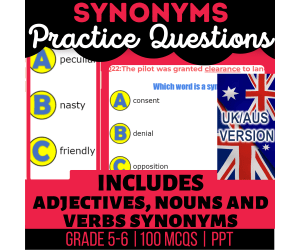
UK/Aus English Synonyms Practice Questions - Year 6-7 (PPT)
ELA, Language Development, ESL, Common Core, Resources for Teachers, Vocabulary, Grade 5, 6, 7, Quizzes and Tests, Teacher Tools, Tests, Assessments, Activities, Quizzes, Presentations
THIS IS THE UK/AUS ENGLISH SPELLING VERSION. CHECK THE CATALOG FOR THE ORIGINAL AMERICAN ENGLISH VERSION. Synonyms Grammar Practice MCQS ELA MCQS Overview: In this series of lessons, students will embark on an engaging journey to explore the grammar skills that make our language vibrant and expressive. These lessons are crafted to help students identify, comprehend, and effectively apply language arts skills in both writing and speech. This UK/Aus English version is especially useful for schools, teachers, and families working with British-based spelling and language conventions. It is a helpful option for classrooms using UK curriculum expectations, international programmes influenced by British English, or any setting where learners need to practise the correct capitalisation and punctuation forms for that version of English. Synonyms Overview: Nouns Synonyms Verbs Synonyms Adjectives Synonyms Synonyms in a Sentence PPT Version This is the PPT editable and interactive version. There is a fillable answer sheet at the end. This download is available in GOOGLE Docs, GOOGLE Forms, GOOGLE Slides. PDF, PPT, WORD, check the links below for more details. FULL CATALOG OF DOWNLOAD LINKS HERE ELA Review Questions Overview Each review test includes three answer choices for every question, which helps keep things simple and manageable for students. The layout is clear and easy to follow, so students can focus on the questions instead of figuring out what to do. A few pictures are included on each test to make the pages feel a little more inviting and less overwhelming. A review sheet is also included, giving students a chance to go back over many of the main skills covered in the resource. Introduction or Example Sheet Each topic comes with an introduction or example sheet to look at before students begin. This gives students a clear starting point and helps them feel more prepared. It also lets them see what to expect before moving into the main work. For many students, it is a helpful way to quickly refresh the key ideas before they start practicing on their own. Full Answer Keys Full answer keys are included to make marking and checking work faster and easier. Sample responses are also provided where needed, especially for open-ended tasks. This can be a real time-saver on busy days and makes the resource more practical to use. Everything is there to help make planning, teaching, and checking student work feel a little more straightforward. For similar downloads and other frees, do check out Cored Group on TeachSimple.
Author Cored Education
Rating
Tags Elementary, Answers, Ccss, Common Core, Tests, Test Prep, Assessment, Grade 5, Grade 6, Vocabulary
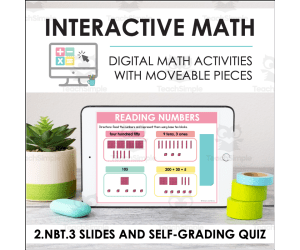
Digital Math for 2.NBT.3 - Understanding Place Value (Slides + Self-Grading Quiz)
Math, Place Value, Grade 2, Quizzes, Quizzes and Tests, Teacher Tools
Digital Math for 2.NBT.3 - Understanding Place Value (Slides + Self-Grading Quiz) Digital Math for 2.NBT.3 - Understanding Place Value is a hands-on teaching resource designed to reinforce, practice, and extend math learning for second graders in an engaging manner. This fully digital, no-prep tool aids educators in offering high-quality instruction while saving time. Interactive Slides The core feature of this resource is its interactive slides with drag-and-drop images that facilitate understanding. These turn lessons into fun activities that help students more easily internalize concepts. Self-Grading Google Forms Quiz Included within this tool is a Google Forms quiz with a self-grading feature that offers valuable insights into student performance. Teachers can use this data to adjust their teaching strategies accordingly. Versatility Formats: Digital Math materials are available in both PowerPoint and Google Slides formats depending on your preference. User Guide:An accompanying guide helps teachers assign the whole file or select slides seamlessly. Modes: Ideal for distance learning assignments, small group instructions or as an additional activity during center time. In summary, Digital Math for 2.NBT.3 - Understanding Place Value transforms ordinary math lessons into interactive learning experiences while providing educators an efficient way to impart knowledge, facilitate engagement and evaluate students' comprehension all in one package!
Author Markers and Minions
Tags Interactive Learning, Place Value, Digital Tool, Self-grading Quiz, Visual Aids
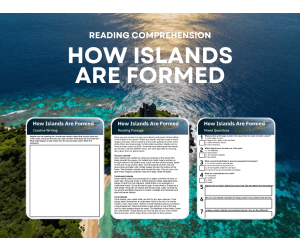
Islands Free Reading Comprehension Passage
ELA, Reading Comprehension, Reading, Language Development, ESL, Library, Science, Earth Sciences, Earth and Environmental Sciences, Strategies, Grade 2, 3, 4, 5, Worksheets & Printables, Worksheets, Teacher Tools, Centers, Activities, Writing Prompts, Assessments, Quizzes and Tests, Quizzes, Tests
Islands reading comprehension: Snapshot Title: How Islands Are Formed Genre: Nonfiction Subject: Earth Science Primary Topic: How different types of islands form Estimated Guided Reading Level (A–Z): S What This Lesson Teaches Best Explains that islands can form in several different ways. Compares volcanic islands, continental islands, and coral islands. Teaches sequence and process through volcano eruptions, lava layers, and island growth. Connects landforms to Earth processes such as magma, sea-level rise, and tectonic plates. Explains why low coral islands are vulnerable to rising oceans. Learning Goals Students will define islands using details from the passage. Students will explain how volcanic islands form over time. Students will describe how continental islands can separate from a mainland. Students will identify coral islands as atolls built by tiny sea creatures. Students will compare volcanic islands and continental islands using text evidence. Key Vocabulary From the Text Magma — hot melted rock beneath Earth. Crust — Earth’s outer rocky layer. Tectonic — related to moving plates of Earth. Atolls — ring-shaped coral islands. Polyps — tiny sea creatures that build coral. Did you know there are thousands of Cored Education products included with a TeachSimple membership? Click here for the free catalog. This product includes: Reading Passage The text is a high-interest reading passage with set paragraphs, roughly three to four paragraphs long. It contains a variety of themes about the topic, anywhere from history to technology. The passage is between 250 and 350 words in length. First, ask students to look at the headings and see what they’ll learn about today. What do they know about the topic/heading? First read options: Teacher read-aloud (best for support). Partner reading (paragraph by paragraph). While reading, students underline important details, and vocabulary words they think may come up in the questions section. Mixed Questions The first question page contains four multiple-choice questions, each with a choice of four answers, and three written response questions that require a sentence or two from the student. Students complete the mcqs first independently, then review quickly as a class. For the 3 written responses, try to get students giving the answer with some form of evidence: “I think ___ because the text says ___.” If students get stuck, send them back to check the passage. Creative Writing In this question, the student will be required to write a five to eight sentence paragraph on a question related to the topic. Before starting, ask students write down 3 key ideas they are going to include in their piece. Ask students for ideas to share around the class to help those struggling. Pro writing expectations: 5–8 sentences At least 2 facts or details from the passage At least 2 vocabulary words from the previous page Students read their paragraphs while classmates listen for facts and vocabulary words. Answer Key There are answers for the multiple-choice questions, written response questions have sample answers, vocabulary answers and if there is a summary question then a sample summary will be provided as well.
Author Cored Education
Rating
Tags Reading Comprehension, Reading Passages, Reading, Ela Mcqs, Creative Writing, Comprehension, Free, Free Reading, Science, Earth Science

The Giant’s Causeway in Ireland: Social Studies Passage (Fillable PDF)
ELA, Reading, Reading Comprehension, Strategies, Resources for Teachers, Social Studies, Geography, Grade 6, 7, 8, 9, Writing Prompts, Worksheets & Printables, Centers, Activities, Teacher Tools, Assessments, Quizzes and Tests, Quizzes, Tests
The Giant’s Causeway in Ireland: Social Studies Reading Comprehension Passage (Fillable PDF) This resource introduces a unique Social Studies reading comprehension passage with questions about The Giant’s Causeway in Ireland. The passage is carefully designed to bridge the gap between social studies and literacy through strengthening reading comprehension and sparking knowledge curiosity in middle school students. Each passage blends English Language Arts skills with accurate social studies content . Ideal for interdisciplinary learning in ELA and Social Studies. Suitable for Grade 9 review, too! These worksheets are designed as fillable PDFs , which means students can type their answers directly into the document on any computer or tablet . Each page includes highlighted text fields that show them exactly where to type! Student Tasks throughout the passage: 5 multiple-choice questions targeting the following skills: main idea, key details, inference, vocabulary in context, and use of evidence 5 vocabulary matching items with clear, student-friendly definitions 5 text-based questions that require citing specific lines or facts 1 summary prompt that asks students to condense central ideas accurately Full answer key for every section Available Formats for this Resource: PDF Word Docs Google Docs FULL CATALOG OF DOWNLOADING LINKS HERE Social Studies Reading Comprehension Collection Links: 1. Ancient Civilizations PDF Fillable PDF Word Docs Google Docs 2. Early Empires and Trade Networks PDF Fillable PDF Word Docs Google Docs 3. The Founding of the United States PDF Fillable PDF Word Docs Google Docs 4. Language, Culture, and Meaning PDF Fillable PDF Word Docs Google Docs 5. Psychology and Society PDF Fillable PDF Word Docs Google Docs 6. Global Festivals and Traditions PDF Fillable PDF Word Docs Google Docs 7. Extreme Environments and People PDF Fillable PDF Word Docs Google Docs 8. Food, Culture, and Preservation PDF Fillable PDF Word Docs Google Docs 9. Global Food Customs PDF Fillable PDF Word Docs Google Docs 10. Media, Communication, and Popular Culture PDF Fillable PDF Word Docs Google Docs 11. Human Impact on the Environment PDF Fillable PDF Word Docs Google Docs 12. Civic Action and Social Change PDF Fillable PDF Word Docs Google Docs 13. Fashion, Society, and Power PDF Fillable PDF Word Docs Google Docs 14. People, Places, and Unusual Histories PDF Fillable PDF Word Docs Google Docs Product Details: Length: 5 pages Grades: 6–8, also suitable for Grade 9 review Use cases: close reading, stations, homework, intervention, test prep, and sub plans Why Teachers Choose This Passage: Authentic social studies content paired with rigorous literacy practice Consistent task structure for easier planning and smoother student routines Clear, age-appropriate writing that builds confidence without oversimplifying Use this passage to reinforce ELA skills in social studies, to add literacy to your lessons, and to support independent work. The passage strengthens main idea, evidence use, vocabulary in context, inference, cause and effect, and summary writing. With ready-to-use assessments and complete answer keys, you can provide focused practice that is simple to run and fast to review.
Author Middle & High School - CORED Education
Rating
Tags Middle School, Reading Comprehension, Reading Strategies, ELA, Centers, Reading Passage, Assessments, Vocabulary, Social Studies, Geography
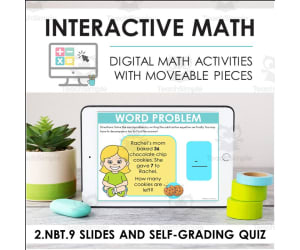
Digital Math for 2.NBT.9 - Using Place Value to Add and Subtract (Slides + Self-Grading Quiz)
Math, Place Value, Grade 2, Quizzes, Quizzes and Tests, Teacher Tools
Digital Math for 2.NBT.9 - Using Place Value to Add and Subtract (Slides + Self-Grading Quiz) Digital Math for 2.NBT.9 is a comprehensive educational resource tailor-made for second-grade math educators. This potent tool concentrates on place value and its application in performing addition and subtraction operations, adhering meticulously to the 2.NBT.A.9 standard. Enthralling students with review sessions, practice opportunities, and enrichment tasks, this resource ensures meaningful comprehension of mathematical concepts. Its interactive slides encourage learners to manipulate images demonstrating visual understanding of the subject matter. Tangible Benefits for Teachers: The resource comes in both PowerPoint and Google Slides formats with clear instructions. The entirely digital makeup promotes eco-friendly classrooms. Included self-grading Google Forms quiz provides insightful student progress feedbacks. A total of 20 interactive student slides are available across both formats coupled with an automatic grading quiz offering versatility suitable for distance learning environments too. This flexible tool can cater to different teaching scenarios ranging from remote class group lessons to smaller intimate coaching sessions or even as individual homework assignments enforcing independent learning practices at home. Potential Application: Digital Math for 2.NBT.9 can easily be integrated into various teaching strategies like center rotations where students independently rotate through different focus stations ensuring a comprehensive grasp over all aspects related with the key topic at hand. In Summary: Rolled out keeping educators' needs in mind, this resource aids effective delivery of key lessons around place value's role in addition/subtraction operations aligning perfectly with Grade 2 curriculum's 2.NBT.A.9 math standard.
Author Markers and Minions
Tags Place Value, Addition, Subtraction, Interactive Slides, Self-grading Quiz

Life Science Reading Comprehension Passage: Clear Vision (Word)
Science, ELA, Reading, Reading Comprehension, Strategies, Resources for Teachers, Life Sciences, Grade 6, 7, 8, 9, Writing Prompts, Worksheets & Printables, Centers, Activities, Teacher Tools, Assessments, Quizzes and Tests, Quizzes, Tests
Life Science Reading Comprehension Passage and Questions: Clear Vision (Word) This very engaging life science reading passage about the history, science, and everyday use of contact lenses. It explains how contact lenses developed from early ideas by Leonardo da Vinci, René Descartes, and Thomas Young into practical lenses used today. It also explains how contacts work by bending light so it focuses correctly on the retina , helping correct nearsightedness, farsightedness, and astigmatism . The passage also discusses soft lenses, silicone hydrogel, daily use, safety habits, and future lens technology. This passage is designed to bridge the gap between science and literacy through strengthening reading comprehension and sparking scientific curiosity in middle school students. The passage blends English Language Arts skills with accurate science content that supports NGSS classroom practice. Ideal for interdisciplinary learning in ELA and Science. Suitable for Grade 9 review, too! Student Tasks for The Passage: 5 multiple-choice questions targeting main idea, key details, inference, vocabulary in context, and use of evidence 5 vocabulary matching items with clear, student-friendly definitions 5 text-based questions that require citing specific lines or facts 1 summary prompt that asks students to condense central ideas accurately Full answer key for every section Available Formats for this Resource PDF Fillable PDF Google Docs FULL CATALOG OF DOWNLOADING LINKS HERE Product Details Length: 5 pages total Grades: 6–8, also suitable for Grade 9 review Use cases: close reading, stations, homework, intervention, test prep, and sub plans Standards support: reinforces informational-text skills and supports NGSS-style sense making through observation, modeling, and clear use of claim, evidence, and reasoning Why Teachers Choose This Set Authentic science content paired with rigorous literacy practice Consistent task structure across all passages for easier planning and smoother student routines Clear, age-appropriate writing that builds confidence without oversimplifying Other Science Reading Collections you May find in the store: 1. Astronomy & Space Science 2. Volcanoes, Rocks, & Mountains 3. Rock Cycle, Soil, & Sinkholes 4. Mars, Glaciers, & Antarctica 5. Water Cycle, Acid Rain, & Wastewater 6. Insects, Animals, & Ecosystems 7. Bioluminescence & Insects 8. Animal Skin, Cats, & T. Rex 9. Human Body and Senses 10. Health & Applied Bioscience 11. Waves, Light, & Imaging 12. Electricity & Energy 13. Motion & Materials 14. Chemistry and Materials Science Use this set to reinforce ELA skills in science, to add literacy to your lessons, and to support independent work. The passages strengthen main idea, evidence use, vocabulary in context, inference, cause and effect, and summary writing. With ready-to-use assessments and complete answer keys, you can provide focused practice that is simple to run and fast to review.
Author Middle & High School - CORED Education
Rating
Tags Middle School, Reading Comprehension, Reading Strategies, ELA, Centers, Reading Passage, Assessments, Vocabulary, Life Science

Social Studies SAMPLE Passage: Language, Culture, Meaning (Word)
ELA, Reading, Reading Comprehension, Strategies, Resources for Teachers, Social Studies, Geography, Sociology, Grade 6, 7, 8, 9, Writing Prompts, Worksheets & Printables, Centers, Activities, Teacher Tools, Assessments, Quizzes and Tests, Quizzes, Tests
This is a ONE PASSAGE SAMPLE. The following is the description of the FULL resource and the downloading links: Social Studies Reading Comprehension Passages: Language, Culture, Meaning (Word) This resource introduces a collection of Social Studies reading comprehension passages about Language, Culture, and Meaning. The passages are carefully designed to bridge the gap between social studies and literacy through strengthening reading comprehension and sparking knowledge curiosity in middle school students. Each passage blends English Language Arts skills with accurate social studies content. Ideal for interdisciplinary learning in ELA and Social Studies. Suitable for Grade 9 review, too! What Is Included in this Collection? There are three informational passages (with full answer keys): Living Words: How Languages Change and Disappear The Language of Color in Chinese Culture Do Our Words Shape Our Minds For Each Passage, students will have multiple tasks to complete as follow: 5 multiple-choice questions targeting main idea, key details, inference, vocabulary in context, and use of evidence 5 vocabulary matching items with clear, student-friendly definitions 5 text-based questions that require citing specific lines or facts 1 summary prompt that asks students to condense central ideas accurately Available Formats for this Resource Fillable PDF Word Docs Google Docs FULL CATALOG OF DOWNLOADING LINKS HERE For more Social Studies Reading Passages, check the following Links: Ancient Civilizations PDF Fillable PDF Word Docs Google Docs Early Empires and Trade Networks PDF Fillable PDF Word Docs Google Docs The Founding of the United States PDF Fillable PDF Word Docs Google Docs Language, Culture, and Meaning PDF Fillable PDF Word Docs Google Docs Psychology and Society PDF Fillable PDF Word Docs Google Docs Global Festivals and Traditions PDF Fillable PDF Word Docs Google Docs Extreme Environments and People PDF Fillable PDF Word Docs Google Docs Food, Culture, and Preservation PDF Fillable PDF Word Docs Google Docs Global Food Customs PDF Fillable PDF Word Docs Google Docs Media, Communication, and Popular Culture PDF Fillable PDF Word Docs Google Docs Human Impact on the Environment PDF Fillable PDF Word Docs Google Docs Civic Action and Social Change PDF Fillable PDF Word Docs Google Docs Fashion, Society, and Power PDF Fillable PDF Word Docs Google Docs People, Places, and Unusual Histories PDF Fillable PDF Word Docs Google Docs Product Details Length: 13 pages total Grades: 6–8, also suitable for Grade 9 review Use cases: close reading, stations, homework, intervention, test prep, and sub plans Why Teachers Choose This Set Authentic social studies content paired with rigorous literacy practice Consistent task structure across all passages for easier planning and smoother student routines Clear, age-appropriate writing that builds confidence without oversimplifying Use this set to reinforce ELA skills in social studies, to add literacy to your lessons, and to support independent work. The passages strengthen main idea, evidence use, vocabulary in context, inference, cause and effect, and summary writing. With ready-to-use assessments and complete answer keys, you can provide focused practice that is simple to run and fast to review.
Author Middle & High School - CORED Education
Rating
Tags Middle School, Reading Comprehension, Reading Strategies, ELA, Centers, Reading Passage, Assessments, Vocabulary, Social Studies

Insects, Animals, & Ecosystems: Reading passages (FILLABLE PDF)
Science, ELA, Reading, Reading Comprehension, Strategies, Resources for Teachers, Life Sciences, Animals, Insects, Nature & Plants, Grade 6, 7, 8, 9, Writing Prompts, Worksheets & Printables, Centers, Activities, Teacher Tools, Assessments, Quizzes and Tests, Quizzes, Tests
Insects, Animals, & Ecosystems: Reading Comprehension Passages (FILLABLE PDF) This engaging and fillable collection of life science reading passages about Insects, Animals, & Ecosystems is designed to bridge the gap between science and literacy through strengthening reading comprehension and sparking scientific curiosity in middle school students. Each passage blends English Language Arts skills with accurate science content that supports NGSS classroom practice. Ideal for interdisciplinary learning in ELA and Science. Suitable for Grade 9 review, too! These worksheets are designed as fillable PDFs , which means students can type their answers directly into the document on any computer or tablet . Each page includes highlighted text fields that show them exactly where to type! What Is Included? There are (3) informational passages: Ecosystems: Webs of Life and Change Insects: Small Creatures, Giant Impact Unique Animals of the Rainforest Student Tasks for Each Passage: 5 multiple-choice questions targeting main idea, key details, inference, vocabulary in context, and use of evidence 5 vocabulary matching items with clear, student-friendly definitions 5 text-based questions that require citing specific lines or facts 1 summary prompt that asks students to condense central ideas accurately Full answer key for every section Available Formats for this Resource Word Docs Google Docs FULL CATALOG OF DOWNLOADING LINKS HERE Other Science Reading Collections and Topics You May Find in the Store: 1. Astronomy & Space Science 2. Volcanoes, Rocks, & Mountains 3. Rock Cycle, Soil, & Sinkholes 4. Mars, Glaciers, & Antarctica 5. Water Cycle, Acid Rain, & Wastewater 6. Insects, Animals, & Ecosystems 7. Bioluminescence & Insects 8. Animal Skin, Cats, & T. Rex 9. Human Body and Senses 10. Health & Applied Bioscience 11. Waves, Light, & Imaging 12. Electricity & Energy 13. Motion & Materials 14. Chemistry and Materials Science 15. Electromagnetism 16. Acids and Bases 17. Gas Laws 18. Biotechnology 19. Periodic Trends 20. Protists and Fungi 21. Microevolution 22. Blood 23. Chemical Bonding 24. Magnets 25. Muscles 26. Nuclear Chemistry 27. Electromagnetic Devices 28. Epigenetics 29. The Law of Conservation of Mass 30. Atomic Models 31. Isotopes and Ions 32. Light 33. Human-Environment Interaction 34. Theory of Evolution 35. Photosynthesis 36. Origins of Life and Early Earth 37. Gene Expression and Regulation 38. Thermochemistry 39. Allergies 40. Coevolution 41. Birth to Adulthood 42. Cells 43. Entropy and Free Energy 44. The Human Brain 45. Mixtures and Solutions 46. Invertebrates 47. Zoo Animals 48. Biochemistry 49. Animal Behavior 50. Population Ecology ...and many more engaging science reading passages that cover intriguing and important topics designed to spark curiosity and support student learning. How to Use These PDFs Click on the highlighted area to start typing your answer. Move to the next question by clicking in the next highlighted box. When you are finished, close the document and select SAVE so your answers stay recorded. If you want to keep a blank copy for later, choose Save As and give your completed version a new name. Product Details Length: 14 pages total Grades: 6–8, also suitable for Grade 9 review Use cases: close reading, stations, homework, intervention, test prep, and sub plans Standards support: reinforces informational-text skills and supports NGSS-style sense making through observation, modeling, and clear use of claim, evidence, and reasoning Why Teachers Choose This Set Authentic science content paired with rigorous literacy practice Consistent task structure across all passages for easier planning and smoother student routines Clear, age-appropriate writing that builds confidence without oversimplifying Use this set to reinforce ELA skills in science, to add literacy to your lessons, or to support independent work. The passages strengthen main idea, evidence use, vocabulary in context, inference, cause and effect, and summary writing. With ready-to-use assessments and complete answer keys, you can provide focused practice that is simple to run and fast to review.
Author Middle & High School - CORED Education
Rating
Tags Middle School, Reading Comprehension, Reading Strategies, ELA, Centers, Reading Passage, Assessments, Vocabulary, Life Science, Insects

Social Studies SAMPLE Passage: The U.S. Constitution (PDF)
ELA, Reading, Reading Comprehension, Strategies, Resources for Teachers, Social Studies, Biographies, Government, History: USA, History, Grade 6, 7, 8, 9, Writing Prompts, Worksheets & Printables, Centers, Activities, Teacher Tools, Assessments, Quizzes and Tests, Quizzes, Tests
This is a ONE PASSAGE SAMPLE. The following is the description of the FULL resource and the downloading links: Social Studies Reading Comprehension Passages: The Founding of the United States (PDF) This resource introduces a collection of Social Studies reading comprehension passages about Benjamin Franklin and Writing the constitution (Founding the United States). The passages are carefully designed to bridge the gap between social studies and literacy through strengthening reading comprehension and sparking knowledge curiosity in middle school students. Each passage blends English Language Arts skills with accurate social studies content. Ideal for interdisciplinary learning in ELA and Social Studies. Suitable for Grade 9 review, too! What Is Included in this Collection? There are three informational passages (with full answer keys): Franklin’s Notebook of Virtues Benjamin Franklin: Man of Ideas Writing the Constitution: Three Branches, One Nation For Each Passage, students will have multiple tasks to complete as follow: 5 multiple-choice questions targeting main idea, key details, inference, vocabulary in context, and use of evidence 5 vocabulary matching items with clear, student-friendly definitions 5 text-based questions that require citing specific lines or facts 1 summary prompt that asks students to condense central ideas accurately Available Formats for this Resource Fillable PDF Word Docs Google Docs FULL CATALOG OF DOWNLOADING LINKS HERE For more Social Studies Reading Passages, check the following Links: Ancient Civilizations PDF Fillable PDF Word Docs Google Docs Early Empires and Trade Networks PDF Fillable PDF Word Docs Google Docs The Founding of the United States PDF Fillable PDF Word Docs Google Docs Language, Culture, and Meaning PDF Fillable PDF Word Docs Google Docs Psychology and Society PDF Fillable PDF Word Docs Google Docs Global Festivals and Traditions PDF Fillable PDF Word Docs Google Docs Extreme Environments and People PDF Fillable PDF Word Docs Google Docs Food, Culture, and Preservation PDF Fillable PDF Word Docs Google Docs Global Food Customs PDF Fillable PDF Word Docs Google Docs Media, Communication, and Popular Culture PDF Fillable PDF Word Docs Google Docs Human Impact on the Environment PDF Fillable PDF Word Docs Google Docs Civic Action and Social Change PDF Fillable PDF Word Docs Google Docs Fashion, Society, and Power PDF Fillable PDF Word Docs Google Docs People, Places, and Unusual Histories PDF Fillable PDF Word Docs Google Docs Product Details Length: 13 pages total Grades: 6–8, also suitable for Grade 9 review Use cases: close reading, stations, homework, intervention, test prep, and sub plans Why Teachers Choose This Set Authentic social studies content paired with rigorous literacy practice Consistent task structure across all passages for easier planning and smoother student routines Clear, age-appropriate writing that builds confidence without oversimplifying Use this set to reinforce ELA skills in social studies, to add literacy to your lessons, and to support independent work. The passages strengthen main idea, evidence use, vocabulary in context, inference, cause and effect, and summary writing. With ready-to-use assessments and complete answer keys, you can provide focused practice that is simple to run and fast to review.
Author Middle & High School - CORED Education
Rating
Tags Middle School, Reading Comprehension, Reading Strategies, ELA, Centers, Reading Passage, Assessments, Vocabulary, Social Studies, U.S Government
Life Cycle & Plant Science Observation Journals
Science, Life Sciences, Nature & Plants, Earth Sciences, Earth and Environmental Sciences, Environmental Science, Geology, Research, Resources for Teachers, Classroom Management, Homeschool Curriculum, Grade 1, 2, 3, 4, 5, 6, Worksheets & Printables, Workbooks, Worksheets, Word Searches, Teacher Tools, Lesson Plans, Quizzes and Tests, Quizzes, Tests, Assessments
Turn your elementary science class into a dynamic botany lab with this complete and ready to use Plant Life Cycle and Science Observation Unit! This complete resource is specifically designed for students in the 2nd, 3rd, and 4th grades, and it provides everything you need to complete a challenging, experiential investigation of the plant kingdom, beyond traditional worksheets. Your students will be excited to move from being passive observers to being active scientists, as this entire unit is based on a constructionist learning model. By creating Plant Science Observation Journals, students will have the opportunity to measure, draw pictures, create hypotheses, and document their findings through each stage of the life cycle of the plant. The four major stages of development (germination, photosynthesis, pollination) will be fully addressed through hands-on experiences. THE 40-PAGE RESOURCE INCLUDES THE FOLLOWING ELEMENTS: PHASE 1: Teacher's Guide for Core Content & Theory - A deep-dive into the botanical theory and pedagogy behind the unit and includes interesting case studies, such as the Methuselah Palm (estimated to be 2000 years old), which will help teachers teach this unit confidently. PHASE 2: Student Workbook with 10 Activities - The student activities are organized sequentially to build upon previously learned materials. The following activities are included within the student workbook: Seed Anatomy and Germination Photosynthesis Factory Root Systems and Soil Science Transport Highway (Stems, Xylem, Phloem) Leaves and Transpiration Flower Anatomy Pollinators and Ecological Partnerships Seed Dispersal and Plant Adaptation and Survival Tactics Final Activity: The Botanist's Field Journal - Students will apply all they have learned about plants to a plant they will observe and describe using their Field Journal as a reference. Stage 3: Reference Material and Key Visuals Printable visual anchors – Clear diagrams with good contrast showing the life cycle of flowering plants, the process of photosynthesis and the anatomy of seeds. These would be great for display in the classroom or for student folders. 4-week teacher's guide to use the unit – This is a step by step overview of how to introduce this unit to your class and also includes Journaling Tips as well as Differentiation Strategies for English Language Learners and advanced students. Comprehensive Answer key – A complete answer to each of the activities included in the unit. This makes assessments simple and clear. This unit is suitable for public school teachers and parents teaching their children at home, as well as science curriculum developers who want a high-quality, exciting and standards-compliant (NGSS) science resource. KEYWORDS: Plant life cycle Plant science Botany Observation journal Photosynthesis Germination Pollination Seed dispersal STEM NGSS Elementary Science 2nd grade 3rd grade 4th grade Home school Science unit Printable worksheets Teacher guide Answer key. Why do teachers and parents love it?: This is not simply a series of worksheets but an entire 40-page curriculum unit with everything included. By using this curriculum unit, teachers and parents are able to save countless hours of research and preparation. The curriculum goes beyond basic memorization and gives students actual scientific skills that they will use their whole lives. Through the use of observation and measuring (i.e., the roots of the plant), making hypotheses, and journaling, students learn to think like scientists. The teacher guide includes specific strategies for helping both English language learners and advanced/gifted students, so the curriculum can be used in any classroom. The content is scientifically accurate and uses the proper terms (e.g., cotyledon, gravitropism), and the hands-on activities, real-world case studies, and clear diagrams will keep students engaged. Audience for the Classes: The classes are designed for students who are in Primary Grades 3-4. There are forty-two pages of instructional material in the PDF that detail content, vocabulary and an education guide for these grade levels. The worksheets are appropriate and the content will encourage student achievement and challenge their ability level. Students can also be successful completing the theoretical components at some level to improve their educational growth from their beginning point. The students who are in Grade 1 will be able to use this unit with more instruction from their teachers, also as a grade level review and will be able to compete with but at an acceptable level. The differentiation guide that is included in the PDF will enable the teacher to supports all the students to be successful. Copyright and Terms of Use: Copyright initiated by Syed Hammad Rizvi, meaning only the user can use this resource in a personal manner or in one classroom. No one may change, distribute, or sell to anyone (including on the Internet) any part of this resource. If you would like to share this resource with other educators, you can purchase additional licenses through Teachsimple. Thank you for abiding by these terms of use. This product is sincerely created by Syed Hammad Rizvi
Author Creative Book Store
Rating
Tags Science, STEM, Biology, Education, LifeScience, NatureStudy, PlantScience, Botany, PlantLifeCycle, LifeCycleOfAPlant

Adaptive Sensory-Friendly Fitness Routines
Science, Life Sciences, Human Body, P.E. & Health, Health, Physical Education, Sports, Yoga, Mental Health, Mindfulness, Homeschool Curriculum, Homeschool Templates, Grade 9, 10, 11, 12, Teacher Tools, Quizzes and Tests, Quizzes, Tests, Worksheets & Printables, Assessments, Workbooks, Worksheets, Word Searches, Lesson Plans
Transform your approach to fitness and somatic care for adults with profound physical and neurological barriers. This comprehensive, 40-page digital curriculum, "Adaptive Sensory-Friendly Fitness Routines," is a groundbreaking resource designed for special education teachers, transition specialists, occupational therapists (OT), physical therapists (PT), and direct support professionals. Frustrated with traditional fitness models that are inaccessible or dysregulating? This evidence-based program is built on the Low-Arousal Adaptive Somatic Framework (LAASF) , which shifts the focus from impossible standards to dignity, comfort, and neurological safety. It redefines "fitness" for individuals with conditions such as severe cerebral palsy, traumatic brain injury (TBI), advanced multiple sclerosis, cortical visual impairment (CVI), and profound neurodevelopmental differences. This is more than just a set of exercises; it's a complete pedagogical system. WHAT'S INCLUDED: Part 1: In-Depth Clinical Guide (Pages 1-12): A professional deep dive into the neurobiology of sensory-friendly movement. Understand the science behind sensory gating, proprioceptive deficits, CVI adaptations, and low-stimulation design. Features two detailed case studies. Part 2: The Data-Driven Workbook (Pages 13-28): Ten meticulously designed, printable worksheets to guide your practice and document progress. These logs are the core of the program and include: Environmental Sensory Baseline (Pre-Workout Assessment) Somatic Readiness & Pain Scale Range of Motion (ROM) Micro-Movements Log Breath Control and Pacing Tracker Isometric Engagement & Release Log Assisted Mobility & Proprioceptive Input Logs Post-Exertion Decompression & Transition Protocols Weekly Neurological Fatigue Mapping Part 3: Visuals & Teacher Resources (Pages 29-40): Everything you need for successful implementation. Clear visual diagrams explaining the sensory ecosystem. A "Neurological Barrier Adaptation Matrix" for specific student profiles. A comprehensive Answer Key and Assessment for facilitator training. A sample "Exemplar Key" showing how to fill out the logs for a hypothetical case. A step-by-step Teacher Implementation Guide. This curriculum champions an age-appropriate, non-infantilizing approach, using high-contrast, minimalist visuals to reduce cognitive load and promote autonomy. Empower your students and clients to engage with their bodies in a safe, consensual, and meaningful way. Perfect for: Special Education Transition Programs (18+) Occupational Therapy & Physical Therapy Sessions Adult Day Programs & Supported Living Facilities Adapted Physical Education (APE) Caregiver and Paraprofessional Training Download today and unlock a world of intentional, accessible movement for the individuals you support. Keywords: Adaptive PE, Special Education, Life Skills, Adult Day Program, Transition Program, Occupational Therapy, Physical Therapy, Cerebral Palsy, TBI, CVI, Non-Verbal, Sensory-Friendly, Low Stimulation, Visual Supports, Workout Log, Data Tracking, IEP Goals, Somatic, Neurodiversity. Why Parents/Schools Love It: Dignity-Centered & Age-Appropriate: It rejects the infantilizing cartoons and primary colors common in special education, treating adults with the respect they deserve through mature, minimalist design. Inclusively Designed for the Most Profound Needs: This isn't a one-size-fits-all program. It's one of the few resources specifically engineered for individuals with the most significant physical, neurological, and sensory barriers, providing a path to engagement where none existed before. Data-Driven and Goal-Oriented: The 10-part workbook provides a clear, professional way to track subtle but critical progress—from breathing patterns to neurological fatigue. This is invaluable for IEPs, therapy goals, and demonstrating program efficacy. Empowers Staff & Ensures Safety: The comprehensive guide and implementation keys act as a powerful training tool, equipping staff with the knowledge to create a neurologically safe environment, prevent sensory overload, and facilitate movement consensually and effectively. Target Audience : This PDF is highly specialized. target the professionals and caregivers who will be implementing the program, not the end-users themselves. Primary Target Audience: Special Education Teachers (specifically those working in high school transition programs, ages 18-22). Occupational Therapists (OTs) and Physical Therapists (PTs) who work with adults with severe disabilities. Adapted Physical Education (APE) Teachers . Directors and Lead Staff at adult day programs, group homes, and supported living facilities. Case Managers and Transition Specialists for adults with disabilities. Parents and Guardians who are actively involved in directing the care of their adult children with profound needs. The content is written at a very high clinical level, so it reflect that professionalism. This is a tool for trained professionals to enhance their practice. Copyright/Terms of Use: This Book was copyrighted by Syed Hammad Rizvi. This resource is for personal and single classroom use only. You may not alter, redistribute, or sell any part of this resource. In other words, you may not put it on the Internet where it could be publicly found and downloaded. If you want to share this resource with colleagues, please purchase additional licenses from Teachsimple. Thank you for respecting these terms of use. This product is happily brought to you by Syed Hammad Rizvi
Author Creative Book Store
Rating
Tags AdaptiveFitness, SensoryFriendly, LowStimulation, SomaticCare, VisualSupports, SensoryRegulation, ProprioceptiveInput, AdaptedWorkout, SomaticAwareness, NeurologicalSupport
Scientist: William Harvey Fact Sheet, Quiz, and Interactive Exercises
Life Sciences, Science, Biology, Physics, STEM, Human Body, History, Social Studies, Grade 7, 8, 9, Worksheets, Worksheets & Printables, Quizzes, Quizzes and Tests, Teacher Tools, Projects, Activities
Discover William Harvey – The Scientist Who Unveiled the Circulatory System William Harvey is best known as the physician who discovered the circulation of blood, revolutionizing our understanding of the human body and laying the groundwork for modern physiology. This comprehensive teaching resource introduces your students in grades 6–8 to Harvey’s groundbreaking contributions to biology and medicine. Designed for a 45-minute lesson, it combines engaging informational content with interactive and creative tasks to ensure a memorable and educational experience. What’s Included: Concise Informational Text: A clear and engaging overview of William Harvey’s role in science. Fact Sheet Activity: Encourages students to organize knowledge and work creatively. Quiz with Solutions: Promotes fun, interactive learning and self-assessment. Additional Exercises: Students can create their own questions and collaborate in pairs to deepen their understanding. Flexible Formats: Includes a color and black-and-white printable PDF, as well as interactive H5P tasks for digital learning. Why You’ll Love This Resource: Time-Saving: Perfect for teachers who need a ready-to-go, well-structured lesson. Versatile Use: Ideal for biology, history of science, or cross-curricular lessons in English and science classes. Promotes Independence: Solutions are included, allowing students to check their work and explore the topic at their own pace. Interactive and Engaging: Tasks are designed to keep students actively involved while learning about William Harvey’s legacy. Whether you use it for a regular lesson, substitute teaching, or as part of a digital learning activity, this resource will make William Harvey’s contributions come alive for your students. Bring William Harvey’s fascinating world of science and medicine into your classroom and inspire your students to see history and science in a whole new light! Have fun exploring the world of science with your students! Warmly, Lernfitness Did You Know? I teach with a certified therapy dog, and together we focus on creating a positive and inspiring learning environment.
Author Lernfitness
Tags Science, Biology, Famous Scientists Lesson, H5P, Interactive Science Exercises, STEM, William Harvey, Circulatory System, Medicine, Physician
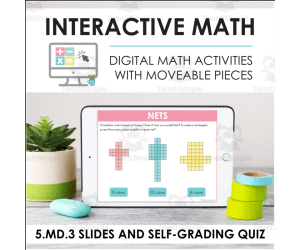
Digital Math for 5.MD.3 - Understand Concepts of Volume (Slides + Self-Grading Quiz)
Math, Geometry, Grade 5, Quizzes, Quizzes and Tests, Teacher Tools
Digital Math for 5.MD.3 - Understand Concepts of Volume (Slides + Self-Grading Quiz) This innovative and engaging teaching resource allows educators to impart the concepts of volume effectively to fifth-grade students. This interactive format helps learners practice, review, and enrich their knowledge meaningfully. The fully digital nature of these slides facilitates an effortless preparation experience for teachers and enhances classroom engagement as students interact with visual representations through dragging, dropping, and sorting images. Practical Educational Tool Covers standard 5.MD.3 through features like PowerPoint presentations and Google Slides Includes instructions for easy assignment on platforms such as Google Classroom Flexible according to classroom needs - it can be assigned individually or implemented in smaller group settings Evaluation: Self-Grading Quiz Highlighted Feature The inclusion of a self-grading Google Forms quiz which accompanies the slides set up within this product—a valuable feedback mechanism providing immediate performance data from assessments based on standard 5.MD.3. Digital Math for 5.MD.3 – Understand Concepts of Volume (Slides + Self-Grading Quiz) comprises: 20 interactive student slides A corresponding automated quiz—an attractive blend between tried-and-tested teaching presentation methods coupled with modern e-learning optimization strategies perfect for today's flexible education climate.
Author Markers and Minions
Tags Interactive Slides, Volume Concepts, Digital Learning, Self-grading Quiz, Engagement

Water Cycle, Acid Rain, & Wastewater: Reading Comprehension (Word)
Science, Earth and Environmental Sciences, ELA, Reading, Reading Comprehension, Strategies, Resources for Teachers, Environmental Science, Grade 6, 7, 8, 9, Writing Prompts, Worksheets & Printables, Centers, Activities, Teacher Tools, Assessments, Quizzes and Tests, Quizzes, Tests
Water Cycle, Acid Rain, & Wastewater: Reading Comprehension Passages (Word) This very engaging collection of environmental science reading passages about Water Cycle, Acid Rain, & Wastewater is designed to bridge the gap between science and literacy through strengthening reading comprehension and sparking scientific curiosity in middle school students. Each passage blends English Language Arts skills with accurate science content that supports NGSS classroom practice. Ideal for interdisciplinary learning in ELA and Science. Suitable for Grade 9 review, too! What Is Included? There are (3) informational passages: Wastewater: From Drain to Clean Follow water from your sink to the treatment plant as screens pull out debris, grit settles, microbes break down leftovers, and disinfection makes the water safe to release or reuse. The Water Cycle: The Engine of Our Planet Watch water move through evaporation, condensation, precipitation, and runoff, with plants and soils helping store and move it. See how this cycle powers weather and refills rivers and aquifers. Acid Rain: Causes, Impacts, and Solutions Learn how certain air pollutants turn rain more acidic, what that means for lakes, forests, and buildings, and how cleaner energy and emission controls help damaged ecosystems recover. Student Tasks for Each Passage: 5 multiple-choice questions targeting main idea, key details, inference, vocabulary in context, and use of evidence 5 vocabulary matching items with clear, student-friendly definitions 5 text-based questions that require citing specific lines or facts 1 summary prompt that asks students to condense central ideas accurately Full answer key for every section Available Formats for this Resource PDF Google Docs FULL CATALOG OF DOWNLOADING LINKS HERE Other Science Reading Collections you May find in the store: 1. Astronomy & Space Science 2. Volcanoes, Rocks, & Mountains 3. Rock Cycle, Soil, & Sinkholes 4. Mars, Glaciers, & Antarctica 5. Water Cycle, Acid Rain, & Wastewater 6. Insects, Animals, & Ecosystems 7. Bioluminescence & Insects 8. Animal Skin, Cats, & T. Rex 9. Human Body and Senses 10. Health & Applied Bioscience 11. Waves, Light, & Imaging 12. Electricity & Energy 13. Motion & Materials 14. Chemistry and Materials Science Product Details Length: 15 pages total Grades: 6–8, also suitable for Grade 9 review Use cases: close reading, stations, homework, intervention, test prep, and sub plans Standards support: reinforces informational-text skills and supports NGSS-style sense making through observation, modeling, and clear use of claim, evidence, and reasoning Why Teachers Choose This Set Authentic science content paired with rigorous literacy practice Consistent task structure across all passages for easier planning and smoother student routines Clear, age-appropriate writing that builds confidence without oversimplifying Use this set to reinforce ELA skills in science, to add literacy to your lessons, or to support independent work. The passages strengthen main idea, evidence use, vocabulary in context, inference, cause and effect, and summary writing. With ready-to-use assessments and complete answer keys, you can provide focused practice that is simple to run and fast to review.
Author Middle & High School - CORED Education
Rating
Tags Middle School, Reading Comprehension, Reading Strategies, Reading Passages, ELA, Centers, Reading Passage, Assessments, Vocabulary, Environmental Science