



3,946 products added recently
Page 3 - Fantasy Writing Prompts

 Show filters

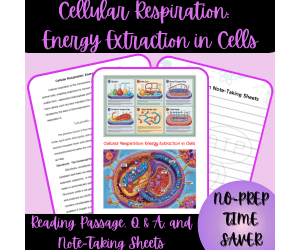
Cellular Respiration: Energy Extraction in Cells Reading Passage
ELA, Reading, Writing, Research, Resources for Teachers, Science, Biology, Life Sciences, High School, Homeschool Resources, Teacher Tools, Assessments, Quizzes and Tests, Lesson Plans, Worksheets & Printables, Writing Prompts
Teaching cellular respiration can feel overwhelming, especially when you want your students/homeschoolers to truly understand how cells create energy, not just memorize steps. As a homeschool mom guiding my own ninth grader, I know how important it is to have resources that break down complex topics into manageable, engaging pieces. That is why I created this Cellular Respiration: Energy Extraction in Cells Reading Passage, Q & A, and Note-Taking Sheets resource, complete with a detailed and complex reading passage, thought-provoking questions, and five versatile note-taking sheets. Designed for high school/homeschool biology, this resource helps students/homeschoolers grasp the big picture of cellular respiration while also encouraging critical thinking and independent learning. Whether you are teaching at home or in a classroom, you will find this resource to be a practical and effective addition to your curriculum. INCLUDED IN THIS RESOURCE: Multi-page, detailed Cellular Respiration Reading Passage 20 critical thinking passage questions A comprehensive answer key 5 flexible note-taking sheets for guided or independent study TOPICS COVERED: The three main stages: glycolysis, Krebs cycle, and electron transport chain Differences between aerobic respiration and fermentation The role of ATP, NADH, FADH₂, and key enzymes Real-world applications and connections to health and biotechnology This Cellular Respiration: Energy Extraction in Cells Reading Passage, Q & A, and Note-Taking Sheets resource is a practical, engaging, and flexible tool for teaching one of biology’s most essential processes. Whether you are a homeschool parent like me or a classroom teacher, you will appreciate how this resource brings clarity and confidence to your lessons. It is designed to help students/homeschoolers not just learn, but truly understand how cells power life. If you and your students/homeschoolers enjoyed this resource, please leave a review. Thank you for your support! Tina - Big Easy Homeschooling Mo
Author Homeschool with Big Easy Homeschooling Mom
Rating
Tags Cellular Respiration Reading Passage For High School, Homeschool Biology Cellular Respiration Resource, Glycolysis Krebs Cycle Electron Transport Chain Explained, Critical Thinking Questions For Cellular Respiration, Electron Transport Chain, Advanced Biology Cellular Respiration Activities, Krebs Cycle, Glycolysis, AP Biology Resource, Homeschool Biology Resource

Physical Science Reading Comprehension Passage: Gas Laws (PDF)
Science, ELA, Reading, Reading Comprehension, Strategies, Resources for Teachers, Chemistry, Physics, Grade 6, 7, 8, 9, Writing Prompts, Worksheets & Printables, Centers, Activities, Teacher Tools, Assessments, Quizzes and Tests, Quizzes, Tests
Physical Science Reading Comprehension Passage and Questions: Gas Laws (PDF) This very engaging science reading passage is about gas laws and how gases respond to changes in temperature, pressure, and volume . It explains that gas particles are always moving and create pressure when they collide with the surfaces of a container. The passage introduces Boyle’s Law, Charles’s Law, and Gay-Lussac’s Law through familiar examples such as squeezed balloons, cold car tires, sealed soda cans in the sun, and hot air balloons. It also explains why gas laws are useful in real life, including in tire pressure, pressurized containers, aviation, balloon operation, and medical equipment such as ventilators. This passage is designed to bridge the gap between science and literacy by strengthening reading comprehension while sparking scientific curiosity in middle school students. It blends English Language Arts skills with accurate science content, helping students build background knowledge, understand key concepts, use evidence from the text, and explain scientific ideas clearly. This resource supports science classroom practice while also reinforcing important literacy skills such as main idea, vocabulary, comprehension, and summarizing. Ideal for interdisciplinary learning in ELA and Science. Suitable for Grade 9 review, too! Student Tasks for The Passage: 10 multiple-choice questions targeting main idea, key details, science concepts, comparison, and real-world applications 10 True/False statements to check understanding and address common misconceptions 5 text-based short-answer questions that require students to explain important ideas from the passage 5 vocabulary matching items with clear, student-friendly definitions 1 summary prompt that asks students to condense the central ideas accurately Full answer key for every section Available Formats for this Resource Fillable PDF Word Docs Google Docs FULL CATALOG OF DOWNLOADING LINKS HERE Product Details Length: 7 pages total Grades: 6–8, also suitable for Grade 9 review Use cases: close reading, stations, homework, intervention, test prep, and sub plans Standards support: Reinforces informational-text skills and supports NGSS-style sense-making by helping students read scientific explanations, connect evidence to key concepts, interpret real-world examples, and explain cause-and-effect relationships in science. Why Teachers Choose This Set Authentic science content paired with rigorous literacy practice Consistent task structure across all passages for easier planning and smoother student routines Clear, age-appropriate writing that builds confidence without oversimplifying Other Science Reading Collections and Topics You May Find in the Store: 1. Astronomy & Space Science 2. Volcanoes, Rocks, & Mountains 3. Rock Cycle, Soil, & Sinkholes 4. Mars, Glaciers, & Antarctica 5. Water Cycle, Acid Rain, & Wastewater 6. Insects, Animals, & Ecosystems 7. Bioluminescence & Insects 8. Animal Skin, Cats, & T. Rex 9. Human Body and Senses 10. Health & Applied Bioscience 11. Waves, Light, & Imaging 12. Electricity & Energy 13. Motion & Materials 14. Chemistry and Materials Science 15. Electromagnetism 16. Acids and Bases 17. Gas Laws 18. Biotechnology 19. Periodic Trends 20. Protists and Fungi 21. Microevolution 22. Blood 23. Chemical Bonding 24. Magnets 25. Muscles 26. Nuclear Chemistry 27. Electromagnetic Devices 28. Epigenetics 29. The Law of Conservation of Mass 30. Atomic Models 31. Isotopes and Ions 32. Light 33. Human-Environment Interaction 34. Theory of Evolution 35. Photosynthesis 36. Origins of Life and Early Earth 37. Gene Expression and Regulation 38. Thermochemistry 39. Allergies 40. Coevolution 41. Birth to Adulthood 42. Cells 43. Entropy and Free Energy 44. The Human Brain 45. Mixtures and Solutions 46. Invertebrates 47. Zoo Animals 48. Biochemistry 49. Animal Behavior 50. Population Ecology ...and many more engaging science reading passages that cover intriguing and important topics designed to spark curiosity and support student learning. Use this passage to reinforce ELA skills in science, to add literacy to your lessons, and to support independent work. The passages strengthen main idea, evidence use, vocabulary in context, inference, cause and effect, and summary writing. With ready-to-use assessments and complete answer keys, you can provide focused practice that is simple to run and fast to review.
Author Middle & High School - CORED Education
Rating
Tags Middle School, Reading Comprehension, Reading Strategies, ELA, Centers, Reading Passage, Assessments, Vocabulary, Chemistry, Physical Science
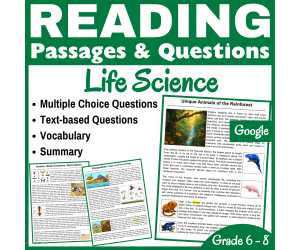
Insects, Animals, & Ecosystems: Reading Comprehension passages (Docs)
Science, ELA, Reading, Reading Comprehension, Strategies, Resources for Teachers, Life Sciences, Animals, Insects, Nature & Plants, Grade 6, 7, 8, 9, Writing Prompts, Worksheets & Printables, Centers, Activities, Teacher Tools, Assessments, Quizzes and Tests, Quizzes, Tests
Insects, Animals, & Ecosystems: Reading Comprehension Passages (Docs) This engaging collection of life science reading passages about Insects, Animals, & Ecosystems is designed to bridge the gap between science and literacy through strengthening reading comprehension and sparking scientific curiosity in middle school students. Each passage blends English Language Arts skills with accurate science content that supports NGSS classroom practice. Ideal for interdisciplinary learning in ELA and Science. Suitable for Grade 9 review, too! What Is Included? There are (3) informational passages: Ecosystems: Webs of Life and Change See how living things and their surroundings fit together. Follow energy from producers to consumers to decomposers, and notice how fires, floods, or people can disturb a system and how it can recover. Insects: Small Creatures, Giant Impact Meet the helpers that pollinate, recycle waste, and feed countless animals. Learn how simple body parts and smart behaviors let insects thrive almost everywhere. Unique Animals of the Rainforest Visit a forest bursting with life, from Hyacinth Macaws and pink river dolphins to golden lion tamarins and poison dart frogs. Understand why protecting habitats keeps these remarkable species alive. Student Tasks for Each Passage: 5 multiple-choice questions targeting main idea, key details, inference, vocabulary in context, and use of evidence 5 vocabulary matching items with clear, student-friendly definitions 5 text-based questions that require citing specific lines or facts 1 summary prompt that asks students to condense central ideas accurately Full answer key for every section Available Formats for this Resource PDF Word Docs FULL CATALOG OF DOWNLOADING LINKS HERE Other Science Reading Collections you May find in the store: 1. Astronomy & Space Science 2. Volcanoes, Rocks, & Mountains 3. Rock Cycle, Soil, & Sinkholes 4. Mars, Glaciers, & Antarctica 5. Water Cycle, Acid Rain, & Wastewater 6. Insects, Animals, & Ecosystems 7. Bioluminescence & Insects 8. Animal Skin, Cats, & T. Rex 9. Human Body and Senses 10. Health & Applied Bioscience 11. Waves, Light, & Imaging 12. Electricity & Energy 13. Motion & Materials 14. Chemistry and Materials Science Product Details Length: 14 pages total Grades: 6–8, also suitable for Grade 9 review Use cases: close reading, stations, homework, intervention, test prep, and sub plans Standards support: reinforces informational-text skills and supports NGSS-style sense making through observation, modeling, and clear use of claim, evidence, and reasoning Why Teachers Choose This Set Authentic science content paired with rigorous literacy practice Consistent task structure across all passages for easier planning and smoother student routines Clear, age-appropriate writing that builds confidence without oversimplifying Use this set to reinforce ELA skills in science, to add literacy to your lessons, or to support independent work. The passages strengthen main idea, evidence use, vocabulary in context, inference, cause and effect, and summary writing. With ready-to-use assessments and complete answer keys, you can provide focused practice that is simple to run and fast to review.
Author Middle & High School - CORED Education
Rating
Tags Middle School, Reading Comprehension, Reading Strategies, ELA, Centers, Reading Passage, Assessments, Vocabulary, Life Science, Insects
High School 2025 October - December ELA Bell Ringers (Quarter)
ELA, Literature, Writing, Holiday & Seasonal, Months, November, October, December, Resources for Teachers, Research, High School, Homeschool Resources, Teacher Tools, Worksheets & Printables, Writing Prompts, Assessments, Quizzes and Tests, Lesson Plans
As a homeschool mom to a 9th grader, I know how challenging it can be to start each ELA lesson with purpose and engagement. That is why I created this comprehensive High School 2025 October, November, and December Bell Ringers (Quarter) that will transform your language arts routine from October through December. These are not just busy work activities—they are carefully crafted warm-ups that build essential writing, grammar, and literary analysis skills while keeping students engaged with seasonal themes and gothic literature elements. Whether you're teaching at home or in a classroom, these ready-to-use prompts will give you confidence and your students the daily practice they need to excel. INCLUDED IN THIS RESOURCE: NO-PREP, time-saver; ready-to-use resource 60+ daily bell ringer activities from October through December of 2025 Seasonal writing prompts Literary analysis activities TOPICS COVERED: Grammar fundamentals Creative writing Poetry analysis Literary devices This collection has honestly saved my sanity and my daughter's love of learning. Instead of dreading our ELA time, we both look forward to seeing what challenge or creative prompt is waiting for us each day. The progression from October's spooky themes through November's confidence-building exercises to December's mastery moments creates this beautiful arc that lets you actually see your teen growing as a writer and thinker. After years of trying different approaches and resources, these bell ringers have become the one thing I can count on to start our lessons with energy and purpose. When you invest in this bundle, you are not just buying activities—you are giving yourself peace of mind and your teen the gift of genuine skill development that will serve them well beyond high school. If you and your students/homeschoolers enjoyed this resource, please leave a review. Thank you for your support! Tina - BigEasy Homeschooling Mom
Author Homeschool with Big Easy Homeschooling Mom
Rating
Tags Homeschool ELA Activities, October ELA Bell Ringers, November ELA Bell Ringers, December ELA Bell Ringers, Daily Writing Warm-ups, High School Daily Writing Warm-ups, Daily Language Arts Warm Ups For Homeschoolers, Gothic Literature Writing Prompts For Teens, Daily Grammar Practice For Homeschool English, Daily Writing And Vocabulary Practice For Homeschool ELA

Mars, Glaciers, & Antarctica: SAMPLE Reading Passage (Docs)
Science, Space, Earth and Environmental Sciences, ELA, Reading, Reading Comprehension, Strategies, Resources for Teachers, Environmental Science, Grade 6, 7, 8, 9, Writing Prompts, Worksheets & Printables, Centers, Activities, Teacher Tools, Assessments, Quizzes and Tests, Quizzes, Tests
This is a ONE PASSAGE SAMPLE. The following is the description of the FULL resource and the downloading links: Mars, Glaciers, and Antarctica: Reading Comprehension Passages (Docs) This very engaging collection of science reading passages about Mars, Glaciers, and Antarctica (Earth and Space Environments) is designed to bridge the gap between science and literacy through strengthening reading comprehension and sparking scientific curiosity in middle school students. Each passage blends English Language Arts skills with accurate science content that supports NGSS classroom practice. Ideal for interdisciplinary learning in ELA and Science. Suitable for Grade 9 review, too! What Is Included? There are (3) informational passages: Antarctica: Science at the End of the Earth Explore a protected polar laboratory where clear air, ancient ice, and unique wildlife let scientists study climate change, ocean circulation, and even space signals with high precision. From Earth to Mars: What Life Would Require Contrast Earth and Mars, then outline what settlers would need: breathable air, liquid water, radiation shielding, steady energy, food production, and closed-loop systems for waste and resources. Ice Age Leftovers: From Glaciers to Sea Ice Differentiate glaciers, ice shelves, sea ice, and icebergs, and see how they shape coasts, reflect sunlight, steer ocean temperatures, and preserve clues to past climates. Student Tasks for Each Passage: 5 multiple-choice questions targeting main idea, key details, inference, vocabulary in context, and use of evidence 5 vocabulary matching items with clear, student-friendly definitions 5 text-based questions that require citing specific lines or facts 1 summary prompt that asks students to condense central ideas accurately Full answer key for every section Available Formats for this Resource PDF Word Docs FULL CATALOG OF DOWNLOADING LINKS HERE Other Science Reading Collections and Topics You May Find in the Store: 1. Astronomy & Space Science 2. Volcanoes, Rocks, & Mountains 3. Rock Cycle, Soil, & Sinkholes 4. Mars, Glaciers, & Antarctica 5. Water Cycle, Acid Rain, & Wastewater 6. Insects, Animals, & Ecosystems 7. Bioluminescence & Insects 8. Animal Skin, Cats, & T. Rex 9. Human Body and Senses 10. Health & Applied Bioscience 11. Waves, Light, & Imaging 12. Electricity & Energy 13. Motion & Materials 14. Chemistry and Materials Science 15. Electromagnetism 16. Acids and Bases 17. Gas Laws 18. Biotechnology 19. Periodic Trends 20. Protists and Fungi 21. Microevolution 22. Blood 23. Chemical Bonding 24. Magnets 25. Muscles 26. Nuclear Chemistry 27. Electromagnetic Devices 28. Epigenetics 29. The Law of Conservation of Mass 30. Atomic Models 31. Isotopes and Ions 32. Light 33. Human-Environment Interaction 34. Theory of Evolution 35. Photosynthesis 36. Origins of Life and Early Earth 37. Gene Expression and Regulation 38. Thermochemistry 39. Allergies 40. Coevolution 41. Birth to Adulthood 42. Cells 43. Entropy and Free Energy 44. The Human Brain 45. Mixtures and Solutions 46. Invertebrates 47. Zoo Animals 48. Biochemistry 49. Animal Behavior 50. Population Ecology ...and many more engaging science reading passages that cover intriguing and important topics designed to spark curiosity and support student learning. Product Details Length: 15 pages total Grades: 6–8, also suitable for Grade 9 review Use cases: close reading, stations, homework, intervention, test prep, and sub plans Standards support: reinforces informational-text skills and supports NGSS-style sense making through observation, modeling, and clear use of claim, evidence, and reasoning Why Teachers Choose This Set Authentic science content paired with rigorous literacy practice Consistent task structure across all passages for easier planning and smoother student routines Clear, age-appropriate writing that builds confidence without oversimplifying Use this set to reinforce ELA skills in science, to add literacy to your lessons, or to support independent work. The passages strengthen main idea, evidence use, vocabulary in context, inference, cause and effect, and summary writing. With ready-to-use assessments and complete answer keys, you can provide focused practice that is simple to run and fast to review.
Author Middle & High School - CORED Education
Rating
Tags Middle School, Reading Comprehension, Reading Strategies, Reading Passages, ELA, Centers, Reading Passage, Assessments, Vocabulary, Earth Science

Windmills Reading Comprehension Passage - Cored Ed Encyclopedia
ELA, Language Development, Reading Comprehension, Reading, Pre-Reading, Science, Technology, Physics, History, Social Studies, Grade 2, 3, 4, 5, Worksheets & Printables, Worksheets, Teacher Tools, Centers, Activities, Writing Prompts, Assessments, Quizzes and Tests, Quizzes, Lesson Plans
This windmills reading comprehension with lesson plan includes: Visualization (on the front cover) Start your lesson by taking a minute to think and share something about the topic. Read the script aloud (slowly), perhaps prepare some music or sound effects. Student close their eyes and let their imaginations wander. Students open their eyes, read the question aloud and give them a few minutes to complete. Ask a few students to share or keep answers until the end to compare with what they learn in the passage. Quick pause—thousands of Cored Education products are included with your TeachSimple membership. Download links and encyclopedia index available here. Pre-Reading Trivia Students will write down one thing they already know about the subject and then read five more facts and discuss. These facts are fun, and the students will enjoy learning about the subject before reading more. Give 1 minute for students to write what they already know (no pressure—best guess is fine). Read the five facts together. After each fact, do ask a student for their opinion, was it surprising? Set a purpose by asking students to highlight/underline one fact they want to learn more about during the reading. Reading Passage The text is a high-interest reading passage with set paragraphs, roughly three to four paragraphs long. It contains a variety of themes about the topic, anywhere from history to technology. The passage is between 250 and 350 words in length. First, ask students to look at the headings and see what they’ll learn about today. What do they know about the topic/heading? First read options: Teacher read-aloud (best for support). Partner reading (paragraph by paragraph). While reading, students underline important details, and vocabulary words they think may come up in the questions section. Mixed Questions The first question page contains four multiple-choice questions, each with a choice of four answers, and three written response questions that require a sentence or two from the student. Students complete the mcqs first independently, then review quickly as a class. For the 3 written responses, try to get students giving the answer with some form of evidence: “I think ___ because the text says ___.” If students get stuck, send them back to check the passage. Vocabulary Questions Practice seven key words from the text in this section across two activities. First section is scrambled words where students will unscramble three words given a clue for each. The second section is a word to meaning matching activity. Before starting, have some students read out words they underlined in the passage. Ask students to say the word and read aloud the sentence(s) around each word. Ask students to do scrambled words and the matching exercise in pairs then go through answers as a class. For the scrambled spelling task, get four pairs to come up to the board and write the words for extra practice with the other student reading out the clue. For the matching task, prompt students to give full sentences: “I matched ___ with ___ because ___.” Creative Writing In this question, the student will be required to write a five to eight sentence paragraph on a question related to the topic. Before starting, ask students write down 3 key ideas they are going to include in their piece. Ask students for ideas to share around the class to help those struggling. Pro writing expectations: 5–8 sentences At least 2 facts or details from the passage At least 2 vocabulary words from the previous page Students read their paragraphs while classmates listen for facts and vocabulary words. Extension Activities This page is optional for fast finishers or to take home. There are several activities, each one requiring a different skill. Do some, do none, do all, completely optional - but you will feel reassured knowing every possibility is planned for. Includes summary writting question. Answer Key There are answers for the multiple-choice questions, written response questions have sample answers, vocabulary answers and if there is a summary question then a sample summary will be provided as well. Lesson Plan Included Customized lesson plan for this lesson is included. Lesson Snapshot Title: Windmills Genre: Nonfiction (informational text) Subject: Science & Technology / Social Studies (history of technology) Primary Topic: How windmills evolved to do work Estimated Guided Reading Level (A–Z): Q What This Lesson Teaches Best Explains how people learned wind’s “steady push” could do work like grinding grain . Traces a clear history of windmills over time (western Asia → Europe → modern wind turbines). Shows how windmills were redesigned to solve problems in different places , such as pumping water out of low, wet land into canals. Introduces how modern wind turbines make electricity using lift , spinning blades, a shaft, and a generator . Learning Goals Students will describe how early windmills helped with grinding grain, using details from the passage. Students will identify where and when the text says the panemone was used. Students will explain how some European windmills were built to turn and face the wind. Students will describe how Dutch engineers used windmills to move water and help make dry land. Students will explain how a wind turbine makes electricity, based on the final section. Key Vocabulary From the Text panemone — an early windmill with cloth sails behind walls. shaft — a rod that turns to power a machine. millstones — heavy stones that grind wheat and rye into flour. canals — built waterways that carry water away from land. generator — a machine a spinning shaft turns to make electricity. FULL CATALOG OF DOWNLOAD LINKS AND ENCYCLOPEDIA INDEX HERE
Author Cored Education
Rating
Tags Vocabulary, Reading Comprehension, Reading Passages, Lesson Plans, Ela Lesson Plans, Reading Comprehension Lesson Plans, Pre-reading, Science Lesson Plans, History Lesson Plans, Technology

Social Studies Passages: The Founding of the United States (Docs)
ELA, Reading, Reading Comprehension, Strategies, Resources for Teachers, Social Studies, Biographies, Government, History: USA, History, Grade 6, 7, 8, 9, Writing Prompts, Worksheets & Printables, Centers, Activities, Teacher Tools, Assessments, Quizzes and Tests, Quizzes, Tests
Social Studies Reading Comprehension Passages: The Founding of the United States (Docs) This resource introduces a collection of Social Studies reading comprehension passages about Benjamin Franklin and Writing the constitution (Founding the United States). The passages are carefully designed to bridge the gap between social studies and literacy through strengthening reading comprehension and sparking knowledge curiosity in middle school students. Each passage blends English Language Arts skills with accurate social studies content. Ideal for interdisciplinary learning in ELA and Social Studies. Suitable for Grade 9 review, too! What Is Included in this Collection? There are three informational passages (with full answer keys): Franklin’s Notebook of Virtues Benjamin Franklin: Man of Ideas Writing the Constitution: Three Branches, One Nation For Each Passage, students will have multiple tasks to complete as follow: 5 multiple-choice questions targeting main idea, key details, inference, vocabulary in context, and use of evidence 5 vocabulary matching items with clear, student-friendly definitions 5 text-based questions that require citing specific lines or facts 1 summary prompt that asks students to condense central ideas accurately Available Formats for this Resource Fillable PDF Word Docs Google Docs FULL CATALOG OF DOWNLOADING LINKS HERE For more Social Studies Reading Passages, check the following Links: Ancient Civilizations PDF Fillable PDF Word Docs Google Docs Early Empires and Trade Networks PDF Fillable PDF Word Docs Google Docs The Founding of the United States PDF Fillable PDF Word Docs Google Docs Language, Culture, and Meaning PDF Fillable PDF Word Docs Google Docs Psychology and Society PDF Fillable PDF Word Docs Google Docs Global Festivals and Traditions PDF Fillable PDF Word Docs Google Docs Extreme Environments and People PDF Fillable PDF Word Docs Google Docs Food, Culture, and Preservation PDF Fillable PDF Word Docs Google Docs Global Food Customs PDF Fillable PDF Word Docs Google Docs Media, Communication, and Popular Culture PDF Fillable PDF Word Docs Google Docs Human Impact on the Environment PDF Fillable PDF Word Docs Google Docs Civic Action and Social Change PDF Fillable PDF Word Docs Google Docs Fashion, Society, and Power PDF Fillable PDF Word Docs Google Docs People, Places, and Unusual Histories PDF Fillable PDF Word Docs Google Docs Product Details Length: 13 pages total Grades: 6–8, also suitable for Grade 9 review Use cases: close reading, stations, homework, intervention, test prep, and sub plans Why Teachers Choose This Set Authentic social studies content paired with rigorous literacy practice Consistent task structure across all passages for easier planning and smoother student routines Clear, age-appropriate writing that builds confidence without oversimplifying Use this set to reinforce ELA skills in social studies, to add literacy to your lessons, and to support independent work. The passages strengthen main idea, evidence use, vocabulary in context, inference, cause and effect, and summary writing. With ready-to-use assessments and complete answer keys, you can provide focused practice that is simple to run and fast to review.
Author Middle & High School - CORED Education
Rating
Tags Middle School, Reading Comprehension, Reading Strategies, ELA, Centers, Reading Passage, Assessments, Vocabulary, Social Studies, U.S Government

Physical Science Reading Passage: Acids and Bases (Fillable PDF)
Science, ELA, Reading, Reading Comprehension, Strategies, Resources for Teachers, Chemistry, Grade 6, 7, 8, 9, Writing Prompts, Worksheets & Printables, Centers, Activities, Teacher Tools, Assessments, Quizzes and Tests, Quizzes, Tests
Physical Science Reading Comprehension Passage and Questions: Acids and Bases (Fillable PDF) This very engaging science reading passage is about acids and bases and how they appear in everyday materials. It explains that acids release hydrogen ions in water and are found in substances such as lemon juice, vinegar, citrus fruits, and stomach acid. It also describes bases, including soap, baking soda, ammonia, and cleaners, and explains how scientists use the pH scale to compare how acidic or basic a substance is. The passage introduces neutralization reactions , showing how acids and bases can react to form water and a salt, and connects the topic to real-life uses in farming, medicine, cooking, and cleaning. This passage is designed to bridge the gap between science and literacy by strengthening reading comprehension while sparking scientific curiosity in middle school students. It blends English Language Arts skills with accurate science content, helping students build background knowledge, understand key concepts, use evidence from the text, and explain scientific ideas clearly. This resource supports science classroom practice while also reinforcing important literacy skills such as main idea, vocabulary, comprehension, and summarizing. Ideal for interdisciplinary learning in ELA and Science. Suitable for Grade 9 review, too! Student Tasks for The Passage: 10 multiple-choice questions targeting main idea, key details, science concepts, comparison, and real-world applications 10 True/False statements to check understanding and address common misconceptions 5 text-based short-answer questions that require students to explain important ideas from the passage 5 vocabulary matching items with clear, student-friendly definitions 1 summary prompt that asks students to condense the central ideas accurately Full answer key for every section This passage is designed as a fillable PDF , which means students can type their answers directly into the document on any computer or tablet . Each page includes highlighted text fields that show them exactly where to type! Available Formats for this Resource PDF Word Docs Google Docs FULL CATALOG OF DOWNLOADING LINKS HERE Product Details Length: 6 pages total Grades: 6–8, also suitable for Grade 9 review Use cases: close reading, stations, homework, intervention, test prep, and sub plans Standards support: Reinforces informational-text skills and supports NGSS-style sense-making by helping students read scientific explanations, connect evidence to key concepts, interpret real-world examples, and explain cause-and-effect relationships in science. Why Teachers Choose This Set Authentic science content paired with rigorous literacy practice Consistent task structure across all passages for easier planning and smoother student routines Clear, age-appropriate writing that builds confidence without oversimplifying Other Science Reading Collections and Topics You May Find in the Store: 1. Astronomy & Space Science 2. Volcanoes, Rocks, & Mountains 3. Rock Cycle, Soil, & Sinkholes 4. Mars, Glaciers, & Antarctica 5. Water Cycle, Acid Rain, & Wastewater 6. Insects, Animals, & Ecosystems 7. Bioluminescence & Insects 8. Animal Skin, Cats, & T. Rex 9. Human Body and Senses 10. Health & Applied Bioscience 11. Waves, Light, & Imaging 12. Electricity & Energy 13. Motion & Materials 14. Chemistry and Materials Science 15. Electromagnetism 16. Acids and Bases 17. Gas Laws 18. Biotechnology 19. Periodic Trends 20. Protists and Fungi 21. Microevolution 22. Blood 23. Chemical Bonding 24. Magnets 25. Muscles 26. Nuclear Chemistry 27. Electromagnetic Devices 28. Epigenetics 29. The Law of Conservation of Mass 30. Atomic Models 31. Isotopes and Ions 32. Light 33. Human-Environment Interaction 34. Theory of Evolution 35. Photosynthesis 36. Origins of Life and Early Earth 37. Gene Expression and Regulation 38. Thermochemistry 39. Allergies 40. Coevolution 41. Birth to Adulthood 42. Cells 43. Entropy and Free Energy 44. The Human Brain 45. Mixtures and Solutions 46. Invertebrates 47. Zoo Animals 48. Biochemistry 49. Animal Behavior 50. Population Ecology ...and many more engaging science reading passages that cover intriguing and important topics designed to spark curiosity and support student learning. Use this passage to reinforce ELA skills in science, to add literacy to your lessons, and to support independent work. The passages strengthen main idea, evidence use, vocabulary in context, inference, cause and effect, and summary writing. With ready-to-use assessments and complete answer keys, you can provide focused practice that is simple to run and fast to review.
Author Middle & High School - CORED Education
Rating
Tags Middle School, Reading Comprehension, Reading Strategies, ELA, Centers, Reading Passage, Assessments, Vocabulary, Chemistry, Physical Science

Rice Reading Comprehension Passage - Cored Ed Encyclopedia
ELA, Language Development, Reading Comprehension, Reading, Pre-Reading, Science, Writing, Strategies, Life Sciences, Nature & Plants, Grade 2, 3, 4, 5, Worksheets & Printables, Worksheets, Teacher Tools, Centers, Activities, Writing Prompts, Assessments, Quizzes and Tests, Quizzes, Lesson Plans
This rice reading comprehension includes: Visualization (on the front cover) Start your lesson by taking a minute to think and share something about the topic. Read the script aloud (slowly), perhaps prepare some music or sound effects. Student close their eyes and let their imaginations wander. Students open their eyes, read the question aloud and give them a few minutes to complete. Ask a few students to share or keep answers until the end to compare with what they learn in the passage. Quick pause—thousands of Cored Education products are included with your TeachSimple membership. Download links and encyclopedia index available here. Pre-Reading Trivia Students will write down one thing they already know about the subject and then read five more facts and discuss. These facts are fun, and the students will enjoy learning about the subject before reading more. Give 1 minute for students to write what they already know (no pressure—best guess is fine). Read the five facts together. After each fact, do ask a student for their opinion, was it surprising? Set a purpose by asking students to highlight/underline one fact they want to learn more about during the reading. Reading Passage The text is a high-interest reading passage with set paragraphs, roughly three to four paragraphs long. It contains a variety of themes about the topic, anywhere from history to technology. The passage is between 250 and 350 words in length. First, ask students to look at the headings and see what they’ll learn about today. What do they know about the topic/heading? First read options: Teacher read-aloud (best for support). Partner reading (paragraph by paragraph). While reading, students underline important details, and vocabulary words they think may come up in the questions section. Mixed Questions The first question page contains four multiple-choice questions, each with a choice of four answers, and three written response questions that require a sentence or two from the student. Students complete the mcqs first independently, then review quickly as a class. For the 3 written responses, try to get students giving the answer with some form of evidence: “I think ___ because the text says ___.” If students get stuck, send them back to check the passage. Vocabulary Questions Practice seven key words from the text in this section across two activities. First section is scrambled words where students will unscramble three words given a clue for each. The second section is a word to meaning matching activity. Before starting, have some students read out words they underlined in the passage. Ask students to say the word and read aloud the sentence(s) around each word. Ask students to do scrambled words and the matching exercise in pairs then go through answers as a class. For the scrambled spelling task, get four pairs to come up to the board and write the words for extra practice with the other student reading out the clue. For the matching task, prompt students to give full sentences: “I matched ___ with ___ because ___.” Creative Writing In this question, the student will be required to write a five to eight sentence paragraph on a question related to the topic. Before starting, ask students write down 3 key ideas they are going to include in their piece. Ask students for ideas to share around the class to help those struggling. Pro writing expectations: 5–8 sentences At least 2 facts or details from the passage At least 2 vocabulary words from the previous page Students read their paragraphs while classmates listen for facts and vocabulary words. Extension Activities This page is optional for fast finishers or to take home. There are several activities, each one requiring a different skill. Do some, do none, do all, completely optional - but you will feel reassured knowing every possibility is planned for. Includes summary writting question. Answer Key There are answers for the multiple-choice questions, written response questions have sample answers, vocabulary answers and if there is a summary question then a sample summary will be provided as well. Lesson Plan Included Customized lesson plan for this lesson is included. Lesson Snapshot Title: Rice Genre: Nonfiction (informational text) Subject: Science (Life Science/Agriculture) Primary Topic: How rice was grown and spread Estimated Guided Reading Level (A–Z): R What This Lesson Teaches Best How rice changed from a wild grass into a crop as people “saved the best” seeds and planted them over many seasons. How rice paddies work: shallow flooded fields that help rice grow and can slow weeds while protecting tender plants. How rice spread to new places as traders and travelers carried it along rivers and coasts, with rice learning to fit different climates. How rice has different types (including indica and japonica) and how rice continues changing as farmers and scientists work on challenges like floods, droughts, and plant diseases. Using evidence from the passage to check understanding (some support-page answer choices/answer key items do not match the passage exactly). Learning Goals Explain how people changed rice over time by saving and planting the best seeds each season. Describe what a rice paddy is and how shallow flooding helps rice plants. Identify how rice traveled from Asia to other regions through traders and travelers. Compare indica and japonica using details stated in the text. Describe ways rice continues to change because meals depend on it and it must handle floods, droughts, and diseases. Key Vocabulary From the Text wetlands — watery land where plants grow near rivers. shattering — breaking apart and scattering away. paddies — muddy fields with low banks holding shallow water. indica — a group of long-grained rice types. droughts — long times with very little rain. Discussion Prompts Pre-reading question: What do you already know or wonder about rice and how it grows? Comprehension questions: How did saving the best seeds change rice over many seasons? Comprehension questions: What is a rice paddy, and how does shallow water help rice plants? Comprehension questions: According to the passage, how did rice travel far from home to new places? FULL CATALOG OF DOWNLOAD LINKS AND ENCYCLOPEDIA INDEX HERE
Author Cored Education
Rating
Tags Vocabulary, Reading Comprehension, Reading Passages, Reading, Creative Writing, Reading Strategies, Writing Prompts, Lesson Plans, Life Science, Rice
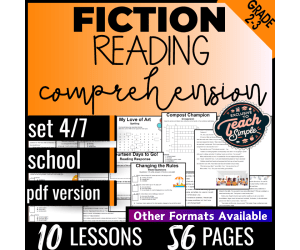
Reading Comprehension Passages Fiction Set 4 - School (PDF)
ELA, Reading, Reading Comprehension, Common Core, Language Development, Spelling, Vocabulary, Writing, Children’s Literature, Literature, Grade 2, 3, Worksheets & Printables, Worksheets, Writing Prompts, Assessments, Teacher Tools, Tests, Quizzes and Tests, Centers, Activities
Reading Comprehension Passages Fiction Set 4 Overview Fascinating reading comprehension passages, each with an array of activities included. Stories are written for the modern classroom and topics are designed to promote enthusiasm from each student. Each lesson contains a mixed questions section to check understanding, a vocabulary or spelling activity to help remember key language introduced, and a writing exercise. Full answer keys are provided. For a more detailed overview, check the section under the links at the bottom of this description. Passages Include 1.Don't Tell Anyone: Cherie likes to keep secrets, but her friends don't. 2.Roger's Luck: Roger never wins at anything. Will that change today? 3.Starting Third Grade: Mike feels uneasy at starting a new school year. 4.Bridget's New School: Bridget tries (and fails) to fit in at her new school. 5.Changing the Rules: Jenna changes the rules on her first day. 6.My Love of Art: Read about the author's love of art class in this lesson. PDF Version This is the PDF uneditable version. This download is available in GOOGLE Docs, GOOGLE Forms, GOOGLE Slides. PDF, PPT, WORD. FULL CATALOG OF DOWNLOAD LINKS HERE Grade 2/3 Links Fiction Set 1 - Nature Google Docs Google Forms Google Slides PDF PPT Word Guided Reading Materials Fiction Set 2 - Animals Google Docs Google Forms Google Slides PDF PPT Word Guided Reading Materials Fiction Set 3 - Food Google Docs Google Forms Google Slides PDF PPT Word Guided Reading Materials Fiction Set 4 - School Google Docs Google Forms Google Slides PDF PPT Word Guided Reading Materials Fiction Set 5 - Friends Google Docs Google Forms Google Slides PDF PPT Word Guided Reading Materials Fiction Set 6 - Family Google Docs Google Forms Google Slides PDF PPT Word Guided Reading Materials Fiction Set 7 - Sports Google Docs Google Forms Google Slides PDF PPT Word Guided Reading Materials Nonfiction Set 1 - Technology Google Docs Google Forms Google Slides PDF PPT Word Guided Reading Materials Nonfiction Set 2 - Nutrition Google Docs Google Forms Google Slides PDF PPT Word Guided Reading Materials Nonfiction Set 3 - Animals Google Docs Google Forms Google Slides PDF PPT Word Guided Reading Materials Reading Passages Overview Each passage is especially written for Grade 2-3 students, including key vocabulary required for this age group. Topics are varied and are accompanied by colorful graphics. Topics are meant to educate, yet entertain the modern student. These passages are perfect for the modern classroom. Whereas textbooks can become outdated in no time, any changes to technology or the world will result in updates to this product. Mixed Questions The mixed questions section of each lesson includes a variation of fivecomprehension, vocabulary and math questions. In addition, key reading strategies are frequently covered including cause & effect, summarizing, compare & contrast and making conclusions. Three of the questions will be MCQs and two will require a written response of some kind. Full answers and example responses appear at the end of the lesson. Spelling & Vocab Each reading passage contains a variety of words and phrases designed for Grade 2-3 students. Spelling and vocab activities provide the opportunity to build fluency with these words. As it can become quite mundane doing the same activities over and over, each lesson in a set will contain a different spelling and vocab activity . Writing Prompts Writing prompts are designed to continue the theme or lessons learned in the story. Students are persuaded to write in a variety of ways and each prompt includes several cues to help. As with the spelling/vocab section, writing prompts will vary. This includes research pieces, reading responses, poetry and creative writing prompts. Full Answer Keys Full answer keys and sample responses are provided so no matter how busy you are, you know you're covered! Mixed question answers provide evidence from the text, math questions contain the relevant workings. Answers are designed for use by the teacher, but also suitable as a handout to the student. Additional File One lesson will have an additional file. This is something fun to extend the lesson with. For similar downloads and other frees, do check out Cored Group on TeachSimple.
Author Cored Education
Rating
Tags Elementary, Reading, Comprehension, Vocabulary, Common Core, Spelling, Writing, Passages, Reading Centers, Reading Comprehension Assessments

Chemistry & Materials Science: Reading Comprehension Passages (Word)
Science, ELA, Reading, Reading Comprehension, Strategies, Resources for Teachers, Chemistry, Grade 6, 7, 8, 9, Writing Prompts, Worksheets & Printables, Centers, Activities, Teacher Tools, Assessments, Quizzes and Tests, Quizzes, Tests
Chemistry and Materials Science: Reading Comprehension Passages (Word) This very engaging collection of physical science reading passages about chemistry and material science is designed to bridge the gap between science and literacy through strengthening reading comprehension and sparking scientific curiosity in middle school students. Each passage blends English Language Arts skills with accurate science content that supports NGSS classroom practice. Ideal for interdisciplinary learning in ELA and Science. Suitable for Grade 9 review, too! What Is Included? There are (3) informational passages: Salt: Tiny Crystals, Big Effects The Hidden Science of Clothing Fingerprints: Patterns That Solve Crimes Student Tasks for Each Passage: 5 multiple-choice questions targeting main idea, key details, inference, vocabulary in context, and use of evidence 5 vocabulary matching items with clear, student-friendly definitions 5 text-based questions that require citing specific lines or facts 1 summary prompt that asks students to condense central ideas accurately Full answer key for every section Available Formats for this Resource PDF Google Docs FULL CATALOG OF DOWNLOADING LINKS HERE Other Science Reading Collections you May find in the store: 1. Astronomy & Space Science 2. Volcanoes, Rocks, & Mountains 3. Rock Cycle, Soil, & Sinkholes 4. Mars, Glaciers, & Antarctica 5. Water Cycle, Acid Rain, & Wastewater 6. Insects, Animals, & Ecosystems 7. Bioluminescence & Insects 8. Animal Skin, Cats, & T. Rex 9. Human Body and Senses 10. Health & Applied Bioscience 11. Waves, Light, & Imaging 12. Electricity & Energy 13. Motion & Materials 14. Chemistry and Materials Science Product Details Length: 13 pages total Grades: 6–8, also suitable for Grade 9 review Use cases: close reading, stations, homework, intervention, test prep, and sub plans Standards support: reinforces informational-text skills and supports NGSS-style sense making through observation, modeling, and clear use of claim, evidence, and reasoning Why Teachers Choose This Set Authentic science content paired with rigorous literacy practice Consistent task structure across all passages for easier planning and smoother student routines Clear, age-appropriate writing that builds confidence without oversimplifying Use this set to reinforce ELA skills in science, to add literacy to your lessons, or to support independent work. The passages strengthen main idea, evidence use, vocabulary in context, inference, cause and effect, and summary writing. With ready-to-use assessments and complete answer keys, you can provide focused practice that is simple to run and fast to review.
Author Middle & High School - CORED Education
Rating
Tags Middle School, Reading Comprehension, Reading Strategies, ELA, Centers, Reading Passage, Assessments, Vocabulary, Physical Science, Chemistry

High School Cybercrime: The New Frontier of Justice Reading Passage
STEM, Social Studies, Science, Computer Science, Technology, Research, Life Studies, ELA, Reading, Writing, High School, Homeschool Resources, Middle School, Adult Education, Teacher Tools, Assessments, Lesson Plans, Literacy Readers, Quizzes and Tests, Worksheets & Printables, Writing Prompts
As a homeschool mom, I understand how challenging it can be to find engaging, real-world content that captures our teenagers' attention while teaching them essential life skills. Cybercrime: The New Frontier of Justice Reading Passage, Q & A, and Note-Taking Sheets resource addresses one of the most pressing issues our kids face today—staying safe and informed in our digital world. This resource takes your students/homeschoolers beyond basic internet safety into the fascinating and complex realm of cybercrime, law enforcement, and the ongoing battle between online criminals and those working to stop them. I have designed this educational package to make sophisticated concepts understandable and relevant, giving your teens the knowledge they need to navigate today's technology-driven society with confidence and awareness. INCLUDED IN THIS RESOURCE: Comprehensive reading passage covering all major aspects of cybercrime 20 thought-provoking passage questions with detailed answer key Complete MLA-formatted bibliography with credible source references 25 professionally designed note-taking sheets for organized learning TOPICS COVERED: Online fraud, phishing attacks, and social engineering techniques Hacking, data breaches, and cybersecurity vulnerabilities Ransomware attacks and digital extortion methods Digital espionage and state-sponsored cyber operations When I created this cybercrime resource, I was thinking about preparing our children for the world they are actually going to live and work in—not just helping them pass a test. Our students/homeschoolers are growing up in a time when cybersecurity knowledge isn't just helpful, it is absolutely essential for their future success and safety. This Cybercrime: The New Frontier of Justice Reading Passage, Q & A, and Note-Taking Sheets resource goes beyond memorizing facts; it teaches our students/homeschoolers how to think critically about real problems they will encounter as adults, whether they are protecting their own families or pursuing careers in technology, law enforcement, or business. I am confident that the skills and awareness your students/homeschoolers gain from this study will serve them well throughout their lives, giving them the foundation they need to be informed, responsible digital citizens in an increasingly connected world. If you and your students/homeschoolers enjoyed this resource, please leave a review. Thank you for your support! Tina - Big Easy Homeschooling Mom Please subscribe: www.tidewindacademyhomeschool.com
Author Homeschool with Big Easy Homeschooling Mom
Rating
Tags Cybercrime Lesson Plans, Cybercrime Educational Materials For High School Students, Cybersecurity Education, Cybercrime Study Guides, Criminal Justice Curriculum, Digital Crime And Justice Teaching Resources, Computer Crime Resources, Internet Security Teaching Resources, Cyber Law Education, Cybersecurity Awareness Curriculum For Teens

Research Paper NO-PREP Teaching Resource
ELA, Writing, Formal Writing, Life Studies, Business, Research, Resources for Teachers, High School, Homeschool Resources, Middle School, Worksheets & Printables, Writing Prompts, Teacher Tools, Rubrics, Outlines, Lesson Plans
This comprehensive Research Paper Teaching Resource gives you everything you need as an educator or homeschool parent to guide your students/homeschoolers through the research paper writing process. I have broken down each step—from choosing that initial topic all the way to final submission—into clear, manageable pieces that won't overwhelm your students/homeschoolers. By walking them through this structured approach, you'll help your students/homeschoolers build the confidence and skills they need to create truly college-ready research papers that they can be proud of. INCLUDED IN THIS RESOURCE: ✓Student-friendly research paper guide ✓Customizable templates and detailed outlines ✓Instructor feedback forms ✓Student self-evaluation tools ✓Comprehensive grading rubrics ✓Plagiarism prevention guidelines ✓Step-by-step instructions for both teachers and studentsCustomizable templates and detailed outlines The real beauty of this resource lies in how adaptable it is for real classroom/homeschool needs. I have designed the templates and outlines so teachers and homeschool parents can easily customize them for history, science, literature, or any subject you're teaching. Whether you've got middle schoolers just learning the research ropes or high schoolers preparing for college, the materials scale beautifully. I created this guide because research writing should be more than just another assignment to check off—it's a chance for students and homeschoolers to discover their analytical voice and join meaningful academic conversations. Students and homeschoolers don't just learn the mechanics; they develop the deeper thinking skills that make their writing stand out, preparing them for success now and through their college years. Whether you're an experienced teacher wanting to breathe new life into your research paper instruction or a homeschool parent tackling formal academic writing with your teens for the first time, I have you covered. This resource gives you the complete toolkit—structured guidance, practical templates, and fair assessment tools—that help your students/homeschoolers build research and writing skills they'll rely on throughout their educational journey and well beyond. If you and your students/homeschoolers enjoyed this resource, please leave a review. Thank you for your support! Tina - Big Easy Homeschooling Mom
Author Homeschool with Big Easy Homeschooling Mom
Rating
Tags Research Paper Guide, Thesis Development, Research Question Formulation, Research Paper Template, Homeschool Writing Resource, Middle & HIgh School Writing Resource, Teaching Research Skills, College Prep Writing, Critical Thinking Writing Skills, Academic Paper Structure

Reading Comprehension Passages Fiction Set 4 - School (Fillable PDF)
ELA, Reading, Reading Comprehension, Common Core, Language Development, Spelling, Vocabulary, Writing, Children’s Literature, Literature, Grade 2, 3, Worksheets & Printables, Worksheets, Writing Prompts, Assessments, Teacher Tools, Tests, Quizzes and Tests, Centers, Activities
Reading Comprehension Passages Fiction Set 4 Snapshot Title: Title not stated Genre: Fiction (school-themed short stories with comprehension practice pages) Subject: Reading (ELA) Primary Topic: School life, friendships, and growing up Estimated Guided Reading Level (A–Z): P What This Teaches Best Friendship and honesty: Characters learn that keeping secrets can hurt friendships, and that being open with friends matters. Adjusting to new school experiences: Several stories focus on first days, new teachers, and learning to feel comfortable in a new class or school. Rules, fairness, and inclusion: A playground conflict shows how students challenge unfair “rules” and end up playing together. Perseverance and goal-setting: A student works hard—mostly alone—to win a school compost contest despite teasing and setbacks. Strong comprehension routine with support pages: Each story is followed by mixed questions, vocabulary/spelling work, and writing prompts tied to story details (note: one answer-key item lists “confident” where the activity word is “confidently”). Learning Goals Students will recount key events from a selected story in a logical sequence using details from the text. Students will describe a character’s feelings and motivations and explain how they change across the story. Students will identify the story’s message/lesson and support it with evidence from the text. Students will explain cause-and-effect relationships (what happened and why) shown in the stories. Students will determine word meanings using context clues from the surrounding sentences. Students will respond in writing to a prompt connected to a story’s events or theme. Passages Include 1.Don't Tell Anyone: Cherie likes to keep secrets, but her friends don't. 2.Roger's Luck: Roger never wins at anything. Will that change today? 3.Starting Third Grade: Mike feels uneasy at starting a new school year. 4.Bridget's New School: Bridget tries (and fails) to fit in at her new school. 5.Changing the Rules: Jenna changes the rules on her first day. 6.My Love of Art: Read about the author's love of art class in this lesson. FILLABLE PDF VERSION Worksheet-style pages, but with type-in answer boxes so students can complete and save their work digitally. Other versions are available in the links list below or in the full catalog. FULL CATALOG OF DOWNLOAD LINKS HERE For similar downloads and other frees, do check out Cored Group on TeachSimple.
Author Cored Education
Rating
Tags Elementary, Reading, Comprehension, Vocabulary, Common Core, Spelling, Writing, Passages, Reading Centers, Reading Comprehension Assessments

Reading Comprehension Passages Fiction Set 2 - Family (PDF)
ELA, Reading, Reading Comprehension, Common Core, Writing, Children’s Literature, Literature, Language Development, Spelling, Vocabulary, Grade 4, 5, Worksheets & Printables, Worksheets, Writing Prompts, Assessments, Teacher Tools, Quizzes and Tests, Tests, Centers, Activities
Reading Comprehension Passages Fiction Set 2 Overview No prep reading comprehension lessons, with enjoyable stories and topics. Each lesson has a blend of post-reading activities. Mixed questions to check overall understanding. Vocabulary activities, plus a writing section. Lessons also contain a bonus extension exercise at the end. Some you may like, some you may not, either way they are there if you wish to use them. Full answer keys are provided. Passages Include 1.Birthday Lessons: Lois wanted a horse for her birthday. What did he get instead? 2.Funny Cousin: Britney's cousin can be a little much. Read about their day. 3.Favorite Aunt: Raquel is helping her aunt get ready for a new arrival. 4.Grandma Can Dance: Tracie learns something new about her grandma. 5.Sisterly Love: Kyle did want a big brother. How does he feel after today though? 6.A Not So Relaxing Hike: Jordan's scared of bugs. Read how he gets over his fear. 7.On the Coaster: Sid talks about his experience on a roller coaster. 8.Grandma's Tulips: Read about Grandma's passion of tulips in this story. 9.Father's Day: Maria learns about Father's Day and other holidays in this passage. 10.Healthier Lifestyle: The twins' doctor teaches them how to live a healthier lifestyle. PDF Version This is the PDF uneditable version. This download is available in GOOGLE Docs, GOOGLE Forms, GOOGLE Slides. PDF, PPT, WORD. Browse the Complete Cored Catalog — 2,000+ Resources Included Reading Passages Each reading passage has been written specifically for students in Grades 4–5, using vocabulary and language that match their age and ability level. The collection covers a wide range of engaging topics, supported by colorful visuals that help bring the content to life. Every lesson is designed to build knowledge while keeping students interested and motivated to read. These resources are also designed with flexibility in mind. Unlike traditional textbooks that can quickly become outdated, lessons can be updated over time to reflect changes in technology, discoveries, and the world around us. Mixed Questions Every lesson includes a variety of questions that help students think more deeply about what they have read. The question section combines reading comprehension, vocabulary, and math skills, while also regularly reinforcing important reading strategies such as cause and effect, summarizing, compare and contrast, and drawing conclusions. Most lessons include a mix of multiple-choice and written-response questions, giving students opportunities to explain their thinking as well as select answers. Complete answer keys and sample responses are provided at the end of each lesson for quick and easy reference. Spelling & Vocabulary Each passage introduces students to useful words and phrases appropriate for Grades 4–5. To help build confidence and word knowledge, every lesson includes a spelling or vocabulary activity. Rather than repeating the same task throughout the collection, activities vary from lesson to lesson to keep practice fresh and engaging. Activities may include spelling challenges, sentence matching, decoding activities, mixed-up text exercises, and other vocabulary-building tasks connected directly to the reading. Writing Prompts Each lesson includes a writing activity that extends the ideas, themes, or topics explored in the passage. Students are encouraged to write in a variety of formats, with prompts providing helpful guidance and ideas to get them started. Writing tasks vary throughout the collection and may include creative writing, research activities, personal responses, poetry, opinion writing, and other engaging assignments. Full Answer Keys Complete answer keys and sample responses are included with every lesson, making planning and marking quicker and easier. Reading comprehension answers include evidence and support from the text, while math-based questions show the relevant working where appropriate. The answer keys are designed primarily for teachers but can also be shared with students when needed. Just for Fun Each lesson finishes with an optional extension activity called Just for Fun . These bonus activities provide an enjoyable way to extend learning beyond the main lesson and often encourage creativity, discussion, or independent thinking. They are completely optional, giving you the flexibility to use the activities that best suit your students and classroom needs. For similar downloads and other frees, do check out Cored Group on TeachSimple.
Author Cored Education
Rating
Tags Elementary, Reading, Comprehension, Vocabulary, Answers, Spelling, Writing, Passages, Reading Centers, Reading Comprehension Assessments

Water Cycle, Acid Rain, & Wastewater: Reading Comprehension (Word)
Science, Earth and Environmental Sciences, ELA, Reading, Reading Comprehension, Strategies, Resources for Teachers, Environmental Science, Grade 6, 7, 8, 9, Writing Prompts, Worksheets & Printables, Centers, Activities, Teacher Tools, Assessments, Quizzes and Tests, Quizzes, Tests
Water Cycle, Acid Rain, & Wastewater: Reading Comprehension Passages (Word) This very engaging collection of environmental science reading passages about Water Cycle, Acid Rain, & Wastewater is designed to bridge the gap between science and literacy through strengthening reading comprehension and sparking scientific curiosity in middle school students. Each passage blends English Language Arts skills with accurate science content that supports NGSS classroom practice. Ideal for interdisciplinary learning in ELA and Science. Suitable for Grade 9 review, too! What Is Included? There are (3) informational passages: Wastewater: From Drain to Clean Follow water from your sink to the treatment plant as screens pull out debris, grit settles, microbes break down leftovers, and disinfection makes the water safe to release or reuse. The Water Cycle: The Engine of Our Planet Watch water move through evaporation, condensation, precipitation, and runoff, with plants and soils helping store and move it. See how this cycle powers weather and refills rivers and aquifers. Acid Rain: Causes, Impacts, and Solutions Learn how certain air pollutants turn rain more acidic, what that means for lakes, forests, and buildings, and how cleaner energy and emission controls help damaged ecosystems recover. Student Tasks for Each Passage: 5 multiple-choice questions targeting main idea, key details, inference, vocabulary in context, and use of evidence 5 vocabulary matching items with clear, student-friendly definitions 5 text-based questions that require citing specific lines or facts 1 summary prompt that asks students to condense central ideas accurately Full answer key for every section Available Formats for this Resource PDF Google Docs FULL CATALOG OF DOWNLOADING LINKS HERE Other Science Reading Collections you May find in the store: 1. Astronomy & Space Science 2. Volcanoes, Rocks, & Mountains 3. Rock Cycle, Soil, & Sinkholes 4. Mars, Glaciers, & Antarctica 5. Water Cycle, Acid Rain, & Wastewater 6. Insects, Animals, & Ecosystems 7. Bioluminescence & Insects 8. Animal Skin, Cats, & T. Rex 9. Human Body and Senses 10. Health & Applied Bioscience 11. Waves, Light, & Imaging 12. Electricity & Energy 13. Motion & Materials 14. Chemistry and Materials Science Product Details Length: 15 pages total Grades: 6–8, also suitable for Grade 9 review Use cases: close reading, stations, homework, intervention, test prep, and sub plans Standards support: reinforces informational-text skills and supports NGSS-style sense making through observation, modeling, and clear use of claim, evidence, and reasoning Why Teachers Choose This Set Authentic science content paired with rigorous literacy practice Consistent task structure across all passages for easier planning and smoother student routines Clear, age-appropriate writing that builds confidence without oversimplifying Use this set to reinforce ELA skills in science, to add literacy to your lessons, or to support independent work. The passages strengthen main idea, evidence use, vocabulary in context, inference, cause and effect, and summary writing. With ready-to-use assessments and complete answer keys, you can provide focused practice that is simple to run and fast to review.
Author Middle & High School - CORED Education
Rating
Tags Middle School, Reading Comprehension, Reading Strategies, Reading Passages, ELA, Centers, Reading Passage, Assessments, Vocabulary, Environmental Science

Earth Science Reading Comprehension Passage: The Rock Cycle (PDF)
Science, ELA, Reading, Reading Comprehension, Strategies, Resources for Teachers, Earth and Environmental Sciences, Earth Sciences, Grade 6, 7, 8, 9, Writing Prompts, Worksheets & Printables, Centers, Activities, Teacher Tools, Assessments, Quizzes and Tests, Quizzes, Tests
Science Reading Comprehension Passages and Questions: The Rock Cycle (PDF) This very engaging earth science reading passage about The Rock Cycle is designed to bridge the gap between science and literacy through strengthening reading comprehension and sparking scientific curiosity in middle school students. The passage blends English Language Arts skills with accurate science content that supports NGSS classroom practice. Ideal for interdisciplinary learning in ELA and Science. Suitable for Grade 9 review, too! Student Tasks for The Passage: 5 multiple-choice questions targeting main idea, key details, inference, vocabulary in context, and use of evidence 5 vocabulary matching items with clear, student-friendly definitions 5 text-based questions that require citing specific lines or facts 1 summary prompt that asks students to condense central ideas accurately Full answer key for every section Available Formats for this Resource Fillable PDF Word Docs Google Docs FULL CATALOG OF DOWNLOADING LINKS HERE Product Details Length: 5 pages total Grades: 6–8, also suitable for Grade 9 review Use cases: close reading, stations, homework, intervention, test prep, and sub plans Standards support: reinforces informational-text skills and supports NGSS-style sense making through observation, modeling, and clear use of claim, evidence, and reasoning Why Teachers Choose This Set Authentic science content paired with rigorous literacy practice Consistent task structure across all passages for easier planning and smoother student routines Clear, age-appropriate writing that builds confidence without oversimplifying Other Science Reading Collections you May find in the store: 1. Astronomy & Space Science 2. Volcanoes, Rocks, & Mountains 3. Rock Cycle, Soil, & Sinkholes 4. Mars, Glaciers, & Antarctica 5. Water Cycle, Acid Rain, & Wastewater 6. Insects, Animals, & Ecosystems 7. Bioluminescence & Insects 8. Animal Skin, Cats, & T. Rex 9. Human Body and Senses 10. Health & Applied Bioscience 11. Waves, Light, & Imaging 12. Electricity & Energy 13. Motion & Materials 14. Chemistry and Materials Science Use this set to reinforce ELA skills in science, to add literacy to your lessons, and to support independent work. The passages strengthen main idea, evidence use, vocabulary in context, inference, cause and effect, and summary writing. With ready-to-use assessments and complete answer keys, you can provide focused practice that is simple to run and fast to review.
Author Middle & High School - CORED Education
Rating
Tags Middle School, Reading Comprehension, Reading Strategies, ELA, Centers, Reading Passage, Assessments, Vocabulary, Environmental Science, Earth Science
Reading Comprehension Passages Fiction Set 1 (Fillable PDF)
ELA, Reading, Reading Comprehension, Common Core, Resources for Teachers, ESL, Language Development, Spelling, Vocabulary, Grade 6, 7, Worksheets & Printables, Worksheets, Assessments, Teacher Tools, Tests, Quizzes and Tests, Writing Prompts, Centers, Activities
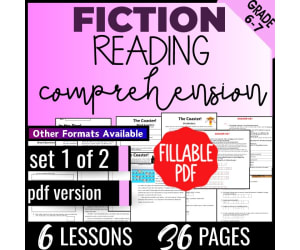
Reading Comprehension Passages Fiction Set 1 Snapshot Title: Fiction Grade 6-7 Set 1 Genre: Fiction Subject: Reading / SEL Primary Topic: Short fiction about sports, fear, family, and change Estimated Guided Reading Level (A–Z): X What This Teaches Best Builds character analysis through stories about competition, confidence, and personal growth, including Champion , Basketball , and In the Pool . Supports social-emotional learning through sibling conflict, sportsmanship, and adjusting to change in Sister Sister and New Surroundings . Strengthens inference and theme work through emotional decision-making, such as facing fear in The Coaster! and handling disappointment in Champion . Gives students practice with realistic fiction centered on everyday school, family, and activity-based situations. Reinforces vocabulary-in-context through built-in mixed questions, vocabulary, spelling, and writing extensions tied to each story. Learning Goals Students will explain how characters respond to challenges in realistic fiction. Students will describe how dialogue and actions reveal feelings and relationships. Students will identify themes such as sportsmanship, courage, and family support using story details. Students will determine the meaning of unfamiliar words from context. Students will retell important events and explain how they lead to the ending. Students will compare how different characters handle pressure, fear, or change. Passages Include 1.Champion: Martyn and a field day competition. 2.Basketball: Evie shows her newfound basketball skills. 3.The Coaster: Angelica is afraid of the new roller coaster. 4.Sister Sister: Dora and Kathie can't stop arguing with each other. 5.New Surroundings: Lisa is upset about the move to a new city. 6.In the Pool: The story behind a 13 year love of swimming. FILLABLE PDF VERSION Worksheet-style pages, but with type-in answer boxes so students can complete and save their work digitally. Other versions are available in the links list below or in the full catalog. FULL CATALOG OF DOWNLOAD LINKS HERE For similar downloads and other frees, do check out Cored Group on TeachSimple.
Author Cored Education
Rating
Tags Elementary, Reading, Comprehension, Vocabulary, Answers, Spelling, Writing, Passages, Reading Centers, Reading Comprehension Assessment

Reindeer Reading Comprehension Passage - Cored Ed Encyclopedia
ELA, Language Development, Reading Comprehension, Reading, Pre-Reading, Science, Writing, Strategies, Animals, Life Sciences, Grade 2, 3, 4, 5, Worksheets & Printables, Worksheets, Teacher Tools, Centers, Activities, Writing Prompts, Assessments, Quizzes and Tests, Quizzes, Lesson Plans
This reindeer reading comprehension includes: Visualization (on the front cover) Start your lesson by taking a minute to think and share something about the topic. Read the script aloud (slowly), perhaps prepare some music or sound effects. Student close their eyes and let their imaginations wander. Students open their eyes, read the question aloud and give them a few minutes to complete. Ask a few students to share or keep answers until the end to compare with what they learn in the passage. Quick pause—thousands of Cored Education products are included with your TeachSimple membership. Download links and encyclopedia index available here. COMPANION VIDEO NOW AVAILABLE (EMBEDDED AFTER PREVIEW PICTURES IN PRODUCT DESCRIPTION) Pre-Reading Trivia Students will write down one thing they already know about the subject and then read five more facts and discuss. These facts are fun, and the students will enjoy learning about the subject before reading more. Give 1 minute for students to write what they already know (no pressure—best guess is fine). Read the five facts together. After each fact, do ask a student for their opinion, was it surprising? Set a purpose by asking students to highlight/underline one fact they want to learn more about during the reading. Reading Passage The text is a high-interest reading passage with set paragraphs, roughly three to four paragraphs long. It contains a variety of themes about the topic, anywhere from history to technology. The passage is between 250 and 350 words in length. First, ask students to look at the headings and see what they’ll learn about today. What do they know about the topic/heading? First read options: Teacher read-aloud (best for support). Partner reading (paragraph by paragraph). While reading, students underline important details, and vocabulary words they think may come up in the questions section. Mixed Questions The first question page contains four multiple-choice questions, each with a choice of four answers, and three written response questions that require a sentence or two from the student. Students complete the mcqs first independently, then review quickly as a class. For the 3 written responses, try to get students giving the answer with some form of evidence: “I think ___ because the text says ___.” If students get stuck, send them back to check the passage. Vocabulary Questions Practice seven key words from the text in this section across two activities. First section is scrambled words where students will unscramble three words given a clue for each. The second section is a word to meaning matching activity. Before starting, have some students read out words they underlined in the passage. Ask students to say the word and read aloud the sentence(s) around each word. Ask students to do scrambled words and the matching exercise in pairs then go through answers as a class. For the scrambled spelling task, get four pairs to come up to the board and write the words for extra practice with the other student reading out the clue. For the matching task, prompt students to give full sentences: “I matched ___ with ___ because ___.” Creative Writing In this question, the student will be required to write a five to eight sentence paragraph on a question related to the topic. Before starting, ask students write down 3 key ideas they are going to include in their piece. Ask students for ideas to share around the class to help those struggling. Pro writing expectations: 5–8 sentences At least 2 facts or details from the passage At least 2 vocabulary words from the previous page Students read their paragraphs while classmates listen for facts and vocabulary words. Extension Activities This page is optional for fast finishers or to take home. There are several activities, each one requiring a different skill. Do some, do none, do all, completely optional - but you will feel reassured knowing every possibility is planned for. Includes summary writting question. Answer Key There are answers for the multiple-choice questions, written response questions have sample answers, vocabulary answers and if there is a summary question then a sample summary will be provided as well. Lesson Plan Included Customized lesson plan for this lesson is included. Lesson Snapshot Title: Reindeer Genre: Nonfiction (informational text) Subject: Life Science (Animals & Habitats) Primary Topic: Reindeer adaptations, migration, and human connections Estimated Guided Reading Level (A–Z): R What This Lesson Teaches Best How reindeer are adapted for cold places (thick coat; wide hooves for soft snow and soggy tundra). How reindeer find food when conditions are harsh (digging through snow to reach lichen). Migration and seasonal movement (some herds travel long journeys; more than 600 miles north in summer, then south again). How people and reindeer have influenced each other (communities watching hoofprints, herding partnerships, reindeer helping with travel and providing resources). A conservation-style question about changing winters (warming turning soft snow into hard ice that seals food away). Learning Goals Students will describe where reindeer live using details from the text (Arctic and subarctic lands). Students will explain two body features that help reindeer in winter conditions. Students will describe how reindeer get food when it is scarce, using the text’s example. Students will explain how long journeys relate to seasons and survival in the passage. Students will describe one way people have interacted with or depended on reindeer in the text. Key Vocabulary From the Text subarctic — very cold region just below the Arctic. tundra — open, cold land with few trees. hoofprints — marks left by hooves in the ground or snow. lichen — crusty plantlike growth on rocks and ground. Vulnerable — at risk of harm or shrinking in number. FULL CATALOG OF DOWNLOAD LINKS AND ENCYCLOPEDIA INDEX HERE
Author Cored Education
Rating
Tags Vocabulary, Reading Comprehension, Reading Passages, Reading, Creative Writing, Reading Strategies, Writing Prompts, Lesson Plans, Reindeer, Life Science
High School British Alternative Music Reading Passage and Q & A
Creative Arts, Music, ELA, Reading, Writing, Research, Resources for Teachers, Social Studies, History, High School, Homeschool Resources, Teacher Tools, Assessments, Lesson Plans, Quizzes and Tests, Worksheets & Printables, Writing Prompts
As a homeschool mom watching my 9th grader navigate the complexities of culture, identity, and artistic expression, I have seen firsthand how music can be a powerful lens for understanding history and society. This British Alternatiave Music Reading Passage, Q & A, and Note-Taking Sheets comprehensive resource explores the profound impact of British alternative music that will challenge your high school student/homeschooler to think critically about art, culture, and social change. INCLUDED IN THIS RESOURCE: Comprehensive reading passage covering iconic British alternative bands 20 detailed analytical questions Complete answer key with thorough explanations for teachers/homeschool parents NO-PREP and ready-to-use TOPICS COVERED: Cultural counter-narratives Artistic evolution and creative risk-taking Regional identity and musical expression Technology's impact on music distribution This British Alternatiave Music Reading Passage, Q & A, and Note-Taking Sheets resource transforms what could be a dry academic exercise into an engaging exploration of how art intersects with politics, technology, identity, and social change. It meets students/homeschoolers where they are—interested in music and culture—while building the analytical skills they need for academic success. Whether you are looking to spice up your English curriculum, add depth to a history unit, or simply provide your homeschooler with intellectually stimulating material, this resource delivers the perfect blend of engagement and rigor that makes learning both enjoyable and meaningful. If you and your students/homeschoolers enjoyed this resource, please leave a review. Thank you for your support! Tina - Big Easy Homeschooling Mom
Author Homeschool with Big Easy Homeschooling Mom
Rating
Tags British Alternative Music Reading Comprehension High School, British Music History Homeschool Curriculum, Smiths Radiohead Oasis Educational Materials, Alternative Rock Cultural Analysis Questions, Britpop Era Educational Resources High School, British Music History Homeschool Curriculum, Music And Society Critical Thinking Activities, Alternative Music Social Commentary Analysis, , British Music Cultural Studies Resources, British Bands Cultural Significance Educational Materials, Alternative Music Authenticity Discussion Questions

Jellyfish Reading Comprehension Passage - Cored Ed Encyclopedia
ELA, Language Development, Resources for Teachers, Reading Comprehension, Reading, Pre-Reading, Writing, Science, Animals, Life Sciences, Grade 2, 3, 4, 5, Worksheets & Printables, Worksheets, Teacher Tools, Centers, Activities, Writing Prompts, Assessments, Tests, Quizzes and Tests, Quizzes
This jellyfish reading comprehension contains the following: Visualize on the Cover Start your lesson by taking a few moments to visualize the topic and share thoughts or feelings about it. Pre-Reading Trivia Students will write down one thing they already know about the subject and then read five more facts and discuss. These facts are fun, and the students will enjoy learning about the subject before reading more. Reading Passage The text is a high-interest reading passage with set paragraphs, roughly three to four paragraphs long. It contains a variety of themes about the topic, anywhere from history to technology. The passage is between 250 and 350 words in length. Mixed Questions The first question page contains four multiple-choice questions, each with a choice of four answers, and three written response questions that require a sentence or two from the student. Vocabulary Questions Practice seven key words from the text in this section across two activities. First section is scrambled words where students will unscramble three words given a clue for each. The second section is a word to meaning matching activity. Creative Writing In this question, the student will be required to write a five to eight sentence paragraph on a question related to the topic. Extension Activities This page is optional for fast finishers or to take home. There are several activities, each one requiring a different skill. Do some, do none, do all, completely optional - but you will feel reassured knowing every possibility is planned for. Answer Key There are answers for the multiple-choice questions, written response questions have sample answers, vocabulary answers and if there is a summary question then a sample summary will be provided as well. FULL CATALOG OF DOWNLOAD LINKS AND ENCYCLOPEDIA INDEX HERE Lesson Snapshot Title: Jellyfish Genre: Nonfiction (Informational Text) Subject: Life Science / Reading (Informational Text) Primary Topic: Jellyfish bodies, movement, stings, and life changes Estimated Guided Reading Level (A–Z): N What This Lesson Teaches Best Identifies what jellyfish are (not fish) and describes their watery, bell-shaped bodies. Explains how jellyfish move by squeezing and relaxing their bell, and sometimes squirting water. Describes how tentacles help jellyfish catch prey using tiny stinging cells. Introduces how jellyfish change forms across their lives (drifting young, attached form, then floating swimmers). Uses headings to organize science information and includes follow-up questions/activities tied to the passage. Learning Goals Describe what a jellyfish can look like and what its main body part is called. Explain why a jellyfish is not a fish, using details from the text. Explain how a jellyfish moves through water. Describe what tentacles do and why people should be careful near jellyfish. Describe one way jellyfish change during their lives. Key Vocabulary From the Text invertebrates — animals without bones. tentacles — long parts that can sting and catch prey. plankton — very small sea life that animals can eat. bell — the main body part shaped like an umbrella. blooms — groups of jellyfish gathered together. Cored Ed Encyclopedia Overview The Cored Ed Encyclopedia is a weekly series of lessons that you can pick up and use right away. These short readings fit into whatever time you have available. Each one includes a warm-up, a reading, and a set of questions, but it’s flexible — you can do just the reading, the full lesson, or skip the writing section if you need to. Each lesson focuses on a single topic so students don’t get lost. The writing is clear but never childish, making it perfect for grades two through five. Topics range from animals and science to history, inventions, and everyday things. No matter the level of the student, everyone should take away at least one new idea or fact from each lesson. The materials are easy to print, easy to explain, and require no setup. They work well for whole-class teaching, partner work, or independent study.
Author Cored Education
Rating
Tags Vocabulary, Spelling, Reading Comprehension, Reading Passages, Reading, Creative Writing, Reading Strategies, Writing Prompts, Jellyfish, Life Science

Droughts Reading Comprehension Passage - Cored Ed Encyclopedia
ELA, Reading Comprehension, Reading, Science, Technology, Social Studies, History, Earth and Environmental Sciences, Life Sciences, Geography, Grade 2, 3, 4, 5, Worksheets & Printables, Worksheets, Teacher Tools, Centers, Activities, Writing Prompts, Assessments, Quizzes and Tests, Quizzes, Lesson Plans
This droughts reading comprehension with lesson plan includes: Visualization (on the front cover) Start your lesson by taking a minute to think and share something about the topic. Read the script aloud (slowly), perhaps prepare some music or sound effects. Student close their eyes and let their imaginations wander. Students open their eyes, read the question aloud and give them a few minutes to complete. Ask a few students to share or keep answers until the end to compare with what they learn in the passage. Quick pause—thousands of Cored Education products are included with your TeachSimple membership. Download links and encyclopedia index available here. Pre-Reading Trivia Students will write down one thing they already know about the subject and then read five more facts and discuss. These facts are fun, and the students will enjoy learning about the subject before reading more. Give 1 minute for students to write what they already know (no pressure—best guess is fine). Read the five facts together. After each fact, do ask a student for their opinion, was it surprising? Set a purpose by asking students to highlight/underline one fact they want to learn more about during the reading. Reading Passage The text is a high-interest reading passage with set paragraphs, roughly three to four paragraphs long. It contains a variety of themes about the topic, anywhere from history to technology. The passage is between 250 and 350 words in length. First, ask students to look at the headings and see what they’ll learn about today. What do they know about the topic/heading? First read options: Teacher read-aloud (best for support). Partner reading (paragraph by paragraph). While reading, students underline important details, and vocabulary words they think may come up in the questions section. Mixed Questions The first question page contains four multiple-choice questions, each with a choice of four answers, and three written response questions that require a sentence or two from the student. Students complete the mcqs first independently, then review quickly as a class. For the 3 written responses, try to get students giving the answer with some form of evidence: “I think ___ because the text says ___.” If students get stuck, send them back to check the passage. Vocabulary Questions Practice seven key words from the text in this section across two activities. First section is scrambled words where students will unscramble three words given a clue for each. The second section is a word to meaning matching activity. Before starting, have some students read out words they underlined in the passage. Ask students to say the word and read aloud the sentence(s) around each word. Ask students to do scrambled words and the matching exercise in pairs then go through answers as a class. For the scrambled spelling task, get four pairs to come up to the board and write the words for extra practice with the other student reading out the clue. For the matching task, prompt students to give full sentences: “I matched ___ with ___ because ___.” Creative Writing In this question, the student will be required to write a five to eight sentence paragraph on a question related to the topic. Before starting, ask students write down 3 key ideas they are going to include in their piece. Ask students for ideas to share around the class to help those struggling. Pro writing expectations: 5–8 sentences At least 2 facts or details from the passage At least 2 vocabulary words from the previous page Students read their paragraphs while classmates listen for facts and vocabulary words. Extension Activities This page is optional for fast finishers or to take home. There are several activities, each one requiring a different skill. Do some, do none, do all, completely optional - but you will feel reassured knowing every possibility is planned for. Includes summary writting question and additional facts. Answer Key There are answers for the multiple-choice questions, written response questions have sample answers, vocabulary answers and if there is a summary question then a sample summary will be provided as well. Lesson Plan Included Customized lesson plan for this lesson is included. Lesson Snapshot Title: Droughts Genre: Nonfiction (informational text with headings) Subject: Earth Science / Life Science / Reading (Informational Text) Primary Topic: What drought is, types, effects, and tracking Estimated Guided Reading Level (A–Z): Q What This Lesson Teaches Best Defines drought as a stretch of time when a region is drier than normal and can last from days to years. Explains types of drought (meteorological vs. hydrological) and describes what changes in streams, reservoirs, and groundwater. Uses concrete signs/evidence of drought (no puddles, dull grass, cracked ground, animals traveling farther, rivers showing more rocks). Connects history to learning: the Dust Bowl in the 1930s and how it led to soil-saving methods and drought indices. Introduces modern monitoring and responses (rain gauges, river sensors, satellites; fixing leaks, reusing water, collecting rain). Learning Goals Students will define drought using the book’s description and time frames. Students will identify signs of drought described in the passage (e.g., puddles, grass, cracked ground, rivers). Students will explain the difference between meteorological drought and hydrological drought using text evidence. Students will describe what happened during the Dust Bowl and why it mattered for tracking dryness. Students will describe ways droughts are monitored today and one way communities can respond. Key Vocabulary From the Text meteorological — related to weather and rainfall or snow. hydrological — related to water in rivers, reservoirs, and underground. groundwater — water stored under the ground. indices — numbers used to compare and track dryness. evapotranspiration — water moving from land and plants into air. FULL CATALOG OF DOWNLOAD LINKS AND ENCYCLOPEDIA INDEX HERE
Author Cored Education
Rating
Tags Vocabulary, Reading Comprehension, Reading Passages, Lesson Plans, Ela Lesson Plans, Reading Comprehension Lesson Plans, Pre-reading, Science Lesson Plans, Geography, Earth Science
Camping Reading Comprehension Passage - Cored Ed Encyclopedia
ELA, Language Development, Reading Comprehension, Reading, Writing, Pre-Reading, Vocabulary, Geography, Social Studies, History, Grade 2, 3, 4, 5, Worksheets & Printables, Worksheets, Teacher Tools, Centers, Activities, Writing Prompts, Assessments, Quizzes and Tests, Quizzes, Lesson Plans
This camping reading comprehension with lesson plan includes: Visualization (on the front cover) Start your lesson by taking a minute to think and share something about the topic. Read the script aloud (slowly), perhaps prepare some music or sound effects. Student close their eyes and let their imaginations wander. Students open their eyes, read the question aloud and give them a few minutes to complete. Ask a few students to share or keep answers until the end to compare with what they learn in the passage. COMPANION VIDEO NOW AVAILABLE (EMBEDDED AFTER PREVIEW PICTURES IN PRODUCT DESCRIPTION) Quick pause—thousands of Cored Education products are included with your TeachSimple membership. Download links and encyclopedia index available here. Pre-Reading Trivia Students will write down one thing they already know about the subject and then read five more facts and discuss. These facts are fun, and the students will enjoy learning about the subject before reading more. Give 1 minute for students to write what they already know (no pressure—best guess is fine). Read the five facts together. After each fact, do ask a student for their opinion, was it surprising? Set a purpose by asking students to highlight/underline one fact they want to learn more about during the reading. Reading Passage The text is a high-interest reading passage with set paragraphs, roughly three to four paragraphs long. It contains a variety of themes about the topic, anywhere from history to technology. The passage is between 250 and 350 words in length. First, ask students to look at the headings and see what they’ll learn about today. What do they know about the topic/heading? First read options: Teacher read-aloud (best for support). Partner reading (paragraph by paragraph). While reading, students underline important details, and vocabulary words they think may come up in the questions section. Mixed Questions The first question page contains four multiple-choice questions, each with a choice of four answers, and three written response questions that require a sentence or two from the student. Students complete the mcqs first independently, then review quickly as a class. For the 3 written responses, try to get students giving the answer with some form of evidence: “I think ___ because the text says ___.” If students get stuck, send them back to check the passage. Vocabulary Questions Practice seven key words from the text in this section across two activities. First section is scrambled words where students will unscramble three words given a clue for each. The second section is a word to meaning matching activity. Before starting, have some students read out words they underlined in the passage. Ask students to say the word and read aloud the sentence(s) around each word. Ask students to do scrambled words and the matching exercise in pairs then go through answers as a class. For the scrambled spelling task, get four pairs to come up to the board and write the words for extra practice with the other student reading out the clue. For the matching task, prompt students to give full sentences: “I matched ___ with ___ because ___.” Creative Writing In this question, the student will be required to write a five to eight sentence paragraph on a question related to the topic. Before starting, ask students write down 3 key ideas they are going to include in their piece. Ask students for ideas to share around the class to help those struggling. Pro writing expectations: 5–8 sentences At least 2 facts or details from the passage At least 2 vocabulary words from the previous page Students read their paragraphs while classmates listen for facts and vocabulary words. Extension Activities This page is optional for fast finishers or to take home. There are several activities, each one requiring a different skill. Do some, do none, do all, completely optional - but you will feel reassured knowing every possibility is planned for. Includes summary writting question and additional facts. Answer Key There are answers for the multiple-choice questions, written response questions have sample answers, vocabulary answers and if there is a summary question then a sample summary will be provided as well. Lesson Plan Included Customized lesson plan for this lesson is included. Lesson Snapshot Title: Camping Genre: Nonfiction (informational text with headings) Subject: Reading (Informational Text) / Social Studies Primary Topic: How camping began, changed, and stays respectful Estimated Guided Reading Level (A–Z): N What This Lesson Teaches Best Explains what camping is and what campers might notice at night (lantern glow, smell of pine, owls, cooler air). Builds background knowledge about how camping shifted from travel/work to a fun hobby in the late 1800s. Uses a chronological structure with time markers (late 1800s, 1894, 1901, 1908, after World War I, 1960s) to show change over time. Introduces environmental responsibility through a “leave-no-trace approach,” including keeping camps small and taking trash home. Gives practice with text features (section headings) to locate information efficiently. Learning Goals Students will describe what camping is using details from the passage. Students will explain why people slept outside long ago and how camping later became a hobby. Students will identify key events and dates from the passage (1894, 1901, 1908, after World War I, 1960s). Students will use headings to find information about camping’s history, campgrounds, and “leave-no-trace.” Students will compare different ways people camp (backpacks vs. car/RV) based on the passage. Students will explain what the passage says a leave-no-trace approach means. Key Vocabulary From the Text shelter — a place that protects you. lantern — a light you can carry. demanded — needed or required. commercial — run as a business. approach — a way of doing something. FULL CATALOG OF DOWNLOAD LINKS AND ENCYCLOPEDIA INDEX HERE
Author Cored Education
Rating
Tags Vocabulary, Reading Comprehension, Reading Passages, Lesson Plans, Ela Lesson Plans, Reading Comprehension Lesson Plans, Pre-reading, Social Studies Lesson Plans, Geography, History

Physical Science Reading Comprehension Passage: Periodic Table (Docs)
Science, ELA, Reading, Reading Comprehension, Strategies, Resources for Teachers, Chemistry, Grade 6, 7, 8, 9, 10, Writing Prompts, Worksheets & Printables, Centers, Activities, Teacher Tools, Assessments, Quizzes and Tests, Quizzes, Tests
Physical Science Reading Comprehension Passage and Questions: Periodic Table (Docs) This very engaging science reading passage is about periodic trends and how the periodic table helps explain and predict the behavior of elements . It explains how elements are arranged by atomic number, why elements in the same group often behave similarly, and how important patterns such as atomic radius, ionization energy, electronegativity, electron affinity, and metallic character change across periods and down groups. The passage uses examples like sodium, potassium, lithium, fluorine, cesium, chlorine, and sodium chloride to help students understand why elements react, bond, lose or gain electrons, and form compounds in predictable ways. This passage is designed to bridge the gap between science and literacy by strengthening reading comprehension while sparking scientific curiosity in middle school students. It blends English Language Arts skills with accurate science content, helping students build background knowledge, understand key concepts, use evidence from the text, and explain scientific ideas clearly. This resource supports science classroom practice while also reinforcing important literacy skills such as main idea, vocabulary, comprehension, and summarizing. Ideal for interdisciplinary learning in ELA and Science. Suitable for Grade 9 review, too! Student Tasks for The Passage: 10 multiple-choice questions targeting main idea, key details, science concepts, comparison, and real-world applications 10 True/False statements to check understanding and address common misconceptions 5 text-based short-answer questions that require students to explain important ideas from the passage 5 vocabulary matching items with clear, student-friendly definitions 1 summary prompt that asks students to condense the central ideas accurately Full answer key for every section Available Formats for this Resource PDF Fillable PDF Word Docs FULL CATALOG OF DOWNLOADING LINKS HERE Product Details Length: 8 pages total Grades: 6–8, also suitable for Grade 9 review Use cases: close reading, stations, homework, intervention, test prep, and sub plans Standards support: Reinforces informational-text skills and supports NGSS-style sense-making by helping students read scientific explanations, connect evidence to key concepts, interpret real-world examples, and explain cause-and-effect relationships in science. Why Teachers Choose This Set Authentic science content paired with rigorous literacy practice Consistent task structure across all passages for easier planning and smoother student routines Clear, age-appropriate writing that builds confidence without oversimplifying Other Science Reading Collections and Topics You May Find in the Store: 1. Astronomy & Space Science 2. Volcanoes, Rocks, & Mountains 3. Rock Cycle, Soil, & Sinkholes 4. Mars, Glaciers, & Antarctica 5. Water Cycle, Acid Rain, & Wastewater 6. Insects, Animals, & Ecosystems 7. Bioluminescence & Insects 8. Animal Skin, Cats, & T. Rex 9. Human Body and Senses 10. Health & Applied Bioscience 11. Waves, Light, & Imaging 12. Electricity & Energy 13. Motion & Materials 14. Chemistry and Materials Science 15. Electromagnetism 16. Acids and Bases 17. Gas Laws 18. Biotechnology 19. Periodic Trends 20. Protists and Fungi 21. Microevolution 22. Blood 23. Chemical Bonding 24. Magnets 25. Muscles 26. Nuclear Chemistry 27. Electromagnetic Devices 28. Epigenetics 29. The Law of Conservation of Mass 30. Atomic Models 31. Isotopes and Ions 32. Light 33. Human-Environment Interaction 34. Theory of Evolution 35. Photosynthesis 36. Origins of Life and Early Earth 37. Gene Expression and Regulation 38. Thermochemistry 39. Allergies 40. Coevolution 41. Birth to Adulthood 42. Cells 43. Entropy and Free Energy 44. The Human Brain 45. Mixtures and Solutions 46. Invertebrates 47. Zoo Animals 48. Biochemistry 49. Animal Behavior 50. Population Ecology ...and many more engaging science reading passages that cover intriguing and important topics designed to spark curiosity and support student learning. Use this passage to reinforce ELA skills in science, to add literacy to your lessons, and to support independent work. The passages strengthen main idea, evidence use, vocabulary in context, inference, cause and effect, and summary writing. With ready-to-use assessments and complete answer keys, you can provide focused practice that is simple to run and fast to review.
Author Middle & High School - CORED Education
Rating
Tags Middle School, Reading Comprehension, Reading Strategies, ELA, Centers, Reading Passage, Assessments, Vocabulary, Chemistry, Physical Science