



3,898 products added recently
Page 101 - 2nd Grade Activities
Boost your second graders' enthusiasm with activities that combine fun and education. These resources cover various subjects and promote critical thinking and collaboration. Use them to enrich your lessons and keep students actively involved in their learning journey.

 Show filters

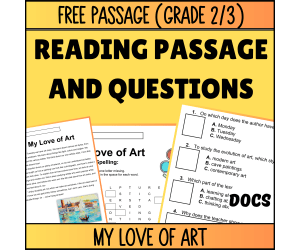
Reading Comprehension Fiction Set 4 Sample: My Love of Art (Docs)
ELA, Reading, Common Core, Reading Comprehension, Children’s Literature, Literature, ESL, Language Development, Spelling, Writing, Grade 2, 3, Worksheets & Printables, Worksheets, Writing Prompts, Assessments, Teacher Tools, Tests, Quizzes and Tests, Centers, Activities
Reading Comprehension Passages Fiction Set 4 Sample Overview Fascinating reading comprehension passages, each with an array of activities included. Stories are written for the modern classroom and topics are designed to promote enthusiasm from each student. Each lesson contains a mixed questions section to check understanding, a vocabulary or spelling activity to help remember key language introduced, and a writing exercise. Full answer keys are provided. For a more detailed overview, check the section under the links at the bottom of this description. Passage Included 6.My Love of Art: Read about the author's love of art class in this lesson. Docs Version This is the Docs editable and fillable version. This download is available in GOOGLE Docs, GOOGLE Forms, GOOGLE Slides. PDF, PPT, WORD. FULL CATALOG OF DOWNLOAD LINKS HERE Grade 2/3 Links Fiction Set 1 - Nature Google Docs Google Forms Google Slides PDF PPT Word Guided Reading Materials Fiction Set 2 - Animals Google Docs Google Forms Google Slides PDF PPT Word Guided Reading Materials Fiction Set 3 - Food Google Docs Google Forms Google Slides PDF PPT Word Guided Reading Materials Fiction Set 4 - School Google Docs Google Forms Google Slides PDF PPT Word Guided Reading Materials Fiction Set 5 - Friends Google Docs Google Forms Google Slides PDF PPT Word Guided Reading Materials Fiction Set 6 - Family Google Docs Google Forms Google Slides PDF PPT Word Guided Reading Materials Fiction Set 7 - Sports Google Docs Google Forms Google Slides PDF PPT Word Guided Reading Materials Nonfiction Set 1 - Technology Google Docs Google Forms Google Slides PDF PPT Word Guided Reading Materials Nonfiction Set 2 - Nutrition Google Docs Google Forms Google Slides PDF PPT Word Guided Reading Materials Nonfiction Set 3 - Animals Google Docs Google Forms Google Slides PDF PPT Word Guided Reading Materials Reading Passages Overview Each passage is especially written for Grade 2-3 students, including key vocabulary required for this age group. Topics are varied and are accompanied by colorful graphics. Topics are meant to educate, yet entertain the modern student. These passages are perfect for the modern classroom. Whereas textbooks can become outdated in no time, any changes to technology or the world will result in updates to this product. Mixed Questions The mixed questions section of each lesson includes a variation of fivecomprehension, vocabulary and math questions. In addition, key reading strategies are frequently covered including cause & effect, summarizing, compare & contrast and making conclusions. Three of the questions will be MCQs and two will require a written response of some kind. Full answers and example responses appear at the end of the lesson. Spelling & Vocab Each reading passage contains a variety of words and phrases designed for Grade 2-3 students. Spelling and vocab activities provide the opportunity to build fluency with these words. As it can become quite mundane doing the same activities over and over, each lesson in a set will contain a different spelling and vocab activity . Writing Prompts Writing prompts are designed to continue the theme or lessons learned in the story. Students are persuaded to write in a variety of ways and each prompt includes several cues to help. As with the spelling/vocab section, writing prompts will vary. This includes research pieces, reading responses, poetry and creative writing prompts. Full Answer Keys Full answer keys and sample responses are provided so no matter how busy you are, you know you're covered! Mixed question answers provide evidence from the text, math questions contain the relevant workings. Answers are designed for use by the teacher, but also suitable as a handout to the student. Additional File One lesson will have an additional file. This is something fun to extend the lesson with. For similar downloads and other frees, do check out Cored Group on TeachSimple.
Author Cored Education
Tags Elementary, Reading, Comprehension, Vocabulary, Answers, Ccss, Common Core, Spelling, Writing, Digital Centers

FINGER PAINTS - 10 Pictures of Wild Animals - ART FOR KIDS
Creative Arts, Art, Preschool, Kindergarten, Grade 1, 2, 3, 4, 5, Activities
1. Introduction As is known by many educators and educational agents, finger painting or also called 'painting using fingers' or 'finger painting', is a very beneficial artistic technique for children, because it not only provides fun, but also contributes to to its integral development. For these reasons and with the aim of developing multiple objectives that I will detail later, I have developed this fabulous artistic worksheet, where your students will be able to paint and apply this fabulous technique, I hope you like it. 2.Objective Some benefits of finger painting are: - Sensory stimulation: As is known, painting with fingers or using fingers involves multiple senses of infants, such as sight and touch. In this way, children will experience various temperatures, colors and temperatures, which will contribute to their cognitive development and sensory stimulation. -Development of fine motor skills: When your students or children dip their fingers in the paint and manipulate it on the paper, they will be improving their fine motor skills. In this way, this type of activity will develop dexterity and hand-eye coordination in them, skills that will be essential when later your children need to start activities such as writing, fastening the laces of their shoes, buttons on their shirts, and other activities. everyday. 3.Order, scheme and stages - Introduce your art class with relaxing music, so that your students open their minds and curiosity to the new activity they are about to do. -Then give them the worksheet and ask them to take out their colored temperas. If possible, ask them to bring an old piece of clothing because they are going to stain it while doing the activity . 4.Grades or ages This game is designed for children from 5 to 12 years old. That is, all primary school students can use it. 5. Form of application It is suggested to print this product individually. 6. Answer keys This game does not require answers. 7.Use text labels art, finger art, fingerprint painting, art for children, children's art. 8.Rules Specified above. 9.File types The archive is in PDF format. 10.Number of pages This document contains 10 pages.
Author EDITORIAL LAURA EDUCA
Tags Art, Art For Kids, Painter For Kids
NO PRINT Pet Multiple Meaning Words Activities in Context
Special Resources, Speech Therapy, Preschool, Grade 1, 2, 3, Activities
NO PRINT Pet Multiple Meaning Words Activities in Context The NO PRINT Pet Multiple Meaning Words Activities in Context resource offers a highly interactive approach to teaching multiple-meaning words and figurative language. This product has been designed with both virtual classrooms and face-to-face teaching environments in mind. It cuts down on paper use, conserves ink, and reduces prep time for the teachers involved. Primarily utilized through an iPad or other digital devices, this resource uses visual representations to bring clarity about various semantic differences of words. Every distinct word definition is depicted visually, allowing students to link the meanings with vivid images. This method substantially enhances understanding since subtle nuances could be quickly recognized by linking them with corresponding visuals. Different Levels: Level 1: Targets Pre-K to 1st-grade students. Level 2: Useful for educating 1st-3rd graders depending on the familiarity level and understanding of vocabulary among students. This teaching tool features two different levels: Level 1 targets Pre-K to 1st-grade students, while Level 2 is useful for educating 1st-3rd graders depending on the familiarity level and understanding of vocabulary among students. The choice of grade-level specific word lists creates a clear distinction between these two levels. Included Resources: Listed definitions for up-to thirty essential words matched with pictures presenting contextual relevance. An opportunity for students to identify second definitions from given options – a challenging task enhancing their critical thinking abilities as they decide which option might serve as a close alternate meaning. A wrap-up activity where learners complete sentences using appropriate underlined multiple-meaning words linked alongside original picture-associated definitions. User-friendly layout by making maneuvering easy through different pages. Grade-Appropriate Material: Grade-appropriate material included in NO PRINT Pet Multiple Meaning Words Activities in Context are fifteen pictured definition prompts each at Levels one and two; Thirty first-choice alternative definition prompts at both levels equally; Complete thirty sentences by identifying the right definition at first and second levels. This makes the resource an ideal education tool for educators who are teaching kindergarten to grade 3 students, including special resources and speech therapy types of activities using PDF file types.
Author Intrepid Speech Therapy Materials
Tags Interactive Learning, Multiple Meaning Words, Figurative Language, Visual Representations, Critical Thinking, How To Teach Multiple Meaning Words Strategies, Multiple Meaning Words Activities
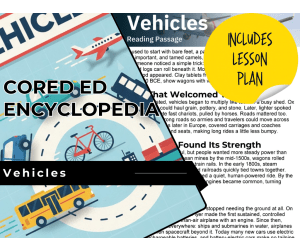
Vehicles Reading Comprehension Passage - Cored Ed Encyclopedia
ELA, Language Development, Reading Comprehension, Reading, Pre-Reading, Science, Technology, Engineering, History, Social Studies, Grade 2, 3, 4, 5, Worksheets & Printables, Worksheets, Teacher Tools, Centers, Activities, Writing Prompts, Assessments, Quizzes and Tests, Quizzes, Lesson Plans
This vehicles reading comprehension with lesson plan includes: Visualization (on the front cover) Start your lesson by taking a minute to think and share something about the topic. Read the script aloud (slowly), perhaps prepare some music or sound effects. Student close their eyes and let their imaginations wander. Students open their eyes, read the question aloud and give them a few minutes to complete. Ask a few students to share or keep answers until the end to compare with what they learn in the passage. Quick pause—thousands of Cored Education products are included with your TeachSimple membership. Download links and encyclopedia index available here. Pre-Reading Trivia Students will write down one thing they already know about the subject and then read five more facts and discuss. These facts are fun, and the students will enjoy learning about the subject before reading more. Give 1 minute for students to write what they already know (no pressure—best guess is fine). Read the five facts together. After each fact, do ask a student for their opinion, was it surprising? Set a purpose by asking students to highlight/underline one fact they want to learn more about during the reading. Reading Passage The text is a high-interest reading passage with set paragraphs, roughly three to four paragraphs long. It contains a variety of themes about the topic, anywhere from history to technology. The passage is between 250 and 350 words in length. First, ask students to look at the headings and see what they’ll learn about today. What do they know about the topic/heading? First read options: Teacher read-aloud (best for support). Partner reading (paragraph by paragraph). While reading, students underline important details, and vocabulary words they think may come up in the questions section. Mixed Questions The first question page contains four multiple-choice questions, each with a choice of four answers, and three written response questions that require a sentence or two from the student. Students complete the mcqs first independently, then review quickly as a class. For the 3 written responses, try to get students giving the answer with some form of evidence: “I think ___ because the text says ___.” If students get stuck, send them back to check the passage. Vocabulary Questions Practice seven key words from the text in this section across two activities. First section is scrambled words where students will unscramble three words given a clue for each. The second section is a word to meaning matching activity. Before starting, have some students read out words they underlined in the passage. Ask students to say the word and read aloud the sentence(s) around each word. Ask students to do scrambled words and the matching exercise in pairs then go through answers as a class. For the scrambled spelling task, get four pairs to come up to the board and write the words for extra practice with the other student reading out the clue. For the matching task, prompt students to give full sentences: “I matched ___ with ___ because ___.” Creative Writing In this question, the student will be required to write a five to eight sentence paragraph on a question related to the topic. Before starting, ask students write down 3 key ideas they are going to include in their piece. Ask students for ideas to share around the class to help those struggling. Pro writing expectations: 5–8 sentences At least 2 facts or details from the passage At least 2 vocabulary words from the previous page Students read their paragraphs while classmates listen for facts and vocabulary words. Extension Activities This page is optional for fast finishers or to take home. There are several activities, each one requiring a different skill. Do some, do none, do all, completely optional - but you will feel reassured knowing every possibility is planned for. Includes summary writting question. Answer Key There are answers for the multiple-choice questions, written response questions have sample answers, vocabulary answers and if there is a summary question then a sample summary will be provided as well. Lesson Plan Included Customized lesson plan for this lesson is included. Lesson Snapshot Title: Vehicles Genre: Nonfiction (Informational text) Subject: Social Studies / Science & Technology Primary Topic: How transportation changed from wheels to flight Estimated Guided Reading Level (A–Z): P Support pages: Pre-reading trivia, mixed questions, vocabulary practice, creative writing, extension activities, and an answer key. Support-page QA check: Some vocab items don’t match the exact word forms in the passage (e.g., chariot vs chariots , battery vs batteries , submarine vs submarines , locomotive vs locomotives ). What This Lesson Teaches Best Sequence of transportation changes over time: Moves from walking/animals, to logs/sledges, to wooden wheels and wagons, to roads and coaches, to steam locomotives, motor vehicles, and airplanes. How inventions improved travel and hauling: Explains how wheels, roads, tracks/railroads, and engines made travel smoother, faster, and able to carry heavier loads. Using headings to organize information: Section headings (“Roads…,” “When Steam…,” “A Lift Into the Air”) help readers track time periods and big shifts. Key historical details in an informational text: Includes dates and examples such as Uruk clay tablets (3700–3500 BCE) and the Wright Flyer flight (December 17, 1903). Modern tech and environmental impact: Notes electric motors, rechargeable batteries, and “no tailpipe exhaust,” ending with a question about helping the planet. Learning Goals Students will describe how people traveled and carried loads before wheels, using details from the passage. Students will identify how wheels changed what vehicles could do (hauling goods and moving more easily). Students will explain how roads and railroads affected travel and connected places, based on the text. Students will summarize the “biggest leap” in travel described in the passage and name the example given. Students will use headings and key details to retell the passage’s main changes in transportation in order. Key Vocabulary From the Text sledge — a sled that helps heavy things slide. Mesopotamia — an ancient region where Uruk was located. spoked — having thin supports connecting wheel center to rim. locomotives — train engines that pull cars on tracks. rechargeable — can be filled with power again. FULL CATALOG OF DOWNLOAD LINKS AND ENCYCLOPEDIA INDEX HERE
Author Cored Education
Rating
Tags Vocabulary, Reading Comprehension, Reading Passages, Lesson Plans, Ela Lesson Plans, Reading Comprehension Lesson Plans, Pre-reading, Science Lesson Plans, Technology, History Lesson Plans

Multiplication fact practice Board Game - 10 Times Table
Math, Multiplication and Division, Division, Grade 1, 2, 3, 4, Activities, Games
Multiplication Fact Practice Board Game - 10 Times Table Dive into learning with this engaging underwater-themed math board game that helps students practice fluency with the 10 times table. The colorful game board, question cards, fish playing pieces, and easy-to-follow instructions make multiplying by 10 fun. Students move around the board answering multiplication questions to capture shells. With differentiation options for skill levels, this game can be played whole group, partners, small groups, or independently. Use it to build confidence in basic facts, reinforce the 10 times table, or provide multiplication fact fluency practice. ThisMULTIPLICATION game motivates students to succeed. Check out the other times tables games available for a comprehensive math fact fluency program.
Author Colleen's Cosmic Collection
Tags Times Tables, Multiplication Facts, Multiplication Fact Practice, Multiplication Fact Fluency, Multiplication Game, Multiplication Games, Math Fact Fluency, 10 Times Table, Cccttbguw, Multiplication Fact Games
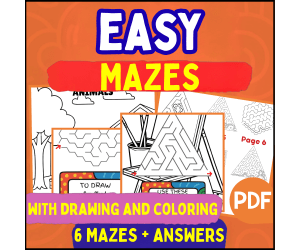
Easy Mazes (PDF)
ELA, Language Development, Resources for Teachers, Vocabulary, Spelling, Numbers, Early Math, Math, Shapes, ESL, Grade 2, 3, 4, 5, Worksheets & Printables, Worksheets, Teacher Tools, Centers, Activities, Mazes
Maze Series This maze series is designed for students in grades 2–5. Each set features a clear, kid-friendly theme with scene-based mazes that students first navigate, then complete by drawing a few target words from a simple word list. Pages come in varied styles and graduated difficulty, with an optional “color it in” step—and some themes invite quick calculations to match the task. These mazes are student-friendly, classroom-ready, and perfect for literacy warmups, seasonal units, fast-finisher bins, centers, sub plans, or home learning extensions. The playful, structured format builds problem-solving, attention to detail, and fine-motor control while reinforcing themed content in a motivating way. Note: Unlike many themed products, not all word-list words appear on the maze pages. To support full vocabulary coverage, we’ve released a companion word list you can find in the links section. Easy Word List 1. Colors Red, Blue, Yellow, Green, Pink, Black, White, Orange 2. Animals Dog, Cat, Cow, Fish, Bird, Frog, Ant, Duck 3. Weather Sun, Rain, Snow, Wind, Cloud, Storm, Cold, Hot 4. Numbers One, Two, Three, Four, Five, Six, Seven, Eight 5. Shapes Circle, Square, Triangle, Heart, Star, Oval, Diamond, Rectangle 6. School Book, Pen, Desk, Bag, Paper, Bell, Glue, Crayon PDF Version Other versions will appear here when available. Follow the store for the lastest on new products. How to Use These Mazes Perfect for: Morning work or early-finisher bins Literacy or STEM centers Holiday/seasonal review lessons Independent stations, sub plans, or take-home enrichment More Easy Themed Products CROSSWORDS WORD SEARCHES FULL CATALOG OF DOWNLOAD LINKS HERE Themed Mazes Links Addition PDF Animals PDF Around the Home PDF Birthday PDF Candy PDF Christmas PDF Cinco de Mayo PDF Clothes PDF Colors PDF Days and Months PDF Division PDF Earth Day PDF Easter PDF Easy Mazes PDF Fall PDF Father's Day PDF Food PDF Geography (Set 1) PDF Geography (Set 2) PDF Geography (Set 3) PDF Graduation PDF Health PDF History (Set 1) PDF History (Set 2) PDF History (Set 3) PDF Human Body PDF Kindness PDF Life Skills PDF Mother's Day PDF Multiplication PDF Science (Set 1) PDF Science (Set 2) PDF Science (Set 3) PDF Shapes PDF Social Skills PDF Spring PDF Sports PDF St. Patrick's Day PDF Subtraction PDF Summer PDF Thanksgiving PDF Transport PDF Valentine's Day PDF Winter PDF Mazes in Depth Structure Each maze is crafted around a focused sub-theme. Students navigate the maze, encountering branches and cul-de-sacs that build attention and planning. Most pages include a tiny follow-up box—students draw or label 2–3 target words from a small word box, add a quick count, or color in the scene—so the activity reinforces both content and skills in a highly engaging format. Each completed set includes: A themed maze page. A simple student instruction strip. An answer key showing the solved path for teacher support or self-checking Themes Included These mazes cover a wide range of fun, age-appropriate themes, including: Seasons & Holidays (e.g., Halloween, Easter, Valentine’s Day) Math-Lite Connections (e.g., quick counts, number words) Everyday Topics (e.g., Animals, Weather, School) Special Units (e.g., Health, Earth Day, Sports, Kindness) Each topic reflects students’ real-life experiences and interests while strengthening problem-solving, visual scanning, and fine-motor control in a playful, highly visual way. Easy extensions (optional): Time it: solve once in pencil, then try to beat the time in pen Retell the route using sequence words (first, next, then, finally) Count intersections or turns and graph the results Write a 1–2 sentence mini-story about the scene using the target words Design a tiny maze in the corner for a partner to solve Differentiation tips: Offer a finger-trace pass before pencils for emerging learners Highlight the borders of the correct region on first attempts Use thicker-line versions or simpler pages to build confidence Pair roles: “navigator” gives directions; “driver” traces the path For similar downloads and other frees, do check out Cored Group on TeachSimple.
Author Cored Education
Rating
Tags Vocabulary, Spelling, Colors, Animals, Numbers, Weather, Shapes, Easy Activities, Mazes, Easy Mazes
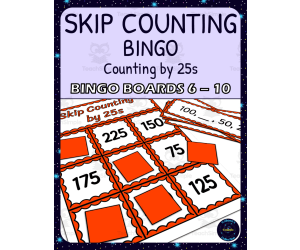
skip counting by 25s bingo - boards 6-10
Math, Patterns, Early Math, Numbers, Grade 1, 2, 3, Activities, Games
Skip Counting by 25s Bingo engages students in building number sense through a fun, interactive game. This math resource includes 5 colorful bingo boards with corresponding calling cards to practice recognizing numbers in 25s sequences. To play, students cover called numbers on their boards. The first to cover 3 spaces vertically, horizontally, or diagonally wins! Use buttons, counters, or dry erase markers as playing pieces. Extend practice by using additional bingo boards sold separately. Children will enjoy developing skip counting fluency with this engaging game. Educators can easily differentiate by adjusting the sequence. Pair with other games focusing on early number bonds, recognition, and patterns for a comprehensive approach in building math fluency.
Author Colleen's Cosmic Collection
Tags Skip Counting, Counting, Skip Counting Games, Skip Counting Activities, Skip Counting Bingo, Skip Counting By 25s, Skip Counting By 25, Cccskb25s, Counting In 25s

Immune System Activity
Science, Life Sciences, Human Body, Grade 3, 4, 5, 6, 7, 8, 9, 10, Activities
Activity Overview The human body is full of fascinating wonders to learn. This activity is created to help the students recognize the anatomy and the job of the human body. Immune System Every part and organ in our human body is vital so let's see how important they are. Have you ever imagined how we look like if we didn't have a skeleton? Did you know that because we have our amazing muscles we can stand! Do you know how many teeth do we have? Have you ever wondered about the food journey inside our body? Can you name all the glands in our body? Why do we have skin? Our nervous system is really good at sending signals. Can you tell us more about it? Are you really good at Mathematics, painting, or any other thing? You should really thank your brain about it! The famous five senses are really doing a great work? Can you explain how every sense works? Immune System Activity The activity is perfect for encouraging the researching skills for the students, while learning more about our fantastic human body. Immune System This friendly designed worksheet is suitable for students at school, homeschooling, and as a group activity. Instruction Draw yourself. Cut along the dotted lines. Glue page 1 on top of page 2. Open gently to see the organs inside. Which organs belong to the immune system? Write them down. Format Available in a PDF format.
Author Educational Voice
Tags Immune System Activity, Immune System, Immune System Facts, Immune System Facts For Kids, Human Body, Human Body Facts, Human Body Facts For Kids, Human Body Activity

Kentucky State Flipbook (Capital, Bird, Flower, Flag, Animal)
ELA, Creative Arts, Art, Social Studies, Reading, Reading Comprehension, Grammar, Language Development, Spelling, Writing, History, History: USA, Geography, Grade 2, 3, 4, Activities
The Kentucky State Flipbook is an excellent educational tool that marries hands-on learning with engaging content. This resource unearths the interesting aspects of Kentucky's state symbols like its capital city, unique bird species, flower emblem, and proud flag. It’s a valuable resource for public school teachers and home tutors as well. No Cutting Tools Needed! You have two options when it comes to assembling this innovative flipbook. Choose between a version that requires cutting or a variant that simply needs to be printed and used immediately. Furthermore, there are also two design choices available: one containing vivid pictures or one without images for the artistically inclined. Various Application Scenarios This versatile teaching tool can be employed in different classroom situations from large group studies to smaller discussion groups as well as homework assignments owing to its interactive nature. The Pack Includes: A whopping 37 PDF pages brimming with instructions on constructing four styles of booklets Covers ranging over seven dynamic topics related to Kentucky starting from basic information like State capital & other intriguing trivia about it Detailed pictorial representation of state bird & flower symbolism A comprehensive depiction cum historical account of the state flag along with characteristic features embodied by native animal species A topological exploration via regional map alongside KWL (Know-Want–Learn) style narrative model ensuring better understanding Functional Across Different Grades While intended mainly but not limitedly for Grades 2 through 4 due to its versatile nature such comprehensive resource works well cross-curricularly particularly for Language Arts Art & Music besides Social Studies.
Author Heather Huhman
Tags Kentucky State, Flipbook, Educational Resource, Hands-on Learning, State Symbols

3rd Grade Fractions Bump Games
Math, Fractions, Grade 3, Activities, Games
These are 3rd Grade Fractions Bump Games . There are 3 different games included: 1. Identifying Fractions 2. Fractions on a Number Line 3. Equivalent Fractions on a Number Line The objective of the games are to have the most rectangles covered by the end of the game. Directions and all game boards + their answer keys are included.
Author That One Cheerful Classroom
Tags Bump Games, Fractions Games, Math Games, Small Group, Whole Group, Number Lines, Equivalent Fractions, Shaded Fractions, Task Cards, Fraction Websites For 3rd Graders, Equivalent Fractions Games 3rd Grade, Free Fraction Games For 3rd Grade, Comparing Fractions Game 3rd Grade, Fractions For Grade 3
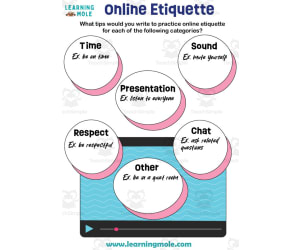
Online Etiquette Activity
Life Skills, Special Resources, Social Skills, Grade 3, 4, 5, 6, 7, 8, 9, 10, 11, 12, Activities
Activity Introduction An amazing activity designed for the students to learn more about social and soft skills in our daily life. Online Etiquette Have you ever read about soft skills or social skills? If yes, can you tell us more about them? Body language is so important for us to learn about, as it teaches us how to deliver the correct message to the people we are talking to, and get the right message from the people who talk to us, by simply reading their body language. What do you know about etiquette? Do you know that every country has got its unique etiquette? What do you know about online etiquette? What is your strongest soft/social skill? Can you name other social or soft skills? Do you think we should be always nice to our friends and family? Do you think we should be kind with animals? Online Etiquette Activity The activity is perfect for encouraging the researching skills for the students, while learning more about these fantastic social and soft skills in our daily life. Online Etiquette This friendly designed worksheet is suitable for students at school, homeschooling, and as a group activity. Instructions What tips would you write to practice online etiquette for each of the following categories? Format Available in a PDF format.
Author Educational Voice
Tags Online Etiquette Activity, Online Etiquette, Online Etiquette Facts, Online Etiquette Facts For Kids, Etiquette, Etiquette Activity, Etiquette Facts, Etiquette Facts For Kids, Social Skills, Soft Skills
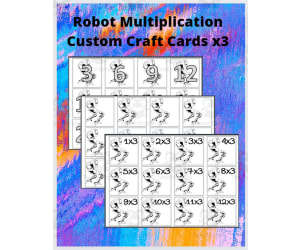
Robot Multiplication Custom Craft Cards x3
Math, Multiplication and Division, Division, Grade 2, 3, Crafts, Activities
Robot Multiplication Custom Craft Cards x3 is a teaching resource that provides educators with multiplication flash cards featuring fun robot graphics that elementary students can color. These customizable PDF cards can be used by teachers in whole group lessons, small group interventions, independent practice, and homework to build multiplication fluency among second and third grade learners. Students will enjoy coloring in the robot scenes while reinforcing their understanding of basic multiplication facts through repeated exposure facilitated by the teacher. With three unique sets of robot multiplication cards included, educators can use them for a variety of activities or rotate them to maintain student interest in mastering multiplication. This multifaceted resource allows creativity in implementation to fit diverse learning needs.
Author WORDS ASIDE
Tags Task Cards, Custom Craft Cards, Robots, Multiplication, Repeated Addition, Skip Counting, Bulletin Board, Math Centers, Patterns, Graphics

Big Emotions/Anger | Interactive Book/Printable | Behavior Support
Special Resources, Social Emotional Learning (SEL), Social Skills, Life Skills, Grade 3, 4, 5, 6, Activities
Big Emotions/Anger | Interactive Book/Printable | Behavior Support is a specialized teaching resource. It was created for educators looking to tackle the complexities of emotions with children, primarily within ages 7-12. This resource allows students to step into the story's main character's shoes, acquiring crucial life skills like understanding and managing big emotions such as anger. The interactive book promotes active student engagement through tasks like question-answering, coloring assignments, and drawing activities. These are all designed with the primary goal of nurturing emotional comprehension. A significant emphasis is placed on creating coping mechanisms tailored to each child's needs - particularly beneficial when helping children who have difficulties handling strong emotions. Your purchase includes various resources: full-page and half-page printouts of the social storybook as well as an insightful discussion guide. To enhance convenience further, Google Slides compatible for classroom interaction is also included. Functions Whole class scenarios: The teacher can use the Google Slide Deck for displaying material while students create their copies using the provided half-page printouts - catalyzing engaging classroom discussions via our discussion guide! In-class exercises or homework assignments: Can be used beyond these traditional formats to teach lessons on handling large emotions in both whole-class sessions or small group environments. Towards progressive discipline plans: Students can take this book along to assigned calming corners within classrooms where they revisit expectations and calm down independently–an outstanding starting point! In smaller groups: Identify individuals displaying similar behavior needs creating small groups where each member fills out individual copies complimented by meaningful conversations about every page under guidance from our discussion guide! This PDF file becomes an excellent addition catering specifically towards - social emotional learning, social skills and life skills. Specific Catering Teachers might work individually with struggling students. This allows for essential coping strategies discussed during the activity to be firmly embedded in memory since the books can be kept at desks and easily accessed whenever required. The target grades for this resource are Grade 3, Grade 4, Grade 5, and Grade 6. It's an ideal add-on to your teaching materials arsenal if your focus rests on shaping young minds into individuals better equipped to manage their emotions!
Author Mrs Bonie Just Teach
Tags Emotional Comprehension, Anger Management, Behavior Support, Coping Mechanisms, Interactive Book
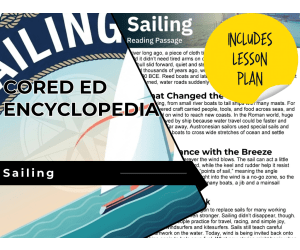
Sailing Reading Comprehension Passage - Cored Ed Encyclopedia
ELA, Language Development, Reading Comprehension, Reading, Pre-Reading, Science, Writing, Engineering, Technology, Physics, Grade 2, 3, 4, 5, Worksheets & Printables, Worksheets, Teacher Tools, Centers, Activities, Writing Prompts, Assessments, Quizzes and Tests, Quizzes, Lesson Plans
This sailing reading comprehension includes: Visualization (on the front cover) Start your lesson by taking a minute to think and share something about the topic. Read the script aloud (slowly), perhaps prepare some music or sound effects. Student close their eyes and let their imaginations wander. Students open their eyes, read the question aloud and give them a few minutes to complete. Ask a few students to share or keep answers until the end to compare with what they learn in the passage. Quick pause—thousands of Cored Education products are included with your TeachSimple membership. Download links and encyclopedia index available here. Pre-Reading Trivia Students will write down one thing they already know about the subject and then read five more facts and discuss. These facts are fun, and the students will enjoy learning about the subject before reading more. Give 1 minute for students to write what they already know (no pressure—best guess is fine). Read the five facts together. After each fact, do ask a student for their opinion, was it surprising? Set a purpose by asking students to highlight/underline one fact they want to learn more about during the reading. Reading Passage The text is a high-interest reading passage with set paragraphs, roughly three to four paragraphs long. It contains a variety of themes about the topic, anywhere from history to technology. The passage is between 250 and 350 words in length. First, ask students to look at the headings and see what they’ll learn about today. What do they know about the topic/heading? First read options: Teacher read-aloud (best for support). Partner reading (paragraph by paragraph). While reading, students underline important details, and vocabulary words they think may come up in the questions section. Mixed Questions The first question page contains four multiple-choice questions, each with a choice of four answers, and three written response questions that require a sentence or two from the student. Students complete the mcqs first independently, then review quickly as a class. For the 3 written responses, try to get students giving the answer with some form of evidence: “I think ___ because the text says ___.” If students get stuck, send them back to check the passage. Vocabulary Questions Practice seven key words from the text in this section across two activities. First section is scrambled words where students will unscramble three words given a clue for each. The second section is a word to meaning matching activity. Before starting, have some students read out words they underlined in the passage. Ask students to say the word and read aloud the sentence(s) around each word. Ask students to do scrambled words and the matching exercise in pairs then go through answers as a class. For the scrambled spelling task, get four pairs to come up to the board and write the words for extra practice with the other student reading out the clue. For the matching task, prompt students to give full sentences: “I matched ___ with ___ because ___.” Creative Writing In this question, the student will be required to write a five to eight sentence paragraph on a question related to the topic. Before starting, ask students write down 3 key ideas they are going to include in their piece. Ask students for ideas to share around the class to help those struggling. Pro writing expectations: 5–8 sentences At least 2 facts or details from the passage At least 2 vocabulary words from the previous page Students read their paragraphs while classmates listen for facts and vocabulary words. Extension Activities This page is optional for fast finishers or to take home. There are several activities, each one requiring a different skill. Do some, do none, do all, completely optional - but you will feel reassured knowing every possibility is planned for. Includes summary writting question. Answer Key There are answers for the multiple-choice questions, written response questions have sample answers, vocabulary answers and if there is a summary question then a sample summary will be provided as well. Lesson Plan Included Customized lesson plan for this lesson is included. Lesson Snapshot Title: Sailing Genre: Nonfiction (informational passage) Subject: Science (Forces & motion) / Social Studies (history of travel) Primary Topic: How wind powers boats and changed travel Estimated Guided Reading Level (A–Z): R What This Lesson Teaches Best How wind pushing on a sail can move a boat without rowing (sail as a “wind catcher” and cloth billowing). How sailing helped people travel farther and move supplies, from early boats to tall ships, including examples from Egypt, the Roman world, and Austronesian sailors. Key sailing concepts that affect movement and direction, including “points of sail,” the “no-go zone,” and zigzagging turns called tacks. How boat parts help sailing work: the sail pulling forward and the keel and rudder helping resist sliding sideways. How technology changed sailing’s role (steam engines replacing sails for many working ships) and how wind is being used again on some cargo ships to save fuel. Learning Goals Explain how wind pressing on a sail can move a boat forward. Describe how sailing grew from river boats to ships that carried people, tools, and food across seas. Identify why sailors use tacks and what the “no-go zone” means in the passage. Describe how the keel and rudder help a sailboat resist sliding sideways. Explain how sailing changed in the late 1800s and how wind is being used again today. Key Vocabulary From the Text hull — the main body of a boat. keel — a strong part that helps stop sliding sideways. rudder — a part that helps steer the boat. tacks — zigzag turns used to move into wind. cargo — goods carried on a ship. FULL CATALOG OF DOWNLOAD LINKS AND ENCYCLOPEDIA INDEX HERE
Author Cored Education
Rating
Tags Vocabulary, Reading Comprehension, Reading Passages, Reading, Creative Writing, Reading Strategies, Writing Prompts, Lesson Plans, Sailing, Engineering
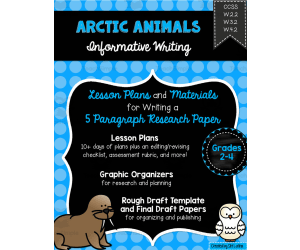
Arctic Animals Writing Project
ELA, Writing, Science, Life Sciences, Animals, Research, Grade 2, 3, 4, Activities, Projects
This is an Arctic Animals Writing Project. It includes lesson plans and materials for writing a 5-paragraph research paper. There are 10+ days of plans plus an editing/revising checklist, assessment rubric, and more! Students will have graphic organizers for research and planning. Finally, they will have rough draft template and final draft papers for organizing and publishing
Author Siri Latina
Tags Arctic Animals, Writing Project, Research Paper, Checklist, Assessments, Rubric, Creative Writing, Comprehension, Graphic Organizers
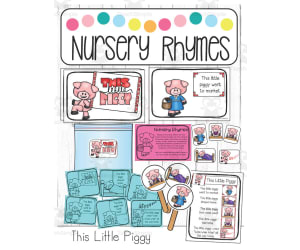
Nursery Rhyme: This Little Piggy
ELA, Reading, Kindergarten, Preschool, Grade 1, 2, 3, Activities
This Little Piggy Nursery Rhyme Teaching Resource The 'This Little Piggy Nursery Rhyme' teaching resource is an innovative set of activities designed to bolster early literacy skills in children. Giving teachers a practical and fun tool, this package focuses on improving comprehension abilities like story retelling, vocabulary enhancement, understanding the cause and effect concept, and phonetic awareness by means of the loved nursery rhyme "This Little Piggy Went to Market". Delivered as a PDF file type, this mini-teaching unit is split into diverse sections that cater to different aspects of literacy learning. The structure includes: Nursery Rhyme Book: This allows students to practice their sequencing ability by arranging pages in order based on the story's flow. Magnet Board Characters: These characters facilitate students in reciting the rhyme in their own way at your literacy centre. One Page Rhyme Chart: A poster-sized version of the rhyme aids group lessons with interactive textual elements. Popsicle Stick Puppet Characters: Works well for a puppet or retelling center where kids can recreate the story while honing their retelling abilities. 'Pig Shape Hunt': Have fun searching classrooms or sensory tubs for embedded shape cards; increases observational acumen. Rhyming Match & Alliteration Activity : Push cognitive development with rhyming words based pig cards & matching sounds to pictures tasks. In addition to these hands-on tasks that make learning engaging and effective for preschoolers through third-grade pupils, there is also a note explaining why nursery rhymes play such vital roles in developing early childhood literacies- ensuring everyone involved understands what’s happening! Piggie Collecting Counting Activity : Mix counting skills with fun as each dice roll dictates how many pigs are added. Now who said learning can't be thrilling! This resource will clear up any worries about whether or not using nursery rhymes might be too simple; instead showcasing how they actually form solid foundations from which other higher-level reading skills can ultimately grow.
Author The Proactive Classroom
Tags Nursery Rhymes, Literacy Skills, Early Childhood Education, Comprehension Improvement, Interactive Learning

Musical Hangman (Instruments) | Interactive Games Activities
Creative Arts, Art, Music, Grade 1, 2, 3, 4, Songs, Activities
Musical Hangman (Instruments) | Interactive Games Activities An engaging teaching resource designed to introduce learners to the exciting world of music. This unique version of the classic game hangman includes more than 50 slides exploring different instrument families and introducing students to a variety of instruments, both common and rare. What it offers: A robust learning experience with musical instruments ranging from 4-10 letters long. An interactive model where learners get immediate feedback on each guess, promoting quick learning and growth. A comprehensive round that tests knowledge on all previous sections. A perfect score leads to the printing out of a certificate, instilling a sense of achievement in young learners. Included: The package also includes answer booklets which make it easily manageable for substitute teachers or those not specialized in music education. The module is thoughtfully constructed allowing flexibility for educators: They can choose whether they want to use it as part of whole-group activities, during small group sessions or even as homework assignments. Compatibility & Set-up: No need concern over compatibility or setup issues. The process is intricately detailed within the supplied PDF document making easy projection or download procedures for users operating Windows-based computers or tablets.Articulate mobile player—a free application—is needed for tablet users wishing to access this resource; instructions comprehensively listed within your PDF guide taking you through each step required for first-time users. Unfortunately, at present Mac computer owners can only host via their tablet link but note: no offline downloads possible nor unzipping options available thus far specifically for Mac systems. Targeting primary grades 1-4 pupils exploring their artistic voices through Art & Music classes—mainly Music Subsections—this Game type teaching tool makes complex musical concepts comprehensible and enjoyable! Conclusion: Focused on providing a meaningful educational journey, Musical Hangman (Instruments) | Interactive Games Activities creates a friendly environment for learning the intricate beauty of music. Engaging and informative, it's set to strike a chord with learners and teachers alike!
Author Hbmusicsolutions's Shop
Tags Music Education, Interactive Game, Instrument Families, Hangman Game, Engaging Learning

Investment Activity
Life Studies, Finance, Grade 3, 4, 5, 6, 7, 8, 9, Activities
Activity Introduction An amazing activity designed for the students to learn more about STEM subjects. Investment Do you like to learn more about financial matters? what is your favorite subject? Do you like to be an entrepreneur someday? If yes, who is your favourite entrepreneur? What your business will be about? Have you ever tried to calculate your monthly spendings? If yes, tell us more about it. Have you ever seen a grownup using a credit card to making a money transaction online? If yes, do you think it is safe? Mathematics is a marvelous subject. Let' sharpen our brains and solve some equations in our daily life. What are the different types of bank cards? Can you tell what is the job of every type? Using credit cards online is a little bit tricky. What do you think? Have you ever read about investments? If yes, tell us more about it. Investment Activity The activity is perfect for encouraging the researching skills for the students, while learning more about this topic. Investment This friendly designed worksheet is suitable for students at school, homeschooling, and as a group activity. Instructions Write down some examples of how you might invest your money. How do you decide which investment is best for you? Format Available in a PDF format.
Author Educational Voice
Tags Investment Activity, Investment, Investments, Investments Facts, Investments Facts For Kids, Investment Facts, Investment Facts For Kids, Financial Literacy , Financial Literacy Facts For Kids

Jeeps Reading Comprehension Passage - Cored Ed Encyclopedia
ELA, Reading Comprehension, Reading, Language Development, Vocabulary, History, Social Studies, Technology, Science, Pre-Reading, Grade 2, 3, 4, 5, Worksheets & Printables, Worksheets, Teacher Tools, Centers, Activities, Writing Prompts, Assessments, Quizzes and Tests, Quizzes, Lesson Plans
This Jeeps reading comprehension with lesson plan includes: Visualization (on the front cover) Start your lesson by taking a minute to think and share something about the topic. Read the script aloud (slowly), perhaps prepare some music or sound effects. Student close their eyes and let their imaginations wander. Students open their eyes, read the question aloud and give them a few minutes to complete. Ask a few students to share or keep answers until the end to compare with what they learn in the passage. Quick pause—thousands of Cored Education products are included with your TeachSimple membership. Download links and encyclopedia index available here. Pre-Reading Trivia Students will write down one thing they already know about the subject and then read five more facts and discuss. These facts are fun, and the students will enjoy learning about the subject before reading more. Give 1 minute for students to write what they already know (no pressure—best guess is fine). Read the five facts together. After each fact, do ask a student for their opinion, was it surprising? Set a purpose by asking students to highlight/underline one fact they want to learn more about during the reading. Reading Passage The text is a high-interest reading passage with set paragraphs, roughly three to four paragraphs long. It contains a variety of themes about the topic, anywhere from history to technology. The passage is between 250 and 350 words in length. First, ask students to look at the headings and see what they’ll learn about today. What do they know about the topic/heading? First read options: Teacher read-aloud (best for support). Partner reading (paragraph by paragraph). While reading, students underline important details, and vocabulary words they think may come up in the questions section. Mixed Questions The first question page contains four multiple-choice questions, each with a choice of four answers, and three written response questions that require a sentence or two from the student. Students complete the mcqs first independently, then review quickly as a class. For the 3 written responses, try to get students giving the answer with some form of evidence: “I think ___ because the text says ___.” If students get stuck, send them back to check the passage. Vocabulary Questions Practice seven key words from the text in this section across two activities. First section is scrambled words where students will unscramble three words given a clue for each. The second section is a word to meaning matching activity. Before starting, have some students read out words they underlined in the passage. Ask students to say the word and read aloud the sentence(s) around each word. Ask students to do scrambled words and the matching exercise in pairs then go through answers as a class. For the scrambled spelling task, get four pairs to come up to the board and write the words for extra practice with the other student reading out the clue. For the matching task, prompt students to give full sentences: “I matched ___ with ___ because ___.” Creative Writing In this question, the student will be required to write a five to eight sentence paragraph on a question related to the topic. Before starting, ask students write down 3 key ideas they are going to include in their piece. Ask students for ideas to share around the class to help those struggling. Pro writing expectations: 5–8 sentences At least 2 facts or details from the passage At least 2 vocabulary words from the previous page Students read their paragraphs while classmates listen for facts and vocabulary words. Extension Activities This page is optional for fast finishers or to take home. There are several activities, each one requiring a different skill. Do some, do none, do all, completely optional - but you will feel reassured knowing every possibility is planned for. Includes summary writting question and additional facts. Answer Key There are answers for the multiple-choice questions, written response questions have sample answers, vocabulary answers and if there is a summary question then a sample summary will be provided as well. Lesson Plan Included Customized lesson plan for this lesson is included. Lesson Snapshot Title: Jeeps Genre: Nonfiction (informational text) Subject: Social Studies (History) / Reading (Informational Text) Primary Topic: WWII jeep origins and how the Jeep line evolved Estimated Guided Reading Level (A–Z): S What This Lesson Teaches Best Explains why the U.S. Army wanted a small, tough 4-wheel-drive truck in 1940 and how designs led to the World War II jeep (Willys MB and Ford GPW). Uses concrete facts and numbers (more than 600,000 built; held 3 to 6 people; carried scouts, messengers, and heavy gear). Explores multiple possible origins of a word/nickname (“g.p.”, soldier slang, and Eugene the Jeep) and shows that history can have more than one source. Traces change over time: military jeep → civilian CJs (starting 1945) → a family of vehicles including SUVs and the Wrangler as a descendant of the CJ line. Supports comprehension with clear section headings that organize the timeline and ideas. Learning Goals Identify the problem armies faced in 1940 and what kind of truck the U.S. Army wanted. Describe two details about World War II jeeps (names, number built, what they carried, or how many people fit). Explain why the passage says the nickname “jeep” is “not that simple,” using text evidence. Describe how jeeps changed after the war when Willys began selling CJs. Summarize how the Jeep line continued and changed “over the years,” including the Wrangler and one feature it kept. Key Vocabulary From the Text 4-wheel-drive — power can go to all four wheels. nickname — a fun or short name. civilian — not in the military. surplus — extra items left over after use. descendant — a newer vehicle from the same family line. FULL CATALOG OF DOWNLOAD LINKS AND ENCYCLOPEDIA INDEX HERE
Author Cored Education
Rating
Tags Vocabulary, Reading Comprehension, Reading Passages, Lesson Plans, Ela Lesson Plans, Reading Comprehension Lesson Plans, Pre-reading, Social Studies Lesson Plans, History, Technology
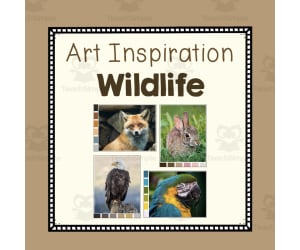
Art Inspiration: Wildlife Photos
Creative Arts, Art, Grade 1, 2, 3, 4, Activities, Crafts
Art Inspiration: Wildlife Photos An educational resource designed to light up the creativity of young minds, specifically those in grades 1 to 4. This teaching aid provides 30 high-quality wildlife photos intended to inspire students into creating their own unique artworks. Suitable for Multiple Subjects Perfectly adaptable for art, music or crafting activities, this product aims at refining students' artistic skills while simultaneously building their appreciation for the beauty of nature. The included wildlife photos provide a spectrum of intriguing angles sure to spark imagination. Inclusive Design The wildlife pictures in this resource come with color samples at either side or bottom parts - giving students color ideas as they craft their artworks. These samples encourage realistic representation of colors from nature but also leave room for creative exploration. Versatility and Convenience The Art Inspiration: Wildlife Photos fits well into group activities as well as individual homework assignments. It offers flexibility letting you choose between printing full-size images on individual pages or half-page sized prints saving on ink costs. You can laminate the printed images or place them inside plastic protective sheets ensuring long-term use and preservation - perfect for reuse year after year. Easing organization and handling during art sessions can conveniently be done by using spiral binding techniques or simple book rings grouping them together is effective too. Note: This tool comes in a PDF format guaranteeing multi-platform compatibility allowing quick access anytime; reflecting convenience that modern educators need. Overall, Art Inspiration: Wildlife Photos fosters artistic talent within young individuals subtly enhancing their observational skills through connectedness with nature."</p
Author Simply Schoolgirl
Tags Art Inspiration, Wildlife, Photos, Creativity, Educational Resource

Number Bonds 1-20 Bingo - Boards 6-10
Math, Fact Families, Addition and Subtraction, Addition, Grade 1, 2, 3, Activities, Games
Number Bonds 1-20 Bingo reinforces number bonds concepts with students in a fun, engaging way. This math game includes calling cards and 5 colorful bingo boards to practice bonds for numbers 1-20. Play is simple - draw a card, locate the number bond on your board, and cover it. The first player to cover 3 spaces in a row wins! Use buttons or counters as playing pieces. Or laminate boards for reuse with dry erase markers. Implement during small group instruction, centers , or even morning work. Check the store for more bingo boards. Compliment this game with number bonds puzzles, worksheets, skip counting games, and more from the Cosmic Collection. Set up a station today with this bingo for essential number sense fluency.
Author Colleen's Cosmic Collection
Tags Number Bonds, Number Bonds Games, Addition Game, Addition Activity, Math Facts, Addition Facts, Addition Math Facts, Math Fact Practice, Number Bonds To 20, Cccnbb120
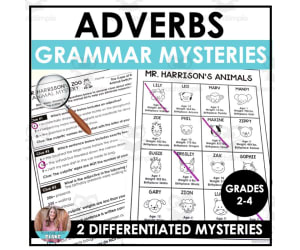
Adverbs Animal Mysteries Activity
ELA, Grammar, Grade 2, 3, 4, Activities
Here is an Adverbs Animal Mysteries Activity that your students will love! These mysteries were designed with 2nd – 4th grade students in mind. Students will have a blast helping Mr. Harrison crack the cases. What You Get: There are two mysteries included. The Case of the Food Fight This version is higher level with more application focused questions and more advanced sentences. Recommended for grades 3-4. The Case of the Missing Ticket Kiosk This version is lower level with more identification focused questions and less advanced sentences. Recommended for grades 2-3. Both versions include an extended writing opportunity, suspect list, and answer key. How This Activity Works: For students to eliminate suspects, they must follow the steps of the clues. These clues require critical thinking as they decide which animals need to be crossed out. I suggest pre-teaching this and explaining how to eliminate suspects to avoid confusion. Example: A clue that says, “The culprit’s name has the number of letters as your answer.” with the answer of 4 means that the culprit’s name has EXACTLY 4 letters. Students will need to cross off any animals that do NOT have 4 letters in their name. I hope you enjoy!
Author Blooming with Blake
Tags Adverbs Activity, Language Arts, Grammar Activity, Zoo Animals Game, Animal Mysteries, Detective Activity, Writing Prompt Extensions, Small Group
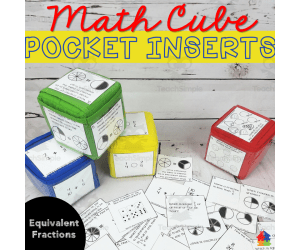
Math Cube Pocket Inserts: Equivalent Fractions
Math, Fractions, Grade 3, 4, 5, Activities
Math Cube Pocket Inserts: Equivalent Fractions is an engaging teaching resource for introducing and reviewing equivalent fractions. Students assemble the math cubes at stations or in groups, choosing single or multiple cubes to solve a variety of fraction problems. The cubes strengthen understanding of equivalency and comparison of fraction sizes in an interactive format. Educators may utilize the cubes for whole class instruction, small group remediation, or independent practice. Answer keys are provided. Recording sheets allow students to show the work behind their answers. This supplemental resource suits grade 3-5 math lessons on fractions and is broadly applicable for activities in classrooms, learning centers , or homework.
Author Teachers R Us Homeschool
Tags Math Cubes, Equivalent, Fractions, Math Journal, Fractions Worksheet
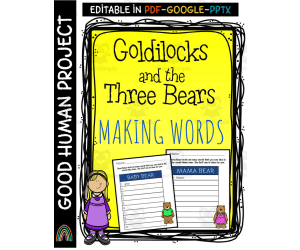
Goldilocks and the Three Bears | Making Words
ELA, Literature, Preschool, Grade 1, 2, 3, Activities
This resource is a Goldilocks Making Words Activity . Students will have 4 different words to choose from, which are the characters' names. They will make new words from those letters.
Author Good Human Project
Tags Making Words, Literature, Reading Activity, Goldilocks, Bears