Word meaning
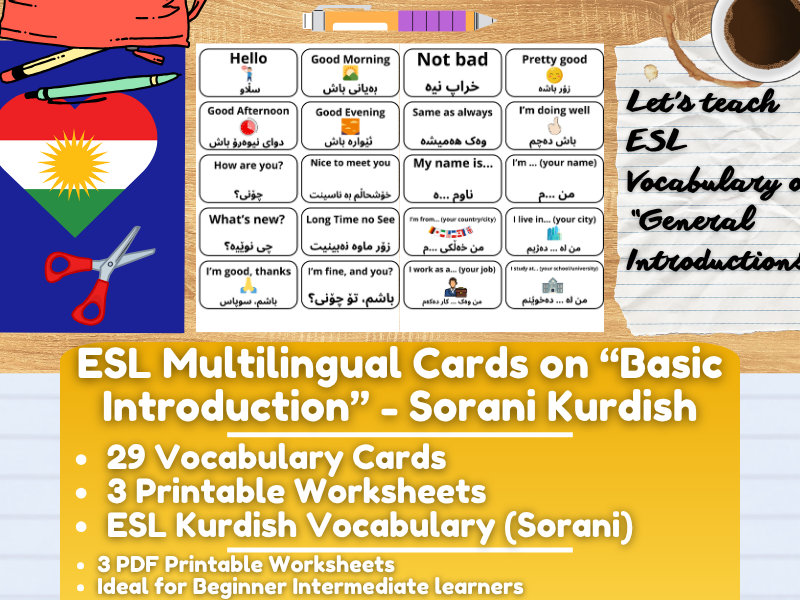
ESL Multilingual Vocabulary Flashcards - Introduction - Sorani Kurdish
Give beginner ESL students a bilingual English-Sorani Kurdish vocabulary reference for greetings, introductions, and basic small-talk phrases.




Classroom resources
Browse by lesson focus
Choose the topic or kind of practice you need.
Showing 1537–1560 of 2440 resources

 Show filters
 Give beginner ESL students a bilingual English-Sorani Kurdish vocabulary reference for greetings, introductions, and basic small-talk phrases.
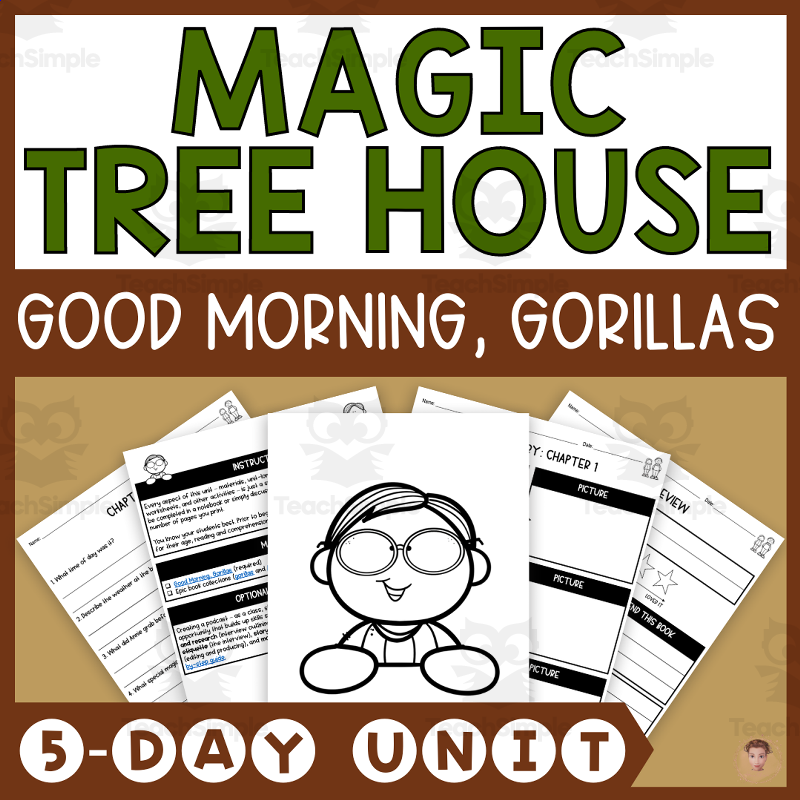
Read two chapters per day (independently or aloud), watch a linked video about the Congo rainforest or gorillas, complete a chapter comprehension quiz and vocabulary worksheets, fill out a KWL (Know/Want to know/Learned) chart before and after the unit, complete a pre-reading prediction worksheet, and do a daily…
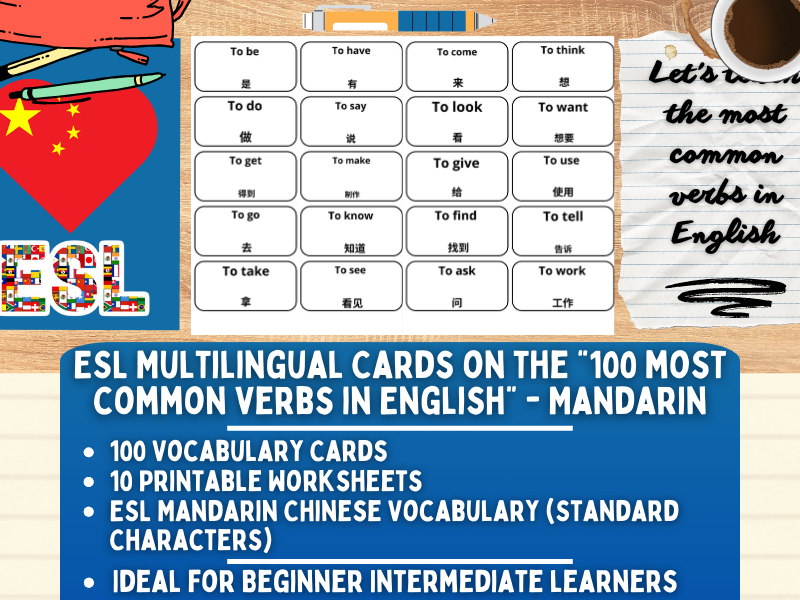
Bilingual English-Mandarin Chinese vocabulary flashcards pairing the 100 most common English verbs (infinitive form, e.g. "To be", "To have") with their Mandarin Chinese translations, for ESL/EFL learners whose first language is Mandarin Chinese.
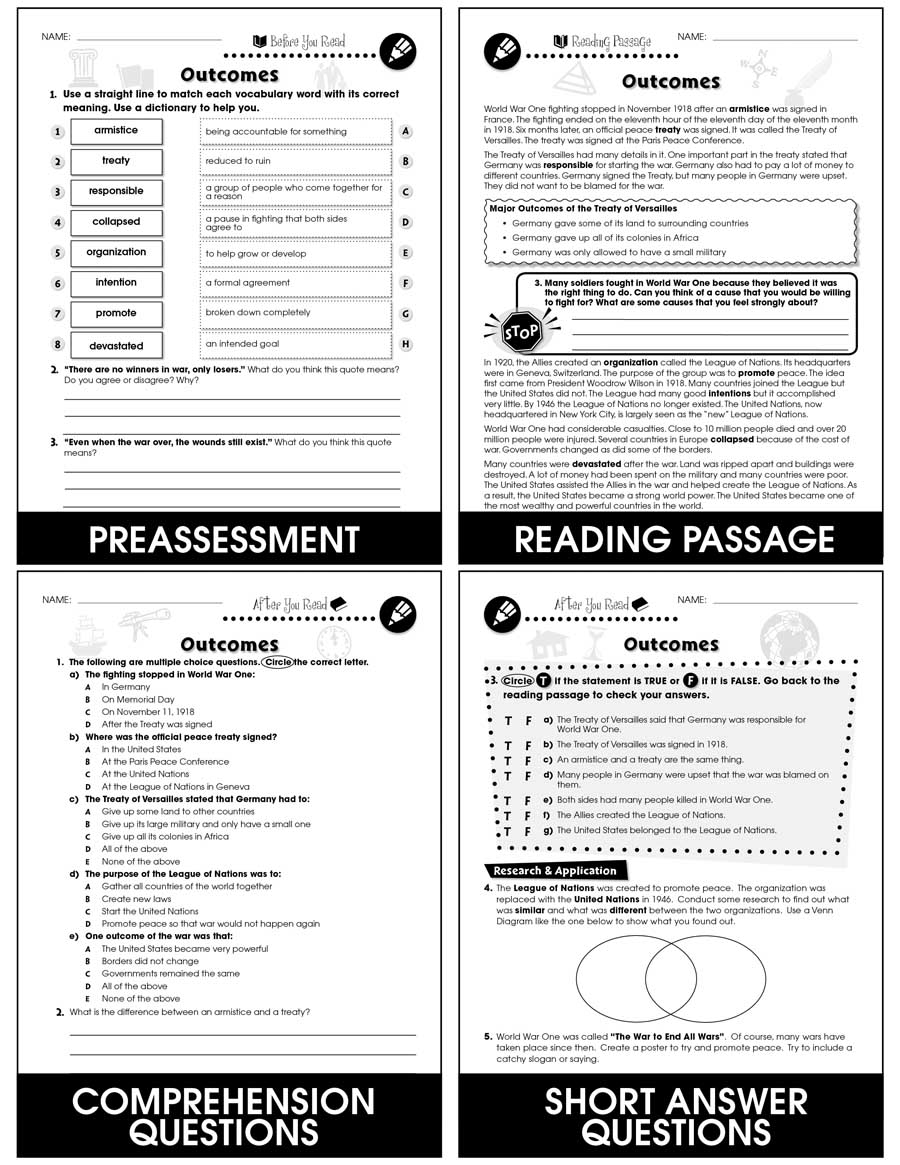
Provide a comprehensive middle-grade teaching resource covering all major aspects of World War I (causes, major battles, the U.S. entering the war, Wilson's Fourteen Points, methods of warfare, and outcomes) through leveled reading passages and supporting activities.

An editable presentation teaching video game design vocabulary and concepts (components, mechanics, space, goals, rules) as preparation for a hands-on coding project where students build their own game.
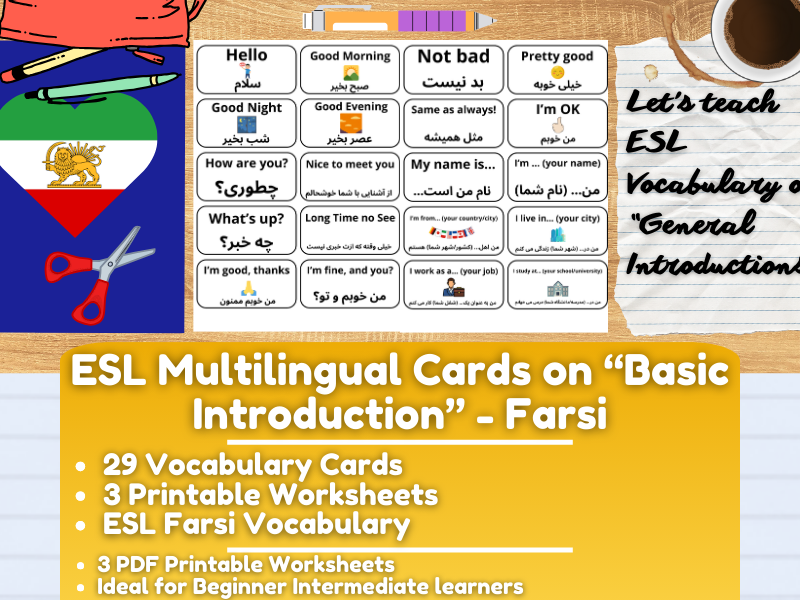
Give ESL/EFL students paired English-Farsi (Persian) vocabulary flashcards covering greetings and basic self-introduction phrases.
Participate in teacher-led center and group activities: vocabulary/concept discussions, art projects (e.g. a fire-breathing dragon bookmark, sandcastle dough, paper-mache dragon, castle collage), math activities (crown/dragon size sequencing, counting treasure, estimation jar), science activities (building a model…
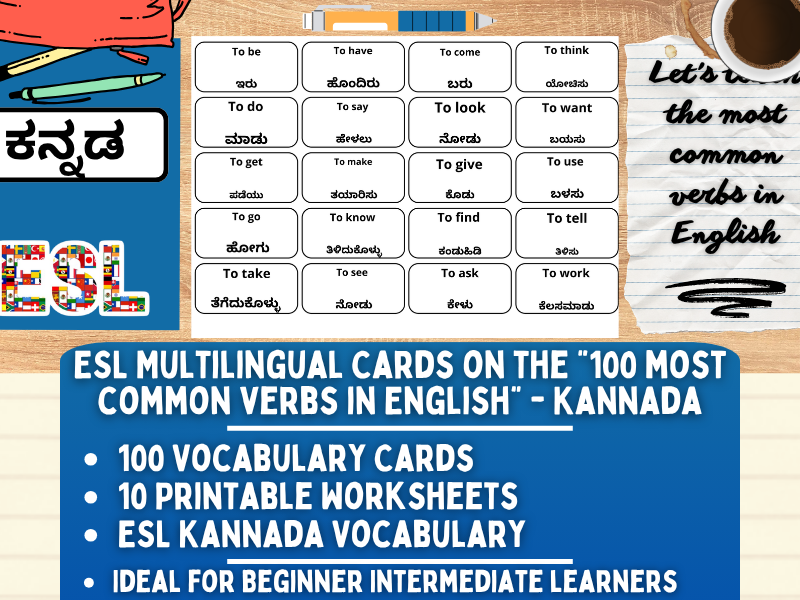
Bilingual English-Kannada vocabulary flashcards pairing the 100 most common English verbs (infinitive form, e.g. "To be", "To have") with their Kannada translations, for ESL/EFL learners whose first language is Kannada.
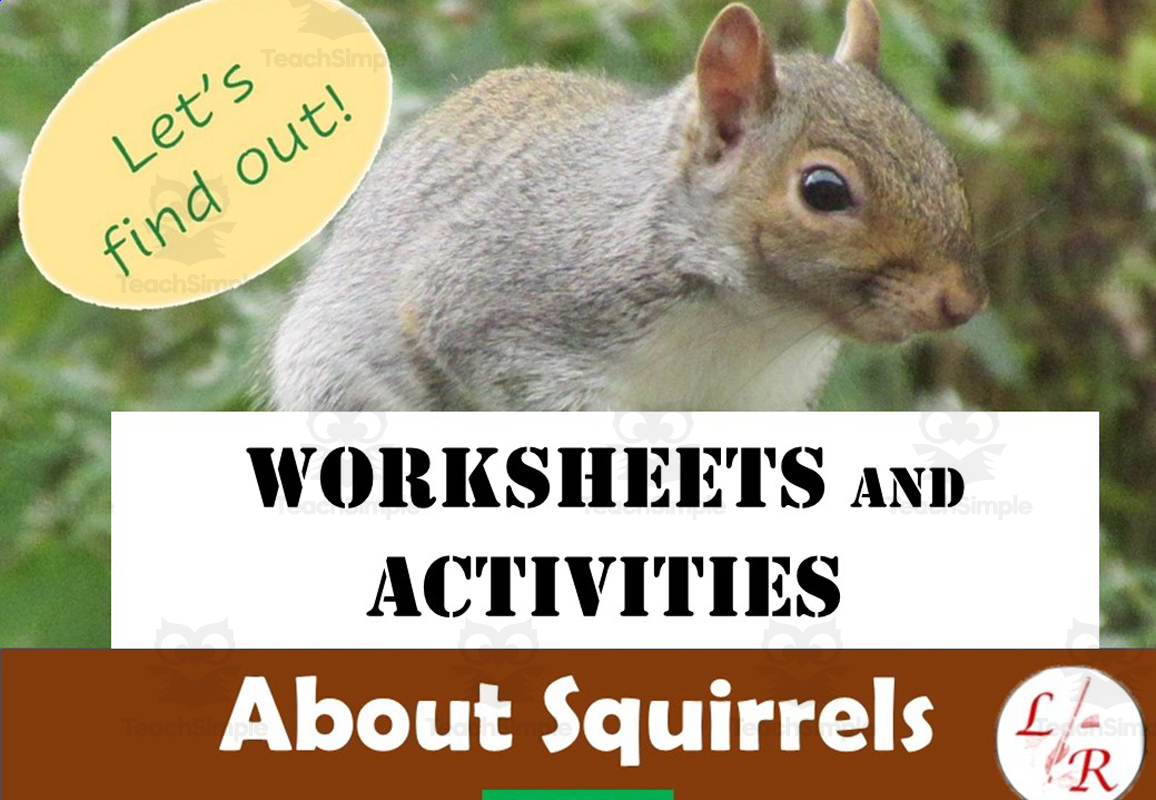
Learn squirrel vocabulary via flashcards with phonic sound highlighting, trace words and match them to pictures, make a squirrel-themed book, complete differentiated worksheets on squirrel food and habitat, label parts of a squirrel, answer questions about squirrel nests, complete differentiated writing and reading…

In collaborative groups, students read teacher-provided background on Greek theater history (Dionysus, tragedy vs. comedy, chorus structure, Sophocles/Euripides/Aristophanes), complete vocabulary worksheets and note pages, design a Greek-style mask, and write, rehearse, and present an original play in the ancient…
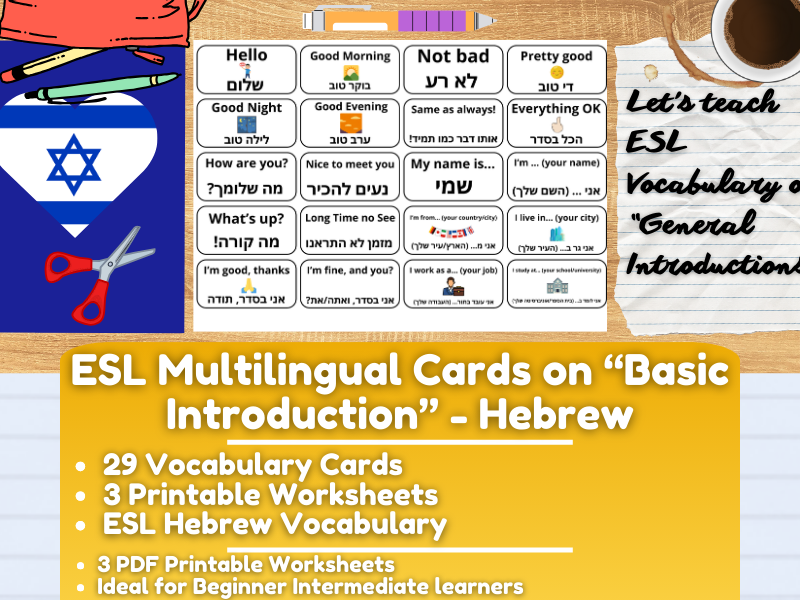
Give ESL/EFL students paired English-Hebrew vocabulary flashcards covering greetings and basic self-introduction phrases.
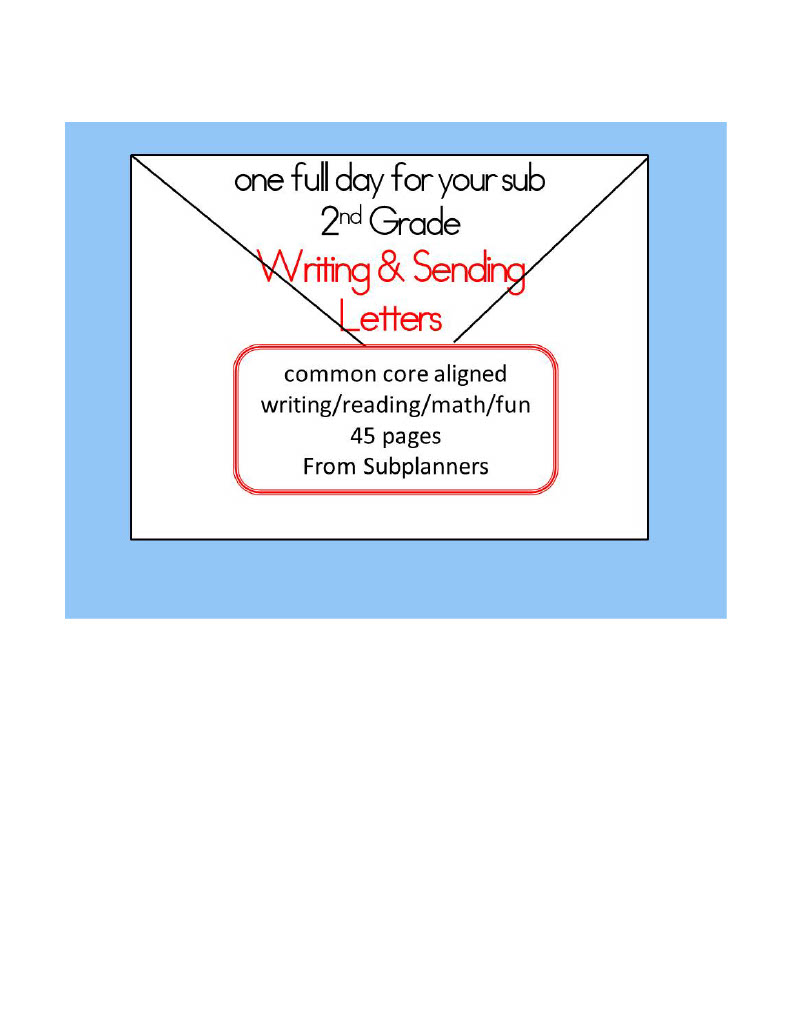
Complete morning/afternoon 'message' meeting worksheets, independent reading with reader-response forms, letter-writing and address-writing exercises, Pony Express reading/response questions, math worksheets (adding/subtracting minutes and multi-digit numbers on a postal-route theme, a two-digit number-word dice game), vocabulary games…
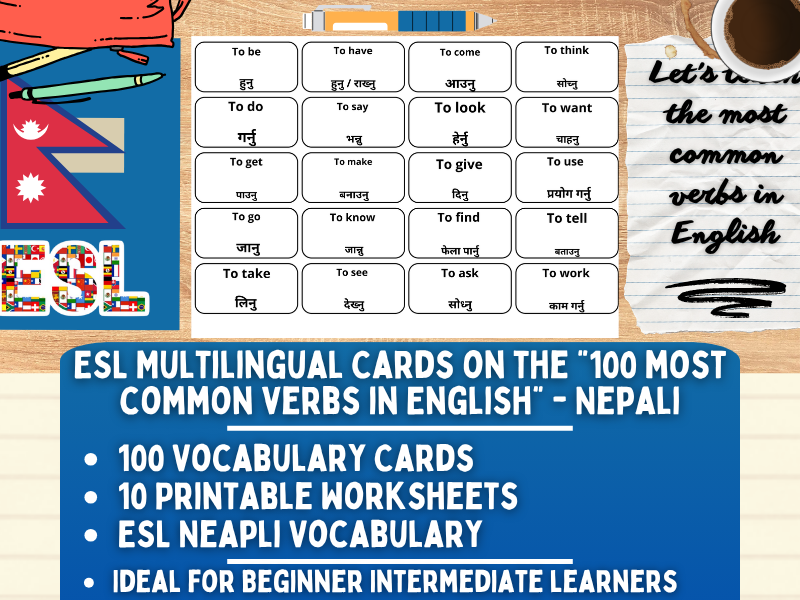
Bilingual English-Nepali vocabulary flashcards pairing the 100 most common English verbs (infinitive form, e.g. "To be", "To have") with their Nepali translations, for ESL/EFL learners whose first language is Nepali.
Participate in teacher-led activities drawn from the pack: arts and crafts, movement games and mini-Olympics, action songs/poems (recited or sung), science experiments about the body, cooking activities, field trips, and a body-vocabulary lesson in Spanish.
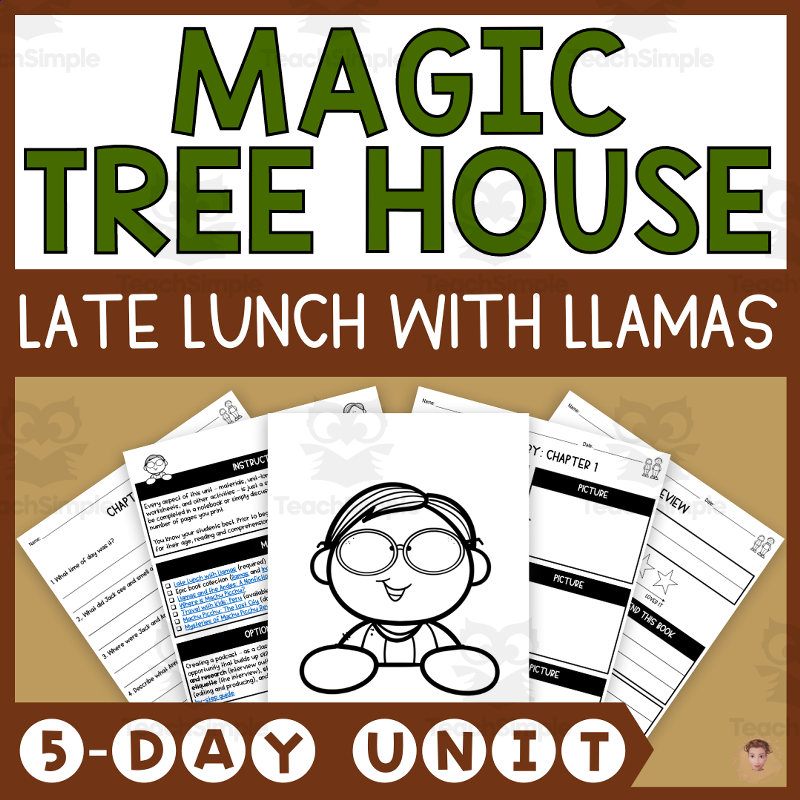
Students read or listen to two chapters per day, complete pre-reading and KWL worksheets, answer chapter comprehension quizzes, learn and illustrate vocabulary words per chapter, watch suggested videos, and complete related art/craft activities (draw a condor, draw a llama, draw Machu Picchu, a Machu Picchu craft, a coloring pack).
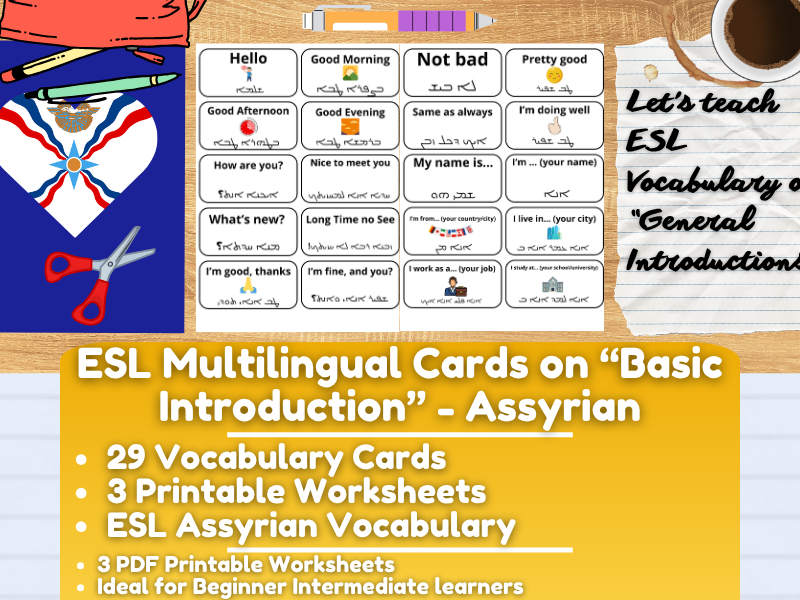
Give beginner ESL students a bilingual English-Assyrian vocabulary reference for greetings, introductions, and basic small-talk phrases.
Participate in teacher-led activities such as sensory table exploration, art projects (tie-dye, crystal paint, jester hats, disappearing ink, etc.), cooking experiences, circle-time discussion/dictation, math estimation and counting games, movement games (Silly Simon Says, obstacle courses), and supplemental…
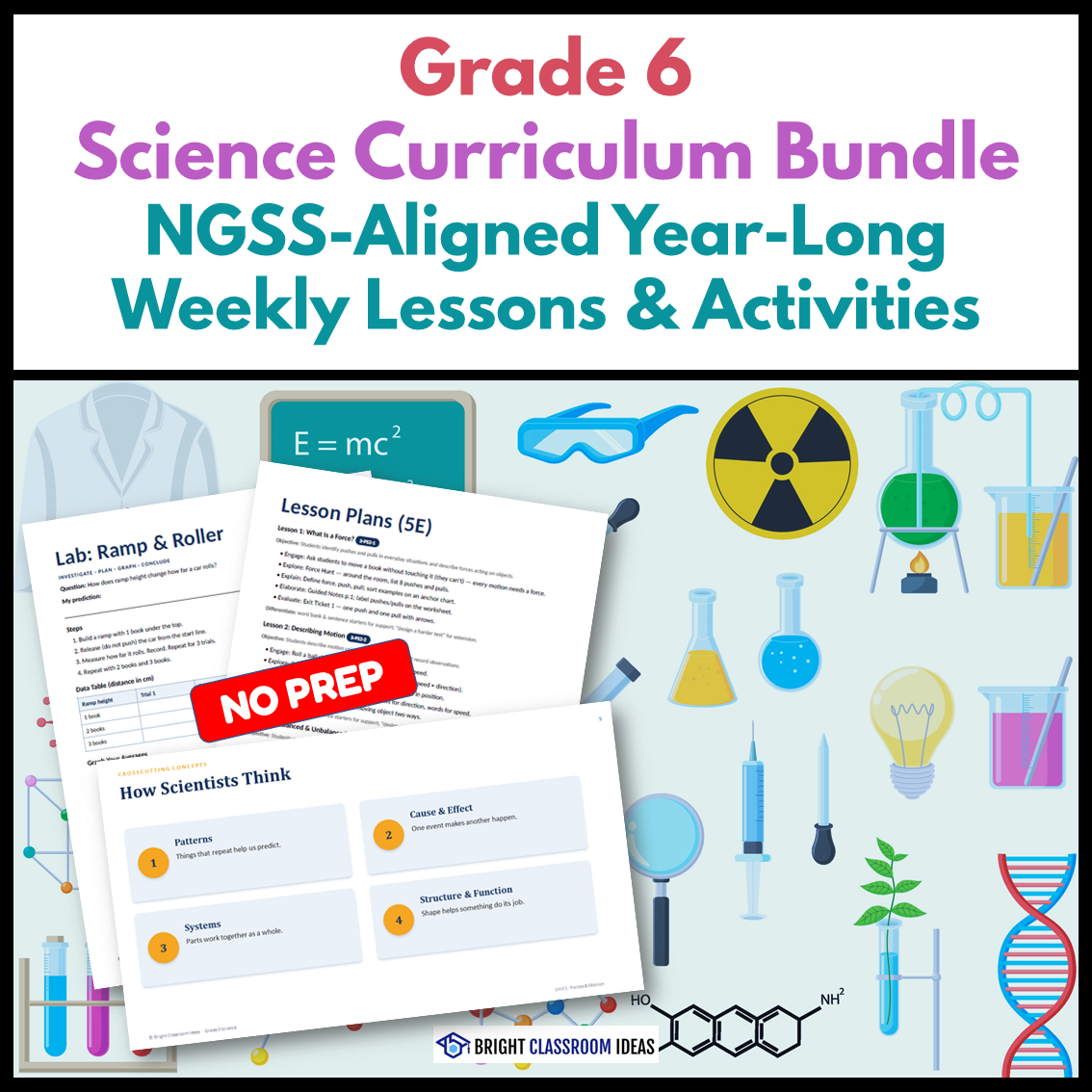
Participate in daily lessons combining direct instruction/guided notes, reading passages with comprehension questions, hands-on labs and STEM challenges, vocabulary activities, worksheets, and exit tickets/quizzes; complete unit projects, unit tests, and a capstone STEM challenge.

Read two chapters per day (independently or aloud), watch a related video, complete a chapter quiz and vocabulary words, fill out a KWL worksheet across the week, and do a related daily activity (e.g., draw the Titanic/iceberg, sink/float experiment, Titanic passenger role-play).
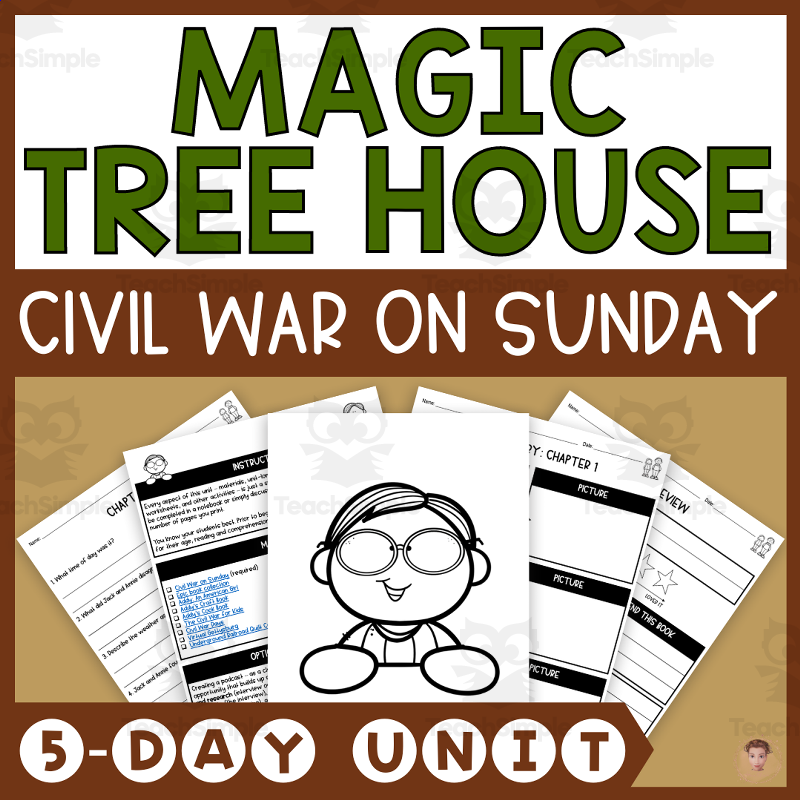
Over 5 days, read two chapters per day (independently or aloud), watch a themed video, complete a chapter quiz and vocabulary worksheet, fill in a KWL chart (before/after reading), and do a daily hands-on activity (e.g., make a 'housewife' sewing kit, draw/make a Clara Barton paper doll and nurse's hat, build a Civil…
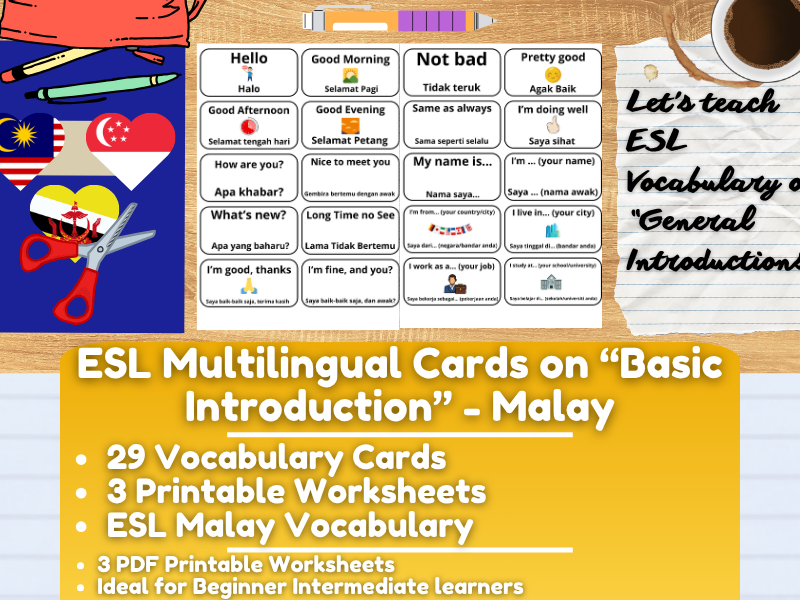
Give beginner ESL students a bilingual English-Malay vocabulary reference for greetings, introductions, and basic small-talk phrases.
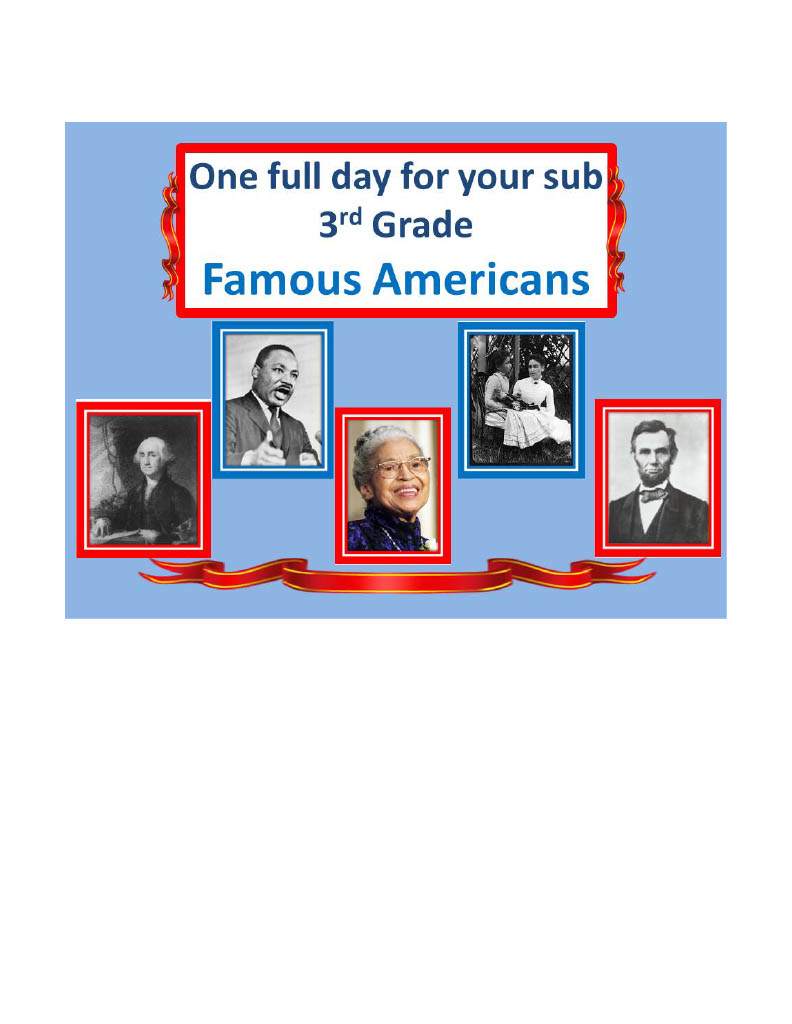
Complete morning/afternoon message worksheets, independent reading with reader-response forms, read-and-answer-questions biography activities, play a 'Famous Americans Board Game' recording facts learned, build a timeline of important dates, practice naming/adding coin and bill amounts featuring Famous Americans, play vocabulary games,…
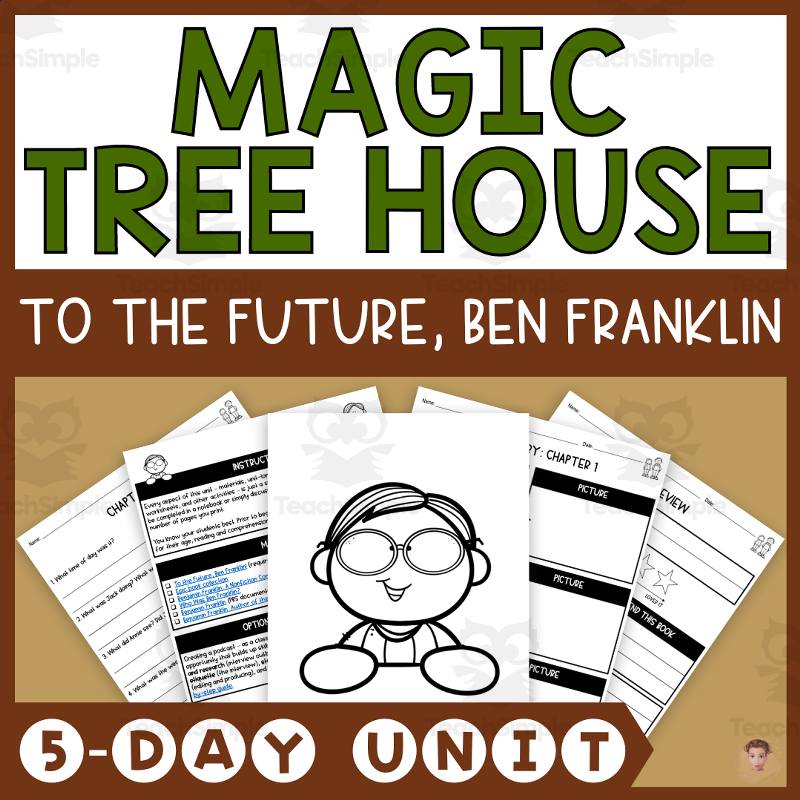
Read two chapters per day (independently or aloud), watch a related video, complete a chapter quiz and vocabulary words, fill out a KWL worksheet across the week, and do a related daily activity (e.g., draw historic Philadelphia, write a constitution, kite/electricity experiment).
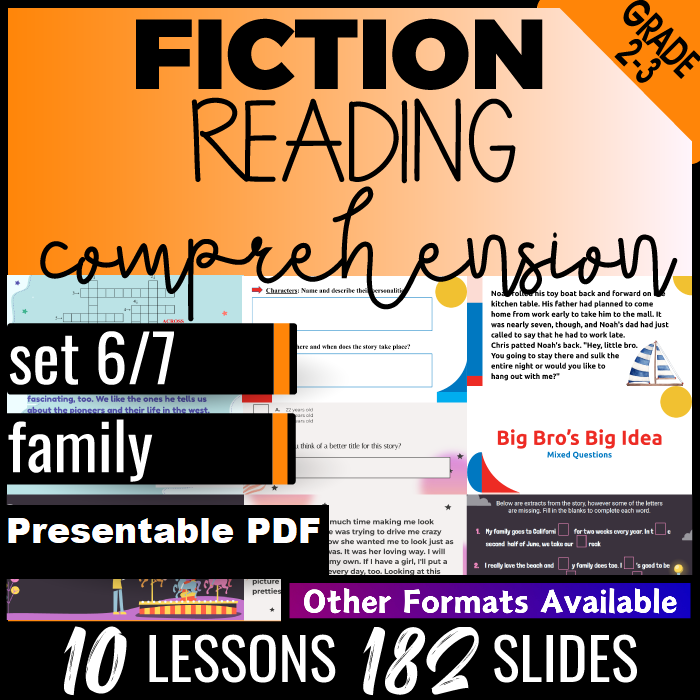
Gives grade 2-3 students short fiction stories about family situations, each paired with comprehension questions, a vocabulary activity, a timed read-aloud, and a summary/writing task.