



3,926 products added recently
Page 2 - Physics Projects High School
Challenge your high school students with physics projects that require deeper analysis and application. This collection includes electromagnetism experiments, quantum physics introductions, and mechanical system studies. By integrating these projects into your curriculum, you can prepare students for further studies in physics.

 Show filters

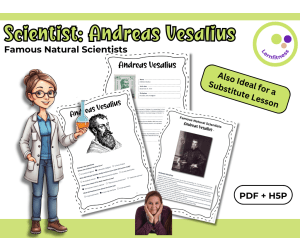
Scientist: Vesalius – Fact Sheet, Quiz, and Interactive Exercises
Life Sciences, Science, Biology, Physics, STEM, Human Body, Grade 9, 10, 11, Worksheets, Worksheets & Printables, Quizzes, Quizzes and Tests, Teacher Tools, Projects, Activities
Discover Andreas Vesalius – The Pioneer of Modern Anatomy Andreas Vesalius may be widely known as a groundbreaking anatomist, but did you know he revolutionized the study of the human body and laid the foundation for modern medical science? This comprehensive teaching resource introduces your students in grades 7–10 to Vesalius’s remarkable contributions to anatomy and medicine. Designed for a 45-minute lesson, it combines engaging informational content with interactive and creative tasks to ensure a memorable learning experience. What’s Included: Concise Informational Text: A clear and engaging overview of Vesalius’ role in science. Fact Sheet Activity: Encourages students to organize knowledge and work creatively. Quiz with Solutions: Promotes fun, interactive learning and self-assessment. Additional Exercises: Students can create their own questions and collaborate in pairs to deepen their understanding. Flexible Formats: Includes a color and black-and-white printable PDF, as well as interactive H5P tasks for digital learning. Why You’ll Love This Resource: Time-Saving: Perfect for teachers who need a ready-to-go, well-structured lesson. Versatile Use: Ideal for biology, history of science, or cross-curricular lessons in English and science classes. Promotes Independence: Solutions are included, allowing students to check their work and explore the topic at their own pace. Interactive and Engaging: Tasks are designed to keep students actively involved while learning about Vesalius’ legacy. Whether you use it for a regular lesson, substitute teaching, or as part of a digital learning activity, this resource will make Vesalius’ contributions come alive for your students. Bring Vesalius’ fascinating world of science and philosophy into your classroom and inspire your students to see history and science in a whole new light! Have fun exploring the world of science with your students! Warmly, Lernfitness Did You Know? I teach with a certified therapy dog, and together we focus on creating a positive and inspiring learning environment.
Author Lernfitness
Tags Science, Biology, Famous Scientists Lesson, H5P, Interactive Science Exercises, STEM, Human Body, Vesalius, Andreas Vesalius, History Of Science
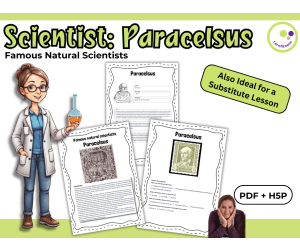
Paracelsus – Scientist Profile and Reading Activities - PDF + H5P
Life Sciences, Science, STEM, Social Studies, Biographies, Inventors, Basic Science, Physics, Chemistry, Human Body, Grade 6, 7, 8, 9, 10, 11, Worksheets, Worksheets & Printables, Quizzes, Quizzes and Tests, Teacher Tools, Projects, Activities
Paracelsus – Scientist Profile and Reading Activities Informational Text, Quiz & Interactive Version (PDF + H5P) ⚗️📄 This resource introduces students to Paracelsus (Philippus Aureolus Theophrastus Bombastus von Hohenheim), a groundbreaking figure in the history of medicine and chemistry. Known for his belief that chemical substances could be used as treatments and for challenging traditional medical thinking in the 16th century, Paracelsus remains a fascinating figure for students exploring early scientific ideas. Designed for secondary classrooms (grades 7–10), this resource supports both content-based science instruction and interdisciplinary work, such as lessons on the history of science, alchemy, or early medicine. What’s included: Informational text on the life and work of Paracelsus Student profile worksheet to summarize key facts Quiz questions with answer key Extension activities: – Write your own questions about the text – Exchange questions with a classmate and answer theirs Formats: – Printable PDF – Editable DOCX (text only) – H5P (text-based interactive version for LMS use) How it works in class: Students begin by reading the short text, either independently or in pairs. They then complete a profile with guided prompts to help structure what they’ve learned. The included quiz questions check reading comprehension and can be done in writing or as a group discussion. For early finishers or more advanced learners, the extension tasks allow for critical thinking and peer interaction. The material is especially practical for substitute teaching since everything is self-contained and doesn’t require subject-specific knowledge. It also works well in blended or digital learning contexts thanks to the H5P version, which students can complete online with automatic feedback. Minimal prep – just print or upload and you're ready to go. Have fun exploring the world of science with your students! Warmly, Lernfitness Did You Know? I teach with a certified therapy dog, and together we focus on creating a positive and inspiring learning environment.
Author Lernfitness
Rating
Tags Science, Famous Scientists Lesson, H5P, Interactive Science Exercises, STEM, History, Scientists, Chemistry, Scientific Concepts

The Electric Home - Electricity PBL Project
Science, Physics, Grade 8, 9, 10, Activities, Projects
I created this unit because I wanted to inject some real-life information into our electricity unit which is usually just filled with notes, worksheets, and other activities. I decided instead to do a flipped unit whereby I'd provide my students with all their notes ahead of time then use our class time to work on our project. This project will work very well for a wide range of grades as it can be easily tailored to fit your class. It's fully editable so you can add, remove, or change anything that you don't think will fit well with your class. To ensure it meets your classroom needs, I've included two different submission and marking criteria. One pair for lower levels and one for higher-level learners. Furthermore, this project can be given to different grade levels and all that needs to be altered are the teacher's expectations and standards while marking. Myinspirationfor this unit is the company, Tesla. I'm a self-proclaimed fanboy of the company and love their innovations and their desire for a greener future. However, as your students progress through this unit, they will discover other means of energy production, storage, and use. The project is broken down into two parts. The first part has the students researching the creation, use, and storage of solar energy. This should take between 8-12 days. The second part involves them putting that knowledge to use as they create a tangible representation of what they've learned. For this portion of the project, I gave them 3 class periods plus 10 days at home for a total of 11-15 class periods plus 10 additional days at home. This project covers the following NGSS: • MS-PS3-2 • MS-PS3-3 • HS-PS3-1 • HS-PS3-2 • HS-PS3-3 • HS-PS3-5 • MS-ESS3-3 • HS-ESS3-4 I also require that they share their Google Drive Project folder with me so that I could periodically check in on their progress. You may want to assign a grade for this as well. Their Unit This electricity unit is a mix of content and project-based learning (PBL) with an emphasis on PBL. Students will get the majority of class time to work on their project. During this time, you will have access to Chromebooks (netbooks,ipads, etc.) and will be given time to design and think about their model. You may also build during this time as well. Project Marks: - Poster - Model Research Component - ONE component will be looked at every 2 to 3 days. - If they finish before the allocated time ends, encourage them to keep working - Dive deeper into their research - Find pictures and paste them into their Doc - Find relevant videos and include them in their Doc I hosted this project on myGoogle Classroom site. If you're not familiar with Google Classroom, check out my post where I show you how to get your Google Classroom set up in 3 minutes . I highly recommend Google Classroom plus, it's free! For this project, I have my students working in groups of 2. If they miss a day, it's very easy to stay up-to-date via our Google Classroom site. To ensure students weren't rushing ahead, I would only upload the files below when we were ready to move on. I allocated between 2-3 days per "Day" below depending on the speed my students were working. • The Electric Home - Overview and Day 1 • The Electric Home - Day 2 • The Electric Home - Day 3 • The Electric Home - Day 4 • The Electric Home - Final Submission • The Electric Home - Rubric Each file is fully editable and is included in your download. This project will provide your students with a real-life example of green electricity use that they will keep with them after they leave your class.
Author Teach With Fergy
Tags Electric House, PBL Project, Electricity Project, Physical Science, Group Projects, Electric House Project, Electricity Project Ideas, Teach Electricity, Project On Electricity, Teaching Electricity, 4th Grade Electricity Projects, Electric House Project Ideas
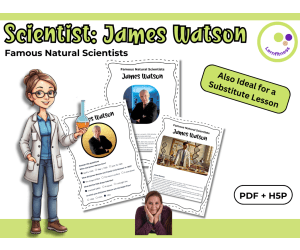
Scientist James Watson – Fact Sheet, Quiz & Interactive PDF incl. H5P
Life Sciences, Science, STEM, History, Social Studies, Biographies, Inventors, Basic Science, Physics, Biology, Grade 6, 7, 8, 9, 10, 11, Worksheets, Worksheets & Printables, Quizzes, Quizzes and Tests, Teacher Tools, Projects, Activities
Scientist James Watson - Fact Sheet, Quiz & Interactive Version (PDF & H5P) James Watson – Discovering the DNA Double Helix Fact Sheet, Quiz & Interactive Exercises (PDF + H5P) This 45-minute resource introduces students in grades 7–10 to James Watson and his role in one of the most important scientific discoveries of the 20th century: the structure of DNA. Most students have heard of DNA, but they often don’t know much about how its double helix structure was uncovered – or who was involved in the process. Together with Francis Crick, and building on key work by Rosalind Franklin, Watson helped lay the groundwork for modern genetics. To make this big topic more manageable in class, I’ve put together a short, ready-to-use lesson. It includes an informational text, a fact sheet, quiz questions with answers, and a few creative tasks that get students thinking and engaging with the content. All materials are included in both color and black-and-white versions for flexible use – whether printed or on-screen. What’s included: A short, accessible text on James Watson and the discovery of DNA A fact sheet to help students organize and reflect on the key ideas Quiz questions (with solutions) to check understanding A creative task where students come up with their own questions and discuss them in pairs Formats: PDF for printing or digital use, plus an H5P version for interactive learning Answer key included I’ve used this in biology lessons as part of a genetics unit, but it also works well when exploring the history of science or how scientific discoveries are made. It’s especially helpful when time is short and you want something that’s both informative and easy to implement – no extra prep needed. 🚀 Download now and bring the legacy of James Watson into your biology lessons today! 📍 Best wishes, Heike from Lernfitness Did You Know? I teach with a certified therapy dog, and together we create a positive and inspiring learning environment. 🐶✨
Author Lernfitness
Tags Science, Biology, Famous Scientists Lesson, H5P, Interactive Science Exercises, STEM, History, Scientists, Physiology, James Watson
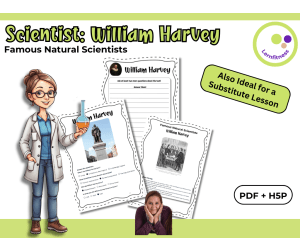
Scientist: William Harvey Fact Sheet, Quiz, and Interactive Exercises
Life Sciences, Science, Biology, Physics, STEM, Human Body, History, Social Studies, Grade 7, 8, 9, Worksheets, Worksheets & Printables, Quizzes, Quizzes and Tests, Teacher Tools, Projects, Activities
Discover William Harvey – The Scientist Who Unveiled the Circulatory System William Harvey is best known as the physician who discovered the circulation of blood, revolutionizing our understanding of the human body and laying the groundwork for modern physiology. This comprehensive teaching resource introduces your students in grades 6–8 to Harvey’s groundbreaking contributions to biology and medicine. Designed for a 45-minute lesson, it combines engaging informational content with interactive and creative tasks to ensure a memorable and educational experience. What’s Included: Concise Informational Text: A clear and engaging overview of William Harvey’s role in science. Fact Sheet Activity: Encourages students to organize knowledge and work creatively. Quiz with Solutions: Promotes fun, interactive learning and self-assessment. Additional Exercises: Students can create their own questions and collaborate in pairs to deepen their understanding. Flexible Formats: Includes a color and black-and-white printable PDF, as well as interactive H5P tasks for digital learning. Why You’ll Love This Resource: Time-Saving: Perfect for teachers who need a ready-to-go, well-structured lesson. Versatile Use: Ideal for biology, history of science, or cross-curricular lessons in English and science classes. Promotes Independence: Solutions are included, allowing students to check their work and explore the topic at their own pace. Interactive and Engaging: Tasks are designed to keep students actively involved while learning about William Harvey’s legacy. Whether you use it for a regular lesson, substitute teaching, or as part of a digital learning activity, this resource will make William Harvey’s contributions come alive for your students. Bring William Harvey’s fascinating world of science and medicine into your classroom and inspire your students to see history and science in a whole new light! Have fun exploring the world of science with your students! Warmly, Lernfitness Did You Know? I teach with a certified therapy dog, and together we focus on creating a positive and inspiring learning environment.
Author Lernfitness
Tags Science, Biology, Famous Scientists Lesson, H5P, Interactive Science Exercises, STEM, William Harvey, Circulatory System, Medicine, Physician

Who Has It? – Chemical Elements Game (1–118) – 3 Levels of Differentia
STEM, Science, Chemistry, Physics, Life Sciences, Earth and Environmental Sciences, Basic Science, Special Resources, Social Emotional Learning (SEL), Special Education Needs (SEN), Homeschool Templates, Grade 6, 7, 8, 9, 10, 11, Activities, Games, Worksheets & Printables, Task Cards, Quizzes and Tests, Teacher Tools, Quizzes, Worksheets, Projects, Flashcards
Who Has It? – Chemical Elements Game (1–118) – 3 Levels of Differentiation A cooperative chemistry card game for grades 7–10 to review atomic numbers, element names, and symbols 🧪🎯 This resource is a classroom game that helps students become more confident with the chemical elements – from hydrogen to oganesson. The game follows the well-known “I have… who has?” format and is designed to reinforce students’ understanding of element names, symbols, and atomic numbers in a playful and interactive way. To support different learning levels, the material includes three differentiated versions of the full game, each with 118 element cards: With element names for both question and answer (beginner level) Only the “I have…” part includes the name , the question uses the symbol/number (intermediate level) Without element names – players must match based on symbol and atomic number alone (advanced level) Each version builds on the last and can be used flexibly depending on students' prior knowledge. The game works best with medium to large groups and encourages students to listen carefully, stay engaged, and support one another. What’s included: 3 full card sets (118 cards per set = 354 total) Differentiated by content and level of language support Clear instructions for printing, laminating, and use Ideal for individual, pair, or group work How I use it in class: I’ve played this game both at the end of a chemistry unit and as a fun opener when starting the periodic table. It’s also perfect for substitute lessons or for classes with mixed ability levels. Since each student needs to be ready when their card comes up, it fosters attention and collaboration. This is one of those games where learning happens almost by accident – students are so focused on playing that they internalize atomic numbers and symbols without even noticing. A simple, engaging way to bring structure, repetition, and movement into chemistry class – no extra prep needed. If you're looking for an easy way to help students become more confident with the periodic table, this might be worth trying in your classroom. Best, Heike from Lernfitness Did You Know? I teach with a certified therapy dog, and together we create a positive and welcoming learning environment. 🐶
Author Lernfitness
Rating
Tags Game, Educational Card Games, Chemistry, Physics, STEM Science Matching Game, Chemical Elements, Periodic Table Matching Game, Who Has It, STEM, Who Has It?

Jacques Monod – Fact Sheet, Quiz & Interactive PDF incl. H5P
Life Sciences, Science, STEM, History, Social Studies, Biographies, Inventors, Basic Science, Physics, Biology, Grade 6, 7, 8, 9, 10, 11, 12, Worksheets, Worksheets & Printables, Quizzes, Quizzes and Tests, Teacher Tools, Projects, Activities
Scientist Jacques Monod - Fact Sheet, Quiz & Interactive Version (PDF & H5P) Jacques Monod – Gene Regulation and the Logic of Life Fact Sheet, Quiz & Interactive Exercises (PDF + H5P) 🧬⚙️ This 45-minute resource introduces students in grades 9–11 to Jacques Monod – a French molecular biologist whose work helped uncover how genes are turned on and off. In many biology classes, students learn what DNA is and how proteins are made. But the question of how cells know which genes to activate – and when – often stays abstract. Monod, together with François Jacob, studied this in bacteria and developed the model of the lac operon. It’s a great example of how cells respond to their environment, and it laid the groundwork for much of what we know about gene regulation today. To make this topic more tangible, I’ve created a compact, ready-to-use lesson that breaks it down into manageable parts. It includes an informational text, a fact sheet, quiz questions with answers, and a creative partner task. The material comes in color and black-and-white versions, plus there’s a digital H5P version. What’s included: A clear, student-friendly text about Jacques Monod and the lac operon A fact sheet to help students sort and retain key information Quiz questions with an answer key – good for review or independent work A task where students design and exchange their own questions in pairs Printable PDF and interactive H5P formats for flexible use 💻 Answer key included ✅ I’ve used this resource during our genetics unit, especially when moving from DNA basics to regulation and gene expression. It also fits well in discussions about how scientific models are developed and tested. The partner task works well in small groups or for homework – depending on your setup. 🚀 Download now and bring the legacy of Jacques Monod into your biology lessons today! 📍 Best wishes, Heike from Lernfitness Did You Know? I teach with a certified therapy dog, and together we create a positive and inspiring learning environment. 🐶✨
Author Lernfitness
Tags Science, Biology, Famous Scientists Lesson, H5P, Interactive Science Exercises, STEM, History, Scientists, Jacques Monod, Molecular Biology
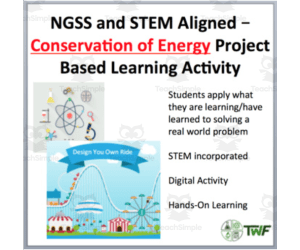
Conservation of Energy Culminating PBL
Science, Physics, Grade 9, 10, 11, 12, Activities, Projects
Conservation of Energy Culminating PBL: An Enriching Resource for Physics Students Conservation of Energy Culminating PBL is an immersive resource that drives high school physics students to explore the crucial concept of Conservation of Energy in depth. As a problem-based learning resource, it encourages students to analyse real-world problems, thus sharpening their critical thinking skills and enabling them to apply learned theories in practical situations. Perfect for both traditional classrooms and homeschooling settings, this educational tool can be incorporated into group assignments or individual tasks. A Curriculum -Aligned Activity Supporting Hands-On Engagement This activity follows NGSS, Common Core, and STEM specifications for effective instruction. It guides students towards understanding energy from different angles through computational modeling and designing prototypes under defined constraints. The main objective involves applying key principles such as the work-energy theorem and conservation of energy for problem-solving. The exercise allows students an opportunity to test their engineering skills by creating prototypes that mimic real-world processes while maintaining safety norms. An Effective Educational Tool with Positive Feedback from Users User feedback praises the product’s adherence to educational standards along with its ability to inspire student motivation towards exploring energy-related topics. Additionally, the editable feature allows educators to tailor it according to specific needs or preferences. In conclusion: The resource assists students in understanding how physicists resolve real-life challenges using concepts such as Newton's Laws (especially Newton’s Second Law), friction plus subtopics related types of Energy etc. An outstanding feature is its comprehensive curriculum coverage - from basic aspects like modelling energy on macroscopic scales where motions and relative positions account energies amidst particles till exciting areas like energy conversion adhering to guidelines and cost limitations. The tool comes supplied with evaluation tools and tips for smooth engagement. Other available sub-topics include aspects of Physics (for instance, Scientific Method,Banked Curves) and Chemistry(such as Polymers). For queries or support, reach out at devon@teachwithfergy.com .
Author Teach With Fergy
Tags Conservation Of Energy, Problem-based Learning, Physics Curriculum, Computational Modeling, Engineering Skills

Justus von Liebig – Chemistry Pioneer and Science Reformer
Life Sciences, Science, STEM, Social Studies, Biographies, Inventors, Basic Science, Physics, Chemistry, Biology, Grade 6, 7, 8, 9, 10, 11, Worksheets, Worksheets & Printables, Quizzes, Quizzes and Tests, Teacher Tools, Projects, Activities
Justus von Liebig – Chemistry Pioneer and Science Reformer A ready-to-use reading and activity set for grades 7–10 (PDF + H5P) ⚗️📄 A printable and digital resource for grades 7–10 science and cross-curricular teaching 🧪🧠 This resource introduces students to Justus von Liebig, one of the most influential chemists of the 19th century. Known for his work on agricultural chemistry, food science, and lab-based teaching, Liebig helped shape the way chemistry is studied and taught even today. His contributions go beyond formulas – they reach into education, nutrition, and everyday life. The resource includes a concise, accessible text paired with simple, structured tasks. It can be used in a chemistry unit, during a lesson on the history of science, or as part of a substitute plan where no specialized background is required. Included in this resource: Informational text on Justus von Liebig’s life and achievements Student worksheet for creating a scientist profile Quiz questions with a complete answer key Two extension tasks: – Students write their own questions based on the reading – Peer activity to exchange and answer each other’s questions File formats: – PDF for print or digital use – Editable DOCX (text only) – H5P version for use in digital classrooms (no images) How it’s used in the classroom: This kind of material works well as a quiet reading activity, a springboard for science-history discussions, or a way to highlight lesser-known scientists who had a big impact. I’ve used it during lessons on food chemistry and nutrient cycles to provide real-world context. The H5P version supports independent and self-paced work, especially in hybrid or online classrooms. With minimal prep and clear instructions, the material can be used flexibly across settings. A thoughtful and low-prep resource to bring historical depth and personal stories into science class. Have fun exploring the world of science with your students! Warmly, Lernfitness Did You Know? I teach with a certified therapy dog, and together we focus on creating a positive and inspiring learning environment.
Author Lernfitness
Rating
Tags Science, Famous Scientists Lesson, H5P, Interactive Science Exercises, STEM, Scientists, Chemistry, Justus Von Liebig, Biology, Plants
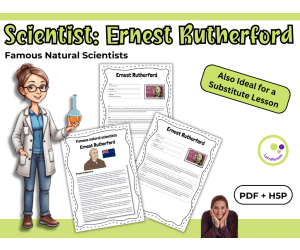
Ernest Rutherford – Scientist Profile & Reading Activities - PDF + H5P
Life Sciences, Science, STEM, Social Studies, Biographies, Inventors, Basic Science, Physics, Chemistry, Human Body, Grade 6, 7, 8, 9, 10, 11, Worksheets, Worksheets & Printables, Quizzes, Quizzes and Tests, Teacher Tools, Projects, Activities
Ernest Rutherford – Scientist Profile & Reading Activities Informational Text, Student Tasks & Digital Quiz (PDF + H5P) 🧪📘 This resource introduces students to Ernest Rutherford, the scientist who fundamentally changed our understanding of the atom. Known as the "father of nuclear physics," Rutherford developed the nuclear model of the atom and led key experiments that still form part of modern chemistry and physics education. Designed for use in grades 7–10, this material helps students understand Rutherford’s contributions in an accessible way. It’s structured so that it can be used in science class, as part of a research unit, or even in non-specialist cover lessons. What’s included: Short informational text about Ernest Rutherford’s life and discoveries Student profile worksheet to summarize main facts Quiz questions with a full solution key Two optional extension tasks: – Students create their own questions about the text – Partner activity to exchange and answer peer questions Formats: – Printable PDF – Editable DOCX (text only) – Interactive H5P version for digital learning (no images) How it’s used in class: Students start by reading the informational text. Then, they complete a profile sheet to record what they’ve learned. The quiz questions serve as a quick comprehension check, either in writing or as a classroom discussion. For early finishers, the extension activities offer a nice way to promote peer interaction and critical thinking. This resource is also well-suited for digital classrooms: the H5P version works in most learning management systems and allows for self-paced, self-checking learning. The clear structure makes it easy to use without extra explanation – ideal for independent study or substitute teaching. It’s a simple but effective way to introduce students to a key figure in the development of atomic theory – without needing complex lab setups or advanced prior knowledge. Just print or upload – and you're ready to go. Have fun exploring the world of science with your students! Warmly, Lernfitness Did You Know? I teach with a certified therapy dog, and together we focus on creating a positive and inspiring learning environment.
Author Lernfitness
Rating
Tags Science, Famous Scientists Lesson, H5P, Interactive Science Exercises, STEM, History, Scientists, Chemistry, Ernest Rutherford, Nuclear Physics

Research Organizer & Essay Assignment: Albert Einstein
Social Studies, ELA, History, History: Europe, Science, Physics, Research, Grade 8, 9, 10, 11, 12, Activities, Projects, Worksheets & Printables, Worksheets
Research Organizer & Essay Assignment: Albert Einstein Guide students to research the renowned physicist Albert Einstein with this complete 6-page resource. Students begin by gathering facts and citing quality sources on a provided worksheet. Next, they use their research to draft a 5-paragraph essay, following clear instructions and tips. A peer review checklist and grading rubric aligned to Common Core ELA standards support the drafting process. Whether used as a full research project or individual activities, these materials scaffold the research and writing process step-by-step. The organizer builds notetaking skills; the outline structures the essay format; the checklist facilitates peer review; and the rubric assesses the final product. Suitable for grades 8-11, this resource develops key research, writing, revision, and assessment skills. Edit the rubric as needed with the included Google Sheet file.
Author The Language of Educational Art, LLC
Tags Research, Essay, Notetaking, Outlining
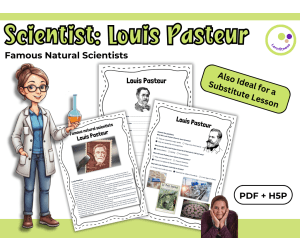
Louis Pasteur – Understanding the Scientist Behind Vaccines and Germ
Life Sciences, Science, STEM, Social Studies, Biographies, Inventors, Basic Science, Physics, Chemistry, Technology, Grade 6, 7, 8, 9, 10, 11, Worksheets, Worksheets & Printables, Quizzes, Quizzes and Tests, Teacher Tools, Projects, Activities
Louis Pasteur – Understanding the Scientist Behind Vaccines and Germ Theory Comprehension Activities A short reading and activity set for secondary science lessons 🧫📖 (PDF + H5P) ⚗️📘 A printable and digital resource for grades 7–10 science and cross-curricular teaching 🧪🧠 This resource gives students an introduction to the life and work of Louis Pasteur – the chemist and microbiologist best known for developing vaccines, inventing pasteurization, and changing the way we understand germs and disease. His work connects naturally to many science units, especially those on health, microbiology, or scientific discovery. The material is straightforward and can be used across different contexts – whether in a focused biology or chemistry lesson, as part of a “scientist spotlight,” or even in non-specialist substitute teaching situations. What’s included: A clear and accessible informational text about Louis Pasteur A profile worksheet to help students summarize key facts Quiz questions to check comprehension (with full solutions) Two optional extension tasks: – Students write their own questions about the text – Exchange and answer peer questions in pairs File formats: – PDF for print and digital use – Editable DOCX (text only) – H5P (interactive version for digital platforms, without images) How it works in the classroom: Students start by reading the text, then complete the profile and quiz. The extension tasks are ideal for partner work, early finishers, or to stretch more confident learners. The layout is clear enough that students can work independently – even without strong background knowledge in science. The H5P version is great for online learning or blended classrooms, where students can complete the quiz and get immediate feedback. I’ve used this kind of format to support lessons on immune response, disease prevention, and historical breakthroughs in science. No complex setup required – just print, upload, or project, and you’re ready to go. Have fun exploring the world of science with your students! Warmly, Lernfitness Did You Know? I teach with a certified therapy dog, and together we focus on creating a positive and inspiring learning environment.
Author Lernfitness
Rating
Tags Science, Famous Scientists Lesson, H5P, Interactive Science Exercises, STEM, Scientists, Chemistry, Louis Pasteur, Vaccines, Germ
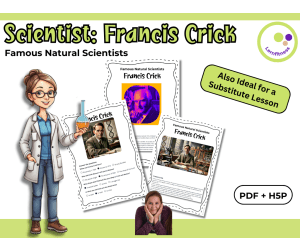
Scientist Francis Crick – Fact Sheet, Quiz & Interactive PDF incl. H5P
Life Sciences, Science, STEM, History, Social Studies, Biographies, Inventors, Basic Science, Physics, Biology, Grade 6, 7, 8, 9, 10, 11, 12, Worksheets, Worksheets & Printables, Quizzes, Quizzes and Tests, Teacher Tools, Projects, Activities
Scientist Francis Crick - Fact Sheet, Quiz & Interactive Version (PDF & H5P) Francis Crick – The DNA Double Helix and the Origins of Modern Genetics Fact Sheet, Quiz & Interactive Exercises (PDF + H5P) 🧬 This 45-minute resource introduces students in grades 7–10 to Francis Crick and his role in uncovering the structure of DNA – one of the most influential discoveries in modern biology. Many students are familiar with the term DNA, but only a few know the story behind how scientists first identified its double helix shape. Together with James Watson, and building on the work of Rosalind Franklin, Crick helped explain how genetic information is stored and passed on – a breakthrough that still shapes biology and medicine today. To make this complex topic easier to teach, I’ve put together a concise and structured lesson. It includes a short informational text, a fact sheet, quiz questions with answers, and a creative task where students come up with their own questions. All versions are included – both in color and black-and-white – and there’s also an interactive H5P version for digital use 💻. What’s included: A short, accessible text on Francis Crick and the discovery of DNA A fact sheet to help students sort and reflect on the key points Quiz questions (with solutions) to check understanding A creative task where students write and exchange their own questions Formats: Printable/digital PDF and interactive H5P version Answer key included ✅ I’ve used this during our genetics unit, but it also fits well in lessons on the history of science or how discoveries are made. It’s easy to integrate and works well for partner work, independent tasks, or short science projects. 🚀 Download now and bring the legacy of Francis Crick into your biology lessons today! 📍 Best wishes, Heike from Lernfitness Did You Know? I teach with a certified therapy dog, and together we create a positive and inspiring learning environment. 🐶✨
Author Lernfitness
Tags Science, Biology, Famous Scientists Lesson, H5P, Interactive Science Exercises, STEM, History, Scientists, Francis Crick, DNA
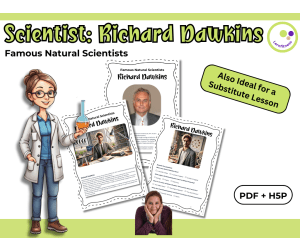
Richard Dawkins – Fact Sheet, Quiz & Interactive PDF incl. H5P
Life Sciences, Science, STEM, History, Social Studies, Biographies, Inventors, Basic Science, Physics, Biology, Grade 6, 7, 8, 9, 10, 11, 12, Worksheets, Worksheets & Printables, Quizzes, Quizzes and Tests, Teacher Tools, Projects, Activities
Scientist Richard Dawkins - Fact Sheet, Quiz & Interactive Version (PDF & H5P) Richard Dawkins – Genes, Evolution, and the “Selfish Gene” Fact Sheet, Quiz & Interactive Exercises (PDF + H5P) 🧬🐒 This 45-minute resource introduces students in grades 9–12 to Richard Dawkins – an evolutionary biologist best known for popularizing the idea of the “selfish gene.” By the time students reach upper secondary levels, they usually have a solid understanding of natural selection. Dawkins' perspective invites them to look one level deeper: not just at organisms competing for survival, but at genes as the driving force behind evolution . His work sparked a lot of discussion – not only in science, but also in philosophy and ethics. To help students engage with these more abstract ideas, I’ve put together a structured and accessible lesson. It includes a short informational text, a fact sheet, quiz questions with answers, and a creative partner task. The materials are available in color and black-and-white versions, plus there’s a digital H5P version for interactive use. What’s included: A student-friendly overview of Richard Dawkins and the core ideas of The Selfish Gene A fact sheet to help students organize key concepts Quiz questions with solutions for quick comprehension checks A partner task where students create and exchange questions Available as printable PDF and interactive H5P version 💻 Answer key included ✅ I’ve used this resource in upper-level biology and ethics courses – especially when discussing how scientific ideas evolve and how they influence thinking beyond the lab. The material also opens up interesting conversations about the role of science communication. Works well for individual tasks, pair work, or short discussion-based projects. 🚀 Download now and bring the legacy of Richard Dawkins into your biology lessons today! 📍 Best wishes, Heike from Lernfitness Did You Know? I teach with a certified therapy dog, and together we create a positive and inspiring learning environment. 🐶✨
Author Lernfitness
Tags Science, Biology, Famous Scientists Lesson, H5P, Interactive Science Exercises, STEM, History, Scientists, Richard Dawkins, The Selfish Gene
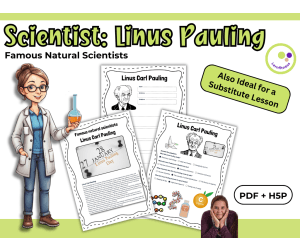
Linus Pauling – Scientist Profile and Reading Tasks
Life Sciences, Science, STEM, Social Studies, Biographies, Inventors, Basic Science, Physics, Chemistry, Technology, Grade 6, 7, 8, 9, 10, 11, Worksheets, Worksheets & Printables, Quizzes, Quizzes and Tests, Teacher Tools, Projects, Activities
Linus Pauling – Scientist Profile and Reading Tasks Comprehension Activities A short reading and activity set (PDF + H5P) ⚗️📘 A printable and digital resource for grades 7–10 science and cross-curricular teaching 🧪🧠 This ready-to-use resource introduces students to Linus Carl Pauling – a groundbreaking chemist and one of only two people to receive two unshared Nobel Prizes. His work on chemical bonding, molecular structures, and vitamin research shaped modern chemistry and continues to influence science education today. He’s also remembered for his outspoken views on peace and social responsibility, which makes him an interesting figure across subject areas. The material is designed to help students understand both the scientific and personal contributions of Pauling. It includes a short reading text, a guided profile worksheet, and a short quiz. Two extension tasks allow students to engage more deeply with the text by creating their own questions and discussing them with a partner. What’s included: Informational text on Linus Pauling (student-friendly language) Printable worksheet for creating a profile Quiz questions with solutions Two optional tasks for independent or pair work Formats: – PDF for print and digital use – Editable DOCX (text only, without images) – Interactive H5P version (suitable for most learning platforms) How it can be used: I’ve used materials like this during units on chemical bonding, scientific biographies, or even in interdisciplinary lessons that connect science with ethics or activism. It’s also worked well for cover lessons, as the structure is simple and students can work independently. The H5P version allows students to complete the quiz digitally and get instant feedback, which is helpful in blended learning environments or for homework. The tasks are flexible: they can be used as a full lesson, a review activity, or a meaningful extension when you want to slow down and connect content to real people. Minimal prep. Easy to adapt. A great way to make science a little more human. Have fun exploring the world of science with your students! Warmly, Lernfitness Did You Know? I teach with a certified therapy dog, and together we focus on creating a positive and inspiring learning environment.
Author Lernfitness
Rating
Tags Science, Famous Scientists Lesson, H5P, Interactive Science Exercises, STEM, Scientists, Chemistry, Linus Pauling, Nobel Prize Winner, Chemical Bonding
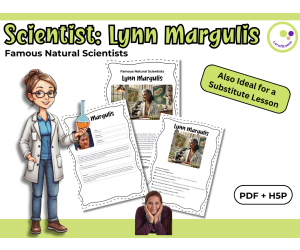
Lynn Margulis – Fact Sheet, Quiz & Interactive PDF incl. H5P
Life Sciences, Science, STEM, History, Social Studies, Biographies, Inventors, Basic Science, Physics, Biology, Grade 6, 7, 8, 9, 10, 11, 12, Worksheets, Worksheets & Printables, Quizzes, Quizzes and Tests, Teacher Tools, Projects, Activities
Scientist Lynn Margulis - Fact Sheet, Quiz & Interactive Version (PDF & H5P) Lynn Margulis – Endosymbiosis and a New View of Evolution Fact Sheet, Quiz & Interactive Exercises (PDF + H5P) 🧫🔬 This 45-minute resource introduces students in grades 7–10 to Lynn Margulis – a scientist who challenged conventional ideas about evolution and opened up new ways of understanding how complex cells came to be. Many students are familiar with Darwin and natural selection, but fewer know about Margulis and her theory of endosymbiosis. Through her work in the 1960s and 70s, she proposed that parts of our cells – like mitochondria and chloroplasts – actually originated from ancient symbiotic bacteria. Her ideas weren’t widely accepted at first, but over time they became a foundational part of modern biology. To make this topic accessible, I’ve put together a compact, ready-to-use lesson with everything needed for a solid introduction. It includes a short informational text, a fact sheet, quiz questions with answers, and a creative partner task. All materials are available in both color and black-and-white versions, plus there’s an H5P version for digital use. What’s included: A student-friendly text about Lynn Margulis and her contributions to evolutionary biology A fact sheet to help students collect and structure key points Quiz questions with solutions for quick checks or review A pair activity where students create and exchange their own questions Printable PDF and interactive H5P formats for flexible use 💻 Answer key included ✅ I’ve used this resource as part of our evolution unit, especially when discussing how scientific theories develop and why some ideas take time to be accepted. It also fits well into lessons on women in science or interdisciplinary approaches to biology. The format allows for independent work, partner activities, or short projects – whatever suits your group best. 🚀 Download now and bring the legacy of Lynn Margulis into your biology lessons today! 📍 Best wishes, Heike from Lernfitness Did You Know? I teach with a certified therapy dog, and together we create a positive and inspiring learning environment. 🐶✨
Author Lernfitness
Tags Science, Biology, Famous Scientists Lesson, H5P, Interactive Science Exercises, STEM, History, Scientists, Lynn Margulis, Endosymbiotic Theory

Banked Curves – Whodunnit PBL
Science, Physics, Grade 9, 10, 11, 12, Activities, Projects
This is an engaging, problem-based inquiry activity that gets your students to examine banked curves to solve a real-life problem and learn to think critically. Designed for science students in high school physics, this activity is NGSS, Common Core, and STEM-aligned and uses common experiences and materials to apply your lessons in a meaningful way. Your resource is fully editable and can be uploaded to your class site or printed for students' use. Learning Goals: - Develop a set of reliable mathematical procedures that can be used to solve a real-world problem - Properly draw free body diagrams for objects on an inclined plane - Perform calculations using the centripetal acceleration equation Prerequisites: - Newton’s Second Law - Free Body Diagrams - Centripetal Force and Acceleration NGSS HS-PS2-1 Motion and Stability: Forces and Interactions This activity will motivate and engage your students and force them to think critically, analyze a common situation, apply what they’ve learned in a meaningful way, problem-solve and work collaboratively. In this activity, your students’ job is to: 1) Apply what they have learned both inside and outside the classroom to solve the posed problem in the best way possible 2) Conduct their own research to decide if they need to learn anything else in order to solve the problem 3) Make sure they answer all the questions you asked them by collecting data and providing evidence and reasoning for their responses. Your complete resource includes a student and teacher version. The student version contains the basic information they can use to design and carry out their experiment. The teacher version includes the answer key, look-fors as well as teacher tips tricks to make everything go smoothly. If you have any questions, please send me an email – devon@teachwithfergy.com
Author Teach With Fergy
Tags Banked Curves, Banking On Physics, Project Based Learning, Practice Problems, Physical Science
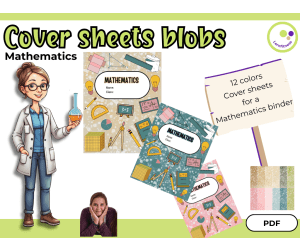
Mathematics Binder Covers – Templates for Classroom Use
Science, STEM, Basic Science, Special Resources, Montessori, Classroom Management, Resources for Teachers, Math, Physics, Technology, Homeschool Templates, Grade 6, 7, 8, 9, Worksheets, Worksheets & Printables, Teacher Tools, Projects, Activities, Workbooks, Drawing Templates & Outlines, Templates, Graphic Organizers, Classroom Decor
Mathematics Binder Covers – Templates for Classroom Use Organize your Math handouts, notes, and units with visual clarity Simple and flexible templates to help organize your Mathematics materials In my math classes, it can be a challenge to keep things organized - especially when it comes to multiple units, lab notes, worksheets and review materials. To make it easier for my students and myself, I designed these simple binder sleeves. There are 12 different pages. The covers have a clean, colorful blob layout that is friendly but not distracting. I usually print them out and use them as cover sheets or as dividers in folders for students or teachers. They also work well for digital learning environments, e.g. as section covers in PDF files or on classroom platforms. I like that the color scheme allows students to quickly find what they are looking for, and it brings a little more structure to a subject that is often riddled with formulas and technical terms. When used as cover sheets, students can choose their favorite color for their cover sheet. This resource is handy - and has saved me a lot of time in lesson preparation and follow-up. What’s included: 12 math-themed cover pages different colors zu choose as a cover sheet as a divider between the individual Mathematics topics I've printed these on colored paper for my own binder and also used them digitally in student notebooks. Works well for both teacher organization and student-facing materials. 📍 Best wishes, Heike from Lernfitness Math teacher (Chemistry teacher, Biology teacher) in Germany Did You Know? I teach with a certified therapy dog, and together we create a positive and inspiring learning environment. 🐶✨
Author Lernfitness
Rating
Tags Science, STEM, Binder, Cover Sheet, Template, Organizer, Organize, GoodNotes, Mathematics, Math