



3,953 products added recently
Page 247 - Activities
Explore a wide array of educational activities designed to enrich your teaching and captivate students' interest. From hands-on projects to interactive games, these resources span various subjects and grade levels. Incorporate these activities into your lesson plans to foster an engaging and dynamic learning environment for all students.

 Show filters


SEL: CANDY Mindfulness Breathing Calming Activity Valentine's Day
Special Resources, Social Emotional Learning (SEL), Not Grade Specific, Activities
SEL: CANDY Mindfulness Breathing Calming Activity Students take a mindful moment to breathe and trace different objects with their fingertips. This activity teaches students how to calm down emotionally while focusing on their breathing. Help your students relax by teaching them the Trace and Breathe technique, which is a part of social emotional learning (SEL). This technique helps students feel calmer by focusing on their breath and making small movements. When they feel upset or overly excited, they can use this technique to calm themselves down. Lots of cute and colorful designs to choose from! Black and White also provided! This SEL: CANDY Mindfulness Breathing Calming Activity comes with: A Description of the Trace and Breathe skill A Poster with Trace and Breathe A Colored Copy of the resource A Copy that is Black and White Ideas for Teachers to use this resource: With individual students Print out pictures based on student interest! To teach the Trace and Breathe Technique To help students to calm down as needed Ideas for Whole Class SEL: Use the technique after recess, after and assembly, etc... Address the needs of Individual Student: Allow student to use when they need a moment to calm down Create a calm down station in the classroom, have several of these printed and laminated for students to choose from and use as needed Steps to engage in this SEL: CANDY Mindfulness Breathing Calming Activity: Take a deep breathe in Begin to trace the picture with your finger Breathe out as you trace Breathe out as long as you can Pause and repeat Other Designs Available here! Animal Bundle- Cat Dog Elephant Monkey Sloth Snake Food Bundle- Pizza Watermelon Popsicle Grapes French Fries Hotdog Transportation Bundle- Airplane Car Bicycle Motorcycle Scooter Train Spring Bundle- Bunny Carrot Chick Flowers Lamb Watering Can Fall Bundle - Bat Candy Corn Ghost Leaf Pumpkin Turkey Winter Bundle - Pine Tree Snow Globe Fireplace Sled Hot Coco Snowman Valentine's Day Bundle: Stegosaurus Balloon Valentine Cupcake Candy Hearts Cupid Need some inspiration on how to use the Trace and Breathe activity in your classroom? READ BELOW! Do your students come in from recess/specials/an assembly/any activity out of the norm all sorts of hyped out and out of control? This is the PERFECT activity to get them to calm-down and transition productively! With TONS of different designs to choose from- each student can pick out a picture that speaks to them! You can laminate each student's page or place them in a protective sheet so that they can stay nicely in their desks. Display the directions on the board or have them printed-out on large poster paper. Teaching the "Trace and Breathe" skill is essential to providing your students a structured way to practice mindfulness, control their heart rate and breathing, and transition from a high to a low-energy activity. The Trace and Breathe series can also be used as an essential piece to a calming corner in your classroom! Create a comfortable, calm space where your students can go when they need to cool down. Teach expectations around when it is appropriate for students to use this corner in the beginning of the year. Then, create a binder with lots of different designs the students can choose from. Place the directions to the Trace and Breathe activity on the wall near the calming corner. Then, as needed, students can visit the calming corner, pull-out the Trace and Breathe binder, pick a design that speaks to them, and engage in a moment of meaningful mindfulness!
Author Mrs Bonie Just Teach
Tags Mindfulness , Breathing, Breathing Activity , Calm Down, Calm Dowm Activity , Calm Down Skill, Sel Lesson, Sel Skill , Valentinesday, Valentine

My Unique Shape (Back to School & Get To Know You Activity)
Special Resources, Math, Graphing, Social Emotional Learning (SEL), Social Skills, Special Education Needs (SEN), Grade 3, 4, 5, 6, 7, 8, Activities
In this product, you will combine graphing and SEL. This is the perfect back-to-school or get-to-know-you activity in any class-not just math! Students will receive a graphing page and a page with questions. Each question has a coordinate after it that the students plot on the graph. When the student is done plotting all the coordinates, they will draw a line to each coordinate and create a very unique shape. Some of the statements are; I like tacos, I have a pet, I have a sibling, I play a sport, I like sushi, I prefer outside to inside, I am an optimist, I like board games , my name has more than 5 letters, I have traveled outside the country, I speak more than one language, and I love gardening-among more. There are 20 statements. If a statement is not true for the student, they simply cross it off or skip to the next statement. This is a great resource for having students share and get to know each other, you will also get to know your students quite well from this activity. This would also be a great advisory activity at the beginning of the year. Another idea is to post these on a bulletin board afterward and admire the different unique shapes of your students. Students can also create an image from their shape if they wish-such as an animal, person, object, etc. One of the objectives of this resource is to allow students to reflect on their likes and dislikes and personality. The other objectives are for students to share commonalities and embrace differences. Lastly, you as the teacher will really get to know your students. This is fully editable so feel free to change the questions to your liking. You know your students best! You do not need to be a math teacher to use this resource! It's great for school counselors, specialists and advisory teachers as well.
Author Jennifer Moyer Taylor
Tags Graphing, Get To Know You, Icebreaker, Bulletin Board Idea, Sel, Back To School, Social Emotional Learning, Math, Advisory, Classroom Community

Number Bonds 11-20 Bingo - Boards 6-10
Math, Fact Families, Addition and Subtraction, Addition, Grade 1, 2, 3, Activities, Games
Number Bonds 11-20 Bingo builds number sense skills with engaging gameplay. Students strengthen understanding of number bonds, or pairs of numbers with a particular sum, through this math bingo game focusing on numbers 11-20. With calling cards and laminated boards, players cover sums announced by the teacher. Squares, counters or dry erase markers track progress. The first to mark three spaces in a row wins! Use this game for whole group lessons, small group practice or even homework. Differentiate further with versions featuring color or black and white. Extend learning with complementary resources practicing skip counting, times tables, fractions and more number bonds. Educators seeking to reinforce number bonds and build math fact fluency will value this game's ability to make essential skills fun.
Author Colleen's Cosmic Collection
Tags Number Bonds, Number Bonds Games, Addition Game, Addition Activity, Math Facts, Addition Facts, Addition Math Facts, Math Fact Practice, Number Bonds To 20, Cccnbb1120

Chinese New Year 2020 Counting Strip
Math, Numbers, Preschool, Kindergarten, Grade 1, Activities
Chinese New Year 2020 Counting Strip: An Innovative Teaching Resource A masterfully crafted teaching resource for kindergarten, pre-school and Grade 1 pupils, the Chinese New Year 2020 Counting Strip imparts fundamental academic skills such as number counting and comprehension in a festive manner. Children engage with colorful counting strips that feature the seven lucky meals linked with the Chinese New Year celebration, adding a cultural learning aspect to their educational journey. Included Resources: 60 counting strips for numbers one up to twenty, An additional batch of 50 strips for numbers one to ten, Ten more strips for eleven up to twenty. The vibrantly styled numbered strips are suitable both group work or solitary tasks making this tool versatile across various settings. Possible Scenarios of Use: In class instruction during math lessons or math centers , Educating students about number recognition and reading numbers through games suited to their level. Note: These exercises provide enjoyment while reinforcing essential mathematical concepts. Suggested usage involves printing out each page before cutting individual counting strip along guided outlines present in each sheet carefully, especially if kids participate in this preparation stage. TIP:: If teachers foresee heavy usage or want prolonged utilization, laminating each piece might be practical. In conclusion, as an instrument that fosters appreciation of significant cultural traditions woven meaningfully into math-oriented classes - the Chinese New Year 2020 Counting Strip stands out as a clever addition to conventional curriculum-learning methods in today’s dynamic classrooms.
Author Koodles Clubhouse
Tags Counting Strips, Chinese New Year, Math Skills, Cultural Learning, Interactive Activities

5th Grade Morning Work | 180 Days Review | Math & ELA | 3rd Quarter
ELA, Math, Grade 5, Centers, Activities, Lesson Plans, Teacher Tools, Worksheets & Printables
Grade 5 Morning Work | 3rd Quarter Student Pages + Full-Year Teacher Resources Keep your fifth grade mornings purposeful, consistent, and easy to manage with 45 days of Grade 5 morning work for Quarter 3 . This resource includes ALL teacher resources for the complete 180-day program , while the student practice pages in this pack are specifically for 3rd Quarter: Days 91–135 . What’s Included ⭐ FULL-YEAR TEACHER RESOURCES You receive the complete teacher toolkit for planning, organizing, differentiating, and assessing the entire 180-day Grade 5 morning work program : Teacher Guide Full 36-week Pacing Guide Skills Checklist for tracking student progress Fully Editable Morning Work Schedule Year-at-a-Glance planning support Differentiation strategies Complete Answer Key for Days 1–180 Printing and classroom organization guidance 📚 STUDENT PAGES INCLUDED: 3RD QUARTER The student portion of this product includes Days 91–135 , providing 45 days of ready-to-use Grade 5 morning work . Each day includes a two-page set with 24 consistent sections . 📖 LANGUAGE ARTS Students practice: Grammar Vocabulary Context clues Reading comprehension Reading skills Writing Vocabulary Word of the Day Writing prompts Reading challenges SEL check-ins Jokes Brain teasers Growth mindset Would You Rather questions 🔢 MATH & THINK Students practice: Number sense Mental math and fact fluency Multi-digit multiplication Long division Order of operations Fractions Decimals Measurement Geometry Data and graphs Multi-step word problems Math challenges Daily enrichment Fun facts Important: The student practice pages included in this product are Days 91–135 only . The teacher resources and complete Answer Key cover all 180 days . How It Works in the Classroom Use this Grade 5 morning work as a daily bell ringer, morning routine, independent practice, homework, or spiral review. Each two-page daily set is designed to take approximately 10–15 minutes . Students work through Language Arts and Math & Think while you circulate, confer, pull small groups, or prepare for the day. The predictable daily spotlight keeps students focused: Monday: Grammar, place value, multiplication, and editing Tuesday: Reading passage, theme, fractions, and vocabulary Wednesday: Grammar, long division, and decimals Thursday: Reading, inference, and geometry Friday: Spiral review, multi-step problems, and writing response The enrichment rotation keeps the routine fresh: 🧠 Monday — Brain Teaser 🧩 Tuesday — Logic Puzzle 🔬 Wednesday — STEM Challenge 📚 Thursday — Vocabulary Challenge 🌎 Friday — Trivia Use the pages for: Morning work Bell ringers Homework Early finishers Sub plans Small-group warm-ups Intervention practice Spiral review Test preparation Independent practice Print the pages two-sided, flipping on the long edge , for one sheet per student per day. Standards & Learning Goals This Grade 5 morning work resource provides daily spiral review across essential fifth grade ELA and math skills. Quarter 3 increases the challenge with larger multiplication factors, 2-digit divisors, rounding to any place value, inference, and point of view . 📖 ELA Skills Students practice: Grammar and language conventions Context clues Academic vocabulary Greek and Latin roots Prefixes and suffixes Figurative language Reading comprehension Inference Point of view Main idea Theme Author's purpose Text structure Writing and revising Opinion writing Narrative writing Informative writing Constructed responses Quarter 3 shifts reading practice toward inference and point of view , encouraging students to use evidence and think beyond literal details. Students work with full reading passages and targeted reading-skill questions throughout the quarter. 🔢 Math Skills Students practice: Number sense Rounding to any place value Mental math Multi-digit multiplication Long division 2-digit divisors Order of operations Fractions Decimals Measurement Geometry Data interpretation Multi-step word problems Mathematical reasoning Quarter 3 moves students into larger multiplication factors and division with 2-digit divisors , while number sense expands to rounding numbers to any place value. The daily pages continue combining computation with fractions, decimals, measurement, geometry, real data, and multi-step problem solving. Why Teachers Love It ✨ You get ALL the teacher resources for the entire year. The teacher materials support the complete 180-day program , not just Quarter 3. ✨ Students get exactly what they need for Quarter 3. Days 91–135 provide a complete 45-day student set. ✨ Save valuable planning time. The daily routine is already organized across ELA, math, enrichment, and engaging thinking activities. ✨ Build student independence. The same 24 sections appear every day, helping fifth graders quickly learn the routine. ✨ True spiral review. Skills return throughout the 180-day program while the difficulty increases. No content repeats across the 180 days. ✨ A built-in difficulty ramp. Quarter 3 moves students into larger multiplication, 2-digit divisors, more advanced rounding, inference, and point of view. ✨ Strengthen higher-level thinking. Students solve multi-step problems, analyze reading passages, explain their thinking, revise writing, and complete daily enrichment. ✨ Differentiate with ease. Assign only the sections students have been taught. Highlight fewer boxes for students needing a shorter task. ✨ Support English learners. Pre-teach the Vocabulary Word of the Day. Greek and Latin root activities also support word-attack strategies. ✨ Support small groups. Use Page B as a ready-made warm-up for math intervention groups. ✨ Keep mornings engaging. Logic puzzles, STEM challenges, trivia, brain teasers, jokes, growth mindset prompts, and Would You Rather questions add variety. ✨ Use it beyond morning work. The pages work well for homework, early finishers, intervention practice, sub plans, and spiral review. ✨ Have answers for the entire year. Every answer is included in the complete Answer Key, while the Pacing Guide provides the skill sequence. Looking for Grade 5 morning work for Quarter 3 that saves planning time and keeps students practicing essential skills every day? This pack includes 45 days of student practice (Days 91–135) PLUS ALL teacher resources for the full 180-day program . Give your fifth graders a purposeful, engaging morning routine that strengthens ELA and math skills while building independence throughout the school year! Print it, prep it, and make your fifth grade mornings easier! 💛
Author Bright Classroom Ideas Marketplace
Rating
Tags Math, Ela, Morning Work, Back To School
Respect Song Remix (MP3)
Life Studies, Special Resources, Life Skills, Preschool, Grade 1, 2, 3, Songs, Activities
This resource is a great way for students to learn about respect for themselves and others. The Respect Song Remix (MP3) is a catchy and fun way for students to learn an important lesson.
Author Have Fun Teaching
Tags Character Education

Kangaroos Reading Comprehension Passage - Cored Ed Encyclopedia
ELA, Language Development, Resources for Teachers, Reading Comprehension, Reading, Pre-Reading, Writing, Animals, Life Sciences, Science, Grade 2, 3, 4, 5, Worksheets & Printables, Worksheets, Teacher Tools, Centers, Activities, Writing Prompts, Assessments, Tests, Quizzes and Tests, Quizzes
This kangaroos reading comprehension contains the following: Visualize on the Cover (Teacher Read Aloud Script) Start your lesson by taking a few moments to visualize the topic and share thoughts or feelings about it. Pre-Reading Trivia Students will write down one thing they already know about the subject and then read five more facts and discuss. These facts are fun, and the students will enjoy learning about the subject before reading more. Reading Passage The text is a high-interest reading passage with set paragraphs, roughly three to four paragraphs long. It contains a variety of themes about the topic, anywhere from history to technology. The passage is between 250 and 350 words in length. Mixed Questions The first question page contains four multiple-choice questions, each with a choice of four answers, and three written response questions that require a sentence or two from the student. Vocabulary Questions Practice seven key words from the text in this section across two activities. First section is scrambled words where students will unscramble three words given a clue for each. The second section is a word to meaning matching activity. Creative Writing In this question, the student will be required to write a five to eight sentence paragraph on a question related to the topic. Extension Activities This page is optional for fast finishers or to take home. There are several activities, each one requiring a different skill. Do some, do none, do all, completely optional - but you will feel reassured knowing every possibility is planned for. Includes summary writting question. Answer Key There are answers for the multiple-choice questions, written response questions have sample answers, vocabulary answers and if there is a summary question then a sample summary will be provided as well. FULL CATALOG OF DOWNLOAD LINKS AND ENCYCLOPEDIA INDEX HERE Lesson Snapshot Title: Kangaroos Genre: Nonfiction (informational text) Subject: Life Science (Animals) / Reading (Informational Text) Primary Topic: Kangaroo traits, joey growth, and group living Estimated Guided Reading Level (A–Z): K What This Lesson Teaches Best Kangaroos are marsupials , meaning their babies grow in a pouch . How body parts support movement: strong back legs , big feet , and a tail that can help make a steady “tripod” when moving slowly. A joey’s early life: starting very small, climbing into the pouch , staying there, then peeking out for short trips as it grows. Kangaroo habitats and survival: living on open land in Australia (and also New Guinea ), eating plants, and facing challenges like drought and predators. Social behavior: kangaroos gathering in groups called mobs for safety and recognizing neighbors with nose touches and quick sniffs. Learning Goals Students will explain what a marsupial is using details from the text. Students will describe at least two body parts that help kangaroos move and what each part does. Students will retell the steps of a joey’s early growth (from very small to peeking out). Students will identify where kangaroos live and describe what the land is like there. Students will describe why kangaroos gather in mobs and how they recognize one another. Students will identify challenges kangaroos can face in hot, dry places, including drought . Key Vocabulary From the Text marsupial — a mammal whose baby grows in a pouch. pouch — a warm pocket where a baby kangaroo grows. joey — a baby kangaroo. tripod — three-part support that helps balance. drought — a long time with very little rain. Cored Ed Encyclopedia Overview The Cored Ed Encyclopedia is a weekly series of lessons that you can pick up and use right away. These short readings fit into whatever time you have available. Each one includes a warm-up, a reading, and a set of questions, but it’s flexible — you can do just the reading, the full lesson, or skip the writing section if you need to. Each lesson focuses on a single topic so students don’t get lost. The writing is clear but never childish, making it perfect for grades two through five. Topics range from animals and science to history, inventions, and everyday things. No matter the level of the student, everyone should take away at least one new idea or fact from each lesson. The materials are easy to print, easy to explain, and require no setup. They work well for whole-class teaching, partner work, or independent study.
Author Cored Education
Rating
Tags Vocabulary, Spelling, Reading Comprehension, Reading Passages, Reading, Creative Writing, Reading Strategies, Writing Prompts, Animals, Kangaroos

Country Study on Japan - Research project with Worksheet and Cards
Social Studies, Geography, Research, Grade 7, 8, 9, 10, 11, 12, Projects, Activities
Country Study on Japan - Research project with Worksheet and Cards This Teaching Resource is a PDF research project (9 Slides) on Japan. This Printable Resource can be great for Geography and Social Studies Classes. Suitable Learners for this kind of lesson are students from 7th Grade to 12th Grade. This Geography + Social Studies Research Project on Japan (country Study) aims to make learners discover Japan (history, geography, economy, Tokyo and culture). Little preparation can be helpful. Within this Country Study on Japan Research Project, it is offered: 2 worksheets to write research outcomes 56 Cards to fish for this Research Project on Japan How does this Country Study on Japan Teaching Resource work? learners (or groups) fish a Research Topic card of each color (black for history, blue for geography, orange for economy, Red for Tokyo and green for Japanese Culture) each student or group makes their personalized Research on Japan, by focusing on their fished topic cards (ex. fished black card on history on "the Hiroshima and Nagasaki Nuclear Bombs", blue card on geography on "Climate in Japan", orange card on economy on "Tertiary Sector", Red Cards on Tokyo on Tokyo Tower and a green card on Japanese Culture on the Japanese Ramen) Learners stick their fished cards on their research worksheet and write their Research outcomes Learners make a presentation on their personalized rersearch on Japan (East Asia) teacher evaluates research given learner or group's research outcomes written on worksheets Why is this Teaching Resource worth using? By fishing topic cards, students have a chance to: make unique randomized research projects focus on specific topics only and discover more the research country in "non-superficial" ways Connect their own Research outcomes with their peers' This Social Studies + Geography Country Study on Japan PDF Printable Research Project on Japan Teaching (9 slides) can be great for learners from 7th grade to 12th grade to introduce Japan and its Culture. Learning with Alan is a Brand New Teaching Resource/Educational Material Store whose aim is to help Teachers, Educators and Tutors to achieve their teaching objectives while creating a fun and stimulating environment. Never Forget! If you want to browse more of my Teaching Resources, click here Learning with Alan!
Author Learning with Alan
Tags Asia, Asian, Japan, Japanese, Country Study, Social Stusies, Geography, Culture, Project, Worksheet

Doctor Alphabet Cards
ELA, Language Development, Pre-Reading, Kindergarten, Preschool, Activities, Flashcards, Worksheets & Printables, Games
These doctor themed alphabet cards are perfect for students learning with a fun community helper theme. They are a simple, engaging way to help students practice recognizing the letters of the alphabet. What is Included: This set of alphabet cards includes one capital letter and one lowercase letter card for each letter of the alphabet with a fun medical theme. Ways to Use the Cards: Play a matching game by pairing capital letters with their lowercase counterparts. Attach a paper clip to each letter card and use a magnetic fishing pole to “catch” letters in a fun fishing game. Provide a sand or salt tray so students can practice writing the letters shown on each card. Hide the letter cards around the classroom and have students search for them during an exciting letter hunt. Have students place the cards in alphabetical order. Create a pocket chart game by placing the cards in a pocket chart and hiding a picture behind one letter. Students guess which letter is hiding the picture. Add small objects or pictures that begin with each letter for students to match to the correct letter card. When to Use: Literacy Centers – Add the letter cards to a literacy center for students to practice matching independently or with a partner. Morning Tubs or Baskets – Place the letter cards in a morning bin for students to work on as classmates arrive. Small Group Instruction – Use the letter cards during small group time to provide extra support for students who need additional practice recognizing the letters of the alphabet. Make letter recognition fun with these doctor letter cards! This low-prep activity is easy for teachers to prepare. Teachers just simply print, cut, and laminate for durability. The letter cards fit perfectly in a task box for effortless setup, cleanup, and storage. Skills Assessed: These cards, depending on the materials added, can assess both letter recognition of capital and lowercase letters as well as identifying beginning sounds.
Author The Connett Connection
Rating
Tags Alphabet Activities, Letter Recognition, Alphabet Games, Alphabet Cards

It Song (Animated Music Video)
ELA, Reading, Preschool, Kindergarten, Grade 1, 2, Songs, Activities
The IT Song (Animated Music Video) is a great resource for helping students recognize the sight word IT. The song is catchy and the visuals are engaging, making it a great tool for helping students learn.
Author Have Fun Teaching
Tags Counting
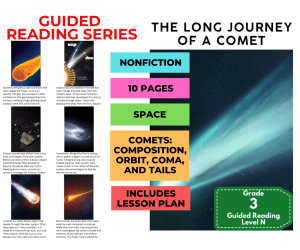
Guided Reading Level N - The Long Journey of Comets (with Lesson Plan)
ELA, Resources for Teachers, Reading Comprehension, Reading, Language Development, Science, Pre-Reading, Space, Earth and Environmental Sciences, Physics, Grade 2, 3, 4, Worksheets & Printables, Worksheets, Teacher Tools, Centers, Activities, Literacy Readers, Quizzes, Quizzes and Tests, Assessments
This Guided Reading Book - The Long Journey of a Comet (Level N) with lesson plan includes: Guided Reading Color Label (front cover x1) This is a quick way to match the book’s demands to what students can generally handle.. The overall goal is to use the level/color to pick books for several smaller groups. To qualify for a certain level, a student is expected to read a book from that level with about 90–94% accuracy. If a student is consistently accurate and understands, move up a level. If the student is struggling at that level, drop down and add more support. Each student will improve at completely different rates, but it is generally one of the best ways to check progress across the class. DOWNLOAD THE CATALOG TO VIEW ALL GUIDED READING BOOKS AVAILABLE (SORTED LEVELS A-Z) Pre-Reading Question (x1) Teacher asks the prompt aloud, can be while showing the cover or first page. Students share what they already know, or make educated guesses from the cover. Prompt them to use the target vocabulary. Write some of their responses on the board to look back at during the reading. Vocabulary Words (x5) Introduce the five words, best doing it one at a time. Start by saying it, while students repeat and then see if anyone knows what it means before reading further. Read through the meaning and try to briefly connect each word to a picture or gesture so it’s meaningful. Ask students to flip through the book pages and point to where they see each of the vocabulary words. While reading the book pause upon coming across one of the vocab words or read the sentence twice to make sure students understand the word has appeared. Optional: Ask students to raise hands whenever they see/hear one of the new words. Guided Reading Pages (x10) Check the book snapshot (below) for: primary topic - do you need to prep extra reading or intro materials on this? what is taught best - decide on 1-2 bullets to focus on, use the prompt or words provided here for best results. learning goals - what you are checking for students to be able to do after the session, elicit answers using prompts or words provided. key vocabulary (see section above). questions overview - so you know what is coming up and if you need to prep extra materials to assist understanding. Run the lesson You may have already looked at a few of the pages together, but you can show them some of the pictures again first to set meaning. Depending on how much time you have and how familiar your students are with guided reading class, you may want to read the book aloud first with the group first. Students whisper or partner read, while you listen in. If time, do it as a group, one student reading a page each. Use the guided page’s prompts to coach: “Check the picture / does it make sense?” “Point under the words / try the first sound” “Reread the sentence smoothly”. Try to focus more on one student per session (rotating every time), so you can work out if they are ready to move up or need to move down a level. Comprehension Questions (back cover x3) This is your way to check that students didn’t just say the words, but actually understood the text. First, let students answer by pointing to the page/picture and saying a short sentence. After any answer, follow with: “Show me where you found that in the text.” In bigger groups, have partners answer first (10–20 seconds), then call on 2–3 students to share. Differentiation tips: Emerging speakers/struggling readers: oral + pointing On-level: oral in a full sentence Higher: one written sentence or draw + label Book Snapshot Title: The Long Journey of a Comet Genre: Nonfiction (informational) Subject: Earth & Space Science Primary Topic: Comets: composition, orbit, coma, and tails Estimated Guided Reading Level (A–Z): N What This Book Teaches Best What comets are and what they’re made of (a “dirty snowball” mixture of ice, dust, and rock). How comets travel through the solar system, including long, oval-shaped orbits and time spent in the Kuiper Belt. What changes when a comet nears the Sun, including sublimation and the formation of a glowing coma. How solar wind and radiation create two tails that point away from the Sun, and how dust and ion tails differ. Why comets matter to scientists, described as “time capsules” that help scientists learn about the universe’s history. Learning Goals Students can describe what a comet is and identify materials the text says it contains. Students can explain what the nucleus is using details from the book. Students can describe what happens as a comet moves closer to the Sun, including sublimation and coma formation. Students can explain why a comet’s tails form and why they point away from the Sun. Students can compare the dust tail and the ion tail using text details. Students can explain what scientists can learn by studying comets, according to the text. Key Vocabulary From the Text mixture — different things combined together. nucleus — the solid center part of a comet. sublimation — when ice turns directly into gas. radiation — energy that travels out from the Sun. distinct — clearly different from something else. Discussion Prompts Pre-reading question: What do you think happens to a comet as it travels closer to the Sun? Comprehension questions: What does the text say a comet is made of? According to the text, what causes a comet to form a coma? What does the text say scientists can learn by studying comets? Printing Tips 1. Best Printing Method (Recommended) “Booklet” Printing (Best if Available) If your printer or PDF viewer supports Booklet Printing , use this. Settings to use: Print mode: Booklet Paper size: Letter or A4 (either works) Orientation: Landscape Print on both sides: Yes Flip on: Short edge Scaling: Fit to printable area Booklet subset: First test: Front sides only Then: Back sides only This will automatically: Pair pages correctly Put the cover on the outside Align everything for folding After printing, fold in half and staple along the spine . 2. If “Booklet” Printing Is NOT Available You can still print this correctly with manual duplex printing . Step-by-step: Open the PDF. Choose Print . Set: Orientation: Landscape Pages per sheet: 1 Print on both sides: Yes Flip on: Short edge Print all pages . Because each PDF page already contains two facing book pages, the result will still fold cleanly into a book. Thousands of Cored Education products are included with your TeachSimple membership. Download links and encyclopedia index available here.
Author Cored Education
Rating
Tags Reading Comprehension, Reading Passages, Reading, Guided Reading, Guided Reading Lesson Plan, Guided Reading Activity, Pre-reading, Vocabulary, Science Lesson Plans, Space

Reading Comprehension Passages Fiction Set 7 - Sports (Fillable PDF)
ELA, Reading, Reading Comprehension, Common Core, Children’s Literature, Literature, Language Development, ESL, Writing, Vocabulary, Grade 2, 3, Worksheets & Printables, Worksheets, Writing Prompts, Assessments, Teacher Tools, Tests, Quizzes and Tests, Centers, Activities
Reading Comprehension Passages Fiction Set 7 Snapshot Genre: Fiction (short story + comprehension practice) Subject: Reading (Literature) Primary Topic: Sportsmanship and kindness at a baseball game Estimated Guided Reading Level (A–Z): M What This Teaches Best Making inferences about a character’s motivations (Dan wants a foul ball and autographs). Recognizing a turning point and how it affects the ending (Dan gives the foul ball to the little girl). Using emotion words and text evidence to describe feelings (delighted, devastated, proud). Understanding how setting shapes events (stadium seats, foul balls, cheering). Learning Goals Students will describe Dan’s goal and track how it changes across the story. Students will explain why Dan gives the ball away using evidence from the text. Students will identify key setting details and how they connect to the plot. Students will retell the main events in order, including the problem and resolution. Students will define unfamiliar words from the story using context clues. Passages Include 1.Catch It, Dan: Dan is at the ball game and wants to catch a foul ball. 2.Feeling Left Out: Polly isn't invited bowling by her friends and wants to knowwhy. 3.Ian's Friday Nights: Ian wants to be anywhere but the bleachers on Friday nights. 4.Aimee's Dilemma: Soccer or cheerleading? That is the question. 5.A Great Team: Adam & Justin both want to play first base. How will they sortit? 6.Ana's Swimming Party: Jodie can't swim and doesn't want her friends to find out. 7.Touchdown Pythons: Serena loves her first football game. 8.Sam's Passion: Sam talks about his passion for Karate in this passage. 9.Where's My Board: Kerry spends all the story looking for her skateboard. 10.Lacey the Runner: Lacey has dreams to run in the Olympics. Read to find out more. Additional File: Ana's Swimming Party: Invitation Templates FILLABLE PDF VERSION Worksheet-style pages, but with type-in answer boxes so students can complete and save their work digitally. Other versions are available in the links list below or in the full catalog. FULL CATALOG OF DOWNLOAD LINKS HERE For similar downloads and other frees, do check out Cored Group on TeachSimple.
Author Cored Education
Rating
Tags Elementary, Reading, Comprehension, Vocabulary, Answers, Spelling, Writing, Passages, Reading Centers, Reading Comprehension Assessment

Model Tiny Homes Design Challenge
, Not Grade Specific, Activities
Model Tiny Homes Design Challenge: An Innovative Teaching Resource This comprehensive teaching resource engages students in a real-life situation, requiring them to think critically and innovate. All it requires from the educator is distribution — kickstarting the journey of individual exploration. Depending on your educational scenario, these versatile challenges may be used in Makerspaces, Genius Hour sessions, STEM-related classes, Technology Classes or even specialized environments like Afterschool programs or Camps. They can also supplement STEAM classes or Design Thinking Classes during SEL time. What Does Each Brief Contain? Context: Immerses learners into real-life scenarios. Design Challenge: Outlines the task at hand for students. Specifications: Provides obligatory features of this unique exercise. Constraints: Defines limitations of the problem prompting creative problem-solving techniques. Listings for materials and tools along with sequential steps are provided separately. A list of insightful tips is included as well to guide students through their process. The design challenges cater predominantly towards science subjects but are flexible enough to adapt across other subjects promoting cross-curricular understanding. Not bound by grade level, these exercises encourage innovative thought processes using readily available materials within their environment promoting practical learning irrespective of group size whether in classrooms or at home. In Conclusion... The Model Tiny Homes Design Challenge bundle serves as a comprehensive do-it-yourself STEM module fostering autonomous learning while nurturing invaluable 21st-century skills. For proactive educators aiming towards an all-rounded education for their young learners - this teaching resource is an asset you cannot overlook!
Author WhyMaker
Tags STEM Education, Design Thinking, Critical Thinking, Problem-solving, Autonomous Learning

Research Organizer & Essay Assignment: Gary Paulsen
ELA, Literature, Writing, Grade 7, 8, 9, 10, Activities, Projects, Worksheets & Printables, Worksheets
Few authors have mastered the art of the the young adult novel like Gary Paulsen. This resource provides your students with the opportunity to independently research and write about the life of the renowned author of Hatchet, Woodsong, and many other classic works, with this engaging research planner and essay assignment. This carefully scaffolded and easy-to-assign-AND-assess resource has been designed to guide student learning from Gary Paulsen fact-collection to the careful development of a five-paragraph research essay. Teaching this resource could not be easier! Start by handing out the background research and note-taking worksheet (you could also ONLY hand this out if you want a shorter lesson!). Once students have found their facts and sources, provide them with the essay outline activity, which guides them step-by-step through the requirements of a short research essay. From there, drafting their essay, using the provided peer review checklist, and submitting their final draft will be no problem at all. And then you can assess their work with the provided Common Core rubric! Use this entire resource as a complete research lesson or just part of it as a short research activity or sub plan! This TeachSimple download includes: A Gary Paulsen essay writing assignment with directions, requirements, research essay writing tips, a peer review checklist, and Common Core-tied grading rubric An editable rubric, provided as a link, that lets you make adjustments to the grade values and guidelines. This link is provided as as Google Sheet specifically built for integration into Google Classroom, although you can also modify it for use in other Learning Management Systems (LMSs) A Gary Paulsen biography and note-taking worksheet that will guide your students through information gathering. This straightforward two-page handout includes instructions for background research, a fun drawing section, and an area to cite quality sources and organize conducted research A research essay outlining worksheet, so students build on their Gary Paulsen notes in a clear and simple manner as they build their work towards a draft and final paper All 6-pages of this lesson are provided in full-color and B&W versions Although this resource can be fitted for any secondary Language Arts classroom, it has been carefully designed to work best in grades 8 through 11. The included rubric is subtly but specifically tied to Common Core ELA Standards for Language (3) and Writing (2 and 7). This resource is provided as a print-ready, bookmarked, and adjustable PDF file. The rubric is also included as an editable Google Sheet. This resource contains 6 pages and 1 Google Sheet.
Author The Language of Educational Art, LLC
Tags Essay, Research, Rubric, Notetaking, Outlining

Number Bonds 16-20 Bingo - Boards 21-25
Math, Fact Families, Addition and Subtraction, Addition, Grade 1, 2, 3, Activities, Games
Number Bonds 16-20 Bingo teaches number bonds for 16 to 20 in an engaging way. This math game strengthens understanding of part-part-whole relationships. Students match number bond equations to call-outs. The first to cover 3 spaces vertically, horizontally, or diagonally wins. The game includes calling cards, bingo boards, squares to cover spaces, and instructions. Print, laminate, and cut materials for durability. Lamination enables reuse for years. Or use dry erase boards and markers. Use this game whole class or small groups. It also works one-on-one and for independent practice. Other number bond resources allow further differentiated practice. Children will beg to play this game again and again while intrinsically boosting fact fluency.
Author Colleen's Cosmic Collection
Tags Number Bonds, Number Bonds Games, Addition Game, Addition Activity, Math Facts, Addition Facts, Addition Math Facts, Math Fact Practice, Number Bonds To 20, Cccnbb1620
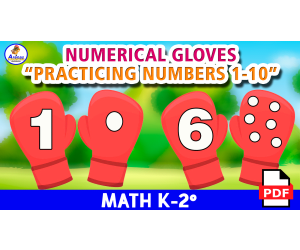
NUMBERS 1 TO 10 - THE NUMERICAL GLOVES - Math Game
Math, Numbers, Preschool, Kindergarten, Grade 1, 2, Activities, Games
THE NUMERICAL GLOVES 1. Introduction It is very important that as a teacher, or even a parent, you use the so-called didactic games in your learning area. These games will make your students or children learn mathematics in a more didactic way and even have love or admiration for it, because mathematics is a very useful tool in daily life. On this occasion I have prepared this beautiful material for your students to review these concepts of numbers from 1 to 10. 2.Objective -Mathematical educational games capture students' attention, creating an interactive and fun learning environment. -Mathematical educational games allow students to apply mathematical concepts in a practical way, connecting and linking theory with real-life situations or game situations. As is known, children love games and what better way to introduce mathematics through it. -Mathematical educational games will allow your students to better memorize the mathematical concepts they must learn, in a more natural way and without so much effort. What's more, you will add a pinch of fun to it. -Mathematical educational games encourage the development of problem-solving strategies, because they promote analytical and critical thinking. -Mathematical educational games will provide your students with immediate feedback, because they will allow students to evaluate their own performance and correct their errors more actively. Similar to the so-called Montessori method, where students learn from their mistakes! 3.Order, scheme and stages - Introduce your math class in a relaxing way, through classical music or something fun. -After teaching your class on the numbers from 1 to 10, invite your students to put away all their things that are on the table and take out their scissors and cut out the balloons one by one. -Then ask them in groups to help match the number with the graphic numerical quantity. 4.Grades or ages This game is designed for children ages 3 to 6, who are learning their first numbers from 1 to 10. How to apply It is suggested to print 1 copy for each group of 3 students. 6. Answer keys This game does not require answers. 7.Use text labels mathematics games , mathematics, educational mathematics games , mathematical games , numbers from 1 to 10, first numbers. 9.Rules Specified above. 10.File types The archive is in PDF format. 11.Number of pages This document contains 10 pages.
Author EDITORIAL LAURA EDUCA
Tags Numbers, First Numbers, Numbers 1 To 10, 1 To 10, Math Games

skip counting by 5s bingo - boards 26-30
Math, Patterns, Early Math, Numbers, Grade 1, 2, 3, Activities, Games
Skip Counting By 5s Bingo - Boards 26-30 Let's make math concepts like skip counting more engaging, interesting and clear for grade 1 to grade 3 students. This Skip Counting by 5s Bingo game is a fast-paced, engaging activity that will have your students eager to practice and perfect their counting skills. The package contains five colourful sets of bingo boards, fitting for a large group activity in the classroom. Also included are black-and-white versions of the game materials for ease of printing. The design allows patterns in numbers to emerge visually as they play and learn simultaneously. This bingo variant requires strategic thinking while reinforcing skip counts by increments of five. It readily stimulates a healthy competitive spirit among participants in an effort to fill three squares vertically, horizontally or diagonally on their cards shouting Bingo! To use this resource effectively, print and laminate enough bingo boards for each student or small group. Use playing squares provided within the package or substitute with your own manipulatives such as buttons or counters - adding flexibility on how you wish to execute the game session. It's important for learners to remember that they can only cover one block per turn with unmovable playing squares once placed over called-out numbers. As versatile as it comes; this can also entertain smaller breakaway groups during free time and be utilized beyond just classroom boundaries into homes where parents can partake fun-filled learning moments with their young ones. Enjoy endless rounds - thanks to a renewable pile of calling cards which also come colour-coded apart from black-and-white option but primarily developed keeping reusable nature intact year after year through lamination! Meanwhile if exhausted before declaring victory, simply reshuffle them for continued delight— no opportunity lost from grasping those vital maths fundamentals at early stages! This Math Bingo set offers itself as an effective learning tool not only helping individual players improve understanding of number patterns but fostering class-wide mathematical discourse stimulating a joyful learning environment. Get ready to revel in the excitement of counting by 5s while encouraging essential numeracy skills amongst your younger learners! There's nothing like a good game of Bingo to facilitate skill acquisition and retention, wouldn't you agree?
Author Colleen's Cosmic Collection
Tags Skip Counting, Bingo Game, Math Activity, Number Patterns, Numeracy Skills

Science Reading Passages: Rock Cycle, Soil, Sinkholes (FILLABLE PDF)
Science, Earth and Environmental Sciences, ELA, Reading, Reading Comprehension, Strategies, Resources for Teachers, Geology, Earth Sciences, Grade 6, 7, 8, 9, Writing Prompts, Worksheets & Printables, Centers, Activities, Teacher Tools, Assessments, Quizzes and Tests, Quizzes, Tests
Rock Cycle, Soil, & Sinkholes: Reading Comprehension Passages and Questions (FILLABLE PDF) This very engaging and fillable collection of earth science reading passages about Rock Cycle, Soil, and Sinkholes is designed to bridge the gap between science and literacy through strengthening reading comprehension and sparking scientific curiosity in middle school students. Each passage blends English Language Arts skills with accurate science content that supports NGSS classroom practice. Ideal for interdisciplinary learning in ELA and Science. Suitable for Grade 9 review, too! These worksheets are designed as fillable PDFs , which means students can type their answers directly into the document on any computer or tablet . Each page includes highlighted text fields that show them exactly where to type! What Is Included? There are (3) informational passages: Soil: The Life Beneath Our Feet The Science of Sinkholes The Rock Cycle: How Rocks Form and Change Student Tasks for Each Passage: 5 multiple-choice questions targeting main idea, key details, inference, vocabulary in context, and use of evidence 5 vocabulary matching items with clear, student-friendly definitions 5 text-based questions that require citing specific lines or facts 1 summary prompt that asks students to condense central ideas accurately Full answer key for every section Available Formats for this Resource Word Docs Google Docs FULL CATALOG OF DOWNLOADING LINKS HERE Other Science Reading Collections and Topics You May Find in the Store: 1. Astronomy & Space Science 2. Volcanoes, Rocks, & Mountains 3. Rock Cycle, Soil, & Sinkholes 4. Mars, Glaciers, & Antarctica 5. Water Cycle, Acid Rain, & Wastewater 6. Insects, Animals, & Ecosystems 7. Bioluminescence & Insects 8. Animal Skin, Cats, & T. Rex 9. Human Body and Senses 10. Health & Applied Bioscience 11. Waves, Light, & Imaging 12. Electricity & Energy 13. Motion & Materials 14. Chemistry and Materials Science 15. Electromagnetism 16. Acids and Bases 17. Gas Laws 18. Biotechnology 19. Periodic Trends 20. Protists and Fungi 21. Microevolution 22. Blood 23. Chemical Bonding 24. Magnets 25. Muscles 26. Nuclear Chemistry 27. Electromagnetic Devices 28. Epigenetics 29. The Law of Conservation of Mass 30. Atomic Models 31. Isotopes and Ions 32. Light 33. Human-Environment Interaction 34. Theory of Evolution 35. Photosynthesis 36. Origins of Life and Early Earth 37. Gene Expression and Regulation 38. Thermochemistry 39. Allergies 40. Coevolution 41. Birth to Adulthood 42. Cells 43. Entropy and Free Energy 44. The Human Brain 45. Mixtures and Solutions 46. Invertebrates 47. Zoo Animals 48. Biochemistry 49. Animal Behavior 50. Population Ecology ...and many more engaging science reading passages that cover intriguing and important topics designed to spark curiosity and support student learning. How to Use These PDFs Click on the highlighted area to start typing your answer. Move to the next question by clicking in the next highlighted box. When you are finished, close the document and select SAVE so your answers stay recorded. If you want to keep a blank copy for later, choose Save As and give your completed version a new name. Product Details Length: 15 pages total Grades: 6–8, also suitable for Grade 9 review Use cases: close reading, stations, homework, intervention, test prep, and sub plans Standards support: reinforces informational-text skills and supports NGSS-style sense making through observation, modeling, and clear use of claim, evidence, and reasoning Why Teachers Choose This Set Authentic science content paired with rigorous literacy practice Consistent task structure across all passages for easier planning and smoother student routines Clear, age-appropriate writing that builds confidence without oversimplifying Use this set to reinforce ELA skills in science, to add literacy to your lessons, or to support independent work. The passages strengthen main idea, evidence use, vocabulary in context, inference, cause and effect, and summary writing. With ready-to-use assessments and complete answer keys, you can provide focused practice that is simple to run and fast to review.
Author Middle & High School - CORED Education
Rating
Tags Middle School, Reading Comprehension, Reading Strategies, Reading Passages, ELA, Centers, Reading Passage, Assessments, Vocabulary, Earth Science

Let's Learn Multiplication Audio Book
Math, Multiplication and Division, Division, Preschool, Grade 1, 2, 3, 4, 5, Read Alouds, Activities
Original songs that teach multiplication fact 0 to 12 separately- slowly for beginners then faster for advanced learners! Then review the facts with the answers and then without the answers. Multiplication is great for the classroom or for at home learning, and you will see immediate improvement in your child’s multiplication skills! Includes over an hour of multiplication exercises that are perfect for learning and practice.
Author Twin Sisters Digital Media
Tags Multiplication, Math, Life Skills, Classroom, Comprehension

A Holiday Play: Ding-a-Ling, the Christmas Bell
Creative Arts, Art, Drama, Grade 1, 2, 3, Activities
A Holiday Play: Ding-a-Ling, the Christmas Bell Ding-a-Ling, the Christmas Bell is a comprehensive teaching resource designed with educators in mind. This play is primarily intended for students in Grades 1 through 3. The play presents an engaging story combined with a wealth of educational potential. Yet, its flexibility allows it to be adapted according to students' capabilities and interest levels. Application: Incorporate this resource into your learning environment easily – it can be utilized effectively in whole group readings, small group performances, or even as an exciting homework assignment. About Product: Includes insightful questions designed for use both before and after the performance of the play. Offers useful advice on various duties for a successful play production such as directing, prompting, props/costumes/scenery creation, and more. Covers areas like literature development, character development, and reading comprehension enhancement among others. Expands creative expression and summarizing skills. The Plot: Ding-a-Ling is teased by his bell friends for falling and not being able to make a clear sound until he finds his value when Santa requires his assistance! This heart-warming tale communicates lessons on kindness and efficacy along with an introduction to drama. Educational Alignment: Aligned perfectly with Common Core Standards, including reading literature at various complexity levels suited for grade 1 through grade 3. A Holiday Play: Ding-a-Ling The Christmas Bell: A PDF format of 13 pages Categorized under Art & Music This product offers boundless potential for academic and creative exploration. Make your classroom or homeschooling environment come alive this holiday season with A Holiday Play: Ding-a-Ling, the Christmas Bell.
Author Sue Peterson
Tags Holiday Play, Christmas Bell, Educational Resource, Drama, Reading Comprehension

Paper Plate Skull Activity
Science, Life Sciences, Human Body, Biology, Grade 1, 2, 3, 4, 5, 6, Activities
Activity Introduction An amazing activity designed for the fascinating students to learn the anatomy of the skull inside our skeletal system. The Human Skull The skull is the topmost section of the human skeleton. It is on top of the spinal column and makes up the underlying structure of the head. It connects to the bones of the spine at the neck. The bones of the skull prevent injury to the delicate tissue of nerves and the brain. In addition, the skull supports the muscle and nerve framework for the face. Paper Plate Skull Activity The activity is designed to Elevate both eagerness for learning and creativity for kids. Students will have fun creating the human skull, while learning the importance of the skeletal system. Bones Count This friendly designed worksheet is suitable for students at school, homeschooling, and as a group activity. Instructions Cut the bottom part from the plate horizontally. Cut out a circle shape and a heart shape from the black construction paper, then glue them onto the plate. Cut out 4 squares from the white construction paper. Write an interesting fact about skulls on each piece. Glue the squares to the plate as shown below. Decorate the skulls if you want. Materials Needed Scissors Glue/glue gun Paper plate Black & white construction paper Format Available in a PDF format.
Author Educational Voice
Tags Skull, Skeleton, Skeletal System, Skeletal System For Kids, Bone, Bones, Human Body, Science
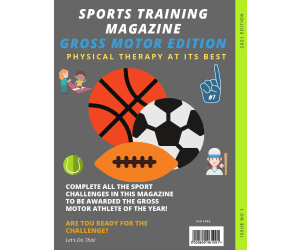
Gross Motor Sports Magazine: Physical Therapy Challenge
P.E. & Health, Physical Education, Grade 1, 2, 3, 4, Activities
Gross Motor Sports Magazine: Physical Therapy Challenge comes with 12 sports challenges for students to engage in. Each challenge mirrors a specific sport such as swimming or weightlifting.
Author Miracles and Moree Therapy LLC
Tags Sports Magazine, Sports Gross Motor, Sports Challenge, Physical Training, Challenges
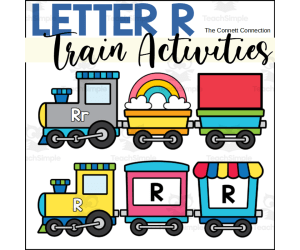
Letter R Train Alphabet Worksheets and Centers
ELA, Language Development, Phonics, Writing, Handwriting, Pre-Reading, Kindergarten, Preschool, Activities, Worksheets & Printables, Worksheets
Engage your train loving students with these Letter R Alphabet Train Activities that will all students to practice letter recognition and initial sounds through these fun alphabet worksheets and cards! Each worksheet and card activity is designed to keep students entertained and engaged as they assemble trains to showcase their understanding of letters. This collection specifically emphasizes the letter R! What is Included in this Resource: Eight colorful train engine cards Twelve train cars featuring images that start with the letter Eight train cars with examples of the capital and lowercase letter Four train track sorting mats Two instruction and cover cards for a task box A single worksheet for sorting capital and lowercase letters Two handwriting worksheets for practicing correct letter formation A single worksheet focusing on the most common beginning sound This alphabet train resource encourages students to create trains as a hands-on approach to practice letter recognition of both uppercase and lowercase letters, letter formation, and to understand the initial sound most commonly associated with the letter R. This resource offers both hands on sorting cards and cut-and-paste worksheets for students, all with an entertaining train theme. Ways to Use these Train Activities: Literacy Center Small Group Learning Independent Study Morning Tasks Task Box Activity The train sorting cards are the perfect size for a task box activity, enabling quick setup and effortless cleanup for this literacy center or small group activity. The worksheets are highly effective for independent study, morning assignments, or small group activities. Skills Practiced in this Resource Letter Recognition Differentiating Between Uppercase and Lowercase Letters Letter Formation Beginning Sounds All of the worksheets are no-prep. Teachers only need to print each worksheet and hand them out to the students. The train cards form an easy, low prep literacy center that can be laminated for long-term use, thus providing endless opportunities for this activity to be repeated.
Author The Connett Connection
Rating
Tags Alphabet Trains, Alphabet Activities, Alphabet Worksheets, Alphabet Center, Literacy Center, Beginning Sounds, Handwriting Practice, Letter R, Letter R Worksheets, Letter R Activities
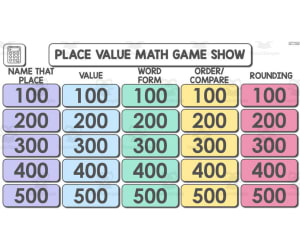
4th Grade Place Value Math Game Show
Math, Place Value, Grade 4, Activities, Games
This is a 4th Grade Place Value Math Game Show. This is an exciting game that will keep your students engaged while giving them the best math review for Place Value. This could be used as a review before an assessment or any time you have a few extra minutes!
Author That One Cheerful Classroom
Tags Jeopardy, 4th Grade Math, Place Value, Expanded Form, Standard Form, Word, Form, Game Show, Math Games, Whole Group